Talking About Public Education: The Good, the Deceptive, and the Destructive

Tired of the articles on how to handle your impermeably asinine relatives as we approach the holidays? Should you try—really, earnestly try—to actively listen to grievances, striving to ferret out some common ground? Or should you prepare an ironclad arsenal of damning facts about the inequitable economy, tax plans, health care and international diplomacy in an effort to demonstrate your well-researched convictions? Or avoid the whole thing by sticking to football and the weather (my personal preference)?

The thing about acrimonious family gatherings is that you have to come back, year after year, for more turkey and more disputes. Most of my family knows where I stand, politically at least, and could not care less. I am an excellent euchre partner, and always bring good desserts, and that’s enough.

The only contentious thing I ever talk about, at holiday hang-outs or on Facebook (our new town square), is education policy. I will talk to just about anybody—persistently and passionately—about schools, and what it would take to make our public education system not merely workable, but beneficial for all kids in the United States.

This is, by the way, a goal that could largely be accomplished. We have the human capital, the resources and the technical knowledge to transform public education over a generation. What we lack is the public will to do so—for children other than our own, at least.

This represents a sea change in our 20th century national approach to public education, that post-war America where the GI Bill and the Baby Boom made tan, rectangular brick elementary schools spring up like mushrooms in the 1950s. Teachers were in high demand, and state universities were adding a new dormitory every year. Education was going to lift us up, make us (here it comes) the greatest nation on earth.

We don’t think that way anymore.

Somewhere in between our rush to put a man on the moon and the advent of computers in all our classrooms, we lost our “public good” mojo, the generous and very American impulse to stir the melting pot and offer all children, our future citizens, a level playing field, educationally. Lots of edu-thinkers trace this to 1983 and the Nation at Risk report, but I think that the origins of losing that spirit of unity are deeper and broader than that.

Recently, I posted an article from American Prospect on my Facebook page—The Proselytizers and the Privatizers: How religious sectarian school voucher extremists made useful idiots of the charter movement (Katherine Stewart). You can read divergent articles on charter schools (the most obvious and deceptive signal of the loss of our sense of “public good” in education) everywhere, but this was a particularly good piece, honest without being accusatory, damning but cautious:

A wing of the charter movement that is ideologically or religiously opposed to “government schools” was present at the charter movement’s creation, and has grown to comprise a sizable segment of the charter universe. With the election of Donald Trump and the appointment of Betsy DeVos as education secretary, it is presently empowered as never before. Public confusion about vouchers and charters continues to create opportunities. A lightly regulated charter school industry could achieve many of the same goals as voucher programs. They could drain funding from traditional public schools, deregulate the education sector, and promote ideological or religious curricula—all without provoking the kind of resistance that vouchers received.

I posted the article because it was true and thoughtful.

I live in Michigan, where charters took root over two decades ago. Like a handful of other states, we now know what happens to public education, including healthy districts, when charter schools damage the perceived desirability of one—thriving, publicly supported—school for all children. It’s happened all over our state, first in the urban and rural districts, struggling to maintain programming and viability, and now in Alpha districts, as their budgets are diminished and their student populations lured to schools that are “safer” (read: whiter).

After I posted the article, the online conversation was revealing. Teachers (and a lot of my Facebook friends are educators) contributed positive commentary. But there was also a fair amount what Stewart calls public confusion.

  • A sense that charter schools are, somehow, de facto, better than public schools—simply by the virtue of the fact that they’re not public, but selective and special.
  • Assertions that public schools (schools I know well, and have worked in) are attended by children who haven’t learned how to behave properly.
  • Blaming teacher unions for doing what unions do: advocating for fairness, serving as backstop for policy that prioritizes the community over individual needs or wants.

None of these things is demonstrably true. The conversation illustrated that many parents and citizens are no longer invested in public education, emotionally or intellectually. School “choice” is seen as parental right, not something that must be personally paid for. There is now agreement with an idea once unthinkable in America: corporations also have a “right” to advertise and sell a for-profit education, using our tax dollars.

Education is a major major public good where we tax the rich in order to provide a public benefit that you get just by right of being a citizen. When they talk about needing to do away with the entitlement mentality, the most problematic entitlement for them is not Medicare or Social Security. It’s education. Education is even more of a problem for them because teachers are trying to encourage kids to think they can do more. And that’s dangerous.

The core of the public confusion around schooling has been carefully cultivated for decades.

It’s worth talking about—the uniquely American principle of a free, high-quality education for every single child—even if the dialogue is heated. We’re in danger of losing the very thing that made us great.

Eight Ways We are Underestimating the Impact of the Pandemic on Public Education

Over the summer, I started tossing links about the impact of the COVID pandemic on public education into a file folder on my desktop, entitled Rebounding from the Pandemic. As of this morning, the file is five pages long, with over 50 links. My working theory is that a global health emergency has had a major impact on kids, their ability to see value in K-12 schooling, their trust in the society where they live to keep them safe, and their hopes and dreams for the future.

About a month ago, I wrote a piece with the same name—Rebounding from the Pandemic–listing some of the things we might have learned and acted on in K-12 education, from experiencing a pandemic:

  • The gross inequities in access to wireless capacity and devices.
  • The social necessity of being with other children and teenagers in maintaining mental health.
  • How faulty-to-useless testing data is in structuring relevant instruction that meets children where they are (which is supposed to be the point of standardized assessments).
  • How utterly dependent society in general is on school functioning as M-F childcare.
  • How much political leadership and privilege shape our approach to rebounding from a crisis.

All of these obvious issues strike me as an excellent theoretical framework for reconceptualizing public schools and school funding–creating healthy environments for children impacted by various academic and emotional stressors. Our goals right now should not be raising test scores to where they were in 2019 or bringing in thousands of trained counselors (who don’t exist) to deal with mental health problems. The goal is definitely not “getting back to normal.” “Normal” was (and remains) inadequate, inequitable and unprepared for change.

We now should know how frustrating it is, for example, for parents who must work not to have affordable day care available for their elementary schoolchildren. Calculating how much risk to take during a pandemic will vary from person to person—but misdirected anger toward teachers and their unions for not “opening” schools and risking adults’ health, has made entire school districts hotbeds of anger and toxic thinking.

This is what happens when people don’t get the services they feel entitled to, as American citizens. Change is hard.

In fact, the pandemic has changed the entire landscape of public services and social supports—and each of those factors has had an impact on K-12 schools, directly or indirectly. If you think schools have “returned to normal,” ask a teacher whether their current students are achieving at pre-pandemic levels. More importantly, ask whether students have developed the curiosity, communication skills and stamina to work together every day in class. Ask several teachers– have things changed? how?

Here are eight pandemic-driven outcomes impacting the functioning of public schools, as the health crisis fades.

1. Vaccination rates, already worrisomely dropping, now have hit their lowest point since 2011, in spite of laws requiring vaccinations for schoolchildren. You have to ask yourself why parents are not eagerly seeking a vaccination that undoubtedly saved countless lives and reduced hospitalizations: Health officials attributed a variety of factors to this drop in vaccinations, including families being less likely to interact with their family doctor during the pandemic and a “spill-over” effect from misinformation around the COVID-19 vaccine. 

2. Book banning, an issue that schools have perennially wrestled with, especially in conservative communities, has now spread to public libraries.  ALA President Emily Drabinski explained that while “attacks on libraries right now are shaped and framed as attacks on books” these efforts are really “attacks on people and attacks on children.” In retaliation for advocating against book bans, some conservative states — including MontanaMissouri and Texas — have announced they are “severing ties with the ALA.”

3. The four-day workweek and remote work elbowed their way into traditional M-F/face to face classrooms at the same time they were conceived as the solution to keeping a workplace open during a pandemic. For schools in rural areas where transportation eats up budgets, fewer schooldays and more Zoom classes can keep public schools alive: Hybrid work arrangements have killed the return-to-office hype. Employees equate a mix of working in the office and working from home to an 8 percent raise. They don’t have to deal with the daily hassle and costs of a commute. Remote work saves companies money. It cuts overhead, boosts productivity and is profitable. And what is profitable in a capitalist economy sticks. Remote work also has major benefits for society, including improving the climate by cutting billions of miles of weekly commuting and supporting families by liberating parents’ time.

4. Higher education also seems to be undergoing a metamorphosis, as high school graduates and returning-to-school adults have reassessed the value of a college degree: In a study conducted by the U.S. Census Bureau, the majority of adults who had household members enrolled in college for the fall 2021 term said that their school plans changed.

32% said their classes would occur in different formats.

16% canceled all plans to attend.

12% took fewer classes.

It goes without saying that what impacts our colleges and universities will trickle down to K-12 public schools.

5. Shifts in the need for labor and workforce development have impacted the need for teachers, and what teachers are willing to work for, especially in long-term careers in education. Perhaps Sean Fain, leader of the UAW best expressed this: “Our fight is not just for ourselves but for every worker who is being undervalued, for every retiree who’s given their all and feels forgotten, and for every future worker who deserves a fair chance at a prosperous life. We are all fed up of living in a world that values profits over people. We’re all fed up with seeing the rich get richer while the rest of us continue to just scrape by. We’re all fed up with corporate greed. And together, we’re going to fight to change it.”

6. The incessant media drumbeat of “learning loss” has persuaded people that test scores are more reliable than our own observations about what students are learning, how they’re progressing. From a brilliant article in Rethinking Schools: Shifting blame away from the for-profit healthcare system and the government’s response to the coronavirus is part of what makes the learning loss narrative so valuable to politicians who have no interest in challenging existing patterns of wealth and power. It is a narrative meant to distract the public and discipline teachers. Here’s the recipe: 1. Establish that closing schools hurt students using a narrow measure like test scores; 2. Blame closure of schools on teacher unions rather than a deadly pandemic; 3. Demand schools and teachers help students “regain academic ground lost during the pandemic” — and fast; 4. Use post-return-to-normal test scores to argue that teachers and schools are “failing”; 5. Implement “teacher-proof” (top-down, standardized, even scripted) curriculum or, more insidiously, argue for policies that will mean an end to public schools altogether. 

7.  School leaders and the education community, used to hard-trimming back budgets year after year, have now witnessed unprecedented levels of greed and corruption in corporate and political circles, taking tax dollars away from struggling schools.  From Heather Cox Richardson’s August 24th newsletter:  The Department of Justice is bringing federal criminal charges against 371 defendants for offenses related to more than $836 million in alleged COVID-19 fraud, most of it related to the two largest Small Business Administration pandemic programs: the Paycheck Protection Program and Economic Injury Disaster Loans. It’s hard not to wonder how many library books, STEM kits and teachers that $836 million could have bought, as we all rebound from disaster.

8. A mishandled pandemic will likely be followed by political unrest—or, at least, uncertainty. In Ottawa County, Michigan, always a solidly red, conservative county, the 2022 election overturned a more moderate governing board and put in place a collection of people who were angry—furious, in fact– about what happened during the pandemic. Here’s a well-written, balanced story on the impact this political shift is having on people in Ottawa County—a young woman who delivers food to families who need it, a local health department administrator, and other essential programs:

The new budget rejected about $2.2 million in federal covid grants that helped pay for immunizations and could be used tohelp track the spread of hundreds of communicable diseases. It also cut about $400,000 from the department’s health education division, which housed programs that aimed to curb youth suicide, substance abuse and the spread of sexually transmitted disease. The Ottawa Food program was part of that division. County health officials pressed the board to explain the rationale behind the cuts. The answer came in a news release which described how the pandemic had awakened the county’s residents to the “tyranny of public health.” The health department’s misdeeds extended beyond its covid response. Liberal forces throughout government, academia and the nonprofit world were using the department to foist their agendas on his conservative county. “Climate change, gender affirming care, abortion, racial equity and social justice are increasingly identified as public health concerns.”

Pausing here to reflect on the “tyranny of public health,” a phrase that I find chilling, as a veteran teacher.

In the 1970s, Alvin Toffler introduced us to the idea of future shock—too much change in too short a period of time. He made a convincing case that the human psyche was being overloaded, that we weren’t designed to handle so much renovation to our values and habits.  And that was before the internet, cell phones and social media transformed the way we communicate and do business, and changed what we expect public education to do for our children. 

Something’s happening here, and—as usual—schools are a staging area for political and social change. Some of these changes may ultimately have benefits, strengthening public education. But others are glaring red flags, further chipping away at the commons.

Band Director Quits and Other Evidence of Pandemic Aftermath

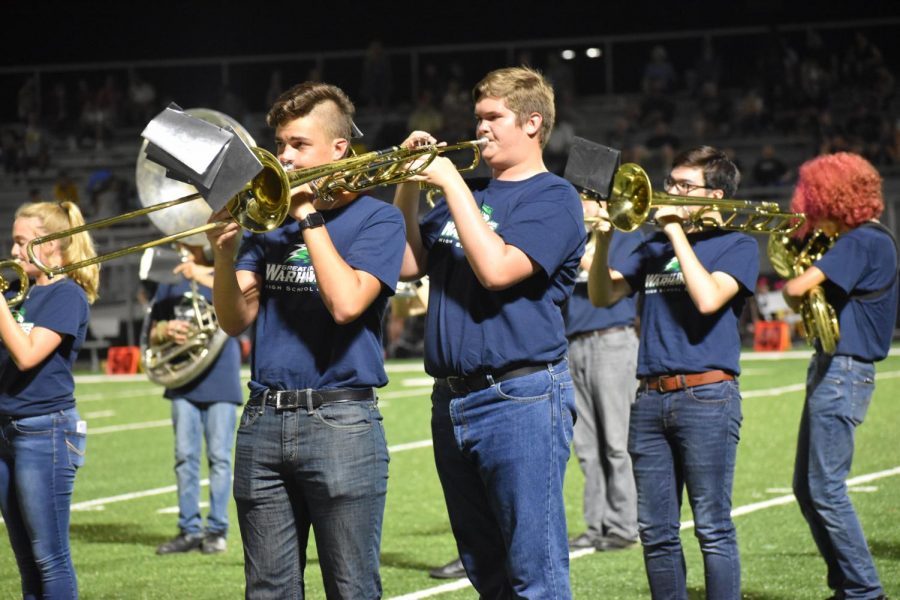
It’s a sad but kind of sweet story: a little rural school (282 students, total, K-12) in West Virginia has a small but mighty high school band, enthusiastically supporting the home team on Friday nights. Over the summer the band director leaves the district. First day of school, the principal shows up in the band room, offering the 38 band members the option of dropping out and taking another class. Ten of the students, however, decide to stay and teach themselves (with the principal’s permission, noting that he had already set money aside in the budget for a band program).

The rest of the story, in the Washington Post, praises the students for making their own rules, playing the fight song and chants at games, and generally keeping the ball rolling, with two bona fide teachers serving as advisors.

The story dedicates half a sentence– West Virginia is experiencing a certified teacher shortage like many states nationwideto the real, underlying problem. The headline is particularly annoying: A high school band teacher quit. Now, the students teach, direct themselves.

Imagine a first-grade classroom, with a dozen adorable, willing children. Their teacher quits, in August. So the principal decides that a couple of adult wranglers can manage them, because she’s set aside money for new reading books and computers, and because they all learned their letters in kindergarten. Maybe a new teacher will turn up. In the meantime, they can be kept busy doing what they did last year.

Perhaps you’re thinking that the national shortage of teachers is limited to certain sub-specialties, or geographic regions, that no responsible school leader would leave a group of six-year-olds to “teach themselves.” If so, you ought to take a look at the percentages of students, especially in charter schools, with unqualified substitutes. There are uncertified subs everywhere, in all subjects, k-12, and unfilled jobs in prestigious private and suburban schools, two months after the start of the school year.

The loyal-to-band kids in West Virginia do not surprise me. Band students, in my thoroughly biased opinion, are THE BEST, and these kids appear to be like band kids everywhere—self-starters, and leaders. Good kids. There are, of course, good kids in all grades and disciplines, in every school, those who can be trusted to carry on when the chips are down.

But here’s the thing that doesn’t get mentioned in this feel-good story: the band kids in WV learned how to do the things they have done—writing rules, running rehearsals, playing tunes—from a teacher. By all indications, a pretty good teacher, someone who instilled a spirit of cooperation that led students to try to balance out the band sound by switching instruments.

Once football season is over, who will be moving their music education forward, teaching them the new skills and music they deserve? Who is preparing younger students there, who will become the high school musicians when these amazing kids graduate? There is no building process, no pipeline of activities that lead to cycles of growth. Without a teacher, this program is headed toward a dead end.

It would be like teaching kindergarteners the skill of letter-sound correspondence, then not providing them with books, discussions, stories, rhyming games, tools to make them better readers, developing an appreciation and desire for full adult literacy. All along the way, students need teachers. A good teacher is the launching pad for students’ “teaching themselves.”

Further—the headline suggests that the band teacher who “quit” caused this situation. I have no idea why the previous band teacher left—could be anything from lousy pay and working conditions to a much better school music job with a bigger band and budget. Or a different job, with regular hours and Friday nights at home, instead of the frozen bleachers. You might call this self-care for burned-out teachers.

The principal holds out hope that a band teacher can be found. But the changing labor force, kick-started by a global health emergency, has made many skilled workers, including teachers, re-consider their worth. The pay scale is only one bit of evidence that schools need to treat their teachers like the essential driver of quality public education.

In West Virginia, their flagship university has suffered a 10% drop in enrollment since 2015, revenue lost during the pandemic and an increasing debt load for new building projects. It’s a new world, and early indicators about the availability and use of resources to provide a world-class education for every child— which include actual music teachers—are alarming.

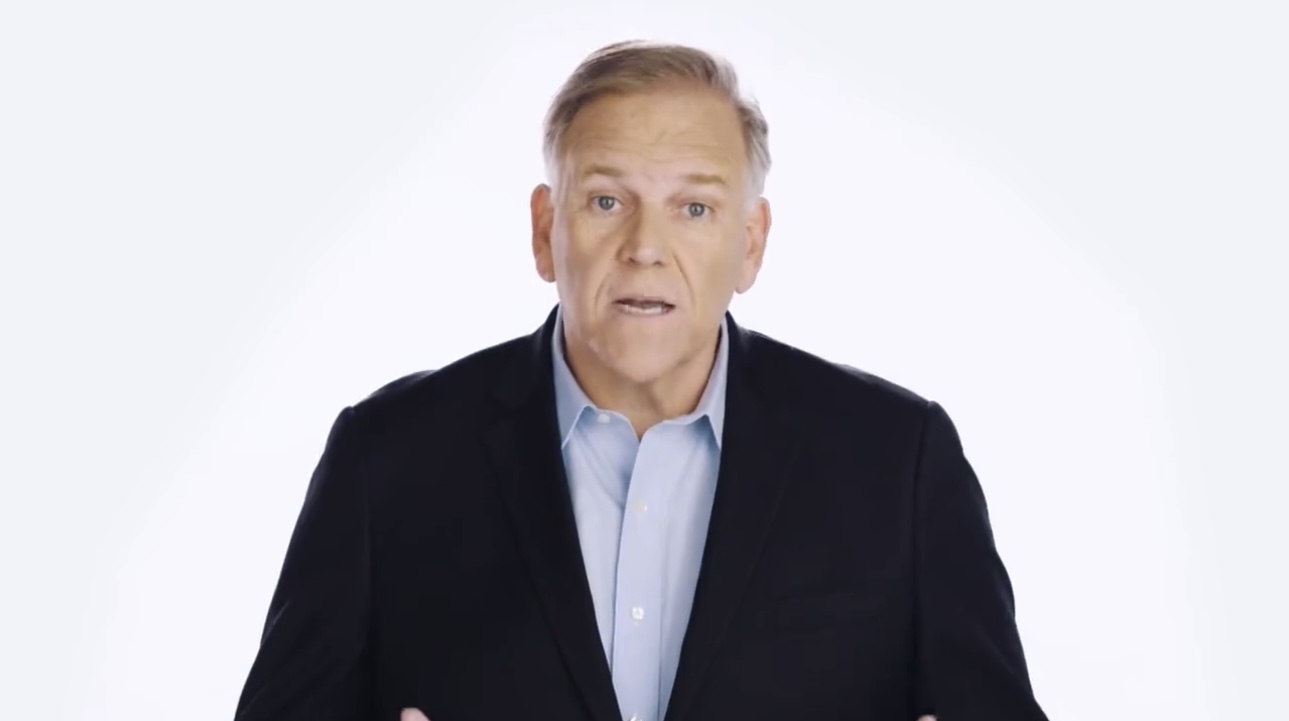
This Guy Used to be my Congressman. Now He Wants to be my Senator.

I spent most of my life and nearly all of my teaching career in Livingston County, Michigan—a ruby-red, rural-turning-suburban area in the ring outside Detroit. My first principal used to refer to our school district as the far edge of white flight—folks with enough resources to move to a bucolic county with lots of land for their ten-acre dream homes, an hour-long commute into the city, and a population that is 94% white and less than 1% Black.

Although I have always identified as a Democrat, I used to vote in the Republican primary, because it was the only way I had some say in who was representing me in local offices and the state legislature. Beginning in 1995, Mike Rogers was my state senator, and later, my representative in Congress. He was, at the time, very much a country club Republican—bland, moderate, uncontroversial and generally well-liked. I didn’t vote for him, but I knew lots of people who did. I also didn’t fear him.

Rogers’ family was well-known in Livingston County. His dad was a public school administrator and football coach, and his mother ran the Chamber of Commerce. One of his brothers was in the state legislature. He won local elections by wide margins, but when he decided to run for Congress, in 2000, squeaked into office by 111 votes. Gerrymandering made his subsequent elections ironclad, however.

Rogers and I lived in the same small town for most of his political career. I used to see him in Meijers and at local events, shaking hands. Once, we were both on a panel at a Chamber of Commerce breakfast where the topic was education policy. Mr. Rogers’ take on education, as a Congressman, was that the feds had no business making or even influencing education policy. He suggested that it was time to shut down the Department of Education. He spoke admiringly about local control—and asked me, his designated foil, what purpose the federal Education Department served.

My answer was two-fold: First, an Ed Department serves as clearinghouse for research on best practices and ideas in public education, economies of scale. But far more important was the federal role in promoting and ensuring equity in sharing available resources. I reminded him that the original ESEA, passed in 1965, was designed to provide resources for our neediest students, to help level the playing field for millions of students whose states weren’t particularly interested in equity.

Not Michigan! he said, ignoring the obvious example of Detroit Public Schools, 50 miles down the road, a place that many of his constituents escaped, after the auto industry built enormous wealth on the backs of immigrant laborers.

After the panel dispersed, Rogers was surrounded by local businessmen—and I hurried back to my 3rd hour class, which a colleague was generously covering until my return.

In 2015, Mike Rogers decided not to run for Congress. He launched a career in radio—a kind of mild-mannered Rush Limbaugh—and moved to Florida, a place where he has been happily ensconced for eight years, starting new businesses, and serving as a defense lobbyist and National Security expert for CNN. He occasionally put out feelers to see if there was a possibility of becoming President.

But. Rogers has recently rediscovered his Michigan roots, and is now running for an open Senate seat in the mitten state. He has always been a pro-NRA, anti-abortion guy, but lately, he’s moved hard to the right, castigating his former employer, the FBI, claiming they’re on a witch hunt to take down The Former Guy for political purposes. He’s called the DOJ “corrupt.” The Michigan Advance says:

His former service as an FBI agent and CNN commentator may not be popular with MAGA voters, many of whom view the federal law enforcement agency as complicit in targeting Trump as well as the cable news outlet that is often a target of his ire.

He’s also made clear that he doesn’t need votes from the UAW, or—evidently—non-union workers and auto industry leaders rapidly building EV and battery plants in Michigan.

As for public education, he’s also changed his tune, now endorsing federal influence, saying that  “schools care more now about social engineering than, as my father used to say, readin’, writin’ and ‘rithmetic.”

Expect to hear that little witticism often on the Rogers campaign trail.

This Mike Rogers is a far cry from the dude who praised Barack Obama for taking swift action on allegations that the IRS intentionally scrutinized applications for tax-exempt groups with references to “tea party” or “patriot” in their names. As I said, Mike Rogers used to present as a country club Republican, hometown boy made good, moderate conservative and deficit-cutter.

What has happened to sort-of moderate Republicans? They get primaried after one term. They get criticized by Tucker Carlson. They can’t maintain leadership in the House. They get the message: move rightward, or get out of the way.

How did this happen? Theda Skocpol, on Politico, says this:

It was never about cutting the deficit. The popular side of the tea party was about anger and fear of a changing country in which a guy with ‘Hussein’ as his middle name and black skin could be elected president. The tea party had taken the shape of a just-say-no, blow-it-all-up, don’t-cooperate, do-politics-on-Twitter faction — and this is the perfect expression of it. This is where it leads.

Donald Trump didn’t create all this. He’s just been very good, ever since 2015, at giving it permission and focus.

Any political leader or candidate who changes their expressed core beliefs because they now have ‘permission’ doesn’t deserve to be elected.