I was talking with an acquaintance, and made a comment about ICE being reported in Leelanau County. Don’t you want to see illegal immigrants gone? she asked. Besides, they’re only picking up the ones with a criminal record.
I was dumbfounded. I knew she was likely a Republican; our points of contact have nothing to do with politics. But still– it came as a shock to know that she felt ICE was doing good, justifiable work– keeping her safe, here in nearly all-white Leelanau County.
This didn’t feel political. It felt personal. How could anyone who’s paying attention to the news support an out-of-control federal agency, ripping families apart and harming American citizens, with our tax dollars? Could you be a good person while accepting government-sponsored violence against innocent people?
There were lots of questions I could have asked, researched and validated arguments to be made, beginning with data about the non-criminals and citizens who have been detained. But–shamefully, I admit–I said nothing, just changed the subject to the reason we were meeting.
Thinking it over, I resolved not to just ‘let it go’ anymore. It’s true that many of these folks have made up their mind and are impervious to facts. And, at this moment, nobody is out in the streets when the wind chill is 25 below.
But–thinking people, actual good citizens, care about the people who live in and serve their communities. We are not seeing public safety being played out. We are seeing the base of a presidential posse–men with vicious grudges and biases empowered to destroy public services and schools. We all need to speak up.
Even when it’s socially awkward or unlikely to change minds.
Why? Well– read the article below. It’s a gift article, so you can read the whole thing.
It feels weird to be opining about professional development when teachers in Minnesota are dealing with the effects of mayhem in the street, poisoning the normal ebb and flow of public schooling.
Coincidentally, it was a group of dynamic teachers in the Twin Cities area who first showed me what it really could look like to be in charge of their own professional learning. More on that later.
First, let me say the obvious. Teachers actually are, and always will be, in charge of whatever they decide they need to improve their teaching. For some, it will be a career-long quest to learn and try new things, building a practice with what works best. Others might be less enthused about the latest mandated program. You can lead a teacher to PD, but you can’t make them believe it’s useful.
This is an evergreen issue, of course. My district dabbled in a ‘choose your own PD’ model for a few years, giving teachers the choice to work in their own rooms or attend planned presentations. The lure of hours of uninterrupted time to plan lessons, run copies, review new materials, catch up on grading or chat with a partner teacher was irresistible.
Going home without a tote bag full of work? Priceless. But when only a handful of people showed up for the paid presenter? Embarrassing for the administrator who did the hiring. I say this having been one of those presenters once, setting up for 35 attendees and then having only four show up for a half-day workshop on National Board Certification.
In fact, it was a group of National Board Certified Teachers from a public high school in Minneapolis who proved to me that teacher-led professional development could be incredibly exciting and precisely targeted to the work of teaching specific students.
The name of the HS is not important—but it was a school with a high percentage of immigrant students, so there were ESL issues and poverty issues and old-building facility issues. Sometimes the assigned curricula just did not work for the students they had.
A progressive principal bought into the idea of genuine teacher leadership and re-arranged the classic HS schedule so that he was teaching classes daily, opening up time for teachers to take on traditional administrative tasks. Like professional development.
Teachers surveyed their colleagues—What do you need to know to teach your students well? What issues do you want to talk about?—and set up weekly brown-bag lunch chats and after-school gatherings at a local restaurant, with snacks paid by the school budget. There was intensive mentoring for new teachers and regular time set aside for teachers to tweak curriculum, as they were teaching it. Peer observations and conversations were built into daily practice.
A lot of what they were doing was around the use of time, shaving it off here and adding it there—only an experienced teacher can understand the difference adding 20 minutes to lunch makes, where some of the best professional development happens spontaneously.
The most impressive thing was not that teachers were ‘in charge of their own PD’—but that teachers were collaborating to build professional learning and conversations that made sense to them, on the fly.
The first question from the audience (of teachers): Did everyone in your building buy into this new, ongoing PD model? Answer: No. A couple left the building for what they saw as greener pastures. But several skeptics stayed and eventually became converts. And now, they said, when we hire, we let new teachers know they will be surrounded by support in that first year. It’s who we are—a team.
We didn’t start this fire. But teachers—beaten down and dissed by our own government—will have a role to play in rebuilding the idea of representative democracy. Right now, that’s our best hope.
Their music and media tell them individualism will pull them out of squalor. The people behind those messages shove the economic ladders from underneath them. (Jose Vilson)
One of the most stunning bits of clarifying data I’ve seen in the past few weeks is this chart from Media Matters, with data from February 2025:
It’s a graphic of most listened-to online news and commentary shows, color-coded and sized to represent the magnitude and political leanings of the American audience. It’s year-old data, remember—but it goes some way toward answering the question I’ve spent the past year obsessing over: Who ARE these people and how could they have re-elected the corrupt man who led the insurrection against their pretty-good government?
I’m old enough to remember 2008, when Barack Obama’s online media savvy and fund-raising prowess was attracting voters and the envy of the other party, stuck in Walter-Cronkite land. Kids who were primary consumers of social media then, are in their 30s now, and apparently have shifted to eating up Joe Rogan, Ben Shapiro and Nick Fuentes.
But what are kids listening to in 2026? I think the JLV, in two sentences, above, sums up what I’m thinking: They’re young. They’re being bamboozled by glitzy media and music, convinced that their own swagger will save them. And then it doesn’t. In fact, they’re a generation that almost certainly will experience less prosperity and fewer prospects than their parents’ generation.
I volunteer in an after-school program for middle-schoolers, usually on afternoons dedicated to homework (or missing assignments). It’s no secret to any teacher that a lot of incomplete and missing work happens because the students don’t know how to do it. They will finally tell you—I don’t get this—after making excuses and going to their locker or the bathroom three times. This happens a lot with math, but also with conventional Q & A, end-of-chapter reviews and short writing assignments.
Our kids have their own Chromebooks and most of the teachers provide several vetted information sources beyond the textbook, which is great. But only if students go there, and wade around. Unfortunately, chatbots have now given them a get-out-of-jail quick option.
These students are—I emphasize—not dumb (or any similar but less insulting word). After homework is completed, we often play board games or cards. They understand and can negotiate things that the games require—similes and other wordplay, strategy and logic, memory. Some are also readers (passing around personally owned books that I never ask to see). There are conversations full of humor and current music and YouTube video references.
But at age twelve or so—where are they getting their information about the world at large? On the day after the 2024 election, our coordinator stopped by to remind volunteers NOT to speak about the election. Not that any of the kids mentioned it. It was as if it hadn’t happened.
If we can’t count on legacy media, who’s going to sort through those red and blue bubbles of independent media? It’s going to take more than hope and good will to teach kids to be critical consumers of media and music, to discern the difference between glittering generalities and sometimes unpleasant truth.
Of course, teachers are proscribed from sharing their opinions on the best sources of accurate and unbiased information, lest they be labeled DEI or woke. Makes you wonder how the public opinion on DEI and woke, two ideas that were once debatable if not accepted, solidified into broadly understood negative concepts. Where did that “information” come from?
Because I hang out with middle schoolers on the regular, I don’t think it’s too late to take a stand for discretion around the truthfulness of media sources. But simply letting the red bubbles win is a mistake.
I’ve read a lot of books this year—114, according to my Goodreads account (more on that in a minute). Interestingly, not many of them were five-star reads. Kind of like the discourse around 2025 in general: a whole lot going on, little of it particularly enlightening or inspiring.
I tried to focus on fictional books, because the large bulk of what I read, day to day, is newsletters and newspapers, op-eds and social media posts, as we collectively watch the Great American Dismantling. Fiction serves as escape, and even medicine for the disheartened soul. Quality fiction, that is—books that have something to say while entertaining the reader.
I’m sharing eleven good books I read in 2025—two non-fiction, nine fiction, plus two series that I’ve come to love.
But first, a question: Is anyone using Storygraph to record your reading? I’d like to disengage from Goodreads—it’s a Jeff Bezos thing, plus there are now some irritations around their features. I got a Storygraph account but found it confusing and cluttered.
One of my dearest friends, with whom I exchange book titles regularly, finds all on-line book-reading apps confusing and unnecessary, and still records her reads and to-reads in a spiral notebook. At the end of the year, she counts. Or doesn’t. Because how many books doesn’t matter—it’s about how much you enjoyed the books, where they lead you.
I wish I could go full-blown purist, too. But I like tracking not only how many, but whether I’ve already read something (series titles will fool you, when they all sound the same). Any advice on book apps?
So here are my best 2025 reads—some new books, some merely recent. If you want to read my reviews (they’re short), click on the bolded title.
Non-fiction
I only read two memorably great non-fiction books this year, and both were memoirs written by women I deeply admire. I’d put Atwood on my list of ten favorite authors, and while her memoir is endlessly detailed, it’s also full of snark and deliciously tart observations. I wrote a whole blog (linked below) on Ravitch’s book, a behind-the-scenes look at the life of a personal education hero.
It wasn’t a great year for fiction reading. Maybe it was the heavy lifting fiction had to do to drop me into another world without being lightweight or predictable. I have collected a couple dozen promising books on my e-reader to take on a winter vacation, because it’s clear we’re in for another year where reality is intolerable. In the meantime, here are nine—very different–books I could recommend.
I’d also like to mention two book series that have reached must-read levels for me, like the books of Louise Penney, Donna Leon, John Sandford or others whose latest installments are anticipated returns to familiar worlds and characters.
I found the first book in the 5-book series cute and cozy, but unremarkable. But with each outing, I added stars, and the fourth book was outstanding. The most recent—The Impossible Fortune—was just as good.
I was pleased to see that Spencer-Fleming’s 10th outing in her small-town cop-meets-Episcopal priest series made the NYT list of best mysteries of 2025.It may be Spencer-Fleming’s last book, so if you want to set off on a series, give it a try.
And now—talk among yourselves. What did you read and love? Disagree with my list?
“A generation raised under the [moral tone set by FDR] went on to build the modern middle class, defeat fascism, and help construct a postwar world that valued democracy, human rights, and shared prosperity.
Contrast that with the bigoted, hateful, revenge-filled claptrap children have heard for the past decade from the emotionally stunted psychopath currently occupying the White House.” Thom Hartmann
My goal in blogging—something I’ve been doing for almost 25 years—has always been to write about what it’s like to be a teacher in the United States. I wanted to focus on teacher leadership, to write about the ‘inconsistencies and inspirations, the incomprehensible, immoral and imaginative, in American education.’
Because—back in 2001, when I got my first paid gig writing on the internet (there were unpaid local newspaper columns before that), there were many inspiring things to write about, from my own experience as a classroom teacher. There were also important questions about instruction, thorny policy issues and curricular problems to solve, but it really felt as if public school educators were on the same page—valuing democracy, human rights, shared prosperity, as Thom Hartmann says.
You could see a turning point coming. Topics from my December 28, 2016 “best blogs” review when I was writing for Education Week:Charters aren’t the answer. Women are disrespected even in a field where they’re a huge majority. We still don’t know what “teacher leadership” looks like—or might accomplish. Standards may shape practice, but they don’t automatically raise achievement. Competition and marketing aren’t the answer, either. And the future of public education is in serious jeopardy.
Going through the blogs I wrote this year was an exercise in dismay. Although I had many rewarding experiences volunteering in schools, in 2025, pulling the camera back to see where we’re going in pubic education is – no other word—monumentally depressing.
Here are 10 blogs from 2025 that I think represent our current trajectory, such as it is. Wish I could offer readers better news:
Speaking as a person who has spent decades working in public schools and with public school teachers across the country, schools are generally among the most conventional and cautious institutions on the planet, subject to pressures and opinions from a wide range of (often clueless) critics. And likely headed by someone who adamantly does not want to get phone calls from honked-off parents.
If we were to sit down together over a cup of coffee, I could tell you dozens of stories from my teaching career that illustrate both moral clarity in my classroom, as well as times when I absolutely failed at establishing a trusting, collaborative ecology. It’s probably enough to say that I got way better at it, over 30+ years.
Why would we abandon public schools’ infrastructure and experienced personnel? Crushing public education is not policy—it’s vandalism. It makes no sense.
Maybe the question is not: Is Public Education Over? Maybe the question is: What’s worth saving in public education?
Times do change. People do change. And I would assert that changing people for the better happens in good schools, every day. Not all classrooms, not all playgrounds, not all teachers—but public schooling is an overall force for good, for a better, healthier nation.
Actually, if you’re taking away (via federally approved punishments and reduced funding) inclusion, equity and diversity, what you’ve got left is exclusion of non-preferred students, discriminatory distribution of resources, and separation of student groups based on physical characteristics. In other words, Arkansas in 1957. What happens when a latter-day Orval Faubus emerges?
While it’s important for boys to have personal agency in their learning, and be trusted by their teachers, boys need to have role models, as well. Who are we offering up as heroes, men whose lives and actions are worthy and admirable? Men worth emulating, who care for their spouses and children, men whose values serve as guardrails, men who are civically engaged?
When I first heard about Elon Musk’s email blast to over two million federal employees directing them to submit approximately five bullet points of what they accomplished in the previous week, I was reminded of a couple of school administrators from my past.
Eugene Robinson called Musk’s scheme “an exercise in contempt”—also a great description of some of the so-called professional development teachers routinely endure. When a principal doesn’t trust their professional staff to know what they’d like to do with time available for their own learning or planning, you end up with meaningless exercises like “five things I did last week.”
Ultimately, it’s about control.
Who’s in Favor of Authoritarianism? For the current administration, bent on “saving” federal dollars for their own preferences, breaking up this monolith will be a giant display of power that impacts some 50 million students and their families. Think you’re in charge of your local school, your classroom? Think again. Easy peasy.
No, the federal government–and supporting Republicans and conservative courts–say. No, we don’t want your media literacy classes. No, we don’t want kids nosing around in issues like fairness and equity in our recent history. No speaking Spanish. No arts classes or events to help students make sense of the world they live in. No vaccines to protect them, or accurate health information.
… A Fox host said this weekend that more Americans need to buy artificial Christmas trees because tree farms are needed for AI data centers: “There will be transmission lines that have to go through developments and farms. That’s the nature of a growing economy. Everybody needs to get on board. Buy a fake tree.” (Meidas)
I have never had an artificial tree. Some of my best friends, as the saying goes, have beautiful artificial trees, for all kinds of reasons—convenience, cleanliness, allergies—and I am seriously Not Judging.
But learning from Fox News that I should buy an artificial tree—presumably to make tree farming, a local industry, fail so that the devalued land could be looted for an AI data center—made my holiday blood boil.
Tree farms—like this one—do not despoil the rolling, wooded terrain of northern Michigan, unlike AI data centers. Most are family businesses, employing local people, investing for decades in trimming and watering, for an annual end-of-year payoff. Unlike AI data centers.
You’d think they’d jump at the chance to build a huge data factory—construction jobs in an uncertain economy when unemployment is rising? But no. They knew that “the nature of a growing economy” was going to come back to bite them with ugly power lines, jacked-up utility prices and the loss of 1500 acres of state-owned land.
When Fox News decides that fake trees are patriotic, urging us to buy plastic trees mostly made in China, to support the modern economy, something is very wrong.
But you already knew that.
We have purchased beautiful live trees from three different local sources—two of which have gone out of business in the past decade. We are scaling back this year, with a 9-foot Fraser Fir (the photo, a 12-foot Fraser, is from two years ago). Neither of us wants to get on anything higher than a stepstool anymore.
The tree cost $60, a $10 increase over last year, with the elderly, babushka-ed lady at the cash register apologizing to each and every customer. They have to charge more, she says, to stay in business. There are lots of post-teens working—hard—in the miserable cold, probably the same ones who had summer jobs trimming trees with machetes.
Our tree was cut less than 24 hours before we took it home, bundled and tied into the back of our pickup by those same local guys. It can eventually be chipped into mulch. It smells nice.
Best of all, it’s a subtle strike-back at the wave of Artificial “Intelligence” rolling toward us.
O Tannenbaum. Wie Treu sind deine Blatter.
Happy Holidays to all Teacher in a Strange Land readers.
Well, yeah. A.D.H.D. is now better defined and diagnosed. And I certainly believe that anxiety is on the rise with our youngest people—their world came crashing down five years ago with a global pandemic.
But have our expectations of children really changed? And are schools at fault?
Annoying headline aside, there’s a lot of alarming data in the article:
‘One million more children were diagnosed with A.D.H.D. in 2022 than in 2016. The numbers on autism are so shocking that they are worth repeating. In the early 1980s, one in 2,500 children had an autism diagnosis. That figure is now one in 31. Nearly 32 percent of adolescents have been diagnosed at some point with anxiety; the median age of “onset” is 6 years old. More than one in 10 adolescents have experienced a major depressive disorder, according to some estimates.’
It’s actually an informative read. Diane Ravitch deftly reviewed the piece in a blog post entitled Our Pressure Cooker Schools Are Destroying Children and Childhood. In fact, people have been writing about the ever-growing pressure on kids to excel for decades (especially those in high schools where getting into the Ivies or considering a gap year is common).
A couple of decades ago, ironically, we were talking about high-pressure Asian schools and why Singapore topped the international test scores. Was that what our kids needed—a literal kick in the pants? More competition? And why wasn’t the school providing that?
Here’s the thing: Schools in general—more about that word in a minute—aren’t the cause of students’ mental health issues. Schools do what they can with what they’re given, and what they are directed to do, for the most part.
First, a “school” is not precisely defined. Let’s say a good school has competent teachers, capable and cooperative support staff, thoughtful administrators, a clean and safe facility and enough resources to serve the kids assigned there. Those features can all be undone by bad policies and the social factors surrounding the school.
To say that “schools” are responsible for an uptick in mental health issues for students is not only unfair—it’s not accurate. The world—especially in 2025—is a scary place. For many (not all, but many) kids, school is the safest place for them to be, and I include in that number children who live in nice houses and have plenty to eat.
Just talk to teachers. They’ll tell you that kindergarten is the new first grade. They’ll share stories of kids whose behavior is driven by shame and frustration. They’ll tell you that 15 minutes of outdoor play is a benefit, not a waste of time better used on worksheets. They’ll testify that building a cooperative community is always the first step toward learning, in pre-school and in chemistry class. They can tell stories about seeing kids work through an academic roadblock, with patience and humor—not shaming and blaming.
Maybe we start addressing mental health issues by understanding just what it is that is making children anxious and distracted, and putting our attention and resources there.
Don’t misunderstand—I’m not saying that schools (in addition to all the other jobs they’re expected to do) can “fix” a child with failing mental health. But schools can be a significant factor in contributing to a child’s sense of security, belonging and worth.
I should probably preface what I’m about to say by noting that I self-identify as a liberal Christian. Without getting too far into the theological weeds—or alienating those who are rightfully skeptical about some current Christian churches’ lack of commitment to feeding the poor, etc.—I have been a church member and/or employee for decades, off and on.
All the way back to the 5th grade, in fact, playing “Angels We Have Heard on High”on my flute and swapping out my little-kid animal ears for a white robe and tinsel halo in the church Christmas pageant. Good times.
I retired—for good—from my last church music director position after Easter, and have since had the pleasant experience of being asked to play in several local churches, which are always looking for free talent.
Last summer, I was surprised to play a service and see two dozen teenagers seated together. There was a junior trad-wife fashion sense for the girls, all with long, curled hair and cute summer dresses. The girls were mostly carrying Bibles; the boys, with their llama-head haircuts, were carrying phones (and scrolling on them during the sermon).
Later, I learned that they were a newly organized chapter of Youth for Christ, meeting with their leaders (an attractive, early-20s married couple), in their home for coffee and prayer before school. Several of them had been baptized by that couple in Lake Michigan, earlier that month.
The guy sitting next to me at the service whispered that he was hoping that these kids were associated with Charlie Kirk’s Turning Point USA, which claims over 1000 chapters in high schools across the country: ‘Turning Point USA is also getting an assist from Republican leaders. The U.S. Department of Education announced it was partnering with the organization, along with dozens of other conservative groups, to launch a coalition to produce educational programming for schools and universities in advance of America’s 250th birthday next year.’
Eek.
I can’t tell you, precisely, what made me most uneasy about seeing perhaps 25 teenagers attending a conservative church en masse. None of the small, rural churches in this county have dozens of HS-aged members, for starters—so their organizational point was obviously somewhere other than an actual church. And the occasional teenager who showed up at the church where I worked never came dressed like a candidate on Bama Rushor looking like a Department of Labor poster boy.
And, miracle of miracles, parents in this conservative community didn’t like it. There were 78 non-consent forms, representing 109 minor children, filed with the Youth for Christ leaders and their organization, saying, essentially: Hands off our kids. If we want them to have religious experiences, we’re in charge of that.
But I want to return to the Christianity—if that’s the right word—inherent in recruiting members for your religious club from a public school setting. When I think about all the angst about not referencing equity, inclusion or diversity in school curricula, and all the book-banning Moms 4 Censorship types showing up at school board meetings, shouldn’t there have been outrage over paid recruiters “volunteering” and proselytizing during lunch?
In the season where Jesus sneaks into the daily life of families and communities—Joy to the World!—I am in favor of parents’ careful attention to who’s recruiting their kids.
‘If you’re not on TikTok, you might not have heard about the woman who’s been calling religious organizations to see how they respond to a mom’s request to source formula for her two-month-old daughter, whose cries you can hear in the background. (Nikalie does not have a two-month-old daughter; she plays a recording of a baby’s cries in the background).
Nikalie records the conversations (Kentucky, where she lives, is a one-party consent state, so this is legal) and then posts them to TikTok, along with a tally of how many organizations have offered to help and how many have declined. You can see all the videos here, but viewers have been compelled by the overall stats: only a quarter of the religious organizations she’s called have offered direct assistance. The larger the organization, the less likely it is to help.‘
Even if you’ve seen the Tiktok, I recommend reading the Culture Study piece, wherein Anne Helen Petersen deftly dissects this kind-of experiment, pointing out that some of the organizations that did not offer formula or money sent the caller to another resource, where they did.
She also raises the right questions: How do we help the needy efficiently, elevating proven logistics above feel-good impulses? Should religious institutions have serving the poor as an ongoing mission? (Yes.) And—why are there so many needy folks right now?
As a veteran teacher, in a relatively well-off suburban school system, I’ve been part of any number of school-based community service projects. My middle school used to have a canned goods drive around Thanksgiving.
Homerooms competed to see who could bring in the most cans, with the winning class getting donuts and cocoa. Piling the cans into an edifice—you can make a fairly impressive structure with hundreds of them—then plunking a few students in front of the Great Can Pyramid—well, there’s a shot for the monthly newsletter.
But it always bothered me. There were the rabid competitors—Come on! Just go where your mom stores cans and put a few in your gym bag!—who were definitely in it to win it. I mean, free donuts! From the bakery! There were also plenty of well brought-up girls who wanted to feed the poor (and maybe get their photo in the newsletter), counting and re-counting the cans.
The people who didn’t get mentioned: The Student Council advisor who had to transport a thousand-plus cans to the food bank. And food bank volunteers who had to organize the donations, throwing out outcoded or bulging cans of beets and butterbeans.
Not to mention the folks who depend on food banks, getting there early to get what they actually needed (formula, perhaps) and not be left with stuff that had been sitting in suburban cupboards for years, unused.
For several years, I was advisor to the National Junior Honor Society,the stated mission of which was acknowledging scholastic excellence in middle schoolers. Hey, I was always down to honor academic effort, and lots of my band kids were in the NJHS. It was one of those “make of it what you will” volunteer jobs, and I thought it was a place where some smart kids could wrestle with the idea that they were more fortunate than—well, the rest of the world. A middle school kind of noblesse oblige.
One year, we raised money by hosting a dance, then sent those proceeds to a homeless coalition in Detroit. It was a pretty bloodless project—the only outcome for us was a nice thank-you note from the nonprofit—but it was a good opportunity to talk about just who the homeless were, and how you get to be without shelter in the richest country in the world.
Another year, we “adopted” a family through the local Salvation Army (this was before their stance on LGBTQ folks was questioned), to provide a nicer Christmas. The first order of business, after raising a few hundred dollars, was discussing the word “adoption,” relative to extending charity to folks who are less well-off, but live in the same community. We were not adopting anyone; we were providing temporary, anonymous assistance.
Then, we went shopping. There were two cars full of 8th graders, with lists provided by the Salvation Army, pushing carts around Meijers, picking up a holiday dinner and gifts for everyone in our assigned family. What was interesting to me was the assumption that “the poor” weren’t like the kids in the NJHS; they should have to live with less expensive, less attractive products and even be grateful for them.
In our assigned family was a girl (14), who needed a warm winter jacket. The kids debated: the cheaper, ugly one or the acceptable style that was $20 more? This took a lot of time, standing in the aisle. I asked: Would YOU wear cheaper/ugly? No. Never in a million years. So—why should she? The answer (a good answer): because then we could get frozen macaroni and cheese for their Christmas dinner.
In the end, the chaperone mom and I kicked in extra cash, and we got them both. But life isn’t always like that.
I don’t think you can teach kids to care for their neighbors via school projects—but you can teach them to think about inequity and compassion. Just because SNAP benefits returned this month does not mean the less fortunate will be well fed in the long term. And the misfortunes of rising unemployment, rising food prices and rising social uncertainty will not be ending soon.
The foundations for eliminating food insecurity are cracking. The best gifts: Money and time. Happy Thanksgiving.
Recently, Bridge Magazine—a Michigan-focused news venue—ran a series of articles on the appalling numbers of absences that Michigan schoolchildren have been racking up since (and, let’s be honest, before) the pandemic.
Last year, more than a quarter of Michigan students, nearly 388,000, were considered “chronically absent,” which includes excused and unexcused absences — everything from sickness and appointments to skipping school without parents’ knowledge. Before the pandemic, there were 290,000 chronically absent students, or 19.7% of public school students.
The definition of chronically absent? Ten percent of the school year, or 18 days. There’s a handy little infographic where you can see how your district ranks, and how their absence rate has fared in the past six years. I was happy to see that the suburban school where I taught for more than 30 years, and the district where I now live and volunteer have low absence rates, generally a mark of an economically secure community. Kind of like test scores.
Also—like test scores—high rates of absenteeism are something that outside observers (read: Bridge Magazine) seem to want to pin on school districts. Here’s a headline: Unlike Michigan, Indiana got tough on missing school. It’s already working.Bridge features a story about the low absence rate in Fremont, Indiana, just across the border, with a photo of a motherly kindergarten teacher and her (white) students.
‘New [Indiana] laws standardize school response to absences, threaten criminal action against students and families and create a reporting system that streams data daily from individual classrooms to state officials.
Fremont has fewer economically disadvantaged students (about 40%), which researchers tie to increased absenteeism, but district leaders say they also have stepped up effort to help get kids in school. Small buses pick up homeless students, schools offer telehealth and dentistry care and a countywide “teen court” serves as a first accountability step for some truant teens.’
Well, bully for Indiana—especially for picking up homeless kids and offering wraparound services for those who might be inclined to skip school because they can’t get there, or their clothes are dirty, or their tooth hurts. I’m guessing that if Michigan schools could lower their rate of disadvantaged students our absence rates would also drop. As for threatening criminal action—truancy has been a recurring issue since forever, and carrots work better than sticks in encouraging positive habits and behaviors.
In one of Bridge’s articles about the Shocking Absence Crisis, this interesting tidbit appeared:
‘Last year, 162 school districts — 59 traditional and 103 charters — faced potential financial penalties for school days when fewer than 75% of students showed up. In five districts, all charter schools, the 75% threshold wasn’t met at least 22 days, according to data provided to Bridge Michigan by the Michigan Department of Education.’
There are about 540 fully public (not charter) school districts in Michigan, and around 300 charter schools. Data is murky—but thumbnail math says that just over 10% of fully public school districts (which includes many large urban districts and small, remote rural schools) have serious attendance problems. Meanwhile, over a third of charter schools (which are smaller and more select) are struggling with absences—and the most egregious rates (the ones dragging down the statewide numbers) come from charter schools.
Bridge did not provide that analysis. Interesting.
When thinking about the results of so many kids missing school, Bridge naturally turns to test scores. I’m not even going to summarize, because it’s exactly what you’d expect: kids who don’t go to school very often get lower test scores and struggle to learn to read. But that doesn’t mean they’re dumb, or unworthy. It means we’re not digging into the real roots of the problem.
The more essential questions are why kids aren’t attending, and how to bring them back into the gotta-go-to-school fold. What people and programs might fill their needs, invite them into a safe community?
With elementary students, absences are tied to parent behaviors—so Fremont, Indiana has the right idea: buses, free health and dental care, after-school programs, etc. With older students, building communities—sports, clubs, co-ops, supervised hangouts—are lures, but in the end, teenagers come to school to learn, to let their minds wander. When that doesn’t happen, if there’s nobody dragging you out of bed in the morning, why bother?
Here’s a footnote to the discussion: Should Kids Miss School for Vacation? Parents Say Yes, Teachers Aren’t So Sure.Synopsis: Parents are defensive about getting better prices on a Disney or skiing vacation and pulling their kids from school for family fun. Teachers are resentful about being required to rustle up packets and other busy work while Kid misses classroom discussions and contributions to group projects. Grades become an issue.
Speaking personally, I’ve never flipped out over kids missing a few days, especially if you get advance warning and a request for work that comes back completed. Learning is never uniform and predictable, and learning (not filling boxes in the gradebook) is the ultimate goal. Right?
I’ve been asked to excuse a two-month absence for a boy traveling to Egypt with his energy engineer father, and dealt with a championship snowboarder who missed most of a marking period but came back with Olympic and career goals, and a fistful of medals.
The first boy was an A student. He couldn’t make up what he missed—but the life experience more than made up for that. The second boy read at a 2nd grade level, a fact reinforced by several teachers when his parents told us about the tour of events he’d entered. Finally, his mother said: So we shouldn’t let him do what he’s so great at—we should make him stay here and fail all his assignments? How does that help him?
I have thought about her many times. Partly about the privilege well-heeled white parents have in managing their children’s absences—but also in considering why students stop coming to school.
The world of education research is replete with studies that feel… unnecessary to folks who have spent their careers in front of K-12 classrooms. Primarily because so much good research is ignored in practice, and so much bad research becomes conventional wisdom.
There are lots of reasons why education research is suspect—or products are published to great fanfare, then sink like an oversized silver bullet: An analysis of 30 years of educational research by scholars at Johns Hopkins University found that when a maker of an educational intervention conducted its own research or paid someone to do the research, the results commonly showed greater benefits for students than when the research was independent. On average, the developer research showed benefits — usually improvements in test scores — that were 70 percent greater than what independent studies found.
Hmmm. I’d put my money on teacher perspectives about instructional strategies and materials, especially if teachers were in charge of their own professional work and offered ongoing opportunities to assess worthy curricula and teaching techniques.
(Dangerous but brave) subheading: The findings stand in contrast to conservative rhetoric about ‘indoctrination’ in the social studies. And surprise! The polls themselves were conducted by EdChoice, a nonprofit advocacy organization supporting school choice, and the Morning Consult Public Opinion Tracker.
‘More than 80% of K-12 teachers thought it was “very” or “extremely” important to teach students about the Constitution’s core values, and 62% found it similarly crucial to teach that America is a fundamentally good country. In both cases, teachers were more likely than parents or the public at large to favor teaching these concepts.’
Least surprising education research result, ever. Kind of shoots holes in the ‘teachers practice leftist brainwashing’ theory that the privatizers and public school vandals keep advancing. The study showed that 57 percent of parents thought schools should overtly teach patriotism and loyalty to the United State—the exact same percentage as teachers.
There’s more: ‘Both Democratic and Republican teachers were less likely than similarly affiliated members of the public to think it important to teach students to question government actions and policies.’
Again—totally predictable. Schools are inherently moderate and cautious, politically. Your teenager is far more likely to become radicalized—in either direction—via their online presence. Online—where there isn’t a caring and educated adult moderating the decontextualized content they are reading.
It represented a sentiment I hear all the time: I can’t believe there are people who think Trump is the second coming. Who in their right mind could see him as a transformative leader? Who does not perceive the grifting, the rank incompetence, the prejudice, the lies—and the danger to a functioning democracy?
Yeah—I know. You read this stuff, too—eye-popping, outrageous stories—and ask the same questions.
Maybe you’re wondering if teachers—underpaid and overworked—could have done more to establish the habit of questioning authority, discerning which evidence and rhetoric are reliable. Examining biases, looking at turning points in history, and so on.
‘Some large portion of voters do not appear to understand elementary, objective aspects of reality.We have jobs and lives, too. If we can understand reality, then they should be able to as well.
It does seem as though the last Democratic administration focused like a laser on economic issues. It managed the economy well, avoiding a recession and achieving a soft landing. It passed major, bipartisan legislation around Kitchen Table Issues like infrastructure spending. It kept the economy strong, with historically low unemployment and real-wage growth. It did not try to ban assault weapons but instead passed a gun-reform bill so sensible that it received bipartisan support. It successfully negotiated the most hawkish immigration reform bill in American history, only to have it sabotaged at the last minute by Donald Trump. These are actual things that happened in the real world over the course of 48 months.
Yet somehow all of this activity was invisible to voters? While these same people were highly attuned to the number of times LGBTQ appeared in the Democratic platform?
Which is it? Are the voters oblivious? Or are they discerning? Or does it depend on the situation: Willfully blind to some facts, but hyper-attuned to others?
Another theory is that voters are largely incapable of discerning reality, so expressed policy preferences matter much less than atmospherics and vibes. This theory holds that voters will respond more to entertainment or projections of strength than to a policy-based focus on the Real Issues.’
So. Here’s the real nub. If a third of American voters can’t tell fact from ugly fiction, or actually prefer to be governed by racists,quacks and the mentally diminished, if they are Republicans, what are we to do? Is this a permanent shift in American politics? Or are there ways to rebuild trust in our neighbors, our institutions, our national pride?
‘The writer had already lost his home, his livelihood, and most of his family. Rumors were spreading that deportations east meant death, and he wrote “We hear that being deported East means they are going to kill us, but there’s just no way the Germans would do that.”’
Lately, I have tried to focus on ways to reconnect with those who might regret their vote, or whose habitual partisan roots might finally seem like a bad habit. People who are becoming increasingly alarmed at seeing Bad Things happen, even though they remain safe and unharmed. Two thoughts:
‘This is the Ditch Principle: Your ditch neighbor may disagree with you about everything except keeping the water running — so you start there. The neighbor who might pull you out of a snowbank doesn’t stop being your neighbor when you disagree about politics. Rural communities practice interdependence because isolation kills.’
‘How has Mamdani, an unapologetic socialist—and progressive Muslim and advocate for Palestinian rights—pulled off the feat of likely winning against the odds, against the tide, and against all early predictions? In part, I think, by calling forth the best from voters, rather than kowtowing to existing polling data.’
As a veteran educator, I hate saying this—but I don’t think this is something learned in required coursework, no matter how great your Civics curriculum is. Schools are a kind of stage, where society plays out its biases and beliefs, bad and good. Incorporating content standards into becoming a more responsible and caring human is something that can be modeled—but not tested and ranked.
There is no class syllabus that prescribes pulling your neighbor out of a snowbank—but if your dad pulls over on a snowy day to get a speeding classmate out of the ditch, you’ve learned an important lesson in interdependence. Likewise, there are teachers who call forth the best from students, by integrating facts and skills with compassion and curiosity.
I wish I had answers for these questions. What do YOU think?
My introduction to Diane Ravitch: I can’t remember precisely which education conference it was, but I was in graduate school, so it was between 2005 and 2010. Ravitch had just begun writing her Bridging Differences blog with Deborah Meier at Education Week, a sort of point-counterpoint exercise. I had also just read her book The Language Policefor a grad class, and—although she’d always been perceived as a right-wing critic of public education—found myself agreeing with some of her arguments.
She was on a panel at a conference session. I can’t remember the assigned topic, but after the presentation was opened up to questions, they were all directed to her. And she kept saying smart things about NCLB and testing and even unions. Finally, a gentleman got up to the microphone and said: Who ARE you—and what have you done with Diane Ravitch? The room exploded in laughter. Ravitch included.
And now, at age 87, she’s written a kind of expanded autobiography, An Education: How I Changed my Mind about Schools and Almost Everything Else. She tells us how her vast experience with education policy, across partisan and ideological lines, has left her with a well-honed set of ideas about how to build good schools and serve students well. How, in fact, to save public education, if we have the will to do so.
You get the sense, as Diane Ravitch wraps up “An Education,” that she is indeed wrapping up– she sees this as her last opportunity to get it all out there: Her early life. How she found happiness. Mistakes and regrets, and triumphs. It’s a very satisfying read, putting her life’s work in context.
For her followers and admirers (count me in), the book explains everything about her beliefs. Her working-to-middle-class roots and her family’s loyalty to FDR and what the Democrats stood for, during post-World War II America, go a long way to explaining how she eventually (with some major diversions) became an articulate proponent of public education.
I’m glad she included a nostalgic portrait of growing up in TX with a hard-working mother and feckless (and worse) father. The glimpses we get into public education in TX in the post-war years resonated with me–and it’s easy to see how going far away to an Ivy League college shaped her entire adulthood. Her classmates at Wellesley, like Ravitch, were ambitious and curious; I’m old enough to remember a time when female ambition was suspect.
The most fascinating part of the book, for me, was the middle third, where she wrote about researching the history of public education and being asked to sit on prestigious boards and serve as Assistant Secretary in the George H. W. Bush Department of Education. There’s a whole chapter on Famous Education Opinion Leaders (many of whom are still working to suppress full public education) taking Diane to lunch, tapping into her work ethic and offering her opportunities to be part of the power structure, to write and speak (and—big point—learn what they’re really up to).
N.B.: Award-winning teachers are also often asked to become part of the education establishment by sitting on boards, writing op-eds, and serving on task forces– and it can be easy to feel as if you’re contributing, at a higher level, when what you are actually doing is giving credence to people who have a very different, but hidden, agenda.
The final third of the book is the Diane Ravitch most educators know and respect. Her observations come from swimming in the ocean of education policy for decades– and they’re accurate. I expect Ravitch to continue to blog and write and speak, as long as she is able. She is the rare voice in education that has examined education ideas across the spectrum and found many popular notions weak or dangerous.
The book is a fine testament to a life spent searching for the truth about public education.
I remember the first time I encountered unisex bathrooms.
I was traveling, with a backpack and not much money, in Europe, staying in youth hostels and tourist rooms, often in the homes of women I would meet at train stations holding up signs saying Zimmer zu vermieten.
Near the end of the trip, an eight-week journey which I funded with just under $1000, I was in Munich, trying to find a cheap (really, really cheap) place to stay. Someone told me about a hostel camp, maybe an hour’s hike from the train station—a field outside the city where you could stay in a huge tent. If you got there early enough, there was also food.
I schlepped out there and stayed the last two nights of the trip, also visiting Dachauon my final day. It was bare bones—BYO sleeping bag and ground pad. There were unisex flush toilets in wooden cubicles, in a single concrete building of the type you’d find in any state park campground today. There were also warm-water showers, in a large room with no dividers for males and females. BYO towels and soap, as well.
The hardest part of adjusting to this was trying to act casual, as if I were used to waiting in line to use the toilet between Hans and Karl, or nonchalantly showering with a couple dozen mixed-gender strangers. Everyone else seemed pretty blasé about it. The vibe at the camp was international, friendly and very safe.
The year was 1976, the 200th anniversary of the home of the brave, land of the free.
The retrofitting took traditional community baths and turned them into lockable, fully enclosed private stalls, each with a shower, toilet and sink. For a quick hand-wash or teeth brushing, there are also community sinks.
Apparently, the MSU Board got a letter of outrage from a parent, although students (who had to apply to live there) seem to be fine with the plan. There were some comments at the Board meeting about walking around after showering in a towel, but I chalk those up to people with too much time on their hands, wallowing in trad-nostalgia or perhaps sexual fantasies.
Back in the1970s, I lived in a co-ed dorm with community bathrooms. There were four floors—two community baths for women, two for men—although the dorm rooms alternated between men and women. I can’t tell you how many times I went to the women’s bathroom and found some dude walking out of a stall, because he didn’t feel like going upstairs. Lockable stalls with all you need sound vastly preferable to stumbling upon your roommate and her boyfriend showering together in the community bathroom.
Makes me wonder why Republican legislators always bring up bathrooms when they want to gin up fear around gender expression. There really isn’t anything moral or magic about using the bathroom, with either gender.
There’s this: ‘Opposition to transgender inclusion has become a rallying cry for many conservatives. The debate is at the heart of a bill advancing in Michigan’s Republican-led House that aims to restrict bathroom use at schools and colleges on the basis of biological sex.
Sponsoring Rep. Joseph Fox, R-Fremont, suggested Wednesday that allowing transgender students to use bathrooms of the gender they identify with is “traumatizing little girls.” He called it a “safety issue.”’
Then there’s this: “Michigan must stop making references to gender identity in sex educational materials provided to schools or risk losing millions of dollars in federal funding, according to President Donald Trump’s administration.”
“A recommendation that schools include instruction about gender identity or expression and sexual orientation by eighth grade has prompted criticism from several parental rights groups and Republican politicians.
“These proposed standards cross into deeply personal and spiritual territory, normalizing behaviors that many families find harmful and contrary to their faith.’”
Traumatizing little girls? Normalizing behaviors that contradict families’ religious beliefs? And not being allowed to talk about it, in eighth grade sex ed classes, even if your parents say it’s OK?
It’s all about what’s happening in American bathrooms, evidently.
Gender-neutral bathrooms are commonplace in Europe. Why is that? What do they understand that we don’t?
I’m old enough to remember Ronald Reagan hosting General Electric Theater, on Sunday nights, when he would look sincerely into the camera and say “General Electric, where progress is our most important product.”
Presumably, progress was both inevitable and desirable—a mashup of American technologies and innovation, bringing (GE again) good things to life. On television, anyway.
Who would stand in the way of progress? Certainly not schools, who were educating rapidly increasing numbers of Boomer kids, using the modern look-see method of reading instruction, and embracing New Math.
According to family legend, my first grade teacher sent home a note asking my mother to stop letting me read to her, in case she said or did something wrong, impeding my literary progress with pre-approved books about Dick and Jane. She stopped immediately. Teacher knew best.
“Examples of progress are all around us. I carry in my pocket a computer that gives me access to almost all the existing knowledge in the world. That same device allows me to instantaneously connect with family and friends thousands of miles away. I can flip a switch and light my kitchen. If my heart gives out, I can get a new one. I can fly in the sky and travel almost anywhere on the planet. Nearly everywhere I may go, I will meet people who know how to read.
The world is a wonder. Let’s not doubt it. The creative power of humankind has yielded a modern world that is safer, richer, more connected, more mobile and full of opportunity for more people than our ancestors could have imagined.”
Where did all this progress come from? In addition to the inherent creative power of humankind, progress is nurtured by education, wherein creativity and curiosity turn knowledge into progressive action: Machines. Ideas. Institutions. Literature and art.
Maybe even better government.Countries, for example, where everyone has health care, and citizens embrace collective efforts to address global issues like climate change. Progress—if you define progress as moving forward to solve problems, bring good things to life.
Possibly you’re raising your hand right now, itching to tell me that there are multiple definitions of progress and progressivism, or that the opposite of conservative is not liberal, but progressive. I would suggest that what we’re seeing now—the movement to damage public education—is not conservative. It’s authoritarian vandalism. But let’s try to agree on a definition of what it means to be progressive.
Miriam-Webster: A left-leaning political philosophy and reform movement that seeks to advance the human condition through social reform. Adherents hold that progressivism has universal application and endeavor to spread this idea to human societies everywhere.
It was not surprising to read this, in a must-read piece by Megan O’Matz and Jennifer Smith Richards at ProPublica: “In a 2024 podcast, Noah Pollak, now a senior adviser in the Education Department, bemoaned what he sees as progressive control of schools, which he said has led to lessons he finds unacceptable, such as teaching fourth graders about systemic racism.”
Progressive control of schools? Seriously?
Speaking as a person who has spent decades working in public schools and with public school teachers across the country, schools are generally among the most conventional and cautious institutions on the planet, subject to pressures and opinions from a wide range of (often clueless) critics. And likely headed by someone who adamantly does not want to get phone calls from honked-off parents.
I also say this as a person who taught fourth graders about systemic racism, in a general music unit from our REQUIRED music textbook, a collection of songs (Follow the Drinking Gourd; Swing Low, Sweet Chariot;Bring Me Little Water, Silvieand others) plus some pretty neutral fourth grade-appropriate text about the African formal and rhythmic roots of American popular music.
We were sitting on the big, round rug and one of the fourth graders asked why so many African-American songs (again, songs in our traditional music series) were about God. If their lives were so bad, he asked, why did they believe in heaven? It was a good question and led to an equally good discussion about what happens when people are oppressed—how they maintain cultural traditions, and hope.
If progressivism is about advancing the human condition, who’s against it? Besides the handful of people running the fatally compromised US Department of Education? The very people to whom diversity, inclusion and equity—progressive values– are anathema.
Convincing people that public school educators are a) raging leftists and b) persuading their students to defy their parents and adopt outrageous worldviews, then calling that progressivism is a fool’s errand. And 70 percent of the people who have first-hand experience with that—parents—generally believe that their public schools are doing the job they want them to do.
But societal shifts happen when false and unsubstantiated statements are repeated so often they become common knowledge. So be prepared to hear a lot of blah-blah about “progressive” public schools in the near future.
I haven’t written much about AI and education, for several reasons.
First, there are already many people writing compellingly and with considerable expertise about the uses and misuses of AI in the classroom. Some of those people will show up in this blog. Follow them. Read what they write.
This came to a head when I was invited to be part of an online panel on ed technologies. Presenters sent me the language they planned to use to introduce me—did I approve? I confirmed, and then they messaged back: the bio had been created by ChatGPT. Ha-ha.
Finally, I haven’t written much about AI because I just find it hard to conceptualize how it could be useful in the classroom. In other fields, perhaps—with a lot of caveats, oversight and suspicion—but it runs contrary to the essential purpose of teaching and learning. Doesn’t it?
It’s never seemed right to let machines do the ‘thinking’ or ‘creating’ that is better done, or at least attempted, daily, by children. In short, I don’t get it. Maybe that’s because I haven’t been enlightened? So—shut up already?
For starters, who’s cool with Big Data collecting info on our public school kiddos’ engagement with their products? NEPC Report on digital platforms:
‘While educators may see platforms as neutral tools, they are in fact shaped by competing interests and hidden imperatives. Teachers, students, and administrators are only one market. The other market involves data on performance, usage patterns and engagement—data flowing to advertisers, data brokers and investors, often without users’ knowledge or consent.’
“AI is being built, even more than most of us realize, by consuming everyone else’s creative work with no compensation. It’s less ‘thought’ than more and more refined statistical associations between different words and word patterns.” He goes on to make the salient point that the AI “products” being produced that will be “privately owned and sold to us.”
Why not take a pause—let’s call it a shutdown—on the race to embed AI in our schools? Why not sort through those competing interests and hidden imperatives? We’ve been bamboozled by climbing on attractive but ultimately damaging educational bandwagons before. Just who wants us on this one?
Wouldn’t it make more sense to approach this transformative technology with great caution, holding fast to the evergreen principle of teaching and learning being a social endeavor? To look at the available research before being bedazzled by something new?
‘Participants, mostly undergraduate and graduate students, who constructed essays with the assistance of ChatGPT exhibited less brain activity during the task than those participants who were asked to write on their own. The AI-users were much less likely to be able to recall what they had written and felt less ownership over their work. Independent evaluators who reviewed the essays found the AI-supported ones to be lacking in individuality and creativity.’
If you want to read better pieces on AI, many are hyperlinked in this blog. But here are a few folks whose words and thoughts come from places of deep knowledge and experience: Audrey Watters, the best Ed-Tech thinker on the planet, for my money.
Pete Buttigieg, who thinks ahead of trends. Stop worrying about when he’s going to run for President and start absorbing his ideas on politics and relevant policy. Including AI.
Lucian Truscott, who writes about many things and made me understand why AI may ultimately fail: The men who run the big AI companies would do well to think through what they are doing with all those big buildings and all that electricity they consume. The “answer,” such as it is, to what they are seeking to accomplish may not exist, or it may be simpler than they think.
My friend Peter Greene does a better job of debunking AI crapolathan anyone I know. I credit this to his decades of classroom experience, during which he Paid Attention to Things—things more important than launching new products and making the big bucks.
So why should anyone pay attention to what a tech skeptic writes about AI in schools?
Because we’ll all be lured into making photos come to life, or relying on a questionable AI answer to an important question, or laughing at Russ Vought as Grim Reaper. Sticky and fun, but ultimately shallow, inconsequential. Not what school-based learning should be.
Earlier this year, on a day when I made a (delicious) strawberry pie, I clicked on a song-writing app. Give us some lyrics, and a musical style, and we’ll write a song for you.
We need to make sure our coverage is rooted in enduring principles and values. We need to make sure we don’t “both sides” the issues when it comes to objective truths. We need to speak and deliver news with moral clarity. (Ben Meiselas)
I would imagine that most sentient people—red- or blue-leaning—would agree with Meiselas, an activist attorney and founder of Meidas Touch news network. To be more specific—most teachers would acknowledge that there are objective truths, common values upon which we have built our most enduring institutions, including public schools.
Anyone who’s spent considerable time in front of a classroom knows that dispensing assigned content is only a small fraction of the job. The easiest part, in fact. It’s much harder to get students to care about that content and agree to practice useful skills that will serve them well as adults.
In addition, classrooms serve as involuntary communities, places where kids will spend somewhere between 180 and 1000 hours together over the course of a school year. And functional communities have common values.
Any teacher who’s ever posted her list of classroom rules (or, God forbid, the Ten Commandments) and then been surprised when her students blithely ignore them, understands this principle. It takes time to establish what you might call moral clarity in a classroom.
How do you build a classroom community with common values? Some teachers initially rely on threats, fear and punishments to get what they want: compliance. Sound familiar?
Threats and fear will work on some kids, especially younger ones, for a time. But they don’t establish trust or a genuine sense of belonging, two enduring values in a classroom where everyone feels safe enough to learn (or disagree—or even act out).
‘In the fantasy of civility, if we are polite about our disagreements, we are practicing politics the right way. If we are polite when we express bigotry, we are performing respectability for people whom we do not actually respect and who, in return, do not respect us. The performance is the only thing that matters.’
I like Gay’s word choice: respect. Classroom interactions built on respect will, over time, build communal trust, but only if the respect goes three ways: teacher to students, students to teacher, and students to students. Which means that every day, every lesson, is fraught with opportunities to build a functioning community that can actually absorb content, discuss Big Ideas and build skills.
Or tear it all down with a false remark, impulsive action or empty threat. Roxana Gay is right—if you don’t respect your students and what they bring to the table, don’t expect them to respect you or follow your rules, let alone learn what they’re supposed to be learning in your classroom.
What are the hallmarks of moral clarity in a public school classroom?
Mutual respect
Truth telling—kids are excellent lie detectors.
Purpose—Every teacher should be prepared to answer questions about why we’re doing this, and how it will be useful in the future. And that answer should never be “because it’s on the standardized test.”
Modeling behaviors that reflect intellectual curiosity, humility and forgiveness.
That last one? Admitting you don’t know everything and apologizing when you have wronged a student? Very humbling—and very important. I remember standing on the podium in front of 60 middle schoolers and apologizing for losing my temper the previous day and verbally castigating a couple of boys in the back row. I’m sorry, I said. This performance means a lot to me, but that’s no reason to jump all over somebody. I apologize.
There were several beats of shocked silence. I picked up my baton. And we proceeded to have an excellent, focused rehearsal. And after class, the two boys apologized to me.
Modeling.
In fact, if we were to sit down together over a cup of coffee, I could tell you dozens of stories from my teaching career that illustrate both moral clarity in my classroom, as well as times when I absolutely failed at establishing a trusting, collaborative ecology. It’s probably enough to say that I got way better at it, over 30+ years.
Moral clarity has been on my mind lately, as the country’s 250th birthday approaches, and the Department of Education launches its America 250 Civics Coalition with about 40 national and state organizations, including many conservative and religious groups, that will create curriculum for K-12 and university students in civics education.
If there ever were a subject that requires moral clarity, truth-telling and purpose, it would be the study of our nation’s history, government and values.
As events of the last week unfolded, it struck me that the blurry kids in the video would now be about the same age as Tyler Robinson, the man who shot Charlie Kirk. Were they now part of the cluster of young white men who spend all their time online, getting radicalized? Do they follow Nick Fuentes or hang out on 4Chan?
Or—best case scenario—had they merely been immature, clueless, early-adolescent jerks whose irresponsible, harmful “prank” of insulting and perhaps scaring classmates of color, was made clear to them by a community of teachers and parents? In one of the news clips from 2016, the Royal Oak Superintendent talks about how the perpetrators will be dealt with summarily, keeping in mind that youthful mistakes can be learning experiences.
Because—despite the persistent myth that teachers should just spout content and inculcate skills, nothing more—learning happens in context. When some part of your class feels rejected, afraid or angry about being harassed in the cafeteria, nobody learns. Much of what we absorb in school are lessons about right and wrong. Civility and respect.
Things that weren’t on the lesson plan–no matter how old your students, or which subject you’re teaching. School is where students learn to deal with personal differences, taking turns and not always getting your way. And teachers—witness the illustration for this blog, just posted by a friend in a series of photos of her classroom—create materials, lessons and discussions to that effect, right out of the gate, even though it’s often considered not their job or, any more, none of their business.
We are at a point, this week, where teachers in twelve states have been fired or suspended for making remarks online about Charlie Kirk’s murder. In some states—you can guess which—state officials are inviting anonymous tips on teachers who may have said something in class that offended somebody, although the veracity of who said what, reported by students, then routed through parents, has to be uncertain at best.
Not to mention a giant waste of time at the beginning of the school year, as teachers are trying to build community and trust. Nor is any of this reducing the likelihood of the most politicized and terrifying violence in our classrooms: school shootings.
While teachers should absolutely keep their partisan loyalties to themselves, speaking about political violence is speaking about current events. As Brittany Page says:
“Political violence” isn’t just a conservative activist getting murdered.
Political violence is a Supreme Court that gives the green light for people to be stopped and detained based on their perceived race or ethnicity, what language they speak, where they work, and where they happen to be standing.
Click on the link. It’s a powerful piece, proof that we are all wading around in political violence every day, no matter how much they want us to shut up about it. It’s evil. To pretend it doesn’t exist makes it even more dangerous for all of us, including children.
‘Things have changed and it’s not hard to pinpoint the moment when the normalization of political violence re-emerged among our political elites. To pretend otherwise would be to hide our heads in the sand—to deny the plain political reality of the moment. But it doesn’t have to stay that way. Times change; people change.‘
The best part of that quote comes at the end. Times do change. People do change. And I would assert that changing people for the better happens in good schools, every day. Not all classrooms, not all playgrounds, not all teachers—but public schooling is an overall force for good, for a better, healthier nation.
Robert Reich: ‘If you examine our history, you’ll see that the core of that identity has not been the whiteness of our skin, or the uniformity of our ethnicity, or agreement on religion, or like-mindedness about sexual preference or orientation.
The core of our national identity has been the ideals we share: our commitments to the rule of law, to democratic institutions of government, to truth, to tolerance of our differences, to equal political rights, and to equal opportunity.‘
Every clause in that last paragraph ought to be taught every day in every classroom in America. It’s the antidote to political violence.
A few years back, I was facilitating a day-long workshop of self-identified teacher leaders in a western state. The topic: Blogging as a Tool for Change. It was a room chock-full of smart, feisty, articulate educators, eager to share their experiences, to let the world know how complicated and important their work was.
There were teachers whose students’ families were largely undocumented—they talked about student registration cards where there were no listed addresses or phone numbers. Some of them taught in districts where all the homes cost more than a million dollars; some of them taught on an Indian reservation. All of their stories were powerful.
Then a prospective blogger asked: Where will we get our ideas for what to blog about? How will we frame our experiences as part of a bigger picture? (I told you they were smart.)
It won’t be a problem, I assured them. Not if you follow the news, read education journalism, and think every day about the world our children will live in, what things you can teach them that they will use for their whole lives. I told them I kept an always-full folder on my desktop, where I dumped articles, quotes, links to reports, ideas to develop.
I told them there was plenty to write about. Start with provocative questions—something like Is this the end of public education?(hearty laughter around the room)
Besides, all teachers with a few years under their belts are familiar with the education pendulum. First, we “all” (OK, some) believe in one immutable pedagogical fundamental, then a new way comes along, and we shift (or are involuntarily shifted) to new practice. Until the Next Big Thing comes along.
Moral: Be wary of the silver bullet. And understand that every new administration brings its own bag of ideas designed to ‘fix’ all the existing problems.
Remember when personal devices were dubbed the Library of Congress in every HS student’s pocket—and now entire states are banning cell phones in the classroom? New Math? Grit? Americans seem to be susceptible to the latest and (frequently not) greatest. There are things of value in almost every trend or program. But no education trend is the One Best Way.
Five years later, I actually wrote a blog titled The Demise of Genuinely Public Education: You might think I would be applying the evergreen ‘this too will pass’ theory to what’s happening today, confident that the pendulum will swing, the pandemic angst will fade,and we’ll be back to our highly imperfect normal: public education under siege, but still standing. It’s taken some time for me to come to this opinion, but I foresee the end of what we currently call public education.
That was a hard thing to write. I think public education is genuinely America’s best idea: a free, high-quality education for every child, no matter what they bring to the table.
One of my favorite education writers and thinkers, Jennifer Berkshire, recently posted this piece: Is Public Education Over? It’s a terrific, wide-ranging read that pulls no punches in listing a number of blockheaded, failed education reforms that we seem to have learned nothing from (sometimes, both ends of the pendulum are disasters):
Part of what’s so frustrating about our current moment is that by leaning into a deeply unpopular vision for public schools—test them, close them, make them compete—a certain brand of Democrat is essentially incentivizing parents to seek out test-free alternatives. Consider too that we’re in the midst of a fierce intraparty debate over what Democrats need to do to win. For the education reform wing of party, the answer to the question is to go hard at teachers’ unions and double down on school accountability, while also embracing school vouchers.
Berkshire mentions that major media outlets (not that they are bastions of truth and integrity anymore) are routinely posting op-ed content about the end of public schools as we knew them—despite the fact that upwards of 80% of all American kids still go to public schools.
Why would we abandon public schools’ infrastructure and experienced personnel? Crushing public education is not policy—it’s vandalism. It makes no sense.
Maybe the question is not: Is Public Education Over? Maybe the question is: What’s worth saving in public education?
Things to salvage from public education: Neighborhood schools. Honoring diversity. World-class universities. Scholarship and community. Music and art. I could list 100 things.
We have entered a whole new phase of threat to public education. Many things that seemed impossible—like quasi-military forces marching on Chicago-–are now daily news. Education funding is threatened (or yanked) and will remain iffy for some time.
Not a great way to start the 2025-26 school year. And yet—I was in a classroom last weekend, two days before school started, and there were all the names of kids in the new class, taped to their desks. By a teacher, getting ready.
I still believe that public education is the answer to the rising tide lifting all boats.
And I pray that it survives.
Photo: My grandmother, in front of her public school, 11-2-1900. She’s 4th from the right.
The mainstream media has been full of the bad news: new study shows that reading for pleasure has declined! Fewer people are reading for fun: From 2003 to 2023, the share of Americans who read for pleasure fell 40 percent, a sharp decline that is part of a continuing downward trend.
It’s easy to feel depressed about declining—what? literacy? —in the American citizenry. Just one more piece of evidence that schools are failing, blah, blah—nobody reads anymore!
But Anne Helen Peterson, in her substack, Culture Study, has a great piece dissecting the study that these scary headlines are based on. Maybe we’re not reading less; in fact, we may be taking in much more information and storytelling via means other than books.
Peterson posits six interesting theories about the way the study’s questions were framed and interpreted, and why we may need to re-evaluate what it means to be fully literate. She’s also a big-time book-reading enthusiast—not someone who sees the death of book-reading as inevitable in a digital world. Reading for pleasure is worth preserving, for all citizens. It broadens perspectives, makes us more interesting.
I immediately felt better after reading the piece. People aren’t reading less, necessarily; they’re reading differently. But I keep thinking about this story, told to me by a veteran teacher:
She started her career teaching in an elementary school, with reading blocks every day. She went back, as teachers sometimes do, to get a master’s degree in media and library science, then moved to a position in a middle school. A big part of her job there was managing young teenagers’ quests for information about whatever, using the internet as well as print resources.
After several years of staffing her school district’s seven libraries, the money ran out, libraries closed, and she was transferred back to a fourth grade. She said the most shocking thing about returning to a self-contained classroom was how much the kids hated reading.
It had been nearly two decades since she taught reading in an elementary classroom, and there was a palpable difference. Not just in the official reading program and instructional practice, but in the way students–both solid readers and those who struggled–responded to reading, in general. She was directed to follow daily scripts and a pacing chart, whether the students were ready to move on, or not.
She told me that—having already been involuntarily transferred away from a literacy-based job she loved and did well—she was no longer fearful of reprimands, and taught reading in ways that made sense to her fourth graders, including lengthy daily read-alouds that connected them to interesting stories. Their scores (and there are scores, in every story about reading) improved.
‘The results of the 2025 Michigan Student Test of Educational Progress, known as M-STEP, showed only 38.9% of third-graders and 42.4% of fourth-graders statewide scored proficient on the state’s English language arts (ELA) test, down from last year’s scores of 39.6% and 43.3%, respectively.
Eighth graders performed best in reading, with 65.3% proficient compared with 64.5% last year. Students in eighth grade take the PSAT, a precursor to the SAT, for math and English. Their social studies and science results come from the M-STEP.’
So there’s that. But did you notice that the worrisome ‘slide’ is .7% for third graders and .9% for fourth graders? Less than one percent? And that—miracle of miracles—Michigan 8th graders’ scores are a whopping 26.4% more proficient than Michigan 3rd graders?
There’s a lot to unpack here, but the Detroit News merrily goes on, blaming the fact that Michigan is coming late to legally mandated ‘Science of Reading,’ which kind of makes you wonder about what was wrong with the reading programs that produced success in two-thirds of the state’s 8th graders.
MI 8th graders took the PSAT, a national test, and the rest of Michigan’s kids took the statewide assessment, the M-STEP. Which is the most trustworthy? And why are scores so wildly different? These are questions the Detroit News does not address.
Last year’s third and fourth graders were in pre-K and kindergarten during the worst years of the pandemic. The things they were coping with—fear and loss– as very young children, have left traces of damage, from school absenteeism to the very thing my friend mentioned: her fourth graders hated to read.
Why? Because learning to read had been a disrupted and difficult process, focused on improving scores, rather than developing an appreciation for an essential skill that would provide an enriched life, in multiple aspects? Including enjoyment—reading for pleasure?
‘The fact is that students’ days will be spent quite differently depending on whether the primary objective is to make them memorize what someone decided children of their age should know, on the one hand, or to help them “make fuller, deeper, and more accurate sense of their experiences,”on the other.’
I would call reading for pleasure a fuller, deeper and more accurate sense of our experiences—what it means to be a fully literate human being.
Mostly, I read Piper for her insights on working-class voters–because my own father, were he still alive, would (despite many years of voting for Democrats, post-War) probably be a Trump supporter, voting against his own interests.
Not a careless, “protect my wealth” country-club Republican. But a grievance-driven voter who resented those he believed were simply and unfairly handed benefits and perks, things he would never enjoy, no matter how hard he worked.
Fear and resentment—and the overwhelming conviction that the little guy never gets ahead—were deeply embedded in his character. That doesn’t mean he was not a good father; he absolutely was, caring for his family and living up to his responsibilities as a hard-working adult and citizen who never missed an election. He was a proud Teamster, a church-goer, and the man who drove me 90 miles one-way to take flute lessons at the university.
My dad served in World War II, in the Army Air Corps (later the US Air Force) in the Pacific theatre. His plane was shot down, in 1944, over the Sea of Japan, and the crew was rescued by an Australian sub. He lost his 19-year old brother Don in the first wave of Marines taking Iwo Jima in February of 1945. I wrote more about these things here, explaining why my dad really never got over the war. But it was more than his wartime experiences that molded his character.
He often expressed the sense that he’d been cheated—that other, less-deserving people were moving ahead, because they had money, or were currying favor, while he (a realist from the poor side of the tracks) was left behind. He voted for George Wallace in 1968, because Wallace claimed there wasn’t a dime’s worth of difference between the two parties: both were corrupt and run by elites. Sound familiar?
Thom Hartmann’s new piece– Culture Is Where Democracy Lives or Dies, Because Politics Always Follows the Story a Nation Tells Itself—goes some way to explaining what’s happening today, but also why my dad, surrounded by protests against the Vietnam war and girls burning their bras, turned to a man who supported segregation and repudiated progressivism: ’ Like no candidate before, Wallace harvested the anger of white Americans who resented the progressive changes of the 1960s. Wallace supporters feared the urban violence they saw exploding on television. With tough talk and a rough-hewn manner, Wallace inspired millions of conservative Democrats to break from their party.’
Like many of Trump’s supporters today, my dad saw Wallace as a truth-teller, an advocate for the working man, someone who would work to defend cultural norms around race, gender, authority and social policy. Even when those norms were outmoded, unjust or morally repugnant.
Today, I know better than trying to talk an irrational, ruby-red voter out of their convictions. I really do understand how pointless, even damaging, it is to accuse Trump voters of destroying democracy and erasing progress. Because I spent, literally, years of my life trying to (cough) enlighten my father, who treated me like other fathers of the era treated their know-it-all college-student kids: as spoiled brats who needed to let the real world take a whack at them.
My father died in 1980, of a brain tumor, at the untimely age of 58. I never changed him, but he never changed me. He thought a college education was a waste of time and money, although when I graduated, he came to commencement exercises and danced with me at the Holiday Inn afterward.
Later, it dawned on me: the fact that he and my mother couldn’t contribute financially to my college education, and couldn’t help me navigate enrollment, might have been part of his insistence that college was for the privileged, not families like ours.
All of this happened in a time when news and opinion came from three mainstream TV channels and the Muskegon Chronicle.Who do Trump voters turn to now for news? Is that source supporting their racism, sexism, xenophobia and bitterness? Is it filled with fact-free resentment?
Where do we start in changing minds and hearts? I wish I knew.
It’s August. I admit that I am a sucker for the cute back-to-school photos—students holding little chalkboards, shiny floors and carefully stapled bulletin boards. Special props to veteran teachers, posing for their 26th year of sixth grade or new job as Dean of Students. Online, there are cheery little edu-pieces about team-building exercises and how to set work-life boundaries.
To which I say: Hahhahhahahhaa (deep breath) hahhahahhahahah.
I can see you veteran teachers in the back of the room–surreptitiously writing lesson plans during the mandated PD–muttering about plenty of other terrible First Days, like the year they were on strike or the year the building had black mold–or the August when the district was short nine certified teachers and just who was going to teach those kids?
And that, actually, is my point. No matter what’s going on in the world, and how it impacts children (who actually are, as the songwriter said, our future), public schools open their doors every fall and teach children. All the children. Including those that the private school refused to enroll, and the charter school declared ‘not a good fit’ last year.
And teachers? Robert Reich:94% of teachers have had to dip into their own pockets to buy school supplies. An estimated 1 in 6 have second jobs during the school year to make ends meet. The average Wall Street employee got a record $244,700 bonus last year. Something has gone terribly wrong.
With all due respect to Robert Reich, one of my personal top five political-thinker heroes, something went terribly wrong over a quarter-century ago. But—again, this is my point—nobody believes that the bus won’t come, the teacher won’t be meeting kids at the door, and school won’t start when they say it will. There may be too many kids, and too few resources, but our public schools will step up, one more time, and do their best.
In short, the news about public education is both terrible—and steadily getting worse—while simultaneously heartening. No matter how punitive the policy, how insulting the rhetoric, public education is still reliably America’s best idea.
It’s a great piece, all about how kids learn to obey (or not) in our classrooms, and what that means in a city–or society–facing police and military suppression. Are public schools doing students a favor by insisting on authoritarian classrooms? There’s a great topic for educators: How we manage our classrooms has an impact on the world that we want to live in. Discuss.
We could use a little bit of magic – a dash of deus ex machina – to lift our chances of surviving this. But we can make what looks like magic happen by applying steady pressure. Magic is when your opponents defeat themselves.Pressure creates the conditions for self-defeat.
Fighting on multiple fronts exhausts our opponents (don’t believe we’re the only ones who are exhausted). Showing resolve makes your opposition doubt their invincibility. A sense of humor infuriates them. Creating beautiful things and showing love and compassion utterly confuses them. Remaining focused and strategic exposes their weak spots. Showing you’ll go to the wall increases their fear. Showing up with successive waves of troops confounds them.
And that’s my wish for teachers everywhere, headed back to school:
Make your classroom a conduit for the country you wish to live in. Create beautiful things for and with your students. Show them love and compassion and dedication. Ignore threats. Break rules. Show resolve and especially, a sense of humor. Generate steady pressure against the forces that would destroy your important world-building work.
Men are reading less. Women make up 80 percent of fiction sales. “Young men have regressed educationally, emotionally and culturally,” David J. Morris wrote in a Times essay titled “The Disappearance of Literary Men Should Worry Everyone.”
The fiction gap makes me sad. A man staring into a phone is not sexy. But a man with a book has become so rare, such an object of fantasy, that there’s a popular Instagram account called “Hot Dudes Reading.”
It’s enough to make me re-up my abandoned Instagram account.
I also sincerely hope that Maureen and I are not a dying breed, older women (we are the exact same age) who find Men Who Read attractive. I once experienced a tiny swoon when I read that Stephen King carries a paperback with him, wherever he goes. You know, in case he has to wait 10 minutes in line at the post office.
This is more than just my elderly romantic fantasy, however. I think Men Who Read are—or should be—a national education goal. Not men who can decode, nor men who can type fast with their thumbs or pass tests about content. Men who actually enjoy reading.
Reading to use their imagination, rather than seeing prepackaged ideas on video. Reading and—important–evaluating information. Using the language they absorb, via reading, in their daily interactions with others. Reading for pleasure.
Personal story: When I met my husband, he told me about working third shift at the Stroh’s factory in Detroit, while he was in law school. His job involved dealing with a machine that flattened cardboard beer cases and needed tending only at certain times. The rest of the time he filled with reading, hours every night. He would take two books to work, in case he finished the first one. He read hundreds of library books, mostly popular fiction.
He is still that person, 46 years later. Swoon-worthy.
I recently had a conversation with a middle school teacher in Massachusetts who is a fan of phonics-intensive science of reading curricula, largely because she gets a high percentage of non-readers into her Language Arts classes, kids who have big brains but no reading skills. She’s had some success in getting them to read, using sound-it-out instructional materials they should have experienced in early grades.
Good for her. And good for all teachers who are searching (sometimes in secret) for the right strategies to get their particular kids to read. But I’d like to point out that if the technical skills of reading aren’t matched by reasons for reading, it’s like any other thing we learn to do, then abandon. I’m guessing my friend’s students want to learn to read, because they like her, and they find what she’s teaching them interesting.
From an Atlantic piece: ‘The science of reading started as a neutral description of a set of principles, but it has now become a brand name, another off-the-shelf solution to America’s educational problems. The answer to those problems might not be to swap out one commercial curriculum package for another—but that’s what the system is set up to enable.
A teacher must command a class that includes students with dyslexia as well as those who find reading a breeze, and kids whose parents read to them every night alongside children who don’t speak English at home.
There you have it. We’re looking, once again, for a one-size-fits-all solution to a technical, easily measured “problem”—reading scores—when what we really need is honest reasons for people to pick up a book. Or a newspaper. To enjoy a story, or a deep dive into current issues.
My dad, who didn’t graduate from HS and had a physical job all his life, came home from work every afternoon and read the newspaper. He was more literate than many college grads I know.
He had reasons for reading. He was not carrying a smartphone and had only three TV channels, undistinguished by political points of view. He read TIME and LIFE magazines. I disagreed with my father on almost every issue, back in the day, but he could marshal a political argument. Because he was a reader.
So why are reading scores dropping? Curriculum and poor teaching are lazy, one-note answers. If we want a truly literate population, we need to make reading and writing essential, something that kids can’t wait to do. Because it’s a passageway to becoming an adult, to succeeding in life, no matter what their goals are, or how they evolve.
I’ve been more or less off the grid for the past two weeks, vacationing in Alaska and determined not to let the repellent Epstein Saga or other assorted travesties spoil the snow-capped mountain vistas. Which means that a whole lot of education-related stories have been waiting in my mailbox.
Makes you wonder where this unsubstantiated condemnation comes from—that’s the disappointing part. These articles (and more just like them, hacking away at our public schools) are from Bridge Magazine, a fairly centrist, nonpartisan publication that focuses on issues in the Mitten State.
I interviewed its founder, eminent journalist Phil Power, shortly after Bridge launched, in 2011, and invited him to speak to the Michigan Teacher Forum, where he proclaimed his undying support for public education and especially for the hard-working teachers in Michigan public schools. Bridge seems to have moved on from those ideas, however, adopting a common politicized perspective: Oh no! Our state is falling behind other states!
There’s a lot to debunk in the series of Bridge articles (wherein I found precisely one veteran teacher quoted, mildly suggesting that the silver-bullet “Science of Reading” prescription was only one of the ways that students learned to read), but I am too jet-lagged to tackle these, point-by-point, at the moment.
“While I won’t denigrate Mississippi’s efforts to improve its academics, the picture being painted by at least one Michigan publication that Mississippi is outperforming Michigan on the NAEP reading test (“The Nation’s Report Card”) is MISLEADING.
While Mississippi has *scored higher than Michigan ONE TIME over the past decade on the Grade 4 NAEP reading test . . .
Michigan has *scored higher than Mississippi EVERY TIME over the past decade on the Grade 8 NAEP reading test.
The assertion in the Michigan publication that Michigan “abandoned” our 3rd grade read-or-flunk law to our detriment is not supported by test score data.
It’s not surprising that states that flunk their “worst” 3rd grade readers achieve elevated results ahead of the Grade 4 NAEP reading test, but these elevated test scores tend to flatten over time (by Grade 8 NAEP reading), like they do with Mississippi.
This is borne out in NAEP data from other states as well, like Florida, which also flunks its worst performing 3rd grade readers.”
What all these pieces have in common might be called uninformed–or “lazy,” take your pick–journalism. Education data is not easy to interpret, nor is it truth. One example: A NAEP score of “Proficient” doesn’t mean “on grade level”as most people (including some education journalists) seem to think it does.
Worse, relying solely on test scores doesn’t tell us how successful schools actually are. For that, we need to look at a wide range of factors. It’s interesting that, two weeks before Bridge launched its so-called Moment of Reckoning, they published a piece noting that only 9% of the state’s public schools currently have a full-time librarian.
Think that has anything to do with our faltering reading scores?
In the end, schools are comprised of people and programming. The more instruction is tailored to the students in that school, the more dedicated and skilled the personnel are, the better the results. Score competitions with other states are pointless.
There are hundreds of ways to improve student learning: Universal free preschool attached to high-quality childcare. Smaller classes, especially for our youngest learners. Recruiting, training and paying a long-term teaching force. Stable housing and health care for all children. A hot breakfast and lunch, plus plenty of recess time. Government supports for public education.I could go on.
None of these are free, or likely to come down the pike in Michigan or anywhere else in the near future.
For maybe a decade, MACUL was the hot ticket, worth burning a personal day, sitting in ballrooms looking at guys in logoed polo shirts and khakis, narrating fast-paced product-focused PowerPoints with amusing memes sprinkled throughout. The first question you got, wandering through the massive exhibits hall was “Are you in charge of tech purchases for your school?”
Nope, I wasn’t.
What I was looking for was new ways of thinking about education, specifically music education. It seemed to me that music, as a human endeavor, was way more than what I was teaching: how to play an instrument and replicate pre-written pieces, as accurately as possible. These were skills that were fairly easy to standardize and grade, but 180 degrees away from creativity and improvisation, the capacity to play with musical ideas, and evaluate your own results. Not to mention things like joy and fun.
I was working in a system that privileged the standard school band, including competitions evaluating fidelity to everything from instrumentation to tempo markings. The party line on music education is that it’s creative, but secondary music education often leaves little room for students’ imagination or original work. The teamwork and drive for excellence are valuable, but usually end when a student graduates.
But how could I encourage my students to try out their own musical ideas? To have fun, even jam, without a conductor and sheet music and—God forbid—weekly playing tests, speaking of pre-set system reqs… This seemed to be something that technology might do.
Now, 20 years later, there are plenty of creative music apps to carry around on your phone or tablet. But what the techies were selling, back then, fell into three buckets:
The first was programs to make school administration easier— attendance, budgets, scheduling,etc. The second group were things to make teachers’ non-instructional duties easier—grading, standards, lesson planning, and so on. The third cluster was programs for students, most of which were usable by classes, in computer labs and directed by teachers.
There was lots of new! exciting! software, but nobody seemed to be interested in developing programs that let students experiment with the tools of music. At least, not for schools, where performing concerts and musical events for parents and the community were the ultimate curricular goals.
It was a system I didn’t create, and innovative technologies were no help in budging it. Even in ways that I knew would be good for kids, building their confidence and exploring their individual musicianship.
First thought: Do teachers WANT to bring AI into their classrooms? If so, for what purposes?
Second thought: Why is the AFT jumping on this bandwagon? To “get ahead” of some imaginary curve? To get “free” (and none of this is truly free) stuff?
Third thought: Since AI is essentially composed of stolen content, what does this do for teachers who still believe in nurturing students’ imagination? Somebody created all the literature, art and other media that goes into the giant maw of AI, so there are also ethical questions.
Final thought: Why are we ‘training’ educators to do what OpenAI thinks they should be doing? Did we ask teachers first—what would you like to know about AI? How do you think it could be useful in your classroom?
Once again, we’re forcing teachers into systems they did not create. And that’s never a good idea.
So—I am a Democrat. Not a surprise to anyone who regularly reads this blog.
I think Democratic thoughts—Health care is a right! Fully support public education!—and support Democratic causes. And lately, I have been most discouraged by my fellow Democrats’ unwillingness to find common cause with other Democrats. To become brothers in arms against the terrifying actions of the Trump administration.
A whole lot of those folks should be blue voters—those who will be seriously threatened by cuts to Medicaid, those who should be in favor of radically raising the minimum wage, those who will be harmed by changes in tax law to favor the rich. Those whose generational fruit farm operations or elegant resorts or personal landscaping need immigrants to work in Michigan’s muggy summers.
If there were ever a time when we all, lifelong Dems and Dems Lite and Dem-ish, ought to be joining hands—everybody get together, try to love one another, or at least see beyond minor differences—it’s now, when masked maybe-ICE/maybe-J6er thugs are roaming the streets, beating people up before sticking them in unmarked vans. The entire Trump Cabinet is both deeply unqualified and out to reverse decades of scientific, military and diplomatic progress.
And yet.
We—my local Democratic party—are generally doing well on reminding folks to re-up their membership. But we are also getting not-renewing messages from people who are angry with Chuck Schumer or David Hogg(who has since resigned). Who want to spout off against Democrats in general, and find their local party a convenient target. As if we had influence over the national party’s decisions, rather than being focused on local candidates, local elections and local media. For our own benefit—and even survival.
We have Indivisible—and I LOVE Indivisible, national and local—members worried about Democrats getting credit for small local protests (which I also love). We have further-left Democrats hacking on our Senator, Elissa Slotkin, who used to work for the CIA, and is pretty purple. It does no good to remind them that Slotkin beat, 3-to-1, an attractive lefty candidate in her primary—or that Michigan itself is a purple state.
While I was thrilled to see a young, outspoken Muslim man run an energetic, youth-focused campaign for NYC Mayor, and send Andrew Cuomo spinning away, I am disheartened to see Democrats—Democrats!—express pointed reservations about his ultra-progressive policy goals, funding the devil they know, instead.
I absolutely do not want to hear “but I vote for Democrats, after I trash the party” excuses, either.
The old saw goes “Democrats fall in love, Republicans fall in line.” Time for Democrats to scrap their ideological purity and see the forest, not the trees. There’s a wide range of beliefs; we won’t agree on every issue—or every candidate or office-holder.
But smile on your brother. Join hands. The nation depends on you.
I read it because I couldn’t really think of anything “better” than DEI, as a values template for effective teaching and learning. More on what the author thinks is better, in a minute.
I am of the opinion that DEI no longer can be defined as three important values: the desirability of diversity in making an organization and its goals stronger, the principle of providing equitable resources instead of a dangerous gap between haves and have-nots, and the human need to be included.
As a teacher in a (mostly white) school, long before DEI was something that could be positioned as wrong and against the law, let alone “replaced,” I would have to say that inclusion, equity and valuing student diversity were and remain cornerstones of good classroom practice.
But I realize—and this is what I hoped to understand in reading the article—that policies loosely grouped as “DEI” (affirmative action springs to mind) were maybe a topic that hadn’t been discussed enough to be clarified. Maybe there are other ways to create policies that acknowledged the worth of every student, no matter what they brought to the table, and the struggle to give them resources, including knowledge, tailored to help them live productive lives.
As if.
The author begins with a quote from John McWhortertaken out of context, then lays out his thesis: Linda McMahon signaled she wants to replace DEI with individual student agency, enabled by strong families and schools. He then proceeds to explain how he rose above his working-class station, even though he was forced to attend mediocre public schools, because his family instilled character and a work ethic into their children.
Unlike, of course, other—let’s call them ‘diverse’—families and children, who got into trouble and didn’t achieve. He pushes the success sequence (college, job, marriage, children) as his “something better” alternative to his skewed conception of DEI. As for student agency—something I heartily endorse and practiced for 30 years–he seems to confuse actual agency with a concept right-leaning educators raved about a decade ago: student grit (which leads to hard work, obeying orders and school success).
The whole piece feels like a narrow-vision essay on who deserves to succeed, buttressed by quotes from political leaders and deliberate lies about what teachers are telling students, topped with a light frosting of racism.
So—what should replace DEI?
Actually, if you’re taking away (via federally approved punishments and reduced funding) inclusion, equity and diversity, what you’ve got left is exclusion of non-preferred students, discriminatory distribution of resources, and separation of student groups based on physical characteristics. In other words, Arkansas in 1957. What happens when a latter-day Orval Faubus emerges?
The Southern Poverty Law Center has a great piece on the anti-student inclusion groups and initiatives forming around the country—this goes way beyond Moms for Exclusion—and (important) who’s funding them: Together, these groups represent a growing trend: weaponizing public outrage and social media virality to enforce a narrow vision of education. Their strategies of harassment and public shaming have injected fear into discussions around race, gender and equity in the classroom.
So—one thing that can happen is resisting that fear, teachers intentionally developing collegial trust, clarifying their mission to serve all children well. And yes, I spent more than three decades in the classroom, most of those in a single district, and fully understand just how difficult that prescription would be. But still—courage and persistence are essential when you’re resisting something malign. And the anti-DEI movement is definitely malign.
I was taken by this piece by James Greenberg, shared by one of his Facebook friends:
“This dislocation isn’t imaginary. It’s rooted in real structural shifts. The collapse of industrial jobs, the erosion of social mobility, the fragmentation of public education, the disappearance of local media—all contribute to a pervasive sense of loss. Add to that climate disasters, housing precarity, and the stripping of rural and working-class communities by extractive economics, and you get fertile ground for stories that promise a return to order—even if that order is cruel.
The “stolen America” narrative—amplified by cable news, talk radio, and algorithmic social media—offers a simple explanation: you are losing because others are taking what’s yours. It’s a lie, but a compelling one, because it replaces confusion with clarity. It locates blame. It gives identity to those who feel erased.”
I would add to Greenberg’s analysis—the COVID-19 pandemic. But I like his characterization of public education as fragmented. Because that is precisely what has happened to our public schools, even those who rode the COVID wave, then dug into repairing the damage it did to trust in our teachers and school leaders. The voucher craze isn’t about giving parents choices—it’s about breaking up successful school districts attempting to serve all students as best they can.
What can replace DEI? Nothing. If we lose our framework of serving all kids equitably, we go backwards 75 years.
It used to be fairly common in Traverse City, Michigan—a Michael Moore sighting. I once stood in line behind him at a Coldstone Creamery on Front Street (no longer there, alas). During the summer TC Film Festival (also no longer in existence), he was everywhere, leading panel discussions and walks around TC’s beautiful, turn-of-last-century downtown neighborhoods.
Michael Moore’s star has faded here, for various reasons. He’s never been an easy person to watch on TV, full of himself and, sometimes, an explosive but unreliable narrator of what’s happening in this country. You certainly know where he stands—but he can be a grating spokesperson.
Nevertheless, I read his free newsletter and found his April 30 column on the Vietnam War—where he points out that we’ve never as a nation, admitted our guilt or apologized–moving and worth deep consideration:
“They kicked the ass of a military superpower — and sent 60,000 of our young men home to us in wooden boxes (nine of them from my high school, two on my street) and hundreds of thousands more who returned without arms, legs, eyes or the mental capacity to live life to its fullest, forever affected, their souls crushed, their nightmares never-ending. All of them destroyed by a lie their own government told them about North Vietnam “attacking” us and the millions of Americans who at first believed the lie. This past November 5th showed just how easy it still is for an American president, a man who lies on an hourly basis, to get millions of his fellow citizens to fall for it.
I think we need to do this for our children’s sake, for our grandchildren, for the sake of our future if there still is one for us. We should take just one day every year and participate in a national day of reckoning, recollection, reflection, and truth-telling, where together we actively seek forgiveness, make reparations and further our understanding of just how it happened and how easy it is for the wealthy and the political elites and the media to back such horror, and then to get the majority of the country to go along with it… at least at first. And how quickly after it’s over we decide that we never have to talk about it again. That we can learn nothing from it and change nothing after it.
Teach our children this truth about us. About our history. Give them this knowledge and with it comes the opportunity for us to change and make different choices for our future. To be a different people. A peaceful people. The Germans did it. The Japanese, too.”
And here we are, again, creating an unnecessary war—this time on our own city streets. And the question bubbles up: Are we teaching our children the truth about the place where they live? And, even more important, what will happen if/when they believe the lies their government is peddling?
It’s a reasonable statement you might expect from any accomplished teacher—but one that could now get you fired in some states and districts.Chaos and fear and flooding the zone are part of media assessments of public education in June 2025, along with smiling photos of HS graduates and end-of-year academic honors.
Robert Reich said it well: “Why is Trump trying to cancel “Sesame Street,” which has helped children learn to read and count for over half a century? Why is he seeking to destroy Harvard University? Why is he trying to deter the world’s most brilliant scientists from coming to the United States?
Because he is trying to destroy American education — and with it, the American mind.”
Is there anything teachers can do to stop the ongoing attack on becoming genuinely well-educated? To not be fearful of ideas or painful truths?
Individual teachers are seldom visible enough to draw widescale media-fed wrath (which is why I found the new National TOY’s remarks brave)—political opponents of public education generally target teacher unions, well-endowed universities, and programs that provide free breakfast and lunch or wraparound healthcare for kids who need it.
With the upcoming NO KINGS National Protests, I’ve seen lots of social media memes urging people to do what they can. To march and carry signs, of course—but also to speak to those in their circle of influence, to write, to model democratic principles. To behave as engaged citizens—and to teach their children the truth about our history, with the goal of becoming a peaceful people.
Cue (the 1970s): Nervous young candidate for a job teaching music steps out of her dad’s car—she doesn’t own a car, yet–in a small Michigan town on the rural outer ring surrounding Detroit, where little villages are interspersed with working farmland. The town is charming, full of old houses and 19th century buildings. The principal she’s meeting proposes they take a walk around the town while interviewing.
“For the Hartland Cromaine District Library in Livingston County, the conversation on labeling books started in 2022. Over time and with the election of new library Board of Trustees members, the conversation became much more pointed.
Much of that had to do with the election of Bill Bolin, the pastor of the FloodGate Church in Brighton, and his elevation to the president of the Cromaine District Library board in January. Bolin and his church have been written about by various publications, including Tim Alberta detailing Bolin’s mixture of right-wing conspiratorial politics and Christianity. Bolin also features throughout Alberta’s 2023 book, “The Kingdom, the Power, and the Glory: American Evangelicals in an Age of Extremism.”
Bolin: “I desire to protect children from the harm that can befall them over coercive behavior. The approach I am suggesting, along with certain colleagues, is a commonsense approach to changing the sexual tone and nature of some library policies and practices.”
Bolin said the Board [under his leadership] would discuss controversial items on the agenda, including the removal of June LGBTQ+ Pride displays, labeling certain books that may be deemed controversial, moving books to an age restricted area, providing supervision in the teen area to monitor “behavior” and returning the Pledge of Allegiance to monthly meetings.
Bolin then recited a potential warning label he had created warning adults of the dangers of providing such material to children. But Bolin wasn’t talking about dirty magazines in a seedy retail store: he was talking about books within the community’s public library. Bolin added that a list of books that could be recommended for labeling was being compiled with at least 80 titles, minimum.
The article goes on to say that the Board was advised by the ACLU and their own law firm that they’re setting themselves up for legal pushback. A meeting gets heated and the Sheriff is called to escort those endorsing leaving the books on the shelves out of the room. It’s shocking—and nauseating. I loved this library.
Several attendees note that Bolin hopes this case will be the showcase legal action in front of the Supreme Court. Bolin muses on his belief that: “legal discourse was changing in America, indicating that courts in the era of Trump might be turning the tide to support measures much like the one being discussed by the Cromaine District Library board.”
And maybe that’s the saving grace—this is not just happening here, in small towns in the Midwest. When Georgia high schools can no longer present classic theatre like “The Crucible”—which is how I learned about the McCarthy hearings, as a HS student—then we all need to rise up. Show up at board meetings. And speak.
Free choice of reading. It’s right there in the Bill of Rights. Remember?
That’s precisely what’s happening in what I used to think of as my little town: synchronizing professional and cultural organizations with Trumpian ideology and policy.
Just got home from a two-week vacation in the Czech Republic and Germany, including a week in what used to be East Germany. All of us learn from travel, of course, but this trip—planned long before last year’s election—was an incisive tutorial on how the rest of the Western world sees where we’re headed.
I grew up in Michigan, where Canada hardly felt like a foreign country. I have friends who live in Windsor, but work in Detroit. College students in Michigan have routinely made pilgrimages to Ontario, where the legal drinking age is 19. Losing that easy camaraderie is huge—and that’s without taking into account the auto industry’s dependence on Canadian-made parts and trade.
I was interested and a little anxious about what the vibe would be in Europe. I’m too old for rail passes/backpacks/hostels travel—we’d be staying in hotels and led by English-speaking guides—but if you pay attention, in between historic dates and landmarks, you can hear and see what daily life is like in places that used to be Russian-controlled territories, how they see themselves in the world, and their fears for the United States.
I was also curious about my fellow American travelers. Would they agree with Jim Acosta, who said: Think of the damage done to America’s standing in the world, in the minds of young people across the globe. They see a president who is often out of touch with the real world, thoroughly corrupt and vengeful, beginning his second term launching a crypto scheme and turning government against vulnerable migrants as well as his enemies, both real and imagined.
We began our journey in Prague, a gorgeous medieval city that has been overrun by competing rulers for centuries, part of the Holy Roman Empire as well as the Kingdom of Bohemia. The old core of the city was almost untouched by WWII, but our local walking tour guides–find ‘em on the internet–occasionally pointed out architectural anomalies, calling them Communist buildings, which (local joke) come in three colors: light gray, medium gray and dark gray.
Because the walking tour groups were nationally diverse, the focus was on the enchanting city and its rich history—including the Velvet Revolution of 1989, wherein the Czechs reclaimed their own heritage and autonomy.
Traveling into Germany—the former GDP, East Germany—was revelatory. Guides were excellent—they all knew the historical markers but would often tuck bits of human perspective in their remarks.
Our guide in Wittenberg was born in the 1950s and grew up there. In secondary school, she said, she studied Russian. It was the only “foreign” language available. She also studied Russian in college. When she was in her 30s, and the Wall came down, she decided she wanted to learn English—and did. I never wanted to speak another word of Russian, she said darkly.
In Potsdam, we visited the estate where the Potsdam conference was held and the iconic photo of Truman, Stalin and Churchill was taken, before Germany was carved up. Potsdam is a beautiful town, including the upscale neighborhood where Vladimir Putin and his KGB comrades lived, in the1980s, considering what other beautiful villages and terrain they might appropriate.
In Dresden, we got a quick tutorial on how much of Dresden was bombed into smithereens, in February of 1945. American woman (who should, IMHO, know better) asks the guide: Who bombed this city? The allies, he replies, tactfully. You mean us? She says. Why would we do that? Well, the guide says— revenge, maybe? Later, I hear the woman ask her husband if the Germans are communists, leaving me to wonder just what we are teaching in World History classes.
In Torgau, where the allied armies met the Russian army, effectively shoving the tattered German army out of their homeland, April 25, 1945, five days before Hitler took his own life in a bunker. We looked at the site where the armies met, on the Elbe river. Flags from the United States, Russian and Germany have flown there for 75 years, in a memorial. The flagpoles are now empty—and have been since earlier this year, when Germany decided the peace agreement no longer applied.
Our guide in Torgau pointed out that there were a few things—free child care, for one—that made living in East Germany easier (these kindergartens were shut down as “too socialist” after the reunification). On the other hand, the omnipresent occupying Russian soldiers were brutes. His great-grandmother was shot dead in the town square, for resisting the attentions of one of them. He reminded us that Hitler came to power peacefully, and stayed there, courtesy of the Nazi party.
Berlin, of course, is a kind of living museum.Most powerful moment in Berlin? The square where, in May of 1933, the Nazis held their first book-burning.There’s a memorial there. Our guide said, quietly: First they burn books. Then, they burn people. But there is a little free library in the square, with hammocks and beanbag chairs. It was a chilly day—but there were children there, reading. Hope.
Everywhere we went, people were kind and hospitable. And honest. Aware of how long it takes to overcome the destruction of a great nation. As Jen Rubin wrote, this morning:
Other countries, much older than the United States, have gone through grim, even disastrous years, decades, or centuries. And yet in Europe, the spirit of liberal democracy (however imperfect) remains alive and well. A sense of the public good still thrives, and millions of people strive to keep the achievements of Western Civilization from the clutches of fascism, xenophobia, know-nothingism, and conspiracy-mongering. The world is carrying on, albeit with dismay, as Americans struggle through its Dark Age.
I remember learning–perhaps in a grad class or professional development session, years ago–that boys didn’t like to read about girl things. You know—relationships, communication, emotions, the finer points of making a home or enriching family life. Boys wanted to read stories about adventures, we were told. Starring, naturally, other boys.
Ergo, if we wanted to turn boys into enthusiastic readers, we needed books where boys did boy stuff—creeks, animals, cars, fights, danger, you name it. Write it and they will come.
I thought about this when re-reading A Separate Peace this month. My book club is doing a “Books You’ve Already Read—or should have read” month, and I thought it was time to re-read a book that I put on my Top Ten list for decades.
(Seriously—I kept continuously updated top ten lists of books, movies and LPs until I had both children and a full-time job. There are still some gems on those lists—but also some really embarrassing stuff.)
I wouldn’t, however, call Separate Peace an embarrassing pick. I read it in high school, although not as a class novel. In the late 60s, my public high school adopted a choice-based language arts curriculum. Instead of English 9/10/etc, there was an array of semester-long courses. I took journalism, speed reading and Great Books, a totally wonderful class where students did nothing but read books, then journal their impressions.
There was a list of great books (SP was on it), but you could also deviate, with the teacher’s permission. It was that teacher—Mrs. Palmer—who introduced me to Daphne du Maurier, Virginia Woolf, and Madeleine L’Engel.
It’s hard for me to put my finger now on why I loved Separate Peace so much. Partly, it was the boarding school setting—what it would be like to live in dorms, with other students whose parents weren’t scraping to pay the mortgage, for whom college was a certainty, not a stretch.
Mostly, though, I think it was because—spoiler—there’s a death in the book, under unusual circumstances, leading the reader (this teenaged reader, anyway) to muse on Big Meaningful Issues. In case you’re wondering whether I noticed the homoerotic flavor of the relationship between the narrator and his best friend, the answer (1969) is no and (2025) yes.
But here’s what really jumped out at me, some 50+ years later: there are no women in this book. Aside from a couple of sentences mentioning a screechy school nurse, and a sentence describing a classmate’s mother as kindly, there is zero female presence in this book. There’s plenty of adventure, danger, scrapes and disobedience. Even a student-led tribunal, and a World War. But not a single woman, or girl.
Cook said the publishing landscape has changed “dramatically” over the past 15 years as a reaction to the “prevailing toxic male-dominated literary scene of the 80s, 90s and noughties”. Now, “excitement and energy around new and adventurous fiction is around female authors – and this is only right as a timely corrective”.
“This new breed of young female authors, spearheaded by Sally Rooney et al, ushered in a renaissance for literary fiction by women, giving rise to a situation where stories by new male authors are often overlooked, with a perception that the male voice is problematic,” he said.
Hunh. I wasn’t really paying attention to any toxic literary scene in the 1980s and 90s, due to the aforementioned family and job. But I was still reading a lot—and was deeply involved in whether and what my students were reading. Or not reading.
It was a time when getting any kind of reading material—from comic books to Captain Underpants— into kids’ hands was the prescription for reluctant readers. There was a rolling bookshelf in my band room, filled with books about music and musicians. Some had some vaguely naughty photos. I purchased all of them, and they were well used.
My take on any reduction in male readers in the 21st century is that omnipresent screens, not problematic masculine voices, are responsible.
Still. What I notice about this (well-meant, I assume) announcement is that it only took a couple of decades for men to perceive that women were “ushering in a renaissance,” then set up their own literary clubhouse, no girls allowed.
There’s also this: Less than half of parents find it fun to read aloud to their children, new research shows. Only 40% of parents with children aged 0 to 13 agreed that “reading books to my child is fun for me”, according to a survey conducted by Nielsen and publisher HarperCollins. The survey shows a steep decline in the number of parents reading aloud to young children, with 41% of 0- to four-year-olds now being read to frequently, down from 64% in 2012.
A significant gender disparity was identified, with 29% of 0- to two-year-old boys being read to every day or nearly every day compared with 44% of girls of the same age.
Plus this, ominously:Many parents focus on the literacy element of reading, seeing it as a skill, rather than encouraging a love for reading in their children.
So—who’s not reading, and why?
If you talk to the Science of Reading crowd,boys’ reading difficulties and reluctance to read can be laid at the feet of teachers who were never taught the only correct protocols for reading instruction, or—worse—fail to use them with fidelity, a word I have come to loathe when applied to pedagogy.
And since the overwhelming majority of early-grades teachers are women, this can be construed as another way in which women are not paying attention to the needs of boys. But it’s so much more complex than phonemic awareness, yada yada.
The Great Books class at my high school only lasted a few years, then fell when the “cafeteria curriculum” became outmoded, in favor of … what? I forget. Back to Basics? One of our cyclical returns to The Canon—in which white male-authored books have literally always been deemed more worthy of study?
All children deserve to be read to, daily, even when they’re able to read themselves. Stories about both boys and girls. Because that’s how they learn to be curious about the real world.
It’s a magnificent structure, all marble, soaring windows, colorful painted murals and wide hallways, with a bar named The Teachers’ Lounge. Who could resist?
It made me wonder about the value Cleveland currently places on their public schools, when a century ago they commissioned this monument to public education, likely assuming that generations of Ohio kids would be duly and proudly educated in Cleveland, and go on to do great things.
They don’t build ‘em like they used to—either our buildings or our midwestern dreams of progress.
And, of course, what was the norm for white kids did not necessarily apply to children of color. The Brown decision in the 1950s and school busing protests in the 1970sinterrupted the rosy national vision of steadily increasing investment in our public services and institutions.
Not to put too fine a point on it, but America has always struggled with the concept of “all means all” –just who “deserves” to have nice things, like decent housing and basic health care. Schools. Libraries, museums and parks. A reliable, inexpensive postal service. Public universities. The kinds of services we share, places of mutual benefit. Our freedoms.
And now, we have elected a man whose fundamental life goal seems to be taking those things we share—the things we all deserve, and have worked for, as citizens in a constitutional republic– away from us.
As I watch this wrenching tear-down of all the things that make for strong communities, I am staggered by this conundrum: Trump and his acolytes have embraced the idea of making America great again by attacking the very things that actually made us great, beginning with the solid belief in our future progress that drove the city of Cleveland to build a temple to public education, and finish it during the early years of the Depression, placing a statue of Abraham Lincoln on the manicured lawn in front.
Belief in our people and their future is behind untold numbers of beautiful, shared enterprises—theatres and hospitals, stadiums and churches. Monuments to philanthropy, and showcases for art and culture.National parks that tell our nation’s stories. Organizations established to help our fellow citizens.
What is behind the impulse to tear all this down, close it off, let it crumble, progress and humanity be damned? Who does this—and why?
None of this is genuinely about waste or fraud—or even evidence of out-of-control DEI thinking. How can there be too much equity or justice in a country that prides itself on inventing a new form of government?
From an article about Lindsey Halligan (see link for revelatory photo), now charged with “removing improper ideology” from Smithsonian museums:
“I would say that improper ideology would be weaponizing history,” Halligan says. “We don’t need to overemphasize the negative.” Halligan, 35, is a Trump attorney who seems to have tasked herself as a sort of commissioner — or expurgator, according to critics — of a premier cultural institution.
Trump is not much of a museumgoer.
What he’s after is power and control and riches. The men who built the infrastructure of industrial America wanted power, control and riches as well. Some of them wanted to preserve the vile institution—slavery—that made their power and riches possible. We fought a bloody, devastating civil war over the very issue of who deserves to be represented in museums, check out books from the library, or send their children to free public schools.
And here we are, again.
The Rock and Roll Hall of Fame was wonderful. I’ve been a handful of times, and have taken 150 eighth graders—I’ve got stories—to wade around in the history of the music that has surrounded them since birth. The museum is 100% private, funded by wealthy donors and $39.50/per ticket fees. It will not be torn down, stripped for parts or sold to the highest bidder.
As I was wandering through the main exhibit hall on the lower level, I started thinking about how the roots of rock music, like the labor of enslaved workers, were essentially stolen from African-American blues and gospel singers, mixed with rough-edged country, hillbilly and western music. And then sold to the masses, after condescending public dismissal as unimportant and vulgar.
Power and control and riches. Plus ça change, plus c’est la même chose.
I can remember the first time I heard about ADHD. It was in the early 1990s—and the person who was educating me was the mother of one of my students. His teachers—six of us, plus an admin—were sitting around a table, meeting to discuss his classroom behaviors (not good), when she whipped out stapled packets of articles on ADD.
He’d been officially diagnosed, and she was part of a parent support group, which provided materials for teachers. The packets she gave us were thick—maybe 50 pages—and filled with scientific-sounding information about diagnosis and treatment of this disease, then thought to apply to perhaps three percent of all students.
Reading through it (rather than round-filing it, as a couple of colleagues did), you could see what was coming. The Attention-Deficit Era had begun. He wasn’t hyperactive or oppositional-defiant, or a troublemaker. Not anymore. He had ADD.
Let me say, upfront, that I believe ADHD is a real thing, and using medication judiciously to treat it is often a lifesaver for parents and teachers. Let me also say that the way some classrooms operate is not conducive to deep learning for a range of students who need lots of movement and hands-on activities. And—side note– this is often not their teachers’ fault, given our increasing national focus on testing, compliance and narrowing the curriculum. Raising the damned bar.
I was horrified to read in Paul Tough’s excellent piece in the NY Times Magazine, Have We Been Thinking About A.D.H.D. All Wrong?that nearly a quarter of 17-year old boys in the United States have now been diagnosed as having ADHD. Tough does a good job of tracking the factors—drug treatments, specifically—that have made one in four boys unable to focus in a quiet classroom without chemical assistance.
He rightfully notes that ADHD symptoms also look like a lot of other things: anxiety, head injury, lead exposure and many other traumas.
But the piece ends on a hopeful note, with lots of testimony from young adult men who have found the right jobs and life circumstances and seldom experience troublesome ADHD symptoms. Which makes me ponder what there is about school that makes the kids we used to call hyperactive need drugs to get by every day, even though the medicines don’t improve their learning.
“Believing the problem lay in their environments rather than solely in themselves helped individuals allay feelings of inadequacy: Characterizing A.D.H.D. as a personality trait rather than a disorder, they saw themselves as different rather than defective.”
The kid whose mother insisted he had a disease, rather than merely being disobedient? He was, in fact, hyperactive and prone to (cheerfully) destroying order in a classroom. Once, while I was moving band equipment, chairs and stands across the hall from the band room for an assembly in the gym, I instructed him to load percussion equipment on a flat pushcart. (Teacher tip: Always give restless students an important job.)
Instead, he assembled the drum set on the cart, then had another kid push him down the hall while he pounded out a little Metallica. Down the hall—and past the office. It didn’t end well for either of us. He wasn’t a bad drummer, by the way. According to mom, it was his favorite class.
I looked him up on internet, and he’s now a multimillion-selling real estate agent. Go figure.
I taught for two more decades after that day I first heard of ADD. Lots more students were diagnosed with ADD, over time—then, ADHD. My colleagues and I talked often about accurate language, and accurate diagnoses, and the differences in kids when they were medicated. Sometimes, parents let teachers know their child had been diagnosed—sometimes, they didn’t.
I took kids to camp and on field trips where I had to administer their ADHD medications, or have conversations with their concerned parents about behavior issues when they were unmedicated—at an evening performance or band camp.
And I often felt grateful that I was teaching band, with 65 students at once, all holding noisemakers. There was a lot of stimulation in the band room, plenty of activity. There was also discipline (because otherwise there would be chaos), but my attention-deficit kids could tolerate rules and procedures, as long as they were moving and doing things. Mostly.
I also taught 7th grade math for two years. I found that maintaining student focus with 28 students in a desks-and-chalkboard setting was often way more difficult than keeping 60 band kids on track.
Read Paul Tough’s piece, if you get a chance. It’s nuanced and layered with contradictions, like most things about schooling, and raising healthy children. We could be doing lots more for kids who are immersed in screens and entertainment daily, and have difficulty staying on task when that task involves paper and pencils.
But then—we could be doing a lot more for many kids, who bring their various backgrounds and issues to school. If only we had the resources. And a genuine commitment to the next generation.
I am just back from the Network for Public Education conference, held this year in Columbus, Ohio. Columbus is an eight-hour drive from my house, and we arrived at the same time as ongoing flood warnings. But—as usual—it was well worth the time and effort expended.
For most of my career—35 years—I was a classroom teacher. Garden-variety teachers are lucky to get out of Dodge and attend a conference with their peers maybe once a year. Teachers don’t get airfare for conferences in other states and often end up sharing rides and rooms, splitting pizzas for dinner. They go with the intention of getting many new ideas for their practice toolboxes—lesson plans, subject discipline trends and tips, cool new materials—and to connect with people who do what they do. Be inspired, maybe, or just to commiserate with others who totally get it.
In the real world (meaning: not schools), this is called networking. Also in the real world—there’s comp time for days missed at a weekend conference, and an expense form for reimbursements. Conversely, in schools, lucky teachers get a flat grant to partially compensate for registration, mileage, hotel and meals. In many other schools, nobody goes to a conference, because there’s just not enough money, period.
When you hear teachers complaining about meaningless professional development, it’s often because of that very reason—there’s not enough money to custom-tailor professional learning, so everyone ends up in the auditorium watching a PowerPoint and wishing they were back in their classrooms.
Back in 1993, when Richard Riley was Secretary of Education, his special assistant, Terry Dozier, a former National Teacher of the Year, established the first National Teacher Forum. (In case you’re wondering, the Forums lasted just as long as the Clinton administration, and Riley, were in the WH.) Teachers of the Year from all 50 states attended. The purpose of the conference was to engage these recognized teachers in the decision-making that impacted their practice. In other words, policy.
It was probably the most memorable conference I ever attended. I took nothing home to use in my band classroom, but left with an imaginary soapbox and new ideas about how I could speak out on education issues, engage policymakers, and assign value to my experience as a successful teacher. The National Teacher Forum literally changed my life, over the following decades.
But—the idea that teachers would start speaking out, having their ideas get as much traction as novice legislators’ or Gates-funded researchers, was a hard sell. Education thinkers aren’t in the habit of recognizing teacher wisdom, except on a semi-insulting surface level. In the hierarchy of public education workers, teachers are at the lowest level of the pyramid, subject to legislative whims, accrued data and faulty analyses, and malign forces of privatization.
Which is why it was heartening to see so many teachers (most from Ohio) at the conference. The vibe was big-picture: Saving public education. Debunking current myths about things like AI and silver-bullet reading programs. Discussing how churches are now part of the push to destabilize public schools. New organizations and elected leaders popping up to defend democracy, school by school and state by state. An accurate history of how public education has been re-shaped by politics. The resurgence of unions as defenders of public education.
Saving public education. A phrase that has taken on new and urgent meaning, in the last three months. Every single one of the keynote speakers was somewhere between on-point and flat-out inspirational.
Here’s the phrase that kept ringing in my head: We’re in this together.
The last two speakers were AFT President Randi Weingarten and MN Governor Tim Walz. I’ve heard Weingarten speak a dozen times or more, and she’s always articulate and fired-up. But it was Walz, speaking to his people, who made us laugh and cry, and believe that there’s hope in these dark times.
He remarked that his HS government teacher—class of 24 students, very rural school—would never have believed that Tim Walz would one day be a congressman, a successful governor and candidate for Vice-President. It was funny—but also another reason to believe that public schools are pumping out leaders every day, even in dark times.
In an age where we can hear a speaker or transmit handouts digitally—we still need real-time conferences. We need motivation and personal connections. Places where true-blue believers in the power of public education can gather, have a conversation over coffee, hear some provocative ideas and exchange business cards. Network.
When we were all sharing data in the 1990s about how boys got called on more often, and their comments got more affirmative responses from their female teachers. We actually had a professional development session at my school on the topic, urging us to self-monitor our teaching practice, to encourage girls to speak up in class and to acknowledge their skills. There was, of course, pushback, mainly from veteran (male) teachers. But we were dedicated to the idea of building confidence in girls.
I’m also old enough to remember an honors assembly where a (female) math teacher in my middle school, when presenting a top award from a statewide math contest to a young lady, remarked to everyone in the assembly that “the girls don’t usually try very hard on these competitive tests.” Parents and teachers seemed to take her comment in stride—and when I asked her about it later, she defended the remark and expanded on her belief that boys were just naturally better at math.
In ABA-accredited law schools, women now constitute 56.2% of all students, outnumbering men for the eighth consecutive year. Historically, law schools were dominated by men. In the 1970s, only 9% of law students were women.
According to the Association of American Medical Colleges (AAMC), in the 2023-2024 academic year, women accounted for 54.6% of medical school students in the United States. This marks the sixth consecutive year that women have made up the majority of medical school enrollees.
Who doesn’t want to know the secret sauce for boys, since their dominance seems to be fading and their profile as reluctant learners rising?
Let’s cut to the chase. That sauce, those school leaders say, consists of reducing rules, trusting the boys, giving them more hands-on responsibilities and real-world applications for the things they learn (like DJ-ing a dance, designing a vehicle in teams—or not requiring hall passes).
Now, all those ideas sound fine to me. They worked when I used them, for 30 years or so. Treat your students (male, female, anywhere on the gender spectrum) with trust and give them real tasks to do. Challenge them, but build personal autonomy. Easy peasy.
However– why would we save that good stuff just for boys?
How much influence do schools have on boys’ ambition, effort and moral formation? And what’s happened to American boys in the past decade or so?
As author and educator John Warner writes:All progress has been met with backlash and Trump II could really be seen as a backlash presidency, a man who proudly preys on women as President, surrounded by others who seem similarly oriented. What is the positive message about gender equality for young men when joining the broligarchy seems to have real-world benefits?
While it’s important for boys to have personal agency in their learning, and be trusted by their teachers, boys need to have role models, as well. Who are we offering up as heroes, men whose lives and actions are worthy and admirable? Men worth emulating, who care for their spouses and children, men whose values serve as guardrails, men who are civically engaged?
I attended graduation ceremonies annually in the mid-sized district where I taught. Usually, I was directing the band, but sometimes, I sat on the stage with any of my faculty colleagues who felt like giving up a Sunday afternoon and putting on a gown and academic hood.
The students sat in the center section of the auditorium, and I was always bemused by the front row of boys—how many of them were wearing shorts under their gowns, and rubber shower slides, with or without white socks. They were manspreading and snickering with each other, and I thought about how many of them were already 19, having been held back in preschool or kindergarten so they’d be bigger, and more likely to make first string, come middle school.
In another age, those young men would be on their own, perhaps married, perhaps working toward a house or business, perhaps serving in the military. But we gave them an extra year in school.
When perhaps what they really needed was real responsibilities, and someone to model how to live a life of integrity.
Maybe it’s 35 years of working in a classroom, but here’s what I think: it’s too bad that there aren’t more teachers in Congress.
Teachers generally know how to encourage recalcitrant students, stand up to student bullies, kick butt and make it stick, not to put too fine a point on it. Congress is acting like that 7th hour class with the wrong mix of kids, people who just can’t seem to work together. And if you have to ask why it’s important for students to work together, you’ve obviously never been a teacher.
As I watch what I hope is the nascent rise of a nation coming to life, reclaiming its identity, I am reminded again and again of the basics of K-12 community-making: Be kind, a team player. Show up and persist. Build some joy into whatever you’re doing. And keep your promises. We’re in this together.
If your job involves teaching 30 unwilling 4th graders to master two-digit division, you have to show up and persist—and also build some fun into the persisting. Because joy is the end goal—having the skills to pursue a good life. Accomplishing something important.
Not sure what’s happening where you live—but here in Northern Michigan, people are paying attention and organizing. Plenty of social change movements fade away (I knit 16 pussy hats and can only locate one at the moment), but the upcoming events calendar is full. If it only takes 3.5% of the population to foment change, we can do this.
What’s on my agenda? A Zoom messaging workshop. A book group that is reading and discussing Project 2025. Even a sermon, last Sunday, on “Embracing Diversity.”
On Saturday, there was an empty-chair Town Hall, featuring a cutout of Jack Bergman, Congressional Representative for the largest—geographic—district (CD One) in Michigan. Bergman is not a Michigan native, and in fact his primary residence appears to be in Louisiana.In 2016 and 2018 the Bergmans listed a metal storage building at 5070 South Cisco Lake Road as their single family residence. The problem with this is the fact that the building has electricity, but no rooms nor septic field and was used to store trailers and boats.
And yes, I think that it’s Michigan’s responsibility to offload an election denier and traitor to the military, where he was once a Brigadier General—especially since he has shown zero evidence of caring about his constituents, many of whom live in Michigan’s poorest and most remote counties. The ones where hospitals are dependent on Medicaid, for example. There are no Tesla dealerships in the entire Upper Peninsula.
The Town Hall was wonderful—seating was limited (and the weather was dicey) but over 1000 people attended, in person or via livestream. Questions were not pre-screened. Just people taking turns at the microphones, pouring out their anger, their pain, their uncertainty. A special education teacher (who got a rousing ovation). A ‘recovering psychiatrist’ who warned us (acknowledging the ethics violation) that we were being governed by a malignant narcissist. Moms, nurses, dishwashers, authors and physicians.
And this comment from a veteran: “My son is a veteran. I am a veteran. My father is a veteran. My grandfather is a veteran. And my great-grandfather is a veteran. Jack Bergman, you are a veteran. You’re a jarhead like my dad… and like my father, like my entire family, you took a vow; a very important vow. You vowed to (and here, the audience joined in) defend the Constitution and the Republic against all enemies, foreign and domestic.
Where the [expletive] are your vows, Jack? You are a disgrace to the uniform. You are a disgrace to the office that you hold. You are a disgrace to this country. And Jack, if you are too feeble and too afraid to stand up for what is right and to fulfill your vows, then it is time for you to step aside and let somebody else do it. Semper Fi.”
Turning to see the speaker, I noticed that the man behind me, in camo zip-up and olive drab beanie, had tears streaming down his cheeks.
I think something is happening. What we need now is showing up and persisting, keeping the faith. Remembering to have fun—because we want to live joyfully, to move forward.
Trump (or Musk, or whoever’s running the country) is putting public education through the woodchipper at the moment. There is already a bill filed in the MI (yes, Michigan) legislature to support shutting down the federal Department of Education, essentially saying ‘just send us the money—we’ll take it from there.’
It’s all pretty grim. I need to get together with my people, which is what I’m planning to do in Columbus. We’re in this together.
Lots of great writing about where we find ourselves as a nation, as well—I am learning to get along without the Washington Post, with the great political commentary coming from independent newsletters like The Contrarian, Meidas, Robert Reich, Heather Cox Richardson, Lucian Truscott, The Education Wars and the Bulwark, which are only the ones I’m currently paying for. Can’t add much, beyond my personal open-mouthed horror, to the wall-to-wall political coverage available.
In case you’ve missed it (and you’re forgiven if you have):President Donald J. Trump — who recently overhauled the once-bipartisan board of directors at the John F. Kennedy Center for the Performing Arts and installed it with loyalists who elected him to serve as its chairman — held court Monday in a place that he had not publicly visited during either of his terms in office: the Kennedy Center.
Remarks were made to the Washington Post by Trump officials who recently toured the arts venue and described it as “filthy,” noted that it “smelled of vomit,” and added that they “saw rats.”
But not to worry! Trump alone can fix the Kennedy Center. In fact, Trump—who could have been a superb musician, if his parents hadn’t pushed him into becoming an outstanding athlete and phenomenally successful businessmaninstead— can add “born arts connoisseur” to his already-substantial resume’. Because ‘the test’ showed what we’ve all missed: the guy who bragged about punching out his music teacher in second gradewas really an untapped musical genius.
Like all Trump anecdotes—Sir! Sir!– this one is mainly bullshit:He told the assembled board members that in his youth he had shown special abilities in music after taking aptitude tests ordered by his parents, according to three participants in the meeting. He could pick out notes on the piano, he told the board members.
If you polled actual music teachers, all of them could tell you stories about small children whose parents considered them exceptional, because they could dance to a beat , clap a rhythm or pick out a tune on the keyboard. Many of them had a great-grandmother who taught piano or uncle who was a whiz on the saxophone—thereby confirming that their talent was inherent, according to mom.
Some of those kids (especially the ones whose parents encouraged practice and persistence, attending every concert) turned out to be good musicians, after some basic musical instruction. Others, not so much.
Second: Testing children’s innate musical ability has fallen out of favor, for the same reasons that other standardized testing has been rightfully criticized. In the post-war years, a ‘musical abilities test’—the Seashore Test—was popular, often used to determine who should get to use expensive school-owned instruments. I took it myself, in the 4th grade.
What the Seashore Test did, mostly, was identify kids who had some musical experience—piano lessons, singing in the church choir, music-making in their families. Because the more you do music, the better your ‘ear’ and sense of rhythm. Kind of like the way kids who go on family trips to the library or museum get a leg up on other kids, when tested on their reading abilities or content knowledge.
Is there such a thing as talent? Sure. But testing as a means of determining talent—or taste, or creativity—when the testee is a child is pointless. Genuine, exceptional talent emerges as a result of passion and tenacity and, sometimes, good luck.
Why did such testing fade away? Because it missed a lot of students who became strong musicians—singers and trombonists, the lead in the school musical—down the road.
Lesson learned: ALL children should all enjoy making music in our schools. Because you never know if someday your child might be Chair of the Kennedy Center Board.
As we brace for further actions from a cabinet catering to a serial fabulist, it is important to note that the president’s abstruse nonsense is not random. It has a history. A history that takes us in only one direction, to catastrophe.
Winer gives us six researched markers of what will happen, on this eve of destruction. The first one:
It was this observation that made me decide to read the rest of the column, because it’s precisely where most of my somewhere-on-the-liberal-scale friends and colleagues are, right now.
I belong to two women’s groups that meet regularly and that’s exactly what we’ve been doing for the past four months—agonizing about the headlines over pastries and coffee. If that’s what the well-meaning housewives of Dachau were chatting about in 1933– Was baut Herr Hitler da drüben?—we are in serious trouble. Because a fair chunk of the population isn’t paying attention yet.
America is facing an existential crisis. This is a fight for the survival of our democracy. Yes, a government shutdown is a terrible thing, but it would have created the conditions for a real fight against the intolerable and quickening plummet into oligarchy and fascism. The surrender also fails to recognize the useful role that public protests would have played during a shutdown to push back against the Republicans.
Are we, truly, on the Eve of Destruction? I ask this because young people in 1965, when P.F. Sloanwrote the song Eve of Destruction, are now drawing Social Security checks. Are they ready to return to the streets in unrelenting public protests, the kind that ended the Vietnam war or took Nixon down? Is it going to take messing with Social Security and Medicaid for Boomers to wake up?
It’s easy to laugh at Eve of Destruction today—kind of a one-hit wonder, reminiscent of flower power, that was banned by radio stations across the country for being “too controversial:”
Think of all the hate there is in Red China Then take a look around to Selma, Alabama Ah, you may leave here for four days in space But when you return, it’s the same old place Hate your next door neighbor but don’t forget to say grace
Sixty years later—and with the knowledge that the republic did, indeed, survive and even thrive—this all feels pretty idealistic, even innocent. But not all constitutional/existential crises are survivable, mere storms that rock, but don’t sink, the great ship.
People around you will forget that they once were anti-Trump.
The administration will issue absurd denunciations of opponents whose expertise is needed.
There will be parades and possibly mandatory public displays of support for the administration.
News sources will disappear or be radically altered.
MAGA will continue to believe what the leader says up until the very brink of disaster.
Any of those resonate?
When I saw Trump being driven around the Daytona 500 track, I remembered how he wanted military parades in his honor, missile trailers destroying the concrete of Washington streets, and camo-clad, heavy-booted soldiers carrying weapons.
Nobody’s talking him down from his bad decisions and co-conspirators—the ‘cabinet catering to a serial fabulist,’ per Winer—any more.
Lots of my fellow ed-bloggers are musing fretfully about what appears to be the imminent demise of the Department of Education (ED, in DC insider parlance). There’s a lot to say about laying off half the employees at a vital federal institution and crushing its ongoing critical functions. Some are hanging on to the idea that only Congress can disappear the ED, but I have my doubts.
Chasten Buttigieg, spouse of the former Transportation Secretary (and person who lives near me) suggested on Bluesky today: If Linda McMahon and the Department of Education believe in “efficiency and accountability” (after laying off half of the department), then I’m sure they’ll gladly publish a list of every position that has been eliminated and why that position is no longer needed.
As if.
Speaking as a person who was already four years into her teaching career when Jimmy Carter got the ED through Congress and running, I clearly remember the parade of Famous Political Operatives (including Reagan, the Republican party and various right-wing caucuses) who pooh-poohed the idea that education was important enough to have its own Department and Secretary.
They were all operating from the same standpoint: Too much tax money for public education, too much federal say-so on what should be state and local decisions. Classic conservative positions. The Detroit News has been referring to public education as a massive entitlement program for years.
Those reasons were not enough to take down the ED, however. And the Department went merrily on, as bureaucratic institutions do, making things better for kids with disabilities and establishing programs to continuously improve public education. Theoretically.
Without the department, advocates worry the federal government would not look out in the same way for poor students, those still learning English, disabled students and racial and ethnic minorities.
There was a time when I would entertain arguments about whether the Department of Education was entirely a force for good. I was disabused of this notion by Renee Moore, a brilliant and dedicated educatorwho taught in the Mississippi Delta. Without a federal force to protect public education, she pointed out, Mississippi could easily slide backward into the segregated, utterly neglected public schools that made up its past. We can’t trust states to equitably take care of the children who live there, especially those in poverty, she said. The federal government gives us a backstop.
I thought about Renee this morning, when I read this statistic: The share of K12 funding provided by the federal government ranges from 23% in Mississippi to 7% in New York. Overall, in 2021-22, average federal education spending was 17% in states that voted for Trump in 2024 versus 11% in states that voted for Harris.
Education Week also had an interesting piece up today, Can Trump Do That? Which Actions on Education Are Legal, and Which Ones Aren’t? It’s paywalled, but the gist is that in 11 federal education programs that Trump has indicated he will destroy, in some way, he’s on legal (but distasteful) footing in only one. The rest, he technically can’t do, via a wave of his magic Elon-wand.
But we all know where Trump and Musk are going. We see it with our own disbelieving eyes. Rules, schmules. And the states that are going to get hurt the most are his most loyal base.
Lots of Trump’s executive orders are easily reversible. Don’t take your Sharpie to the Gulf of Mexico. But destroying the Department of Education is a Category Five injury to the concept of a free, high-quality education for every American child, regardless of what they bring to the table.
Like all educators, I’ve been following the repercussions of the “Dear Colleague” letter the federal government sent to public schools, threatening to cut off funding for schools that dabble in things like human rights and accurate history. The fact that the poor, strapped (snort) Department of Education used some of their evidently dwindling resources to set up a snitch line so parents could rat out teachers and school leaders is telling.
To make this all seem “normal,” the ED sent out a nine page read-what-our-lawyers-say explainerthat further muddies the waters. The purpose of this second epistle seemed to be upping the threat while appearing to be efficient and legal-ish.
Many times, in my long career as a vocal and instrumental music teacher, I’ve had dear colleagues (ahem) express mild envy over that fact that the general public saw my subject discipline as what we used to call a “frill”—nice, but neither substantial nor essential.
Parents, these teachers suggested, didn’t really care about what kids were learning or singing in music class. It was an elective, not part of the more important career-preparation/serious-academics curriculum. In other words, my students were not being tested on the music curriculum, like theirs were. In band and choir class, we were just, you know, playing around. Fluff.
As you may imagine, I’ve written countless blogs and think pieces about what kids take away from a quality music program. If you think that the arts are a value-free zone—not tested, so not important—I’ve got news for you.
The classroom where I spent more than 30 years, teaching secondary vocal and instrumental music, was a platform for learning about lots more than the fingering for Eb and how long to hold a dotted quarter note. It was a place where we could explore how the music that students are marinating in, 24/7, came to be—a cultural voyage, through time and place, and the human response to make art reflecting the artist’s circumstances.
Proof of that–a couple of days ago, a young band director, on a Facebook page for instrumental music, asked his dear virtual colleagues for advice on this dilemma: His 8th grade band had been preparing Moscow 1941,a terrific composition, for an upcoming performance. Given the current fluctuating official opinion on Russia, Russia, Russia, he was stymied by his middle schoolers asking if they were playing a Russian march to show support for the Trump administration.
What do I do? he asked. Do I tell them Russians were the good guys in 1941, but not now? Do I say it’s just notes and rhythms, forget the title? Do I just pick something else? The kids like the piece and we have it ready for performance. Also—I’ve already talked to the kids about great Russian composers and the dark and moody music they have produced, over centuries.
First—I love that there’s an online forum for discussing these professional issues. Responses were mostly thoughtful, ranging from “tell kids the truth about Russia, then and now” (including a couple of good resources) to “get your principal involved.” There were also a few “avoid conflict, always—dump the piece” responses, which I took as evidence that teachers, in general, are rightfully anxious about threats from federal, state and local officials. Music programs are chronically in the crosshairs and choosing music that Trump-voting parents could misinterpret could be risky.
The discussion morphed into examples of band directors who chose music to represent Ukraine, and other masterworks inspired by political events, like Karel Husa’s Music for Prague, 1968. This is what the arts are supposed to do—help us make sense of the world.
Back in the 1990s, I bought a piece for my middle school bands called A Lantern in the Window,a musical depiction of the Underground Railroad. There was a quiet, spooky opening, followed by a pulse-pounding chase, and the piece ended with a richly harmonized quote from an old Negro spiritual, Steal Away to Jesus.
I programmed Lantern often, every two or three years, because it was a perfect teaching piece. There were multiple tempos and styles, and I could talk about the use of familiar songs, how a few measures could remind us of a powerful cultural idea.
Students always wondered why an enslaved person would believe in Jesus—and yes, these conversations had to be carefully handled. But they were worth it. They illustrated the power of music to tell an important story. And that, I thought, was the heart of my job.
Last week, “The President’s Own” Marine Band quietly canceled a concert program originally billed as the “Equity Arc Wind Symphony.” The performance was to be the culmination of a “multi-day music intensive with musicians from ‘The President’s Own’” and high school musician fellows selected through auditions organized by the Chicago-based Equity Arc, a nonprofit organization that provides “specialized mentoring support for young BIPOC musicians and helps institutions take meaningful steps toward equity and inclusion.”
When I see stories like this in the news, I wonder how music teachers, specifically, can stand against federal threats. Our job—our low-paying, high-importance, mega-stressful job—is to give children of all ages, colors and abilities the chance to love, understand and perform music. Politicizing that—for whatever stupid reason—is both wrong and damaging to children and to our American culture. That’s a good reason to push back.
When I first heard about Elon Musk’s email blast to over two million federal employees directing them to submit approximately five bullet points of what they accomplished in the previous week, I was reminded of a couple of school administrators from my past.
Eugene Robinson called Musk’s scheme “an exercise in contempt”—also a great description of some of the so-called professional development teachers routinely endure. When a principal doesn’t trust their professional staff to know what they’d like to do with time available for their own learning or planning, you end up with meaningless exercises like “five things I did last week.”
Ultimately, it’s about control.
Eugene Robinson, again:Thus begins the inevitable power struggle at the court of Mad King Donald, between his various ministers of state and his billionaire Lord High Executioner.
But there’s no need to put teachers through that particular, umm, wood chipper. I can supply the federal government with five bullet points that apply to all teachers, summarizing their most recent contribution to the education of America’s youth.
Here are five things that all teachers accomplished last week:
They showed up. They showed up when the driving was treacherous, even when their own homes were threatened by floods. They showed up when they were sick or hadn’t slept, because it’s easier to teach with a cold than find a sub. They showed up because it was test day, or the field trip, or opening night of the school play, or because a particular student didn’t do well with strangers at the head of the classroom. They showed up, because thanks to a global pandemic, we now know that virtual school is not the solution to cheap and easy public education. Personal relationships matter.
They planned a learning experience that failed. That’s par for the course, by the way. Most lesson plans fail to accomplish their goals, 100% and immediately. That’s because kids learn differently, through different means and at different rates. The slam-dunk lesson plan that teaches everyone all they need to know, challenging the brightest and scooping up the laggards, doesn’t exist. What happens when a lesson goes sideways today? Experienced teachers adapt and adjust–and reinforce tomorrow.
They dealt with diversity, equity and inclusion, even the AP teachers with classes of 12 well-behaved senior calculus students. D, E and I are endemic in K-12 education—not the fake shorthand of “woke,” but the bedrock truth-in-practice of embracing student differences, playing fair as a teacher, and building a learning community where everyone is valued.
They exposed themselves to the viral miasma of 30 small, touchy-feely children, or perhaps 150 sniffly teenagers, in their role as caretaker. Let me repeat that: they acted as caretakers, with the school being a safe and (key word) free place for children of all ages to spend their weekdays. The lack of affordable childcare across the country makes schools a first line of defense in an economy where parents need to be in the workplace. And parents send their kids to school when they’re sick. #Truth
They did the intellectual heavy lifting of observation, instruction, assessment and accompanying record-keeping on the learning of a large number of children. This, of course, is a teacher’s actual job, and it’s harder than it looks to the casual observer. Teachers take their work home—not just grading and lesson plans but worries and concerns. Keeping tabs on the students in their charge—so they could learn.
Here are some things your child’s teachers did NOT do last week:
Go out for lunch at a nice restaurant and indulge in a glass of wine.
Use the bathroom whenever the urge arose.
Spend most of their day in an office or cubicle, blessedly alone with their thoughts and their work.
Talk to other adults for an extended time–on the phone, or in casual conversation.
Duck out for a medical appointment that had to be scheduled during the workday.
So—should the Billionaire Lord High Executioner come after public school educators, further annihilating America’s once-proud, once-functional institutions, keep your heads down and just say no to the five bullets.
Over the past few years, I have volunteered in four local schools, in varied programs. And—as a retired veteran teacher—I understand why students’ identities and actions must be rigorously protected. But I want to share this recent experience, because—even with 30-odd years in various middle school and high school classrooms and plenty of exposure to Things Kids Say—it rocked me. Which school, which program—doesn’t matter.
It’s a marker about the coarsening of our culture—but the question is why.
So–there’s an 8th grade boy who’s talking to other middle school boys. They’re not huddling in the corner or trying not to be heard. The boy refers to a girl they know as a “Hawk Tuah girl”. The other boys snicker. There is some head-turning in the room, including another adult volunteer.
What did you call her? she asks, curious. And the 8th grade boy proceeds to share an accurate definition of “hawk tuah”—out loud, with sound effects. Boys try to suppress their mirth, again. Girls walk away, clustering together. The other volunteer turns to me, wide-eyed, and says: Have you ever heard that word before?
Unfortunately, yes. Just didn’t expect to hear it explicated in a middle school classroom.
I’ve seen and heard plenty of appalling things in the classroom. I’ve heard angry students drop the F- bomb and nice girls call other nice girls ‘whores’ when their boyfriend showed interest. Also, if you haven’t been in a K-12 classroom since your own experience there, the line of what is acceptable and what will get you sent to the office has definitely moved over time.
My own vocabulary—both public and private—is hardly pure. Sometimes, I’m kind of like the dad in that You Tube video, trying to explain how the word fuck loses its power depending on how it’s used. Because this isn’t precisely about naughty words, per se.
Sending a kid who swears (especially if it’s not habitual) to the office isn’t ever likely to achieve anything useful. Plus—with social media and personally selected entertainment in every teenager’s pocket—it’s become harder and harder to say what is and is not overtly wrong.
The 8th grader learned how to define certain girls from watching videos and social media. He’s 13 and has no reliable filter for “inappropriate”—trust me—and he wasn’t swearing. So who do we blame for his language, let alone his idea that someone he knows and goes to school with just might be a Hawk Tuah girl, ha-ha? Do you call his parents? What will that yield?
Early in my career, I was called into the office by my principal, who said she’d fielded a complaint about me swearing in class—and the parent had already called the superintendent. I was genuinely mystified. What did I (supposedly) say?
Ass, she said. You said [Student] was an ass. Yesterday. He went home and told his mom you swore at him in class.
Well, the truth of the matter was this: The kid (a percussionist) was dropping cymbals on the tile floor. I directed him to stop. So he started kicking over suspended cymbals and temple blocks, which are on easily tipped stands. I took him out in the hall for a cheek-to-cheek, and chatted with him (severely, I admit) about why was he back there acting like a jackass? He had no response.
His mom, of course, hadn’t heard that part of the story. But when she did, she said that dropping equipment was no excuse for a teacher swearing. Damaging expensive equipment that all the bands use?Not a factor, apparently.
Today, language is at the heart of the ongoing, month-long trashing of our entire federal government—way more trigger wordsthan George Carlin ever dreamed of. From a piece in the Atlantic:
Fear that other words could run afoul of the new [anti-DEI] edicts led anxious agency officials to come up with lists of potentially problematic words on their own. These included: Equity. Gender. Transgender. Nonbinary. Pregnant people. Assigned male at birth. Antiracist. Trauma. Hate speech. Intersectional. Multicultural. Oppression. Such words were scrubbed from federal websites.
Language is powerful. When we are afraid to speak freely, explore ideas, argue about meanings and outcomes from the language used in the classroom, we’re in real trouble. A whole lot of the purpose and success of a quality education depends on the language we use, and the way students understand it.
Should adults—calmly and dispassionately–explain to kids why their language may be offensive? I know that makes me sound old and out-of-touch.
But I keep thinking about the girls in that classroom, listening to the boy describe sexual acts he’d heard about on social media, and the girls who were willing to engage in them. It felt like witnessing an obscenity, performed by someone who didn’t fully realize it was offensive, that it wasn’t just about sexual behaviors, but about denigrating all girls?
As the distracted touring group wandered around snapping pictures of the impressive statuary, our guide completed her thumbnail history and then, very quietly, said that Hungarians—so brave and bold—were losing their democratic independence to their authoritarian Prime Minister, Viktor Orban.
Glancing around, she spoke for perhaps two minutes about how he was suppressing freedoms and dismissing the courts, stealing money and power from the people. It was clear that she was nervous, and that this was not part of her assigned guide-spiel. Most of the Americans in this heavily American group were not paying attention to her final, whispered words: You Americans are lucky.
Democracy is in greater peril today than at any time in modern U.S. history. America has been backsliding for a decade: between 2014 and 2021, Freedom House’s annual global freedom index, which scores all countries on a scale of zero to 100, downgraded the United States from 92 (tied with France) to 83 (below Argentina and tied with Panama and Romania), where it remains.
The country’s vaunted constitutional checks are failing. Trump violated the cardinal rule of democracy when he attempted to overturn the results of an election and block a peaceful transfer of power. Yet neither Congress nor the judiciary held him accountable, and the Republican Party—coup attempt notwithstanding—renominated him for president. Trump ran an openly authoritarian campaign in 2024, pledging to prosecute his rivals, punish critical media, and deploy the army to repress protest. He won, and thanks to an extraordinary Supreme Court decision, he will enjoy broad presidential immunity during his second term.
While this is a powerful statement, it is not difficult to find a dozen pieces, by credible authors, in credible publications, saying pretty much the same thing, over the last three weeks. We are headed toward Hungary (Global Freedom Score: 65) or perhaps Saudi Arabia (GFS: 8), where our President is now going to sell out Ukraine (GFS: 49).
There’s a reason why the Department of Education is being so quickly dismantled. It’s not a business (as everyone is fond of saying). It doesn’t make money. It’s entirely dependent on a mixture of public funding streams. There are accountability strings (state and federal) on nearly every aspect of the way public education runs, from where the money goes, qualifications for workers, rules for instructional materials and practices, punishments for low test scores, how to get kids to school, even when they prefer not to go.
For the current administration, bent on “saving” federal dollars for their own preferences, breaking up this monolith will be a giant display of power that impacts some 50 million students and their families. Think you’re in charge of your local school, your classroom? Think again. Easy peasy.
No, the federal government–and supporting Republicans and conservative courts–say. No, we don’t want your media literacy classes. No, we don’t want kids nosing around in issues like fairness and equity in our recent history. No speaking Spanish. No arts classes or events to help students make sense of the worldthey live in. No vaccines to protect them, or accurate health information.
Now, she seems like a prophet. Guard what you have. You never know when you’re going to elect a despot. Before our schools crumble, I hope every teacher will gather up their courage and speak truth to power, even to first graders.
As Steven Bechloss wrote:Despite this onslaught of gaslighting, aggression and attacks on facts, don’t assume we are powerless to respond. This is our duty to the future and the truth.
If you were in the classroom, as I was for well over three decades, you will have had some experience with tracking— ability grouping, or dividing the class into the Bluebirds, the Orioles and the Buzzards at reading time. And you will know that some teachers strongly resist the impulse to sort and label students, while others endorsed the practice of dividing students by their—key word alert!—perceived differences.
I taught 7th grade math for two (non-consecutive) years. Students were leveled into math groups both times, although the labeling process was different. The first time, there were four levels—Honors, Advanced, Basic and Remedial—and I taught Basic math.
The math faculty, understanding that ability differences were, indeed, perceived rather than scientifically determined—and that skills and understanding were also likely to shift, over the course of a semester or two—proposed testing the students quarterly, using the same test. Any student whose test scores were wildly out of line with their perceived peers could be moved. Up or down.
Except—this was a lot less feasible in practice. Most kids (and their parents) had internalized their math labels. Honors or Advanced? Try suggesting, after nine weeks, that their skills were really… kinda basic.
I also had a couple of kids in my “basic” group who, right off the bat, were obviously sandbagging. Their actual skills and math sense were so far above the norm that I wondered immediately how and why they were placed in the Basic group.
After a few weeks, however, I started to understand how behavior issues impacted the sixth grade teachers’ divvy-up process at the end of the previous year. Act like an attention-seeking four year old? No Honors for you! The only African American kid in the 7th grade? Basic.
There is probably no education writer who has influenced me more than Alfie Kohn, whose book No Contest inspired me to stop using chairs and challenges, something band directors everywhere see as a normal practice. (I wrote about how that actually improved my school bands, HERE.)
Alfie Kohn just wrote a rather brilliant essay: Heterogenius; Why and How to Stop Dividing People into Us and Them. It’s well worth the read, packed with evidence-based observations and sharp analysis, and incredibly timely in an era when we have to be remindedthat diversity, equity and inclusion are actually good goals—especially when teaching children—not merely “DEI,” a catch-all trigger for the people currently in power to run roughshod over the rest of us, including our future citizens.
Here’s a sampling from Kohn’s column, on the measurable, research-supported benefits of diversity:
The idea of minimizing homogeneity has a great deal to recommend it even on a biological level. Genetic diversity allows for adaptation to a changing environment. Species diversity makes for more robust ecosystems. Plant diversity (for example, through crop rotation) protects against pests and disease. Even nature, in other words, seems to be saying “Mix it up!”
As for human interaction, the experience of being in a heterogeneous group not only attenuates tribalism but can enhance performance on various tasks. Social psychologist Adam Galinsky put it this way: “Diversity increases creativity and innovation, promotes higher quality decisions, and enhances economic growth because it spurs deeper information processing and complex thinking…[whereas] homogeneous groups run the risk of narrow mindedness and groupthink (i.e., premature consensus) through misplaced comfort and overconfidence.”
As the report notes, research does support the finding that many students are insufficiently challenged. The research is also mixed on how best to design schools to avoid any students languishing academically. But the report fails to take seriously the decades of research showing the harms of the tracking and ability grouping systems in secondary schools that have stratified opportunities to learn. After muddling the research evidence, the report then recommends the practice most harmful to equity: increased tracking (called, “readiness grouping in separate classrooms”).
Ah. You’re not tracking kids. You’re readiness grouping them. In separate—but decidedly unequal—classrooms.
A blithe quote from the Wall Street Journal: On day two of his administration, President Trump ordered federal agencies to terminate “diversity, equity and inclusion” programs in the government and combat them in the private sector. The order follows through on his promise to forge a colorblind, merit-based society and to end the engineering of race and sex into every aspect of American life.
Jamelle Bouie:This is the “merit” two-step. First, you strongly imply or state outright that the presence of anyone who isn’t a straight, able-bodied white man is unfair “DEI,” then you argue that just because an institution is all-male and lily-white doesn’t mean there is discrimination. That’s just merit!
Been there. And had those conversations with my fellow math teachers, back then. One of the words to watch for: deserve.
As in: He’s going to be an engineer, like his Dad. He deserves to be in Honors math, even though his score is a little low. Or: She doesn’t turn her homework in—says she has to babysit. Even if she aces the test, she doesn’t deserve to be in Advanced math.
Because tracking (stratifying, merit-based clustering, readiness grouping, whatever) happens at the school level, it is something local schools and districts have some control over, despite Donald Trump’s empty threats against Stuff He Doesn’t Like in schools resulting in pulling federal funding.
Teachers, even threatened, fearful teachers, can hold firm to the time-honored principle of doing their best to challenge every child, to look for and support their strengths, without arbitrarily dividing them into academic stars and lesser lights. They can also honor the principle of diversity, knowing diversity makes a classroom, a school and society stronger.
As Alfie Kohn says: That’s a message that children need to hear — and to see modeled for them — by the adults in their lives: a commitment to inclusiveness whose implication is that there is no future in tribalism, no justice in “just us.” Every day our kids should watch us encounter and talk about others in a way that highlights how those people are not alien beings; they’re like us with respect to the things that matter — and, at the same time, their qualities can’t be reduced to membership in any category.
Dyslexia is the most common learning disability, affecting tens of millions of people in the United States. But getting help for children who have it in public school can be a nightmare. “They wouldn’t acknowledge that he had a problem. They wouldn’t say the word ‘dyslexia.’’’
Wow. Not true in my school. We talked about dyslexia and reading instruction endlessly, being very careful not to throw around the label (which impacts 3% to 7% of students, depending on how the condition is defined) indiscriminately. I found it hard to believe that parents who sought help for a genuinely dyslexic child would find the process ‘nightmarish.’
I spent most of my career in one school district, but teachers there expended a great deal of effort and analysis in teaching kids to read and reinforcing ‘reading across the curriculum’ in upper grades. Over three decades, and via my own children’s reading instruction there, I saw several reading programs come and go. I was part of countless conversations about how to incorporate new pedagogical thinking into practice. But–teachers refusing to identify the issues with a student who struggled to read? Never.
Turns out, the Morning Edition piece (in 2018, remember) wasn’t really about a new, proven strategy for helping kids with reading disabilities. The program was fanning new flames of the always-politicized Reading Wars:
Research shows that they learn to read better when they are explicitly taught the ways that sounds and letters correspond. And research shows that even students without dyslexia learn better this way. “I have started to call it not dyslexia but dysteachia. It’s the teachers who are not giving the right kind of instruction!”
Aha! Kids can’t read? It’s the teachers’ fault. Again.
The Reading Wars (which have been going on for over 100 years) tore local school boards apart in the 1990s, in an effort to determine which reading program was “the best.” Many of these bitter arguments were framed as “Phonics” vs. “Whole Language,” but anyone who’s studied the acquisition of literacy knows that’s a simplification so gross as to be useless. Reading instruction is never binary, or limited to right vs. wrong strategies.
Then the heavy hand of accountability pushed the discussion—the professional work of reading teachers—out of the classroom, and into whatever place it is that reading programs are measured by their efficacy in raising test scores. And possibly forcing children to repeat the third grade.
I am sincerely happy to know that students correctly identified with dyslexia, a complex, multi-layered diagnosis, seem to be more successful in learning to read, using a phonemic awareness/phonics-intensive program. Still, I am putting my faith, as always, in the discernment and expertise of the teacher.
Students classified as dyslexic have varying strengths and challenges and teaching them is too complex a task for a scripted, one-size-fits-all program. Optimal instruction—meaning the most effective methods for students with disabilities as well as those already reading fluently and making meaning–calls for teachers’ professional expertise and responsiveness, a full tool bag and the freedom to act on the basis of that professionalism.
It’s worth mentioning—again—that formal reading instruction in Finland does not begin until students are seven years of age, long after some children in the United States have been identified as dyslexic or learning disabled, because they’re unable to decode at age six.
Seven years ago, the author of the Morning Edition piece, Emily Hanford, claimed that the superiority of phonics/phonemic awareness instruction for all children—and the failure of whole language programs—was settled science, ‘like climate change.’
I certainly hope there’s never a rigid, unchanging agreement on the One Best Way to teach people of any age to read. All scholarly disciplines should undergo regular re-assessment, as research reshapes knowledge. There are still classrooms in the United States, after all, where evolution is not settled science.
I dug some of this information out from a piece I wrote in March of 2018 for Education Week, because yesterday, for the first time, I had an unpleasant skirmish on Bluesky.
I had posted a comment re: the just-released, drooping NAEP reading scores which are now being dissected in the media. There’s a lot of alarmism and pearl-clutching in the mainstream media, but here’s a pretty good piece from NPR. (The piece also reminds readers that “proficient” doesn’t mean adequate or even OK—it means considerably above average.)
While 4th and 8th grade reading scores overall are still below pre-pandemic levels, it’s worth remembering that this year’s fourth graders were in kindergarten when the pandemic hit, and many spent much of first grade, prime learn-to-read time, learning remotely. Fourth graders in the tested NAEP group did not experience typical reading instruction.
Scores for advantaged students—the top of the heap, economically—were actually strong; scores for the poorest quadrant were dismal. Nothing new, but that gap was much bigger in this round of testing. That is actually useful information. We should be putting more resources into the public schools that serve disadvantaged students (not vouchers to subsidize wealthy families choosing private or religious schools).
If SOR was the one best way, why haven’t scores been creeping up? It was a simple, non-hostile question.
Which drew a very hostile response from a Bluesky account that appears to be an online tutoring service with one of those improbably aspirational—think Rocket Reader!!–names. He or she refused to give his/her name, and the exchange (wherein I kept asking for research supporting his/her claims) got increasingly antagonistic.
S/he kept returning to how old and out of touch I am, and insulting not only me, but other researchers and opinion writers with far more credibility than I on the topic of learning to read. His/her final comment (before I blocked him/her) was “Go live in the nursing home with Lucy Calkins!”
Here’s the thing, though. Having seen reading instruction up close and personal—as a professional, not a student—over decades, it’s very clear that it will never be settled (or, probably, science). It’s complex and variable and entirely dependent on what students bring to the table.
For most of my adult life (other than a brief but wonderful stint in the People’s Republic of Ann Arbor), I’ve been the proverbial blue dot on a red background. Although I am out there as a Democrat (on the executive board of the county party, and Democratic candidate for office), I always felt fine about living near, and occasionally hanging out with, Republicans.
They were my neighbors and my work colleagues, the white-collar parents of my students, singers in the church choir I directed. When we moved to northern Michigan, it was easy to understand (if not align with) the uber-conservative, agricultural, take-care-of-your-own legacy of the small rural county where I now live. For long stretches of time, I had a Republican state legislator in mid-Michigan who exemplified cross-the-aisle politics for the greater benefit. I thought I understood good people with different political beliefs and habits.
That was then, of course.
I think the distinction today is not Democrats=good / Republicans=bad. It’s not about liberal vs. conservative, either. What we are seeing is an elevation of fear and disinformation, the breaking of the contract of democracy, where majority beliefs, rule of law and consideration of the common good are suppressed–in favor of anger, chaos and feeding the greed of apolitical billionaires and those bent on amassing power.
Anger and resentment. Fear. Disinformation. Crushing respect and generosity of spirit.
There’s a wonderful, brief passage in Elizabeth Strout’s newest novel, “Tell Me Everything.”One of the minor characters volunteers at a food pantry, because she’s lonely and likes feeding people. She meets a nice man on an online dating site, and they begin a relationship. He tells her he knows that many undeserving people go to food banks and take food they don’t need—so she stops volunteering. And that, Strout remarks, is how the divisions in our towns and families begin.
Resentment. Disinformation. Crushing the human urge to share and socialize. Simple stuff—the kind of things kindergarten was designed to ameliorate. The kinds of things that a good education should serve as prophylactic against.
Years ago, when school of choice language became law, and charter schools began popping up in Michigan, it seemed to me that the people who were driving the movement to destabilize public education had two goals: 1) It’s my money and you can’t have it and 2) I don’t want my children to go to school with them (whomever their own personal “them” was).
Well-funded, non-diverse public schools chose not to participate in school of choice, claiming that there were no seats available for students who lived two blocks over the district border lines. Poorer schools welcomed kids from ‘over the border,’ each one of whom came from a public school district that couldn’t afford to lose them and the public money they brought with them.
I never anticipated that those two principles–let’s call them greed and discrimination–would become the driving force in larger social issues, like immigration, affordable housing, elitism and ‘political correctness,’ trade and the national economy. Illiberal, lawless crapola for schools to deal with, as well, like faux book bans and suppression of the truth in ordinary school curricula. If you think those aren’t really happening, or can be prevented in a blue-state school, here’s a heads-up from the “new” federal Department of Education.
So who ARE these people, the ones actively working to disrupt public institutions (including public schools) and reasonable laws? It’s important that we know, because they’re everywhere now—including Europe. If they’re not conservatives, and not precisely Republicans (aside from the craven, rabidly partisan, power-hungry idiots in Congress), who are they? And why did they think Trump would make their lives better?
I don’t like the way this country’s turned — all this woke stuff. Stuff that the kids shouldn’t be exposed to. I think I was 18 before I knew that there was gay people, you know?
I believe with Jesus at Trump’s side, America will be safe again.
The left has been so gung ho about just taking away rights and trying to demolish what it means to be an American.
You’re going to see so much economic prosperity, the cost of energy going down.
He has excellent people in place in the cabinet as well as throughout the White House staff.
He has become wiser because of what happened to him. He almost died.
What we want is that they give us more hope that immigrants won’t get deported if they haven’t committed a crime.
I was at the Capitol that day [January 6]. It was a setup.
I transferred out of the high school that I was going to graduate from because there were guys that were going into the girls’ bathroom.
We are home-schooling him [son] right now, because of what the schools have become. This one has always been like, obsessed with Donald Trump. I mean, every paper he writes, every project he does in school, everything is about Trump.
All of these people gave their names, occupations and hometowns, and were photographed for the article. They were, apparently, eager to talk about their hopes and dreams for the next four years. None of them were politicians or architects of Project 2025—they were ordinary folks, across the economic spectrum.
It’s easy (and I see this all the time on social media) to call these people dumb—or even evil. But I keep going back to the goals of the 2024 campaigns: Disinformation. Fear. Resentment.
As a lifelong educator, I ask myself if I am partially responsible for young adults who fall for the politicized crapola they hear, who are unable to distinguish just who’s taking away their rights, who believe that the January 6th insurrection was a setup. Why would any student be obsessed with Donald Trump—see him as a hero?
Who are these people? It’s a question that needs answering.
“The function of education is to teach one to think intensively and to think critically. Intelligence plus character — that is the goal of true education.” Martin Luther King, Jr.
There it was, again—a call for civics education, accompanied by the conviction that nobody teaches or takes Civics anymore– this time in Joyce Vance’s (excellent) newsletter. Vance says:
I keep returning to one core thought: civics education really matters. Its absence, at least in part, is what makes a Donald Trump and a MAGA movement possible. It’s the casual view among so many people that the form our government takes doesn’t matter. Living in a democracy isn’t something they view as important; politics is a spectator sport and not serious business.
So what’s not to agree with there? Beyond the fact that merely taking a Civics class in 8th or 9th grade won’t fix the problem of our malfunctioning civic understanding and engagement in young people (or their parents, for that matter).
Type ‘Civics’ into a search engine, and this is what AI will tell you:
Roughly 50% of American public school eighth graders took a civics class in 2018 and 2022. However, only 29% of those students had a teacher who primarily taught civics.
AI, apparently, does not understand the issues about disciplinary concentration vs. putting a certified body in front of a social studies class, but no matter. If half of all 8th graders took Civics in 2018, they were eligible to vote in 2024. Still more students likely took Civics in 9th grade or later—the Michigan Merit Curriculum, for example, prescribes Civics as a required HS course. If a significant majority of our students are taking civics, it’s not helping.
I think we’re ascribing a kind of magic to civics classes that doesn’t exist. Just as being required to take a Shakespeare class doesn’t necessarily lead to an appreciation of The Bard’s incredible depth of influence on English idioms and dramatic tropes, understanding the scaffolding and responsibilities of the three branches of government doesn’t always increase appreciation for them, or their ability to impact your life.
The National Civics Bee produced these questions for 8th grade contestants in 2024. Go ahead—take the quiz. Then ask yourself: Would knowing the correct answers to these inspire a sense of pride in our core democratic principles? (I got nine right—missed the one on standing committees.)
It’s pretty obvious that a significant proportion of the population doesn’t understand the limits of presidential power (including the president himself). Americans’ lack of civic knowledge, across the board, is a subject for hundreds of TikTok videos. Maybe it’s not about knowing the rules and norms—but having the savvy and venality to skew them to one’s benefit that is giving us a dictator on day one. Not really an example you really want to see in your Civics textbook.
What things do we imagine students might learn—and retain—in a traditional civics class? The three branches, the Constitution and Bill of Rights, how a bill becomes a law, all the building blocks of government? None of those dry informational tidbits are going to inspire kids who can now pretend to be part of a realistic video-game school shooting. Or watch the Capitol being overrun, or the richest man in the world pop out a Nazi salute.
Nor will a new focus on informing Joe Sixpack about Standing Congressional Committees being permanent help with what may be our most critical failings, as a democracy.Until we can reduce the dangerous inequity gap, control corporate power and develop a population that can identify and reject disinformation, we’re toast.
I’m sure there are civics teachers who are able to engage young teenagers in the concrete ways that our government will impact the rest of their lives (starting with their drivers licenses), and the value of honest and efficient leadership. I’m also sure that there are plenty of civics teachers who are terrified of honking off somebody’s mom by suggesting that we just elected a criminal.
But there would be real value in pushing civic literacy, if we could agree on what that looks like. Audrey Watters had a great piece today on what we mean when we talk about literacies. She points out that literacy isn’t simply the acquisition of a new skill; it is an acquiescence to a particular way of thinking – and new ways of thinking are suspect in 2025.
But new ways of thinking about “content”—relevant facts in a disciplinary course—are what we need, if we want to build civic engagement and genuine community. In truth, all content—all intelligence—is useless without character. Including what we might call civics.
Here’s a reflective statement that will probably irritate—or enrage—my fellow music educators: When it comes to inappropriate behavior on the part of educators, performing arts teachers have a bad reputation. Often deservedly so.
Why are teachers in certain disciplines and grade levels more prone to sexually abusive behaviors? Opportunity. When you take students to camp, or on regular field trips—or when you are responsible for private lessons or after-school rehearsals—there are plenty of occasions when bad stuff can happen.
Holly Berkley Fletcher has a great piece on the hearings in Bulwark: Mullin went on, “The only reason I am here and not in prison is because my wife loved me, too. . . I’m not perfect, but I found somebody that thought I was perfect . . . but just like our Lord and Savior forgave me, my wife’s had to forgive me more than once, too.”
Mullin’s mini-sermon was a lasagna of problematic messaging—the lauding of a woman for sticking with an abusive man, more generally giving women responsibility for men’s redemption, and calling longstanding patterns of behavior a “mistake.” Oh, and there was also the obligatory reference to Jesus—whom Hegseth also repeatedly invoked to get out of every jam free.
David Brooks, in the NY Times, had a hissy fit about all the ‘character’ questions lobbed at Hegseth, calling them “short attention span” and “soap opera” queries. He lists some undeniably concerning realities about our military and the global conditions it might be called upon to address—and hey, all of that is fine, and very relevant.
But. Character still matters in the application of expertise (which, it must be noted, Hegseth has pretty much none of, either). Being in charge of our military is the ultimate “opportunity for malfeasance” job.
As I watched the brand-new, low-information Senator from Montana—not naming him either—joke with Hegseth about how many genders there were and how many pushups he could do, I thought about how this works in my bailiwick—public school teaching.
What do we ask new teachers or principals, in hiring interviews? Questions that reveal character? Or questions strictly related to the disciplinary knowledge and pedagogical skills necessary for the job? More specifically, how did all those music teachers I’m not naming get hired?
(And yes, I do realize, that merely getting someone certified to teach is often the best many districts can do, in 2025, given teacher shortages.)
Not all that long ago, Michigan was a teacher exporting state. Recent grads, who would have preferred to teach near home, were actively recruited by other states, often in the south. Interviews and job offers were done by telephone—before Zoom, where you can at least see the person you’re talking to. A number of my former students moved out of state to begin their teaching careers after a couple of phone calls netted them a job.
I used to wonder how administrators or hiring teams felt they knew enough about a person to believe they would do a good job with the children entrusted to them, with only a phone conversation. One of my formers, on her way to South Carolina, told me that her interviewer said they were impressed with her local university’s reputation as a teacher-prep institute, and her resume’ (which, it must be noted, showed zero experience as an actual teacher).
As Fine Arts Department Chair for many years in my district, I sat on lots of hiring committees. A strong resume’ is a good reason to interview, as are references. But there are things—character things, maybe even “soap opera” things—that emerge in an interview.
The guy who’s too slick, and can’t meet your eyes. The person who makes promises when they have no idea whether they can keep them. Worst of all, the teacher who’s leaving their previous district because the principal is “dysfunctional.” Things like this emerge when you ask character-related questions. And you use your human judgment skills to observe and evaluate.
This week, we’ve had a front row seat for the most important and consequential job interviews in the nation. Every person being grilled by senators has a comprehensive, publicly available resume’. And each of them deserve to have the nation watching them squirm or deflect or repeat their pre-arranged, “anonymous smear” responses.
Who’s going to get hired? As always, the person the administrator wants. But establishing a public record of questions asked and answered—or avoided—is critical.
And no question—not a single one—is unfair or irrelevant.
Old 2024 me would have said yes– part of the peaceful transfer of power, respect for the office if not the man, norms and institutions, blah blah. Even though Trump did not invite Biden to the WH or attend the 2021 inauguration, we go high when they go low. Maybe.
But now– I am saying “You are right to sit this one out, Michelle Obama.” Partly this is because I read Rachel Bitecofer’s book “Hit ’em Where It Hurts”wherein she points out that in American politics, nice and respectful politicians lose. And in order to govern for justice and equity, to get things done, you actually have to win.
It’s one thing to call the returning president tRump, or elderly golfer, or any number of clever pejoratives. You can dissect his “speeches” and comment on his addled goals. But it’s not funny any more, if it ever was. The man is immoral and malevolent. He’s going to cause a lot of damage and heartache.
So why is anyone duty-bound to stand by, quietly, and watch him take the oath of office?
Not showing up is a tangible, noticeable act of resistance. A statement of principles. Not today, Satan.
I used to blog for Education Week—for nine years, in fact. And at the end of each year, the teacher bloggers were asked to choose our ten best blogs and post a piece about them. We were given viewership statistics (for our personal blog only), so we’d know which ones got the most eyeballs. And invariably, the most popular ones—the winners–were my least favorite pieces.
I’m writing for myself and like-minded readers these days, so I’m not sharing the most-read 2024 columns from Teacher in a Strange Land. I’m sharing eight blogs that I think best reflect the, well, Strange Land we find ourselves in, educationally speaking.
Before I list them, I’d suggest you read two recent—important– blog posts from Peter Greene. The first informs his regular readers (I’m among them): If you have ever had an urge to send money my way, I ask that you transfer that urge to someone whose work you appreciate and who has, however shyly or boldly, held their hat out. Plunk down some bucks for the work that you value and that you want to see staying in the world.
You’ve probably noticed that the most famous people who write about education are often not educators. The best—most accurate, most creative, most humane—writing about schools and learning comes from people (like Peter) who’ve done the work and have first-hand observations about doing right by children. In 2024 alone, I have subscribed to seven newsletters, paying a modest fee and developing an informed reading habit on screens, rather than newspapers and magazines. Some of those writers have interactive publishing modes and write back.
I have favorite ed writers—and it is those writers who introduce me to other ed writers. Which is Peter Greene’s second point: Share the good stuff. If you’re wondering who to read, click here. There are dozens of suggestions, curated by Greene. But first, subscribe to his blog, because his work is terrific, soaked in reality. And free.
The scariest thing to me about the abuse teachers are taking, across the country, is its impact on curriculum. Here’s the thing: you really can’t outsource teacher judgment. You can prescribe and script and attempt to control everything that happens in the classroom, but it doesn’t work that way.
Simple theoretical questions—like “which method produces greater student understanding of decomposing geometric shapes?”—have limited utility. They’re not sexy, and don’t get funding. Maybe what we need to do is stop ranking the most influential researchers in the country, and teach educators how to run small, valid and reliable studies to address important questions in their own practice, and to think more about the theoretical frameworks underlying their work in the classroom.
Board member says: “This gets into the weaponization of empathy, where empathy is taught as the highest goal, the highest order. Do we teach empathy to the effect where students disregard parental authority—and accept anything and everything? Do we teach kids that any kind of judgment is bad?”
Wait. What? Who is he accusing? And what is the weaponization of empathy?
Too much empathy leads to kids defying their parents, evidently. The moral ambiguity of school confuses students. That’s their big fear?
There are, indeed, public schools where media literacy is a formal part of the curriculum. There are outstanding digital literacy resources for students, supported by high-quality research. What’s missing is the will and the urgency of the need to educate kids about distinguishing between truth and whatever it is they’re getting on TikTok.
Or, unfortunately, at their kitchen tables or their church or on the bus. Misinformation—can you remember Things You Used to Believe?—has always been a factor in growing up and becoming educated. Disinformation is a darker thing altogether. Especially when it comes from people who should, theoretically, represent integrity. Legislators, for example.
Adults’ perceptions of what’s happening in public schools mainly come from their own personal experiences (and this includes people with no K-12 children in the home). The percentage of people who read books or articles, watch cable news or videos, or listen to podcasts about education is small. People who get their education news from newspapers? Fifteen percent. Second highest source of ed news? Social media.
That’s a lot of guesswork, memes and faulty memories.
It strikes me that tradwives are just another glitzy, social media-driven facet of a larger wave of backlash against a whole lot of un-trad trends in American society: Full-blown reproductive freedom. The continued shrinkage of mainline religions. Honoring personal sex/gender choices. Women running for office and corner offices–and winning. And so on.
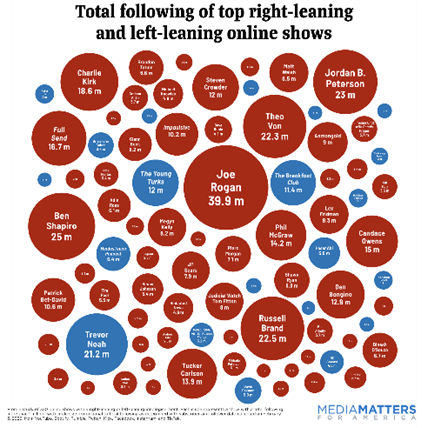









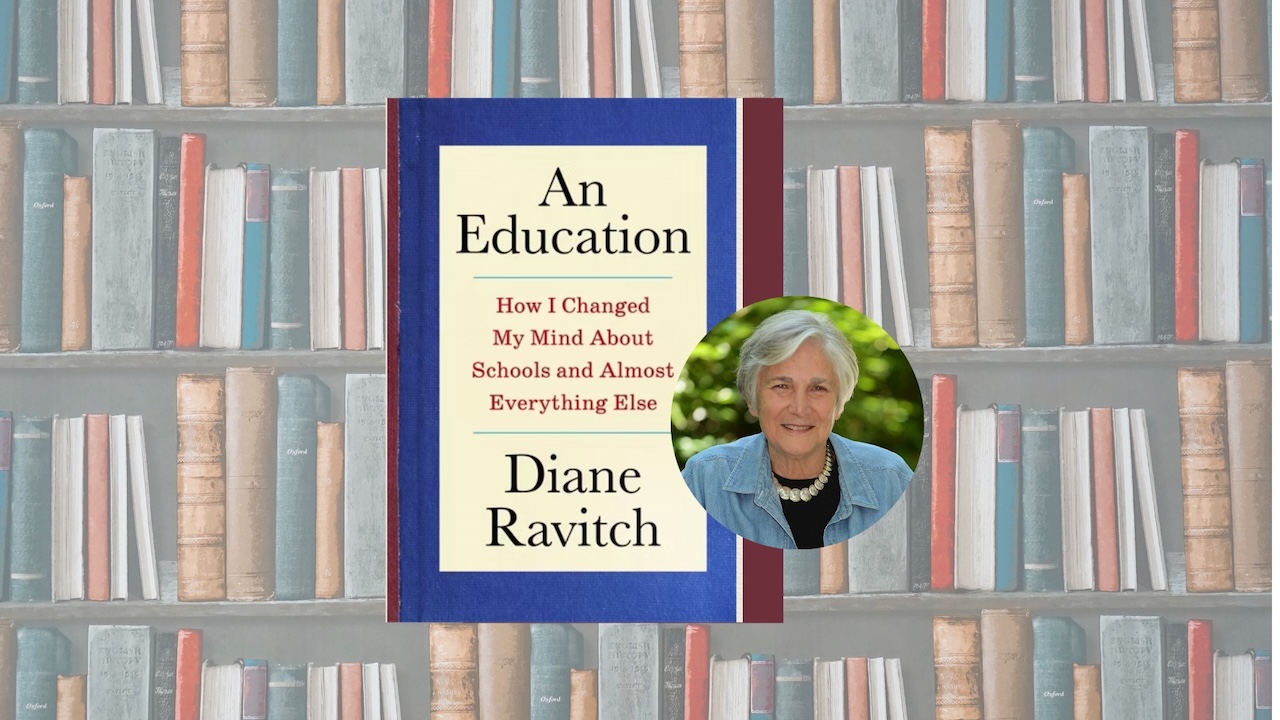
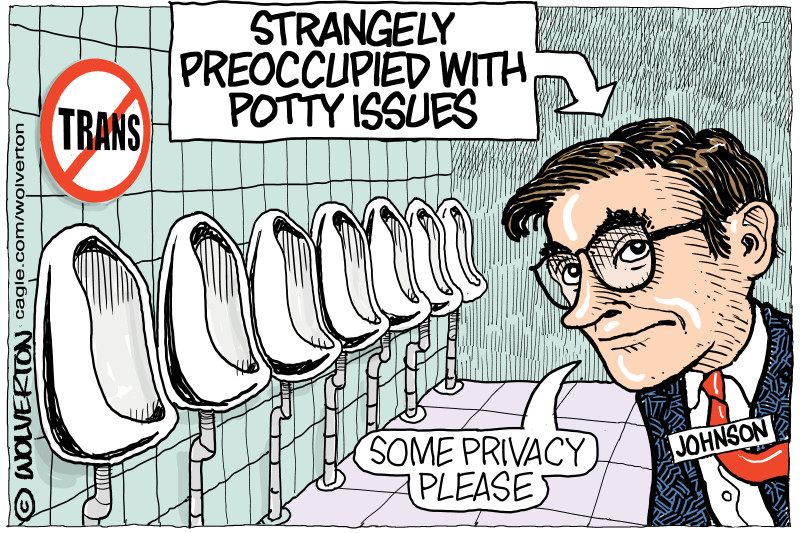
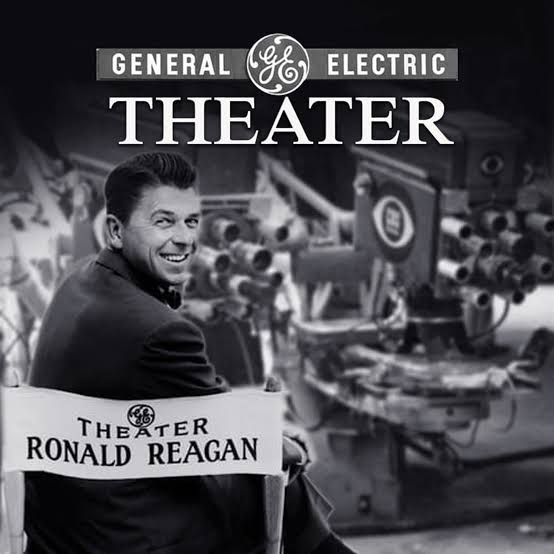







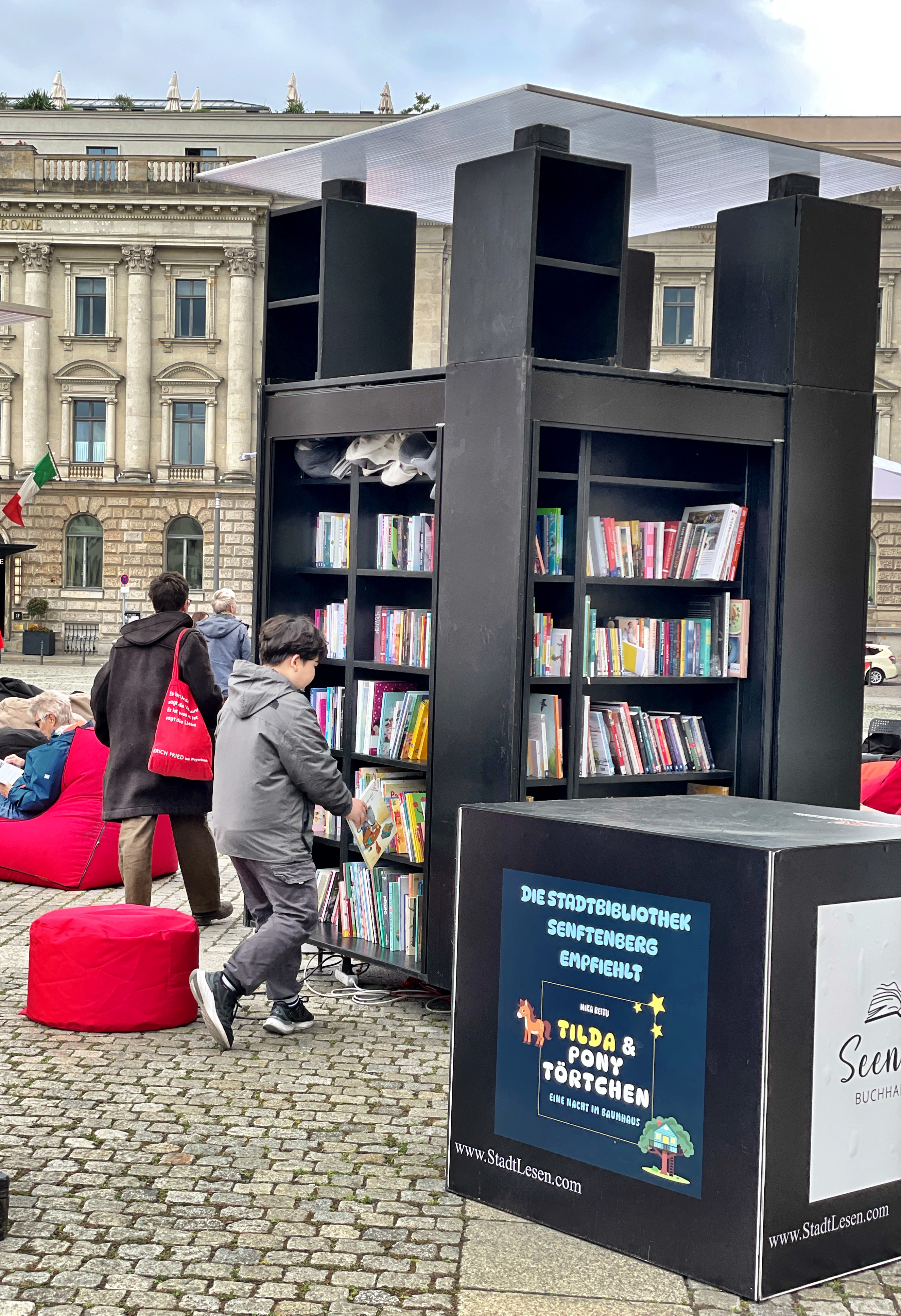











 Teacher in a strange land