America’s Most Vulnerable and Important Profession

The Teachers: A year inside America’s most vulnerable, important profession (Alexandra Robbins) does what many other books about teaching are not able to do–take the reader right into the classroom, and describe what’s happening, with empathy and perception. There are lots of books about problems in American education, and lots of books that suggest solutions for those problems, but we seldom get to see examples, conversations and the people doing the work.

If you want a drone’s eye view of American public education—where it’s been, what bedevils the century-old movement to improve it—I would recommend Diane Ravitch’s trio of excellent books that follow education reform over the last couple of decades, or A Wolf at the Schoolhouse Door: The Dismantling of Public Education and the Future of School by Jack Schneider and Jennifer Berkshire.

But if you want to see what happens in the classroom and in the lives of teachers, Robbins accomplishes that better than any book I’ve read since Tracy Kidder’s Among Schoolchildren, written in 1989, which now feels like ancient history . The book is a tour de force—every teacher I know who’s read it agrees—unapologetically written from the POV of teachers without feeling the need to make excuses or backpedal.

Robbins chooses three very fine teachers and takes us through one year (immediately pre-pandemic) of their classroom and personal lives, deftly illustrating how those lives overlap, the pile-up of frustrations and issues bleeding into their emotional well-being.

All three teachers have huge and versatile skill sets and genuine dedication to kids as well as subject matter. Interspersed are data and editorial comment about education and current “reforms” (scare quotes are deserved here), as well as real-life anecdotes and comments that reveal just how far teaching and teachers have sunk, in public estimation.

Robbins highlights things that other education books don’t notice or can’t be bothered with–in-building teacher jealousies and vindictiveness, physical violence against teachers, the long-term effects of cuts to things once considered normal in every school, what it’s like to sit in an IEP meeting with a recalcitrant parent or clueless colleague.

One of her teachers is a middle school special education teacher who finds himself taking on every troubled kid, something that school administrators often push, seeing him as the ultimate “male role model.”  Another is an overachieving fourth grade teacher who knocks herself out to be the perfect teacher for every child, leaving her with no time to build a satisfying personal life (and illustrating, to readers, just how arduous differentiated instruction is, even in a building with adequate resources and good teachers).

The third teacher is a 20-year veteran, a sixth grade math teacher who has mastered the delicate art of getting the best out of her students and runs afoul of a clique of punitive teachers who resent her success and want her to punish kids who are doing well in her class for their sins in other classes.

(Here’s a story from my own experience that parallels her problematic relationships with the people who should have her back—feel free to skip it): We’re having a staff meeting, late spring, to talk about the imbalance of students in elective classes. The middle school bands keep getting bigger and bigger. I will have 93 students in my 8th grade band next year. What this means (besides a classroom management nightmare) is that other elective classes will be tiny, because “too many” students want to be in the band. The Woodshop teacher is outspoken—we need to limit the number of students in band, perhaps allowing the 93 students only one semester of band, in order to give him the minimal 12/class that will keep him employed in the building full-time, rather than splitting his time between middle school and high school, or forcing him to teach a second elective subject.

Everyone knows why all those kids want to be in the band, he says. I turn to him, surprised. I have no idea why kids sign up for band, beyond the fact that they like it.  Mrs. Flanagan gives them all As and Bs, he says. If we forced her to use a bell curve like everybody else, we’d see half of them drop out.

I look around. Nobody’s making eye contact, so it’s clear that this has been a topic of conversation before. And there’s some truth there—I do give a lot of Bs and As, mainly because the students are meeting the goals set for the class. Their parents are paying for their instruments and students must practice to do well in class. We do many performances—both band and individual players. The bell curve is stupid; have all my colleagues really been using it?

I can justify everything I do, but I spent the rest of the year eating my lunch in the band room, paranoid about disrupting the building schedule. And the next September, I have all 93 students in my first hour class. Nobody ever shows up to help. The Teachers is full of stories like this—real things that happen. There is no paradise, no perfect school, although there are many vivid examples of teachers bending over backwards for students and colleagues. Why aren’t we honoring this, financially supporting this work, applauding the folks who show up to teach every day, sacrificing their time and energy for other people’s children?

This book is also the first and best description I have read about the impact of the pandemic on teaching and learning. There have been endless articles and research on “learning loss”–all rife with meaningless data and numbers–but nobody talks about the impact of being expected to position family needs as secondary to students’ needs. Robbins gets this right–there is a line between acting morally vs. choosing school over family, a choice that teachers were urged to make, and reviled when they chose their own families and their own health. We have not yet reconciled that, here in America—but the book makes a good start on it.

Highly recommended for everyone, but especially teachers. It’s a fairly fast and facile read, although well-documented with endnotes, and should give teachers a lift, knowing that their work and their dilemmas have been acknowledged.

The Absolute Folly of Standardization

Remember the days when Arne Duncan insisted that having different ‘goal posts’ in every state was preventing us from improving public schools in America? Good times.

I wish I could say we’ve evolved since 2015, when Duncan stepped down. Or after it became obvious that the pandemic was rendering test data even more corrupt and useless than the test data we were enthusiastically generating early in the 21st century to solve our problems and raise that bar. (Sarcasm alert.)

Alas, we’re still hooked on the idea that a third grader in Manhattan should know and be able to do the same things as a third grader in rural North Dakota, that Algebra belongs in 8th grade (or is it 9th) and six year-olds should be starting to read, dammit. Because global competition, falling behind, blah blah blah.

In fact, one of the problems with the word “standards” and its etymology, is that everyone thinks they know what standards are supposed to mean and determine. A precise definition

I’m not actually referring to standardized testing in this blog, although if you believe standardized testing is the only way or best way to understand how your child is doing in school, read this.

Nor am I particularly concerned about the standards (whether local, state or cleverly disguised Common Core Standards) that many educational institutions use to organize curriculum. It’s worth remembering that most of the first “national standards” (in the 1990s, spurred by the Nation at Risk report) were created by educators’ disciplinary organizations, with lots of teacher input—and were voluntary, with grade-span suggestions for what students should know and be able to do, and the order in which things were most effectively taught.

If that doesn’t ring a bell, it’s because those standards sank like a stone. It’s hard to even find links to them by diligent googling, but non-educators rejected them for various reasons, most notably Lynn Cheney who went after the History standards in the Wall Street Journal. They often included updated instructional methods and curricular ideas (constructivist math, teaching English as a second language, hands-on science and, of course, new ideas about how America actually became a nation).

The first round of national standards weren’t attached to mandated standardized tests, either. They were about curriculum and instruction. When the second round of national standards—the Common Core– were developed, they were part of a standards-aligned tests package, part of the movement toward “accountability” (a word that should forever have scare quotes when mentioned in an educational context). Practicing teachers weren’t seriously invited to the creation process and the word curriculum was not mentioned.

If tests and curricular benchmarks aren’t standardization, what is? Here’s a quote from Nel Noddings that explicates this beautifully:

The worst feature of current moves toward standardization is the insistence that all kids meet the same standards, regardless of their interests and aptitudes. This insistence is claimed to be a gesture toward equality, but it really is a sign of contempt for the wide range of human talents and the necessary work done by many of our citizens.

Any parent of two, different children understands this at a cellular level. Contempt, indeed.

Can’t meet the standards? We’re placing you on the left downslope of the bell curve, when you’re eight years old. Because we’re pursuing equality. It’s science.

There is value in knowing at what age we can expect most, if not all, students to reach intellectual and developmental milestones. That’s not the problem.

The trouble arises when we use the tools of school—instruction, curriculum, assessment—to compare the students in our care, to label them, to sort them into standardized categories when they are very young. To essentially assign their potential. To show contempt for the wide range of human talents.

What about grade levels? Aren’t there specific skills and knowledge we should be demanding of 5th graders or sophomores? Shouldn’t they all be getting the same core content at the same time?

It’s important to remember that grade levels were an efficiency tool invented when there was a big push to get everyone to go to school, rather than relying on tutors, homeschooling—or no schooling at all. Anyone who has taught school can tell you that grade levels are ephemeral, an organizational fiction.

A room full of children of precisely the same age will always have different skill and aptitude profiles. That’s not to say that we should try to adjust groups to meet academic levels, because kids learn at different rates, at different times, and in different ways–and punishing students by keeping them from their peers is insulting and bound to backfire.  

Age-based grouping is probably as good a method as any for group instruction and socializing. The trick is providing children with educational experiences that match their interests and present skills. Teachers know this as differentiation—and it’s a major challenge. (One of the best descriptions I’ve ever read of a teacher who is trying to differentiate instruction for a wide range of same-age students can be found in Alexandra Robbins’ The Teachers. Mind-boggling.)

Here’s another thing Arne Duncan used to say: Education is the civil rights issue of our generation.

I actually think he was mostly right about that—and the fact that his phrase has been co-opted by ugly right-wing thinking and lawmaking may be proof that it’s a powerful thought, when it comes to actual equity and using our schools to support and encourage individual potential.

Which is the opposite of standardization.

Girls. Period.

Alternate title: The Idea that Girls’ Menstrual Cycles are Shameful Information, Unless Important People Need to Know.  And you’re right–that doesn’t make sense.

Back in the day, when I was in junior high, girls were excused from taking showers after Phys Ed by discreetly telling the gym teacher, standing ever-ready with her clipboard, that they were having their “P.” She would dutifully note this on a mimeographed list of students.

This wasn’t done to assure that the girls weren’t chemically altering their bodies, thus making them superior athletes. In fact, girls weren’t even considered competitive athletes until Title IX. The reason for tracking girls’ menstrual cycles was to ensure they took showers unless their delicate condition and public embarrassment temporarily exempted them.

It’s clear—and it’s a good thing—that the old rules about even mentioning menstruation have long since crumbled. I spent 30 years teaching middle school band, and routinely kept menstrual supplies in my lower left-hand drawer, because you just never knew when a middle school girl would be surprised. And, possibly, mortified.

We didn’t have a school nurse, and the machines in the girls’ restroom were no longer refilled. Unless I wanted hapless girls canvassing 10 of their friends or making group trips to lockers and restrooms, freebie necessities were kind of like Kleenex and hand soap—donations to civilized life in the band room. Items not provided by the school—but nothing to feel embarrassed about.

Recently, a friend who is currently teaching at a local middle school emailed a cluster of friends and asked if any of us would be willing to donate pads and tampons. Not just for school-based emergencies, but also making it possible to send home overnight and weekend packages for girls whose families were not routinely supplying them. Because they’re expensive.

I keep thinking about that as I read the news out of (naturally) Florida—and other benighted states. Whose business is teaching girls—and boys—about menstruation, a natural human function? And why are legislators sticking their noses into what should be an everyday occurrence in schools, ho-hum?

Headline in the Washington Post: Florida bill would ban young girls from discussing periods in school. So—stop me if I’m wrong here—a child (and there are many girls whose periods start when they’re in elementary school; the age of menarche is getting increasingly lower) discovers that she is bleeding. In addition to needing some supplies and some friendly support, she will be breaking the law should she talk about it. According to some old man at the State Capitol.

Let’s name names:
During a Florida House Education Quality Subcommittee hearing Wednesday, state Rep. Ashley Gantt (D) questioned her Republican colleague, state Rep. Stan McClain, on his proposed legislation that would restrict certain educational materials used in state schools. House Bill 1069 would also require that instruction on sexual health, such as health education, sexually transmitted diseases and human sexuality, “only occur in grades 6 through 12,” which prompted Gantt to ask whether the proposed legislation would prohibit young girls from talking about their periods in school when they first start having them.

“So if little girls experience their menstrual cycle in fifth grade or fourth grade, will that prohibit conversations from them since they are in the grade lower than sixth grade?” Gantt asked.

McClain responded, “It would.”

I guess that’s one reason why Florida girls might be given menstrual products before their first period—so they won’t have to ask for them, risking arrest, or subject a sympathetic teacher to law-breaking by doing what I used to do, all the time: quietly sending girls to my lower left-hand drawer.

I repeat: this is all normal and natural. It was a great day when Health and Physical Education teachers started delivering sex education information to mixed classes of boys and girls. I wish all schools provided free pads and tampons for girls who needed them. We could do better.

Although I agree that parents should be their children’s first and most influential teachers on the range of human sexuality topics, I was profoundly grateful that both my own children had great, no-nonsense sex ed teachers, beginning in 5th grade. Learning about your body—just the facts—and having your gender-based questions answered truthfully? What a gift to children approaching adolescence, a gift we can all benefit from.

As for the claim that FL Governor Ron Desantis is collecting information on girls’ menstrual cycles—well, that’s not precisely true. It’s the statewide High School Athletic Association that’s asking questions, and they’re saying it’s not about rooting out transgender students or embarrassing girls, yet again. There are legitimate reasons for caring coaches to watch for amenorrhea due to eating disorders or exercise stresses, for example. A student athlete who became pregnant would need special treatment. Here’s the information they want to know (click).

What if we were a nation where normal body functions were well-understood, and stuff like knowing how and why to delay pregnancy were agreed-upon knowledge for all pre-teens? I’d feel a lot better about the Florida HSAA asking girls how old they were when they began menstruating, and how many periods they had in the past year in that case.

In the current context, that information feels private, to me. There is trust lost, on all sides, between girls and young women– and whoever’s running the educational show in Florida right now.

And that’s sad.

Thinking about Teachers at the Table

In the fall of 1993, the United States Department of Education (under Richard Riley, Secretary of Education) held what was intended to be the first annual National Teacher Forum. Organized by Terry Dozier, Special Assistant to the Secretary, state Teachers of the Year and their chosen outstanding teacher partners were invited to Washington D.C. to discuss how to bring the teacher voice into policymaking.

I’ve been to lots of conferences and seminars, but few impacted my life as a teacher leader more than the first National Teacher Forum. I can remember, verbatim, phrases—Honor what we know!—and aphorisms we used: Teachers want to be partners in, not objects of, education policy.

The idea of teachers at the policy-making table was downright thrilling. We deserved to be at the table—in fact, it was our table.  Our contributions could make a huge difference in policy around student learning and public school organization. We had answers to education’s persistent questions. Ask us!

We were all assigned a partner in the US Department of Education. We went to workshops (this was where I first heard of National Board Certification). We networked with the legislators and bureaucrats who were making policy around the work we did every day. We were encouraged to start our own state forums for accomplished teachers. Best of all, we started something few of us had heard of before this: an online bulletin board and discussion group. I was a moderator of that group—and still have many professional friends from that time.

I wish I could give you links so you could explore this wonderful program, and read the publications that resulted, but an hour of googling and a scouring of ed.gov have yielded zero information on the Forums (there were eight—the entire initiative and its published results were taken down in 2001, as No Child Left Behind turned education policy in a vastly different direction). I found two publications—Teachers Lead the Way, from the 1997 Forum, and a reprint of the 1994 Forum document, Prisoners of Time, which was apparently (and ironically) co-opted by the Education Commission of the States.

I share all this to illustrate the fact that teachers have long been interested in controlling their own professional work, and willing to share their expertise and perspectives with policymakers. Personally, I’ve been involved in several initiatives to bring teachers to various policy tables. After the National Teacher Forums bit the dust, State Teachers of the Year organized themselves—and even proposed Teachers at the Table legislation (which went nowhere). The idea keeps bubbling up.

Point being: the only people who think having a substantive teacher voice in education policymaking is a great idea are teachers. And, of course, their state and national unions—who represent the broad outlines of teacher-friendly policy via lobbying and advocacy, and are wary of independent teachers proclaiming their teaching expertise makes them policy experts, as well.

Publications and media about the teacher voice haven’t shut down in the intervening 30 years. Independent blogging, non-profits and social media have elevated pieces about the necessity of asking teachers whether a Big Sexy Idea about how to ‘fix’ issues in public education will work (usually, no) and what might actually improve teaching and learning.  

In short, as Jose Vilson says in his TED Master Class, no conversation about education should happen without the teacher voice front and center.

But—as with all things in education—there are caveats in thinking that gathering a group of teachers (even award-winning teachers) and asking for their policy ideas would be the fastest way to better schools.

Teachers aren’t trained to do policy creation and analysis. They can tell you, in excruciating detail, what bad policy does to student learning in their context. But good policy is written with measurable goals and specific outcomes in mind, accompanied by the supports and spurs that will get us there.  It requires imagining not only happy results but unintended consequences.

Policy is not (exclusively) mandates and incentives. Sometimes, it involves capacity-building, persuasion—or overt systemic change, which takes time and accrued data to analyze. Regularly asking teachers to comment on the changes wrought by policy shifts ought to be a no-brainer, however. Acting on educators’ feedback would be even better.

Here’s an example: My state instituted a third-grade retention law in 2016, wherein students who didn’t meet the third-grade standard for reading proficiency would be held back—a mandate, taking away a decision that had always been made by teachers and parents. Half the states in the nation now have similar policiesand politicized policymaking has made other states feel they need to crack down on those lazy eight year-olds.

It’s a terrible policy, for dozens of reasons, beginning with its target audience and punitive nature. In six years, it hasn’t yielded anything beyond angst and anger, much of which has been directed at teachers and schools, not clueless (or, sadly, vindictive) lawmakers.  

The good news here is that MI Governor Whitmer seems poised to sign a bill repealing the third-grade retention mandate. Nevada’s repealed theirs, too. The MI bill’s sponsor, Senator Dayna Polehanki, is a former teacher. A Michigan Teacher of the Year, Leah Porter, testified in hearings.

There’s a role for teachers in examining and fine-tuning education policy—and a strong need for teachers to run for public office to share their experience and expertise. As we said, at the 1993 National Teacher Forum: Honor what we know.

Who is Indoctrinating Whom?

A few years back, I got an email from a recognizable family name in the district where I taught for over 30 years. The man sending the email graciously introduced himself and provided the year that he thought I may have been his sixth grade music teacher. Doing the math, I realized it was my first year of teaching.

Once I confirmed that yes, I was the Nancy Flanagan he was looking for, he sent a rather remarkable second email. He was working for the State of Michigan, as an attorney in their Civil Rights division. And he wanted to thank me for my influence on his life, back when he was in the sixth grade, in my general music class.

While large segments of my career as a music teacher are blurry in my memory, I do remember bits and pieces of that first year—I was teaching several sections of sixth grade music, and saw the kids perhaps twice a week. There was no set curriculum, no standards, no published materials to guide me. I was literally making it up, day by day. It was an all-white school, in a charming little town on the outer ring of suburban Detroit—and my job seemed to be keeping the kids busy for 40 minutes, and my head down.

In his email, the man said he remembered singing Black and White, a then-current hit song by Three Dog Night, in music class. You talked to us about it, he said— kind of a little sermonette (his word) about equity and integration. None of my other teachers and nobody in my family ever talked to me about race or civil rights, he said. But the song made me curious. In high school, I started asking questions. And in college, I took a course in African American studies. And then I went to law school, with the intention of doing something good with my education.

The key thing about this story is that I didn’t remember any of it—not singing the song, and especially not talking to sixth graders about the meaning of the lyrics:

The ink is black, the page is white. Together we learn to read and write.
A child is black, a child is white. The whole world looks upon the sight–a beautiful sight.

And now a child can understand that this is the law of all the land.

I have since learned that the song was originally written in response to the Brown decision, in 1954, and first recorded by Pete Seeger. A verse that was part of the original lyrics was left out when Three Dog Night recorded it:

Their robes were black, their heads were white,

the schoolhouse doors were closed so tight.
Nine judges all set down their names, to end the years and years of shame.

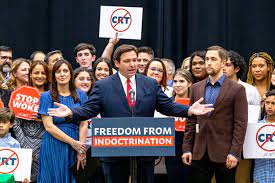
How would Ron DeSantis feel about Black and White? Or any of the other things millions of teachers have unwittingly said, done, shared, read aloud and even thought in recent decades? Where does ordinary classroom discourse end—and “indoctrination” begin?

A good way to think about that question is to reflect on what you learned in school—remarks that teachers made, class discussions, books that lingered in your mind. Your mileage may vary, of course, but a lot of what I remember is not “content,” per se—but the odd comment, classroom habits, kindness or lack thereof.

My biology teacher, Mr. Fry, used to show us movies from the Moody Bible Institute on Fridays, 100% creationist in nature. Mrs. Wildfong, fifth grade, let me skip the SRA kit and read whatever I liked from a shelf in her classroom. My HS physical education teacher, Mrs. Firme (yes—that was her real name), once asked me if I had polio as a child, because of the way I ran the 50-yard dash, making me self-conscious about running for the rest of my life.

Was I indoctrinated by my teachers? Nearly every teacher I had subtly changed my academic and life trajectory, from kindergarten to graduate studies, and not all of them had my personal well-being as an educated person in mind. Some wanted to save my soul, others wanted to influence my political beliefs. When William Kunstler came to speak on my college campus, my philosophy professor said his speech was “garbage.” I don’t remember a great deal about introductory philosophy, but I remember that.

Was the Professor right? I had to wrestle with that question—challenging intellectual work, actually, during a time when campus unrest was the hot political issue.

In yet another excellent blog, Jan Ressenger says this:

For several hours in December, as I watched a televised hearing of the Ohio House Education Committee, I was struck by so many lawmakers who seemed to define the role of teachers as mechanical producers of standardized test scores—and who conceptualize schools as merely an assembly line turning out workers who will help attract business and manufacturing to Ohio. I listened to a conversation filled with standardized test scores—numbers, percentages, and supposed trends measured by numbers. The only time human beings appeared in the discussion of education was when legislators blamed teachers for the numbers.

As I watched the hearing, I realized again something that I already knew: Many of the people who make public education policy at the state level don’t know what teachers do. Few people on that committee seemed to grasp that teaching school is a complex and difficult job.

Ressenger gets this absolutely right–read the blog! Teaching has never been about content delivery, effectively measured by tests, where students repeat what they’ve memorized. Good teaching has always been –even if unacknowledged– about applying new knowledge and challenging beliefs.

It’s a complex and difficult job, all right.

Were you indoctrinated by your teachers? Who’s in charge of the indoctrination dialogue right now—and what’s their goal?  Good questions to ask.

Parents’ Rights vs. Reality

I am always bemused by the phrase “parents’ rights,” when utilized by right-wing culture warriors in our current education climate. Because—seriously—parents have always had the right to control pretty much anything around what their child was learning or doing in a public school. As long as it was in general alignment with the school’s mission, of course, and didn’t impact the education of other students.

I have been a public school teacher in five separate decades, beginning with the 1970s—and have seen parent demands and outrage issues come and go, from Sex Education (a perennial sore spot in the curriculum) to The Math Program (aka, Why don’t I understand my kids’ homework?) to Pay to Play Athletics. My friends who taught literature were always willing to substitute one book for another, if parents preferred not to have Jason read Huckleberry Finn or The Bluest Eye.

I could name dozens more instances of parents being upset about something “the school” did—or a teacher said—or how a particular policy was enforced.  In fact, one of the reasons to put your children in public schools is the knowledge that you can complain, even organize a group of complainers, and there is a duly elected school board you can address, if school administrators don’t give you what you want.

What if what the parent wants is not in the best interests of their child, let alone all the other students in her class?

Your mind may jump here to the use of pronouns—or acceptance of realities (historical and current) that some parents find threatening–but over time, teachers run into many legitimate reasons not to trust parental requests or judgment (pay attention to that word, judgment…).

For example, I once had an Albanian student who had only been in the country for a few months. The class was a pull-out, called Homework Hall, where kids who had lots of missing assignments were sent with the hope that taking away their gym or computer privileges would cause them to buckle down and make up all the work. I was supposed to stand over them, keeping their noses to the academic grindstone.

Homework Hall was based on a flawed theory to begin with—but this girl was struggling with speaking/reading/writing English, and not completing most of her written work because it was written in a language she barely understood. I tried negotiating with her teachers to significantly reduce her assignments—answering the three most important questions instead of ten, or giving her a buddy who could read things to her, discuss the content to help her form answers with the vocabulary she’d mastered—but not all of her teachers were willing to do that.

In the meantime, her father kept coming to school. After getting a quarterly grade report, showing that she had not turned in some of her work, he wanted daily reports. He didn’t speak English, either—but his teenaged translator said if the girl was “lazy” then she would be punished. Swell.

This girl was the polar opposite of lazy. She worked hard. She was persistent. She just needed school-based adults in her corner. Her father had the right to ask for information about her progress, undoubtedly. And probably it was his prerogative to continue slapping her and verbally abusing her in a language she did understand, which seemed to be his cultural norm for how to deal with bad grades.

It was one of those judgment calls. Stand up for the kid–or decide it’s none of your business and confirm that she actually had failed to turn in assignments, because they were just too difficult?

In fact, every one of the kids in that class was a judgment call—the brilliant boy who simply refused to copy definitions from a glossary or do other pointless work, the child whose parents had just split up and couldn’t concentrate on equilateral triangles, the girl who was hinting at suicide in her English class free writes (which she never turned in, leading her to Homework Hall). Judgment calls, all of them.

What if you wanted to encourage parent-school dialogue—would passing laws requiring schools to post copies of existing legislation guaranteeing parental rights really be the solution?

Or what if you reported a child for seriously threatening behaviors—repeatedly—and nobody came to help

And sometimes—angry parents are absolutely right to speak their minds about what’s happening in the school their child attends.

Parents do have rights—and they should. Public schools are obligated to acknowledge and address parents’ input. The best thing we can do to ensure parental rights are honored is to invite them to speak their minds and express their beliefs and wishes, calmly, with the relevant adults in the room.

What we are seeing now—nominally “parents’ rights”—is not about parents expressing their beliefs about serious education policy or even personal issues involving their child. They are politicized grievances, often based on nothing more than rumor. And they’re often quietly funded by groups that have no personal interests/issues with the school in question—only in damaging public schools.  

The Governor of Michigan, Gretchen Whitmer, recently met with a group of parents, some from the district where I taught for 30+ years, to discuss education issues. Here’s what a man (whose son I taught, back in the 90s) had to say:

“The biggest issue I see is just the lack of respect…the Republicans feel that anybody can be a teacher these days, which is the craziest damn thing that you can think of. We recently elected a lot of new school board members who are anti-school. I don’t know any other way to put it. The slates that ran out here are just not going to be supportive of public education. So I think that’s the biggest problem that we see. There are school board members who actually believe, and it just astounds me, that there are litter boxes in the bathrooms. That’s what we’re dealing with.”

Whitmer agreed and made a point to debunk a right-wing conspiracy theory circulated by podcaster Joe Rogan and Michigan GOP Co-Chair Meshawn Maddock that kids are identifying as “furries” and are using litter boxes in classrooms. This has been used to push anti-trans policies in schools.

Thank you, Governor—and all of the other education officials who are carrying on as if culture warriors had legitimate things to talk about, letting the system work as it is supposed to. But in all these school board meetings—especially those that become hostile encounters, it’s good to keep in mind that not everyone is set on building good community schools.

The Network for Public Education has a new (free) publication– Merchants of Deception: Parent Props and their Funders. Find out who’s really got a legitimate beef and who’s out to take down America’s best idea, a fully public education for every child, no matter what they bring to the table.

Keep Your Hands Off My Curriculum

There is a certain irony, I realize, in a music teacher writing a piece called ‘Keep Your Hands Off My Curriculum.’ Music education is generally one of those areas that Moms for Faux Liberty types ignore (unless—and this comes from personal experience—it’s critiquing the tunes chosen by the marching band whose entire existence, to some people, hinges on supporting football players).

Who cares what they’re learning? It’s just music! There’s a lot wrong with that assumption, beginning with the universality of music—as human beings, we’re swimming in it—but first, I want to talk about all everyday curriculum, across the K-12 spectrum–and who controls it.

My pitch here is about the individual teacher voice in selecting materials and designing lessons for students, and it’s based on two fundamental teacher competencies: *
1. Knowing your students well, and being committed to their learning.

2. Having deep and always-growing knowledge and pedagogical expertise in the subjects and developmental levels you teach.

The second of these is something that can and should be continuously improved, across a teaching career. It’s the point (if not the actual outcome) of what we call professional development.

The first, however, depends on the individual teacher’s character and temperament, their belief that all students have a right to learn.

Now—I’m not opposed to standards or other common agreements, whatever each state or district calls them, the big buckets of what students should learn and when. Broad standards can organize and sequence curriculum; outlining disciplinary essentials and giving all educators a framework for what students should know and be able to do, at the end of their schooling, is undeniably important.

What I’m saying is that site-specific agreements– what all 9th graders in the district should read, for example, or how to teach the life cycle of a butterfly–ought to be made by those on the front lines. The ones who know the kids, and are committed to their learning.

This idea ought to be glaringly self-evident—to educators, to parents, even to Joe Lunchbucket who watches Fox News. Kids who live in Flint, Michigan may need to know and be able to do different things than kids who live in Dallas—or Anchorage. Who is best positioned to choose engaging materials, develop concepts, deliver instruction, lead discussions and check for learning?

Certainly not Chris Rufo, who seems to be everywhere these days, merrily inserting his personal beliefs into college syllabi and waging gleeful war on beleaguered K-12 public schoolteachers trying dutifully to teach things, it must be noted, prescribed by others.

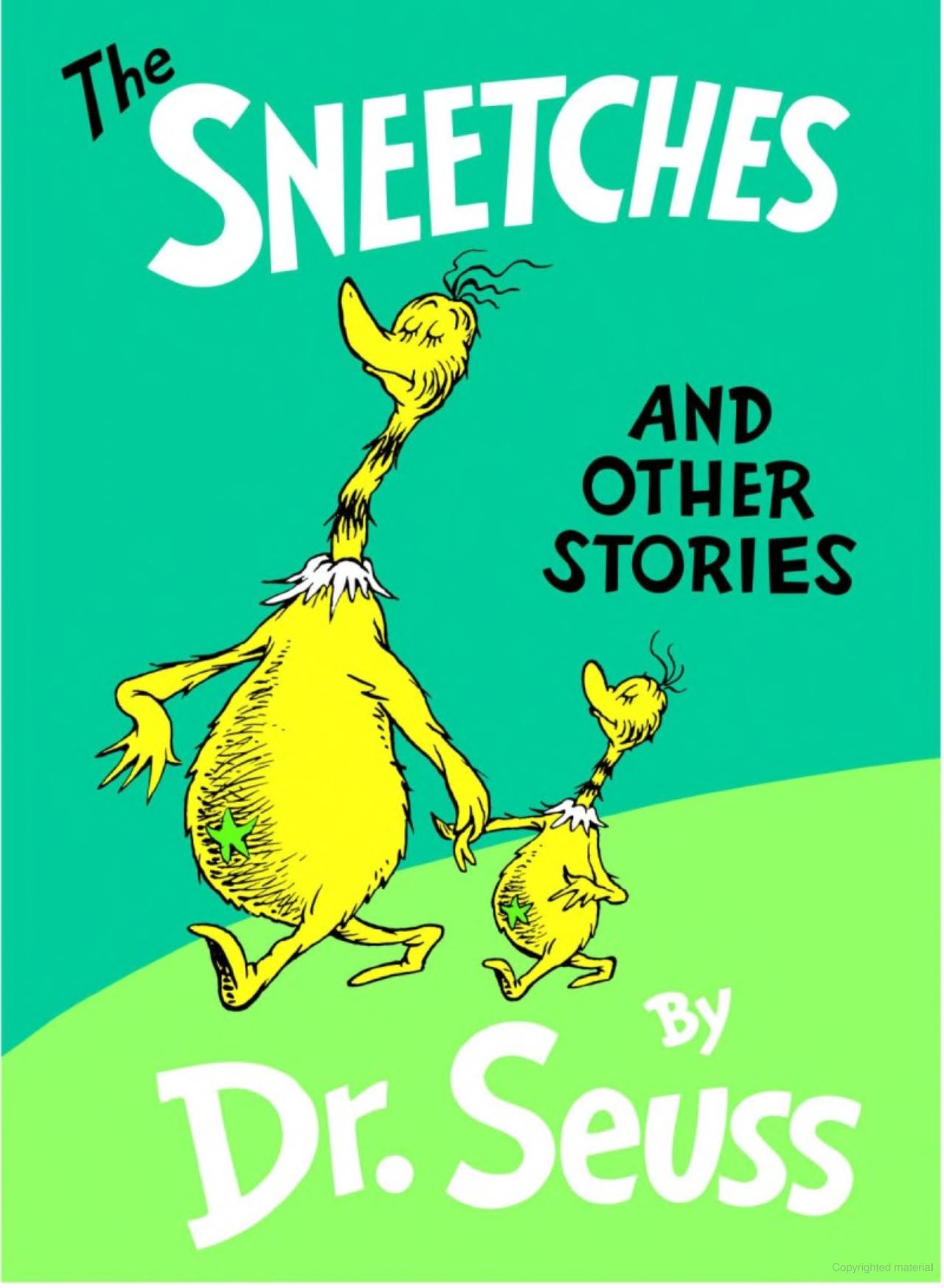
It was the linked article on Rufo—and this piece–that inspired this blog. The story is about an Ohio administrator who interrupts a teacher reading Dr. Seuss’s The Sneetches during a recording session intended for an NPR podcast.  A third grader makes a very astute comment; the teacher (Mandy Robek) continues reading, but the admin (Amanda Beeman) shuts that whole thing down:    

“It’s almost like what happened back then, how people were treated … Like, disrespected … Like, white people disrespected Black people…,” a third grade student is heard saying on the podcast.

Robek keeps on reading, but it’s shortly after this student’s comment is made on the podcast that Beeman interrupts the reading.  

“I just don’t think that this is going to be the discussion that we wanted around economics,” Beeman said on the podcast. “So I’m sorry. We’re going to cut this one off.”

(NPR reporter) Beras tried to tell Beeman that “The Sneetches” is about preferences, open markets and economic loss, but Beeman replied, “I just don’t think it might be appropriate for the third-grade class and for them to have a discussion around it.”

I actually have some empathy for the administrator. She’s totally wrong—kudos to the teacher and the reporter for choosing the book and understanding the relevance of the child’s comment—but I’m sure Beeman envisioned her job security disappearing in a wave of rabid, sign-waving Moms for Control Over Everything at the next school board meeting, and panicked.

But that’s the point here: Educators need to be prepared to defend their curricular choices, with passion, conviction, and carefully considered rationales. Rolling over for the likes of Chris Rufo, the Hillsdale crowd, and dark-money funded and fully politicized organizations who wish to take down public education is not professional behavior.

Once they control what gets said and read in the classroom, the next target will be public libraries. All publicly funded services, the things that build healthy civilization and make diverse communities strong, will be on the chopping block. Ironically, this is about what the Sneetches were trying to teach the kids in Ohio: preferences, open markets and economic loss. What students learn, even in 3rd grade, matters, it seems.

This is a huge issue, wrestling over curriculum and parents’ desires, and it’s been part of public education since the very beginning. No matter how many standards are imposed, or school board meetings disrupted, however, the most critical aspect of instruction remains the individual teacher’s understanding of what is useful and important for the students in their care, and their personal knowledge and skill in delivering those things. 

Here’s a story:

In 2008, I was e-mentoring some first-year teachers in an alternative-entry program (in other words, not traditionally trained). They were white teachers, assigned to an all-Black district in eastern North Carolina, country that was once endless tobacco fields. Most of them came from elite universities, and all were laboring under the misconception that they were ‘giving back’ to society. A lot of their conversations were about raising the bar, making a difference, blah blah blah.

It was also the Fall of 2008, when Obama was closing in on the presidency. Students in the school were wild with excitement. One of my mentees, teaching Civics and Government, kept sending me long emails pouring out his concern over the ‘unprofessional’ teachers–the ones who had been there for years. They allowed students to disregard the official curriculum! They spent classroom time talking about this miracle that was about to happen, even letting students campaign. Unethical!

He, of course, maintained that he was sticking to standards and remaining neutral about the race. After all, the students would be taking statewide exams next spring, and he wanted them to score well.  He went so far as talking to the principal about his concerns.

I tried to suggest that he was teaching during events that could make history—and incorporating real life into lessons made them more meaningful. I asked if he had conversations with his veteran colleagues, about why they thought abandoning the prescribed curriculum was sometimes okay. Our dialogue got more and more strained, until he basically stopped communicating with me.

This young man had always considered himself an outstanding scholar in the social sciences. His lesson designs (debates, short-writes, small-group discussions, film clips) weren’t bad at all, especially for a newbie. He had some ideas about how to be a good teacher, and passion for the subject matter. What he was missing was knowledge of students and commitment to their learning. When the principal had a pep assembly to celebrate Obama’s victory, he was disgusted. For a public school, this is totally wrong! he wrote.

I have thought of him often—I’m fairly sure he’s not teaching any more. Which is too bad. Because being a master at custom-tailoring worthy curriculum to the students in front of you is a skill that takes time and confidence. It really cannot be outsourced.

* If you sat for National Board Certification, these principles will look familiar. If they resonate with you, check out the National Board for Professional Teaching Standards’ Five Core Propositions. Good stuff.

Genuine Education Leadership

There’s yet another thread on Twitter today re: ‘rewarding’ teachers by allowing them to wear jeans on specified Fridays vs. giving them permission to go to lunch (with their students, of course) five minutes early. I have an entire bookcase filled with volumes dedicated to the topic of leadership in schools, but somehow, these casual conversations on social media better reflect what’s really happening than all the blah-blah about Reframing, Maximum Impact, Inspiration, Grit or–God help us–What Works.

The thing is—the success (however you measure success) of a school is almost entirely dependent on the people who work there, and their interactions. There are other factors, of course—resources, the surrounding community, thinking about values—but the best framework for doing right by kids comes from good people who like working together.

I’ve worked under dysfunctional principals, as part of a collegial staff, where teachers rose to mentor and support each other, deftly bypassing administrative snits and roadblocks. I’ve worked with great superintendents, gifted managers—and the occasional evil, ego-bound admin—but I am here to say that the real juice in school-based leadership comes from adults who care about kids and get along well.

Leadership emerges from respect, friendship and trust.

Not from someone with a title based on distributing perks—as we have witnessed this week as the leaderless party nominally in power tries to elect a Speaker of the House. Maybe we’ll see Kevin McCarthy offering Republicans the opportunity to wear jeans on Friday, or go to the Congressional cafeteria early. Ha.

My friend John Spencer thinks the ability to manage is an essential piece of being a real leader:

If a leader focuses solely on new ideas and new initiatives, they run the risk of confusing novelty for innovation. There’s no consistency or sustainability. People miss critical details. Often, the leader is so busy leading, they are unable to step back and maintain what’s already working.

Managing requires the unflattering role of maintenance. Maintenance can feel like drudgery. It can seem inconvenient. It’s a humble part of leadership that often goes unnoticed.

But maintenance is vital. A new bridge can connect people across a city. An unmaintained bridge can be deadly. The best principals I know will say, “I’m not much of a manager,” but they empower teachers to self-manage. They proactively step aside and provide the tools and resources that empower teachers. And in the end, empowered teachers empower students.

One thing John mentions really resonates with me: the inability of a formal leader to step back and maintain what’s already working. I’ve never been in a school—as a teacher, professional development presenter or classroom volunteer—that didn’t have some good aspects, things that needed to be maintained.

I’ve been in schools in deep poverty, the schools that public education vultures can’t wait to shut down, where the building is crumbling, and the playground is literally dangerous. I visited a school where there was one LCD projector in the building, bolted to the library ceiling, and a teacher stood on a table with a broomstick to operate it.

Those teachers—were genuine leaders. They knew the serious limitations they were working with, and kept going despite the environment there. I was merely a person who shared some Powerpoint slides. There were already good things happening in that building, courtesy of the people there. Professional development was superfluous, and they knew it.

Now—there are books about servant leadership and distributed leadership that aim for utilizing expertise rather than following a template for success. I’ve spent the last two decades trying to find a formula for teacher leadership that isn’t about giving someone more work and a small stipend, then labeling them a leader, whether their colleagues consider them leadership material or not. There is an endless parade of articles and commentary from teachers bemoaning the fact that they’re not at the table—they’re on the menu, happy to get a five-minute head start to lunch.

We’re still a long way from normalizing the respect, friendship and trust that are the basis of functional school communities, tailored to the kids they serve.

The issues media believes will dominate public education in 2023 are policy-related: Absenteeism. Mandated retention. Accountability (read: test score fluctuations). Educator shortages. Transparency for charters and vouchers. Funding, funding, funding. And of course, COVID and other viral menaces.

It strikes me that—once again—listening to those who have formed their own communities and informally recognize the leaders among them will have the most success in curbing absenteeism, bringing new, fully qualified teachers into the profession, putting the focus on real learning rather than meaningless data chases, and pushing back—from their own experience—against bad policy.

I’d like to share one illustration, a story from one of those trusted and respected veteran teachers, newly retired, about a favorite lesson that he could no longer teach. Read it—it’s a great piece, and he asks a lot of timely and relevant questions. He also says this:

The conundrum for a public high school social studies teacher teaching about the January 6 insurrection is not to sacrifice one’s credibility while also not pushing one’s own political beliefs on students. 

I had an advantage that other teachers trying to thread this needle may not have. I enjoyed the support of colleagues, administrators, students, and parents. You may be a high school teacher working in a less generous environment — one in which local and state politicians have trained their sights on teaching history. You have my thanks and deserve the thanks of all our fellow citizens for your dogged, noble work on behalf of American democracy.

That dogged, noble work? Let’s call it what it is: leadership.

2022. What a Year?

For several years, I have listed my favorite books—or top ten education prognostications—on Teacher in a Strange Land. I love end-of-year roundups like this.  ‘List’ titles draw traffic. I learned that 20 years ago, when I first set out to blog ‘from the classroom’ (although I was really blogging from my living room, on the family’s single computer). Everybody likes to analyze, compare and name favorites. Everybody likes to look back, and pretend there’s a clean slate ahead.

But 2022 was the ultimate strange-land year, here in Michigan. I think it was the first year where more or less permanent changes, wrought by the one-two punch of a corrupt presidency and a global pandemic, have altered the way we live and work. And, possibly, think.

All the local angst—school board hostilities, county commission craziness, health department firings, attempts to kidnap the Governor—sprang from that discontent. People want better-paying jobs. They want affordable housing. They want good—free—public schools for their kids. But they also want someone to listen to their woes, real and imagined, and confirm their biases, even if those biases are life-threatening.  

Living through a pandemic reminds us: Life is short. Might as well get it right, say what we think.

Best things that happened to all of us in 2022:

  • The midterm elections (nope, the country isn’t going to hell, yet)
  • Kids went back to school (triggering other viral waves, but still…)
  • Biden did most things right (including supporting Ukraine). I can honestly say that although I was not a Biden fan prior to 2020—he came in 12th on my list of candidates—I am very happy that Uncle Joe has been at the helm and accepts good advice.
  • The January 6th Committee Hearings. I seriously doubt that Donald Trump will experience significant consequences from the ugly mess he made of the US Presidency. But I am grateful to know that the nation was able to see the truth, in digestible bites.

Best things that happened to me in 2022:

  • I ran for office–and lost. Running for County Commission was a great experience, however. The district where I live has been ruby red for some 30 years–see that little pink square in Leelanau County? Dems came closer than we have in forever to turning the entire county blue. Running for office has been a bucket-list goal, and the conversations I had with people I’d never met were eye-opening.
  • I got to travel, again, another bucket-list kind of thing. My husband and I have spent February in Arizona since 2016, interrupted by the pandemic. This year, fully vaxxed and boosted, we drove to Arizona—and immediately tested positive. We got free, drive-through PCR tests to confirm. And about a half-hour after being notified that we were indeed positive, we got a call from our local health department, 2000 miles away: Were we OK? (OK-ish) Did we think we needed Paxlovid? A doctor visit? (not really) Faith in my local health care system? Restored.

I also went to Europe for two weeks this fall—and that was splendid.

Best Media Consumed, 2022:

  • Favorite Fictional Book: Demon Copperhead (Barbara Kingsolver). Kingsolver is an author whose works I never miss, and always love. Demon Copperhead is simultaneously hilarious and tragic, and Kingsolver finds a way to meld the ongoing opioid crisis, 19th century Dickensian literature and the American passion for football—and reveal what’s really going on in all three.
  • Favorite Non-fiction Book: Jesus and John Wayne (Kristin DuMez). DuMez teaches at Calvin University, near my hometown and alma mater of lots of super-conservative family members, most of whom would vehemently disagree with DuMez’s conclusions here: that evangelical support was not a shocking aberration from their views but a culmination of evangelicals’ long-standing embrace of militant masculinity, presenting the man as protector and warrior. Meticulously researched, and highly recommended.
  • Best school-y media: Abbott Elementary (TV show) and Tracy Flick Can’t Win (novel, Tom Perotta). Everybody knows about Abbott Elementary—warm-hearted and shockingly close to truth, right down to the egotistical, incompetent principal—but Tracy Flick is also that rarity: a book set in a school that feels very real.

I generally shoot to read 100 books in a year—it’s been my (achieved) goal for a decade. This year, I will clock in (if I’m lucky) at 85 books. The traveling and campaigning bit into reading time. But that general angst—the sense that things will never be ‘back to normal’—is also a factor. It’s hard to relax, to concentrate, to give up a long afternoon living in another world.

Finally, the Bad News is About Schools:

I see the culture, in general, in flux right now. The economy, national politics, health care, media—all of them, from Twitter to The Former Guy, will continue to evolve. But I am incredibly depressed about public education, always the scrappy underdog in the question about how we build citizenship and strengthen the workforce.

I became a teacher in 1974, and have observed public schools, up close and personal, ever since. I’ve seen good times and bad (although I wasn’t able to accurately evaluate, in the moment). But reading my fellow educators’ social media feeds is…heartbreaking, no other word. Should I stay or should I go? Have your students lost all motivation, like mine? Here’s a picture of me taking my 300 personal books out of my classroom. Etc.

In an excellent post, my blogging hero, Jan Resseger, captures the zeitgeist in a single title– Culture Wars at Schools Increase: Undermine Educators, Block Respectful Dialogue, and Make Students Feel Unsafe and Invisible.

That pretty much says it all.

Maybe public education is a lagging indicator—maybe the good news about competent government and public awareness, will eventually track back to the cornerstone institution of American progress, public schools. But I think folks like Ron DeSantis and Glenn Youngkin, and countless others, have targeted public institutions for children as low-hanging fruit, perennially underfunded and unstable, and gone after them.

The damage might be permanent.

What Do We Owe Children of the Pandemic?

Another piece in the NY Times, yesterday morning, all about the learning loss ‘crisis’ created by the pandemic. The article starts with the usual—essentially true—statement about test scores dropping as a result of the disruption of dealing with a global pandemic. But paragraph two goes full-on hype:

Nine-year-olds lost the equivalent of two decades of progress in math and reading, according to an authoritative national test. Fourth and eighth graders also recorded sweeping declines, particularly in math, with eighth-grade scores falling in 49 of 50 states.

I am always curious about why these easily debunked, alarmist claims appear in all the NAEP (‘authoritative national test’) reporting. Because we wouldn’t want to have a calm, rational, evidence-based discussion about how we can help all the kids whose lives were turned upside down by a pandemic, would we?

Instead, we’re left with arguments about whether remote learning is inefficientdata on that are not clear-cut, coincidentally —and panicky faux statistics on lost decades of learning. Faux statistics that the general public does not fully understand, by the way—you have to wonder WHY they’re appearing in the New York Times.

What the analyses of NAEP data do reveal: Nationally, we have accepted the idea that test scores are reality, our only reliable indicator of whether a school is doing its job and individual children are learning. There is no test that measures resilience or student well-being—that information would actually be useful.

There is zero doubt that schoolchildren were negatively impacted during the pandemic. Most of them had to stay home, to protect their own health and the health of their families, at some points in the pandemic—and those viral spikes in the population are not over. Remote learning was patchy and less than ideal, for many children. The world, for all kids, from preschoolers to high school seniors, became an unpredictable and often disappointing place.

The question now is not How Bad Was It? followed by handwringing and blame.

The question is: What Should We Do Now? (Notice that I did not say ‘now that the pandemic is over’?) How can we help kids who have been through a rough patch find stability and comfort, even joy, in a school setting?

What do we owe to those children and youth, some of whom are experiencing their first ‘normal’-ish year at school and some who have cut their K-12 losses and moved into the world of college or work?

I have some ideas about that. But first, some essential questions.

The foundational question: What are our real end goals in educating children?

Improving their test scores is a demonstrably terrible goal, as we have learned with the latest round of NAEP data. If all we offer kids, in school, is instruction designed to bump up scores, and then spend all our media capital bemoaning a three-point drop after a massive health disaster, it’s no wonder they feel disconnected from schooling.  

Another question: Is remote learning ever beneficial? Under what circumstances and conditions?

I would argue that remote learning, while a long way from ideal, served a positive purpose in 2020. And further, having experienced it under triage conditions, we could use that experience to explore better uses of distance learning, instead of deciding that it was both a failure in terms of learning, and, somehow, the teacher union’s fault.

 Finally: How much of this panic over test scores is driven by what the pandemic laid bare: Our society-wide reliance on schools for childcare. Parental angst and fears being politicized by opportunistic partisan groups, funded by dark money.

We need our community schools. And we desperately need to reassure the next generation that we believe they can learn whatever they need to learn to become functional adults—and that we will help them toward that goal, as best we can.

What do we owe the children of the pandemic?

  • A universal health care plan, available to every American.
  • A high-quality, fully funded public education for every child, no matter what they bring to the table, and baseline funding to bring schools in poverty into alignment.
  • Additional free or low-cost education and services for those who need or desire them: Free community college. Free auxiliary tutoring for kids with special needs—ESL, disabilities, long-term health issues, etc. Free apprenticeships. Free preschool. Free career counseling for all ages.
  • High-quality, affordable childcare, and adequate parental leave.
  • Plenty of well-trained and well-paid teachers, pre-K through university level.
  • Rich curriculum that acknowledges all children have different gifts and interests.

We had a crisis-opportunity to examine the stressors and weaknesses in our education system. Let’s not fumble that away by pointlessly crying wolf over an incremental but understandable drop in standardized test scores.