Pedagogy, Lesson Plans, Instructional Materials—and Politics

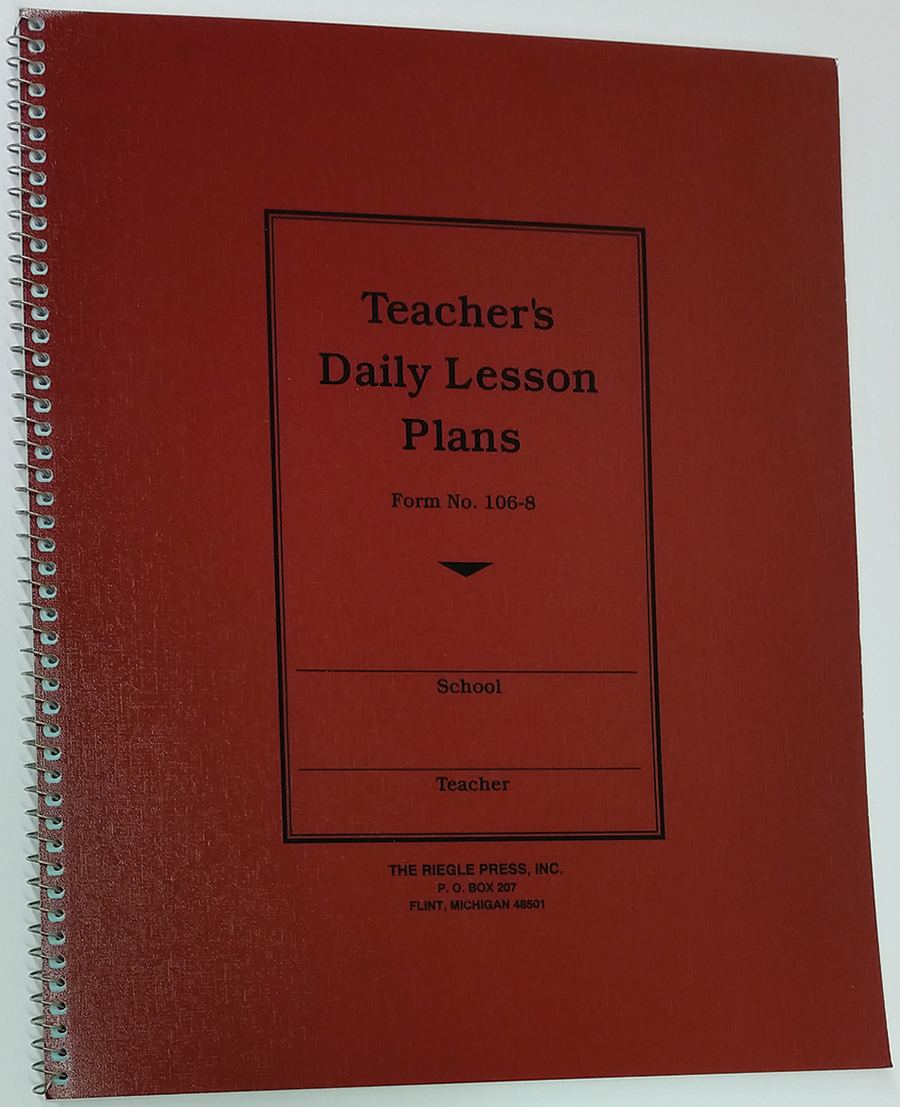
This is a blog about Teacher Stuff—the pedestrian daily tools of successful instruction. The boring and ordinary instruments of professional work that teachers, from kindergarten to AP chemistry, use every day.

A story: Several years ago, I was facilitating an on-line mentoring program for career-change teachers, who had previously worked for a Big Well-Known Corporation.

BWC decided to off-load a layer of expensive senior employees (those with 20 years or more) by giving them an exit ramp: Go back to school (on our dime) and become certified teachers. We’ll even subsidize your student teaching. Then resign, and we’ll replace you with cheap recent graduates.

That last line wasn’t actually in the program description, but everybody involved knew the score. BWC promo-ed the program on their website—Giving Back to Your Community!–and added an additional sweetener: BWC would provide e-mentoring, through a national non-profit, for the novice teachers’ first year, since they understood that public schools were filled with terrible teachers who couldn’t possibly be of assistance. After all, their (too-expensive) employees were masters of applied STEM content, who could probably teach veteran educators a thing or two.

It was an interesting gig.

A lot of the work was just dealing with misconceptions. Like the woman who was upset when she was told by the university where she was taking ed classes that she couldn’t have a student teaching placement as a ‘third grade math instructor’ because the job didn’t exist in most places. She could student teach in a 3rd grade, but would also have to teach reading, social studies, science and accept bus and lunch duty, which was a deal-breaker for her. She left the program.

One of my mentees had just started a job as a chemistry teacher in a suburban Connecticut high school. He had been assigned four sections of chemistry and one of AP chemistry. In our first exchange, he was panicked because he had asked for the lessons plans to go along with the texts, and was told they didn’t exist. He checked with his official on-site mentor (the other chemistry teacher at his school) who told him that books didn’t come with lesson plans because you have to tailor lesson plans to the students you have.

Which my mentee thought was not just rude but ridiculous. You mean I have to make up ten separate lesson plans each week? How inefficient! At BWC, all the work was pre-organized. You just followed the templates. This is why public education is such a disaster, yada yada.

If you are not an educator, it might in fact be surprising to suddenly be immersed in typical pedagogical practice where what initially appears to be ‘inefficiency’ turns out to be more effective in the long run. I’m thinking here of those little flip-top heads on a conveyor belt, receiving ‘content’ in ‘Waiting for Superman’–director Davis Guggenheim’s conception of how children learn.

My point here is that the other chemistry teacher was spot-on: Good teachers structure learning goals, lesson plans and instructional methods to meet the needs and quirks of the students in front of them. They also pay attention to results in real time (meaning—you don’t have to wait for test scores), and re-adjust when things aren’t going well.

Peter Green recently wrote an accurate (and amusing) blog that summarizes why teachers will never completely outgrow the need to plan, also listing a half-dozen ways that required lesson plans can become a pointless power struggle or an example of planning theatre.

I spent thirty-odd years planning the week ahead on Sunday nights, with a glass of wine. My plan book was where I scribbled notes when I had a brainstorm (or a failure). The plans were always messed up by mid-week, but I had five preps, and absolutely couldn’t teach without them. But nobody ever fly-specked my plans to make sure I wasn’t inserting CRT or SEL or any other acronym into the pedagogy I saw working for my students, on a daily basis.

Alfie Kohn takes this discussion about teachers’ daily work a step further, reminding us that it’s not just curriculum and lesson plans that the (well-funded) right now wants to control. It’s the way we go about teaching—our pedagogical practices, including things like the pre-eminence of phonics in the Faux ‘Science of Reading’ wars.

Just as social conservatism is all about religion, so religion — or at least this version of it — is all about not only order and obedience, but also faith (which means belief without evidence) in the conviction that Truth resides, fully formed, in certain texts. Carole Edelsky, an emeritus education professor at Arizona State University, has explained that “the far right’s love affair with phonics” reflects their “universe of moral absolutes,” the goal being to decode “what is ‘there’ [and to affirm] appropriate hierarchies – the authority of text over interpretation and ultimately of (the Christian) God over man. To the theocratic right, promoting phonics is a tactic for asserting Christian control of schools.”

That one made me stop and think.

The great irony here is that obedience and faith are what certain politicians want—but not the blue-chip businesses who will be hiring our graduates. Education Week just surveyed ten such companies, asking: What problem-solving skills do you want to see from early-career job seekers that tend to be lacking? And what should K-12 schools do to help bridge those skill gaps?

Corporations said: Flexibility. Cooperation and collaboration. Soft skills. Real-world applications. Learning to fail. Curiosity. Appreciating diversity. Service learning. Teamwork. Creativity and innovation—out of the box thinking.

All of which require a great deal of careful planning, diverse instructional strategies and materials, and zero emphasis on standardization and compliance, which is the pedagogical train we’ve been on for two decades now.

Can those traits and skills be taught? I think so.

The question is whether teachers and school leaders will follow their hearts and minds or be beaten down by politics.

The Strange Land Where We Find Ourselves Now

Ever read a book that resonates, for whatever reason, with the life you’re living—the things you’re thinking about, things that are happening in your world right now?

Munich (Robert Harris) is a fictionalized, but well-researched, account of the Munich Conference in September 1938, wherein a cluster of European leaders thought they had signed on to ‘peace in our time,’ when in fact Hitler had no such intention.

It’s one of those slow burn novels that starts out by introducing us to two very different worlds—the chin-up, upper-crust British government, trying desperately to avoid another devastating European war, and the collection of thugs and sycophants hanging around the Fuhrer who were willing to bulldoze anyone and anything to expand their own power.

I saw parallel after parallel, which made the book (published in 2018) chillingly real.

As political thriller, it’s a good read from a guy who’s written a ton of great political thrillers, many centered in Germany, in the 1930s and 40s. BUT–reading it now, as Putin is devastating Ukraine, because he seems to think he needs more space, and world leaders (elected and un-elected) are trying to stay out of war— is stunningly relevant.

One particularly galling former leader is trying to cozy up to Putin for political advantage, of course. We’re living in a world of thriller plots.

The only knowledge I had about Prime Minister Neville Chamberlain and the pre-war period, left over from History class, is that he was widely considered an ‘appeaser’ once World War II began, and his reputation hasn’t been burnished since.

The book is kinder to him, seeing him as a man of a different age, when one’s word was one’s honor. But the image of someone who believed in the power of diplomacy getting totally snookered by the depth of evil remains—powerfully—in mind.

Once the Munich Conference actually begins, every page in the book has a resonant sentence or paragraph, about power and the men who wield it.  Although the whole world now knows the spoiler—World War II and its horrors—the book had me thinking about alternate outcomes, about peace and how to reach it.

Also, of course, what could go wrong in our immediate future, in 2022.

A couple of nights ago, Rachel Maddow had one of my favorite truth-tellers on: Jane Mayer, whose latest piece on the Republican ‘slime machine’digs into the coordinated Lies People Tell to ruin the reputations of Biden’s nominees, the most visible example being the appalling hatchet job attempted on Judge Ketanji Brown Jackson.

Maddow precedes the Mayer interview with an illustrated commentary on Stalin, the cover-ups of his hideous crimes against his own people, and the propensity for Russian dictators to use accusations of–get this–pedophilia as an excuse to imprison or execute citizens who give them grief. The video is 20 minutes long, but worth the watch.

I finished the book, then opened Twitter to find my new hero, MI State Senator Mallory McMorrow, burning up the media world. State Senator Lana Theis (who represents the district where I used to live) started slinging around accusations of Democrats grooming and sexualizing children in her fund-raising materials, and McMorrow let go with five beautiful minutes of pure truth to power.

Accusing someone of the sexual abuse of children really is the worst thing one can say about another adult human. Scroll back to 2016, and the QAnon-inspired ‘Pizzagate’ where Hillary Clinton was accused of (yup) pedophilia.

There seems to be a pattern here. After all, it was Joseph Goebbels who said If you tell a lie big enough and keep repeating it, people will eventually come to believe it.

More parallels. And the lying has infected our children, and our schools.

Jonathon Haidt, whose work I deeply admire, thinks that social media has been driving this:

It’s been clear for quite a while now that red America and blue America are becoming like two different countries claiming the same territory, with two different versions of the Constitution, economics, and American history… It’s a story about the fragmentation of everything. It’s about the shattering of all that had seemed solid, the scattering of people who had been a community. It’s a metaphor for what is happening not only between red and blue, but within the left and within the right, as well as within universities, companies, professional associations, museums, and even families.

Historically, civilizations have relied on shared blood, gods, and enemies to counteract the tendency to split apart as they grow. But what is it that holds together large and diverse secular democracies such as the United States and India, or, for that matter, modern Britain and France?

Social scientists have identified at least three major forces that collectively bind together successful democracies: social capital (extensive social networks with high levels of trust), strong institutions, and shared stories. Social media has weakened all three.

I am aware of the irony of posting this blog—all about lies and social fragmentation—on social media. But maybe social media is our only recourse at the moment. Senator McMorrow has had over 10 million views of her video, and it’s been enthusiastically applauded on left-leaning media.

Someone has to tell the truth.  Someone has to pay attention.

Good Times, Bad Times. Public Education.

I should start by saying that while there were occasionally some very Bad Times indeed in public education in the last century or so—the folks who are in the classroom at this moment are undisputed champions of working through the mind-bending challenges and crises coming at them.

It’s been chaotic even in the best-run schools, a kind of perfect storm of global pandemic and political upheaval, for more than two years. And we’re going to pay for it, down the line, in loss of professional staff and community goodwill. When I say ‘we’—I mean all of us: teachers, parents, and especially students.

You can’t beat good people up ad infinitum; no matter how dedicated they are, teachers eventually tire of trying to balance the rewards with the downside: underpaid, disrespected. And lately, exposed to a dangerous virus and not trusted to teach their own subjects.

It’s easy to tire of ‘Why I’m Leaving’ articles, but this one caught my eye: Teacher Job Satisfaction Hits an All-Time Low:

‘Past research suggests that many of the people who indicate plans to quit won’t actually do so. But experts warn there are negative consequences from a dissatisfied teacher workforce. Research shows that when teachers are stressed, the quality of their instruction, classroom management, and relationships with students all suffer. And students tend to do better in schools with positive work environments.’

Let’s pause here, to say: Duh.

“What people want is to be able to teach and teach well, and if they can’t do it because they can’t afford to do it or because they have a toxic work environment, that discourages them from acting as teachers who are learning and growing and getting better and increasing their commitment to the work,” said Susan Moore Johnson, a Harvard University professor of education who studies teachers’ working conditions and satisfaction. “That’s the side of satisfaction we need to pay attention to—it’s not just keeping people in their positions.”

‘Also, the low satisfaction levels of teachers already in the classroom may impact the pipeline of future teachers. Enrollment in teacher-preparation programs has declined by about a third over the past decade, and experts say that is likely in part due to the perception of teaching as a low-paid, thankless career.’

Low paid. Thankless. And eligible for food stamps, in some states. What’s not to like?

In the linked article, there is a graph showing the percentage of K-12 teachers who say they are ‘very satisfied’ with their jobs, beginning in 1980. There’s a big dip in 1984 (down to 33%). Beginning in the early 90s, there’s a steady upward climb (to 62%) around 2005 or so, then a downturn, a slippery slope to where things currently stand: 12% of our teacher workforce is very satisfied with their jobs.

Educators aren’t happy.

Remember the famous Santayana quote–Those who cannot remember the past are condemned to repeat it? There have been terrible times in education before—segregation and gross inequities, pre-Brown Decision in 1954, and the shameful reaction to it, for example. School funding crises and hot-button issues bubble up periodically.  Hard times are not new.

I actually remember that dip in the early 80s. There was a serious economic downturn, and oil prices shot up. I worked in the suburban outer ring around Detroit, and the financial crisis hit the auto industry, where lots of our parents worked, particularly hard. For the first time, the district lost students, and families.

I remember waving to a tenor sax player, leaving with his school-owned instrument on the day before spring break. He didn’t come back—and his family’s house went into foreclosure. The family left, and took the sax. We waited for a request for records from a new school that never came. There was no internet to cross-reference serial numbers. Bye-bye, Selmer tenor.

I used to think those were bad times. I was wrong, by orders of magnitude.

It’s not a hopeless situation. Here’s a short list of some ‘just for starters’ things we could do to engender a turnaround.  The first two are about a major increase in salaries, and loan forgiveness for those who commit to teaching. So basic, and so essential.

What’s your metric for generating good times in public education?

The Heir and the Hillbilly

By now, you’ve probably seen Tucker Carlson and J.D. Vance, author and candidate for Senate in Ohio, wondering why right-thinking dads don’t just ‘thrash’ teachers for inserting their personal ‘sex values’ into the minds of innocent children. We all know that Carlson is worse than a destructive ass–but ol’ J.D., the self-described hillbilly who rose from nothing, sat there nodding and grinning along with Tucker as he incited a little righteous violence against your children’s teachers.

Incident in the Teachers’ Lounge: A dozen teachers sit around a long plastic table, chatting and eating their packed lunches. A custodian enters the room, skirting the table, to grab a soda out of the refrigerator, then stands looking at the bulletin board, while taking long pulls on his drink. There’s a pause in the conversation, and he says: So. You guys think this is funny, huh?

He points to a piece of paper tacked to the board, an internet-distributed list of excerpts supposedly drawn from parents’ absence-excuse notes. Things like: Please excuse Sally. She was in bed with gramps.

There is silence, but the custodian isn’t finished. He says: This is what you do in here? Make fun of parents? He shakes his head and leaves the room. As soon as the door closes, teachers turn to each other and begin talking. What do you think they say? How do they feel?
——————–
I was reminded of this scenario from my own teachers’ lounge as I read Hillbilly Elegy: A Memoir of a Family and Culture in Crisis, by J.D. Vance. I was anticipating a good read—it was on all the “Best of 2016″ lists—but found the book shallow and insubstantial.

J.D. Vance grew up in a small town in southwestern Ohio in a working-class family. Aided significantly in a tough childhood by his ever-present, loving grandmother, and after a maturing stint in the Marines, he attended Ohio State, then got a law degree from Yale.

An impressive personal narrative—plaudits to Vance for his persistence—but hardly illustrative of the poor habits and prospects of an entire region of the country. Nor does Hillbilly Elegy illuminate any of the very real problems or crises, per the book’s title, facing working-class families in America today, beginning with the dangerous income gap between the haves and the have-nots that threatens the social order.

In fact, Vance is intermittently reproachful, blaming family members (mostly his mother) for being irresponsible and foolish, and chalking it up to their Scots-Irish heritage and growing up in Kentucky. He seems unaware of his own privilege—being a tall, nice-looking, intelligent white man in a country where those qualities are an enormous leg up, for example.

He describes his public school education as sub-par, with the exception of one demanding math teacher. The training and subsequent education benefits of a stretch in the military get short shrift. Ohio State? Easy peasy. It isn’t until Vance finds himself at cocktail parties where his admission to Yale seems to be paying off with high-level clerkships and job opportunities that he realizes he’s been handed a golden ticket, and he’s being watched to see if he can fit in.

Instead of reflecting on all that good fortune, however, he labels his family hillbillies, monetizing their salty speech, their blind loyalty to a particular funeral home, and their parochial weaknesses, as they struggle to survive in the most inequitable First-World nation on the planet.

In the post-war years, as millions of Baby Boomers became the first generation to attend college, class lines began to blur. It wasn’t until my Sociology 101 class that I realized my family was not “middle class,” but further down in the pecking order. It wasn’t until I read W.E.B. Dubois’ “The Souls of Black Folk,” that it occurred to me that moving up in the social order came with a cost to family relationships, and, sometimes, personal integrity. It wasn’t as easy as excelling in school and leaving your grubby antecedents behind—there were other important values besides “success.”

Here’s the question J.D. Vance avoids: Whose fault is it that more than 50 million Americans live in distressed communities, where nearly a quarter of residents lack a high school diploma?” Conversely, who is responsible for lifting themselves out of poverty? Is this a result of hard work and personal discipline only, “rising above” family characteristics—or do social supports, like public education, military training, and publicly funded scholarships also form the proverbial rising tide?

Most of the educators sitting in that teachers’ lounge were second- and third-generation college graduates. To them, the misspelled excuses were funny; their students were sometimes apples who fell near the poorly educated tree. Still, the custodian’s comment—You think this is funny?—found its mark. The post came down. Teachers responded with a mix of embarrassment and defensiveness.

A good public educator accepts all students, kids raised in hothouse homes with thousands of books and trips to the museum and kids who ate sugary cereal in front of the TV until their single mom unlocked the door at midnight. Kids across the spectrum benefit from public education.

J.D. Vance’s story is more about individual good luck than an analysis of a culture in crisis. I expect absolutely nothing from Tucker Carlson, but J.D. Vance ought to know better. He’d be a terrible senator.

Teachers Want to Teach. Just Not in the Way They’ve Been Teaching.

Headline in Michigan Advance: Two Michigan educators exiting this month, many others may soon follow.

I was eager to read the piece—because I know these two, both of them stellar educators. I’ve read her students’ work. He guest-blogged on my Education Week site. They are experts. Veterans. Teachers with a full professional toolbox, and insight into how the system works, in both well-heeled and disadvantaged districts.

The article made much of the fact that they’re leaving now—in March—rather than slogging through the rest of the school year. But in many ways, leaving now is the right thing to do, for two interrelated reasons. It gives districts maximum opportunity to hire in the spring as a few newly minted teachers graduate, and provides a heads-up: Look. Get cracking. You’re going to be short lots of critical personnel, and soon.

It also means that teachers are now behaving like the rest of the working world: Choosing the best and most lucrative opportunities to share their skills and talents. Hiring on and leaving those jobs when it’s convenient. Making their own decisions, based on the way their employers and clients have behaved, rather than being made to feel guilty.

Teachers who leave in mid-year are acknowledging that teaching is a job, like other jobs. It’s not a divine calling or moral obligation like, say, parenthood. Not anymore.

I generally haven’t retweeted or commented on blogs from teachers who have HAD IT, and are leaving their jobs. Long before I got my first writing gig (a local newspaper column) 20 years ago, I contemplated leaving my job, pretty much annually. If you’ve been a teacher, you can guess at the reasons: Lousy pay. Ridiculous class sizes. Overwhelming workload, leaving little bandwidth for family. Evil administrators. And so on.

While the oft-repeated data shows that half of teachers leave their jobs in the first five years, the actual numbers (where did those teachers go?) are murky. Some of those folks aren’t leaving the profession forever—just that building, at that time. Some people who leave teaching stay ‘in education’ (just ask Teach for America). Divided opinion on whether that’s good or bad.  

My take on this is that there is a pre-pandemic baseline for teachers jumping ship, and we won’t know until August just how much trouble public schools are in, when it comes to staffing. But two years’ worth of pandemic teaching has undoubtedly changed the calculation.

Teaching—I repeat—is just a job, and teachers now have plenty of first-hand evidence of how their employers, their state governments, and their clients (parents and older students) value their time, dedication and expertise, during a national health crisis. Answer: not so much.

A couple of days ago, a memo from an Applebee’s franchise executive made the rounds at an Applebee’s restaurant in Lawrence, Kansas, resulting in a mass exodus, both local managers and those paid largely by tips:

“Most of our employee base and potential employee base live paycheck to paycheck. Any increase in gas prices cuts into their disposable income. As inflation continues to climb and gas prices continue to go up, that means more hours employees will need to work to maintain their current level of living. The labor market is about to turn in our favor.”

I would theorize that lots of teachers who are leaving now still like being a teacher—just as there are probably plenty of Applebee’s servers and line cooks who think they could probably do worse than work at Applebee’s.

The point here is that the curtain has been pulled back—legislatures are proposing that untrained college students and bus drivers maybe could, you know, fill some classroom jobs. The labor market is about to turn in favor of those who are chipping away at funding public education, as well as those trying to squeeze a little more out of people who spend half their income on a crappy apartment.

Finding out that the people who control your pay, hours, and the tasks you’re assigned, are plotting to take advantage of your desperation will not lead to an uptick in loyalty or effort.

Teachers, of course, are in a different employment category—most of us see the work as professional, highly skilled, and attuned to a common goal of improving the lives of our students.  And there have always been anti-teacher, anti-union forces roiling the waters of public education, trying to establish ‘value schools’ to minimally educate the poors.

What’s different now is gubernatorial candidates turning school board meetings into political rallies.  The infusion of dark money into what should be local debates over masking and curriculum. The demonstrated increase in violent and criminal behaviors, as the pandemic (maybe) winds down.

Can you blame a teacher—let’s say a teacher who has the financial wherewithal to seek another job, or live carefully on a pension—for deciding that it’s time to get out of Dodge?

I personally know at least a dozen teachers who have either quit, turned in their early retirement papers or are holding off on telling their districts that this is their last year, worried about retribution. I know another handful who are actively interviewing for alternate jobs that either pay more or will provide a better lifestyle than teaching.

I talked to one yesterday. Three times in our conversation she said this:

I really love teaching, but______________.

Fill in the blanks.

A ‘Diverse’ Community Needs to Hear the Truth

It was the most prosaic of news items: a local township planning commission working on a new master plan.  They secured a skilled, experienced civic planner who provided a draft, which included (as all good municipal documents do) a brief analysis of the township’s demographics: “94.7 percent of the population reported as white, 2.6 percent of the population as American Indian/Alaskan Natives, 0.2 percent reported as black or African American, and 2.5 percent as Hispanic or Latino.”

Which drew this response from a member of the planning commission:

“I’m opposed to this whole color issue. In my opinion, you’re either a citizen, or you’re not a citizen. And with this government listing everybody by their color, that’s the government and the media promoting racism. I would suggest we make a comment [in the master plan], something to the effect that we have…a diverse community.”

The planning expert: “Well, you don’t. You’ve got a 94.7 percent white [population].”

It went downhill from there—rapidly—and ended up with the hired expert and another member of the planning commission resigning, and a third commissioner stating that the ‘race thing’ in the plan was ridiculous, and oh, by the way, his brother-in-law was Black.

I share this (stupid) story for all the school districts and teachers that feel that they have been unfairly targeted by what seems to be one of our ‘new normals’—rampant, unhinged intolerance.

In other words, teachers and conscientious school leaders, it’s not you—or just you. It’s racism. Or homophobia, or xenophobia.

It’s ignorance. The problem that never goes away—and society expects public educators to solve, somehow, without ticking off parents.

You may have, to your surprise, become the enemy (after two grinding years of serving children and families during a global pandemic), for simply teaching facts and showing compassion and commitment to your students. But you’re not alone. And this is not new.

These anti-truth, anti-education campaigns come and go, in waves. Disinformation and blind opposition and noisy meetings have always been part of government-provided services.

The world is currently witnessing a devastating, lethal master class in international propaganda in Ukraine. Who will tell the truth to our students? Not TikTok.  When civic authorities assert that a 95% white township is a ‘diverse community,’ someone needs to speak up for the truth.

In a spectacularly good article in The New Yorker, Why the School Wars Still Rage, Jill LePore traces the history of this power struggle in American public education, using the Scopes trial as long-term case study:

In the nineteen-twenties, the curriculum in question was biology; in the twenty-twenties, it’s history. Both conflicts followed a global pandemic and fights over public education that pitted the rights of parents against the power of the state. It’s not clear who’ll win this time. It’s not even clear who won last time. But the distinction between these two moments is less than it seems: what was once contested as a matter of biology—can people change?—has come to be contested as a matter of history. Still, this fight isn’t really about history. It’s about political power. Conservatives believe they can win midterm elections, and maybe even the Presidency, by whipping up a frenzy about “parents’ rights,” and many are also in it for another long game, a hundred years’ war: the campaign against public education.

LePore ranges widely, sharing plenty of negative, even frightening, examples of the aforementioned American ignorance now being codified into law (as well as cautionary language for elites who feel their progressive views about raising children automatically trump those of conservative and evangelical parents).

She also makes the point that Black intellectuals immediately understood that bills to prevent the teaching of evolution weren’t really about the theory of change in biology, something that is evident to any farmer. It was about the idea that we all spring from common ancestors, that there is no real difference between human races. That’s what really scared folks in the South, some 55 years after the Civil War.

It’s easy to feel discouraged. In Whitewater Township—where the planning commissioners think they have a ‘diverse’ community—60.9 percent of the voters chose Donald Trump in 2020. Presumably, some 40 percent of those believe he actually won the election, if national survey data holds in this tiny, nearly all-white enclave.

Which is why we have to take a deep breath—as educators and citizens—and keep telling the truth.

Because the truth will set us free. Although it may take a long, long time.

Here’s a great story from Jennifer Berkshire to hearten those of you who feel that Truth no longer matters, that the anti-public education crowd, the Moms for Faux Liberty, are winning. Tag line:  An upset victory last week in a red state suggests that the Republican Party’s game plan for attacking public education may not be a winning strategy.

The red state? New Hampshire, where 93.1 percent of the population is white.

Have faith.

Lock and Load and Learning Loss

This is a blog about the escalation of smack talk—the reckless/threatening/false/vindictive/facetious things people say, in an effort to gain power by demeaning others– and a thought or two about how much easier it is to be a smack-talker in 2022 than just a few years earlier.

We’re also seeing more smack talk in schools and about schools. Critical race theory and learning loss are among the many widely abused terms that media perceives as real issues. The terms are essentially meaningless, however, in the daily operation of real schools, places where teachers are paying attention to the well-being and nascent citizenship of real children.

These days, schoolboard meetings are hotbeds of vigilantism driven by smack talk, and we’re witnessing members of Congress—Congress! —trash the sitting President’s strength and motives during a delicate and critical time of international unrest.

Traditionally, school is a place where smack talk is not tolerated, even if it is a regular feature of students’ home life. Poor-mouthing classmates, the use of offensive language, and overt lying are generally suppressed by school cultures, even strongly authoritarian climates where teachers use harsh language to control students.

Every now and then, someone points out that what our students need most now is not Calculus, but media literacy, a carefully developed skill of discretion when bombarded by corrupt but persuasive language.  We used to worry about students being overly influenced by Bart Simpson or semi-dressed babes on MTV—but these days, the filthiest and most damaging lies are coming out of the mouths of politicians and news media. How do you teach kids to ignore their own duly elected Senator?

In 2017, I was part of a local ‘listening tour’ sponsored by my county Democratic party. We knocked on doors and asked people what they wanted from their local government. We wanted to know what their issues and needs were, for upcoming campaigns—but were also willing to listen to their feedback on the 2016 election. We did not call on strong or ‘leaning’ Republicans—only independent voters and those who may have leaned our way at one time.

What we learned: every single person we talked with had a distinct opinion on Trump vs. Hillary (the gender dynamics of the last name/first name contrast being kind of smack-y in itself). Most were willing to tell us who they voted for, and why, although we were trained not to ask.

They did not like or trust Hillary Clinton—and the ones who declared themselves Trump voters were clear about what attracted them to him: the way he talks. He says what he thinks! He isn’t mealy-mouthed like other politicians. He’s down to earth, but strong. His disrespect of women was ‘just locker room talk.’ More than once we heard: Give the guy a chance. Asked about local issues and government, most of them had no ready response.

What our neighbors had to say was almost completely unsubstantiated and unrelated to governing or current issues, not to mention decades’ worth of real facts about Trump’s history as grifter and narcissistic braggart. They took the measure of a candidate by his (or her) willingness to make insulting remarks. To get in a good dig, to trash your opponent. A few men spoke admiringly about Trump literally stalking or silencing Clinton on the stage, during their debates. He was a ‘fighter’—and would fight for us. Which ‘us’ they were talking about was unspoken.

Although hard to prove, beyond prima facie observations, smack talk has become more prevalent everywhere in American life. In my former State House district, for example, one of the Republican candidates told the crowd at a rally to “be prepared to lock and load,” and “show up armed” when going to vote. A Republican gubernatorial candidate suggested voters pull the plug on voting machines, if they didn’t like what they saw at the polls.

Are K-12 students influenced by this kind of loose, vindictive talk? Recently, at a school basketball game, students from a 95% white rural school made monkey noises and used racist insults when Black players on the opposing team were on the court. The report talks of similar occurrences at other games, listing several of these over the past two years.

What interesting to me is the response from the MI Department of Civil Rights: “To ignore the situation without taking those individuals who perpetuated it to account causes a problem and obviously allows it to occur again. So that situation should be controlled not only by the people who are officiating the game, but also the officials who certainly have some control over the students and the actions that they might have later on or during the game itself.”

I agree. Racial slurs and dangerous threats are best handled when they first emerge by the people closest to our students. This is what lies under at anger over faux CRT—adults influencing children to analyze their own prejudice, and respect differences. Good teachers have always done this; it’s the practice of building a classroom community.

So it’s no wonder that judgmental terms like ‘learning loss’ have caught on, and Serious Reports are warning that children in poverty have ‘lost’ the most. All children have been exposed to danger and loss during this pandemic, but whether they’re testing on grade level—whatever that is—should be the least of our worries.

We should be thinking, instead, about turning them into caring and confident citizens, able to identify coarse and deceptive language and reject it.

Freedom’s Just Another Word

Freedom’s just another word for nothin’ left to lose
Nothin’– it ain’t nothin’ if it ain’t free…

Remember free schools? They were all the rage, back in the day—long, long ago—when those folks protesting the error-filled ways of public education were hippie types, not scripted, Republican-funded moms with time on their hands.

Often educated in public schools themselves (where they learned to craft logical arguments and read great books), these lefty parents did not want Moonbeam’s schooling to consist of straight rows, workbooks and bells. They wanted the freedom to discuss Real Issues and pursue personal growth.

But as always, the times they are a-changin’.

In a brilliant essay in the NY Times, GWU Professor Elizabeth Anker describes how ‘freedom’ has morphed from the Bill of Rights model I learned about in one of those straight-rows public schools, to what she calls ‘ugly freedoms:’

Today, more and more laws, caucuses, rallies and hard-right movements use the language of freedom as a cudgel to erode democratic governance and civil rights; these laws expand the creep of authoritarianism. One Jan. 6 insurrectionist insisted, “I’m here for freedom,” when describing his participation in the attack on the Capitol. Mask mandate opponents have cited “health freedom,” even if their refusal to mask denies freedom of movement to immunocompromised people and makes communities more vulnerable to Covid.

Freedom, Anker says, has been co-opted.

I can name dozens of other words that no longer clearly mean what they once did: Unconstitutional, for example. Anti-Fascism. Illegal. Forensic Audit. Critical Race Theory. Moms, for Liberty. Election integrity. You can justify putting any number of formerly well-understood terms in scare quotes, these days.

Language, over time, does—and should—morph, as societal norms and technological advances change the way people think and behave. That’s why those 1960s ads with doctors lighting up a Camel to ‘relax,’ are so hilarious.

But I really hate losing freedom, as a political and educational concept. I especially hate knowing that Republicans have weaponized something valuable and politically distinct, turned it into a well-funded, election-winning grievance.

Freedom is a complex idea. Freedom without responsibility is moral adolescence—a phenomenon we have seen played out endlessly during the pandemic, by anti-mask abusers, phony accusations of ‘tyranny’ and a focus on individual rights rather than the common good—during a public health crisis, no less.

As a music teacher, I wrestled with the concept of freedom every year, and shared those dilemmas with my students. Why is every composition on our required festival list written by a white man—can we break free of that?  In a largely white, largely Christian town, should we be representing all winter celebrations in our music, or just having the expected Christmas concert? What are the roots of the music my students are listening to—and is it my responsibility to help them dig into that history?

My career was all about the freedom to teach music in untraditional but deeper ways. And I was incredibly lucky. I never had to deal with rigid standards or statewide assessments, and seldom had parent complaints. I was, far more than other teachers, free to craft curriculum, performances, travel and materials to fit my students, few questions asked.

What I’m reading now is alarming—the heated School Board meetings, book banning, legislated gag orders and threats over what can/cannot be taught. If you only read the news, you might think that public educators have been so thoroughly intimidated that every bit of color and usefulness will be leached out of learning.

But I have doubts about the long-term impact of this astro-turf, give-me-liberty movement. I think raging against diversity and inclusion by silly law-making is destined to fail—especially when you look at recent CNN survey data:

While parental choice has become the subject of frequent political controversy, the CNN Poll found that most Americans reject the idea that the primary responsibility for what happens in the classroom belongs either to parents or to teachers and school officials. Majorities said both groups should have an equally important role in school-related decisions ranging from Covid-19 precautions to the way various school subjects are taught.

Only about one-fifth of Americans (19%) said parents should be the main decision-makers on mask policies, with 17% saying the same about virtual learning and 16% on teaching about racial issues. Just 7% thought parents should have final say over how to teach math. About 1 in 8 Americans, or 12%, said parents’ views should have the most sway over which library books are on the shelves and how American history is taught, while roughly twice as many said teachers and school officials should have more influence on those areas. Respondents split equally over how issues regarding race in America are taught, with 16% saying parents should have more say, 16% teachers and school officials, and 62% saying both should be equally important.

These are pretty small numbers, for a so-called movement. Glenn Youngkin may have ridden parent disapproval over school policy to a governorship, but I am far from convinced that there’s a voting majority in all states to swing elections based on book-banning, faux CRT hype and other curricular issues.

When you look at the numbers, it’s easy to see this as another cycle of school-parent communication, where schools that listen to parents and work cooperatively with them for the good of all their students, are doing the best job of navigating a global pandemic and political warfare based on the Big Lie. Major challenges, indeed.

One of my former students sent me a note expressing her frustration over the screaming matches at the local school board meetings. I know these people, she said—they live in my neighborhood. And they’re not even parents of school-aged kids. For them, this is political gain. For me, this is about protecting my child.

One of the local Liberty Moms came to her door and asked, ‘Aren’t you worried about how your boys will vote, when they’re adults?’ Actually, she wasn’t concerned about that at all—they won’t be voting for many years, and there are a lot of math facts and swimming lessons and trips to the library that needed to happen first—safely. But there is no clearer example of just what her neighbor is really worried about.

It isn’t freedom. It never was freedom. It was about winning.

How ‘Transparent’ is Your School?

The first time I was called on the carpet by a parent for something I taught was in my first year of teaching. In the 1970s. The fact that I remember it so clearly, decades later, is significant.

Here’s what happened: I was teaching my sixth grade general music classes about song parodies. We didn’t fret much, in those days, about standards, benchmarks or learning goals, but I actually had some.

I wanted my students to understand how one tune could carry multiple sets of lyrics—that they were two separate things, and the character and tempo of the tune should match the words, ideally. The tunes, written on the board (this was in the days of pre-lined music chalkboards), would illustrate new rhythmic figures. And writing their own words would be an exercise in creativity for the students.

This was before Weird Al, but I encouraged them to use popular songs, and adapt the words. They worked in little teams, then shared what they’d come up with. A group of boys used the Beatles’ Maxwell’s Silver Hammer, substituting Santa for Maxwell (it was December). Of course, the class thought this was hilarious: Bang, bang, Santa’s silver hammer came down on her head… (and made sure she was dead).

I can’t remember, exactly, how I responded to the boys’ warbling this song. But the next afternoon, I was called to the principal’s office. A mother had called, all upset about what I was teaching my sixth graders—something about Santa being a killer? Surely, that couldn’t be right. Could it?

I explained.

Do you want me to handle this? he asked. (Props to him.) He thought it would be better for me to talk to the mom but was willing to run interference. I’d been a music teacher for all of four months, and it was tempting to avoid that conversation, but I told him I’d call her back tomorrow.

Which was good. It gave me an evening to run through the gamut of emotions. Defensiveness. (I didn’t know what the boys were going to sing!) Scorn. (Shouldn’t a sixth grader be a little tougher? Even with a helicopter mom?) Fear. (What if the mom took this higher than the principal—could I be formally reprimanded? Did she have friends on the school board?)

The next day I called her back and essentially fell on my sword. I explained what I was trying to teach, and how the lesson got away from me. I skipped the defensiveness, scorn and fear. She explained that her daughter still believed in Santa Claus and came home devastated and sobbing when those awful boys thought it was funny for Santa—the real Santa—to be so unfairly portrayed. She talked about Santa as the embodiment of fun and joy and childhood.

I did some private eye-rolling, but I apologized, and promised to have a chat with the class the next time I saw them and enlighten them about inappropriate lyrics. She said she felt much better after speaking to me. And—here’s the important part—I had three more children from that family in the music program over the years, with good relationships all around.

When I told the principal about our conversation, he pointed out that sixth grade, the first year of middle school, is scary for sheltering parents. They fear their children’s maturation, often wanting one more year of childhood, to stop the adolescence train from its inevitable arrival. He complimented me on handling it professionally.  (He really was a great principal.)

Since that day, I’ve had hundreds of difficult conversations with parents. But very few of them were about what I was teaching—the learning goals, teaching materials, class discussions and curriculum. For more than a dozen years, I took more than 100 8th graders on overnight trips—to see musicals and orchestras, to play a concert on the steps of the Lincoln Memorial, to visit the Rock and Roll Hall of Fame. There were risks in that—but also great rewards.

I also wove what you might call controversial topics into my lessons. The ethical dilemmas of downloading ‘free’ music in the days of Napster, for example (when I knew full well that there was illicit downloading going on in many of their homes). The Black roots of American popular music, and our shameful treatment of some of our most influential artists, including theft of their genius. I did a mock trial around sexism in rock music.

My school was 98% white and very middle class, with lots of stay-at-home moms, in a ruby red county. I was able to do this because I built up trust in the community over time. I told parents, at Back to School night in September, what I was planning and why—the broad outlines, anyway.

I say all this not to congratulate myself on being a model, DEI-friendly teacher. I’m telling you that most of what is happening at school board meetings right now, and all of the proposed legislation to insert parent surveillance into instruction, comes from a very different source than helicopter parenting. It’s a gross political calculation, with ugly threats and outright falsehoods upping the ante.

It springs from defensiveness and scorn—I’m entitled to have control over my children’s beliefs, not some left-wing, bottom of the barrel teacher’s BS! But mostly, it’s about fear. That fear was nurtured in concert with four years of terror over and lies about losing political power–plus racial, sexual and xenophobic animus.

And now we have stupid laws, like the GOP bill popping up in near-identical form in states with Republican-dominated legislatures.The language demands ‘transparency’ around several things:

  • Curriculum approved by the district for each school operated by the district. 
  • Each class offered to pupils of the district as part of the curriculum.
  •  A list of each certificated teacher or other individual authorized under state law to teach in this state who is charged with implementing the curriculum.

I cannot imagine any public school district in the United States that couldn’t provide that information in about 20 minutes, unless they were operating in utter chaos, in which case they have bigger problems than answering parents’ (legitimate) questions about what their kids are learning.

Here’s where it gets a little dicey—and insulting. The law also mandates the sharing of:

  • Textbooks, literature, research projects, writing assignments and field trips that are part of the curriculum. 
  • Extracurricular activities being implemented during designated school hours or under the authority of the school.

And there’s a walloping big threat tucked in:

  • School districts that don’t comply would lose 5 percent of state funding.

Teachers all over the country have been exclaiming how just how nuts this ultimatum is. Good teachers identify student needs and base their lesson plans on what logically comes next, for the kids in front of them. And often, a great lesson opportunity, something not in the formal curriculum, emerges unexpectedly. Teachers know this as the teachable moment.

Here’s an example of that: I was teaching a 7th grade math class and we had just finished a unit on ratios and percentages. We did pages of calculation, and had a culminating test, but I wasn’t convinced the students knew the utility of ratios and percentages in adult life. I was reading the Sunday Detroit Free Press and there was a four-page feature article on changing housing prices and mortgage rates, with lots of tables and graphs. Eureka.

This was before the days when students had their own devices, so I copied and pasted parts of the article into a packet, and we dug into the costs and financing of homes. The first thing that happened was the shock of a bunch of 12 year-olds learning that their homes probably cost more than $100K, which seemed like a fortune to them. We calculated down payments for the homes they chose from pictures in the article, and monthly payments using different mortgage rates. It was actually fun.

It was basic math, the kind of thing parents always say that they want: practical finance. Would they still say that, today? Would there be a parent who found a lesson like this intrusive, giving students information about the comparative value of homes in disparate neighborhoods—or predatory lending? And would they be able to shut this lesson down, for all the students?

Needing to pre-approve every single thing—not just books–that teachers use in instruction would be extraordinarily clumsy. It would suppress creativity, but innovative lessons around current conditions and events now feel dangerous to some parents (check the link for just who those parents are).

The ‘extracurricular’ reference likely refers to clubs and activities where there is less oversight— like the drama club, school newspaper, or the Gay-Straight Alliance, things that make school rewarding, even bearable, for many students.

Here’s the key thing, though. It is exceptionally difficult to predict or control what gets said and done in schools, even with an ironclad curriculum, because the school staff aren’t the only ones talking. The kids are talking, too. My lesson on song parodies didn’t go awry because of anything I did or said. And ask any kindergarten teacher how much they hear about what goes on in their students’ homes.

There’s lots of transparency in schools—they’re among the most transparent and accountable public institutions on the planet. And that’s a good thing.

The Highly Unqualified Teacher

Remember the early days of No Child Left Behind? When everyone was trying to figure out precisely who was a ‘highly qualified’ teacher, under federal regulations?

Here is a sample state document—15 pages’ worth—of the required coursework, majors and minors, certifications, licensure tests and ongoing professional development credits that a classroom teacher needed to be deemed highly qualified, under NCLB. Your mileage, in other states, may vary—but not much. The feds were all about making sure the most capable and knowledgeable folks were in front of our public school classrooms.

Or so they said.

At the time, the education community protested: WE should be the ones to determine whether someone (a certified someone, with a college degree, of course) is qualified to teach X! We have seen that person in action!

But federal guidelines, and states that rolled over for them, caused havoc in public schools across the country. In my middle school, it meant that a beloved veteran– but elementary-certified–8th grade English teacher found himself teaching 3rd grade, one of many personnel shuffles.

Teachers with advanced degrees went back to take courses they could have taught themselves. Rural districts, where one Science teacher covered Biology, Earth Science, and Chemistry and Physics in alternate years, found themselves with a host of ‘unqualified’ teachers who’d been on the job, doing yeoman work, for years.

An avalanche of irritated hoop-jumping ensued.  So that all teachers could be highly qualified. Professional. Experts in their fields. On paper, anyway.

That was then.

There’s been a lot of press lately about the lack of qualified substitute teachers as we navigate a raging global pandemic. States are lowering—really, seriously lowering—the bar to get temporary but warm bodies in classrooms, to keep school doors open.

But chronic substitute shortages have been around (poorly-paid canaries in the teacher preparation coalmine) for decades. I spent three full (non-consecutive) years of my life substitute teaching, in addition to occasional sub gigs as a retired teacher. It usually takes an adult beverage for me to share the details of how those year-long stints came about, but my experience is confirmation that substitute teaching on a day-by-day basis is pretty random.

Some days, the kids are actually moving forward—the teacher has left solid plans and it’s clear that you’re in a place where order is the daily norm. Other days? I once was assigned a 5th grade and arrived to find these plans: ‘Reading—groups. Math—division. Science—rockets.’ That was all—six words.  Try to imagine a well-meaning school bus driver-turned-sub attempting to make lemonade out of that for seven hours.

It’s not the substitute teacher pool I’m worried about right now, however. It’s last-ditch moves (after more than a decade of warnings) to fix the leaky teacher pipeline during a pandemic that are really scary. Worth pointing out: if there were ample trained teachers available to work, and acceptable conditions for them (including compensation), the substitute problem would shrink and vanish.

But first, teaching, as a career, must be reconceptualized. We’re rapidly moving in the wrong direction on that score.

It is entirely possible to create an effective and enthusiastic teacher workforce, state by state. It would take time, money and research-based pedagogical expertise, but we, too, could have a uniformly professional teacher pool.  State and school-based leaders have proposed viable plans to begin doing just that.

We could also find alternative ways to bring job-changers and other school staff into the classroom, by dedicating real money and programming into mentoring, on-the-job professional learning, and skill/content development for those who want a longer-term career in teaching.

What doesn’t help is uninformed legislation to get highly UNqualified teachers into schools right away—and highly publicized hand-wringing over the pandemic-driven ‘crisis’ of unstaffed classrooms. It’s a crisis, all right, but it’s a temporary crisis (and one produced by bad education policies over time, more than COVID).

Speaking of bad policy, there’s a bill currently in the MI legislature to allow college students studying education to become teachers of record. These are not student teachers or even students who have been admitted to candidacy in a selective teacher training program. They’re just college students who wish to teach one day, maybe:

The bill differentiates these aspiring teachers from “student teachers.” The uncertified teachers allowed under the new bill would be paid for their work, and, unlike when working as a student teacher, the bill would allow them to teach completely on their own, without a mentor present in the room.

The bill’s sponsor, Rep. Pamela Hornberger (R) (ironically, a former art teacher) said this:  

“We’re at the point where we’re voting to put anyone with a pulse and breathing in a classroom to sub. We need to do something.”

Well, yeah. We needed to do something decades ago, but we followed our usual ‘starve public education’ modus operandi, and it caught up with us during an unanticipated public health crisis. So now we’re hoping ‘aspiring’ 19 year-olds will bail us out?

Bad policy on top of bad policy.

But this feels like more than another dumb idea from a Republican legislator (the MI Department of Ed, the teachers’ unions, universities and Democrats are all adamantly opposed, by the way). It feels like just another strategy to weaken and compromise public education by further de-professionalizing teaching.

Lower the bar into teaching, because EMERGENCY! Then, demand that new and inexperienced teachers share a years’ worth of lesson plans, assignments and ‘topics’ so they can be scrutinized by fired-up parents, or cost their district five percent of its already meager state funding.

Kind of makes you wish for the good old days when the bad policy was at least nominally trying to do the right thing by building some highly qualified teachers.