‘Twas the Week Before the Election

People sometimes ask me if I struggle to find things to write about. The answer is no. Essentially, never. But this week, I have three unfinished blogs about education sitting on my desktop. Blogger block.

I’ve been blogging pretty much since blogging become a thing—and started getting paid for doing it in the early aughts, which made it feel more like reality and responsibility and less like some cool edu-techie thing, where—look!—you’re on the World Wide Web!

Before 2000, I wrote an occasional column for the local daily newspaper—perhaps once every couple of months. I got this gig because I was Michigan’s Teacher of the Year in 1993, and I also was friends with the paper’s Editor. I was highly circumspect in my opinions and wrote about ordinary classroom issues, but my getting published in the newspaper made administrators at my school exceptionally nervous. To the point where I was finally directed to cease and desist with the op-eds. I complied.

I didn’t have a regular writing gig in 2000 (which is probably good; we were directed not to ‘dwell on’ the craziness going on in Florida, post-election, with our students). By the time I had a blog for a national education nonprofit, we were past 9/11 and into the 2004 campaign. Because I was writing for organizations (and being paid by those organizations) and because I was in the classroom for most of the next 15 years or so, my election-time blogs in 2004, 2008, 2012 and 2016 were also…circumspect.

I went back to look at some of those pieces.

I was surprised to see how heartbroken I was in 2004. I was hardly a huge Kerry supporter, but the very ugliness of the campaign—Swift-boating an actual decorated veteran—was dismaying. It seemed like a new and disgusting level of dishonesty. We went to a concert at the Wharton Center for Kerry—Jackson Browne, Bonnie Raitt, Guy Clark—and while hanging around with other 50-something Boomers, thought for an evening that yeah, we might actually get rid of Bush. Good times.

I wrote several blogs in the Fall of 2008, more than any other election season. I was writing a lot about hope and change, and the building certainty that we had a paradigm-shifting election on our hands. We were definitely getting rid of Bush and there was this great Democratic candidate. It was time. So much optimism.

We pictured Margaret Spellings taking her mandated tests and mean-spirited ‘accountability data’ and getting out of Dodge. We pictured a new focus on equity and social justice in public education. So many pictures.

Yeah. That optimism and those pictures… As much as I admired President Obama, not much useful policy-making happened for MY goals, as a teacher and public school advocate, in the Obama years. I wrote only one election blog in 2012, and it was about what a weasel Mitt Romney was—just another rich white kid, hazing other students in his HS years here in Michigan.

I was blogging for a national publication in 2016. Although I wrote a few tepid blogs about the race, they were mostly around the prospect of our first female president, another paradigm-shifting moment.  I also wrote about how the Trump we saw during the campaign (!) was a bad role model for kids.

But those 2016 blogs were tempered by a bad feeling that we weren’t seeing the whole picture. I thought about Bernie Sanders winning the Michigan primary (I voted for him). And the Tea Party, which hadn’t gone away, in the white Midwest where I live.

I went to the Women’s March in D.C. in January of 2017, and wrote about that. And discovered, over that year, that I could no longer blog about school issues only, divorced from politics, because everywhere you looked, public education was being pummeled by terrible policy-making (and policy destruction, misinterpretation and flouting). Sweet freedom whispered in my ear, as someone once said.

Basically, I started my own blog in 2018 because I was sick of holding my political opinions in a separate suitcase, under control. I wrote gleefully about the midterms, where the five top elected offices in MI went to Democratic women, all of whom have done a fine job of governing, and a couple of whom have had their lives threatened for their trouble.

I wrote about the jammed field of teacher bloggers and politics. I was tired of teachers saying that talking about racism or sexism or equity or justice in the classroom was not allowed. I was tired of pretending that the future of public education didn’t depend, 100%, on who gets elected and runs the show. Time to stop being pushed around by people who have no respect for the common school. Or the kids and parents who rely on public education.

I wanted to write for myself. To advocate freely. So here I am.

This year feels most to me like 2008. There’s a big change coming. And rolling into it will not be easy. In 2008, I worried about violence. And I’m worried now, about violence. In my state. At my tiny little Township Hall. Toward my governor. And throughout the lame duck session, and beyond the Inauguration. You can see what’s coming, every night, on the news, as tens of thousands are lined up to vote, masked, and carrying hand sanitizer and a lawn chair.

Voting is what makes this nation progress, or stall, or go completely off the rails. I’ve written plenty about terrible things this administration has done to public education, and which Democrat I wanted to be President. I’ve also written about Joe Biden, whom I believe may be able to hold the country together, perhaps even better than my first choice.

If I’m having a hard time writing about this election, it’s because it feels surreal, more dissected and more consequential than any other election in my lifetime. In 1968, my father vociferously voted for George Wallace and my mother quietly voted for Nixon and I watched cops beat up college kids in Chicago. That one seemed pretty consequential, as my life goal at that point was moving out of the house to become a college kid, who could say what she thought.

In the meantime, like many of you, I’m having a hard time letting go of the daily doomscrolling and cable news addiction. But let go we must. The election is happening, around the clock. Time to protect all those votes.

We need to save our strength and smarts for after the election, too. There should be little 10-second TV spots saying: Make a Plan for all the days after November 3, too! 

This one matters.

No More Debates. For the Good of the Country.

It’s been another tough week in Teacher Land. My music teacher buddies in Michigan are writing about coming inside from the cold, after a few weeks of humming softly in a circle on the grass, playing ukuleles or meeting under a canvas canopy with tubas and flutes.

How to make music safely, indoors: a challenge I never had to meet, but creative teachers are figuring out, on the fly, every day. Kudos, and more kudos, to every teacher struggling to make whatever form their instruction is taking effective. Y’all rock.

But imagine you are the 8th grade Social Studies teacher who assigned watching the Presidential debate, asking for a one-paragraph response or trying to discuss it via Zoom. You anticipated lots of fireworks, and actually hope that your students get hung up on the bad behavior. Because otherwise you’ll have to explain who the Proud Boys are–and the fact that a serving president has already falsely deemed the election a fraud, five weeks in advance. Try being ‘neutral’ and pro-civic engagement after that.

There have been lots of jokes today about needing a middle school teacher at the next debate. Ha ha and all that, but as a veteran, 30-year middle school teacher, let me lay down the law: No more debates.

Media outlets and sponsoring organizations don’t need mutable microphones or better rules. (Better rules and guidelines are a feeble solution to a much bigger problem—something every classroom teacher comes to understand, eventually.)

 It’s not about Chris Wallace’s failure—and it was a botched job– to control Donald, either. It was clear to anyone who watched Wallace’s credible interview with him, a few weeks back, that the president was getting his revenge on Wallace and Fox, in a deliberately crafted (and rehearsed) strategy: Dominate. Flood the zone.  Humiliate your opponent.

Trump openly abused everything: His opponent. Family loyalty. Voters’ intelligence. Norms of civility.

Turning off the president’s microphone is the political equivalent of making him write ‘I will not interrupt’ one hundred times on the chalkboard. It also opens up the possibility that he would walk offstage, as is his habit during ‘briefings’ at the White House. None of this is something children of any age should witness, if we want to preserve a democracy and civic dialogue.

What we need is a consequence with teeth that also protects the whole country from the harm: No. More. Debates.

There’s enough time for media outlets and sponsoring organizations to make other plans. Maybe they’re just done. Maybe they offer Town Halls around policies, with candidates appearing separately. Whatever. But what our children and our country saw last night on television should not happen again. It wasn’t rough-and-tumble, bare-knuckle politics. It was, instead, obscene.

Six in ten observers believed Biden ‘won’ the debate (a word that doesn’t really apply—we all lost, last night). Only 28% thought Trump prevailed. If the voting ends up roughly the same way—two to one—we have reason to hope that we will survive this horrible experience.

Biden, in what I thought was one of his best moments last night, turned to the camera and assured us that we could use the institution of free and fair elections to save the republic. Just vote, he said. Trump followed up by declaring the election a fraud and a joke. That’s another thing we don’t want our children to see or believe.

One more teacher story: An award-winning teacher I know in Mississippi started a post today by saying ‘I really need you to read this.’

She said that as a first grade teacher, she had a student whose mother had a blog. After ‘Meet the Teacher’ night, blogging mama wrote about my friend’s ‘weird’ (and ethnically Asian) last name and what she thought about her child having a teacher with that last name.

It was incredibly hurtful, my friend said. Mama ended up pushing to remove her kid from the class. When administration wouldn’t remove him, she withdrew him from school.

I think this is the first time I’ve talked about this, my friend said. It is hard to do. A lot of people never experience racism and xenophobia themselves, so they just aren’t aware of it. I get it. That was me when I was younger too.

She said: I unequivocally denounce white supremacy. I ask that my friends and family join me. I want to see all of my friends and family come out strongly against white supremacy to show love and support of me and my children, as well as love and support of our brothers and sisters who occupy this wonderful planet with us.

She posted two hours ago, and her post has dozens of ‘I denounce white supremacy’ comments, and commiserations from other teachers about dealing with racism in the classroom.

What if every public school teacher said to their class today, in developmentally appropriate language, I unequivocally denounce white supremacy. I denounce it in this classroom. I denounce it in this town. I denounce it in this great nation. White supremacy is—and always has been—wrong.

Parents, teachers and citizens of all stripes should not have to witness abusive, abhorrent behavior and listen to bald-faced lying. We wouldn’t allow our students to do this. We shouldn’t allow our elected leaders to do this, either. For many, many reasons, including that thing you study in school: the lessons of history.

No more debates. Let’s not let Trump destroy discourse, in favor of domination. We all lose.

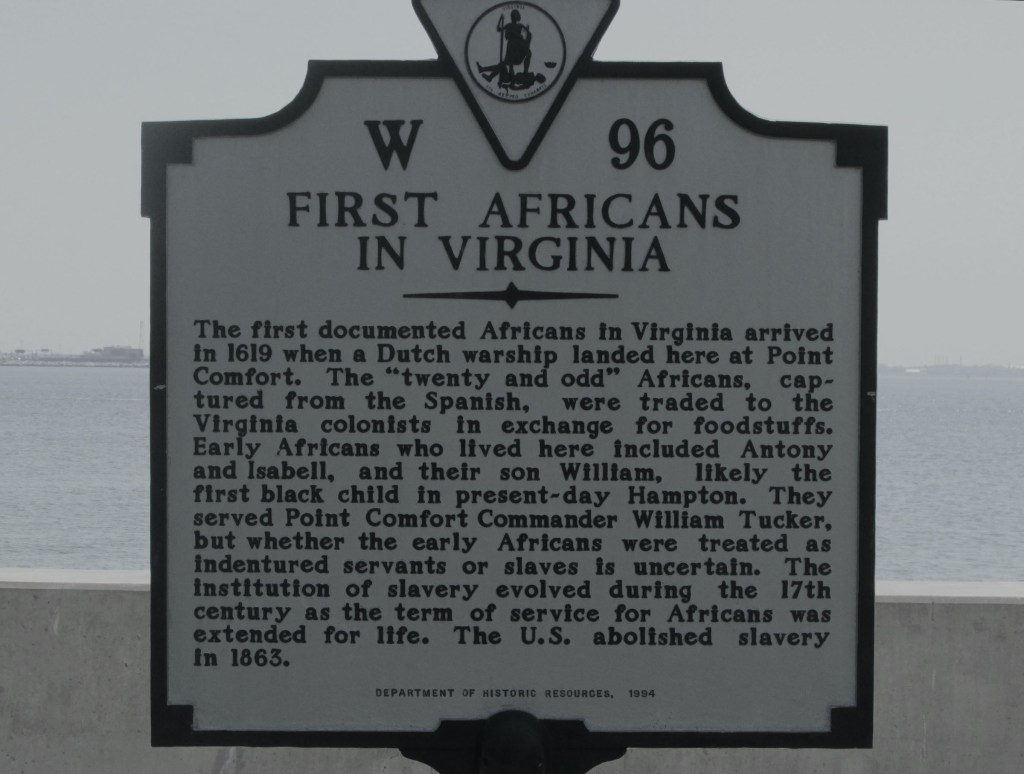
1619

When I was a junior in HS, my American History teacher was in a serious car accident in the fall, and did not return to teaching. This was 1967, and Social Studies teachers weren’t thick on the ground. The situation was personally worrisome: I had somehow persuaded this history teacher to let me take his required class as an ‘Independent Study’ so I could take both band and choir (which were infinitely more important to me than American History).

As rounds of fill-in teachers appeared, I was basically living in fear that my arrangement with Mr. Gilbert would be uncovered. He apparently left no record that I was even part of his class load. I might have to drop out of the choir—and I loved the choir—being coerced to return to conventional, one-chapter-a-week-test-on-Friday American History. It could go on my permanent record, or something.

Then fate smiled. My school district hired a young, spanking-new graduate of Western Michigan University, in December. She was cool with my studying American History on my own, added my name to the official grade book, and offered me her college history texts. Assignments would be short papers—and conversations with her. She recommended paperbacks I might enjoy.

In one of those conversations, I mentioned that her college Am-Hist textbooks presented things differently from our HS text. Things like the smallpox-infested blankets and how Andrew Jackson might not be a totally upright guy.

She smiled her praise. Good work, she said. You now understand that the people who write about history are usually the ones who benefited from the outcome. There are many ways to interpret the events of history—the ones you’re getting here in high school are pretty sanitized and one-sided.

This was a revelation to me, and made me vastly more interested in (and suspicious about) reading history. Most of my teachers seemed to regard their anthologies and textbooks as gospel truth, and thought we should, too. A fact is a fact.

Learning that there are lots of reasons to argue with the bland, evasive rhetoric found in textbooks was a great gift. I am still friends with that teacher—Marjorie Foster Trapp—and we still poke at each other’s thinking on social media. I got lucky.

As I said, this was 1967, the first year I ever saw those black and white diagrams of how enslaved African people were shackled, head to foot, in ships’ holds. When the Detroit race rebellions were still in the headlines, and in the thick of the Civil Rights Revolution, American students (at least in my school) were reading columns of sterile information about Whigs and Custer’s Last Stand. Has there been significant change in the teaching of our nation’s history?

Let’s hope so.

We’ve got vastly more resources at our fingertips now—the Library of Congress, in fact. A well-read teacher can serve as expert guide to artifacts and stories about important historical events and issues, across the developmental spectrum. History could be engaging, even fascinating; more importantly, students could understand what can be learned from mistakes made in the past. We might even teach them to be suspicious of believing much of what they hear or see on Instagram. To be informed citizens.

I believe this is happening in many, if not most, American classrooms. And I also believe that the teachers in front of those classrooms should be able to select the right materials to challenge their students.

The 1619 Project is not, as some have suggested, a curriculum. It’s a set of digital materials—essays, photo stories, editorial pieces and features—on the impact of slavery on all people and institutions in the United States. Nikole Hannah-Jones’ essay, America Wasn’t a Democracy until Black Americans Made It One, would be a great assignment to tackle at almost any point in the traditional HS Social Studies chronology. A little close reading, even; there are easily a dozen provocative ideas about American history in this one piece.

Naturally, Mike (Fordham) Petrilli had to weigh in. The Fordham folks think Trump’s proposed anti-1619 response, the 1776 Commission curriculum (as yet mostly unwritten, but absolutely going to be chock-full of real patriotism and heroes), is our window of opportunity to craft an all-American curriculum that does the impossible: pisses off nobody but instills reverence for our exceptionalism, with all the usual Important Dates and lots of winning. Petrilli has several nit-picking critiques for a contemporary media series on the legacy of having been a slave-owning country for 250 years, and other sources:

‘Take the famous Howard Zinn textbook, A People’s History of the United States. Central to its narrative is the premise that the world is, always and forever, divided into oppressors and the oppressed. This is a deeply cynical idea, though resurgent today in discussions of “anti-racism” and “critical race theory.” Do its adherents expect conservative-leaning parents—scratch that, most parents—to welcome this ideology into their children’s schools with open arms?’

First–anti-racism is real, not a word you put in quotes.

And what is Petrilli’s big idea? He is going with Trump’s 1776 Commission. No, seriously. He wrote that Trump was right to question the too-liberal teaching of social studies in our public schools. We need a commission.

You have to wonder what Fordham thinks high school history teachers do all day.  

What pedagogical and philosophical errors could they be making, that would somehow be fixed by a Commission? A Commission inspired by Donald Trump’s petty rage over a successful media launch involving the NYT and a topic critical to the health and progress of the nation—dealing with our racism problem? A topic of high interest and importance to teenagers, as well.

To all American History teachers: hang in. Teach your students to embrace America, ugly warts and all, and to vote as if their lives depended on it. Our highly imperfect democratic republic is worth saving, and they’re going to be in charge some day.

The Post Office, the Election and Social Media—Four Lessons

This isn’t a blog about Our Beloved Post Office, or DeJoy the Impaler or even How to Vote. At its core, my ultimate point here is that Americans are terrible—godawful—media critics. And, consequently, our students–whom we frequently, jokingly label our on-site tech support–are floating in a sea of toxic TikTok spin and political sludge with no paddles and no anchor.
While young people are often fearlessly intuitive about using social media tools and platforms, the wisdom that comes from analysis, evaluation, fact-checking–and simply being mature—is not necessarily in place. True, I have, in 30+ years of teaching, met 7th graders I would trust with my life. But one look at 17-year old Kyle Rittenhouse’s social media presence ought to give anyone pause.

On the other hand—well, here’s a story about a viral FB post and adults who ought to know better.

This narrative is just one illustration of how misinformation is spread. I have my own theories about how this particular blot on the truth may have happened, but no proof.

It’s kind of like what’s happened to the Post Office this summer—moving from citizens’ early observations about the mail being slow, to a loose accumulation of facts and accusations, with people becoming more informed (or misinformed).

This week, we moved into Congressional hearings that have convinced many people that a critical, constitutionally mandated service is being deliberately destroyed by a guy who knows bupkis about delivering the mail and has an economic stake in shutting it all down.

Many people–but not all people, of course. Because others have read memes and posts and seen tweets that say the USPS has always been second-rate, and it’s time to put this money-losing federal service in the hands of a businessman.

We’re losing our grip on truth.

Around August 14, a post began to appear on my friends’ Facebook pages. Lots of friends—at least three or four dozen close buddies or acquaintances, some of whom have graduate degrees and respected voices in their communities. I won’t quote it all here—but it began with these words:

Good advice for people who feel unsafe about voting in person but now fear the USPS will be unable to deliver a “mail-in” ballot in a timely fashion.

There is a way around it:

1. Request a mail-in ballot.

2. Do not mail it.

Look familiar?  This is not good advice.

There are a number of potentially concerning things in the rest of the post. It suggests that your drop box is probably not at/in your polling place (not true—many are). It says you can google your ‘election supervisor’ and find out where the drop box is (not true—and not all states use the same terminology to describe the elected authorities who oversee local elections). It says you can track your ballot—just like an Amazon package! —but neglects to say what to do when the tracking system says your ballot has not arrived, and you can’t track it through the mail’s bar codes.

There’s a lot of happy-talk language in the post: Your ballot gets in on time no matter what happens to the USPS! You don’t have to worry about standing in long lines and risking infection! Just drop it off!

In Michigan, if you drop your ballot into a handy drop box that isn’t in your voting jurisdiction, your ballot will not count. So there’s that.

And, it says (in capitals): ALL STATES ALLOW THIS!! As a matter of fact, the Trump re-election campaign sued the state of Pennsylvania and county elections officials in June, saying that drop boxes were unconstitutional. The case is still tied up in the courts. Are we going to see more such lawsuits across the country, negating or muddying the use of drop boxes?

All states that have mail-in voting of any type got there via a policy shift, at some point, applicable to that state alone. In Michigan we had a ballot initiative in 2018 to use the mail for absentee voting for ALL Michigan voters, no reason needed. Lots of confusing policy proposals and policy changes around voting have been proposed, adopted and rejected, across the country, as a result of the pandemic. There is no one-size-fits-all when it comes to ensuring that everyone gets the chance to vote.

It would be easy to think this post was from a well-meaning GOTV advocate, quoting advice applicable to their state or locale, thinking it was helpful everywhere. Its folksy tone makes you think you’re talking to a friend about your worries that USPS won’t be able to do its job.

It might make people who put off getting their ballots in the mail think—hey! I’ve got time! There’s got to be a drop box around here, somewhere! Or people who requested absentee ballots and find out too late there’s no box, go to the polls without the absentee ballot they requested (which needs to be ‘spoiled’ by a clerk, to free them up to vote in person). Etc.

At the very bottom of the post, it says this:

***This is very important, and I would appreciate everyone who sees this to copy it on their page. (Press and hold until the copy option pops up)***

This was the point at which I started wondering just who had written this (there was no source, not even ‘a friend wrote this’ on any of the re-posts I saw). Could it be a viral bot-post? Not shareable—one of those ‘cut and paste, so we can get the word out quicker,’ scammy posts?

I went looking. The first place I found it (on August 14) was Reddit, shared (but not authored) by ‘Joe in Canada.’ Two big spreaders were FB pages for ‘Spiritual Surrender’ and ‘The Professor is In’—but I couldn’t find a named author or credible source anywhere. Weird.

I did start pushing back every time I saw it posted, with a set of bulleted facts, similar to what I’ve presented here, only shorter. A couple of people said thanks, and took it down. A half-dozen more edited the post, to fit their city, township or voting jurisdictions and added cautions (that felt good).

But most people argued back, with ‘I know where my drop box is—I always use it’ or ‘I didn’t read the whole thing! Check with your local authorities!’ (leaving the incorrect information in place). One former student deleted my comments and left the post up (that felt bad).

Worse, there’s a similar meme making the rounds today—white text on a dark blue background. Be looking for it.

Lesson: People don’t like to have their random re-posts challenged. In fact, they hate it.

Second lesson: There’s a lot of unverified, even dangerous, garbage floating around out there as citizens try to navigate holding an election during a pandemic. Remember Steve Bannon’s maxim? Flood the zone with shit?And the best kind of, umm, shit is stuff that looks, at first glance, like it might be true.

Third lesson: Check for sources. Don’t ever put faith in an uncredited, my-friend-said post or video. (This is important for our students to know—here’s one great resource to help teachers with that.)

Fourth lesson:  There’s good information out there for all of us. AARP (go figure) has excellent non-partisan guides for all states. It’s our responsibility to inform our friends when something they have posted is wrong. Knowledge is power.

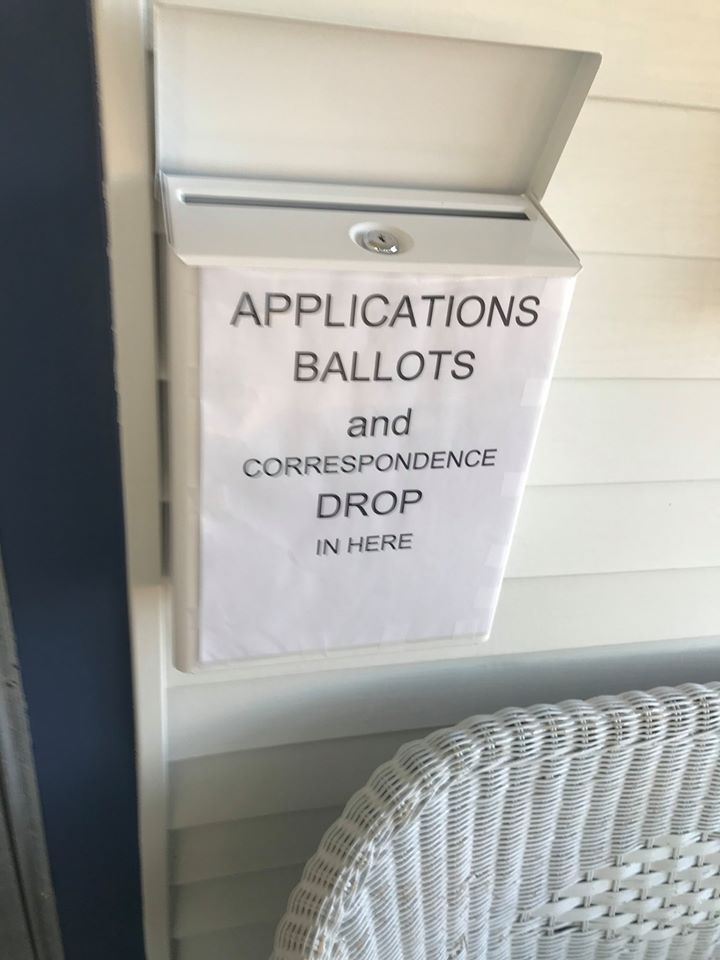
Coda: I learned that my voting jurisdiction does not have a drop box by asking my County Clerk. She told me I could drop off my absentee ballot or vote early (another perk we supposedly got in the 2018 ballot initiative) by making an appointment at my Township Clerk’s home. Since our Secretary of State offered a free drop box to every township in Michigan, I expressed disappointment. Later, the SOS website showed that there now was a drop box, at the Clerk’s home address.  There’s a photo of it, in her unlit, unsecured front porch, below.