I Know It When I See It

“I know it when I see it.”

Supreme Court Justice Potter Stewart, when asked to describe his test for obscenity, in 1964.

When it comes to K-12 curricular materials and library books, what, exactly, is “pornography”— and its corrupt cousin, obscenity? Do you know it when you see it?

Most parents, I think, have a good handle on what they think is appropriate reading / viewing for their children. As the omnipresent meme says, if you don’t want your children to read or watch something, fine—just don’t make everyone else follow your personal rules. I know parents who found Harry Potter frightening and disgusting, and parents who proudly say their children can read anything they like.

I actually think there are plenty of books that don’t belong in school libraries. But I worry way more about parents who let their school-age kids watch an unending stream of violence on TV, then tag along to the shooting range on weekends.

I don’t think books, per se, engender anti-social behaviors, especially when discussion follows reading. And while it would be lovely to think that schools can dish out value-free “content,” any teacher will tell you that managing classroom learning is a daily encounter with weighing and expressing values. The more you sterilize subject matter, boiling it down to a bunch-of-facts curriculum, the less sticky and engaging instruction becomes.

Thus—it bothers me to hear Christopher Rufo call school library books, even certain textbooks, “pornography.” He’s not just talking about sexually explicit stuff, either. He’s talking about a whole range of, well, values that he finds offensive: Delicate and careful discussions about race and discrimination. Questions around gender identity. The use of impious vocabulary. Characters who are decidedly not religious or Christian.

Pornography is something else.

I first encountered pornography in school, ironically enough. When I was in 10th grade, I was in the school play. It was a minor role—a half-dozen lines and maybe 10 minutes on stage. I can’t remember the name of the (forgettable) play, but my character’s name was Bunny. One of the other secondary characters was played by a girl named Pat, who wore copious black eyeliner and carried a metal rat-tail comb in her purse, both grooming tool and potential weapon.

There was a lot of waiting around for our bit on stage. Pat was always reading a paperback, sitting on the metal stairs up to the light booth. I didn’t think of Pat as an avid-reader type, but she was buried in that book. I asked her what she was reading—and she said it was really good, and I could borrow it when she was done.

It was a plain cover—no pictures. I stuck it in my tote bag with my geometry book and took it home. When I opened it up at home, holy tamales. It was—no two ways about it—porn. I read a little, then hid it back in the tote bag. I took it back to school and kept it in my locker for a few days, reading bits here and there—and, I have to admit, being exposed to things I never even heard of or considered.

We’re not talking about Lady Chatterley or Henry Miller or even Anais Nin. This was poorly written, printed on cheap stock, and raunchy. When I gave it back to Pat, she asked if I liked it. I said yes. And that was a true statement, even though it felt like a bomb when it was in my locker.

Did it hurt me, a relatively innocent 15 year old, to read that book? Nah. But there was a reason I kept it sequestered in my locker.

Nor did it hurt me to read Black Like Me, Naked Lunch or Lolita, all of which I read as a teenager.

Kudos to the Michigan Board of Education for proposing and passing a resolution last week supporting school librarians’ work as qualified decision-makers, when it comes to what should be shelved and available in their respective educational contexts (with the two Republican members voting no):

The board’s resolution calls on local school leaders to follow best practices in handling book challenges and affirms that school librarians have the professional skills to select age-appropriate materials. The board’s statement also recognizes that certified librarians have a positive impact on student’s learning and academic outcomes.

One of the two Republicans, Tom McMillin, promptly proposed another resolution to keep (here it comes) “pornography” out of school. That sentiment already exists in the School Code, so that feels just a bit performative, a chance for McMillin to say he fought for kids or some such. A chance to repeatedly use the word “pornography,” as if schools were the source of the actual porn that many teenagers consume.

 My friend, Reverend Jeanne Hansknect, an Episcopal priest, said this, in her comments to the Community Library Board, as they dealt with charges of offering inappropriate literature:  Reading breaks open our limited experiences one book at a time.

And that’s the real shame of restricting kids’ access to books: things that they learn from, and explore at their own pace, are labeled and locked up, making it harder to encourage broad perspectives and critical thinking. Making it harder for teachers to gin up enthusiasm for the basic process of reading, and harder to use language to teach rich, relevant content. Making it harder to look at the most challenging issues for all Americans, and think together about how to solve them.

None of this is really about skills—or even about obscenity or fake pornography.

 It’s about politics. It’s about trigger words like “pornography,” and unsupported accusations.  We know those unsupported words when we see them. And we’re not seeing them in school.

Holding Kids Back

When Michigan passed a mandated retention law for third graders who were not testing at grade level, back in 2016, I thought it was a terrible idea. I wrote about it, in several venues—the idea that children who wanted to master reading, but had been unable to, for whatever reason, would be socially identified as “behind” by being retained. When they were eight years old.

I still think mandatory retention laws, no matter how they’re structured, are a punitive response to children who don’t deserve to be penalized. What surprised me most in writing those columns, however, was the number of people who shared what they considered positive stories about retention—how it was just the ticket for one of their children, a grandchild, a student with limited English, a student who had transferred from another school and used the shift to repeat a grade, etc.

Nearly all the stories had the same elements: The retention happened very early in the child’s school career. The child in question was either among the youngest children in the class, or simply immature—or had mitigating characteristics (like learning the language, or a physical disability). The parents, teacher and school leaders had all agreed that another year of, say, kindergarten would be beneficial.

Michigan has just excised the mandated third-grade retention policy from the School Code, keeping the language around supporting early literacy in public schools. This is excellent news, given the mainstream media’s obsession with the Faux Science of Reading and how Mississippi raised its fourth grade reading scores by flunking third graders who were struggling the previous year.

From a Chalkbeat article, yesterday: Should struggling students be held back a grade? Why researchers don’t have a clear answer. Despite decades of research, there’s no clear answer on whether grade retention in early grades is a good idea. Existing data is open to competing interpretations, and big questions about the policy remain unanswered.

The long-run effects of early grade retention are not clear. Perhaps the more important question about holding students back is how it affects them in the long run. 

For later grades, the research is fairly clear. Multiple studies have found that holding back middle schoolers increases their odds of dropping out of high school.

As a long-time middle school teacher, I sat numerous times with parents around a table in the office, after it became clear that their seventh grader would be failing three or four classes. Nearly always, the outcome was the same: every possible strategy, from tutoring to summer school to what might politely be called “incentives” (read: bribes), would be employed so that Jason would be entering the eighth grade, come fall.

A couple of times, however, parents dads wanted to retain kids who were passing all their classes with Bs and Cs, in order to give their child another year of physical growth so they could be more competitive in high school sports. Think about that—have there been studies on using retention to ensure that your child was beefier than other physically diverse freshmen?

Or this case: a fifth grade teacher I met in Louisiana, where the district mandated retention, had a fifth grader who turned 14 and was eligible for drivers training. He also had a mustache. The other 5th graders were afraid of him.

I’m with the Chalkbeat article: Existing data is open to competing interpretations.

What I do think: We have pushed all our typical benchmarks and expected yardsticks for intellectual growth and academic capacities down, and have accepted standardized testing data as Truth, when describing students and thinking about the best ways to educate them.

Just because some children can read at age four, or perform abstract algebraic calculations in sixth grade doesn’t mean that we should reorganize the curriculum to encourage more pushing down. Conversely, just because a child isn’t reading at grade level (whatever that is, and however it’s measured) doesn’t mean that repeating a grade will do anything for the child personally, even if failing a cluster of children artificially raises collective test scores.

It’s become a cliché—but note that Finland doesn’t start formal reading instruction until students are seven years of age, a year before we have decided that some of them need to be “held back.”

Even the language matters—isn’t it ironic, as we strive to leave no child behind, that we hold some of them back?

My school, twenty years ago, had a four-option plan for students entering the district as kindergartners:

  • Developmental kindergarten— a half-day “young fives” program for kids who may not be ready for regular kindergarten work, ascertained through Gesell screening for every child
  • Regular kindergarten—2 ½ days per week, in various schedules
  • Jr. First Grade—for students whose kindergarten teachers identified them as not yet ready for first grade work
  • First Grade

The majority of kids went to kindergarten and first grade. But students could utilize any two or three options, depending on their rate of development. It was an exit ramp off the sequential school conveyor belt without anyone being “held back”—an extra year to grow, with other kids who also needed that time. All placement decisions were made cooperatively by parents, teachers and school leaders.

It was an expensive program (as are all mandated retention programs, it should be noted—requiring an extra year of third grade is costly). And because of that, the bottom line, it was eliminated.

If kids can’t read by third grade, we can always retain them then, right?

Eight Topics Education Bloggers Should Avoid (if they want readers)

I have been blogging for over twenty years—and before that, I wrote the occasional column about teaching for the local newspaper (until The Superintendent sent me a “cease and desist” memo). I have written for a handful of education non-profits, magazines and journals, and spent nine years blogging for Education Week.

When I started blogging, many educators didn’t know what a blog was, and the ones who did spent a lot of time reading and writing about all the Amazing New Tools available, via the miracle of technology. It was an era when financially strapped school districts didn’t hesitate to buy more computers, and everyone wanted to jazz up their lesson plans and see students’ work “published” on the internet. It goes without saying that this was way before Tik-Tok.

Now, I’m writing for myself and anybody who’s interested in reading the thoughts of a veteran educator. Those thoughts aren’t always focused directly on classroom practice, anymore, which was the overt mission of my first paid gigs. Increasingly, my thinking centers on the socio-political reasons for changes in school practice, and what I see as the very real danger that public education might collapse. Even that kind of alarmism is not a sexy, sticky topic for blogs these days, however.

Point being: I’ve been at this for a long time. I’ve written thousands of blogs, columns and op-eds, and observed what gets read and shared, and what sinks like a heavy, published rock. Some of my best work (IMHO, of course) has gone mostly unread. Some tossed-off columns written to meet a deadline got tens of thousands of eyeballs. It’s hard to say what’s going to cause people to read and share a blog.

There are some things, however, that no longer seem to engage teachers (my primary audience) and other education-junkie readers:

#8. Book Reviews  Every now and then, a spectacularly good book about education is published—the kind of book that would help teachers see the work they’re valiantly doing in a new light. I used to teach a graduate course in teacher leadership. One of our icebreakers was naming a favorite book about education. Teachers would routinely admit they hadn’t read an education-related book since college or fulfilling a masters-level coursework requirement. Ironic—and understandable, because working in crisis conditions means you’d prefer to take a break from stress when you read—but also kind of sad.

#7. The Philosophy or Purpose of Education  When Finland gutted and re-did their entire public education system (one that is now deeply admired in the data-driven Western world), they spent years dissecting and re-forming their education goals, before launching an entirely new concept—time that appears to have been well-spent. We don’t do that here. We adopt new programs and slogans on the regular, based mainly on what the people in power think will “work” (to improve data). We resist that deep national conversation about purpose and meaning in education, what our real aims are. We apparently also resist reading about what should matter most.

#6. Teacher Leadership  This one breaks my heart. Teacher leadership and professionalism are at the heart of what I think might save public education, releasing teachers’ moral commitment and creativity in the service of doing right by kids, instead of pursuing goals set by people who haven’t stepped foot in a school for decades. Want to be depressed? Ask practicing educators for their definition of “teacher leadership”—or sit in a teachers’ lounge at lunch and listen to stories of how dedicated and skillful teachers are now treated, in their own workplace. Hint: not as potential leaders.

#5. The Pandemic  Our entire focus, as we move out of a massive global emergency, is trained on two meaningless issues: So-called learning loss—a fancy name for entirely predictable drops in test scores. And a weird obsession with which schools took the risk of meeting face to face, when it was safer for students to be at home.  One might reasonably expect a devastating pandemic to have an impact on students’ emotional well-being as well as endemic confusion about “best practice” during a health emergency. But shouldn’t the questions and initiatives now be around how to support our kids, and figure out what such a traumatic event can teach us all? Instead, there’s all this finger-pointing and blaming. And writing a blog about what positive changes a pandemic might spur gets you zero readers. 

#4. Religion Perhaps you think that religion and public education are two separate things. If so, you are wrong. The intertwining of Church and State—a very bad idea—lies under a lot of the angst in public education in 2023, from book-banning to whatever Hillsdale College is cooking up at the moment. Writing about schools and religion, especially nuanced viewpoints, is a losing proposition. The blogs that get the eyeballs are anti-Christian (on the left) and anti-all non-Christian religions (on the right). Nobody wants to read about a positive role for any religion, like opening church doors to AA or feeding hungry schoolchildren, let alone offering comfort during times of great fear and upheaval.

#3. Racism This one needs an asterisk—because there are plenty of people writing about racism, the most eloquent and productive being those who have lived with its aggressions all their lives. But white women wanting to open a dialogue around racism in schools? Maybe they’re virtue signaling? Writing about racism, and the panoply of school-related issues impacted by systemic bias, is dicey for someone who might be perceived as, well, removed from the action. But as Ijeoma Oluo says in So You Want to Talk About Race? —you have to keep trying. Even if nobody responds.

#2. Research  I’m hardly the first person to write about the disconnect between valid education research and education practice (let alone policymaking) in public schools. And there are readers for pieces that present the most recent grant-funded studies from the Hoover Institution and the folks at Fordham.  Mostly, the commentary is something like: My research is better than your research or Your results don’t mean what you think they do. Even when the research is credible and useful (which isn’t always the case) the audience for genuine research breakthroughs is small and parochial.

#1. Women  I am always fascinated by the fact that teaching is such an overwhelmingly female occupation, and the corresponding chronic disdain for teachers that shapes education policymaking as well as mainstream media. It seems logical that asking a question like “Does the reason teachers make so little money while doing such important work hinge on the fact that they’re mostly female?” would be a hot research topic. But of all the issues I’ve written about in the past 20-odd years, blogs and columns about gender and education get the fewest eyeballs. I’m not sure why—women dominating the teaching profession and the outcomes from that seem to be like the sun coming up in the east: just the way it is.

I used to do blogging workshops, to encourage teachers to write and publish their thinking about education reform and classroom practice. Invariably, the audience would be largely female, but of the prospective bloggers who attended, the ones who followed through with creating a blog (or being hired by someone to write) were most often men. That has changed a bit —there are now more online options for teachers to share their tips and opinions—but I doubt if we’ll ever see four female educators blogging for every man.

Last thought: What blog topics always draw lots of traffic?

  • The Outrage du Jour (weird stuff that happens in schools and then is promptly forgotten)
  • Testing (everybody hates it, and loves reminders that it’s bogus and useless and time-wasting)
  • Wars (the war on teachers, the Reading Wars, the Math Wars, the Recess Wars, etc. etc.)
  • Lists (something about a number in the title)
  • Gifted education (there’s an organized gifted parent legion out there; I recently randomly ran across a man—on another person’s FB page—bragging about ‘ripping Nancy Flanagan a new one’ over a column on gifted education I wrote 10 years ago, a man I don’t know and never exchanged messages with, but who felt absolutely triumphant about… something)

So—what draws you to a particular blog?


Where the Boys Aren’t: Why is Teaching Still a Female-Dominated Profession?

Last week, the Michigan Department of Education named Candice Jackson, a third grade teacher and instructional coach in the Detroit Public Schools Community District, the 2023 Michigan Teacher of the Year.  Hearty congratulations to Ms. Jackson, and my heartfelt wish for an awesome year, packed full of opportunities.  In my (admittedly unasked-for) opinion, teachers in Detroit have been beaten up for decades, but are a talented, determined bunch—teachers with a mission. It’s especially wonderful to see one of them recognized, and their work showcased.

What I found interesting is that all ten of the regional finalists are women. They’re a diverse bunch, too, teaching across the K-12 spectrum in multiple subjects and contexts.

I’m old enough to remember when hiring men to teach in elementary schools was a district goal—we thought that men would serve as role models for younger children and were ecstatic when our new varsity basketball coach was hired to teach kindergarten.

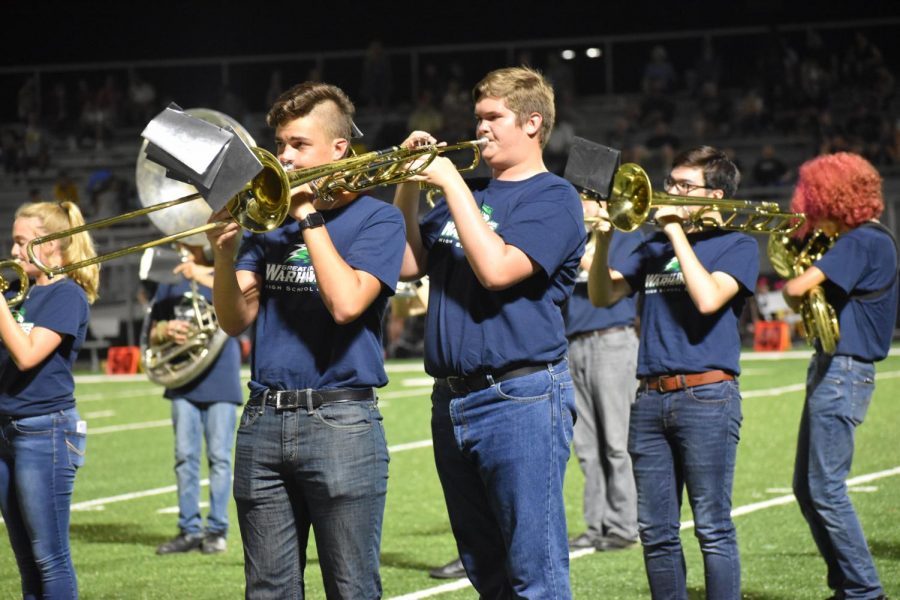
Hiring women as administrators and in secondary jobs that usually went to male candidates (like—cough—band directors) was seen as progressive (by some school boards and hiring committees, anyway); the percentage of women in formerly male-dominated education roles has steadily crept upward.  Over half of school principals are women, in 2023, and a quarter of superintendents are female, a 12% jump over the past two decades.

There’s some research that suggests blended teaching cultures benefits students—that veteran teachers and novice teachers have much to teach each other—and there’s research that supports learning gains when students have teachers of the same race. But what about gender?

The K-12 teaching force has grown increasingly female, although slicing and dicing the numbers is tricky. States where teacher unions are still strong tend to have more male teachers, especially secondary teachers—which may be a function of higher salaries. In Southern, right-to-work states, the percentage of male teachers is lowest—about 18%  of the K-12 workforce in Virginia, Mississippi and Louisiana.

An imprecise but useful stat: about three-fourths of K-12 public school teachers are women, across the United States. Interestingly, there are more men (white men, anyway) teaching in private schools than in public—and for considerably less money.

You may not have noticed, but this week is both National Nurses’ Week as well as Teacher Appreciation Week. A cynical person might wryly suggest that it’s efficient to double up these “honor women” weeks, get all this female recognition nonsense over with and let them get back to their underpaid service jobs.

But something has been happening in nursing careers. There are more men training to become nurses—nearly doubling their numbers from 2008 to 2021—and salaries are rising fast.

As we consider how to stop the hemorrhaging of the teacher workforce, the question might be: What is happening, in K-12 public education, that makes women stay—and excel in—teaching and aspire to school leadership positions? What is driving men away from education jobs? And why would men decide to pursue nursing, but not teaching?

I have some thoughts about that—but need to preface them with a disclaimer: None of this is hard evidence, let alone causal evidence, but it’s pretty clear that the female-dominated teaching profession, once the refuge of intelligent women who wanted interesting careers and couldn’t find them elsewhere, is in trouble.

Money is one obvious reasonalthough male teachers in the U.S. make about $2200 more than female teachers. Teaching is, always has been, a low-paying job, and it’s getting worse. As a society, we’ve moved away from the idea of a male breadwinner and female secondary income—the “my wife is a teacher so she can be home with the kids in the summer” syndrome.

When teacher unions began lobbying (and striking) for more (fair) pay, decades ago, the never-ending source of a low-cost, qualified female workforce for public education dried up. The response was not acknowledging the importance of public schools in building society, and paying up, but pushing back and even vilifying the unions.

But it’s more than salaries—because blaming it all on low salaries implies that women, more than men, are more willing to be servile, working for peanuts because women have always worked for peanuts and a good feeling. When you look at the puff pieces around Teacher Appreciation Week, it’s important to note that Americans have accepted the idea that public education programming and materials (not just salaries) are funded by goodwill, generosity and Donors Choose– and that’s OK.

The United States is also an increasingly technocratic society. We have not gotten over our love affair with STEM education, although it’s clear that fabulous STEM jobs have been way oversold. We don’t value the humanities or important work with very young children, two things that are absolutely dependent on skilled teaching and judgment. In fact, we’ve embarked on yet another wrong-headed reading war with the mislabeled “Science of Reading,” a triumph of misplaced faith in a one-size-for-all, science-will-save-us method for the ultimate individualized task, learning to read. A task, it should be noted, that is overwhelmingly accomplished by women.

I think teaching, despite a lot of empty rhetoric, has steadily lost social prestige. This is ironic, because (trained and certified) teachers today are better prepared and more skilled than teachers of yesteryear. There were enormous strides made, pre-NCLB, in teacher professionalism: increased education, greater selectivity, mentoring, innovative curriculum development, pilot programs in teacher ladders and a marvelous new tool—computers in the classroom.

All of that turned around, c. 2001, and the public education focus shifted from mastery to accountability. Good teaching was less about creativity, community and judgment and more about test scores and competition. If you were looking for autonomy, mastery and purpose, you were less likely to find it in a public school—this might explain why white men still teach in higher numbers in private schools, despite lower overall salaries: because their personal work is acknowledged as central to student success.

You would think that a global pandemic—which was devastating to nursing– would have sent more people out of nursing than teaching, but nursing is a growing profession, with more candidates than the available programs can handle. And more of them men, willing to do difficult, important work.  

The pandemic has upset occupational norms, goals and rewards.  Anyone who’s passed a McDonald’s advertising $21.00/Hour jobs understands that it’s a brave new world, a re-ordering of priorities.

The people who will be standing in front of classrooms in the future, the Gen Z educators who assume schools are for testing and competing, not nurturing, those fully accustomed to shooter drills and recurring violence—will they be willing to just follow orders?

Will we eventually lose the dedicated and talented female education workforce, too?

4

America’s Most Vulnerable and Important Profession

The Teachers: A year inside America’s most vulnerable, important profession (Alexandra Robbins) does what many other books about teaching are not able to do–take the reader right into the classroom, and describe what’s happening, with empathy and perception. There are lots of books about problems in American education, and lots of books that suggest solutions for those problems, but we seldom get to see examples, conversations and the people doing the work.

If you want a drone’s eye view of American public education—where it’s been, what bedevils the century-old movement to improve it—I would recommend Diane Ravitch’s trio of excellent books that follow education reform over the last couple of decades, or A Wolf at the Schoolhouse Door: The Dismantling of Public Education and the Future of School by Jack Schneider and Jennifer Berkshire.

But if you want to see what happens in the classroom and in the lives of teachers, Robbins accomplishes that better than any book I’ve read since Tracy Kidder’s Among Schoolchildren, written in 1989, which now feels like ancient history . The book is a tour de force—every teacher I know who’s read it agrees—unapologetically written from the POV of teachers without feeling the need to make excuses or backpedal.

Robbins chooses three very fine teachers and takes us through one year (immediately pre-pandemic) of their classroom and personal lives, deftly illustrating how those lives overlap, the pile-up of frustrations and issues bleeding into their emotional well-being.

All three teachers have huge and versatile skill sets and genuine dedication to kids as well as subject matter. Interspersed are data and editorial comment about education and current “reforms” (scare quotes are deserved here), as well as real-life anecdotes and comments that reveal just how far teaching and teachers have sunk, in public estimation.

Robbins highlights things that other education books don’t notice or can’t be bothered with–in-building teacher jealousies and vindictiveness, physical violence against teachers, the long-term effects of cuts to things once considered normal in every school, what it’s like to sit in an IEP meeting with a recalcitrant parent or clueless colleague.

One of her teachers is a middle school special education teacher who finds himself taking on every troubled kid, something that school administrators often push, seeing him as the ultimate “male role model.”  Another is an overachieving fourth grade teacher who knocks herself out to be the perfect teacher for every child, leaving her with no time to build a satisfying personal life (and illustrating, to readers, just how arduous differentiated instruction is, even in a building with adequate resources and good teachers).

The third teacher is a 20-year veteran, a sixth grade math teacher who has mastered the delicate art of getting the best out of her students and runs afoul of a clique of punitive teachers who resent her success and want her to punish kids who are doing well in her class for their sins in other classes.

(Here’s a story from my own experience that parallels her problematic relationships with the people who should have her back—feel free to skip it): We’re having a staff meeting, late spring, to talk about the imbalance of students in elective classes. The middle school bands keep getting bigger and bigger. I will have 93 students in my 8th grade band next year. What this means (besides a classroom management nightmare) is that other elective classes will be tiny, because “too many” students want to be in the band. The Woodshop teacher is outspoken—we need to limit the number of students in band, perhaps allowing the 93 students only one semester of band, in order to give him the minimal 12/class that will keep him employed in the building full-time, rather than splitting his time between middle school and high school, or forcing him to teach a second elective subject.

Everyone knows why all those kids want to be in the band, he says. I turn to him, surprised. I have no idea why kids sign up for band, beyond the fact that they like it.  Mrs. Flanagan gives them all As and Bs, he says. If we forced her to use a bell curve like everybody else, we’d see half of them drop out.

I look around. Nobody’s making eye contact, so it’s clear that this has been a topic of conversation before. And there’s some truth there—I do give a lot of Bs and As, mainly because the students are meeting the goals set for the class. Their parents are paying for their instruments and students must practice to do well in class. We do many performances—both band and individual players. The bell curve is stupid; have all my colleagues really been using it?

I can justify everything I do, but I spent the rest of the year eating my lunch in the band room, paranoid about disrupting the building schedule. And the next September, I have all 93 students in my first hour class. Nobody ever shows up to help. The Teachers is full of stories like this—real things that happen. There is no paradise, no perfect school, although there are many vivid examples of teachers bending over backwards for students and colleagues. Why aren’t we honoring this, financially supporting this work, applauding the folks who show up to teach every day, sacrificing their time and energy for other people’s children?

This book is also the first and best description I have read about the impact of the pandemic on teaching and learning. There have been endless articles and research on “learning loss”–all rife with meaningless data and numbers–but nobody talks about the impact of being expected to position family needs as secondary to students’ needs. Robbins gets this right–there is a line between acting morally vs. choosing school over family, a choice that teachers were urged to make, and reviled when they chose their own families and their own health. We have not yet reconciled that, here in America—but the book makes a good start on it.

Highly recommended for everyone, but especially teachers. It’s a fairly fast and facile read, although well-documented with endnotes, and should give teachers a lift, knowing that their work and their dilemmas have been acknowledged.

Introduce Yourself in Seven Books

Saw it on Twitter—or, rather, what’s left of Twitter—and kept thinking about this prompt: Introduce yourself in seven books.

What I liked about the prompt was that it asked players to “introduce themselves”—and after reading a few dozen entries, you could sort the self-introduction tweets into categories: Braggers. Folks from non-American cultures. YA readers. Chick lit lovers. Educators. Dishonest academics. Economists (shudder). Political advocates. And so on.

The prompt didn’t say “What are your seven favorite books?” or “What seven books have been most influential in your life?” (although there were numerous tweets that began or ended with The Bible). It said—introduce yourself. Tell us who you are, through the lens of seven books.

I set out to write a quick tweet, listing the first seven books that came to mind. Then I crossed out two of those, because a half-dozen better titles bubbled up. I spent a pleasant hour or so, rummaging through my mental Books Read rolodex, asking surprisingly deep questions, like Who am I, Really? At one time, I had about 45 titles on the list.

Clearly, I had no idea who I was, beyond “wide-ranging reader.”

I started paring back titles, limiting authors, rejecting books I loved, years ago, but haven’t re-read, discarding show-offy titles for books that I didn’t merely complete, but books that steered my thinking in another direction.

Eventually, I ended up with seven non-fiction titles and seven fictional books. And a recommendation for those of you who like to read to try this exercise. It’s revelatory, for one thing. And because I’m sure if you posted yours, there might be something on it that I totally forgot, or would be excited to read.

The Non-Fiction Titles are one path to introducing oneself—teacher, gardener, social class observer, education reformer, etc.  Your mileage should vary.

Teaching as a Subversive Activity (Postman and Weingartner) All of Neil Postman’s work is worth reading, but this book made me re-think my entire career, forty years ago. 

Shop Class as Soulcraft: An Inquiry Into the Value of Work  (Matthew Crawford) Did you like Zen and the art of Motorcycle Maintenance (Pirsig) back in the day? Then read Crawford’s book about the reality of academic hoops contrasted with the practical value of working by hand and craftsmanship.

Nickeled and Dimed (Barbara Ehrenreich) Together with Crawford’s book, and my own working-class upbringing, this book is how I learned to understand class and power in the American economy.

Between the World and Me (Ta-Nehisi Coates) The first, and most personally moving, books on race. I read this book a sentence, a paragraph at a time, needing pauses. He broke the path for all subsequent reading on race in America.

Here Comes Everybody (Clay Shirky) Made me understand online organizing. Wildly outdated, but also prescient. You’re reading this because I read Shirky’s book.

Mrs. Greenthumbs (Cassandra Danz) I have probably 35 gardening books, but I read Mrs. G every spring. May she rest in her fabulous heavenly garden. I have her to thank for mine.

A Wolf at the Schoolhouse Door (Schneider and Berkshire) On my first list, I had one of Diane Ravitch’s (excellent) books on education reform, which, sequentially, tell us what’s happened to public education in the past two decades. “Wolf,” however, is the newest and best-aligned with the abyss we find ourselves standing next to, at the moment. If someone asked me what I believe is true (another way of asking who I am) about my life’s work—I would suggest this book.


Perhaps you’ve noticed that there are no music books in the non-fiction titles. If I were asked to introduce myself verbally, the two nouns I would choose are teacher, and musician. Most of the best books I’ve read about music are fiction (sorry, Grout).  So let’s start Fictional Titles with one of those:

Bel Canto (Ann Patchett) A lovely book about how music changes people. Even terrorists.

The Whistling Season (Ivan Doig) What teaching really could and should be, set in Montana, a hundred years ago.

The Handmaid’s Tale (Margaret Atwood) First read it when it was a new book. Have re-read multiple times. Scary as hell every single time, woven with truths and warnings about sexual oppression.

The Sparrow (Mary Doria Russell) The author’s own description: Jesuits in space. And so much more.

The Ministry for the Future (Kim Stanley Robinson) Strangely hopeful, while centering on climate change and just how existential this crisis is.

A Separate Peace (John Knowles) This book introduced me to an entirely different model of education, and beautifully illustrated the role of relationships in learning and personal growth.

Year of Wonders (Geraldine Brooks) What would happen if there were a plague, and folks had to isolate, to save their own lives, and their neighbors? What would be the terrible cost—and the unexpected benefits?

Your turn. Introduce yourself in seven books. Cheating encouraged.

Who is Indoctrinating Whom?

A few years back, I got an email from a recognizable family name in the district where I taught for over 30 years. The man sending the email graciously introduced himself and provided the year that he thought I may have been his sixth grade music teacher. Doing the math, I realized it was my first year of teaching.

Once I confirmed that yes, I was the Nancy Flanagan he was looking for, he sent a rather remarkable second email. He was working for the State of Michigan, as an attorney in their Civil Rights division. And he wanted to thank me for my influence on his life, back when he was in the sixth grade, in my general music class.

While large segments of my career as a music teacher are blurry in my memory, I do remember bits and pieces of that first year—I was teaching several sections of sixth grade music, and saw the kids perhaps twice a week. There was no set curriculum, no standards, no published materials to guide me. I was literally making it up, day by day. It was an all-white school, in a charming little town on the outer ring of suburban Detroit—and my job seemed to be keeping the kids busy for 40 minutes, and my head down.

In his email, the man said he remembered singing Black and White, a then-current hit song by Three Dog Night, in music class. You talked to us about it, he said— kind of a little sermonette (his word) about equity and integration. None of my other teachers and nobody in my family ever talked to me about race or civil rights, he said. But the song made me curious. In high school, I started asking questions. And in college, I took a course in African American studies. And then I went to law school, with the intention of doing something good with my education.

The key thing about this story is that I didn’t remember any of it—not singing the song, and especially not talking to sixth graders about the meaning of the lyrics:

The ink is black, the page is white. Together we learn to read and write.
A child is black, a child is white. The whole world looks upon the sight–a beautiful sight.

And now a child can understand that this is the law of all the land.

I have since learned that the song was originally written in response to the Brown decision, in 1954, and first recorded by Pete Seeger. A verse that was part of the original lyrics was left out when Three Dog Night recorded it:

Their robes were black, their heads were white,

the schoolhouse doors were closed so tight.
Nine judges all set down their names, to end the years and years of shame.

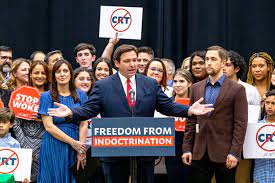
How would Ron DeSantis feel about Black and White? Or any of the other things millions of teachers have unwittingly said, done, shared, read aloud and even thought in recent decades? Where does ordinary classroom discourse end—and “indoctrination” begin?

A good way to think about that question is to reflect on what you learned in school—remarks that teachers made, class discussions, books that lingered in your mind. Your mileage may vary, of course, but a lot of what I remember is not “content,” per se—but the odd comment, classroom habits, kindness or lack thereof.

My biology teacher, Mr. Fry, used to show us movies from the Moody Bible Institute on Fridays, 100% creationist in nature. Mrs. Wildfong, fifth grade, let me skip the SRA kit and read whatever I liked from a shelf in her classroom. My HS physical education teacher, Mrs. Firme (yes—that was her real name), once asked me if I had polio as a child, because of the way I ran the 50-yard dash, making me self-conscious about running for the rest of my life.

Was I indoctrinated by my teachers? Nearly every teacher I had subtly changed my academic and life trajectory, from kindergarten to graduate studies, and not all of them had my personal well-being as an educated person in mind. Some wanted to save my soul, others wanted to influence my political beliefs. When William Kunstler came to speak on my college campus, my philosophy professor said his speech was “garbage.” I don’t remember a great deal about introductory philosophy, but I remember that.

Was the Professor right? I had to wrestle with that question—challenging intellectual work, actually, during a time when campus unrest was the hot political issue.

In yet another excellent blog, Jan Ressenger says this:

For several hours in December, as I watched a televised hearing of the Ohio House Education Committee, I was struck by so many lawmakers who seemed to define the role of teachers as mechanical producers of standardized test scores—and who conceptualize schools as merely an assembly line turning out workers who will help attract business and manufacturing to Ohio. I listened to a conversation filled with standardized test scores—numbers, percentages, and supposed trends measured by numbers. The only time human beings appeared in the discussion of education was when legislators blamed teachers for the numbers.

As I watched the hearing, I realized again something that I already knew: Many of the people who make public education policy at the state level don’t know what teachers do. Few people on that committee seemed to grasp that teaching school is a complex and difficult job.

Ressenger gets this absolutely right–read the blog! Teaching has never been about content delivery, effectively measured by tests, where students repeat what they’ve memorized. Good teaching has always been –even if unacknowledged– about applying new knowledge and challenging beliefs.

It’s a complex and difficult job, all right.

Were you indoctrinated by your teachers? Who’s in charge of the indoctrination dialogue right now—and what’s their goal?  Good questions to ask.

Parents’ Rights vs. Reality

I am always bemused by the phrase “parents’ rights,” when utilized by right-wing culture warriors in our current education climate. Because—seriously—parents have always had the right to control pretty much anything around what their child was learning or doing in a public school. As long as it was in general alignment with the school’s mission, of course, and didn’t impact the education of other students.

I have been a public school teacher in five separate decades, beginning with the 1970s—and have seen parent demands and outrage issues come and go, from Sex Education (a perennial sore spot in the curriculum) to The Math Program (aka, Why don’t I understand my kids’ homework?) to Pay to Play Athletics. My friends who taught literature were always willing to substitute one book for another, if parents preferred not to have Jason read Huckleberry Finn or The Bluest Eye.

I could name dozens more instances of parents being upset about something “the school” did—or a teacher said—or how a particular policy was enforced.  In fact, one of the reasons to put your children in public schools is the knowledge that you can complain, even organize a group of complainers, and there is a duly elected school board you can address, if school administrators don’t give you what you want.

What if what the parent wants is not in the best interests of their child, let alone all the other students in her class?

Your mind may jump here to the use of pronouns—or acceptance of realities (historical and current) that some parents find threatening–but over time, teachers run into many legitimate reasons not to trust parental requests or judgment (pay attention to that word, judgment…).

For example, I once had an Albanian student who had only been in the country for a few months. The class was a pull-out, called Homework Hall, where kids who had lots of missing assignments were sent with the hope that taking away their gym or computer privileges would cause them to buckle down and make up all the work. I was supposed to stand over them, keeping their noses to the academic grindstone.

Homework Hall was based on a flawed theory to begin with—but this girl was struggling with speaking/reading/writing English, and not completing most of her written work because it was written in a language she barely understood. I tried negotiating with her teachers to significantly reduce her assignments—answering the three most important questions instead of ten, or giving her a buddy who could read things to her, discuss the content to help her form answers with the vocabulary she’d mastered—but not all of her teachers were willing to do that.

In the meantime, her father kept coming to school. After getting a quarterly grade report, showing that she had not turned in some of her work, he wanted daily reports. He didn’t speak English, either—but his teenaged translator said if the girl was “lazy” then she would be punished. Swell.

This girl was the polar opposite of lazy. She worked hard. She was persistent. She just needed school-based adults in her corner. Her father had the right to ask for information about her progress, undoubtedly. And probably it was his prerogative to continue slapping her and verbally abusing her in a language she did understand, which seemed to be his cultural norm for how to deal with bad grades.

It was one of those judgment calls. Stand up for the kid–or decide it’s none of your business and confirm that she actually had failed to turn in assignments, because they were just too difficult?

In fact, every one of the kids in that class was a judgment call—the brilliant boy who simply refused to copy definitions from a glossary or do other pointless work, the child whose parents had just split up and couldn’t concentrate on equilateral triangles, the girl who was hinting at suicide in her English class free writes (which she never turned in, leading her to Homework Hall). Judgment calls, all of them.

What if you wanted to encourage parent-school dialogue—would passing laws requiring schools to post copies of existing legislation guaranteeing parental rights really be the solution?

Or what if you reported a child for seriously threatening behaviors—repeatedly—and nobody came to help

And sometimes—angry parents are absolutely right to speak their minds about what’s happening in the school their child attends.

Parents do have rights—and they should. Public schools are obligated to acknowledge and address parents’ input. The best thing we can do to ensure parental rights are honored is to invite them to speak their minds and express their beliefs and wishes, calmly, with the relevant adults in the room.

What we are seeing now—nominally “parents’ rights”—is not about parents expressing their beliefs about serious education policy or even personal issues involving their child. They are politicized grievances, often based on nothing more than rumor. And they’re often quietly funded by groups that have no personal interests/issues with the school in question—only in damaging public schools.  

The Governor of Michigan, Gretchen Whitmer, recently met with a group of parents, some from the district where I taught for 30+ years, to discuss education issues. Here’s what a man (whose son I taught, back in the 90s) had to say:

“The biggest issue I see is just the lack of respect…the Republicans feel that anybody can be a teacher these days, which is the craziest damn thing that you can think of. We recently elected a lot of new school board members who are anti-school. I don’t know any other way to put it. The slates that ran out here are just not going to be supportive of public education. So I think that’s the biggest problem that we see. There are school board members who actually believe, and it just astounds me, that there are litter boxes in the bathrooms. That’s what we’re dealing with.”

Whitmer agreed and made a point to debunk a right-wing conspiracy theory circulated by podcaster Joe Rogan and Michigan GOP Co-Chair Meshawn Maddock that kids are identifying as “furries” and are using litter boxes in classrooms. This has been used to push anti-trans policies in schools.

Thank you, Governor—and all of the other education officials who are carrying on as if culture warriors had legitimate things to talk about, letting the system work as it is supposed to. But in all these school board meetings—especially those that become hostile encounters, it’s good to keep in mind that not everyone is set on building good community schools.

The Network for Public Education has a new (free) publication– Merchants of Deception: Parent Props and their Funders. Find out who’s really got a legitimate beef and who’s out to take down America’s best idea, a fully public education for every child, no matter what they bring to the table.

What Do We Owe Children of the Pandemic?

Another piece in the NY Times, yesterday morning, all about the learning loss ‘crisis’ created by the pandemic. The article starts with the usual—essentially true—statement about test scores dropping as a result of the disruption of dealing with a global pandemic. But paragraph two goes full-on hype:

Nine-year-olds lost the equivalent of two decades of progress in math and reading, according to an authoritative national test. Fourth and eighth graders also recorded sweeping declines, particularly in math, with eighth-grade scores falling in 49 of 50 states.

I am always curious about why these easily debunked, alarmist claims appear in all the NAEP (‘authoritative national test’) reporting. Because we wouldn’t want to have a calm, rational, evidence-based discussion about how we can help all the kids whose lives were turned upside down by a pandemic, would we?

Instead, we’re left with arguments about whether remote learning is inefficientdata on that are not clear-cut, coincidentally —and panicky faux statistics on lost decades of learning. Faux statistics that the general public does not fully understand, by the way—you have to wonder WHY they’re appearing in the New York Times.

What the analyses of NAEP data do reveal: Nationally, we have accepted the idea that test scores are reality, our only reliable indicator of whether a school is doing its job and individual children are learning. There is no test that measures resilience or student well-being—that information would actually be useful.

There is zero doubt that schoolchildren were negatively impacted during the pandemic. Most of them had to stay home, to protect their own health and the health of their families, at some points in the pandemic—and those viral spikes in the population are not over. Remote learning was patchy and less than ideal, for many children. The world, for all kids, from preschoolers to high school seniors, became an unpredictable and often disappointing place.

The question now is not How Bad Was It? followed by handwringing and blame.

The question is: What Should We Do Now? (Notice that I did not say ‘now that the pandemic is over’?) How can we help kids who have been through a rough patch find stability and comfort, even joy, in a school setting?

What do we owe to those children and youth, some of whom are experiencing their first ‘normal’-ish year at school and some who have cut their K-12 losses and moved into the world of college or work?

I have some ideas about that. But first, some essential questions.

The foundational question: What are our real end goals in educating children?

Improving their test scores is a demonstrably terrible goal, as we have learned with the latest round of NAEP data. If all we offer kids, in school, is instruction designed to bump up scores, and then spend all our media capital bemoaning a three-point drop after a massive health disaster, it’s no wonder they feel disconnected from schooling.  

Another question: Is remote learning ever beneficial? Under what circumstances and conditions?

I would argue that remote learning, while a long way from ideal, served a positive purpose in 2020. And further, having experienced it under triage conditions, we could use that experience to explore better uses of distance learning, instead of deciding that it was both a failure in terms of learning, and, somehow, the teacher union’s fault.

 Finally: How much of this panic over test scores is driven by what the pandemic laid bare: Our society-wide reliance on schools for childcare. Parental angst and fears being politicized by opportunistic partisan groups, funded by dark money.

We need our community schools. And we desperately need to reassure the next generation that we believe they can learn whatever they need to learn to become functional adults—and that we will help them toward that goal, as best we can.

What do we owe the children of the pandemic?

  • A universal health care plan, available to every American.
  • A high-quality, fully funded public education for every child, no matter what they bring to the table, and baseline funding to bring schools in poverty into alignment.
  • Additional free or low-cost education and services for those who need or desire them: Free community college. Free auxiliary tutoring for kids with special needs—ESL, disabilities, long-term health issues, etc. Free apprenticeships. Free preschool. Free career counseling for all ages.
  • High-quality, affordable childcare, and adequate parental leave.
  • Plenty of well-trained and well-paid teachers, pre-K through university level.
  • Rich curriculum that acknowledges all children have different gifts and interests.

We had a crisis-opportunity to examine the stressors and weaknesses in our education system. Let’s not fumble that away by pointlessly crying wolf over an incremental but understandable drop in standardized test scores.

Amusing Ourselves into Educational Oblivion

A great new piece in the NY Times from Ezra Klein starts with Marshall McLuhan and his iconic quote: The medium is the message. Content—facts, analysis, opinion—is often secondary to the way it is presented.  McLuhan was prescient, of course—can you imagine what he would have made of Donald Trump?—but only in retrospect do we see just how deeply and comprehensively his remark has come to fruition.

Klein moves on to discuss my favorite education thinker—Neil Postman—and his terrific 1985 book, Amusing Ourselves to Death. The publisher’s note is a succinct descriptor: a prophetic look at what happens when politics, journalism, education, and even religion become subject to the demands of entertainment.

As it happens, education, religion, journalism and politics are the things I am most interested in, my personal passions. And I’ve seen all of them changing in alarming ways, to fit the attention spans and expectations of immediate gratification that technological change has shaped.

Americans, of course, think they are immune to this. Klein says:

Americans are capitalists, and we believe nothing if not that if a choice is freely made, that grants it a presumption against critique. That is one reason it’s so hard to talk about how we are changed by the mediums we use.

 I heard Jonathan Haidt, a social psychologist who’s been collecting data on how social media harms teenagers, say, bluntly, “People talk about how to tweak it — oh, let’s hide the like counters. Well, Instagram tried — but let me say this very clearly: There is no way, no tweak, no architectural change that will make it OK for teenage girls to post photos of themselves, while they’re going through puberty, for strangers or others to rate publicly.”

What struck me about Haidt’s comment is how rarely I hear anything structured that way. He’s arguing three things. First, that the way Instagram works is changing how teenagers think. It is supercharging their need for approval of how they look and what they say and what they’re doing, making it both always available and never enough. Second, that it is the fault of the platform — that it is intrinsic to how Instagram is designed, not just to how it is used. And third, that it’s bad. That even if many people use it and enjoy it and make it through the gantlet just fine, it’s still bad. It is a mold we should not want our children to pass through.

Bingo.

Why don’t we have the foresight to just say no to attractive technologies that are harmful to children’s—or even adults’—development and emotional well-being? They’re addictive. And remember what Frances Haugen told us about Facebook: They knew it was harmful to young women especially. But they buried that knowledge in pursuit of profit.

In an election season, candidates are seldom lauded for their creative policy ideas and expertise, let alone their character and integrity. Instead, we have Boots vs. Flip-Flops elections, like the Presidential contest in 2004 where a bona fide war hero was taken down by deceptive media, leaving the term ‘swiftboating’ behind, in the political lexicon.

Kind of makes you long for the days of the Lincoln-Douglas debates, where folks took picnic baskets for refreshment, and each candidate spoke, uninterrupted, for a total of 90 minutes. Tens of thousands of people attended. And there were no sound bites, memes, re-runs or cable news analysis. The medium—each man, speaking his ideas—was the message.

Fast-forward to 2022, where the MI GOP nominee for Governor, one Tudor Dixon, was described by the co-chair of her party as a ‘younger, smarter and hotter’ version of the current Governor, Gretchen Whitmer. (Plus that Trump Seal of Approval, of course.)

Ms. Dixon seems to be the candidate Republicans thought had the best chance of winning: someone who looks a lot like the current governor, but is a relatively blank slate, having never held elected office. Clearly, this isn’t about making good public policy, or the kind of leadership we need. But it illustrates the degree to which the medium—and Dixon has a history in media–is more important than the message.  

Often, the most entertaining and outlandish candidate wins. Viewers routinely say that the loudest and most aggressive candidate on the debate stage ‘won,’ quality of arguments be damned. But– who wins in the 2022 midterm elections really matters.

If people in your household or family circle are heading back to school this month, what media-savvy Tudor Dixon says about public education matters, too: Among Dixon’s education priorities are requiring teachers to put all curriculum and teaching materials online for parents to review, banning transgender girls from playing on girls’ sports teams, and criminalizing taking minors to drag shows

Much of this is education-media theatre, fed by stoking fear and anger, aimed toward winning elections. The terms and assertions dominating what should be policy discussions about how to shape a community asset—public education—have been, to put it politely, invented.

Fights at school board meetings and public arguments about cherished young adult novels are probably more entertaining than the pedestrian work of stretching public dollars and finding a special ed teacher in August. Boring meetings seldom draw camera crews, and don’t offer the possibility of a mic being stuck in your face.

But there is a role for order and rules and civil discourse. Every teacher in the country understands this.