Give Me a Poke

Sign-of-the-times screen on my kitchen Alexa: Alexa, give me mental health tips.  Indeed.

So, it’s the end of January and I am finally getting a haircut, double-masked and trying out a new stylist because my regular haircutter has three children at home, due to the pandemic, and hasn’t worked for six months. You know, just another disrupted-life story, one of millions.

I already know what my regular haircutter thinks about politics, but New Stylist—a talker—is rambling on about Our Governor and how she’s destroying businesses, yada yada. Keeping in mind that the woman is holding scissors, I gently mention the declining rates of infection, hospitalization and, you know, death in Michigan, a direct result of the gov’s policies.

There’s a pause and then she notes that Governor Whitmer was in D.C. for the Inaugural—not surprising, as she is Vice-Chair of the Democratic National Party—after she told ordinary people in the state not to travel over the holidays. Do as I say, not as I do, she says. Which is a fair point.

The Governor is fully vaccinated, I say. And she was masked and distancing. It’s the light at the end of the tunnel we’re all hoping for, right? I am expecting her to shift to complaining about how she won’t be getting her vaccine until summer, probably, but no.

She admits she is an anti-vaxxer. We just don’t know, do we, she says, voice dropping conspiratorially. But we do know, I say. And by the time you’re next in line, you’ll have six months’ worth of visible evidence. Dropping rates. Exceedingly rare negative reactions. A chance to address common problems with the vaccination process. She shakes her head—nope, you’re not going to convince her. None of her kids was ever vaccinated.

In the meantime, every person my age is trying every trick known to mankind to get a shot. It’s the conversation opener du jour: vaccine envy, and the swapping of surefire tips to getting poked.

If you’re like me, a retired teacher whose career was 30+ years based on fairness, turn-taking, order, and compassion for others, this vaccination debacle is driving you crazy.

First—half the country is blaming the wrong person(s) for the terrible rollout. Knowing a vaccine was likely should have had us stocking up on needles, rounding up volunteers and securing 600 doses in advance, last fall. Not scrambling now–or relying on people like Ron DeSantis. But here we are.

Second—all those memes about just who should have been put in charge (the one I get most often is Band Directors) are only funny because they’re sort of true. Putting people who are angling to make money in charge may have been a tactical error, but when your government infrastructure is compromised in so many places (see: Texas), maybe relying on Rite-Aid is a better bet. Who knows?

Third—watching who is getting vaccinations, and who’s still waiting, is an exercise in seeing privilege displayed in technicolor, daily, on a national stage.  Vaccinated Ted Cruz, on a plane to Mexico (where they have electricity), and saying in public that he ‘deserves’ a vacation, is the poster-child example of this, if the rumor is true. (Update: The rumor IS true.)

I certainly think Congress and Governors are entitled to first-line defenses, right now, as they work out a relief package to benefit us all, as are nursing home residents and front-line medical personnel. I have been interested to see which states are prioritizing teachers. I’m proud that two-thirds of MI teachers have had their first or both shots—and horrified at how teachers are being treated across the country.

It’s been said repeatedly, but it’s true: this pandemic has exposed and highlighted every single ugly characteristic of American society—from racism to sexism to just plain stupidity. Why aren’t teachers getting the vaccine in some states? Post that question on your social media feed and the answer will come back: because most of them are (underpaid) women.

I signed up—online, because I have the skills and the bandwidth—in early January, when my local health department started taking names. I went to a 45-minute Zoom presentation where the Director of the HD said folks 65 and older would be eligible—and called to queue up– by the last week of January. She emphatically asked us NOT to sign up in more than one place, and encouraged us to help older citizens get signed up online—but said for those older folks who were struggling, there was a Senior Hot Line phone number.

We waited patiently for about three weeks. Friends started getting shots and appointments. Younger friends. Random people with no obvious need. People who drove to the next county over, a Republican hotbed, where citizens were declining to be vaccinated. Teachers (this is good, remember). We heard that a pharmacy a half-hour from our home was now taking names. Feeling a little guilty, we signed up there, too.

It became the thing everyone asked—did you get an appointment? And it was pretty clear that those who got appointments did one or all of these things: Signed up everywhere, even though they’d been told not to. Did not wait to be called. Called multiple sites daily, and were aggressive. Went in person to the health department or pharmacy and were aggressive—or got end-of-day doses ahead of those on the list. One guy I know brought homemade candy to the health department. 

On Tuesday, a friend called and said she’d heard that Local Pharmacy had extra slots—call now, operators were standing by, etc. We called. The woman answering the phone was borderline hostile. Have you already signed up online, she asked? (Yes.) Then you’ll just have to wait your turn. Don’t call back (click).

Friend calls back—did we get appointments? No. I figured out the key, she said—if a woman answers, hang up. If it’s a man, you’ll get an appointment. (I know—crazy.) But we tried once more, got a man on the line this time, and he gave us appointments. Four hours later, we got a text saying those appointments were cancelled.

I have started to feel superstitious about this whole thing. Superstitious and mad. In what kind of country do the sneaky and devious, the line-jumpers and the entitled win?  

Alexa knows: Give me mental health tips.

Why It’s Time to Get Rid of Snow Days

Several years ago, I was on the dais at the annual meeting of the Michigan Association of School Administrators—the superintendents—in Dearborn, Michigan. I was there as token teacher, making a few remarks, but the keynote speaker at the evening banquet was their annual award-winner.

He was telling a story about a mistake he made, as a first-year superintendent. The U.S. Weather Service had predicted 12”-16” of snow overnight, with blowing and drifting, in a rural area where snows like this are commonplace. Instead of waiting until morning, and having to activate an early-hours phone fanout and radio alerts, he went ahead and called school off, and went home, secure in the knowledge that there would be snow, and plenty of it.

Of course, the storm veered north and there was no snow. None. Roads were dry and bare. And he spent the next week fielding angry phone calls. When he came to the punch line of his story, a groan swept across the ballroom. They’d all been there.

All these school leaders knew that if there had been an early a.m. storm making roads dangerous, and stranding kids at their bus stops before school was called, he would have faced the same wrath from parents. When it comes to calling snow days, it’s a crapshoot in the snowbelt. Ya can’t win.

In every community, there are the ‘Hey I had to go to work and it wasn’t so bad’ folks who don’t stop to think that driving a school bus full of elementary kids might be different than traversing the roads in their 4-wheel drive pickup trucks.

There are overprotective mamas who don’t want their children out in near-zero weather and keep them home even if there is school. There are middle schoolers who insist on wearing light jackets and no boots during blizzards—and teachers with hour-long commutes because they can’t afford to live in the town where they work.

The most complicating factor is whether the day ‘counts’ in the mandated seat-time requirements each state has for public education. A hard winter, like 2019, will outstrip the six ‘free’ days Michigan allows for weather emergencies. There were MI schools that missed as many as 13 days that year—all of them justified—and the governor had to pass a law to keep them from having to go to school until the Fourth of July.

But now—nearly all school districts have had to deal with remote school. Remote school is not ideal, but pretty much everyone agrees that it’s better than no school at all. So why not scrap snow days? Call them off the day prior, giving everyone lead time to make arrangements for substituting remote school?

There are a handful of arguments against turning bad-weather school outages into remote-school days:

  • A healthy percentage of kids don’t have devices, bandwidth, technical assistance or a quiet space. This is, however, a problem that schools have been working diligently to solve, out of necessity. That groundwork could be used for another purpose.
  • Those very kids are often using school-owned devices and school-provided hotspots. As the pandemic fades, it’s worth considering the idea of the school as main provider (using federal or special state funds) of tech basics to every child (and teacher), so school is not, ever again, completely dependent on face to face learning to be good for kids in poverty. There will always be emergencies, up to and including another pandemic. (Sorry, but it’s true.) Having kids equipped and prepared for remote school as needed is a good investment.
  • Modern-day students will lose the magic of an unexpected day off from school. I taught for 32 years in a state with snowy winters. I loved those back-to-bed calls as much as any teacher or student. But I also know that after two or three days in a row, the excitement fades. When you’re looking at tacking days on to the end of the year, or taking them out of spring break, or re-thinking your entire second-semester curriculum, the reality isn’t so delightful.

John Spencer wrote a delightful piece / podcast about using snow days as an excuse for more play in the school. It has some lively ideas about using unstructured time and a unique environment (snow!) for learning. But there’s no reason why a snow day that keeps kids home shouldn’t be filled with interesting and engaging learning ideas provided by their teacher, counting as a full day of school.

There’s been a lot of discussion lately about suspending mandated high-stakes testing this spring. The assumption is that students won’t do well, that the essential knowledge and skills schools are responsible for teaching aren’t being absorbed with so many kids being schooled remotely. The data will show nothing we don’t already know: the haves are way ahead of the have-nots.

But plenty have teachers have pointed out that they’ve taught first graders how to mute and unmute, to share thoughts and ideas (and time in the spotlight), and to use their keyboards. Out of necessity, not because these things are optimum or even appropriate, especially for the very young. Still, these are real things, learned in an increasingly real environment. We shouldn’t underestimate these gains.

I don’t think it’s truly washed over us—parents, teachers, community leaders—that ‘school’ is forever changed. Having the option of remote school for emergencies as well as opportunities—not just weather-related—could end up being the new schooling model. Think of rural districts that have cut back to four days a week. Think of districts that depend on public transportation during a citywide strike. Think of a HS curriculum that lets seniors job-shadow or intern out of the building, and needs to track their work experience. And so on. School via computer is here.

A local district here, after returning to face to face school, has given students two Fridays off, three weeks apart, so their teachers can take part in a staffwide vaccination clinic at school. They chose Fridays, because many people are under the weather for a day or so after being vaccinated. It’s been an exceptionally mild winter—no snow days. Their superintendent says ‘districts are awarded a certain number of days by the state each year during which school can be cancelled without penalty. Vaccinating staff is a justifiable use of the waiver.’

Exactly.

Be True to Your School

It’s an early Saturday morning coffee-meeting on Zoom. All of us are teacher leaders—what we have in common is awards for our good teaching. What brings us together is a mutual commitment to supporting both public education in our state and the teachers who hold this threatened enterprise together.

Some of us have left the classroom after long careers and moved on to new challenges, but we know that our observations matter little on this day, as the American republic itself seems to be on shaky ground. What we want to know is: What are the kids saying? How are the kids doing? Are they OK?

Of course, they’re not.

Our colleagues working in the classroom talk of their utter mental and physical exhaustion—every week like the first week of school, instructional mastery honed over years now replaced by calling students at home to ask: Are you still in my class? Is anyone in your family sick? Do you have enough to eat?

All I can think is ‘Thank God students have teachers like these.’ Teachers who understand students’ context. Teachers who care. Teachers who are a bulwark against isolation and fear.

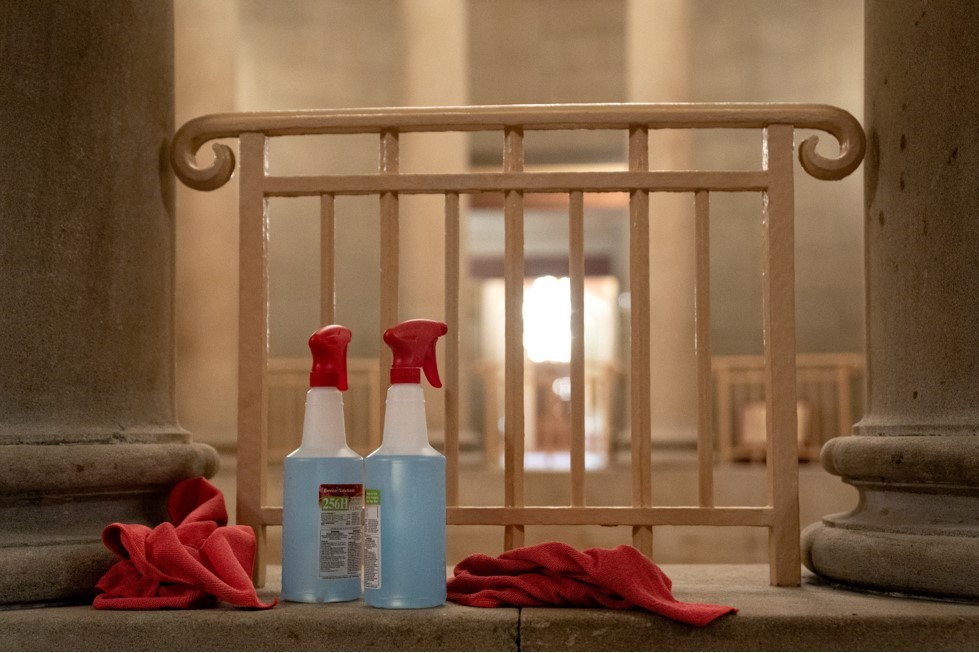
One of the teachers mentions talking with her students—cautiously, but necessarily—about the riots and insurrection at the Capitol, and shares a comment from one of them: After all those people came screaming into the Capitol and smashed things and left it filthy, did you see who did the cleaning up? Black custodians. That’s the way it always is—cleaning up after white folks.

The teacher notes that not all of her students are black, but they’re all participating in this discussion. They’re not disengaged. They are riveted. This is real, unlike some of the things they’re supposed to be learning, so they can be tested.

It bears repeating: Public schools are the stage where all the strengths and weaknesses of American society play out. School is our students’ microcosm. School is where identity politics are first encountered. School is where they find their first allies—and ideally, hear truths.

It’s Sociology 101—parents seek the best classmates that they can afford for their children. And once they get their children into the ‘right’ school, they want them to be part of a group. Even Stephen Miller got his political wings by opposing teachers and denigrating custodians, in high school. And the large majority of schoolchildren attend fully public schools.

We all instinctively understand Dunbar’s number: the size of the group with whom anyone maintains genuinely personal and stable relationships is relatively small, somewhere between 100 and 250 people. It’s the theory behind the small-school movement—it’s a good space for learning when people in the community know each other well. Every elementary school teacher worth her salt begins the school year by trying to build a community in her classroom.

School is where values are shaped, and practiced.

It’s also the reason why some groups are interested in injecting fake patriotism into the curriculum. It’s why many education reformers are pushing as hard as they can to ‘unbundle’ education, to ‘personalize’ learning by chopping it into discrete bits to be delivered cheaply online, then tested. 

With so many students adrift, less connected to family and church than earlier generations, teachers and professors might have ‘too much’ influence over what students think.  Break up the public school monopoly (and teacher unions, while we’re at it)! The very essence of the DeVos Education Department.

Will this change, under a new administration? Jury’s out, but both the reformer-privatizer team and the be-true-to-public-education team are expressing hope. Prepare for a power struggle.

In the meantime, here’s an observation that hit me hard, in the post-insurrection reporting.  Daryl Johnson, a senior Homeland Security intelligence analyst in the Obama administration who wrote a government-funded report about the rise of right-wing extremism– later deep-sixed as too controversial—said this, warning that the Capitol riot was just the beginning:


The government is — if they’re responsible — going to be developing programs and resources to start combating the problem. These people have had over 10 years to stockpile weapons and ammunition to get stoked up and paranoid and fearful. So we’ve got to be very careful about how we go about cracking down on these groups. If there are gun laws passed, that’s just going to feed right into their narratives, draw more recruits, radicalize people.

It needs to be more about de-radicalizing. Funding organizations that have people that have left the movement and can develop strategies on how to do outreach and pull people out. There needs to be a massive marketing campaign on what should citizens be doing. If you’ve got family members, neighbors, co-workers that are part of these movements, rather than ostracize and debate and criticize and isolate them, we need to love them, have compassion and bring them into the mainstream. The only way you’re going to get rid of hate is through love. Every person I’ve ever known about that’s been a white supremacist has left the movement through an act of compassion or love. They didn’t leave it because someone convinced them that their belief systems were wrong.

It’s another way of saying, as Martin Luther King did, that we must meet the forces of hate with the power of love. 

We have all read shocking and horrible stories about what happened on January 6, and the people who took part—who invited them, who aided and abetted them, who gave them money, who told them they were ‘loved’ and ‘special.’  It is not enough to post angry and clever tweets (and I’m guilty of this) or cheer for those apprehended and punished.

Young people need places to be, places where their thoughts are heard and valued, where their talents are appreciated and nourished, where their observations about who’s once again cleaning up messes are honored by an adult listener.

Maybe it’s time to be true to public education, the place where all children are welcome.

Stop Trashing Joe Biden’s Cabinet Picks

Especially his choice for Secretary of Education—but lay off the nit-picky nastiness around the others, too. Yes, YOU might have chosen others. Your favorite candidate may have been left behind. But much of Cabinet-choosing is inside baseball, beyond the ken of Joe Citizen. Stop bellyaching.

Biden’s selections all seem pretty experienced, professional and well-known to Biden or people he trusts. And hey—given what he’s got on his plate, and the worrisome lack of information coming from some quarters—I’d be reaching for the tried and trusted, as well.

There are always Cabinet members who don’t pan out, who are gone in a year—and there are people Biden wants who give me serious pause, too. Biden was far from my favorite Democratic candidate, but he displayed qualities which made him President-elect in the most contentious election in modern history. It doesn’t serve us well to flyspeck untried and unconfirmed Cabinet members, because there’s someone we imagine might be better. I’m taking a wait and see approach.

Frankly, 90 per cent of the people who are raking prospective Cabinet members across specific, overheated coals don’t know much about any of the nominees. But they’re willing to retweet some old error, a comment from years ago– or speculate about just how bad someone will be, based on some pretty limited evidence, or a single issue.

Here’s the thing: we’re not dealing with an ordinary transition, where progressives can realistically hope for big-transformative-ideas Cabinet members. We’ve got a pandemic to deal with, for at least six more months, in addition to a dozen political crises that are raw and bleeding—and dangerous.

Not every advisor and policy chief will be anxious to break new ground. Some of them are going to try to please multiple constituencies. Most of them will be lucky to reverse a stunning amount of damage, a lot of which has yet to be unearthed. They also have to pass through a confirmation process with a hostile Congress.

What is important right now is remembering whose policies and advice left us with the mess we’re in, and working to right the ship. I still have hope for an FDR-level change, eventually, but there’s work to be done first.

Like most teachers, I’d never heard of Dr. Miguel Cardona until about four days before he was nominated. But unlike many teachers, I was reluctant to name ‘my’ preferred candidate for ED Secretary. I have seen utterly inappropriate people elevated as ideal candidates–most of whom, thankfully, understand the range and scope of the job, as well as the politics, and said so.

Both Dr. Cardona and Dr. Leslie Fenwick, the other rumored finalist, seemed like good bets, people who had worked across the range of K-12 education and had deep understanding of how well-meant policy initiatives actually played out in public schools.

I heard Cardona’s acceptance speech on the radio and it felt sincere, even inspiring, to me. Biden appears to be honoring his pledge to nominate someone with classroom experience. And frankly, I don’t think there is a magic number of years in the classroom that makes a person qualified to be EdSec. Cardona enthusiastically trained to be a teacher via a public university—he didn’t come into education as a temp. To me, that’s enough.

Dr. Cardona has been a teacher, a school administrator at multiple levels, and a state superintendent during a pandemic. He’s been embedded in public education–as object of policy, administrator of policy and creator of policy.

Scrolling back through all the Secretaries, in Republican and Democratic administrations, he seems pretty close to what teachers have always said was essential, and what they wanted: someone who believes in the critical importance of public education and understands the people who do the work. Cardona will be only the 12th Secretary of Education, but compared to the previous eleven, we’re getting closer to that ideal.

Some folks disagree with Cardona’s prioritizing face to face education during the pandemic, especially for children in poverty—and others agree. He led a state with only 24 charter schools, involving less than .02% of CT students, so his mild remark about schools that serve children well hardly paints him as someone who supports destroying public education in favor of charters or choice. The question isn’t whether you like everything he’s said and done—it’s whether his CV shows him to be dedicated to the core principle of an equitable education for all children.

The Secretary of Education has little control over policy decisions that belong to states—but the rise of federal power in education policy has undeniably been steady, and onerous, for the past two decades. Cardona, as advocate for equity in public education, could be a powerful voice in reducing unnecessary (federally mandated) testing and creating conditions that make it safer for a return to in-person schooling. This might begin with federal oversight over real—not ‘alternative’—CDC recommendations, or, say, rolling out priority vaccination clinics for teachers as first step toward getting kids back to school.

My personal take on this: way too many people do not understand how inequitable virtual schooling is. There are high percentages of public school kids who do not have access.  And when I say ‘access,’ I don’t mean an internet hotspot via a bus parked near the projects. I mean enough devices in the home, some privacy and quiet, someone to help you when you run into trouble, and—most of all—adequate bandwidth to run all the programming.

There are plenty of pressing needs right now, around public education. It’s in crisis—and there’s even limited evidence that some of the strongest advocates of choice and standardization are now claiming that the pandemic has laid bare all the inequities and petty rule-making that have bedeviled public schools since NCLB sent us down the ‘accountability’ path.

Biden seems to have mostly sent us nominees that will be able to get through the confirmation process. There is SO much work to be done. I might eat my words in a year or two (Ghost of Arne Duncan floats into view), but for right now, I don’t want to waste time wishing someone else was president-elect, choosing candidates whose perspectives mirror my own. As someone once said, it is what it is.

Miguel Cardona, President-elect Joe Biden’s nominee for Secretary of Education, speaks after being introduced at The Queen Theater in Wilmington, Del., Dec. 23, 2020.

We Are All Afraid of the Big, Bad Wolf

I just finished reading A Wolf at the Schoolhouse Door: The Dismantling of Public Education and the Future of School, by Jennifer Berkshire and Jack Schneider. Berkshire and Schneider are co-hosts of the podcast Have You Heard, which is the best $2 I spend every month—and, as journalist and historian, both bring interesting perspectives to the ongoing discourse about what used to be called, without a trace of irony or bitterness, education reform.

It’s not a long book—217 pages plus another 40 pages of notes and references—and it’s eminently readable. It would be an excellent choice for anyone who cares about public education—parents and grandparents, policy-makers, teachers and school leaders—to use as concise handbook explaining what the hell happened to public schools over the last couple of decades. There’s a bit of history, a good look at failed-over-time policies, and a clear analysis of the intersecting factors that got us to this point.

Who wants to see public education die, and why? Berkshire and Schneider tell you, but like all interesting and disturbing stories, you have to trace backward first, to the origins and mission of public schooling and the conflicting values America assigned to education, as a start-up nation. This sounds tedious, but it’s not. In short, succinct chapters, the authors spend the first quarter of the book laying the groundwork for the rapid changes—the dismantling of a once-noble idea—we’ve seen in the 21st century.

Ernest Boyer once said that public school is a stage upon which Americans play out their most deep-rooted ethics, and the book deftly illustrates that principle. It takes us through the decline of labor unions, the elevation of the deregulated gig economy and ‘choice,’ and the overwhelming impact of technology on every aspect of American life, school included.

I have lived experience with nearly every theory, concept and action mentioned in the book, from teacher professionalism (or lack thereof) to the DeVos model of privatizing one of the few remaining public goods. Any teacher, at any level, who has been paying attention for the past couple of decades will be familiar with the carefully curated observations and supporting data presented here.

The great benefit of the book is that it connects hundreds of established dots into a flashing arrow: this is the end game, the crushing of once-healthy public schools, monetizing their resources and selling them off for parts. It accurately represents where we are, in the midst of a pandemic and constitutional crisis. The wolf is truly at the door.

Berkshire and Schneider are careful to remind us that the well-heeled will always have school as we know it. Their children will always have creative teachers and challenging curriculum and actual classmates, in a real-life setting, because that is, in the end, the optimum way for students to learn. The question is (and always has been) who’s paying for it, and who gets to share it. The primary goal has never been maximizing each child’s potential, contrary to the thousands of mission statements hanging in front offices everywhere. It’s been ‘What’s in it for my child?’

Although some of the data are optimistic—there is still strong support from parents for their children’s public schools, and for teachers’ demands for adequate funding and resources, even via walk-outs—the authors do not prescribe clearly defined solutions.

I don’t see that as a weakness. If 2020 has taught us anything, it’s that the future is utterly unpredictable. In a time when we might be taking a breath, rethinking our values around what matters most in public education, and thanking public school teachers for doing their best under some pretty dire conditions, reformers are busily selling yet more glossy rhetoric (don’t miss the chapter on ‘personalizing’ education) and questionable data analyses.  

So—read this book, whether you’re a veteran educator or a kindergarten parent. It’s accurate and sharp, the best education book I’ve read this year.

Ten Things I Used to Think

I Used to Think was a writing and thinking prompt developed for students, part of the work done by Project Zero. Lately, we haven’t been all that interested in what students think, or how their thinking might change, given more information, dialogue and cogitation. Instead, we’ve been interested in raising their test scores by asking them to simply reproduce knowledge–or keeping them six feet apart and masked until they’re tested again.

The last four years have radically changed a lot of what I think. For example:

I used to think that choosing the right Secretary of Education was the first critical key to strengthening public education across the nation. I really enjoyed the game of proposing/comparing people who, from various perspectives, would be great Education Secretaries. My standard of excellence was always Richard Riley. Riley was Governor of South Carolina, where he did a great deal to recruit teachers of color and address poverty in public education, before being tapped by Bill Clinton as EdSec. He was not, however, an educator, and he presided over a time when education reform was considered a good thing.  But now—I am uninterested in digging up years-old board memberships and former jobs of prospective candidates for EdSec. I am not convinced that being a long-time educator is a prerequisite for success on the job. Experience in the political and policy realm really matters. I’m not even interested in writing a blog about it. Heresy, I know. But there it is.

I used to think that bipartisanship was a good thing, that moving government forward necessitated both collaboration and compromise. I thought policy creation was sausage-making—everyone gets to put in a little something. I thought having a broad range of opinion, from progressive to conservative, was how the country remained stable, and loyal, and patriotic.  But now, I agree with Rebecca Solnit: We shouldn’t meet criminals and Nazis halfway. (Read the link—it’s fantastic.)

I used to think that churches, in spite of their many flaws, were trustworthy organizations that, on balance, did good in their communities. But now, even though I work at a church that is a beacon of kindness and acceptance in a small town, I am horrified at how far astray from core, all-religions wisdom—the universal, do-unto-others stuff—that many Evangelical Christians have wandered. They say there are no atheists in foxholes—and we’re all living in a kind of viral foxhole these days—but I am heartily sick of driving around and seeing God’s Got This! signs in my neighbors’ yards. I think everyone—believers and non-believers, all creeds and traditions—needs to wear a mask, stay home, wash their hands, and stop pretending to be compassionate or ‘saving’ people.

I used to think that racism springs from acute flaws in human character—hatred, and ignorance, likely instilled early by family and community. But nowthanks to Ibram X. Kendi—I recognize that what has held deep-rooted racism in place in America for 400 years is not a continuous stream of benighted people, but policy. White people stole, platted out, and sold land that Indigenous people lived on, hunted and fished, for centuries: policy. Majority-White public schools have always had far more resources and advantages than the schools Black children attended—and policies that nominally have been established to increase equity have also increased segregation.  A country that was literally founded on diverse expression of thought has built its own caste system, through layers and layers of interwoven policy. The good news is that it’s possible to change policies.

I used to think that free and fair elections were the cornerstone of American democracy, and that most people saw election day as a kind of Norman Rockwell tableau, a cherished opportunity for everyman to have their say. I thought the peaceful transfer of power was inviolate. But now… I don’t even have to finish this one. Turn on the television.

I used to think that teachers, in spite of their lousy pay and lack of control over their own work, were regarded as community heroes and helpers. But now—there’s this. This. This. And thousands more. Today, I read an outrage-inducing piece claiming that yeah, teachers are getting sick and dying (isn’t everyone?) but there’s no way to prove they actually caught the coronavirus at school—so hey, everybody into the water. The negative repercussions on this entitled attitude—teachers are so selfish when it comes to their own health!—will last for decades.

I used to think that voluntary academic disciplinary standards were a useful way of organizing curriculum, and the occasional standardized test (say, three or four between kindergarten and graduation) didn’t hurt anyone, and provided some valuable baseline information. But now, I think that standardization, and the widespread belief that more data will improve public education, is pure folly, an illustration of the old saw that a man whose only tool is a hammer sees every problem as a nail. Rewritten: To a man with a computer, every problem looks like data.  

I used to think bootstrapping was a real thing, taking out loans to get a college degree would pay off in the end, and there was a future for deserving and ambitious students. But now, I believe we have outrun this concept of social mobility through more education, which may have once been true. If you’re rich, or your family is rich, those advantages will hold. If you’re trying to catch up economically, the odds are so seriously against you that your smarts, moxie and good character mean pretty much nothing.  The only possible hope (see above) is major policy change. 

I used to think that I was a pretty good music teacher–way above average, in fact. But now, watching music teachers struggle, every single day, with how to teach music online—and, incredibly, succeeding, I am humbled. Even more important, I’ve witnessed them forming communities on social media to help each other tackle these challenges and share resources and innovations. I’ve seen them have in-depth conversations about core pedagogical issues and the future of their profession. Humbled, I say. Seriously humbled.

I used to think putting up a Christmas tree before Thanksgiving was sacrilege, part of the ugly, metastasizing commercialization that has spoiled a once-simple holiday.  But now—this year—I think that, in this season of kindling light against darkness, any cultural or religious tradition that brings joy is spot on, and the sooner, the better.

It’s the Right Time to Stop the Overdose of Standardized Testing

A bit of personal history: I live in the first state to launch statewide standardized assessments, back in 1969-70. Every single one of the 32+ years I taught, in every school, at least some of my Michigan students were taking state-sponsored standardized tests. Honestly, I didn’t think about it much.

In the 1970s, we had the MEAP test for 4th, 7th and 10th grades—two to three days’ worth of testing blocks, in the fall. Teachers understood they were tests of basic skills, and the best strategy was simply reviewing traditional concepts. A couple of times, one of the elementary schools in the district where I taught had a 100% pass rate. Because, on the MEAPs, students either did well enough to meet the grade-level benchmark, or they didn’t.

Schools with low pass rates got more money. The state legislature thought more intensive instruction would help children whose critical skills were weak. For the rest, well—the annual check-up was over.

Those were the days.

What this means is that Michigan stands as the first state to have 50 years of testing data, from a wide array of tests. We had state-created tests, aligned with state-crafted standards. For a while, all our juniors took the ACT, whether they were college-bound or not. We’ve used our own, written-by-MI-teacher standards and common standards. We implemented a rigorous, college-bound “merit” curriculum for all, in the hopes that it would raise test scores.

We had cutting-edge hands-on 8th grade science tests, performed in lab groups, where teams of students caused a tubular balloon stretched over a narrow beaker to inflate and deflate, as the gasses inside heated and cooled. That one was fun.

What we haven’t had is clear and steady improvement in test scores. In fact, due largely to clear and steady reductions in funding, we’ve slipped to near the bottom of the pack.

And now, we have students taking computer-based tests at home. In front of their parents. Leaving aside the very real aspect of invalid data, parents are observing, in real time, the testing process. A friend got this message from one of her former students, now a parent herself:

Just had to share how horrified I am by the NWEA tests. Our school this year is allowing us to take them from home and today [my second grader] took the reading and math assessments. He was immediately discouraged by the math (his favorite subject) as the first few questions were things he hasn’t been exposed to yet. This set him up to fail on questions he could answer because he was upset and “feeling stupid”. I can’t imagine what it must feel like to have to proctor these assessments for a group of kids and have your own success as an educator be judged by the results of these awful exams.

Thank you for being such a strong voice advocating for all of our kids and for educating educators. I’m so grateful for the amazing teachers I was blessed with all throughout my time at XX and for the fantastic educators my kids have had thus far too!  Are there places or people that would be helpful to contact or to share our experience with, in order to help propel change?  

The ‘strong voice advocating for all our kids’ this mom is addressing is June Teisan, a nationally recognized teacher leader. And while the thrust of the comment—I had no idea how damaging these tests could be until I saw them for myself!—is more and more common, it’s the last sentence that sets it apart.

Just who needs to know about this? What can parents do?

The Opt-Out movement is still alive, and parents have more reason than ever to reject standardized tests. But this may well be our window for changing, once and for all, our pointless and wasteful love affair with standardized testing. They don’t tell us what we need to know, and they harm kids who don’t deserve harm. It’s as simple as that.

Ask any teacher: What are the real outcomes of using standardized testing? Cui bono?

The scariest thing to me is that any teacher who’s joined the profession in the last 15-20 years is thoroughly familiar with The Tests, and may in fact see them as something we’ve always done, something necessary.  Something, without which, we will be flying blind. They might perceive school as a place where all decisions are best made off-site by ‘experts’ and ‘authorities,’ without whom there would be no ‘accountability.’ A lawless place that needs plenty of guardrails and consequences.

It wasn’t always like this.

June and I had a short conversation about this—who might be able to help parents, teachers and school leaders assemble the strength to buck the corporate test-makers and non-profits? Those who depend on the data generated by tests to make proclamations and influence policy-making?

There are always new reports and opinion pieces on testing to share. Tom Ultican has a good one where he says this, about CREDO’s scare-mongering over projected (not real) falling scores:
 
This is the apparent purpose of the paper; selling testing. People are starting to realize standardized testing is a complete fraud; a waste of time, resources and money. The only useful purpose ever for this kind of testing was as a fraudulent means to claim public schools were failing and must be privatized.

Bob Shepherd, a retired teacher with long experience in the industry says this:

The dirty secret of the standardized testing industry is the breathtakingly low quality of the tests themselves. I worked in the educational publishing industry at very high levels for more than twenty years. I have produced materials for all the major standardized test publishers, and I know from experience that quality control processes in that industry have dropped to such low levels that the tests, these days, are typically extraordinarily sloppy and neither reliable nor valid.

The National Education Policy Center, assessing a series of pro-testing white papers on accountability:

The series correctly concludes that state accountability systems have not improved student achievement or closed achievement gaps over the last decade. Despite this conclusion, however, the series puzzlingly insists that state testing and accountability systems must be reinstated in 2020-21 and must focus on schools with the lowest performance levels.

Reports overstate some research conclusions and ignore a large body of research about factors that influence student outcomes. Specifically, the reports do not acknowledge the critical need for access to quality educators and fiscal resources, which are foundational to any serious effort to improve student outcomes. Moreover, the reports focus very narrowly on test scores as the primary outcome of schooling and ignore outcomes such as critical thinking, media literacy, and civics that are more important than ever.

If there were ever a time when testing ought to be suspended, re-examined and scaled back, it’s now.

Why scaling back and not eliminating them, cold turkey? Because I’ve been on this earth long enough to know that it’s not likely that grant-funded education nonprofits and test manufacturers will go down without a fight.

And try explaining to any forty-year old college-educated Dad that tests don’t matter any more, his children don’t have to take them, and every teacher will just be trusted to do their best from now on.

Ideas like ‘accountability’ have seeped into our national consciousness. Fear of ‘falling behind’ has been the subject of any number of local news stories. And let’s not even start with the beating teachers have taken, during a pandemic, when the idea of neat and tidy, leveled learning goals turned into flaming Zambonis.

We’re not getting rid of tests that easily. However.

Now is the perfect time for school leaders to strip off expensive unnecessary standardized tests, using budget crises and lack of technological infrastructure as an excuse. It might be time to put a focus on critical thinking, media literacy and civics, rather than drilling on testable items. Time to support parents who want to opt their children out.

For fifty years, Michigan has been testing, testing, testing. It’s time for a re-think. And it’s time for parents to turn to teachers and school leaders and demand change.

The Real Learning is in the Chat Box

My friend Mitchell Robinson, of Michigan State University asks: Am I the only teacher who finishes a Zoom class, during which I’m sharing a slide show, moderating class discussions, posing questions on assigned readings, and trying to respond to students’ questions in a thoughtful way, only to find out after ending the Zoom session that there was a whole other class happening in the chat window that I couldn’t see because my cursor had disappeared under the 25 windows and tabs I had open, juggling apps and programs?

Ah, yes. The chat box. My theory is that the chat box, used by adults and college students, contains what people want others to believe they’re thinking (cute jokes, pithy observations, deep questions) but don’t want to say out loud. What they’ve always been thinking, in fact, as a ‘presentation’ was occurring, in real time and real life, as well as online: a mishmash of random thoughts, tentative assertions and show-off remarks. Perhaps, in some contexts, a little flirting.

You might even say the chat box contents, especially in a well-run virtual classroom, is what participants will be taking away from this class—not the official material, as displayed, but their reactions to those ideas. Content on the slides will always be there for you, to refer to, like facts in a book. The chat box, and ongoing dialogue following are where the learning juice is found.

Brilliant lectures or important speeches are much better when there is a backchannel conversation going on. Sort of like watching political debates and Twitter at the same time, as people offer bon mots about, say, having a fly on your head, but also more cogent ideas about national leadership.

That’s what Dr. Robinson found, too—his students were ‘sharing their raw and deeply personal “takes” on the day’s discussion prompts that somehow didn’t make their way into the video feed…’

For several years, I facilitated seminars for an online graduate course in teacher leadership. Sometimes, I had guest speakers–including a few well-known authors and thought leaders in education. This was before using an electronic meeting platform was commonplace–and we had to set aside a half-hour before each seminar to help guests and students learn to use the platform, which was called Elluminate.

I wouldn’t dream of outing anyone, but there were more than a couple of people who fly all over the country and get big speaker fees who were adamant that they did not want to ‘talk on the internet’ or have people see them on camera. Can’t I just call in, they’d say? On the phone?

Elluminate had a chat function, too. The chat box was always on the screen unless the moderator made it inaccessible. Some of our participants (mostly teachers) found it maddening or terribly rude that backchannel chat was going on while the class speaker was presenting.

There were speakers who sharply asked participants to HOLD THEIR QUESTIONS until they were finished. Often, it was just get-to-know-you chatting, as participants came from all over the country. Worse, speakers would stop to read the chat every time something was posted, including private messages posted between individuals. Awkward.

They couldn’t relax, and trust that folks were following along, while simultaneously questioning or extending what they were learning.

I started telling guest speakers that this represented the real way students and adults processed any content. I had teachers tell me that this was the problem in education today—nobody had taught their students how to be quiet and pay attention. It was disrespectful.

Questioned, most would admit that they didn’t listen respectfully to every word an administrator said in a mandated staff meeting. And they especially didn’t pay attention to what students communicated to each other during their conventional classes unless it was an Official Discussion where students were Supposed to Contribute. There was a hierarchy of respect, it seems, and you know who was on the bottom.

I think of the chat box as a tool for democracy of thought.  Of course, I have mostly used it with teens and adults, who could construct a sentence or express a thought.

But I am guessing that, in spite of the fact that it’s absolutely the wrong way to teach early elementary grades, by the end of the year, many of our youngest students will have absorbed the road rules, democratic or not, of the online classroom. To chat, or not to chat.  To type a word, instead of speaking or writing it by hand. I can’t decide if that’s progress or tragedy.

Mitchell Robinson, after marveling at the riches and throwaway thoughts in his chat box, said this, about his students, who are learning to teach and learn in new ways, leapfrogging over traditional practice:

This next generation of teachers is so smart, so thoughtful, and so empathetic. During a time when everything looks so dark, these young teachers offer the promise of a brighter future–it’s just up to us to get them ready to take over. And then get out of the way.