
There’s only you and me—and we just disagree… Dave Mason
It’s been fascinating, this weekend, reading about our actual President’s heartfelt plea to save democracy, and the opposing party’s response: Gas prices (with a healthy side of chicken-fried lies) are going to get us elected, so let’s double down on the destruction. Whoo hoo!
I’ve been voting for 50 years, and there’s never been an election like this one. I know we keep saying that this is the most important election of our lifetime–we say it every two years—but holy tamales. The thought of a Republican-led House launching four impeachments simultaneously, with Jim Jordan preening on the news every night? Nauseating.
And yet, here we are.
In those 50 years, I have voted for Republicans. In fact, I used to vote in the Republican primary in the district where I lived for 20 years, because it was the only way I got to endorse mainstream candidates over crazypants candidates. I knew that Democrats would never win there, so it was a prophylactic exercise.
That was back in the days when the truly whacko candidates were pruned in the primaries. Unlike 2022.
Those of you who were voters in 2000 might remember compassionate conservatism, George W’s election slogan. I was in the .52% margin of voters who chose Gore over Bush, but I can’t remember anything about Gore’s campaign message. Something about a lockbox? Compassion, on the other hand—compassion and action—I can get behind.
God knows we need it. A more compassionate electorate, one concerned with actual facts about our rapidly changing climate and its outsized impact on populations in poverty, about human rights, about all the policy tweaks we could make to lift up our families and neighbors… what’s not to like?
We’re moving in the wrong direction, away from voting with our hearts toward voting with anger, hate and naked self-interest. Voters have been not only given permission to stomp all over their community’s needs, but are now being encouraged to wrest control of election results from township and village clerks.
Two stories about compassion:
A little more than a year ago, one of the communities I hope to represent on the County Commission, Maple City, raised a civic outcry against having a Dollar General in the center of town. Maple City is a modest little town, with a Post Office, a cute restaurant and a gas station, and lots of similarly modest homes. But its residents did not want to be a Dollar General town, or labeled—as Dollar General Corporate did—a ‘food desert.’ After rejecting Dollar General, that parcel of land was designated as space for six small homes—ground was broken, with lots of enthusiasm, a year ago, and the community seemed poised to welcome six new families. Compassion had beat out Dollar General, it seemed.
Right now, however, there are only foundations in place for four of the homes. A request for a tax rebate was soundly rejected, as the price of building new homes and availability of builders rose. Speaking with the people of Maple City, while door-knocking, there’s a lot of confusion and angst over promises made and promises stalled—or broken. The gap between the haves and have-nots—the thing they were trying to prevent by not plunking a Dollar General down in town—has not decreased.
Also—I was horrified to read that Leelanau County is among the top five counties in Michigan for parents opting out of the standard series of vaccinations that Michigan schoolchildren are required to get before entering public schools. More than 10% of our local schoolchildren are now entering kindergarten and the 7th grade unvaccinated.
This number, statewide, used to be vanishingly small, with waivers granted only on evidence-based need, and herd immunity not threatened. For children whose medical conditions contraindicate vaccination, herd immunity is the thing that lets them go to school safely. I taught school for over 30 years, and we never had to deal with anti-vaccine parents.
It’s not a thing we can ‘disagree’ about. It’s not a parents’ rights issue–I strongly believe in parents’ rights. It’s a rejection of science, for starters, overlaid with ginned-up political rage. It’s a rejection of the genuine needs of other people—vulnerable children who need protection!–in order to win some unnamed contest.
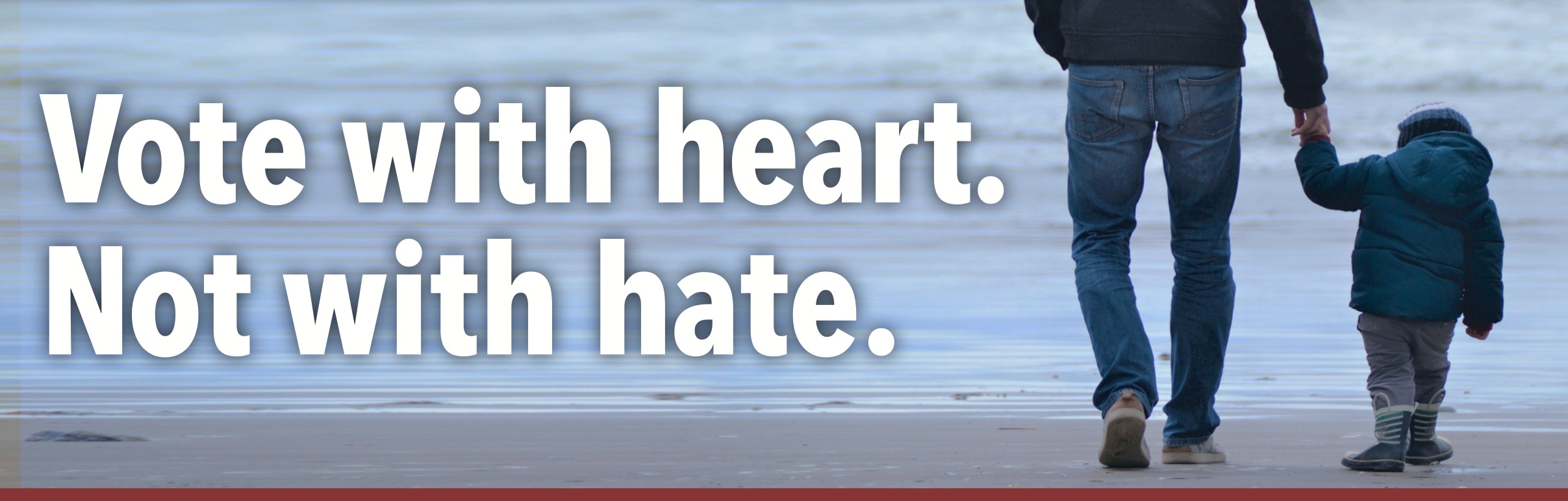
So. Vote with heart, not with hate. Compassion and community hang in the balance.





 Teacher in a strange land