Stickin’ to the Union

I should start by saying this: My dad was a Teamster, a union guy all his working life. At our house, the union protected the little guy—made sure he was paid fairly, had a benefit package, kept him from spiteful bosses (plenty of those).

When I became a public school teacher, and thus automatically a union member–this was Michigan, flagship union state, in the 1970s–my dad (who didn’t finish high school) was reassured. The union would protect me. He also wouldn’t let me park the first car I purchased on my extravagant $9050 salary, a Toyota Corolla, in the driveway. He had his non-negotiables, and one of them was Made in America.

It came as a surprise to me to learn just how differently teachers in other states viewed the union. A friend who grew up in South Carolina told me teachers there tended to see themselves as ‘above’ a union—to them, he said, the kinds of people who need a union are chicken-processors, or folks who work at the textile mill. People without college degrees. Low-class.

Working in education policy, one of my side hustles was with a dynamic woman who created and ran a professional development non-profit for educators. She began work as a teacher (in the South, in a right-to-work state). She had a distaste for unions. She asked me once: Wouldn’t you like to negotiate your own salary? Weren’t you aware, as a teacher doing side work in professional development, that you could be making three times as much in the private sector?

I told her that I deserved three times my pay–but so do lots of other people in social services and social justice work. I said it was a shame that our country prizes money above service.

But that was a lousy answer. It was the polite martyrdom that teachers are prone to: I know how critical I am in the community, and how much skill I bring to my work, but go ahead—take advantage of my sincere desire to make my community a better place.

If the pandemic has taught us anything, it’s that education still depends on teachers. Good teachers. Teachers who can roll with the big waves and tides of fortune. And those teachers, who work every day in isolation from their colleagues, need to be organized.

Over 40 years of union membership, I saw the best and worst of teacher unionism, up close and personal. Unions are organizations, so—like, say, churches—even organizations founded on the right moral goals and principles sometimes go off the rails, usually because of weak or even corrupt leadership. But the good always far outweighed the bad.

So I was pleased to hear Joe Biden give a shout-out to unions in his first press conference.  Part of that might just be Scranton Joe relying on his empathy for the working class. But union pension plans, the secure retirement strategy of millions of union workers, have been given some support in the recent stimulus package—even the Chamber of Commerce thought that was a good idea. And with a massive infrastructure-energy bill, we actually might see good union jobs come back. Wouldn’t that be great?

During the pandemic, snarling at teacher unions has become the refuge of the neo-liberals who feel bad about trashing grossly overworked teachers—the ones who understand that face to face schooling during a raging pandemic is dangerous. Teachers, the rhetoric goes, are noble and good, and doing their best. It’s the unions who are refusing to play nice and make things easier for working—or exhausted—parents.

That’s inaccurate, and a cheap shot. This is a truism, but—there is no daylight between ‘teachers’ and ‘the teachers union.’ Trying to faux-praise one while castigating the other is a needle you can’t thread, even in places where teacher unions barely have a toehold. Teachers need unions more than ever, right now.

If I were asked today why I was content to let the union negotiate my salary, this is what I would say: 

I started work in a union shop/collective bargaining state, where my rights were always protected.

I knew how much I would make in five years, and how to guarantee a higher salary through additional education.

I knew that I wouldn’t lose my job if my principal decided he didn’t like me, but only if my conduct or teaching were substandard–and I knew what those standards were.

I knew that there were far more men teaching in my strong-union state than her no-real-union state, which positioned female teachers as second incomes and paid them as such.

I also knew that keeping teacher salaries low increased turnover, and experienced teachers were better and more effective than a merry-go-round of newbies.

For now, I’m stickin’ to the union.

A Half-Dozen Things You (Could Have) Learned in School: Lessons from a Pandemic

If you’re old and loyal to NPR, like me, you may have listened to Whad’ya Know? on the radio, out running errands on Saturdays, a decade ago. A gently sardonic quiz show, hosted by Michael Feldman, my favorite category of question was Things You Should Have Learned in School (Had You Been Paying Attention).

I was always interested in what people think is, you know, core knowledge–stuff that everyone should have mastered, in the place where I worked for more than 30 years. Mostly, it was prosaic things—the isosceles triangle or the gerund—that you likely haven’t thought of in years.

It begs the question: What do we really want—or need– kids to learn in school? Besides basic literacy and numeracy, you’d think our next highest priorities would be good citizenship, and an appreciation for the benefits of modern science, helping us make progress on the issues that have plagued mankind for centuries. But—thinking about the Governor of Texas here—evidently not.

A year ago, as it was just beginning to dawn on us that this thing was coming our way, I wrote a ridiculously sunny blog about things we could learn from being in quarantine. Naïve things. A new appreciation for teachers was one of them, as well as an up close and personal understanding of both the uses and limitations of remote learning. Increased scientific literacy. National unity in the face of a crisis. I was wrong. So very wrong.

But then—we were all wrong, at first, underestimating the spread, length and virulence of the pandemic, plus the catastrophic and politicized mishandling of it. Turning that into a Civics lesson, or an entire unit on the benefits of a functional government, might be the thing we should be doing now.

If we had been paying attention, of course.

Here are some real-time lessons you may have observed in/about school during the pandemic:

1. There is no getting away from the deal American public schools have struck with the public. We provide childcare, five days a week, for those who need it, as well as daily nutrition in many cases. Stepping away from this deal, even when it might cost teachers and school staff their health and even their lives, has created a massive societal disruption and boiling anger.

I agree with Dr. Leana Wen on this issue: Both sides of the school reopening debate have it wrong. We shouldn’t be debating whether schools are safe to reopen. Instead, we should ask whether in-person schooling is essential. If it is — as many Americans, including President Biden, insist — then we should treat schools as we do hospitals. That means doing everything possible to them make safer, starting with vaccinating teachers.

I was happy to hear President Biden prioritize teacher vaccinations (and yes, it could have come sooner), because I think this deal—we will take your kids for seven hours a day, starting at age four or five—is part of the mission of public education.

We are teachers first, sure, but we have gladly accepted other responsibilities as our niche in society, including meals, health screenings, exercise, wholesome after-school activities and even watching out for the well-being and mental health of children and teens. Lately, we’ve been connecting them to the internet and teaching them the skills of doing work electronically.

If parents now seem more interested in re-starting sports or their relieving their children’s at-home isolation than reinforcing the features of an isosceles triangle—well, we’ve made those possible for the last century, too.

And I think we should continue. Communities must understand that this costs dollars and effort, but it’s tax money well spent. It’s the right thing to do, making public schools essential to communities and the safest place in town.

1a. Corollary: There are plenty of forces that believe the pandemic has been an ideal time to do damage to public education.

2. Americans are terrible at interpreting statistics. I have had conversations with highly educated people over the past year who simply can’t understand infection rates, vaccine efficacy numbers, or why herd immunity might be difficult to achieve.

I taught 7th grade math for two years, and most of these skills sit squarely in the middle school math curriculum—including the correlation between the amount of testing done and cases identified. Every math teacher could be using the plethora of statistical analyses and colorful graphs in the news as examples of ratio, proportion, percentages and variables in human populations. It’s called tailoring curriculum to the students’ real world.

3Americans’ ability to discern truth in the media needs some work, too.

4. Working on these literacies—media analysis, statistics around our own well-being, and the benefits of a functional government dedicated to the public good—can start in kindergarten and continue until adulthood.

Right now, for example, younger adults should be outraged that their children are being forced to take pointless, stressful tests. When they are told ‘it’s the law’ or ‘it helps compare South Dakota kids to the rest of the country’–for what purpose? –their outrage should smolder and burst into flames. They can take civic action, and claim their right to opt their children out of testing. Thus reclaiming their interest and investment in public education, a common good. That’s civics, government, economics and the history of American rebellions in a single movement.

5. The most important thing we could be teaching in health class right now is long-term problem-solving. In 90 days, most of the jockeying for position in vaccine lines will be over. In the meantime, who’s getting vaccinated and who’s still waiting is like a giant, real-life example of one of those morality puzzles: Four people go out in a boat in shark-filled seas. But the boat will sink unless one is thrown overboard. Do we ditch the minister, the beautiful actress, the teacher, or the boat repairman? Discuss.

The person who is going to devise the single, annual preventative vaccine administered worldwide that will lead future global citizens to long-term viral control, or creative reversals of the damage done to our environment, is now sitting in a classroom (or on their bed, in front of a laptop).

Isn’t it our job to inspire a vision of a better world? Shouldn’t this pandemic be a real-life learning opportunity, teaching the parallels between ease of voting and ease of getting a vaccine, for example? Whose governor has made good choices for all the public? Should vaccination be required by employers? Tricky stuff, I know. But it shouldn’t be.

6. Americans are selfish. A simple glance at variance in global successes and failures in suppressing a virus and protecting citizens without destroying an economy, tells us that the United States is low on the self-discipline and community-building scale.

Where do Americans learn to get along with their neighbors and think of others’ needs as well as their own? Where do they learn the habits of order, routine and cooperation? I would argue that we’ve seen both the best and the worst of American thinking in 2021. Do we want the America that looks out for its neighbor when the power goes off in a snowstorm, and people gather to sleep in school gymnasiums—or the America that cut itself off from federal regulation in order to reap bigger profits for the oil and gas corporations?  

So what do we really want—or need– kids to learn in school?

My theory: We need our teaching and curriculum to be centered around big, future-focused questions like: What kind of country and community do you want to live in? What skills do you want to develop to support yourself and build a satisfying life there?

Summer School & Learning Loss

It is with some trepidation that I put both ‘summer school’ and ‘learning loss’ in the title of this blog. Trepidation, because both terms have been widely and egregiously mis-used in the month that we’ve had an actual president again.

We are now discussing What to Do About School in terms of safety and instructional efficacy, rather than how to force ‘unions’ (another word deserving scare quotes these days) to push their teachers into a workplace where potentially lethal viruses may be circulating.

To clarify: When I say ‘summer school,’ what I mean is some kind of age-appropriate, enriching and FREE experience for kids, K-12. Things like music camp, Lego teams, outdoor sports and recreation, river canoeing, book clubs, arts and crafts, coding, Young Writers workshop–or volunteering to pull garlic mustard in conservation areas and getting school credit for your work.

I know that a definition of ‘summer school’ generally comes with the stink of the punitive: having to go into a hot, dusty building to ‘catch up’ to your classmates while the custodians strip and rewax the floors outside your classroom. It’s not supposed to be fun, for teachers or pupils. The implication of summer school is that you screwed up—or, worse, were deficient—and need to be fixed.

I am also well aware of the fact that everyone, K-12, needs a break right now. A long, healing break. And what better time to take one than now, when most of the country can be outdoors, and vaccinated families will be able to re-unite and kids can run around and play?

It’s worth pointing out, however, that not all families will be vaccinated, come June, and not all kids will be able to play this summer, in healthy, supervised surroundings. Some kids will go to day care, and a whole lot of them will be on their own. This is also part of the equation—that for some students (and they may not be the students you’d think), summer is already too long. Too unstructured.

Students themselves are ambivalent.Some think that other kids who have ‘fallen behind’—not them, of course—could certainly use summer school to ‘catch up.’ Some are full-tilt protective of their summer break, after the rotten school year they’ve just endured. Some of them are actually worried that their favorite teachers will be asked to keep working with little to no pay. Others say they’ve learned differently this year, but they’ve learned plenty.

As for teachers, most know better than to hope for inspired school leadership that rustles up low- or zero-cost programming opportunities that will keep kids intellectually engaged and perhaps provide a place for parents to drop their children off every day so they can return to work. Nor can we expect interesting activities that will provide some structure and challenge for older students.

If the purpose of summer school were to do more of the inadequate same-old, with the goal of better test scores eventually, I would be adamantly opposed. It would be a waste of scarce resources. And I am only too familiar with teachers accepting summer-teaching roles for insulting hourly rates, because their salaries are so miniscule.

On the other hand—and this is an argument that usually falls on deaf or hostile ears, granted—why not take advantage of smaller numbers of children, the option of working outdoors, plus a window of instructional choice and creativity, and use some of that federal money to offer voluntary summer learning activities?

It might even be a lead-in to permanently changing school calendars, which would be the real cause of ‘learning loss’—if learning loss were a real thing.  

Which it isn’t. It’s pure baloney. Kids learn all the time, in school or at home. The question is what they’re learning, and whether it will be useful to them. Furthermore, schools accept kids ‘where they are,’ all the time. Public schools, that is.

Teachers will meet kids where they are in the fall, summer school or no summer school. And move them forward. As they have always done, after a summer of so-called learning loss.

This blah-blah about ‘union’ reticence to return to face to face learning (because that—ha ha–would solve this made-up crisis) is also baloney, a darker narrative to stop people from stepping back and saying maybe we should never return to normal, because normal has morphed into schooling that is inequitable, punitive and boring. By policy and grant-funded design.

Sometimes, I think the problem is that Americans have no sense of imagination around education:

What would an imaginative response to the requirement that students take tests be? We could start by simply saying no, state by state or district by district. This would take some gutsy leadership—but who’s in charge, after a pandemic? Gates-funded nonprofits or on-the-ground public school leaders?

Parents could organize opt-out campaigns—teachers would support parents, if they took the lead, because teachers want to end punitive testing without jeopardizing their jobs. Schools could devise their own return-to-school pre-assessments, the no-stakes things teachers do every fall, to get a handle on kids’ skill levels and understanding.

We could set an overarching national goal: a year of providing extras for our students—extra programming, extra attention, extra medical and mental health resources, extra tutoring.  We could gut and re-think school calendars, curricular requirements, instructional models, teacher preparation. We could work on reducing standardized tests to three or four over students’ K-12 career.  

Instead, we’re fighting over summer school and learning loss.

Photo credit: Anna Samoylova

Give Me a Poke

Sign-of-the-times screen on my kitchen Alexa: Alexa, give me mental health tips.  Indeed.

So, it’s the end of January and I am finally getting a haircut, double-masked and trying out a new stylist because my regular haircutter has three children at home, due to the pandemic, and hasn’t worked for six months. You know, just another disrupted-life story, one of millions.

I already know what my regular haircutter thinks about politics, but New Stylist—a talker—is rambling on about Our Governor and how she’s destroying businesses, yada yada. Keeping in mind that the woman is holding scissors, I gently mention the declining rates of infection, hospitalization and, you know, death in Michigan, a direct result of the gov’s policies.

There’s a pause and then she notes that Governor Whitmer was in D.C. for the Inaugural—not surprising, as she is Vice-Chair of the Democratic National Party—after she told ordinary people in the state not to travel over the holidays. Do as I say, not as I do, she says. Which is a fair point.

The Governor is fully vaccinated, I say. And she was masked and distancing. It’s the light at the end of the tunnel we’re all hoping for, right? I am expecting her to shift to complaining about how she won’t be getting her vaccine until summer, probably, but no.

She admits she is an anti-vaxxer. We just don’t know, do we, she says, voice dropping conspiratorially. But we do know, I say. And by the time you’re next in line, you’ll have six months’ worth of visible evidence. Dropping rates. Exceedingly rare negative reactions. A chance to address common problems with the vaccination process. She shakes her head—nope, you’re not going to convince her. None of her kids was ever vaccinated.

In the meantime, every person my age is trying every trick known to mankind to get a shot. It’s the conversation opener du jour: vaccine envy, and the swapping of surefire tips to getting poked.

If you’re like me, a retired teacher whose career was 30+ years based on fairness, turn-taking, order, and compassion for others, this vaccination debacle is driving you crazy.

First—half the country is blaming the wrong person(s) for the terrible rollout. Knowing a vaccine was likely should have had us stocking up on needles, rounding up volunteers and securing 600 doses in advance, last fall. Not scrambling now–or relying on people like Ron DeSantis. But here we are.

Second—all those memes about just who should have been put in charge (the one I get most often is Band Directors) are only funny because they’re sort of true. Putting people who are angling to make money in charge may have been a tactical error, but when your government infrastructure is compromised in so many places (see: Texas), maybe relying on Rite-Aid is a better bet. Who knows?

Third—watching who is getting vaccinations, and who’s still waiting, is an exercise in seeing privilege displayed in technicolor, daily, on a national stage.  Vaccinated Ted Cruz, on a plane to Mexico (where they have electricity), and saying in public that he ‘deserves’ a vacation, is the poster-child example of this, if the rumor is true. (Update: The rumor IS true.)

I certainly think Congress and Governors are entitled to first-line defenses, right now, as they work out a relief package to benefit us all, as are nursing home residents and front-line medical personnel. I have been interested to see which states are prioritizing teachers. I’m proud that two-thirds of MI teachers have had their first or both shots—and horrified at how teachers are being treated across the country.

It’s been said repeatedly, but it’s true: this pandemic has exposed and highlighted every single ugly characteristic of American society—from racism to sexism to just plain stupidity. Why aren’t teachers getting the vaccine in some states? Post that question on your social media feed and the answer will come back: because most of them are (underpaid) women.

I signed up—online, because I have the skills and the bandwidth—in early January, when my local health department started taking names. I went to a 45-minute Zoom presentation where the Director of the HD said folks 65 and older would be eligible—and called to queue up– by the last week of January. She emphatically asked us NOT to sign up in more than one place, and encouraged us to help older citizens get signed up online—but said for those older folks who were struggling, there was a Senior Hot Line phone number.

We waited patiently for about three weeks. Friends started getting shots and appointments. Younger friends. Random people with no obvious need. People who drove to the next county over, a Republican hotbed, where citizens were declining to be vaccinated. Teachers (this is good, remember). We heard that a pharmacy a half-hour from our home was now taking names. Feeling a little guilty, we signed up there, too.

It became the thing everyone asked—did you get an appointment? And it was pretty clear that those who got appointments did one or all of these things: Signed up everywhere, even though they’d been told not to. Did not wait to be called. Called multiple sites daily, and were aggressive. Went in person to the health department or pharmacy and were aggressive—or got end-of-day doses ahead of those on the list. One guy I know brought homemade candy to the health department. 

On Tuesday, a friend called and said she’d heard that Local Pharmacy had extra slots—call now, operators were standing by, etc. We called. The woman answering the phone was borderline hostile. Have you already signed up online, she asked? (Yes.) Then you’ll just have to wait your turn. Don’t call back (click).

Friend calls back—did we get appointments? No. I figured out the key, she said—if a woman answers, hang up. If it’s a man, you’ll get an appointment. (I know—crazy.) But we tried once more, got a man on the line this time, and he gave us appointments. Four hours later, we got a text saying those appointments were cancelled.

I have started to feel superstitious about this whole thing. Superstitious and mad. In what kind of country do the sneaky and devious, the line-jumpers and the entitled win?  

Alexa knows: Give me mental health tips.

What Will YOU Do in 2021 to Make This a Better Country?

First—I didn’t think this question up. It was a meme, posted by my friend Betsy Coffia, Commissioner in Grand Traverse County, Michigan, who said this:

What will it look like to truly love and fight for your country, this year?

What bubbled up first for me was ‘Ask not what your country can do for you…’ but Betsy’s thousands of followers didn’t need any further prompting. Grand Traverse County recently made national news when a woman (whom I also know, from a postcard-writing campaign) asked her elected officials to denounce the Proud Boys and one flashed a rifle instead.  After five and a half hours of mainly appalled public comment responding to this event, the Commission, by a 3-3 vote (with the gunslinger recusing himself), voted not to censure him.

Evidently, three of them they think he’s ‘learned his lesson.’

Stuff like this is happening all over the country—outbreaks of overt racism and well-meant attempts to declare anti-racist sentiments starting World War III in civic meetings. Charter school administrators in Utah agreeing that parents can opt out of Black History Month lessons. The whole MTG (Q-GA) debacle.

It is, in fact, the perfect time to ask: What will it look like to love your country, and fight for your country, this year, when the most deadly wave of the coronavirus pandemic crashes over a population frantic to be vaccinated, devastated by unemployment and inequity, and torn in half?

I had to think about that one.

How can you fight for something that is mostly a distant vision or aspirational goal? Also, how do you muster the courage to speak–as we used to say in the 70s–truth to power, when it might cost you friendships, and felicitous relationships with family and neighbors? Plus a lot of time and energy.

So I asked my own friends the same question (tipping my hat to Betsy, of course). And I’m asking you.

Some responses, so far:

  • Listen to other opinions and acknowledge the opposing view. Give clear and supportable reasons for yours. It will take time to un-indoctrinate.
  • Support good local and state level journalism financially.
  • Call B.S. on white supremacy.
  • Seriously taking steps to accelerate the necessary transition to clean, renewable energy.
  • More peace and love.
  • Encouraging and really supporting women to run for office. 
  • Attend school board meetings locally and advocate for critical thinking skills to be taught.
  • Figure out outcomes where people agree, then starting there. Infrastructure, for instance.
  • Denouncing all forms of prejudice whenever and wherever we find them.
  • Try to further eliminate unconscious bias and not be politicized by the rhetoric.
  • Develop patience, in all things. 
  • Work with my church on racial parity in the city and state.
  • Speak up for local politicians when they are attacked by the bullies. Vet local politicians, too.
  • Support public schools and teacher recruitment/retention.
  • Keep asking, “Whose voices are missing here?” Move closer to grandchildren who are in a city, in a blue state.

Most of the people who comment on my Facebook page are educators—and that last bullet was one of two responses that mentioned public education. Perhaps teachers have internalized the goal of supporting public education to the point where they don’t think about it anymore. Or maybe they feel that they alone are powerless, admitting the limitations of one-person campaigns to save public education. But the question still applies: What will YOU do to show love for public education?

I think it would be a good exercise on this cold, wintry week, when the Senate begins the second impeachment trial of a corrupt and failed president, and an insurrection on the Capitol is still visible in our rear-view mirror.

What will YOU do this year to show love to your country? How will you fight for America?

Sports

In the 15 years that I have been blogging and creating content for education publications, there are two subjects that always draw angry (and often nasty and insulting) comments: Women in leadership. And sports.

There’s something about school sports that gets people a little overexcited. There’s a kind of passionate, Friday-Night-Lights loyalty toward school-based athletics that you don’t see for, say, Advanced Algebra or Chemistry. This fervor is often justified with old, familiar tropes: Sports are what keep kids in school. Sports build teamwork and leadership. Being an excellent athlete can lead to scholarships.

All of these have—or once had—kernels of truth. But do these benefits justify spending so much time and energy on preserving big-budget HS sports programs —especially during a virulent pandemic, for God’s sake?

Just how critical are school sports? Senator Roger Marshall (R-KS), during confirmation hearings for Dr. Miguel Carona, nominee for Education Secretary, revealed that he ‘believes that one of the biggest problems facing students and schools today is that allowing transgender students to play school sports means “there is not a level playing field.”’   This is the most important thing a sitting U.S. Senator in a basketball state could think to ask the prospective future leader of public education in America? Evidently.

Hey, I was a public school educator for 30+ years. I understand and appreciate the benefits of school sports programs. I also understand that in many school systems, especially those with privilege, athletics are the 800 lb. gorilla when it comes to making policies that are good for all the kids in a K-12 system, most of whom do not participate in competitive team sports.

I’ve got stories upon stories about that, from personal experience, but instead will share this alternative view of school sports: We had an exchange student one summer, a 16-year old girl from France. She was a recognized gymnast and talked about her passion for the sport and awards she’d won. We were building a new middle school that year, and our guest went with me to look at my new classroom, across from the gym.

She stood in the doorway and asked: Who is this gymnasium for? She was stunned by the stuff being unloaded, including some basic gymnastic equipment—and the beautiful wood-floor basketball court, the bleachers, the locker rooms and showers. Although she’d been a gymnast since she was a small child, she did not associate ‘sport’ with school. You had a physical conditioning class at school, but competitive sport took place (and was funded) out of school.

It made me realize how quintessentially American and ubiquitous school sports programs are—and wonder what that means about our collective understanding of the purpose of school. My usual response to school sports programs (and, let’s be blunt, aggressive parents) calling the shots was to advocate for kids who benefited from other programs—the arts and music, or academic challenges.  

But now there’s a pandemic. And it’s ripped up a lot of our expectations and hopes about what a rich, well-rounded, equitable education looks like, made us re-think what is most important in educating our children.

While each state, right now, is a hot, steaming kettle of clashing perspectives on what a safe return to face to face schooling looks like, the predominant voice in education policy-making in Michigan at this moment is a group called Let Them Play. They have filed suit against the MI Department of Health and Human Services. They have used the new face of ‘freedom’ from faux tyranny—a rally at the Capitol—to get attention. Even the fact that their leader is kind of shady and a conspiracy theorist has not stopped their noble quest to reinstate all contact sports in Michigan high schools—now—and get a spotlight, testifying in front of the Republican-led legislature.

The Legislature was more than happy to do that, because they’ve been in their own war with the Democratic Governor, since forever. Here’s a great headline that kind of summarizes life in Lansing: Republicans Willing to Risk the Lives and Health of Michiganders to Spit in the Face of Gov Gretchen Whitmer.

And yesterday, Governor Whitmer caved on this issue. Winter-season contact sports in high schools will resume on Monday. I’m sure she’s sick of fighting for the health of the state—even though Michigan is succeeding, big-time, in tamping down the rate of infection, currently ranking 47th in daily new case counts—and running up against brick walls with every precaution the DHHS mandates.

How will outbreaks work now, in high school sports? Will they result in temporary shutdowns? Or cover-ups? Who bears responsibility if a cluster of cases emerges after a few weeks of games?

Not my circus.

I mentioned this to a band director friend, and he said he’d long wondered whether professional associations for music education could have similar outcomes if they rallied at the Capitol and made friends with a conservative legislator or six. It was a depressing thought. Not only all that lobbying—but wondering who would advocate for American literature or World Languages or media centers?

The question, again: What benefits do school sports provide that make them worth the cost and the risk? A few kids get athletic scholarships, but only a handful. Same with preventing dropouts. Learning teamwork and leadership through sports is a function of good coaching, and therefore a variable, not a consistent factor.

I would suggest sports are a fun and worthwhile after-school occupation—as are any number of other activities, from the drama club to the robotics team. The most important purpose of public school is finding and enhancing the strengths of all students, so they will bring something positive to the community, as adults.

Too high-minded and la di da? Maybe. What do you think?

Why It’s Time to Get Rid of Snow Days

Several years ago, I was on the dais at the annual meeting of the Michigan Association of School Administrators—the superintendents—in Dearborn, Michigan. I was there as token teacher, making a few remarks, but the keynote speaker at the evening banquet was their annual award-winner.

He was telling a story about a mistake he made, as a first-year superintendent. The U.S. Weather Service had predicted 12”-16” of snow overnight, with blowing and drifting, in a rural area where snows like this are commonplace. Instead of waiting until morning, and having to activate an early-hours phone fanout and radio alerts, he went ahead and called school off, and went home, secure in the knowledge that there would be snow, and plenty of it.

Of course, the storm veered north and there was no snow. None. Roads were dry and bare. And he spent the next week fielding angry phone calls. When he came to the punch line of his story, a groan swept across the ballroom. They’d all been there.

All these school leaders knew that if there had been an early a.m. storm making roads dangerous, and stranding kids at their bus stops before school was called, he would have faced the same wrath from parents. When it comes to calling snow days, it’s a crapshoot in the snowbelt. Ya can’t win.

In every community, there are the ‘Hey I had to go to work and it wasn’t so bad’ folks who don’t stop to think that driving a school bus full of elementary kids might be different than traversing the roads in their 4-wheel drive pickup trucks.

There are overprotective mamas who don’t want their children out in near-zero weather and keep them home even if there is school. There are middle schoolers who insist on wearing light jackets and no boots during blizzards—and teachers with hour-long commutes because they can’t afford to live in the town where they work.

The most complicating factor is whether the day ‘counts’ in the mandated seat-time requirements each state has for public education. A hard winter, like 2019, will outstrip the six ‘free’ days Michigan allows for weather emergencies. There were MI schools that missed as many as 13 days that year—all of them justified—and the governor had to pass a law to keep them from having to go to school until the Fourth of July.

But now—nearly all school districts have had to deal with remote school. Remote school is not ideal, but pretty much everyone agrees that it’s better than no school at all. So why not scrap snow days? Call them off the day prior, giving everyone lead time to make arrangements for substituting remote school?

There are a handful of arguments against turning bad-weather school outages into remote-school days:

  • A healthy percentage of kids don’t have devices, bandwidth, technical assistance or a quiet space. This is, however, a problem that schools have been working diligently to solve, out of necessity. That groundwork could be used for another purpose.
  • Those very kids are often using school-owned devices and school-provided hotspots. As the pandemic fades, it’s worth considering the idea of the school as main provider (using federal or special state funds) of tech basics to every child (and teacher), so school is not, ever again, completely dependent on face to face learning to be good for kids in poverty. There will always be emergencies, up to and including another pandemic. (Sorry, but it’s true.) Having kids equipped and prepared for remote school as needed is a good investment.
  • Modern-day students will lose the magic of an unexpected day off from school. I taught for 32 years in a state with snowy winters. I loved those back-to-bed calls as much as any teacher or student. But I also know that after two or three days in a row, the excitement fades. When you’re looking at tacking days on to the end of the year, or taking them out of spring break, or re-thinking your entire second-semester curriculum, the reality isn’t so delightful.

John Spencer wrote a delightful piece / podcast about using snow days as an excuse for more play in the school. It has some lively ideas about using unstructured time and a unique environment (snow!) for learning. But there’s no reason why a snow day that keeps kids home shouldn’t be filled with interesting and engaging learning ideas provided by their teacher, counting as a full day of school.

There’s been a lot of discussion lately about suspending mandated high-stakes testing this spring. The assumption is that students won’t do well, that the essential knowledge and skills schools are responsible for teaching aren’t being absorbed with so many kids being schooled remotely. The data will show nothing we don’t already know: the haves are way ahead of the have-nots.

But plenty have teachers have pointed out that they’ve taught first graders how to mute and unmute, to share thoughts and ideas (and time in the spotlight), and to use their keyboards. Out of necessity, not because these things are optimum or even appropriate, especially for the very young. Still, these are real things, learned in an increasingly real environment. We shouldn’t underestimate these gains.

I don’t think it’s truly washed over us—parents, teachers, community leaders—that ‘school’ is forever changed. Having the option of remote school for emergencies as well as opportunities—not just weather-related—could end up being the new schooling model. Think of rural districts that have cut back to four days a week. Think of districts that depend on public transportation during a citywide strike. Think of a HS curriculum that lets seniors job-shadow or intern out of the building, and needs to track their work experience. And so on. School via computer is here.

A local district here, after returning to face to face school, has given students two Fridays off, three weeks apart, so their teachers can take part in a staffwide vaccination clinic at school. They chose Fridays, because many people are under the weather for a day or so after being vaccinated. It’s been an exceptionally mild winter—no snow days. Their superintendent says ‘districts are awarded a certain number of days by the state each year during which school can be cancelled without penalty. Vaccinating staff is a justifiable use of the waiver.’

Exactly.

Eight Reasons to Ditch the National Anthem–from a Music Teacher

Quick! Which famous, Romantic-era American poet wrote these words?

Where is that band who so vauntingly swore
That the havoc of war and the battle’s confusion,
A home and a country should leave us no more!
Their blood has washed out their foul footsteps’ pollution.

You’re already ahead of me here–yes, these words (and lots more problematic verbal embellishments) were the work of Francis Scott Key, author of our national anthem. Including this bit, speaking of foul: No refuge could save the hireling and slave from the terror of flight, or the gloom of the grave.

Of course, nobody ever sings those verses.

As a musician and school music teacher who has played and conducted the national anthem thousands upon thousands of times, I was fascinated by the gusher of praise for Lady Gaga’s creative (and, I thought, quite lovely) rendition of ‘The Star-Spangled Banner.’  Gaga changed the key (yes, there’s an official key–Ab) and the meter, crafting a unique arrangement and singing a notoriously difficult tune well.

Her critics mostly focused on her politics, rather than her performance. Some ‘classical’ musicians, who typically turn their noses up when amateur or pop musicians sing things at big public events, gave her a thumbs-up.

What we ought to be giving a thumbs-down is the national anthem itself. It’s a disgrace.

  • The tune is an old British drinking song, To Anacreon in Heaven. Our second best-known national song, My Country, ‘tis of Thee, also swiped its melody: God Save the King (or Queen, as the case may be). We need our own music, written by a bona fide American.
  • The vibe is warlike—not representing our core values. Seriously. Check out the actual words, above. Don’t we want something that, say, salutes democracy and patriotic concord?
  • The words are meaningless to modern Americans. They were written at a time when the continued existence of any American states, united or not, was in question. There is reason to study that time, as our current lack of unity is pretty terrifying–but my guess is that perhaps one out of ten American citizens can tell you what the song is actually about, with a lyric sheet in front of them.
  • The SSB is incredibly difficult to sing, with a range of an octave and a fifth (that’s 12 notes, from the bottom to the glaring pinnacle). It’s also in ¾ time, which makes marching difficult.
  • The archaic lyrics are eminently forget-able. Here’s proof.
  • The key of Ab is not easy for young or amateur musicians. Instrumental arrangers, trying to make something interesting out of a prosaic tune, often make the range and key problems worse by adding prone-to-crack trumpet or vocal flourishes, in an even higher key.
  • It was officially named the national anthem in 1931 because Woodrow Wilson used it to raise and lower the colors during his administration, and we didn’t have an official anthem during WW I, like all the other countries.  Evidently, Congress couldn’t agree on something better.
  • It does not lend itself to group singing—as you may have noticed if you’ve attended a professional sporting event—and what’s a national anthem for, if not a little dab of honest patriotism that all can participate in?

And yes, I’m thinking supportively of Colin Kaepernick et al, too. We need an anthem that embraces our multiculturalism, our principles of representative government, our gorgeous natural beauty—and (thanks, Joe) our national unity. If we ever get it.

I taught and performed the national anthem every year I was in the classroom. At first, I just taught the notes and rhythms, but stressed the importance of playing it well. My personal preference is a straightforward instrumental version, played at a rapid clip. The longer the song drags out, the more restless the crowd. The meaning shifts from a desire to appreciate our common values to a distraction from whatever it is the audience came for.

Later, I turned learning the national anthem into a humanities lesson, studying the drawbacks to our current anthem and exploring other options to the land of the free and the home of the brave. There are lots of picture books that present Francis Scott Key as noble patriotic hero, quill in hand as the battle rages in Baltimore Harbor, but his backstory as a slave holder from a wealthy American family added complexity and honesty to a classroom discussion with the mostly white students I was teaching.

I polled my students—what could replace the Star-Spangled Banner? It’s a great lesson for music teachers, K-12, vocal and instrumental—but also those who teach literature and civics. You can analyze the musical elements as well as the lyrics and cultural genesis of any number of potential anthems.

I added Lift Every Voice and Sing to the list, because it’s an honest picture of how much of our citizenry lives with generations of abuse and neglect—and still sings about faith, rejoicing and the harmonies of liberty. I was very clear with my students, after introducing the song, that it was the Black national anthem, not available for white people to steal, as they had already stolen too many cultural artifacts and ideas. That one idea could, by the way, could support an entire month of lessons.

Teaching at a middle school, my students would cluster-vote for This Land is Your Land, which is undeniably super-easy to sing and play. The protest verses made it attractive to them in the 1970s and 80s. Later, someone would always propose God Bless the U.S.A. as the national anthemand many times, it was students’ consensus choice. Mostly, I think, because they’d heard it before, and could sing along.

Which proves my point: a national song ought to be widely known and easily sung.

Personally—and this is hardly an inspired choice—I would prefer America the Beautiful. Not for the purple mountains’ majesties or alabaster cities, but for this classic line, more relevant than ever:

America! America! God mend thine every flaw.

Confirm thy soul in self-control, Thy liberty in law.

Be True to Your School

It’s an early Saturday morning coffee-meeting on Zoom. All of us are teacher leaders—what we have in common is awards for our good teaching. What brings us together is a mutual commitment to supporting both public education in our state and the teachers who hold this threatened enterprise together.

Some of us have left the classroom after long careers and moved on to new challenges, but we know that our observations matter little on this day, as the American republic itself seems to be on shaky ground. What we want to know is: What are the kids saying? How are the kids doing? Are they OK?

Of course, they’re not.

Our colleagues working in the classroom talk of their utter mental and physical exhaustion—every week like the first week of school, instructional mastery honed over years now replaced by calling students at home to ask: Are you still in my class? Is anyone in your family sick? Do you have enough to eat?

All I can think is ‘Thank God students have teachers like these.’ Teachers who understand students’ context. Teachers who care. Teachers who are a bulwark against isolation and fear.

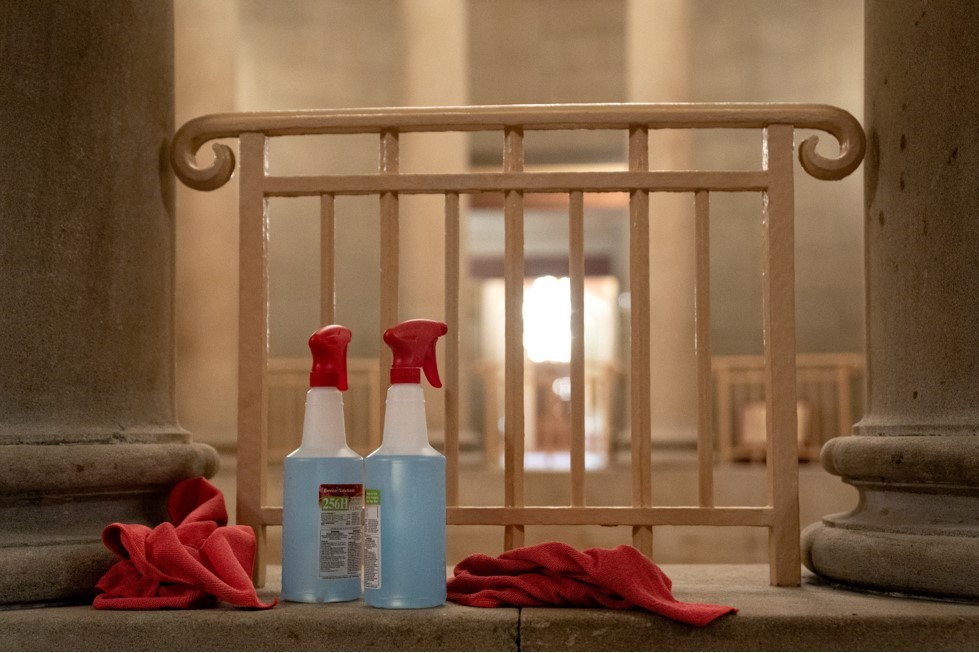
One of the teachers mentions talking with her students—cautiously, but necessarily—about the riots and insurrection at the Capitol, and shares a comment from one of them: After all those people came screaming into the Capitol and smashed things and left it filthy, did you see who did the cleaning up? Black custodians. That’s the way it always is—cleaning up after white folks.

The teacher notes that not all of her students are black, but they’re all participating in this discussion. They’re not disengaged. They are riveted. This is real, unlike some of the things they’re supposed to be learning, so they can be tested.

It bears repeating: Public schools are the stage where all the strengths and weaknesses of American society play out. School is our students’ microcosm. School is where identity politics are first encountered. School is where they find their first allies—and ideally, hear truths.

It’s Sociology 101—parents seek the best classmates that they can afford for their children. And once they get their children into the ‘right’ school, they want them to be part of a group. Even Stephen Miller got his political wings by opposing teachers and denigrating custodians, in high school. And the large majority of schoolchildren attend fully public schools.

We all instinctively understand Dunbar’s number: the size of the group with whom anyone maintains genuinely personal and stable relationships is relatively small, somewhere between 100 and 250 people. It’s the theory behind the small-school movement—it’s a good space for learning when people in the community know each other well. Every elementary school teacher worth her salt begins the school year by trying to build a community in her classroom.

School is where values are shaped, and practiced.

It’s also the reason why some groups are interested in injecting fake patriotism into the curriculum. It’s why many education reformers are pushing as hard as they can to ‘unbundle’ education, to ‘personalize’ learning by chopping it into discrete bits to be delivered cheaply online, then tested. 

With so many students adrift, less connected to family and church than earlier generations, teachers and professors might have ‘too much’ influence over what students think.  Break up the public school monopoly (and teacher unions, while we’re at it)! The very essence of the DeVos Education Department.

Will this change, under a new administration? Jury’s out, but both the reformer-privatizer team and the be-true-to-public-education team are expressing hope. Prepare for a power struggle.

In the meantime, here’s an observation that hit me hard, in the post-insurrection reporting.  Daryl Johnson, a senior Homeland Security intelligence analyst in the Obama administration who wrote a government-funded report about the rise of right-wing extremism– later deep-sixed as too controversial—said this, warning that the Capitol riot was just the beginning:


The government is — if they’re responsible — going to be developing programs and resources to start combating the problem. These people have had over 10 years to stockpile weapons and ammunition to get stoked up and paranoid and fearful. So we’ve got to be very careful about how we go about cracking down on these groups. If there are gun laws passed, that’s just going to feed right into their narratives, draw more recruits, radicalize people.

It needs to be more about de-radicalizing. Funding organizations that have people that have left the movement and can develop strategies on how to do outreach and pull people out. There needs to be a massive marketing campaign on what should citizens be doing. If you’ve got family members, neighbors, co-workers that are part of these movements, rather than ostracize and debate and criticize and isolate them, we need to love them, have compassion and bring them into the mainstream. The only way you’re going to get rid of hate is through love. Every person I’ve ever known about that’s been a white supremacist has left the movement through an act of compassion or love. They didn’t leave it because someone convinced them that their belief systems were wrong.

It’s another way of saying, as Martin Luther King did, that we must meet the forces of hate with the power of love. 

We have all read shocking and horrible stories about what happened on January 6, and the people who took part—who invited them, who aided and abetted them, who gave them money, who told them they were ‘loved’ and ‘special.’  It is not enough to post angry and clever tweets (and I’m guilty of this) or cheer for those apprehended and punished.

Young people need places to be, places where their thoughts are heard and valued, where their talents are appreciated and nourished, where their observations about who’s once again cleaning up messes are honored by an adult listener.

Maybe it’s time to be true to public education, the place where all children are welcome.

Books of 2020

One of my favorite things to do with my largely unstructured pandemic days and nights is read, then talk with people about books. Online. I’m always looking for new titles, recommendations of someone’s old favorite—and also thumbs-down reviews, especially when they’re about books everyone seems to be reading or praising (lookin’ at you, Bridgertons).

I’ve never been good about choosing my 10 favorite anything as the year turns over. But I did do a lot of intentional reading in 2020 (meaning I had to order library books online and wait three months for them to become available for curbside pickup—or purchase them). While some of these are new titles, some are recommendations from friends that I finally got around to.

It was a good year for fiction. I have been trying to read books around the issue of racism (an earlier review of several of those books here), and found the fiction just as instructive as the non-fiction. Salvage the Bones (Jesmyn Ward). The Night Watchman (Louise Erdrich). The Nickel Boys (Colson Whitehead). All powerful reading. More about fiction, later.

Non-fiction fell into three categories—that big bucket of reading about bias and prejudice, “school stuff” and (unfortunately) books about Donald Trump. The only book I read this year about our Crime Boss President that might have lasting utility was Hiding in Plain Sight: The invention of Donald Trump and the erosion of America (Sarah Kendzior). Kendzior has been absolutely prescient about all of Trump’s behavior. I’m almost scared to re-read it, because she got so much of this right, back when there was still hope that cherished institutions would save the day. On January 6th, she was proved right, yet again.

There were two big, don’t-miss education books on my 2020 list: A Wolf at the Schoolhouse Door: The dismantling of public education and the future of school(Jennifer Berkshire, Jack Schneider) and Slaying Goliath: The passionate resistance to privatization and the fight to save America’s Public Schools(Diane Ravitch). Click the links to see earlier, blogged reviews—but note that the year began and ended with a warning that public education is genuinely imperiled. Even before the pandemic.

My two favorite non-fiction titles around the theme of anti-racism in an earlier review were So You Want to Talk about Race? (Ijeoma Oluo) and Caste: The origins of our discontents (Isabel Wilkerson). Since that review, I’ve read an additional book by each author—and they’re both awesome.

I read Wilkerson’s The Warmth of Other Suns: The epic story of America’s great migration, which made me understand my own hometown and why people lived where they lived, in that town—plus so much more.  And I just finished Oluo’s Mediocre: The Dangerous legacy of white male power. While her earlier book is a straightforward invitation to keep talking about race, dense with good ideas but written from a personal vantage point, Mediocre covers more scholarly turf. It’s a broad-ranging collection of evidence that white men don’t like it when you challenge their authority and power. If you’re either a woman or a BIPOC, you’ll find plenty to relate to. Oluo keeps the focus on making her case—but if you read this book, as I did, during the lead-up to the insurrection at the Capitol, she makes a terrible and prescient argument for what just happened. Highly recommended.

Now for the fun part—fiction. I am completely unsnobbish about fiction (as you will note). If it’s a good story, I’m in. Here are nine books and two authors I have enjoyed immensely during the Great Lockdown.

It’s a particular kind of irony that I read A Gentleman in Moscow (Amor Towles) during the pandemic year, as the aforementioned gentleman spent a long time (50 years?) in a single hotel, by government decree. I can relate. All the people who recommended the book were right—it’s a classic.

Chances Are (Richard Russo) is a minor novel by a major author, but I loved this one best of all his books. It involves a mystery and a weekend meeting, 50 years later, of three men who were in college together, in the late 1960s. In other words, three characters the same age as me—which is, of course, why I loved this book so much. By the book’s ending, we’ve been dragged through American history, and asked if any of us, given a chance to do it over again, would have made different choices.

 The Night Circus (Erin Morgenstern) If all fantasy books were like this, I would read nothing else. Imaginative, spooky, colorful, mysterious—with the lingering scent of caramel corn.

The Overstory (Richard Powers) I admit that I had to read this in chunks, with periods for digestion. But every time I went back, there were amazing new things to consider, mostly about my role in the ecology of my home, my world and my life. Truly a transformative book; worth the effort.

The Searcher (Tana French) This one is getting lukewarm reviews, but I am a huge Tana French fan, and if this book stretches beyond her usual Dublin Murder Squad m.o. it’s fun to see what she can do with a more introspective, character-driven mystery. Besides, there’s a wonderful kid in this book—Tana French has nailed a 13-year old better than anyone I’ve read in years.

Olive, Again (Elizabeth Strout) With the possible exception of Stewart O’Nan, nobody writes stories about old ladies better than Elizabeth Strout. If you liked Olive the first time, you’ll like this one, too.

Normal People (Sally Rooney) I am actually surprised I liked this book so much. Rooney’s earlier stuff was kind of tedious, mostly millennial relationship angst, in beautiful prose. But this book—although still about relationship building among young people–had an aching poignancy around the two central characters that anyone who was ever 18 and itching to be loved will recognize.

Sourdough (Robin Sloan) This was just a delightful read, a story with a moral as well as great characters, twisty plotting and a magic sourdough starter. The idea that a colony of micro-organisms could change your life was utterly believable in 2020.

One series I will always pick up is John Sandford’s Lucas Davenport books, which are reliably 4-star reads, with the occasional 5-star designation. Masked Prey, the latest, makes that cut. The plot centers around keeping a senator’s teenage daughter safe from a right-wing looney whom she has attracted by becoming an ‘influencer.’ The parallels—intended and unintended—between the storyline and the actual news were eerie.

New Authors:

 Liz  Moore, who wrote  Long Bright River and  The Unseen World,  deserves to be added to anyone’s list of authors to try. The two books are both delicious, even though they’re completely different. River is a cop story unlike other cop stories, and World is hard to describe—a mix of science fiction and a tender story about unusual people and families. Both are excellent.

And, finally, Donna Leon. Early on—last March—I was having trouble reading. It was difficult to muster up an attention span. Complaining about this on-line yielded a whole bunch of ‘what to read that will take your mind off the prospect of being locked up for months’ suggestions.

A guy I went to high school with suggested Donna Leon’s Commissario Brunetti series (thanks, Doug), noting that it was set in Venice. Bingo. I read eight this year—again, reliably good, with a couple of them outstanding. The first book in the series is pretty good, but jumping ahead reveals that Leon has really honed her character and made her work richer. Feel free not to read in order.