About that Band Director Who Got Tased

I first got wind of this story on the BDG (Band Directors Group) Facebook page, early yesterday morning. You’ve probably seen it:

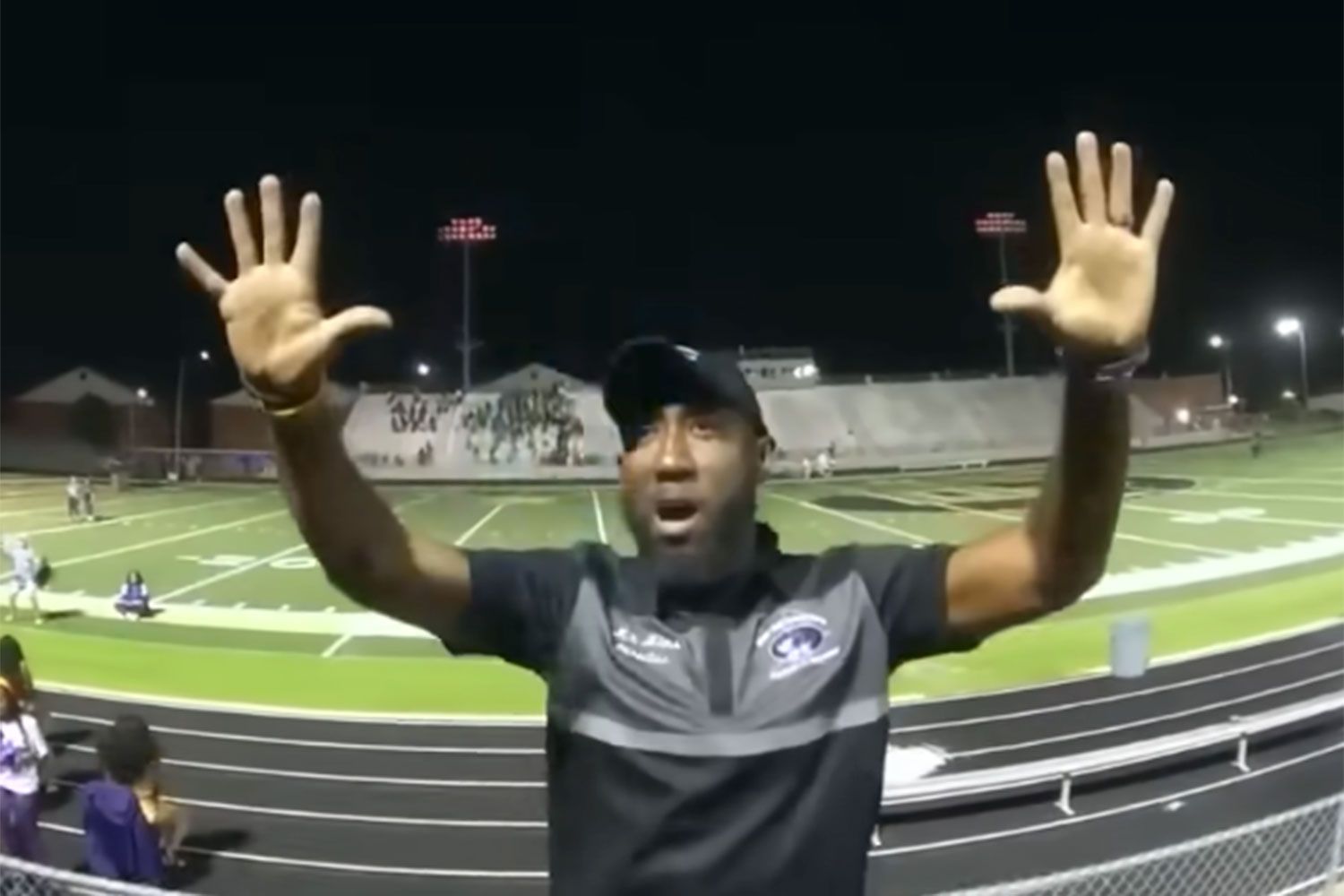
After a football game last week, at Jackson Olin HS in Birmingham, Alabama, Johnny Mims, band director for the visiting team, from Minor HS, let his band finish their post-game music after police directed them to stop playing. After the band finished playing (during which, the stadium lights were turned off), police physically grabbed and attempted to arrest Mims. There was some pushing and shoving on both sides. Then the police tased Mims, three times, as his students witnessed (and screamed). It was all captured on videotape.

Here’s a full description. After the incident, Mims was taken to the University of Alabama at Birmingham Hospital and then to the Birmingham City Jail, where he was booked and later bonded out. Officers obtained arrest warrants for disorderly conduct, harassment and resisting arrest, police said.

I’ve watched the police body-cam footage a couple of times, and it’s pretty gnarly, although after the lights go off, it’s hard to see specifically what’s going on. There are band kids behind the director, on the track, and others in front of him—about 145 kids in the band, total—and they all had a ringside seat to witness their teacher twitching on the ground, shocked into submission for letting them finish about a minute’s worth of music.

There’s a lot of backfilling the story on both sides. There’s been violence after football games so police are needed to empty the stadium! But— the two band directors agreed to do a short post-game show in the stands so Mims thought he was OK to finish!  But—the other director stopped first! But police have ultimate authority!

The people I was interested in hearing from were the band directors. Unless you’ve (raising hand) been out there in front of the marching band on Friday night after Friday night, you might think that the rules for when to play and when not to play are crystal clear. They are absolutely not—and change from one venue to another. Also–everybody in the stands has an opinion on what the marching band should be doing and when. (I feel like I should repeat that last statement three times.)

The band directors on BDG first wondered if Mims actually heard the cops, over the noise—a large marching band makes a lot of decibels. (He seems to be telling them to give him a minute, at one point.) They wondered, as well, if playing after the game was planned. (Yes—both directors agreed to play, but the police had other ideas.)

Who turned off the stadium lights? (Unclear—but if the worry was public safety, turning off the lights is a far more dangerous move than letting the band play to the end of a song. If the lights were on a timer, that’s even worse, because who knows how long a game will last, and what might be happening in the parking lot afterward.)

Given the information presented by both sides, most band directors said— Hey. If the cops came over and gave me a throat-slitting motion, I’d stop the band. Just because they’re the cops and I’m a band director. I might be furious. But. They’re the cops, the ones with guns.

And—once again— who gets to play music, and when, at sporting events, is a matter of opinion.  I have seen bands chased off the field by their own teams as they’re marching to the sidelines. I have seen referees assess penalties for bands or individual tuba players being in an ‘illegal’ spot. I have heard bands reprimanded for not stopping the music when play resumes (sometimes, just a few seconds’ worth of Let’s Go Bluevery popular in my neck of the woods). And I have heard endless, countless discussions of what the “official” rules are.

One thing I can tell you: this incident will do nothing to encourage non-hostile behaviors and good sportsmanship at either of these schools. Nor will it increase respect for the police and the important work they do.

While I probably would have stopped—out of fear — when the policeman yelled at me to cease directing, it’s because I’m a nice, albeit cowardly lady and they have tasers.

But then— I have not been pushed around by the police. I have not been routinely stopped or experienced anxiety when a cop car appears in my rear view mirror. I once talked a cop wearing a knit beanie out of giving me a ticket for doing 34 mph in a 25 zone by telling him I was on my way to choir practice at church (the truth).

I have no idea what was going through Mims’ mind when the cops started trying to handcuff him, but nobody deserves to be humiliated, ganged up on, pushed around or tased, for the non-crime of directing a HS band.

But the students who watched this will remember it all their lives. It will change the way they see the world.

Rebounding from the Pandemic

I just secured appointments for the new COVID vaccine, plus my annual flu shot. In science, we trust— no hesitation or overthinking. Several of our friends and colleagues have recently tested positive, been treated and recovered, eventually. Accessing the new vaccination is a no-brainer. And as the former saliva queen of my middle school band room, I have been a flu shot devotee since the 1970s.

It’s pretty clear that we’re seeing COVID aftershocks; the pandemic isn’t over. That’s not an arguable question. What to do about the unpredictable tail of this pandemic—how to protect, how to exercise caution, what lessons have come from the crisis, and what is forever altered—that’s what we should be pondering right now. 

Last week, we saw Ed Yong at the National Writers Series (one of the best things about living in Traverse City). He and his interviewer came out on the stage wearing KN95 masks. I have been following and admiring Ed Yong, ever since I read his pieces about COVID in Atlantic Magazine, and saw him on MSNBC. Once he started speaking, with his British accent, impeccable logic and vocabulary, the mask (and his twinkling eyes) only served to accent his keen intelligence.

He was there to talk about his latest book, An Immense World,  which is wonderful, by the way, highly recommended. But about an hour in, there was a shift to questions about the pandemic. Yong said he would not sign books, face to face, after the talk, one of the perks attendees clutching their own copies usually enjoy. He was protecting his health, he said—too many early flights, airports and being shorted on sleep.

Then, he talked about how difficult it was to be a science writer, researching the causes and outcomes of a global health crisis, interviewing people on or after the worst days of their lives. He stressed how essential it was to consider something like a worldwide pandemic with an open and curious mind, as well as deep empathy. No preconceptions, and a focus on human beings.

For the first time, his words did not come rushing out, as he talked about political mistakes that cost human lives and societal forces resisting justice and equity, not to mention unethical practices in science. He’d seen too much suffering, he said. He needed a break.

Then, taking a deep breath, he said he’d gone for a short walk that afternoon, to a bridge over the river that runs through downtown Traverse City. Standing on the bridge, he’d seen a hawk. In the middle of the bridge, looking east, you can see the hawk’s nest on the left bank, he said, third or fourth tree down. Every person in the audience could picture that bridge—only a half-block from the Opera House, where we were sitting.

A hawk’s nest!? Downtown? Cool.

Yong talked about how many more things he noticed, during the pandemic, when traffic died down and people stayed home. Things that were always there, but became obvious when we had time to look. To breathe, and appreciate how good breathing feels. Small joys.

It was an inspiring moment.

It struck me that most of us have no clue how much has changed, in the larger world. How many times have you heard someone wistfully expressing their desire to return to the past—a past that we label “normal”? If only things could go back to the way they were.

But normal is dead.

Normal is dead in politics, in labor and manufacturing, in medicine, in travel and hospitality.  And of course, there’s no more normal in education. Chasing normal in education is a fool’s game—what we had before the pandemic should not function as aspirational goal for the future.

If business as usual has been altered in public education, that could be a good thing. At the very least, temporarily gutting the system—closing schools, shifting instruction to online platforms—should have served as a seat-of-pants instruction manual in the limitations of on-line relationships.

Here are a handful of things we might have learned about public education by experiencing a global pandemic (but probably didn’t):

  • The gross inequities in access to wireless capacity and devices.
  • The social necessity of being with other children and teenagers in maintaining mental health.
  • How faulty-to-useless testing data is in structuring relevant instruction that meets children where they are (which is supposed to be the point of standardized assessments).
  • How political leadership matters in rebounding from a crisis that involves an entire slice of citizens: our children.  
  • How utterly dependent society in general is on school functioning as M-F childcare.
  • How much privilege matters in reshaping public education practices—Who has grabbed the microphone and the media as the disease recedes? Who is left out, once again?

I could go on. In fact, I’m planning a series of “what did we learn from the pandemic” blogs over the next few weeks. As Ed Yong noted, a global cataclysm needs to be approached with an open and curious mind, and deep empathy for our fellow humans and creatures. I’m not seeing that deep caring, or willingness to explore change, in education.

In the NY Times today, there was an interesting article on the upcoming population peak—the point at which the number of humans on the planet begins shrinking. Scientists think this will happen in 50 years or so—and that now is the time to think about the impact of fewer people on the health of the planet, as family size shrinks.

The planet is down about seven million people, courtesy of COVID. That’s a fact. Here’s an assignment for your students: What impact might those seven million people have had on making the world a better place? What can YOU do to make the world a better place? What would make your schooling more useful in pursuing that goal?

What could we learn from asking those questions?

There IS such a Thing as a Free Lunch– a Good Thing.

So—Michigan just adopted a policy of offering free breakfast and lunch to all K-12 public school kids. Charter school kids, too– and intermediate school districts (which often educate students with significant disabilities). More than half of Michigan students were already eligible for free-reduced lunch, which says a lot about why free at-school meals are critical to supporting students and their families.  Why not streamline the system?

Schools have to sign up for the federal funding that undergirds the program, and still need income data from parents to determine how much they get from the feds. Nine states now have universal breakfast-lunch programs, and another 24 are debating the idea, which—in Michigan anyway—is estimated will save parents who participate about $850 year. That’s a lot of square pizza, applesauce and cartons of milk. Not to mention reducing stress, on mornings when everyone’s running late for the bus and work.

Cue the right-wing outrage. 

Headline in The New Republic: Republicans Declare Banning Universal Free School Meals a 2024 Priority.  Because?  “Community Eligibility Provision, or CEP, allows certain schools to provide free school lunches regardless of the individual eligibility of each student.”

It’s hard to figure out precisely what they’re so honked off about: Poor kids getting something—say, essential nutrition– for nothing? Kids whose parents can well afford lunch mingling with their lower-income classmates over free morning granola bars and fruit? No way to clearly identify a free lunch kid in the 6th grade social hierarchy? The kiosks at the HS, where kids can grab something to give them a little fuel for their morning academics?

How will this all work out? It will take a couple of years, but school lunch services think they can figure out how to adapt. It will be a relief not to have three lunch lines. The kids who ran up lunch debt and were given a peanut butter sandwich will go incognito, and they can stop sending threatening emails to errant parents. All good.

Long-term, there is evidence that free, in-school breakfast and lunch improve learning and focus.Feeding them reasonably healthy snacks makes it more likely they’ll have fewer health problems. In fact, a wide array of research studies have tracked better attendance, fewer discipline events, and even benefits for families, giving them more money to purchase needed food and household goods.

Isn’t that what we’re all aiming for, as public school educators and government service providers?

The child poverty rate plummeted in 2021, thanks largely to a major, but temporary, boost to the child tax credit in the $1.9 trillion American Rescue Plan Act. It beefed up payments to $3,600 for each child up to age 6 and $3,000 for each one ages 6 through 17, for lower- and middle-income families for 2021. That boost lifted 2.1 million children above the poverty line in 2021, according to the Census Bureau.

Now that the money is no longer coming in to struggling families, free breakfast and lunch, M-F, for the kids, would be a nice cushion, indeed. And schools, once again, are stepping up, to be the delivery system for an essential public good: feeding kids.

It’s what a rich nation—or state, at least— should be doing. Or so I think.

And yeah, I know about catsup is a vegetable and the fact that some school lunches are pretty unbalanced. I also know that some kids will never eat a school lunch, both kids whose mothers pack them delicious lunches, and kids who skip lunch because the cafeteria is a social nightmare.

None of that matters.

Do what we can to help feed kids. It’s the right thing to do.

Moms for Liberty Takes on Head Lice and Other Critical Issues

It was one of the more convoluted of Moms for Liberty’s social media rants.

Posted on X (Twitter) on July 26 by Moms for Liberty:

What happens when your child gets sick at public school? Like if they have lice for example, does your child’s public school treat the lice? Or if they have a fever, does the school examine, diagnose and treat your child?

There were, as of today, 628 responses. And the first couple dozen were best described as “confused.”

First, there were the hostile parents who felt that schools were remiss in tending sick kids:

No in fact they don’t even want to give the kid an ibuprofen.

Our school district doesn’t check for lice, doesn’t send children with lice home, and doesn’t notify the parents if a child in their kid’s class has lice even if they’ve been notified of a case.

I have to “sneak” my kids cough drops, I am not allowed to send them to school with medicine and they confiscate them.

Then, there were the hostile parents who didn’t want the school to do anything when their own children were sick or injured:

How long til they wanna take that over too? It seems to me these “progressives” seem to view parents as simply payers & caretakers whereas they are the real parents who instill morals/values. It’s almost like the roles are backwards.

That’s when they trust the parents—when lice and vomit make their appearance. (Follow-up tweet from Tiffany Justice): That’s right.

These were followed by tweets by reasonable people (many of them teachers or school nurses) pointing out that the school does, in fact, have to do something to stop the spread of head lice and deal with other maladies:

For lice: They triage and isolate, stopping the spread. For other medical issues, they triage and make recommendations for next best steps for students health – including contacting parents.

Rural, small town (my hometown): We don’t treat lice (or bedbugs) but often help with treatment resources if needed. Kids cannot come back until they are nit-free. We do not “diagnose” or treat illness, but with consent can give OTC meds. Fevers sent home.

Most school districts no longer have nurses in school every day which is a problem. My son had a classmate with diabetes, the teacher had to be trained to help.

It took some time for the back-and-forth to identify what the original tweet was supposed to produce: anger over Joe Biden’s remarks about funding mental health care for kids, via their schools.

Aha. No mental health resources for kids. That’s the goal! Because… why again? Who could be against dedicating tax dollars toward something that pretty much everyone agrees is a burning issue, post-pandemic?

Do those on here miss the point- is that purposeful? Or are you really not getting it? Schools are not trained in healthcare or psychology & should have a very minor role in it.

Oh, honey.

Have you not been in a classroom— ever? Do you still think that teachers dispense agreed-upon, vetted knowledge to passive recipients? Do you think a desperately hurting teenager can suck it up and learn, damn it, without impacting other students?  And do you think mamas will come to school to pick up feverish, upchucking, scratching kids? Will they pick them up in time?

Our school nurse administered life-saving epinephrine to our son last year. I will forever be in her debt for her actions.

Fed up with all this pro-school, thanks-for-trying talk, a Mom for Faux Liberty finally got down to business:

The type of people who go into the public school system to teach and into the administration are very controlling. They are also anti-god and family and very unstable. That is why they think it’s perfectly acceptable to change your child’s gender without your permission.

I am a public school teacher. I am pro-God (not that it’s anybody’s business). I love my family and think families are the foundation of American society. I see gender health care as an issue between a child, their parents and their health care providers—far out of the purview of any school, beyond honoring a child’s wish to choose their own name. My emotional stability has been assessed by the thousands of students, thousands of parents and hundreds of professional colleagues over decades of practice.

And here’s the important part: Most teachers— upwards of 90%, I’d estimate—are like me. They have to be moderate and stable, in order to stay in the classroom. They keep any contentious values under cover. They want to help kids.

As the (noxious) bumper sticker says—they’re certainly not in it for the income. All of them have dealt with lice, vomit and broken bones, not to mention whatever the most recent incarnation of Moms seeking Control Liberty wants.

One more tweet that I found interesting: My mother worked in an elementary school in the office during the 80s & 90s. They were only allowed to take temperatures and provide necessary medication, which was approved and supplied by parents. If the child had a temp, the parents were called. The parents had rights then.

Well, exactly—except for the last sentence. This is what all school employees—secretaries, aides, teachers, nurses, bus drivers, administrators and even the lunch ladies—do, right now. They assess the kid in distress, administer allowed first aid, and call the parents. It’s not new. It’s common sense.

From Alfie Kohn:

So if pundits were throwing up their hands even during the Eisenhower era about schools on the decline and students who could barely read and write, the obvious question is this: When exactly was that golden period? The answer, of course, is that it never existed. “The story of declining school quality across the twentieth century is, for the most part, a fable,” says social scientist Richard Rothstein, who cites a series of similar attacks on American education, moving backward one decade at a time. Each generation invokes the good old days, during which, we discover, people had been doing exactly the same thing.

But now—we have social media to spread the vitriol.

Where Were You on 9/11?

It took me too long to understand that no one needs to hear where I was when I learned about the attacks on 9/11. Thousands of families continue to grieve the loss of loved ones who were killed that day. They owe us nothing and yet we ask so much of them on days like today.  Connie Schultz, 9/11/23 on X.

Connie Schultz is right. Framing our personal experiences of any national tragedy—if we were safe and observing from afar—makes us voyeurs and armchair analysts, rather than victims. If you watched the video of Steve Bannon’s right-wing reporter on Maui, being chewed on by a rescue worker for taking up resources needed by Lahaina residents to survive, the point is even clearer: when people are suffering, the last thing they need is having their pain become fodder for aimless but enthralling—televised– chatter.

In an age when we all have immediate access to details and photos of disaster, everybody, it seems, has an opinion and a favorite metaphor, beginning with the Holocaust. Simply “remembering” where we were when JFK was shot, or the Challenger exploded, is shallow, and not enough. As Schultz notes, it can dishonor those whose suffering is more agonizing. That’s not to say, however, that the larger impact and cause of any notable tragedy isn’t worth examining.

There are things to learn, things to contemplate.

On September 11, 2001, as the first jet hit the north tower of the World Trade Center, I was sitting in the bleachers with a group of seventh graders I had known for a total of five days. When the early-September, let’s-get-motivated assembly ended and we trooped back down the hall, the world had shifted. We watched together on our classroom monitor as the second plane hit, and saw the devastation at the Pentagon. Then, the news was too awful to watch.

It became a day of talking, in spite of the superintendent’s phoned-in directive to just stick to our lesson plans. A day of honest fears and occasional tears. The questions my students asked were perceptive and poignant: What’s a terrorist? Do these people hate us? Will there be a war? My dad left on a business trip this morning—where is his plane now?

I was struck by their desire to understand what had happened, to make some sense of the craziness, and genuine curiosity about what the adults in their world had to say about these events. They were anxious to talk, wanting to form their own opinions. Most of all, they were ready to do something, anything.

My school had a tradition of community service, reaching out to aid families in need. Our usual modus operandi–collecting donations and canned goods in homerooms–seemed pretty insignificant after 9/11, especially when millions of dollars were rolling in to the American Red Cross and volunteers were driving cross-country to lend their skills to the relief effort.

We made handmade banners of support and sent modest contributions, but my students expressed dismay over not being able to do more. We’re not old enough to go there, they said. We don’t have a lot of money. We can’t save lives or serve food or help clean up the mess. We’re just kids–there’s not much we can do. I rounded on them, with some genuine anger.

I told them that the most important thing they could do, right now, was get serious about their education. Don’t even think, I told them, about blowing off the seventh grade. Suddenly, in sharp and terrible focus, we have a graphic illustration of why it’s important for the United States to develop the talents of every single one of its young citizens.

Think of all the skills and opportunities that will quickly become critical in this post-apocalyptic world: International diplomats and political negotiators, security and defense technicians, cultural anthropologists, immunologists, translators of Arabic and Farsi, Pashtu and Dari. Not to mention the playwrights, musicians and artists who create ways to help us make sense of this new world. How are YOU going to contribute?

We need citizens who can analyze complex ideas, take advantage of advances in science and technology–and solve problems neither you nor your teachers have ever considered. Education has long been the ticket to personal success. It may now be our best long-term defense strategy and hope for a peaceful future.

It was quite a speech. And they were paying attention.

We’ve now sent more than twenty post-9/11 graduating classes out into an uncertain world, and I think of them every year, on September 11th. Did they learn anything? Judging by our response to another global emergency—the COVID pandemic—I would say the evidence is discouraging.

Our national security, our progress and prosperity, our position as world leader and beacon for human potential and freedom—all have been seriously damaged in the past half-dozen years. We’re no less dependent on a commitment to a world-class education for every child, especially children who are hard to teach. But in fact, we’ve witnessed a rising movement to transfer educational resources to those who already have the benefit of a fully funded education.

Our students are still wondering what it means to be an American. Does it mean abundance and opportunity? Does it require “winning?” Is it all about entrepreneurial gains and market-based competition? Or is there room for sacrifice, unconditional respect for other values, like social justice?

Kids are natural patriots. Thirty years of teaching middle schoolers demonstrated to me that they instinctively want to belong to something larger, something important. They have a strong desire to contribute, to be a productive part of a group, sharing values and pride. This is why school sports are popular. It’s also why gangs continue to thrive.

Have we squandered the terrible momentum engendered by that day in September?

We really can’t afford to lose anyone.

Give Teachers More Money

One of the more interesting results in the recent PDK poll was the strong support for paying teachers more. In addition to agreeing that teachers were overworked and undervalued, two-thirds of folks across the liberal-conservative spectrum thought that teachers were underpaid. It’s unsurprising that liberals (86%) thought teachers should be paid more—but 48% of conservatives agreed.

Because PDK is a real, actually scientific, poll with a long history, this is credible data. PDK even probes the question further, reminding participants (most of whom are not parents, by the way) that a raise in teacher pay has to come from somewhere:

There is a strong partisan aspect to views on raising teacher pay via higher property taxes, which provide a substantial portion of public school funding. Eighty-three percent of Democrats are in favor, declining to 67% of independents, and falling further to 48% of Republicans.

When you think of it, it’s pretty astonishing, a significant majority of the general citizenry agreeing that yeah, teachers really ought to make more money. Another factoid: back in 1981, only 29% of those polled by PDK felt that teachers were underpaid.

It’s tempting to think that folks have figured out just how essential schools and caring teachers are to a smoothly functioning society—perhaps the COVID shutdown engendered a new appreciation for the complexity of the work of teaching? Or have all the articles on the looming, alarming teacher shortage finally convinced people that the only way to fill those spots with qualified people is to pay teachers more?

Nah. Only half of the country (split right down partisan lines) believes the shortage of teachers is a serious problem—the other half doesn’t consider it a worrisome concern. Many in that second half—Republicans– want to put the focus on other issues, like controlling the curriculum and transgender bathrooms. Somehow, they seem to think, schools will always find ways to put warm bodies in classrooms.

Personally—as a person who has observed, up close, teacher pay trends for the last five decades–I think the poll reflects a nationwide, post-pandemic trend: Pay people what they deserve.

Everyone from the UPS driver who delivered your hand sanitizer, to the road construction crew sweating in this summer’s extreme heat, to the visiting nurses who manned COVID wards. Rising incomes are a real thing, especially among the segment of the population that has been scraping along. The fact that teachers fit into this group ought to be a national disgrace.

David Leonhardt, in the NY Times, discussing the Hollywood writers’ and actors’ strikes:  

The trend is a microcosm of larger developments. Nationwide, the pay of the bottom 90 percent of earners has trailed well behind economic growth in recent decades (as you can see in these Times charts). Most Americans have not received their share of the economy’s growing bounty, while a relatively small share have experienced very large income gains.

That’s not shocking. As the economist Thomas Piketty has explainedinequality tends to rise in a capitalist economy, partly because the wealthy have more political power and economic leverage than the middle class and poor do. But history also shows that rising inequality is not inevitable.

So teacher pay—like the BOTTOM 90 PERCENT, holy tamales—has trailed behind our burgeoning economic growth, while a small slice of wealthy people have capitalized (word chosen intentionally) on the way the United States economy has been shaped, since Laffer sketched his trickle-down theories on a napkin, and Reagan cut taxes on the rich.

Reminder: in 1981, at the start of the Reagan presidency, 71% of the population felt teachers were adequately paid.

There are other factors cross-cutting teacher pay, of course. Racism and sexism spring to mind, and the ever-present notion that teachers just love the kids and the work so much that they’re content with emotional satisfaction rather than a sufficient paycheck.

While we’re thinking about how much more we need to pay teachers— how about 20% raises, for starters, commensurate with what other college-educated professionals make —let’s also consider why we expect teachers to provide their own classroom supplies, or hustle them on donation sites? The average teacher spends $800 of her own money, annually, on furnishing and enhancing her classroom.

This summer, I have bought books for a half-dozen teachers I know, from their Amazon donation sites. And if $800 sounds high to you—consider the range of things that make classrooms welcoming, beginning with Kleenex and ending with a rocking chair. Most teachers I know buy snacks and band-aids, and while it might be embarrassing to put this on an Amazon list, sanitary supplies for girls.

It’s time for a major shift. Let’s pay teachers more. They’re worth it.  

Middle Schoolers: The Myth and the Reality

Among the worst ideas I’ve ever heard, regarding young people and how to develop their knowledge and skills, is this one: Let’s let 14 year-olds serve alcohol in bars and restaurants!

Really? We’re going to let eighth graders wait on adults, bringing them booze, asking if they’d like another, assessing their levels of inebriation? Young, barely teenaged girls “handling” older men, massaging their inebriated egos in hopes of a bigger tip?

Would these be the same young teenagers we don’t trust to select their own pleasure reading, share their own observations about racism and sexism in the classroom, or choose how they want to be identified?

I taught full-time for 32 years, only one of which did not include teaching middle school. I love teaching middle school. Sometimes, I think—in terms of my cynical, low-brow sense of humor anyway—I never really left the seventh grade.

I repeat: I love teaching middle school, and I really love kids in those middle grades.

Tell people that you taught middle school band for more than 30 years, and the first comment you get back will be some variant on “OMG, God bless you” or commentary re: how dreadful it is to parent a person who’s 13 years old—The hormones! The backtalk! — and therefore, how epically horrible it must be to try to teach these kids something, in batches of 30.  

Or, in my case, in batches of 60+, where each student is holding a noisemaker.

Actually, while there were certainly days when I wondered whether I might not be better off selling real estate, teaching middle school music was mostly deeply rewarding and often fun. And in case you think this was because I was teaching an elective, I also taught seventh grade math for two years (once in the 1980s, the second time in 2005), as well as an ESL class and an academic support class where there were fewer than 10 students and classroom management was way more difficult than my 65-piece eighth grade band.

Here’s my honed theory of teaching middle school, in a nutshell: We don’t give middle schoolers enough real responsibilities or credit for their ongoing moral development. They are smart and curious enough to wrestle with big questions and read challenging texts (with some scaffolding). They are trying to figure out what kind of world they will inherit, and are often anxious about the job current adult leaders are doing. This anxiety has exponentially grown by watching adults navigate a global pandemic, stand by as states go up in flames, and try to get themselves elected through the use of lies, cheating and bullying.

Still, middle-grades kids will rise to do a credible job of almost any task we set before them, if they see a point in doing the work.  And when they complain of being treated like children, they’re usually right—every time I hear teachers recommend shutting down privileges we afford adults (using the bathroom when needed, for example, or being given some grace around a missing pencil), I cringe.

Treating young adolescents as if they can’t reasonably manage their own behavior almost always results in their doing precisely that: acting irresponsibly. A well-run classroom is not achieved by imposing a long list of rules, or threats of escalating punishments. It happens, over time, when students understand that you a) like them, b) respect them, and c) think they are capable of doing the work you have to do together, whether that’s single-variable equations or discussing core democratic values.

Over those three decades of teaching middle school, did I sometimes fail to achieve those goals? Absolutely. And did I have students who exhibited appalling behaviors, ranging from mean-girls cruelty to risking bodily harm? Sure.

But the longer I taught, the higher I raised the achievement hoops, and time after time, my pre-adolescent students came through. We have always underestimated the ability of middle-grades students to discuss, write, solve problems, explore issues and help their communities. We are always too quick to pigeonhole them, based on their immaturity. We have let middle school become a kind of punch line.

Which is why I find it interesting that some states, trying to solve ongoing post-pandemic labor shortages caused by adults who are unwilling to work for subsistence wages and are now demanding better job opportunities, are turning to young teenagers. Whether this is child labor or “developing workplace skills” depends on your point of view.

But there are better ways to incorporate the nascent adult skills that middle schoolers want to display than having them deliver alcoholic drinks to adults, or do other jobs that adults refuse to do for piddling money. I think about all the times I took the middle school jazz band, for example, to the nursing home or the school for developmentally disabled students—and how willing they were, with a little coaching, to make those lives better, to interact with people who were profoundly different.

Perhaps the best way to develop middle-grades students is to offer them opportunities to develop adult trust in their capacity.

Several years ago, my school had a pilot program in community service. Students earned points for shoveling neighbors’ walks, being “counselors” at elementary after-school gymnastics or basketball programs, or “student leadership” activities like planning and decorating for school dances. All students, over the course of a year, had to earn a set number of points, reported and signed off on by their parents.

One mother sent in a form awarding her daughter points for family babysitting. The 14 year-old daughter had four younger siblings, two who were not yet in school, and her mother depended on her to come home right after school, and watch the kids, so she could work outside the home.

This seemed like a no-brainer to me. Tending four children (and, by the way, completing your homework, something this girl always did) was a major responsibility for a girl in middle school. But the counselor argued that it wasn’t “community service,” just a family expectation.

The point of having a community service program was to build students’ skills and awareness of their place in—duh—the community, to emphasize that healthy communities depend on volunteering and interdependency. To show middle schoolers that their work and skills were already valued, even though they were, say, 12 years old.

The program was eventually scrapped over issues like defining “community service.” Which I would call an adult failure to understand the considerable capacities of middle school students.

Middle schoolers can be trusted to do lots of things; my 30 years in their company gave me ample proof of that. It’s the adults who can’t be trusted in the proposal that they serve drinks.

I Had a Dream about the First Day of School…

The “Teachers Report” day, that is. We all have dreams about the day the kids come back, and some of them are doozies, the kind where we’re not wearing pants or the kids run amuck.

But this was a lovely dream about the day that’s usually sucked up by re-learning about Blood-borne Pathogens, the latest silver-bullet curriculum initiative designed to raise those scores, and pointless, endless announcements.

It went like this:

7:15 am Over the P.A., we hear strains of Morning Mood. The Principal begins speaking.

Good morning, Ore Creek Middle School! (in his best Robin Williams voice) Welcome home!
Here’s the plan for today: You’ll all be working in your rooms all day.

The office will be open all day for you to request and immediately pick up supplies. We have parent volunteers to help with this, because the office staff is super-busy, of course.

 We’ve also set up a coffee station which will be replenished with hot beverages all morning, and there’s a box of donuts and muffins for you. Sign up for a slot to use the copy machines—we’ve rented an extra one for the week. I’ll be visiting each of your rooms at some point today, to say hello and answer any questions you may have about 2023-24.

From 11:30 to noon, there is a smorgasbord lunch, prepared by parent volunteers, in the cafeteria. Take a break, have a great lunch to fuel the rest of your day, and meet our new staff members then.

The library will be open all day, but remember—our media specialist is also setting up her room. I have hired extra IT support to staff a help desk all afternoon. Email IThelp@OreCreek if you want a visit from them this afternoon.

I will be sending you an email at the end of the day full of important announcements and a link to the required Blood-borne pathogens training. Sorry, gang—I know this is old news for most of you but the state requires it. You have two weeks to complete it. I’ll send reminders to those who still need to take care of this. Our first staff meeting will be in two weeks, once things get rolling.

I know that many of you have already been in, some for several days. On behalf of the district, I thank you for your dedication. I will be in over the weekend, if you have more to do, so the building will be open.

One last thing—several of us will be heading to Spike’s after school. In addition to their usual (cough) libations, Spike has set up lemonade and iced tea, on the house, for Ore Creek staff. Now—open your doors and give our custodians a hearty round of applause for making the building look so spiffy.

Hey. A teacher can dream…

(Almost) All You Need is Love

Scene: Interview with right-leaning MI media personality, c. 2003, re: National Board Certification

Interviewer: So you say that National Board Certified Teachers—NBCTs– are the cream of the crop. What, specifically, do these teachers do that other teachers don’t?

Me: Well, lots of teachers have the qualities and skills that NBCTs have—but NBCTs have undergone a rigorous assessment of what they know and are able to do. They have studied standards for professional teaching and provided evidence that they are demonstrating those standards.

Interviewer: So what are those rigorous standards that all teachers should be aiming for?

Me: The first one—a foundation for good teaching—is knowing your students well, and being committed to their learning.

Interviewer: Seriously? You’re saying you just have to… (adopts snarky tone) love the kids? Even the bad kids? That’s all it takes?

 —————————————–

In case you’re wondering, the interview did not improve much after this moment. Many folks are laboring under the notion that some teachers have magical, almost indefinable skills that whip classrooms into shape and make learning come alive. Other teachers, presumably, have to rely on a boring combination of content knowledge, discipline and fear.

Nobody expects teachers to love every one of their students—not even the National Board. But teachers who do not develop positive and open working relationships with their students, teachers who believe that their job is dispensing knowledge, then measuring students’ retention of that knowledge, will always be behind the instructional curve and may never become what we think of as a “good teacher.” 

Peter Green, whose work is always worth reading, just wrote a moving and beautiful piece about teaching, in which he says this, about loving our students:  Here’s a big thing I believe about love–it’s not so much a feeling as an action and a choice, a commitment. You can choose to love people, and you can do it based on who you are instead of waiting to be inspired by who they are.

There’s that word, commitment, again. Greene also says this:

Twenty years of modern reform and especially two years of pandemess and CRT panic have worked to drive love and trust out of schools. Since (at least) A Nation at Risk, critics have deliberately ignored and abused the notion that teachers might choose to teach out of love and care, but must instead be threatened with Consequences.

Bingo.

All of this love talk goes a long way toward explaining why—again, and again, and in spite of what sometimes seems like an organized media conspiracy to crush public education—parents (somewhere between 80% and 85%) report being satisfied with their public schools.

If the only information you get about the public schools in your community comes from Moms 4 Liberty, or articles about School Board uproars over book banning and faux accusations of grooming, or the relentless drumbeat of “learning loss” that substitutes quantification for compassion— well, you’re likely to be in the majority of non-parents who think public education is failing.

And let’s be brutally honest—some public schools are so stressed that trust and commitment aren’t in the cards. They are, in fact, failing to be committed to their students, and their students’ learning. These failures show up in inability to hire qualified staff, incoherent curriculum, lack of strong leadership or trust, and general chaos—not test scores.

I like the way Matt Barnum (or whoever wrote his headline) phrased it: Are Parents Mad at Schools?

The data-supported answer is no. No, they’re not.

Because— in spite of the pounding that public schools have taken during and post-pandemic, there is still commitment and caring, teachers who drove around rural districts with stapled-together packets and backpacks full of food. Teachers who persisted in trying to adapt to teaching on-line or outdoors. Teachers who went to school unvaccinated, because their students needed them.

Parents also see, up close and personal, what the impact of a global pandemic has been on their own children— not just the disruption to their normal lives, but the free-floating anxiety around masking, illness in the family, squabbling over vaccines and fear of catching a potentially lethal disease. Children who were sad or bored, whose days lacked the social and intellectual structure of M-F schooling, recess and friends.

What kids need now is not, God help us, “acceleration” techniques to get them to an arbitrary (testable) level of learning. They need the aforementioned structure, knowing what to expect from their world. They need the concern and commitment of their teachers.

What about content— knowledge and skills, the measurable outcomes of school? Here’s a secret: Most of what is learned in school has to be continuously refreshed and applied in order for it to stick and be useful in adult life. Scoring well on a test is not a mark of being well-educated, prepared for adulthood. Human relationships prepare us for life. Content comes and goes.

And bad kids? How do we love them?

I was fortunate. For most of my career as a music teacher, I had students for two to three years, sometimes more. I did come to genuinely love—or at least get along swimmingly with—nearly all of them. I was fond of them, and am curious now about what they’ve done with their lives.

But there was this one kid…

It was a year after I’d been out on leave, and had been assigned to teach a semester-long music class that students did NOT choose. Lots of those students were surly at first, being forced into an elective they didn’t want. It was an uphill climb, but eventually, I started winning them over. I saw them relax and even enjoy the things we were doing. There was laughter. Except for one boy.

He was defiant. He refused to participate. He muttered things about me and his fellow students under his breath. I tried ignoring him. I tried gently looping him into groups. I tried calling him out, but with humor. I kept thinking he just needed to know that I was committed to him, and wouldn’t give up. He remained bitter and overtly hostile. Once, after students had formed groups to create compositions, he picked up his belongings and left the room, for no apparent reason, letting the door slam (of course). He was hard to love.

So I mentioned him in the teachers’ lounge (sometimes, good things happen in the teachers’ lounge). You know about his brother, right? one of my colleagues asked. It turned out that this boy’s older brother had committed suicide in the school parking lot the previous summer. Because I had been gone, I didn’t have a clue. Nobody bothered to tell me.

The semester was almost over. I never did develop any trust with this boy. I would have given him a great deal more emotional space, had I known, and interpreted his anger very differently. I would have tried much harder to love him. Because— and this is often true— students often just need the security that comes with knowing their teachers are committed to them, no matter what.

The War Against Icebreakers

Best Twitter–is it still Twitter, considering its ugly new Maga-X logo?—thread of the day: A war on icebreakers in upcoming professional development for teachers. The things people report being asked to do range from silly to downright demeaning.

Icebreakers from my own pantheon: Building structures with toothpicks and marshmallows. Holding hands and forming human knots. Lining staff up by length of service to the district. Trust falls. Any number of exercises using chart paper, balls of colored yarn and/or stick-on dots. Also—looking into each others’ eyes for 30 seconds, not breaking eye contact, which was weirdly moving and also kind of creepy.

Once, at the beginning of two days of pre-school year PD, we watched a cool and interesting short video about school climates, and how to determine what individual schools or districts genuinely value, vs. what they say is their mission.

Video asks: How often does the entire school get together—and for what purposes?

Me, in post-video discussion: Our first three scheduled assemblies are the one where we read and discuss the school rules, the fund-raiser assembly where kids are offered prizes for sales to provide basic instructional supplies, and the fall sports assembly. What does that say about our values?

Administrator:

(Later, he sent me an email expressing his anger that I would suggest our collective values are skewed. Which wasn’t precisely true. As a group, I think the staff did have positive values around the students and teaching, and a collaborative spirit, which are all you can ask for, really. Even if we weren’t demonstrating those in routine assemblies.)

In his oldie-but-goodie post “Thirteen Deadly Sins of PD,” Peter Green runs down, more ruthlessly and amusingly than I, the Big Errors PD presenters make. Lame icebreakers for people who already know each other barely gets a mention.  

I actually think there is value in getting the staff together to explore and improve the work they’re doing. And I say this as a music teacher who underwent countless reading-across-the-curriculum and how-our-new-math-series-applies-to-you workshops. There’s value in talk between people who teach the same kids, even if their disciplinary content or instructional practices are different. There’s even value in one of the simplest icebreakers I remember: Taking short walks around the building or outdoors, with a staff member you didn’t know well.

Here’s an exercise I used to use in workshops around Teacher Leadership: draw a teacher leader.

This draw-a-leader technique was one I used, many times, in workshops around teacher leadership, for diverse audiences. I can testify that if you want to clear a room of school administrators, who suddenly have to step out in the hallway for an ‘emergency’ call, start passing out chart paper, crayons and markers, and ask them to draw something.

The Twitter thread notes, repeatedly and vehemently, that exercises in a professional learning session should always be tied to the PD topic presented.  Every veteran presenter knows that turn/talk time, including the ubiquitous practice of sharing notes around new content or a provocative question, runs past the time allotted. People like to talk to each other—or, at least, are willing to listen to what their colleagues say, a break from being lectured.

When staff members talk to each other, it’s a kind of baseline for reflective practice, a low-risk chance to express opinion, share experiences and ask questions. But there’s an underlying fear that teachers are somehow cheating when they teach or enlighten each other, or take the time to argue about the essential nature of their work.  I can’t fully explain this, but I think it’s rooted in hierarchies and the growing, media-fed dismissal of teaching as a true profession.

As Peter Greene notes, at the very least, professional development sessions can hammer home what NOT to do in your own classroom. Anne Lutz Fernandez, in an excellent piece on the teaching crisis, says:

It’s worth noting that teachers have long found the professional development they are offered to be wanting. The report admits that some school leaders “struggled to find and hire high-quality professional learning providers” and “were quite disappointed in the quality of support they received from vendors.” This isn’t new. Back in 2014, the Gates Foundation found only 3 out of 10 teachers were satisfied with their PD.

There’s work to be done, clearly. Here’s one of my own PD failures:

For several terms, I taught an online graduate course on teachers and policy. The teachers who participated frequently did not know each other; sometimes, they came from across a state or across the country. And—just as in a K-12 classroom—not much happens until folks feel comfortable sharing their thoughts. Although the course eventually had Zoom-type meetings, the on-line structure meant self-introductions, shared writing, and conversation threads. Virtual icebreakers.

The first of these asked course participants to share a book about education that was meaningful to them. This turned out to be Not a Great Icebreaker. Many people finally confessed they’d never read a book on education, except for assigned readings in college or grad school. Or—one person would share a book, and the next half-dozen would say “Oh, yeah, I read that, too,” which is a better answer than “I can’t remember any books about education that ever changed my thinking.”

When revising the course, we changed that icebreaker to: Share a link (book, article, cartoon, meme) that illustrates how you understand the education landscape right now. We thought perhaps full-blown books were a heavy lift for practicing educators.

Also not a great icebreaker.

 A couple of people posted things, couched in disclaimers—”I’m probably the only one who thinks this, but…” or excuses “This is all I could find. Is this OK?” And lots of people were unwilling to stick a toe into the conversation. They would tell you their name, what and where they teach—but digging deep into education policy and practice issues with people you don’t know well turns out to be intimidating.

Maybe it’s the Twitter (X) effect: Short and sassy wins the day. Keep your real values close.  Or maybe teachers don’t have enough time to really think about the incredible responsibilities of the work they do. Or maybe it’s the fear that professional learning doesn’t require a workshop or novel content—but happens most effectively when you have B lunch with a couple of sharp colleagues whose ideas you trust.