Thinking about Teachers at the Table

In the fall of 1993, the United States Department of Education (under Richard Riley, Secretary of Education) held what was intended to be the first annual National Teacher Forum. Organized by Terry Dozier, Special Assistant to the Secretary, state Teachers of the Year and their chosen outstanding teacher partners were invited to Washington D.C. to discuss how to bring the teacher voice into policymaking.

I’ve been to lots of conferences and seminars, but few impacted my life as a teacher leader more than the first National Teacher Forum. I can remember, verbatim, phrases—Honor what we know!—and aphorisms we used: Teachers want to be partners in, not objects of, education policy.

The idea of teachers at the policy-making table was downright thrilling. We deserved to be at the table—in fact, it was our table.  Our contributions could make a huge difference in policy around student learning and public school organization. We had answers to education’s persistent questions. Ask us!

We were all assigned a partner in the US Department of Education. We went to workshops (this was where I first heard of National Board Certification). We networked with the legislators and bureaucrats who were making policy around the work we did every day. We were encouraged to start our own state forums for accomplished teachers. Best of all, we started something few of us had heard of before this: an online bulletin board and discussion group. I was a moderator of that group—and still have many professional friends from that time.

I wish I could give you links so you could explore this wonderful program, and read the publications that resulted, but an hour of googling and a scouring of ed.gov have yielded zero information on the Forums (there were eight—the entire initiative and its published results were taken down in 2001, as No Child Left Behind turned education policy in a vastly different direction). I found two publications—Teachers Lead the Way, from the 1997 Forum, and a reprint of the 1994 Forum document, Prisoners of Time, which was apparently (and ironically) co-opted by the Education Commission of the States.

I share all this to illustrate the fact that teachers have long been interested in controlling their own professional work, and willing to share their expertise and perspectives with policymakers. Personally, I’ve been involved in several initiatives to bring teachers to various policy tables. After the National Teacher Forums bit the dust, State Teachers of the Year organized themselves—and even proposed Teachers at the Table legislation (which went nowhere). The idea keeps bubbling up.

Point being: the only people who think having a substantive teacher voice in education policymaking is a great idea are teachers. And, of course, their state and national unions—who represent the broad outlines of teacher-friendly policy via lobbying and advocacy, and are wary of independent teachers proclaiming their teaching expertise makes them policy experts, as well.

Publications and media about the teacher voice haven’t shut down in the intervening 30 years. Independent blogging, non-profits and social media have elevated pieces about the necessity of asking teachers whether a Big Sexy Idea about how to ‘fix’ issues in public education will work (usually, no) and what might actually improve teaching and learning.  

In short, as Jose Vilson says in his TED Master Class, no conversation about education should happen without the teacher voice front and center.

But—as with all things in education—there are caveats in thinking that gathering a group of teachers (even award-winning teachers) and asking for their policy ideas would be the fastest way to better schools.

Teachers aren’t trained to do policy creation and analysis. They can tell you, in excruciating detail, what bad policy does to student learning in their context. But good policy is written with measurable goals and specific outcomes in mind, accompanied by the supports and spurs that will get us there.  It requires imagining not only happy results but unintended consequences.

Policy is not (exclusively) mandates and incentives. Sometimes, it involves capacity-building, persuasion—or overt systemic change, which takes time and accrued data to analyze. Regularly asking teachers to comment on the changes wrought by policy shifts ought to be a no-brainer, however. Acting on educators’ feedback would be even better.

Here’s an example: My state instituted a third-grade retention law in 2016, wherein students who didn’t meet the third-grade standard for reading proficiency would be held back—a mandate, taking away a decision that had always been made by teachers and parents. Half the states in the nation now have similar policiesand politicized policymaking has made other states feel they need to crack down on those lazy eight year-olds.

It’s a terrible policy, for dozens of reasons, beginning with its target audience and punitive nature. In six years, it hasn’t yielded anything beyond angst and anger, much of which has been directed at teachers and schools, not clueless (or, sadly, vindictive) lawmakers.  

The good news here is that MI Governor Whitmer seems poised to sign a bill repealing the third-grade retention mandate. Nevada’s repealed theirs, too. The MI bill’s sponsor, Senator Dayna Polehanki, is a former teacher. A Michigan Teacher of the Year, Leah Porter, testified in hearings.

There’s a role for teachers in examining and fine-tuning education policy—and a strong need for teachers to run for public office to share their experience and expertise. As we said, at the 1993 National Teacher Forum: Honor what we know.

Teacher of the Year: Popularity Contest or Tall Poppy Syndrome?

My opinion on various teacher recognition programs has always been clear and simple: Teachers in America get so little in the way of acknowledgement and perks that every single teacher honored for their excellent work richly deserves the spotlight and whatever rewards come with it.

Teaching, as Lee Shulman famously noted, is impossible. And yet millions of teachers get up every morning and head off to do critical work that benefits our communities–and is also underpaid, misunderstood, phenomenally challenging and complex. If any of them get a public pat on the back, or a tangible bonus, it’s deserved. No question.

So I was surprised to see an article [pay wall] in Education Week, generally considered the educational equivalent of the Gray Lady, with the headline The National Teacher of the Year Award: A ‘Call to Service’ or a ‘Popularity Contest’? :

Past finalists and honorees have said the process of being considered for National Teacher of the Year was a humbling experience that allowed them to advocate for the profession they love. It’s not meant to elevate some teachers at the expense of others, they said, but rather allow them to represent the needs of teachers and students on a national level.

But, but, but—when the five finalists for this year’s National Teacher of the Year award were posted on EdWeek’s Facebook page, there was a flurry of negative comments—over 200, last I checked, beginning with the snark about Teacher of the Year programs being a popularity contest. There was some defense of the National Teacher of the Year program, but the bulk of the comments might be summarized as suspicious, even resentful, of teachers who are singled out for recognition.

Comments clustered around three assertions:

  • Competitions pit teachers against each other. This is a uniquely ‘teacher thing’—the desire to build community and work together is central to running a productive classroom. If you’ve ever been to a teacher award banquet or ceremony, you’ll notice that honored teachers cross the stage humbly, heads down, then “share” the honor with their colleagues and students, if they get to make remarks. Compare that to, say, realtors being rewarded for millions of dollars in sales—pumping their trophy, and promising that next year’s sales will be even higher. The metrics of good teaching are—and absolutely should be—personal and site-specific, unlike other careers where it’s easy to say who is “best.” There were also some spiteful comments of the “I can’t believe they picked this lousy teacher I know” variety.
  • Not all teachers have access to Teacher of the Year or similar awards. There were lots of remarks about the work that teachers needed to do to be considered for an award—papers to write, interviews to schedule, evidence to assemble. All of this takes away from being awesome in the classroom (true). In addition, teachers’ workplace conditions are vastly dissimilar. Some teachers have adequate resources and students whose families have helped them become goal-oriented. Other teachers have none of these things, but do their best anyway. How could that be fair, when assessing a teacher’s impact and outcomes?
  • All teachers are Teacher of the Year for someone. I absolutely agree that all teachers deserve more—lots more—than having one of their colleagues plucked out for a certificate or prize. I concur that teachers everywhere are grossly underpaid for the complexity and importance of the work they do, and—especially these days—unfairly beleaguered. But I’m not sure if this means that outstanding teachers (because there are outstanding teachers) should never be identified and feted. This feels like Tall Poppy Syndrome.

I am interested in all of this because I was Michigan’s Teacher of the Year, in 1993. I am also a National Board Certified Teacher—two very different, but credible teaching awards. I have seen teacher award programs from the inside, and heard all the remarks about defining exceptional teaching made on EdWeek’s Facebook article—some directed at me, of course.

My take: The single most gratifying—and humbling—accolade was being named Teacher of the Year in my medium-sized school district, where I was nominated by another teacher, where my work with students was well-known, and where I was surrounded by highly skilled and supportive colleagues.

Being named Michigan’s Teacher of the Year, by contrast, sort of dropped from the sky. I didn’t seek it (beyond writing and submitting the application, at the urging of my superintendent), and was dumfounded and a little dismayed when I actually won.

Few people understand how different “Teacher of the Year” programs are, district to district and state to state. In some buildings, the same teacher can be named year after year and it does feel like a competition. In some states, the TOY is released from teaching for an entire year, to travel and speak. Other states have significant perks: Leased cars. A seat on the State Board of Education. A wardrobe allowance, since the Teacher of the Year shouldn’t keynote conferences in her denim jumper.

During the year I served as TOY, I was also working full-time, at my regular job teaching 320 middle school band students. The district found (and paid for) subs for days when I had TOY responsibilities, which meant that frequently, teachers in my building were asked to sub when I had to leave early to speak at a banquet, or drive across the Mackinac Bridge to the Upper Peninsula for a workshop. I took every request that I could manage, often paying my own mileage and expenses.

I was out of the classroom 37 days. It was hard on my students—and even harder on my family. I had two small children and my wonderful husband picked up mountains of slack. It was exhausting, and I was glad when it was over. My superintendent put up a green and white road sign at the entrance to the village: Home of Nancy Flanagan, Michigan Teacher of the Year, 1993. Later, my husband retrieved that sign from a dumpster behind the school’s bus garage. C’est la vie.

During that time, I heard lots of sarcastic “famous teacher” remarks—and a few questioning whether I was actually TOY material. Five years later, I sat for National Board Certification, because I wanted to prove that I was indeed an accomplished teacher–to put a metric on the title, to provide evidence, a bona fide seal of approval. It was a great (and similarly exhausting) experience, but it’s worth noting that National Board Certified Teachers hear many of the same remarks about maybe being too big for their teacher britches.

By far the best part of being Michigan Teacher of the Year, however, came in the years after 1993. TOYs are sort of like Jimmy Carter—once you’re out of office, the stress subsides and the opportunities to do good work are endless. I got a gig at Education Week as a teacher-blogger. I discussed professional development on C-Span at the National Governors Association Conference.  I had interesting interactions with Michigan Governors.  I still got to teach.

And—I met incredible people, most of whom are educators. That’s the perk that all teachers should have—the conviction that the nation is filled with good teachers, plus the opportunity to exchange ideas and inspirations, professional goals and camaraderie, all of which is available to any teacher willing to reach out and start a conversation on social media.

I wish all of this year’s awardees the best.

Teach Your Children Well

Here’s a story about Crosby, Stills & Nash, and “Teach Your Children Well,” set in my middle school:

The Respect Team (an ad hoc committee) has agreed to do the display case in the front hallway for the whole school year. We want to build honest, respectful relationships in our building–we’re concerned about the building climate. It’s the 1990s, and our students’ behavior has, in our humble opinion, grown coarser and ruder–toward other students, and toward their teachers.

But we know that respect must be earned–and the foundation of respect is not fear, or anger. We can’t punish or publicly condemn our way into the two-way street that is respect. We meet often, suggesting ways to weave discussions and writing about respect into the curriculum. We post students’ writing–poems and short essays–about heroes, people we admire, in the display case. We have a school-wide assembly with a Holocaust survivor. Students create art around the theme of respect.

And then, it’s May. Only one more display case to be responsible for. We’re tapped out of ideas. Plus–well, it’s May. If you’ve been a teacher in May, you know how stressful it is to wind up a school year.

A last-minute, throwaway plan emerges: We’ll get teachers to give us pictures of themselves as teenagers–graduation pics, a school photo, a prom picture. And we’ll type the words of “Teach Your Children Well” using the single computer in the library, blow them up, and–the only place in the school we can do this–print them off!

Teachers grumble. They’re too busy to go through old photos! And what’s the point? So kids will laugh at their haircut? We go to each teacher individually, however, to explain–and eventually all but one or two give us a photo. We do not label the photos by name–just staple them up with the words…

You–who are on the road–must have a code

that you can live by.

And so–become yourself.

Because the past is just a goodbye.

We substitute the word ‘pain’ for the actual C, S, & N word ‘hell’

because we don’t want some hard-ass parent complaining.

And–BOOM. The display case becomes a kid magnet.

And a parent magnet. And a teacher magnet. The principal stands out there, checking the photos–hers is there, too.

Who ARE these people with the bad haircuts–or in their too-short basketball uniform–or the long white gloves and fluffy prom dress? One now-sturdy teacher with three sons gives us her wedding photo, where from her 22-inch waist spills a ballroom gown skirt and train.

It’s a bulletin board of shared youthful dreams.

… And you of tender years can’t know the fears

That your elders grew by.

And so, please help them with your youth

They seek the truth before they can die

Rest in peace, David Crosby.

Keep Your Hands Off My Curriculum

There is a certain irony, I realize, in a music teacher writing a piece called ‘Keep Your Hands Off My Curriculum.’ Music education is generally one of those areas that Moms for Faux Liberty types ignore (unless—and this comes from personal experience—it’s critiquing the tunes chosen by the marching band whose entire existence, to some people, hinges on supporting football players).

Who cares what they’re learning? It’s just music! There’s a lot wrong with that assumption, beginning with the universality of music—as human beings, we’re swimming in it—but first, I want to talk about all everyday curriculum, across the K-12 spectrum–and who controls it.

My pitch here is about the individual teacher voice in selecting materials and designing lessons for students, and it’s based on two fundamental teacher competencies: *
1. Knowing your students well, and being committed to their learning.

2. Having deep and always-growing knowledge and pedagogical expertise in the subjects and developmental levels you teach.

The second of these is something that can and should be continuously improved, across a teaching career. It’s the point (if not the actual outcome) of what we call professional development.

The first, however, depends on the individual teacher’s character and temperament, their belief that all students have a right to learn.

Now—I’m not opposed to standards or other common agreements, whatever each state or district calls them, the big buckets of what students should learn and when. Broad standards can organize and sequence curriculum; outlining disciplinary essentials and giving all educators a framework for what students should know and be able to do, at the end of their schooling, is undeniably important.

What I’m saying is that site-specific agreements– what all 9th graders in the district should read, for example, or how to teach the life cycle of a butterfly–ought to be made by those on the front lines. The ones who know the kids, and are committed to their learning.

This idea ought to be glaringly self-evident—to educators, to parents, even to Joe Lunchbucket who watches Fox News. Kids who live in Flint, Michigan may need to know and be able to do different things than kids who live in Dallas—or Anchorage. Who is best positioned to choose engaging materials, develop concepts, deliver instruction, lead discussions and check for learning?

Certainly not Chris Rufo, who seems to be everywhere these days, merrily inserting his personal beliefs into college syllabi and waging gleeful war on beleaguered K-12 public schoolteachers trying dutifully to teach things, it must be noted, prescribed by others.

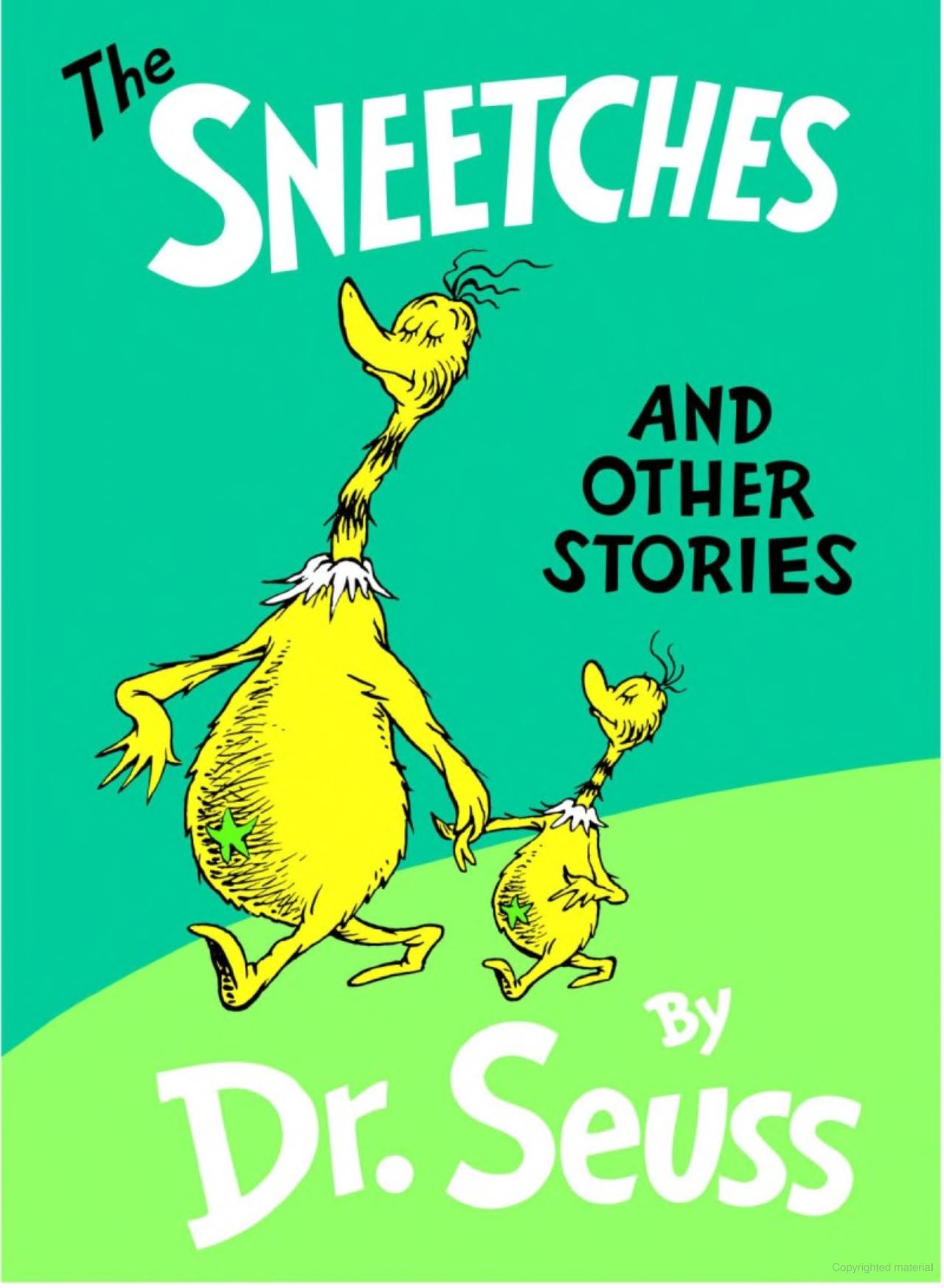
It was the linked article on Rufo—and this piece–that inspired this blog. The story is about an Ohio administrator who interrupts a teacher reading Dr. Seuss’s The Sneetches during a recording session intended for an NPR podcast.  A third grader makes a very astute comment; the teacher (Mandy Robek) continues reading, but the admin (Amanda Beeman) shuts that whole thing down:    

“It’s almost like what happened back then, how people were treated … Like, disrespected … Like, white people disrespected Black people…,” a third grade student is heard saying on the podcast.

Robek keeps on reading, but it’s shortly after this student’s comment is made on the podcast that Beeman interrupts the reading.  

“I just don’t think that this is going to be the discussion that we wanted around economics,” Beeman said on the podcast. “So I’m sorry. We’re going to cut this one off.”

(NPR reporter) Beras tried to tell Beeman that “The Sneetches” is about preferences, open markets and economic loss, but Beeman replied, “I just don’t think it might be appropriate for the third-grade class and for them to have a discussion around it.”

I actually have some empathy for the administrator. She’s totally wrong—kudos to the teacher and the reporter for choosing the book and understanding the relevance of the child’s comment—but I’m sure Beeman envisioned her job security disappearing in a wave of rabid, sign-waving Moms for Control Over Everything at the next school board meeting, and panicked.

But that’s the point here: Educators need to be prepared to defend their curricular choices, with passion, conviction, and carefully considered rationales. Rolling over for the likes of Chris Rufo, the Hillsdale crowd, and dark-money funded and fully politicized organizations who wish to take down public education is not professional behavior.

Once they control what gets said and read in the classroom, the next target will be public libraries. All publicly funded services, the things that build healthy civilization and make diverse communities strong, will be on the chopping block. Ironically, this is about what the Sneetches were trying to teach the kids in Ohio: preferences, open markets and economic loss. What students learn, even in 3rd grade, matters, it seems.

This is a huge issue, wrestling over curriculum and parents’ desires, and it’s been part of public education since the very beginning. No matter how many standards are imposed, or school board meetings disrupted, however, the most critical aspect of instruction remains the individual teacher’s understanding of what is useful and important for the students in their care, and their personal knowledge and skill in delivering those things. 

Here’s a story:

In 2008, I was e-mentoring some first-year teachers in an alternative-entry program (in other words, not traditionally trained). They were white teachers, assigned to an all-Black district in eastern North Carolina, country that was once endless tobacco fields. Most of them came from elite universities, and all were laboring under the misconception that they were ‘giving back’ to society. A lot of their conversations were about raising the bar, making a difference, blah blah blah.

It was also the Fall of 2008, when Obama was closing in on the presidency. Students in the school were wild with excitement. One of my mentees, teaching Civics and Government, kept sending me long emails pouring out his concern over the ‘unprofessional’ teachers–the ones who had been there for years. They allowed students to disregard the official curriculum! They spent classroom time talking about this miracle that was about to happen, even letting students campaign. Unethical!

He, of course, maintained that he was sticking to standards and remaining neutral about the race. After all, the students would be taking statewide exams next spring, and he wanted them to score well.  He went so far as talking to the principal about his concerns.

I tried to suggest that he was teaching during events that could make history—and incorporating real life into lessons made them more meaningful. I asked if he had conversations with his veteran colleagues, about why they thought abandoning the prescribed curriculum was sometimes okay. Our dialogue got more and more strained, until he basically stopped communicating with me.

This young man had always considered himself an outstanding scholar in the social sciences. His lesson designs (debates, short-writes, small-group discussions, film clips) weren’t bad at all, especially for a newbie. He had some ideas about how to be a good teacher, and passion for the subject matter. What he was missing was knowledge of students and commitment to their learning. When the principal had a pep assembly to celebrate Obama’s victory, he was disgusted. For a public school, this is totally wrong! he wrote.

I have thought of him often—I’m fairly sure he’s not teaching any more. Which is too bad. Because being a master at custom-tailoring worthy curriculum to the students in front of you is a skill that takes time and confidence. It really cannot be outsourced.

* If you sat for National Board Certification, these principles will look familiar. If they resonate with you, check out the National Board for Professional Teaching Standards’ Five Core Propositions. Good stuff.

Genuine Education Leadership

There’s yet another thread on Twitter today re: ‘rewarding’ teachers by allowing them to wear jeans on specified Fridays vs. giving them permission to go to lunch (with their students, of course) five minutes early. I have an entire bookcase filled with volumes dedicated to the topic of leadership in schools, but somehow, these casual conversations on social media better reflect what’s really happening than all the blah-blah about Reframing, Maximum Impact, Inspiration, Grit or–God help us–What Works.

The thing is—the success (however you measure success) of a school is almost entirely dependent on the people who work there, and their interactions. There are other factors, of course—resources, the surrounding community, thinking about values—but the best framework for doing right by kids comes from good people who like working together.

I’ve worked under dysfunctional principals, as part of a collegial staff, where teachers rose to mentor and support each other, deftly bypassing administrative snits and roadblocks. I’ve worked with great superintendents, gifted managers—and the occasional evil, ego-bound admin—but I am here to say that the real juice in school-based leadership comes from adults who care about kids and get along well.

Leadership emerges from respect, friendship and trust.

Not from someone with a title based on distributing perks—as we have witnessed this week as the leaderless party nominally in power tries to elect a Speaker of the House. Maybe we’ll see Kevin McCarthy offering Republicans the opportunity to wear jeans on Friday, or go to the Congressional cafeteria early. Ha.

My friend John Spencer thinks the ability to manage is an essential piece of being a real leader:

If a leader focuses solely on new ideas and new initiatives, they run the risk of confusing novelty for innovation. There’s no consistency or sustainability. People miss critical details. Often, the leader is so busy leading, they are unable to step back and maintain what’s already working.

Managing requires the unflattering role of maintenance. Maintenance can feel like drudgery. It can seem inconvenient. It’s a humble part of leadership that often goes unnoticed.

But maintenance is vital. A new bridge can connect people across a city. An unmaintained bridge can be deadly. The best principals I know will say, “I’m not much of a manager,” but they empower teachers to self-manage. They proactively step aside and provide the tools and resources that empower teachers. And in the end, empowered teachers empower students.

One thing John mentions really resonates with me: the inability of a formal leader to step back and maintain what’s already working. I’ve never been in a school—as a teacher, professional development presenter or classroom volunteer—that didn’t have some good aspects, things that needed to be maintained.

I’ve been in schools in deep poverty, the schools that public education vultures can’t wait to shut down, where the building is crumbling, and the playground is literally dangerous. I visited a school where there was one LCD projector in the building, bolted to the library ceiling, and a teacher stood on a table with a broomstick to operate it.

Those teachers—were genuine leaders. They knew the serious limitations they were working with, and kept going despite the environment there. I was merely a person who shared some Powerpoint slides. There were already good things happening in that building, courtesy of the people there. Professional development was superfluous, and they knew it.

Now—there are books about servant leadership and distributed leadership that aim for utilizing expertise rather than following a template for success. I’ve spent the last two decades trying to find a formula for teacher leadership that isn’t about giving someone more work and a small stipend, then labeling them a leader, whether their colleagues consider them leadership material or not. There is an endless parade of articles and commentary from teachers bemoaning the fact that they’re not at the table—they’re on the menu, happy to get a five-minute head start to lunch.

We’re still a long way from normalizing the respect, friendship and trust that are the basis of functional school communities, tailored to the kids they serve.

The issues media believes will dominate public education in 2023 are policy-related: Absenteeism. Mandated retention. Accountability (read: test score fluctuations). Educator shortages. Transparency for charters and vouchers. Funding, funding, funding. And of course, COVID and other viral menaces.

It strikes me that—once again—listening to those who have formed their own communities and informally recognize the leaders among them will have the most success in curbing absenteeism, bringing new, fully qualified teachers into the profession, putting the focus on real learning rather than meaningless data chases, and pushing back—from their own experience—against bad policy.

I’d like to share one illustration, a story from one of those trusted and respected veteran teachers, newly retired, about a favorite lesson that he could no longer teach. Read it—it’s a great piece, and he asks a lot of timely and relevant questions. He also says this:

The conundrum for a public high school social studies teacher teaching about the January 6 insurrection is not to sacrifice one’s credibility while also not pushing one’s own political beliefs on students. 

I had an advantage that other teachers trying to thread this needle may not have. I enjoyed the support of colleagues, administrators, students, and parents. You may be a high school teacher working in a less generous environment — one in which local and state politicians have trained their sights on teaching history. You have my thanks and deserve the thanks of all our fellow citizens for your dogged, noble work on behalf of American democracy.

That dogged, noble work? Let’s call it what it is: leadership.

Thank You, Supporters

Dear Friends,

Well, we gave my opponent, She Who Shall Not Be Named, a run for her money, but lost by 195 votes.

I learned a lot of things about the place where I live–and remain convinced that big changes are coming to Solon and Kasson townships, and we need to get out ahead of them. We need to stop pretending that there are no problems with housing, that our lakes are (and I quote) ‘sparkling clean’ and not in need of protection, that broadband is a luxury, and that nothing will ever change in our rural paradise.

Change is coming–we’re surrounded by natural beauty, and the largest bodies of fresh water in the Lower 48. Compared to other states, property is affordable. Unless policies are put in place, and residents understand what happens when expensive housing is dedicated to vacationers and workers can’t afford to live here, we’re on a destructive path.

During the campaign, I never misrepresented myself or my beliefs about what’s needed here, in the heart of Leelanau. I know that to some, I was just one of those ‘liberal’ newcomers–but the data and doorknocking told me that there are more and more of us here, concerned about the same issues. We did some good work for future elections, and I’m proud of that.

Why did we lose? For starters, the largest church in the district drew out its voting members, in an attempt to keep Proposal 3, which kept our current (clear, regulated) abortion laws in place, from passing. (It did pass, 56-44, statewide.) I was also relatively unknown in a place where family roots and reflexive voting habits go deep.

THANK YOU to everyone who voted for me.

Thank you to Allison Kimpfer, Mary O’Neill and Julie Kradel who ran against me in the primary, then turned around to help my campaign. We agreed, last spring, that our mission was proving that four smart Democratic women were willing to take on the Charles Grassley of Leelanau County, and we accomplished that.

There is a great deal of good news–it was a blue night for Michigan, and we held the County Commission. The three good proposals were all solid winners. All the work done by Voters Not Politicians, back in 2018, has paid off. It’s a fairer and more progressive state, un-gerrymandered–maybe even a model for other states–and both houses of the state legislature flipped blue, for the first time in 40 years.

Michigan has been a purple state, forever–and now our election results match our popular beliefs. That’s a great feeling. I’m going to be represented in the State House by Democrat Betsy Coffia (photo below), who has promised me that she’ll talk to teachers first when someone gets a big idea about how to ‘fix’ public education. That’s awesome.

Thanks for being on my side, readers. I appreciate all of you.

Pedagogy, Lesson Plans, Instructional Materials—and Politics

This is a blog about Teacher Stuff—the pedestrian daily tools of successful instruction. The boring and ordinary instruments of professional work that teachers, from kindergarten to AP chemistry, use every day.

A story: Several years ago, I was facilitating an on-line mentoring program for career-change teachers, who had previously worked for a Big Well-Known Corporation.

BWC decided to off-load a layer of expensive senior employees (those with 20 years or more) by giving them an exit ramp: Go back to school (on our dime) and become certified teachers. We’ll even subsidize your student teaching. Then resign, and we’ll replace you with cheap recent graduates.

That last line wasn’t actually in the program description, but everybody involved knew the score. BWC promo-ed the program on their website—Giving Back to Your Community!–and added an additional sweetener: BWC would provide e-mentoring, through a national non-profit, for the novice teachers’ first year, since they understood that public schools were filled with terrible teachers who couldn’t possibly be of assistance. After all, their (too-expensive) employees were masters of applied STEM content, who could probably teach veteran educators a thing or two.

It was an interesting gig.

A lot of the work was just dealing with misconceptions. Like the woman who was upset when she was told by the university where she was taking ed classes that she couldn’t have a student teaching placement as a ‘third grade math instructor’ because the job didn’t exist in most places. She could student teach in a 3rd grade, but would also have to teach reading, social studies, science and accept bus and lunch duty, which was a deal-breaker for her. She left the program.

One of my mentees had just started a job as a chemistry teacher in a suburban Connecticut high school. He had been assigned four sections of chemistry and one of AP chemistry. In our first exchange, he was panicked because he had asked for the lessons plans to go along with the texts, and was told they didn’t exist. He checked with his official on-site mentor (the other chemistry teacher at his school) who told him that books didn’t come with lesson plans because you have to tailor lesson plans to the students you have.

Which my mentee thought was not just rude but ridiculous. You mean I have to make up ten separate lesson plans each week? How inefficient! At BWC, all the work was pre-organized. You just followed the templates. This is why public education is such a disaster, yada yada.

If you are not an educator, it might in fact be surprising to suddenly be immersed in typical pedagogical practice where what initially appears to be ‘inefficiency’ turns out to be more effective in the long run. I’m thinking here of those little flip-top heads on a conveyor belt, receiving ‘content’ in ‘Waiting for Superman’–director Davis Guggenheim’s conception of how children learn.

My point here is that the other chemistry teacher was spot-on: Good teachers structure learning goals, lesson plans and instructional methods to meet the needs and quirks of the students in front of them. They also pay attention to results in real time (meaning—you don’t have to wait for test scores), and re-adjust when things aren’t going well.

Peter Green recently wrote an accurate (and amusing) blog that summarizes why teachers will never completely outgrow the need to plan, also listing a half-dozen ways that required lesson plans can become a pointless power struggle or an example of planning theatre.

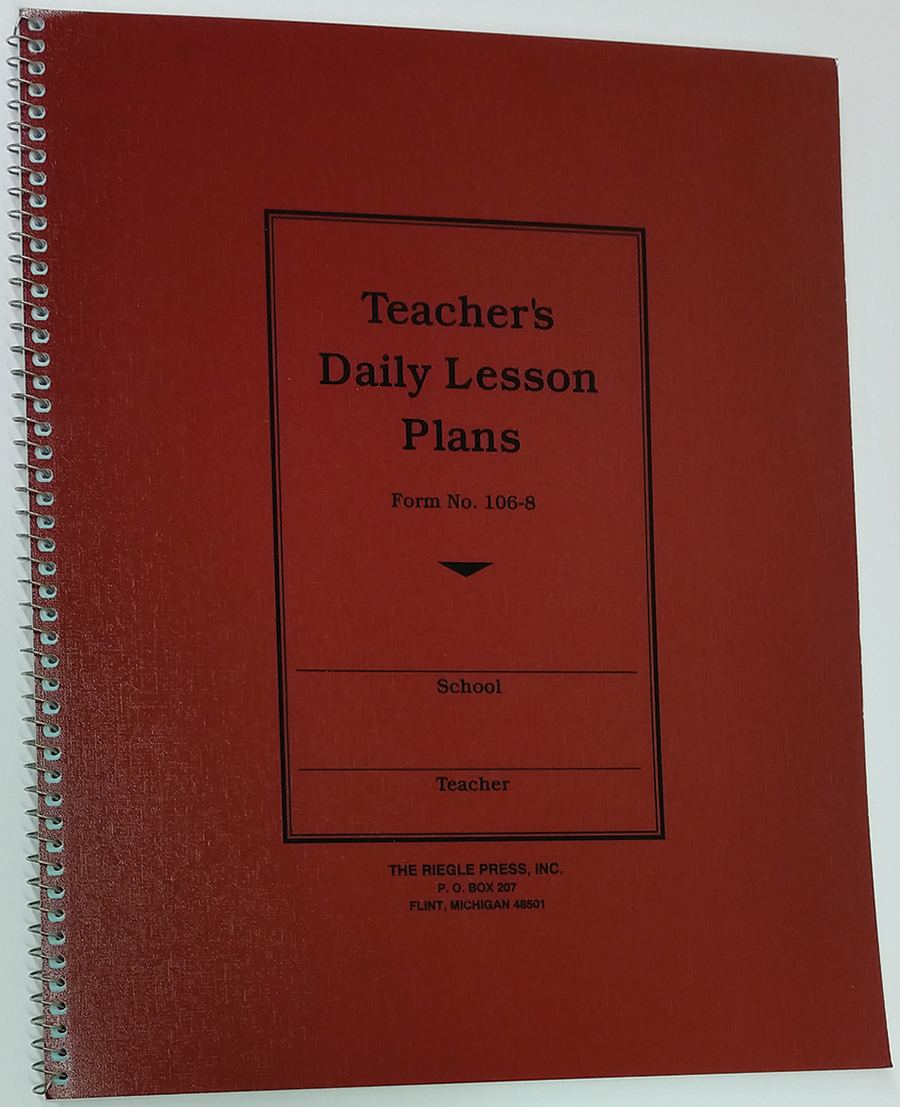
I spent thirty-odd years planning the week ahead on Sunday nights, with a glass of wine. My plan book was where I scribbled notes when I had a brainstorm (or a failure). The plans were always messed up by mid-week, but I had five preps, and absolutely couldn’t teach without them. But nobody ever fly-specked my plans to make sure I wasn’t inserting CRT or SEL or any other acronym into the pedagogy I saw working for my students, on a daily basis.

Alfie Kohn takes this discussion about teachers’ daily work a step further, reminding us that it’s not just curriculum and lesson plans that the (well-funded) right now wants to control. It’s the way we go about teaching—our pedagogical practices, including things like the pre-eminence of phonics in the Faux ‘Science of Reading’ wars.

Just as social conservatism is all about religion, so religion — or at least this version of it — is all about not only order and obedience, but also faith (which means belief without evidence) in the conviction that Truth resides, fully formed, in certain texts. Carole Edelsky, an emeritus education professor at Arizona State University, has explained that “the far right’s love affair with phonics” reflects their “universe of moral absolutes,” the goal being to decode “what is ‘there’ [and to affirm] appropriate hierarchies – the authority of text over interpretation and ultimately of (the Christian) God over man. To the theocratic right, promoting phonics is a tactic for asserting Christian control of schools.”

That one made me stop and think.

The great irony here is that obedience and faith are what certain politicians want—but not the blue-chip businesses who will be hiring our graduates. Education Week just surveyed ten such companies, asking: What problem-solving skills do you want to see from early-career job seekers that tend to be lacking? And what should K-12 schools do to help bridge those skill gaps?

Corporations said: Flexibility. Cooperation and collaboration. Soft skills. Real-world applications. Learning to fail. Curiosity. Appreciating diversity. Service learning. Teamwork. Creativity and innovation—out of the box thinking.

All of which require a great deal of careful planning, diverse instructional strategies and materials, and zero emphasis on standardization and compliance, which is the pedagogical train we’ve been on for two decades now.

Can those traits and skills be taught? I think so.

The question is whether teachers and school leaders will follow their hearts and minds or be beaten down by politics.

The Heir and the Hillbilly

By now, you’ve probably seen Tucker Carlson and J.D. Vance, author and candidate for Senate in Ohio, wondering why right-thinking dads don’t just ‘thrash’ teachers for inserting their personal ‘sex values’ into the minds of innocent children. We all know that Carlson is worse than a destructive ass–but ol’ J.D., the self-described hillbilly who rose from nothing, sat there nodding and grinning along with Tucker as he incited a little righteous violence against your children’s teachers.

Incident in the Teachers’ Lounge: A dozen teachers sit around a long plastic table, chatting and eating their packed lunches. A custodian enters the room, skirting the table, to grab a soda out of the refrigerator, then stands looking at the bulletin board, while taking long pulls on his drink. There’s a pause in the conversation, and he says: So. You guys think this is funny, huh?

He points to a piece of paper tacked to the board, an internet-distributed list of excerpts supposedly drawn from parents’ absence-excuse notes. Things like: Please excuse Sally. She was in bed with gramps.

There is silence, but the custodian isn’t finished. He says: This is what you do in here? Make fun of parents? He shakes his head and leaves the room. As soon as the door closes, teachers turn to each other and begin talking. What do you think they say? How do they feel?
——————–
I was reminded of this scenario from my own teachers’ lounge as I read Hillbilly Elegy: A Memoir of a Family and Culture in Crisis, by J.D. Vance. I was anticipating a good read—it was on all the “Best of 2016″ lists—but found the book shallow and insubstantial.

J.D. Vance grew up in a small town in southwestern Ohio in a working-class family. Aided significantly in a tough childhood by his ever-present, loving grandmother, and after a maturing stint in the Marines, he attended Ohio State, then got a law degree from Yale.

An impressive personal narrative—plaudits to Vance for his persistence—but hardly illustrative of the poor habits and prospects of an entire region of the country. Nor does Hillbilly Elegy illuminate any of the very real problems or crises, per the book’s title, facing working-class families in America today, beginning with the dangerous income gap between the haves and the have-nots that threatens the social order.

In fact, Vance is intermittently reproachful, blaming family members (mostly his mother) for being irresponsible and foolish, and chalking it up to their Scots-Irish heritage and growing up in Kentucky. He seems unaware of his own privilege—being a tall, nice-looking, intelligent white man in a country where those qualities are an enormous leg up, for example.

He describes his public school education as sub-par, with the exception of one demanding math teacher. The training and subsequent education benefits of a stretch in the military get short shrift. Ohio State? Easy peasy. It isn’t until Vance finds himself at cocktail parties where his admission to Yale seems to be paying off with high-level clerkships and job opportunities that he realizes he’s been handed a golden ticket, and he’s being watched to see if he can fit in.

Instead of reflecting on all that good fortune, however, he labels his family hillbillies, monetizing their salty speech, their blind loyalty to a particular funeral home, and their parochial weaknesses, as they struggle to survive in the most inequitable First-World nation on the planet.

In the post-war years, as millions of Baby Boomers became the first generation to attend college, class lines began to blur. It wasn’t until my Sociology 101 class that I realized my family was not “middle class,” but further down in the pecking order. It wasn’t until I read W.E.B. Dubois’ “The Souls of Black Folk,” that it occurred to me that moving up in the social order came with a cost to family relationships, and, sometimes, personal integrity. It wasn’t as easy as excelling in school and leaving your grubby antecedents behind—there were other important values besides “success.”

Here’s the question J.D. Vance avoids: Whose fault is it that more than 50 million Americans live in distressed communities, where nearly a quarter of residents lack a high school diploma?” Conversely, who is responsible for lifting themselves out of poverty? Is this a result of hard work and personal discipline only, “rising above” family characteristics—or do social supports, like public education, military training, and publicly funded scholarships also form the proverbial rising tide?

Most of the educators sitting in that teachers’ lounge were second- and third-generation college graduates. To them, the misspelled excuses were funny; their students were sometimes apples who fell near the poorly educated tree. Still, the custodian’s comment—You think this is funny?—found its mark. The post came down. Teachers responded with a mix of embarrassment and defensiveness.

A good public educator accepts all students, kids raised in hothouse homes with thousands of books and trips to the museum and kids who ate sugary cereal in front of the TV until their single mom unlocked the door at midnight. Kids across the spectrum benefit from public education.

J.D. Vance’s story is more about individual good luck than an analysis of a culture in crisis. I expect absolutely nothing from Tucker Carlson, but J.D. Vance ought to know better. He’d be a terrible senator.

Teachers Want to Teach. Just Not in the Way They’ve Been Teaching.

Headline in Michigan Advance: Two Michigan educators exiting this month, many others may soon follow.

I was eager to read the piece—because I know these two, both of them stellar educators. I’ve read her students’ work. He guest-blogged on my Education Week site. They are experts. Veterans. Teachers with a full professional toolbox, and insight into how the system works, in both well-heeled and disadvantaged districts.

The article made much of the fact that they’re leaving now—in March—rather than slogging through the rest of the school year. But in many ways, leaving now is the right thing to do, for two interrelated reasons. It gives districts maximum opportunity to hire in the spring as a few newly minted teachers graduate, and provides a heads-up: Look. Get cracking. You’re going to be short lots of critical personnel, and soon.

It also means that teachers are now behaving like the rest of the working world: Choosing the best and most lucrative opportunities to share their skills and talents. Hiring on and leaving those jobs when it’s convenient. Making their own decisions, based on the way their employers and clients have behaved, rather than being made to feel guilty.

Teachers who leave in mid-year are acknowledging that teaching is a job, like other jobs. It’s not a divine calling or moral obligation like, say, parenthood. Not anymore.

I generally haven’t retweeted or commented on blogs from teachers who have HAD IT, and are leaving their jobs. Long before I got my first writing gig (a local newspaper column) 20 years ago, I contemplated leaving my job, pretty much annually. If you’ve been a teacher, you can guess at the reasons: Lousy pay. Ridiculous class sizes. Overwhelming workload, leaving little bandwidth for family. Evil administrators. And so on.

While the oft-repeated data shows that half of teachers leave their jobs in the first five years, the actual numbers (where did those teachers go?) are murky. Some of those folks aren’t leaving the profession forever—just that building, at that time. Some people who leave teaching stay ‘in education’ (just ask Teach for America). Divided opinion on whether that’s good or bad.  

My take on this is that there is a pre-pandemic baseline for teachers jumping ship, and we won’t know until August just how much trouble public schools are in, when it comes to staffing. But two years’ worth of pandemic teaching has undoubtedly changed the calculation.

Teaching—I repeat—is just a job, and teachers now have plenty of first-hand evidence of how their employers, their state governments, and their clients (parents and older students) value their time, dedication and expertise, during a national health crisis. Answer: not so much.

A couple of days ago, a memo from an Applebee’s franchise executive made the rounds at an Applebee’s restaurant in Lawrence, Kansas, resulting in a mass exodus, both local managers and those paid largely by tips:

“Most of our employee base and potential employee base live paycheck to paycheck. Any increase in gas prices cuts into their disposable income. As inflation continues to climb and gas prices continue to go up, that means more hours employees will need to work to maintain their current level of living. The labor market is about to turn in our favor.”

I would theorize that lots of teachers who are leaving now still like being a teacher—just as there are probably plenty of Applebee’s servers and line cooks who think they could probably do worse than work at Applebee’s.

The point here is that the curtain has been pulled back—legislatures are proposing that untrained college students and bus drivers maybe could, you know, fill some classroom jobs. The labor market is about to turn in favor of those who are chipping away at funding public education, as well as those trying to squeeze a little more out of people who spend half their income on a crappy apartment.

Finding out that the people who control your pay, hours, and the tasks you’re assigned, are plotting to take advantage of your desperation will not lead to an uptick in loyalty or effort.

Teachers, of course, are in a different employment category—most of us see the work as professional, highly skilled, and attuned to a common goal of improving the lives of our students.  And there have always been anti-teacher, anti-union forces roiling the waters of public education, trying to establish ‘value schools’ to minimally educate the poors.

What’s different now is gubernatorial candidates turning school board meetings into political rallies.  The infusion of dark money into what should be local debates over masking and curriculum. The demonstrated increase in violent and criminal behaviors, as the pandemic (maybe) winds down.

Can you blame a teacher—let’s say a teacher who has the financial wherewithal to seek another job, or live carefully on a pension—for deciding that it’s time to get out of Dodge?

I personally know at least a dozen teachers who have either quit, turned in their early retirement papers or are holding off on telling their districts that this is their last year, worried about retribution. I know another handful who are actively interviewing for alternate jobs that either pay more or will provide a better lifestyle than teaching.

I talked to one yesterday. Three times in our conversation she said this:

I really love teaching, but______________.

Fill in the blanks.

The Highly Unqualified Teacher

Remember the early days of No Child Left Behind? When everyone was trying to figure out precisely who was a ‘highly qualified’ teacher, under federal regulations?

Here is a sample state document—15 pages’ worth—of the required coursework, majors and minors, certifications, licensure tests and ongoing professional development credits that a classroom teacher needed to be deemed highly qualified, under NCLB. Your mileage, in other states, may vary—but not much. The feds were all about making sure the most capable and knowledgeable folks were in front of our public school classrooms.

Or so they said.

At the time, the education community protested: WE should be the ones to determine whether someone (a certified someone, with a college degree, of course) is qualified to teach X! We have seen that person in action!

But federal guidelines, and states that rolled over for them, caused havoc in public schools across the country. In my middle school, it meant that a beloved veteran– but elementary-certified–8th grade English teacher found himself teaching 3rd grade, one of many personnel shuffles.

Teachers with advanced degrees went back to take courses they could have taught themselves. Rural districts, where one Science teacher covered Biology, Earth Science, and Chemistry and Physics in alternate years, found themselves with a host of ‘unqualified’ teachers who’d been on the job, doing yeoman work, for years.

An avalanche of irritated hoop-jumping ensued.  So that all teachers could be highly qualified. Professional. Experts in their fields. On paper, anyway.

That was then.

There’s been a lot of press lately about the lack of qualified substitute teachers as we navigate a raging global pandemic. States are lowering—really, seriously lowering—the bar to get temporary but warm bodies in classrooms, to keep school doors open.

But chronic substitute shortages have been around (poorly-paid canaries in the teacher preparation coalmine) for decades. I spent three full (non-consecutive) years of my life substitute teaching, in addition to occasional sub gigs as a retired teacher. It usually takes an adult beverage for me to share the details of how those year-long stints came about, but my experience is confirmation that substitute teaching on a day-by-day basis is pretty random.

Some days, the kids are actually moving forward—the teacher has left solid plans and it’s clear that you’re in a place where order is the daily norm. Other days? I once was assigned a 5th grade and arrived to find these plans: ‘Reading—groups. Math—division. Science—rockets.’ That was all—six words.  Try to imagine a well-meaning school bus driver-turned-sub attempting to make lemonade out of that for seven hours.

It’s not the substitute teacher pool I’m worried about right now, however. It’s last-ditch moves (after more than a decade of warnings) to fix the leaky teacher pipeline during a pandemic that are really scary. Worth pointing out: if there were ample trained teachers available to work, and acceptable conditions for them (including compensation), the substitute problem would shrink and vanish.

But first, teaching, as a career, must be reconceptualized. We’re rapidly moving in the wrong direction on that score.

It is entirely possible to create an effective and enthusiastic teacher workforce, state by state. It would take time, money and research-based pedagogical expertise, but we, too, could have a uniformly professional teacher pool.  State and school-based leaders have proposed viable plans to begin doing just that.

We could also find alternative ways to bring job-changers and other school staff into the classroom, by dedicating real money and programming into mentoring, on-the-job professional learning, and skill/content development for those who want a longer-term career in teaching.

What doesn’t help is uninformed legislation to get highly UNqualified teachers into schools right away—and highly publicized hand-wringing over the pandemic-driven ‘crisis’ of unstaffed classrooms. It’s a crisis, all right, but it’s a temporary crisis (and one produced by bad education policies over time, more than COVID).

Speaking of bad policy, there’s a bill currently in the MI legislature to allow college students studying education to become teachers of record. These are not student teachers or even students who have been admitted to candidacy in a selective teacher training program. They’re just college students who wish to teach one day, maybe:

The bill differentiates these aspiring teachers from “student teachers.” The uncertified teachers allowed under the new bill would be paid for their work, and, unlike when working as a student teacher, the bill would allow them to teach completely on their own, without a mentor present in the room.

The bill’s sponsor, Rep. Pamela Hornberger (R) (ironically, a former art teacher) said this:  

“We’re at the point where we’re voting to put anyone with a pulse and breathing in a classroom to sub. We need to do something.”

Well, yeah. We needed to do something decades ago, but we followed our usual ‘starve public education’ modus operandi, and it caught up with us during an unanticipated public health crisis. So now we’re hoping ‘aspiring’ 19 year-olds will bail us out?

Bad policy on top of bad policy.

But this feels like more than another dumb idea from a Republican legislator (the MI Department of Ed, the teachers’ unions, universities and Democrats are all adamantly opposed, by the way). It feels like just another strategy to weaken and compromise public education by further de-professionalizing teaching.

Lower the bar into teaching, because EMERGENCY! Then, demand that new and inexperienced teachers share a years’ worth of lesson plans, assignments and ‘topics’ so they can be scrutinized by fired-up parents, or cost their district five percent of its already meager state funding.

Kind of makes you wish for the good old days when the bad policy was at least nominally trying to do the right thing by building some highly qualified teachers.