Teachers—or Teacher Unions? Or maybe—Neither.

You see it all the time, in the media.

How Teacher Unions became a Political Powerhouse

Republicans grill teachers’ union head on COVID classroom closures

How Teacher Unions Failed Students during the Pandemic

And this nasty little bit of hyperbole:
How the Teachers Union Broke Public Education

Those unreasonable, greedy, demanding teachers—umm, unions– insisting on masks and ventilation during a lethal global pandemic. Boldly asking for wage increases, that bring them closer to other employees with college degrees and a desirable skillset.

But what about that delightful third grade teacher who let your shy daughter know that her drawings and poems were amazing, building her confidence? Or the HS Math teacher who wrote four letters for your son, getting him into Michigan Tech, his life’s dream?

Well—those are individual teachers. The good ones. Not the union. Which is evil. (Since sarcasm often doesn’t translate well in blogs, I am compelled to point out flaws in the “teachers aren’t unions” dichotomy.)

A few points:

  • “The union” is made up of teachers, not “bosses” or—insult alert! —“thugs.” Teachers. Local unions are led by local teachers, a large majority of whom are also full-time in the classroom.
  • Only 31 of the 51 states (and D.C.) have collective bargaining privileges.While other states have chapters of professional associations, including but not limited to affiliates of the NEA and AFT, bargaining is limited or prohibited. Associations exist to protect teachers and provide things that teachers need, from insurance to professional development—things they would get under a collective bargaining agreement.
  • In states with stronger unions and collective bargaining privileges, the bargaining happens at the district level, often between employees of the district—colleagues. Which is as it should be—making joint decisions about best use of available resources, in the best interests of both the students and the adults who organize and deliver education. Of course, this process is messy and fraught, but tax-supported public goods and services are often messy. It’s called democracy.
  • Things that are good for teachers (a health-conscious environment, adequate materials and resources, an orderly school climate, a threat-free atmosphere, respect for teacher judgment) are also good for all kids.
  • Who to fire first in an economic downturn?  The temptation to fire the most expensive employees is always present, in any business. Experienced employees often cost more; there are reasons experienced folks are kept on—their ability to manage difficult customers or tolerate uncertainty. Sometimes, it’s a matter of honoring loyalty and accrued skills.

So the Mackinac Center is dead wrong when it writes:  Merit pay systems allow a school district to pay teachers according to their performance. The teacher who performs well and teaches students effectively is likely to be rewarded with higher pay. The teacher who consistently underperforms is dismissed.

Measuring teacher performance via test data is impossible. Tests and scores are deeply flawed. And one family’s genius teacher who saved Jason is another family’s weirdo with a ponytail.  There are teachers who underperform, even teachers who should be fired. And that decision should be made by the district that hired the teacher, not a grid comparing student testing data. Pitting teachers against one another for salary bonuses is a recipe for disgruntlement. And invites cheating.  Not to mention shutting down the already-shaky qualified teacher pipeline.

So why are politicians—OK, Republican politicians—claiming we need to break the back of the teachers’ unions?How can they praise individual teachers as essential workers but excoriate the associations that represent them? Isn’t that incoherent thinking?

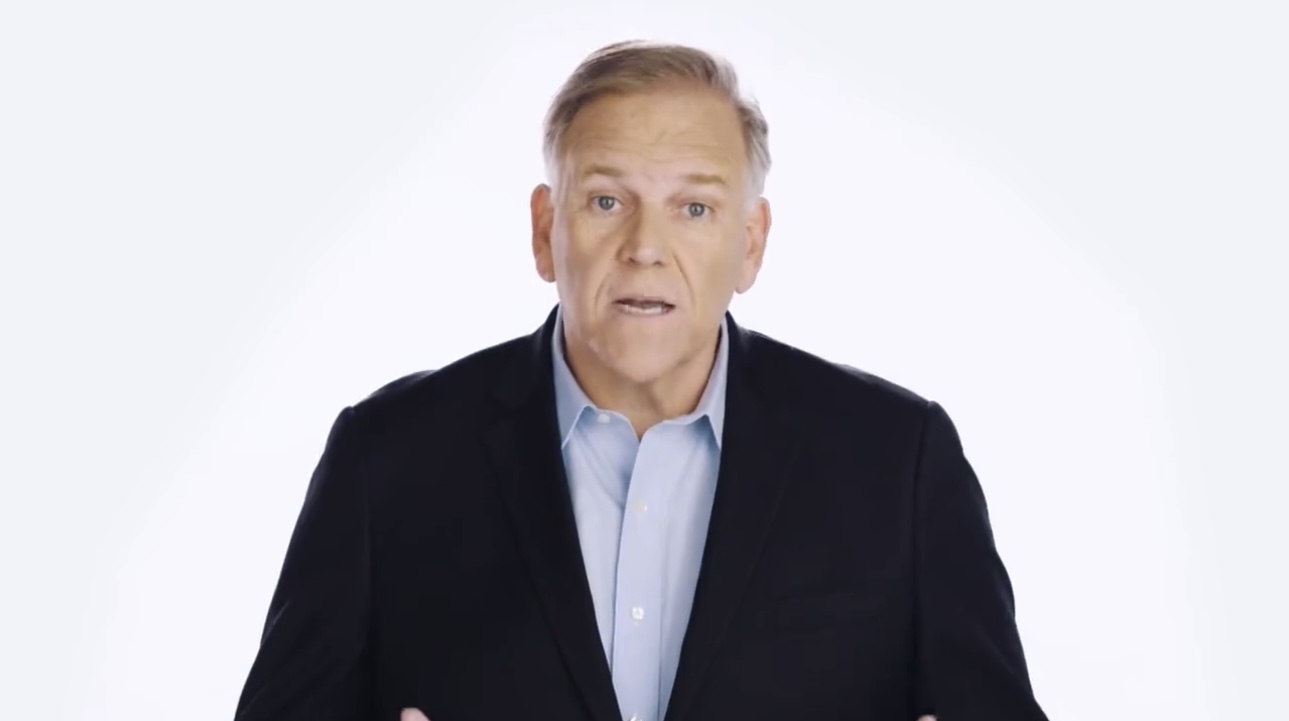
I was struck by Representative Brian Mast (R—FL)’s post this week, claiming: Unions worked hard to keep parents out of their children’s classrooms and have gone so far as to treat concerned parents as domestic terrorists for speaking up at school board meetings.

 Mast pumps up the House Republicans’ Parents Rights bill:

Here are the five basic rights the House Republicans outlined:

  • Parents have the right to know what’s being taught in schools and to see reading material.
  • Parents have the right to be heard.
  • Parents have the right to see the school budget and spending.
  • Parents have the right to protect their child’s privacy.
  • Parents have the right to be updated on any violent activity at school.

So here’s the thing. Parents have always had the right to know what’s going on in their public schools, and have always been invited to attend school board meetings (unless the people THEY ELECTED are meeting in secret—in which case, it’s not a Congressional problem). They have always been able to share concerns about curriculum—from constructivist Math to Sex Education—and vote on school taxation initiatives. I only WISH that more parents were worried about protecting their child’s academic testing data—the scariest privacy issue in 2023.

School administrators and board members loathe being publicly called out or yelled at; they are forced to be responsive to parent commentary—it’s their job.

And very little of this—the rights of parents–has anything at all to do with local teacher unions, who function as a convenient scapegoat, a collective noun that allows those who would like to see public education destroyed point fingers at someone, anyone, and call them a terrorist.

For shame.  

Middle Schoolers: The Myth and the Reality

Among the worst ideas I’ve ever heard, regarding young people and how to develop their knowledge and skills, is this one: Let’s let 14 year-olds serve alcohol in bars and restaurants!

Really? We’re going to let eighth graders wait on adults, bringing them booze, asking if they’d like another, assessing their levels of inebriation? Young, barely teenaged girls “handling” older men, massaging their inebriated egos in hopes of a bigger tip?

Would these be the same young teenagers we don’t trust to select their own pleasure reading, share their own observations about racism and sexism in the classroom, or choose how they want to be identified?

I taught full-time for 32 years, only one of which did not include teaching middle school. I love teaching middle school. Sometimes, I think—in terms of my cynical, low-brow sense of humor anyway—I never really left the seventh grade.

I repeat: I love teaching middle school, and I really love kids in those middle grades.

Tell people that you taught middle school band for more than 30 years, and the first comment you get back will be some variant on “OMG, God bless you” or commentary re: how dreadful it is to parent a person who’s 13 years old—The hormones! The backtalk! — and therefore, how epically horrible it must be to try to teach these kids something, in batches of 30.  

Or, in my case, in batches of 60+, where each student is holding a noisemaker.

Actually, while there were certainly days when I wondered whether I might not be better off selling real estate, teaching middle school music was mostly deeply rewarding and often fun. And in case you think this was because I was teaching an elective, I also taught seventh grade math for two years (once in the 1980s, the second time in 2005), as well as an ESL class and an academic support class where there were fewer than 10 students and classroom management was way more difficult than my 65-piece eighth grade band.

Here’s my honed theory of teaching middle school, in a nutshell: We don’t give middle schoolers enough real responsibilities or credit for their ongoing moral development. They are smart and curious enough to wrestle with big questions and read challenging texts (with some scaffolding). They are trying to figure out what kind of world they will inherit, and are often anxious about the job current adult leaders are doing. This anxiety has exponentially grown by watching adults navigate a global pandemic, stand by as states go up in flames, and try to get themselves elected through the use of lies, cheating and bullying.

Still, middle-grades kids will rise to do a credible job of almost any task we set before them, if they see a point in doing the work.  And when they complain of being treated like children, they’re usually right—every time I hear teachers recommend shutting down privileges we afford adults (using the bathroom when needed, for example, or being given some grace around a missing pencil), I cringe.

Treating young adolescents as if they can’t reasonably manage their own behavior almost always results in their doing precisely that: acting irresponsibly. A well-run classroom is not achieved by imposing a long list of rules, or threats of escalating punishments. It happens, over time, when students understand that you a) like them, b) respect them, and c) think they are capable of doing the work you have to do together, whether that’s single-variable equations or discussing core democratic values.

Over those three decades of teaching middle school, did I sometimes fail to achieve those goals? Absolutely. And did I have students who exhibited appalling behaviors, ranging from mean-girls cruelty to risking bodily harm? Sure.

But the longer I taught, the higher I raised the achievement hoops, and time after time, my pre-adolescent students came through. We have always underestimated the ability of middle-grades students to discuss, write, solve problems, explore issues and help their communities. We are always too quick to pigeonhole them, based on their immaturity. We have let middle school become a kind of punch line.

Which is why I find it interesting that some states, trying to solve ongoing post-pandemic labor shortages caused by adults who are unwilling to work for subsistence wages and are now demanding better job opportunities, are turning to young teenagers. Whether this is child labor or “developing workplace skills” depends on your point of view.

But there are better ways to incorporate the nascent adult skills that middle schoolers want to display than having them deliver alcoholic drinks to adults, or do other jobs that adults refuse to do for piddling money. I think about all the times I took the middle school jazz band, for example, to the nursing home or the school for developmentally disabled students—and how willing they were, with a little coaching, to make those lives better, to interact with people who were profoundly different.

Perhaps the best way to develop middle-grades students is to offer them opportunities to develop adult trust in their capacity.

Several years ago, my school had a pilot program in community service. Students earned points for shoveling neighbors’ walks, being “counselors” at elementary after-school gymnastics or basketball programs, or “student leadership” activities like planning and decorating for school dances. All students, over the course of a year, had to earn a set number of points, reported and signed off on by their parents.

One mother sent in a form awarding her daughter points for family babysitting. The 14 year-old daughter had four younger siblings, two who were not yet in school, and her mother depended on her to come home right after school, and watch the kids, so she could work outside the home.

This seemed like a no-brainer to me. Tending four children (and, by the way, completing your homework, something this girl always did) was a major responsibility for a girl in middle school. But the counselor argued that it wasn’t “community service,” just a family expectation.

The point of having a community service program was to build students’ skills and awareness of their place in—duh—the community, to emphasize that healthy communities depend on volunteering and interdependency. To show middle schoolers that their work and skills were already valued, even though they were, say, 12 years old.

The program was eventually scrapped over issues like defining “community service.” Which I would call an adult failure to understand the considerable capacities of middle school students.

Middle schoolers can be trusted to do lots of things; my 30 years in their company gave me ample proof of that. It’s the adults who can’t be trusted in the proposal that they serve drinks.

I Had a Dream about the First Day of School…

The “Teachers Report” day, that is. We all have dreams about the day the kids come back, and some of them are doozies, the kind where we’re not wearing pants or the kids run amuck.

But this was a lovely dream about the day that’s usually sucked up by re-learning about Blood-borne Pathogens, the latest silver-bullet curriculum initiative designed to raise those scores, and pointless, endless announcements.

It went like this:

7:15 am Over the P.A., we hear strains of Morning Mood. The Principal begins speaking.

Good morning, Ore Creek Middle School! (in his best Robin Williams voice) Welcome home!
Here’s the plan for today: You’ll all be working in your rooms all day.

The office will be open all day for you to request and immediately pick up supplies. We have parent volunteers to help with this, because the office staff is super-busy, of course.

 We’ve also set up a coffee station which will be replenished with hot beverages all morning, and there’s a box of donuts and muffins for you. Sign up for a slot to use the copy machines—we’ve rented an extra one for the week. I’ll be visiting each of your rooms at some point today, to say hello and answer any questions you may have about 2023-24.

From 11:30 to noon, there is a smorgasbord lunch, prepared by parent volunteers, in the cafeteria. Take a break, have a great lunch to fuel the rest of your day, and meet our new staff members then.

The library will be open all day, but remember—our media specialist is also setting up her room. I have hired extra IT support to staff a help desk all afternoon. Email IThelp@OreCreek if you want a visit from them this afternoon.

I will be sending you an email at the end of the day full of important announcements and a link to the required Blood-borne pathogens training. Sorry, gang—I know this is old news for most of you but the state requires it. You have two weeks to complete it. I’ll send reminders to those who still need to take care of this. Our first staff meeting will be in two weeks, once things get rolling.

I know that many of you have already been in, some for several days. On behalf of the district, I thank you for your dedication. I will be in over the weekend, if you have more to do, so the building will be open.

One last thing—several of us will be heading to Spike’s after school. In addition to their usual (cough) libations, Spike has set up lemonade and iced tea, on the house, for Ore Creek staff. Now—open your doors and give our custodians a hearty round of applause for making the building look so spiffy.

Hey. A teacher can dream…

(Almost) All You Need is Love

Scene: Interview with right-leaning MI media personality, c. 2003, re: National Board Certification

Interviewer: So you say that National Board Certified Teachers—NBCTs– are the cream of the crop. What, specifically, do these teachers do that other teachers don’t?

Me: Well, lots of teachers have the qualities and skills that NBCTs have—but NBCTs have undergone a rigorous assessment of what they know and are able to do. They have studied standards for professional teaching and provided evidence that they are demonstrating those standards.

Interviewer: So what are those rigorous standards that all teachers should be aiming for?

Me: The first one—a foundation for good teaching—is knowing your students well, and being committed to their learning.

Interviewer: Seriously? You’re saying you just have to… (adopts snarky tone) love the kids? Even the bad kids? That’s all it takes?

 —————————————–

In case you’re wondering, the interview did not improve much after this moment. Many folks are laboring under the notion that some teachers have magical, almost indefinable skills that whip classrooms into shape and make learning come alive. Other teachers, presumably, have to rely on a boring combination of content knowledge, discipline and fear.

Nobody expects teachers to love every one of their students—not even the National Board. But teachers who do not develop positive and open working relationships with their students, teachers who believe that their job is dispensing knowledge, then measuring students’ retention of that knowledge, will always be behind the instructional curve and may never become what we think of as a “good teacher.” 

Peter Green, whose work is always worth reading, just wrote a moving and beautiful piece about teaching, in which he says this, about loving our students:  Here’s a big thing I believe about love–it’s not so much a feeling as an action and a choice, a commitment. You can choose to love people, and you can do it based on who you are instead of waiting to be inspired by who they are.

There’s that word, commitment, again. Greene also says this:

Twenty years of modern reform and especially two years of pandemess and CRT panic have worked to drive love and trust out of schools. Since (at least) A Nation at Risk, critics have deliberately ignored and abused the notion that teachers might choose to teach out of love and care, but must instead be threatened with Consequences.

Bingo.

All of this love talk goes a long way toward explaining why—again, and again, and in spite of what sometimes seems like an organized media conspiracy to crush public education—parents (somewhere between 80% and 85%) report being satisfied with their public schools.

If the only information you get about the public schools in your community comes from Moms 4 Liberty, or articles about School Board uproars over book banning and faux accusations of grooming, or the relentless drumbeat of “learning loss” that substitutes quantification for compassion— well, you’re likely to be in the majority of non-parents who think public education is failing.

And let’s be brutally honest—some public schools are so stressed that trust and commitment aren’t in the cards. They are, in fact, failing to be committed to their students, and their students’ learning. These failures show up in inability to hire qualified staff, incoherent curriculum, lack of strong leadership or trust, and general chaos—not test scores.

I like the way Matt Barnum (or whoever wrote his headline) phrased it: Are Parents Mad at Schools?

The data-supported answer is no. No, they’re not.

Because— in spite of the pounding that public schools have taken during and post-pandemic, there is still commitment and caring, teachers who drove around rural districts with stapled-together packets and backpacks full of food. Teachers who persisted in trying to adapt to teaching on-line or outdoors. Teachers who went to school unvaccinated, because their students needed them.

Parents also see, up close and personal, what the impact of a global pandemic has been on their own children— not just the disruption to their normal lives, but the free-floating anxiety around masking, illness in the family, squabbling over vaccines and fear of catching a potentially lethal disease. Children who were sad or bored, whose days lacked the social and intellectual structure of M-F schooling, recess and friends.

What kids need now is not, God help us, “acceleration” techniques to get them to an arbitrary (testable) level of learning. They need the aforementioned structure, knowing what to expect from their world. They need the concern and commitment of their teachers.

What about content— knowledge and skills, the measurable outcomes of school? Here’s a secret: Most of what is learned in school has to be continuously refreshed and applied in order for it to stick and be useful in adult life. Scoring well on a test is not a mark of being well-educated, prepared for adulthood. Human relationships prepare us for life. Content comes and goes.

And bad kids? How do we love them?

I was fortunate. For most of my career as a music teacher, I had students for two to three years, sometimes more. I did come to genuinely love—or at least get along swimmingly with—nearly all of them. I was fond of them, and am curious now about what they’ve done with their lives.

But there was this one kid…

It was a year after I’d been out on leave, and had been assigned to teach a semester-long music class that students did NOT choose. Lots of those students were surly at first, being forced into an elective they didn’t want. It was an uphill climb, but eventually, I started winning them over. I saw them relax and even enjoy the things we were doing. There was laughter. Except for one boy.

He was defiant. He refused to participate. He muttered things about me and his fellow students under his breath. I tried ignoring him. I tried gently looping him into groups. I tried calling him out, but with humor. I kept thinking he just needed to know that I was committed to him, and wouldn’t give up. He remained bitter and overtly hostile. Once, after students had formed groups to create compositions, he picked up his belongings and left the room, for no apparent reason, letting the door slam (of course). He was hard to love.

So I mentioned him in the teachers’ lounge (sometimes, good things happen in the teachers’ lounge). You know about his brother, right? one of my colleagues asked. It turned out that this boy’s older brother had committed suicide in the school parking lot the previous summer. Because I had been gone, I didn’t have a clue. Nobody bothered to tell me.

The semester was almost over. I never did develop any trust with this boy. I would have given him a great deal more emotional space, had I known, and interpreted his anger very differently. I would have tried much harder to love him. Because— and this is often true— students often just need the security that comes with knowing their teachers are committed to them, no matter what.

The War Against Icebreakers

Best Twitter–is it still Twitter, considering its ugly new Maga-X logo?—thread of the day: A war on icebreakers in upcoming professional development for teachers. The things people report being asked to do range from silly to downright demeaning.

Icebreakers from my own pantheon: Building structures with toothpicks and marshmallows. Holding hands and forming human knots. Lining staff up by length of service to the district. Trust falls. Any number of exercises using chart paper, balls of colored yarn and/or stick-on dots. Also—looking into each others’ eyes for 30 seconds, not breaking eye contact, which was weirdly moving and also kind of creepy.

Once, at the beginning of two days of pre-school year PD, we watched a cool and interesting short video about school climates, and how to determine what individual schools or districts genuinely value, vs. what they say is their mission.

Video asks: How often does the entire school get together—and for what purposes?

Me, in post-video discussion: Our first three scheduled assemblies are the one where we read and discuss the school rules, the fund-raiser assembly where kids are offered prizes for sales to provide basic instructional supplies, and the fall sports assembly. What does that say about our values?

Administrator:

(Later, he sent me an email expressing his anger that I would suggest our collective values are skewed. Which wasn’t precisely true. As a group, I think the staff did have positive values around the students and teaching, and a collaborative spirit, which are all you can ask for, really. Even if we weren’t demonstrating those in routine assemblies.)

In his oldie-but-goodie post “Thirteen Deadly Sins of PD,” Peter Green runs down, more ruthlessly and amusingly than I, the Big Errors PD presenters make. Lame icebreakers for people who already know each other barely gets a mention.  

I actually think there is value in getting the staff together to explore and improve the work they’re doing. And I say this as a music teacher who underwent countless reading-across-the-curriculum and how-our-new-math-series-applies-to-you workshops. There’s value in talk between people who teach the same kids, even if their disciplinary content or instructional practices are different. There’s even value in one of the simplest icebreakers I remember: Taking short walks around the building or outdoors, with a staff member you didn’t know well.

Here’s an exercise I used to use in workshops around Teacher Leadership: draw a teacher leader.

This draw-a-leader technique was one I used, many times, in workshops around teacher leadership, for diverse audiences. I can testify that if you want to clear a room of school administrators, who suddenly have to step out in the hallway for an ‘emergency’ call, start passing out chart paper, crayons and markers, and ask them to draw something.

The Twitter thread notes, repeatedly and vehemently, that exercises in a professional learning session should always be tied to the PD topic presented.  Every veteran presenter knows that turn/talk time, including the ubiquitous practice of sharing notes around new content or a provocative question, runs past the time allotted. People like to talk to each other—or, at least, are willing to listen to what their colleagues say, a break from being lectured.

When staff members talk to each other, it’s a kind of baseline for reflective practice, a low-risk chance to express opinion, share experiences and ask questions. But there’s an underlying fear that teachers are somehow cheating when they teach or enlighten each other, or take the time to argue about the essential nature of their work.  I can’t fully explain this, but I think it’s rooted in hierarchies and the growing, media-fed dismissal of teaching as a true profession.

As Peter Greene notes, at the very least, professional development sessions can hammer home what NOT to do in your own classroom. Anne Lutz Fernandez, in an excellent piece on the teaching crisis, says:

It’s worth noting that teachers have long found the professional development they are offered to be wanting. The report admits that some school leaders “struggled to find and hire high-quality professional learning providers” and “were quite disappointed in the quality of support they received from vendors.” This isn’t new. Back in 2014, the Gates Foundation found only 3 out of 10 teachers were satisfied with their PD.

There’s work to be done, clearly. Here’s one of my own PD failures:

For several terms, I taught an online graduate course on teachers and policy. The teachers who participated frequently did not know each other; sometimes, they came from across a state or across the country. And—just as in a K-12 classroom—not much happens until folks feel comfortable sharing their thoughts. Although the course eventually had Zoom-type meetings, the on-line structure meant self-introductions, shared writing, and conversation threads. Virtual icebreakers.

The first of these asked course participants to share a book about education that was meaningful to them. This turned out to be Not a Great Icebreaker. Many people finally confessed they’d never read a book on education, except for assigned readings in college or grad school. Or—one person would share a book, and the next half-dozen would say “Oh, yeah, I read that, too,” which is a better answer than “I can’t remember any books about education that ever changed my thinking.”

When revising the course, we changed that icebreaker to: Share a link (book, article, cartoon, meme) that illustrates how you understand the education landscape right now. We thought perhaps full-blown books were a heavy lift for practicing educators.

Also not a great icebreaker.

 A couple of people posted things, couched in disclaimers—”I’m probably the only one who thinks this, but…” or excuses “This is all I could find. Is this OK?” And lots of people were unwilling to stick a toe into the conversation. They would tell you their name, what and where they teach—but digging deep into education policy and practice issues with people you don’t know well turns out to be intimidating.

Maybe it’s the Twitter (X) effect: Short and sassy wins the day. Keep your real values close.  Or maybe teachers don’t have enough time to really think about the incredible responsibilities of the work they do. Or maybe it’s the fear that professional learning doesn’t require a workshop or novel content—but happens most effectively when you have B lunch with a couple of sharp colleagues whose ideas you trust.

 Learning to Read in Middle School

I am fascinated by the increasing politicization—no other word for it—of reading instruction. How to best teach reading has always been contentious in the United States, from the 1950s look-say method featuring Dick and Jane, accused of letting Ivan slip ahead of us in the space race, right up until last week, when Moms for Liberty jumped into the Faux Science of Reading (FSoR) fray.

It’s unclear why Moms for Liberty has aligned itself with the phonics-forward FSoR movement. I get that white parents, accustomed to being first in line for educational goodies, feel threatened when they’re told that other children may be having their needs met first. I know racism is a thread that has run through the entire history of public education in America. I also know that many ordinary citizens feel bewildered and angered by rapidly changing social beliefs and customs around acceptance of the LGBTQ+ community.

A friend of my says you can measure social progress by observing who can be beat up on Saturday night without consequences—Wives and girlfriends? Ethnic minorities? Gentle souls like Matthew Shepherd and Elijah McLain?  I hate living in a country where threats align with archaic ideas about who’s in charge of our customs and institutions, including public schools. I hate it, but I understand why it happens.

What I do NOT understand is why a far-right, power-grabbing, deep-pocket-funded group of purported “concerned moms” are choosing to endorse One Right Way to learn the skill of reading.

Surely some of their children learned to read using cuing systems or word walls or balanced literacy. Surely some of their children picked up reading quickly and easily reading stories on grandma’s lap. Surely some of their children had caring and creative teachers who employed multiple strategies to nurture genuine literacy.

Which makes me think that a lot of the enmity around learning to read stems from free-floating hostility toward public education and schoolteachers in general, greatly exacerbated by recent events: a pandemic, a child-care crisis, growing and dangerous inequities, and terrible political leadership that plays to the worst in human nature.

John Spencer, an especially smart edu-buddy, recently posted a long, thoughtful tweet about what he called the phonics-centric Science of Reading approach for older students— middle school kids, for example, who theoretically should already be ‘reading to learn.’ He muses about encouraging reading for pleasure, and to build endurance, more than discrete skills. He notes that a one-size approach to decoding words is inappropriate for young teenagers. His last two points were key: most of the people advocating for the so-called “Science” of reading hadn’t read or didn’t understand the research, and that there are multiple assistive tools (audio readers, for ex) that can help kids learn to love reading.

What followed was a long discussion thread, mostly probing and expanding John’s well-considered ideas. But a couple of hours later, he posted this:

I wrote a long tweet about my concerns in using Science of Reading approaches with middle school students. Not a critique. Just a set of concerns. Getting some angry responses in my DMs. Each one fails to address my 5 points. All of them resort to personal attacks. Most of them somehow frame this as a partisan political issue. Wild.

And… there it is. Again. Politicizing the very heart of teachers’—TEACHERS’– professional work. Why is that happening?

I have written several published pieces about learning to read. Like John, I have received angry responses, mostly centered on the fact that I am not a reading teacher, and therefore, have no expertise.

The fact is: I have taught approximately 4000 children, over 32 years, to read music, in order to play a band instrument. Most of them were 5th and 6th grade beginners, aged 10-12. They may have had earlier experiences—piano lessons, say, or the church choir—in reading music (similar to first graders who come to school with dozens of sight-words already mastered), but most were not musically literate at all when they came to me.

They learned in large, mixed-instrument groups, using method books in which everyone necessarily goes at a glacial pace. In addition to understanding a completely new set of symbols designating pitch, duration, silence, articulations and tempo, they have to struggle with making pleasant and consistent sounds on a complex device.

It’s incredibly difficult. The interesting thing is that some kids who excel at traditional school tasks—including reading and math, the skills we value most—find learning to play an instrument very frustrating, especially when other students, academic lesser lights, quickly pick up tunes via watching, listening and repetition.

Good instrumental music teachers quickly learn that slogging through the method book, day in and day out, one new note at a time, will kill off the rabid enthusiasm for playing in the band that your average fifth grader displays on the night he gets his new trumpet.

These teachers turn to ideas similar to what John Spencer references: Playing by ear for pleasure or long tone contests to build endurance. Multiple modalities of playing (watching, repeating, chord-building) besides straight-up note-reading. Playing with CDs. Bringing in older students who demonstrate what fun it is to play music in groups. Encouraging students to make up songs, or pick out a popular tune.

The key is the first performance where everyone (including the kids who don’t yet know correct note names or how to interpret a key signature) plays that six-note version of Jingle Bells, and families go home happy. A huge part of being a beginning band teacher is herding all the kids forward, even though they’re learning different things at wildly different rates, and making the whole process joyful.

There are, of course, instrumental music teachers who insist that there is only one way to teach kids to read music and play an instrument. How can you play music if you don’t know that the third space treble clef is a C, and a dotted note gets one and a half times the value of the original note? Start at the beginning, and don’t move ahead until everyone gets it. The method book as ‘settled science.’

The truth is that breaking down music-reading skills into discrete bits—like phonics, in reading– is only one of a palate of options; the motivated student can always cycle back to pick up new knowledge or techniques once curiosity and love are established.

Good teachers at all levels and subjects set kids free, tapping their natural abilities and making things joyful. The Faux Science of Reading wants every child to learn in the same way, just like the Moms for Liberty want children to read the same books and believe the same things about who has power in this country.

The Blessings of Liberty Still Exist– But for How Long?

I played my flute in a patriotic-themed outdoor concert last Fourth of July, with the Northport Community Band–as cooling breezes blew across Grand Traverse Bay and firecrackers popped in the distance. There were at least 400 people seated in lawn chairs, clapping along to You’re a Grand Old Flag, The National Emblem and The Stars and Stripes Forever. We played a service medley, as we always do, asking veterans to stand when the tune representing their branch of the service was played. This is standard for our summer concerts–and I usually think of this as hokey, the musical equivalent of a ‘Support Our Troops!’ bumper sticker.

But last year, in our first post(ish)-pandemic outdoor concert, instead of zoning out during the rests, I watched the crowd– the old men struggling to get to their feet or simply waving from their wheelchairs as the crowd clapped and cheered for them. And I thought of all the major sacrifices–not just lives of young, innocent men and women, determined to serve their country, but the endless struggles for civil rights and equity and justice. I reflected on the striving, loss and pain incurred in the ongoing process of trying to make this nation a true democracy (or republic–take your choice).

The people who tartly point out that we have never been a just and fair nation are correct. But I don’t remember a Fourth of July where I’ve felt more discouraged about the home of the brave, land of the not-really free. I’ve been thinking this for years, but the recent Supreme Court decisions have steamrollered any optimism about having a competent president, or political leadership.

I also still feel a deep commitment, an obligation, to the relevant principles, even as they’re chipped away and made meaningless: Liberty. Opportunity. Equity. Justice. Peace. Persistence.

I found myself, unexpectedly, in tears while reading about the SCOTUS decisions. So much has been lost, damaged, soiled or destroyed. Evil is rising. You can’t deny it. Just watch the news.

Were all the sacrifices in vain–going all the way back to the ragtag Colonial armies, losing their lives over taxation and the conviction that somehow this was their land, that they were entitled, by their Creator, to defend their homesteads and the fruits of their labor? What about the terrible price paid to end the scourge of slavery? To build and invest in becoming a world-class power? All the people who steadfastly developed the American dream– is it just the way of the world that their sacrifices were meaningless in the face of greed and corruption?

The etymological root of the word sacrifice is to ‘make sacred.’ I think I was experiencing the sacred last year, watching the 90-something Navy man sing ‘Anchors Aweigh’ in the front row–and the grandfathers who served in Vietnam shyly nod to each other across the crowd.

I also thought about where and how those men and women were educated. Where did they absorb the idea that citizenship is both blessing and duty? Who taught them to read and calculate, who nurtured their talents and their dreams?

The county where I live–one of the most beautiful spots in the nation, according to Good Morning, America– was originally settled by Native Americans, who still have a large and active presence here, and whose children attend public schools. The abundant fresh waters that drew them here centuries ago are now threatened by a crumbling oil pipeline that lies under a major shipping lane.  Should a public education include factual information about protecting our greatest environmental asset? Is that not also a sacred American principle?

In this holiday week, I am choosing to still believe in the things that genuinely have made America great, those blessings of liberty that include a free, high-quality, fully public education for every child.

What Feeds Bias in Education World?

One of the most genuinely enlightening experiences of my professional career was the multi-day bias training offered (at that time) by the National Board for Professional Teaching Standards, required of teachers who were training to score portfolio entries of candidates seeking National Board Certification. The first thing we learned was that bias was inevitable in human judgment—and could be positive as well as negative.

That’s important to remember. Bias is often reflexively construed as harmfulPrejudice, a synonym for bias, is not a word we associate with healthy human interaction. All people, however, bring a basket of predispositions into every aspect of work and life, and it’s hard to extinguish those, even when we’re paying attention. Still, some of those characteristics can be constructive.

The trick is recognizing your own biases, as they emerge, and figuring out where those inherent preferences, dislikes and false beliefs are leading your responses. Not easy to do. But important. As Patricia Devine, a psychology professor and director of the Prejudice Lab at the University of Wisconsin in Madison says:

“There are a lot of people who are very sincere in their renunciation of prejudice. Yet they are vulnerable to habits of mind. Intentions aren’t good enough.”

Worth repeating: Intentions aren’t good enough.

It strikes me that much of what we see in mainstream media about schools, teaching and student achievement is fed by widely held biases. Things like:

Public schools aren’t as good as private schools (because you get what you pay for).

Teachers in high-poverty schools aren’t as skilled as teachers in the well-heeled suburbs.

Getting into a selective college should be every HS graduate’s goal.

Most teachers come from the bottom of the academic barrel, and would have chosen another occupation, if they could.

The “learning loss” children have experienced due to a global pandemic is a crisis and must be fixed immediately; test scores will tell us when all is well again.

I could go on, pretty much ad nauseum. If an education journalist attended a pricey private high school and university, growing up with financial security and a well-fed ego, nurtured in school, it would be natural to carry those biases into reporting on education, making assumptions about the people and institutions who are most responsible for educating the nation’s children. Assumptions, that is, based on nothing more than ground-in thinking, and lack of personal time spent in schools where everyone’s on free and reduced lunch and the textbooks are 25 years old.

And yes—I realize that my own biases about why mainstream reporting on schools and teachers is so often inaccurate are glaringly obvious here.

The situation is worse in state legislatures, where “information” about “policies that work” is sponsored by deep-pockets funders with even deeper biases about the children who most need high-quality instruction, curriculum and resources in the classroom.

And we haven’t even started to talk about racial bias.

Is school the place to start chipping away at biases? Could we—and by “we,” I mean our racist American society—make a dent, a difference, a change in embedded biases by deliberating structuring anti-bias activities and mandating them in public education? Not if a host of Republican hopefuls have their way.

I’m not naïve enough to think that schools could turn hearts and minds in a K-12 generation. But could they do significant good, given the right tools and incentives?

Research doesn’t give us a lot of hope around this question. A study found that pre-school teachers expect bad behavior from black children, especially black boys—and the data indicate that black children are 3.6 times more likely than white children to be suspended. The bias begins in pre-school and plays itself out, endlessly and increasingly as children get older, a self-fulfilling prophecy. It’s hard to see just how bias training could turn this around. But maybe it’s worth a shot.

The most surprising part of the study:

Teachers [were given] a one-paragraph vignette to read, describing a child disrupting a class; there’s hitting, scratching, even toy-throwing. The child in the vignette was randomly assigned what researchers considered a stereotypical name (DeShawn, Latoya, Jake, Emily), and subjects were asked to rate the severity of the behavior on a scale of one to five. White teachers consistently held black students to a lower standard, rating their behavior as less severe than the same behavior of white students. Black teachers, on the other hand, did the opposite, holding black students to a higher standard and rating their behavior as consistently more severe than that of white students.

In the bias training for National Board Certified Teachers, there was a vignette describing a first grade classroom with straight rows and silent, head-down children receiving explicit direct instruction from the teacher: Put your finger on the X. Circle the X. Put your pencil down. All the children receiving direction are black—and the teacher is white.


Invariably, when asked about the quality of the pedagogical strategies, white teachers in the training (all of whom were experienced and interested in improving their practice) responded negatively to the rigid, low-level instruction:

Those poor kids! There’s no warmth or creativity! It’s clear that the teacher has low expectations for these kids.

When the training was held in Prince George’s County, Maryland, however, most of the teachers in the room were black–perhaps 80%. When they read the vignette, they thought the teacher must be doing something right, because all the children were quietly focused. When probed–Isn’t the teaching insultingly simple? —they agreed that yes, this lesson left little room for individual thinking or joy.

They were clear, however, that all children need to be taught to behave respectfully in a classroom, to follow conventions—for their own benefit and safety. They’re black children in a public school where their next teacher may give up on making demands on them all too quickly, teachers said. Plenty of time for creativity and laughing, down the line, but these children don’t seem threatened, simply willing to follow the teacher’s guidance. If you genuinely care about children, you’ll insist that they behave properly.

It was probably the most important thing I learned in bias training—good teachers don’t all see things the same way. What seems obvious to one teacher isn’t clear at all to another, equally committed and skilled, but working with a different set of biases—positive, this time.

Applying that principle of positive bias—let’s let this teacher decide what works best for these kids—is the fundamental building block of teacher professionalism. I may be biased, but I’m always going to cheerlead for teacher judgment and autonomy.

 I Know It When I See It

“I know it when I see it.”

Supreme Court Justice Potter Stewart, when asked to describe his test for obscenity, in 1964.

When it comes to K-12 curricular materials and library books, what, exactly, is “pornography”— and its corrupt cousin, obscenity? Do you know it when you see it?

Most parents, I think, have a good handle on what they think is appropriate reading / viewing for their children. As the omnipresent meme says, if you don’t want your children to read or watch something, fine—just don’t make everyone else follow your personal rules. I know parents who found Harry Potter frightening and disgusting, and parents who proudly say their children can read anything they like.

I actually think there are plenty of books that don’t belong in school libraries. But I worry way more about parents who let their school-age kids watch an unending stream of violence on TV, then tag along to the shooting range on weekends.

I don’t think books, per se, engender anti-social behaviors, especially when discussion follows reading. And while it would be lovely to think that schools can dish out value-free “content,” any teacher will tell you that managing classroom learning is a daily encounter with weighing and expressing values. The more you sterilize subject matter, boiling it down to a bunch-of-facts curriculum, the less sticky and engaging instruction becomes.

Thus—it bothers me to hear Christopher Rufo call school library books, even certain textbooks, “pornography.” He’s not just talking about sexually explicit stuff, either. He’s talking about a whole range of, well, values that he finds offensive: Delicate and careful discussions about race and discrimination. Questions around gender identity. The use of impious vocabulary. Characters who are decidedly not religious or Christian.

Pornography is something else.

I first encountered pornography in school, ironically enough. When I was in 10th grade, I was in the school play. It was a minor role—a half-dozen lines and maybe 10 minutes on stage. I can’t remember the name of the (forgettable) play, but my character’s name was Bunny. One of the other secondary characters was played by a girl named Pat, who wore copious black eyeliner and carried a metal rat-tail comb in her purse, both grooming tool and potential weapon.

There was a lot of waiting around for our bit on stage. Pat was always reading a paperback, sitting on the metal stairs up to the light booth. I didn’t think of Pat as an avid-reader type, but she was buried in that book. I asked her what she was reading—and she said it was really good, and I could borrow it when she was done.

It was a plain cover—no pictures. I stuck it in my tote bag with my geometry book and took it home. When I opened it up at home, holy tamales. It was—no two ways about it—porn. I read a little, then hid it back in the tote bag. I took it back to school and kept it in my locker for a few days, reading bits here and there—and, I have to admit, being exposed to things I never even heard of or considered.

We’re not talking about Lady Chatterley or Henry Miller or even Anais Nin. This was poorly written, printed on cheap stock, and raunchy. When I gave it back to Pat, she asked if I liked it. I said yes. And that was a true statement, even though it felt like a bomb when it was in my locker.

Did it hurt me, a relatively innocent 15 year old, to read that book? Nah. But there was a reason I kept it sequestered in my locker.

Nor did it hurt me to read Black Like Me, Naked Lunch or Lolita, all of which I read as a teenager.

Kudos to the Michigan Board of Education for proposing and passing a resolution last week supporting school librarians’ work as qualified decision-makers, when it comes to what should be shelved and available in their respective educational contexts (with the two Republican members voting no):

The board’s resolution calls on local school leaders to follow best practices in handling book challenges and affirms that school librarians have the professional skills to select age-appropriate materials. The board’s statement also recognizes that certified librarians have a positive impact on student’s learning and academic outcomes.

One of the two Republicans, Tom McMillin, promptly proposed another resolution to keep (here it comes) “pornography” out of school. That sentiment already exists in the School Code, so that feels just a bit performative, a chance for McMillin to say he fought for kids or some such. A chance to repeatedly use the word “pornography,” as if schools were the source of the actual porn that many teenagers consume.

 My friend, Reverend Jeanne Hansknect, an Episcopal priest, said this, in her comments to the Community Library Board, as they dealt with charges of offering inappropriate literature:  Reading breaks open our limited experiences one book at a time.

And that’s the real shame of restricting kids’ access to books: things that they learn from, and explore at their own pace, are labeled and locked up, making it harder to encourage broad perspectives and critical thinking. Making it harder for teachers to gin up enthusiasm for the basic process of reading, and harder to use language to teach rich, relevant content. Making it harder to look at the most challenging issues for all Americans, and think together about how to solve them.

None of this is really about skills—or even about obscenity or fake pornography.

 It’s about politics. It’s about trigger words like “pornography,” and unsupported accusations.  We know those unsupported words when we see them. And we’re not seeing them in school.

Holding Kids Back

When Michigan passed a mandated retention law for third graders who were not testing at grade level, back in 2016, I thought it was a terrible idea. I wrote about it, in several venues—the idea that children who wanted to master reading, but had been unable to, for whatever reason, would be socially identified as “behind” by being retained. When they were eight years old.

I still think mandatory retention laws, no matter how they’re structured, are a punitive response to children who don’t deserve to be penalized. What surprised me most in writing those columns, however, was the number of people who shared what they considered positive stories about retention—how it was just the ticket for one of their children, a grandchild, a student with limited English, a student who had transferred from another school and used the shift to repeat a grade, etc.

Nearly all the stories had the same elements: The retention happened very early in the child’s school career. The child in question was either among the youngest children in the class, or simply immature—or had mitigating characteristics (like learning the language, or a physical disability). The parents, teacher and school leaders had all agreed that another year of, say, kindergarten would be beneficial.

Michigan has just excised the mandated third-grade retention policy from the School Code, keeping the language around supporting early literacy in public schools. This is excellent news, given the mainstream media’s obsession with the Faux Science of Reading and how Mississippi raised its fourth grade reading scores by flunking third graders who were struggling the previous year.

From a Chalkbeat article, yesterday: Should struggling students be held back a grade? Why researchers don’t have a clear answer. Despite decades of research, there’s no clear answer on whether grade retention in early grades is a good idea. Existing data is open to competing interpretations, and big questions about the policy remain unanswered.

The long-run effects of early grade retention are not clear. Perhaps the more important question about holding students back is how it affects them in the long run. 

For later grades, the research is fairly clear. Multiple studies have found that holding back middle schoolers increases their odds of dropping out of high school.

As a long-time middle school teacher, I sat numerous times with parents around a table in the office, after it became clear that their seventh grader would be failing three or four classes. Nearly always, the outcome was the same: every possible strategy, from tutoring to summer school to what might politely be called “incentives” (read: bribes), would be employed so that Jason would be entering the eighth grade, come fall.

A couple of times, however, parents dads wanted to retain kids who were passing all their classes with Bs and Cs, in order to give their child another year of physical growth so they could be more competitive in high school sports. Think about that—have there been studies on using retention to ensure that your child was beefier than other physically diverse freshmen?

Or this case: a fifth grade teacher I met in Louisiana, where the district mandated retention, had a fifth grader who turned 14 and was eligible for drivers training. He also had a mustache. The other 5th graders were afraid of him.

I’m with the Chalkbeat article: Existing data is open to competing interpretations.

What I do think: We have pushed all our typical benchmarks and expected yardsticks for intellectual growth and academic capacities down, and have accepted standardized testing data as Truth, when describing students and thinking about the best ways to educate them.

Just because some children can read at age four, or perform abstract algebraic calculations in sixth grade doesn’t mean that we should reorganize the curriculum to encourage more pushing down. Conversely, just because a child isn’t reading at grade level (whatever that is, and however it’s measured) doesn’t mean that repeating a grade will do anything for the child personally, even if failing a cluster of children artificially raises collective test scores.

It’s become a cliché—but note that Finland doesn’t start formal reading instruction until students are seven years of age, a year before we have decided that some of them need to be “held back.”

Even the language matters—isn’t it ironic, as we strive to leave no child behind, that we hold some of them back?

My school, twenty years ago, had a four-option plan for students entering the district as kindergartners:

  • Developmental kindergarten— a half-day “young fives” program for kids who may not be ready for regular kindergarten work, ascertained through Gesell screening for every child
  • Regular kindergarten—2 ½ days per week, in various schedules
  • Jr. First Grade—for students whose kindergarten teachers identified them as not yet ready for first grade work
  • First Grade

The majority of kids went to kindergarten and first grade. But students could utilize any two or three options, depending on their rate of development. It was an exit ramp off the sequential school conveyor belt without anyone being “held back”—an extra year to grow, with other kids who also needed that time. All placement decisions were made cooperatively by parents, teachers and school leaders.

It was an expensive program (as are all mandated retention programs, it should be noted—requiring an extra year of third grade is costly). And because of that, the bottom line, it was eliminated.

If kids can’t read by third grade, we can always retain them then, right?