I first got wind of this story on the BDG (Band Directors Group) Facebook page, early yesterday morning. You’ve probably seen it:
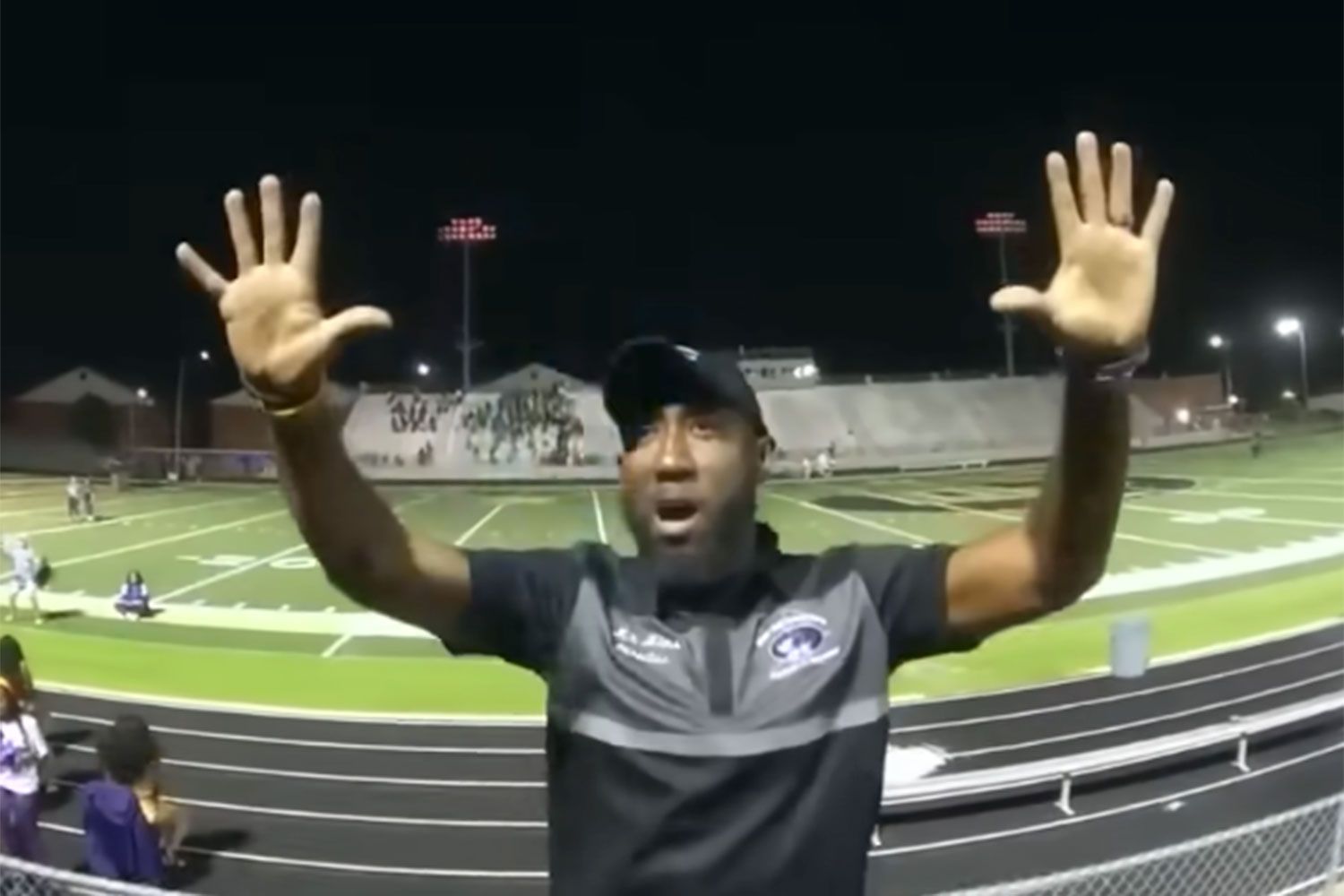
After a football game last week, at Jackson Olin HS in Birmingham, Alabama, Johnny Mims, band director for the visiting team, from Minor HS, let his band finish their post-game music after police directed them to stop playing. After the band finished playing (during which, the stadium lights were turned off), police physically grabbed and attempted to arrest Mims. There was some pushing and shoving on both sides. Then the police tased Mims, three times, as his students witnessed (and screamed). It was all captured on videotape.
Here’s a full description. After the incident, Mims was taken to the University of Alabama at Birmingham Hospital and then to the Birmingham City Jail, where he was booked and later bonded out. Officers obtained arrest warrants for disorderly conduct, harassment and resisting arrest, police said.
I’ve watched the police body-cam footage a couple of times, and it’s pretty gnarly, although after the lights go off, it’s hard to see specifically what’s going on. There are band kids behind the director, on the track, and others in front of him—about 145 kids in the band, total—and they all had a ringside seat to witness their teacher twitching on the ground, shocked into submission for letting them finish about a minute’s worth of music.
There’s a lot of backfilling the story on both sides. There’s been violence after football games so police are needed to empty the stadium! But— the two band directors agreed to do a short post-game show in the stands so Mims thought he was OK to finish! But—the other director stopped first! But police have ultimate authority!
The people I was interested in hearing from were the band directors. Unless you’ve (raising hand) been out there in front of the marching band on Friday night after Friday night, you might think that the rules for when to play and when not to play are crystal clear. They are absolutely not—and change from one venue to another. Also–everybody in the stands has an opinion on what the marching band should be doing and when. (I feel like I should repeat that last statement three times.)
The band directors on BDG first wondered if Mims actually heard the cops, over the noise—a large marching band makes a lot of decibels. (He seems to be telling them to give him a minute, at one point.) They wondered, as well, if playing after the game was planned. (Yes—both directors agreed to play, but the police had other ideas.)
Who turned off the stadium lights? (Unclear—but if the worry was public safety, turning off the lights is a far more dangerous move than letting the band play to the end of a song. If the lights were on a timer, that’s even worse, because who knows how long a game will last, and what might be happening in the parking lot afterward.)
Given the information presented by both sides, most band directors said— Hey. If the cops came over and gave me a throat-slitting motion, I’d stop the band. Just because they’re the cops and I’m a band director. I might be furious. But. They’re the cops, the ones with guns.
And—once again— who gets to play music, and when, at sporting events, is a matter of opinion. I have seen bands chased off the field by their own teams as they’re marching to the sidelines. I have seen referees assess penalties for bands or individual tuba players being in an ‘illegal’ spot. I have heard bands reprimanded for not stopping the music when play resumes (sometimes, just a few seconds’ worth of Let’s Go Blue—very popular in my neck of the woods). And I have heard endless, countless discussions of what the “official” rules are.
One thing I can tell you: this incident will do nothing to encourage non-hostile behaviors and good sportsmanship at either of these schools. Nor will it increase respect for the police and the important work they do.
While I probably would have stopped—out of fear — when the policeman yelled at me to cease directing, it’s because I’m a nice, albeit cowardly lady and they have tasers.
But then— I have not been pushed around by the police. I have not been routinely stopped or experienced anxiety when a cop car appears in my rear view mirror. I once talked a cop wearing a knit beanie out of giving me a ticket for doing 34 mph in a 25 zone by telling him I was on my way to choir practice at church (the truth).
I have no idea what was going through Mims’ mind when the cops started trying to handcuff him, but nobody deserves to be humiliated, ganged up on, pushed around or tased, for the non-crime of directing a HS band.
But the students who watched this will remember it all their lives. It will change the way they see the world.


 Teacher in a strange land