Lay off the Democrats

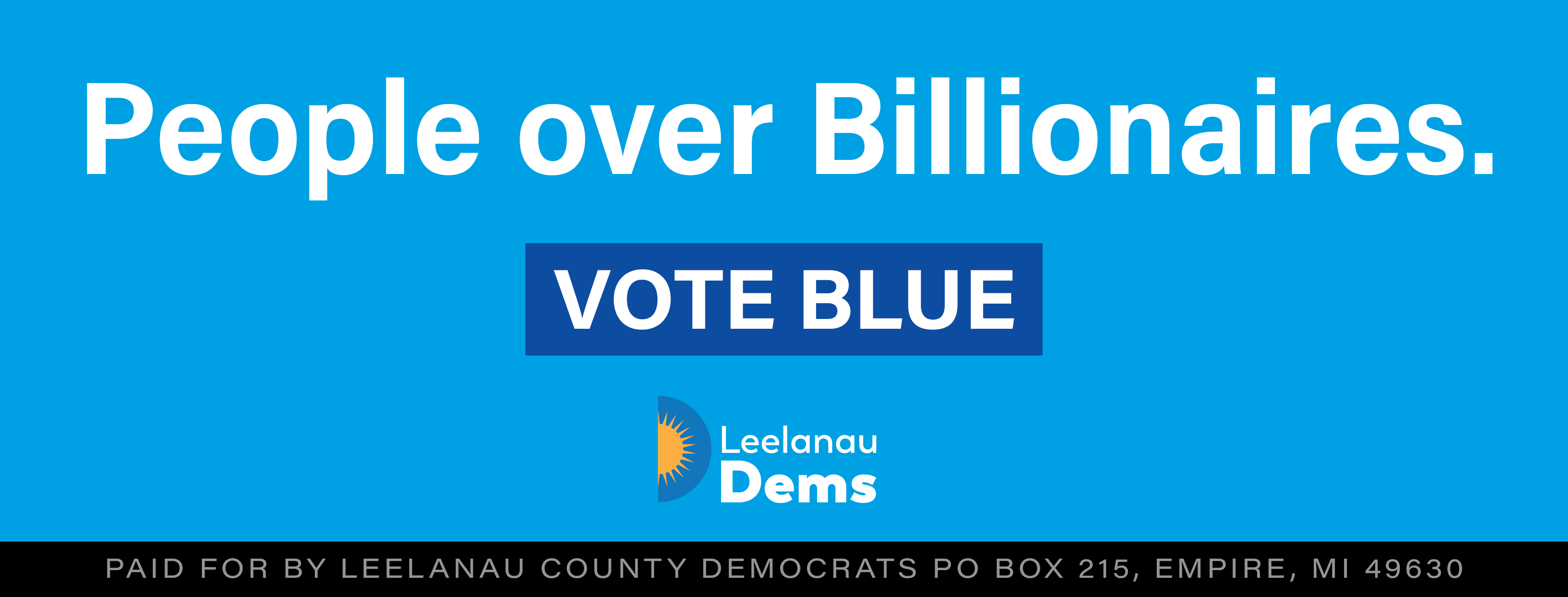
Full disclosure first: I am a Democrat. I sit on my county party’s executive board. I ran for county office as a Democrat in a ruby-red district (and lost but learned a lot). I have been a Democrat since my first presidential election (George McGovern, 1972), so I have seen the ups and downs of a two-party system for ages.

Here are some things I believe about partisan politics in 2026:

  • One of the two major parties better represents most Americans, a diverse bunch if there ever was one—economically, ethnically, politically, religiously, gender-wise.
  • Having multiple candidates to choose from in a primary makes parties stronger, although it can be harrowing when primary candidates go after each other.
  • Democrats are actually the party of the Big Tent, although Republicans occasionally suggest that their tent crosses boundaries.
  • We are in big trouble in 2026 on a number of fronts; counting on well-run—free and fair—elections is no longer a guarantee, for starters.
  • We need a new generation of leadership, but the way to get those new leaders elected is not to turn on the only party likely to provide support for progressivism.

Theoretically…in the midterms, we can appreciate all flavors of Democratic candidates, from avowed Democratic Socialists to outspoken Christians—because they’re being elected statewide or locally. If primaries work the way they’re supposed to, the most popular candidate perspective *in that context* will emerge as the favorite.

Here’s the thing: it may not be your preferred perspective. Which lets you choose—stick with the party you usually vote for, or decide to cross the gulf and vote for another party’s candidate who seems better, or decide not to vote. What flies in New York City may sink like a stone in, say, Iowa.

Win some, lose some. The goal is to get strong, attractive Democratic candidates and equally attractive Democratic policy ideas—then get them in office. And, as they said in The Music Man, you gotta know the territory.

Now, I am fully aware of a new generation of Democrats rising up, reaching out for things that have been pushed aside for decades: Universal health care. Affordable housing. Fair wages and worker protections. Family leave and childcare. Policies that other first-world nations have enjoyed for decades, stabilizing their workforce and making them happier.

I want those things, too. In fact, about two-thirds of Americans want universal health care, which includes plenty of Independent voters and even some Republicans. And three-quarters of Republicans—who skew older, anyway—like Medicare. I don’t think what we’re seeing in this super-heated primary season is about policy specifics, however. It’s about a desperate hope that we can stop the right-wing mutilation of the land of the free.

It makes me—as a local Democratic leader—happy to read about young, energetic candidates, willing to take on the sacred cows (both policy and human) in Congress or their statehouse. Here in Michigan, we have lots of exciting primary races. I hope we have a record-setting turnout in August, and Democrats tell us clearly what and whom they want.

Because we’re their support system—financially and in a dozen other ways. Democrats are looking for someone to take on the guy who’s fecklessly destroying the country, with his spineless minions. People want someone to fight for them, traditions be damned. But first—that someone must run. And running demands partisan support and funding.

If you only support one Democratic candidate, and your candidate loses, so you look around for someone to blame or refuse to vote for the alternate—well, may I remind you that Texas Republicans have already lined up and opened their checkbooks for a loathsome, despicable guy they impeached a few years ago?

I spend a lot of time perusing local conversations on social media—which, I realize, represent only a subset of voters.  I have been shocked by the number of posters who support a particular Democrat but are more than willing to trash the party, and in the process, trash every other candidate for that office. My guy, or bust.

I have even seen candidates—viable candidates with large followings—trash the Democratic party that they’re counting on to support them, should they make it through the primary. That boggles my mind. It’s like turning your back on family.

Robert Reich had a great column yesterday on the Common Goods we have enjoyed as Americans:

  • How we deal with disagreement
  • Truth
  • Trust
  • World leadership
  • Understanding what we owe each other as Americans
  • Political equality

Going after your preferred party damages these things. If you’re on the side of those who believe the ship can still be righted, please stop.

Dirty Pool and other Metaphors

I was going to title this blog American Cesspool but then Public Notice beat me to it. And when all the good titles are taken, you know you’re talking about a national obsession.

Like all other left-leaning Americans, it seems, I feel a sense of outrage over the Reflecting Pool. Which, upon some deep reflection (get it?), isn’t perfectly rational. The Reflecting Pool is only one of dozens of strikingly memorable landmarks in Washington D.C., and it’s over a hundred years old. It’s been rebuilt and repaired numerous times, including other occasions when algae marred its surface. Maintenance of aging monuments is normal and expected, part of why we pay taxes.

What is there about the current Reflecting Pool debacle that has captured national attention? There’s the no-bid contract corruption, of course.  And the current President’s lies about vandals, somehow, causing chunks of its epoxy liner to break off—rather than acknowledging the job wasn’t done right, and needed to be done over:

‘The Reflecting Pool fiasco is of a piece with other major Trump corruption cases of the moment: the Kennedy Center renaming, the $1.8 billion slush fund, and the Epstein files. Each of these four breakthrough scandals follows the same autocratic playbook: abuse power, make a mess, then dodge accountability.’

The Lincoln Memorial Reflecting Pool’s current state is a metaphor for something done wrong, under fishy circumstances, ordered by someone who should be a trusted leader. The reason so many people find this particular example worth commenting on—and I confess to posting a few swamp monster “photos” myself—may be because of its limited, concrete (literally) parameters.

It doesn’t impact our national security. It’s not a war. It doesn’t address our dangerous economic inequality or inflation. It’s not the result of congressional malfeasance, or the damage to free, fair and trusted elections. It’s not the obliteration of democracy. All of which are currently Big Issues, but far more complicated, both to understand and address.

The Pool is something that everyone understands can eventually be fixed. Because it’s been fixed before. Democracy, on the other hand…

Jonathan V. Last just posted a remarkable piece about what the Trump base thinks about democracy. Based on a national ethnographic study, it goes some distance in explaining why campaigns (like Kamala Harris’s) promoting constitutional values make no impact on a significant chunk of Americans:

‘14 out of 21 participants in this study had an immediate negative reaction when asked about democracy. The people in the study describe a remarkable consistency about why they dislike democracy. It’s not that they’re misled, or mistaken. They have a coherent worldview.

It’s just not very nice.

They believe that there is a cultural schism in America, with good, God-fearing people like themselves on one side and the wicked majority on the other. They detest this imaginary majority and fear that “democracy” would allow that majority to gain political power.

They very explicitly do not want majority rule.

They want minority rule.’

It’s a great piece. Recommended. Worth repeating: They fear that democracy would allow the majority to gain political power. And democracy, done right, is a complex, multi-layered concept, difficult to define or comprehend. So the President’s fearful fan club go back to mysterious underwater vandals slicing a 350 foot gash into a pool liner, requiring the National Guard and 4000 feet of wire fencing to protect our national honor.

Or something like that.

 I now know more about pool liners, adhesion, and how to nurture single-cell organisms than I did last month. Because—like half the people in this country– I’m caught up in the simple, low-hanging fruit of yet another administrative failure, laughing at social media memes. But also knowing that the pool will eventually recover, unlike the East Wing or trust in the media.

As a veteran educator, I’ve seen this many times: Take a many-faceted problem with school organization or student learning, and reduce it to a single cause or solution, one that’s easy to understand and talk about. Then cling to that limited explanation for test scores going down or up 2-point-something percent. Or whatever.

Kids in 3rd grade not fluent readers? Well, it must be the reading curriculum, plus the outdated teachers teaching that curriculum; fix it with Science! Or—better yet—threaten kids with failing the third grade, a public humiliation that some of them never recover from. Just two of those silver bullet solutions to a far more complicated and actually important issue: creating literate citizens.

We are all drawn to the small and the specific—the problem that can be solved, or at least made fun of. Right now, however, we’re facing a host of massive, thorny problems, many of which have emerged in the past year and half. It’s not about the pool—the pool is just a metaphor for the real trauma.

Keep your eyes on the prize, not the pool.

I Read the News Today, Oh Boy

When I first heard about influencers, I thought—in my predictable Baby Boomer way—that the whole idea was ridiculous. People whose ‘career’ was influencing other people, paid for by subscriptions and sponsorships? Shallow people, famous for being famous, possessed of zero actual expertise, espousing fake ideas and images to make (lots of) money?

But it turns out that influencers are in it for something more than money: actual influence.

In politics, they have become ‘an infestation’:   “The internet is teeming with thousands of micro- and nano-influencers looking to make a name for themselves. These smaller influencers still have very engaged and loyal followers—making them important communication tools for campaigns. But they often lack an understanding of how politics works—or, more specifically, an appreciation for the tradeoffs that often must be made—and tend to spread content that revolves around conflict and misinformation.”

That’s what happens when you try to buy clout. You get what you pay for.

Over the past couple of years, I find that I have mostly stopped watching or reading the daily news in its conventional forms—newspapers, television, radio. I’m still consuming huge quantities of news, op-eds and information, but I like to think I’m paying for the most credible and valuable online content, verified facts and analysis.

Are my curated news providers giving me reliable information, and multiple trustworthy perspectives? Or are they just trying to influence me?

Here’s an example, from one of my daily reads, Bridge Magazine, a centrist, Michigan-focused news outlet:

“Schools are in trouble. Test scores don’t lie: Michigan ranks 44th for fourth-grade reading; less than 1 in 3 high school graduates are considered ready for college.”

First of all—it should be ‘fewer’ than one in three graduates. And that figure is erroneously measured by the SAT scores of all the HS juniors in Michigan, who are mandated to take the test whether they’re college-bound or not. Those scores are then compared to a subset of seniors in other states who are preparing to attend colleges that require a good SAT score for admission. Apples and oranges.

More importantly—test scores do lie, all the time. They’re also misinterpreted by journalists, some of whom probably mean well, but are being paid to make a particular point. Influencing your average reader to believe that Michigan public schools are failing, for example, tossing off context-free “data” as if it were God’s honest truth.

I am old enough to remember the first time I watched Fox News and began thinking about a future where there was no mainstream POV, and ordinary Joes could purchase the media stream that fit their beliefs. It seemed shocking at the time—but look. Here we are. At a point in history where the President of the United States gleefully posts an AI-generated video of himself wearing a crown and flying an airplane that drops shit on his constituents.  

Republicans are known to be far more aggressive at paying off social media influencers than Democrats. Pay-for-post schemes have been rampant throughout the conservative commentariat during the Trump years (as studiously documented by Will Sommer). One reason being that there is just a lot more money at play.”

What do educators do when the students whose intellectual growth they are entrusted with believe things that are false and dangerous—because the influence of the internet has led them there? When the most important content and character-building discussions in school are suspect—or banned?Or when, God help us, the President’s “Special Advisor” suggests that we shouldn’t be teaching undocumented students at all?

What is our moral obligation to the kids we teach, when it comes to truth—and how they form their own opinions and civic engagement?

There’s a growing movement to expose lies and fact-check what gets circulated via social media. But how do we teach our students to be wary and cautious, to look at the background and motivation of those who put content out into the universe we share?

Also this: some influencers are doing good, sharing content that mainstream media is prevented or discouraged from programming. Some of my Facebook friends have had an amazing impact on my tiny northern Michigan community, simply by sharing their anger over what’s happening in the White House. There are days when I think we may get through this yet, just on the strength of local truth-tellers and people who act as social connectors.

Thoughts that make me feel better about where we get our news and how we interpret that news, both national stories and education stories:
“A funny thing happened on the way to the erasure of American history in favor of a whitewashed authoritarianism. The American people began to preserve the truth of who we have been.”                                Heather Cox Richardson

“You need to tell your story. If you are not telling your story, someone else is telling your story for you.” In an era where school choice has increased competition in K–12 public education, that statement has never been more relevant or more urgent.                                                                        Greg Wyman

What are you reading? Who do you believe?

Hate Definitely Has a Home Here

If there’s one question on the minds of my friend group these days—old friends, fellow teachers, new acquaintances, anyone paying attention—it’s this: How can anyone, let alone a third of the population, look at current events in the United States in the past year, and believe that we are on the right track, doing OK, making our people and nation stronger?

I don’t really have to spell it out, although I am mindful of Rachel Bitecofer’s principle: repeated negative messaging works in electionsbecause voters will  only be mad about what we tell them to be mad about.

So here’s the bottom line: we are in real trouble, as a nation, on dozens of fronts, beginning with the fact that we are being lied tovicious lies, filthy lies, heedless lies—on the regular. Even teaching the truth about history and science in ordinary classrooms, museums and national parks has been explicitly forbidden, plaques removed, educators silenced.

Teaching has never been easy, but it’s really a miracle that so many fine teachers are still in the classroom and finding some satisfaction in their work there. According to an EdWeek Research Center survey on teacher morale, teachers described their feelings about teaching as a very lukewarm positive—a +13 on a 200-point scale, ranging from -100 to +100.

Last year, teachers were slightly more positive, at +18, but that’s hardly a ringing endorsement of the world’s most important and rewarding profession. Interesting nugget: teachers in Arkansas reported the highest morale (+24); Pennsylvania, the lowest (+1). Make of that what you will.

Which is why I loved reading Paper Girl: A Memoir of Home and Family in a Fractured America by Beth Macy.  Macy, who also wrote Dopesick, a book that helped me understand opioid addiction, travels to her hometown of Urbana, Ohio, once a thriving town with good schools and a solid middle class. She was looking for reasons that people there voted—three-quarters of them—for Trump.

Among her heroes, the people who are still seeking to preserve what’s good and healthy in a failing Midwestern town, are teachers. The teachers she interviews, and whose work with and dedication to Urbana’s public school students is fierce and clear-eyed, are one of the last walls between kids making headway in life, and disaster. 

Macy also remembers the teachers who helped her get away from a working-class background with the help of Pell grants, talent and a lot of luck. Her siblings were not so lucky—one of the most painful parts of her narrative are conversations with her brother and sisters, and her niece who suffered from a stepparent’s abuse.

It is through these conversations and seeing how despair and the empty promises of preachers and politicians impact the down and out, that I began to understand who votes for powerful liars, and why.

It also helps explain why Americans hate each other:
The Pew Research Center finds that 53% of American adults describe the morality and ethics of our fellow citizens as “bad” (ranging from “somewhat bad” to “very bad”). In the 24 other countries polled by Pew, most people called their fellow citizens somewhat good or very good. At the opposite end of the spectrum from the United States is Canada, where 92% say their fellow Canadians are good, while just 7% say they’re bad.

Macy does a superb job of weaving anecdotes and memoir about growing up in a town that feels very familiar to me, also a Midwestern girl. She analyzes just what went wrong, much of it having to do with international trade, the dangerous equity gap, decades of negative political messaging about welfare queens. The demise of empathy, and the rise of right-wing pole-barn churches with fundamentalist men at the pulpit. Greed. Racism. Sexism.

Although the book won a number of awards (and was one of Barack Obama’s favorite books in 2025), I found the comments from readers enlightening. Either people loved it, finding that it deepened their understanding of just what is happening in the forgotten little towns across the country—or they hated it, believing Macy is encouraging people to talk to the enemy.

Which is a strategy that has not worked, commenters say. Unless we fight back—the “pound the negative message” model—we keep losing ground. Forget people in your past, your family. They’re the ones who voted him in. The enemy.

Who’s right?

I looked for a photo of Beth Macy and discovered she’s running for Congress in a ruby-red district in Virginia. It’s apparent to me (if not to her readers) that she’s willing to fight hard against the damage to our democracy.

She’s also right about teachers—especially those with the courage to stand up for truth, for the kids they serve, no matter their prospects. Donation sent.

Here in northern Michigan, an elderly gentleman who’s spent his life working for progressive causes was so upset about seeing Barack and Michelle Obama portrayed as apes that he called his neighbor, offering to fund signs to place around our small county, saying HATE HAS NO HOME HERE. She honored his request, designing and ordering signs.

During this process, the gentleman died. The signs will be ready next week, and planting one at the end of my driveway will be both advocacy and memorial. What I’d really like to see is a couple of those signs posted around our local school. Because that’s one of the few places where hate speech and hate actions are actively discouraged and prohibited.

Read Paper Girl.  If you’re like me, you’ll love it.