School Boards and Other Political Targets

In general, I believe elected school boards are a foundational aspect of public education and democratic citizenship. And yes, I worked in a district where an unbalanced school board made my work life unpleasant at times. I have experienced the power-mongering Board president who brings aboard a whole crew of yes-men and yes-women—neighbors and sisters-in-law– in an effort to crush both Superintendent and the teachers union. And even worse.

I also understand the essential aspect of having a reasonable Superintendent who, in turn, is able to communicate effectively with a board made up of people whose primary goals sometimes center around their personal children’s needs and wants. I am familiar with the anti-Whole Language Board, the Back to Basics Will Save Money Board, and the Sports are More Important than Calculus Board.

But still. Those Boards were duly elected (even the elderly farmers who thought spoiled kids today don’t need a school play or orchestra). There’s always another election in a couple of years, when the community gets hot and huffy about whatever the current Big Issue is. It means someone has to step up and run for public office, developing a vision of what locals schools should look like, but civic engagement is a fine thing.

Let me re-state that. Thoughtful, responsible civic engagement is a fine thing. An essential thing.

All the way back to the Scopes Trial, public debate over hot-button issues has incrementally, over time, shifted opinion about the right way (often labelled the democratic way) to do things. Public institutions, like education, are always subject to political environments and trends. And these days, everybody is simultaneously constitutional scholar, curriculum expert, epidemiologist and Clarence Darrow wannabe.

I’ve been working in and watching public schools for 50+ years and can attest that controversy is both unavoidable and cyclical. Every school has issues that light people up. But in 2021, the stakes are higher than ever—we’re subjecting kids to a scary, unpredictable disease. We made a collective decision—school must go on—and now every local educational jurisdiction must wrestle with student safety vs.  political expediency.

I would be wrong if I said elected Boards most often act on behalf of their students’ well-being.

But I am stunned by the vicious nature of the anti-mask, anti-vax protests—like this one in Oregon, which left the veteran superintendent, who simply followed state law, weeping as he was fired. Or this one—where parents literally pushed their unmasked teenagers past school administrators blocking the way.

How do parents expect their children to respect the rules and authority necessary for safe and productive schooling when those same parents are physically pushing the students to disobey?

The answer is: They don’t, anymore.

And it’s gone way beyond hot tempers at a school board meeting. There are firings and shouting and pushing and shoving. There are also death threats and other aggressions. There’s been a national paradigm shift around who to trust, and who’s in charge.

Reformy types who have pushed for data and more data to ‘fix’ schools in various ways might be interested in knowing this, from a survey of MI parents:

About 78% of Republican parents opposed a mask mandate and about 18% supported it. Most Democratic parents who were surveyed, 87%, support a mask mandate and 10% oppose it. 

For white parents, 41% support a mask mandate and 53% oppose one.  Whereas a strong majority of Black parents — 94% — support a mask mandate.

Like every other issue—how to teach history and social studies honestly, for example—student safety (which really is a life and death matter) has become not merely ‘politicized’ but reason for disrespectful, even violent behavior. As Peter Greene notes, ‘”don’t do anything that will get me a phone call” is a terrible administration policy, especially in times when some folks are intent on whipping up controversy for their own political gains.’

The locus of this behavior? Well, Republican state legislatures—and not just Texas and Florida—now seem to feel as if every issue is black and white, us vs. them, win-lose, without nuance or room for dialogue. It’s the worst of bare-knuckle power struggles.

It’s ugly, and a terrible example to set for children: scream and scheme until you get your way.

The funny thing is: The PDK Poll, the trusted annual assessment of parents’ views on public schooling recently reported that 84% of public school parents felt their schools were ready to open during a pandemic, and 82% felt it could be safe to do so. Three-quarters of parents felt schools would be able to help their children catch up on missed learning, and more than two-thirds thought schools could also mitigate the social-emotional stressors the pandemic created for students.

Those are big numbers, representing a strong vote of confidence for public schools.

I ask again: Where is all the angst at school board and county commission meetings coming from?

What political events have inspired uncivil, hostile behaviors across the country? Are we letting a small minority of previously entitled people run roughshod over the democratic structures of our public institutions?

What Would It Take to Genuinely Do What Is Best for Kids?

It’s quite the headline. Defiant Superintendent: How Can I Follow a Law I Believe Endangers My Students?

There are many possible responses:

These wonderings are at the heart of my long-time, central theory about school reform: When formal, titled school leaders join forces with teachers, kids win.

This is a wide-focus theory, that applies to almost everything about running a public school: Curriculum. Instruction. Assessments. Budgets and resources. Staffing. Public relations. The master schedule. Everything down to whether the supply closet is locked–or teachers are trusted to use the construction paper judiciously, with sharing in mind.

In my 32 years of teaching in public schools—in a strong-union state most of that time—there was almost always a divide between administrators and teachers. Of course, there were ‘good’ principals and superintendents, who kept communication channels open and were open to new ideas.

But every two or three years, when the union was negotiating our salaries and working conditions, there was a bright line between ‘us’ and ‘them’—we were the good guys who wanted autonomy and adequate resources. And they were the bean-counters and policy followers, whose ultimate job was managing us, and our productivity. We were for the kids; they were for the district, the taxpayers and the rule of law.

Over several decades, I had easily three dozen administrators, and most of them were somewhere between pretty good and outstanding. A handful were unimaginative or timid. One or two were vindictive bullies. Someone like that can throw off an entire building or district, setting teachers against each other, changing the learning climate, making school a miserable place to be for lots of kids and staff. People matter.

And now—these same people are players in a game with life-and-death consequences.  A game wherein dark money political organizations want to disrupt placid school board meetings, in an attempt to control curriculum, and parents feel free to physically attack teachers and administrators over mask mandates.  

This is the worst possible time to have a tentative, apprehensive administrator. The school leader who is unable to articulate and defend her own core beliefs about what students need to learn in 2021, and how to teach them safely, is worse than useless. 

If you were tempted to pin the admin-teacher power gap on unions, I think teachers in right-to-work states have even less power over their own work.

The President has directed Secretary of Education Cardona to combat governors who “block and intimidate local school officials.” It will be interesting to see which Superintendents choose community safety over a bullying gubernatorial or legislative directive.

It will also be instructive to watch which districts roll over—and which extend their newfound power to retaining control over their own curricula when the anti-CRT ‘concerned moms’ pay a visit to the school board.

This year is going to be a long, bumpy ride. Districts will be forced to make many deeply contested choices, and the best way to navigate that journey is listening to your workforce, and having a morally framed reason for pretty much everything you do. Doing what’s easiest, to shut people up, is not a morally framed reason.

Have you heard masking children called ‘child abuse’ or worse? That’s their message; what is yours? And how far will you go to defend it? Summon your courage.

Best case short-term scenario: Districts are transparent about their health and safety choices. Somebody has to be the adult in the room. We don’t pay attention to crazies. The feds back us up.

Best case long-term? Leaders find their voices. Schools begin to reclaim the professional work designed for their particular students. What to teach. How to do it safely and effectively. How to build school communities. (And yes, I know that local control can go awry and become ineffective or inequitable.)

What would it take to genuinely do what is best for kids?

A few days ago, a Hechinger report on what science tells us about improving the middle grades made the rounds among middle school teacher communities online. It’s a great piece, but the reaction from veteran middle school teachers was a resounding duh.

We’ve always known that middle schoolers want most to be taken seriously, and that the way we have middle schools set up—cells and bells—is not and never has been conducive to deep learning in 12 year-olds. So why do middle schools mostly look the same as they did 20 years ago? Why aren’t we making choices that evidence tells us are good for kids?

Because, middle school teachers said, our administrators kept a tight lid on innovation in the post-NCLB era. Because test scores. Sad, no?

This is a crucible moment in public school leadership.

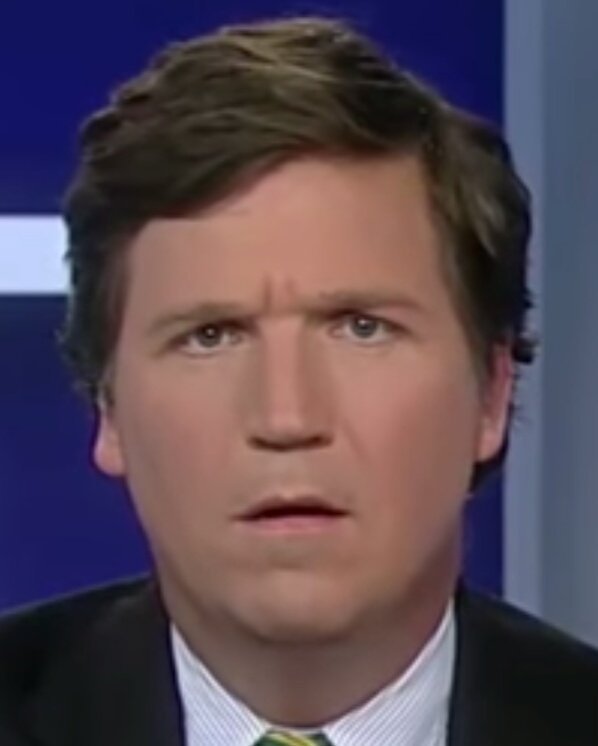
Tucker Carlson Goes to School. Your School.

A colleague was just told she cannot have her high school freshmen read The Autobiography of Malcom X this year, a book her students’ parents were likely to have been assigned when they were in school. This is in a blue state with no “divisive concepts” legislation passed. (Anne Lutz Fernandez, via Twitter)

And… there you go. It’s everywhere now, red states and blue. The fear, the anxiety, the confusion. The misinformation/disinformation/lack of information. A backlash to the utter tumult that was 2020—21.

Fear. Is there anything you can do, brave educator, to stop it?

In her daily column, Heather Cox Richardson drew parallels between McCarthyism in the 1950s, and the current pushback against an actively progressive government:   

WI Senator Joe McCarthy__insisted that the country was made up of “Liberals,” who were guiding the nation toward socialism, and “Conservatives,” who were standing alone against the Democrats and Republicans who made up a majority of the country and liked the new business regulations, safety net, and infrastructure.

Sound familiar? Needless fear. It’s a good reminder, however, that we’ve been to this rodeo before, as citizens. And as public school educators:

Banned books. Sex education. Insertion/deletion of religion into school practices. Girls’ sports. Hairstyle battles. Student protests against [you name it]. New math. Drugs in schools.  Teacher salaries. Remote, hybrid or face to face. Whole language vs. phonics.

It’s always something. Public schools are where a community’s fears and aspirations for their children and the future play out. It’s one of the few places where citizens can confront the elected peers who are making decisions about taxpayer-funded community goods.

And for attention-seekers, public schools are low-hanging fruit. Here’s how Tucker Carlson recalls his first-grade teacher:

The Fox host had written that his distaste for liberals began at seven years old, with his teacher Marianna Raymond — a “parody of mother-earth liberalism” who “wore long Indian-print skirts.” He claimed Raymond eschewed “conventional academic topics, like reading and penmanship,” and would sob “theatrically” at her desk. “Mrs. Raymond never did teach us [to read]; my father had to hire a tutor to get me through phonics,” Carlson wrote in Ship of Fools. His “sojourn as a conservative thinker” began shortly thereafter, adds the Post.

Raymond, however, has a completely different account of Carlson’s time in her class at the affluent La Jolla Country Day School. She remembers Carlson as “very precious and very, very polite and sweet,” and denies sobbing at her desk, wearing an Indian skirt, or venturing into political territory at all. What’s more, not only did she teach Carlson reading in the classroom — she was later hired to tutor him at home, the Post reports.

If you’ve been a public school teacher for a few years, you’ll recognize the nastiness in Tucker Carlson’s tone. It’s the old trope: Everyone went to school; therefore, everyone thinks they’re an expert.

What is Tucker Carlson, really? A distraction.

A distraction with millions of viewers, certainly—but if we were to draw up a list of what needs doing right now, for kids, and what teachers are saying about the upcoming year, it would never include combat over Critical Race Theory, since nine out of ten teachers say they’ve never taught it.

What should we be working on? Vaccination rates—all vaccinations, not just COVID. Safety protocols. Finding enough qualified staff. More recess and free play. Mental health for kids. Civil rights, as academic content and high-interest current event. Using the arts to help children understand and cope with a pandemic. Getting books into kids’ hands.

We can’t count on our organizations to solve our problems, although they have stepped up to help on the CRT front. Ultimately, however, issues have to be addressed school by school, classroom by classroom. Because that’s where the real juice is—in the interactions between teachers and students.

Teacher Tom says:

If a teacher rightly has any power at all, it is the power of Now. It isn’t the power of hierarchy, of being right, of being in charge. Now is the ultimate power of seizing an opportunity. The children with whom I work already understand this power much more fully than do I. Now is the natural habitat of the very young and it is where teachers must go if we are to be any good at all. That is where the power is.

So forget about Tucker Carlson. Really.

Mission, Vision, Purpose and Other Things Nobody Pays Attention to in Public Education

I could write a blog every week on all the Big Important Things that nobody pays attention to in public education. But then—that would make me a philosopher and not a teacher.

Right now, we really need deep thinkers, visionaries, those dedicated to clarifying our mission in public ed, trying to prevent dumpster fires, rather than putting them out, which is now a fair part of teachers’ work.

Instead, we have shallow, attention-seeking chatterheads lighting fires, then sprinting away—looking at you, Mike Petrilli and Tucker Carlson, and all  the ‘Concerned Moms’ who don’t want their children to, you know, feel bad about the facts of American history.

In fact, when you look at the sweep of schooling in America—going back to Horace Mann—there is no one overriding set of principles upon which public education has firmly rested for two centuries. Mann promoted a free, secular education, open to all children—the local academic melting pot that would lift an unruly, barely civilized nation into democratic greatness.

And what a magnificent idea that was—probably the last inspiring, visionary plan to educate the citizenry. Except, of course, for all the people who were left out, or given scraps and hand-me-downs. Or weren’t even considered citizens. Not so great for them, and they were building the nation, too.

There’s always been lofty rhetoric about public education. And the reality has always been far more complicated and far less effective at achieving whatever it is public ed is supposed to achieve.

And that’s the rub. What are we trying to accomplish, in our public education system? What’s our purpose? What are our overarching goals? What’s our product?

It’s a great question to ask in a new-teacher interview: What’s your philosophy of education?

Back in the 1970s, I got that question a couple of times (and had an answer—it was part of my undergraduate education as a prospective teacher, that pedagogy coursework everyone denigrates).

Today, the interview questions are pragmatic—test scores, standards, deliverables—but there is real value in figuring out what’s most important to teach, what your students need. What you believe. What the country needs, even.

On July 7, Joe Biden tweeted this: The fact is 12 years of education is no longer enough to compete in the 21st Century. That’s why my Build Back Better Agenda will guarantee four additional years of public education for every person in America – two years of pre-school and two years of free community college.

Well, I’m all for free preschool and community college. You go, Joe. They’re only pieces of the comprehensive, coherent plan we need, but the education community is accustomed to working with (and around) bits-and-pieces ed policy. We’ll take positive fragments, any day.

Jennifer Berkshire had an interesting response to Biden’s tweet: Biden’s insistence on defining education solely in economic terms is so discouraging. IMO, this is a big part of why public education is as precarious as it is right now. Not only does it put the blame for being economically *noncompetitive* onto individuals themselves, but it leaves out the essential role that schools play in a democracy.

Bingo. Which comes first—the random policy promise, or the philosophy?

Berkshire and her co-writer Jack Schneider, an education historian, wrote this in an excellent piece in The Nation:

Our schools can’t fix the problems of poverty, and parts of the Biden administration seem to know that. But until education policy breaks free from this framing of the purpose of school, it will remain difficult to recognize what our schools can do. At a time when voting rights are increasingly being restricted, when we continue to debate the value of Black lives, and when we can’t agree on basic facts, public education has an essential role to play. We don’t have public schools in this country so that young people can compete for advantage against each other—or so that the private sector can reduce the costs of training labor. Instead, we tax ourselves to pay for universal K-12 education because public schools are the bulwark of a diverse, democratic society.

And—voila!—there we are, back to Horace Mann. The mission of public education is an educated, engaged citizenry. Open to absolutely everyone. Too bad we routinely lose sight of this core purpose, a defined public good.

If you want to read an excellent synopsis of how our national (non)philosophy of education has morphed and evaporated, over the decades, I recommend Consuming the Public School, by David Labaree:

We ask schools to promote equality while preserving privilege, so we perpetuate a system that is too busy balancing opposites to promote student learning. We focus on making the system inclusive at one level and exclusive at the next, in order to make sure that it meets demands for both access and advantage.

Does this sound like a system that just puts out emergent fires with policy band-aids—or a system grounded in principles of democratic equality? Other countries have overhauled their education systems after having a national conversation about what public education should be focused on. Why can’t we?

Oh, right. It’s political.

What would your belief statement about public education look like?

Take This Job and Shove It. Or Change It.

I don’t know a single teacher—not one—who has never left school on a Friday afternoon wondering if, just maybe, they should have gone into real estate instead. Under the best of circumstances, teaching is ridiculously hard work, dependent on never-guaranteed intrinsic rewards, rather than perks, benefits and salary, to maintain employee motivation. 

The autonomy and supports necessary for a well-resourced, custom-tailored occupational package for professional educators have been in short and diminishing supply for a couple of decades now. Worse, the profession drains our energies, taxes our personal and communal resources, and has become increasingly driven by top-down data collection. Teaching, as Lee Shulman famously said, is impossible.

And then we had a pandemic.

The papers are full of stories about people quitting or not returning to their crappy (and even lucrative) jobs—for a variety of reasons. If you talk to the ‘back to normal/virus is overblown’ crowd, this is a function of their getting enough government money to live on, and general indolence.

But there is another story:  Americans are ditching their jobs by the millions, and retail is leading the way with the largest increase in resignations of any sector. Some 649,000 retail workers put in their notice in April, the industry’s largest one-month exodus since the Labor Department began tracking such data more than 20 years ago.

People are leaving because they discovered they liked working from home, or because they’re taking care of children or elders now, as the world is still too dangerous for Previous Normal behavior. Or the pandemic has forced them into paths (not commuting, cutting back spending) they’re planning to maintain.

They have re-balanced their personal values, decided that life is, indeed, too short to waste doing junk work.

You can see this as bad for business, particularly the service industry. Or you can see this as economic optimism—the chance for a fresh re-start: One general theory is that we’re living through a fundamental shift in the relationship between employees and bosses that could have profound implications for the future of work.

This applies to education, too—a field generally marked by stable but low-wage, high-skill work done primarily by women. We’ve been experiencing a long-term decline in teacher preparation, nationally, a drop of 67% in Michigan. Those classrooms we’re hoping to fill this fall? Not enough teachers.

Or school leaders.

Veteran educators are used to charter operators and superintendents–like LA’s Austin Beutner–discovering that running a school, a classroom, or a large urban district is not all apples and playgrounds. Beutner’s observation–“We are humans. We have families. We have partners, spouses, kids, our own life responsibilities. For better or worse, schools become a magnet for all of the challenges which face society. . .”—is the story of their working lives, for decades, not a trial period as CEO.

What is interesting to me is the anecdotal evidence coming out of the news about schools, their leaders focusing on what’s good for students—the core of their work—rather than what the legislature or governor thinks students need.

There’s the whole Critical Race Theory divide, for starters. Go ahead—tell us what we can and can’t teach, including the truth about our own history.

There’s the re-born #OptOut movement.  

But there’s more: virtually every Michigan school has decided to go around legislation that requires them to flunk third graders who are not testing at grade level in reading. Bridge Magazine calls this a ‘revolt’– but superintendents and teachers just laughed at legislators trying to move the mandated flunking up to 4th grade. This is akin to soldiers returning from blood-soaked battlefields, informing the generals that their orders are crazy-pants, not gonna work.

And when Michigan’s Chief Doc of Health and Human Services recommended that students be masked when they return to school in the fall, and got pushback from Great Lakes Education Project, a school choice group founded by Betsy DeVos? The recommendation was met with a shrug by school officials, who plan to make their own decisions about whether students will wear masks this fall.

As they should.

If the pandemic has revealed anything about public education, it’s that K-12 schooling is an integral part of the economic engine, and the good parts of Previous Normal will not return until the kids are back in school, 180 days a year.

Who will solve the problems created by the Great Reallocation of talent in K-12 education?

Hate to sound like the eternal broken record here, but shouldn’t we turn to educators—school leaders and teachers, working in their own unique context, to advocate for what their kids need? Better connectivity and technology. Wraparound services for students. A rebuilt teacher pipeline. A little TLC after surviving a pandemic. Better salaries and benefits.

Autonomy.   

Memorial Day

I am old—old enough to remember when Memorial Day was called Decoration Day, and always came on the 30th of May. For many years, I went to the cemetery with my grandmother–also named Nancy–on Decoration Day, with a pot of geraniums for her husband, my grandfather, who died in the 1930s. Her parents, and some of her siblings, were buried in the same cemetery. We went to visit them all, with flowers, taking care not to step on the green beds where they lay.

There were always little flags on veterans’ graves, but so many men (and a few women) were veterans that it seemed like half the people resting in that cemetery had a flag. A graveyard full of citizens who served their country, sometimes dying for that very cause, surrounded by their loving families.

In 1969, May 30 was a Friday. It was an unusually hot day. My high school band played in the local parade, and band parents met us in the park, after the parade, with galvanized tubs full of ice and glass bottles of Coke. I was a senior, playing my last parade on the first day of a long weekend, wearing the stifling gray wool uniform with its little satin-lined red cape, and the flat-topped hat.

It may have been a dare. Or it may have just been the oppressive humidity, and the fact that I’d never have to march in a parade again (or so I thought—ha). But after opening the Coke, I pulled out the braided neckline of my uniform jacket, and poured the icy cold soda right down the front of my body. There was a moment of delicious coolness and some hilarity among the group where I was sitting.

And then the Band Booster president, an officious mom who was in charge of fitting and maintaining 100+ plus band uniforms (and whose two perfect daughters would never dream of despoiling one) came storming over and read me the riot act.

Did I know that I, personally, would be taking my uniform to the dry cleaners? Did I understand HOW MUCH THOSE UNIFORMS COST? And that they had to last for 20 more years? And (this was the real indictment, an uptick in the charges)—did I not respect those who died for our country, those whom we remembered on this sacred day? For shame.

Actually, on that score, she was wrong. I remembered, all right.

I grew up hearing stories about my Uncle Don, who died at 19, in the first wave of Marines on Iwo Jima. My dad’s favorite brother, the handsome one, the rebel. Buried on Iwo Jima, then moved to Rock Island National Military Cemetery, after the war. My dad, after learning his brother had been killed, went AWOL from his own unit in the Army Air Corps, and was busted from Sergeant to Private for the offense. Although he never talked about his own wartime experiences, he never let any of us forget.

In 2021, those who died on the battlefield are a relatively small handful. Thank God, or whomever can be credited with the policies and foresight to keep us out of war.

But in the past year, as more people died from coming in contact with a deadly virus than were killed in combat in WW II, it’s been easier to understand what it feels like to see daily, mounting death tolls in the news. To personally know folks who were sick but survived, to see friends with longer-term disability from COVID, to know families forever riven by death.

Many of them, to use a worn-out phrase, served their country, as well—as stock clerks and bus drivers, teachers and nurses. They died before the vaccine was available, gasping for air, often without family, victims of a different kind of war—an ugly political war, partly created by our own elected leaders.

As an adult, I have experienced Memorial Day in dozens of ways—leading my own school bands in local parades and cemetery services, playing in or directing community bands, and—just two days ago—playing Taps with the Leelanau Flute Ensemble on a friend’s balcony.

Every year, the day reads a little differently. I don’t think it’s disrespectful, or not-sacred, to reflect on all the other things, besides our always-honored war dead, that need remembering. You’ve probably read snippy memes about the difference between Veterans’ Day and Memorial Day.  Both spring from the same source: Let us pause to remember what we’ve done—the noble and the despicable acts, the proud and the shameful. It’s who we are, as a nation.

And—let us teach our children to pause and remember as well. (Click on this link. You’ll be glad you did.)

Some Things Are Always Wrong

When we adopted our son, from South Korea, more than 30 years ago, our wonderful adoption counselor warned us that we would experience racism, having a child who did not look like us.

She shared incidents from her own parenting of children from three different parts of the world, ranging from the clueless—When she begins to talk, will she speak English?—to the downright repellent. She suggested that we think first to educate, before getting angry.  

This was advice that resonated with me—teaching acceptance. Enlightening strangers in the grocery store to the beauty of diversity. Celebrating all the ways families are made. And so on. When a neighborhood kid, whose father had served in Vietnam, called my son a ‘flat-faced gook’ on the school bus, however, I had to re-think.

Some things—racism among them—are always wrong. And you can either face that fact and deal with it, straight on, wherever you encounter it, including schools, or you can employ any number of empty, defensive sophistries.

You can do what Rick Hess does here—spend half a column patting yourself on the back for pushing back against racism while simultaneously building a theoretical parent-defense straw guy the size of Burning Man, using lots and lots of (you guessed it) data, Impressive Academic Vocabulary and political shading:

More than two-thirds of adults say they oppose having schools tell students that America was founded as a racist nation, 70 percent say schools should not teach students that their race is the “most important thing about them,” and more than 4 in 5 oppose using classrooms to promote political activism.

I don’t believe these adults would be enthusiastic about the Biden Department of Education holding up as models of civic education a scholar who teaches “there is no such thing as a nonracist or race-neutral policy” and that “only racists say they’re not racist,” and a history program that teaches America was founded as a “slavocracy.” Now, I’ve found that anti-racist diehards tend to respond to such numbers like undergraduates in a Gramsci seminar, by muttering about false consciousness and hegemonic schema.

Hess closes out with a few more self-assured slams against Ibram X. Kendi, whose books have introduced multitudes of Americans to the idea that racism is deeply embedded in centuries of policy-making, resulting in entrenched neighborhoods, discrimination on dozens of fronts and endemic personal prejudice.

If two-thirds of adults actually do oppose telling kids that America has racist roots, where did that false idea come from? And what about the other third—the ones who think that maybe introducing children to the fact that we’ve always been a deeply inequitable society is a good first step? Don’t they count?

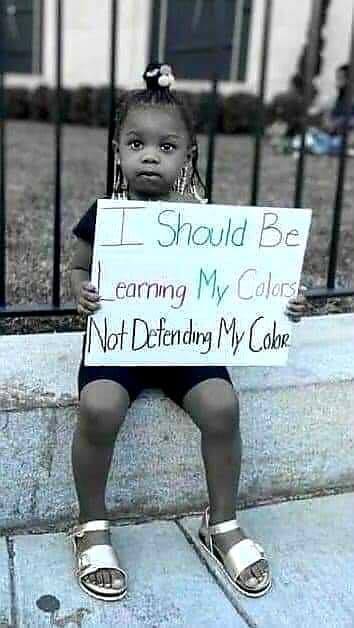
As for children, we don’t need to teach our students that their race matters to society. By the time they get to school, they already know. Or they find out on the bus.

Or in the cafeteria. Or on social media.

Recently, students in the (large and well-regarded) school system next to mine opened a ‘slave auction’ on Snapchat, asking for ‘bids’ on students of color. It’s a terrible story in many ways, with lots of bigoted actions and themes emerging. The Superintendent and Board are doing what they’re supposed to do—investigating, thinking about next steps, as the media spotlight is trained on them.

The students are unlikely to be punished legally or via suspension—what they did happened off-campus, so the school is not, technically, responsible. There’s ongoing discussion about whether these social media ‘games’ and ‘jokes’ actually endangered students of color.  But school officials have stepped up and started public conversations on how to include anti-racist content in K-12 curricula.

And you know what happened:

During nearly an hour of public comment on the resolution Monday – which was only on the agenda for discussion, not adoption – several parents criticized the document and the overall work of the Social Equity Task Force, saying it amounted to indoctrination and was pushing an agenda that would divide and not unite students. “I find this resolution also to be offensive, degrading, inappropriate, condescending, and detrimental to all TCAPS students, parents, and community members”…  the “negative rhetoric” of the resolution “imposes toxic assumptions on our children.” Multiple parents worried the curriculum review would force “critical race theory” onto the classroom.

There they are, the two-thirds of parents Hess identifies, and uses as substantiation and support for keeping “toxic” discussions of race out of the classroom.

You don’t need quantification or fancy theories to explain this. Teaching our racist history is pretty much unavoidable, and trying to ignore it makes things worse, not better. Here’s a great (short) piece that it explains it better than I could:

Teaching young people about racism is not indoctrination, but rather teaching viewpoints and providing factual data related to racism that they otherwise are not likely exposed to. Young people need to make up their own minds about how to think about race, but the better informed they are, the more thoughtfully they will do so.

 In short, some things are always wrong.

Is Critical Race Theory Dividing the Country?

When people start referring to a cultural phenomenon with initials—CRT for ‘critical race theory,’ say—you know that whatever that thing once was, it’s now morphed into something completely unrecognizable. Made less complex. Reduced to stereotype. And in the case of CRT, politicized.  

In my long years of classroom practice, pedagogical strategies and hot topics went in and out of fashion. Back in the 70s, values clarification was all the rage. Parents were a little iffy on having students discuss their values, however—probably because they assumed those values were not securely embedded in their sixth graders. And God forbid a teacher should attempt to inculcate values. Or even discuss them.

After values clarification, there was lots of talk about character education. My school had a multi-year project on Reason, Respect and Responsibility. Our project was home-grown, but you could buy pre-packaged character, it seemed—complete with manuals, posters, workshops and student day planners. Every package seemed to come with a testimonial—57% reduction in suspensions!

Today, I see lots of teacher-chat about mindfulness and trauma-informed education. If you think I’m skeptical about the efficacy of these programs—I’m not. I am strongly in favor of whatever it is schools are doing to encourage students to consider their thoughts and behaviors, to elevate the community over impulsive personal actions, to dig deeper into things that are, well, wrong in our society.

I am especially impressed by school leaders who decide to offer their students a chance to consider multiple perspectives and the meaning of justice in a representative democracy. It takes genuine courage to step up, especially when the country seems to be cracking apart and quasi-intellectuals are using big vocabularies and academic terrorism to spook parents over discussing race in America.  

I write all this to point out that teachers incorporate lessons about fairness, caring, harm, self-control, diversity and authority in their classrooms all the time, whether it’s part of an organized program or just daily practice in teaching disciplinary content.

There is no subject or developmental level where values and character aren’t a part of the curriculum, whether intentional or accidental. You couldn’t strip values and character out of teaching and learning if you tried. But try they will.

As Clarence Page noted, those afraid of critical race theory don’t know what it is:        

[CRT] is an evolving practice that questions how race, as a social construct, perpetuates a caste system that relegates people of color to the bottom tiers. I agree with critics who say that CRT often elevates storytelling over evidence and reason and devalues the racial progress that Americans have made, despite the challenges that remain. Real critical race theory is better suited to graduate students than kids. But we don’t do ourselves any favors by hiding good information about this nation’s diversity that can help all of us to better appreciate the “united” in the United States.

So how is that scary? And how is it not relevant to every American citizen? An evolving practice indeed, tangled up in all the things schools are supposed to do: Build American citizenship. Establish workforce skills. Encourage curiosity. Learn how to get along.

If the argument, in all the states now writing anti-CRT laws, was that some troubling but essential questions around CRT—reparations, long-term economic damage, health care disparities, how our racist history in America informs the present day—were best tackled by scholars and adults, well OK.

That still leaves a boatload of foundational work to be done, by people of all ages, and lots of that work falls into the character and values bucket. Simple concepts like: Don’t pre-judge people by external characteristics. Race is a social construct. We have a history of injustice. We all do better when we all do better.   

Also: Go ahead and pass anti-CRT laws. You might scare a few teachers. You might reassure white parents that their children won’t have to hear anything ‘unpleasant’ about our history, laws and subtle forms of discrimination. You might score a few seedy political points.

You might also have to set up a whole new and thoroughly unpleasant teacher policing system to make sure liberal Ms. Flanagan isn’t talking to her students about the roots of the music they listen to, 24/7, and cultural misappropriation. Is that CRT? Who gets to say?

You cannot keep the issues of race and racism out of schools. Schools are a stage where social values play out every day. It isn’t critical race theory that’s dividing the country. It’s fear.

Is There a White Supremacy Culture in Schools?

I am currently participating in a 21-day ‘Racial Equity Habit-Building Challenge.’ I signed up with several local friends, as part of our intention to build tolerance and equity in our mostly-white community. We met for a conversation, this past week, and we were all a little blown away by depth and transformative power of the resources and questions in this Challenge. So much to learn.

This is good.

The most striking thing I read is a piece from Day 5 (Confronting Whiteness).  I have learned not to presume that I know much of anything about identifying distinctly white-people beliefs and habits.

At this point in my life (closing in on seven decades), I understand that I’ve been unaware (to put it politely), for a long time, of just how white I am, and how that looks and feels to other people. What I can do now is acknowledge, learn and try to do better.

The piece that rocked me is from the Dismantling Racism Workshop. It’s titled THE CHARACTERISTICS OF WHITE SUPREMACY CULTURE.

To my shock and distress, it described, in great detail, every organization and institution I’ve ever worked for, joined or been associated with, all the way back to kindergarten. Including churches, universities, non-profits, musical and social groups—and most especially, K-12 schools.

Here are some of the basic characteristics (click on the link to read full descriptions as well as antidotes):

  • Perfectionism
  • Sense of Urgency
  • Defensiveness
  • Quantity over Quality
  • Worship of the Written Word
  • One Right Way
  • Paternalism
  • Either/Or Thinking
  • Power Hoarding
  • Fear of Open Conflict
  • Individualism
  • Progress = Bigger and More
  • Objectivity
  • The ‘Right’ to Feel Comfortable

Go ahead—think of a common public school practice or policy.

Mandated, standardized testing, for example. Does such testing not elevate perfectionism, urgency (especially now, when the data yielded will be useless and corrupt), quantity over quality, ‘objectivity,’ power hoarding by testing companies and state education departments, worship of the written word, etc.–over other worthy goals, like community, kindness or self-discovery?  

Virtually every issue, no matter how prosaic, in my long life as an educator, involved at least a couple of these. Staff meetings? (fear of conflict, power hoarding, announcing the one right way) Creating curriculum? (worshipping the written word, perfectionism, bigger and more) Teacher leadership? (defensiveness, paternalism, individualism) And so on.

Here’s the thing I wondered about: What makes these instantly recognizable behaviors represent white supremacy? I could point to these actions in every education ‘reform’ organization and probably every district central office, certainly. But are they inherently racist, or are they just the bad habits organizations accrue?

An African-American friend who is an accomplished veteran teacher took a job with a charter school chain, a few years ago. I was surprised—we’d worked on a number of professional projects together, and I knew she was committed to public education and equity in learning. She explained that the charter where she’d be teaching—and later, served as administrator—was created around the theme of social justice. It would serve Black children, with Black teachers and school leaders.

Besides, the mostly-white professional organizations she’d worked for hadn’t honored the gifts she brought to the work of school leadership. They were stuck on paternalism and hierarchies, silver-bullet thinking, bigger and more, saving the world one white paper at a time.  She wanted to teach kids, to make them understand their inherent worth. She took the job at a significant pay cut, and didn’t look back.

And also: are these traits uniquely American?

When he lectured in the United States, Swiss psychologist Jean Piaget would invariably get what he called “the American question” from a member of the audience. After he had explained various developmental phases that young children go through in their understanding of concepts like length and volume, someone would raise their hand and ask, “How can we accelerate a child’s progress through the stages?”

Bingo.

Do most of us work, unthinkingly, in cultures that use the listed characteristics—‘damaging because they are used as norms and standards without being pro-actively named or chosen by the group’? In other words, are these practices so pervasive that white people don’t even notice them?

I sat for a long time with these questions, reviewing my professional and community organizations and work life, trying to look at things through this lens. How many times did I buy into these ideas, just because they made ME feel comfortable?

What is a white supremacy culture? Is there one in YOUR organization or school?

No Justice, No Excellence

Like most of America, I’ve been glued to the Derek Chauvin trial, watching the evening highlights, nail-biting Tweets–Why is this taking so long? —and cable news analyses. Have we moved forward as a society? Are we, if not woke, at least emerging with new awareness, from centuries of abusive and racist behavior?

Yesterday, before the verdict was announced, I caught the end of an on-the-street reporter’s comments, and she said school leaders–she called them ‘assistant principals’–were on the street with their HS students, awaiting the news, and chanting ‘You can’t stop the revolution.’

The reporter seemed surprised that school administrators would be positive about a student walkout, rather than threatening to put these uprisings on students’ permanent records. Students, it seems, in MN at least, have become more specific and articulate in their demands.

At Minnetonka High School, in Minnesota:

The district has followed through…adding hate symbols to the list of items banned in school dress codes, expanding its reach in hiring to target more diverse job candidates and creating an online reporting system for incidents of harassment and discrimination.

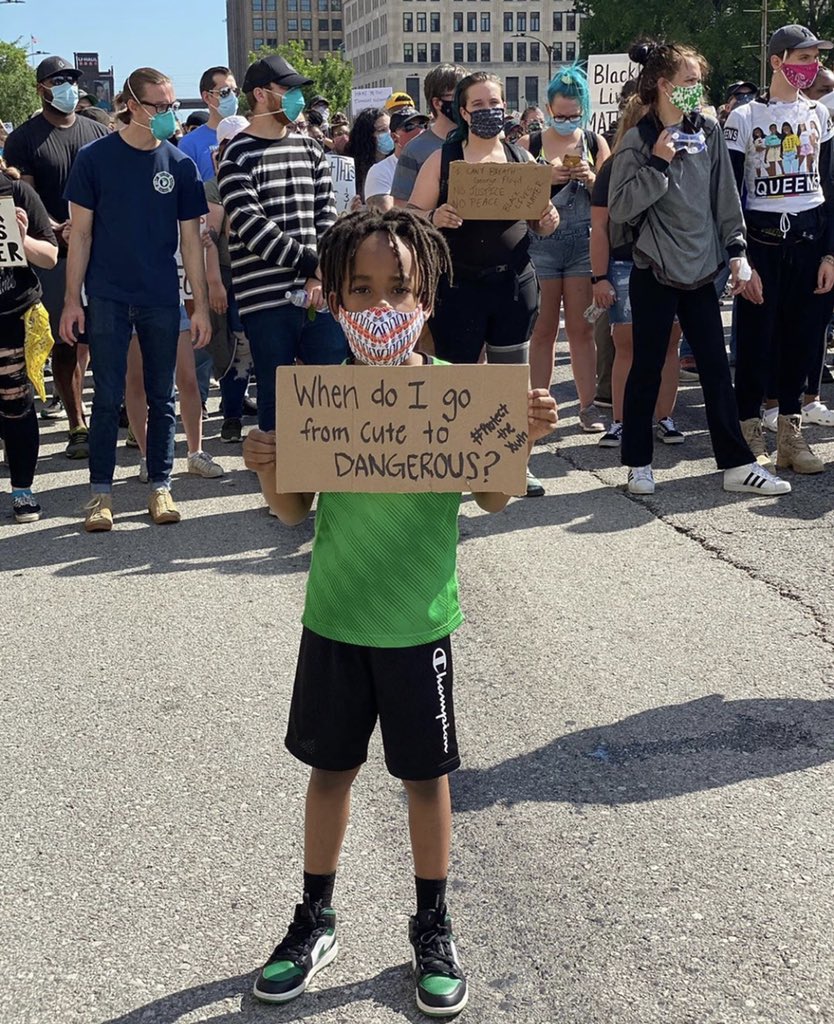
Students see the district’s unwillingness to acknowledge the specific pain or concerns of Black students, or students in other groups, as evidence that leaders haven’t or don’t want to make real changes. Students said their personal experiences with racism at and around school were far more extensive than the messages, and calls for the districts to do more to combat harassment, re-evaluate curriculum and diversify their staffs.

It’s that last bit I find so interesting. Making schools safe and orderly (which includes harassment) has always been the job of districts and their leaders. Hiring, curriculum and instruction have not been considered the students’ bailiwick. But, as a sign carried by MN students said: No Justice, No Excellence.

They’re correct. A genuinely excellent education would center real problems that need solutions. It would welcome diverse viewpoints. It would provide students with the tools and knowledge to go to work on creating a better society. 

There are probably tens of thousands of school mission statements in the United States which use that kind of language—the whole ‘21st Century Learning’ schtick. So how did we get to the Common Core and mandated punitive testing for all public school kids? How did standardization, competition and data worship—a totally UNjust model– become our go-to idea about what good schools look like, rather than embracing diverse identities, talents and histories?

I was pleased to hear that the Biden administration has proposed a grant program to highlight our history of discrimination and bias in civics and history education. It was not enough to dump Trump’s ‘1776 Commission’ education propaganda. The Biden proposal also calls for information literacy. 

It would be easy to dismiss this as just another feel-good education program. The U.S. Department of Education is not permitted to prescribe curriculum, after all (which is why they had to pretend that states and governors instituted the Common Core). But—like both VP Harris’s and President Biden’s speeches yesterday—what the administration says represents the direction of policy-making.  

No justice, no excellence.

Of course, eight Republican state legislatures (ID, IA, LA, MO, NH, OK, RI, WV) are now considering bills to bar teachers from discussing ‘divisive’ topics in their classrooms. Racism and sexism are the chief illicit topics, but I’m sure that partisan politics would also be high on the list of things that legislators would like to see forbidden.

I’ve got news for these legislators: train’s a-comin’ and you can’t stop it.

I was in the classroom on 9/11. I was in the classroom when election results hung in the balance, 2000. I was there when Reagan was shot, when Jim Jones persuaded his followers to drink the Kool-aid, and when we elected a Black man to the White House.  Kids—kids of all ages—always want to talk about what’s happening in the world. Because they’re curious, and observant.

When they’re young, they mostly need reassurance that adults will keep them safe. But as they grow older, they recognize injustice—or they repeat unjust things that the adults around them said. Should teachers be legally compelled to ignore outright racism?

Telling students that the topics are forbidden is an invitation for them to look to the wrong resources for answers. Banning controversial issues embeds systemic racism, sexism, discrimination. Besides, it’s virtually impossible to keep students from talking about high-visibility issues, and legislators can’t police classrooms and fire the diminishing cadre of quality teachers and school leaders.

Better to look issues squarely in the eye, and honor what students have to say, provide facts and counterarguments. Better to encourage students to demand more, settle for less.

Students in Minnesota chanted ‘We are the students, the mighty, mighty students.’

 No justice. No excellence. The two really are inseparable.