2022. What a Year?

For several years, I have listed my favorite books—or top ten education prognostications—on Teacher in a Strange Land. I love end-of-year roundups like this.  ‘List’ titles draw traffic. I learned that 20 years ago, when I first set out to blog ‘from the classroom’ (although I was really blogging from my living room, on the family’s single computer). Everybody likes to analyze, compare and name favorites. Everybody likes to look back, and pretend there’s a clean slate ahead.

But 2022 was the ultimate strange-land year, here in Michigan. I think it was the first year where more or less permanent changes, wrought by the one-two punch of a corrupt presidency and a global pandemic, have altered the way we live and work. And, possibly, think.

All the local angst—school board hostilities, county commission craziness, health department firings, attempts to kidnap the Governor—sprang from that discontent. People want better-paying jobs. They want affordable housing. They want good—free—public schools for their kids. But they also want someone to listen to their woes, real and imagined, and confirm their biases, even if those biases are life-threatening.  

Living through a pandemic reminds us: Life is short. Might as well get it right, say what we think.

Best things that happened to all of us in 2022:

  • The midterm elections (nope, the country isn’t going to hell, yet)
  • Kids went back to school (triggering other viral waves, but still…)
  • Biden did most things right (including supporting Ukraine). I can honestly say that although I was not a Biden fan prior to 2020—he came in 12th on my list of candidates—I am very happy that Uncle Joe has been at the helm and accepts good advice.
  • The January 6th Committee Hearings. I seriously doubt that Donald Trump will experience significant consequences from the ugly mess he made of the US Presidency. But I am grateful to know that the nation was able to see the truth, in digestible bites.

Best things that happened to me in 2022:

  • I ran for office–and lost. Running for County Commission was a great experience, however. The district where I live has been ruby red for some 30 years–see that little pink square in Leelanau County? Dems came closer than we have in forever to turning the entire county blue. Running for office has been a bucket-list goal, and the conversations I had with people I’d never met were eye-opening.
  • I got to travel, again, another bucket-list kind of thing. My husband and I have spent February in Arizona since 2016, interrupted by the pandemic. This year, fully vaxxed and boosted, we drove to Arizona—and immediately tested positive. We got free, drive-through PCR tests to confirm. And about a half-hour after being notified that we were indeed positive, we got a call from our local health department, 2000 miles away: Were we OK? (OK-ish) Did we think we needed Paxlovid? A doctor visit? (not really) Faith in my local health care system? Restored.

I also went to Europe for two weeks this fall—and that was splendid.

Best Media Consumed, 2022:

  • Favorite Fictional Book: Demon Copperhead (Barbara Kingsolver). Kingsolver is an author whose works I never miss, and always love. Demon Copperhead is simultaneously hilarious and tragic, and Kingsolver finds a way to meld the ongoing opioid crisis, 19th century Dickensian literature and the American passion for football—and reveal what’s really going on in all three.
  • Favorite Non-fiction Book: Jesus and John Wayne (Kristin DuMez). DuMez teaches at Calvin University, near my hometown and alma mater of lots of super-conservative family members, most of whom would vehemently disagree with DuMez’s conclusions here: that evangelical support was not a shocking aberration from their views but a culmination of evangelicals’ long-standing embrace of militant masculinity, presenting the man as protector and warrior. Meticulously researched, and highly recommended.
  • Best school-y media: Abbott Elementary (TV show) and Tracy Flick Can’t Win (novel, Tom Perotta). Everybody knows about Abbott Elementary—warm-hearted and shockingly close to truth, right down to the egotistical, incompetent principal—but Tracy Flick is also that rarity: a book set in a school that feels very real.

I generally shoot to read 100 books in a year—it’s been my (achieved) goal for a decade. This year, I will clock in (if I’m lucky) at 85 books. The traveling and campaigning bit into reading time. But that general angst—the sense that things will never be ‘back to normal’—is also a factor. It’s hard to relax, to concentrate, to give up a long afternoon living in another world.

Finally, the Bad News is About Schools:

I see the culture, in general, in flux right now. The economy, national politics, health care, media—all of them, from Twitter to The Former Guy, will continue to evolve. But I am incredibly depressed about public education, always the scrappy underdog in the question about how we build citizenship and strengthen the workforce.

I became a teacher in 1974, and have observed public schools, up close and personal, ever since. I’ve seen good times and bad (although I wasn’t able to accurately evaluate, in the moment). But reading my fellow educators’ social media feeds is…heartbreaking, no other word. Should I stay or should I go? Have your students lost all motivation, like mine? Here’s a picture of me taking my 300 personal books out of my classroom. Etc.

In an excellent post, my blogging hero, Jan Resseger, captures the zeitgeist in a single title– Culture Wars at Schools Increase: Undermine Educators, Block Respectful Dialogue, and Make Students Feel Unsafe and Invisible.

That pretty much says it all.

Maybe public education is a lagging indicator—maybe the good news about competent government and public awareness, will eventually track back to the cornerstone institution of American progress, public schools. But I think folks like Ron DeSantis and Glenn Youngkin, and countless others, have targeted public institutions for children as low-hanging fruit, perennially underfunded and unstable, and gone after them.

The damage might be permanent.

Teaching Human History

“In this room, our colleagues across history have abolished slavery; granted women the right to vote; established Social Security and Medicare; offered a hand to the weak, care to the sick, education to the young, and hope to the many, doing ‘the People’s work.’”     

 Nancy Pelosi, this week          

The idea that history is written by the victors is—like most cliches’—an inadequate framework for learning about the powerful forces that have shaped our world. I say this as an American baby boomer, born when the future of the United States seemed limitless, and its citizens were justifiably proud of having saved the world from evil. The history I was taught, in the 1950s-60s, was full of stories about our scrappy upstart nation that freed itself from British colonialism, survived a civil war—then made the world safe for democracy.

When I was in my 20s, I spent a summer backpacking in Europe. I stayed in cheap hostels and went where the Eurail pass would take me. At the very end of the trip, the day before flying home out of Munich, I went to the concentration camp in Dachau.

It was a gray and rainy day, and I had the place nearly to myself. Dachau had been open to tourists for 10 years, but—some 30 years after the camp was liberated—there weren’t many exhibits and no docents, then. That’s not to say that the place felt empty. Far from it.

I’ve been in some historic places in my lifetime, but nothing like Dachau.

The first thing people notice is how the village, with its flower boxes and tidy homes and beautiful church, sits next to the main camp. I remember it as an easy walk from the train station, through a lovely old German town, which encompassed tens of thousands of German citizens in the 1930s and 40s, most of whom claimed they had no idea what was going on behind camp walls. Of course, those people assumed they would be the victors, and get to tell the story of their glorious conquest.

The camp—in 1977—was mostly just cleared space, its buildings torn down. There was a bunkhouse or two, and a horrific crematorium to see, some photos on display. But the power of being there was in the voices.

I sat on a bench, under my umbrella, for a long time, listening to and sensing what had happened, around me and under my feet. I can’t explain it any better than that. Whatever evil happened there was not erased, not by a long chalk.

Clint Smith, who wrote the powerful How the Word is Passed: A reckoning with the history of slavery across America, had a wonderful piece in the Atlantic this week, about Holocaust remembrance.  Smith begins by noting that Germany has a global reputation for handling their past with honesty and reparation. I’ve written about this myselfwanting to believe that nations can be redeemed, can be humbled, admitting guilt and teaching their children to do better.

Smith’s piece mentions stumbling stones or solpersteine—small brass plates in the sidewalks of places where Jews once lived or were assembled and sent to their deaths. There are more than 90,000 of these now, in 30 European countries. Schoolchildren raise money to plant more of them.

I was in Germany last month, and our walking tour docents frequently pointed these out. Americans whipped out their phones and took photos. I did not hear voices, but seeing them was sobering. In fact, Smith says that not everyone thinks putting brass plates in places where people can walk on them is the right thing to memorialize the loss of six million people. But, at least, the Germany citizenry is wrestling with the questions around its own guilt. Smith:

In recent years, Americans have seen a shift in our understanding of the country’s history; many now acknowledge the shameful episodes of our past alongside all that there is to be proud of. But reactionary forces today are working with ever-greater fervor to prevent such an honest accounting from taking place. State legislatures across the country are attempting to prevent schools from teaching the very history that explains why our country looks the way it does. School boards are banning books that provide historical perspectives students might not otherwise encounter.

There was, IMHO, way too much celebrating last week over anti-teacher, anti-‘CRT’ school board candidate slates NOT sweeping into power. Data on this, however, is a little murky:  

Ballotpedia, a nonpartisan website that tracks U.S. politics, has so far counted 237 school board winners who took a stance on hot-button topics, including race and gender. Of those, 55 percent took the conservative side on at least one issue, compared with 43 percent who took liberal stands (the remainder had mixed positions).

Hardly a resounding victory, and the thing about school boards is that they’re the first access point for anyone with a political beef (real or imagined). You don’t even have to have children in that school, or live in the district.

There’s dark money behind school board races and vocal protests these days—and the reprehensible folks and thinking at Hillsdale College haven’t gone away. There’s also the Heritage Foundation and its faux education ‘research.’ The state of Virginia just removed Martin Luther King, Jr. from the elementary social studies standards.  

I’m happy that the nation seems to want to pull back from the political abyss—thrilled, in fact—but there’s a reason why lots of school boards, if not a majority, turned over last week, and the impact is just being felt. These are the people who do not believe we need redemption, to admit guilt and teach our children to do better. These are people who—as my friend and new State Board of Education member Mitch Robinson says—find the made-up problems in education more useful than the solutions.

There is no more important study than our own history. Nancy Pelosi illustrated that beautifully in her graceful step-down speech, as first female Speaker of the House this week. If we can’t learn from our own accomplishments and failures, we’re doomed.

What Parents Really Want from Schools

Remember Peter Meijer (pronounced MY-er, national news jockeys)?
He was the freshman Congressman from Western Michigan with the golden name and the conscience—the one who voted to impeach Trump, post-January 6, as a freshman in the House of Representatives. I say he was a congressman, because he was primaried in August.

The guy who’s running on the Republican ticket in Meijer’s former western Michigan district, John Gibbs, recently said this:

Folks, did you ever think that one day in America, we’d have to worry about schools putting obscene books in their libraries? This is simply insane–we must stop the madness. Voters overwhelmingly oppose sexually explicit books in public school libraries.

Well—folks. I’m not worried about obscene or sexually explicit books in public school libraries. Because there is no madness, no insanity, no pornography in school libraries.

Teachers and school leaders also overwhelmingly oppose sexually explicit books in school libraries. The word we use is ‘inappropriate’—materials are selected by trained school media specialists, who know inappropriate when they see it.

The entire slate of MI Republicans running for statewide or national office, not just Gibbs, is hell-bent on insisting that schools have become (in the past two years) hotbeds of sexual orientation and gender identity transformation, not to mention racial tension and guilt-inducement. They are led in this effort by the Republican candidate for Governor, Tudor Dixon.  

What Tudor wants to accomplish is very simple and common sense. She wants to get radical sex and gender theory out of our schools, remove classroom instruction of sexual orientation and gender identity for grades K-3, make sure gender specific sports remain gender specific given biological differences in boys vs. girls and post all curriculum online for parents to see and be involved in their child’s education. Every child deserves a world class education and parents should be in charge of it.

So let’s break this down.

Radical sex and gender theory? (Not a part of the curriculum in any school I’ve been in.)

Classroom instruction on sexual orientation or gender identity for the littles? (Likewise—nope, nope.)

Gender specific sports? (The Michigan High School Athletic Association has a policy adopted in 2012 that determines post-season tournament eligibility for transgender athletes on a case-by-case basis. The group received and approved 10 applications in the past five years—so this is hardly a burning statewide issue.)

Post all curriculum online? (Sure. Most districts post their standards framework—what gets taught, when– and public high schools in Michigan have adapted the Michigan Merit Curriculum.)

Every child deserves a world class education and parents should be in charge of it. (Right out of the Glenn Youngkin playbook, a statement like this, which is mostly true, really resonates.)

But here’s the truth (from 32 years of classroom experience): What bubbles up in classroom discussions and playgrounds is what’s on the minds of the kids in that classroom. This starts early, in Tudor Dixon’s forbidden zone, grades K-3—like this story about the boy who chose a ‘Frozen’ backpack.

Kids are curious and they’re paying attention to what their parents and their screens (and their friends, and their older siblings) are telling them. I taught music and math, two subjects you’d think were pretty straightforward and controversy-free, but can testify that anytime you get a cluster of kids together, provocative issues emerge.

When politicians say ‘post curriculum online’ and ‘parents should be in charge’ they’re missing the reality of classroom instruction: It’s universally messy and unpredictable, even when it’s highly effective and led by expert teachers. You just don’t know what ideas kids will bring to the classroom.

I think what Dixon wants is to catch teachers talking about Forbidden Subjects raised by students, encouraging parents to be alarmed and dissatisfied. Her campaign is unable to flesh out her policies, however—this article is well worth the read, for examples.

Parents absolutely have the right to have input into their child’s public education—but not the education of all children in that school. As a music teacher, parent control over curriculum is particularly challenging during the December holidays. But all teachers, school leaders and school board members have dealt with decision-making around curriculum, instruction and assessment. It’s our job.

To suggest that parents are shut out, or have no say, is just not true. To construct legislation designed to thwart ‘forbidden’ subjects and practices is 100% political, and often funded by outsider groups. Because the reality, in poll after poll after poll, is that public school parents are generally satisfied with their children’s schools.

Personally, I have observed parents protest any number of school policies at local school board meetings. Perennially dicey topics? Sex education. ‘New’ math (defined, roughly, as a math program that parents find different from the math program they had in school). Pay-to-play sports (anything about sports will draw a crowd, actually). Your district may vary.

So what do parents really want? Here’s my unscientific, no-data-just-observation take: 

  • A basic education—reading, writing, math, science, civics—that pushes children to learn essential skills for living and working in a democracy.
  • Teachers and school employees who understand and care about their child.
  • Childcare—a nurturing place for their kids to be while parents have other responsibilities.
  • A decrease in the emphasis on data and competition engendered by annual standardized testing.
  • Safety—healthy practices, secure premises.
  • A measure of happiness—all parents want their kids to be happy, and all of them have to learn that happiness cannot be mandated or arranged by schools, although classroom practices can help.
  • Programming that addresses their child’s unique needs—take your pick: Art, physical education, a library, music, learning about technology, extra-curriculars like sports, drama, leadership opportunities, and so on.
  • Friends.

Peter Meijer (whose name is universally known across Michigan) used a different spelling of his name while in high school to protect his identity.  I am guessing his parents, who could afford any kind of education, wanted the same things for him—a good education, a measure of happiness, programming that helped him realize his goals and dreams. Friends.

Watch out for craven candidates who want to trash public education. They’re not ‘concerned’ or ‘for Liberty’—they’re vandals.

Amusing Ourselves into Educational Oblivion

A great new piece in the NY Times from Ezra Klein starts with Marshall McLuhan and his iconic quote: The medium is the message. Content—facts, analysis, opinion—is often secondary to the way it is presented.  McLuhan was prescient, of course—can you imagine what he would have made of Donald Trump?—but only in retrospect do we see just how deeply and comprehensively his remark has come to fruition.

Klein moves on to discuss my favorite education thinker—Neil Postman—and his terrific 1985 book, Amusing Ourselves to Death. The publisher’s note is a succinct descriptor: a prophetic look at what happens when politics, journalism, education, and even religion become subject to the demands of entertainment.

As it happens, education, religion, journalism and politics are the things I am most interested in, my personal passions. And I’ve seen all of them changing in alarming ways, to fit the attention spans and expectations of immediate gratification that technological change has shaped.

Americans, of course, think they are immune to this. Klein says:

Americans are capitalists, and we believe nothing if not that if a choice is freely made, that grants it a presumption against critique. That is one reason it’s so hard to talk about how we are changed by the mediums we use.

 I heard Jonathan Haidt, a social psychologist who’s been collecting data on how social media harms teenagers, say, bluntly, “People talk about how to tweak it — oh, let’s hide the like counters. Well, Instagram tried — but let me say this very clearly: There is no way, no tweak, no architectural change that will make it OK for teenage girls to post photos of themselves, while they’re going through puberty, for strangers or others to rate publicly.”

What struck me about Haidt’s comment is how rarely I hear anything structured that way. He’s arguing three things. First, that the way Instagram works is changing how teenagers think. It is supercharging their need for approval of how they look and what they say and what they’re doing, making it both always available and never enough. Second, that it is the fault of the platform — that it is intrinsic to how Instagram is designed, not just to how it is used. And third, that it’s bad. That even if many people use it and enjoy it and make it through the gantlet just fine, it’s still bad. It is a mold we should not want our children to pass through.

Bingo.

Why don’t we have the foresight to just say no to attractive technologies that are harmful to children’s—or even adults’—development and emotional well-being? They’re addictive. And remember what Frances Haugen told us about Facebook: They knew it was harmful to young women especially. But they buried that knowledge in pursuit of profit.

In an election season, candidates are seldom lauded for their creative policy ideas and expertise, let alone their character and integrity. Instead, we have Boots vs. Flip-Flops elections, like the Presidential contest in 2004 where a bona fide war hero was taken down by deceptive media, leaving the term ‘swiftboating’ behind, in the political lexicon.

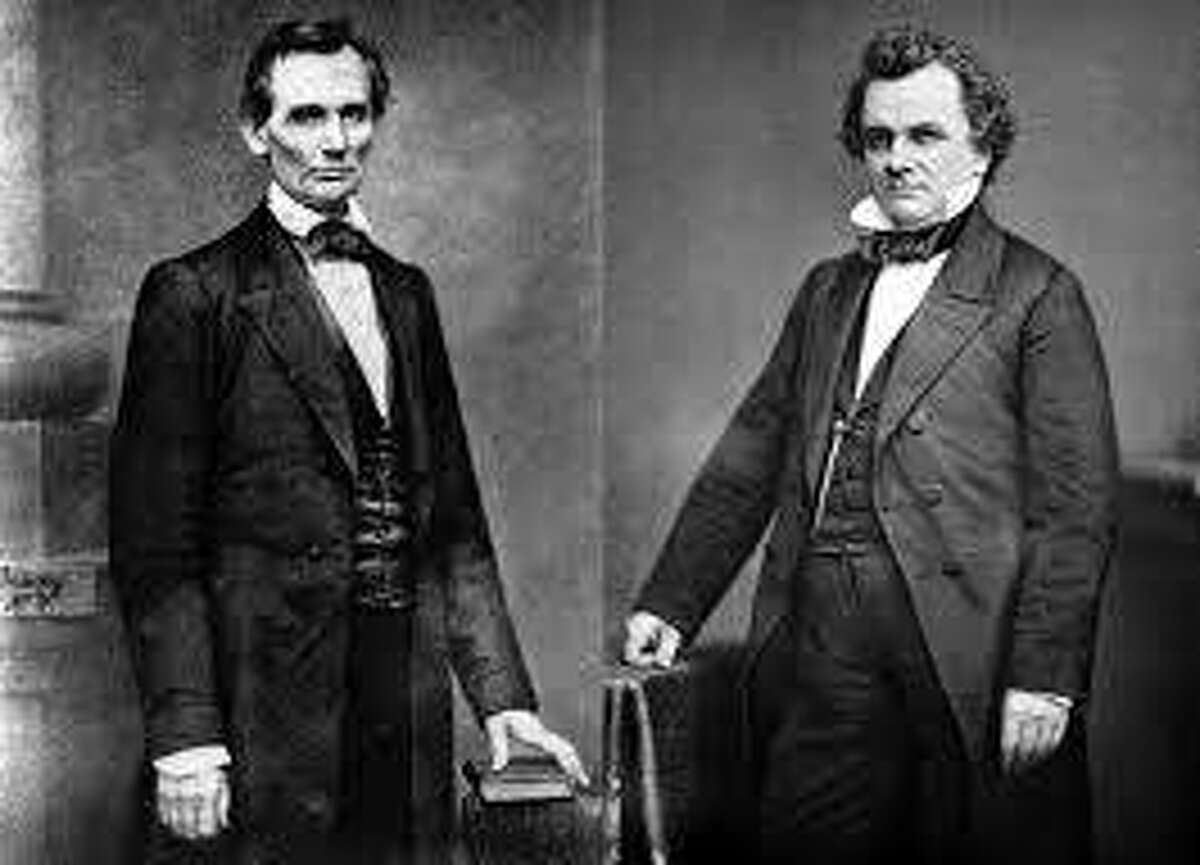
Kind of makes you long for the days of the Lincoln-Douglas debates, where folks took picnic baskets for refreshment, and each candidate spoke, uninterrupted, for a total of 90 minutes. Tens of thousands of people attended. And there were no sound bites, memes, re-runs or cable news analysis. The medium—each man, speaking his ideas—was the message.

Fast-forward to 2022, where the MI GOP nominee for Governor, one Tudor Dixon, was described by the co-chair of her party as a ‘younger, smarter and hotter’ version of the current Governor, Gretchen Whitmer. (Plus that Trump Seal of Approval, of course.)

Ms. Dixon seems to be the candidate Republicans thought had the best chance of winning: someone who looks a lot like the current governor, but is a relatively blank slate, having never held elected office. Clearly, this isn’t about making good public policy, or the kind of leadership we need. But it illustrates the degree to which the medium—and Dixon has a history in media–is more important than the message.  

Often, the most entertaining and outlandish candidate wins. Viewers routinely say that the loudest and most aggressive candidate on the debate stage ‘won,’ quality of arguments be damned. But– who wins in the 2022 midterm elections really matters.

If people in your household or family circle are heading back to school this month, what media-savvy Tudor Dixon says about public education matters, too: Among Dixon’s education priorities are requiring teachers to put all curriculum and teaching materials online for parents to review, banning transgender girls from playing on girls’ sports teams, and criminalizing taking minors to drag shows

Much of this is education-media theatre, fed by stoking fear and anger, aimed toward winning elections. The terms and assertions dominating what should be policy discussions about how to shape a community asset—public education—have been, to put it politely, invented.

Fights at school board meetings and public arguments about cherished young adult novels are probably more entertaining than the pedestrian work of stretching public dollars and finding a special ed teacher in August. Boring meetings seldom draw camera crews, and don’t offer the possibility of a mic being stuck in your face.

But there is a role for order and rules and civil discourse. Every teacher in the country understands this.

Zero Tolerance for School-based Threats

In the early 2000s, my middle school spent a couple of years plagued by bomb threats. This was around the time when the shock and awe of Columbine were still percolating in the minds of educators. Threats were taken seriously, always.

And so we would find ourselves being bused to the HS Auditorium, or scurrying out to wait in the snowy parking lot so students could go home early, right after the kindergarten runs. Teachers, of course, were free to re-enter the building, but students had to abandon lunches and calculators. The police were involved. Students were warned in assemblies about the Serious Consequences of getting caught—and that they would indeed get caught, one day. And so on.

It would be quiet for a few weeks and then—someone would scrawl a threatening note on the bathroom wall, about a bomb in a locker. And the day was over. Again.

The teachers weren’t in the inner loop of communication as administrators set about finding culprits, but eventually they nabbed someone, and punishments were meted out, and we didn’t have bomb threats for a good long while. There was never an explosive, of course—but the deadliest school bombing massacre in American history occurred 95 years ago in Bath, Michigan, so we’re careful about bombs around here.

Worth noting: The Bath School Bomber was a disgruntled school board member, upset over school taxes, who also killed the Superintendent.

The school massacre that happened last fall in Oxford, Michigan has yielded a copycat effect, with:

…more than 100 students in Michigan accused of threatening schools in the days and weeks after a terrifying shooting rampage at Oxford High School left four students dead and seven people injured. Scores of schools were forced to shut down, while police and sheriff’s departments were overwhelmed as officers raced to investigate each case.  

Ingham County Sheriff Scott Wriggelsworth said his officers investigate about two school threats a month. “A lot of times, (a threat) means throwing every resource we have at it. We had school threats on consecutive days, and we had 19 officers on it,” he said. “A lot of times it comes out that it’s a seventh-grader who didn’t want to go to school, but by the time we figure that out, we’ve spent 24 hours investigating.”

Exactly.

And that’s what makes this such an intractable problem: Kids do stupid things. How do we deal with that?

Will they do stupid things again if they’re not severely punished the first time? Should they be banished from the school district forever? Sent to Juvie for making an empty threat? Made to pay for their behavior via community service?

The rules are ever-evolving. And for every fan of Restorative Justice, there’s someone else who’s sick of being steamrollered for insisting on strict classroom discipline.

Matching the punishment to the crime is not always simple. It seems to me that hunting and murdering other human beings ought to put you behind bars. But not even that is a guarantee.  

No matter who’s doing the sentencing, there are equivocating factors, including the age and intent of the perpetrator, the level of violence employed or implied, and the political environment of the place where youthful threats are made.

After a credible threat—bombs, shooters, you name it—the focus is often on who could have or should have anticipated the danger (and how to punish them). Who was negligent before or during the terror? Who must pay to find justice for victims?

Here are the questions I’d like answered, instead:

What could have been done to mitigate this situation, before it ever happened? Why do so many students immediately attempt copycat threats? What is there about living in this nation, going to school here, that makes students attracted to aggression, even bloodshed?

With a shooting, we can look at access to lethal weapons. But how do we prevent the urge to cause chaos, to get attention, to seek revenge? To harm other human beings?

If you think I’m suggesting that this job should fall into the laps of teachers, think again.

Teachers need both clear policy and honed human judgment to effectively teach young people. But neither of those is enough to prevent the forces that are pushing students to some very bad decisions involving weapons.

Solving these problems won’t happen with Zero Tolerance policies either, no matter how tough that language sounds to communities.  

We all live in this overheated country. We all see what happens to communities when a whole classroom is mowed down, or an ordinary supermarket becomes a place of terror. We all witness violence in what should be safe community spaces.

It’s everyone’s problem.

Lirty Dies or Wandering the Campaign Trail in ‘22

The Michigan primary is in three weeks, on August 2nd. This is the first pre-election summer I’ve ever been a candidate for anything, so I’m spending more time—what? Thinking politically? Dividing the world into red and blue, R and D? Despairing of the current climate?

Actually, what I’ve been thinking most about is lies. Untruths, mendacities, outright deceit, yada yada—and the party that uses them as bait.

The Capitol Steps –may they rest–a musical comedy group originated over 40 years ago, with a collection of congressional staffers who saw the humor potential in pretty much everything that went down in D.C., had a series of sketches called Lirty Dies.

Lirty Dies were merely phrases with the first letters exchanged—in Capitol Steps parlance, when you WHip their FLurds. A great political tradition: We’re not quite sure what we’re saying; you’re not quite sure what you’re hearing.  Think Herschel Walker.

The problem? Liars win.

This has always been true—plenty of obvious examples in recent history, from the deceptive Trump appointees on the Supreme Court who knew what settled law was, to that dude in Missouri who said that women who were ‘legitimately’ raped could shut that whole thing down.

But in 2022, alternative facts are the norm in every election, from the Big Lie about 2020 to my own small-potatoes campaign for County Commissioner.

In my State Senate district (MI 37th), for example, there are three candidates running on the Democratic ticket. Only one is actually a Democrat. The other two are both Republicans, active in their county parties–and sometime felons, by the way. One of them was quoted as saying, during his podcast on March 31, that the media was trying to destroy the “nuclear family,” with every commercial showing a “biracial mom and dad.” It’s pretty clear who the target audience is.

I’m not really clear on why they think this tactic—running in the party they loathe—will work. There are two actual Republicans running in the primary, so it’s not as if there was nobody to vote for. Just a chance to SPew up real political SCReech, I guess. (That was a Lirty Die.)

Meanwhile, in the Michigan Legislature, the Democrats (the minority party), having been falsely accused by their Republican opponents of being ‘groomers,’ decided to fight back:

As many Republicans push conspiracies about schoolchildren being “groomed” in public schools, a bill introduced by Democrats in the Michigan House that would create a legal pathway to prosecute people who “groom” minors in sexual abuse cases idles, untouched by the Republican majority. 

Partly this is because former (Republican) House Speaker Chatfield is under investigation for actually grooming a 15-yr old girl when he was her teacher at a Christian Academy founded by his father. But mostly, it’s just a ruby-red response to being called out and held accountable for Lirty Dies.

Two weeks ago, the four women running for the Democratic slot in my County Commission district (including me) held an open-air listening session at a local park.  We sent out postcards to likely primary voters to invite them. The weather was perfect, and we had live music and cookies.

The event was a great success—somewhere between 50 and 60 voters showed up, and for two hours, each of us was grilled (or encouraged) by friendly neighbors. People asked good questions about local issues—why our internet infrastructure is inadequate or worse, how to build and repurpose affordable housing, and so on.

The biggest issue is clean water. We live on a peninsula surrounded by Lake Michigan, so passing a mandatory septic ordinance, while the least sexy of issues, is critical.

Midway through the afternoon, an older gentleman and his wife showed up. I greeted him with an outstretched hand, as he passed a table with a fellow Dem collecting signatures for Promote the Vote.  Are they for or against mail-in ballots? He asked. For, I told him.

Mail-in ballots are how the 2020 election was stolen, he said. Oh oh.

I decided to just listen to his issues and concerns. He talked about responsible farming and compost, which seemed to be something we had in common. Then he asked me about my background. I told him I was a retired teacher.

And he proceeded to regurgitate incredible slander about public education, the crapola now floating above every local election: The teachers were teaching kids to hate being white. They were telling lies about history. They were teaching kids about perverted sex (he was embarrassed when he said this, looking down at the ground). There were dirty books, too.

Ironically, his seven children had all attended and graduated from the public school no more than a mile down the road. This is a school where I volunteered—before the pandemic—and that I thought was a good public school, a school that offered a lot of programming for a small district and had a solid staff.

I told him I had been in the classroom for nearly 35 years, then volunteered in three local districts in this county, and I did not believe that teachers routinely did those things. Any teacher who overstepped their bounds in the classroom could and should be called out. By parents—or by an administrator. But this was not the way public education (which is controlled by a locally elected board) worked.

Well, he said. This just started.

He was OK with the school when his kids were there—the teachers were pretty good, and he went to all the football games. But now, he said, teachers have started doing bad things all over the country.

What, specifically? Well, supporting the Blacks, he said. Against the police. Going against the Bible. He struggled to remember what he’d read—some letters, maybe? (No way was I going to fill in the acronym for him. He’d already soaked up too much falsehood.)

You should start volunteering again, he said. Things have really changed in the last couple of years.

I passed him on to another candidate, but he lingered in my mind. Not a bad guy. But he’d been lied to, and he trusted the liars. It was as simple as that.

Lirty Dies.

Voter Linda, chatting with the four candidates for Leelanau County Commission: Allison Zimpfer, Julie Kradel, Mary O’Neill and blog author Nancy Flanagan.

Are Christians to Blame for the Political Mess We Find Ourselves In?

Schoolkids were traditionally taught—at least I was—that the United States was founded because the Pilgrims were seeking religious freedom, an escape from persecution. This incomplete and sanitized declaration dovetailed nicely into the development of formal American schooling and curricula in the 19th and 20th centuries.

It was part of our national creation myth, positioning the original ancestors as men who braved the dangerous ocean journey in order to worship their God in the way they saw fit in this wild, free new land. (Plus their wives and children, of course. Who would naturally be worshipping in the same fashion, and following the laws the men devised.)

Nary a mention of their rapacious commercial interests, let alone the people who had already lived here for a thousand years.

Since the Pilgrims arrived—merely one group of colonizing settlers, albeit one that got lots of airtime in history class—waves of folks with different religious beliefs and heritage, born here/brought here/immigrated here, have shaped the trajectory and norms of livin’ in the U.S.A.  

Educators and civic leaders have adapted to changing mores over more than a century, lurching along and stepping in deep controversy over religious practice—well, all the time. (Think: Scopes Trial.)

Arguing over religious beliefs is our real national heritage. And the separation of church and state is the tool we use to distinguish what is appropriate at home but not at school. The new SCOTUS ruling that permits private (Christian) prayer on public school occasions as long as it’s not required, is another chunk out of that wall of separation. And any veteran teacher will tell you that bringing personal religious beliefs into the classroom is a recipe for disaster.

Contrary to Fox News commentary, good educators are not part of a century-long conspiracy to brainwash little kids about the moral framework of life in community. In my 30+ years in the classroom, most everyone skirted around explicitly talking about religion for fear of violating The Wall of Separation. In some classrooms—the aforementioned history class, for example—discussion of religion is inevitable. Music class, as well.  And literature. And science.

In fact, learning about religion and its impact, positive and negative, on the history of the only world we have, is one of the central reasons to offer public education. But learning about religion is entirely separate from practicing religion, or proselytizing.

The message always needs to be: Religions have existed forever. Religions and sanctified beliefs have caused wars and genocide. Religion has the capacity for both great good and bad—and a whole lot of judging about which is which, and spurious reasons for grabbing power.  Nonetheless, wherever we find extended civilization, there are religious practices.

Lately, the Christians have seemed to be ascending, in terms of political power.   It may have something to do with existential uncertainty of life during the pandemic, or the former President using certain Christians for his own purposes. Or the spate of SCOTUS decisions dragging the nation backwards against social progress, led by a Catholic majority.

Adam Serwer: Given the unholy alliance between conservative politics and conservative Christianity, it is no surprise that right-wing extremists on the Supreme Court prefer to read theConstitution the way evangelicals read the scriptures. That is, selectively, and with a preference for American mores and jurisprudence of the nineteenth century. When men were men and all others were second-class citizens, if not property.

As Garrison Keillor said: Righteous indignation is the easy part of the Christian faith and the hard part is forgiveness.

I would add—‘and also having a sense of humor.’ I’ve seen a lot of social media talk smacking down Christians as a class, blaming them for cruel and regressive policy-making. I know Christianity’s failings better than many, but it seems like we have not outgrown the need for considered values, or the good that religious organizations, Christian and otherwise, have done, for centuries.

Freedom of religion, won at some cost in this nation, has allowed us to safely poke at literal and metaphorical sacred cows and speak freely about what we believe—and dismiss as foolishness. Respecting diverse religious beliefs is a very difficult thing, but if we can’t accept diversity of religious practices (or lack thereof), we are betraying the very story of our founding.

So maybe lighten up on the anti-Christian (or anti-any faith) talk? Or be careful whom you’re sweeping into the category of Harmful and Dangerous while letting other organized groups completely off the moral hook?

Robert Reich: G.O.P. extremism is fed by resentment against the very things that truly make America great — our diversity, our tolerance for difference — it cannot be appeased or compromised with. It can only be defeated.

In  The Ministry for the Future, an awesome book about possible futures (Kim Stanley Robinson), the chair of the Ministry and her trusted associate discuss this question:

What would it take to get the entire planet to commit to necessary sacrifices that could, once and for all, turn climate change and equitable civilization around, practices that would save us all? Mutual assured survival, even mutual thriving?

A new religion, her aide says. A newly conceived religion, based on environmental equity, justice and peace, adopted globally.

My friend Fred Bartels put it this way: God is a personalization of community.

Food for thought. Or prayer. Take your pick.

Do Parents Really Want Control Over What Students Learn?

What’s driving the screaming matches at local school board meetings—the ones where organized parent groups show up to have their say about everything from critical race theory to bulletproof doors?

There are a lot of overlapping factors: A nation that’s bitterly divided. The pandemic we’re still dealing with, and its impact on children. Racism, sexism and the fear of losing “rights.” Gun violence. The political upheaval resulting in an insurrection, which played out live, on national TV.

And, of course, money and support from outside sources and organizations, which perceive these ongoing crises as an opportunity to chip away at public education.

I’m no stranger to parent-led fireworks at Board meetings. I’ve witnessed verbal storms over sex education and teacher strikes and girls who wanted to lift weights with the wrestling team.

During my second year of teaching, in October, the School Board decided to lay off 20 teachers (including me) who signed annual contracts in the spring, because an August millage election had failed. They made cuts to programs across the board, and established a pay-to-play model for all HS sports. There was a huge board meeting that went on until the wee hours. And what were the parents upset about? Eliminating foreign languages—or elementary art and music?

No. It was about the football team.

One mom was outraged at being asked to fund her son’s final year on the team. “This is his time to shine! Teachers can always find another job—but my son has only one chance to play football in his senior year!” There were perhaps a hundred teachers at this meeting. You can imagine how that remark went down with them.

My point is this: when parents are angry enough to publicly spout off at a school board meeting, it’s seldom centered around informed disapproval of established curriculum, instruction or even assessments (unless someone has lied to them about what’s going on in their children’s classrooms). Even book banning—a chronic hotspot for school leaders—seldom flares up because a parent carefully read their child’s assigned book and was shocked into action.

What we’re seeing now is something else: an orchestrated and funded effort to demean public education and the people who work in public schools. It’s about power and control. It’s about ginning up fear, using dishonesty as a tool. As John Merrow notes:

Many of the adults who have been disrupting local school board meetings not only do not have children enrolled in those schools; they are classic outside agitators, perhaps even from neighboring states. 

The foundation of recent wrangling over control—parents’ rights, if you will—is thoroughly political and got a big boost when now-Governor Glenn Youngkin promised to strip culturally responsive instruction from schools in VA.

Parents have always had rights—including the right to see what their children are learning, access to instructional materials, the option of observing their child in his classroom, and the opportunity to talk to his teachers about any of these.

Teachers have the responsibility to know the curriculum well, to be able to tell parents why certain materials and teaching strategies were selected.  And—should parents be genuinely concerned about any of these things—the responsibility to justify the value of a particular technique or content, to adapt or offer alternatives.

That, in a nutshell, is good teaching–based on trusting relationships and understanding. Every veteran teacher and school leader reading this has had difficult conversations with parents about what and how their children are learning. It’s part of the job. Always has been.

It’s also one of the reasons many teachers pushed back against the Common Core: the standards didn’t fit the students they were teaching. Driving responsibility for determining standards, curriculum and assessment upwards means that teachers are left with explanation that they’re teaching something because it’s on the state test, even though it may be inappropriate or irrelevant for a particular child.

It’s not just parents who want to strip control from schools. From Education Week:

States have a limited amount of power over what materials teachers use in the classroom. A new report shows how some of them are trying—and succeeding—to wield influence anyway. In the majority of the country, districts operate under local control, meaning that school systems, or sometimes individual schools or teachers, have the ultimate authority in deciding what curriculum is taught.

That means that if states want to influence what teachers are using, they have to get creative about what levers to pull. A new report from the RAND Corporation suggests that some states have managed to do just that.

Look for the phrase ‘High-Quality Instructional Materials’ accompanied by some disdainful blah-blah about how clueless teachers design lessons based on what they see on Pinterest, so professional curriculum deciders need to step in and choose better materials. Well-paid deciders, naturally.

Earlier this year, Jennifer Berkshire found reason for hope:

I’ve spent the last few days talking to voters and candidates in New Hampshire who powered record turnout, resounding wins for public school advocates. One theme keeps coming up. Voters were REPELLED by the extremism of “parents’ rights” groups. This was a backlash to the backlash.

In the meantime, all the shoutin’ has left educators limp and discouraged. From Connecticut teacher Barth Keck:

Nationwide accusations of schools teaching “critical race theory” found their way into Connecticut despite any evidence of its existence or even any accurate explanation of what CRT really means from the critics. Superintendent Freeman “cited letters to the editor and social media posts regarding the school’s teaching and equity policies which imply that ‘parents shouldn’t be trusting the teachers and school administrators who are shaping the experience for their children in Guilford.’” 

I have not felt such pressure personally, aside from comments on social media from those calling me a “groomer” and “brainwasher” of children. Granted, I don’t know these people personally, and the only thing they know about me is that I’m a teacher. But that’s the point: Strategic political posturing has convinced scores of people that, rather than a noble and essential profession, teaching is an insidious endeavor whose primary purpose is to push a far-left agenda.

It’s not about the things parents already have a say in—their children’s learning.

It’s about raising a public ruckus.

Social. Emotional. Learning.

What a difference a few years—and a pandemic and an insurrection—make.

Remember when a ‘growth mindset’ was all the rage among reformy types?

In addition to teaching kids about malleable intelligence, researchers started noticing that teacher practice has a big impact on student mindset, and the feedback that teachers give their students can either encourage a child to choose a challenge and increase achievement or look for an easy way out. For example, studies on different kinds of praise have shown that telling children they are smart encourages a fixed mindset, whereas praising hard work and effort cultivates a growth mindset.

Speaking for all the experienced teachers who were introduced to the ‘growth mindset’ concept and its promotion as silver bullet teaching practice: Would that it were so easy. And researchers are just now noticing that teacher practice has a big impact on what students are thinking? Seriously?

And what about grit? The desirable persistence, an ability to pursue goals in the face of discouragement, the thing that underachieving slackers in public schools didn’t seem to have inculcated? They weren’t dumb (or hungry, scared, exhausted or neglected). They just lacked grit. Right.

Both of those things, packaged as programs, were embraced by professional developers, as part of a suite of soft skills that could be used to enhance student performance. There are plenty of other terms veteran educators have run into: Character Development. Restorative Justice. Conflict Resolution.

They all fall under the general category of encouraging the social and emotional welfare of students, giving them tools to manage their emotions and relationships—so they can learn. Also: (unspoken but obvious) so their test scores will go up.

Social-emotional learning (SEL–the reality, not any official program) is just a rather random collection of ways that school staff has always made students (who have all kinds of reasons for feeling anxious and off-balance these days) comfortable enough in a school setting that they can settle down to learn.

Different SEL programs have different foci: Positive behaviors. Making friends. Sticking with tough tasks. Being more thoughtful, less aggressive. Every time you hear a teacher say ‘Use your words’ or ‘What would you like to say to Jason?’ or ‘Take a minute to calm down’—they’re riffing on SEL ideas.

In a good column at Curmudgucation, Peter Greene says that SEL is a real thing, all right, but he can’t defend SEL programs which are now taking a beating from parents. These are, one has to assume, the same parents who thought grit was just the ticket for kids who were living in their family’s car, or that telling certain kids they were smart could cause their heads to swell and spoil them for the workforce.  

A whole lot of the murkiness around what SEL is, and how it relates to Critical Race Theory (CRT)—spoiler: it doesn’t—comes from masterful manipulation of language.

A year after a terrible incident at a local HS, where students of color were put ‘up for sale’ on Snapchat, some parents here still think that systemic racism doesn’t exist here in Traverse City. Some of them saw the incident as simple bullying, no big deal, and others thought it was a matter to be handled by police rather than the school board, although the idea started and was centered among HS students. All of them seemed to think addressing it would cause even more divisiveness.

Why wouldn’t you want teachers, using developmentally appropriate strategies and language, to address emotionally sensitive issues? If students don’t have these conversations in school, under the watchful eye of an adult (especially an adult with the skills to help them process their feelings and social challenges), where will they learn to keep a lid on? To distinguish truth from foul lies? To learn the art of cooperation? Restraint? Respect?

Where will they learn to use THEIR words, instead of picking up a gun?

The interesting thing to me is that none of this is new. Twenty-odd years ago, I was recruited to be part of a video series produced by the Annenberg Foundation, called The Learning Classroom. I had a film crew in my classroom (and my office) for an entire week, capturing footage around how I used social-emotional learning to teach more effectively.

I prepared lessons designed to engage my middle school band students emotionally, by learning Ashokan Farewell, the music Ken Burns used to great effect in his Civil War series, then tying the plaintive tune to the letter that Major Sullivan Ballou wrote to his wife in 1861, a week before being killed in battle. We talked about how many of the recruits at the end of the Civil War were no older than the boys sitting in the band room, how bloody the war was, dividing families.

The filmmaker wasn’t looking for a lesson that used emotion to drive home learning (something that teachers do all the time, by the way, from reading great literature to the exploding mysteries of the baking soda volcano). She wanted to see stormy outbursts from middle schoolers.

Your classroom is like Mayberry, she told me. Everyone is friendly and nice. I desisted from telling her how long it took (speaking of grit) to build a community of 13 year-olds who worked together. I did not say that there were, in fact, days when the emotional temperature of the room was not so pleasant.

While the film crew was there, one of my students returned to school from a month at home recovering from surgery and treatment for testicular cancer. The other kids were happy to see him, and the film director asked me where he’d been. Oh, wow, she said, when I told her. Let’s use this in the episode.

I was aghast. Absolutely not, I said. Not everyone knows why he’s been out—only that he was ill. It would be a terrible violation of his personal privacy. He would never trust me again. He is so fragile right now—how can you even suggest something like this?

The next morning, the film crew was gone, two days earlier than planned, leaving my office filled with dirty coffee cups and discarded papers. I didn’t hear back from the production company, and never got the complimentary set of videos I was promised—so I never saw myself trying to teach using social-emotional learning. Whatever that is.

Last week, when I was doing some reading on SEL, I accidentally found the Learning Classroom series, and the video where my students and I were featured. If you’d like to see it, our part starts about 15 minutes in.

Seeing the video again made me realize that my students displayed more emotional intelligence than the filmmaker. There’s another lesson there.

Pedagogy, Lesson Plans, Instructional Materials—and Politics

This is a blog about Teacher Stuff—the pedestrian daily tools of successful instruction. The boring and ordinary instruments of professional work that teachers, from kindergarten to AP chemistry, use every day.

A story: Several years ago, I was facilitating an on-line mentoring program for career-change teachers, who had previously worked for a Big Well-Known Corporation.

BWC decided to off-load a layer of expensive senior employees (those with 20 years or more) by giving them an exit ramp: Go back to school (on our dime) and become certified teachers. We’ll even subsidize your student teaching. Then resign, and we’ll replace you with cheap recent graduates.

That last line wasn’t actually in the program description, but everybody involved knew the score. BWC promo-ed the program on their website—Giving Back to Your Community!–and added an additional sweetener: BWC would provide e-mentoring, through a national non-profit, for the novice teachers’ first year, since they understood that public schools were filled with terrible teachers who couldn’t possibly be of assistance. After all, their (too-expensive) employees were masters of applied STEM content, who could probably teach veteran educators a thing or two.

It was an interesting gig.

A lot of the work was just dealing with misconceptions. Like the woman who was upset when she was told by the university where she was taking ed classes that she couldn’t have a student teaching placement as a ‘third grade math instructor’ because the job didn’t exist in most places. She could student teach in a 3rd grade, but would also have to teach reading, social studies, science and accept bus and lunch duty, which was a deal-breaker for her. She left the program.

One of my mentees had just started a job as a chemistry teacher in a suburban Connecticut high school. He had been assigned four sections of chemistry and one of AP chemistry. In our first exchange, he was panicked because he had asked for the lessons plans to go along with the texts, and was told they didn’t exist. He checked with his official on-site mentor (the other chemistry teacher at his school) who told him that books didn’t come with lesson plans because you have to tailor lesson plans to the students you have.

Which my mentee thought was not just rude but ridiculous. You mean I have to make up ten separate lesson plans each week? How inefficient! At BWC, all the work was pre-organized. You just followed the templates. This is why public education is such a disaster, yada yada.

If you are not an educator, it might in fact be surprising to suddenly be immersed in typical pedagogical practice where what initially appears to be ‘inefficiency’ turns out to be more effective in the long run. I’m thinking here of those little flip-top heads on a conveyor belt, receiving ‘content’ in ‘Waiting for Superman’–director Davis Guggenheim’s conception of how children learn.

My point here is that the other chemistry teacher was spot-on: Good teachers structure learning goals, lesson plans and instructional methods to meet the needs and quirks of the students in front of them. They also pay attention to results in real time (meaning—you don’t have to wait for test scores), and re-adjust when things aren’t going well.

Peter Green recently wrote an accurate (and amusing) blog that summarizes why teachers will never completely outgrow the need to plan, also listing a half-dozen ways that required lesson plans can become a pointless power struggle or an example of planning theatre.

I spent thirty-odd years planning the week ahead on Sunday nights, with a glass of wine. My plan book was where I scribbled notes when I had a brainstorm (or a failure). The plans were always messed up by mid-week, but I had five preps, and absolutely couldn’t teach without them. But nobody ever fly-specked my plans to make sure I wasn’t inserting CRT or SEL or any other acronym into the pedagogy I saw working for my students, on a daily basis.

Alfie Kohn takes this discussion about teachers’ daily work a step further, reminding us that it’s not just curriculum and lesson plans that the (well-funded) right now wants to control. It’s the way we go about teaching—our pedagogical practices, including things like the pre-eminence of phonics in the Faux ‘Science of Reading’ wars.

Just as social conservatism is all about religion, so religion — or at least this version of it — is all about not only order and obedience, but also faith (which means belief without evidence) in the conviction that Truth resides, fully formed, in certain texts. Carole Edelsky, an emeritus education professor at Arizona State University, has explained that “the far right’s love affair with phonics” reflects their “universe of moral absolutes,” the goal being to decode “what is ‘there’ [and to affirm] appropriate hierarchies – the authority of text over interpretation and ultimately of (the Christian) God over man. To the theocratic right, promoting phonics is a tactic for asserting Christian control of schools.”

That one made me stop and think.

The great irony here is that obedience and faith are what certain politicians want—but not the blue-chip businesses who will be hiring our graduates. Education Week just surveyed ten such companies, asking: What problem-solving skills do you want to see from early-career job seekers that tend to be lacking? And what should K-12 schools do to help bridge those skill gaps?

Corporations said: Flexibility. Cooperation and collaboration. Soft skills. Real-world applications. Learning to fail. Curiosity. Appreciating diversity. Service learning. Teamwork. Creativity and innovation—out of the box thinking.

All of which require a great deal of careful planning, diverse instructional strategies and materials, and zero emphasis on standardization and compliance, which is the pedagogical train we’ve been on for two decades now.

Can those traits and skills be taught? I think so.

The question is whether teachers and school leaders will follow their hearts and minds or be beaten down by politics.