Worst Year Ever

I was amused to see that Jay Mathews, longtime Washington Post education columnist, thinks this will be the ‘worst year ever.’ So bad that he thinks maybe we ought to ask public school principals and teachers if they have any bright ideas about how to do school—what do we have to lose? They might have some creative solutions! #sarcasm

The best charter schools have made good use of their freedom from old school district rules and biases. Why shouldn’t teachers and principals at regular public schools have a chance to do that, at least during this crisis?

At least during this crisis—and then, of course, we’ll go back to ignoring their wisdom and treating them like cheap, interchangeable cogs in a dysfunctional machine.

I have been reading Mr. Mathews for two decades. I understand that he represents the old guard in educational journalism—the folks who are actually employed by mainstream news outlets, rather than the motley and generally unpaid crew of folks writing from the trenches. The people who work in schools every day.

The point of this blog is not to evaluate how accurately journalists report on truths about teaching and learning vs. those who rely on call-Randi-then-phone-it-in columns. There are plenty of classroom-based bloggers, after all, who cannot see beyond their school, their students, and their particular needs.

Still–there are lots of people writing about the crisis around returning to schools now, and that’s good, no matter who they are  We need to hear all the voices, including those whose crazy idea just might work for someone, somewhere, even if it is a non-starter for you.

So here is my idea: What if this were the best year ever?

More specifically, what if this were the year that we–students, teachers, parents—got to try everything we ever considered doing? What if you could design your own teaching-learning path and your own outcomes? Freed from the constraints of rigid curricular standards, conventional M-F schedules and tests designed to sort, rank, reward and punish—what if you got to choose what David Berliner calls ‘good learning’?

Nearly every argument against this stems from our cast-in-concrete ideas of what school is supposed to be: You are supposed to be reading in first grade. You are supposed to learn to ‘socialize’ in school. You are supposed to learn a tiny bit about multiple, discrete subjects every day, instead of spending a whole day (or week—or month) using only one or two disciplines. You are supposed to be ready for college or a career at the end of the thirteen-year race.

You are supposed to be able to focus, seated, indoors for hours at a time, without frequent breaks to stretch, use the restroom or talk to other people. Or daydream. Or read something interesting. Or doodle, look out the window or immerse yourself in a topic, skill or project that is of great interest to you.

In fact, in some schools, it doesn’t matter what you’re interested in—we have your content and your benchmarks all laid out for you. It’s aligned with the test that will tell us what classes you’ll take next year, and the year after that. Will the pandemic be over then?

Perhaps this feels as if I have gone all Summerhill, (the ‘radical’ book all education majors dissected in the 1970s). As if I’m a fan of unschooling–or one of those people who babble about the factory model and how school stifles their child’s imagination. How classes are boring in person and even worse online.

Not so. In fact, I’m a great fan of public education, of kids adapting to a schedule and learning to get along in groups. I think most schools do a credible job of teaching kids what they need to know—and some teachers and schools do a spectacular job of preparing kids for the world to come. I also think (and have gotten into trouble for saying out loud) that the brightest children amuse themselves and are seldom bored in school, at home or sitting in front of a computer. It’s the kids who rely on structure, attention and directions from an adult who are bored, who use their intelligence to be compliant or competitive, rather than creative.

So let’s use the resources that public education controls—and get creative, for once.

The plans for fall have been repeatedly divided—by media and policy-making spokespersons—into three buckets: Regular, face to face school. Hybrid models. Online instruction. None of these models is universally viable.*

More to the point, all of them are based on the idea that we need to tread water and make school as close as possible to what it was in 2019, while waiting for the virus to go away. The US Department of Education’s vow to not grant testing waivers for 2020-21 is not based on their deep desire to see whether kids have ‘fallen behind’ so they can get ‘caught up.’ The entire K-12 system now requires test scores as our product, the gears and levers used to control and shame public education and, where possible, replace it with privatized, for-profit models (including charters).

If tests were to go away, permanently, then schools could start designing their own curricula, tailored to the children they serve.  If benchmarks were to go away, we could return to meeting children where they are and moving them forward. If standards were to become optional guideposts, rather than rigid requirements—the kind that mandate flunking children who struggle to read when they’re eight years old –we might even find them useful, especially novice teachers, beginning to build a practice toolkit.

If this sounds like happy talk, it’s pretty much what we had 30 years ago. It’s hard to remember, but solving educational problems used to take place at the district and state level, and testing was something states did to make sure tax dollars were being wisely spent. In many states, schools that posted low scores were given compensatory funding and technical assistance, and deficits were assumed to be related to poverty.

That was then. And now, we’re headed into the ‘worst year ever’—but only if you accept that what we’ve been doing for the past two decades has been a good use of our resources.

It could also be the best year ever. This won’t happen without a political overhaul and a cataclysmic upheaval in practice. But it may be the best opportunity we have.

* This is a personal gripe, but positioning the return-to-school choices for fall as bifurcated—in-person vs. online—is short-sighted. I live in a place where on-line schooling is close to impossible—a huge rural district (168 square miles) where high-speed internet connectivity is iffy at best. My DSL line (our only real choice) operates at less than one mbps, upload and download—not enough to run a Zoom classroom, upload photos and videos, or send an emailed assignment with a large attachment and expect it to arrive in a few minutes. Buses with wifi hot-spots and free devices aren’t going to suffice.

Please don’t tell me that this is a local government problem. I understand that. But my local government, despite 10 years’ worth of being urged to deal with the problem, is reluctant to act, saying that they haven’t heard complaints, and don’t want to spoil the ‘rural character’ of the county. By the time the local government acts, the school year may well be over.

We were one of the cooperative districts formed by the Rural Electrification Administration in 1935, when many of our farmers were not connected to electricity. The reason then is the same as now: too expensive, not enough profit in connecting farms and wide-apart homes. So yes. It’s political. This is what will happen to our postal service, too, if Trump gets his way.

Kids who can’t go to school online need creativity, too.

Five (Conservative) Ideas about Going Back to School in the Fall

Could you give us some of your wisdom?

Hard to turn down a request like that, from a friend. This particular friend created a freebie news magazine for parents 20 years ago, filled with local ads and feature stories. It’s professionally assembled and well-known locally—and has just shifted to a glossy online platform. And now, my friend needed some contagion-relevant content for the August issue. Topic: Going back to school. In a pandemic.

Well, I could write about that. Then she said: Remember—nothing political! This has to be advice that will comfort parents and not be considered at all controversial.

One of the reasons I left a national blog perch with a paywall and started my own blog was so I could write about all kinds of juicy and controversial things and Say What I Really Thought. It’s been fun, and the juiciest and most controversial blogs have drawn the most traffic.

But hey. I’m flexible. Besides, I was a public school teacher for 31 years, in a district filled with conservative, traditional parents. I can do middle-of-the-road careful; I can offer up sensible advice while not honking anybody off, too much.

This is what I came up with—five non-controversial ideas for parents about how to approach our eventual return to school, whether that’s next month or next year. Your mileage may vary, of course.

  • Be flexible. This may be the hardest thing for parents and teachers—and students as well. We’ve become accustomed to guidelines and traditions: School always starts in the fall and ends as summer begins. School is held in buildings, in classrooms. But this year, we just don’t know what will happen. It will be tempting to assess blame—against school leaders or the government—when we are frustrated. The pandemic is nobody’s fault, however—and the most useful ideas for schooling in a pandemic are often unusual. Will your child meet his teacher outdoors, twice a week? Perhaps. Might the school close and reopen multiple times? Maybe. Will there be distance learning, online or via printed packets? Likely, even if it’s not optimal. Stay open and amenable to change. Your children will follow your lead.
  • Relax—there is no such thing as ‘falling behind.’ First, nearly all schoolchildren are experiencing this disruption to their regular school routine. More important, any veteran teacher will tell you that students do not learn in uniform, year-by-year levels of progress. There are spurts and plateaus, times when new skills and content are gained and times when students merely practice using the things they know and are able to do. Your child—with a little gentle help from you—can continue to grow or solidify their learning: Reading (out loud or silently). Walking in nature. Choosing their own interests and projects to pursue. When in doubt, Google learning ideas for children. And stop stressing over tests and competing. Your child will be OK, in the long run.
  • Stay in touch with your school. If you have bright ideas about how to cope with stemming the spread of infection, or if your children have specific needs, share this information with school leaders and teachers. Give them a chance to help your family adapt. If at all possible, stick with the school—whether public or private—your family chose last year. This is not the right time to go school shopping, hoping to find something ‘better.’ A school where your child is known is a better bet than rolling the dice, academically, during a dangerous national health crisis.
  • Trust school leaders and teachers. They are between a viral rock and the hard place of public needs. They are also willing to take risks and learn new things to provide an education for your child. They deserve our support. Their rules and procedures are designed to keep children safe and create order in the school. If your family does not agree with all of the school’s plan and requirements for re-opening, keep in mind that schools are responsible for communities of children, not just your child. Our democratic society was built on the rule of law; modeling that has never been more important. It is vital for children to respect their school’s directions and decisions right now, around masking, distancing and sanitizing. It’s an important step in building their adulthood and citizenship.
  • We are all in this together. Your children are like millions of schoolchildren across the country, your family’s problems are shared by families across the state. The most productive approach to solving these problems is doing so in a way that benefits everyone in your community, keeping them as safe as possible. Our ability to remain calm and approach a national emergency with a can-do spirit is something Americans have been proud of, in past crises.  We will survive this, and even learn from the struggle, if everyone does their part.

FaceBook: Fount of all Wisdom, Wellspring of Stupid

I know all the things that are wrong with Facebook, all the reasons why now might be the perfect time to Just. Step. Away. Several friends have virtue-signaled their unwillingness to play nice with a man who sells them (and their data) out and closed down their accounts. Many more have taken extended breaks, keeping a toe in (and, I suspect, checking surreptitiously on the regular). Others have shifted exclusively to Twitter or some other, more hip social media site.

But—like that last cigarette or glass of Pinot Grigio, Facebook is addictive. It—and, from slightly different angles, other social media sites—act as the town square, in 2020. During the pandemic, when choosing which information to believe and act on is a matter, quite literally, of life versus death, Facebook is where a lot of people get their news.

And I’m going to say something surprising: that’s not all bad.

Frequently bad, sometimes ruinous, sure—but also (somewhat randomly) useful.

It’s where dialogue is generated. Notice I didn’t say high-level discourse—but I have learned things from reading Facebook. This is mostly because I don’t accept or keep Facebook friends who can’t carry on a conversation.

I am genuinely interested in what people think. Facebook is where I’ve learned that a lot of really benighted people live in my county—and while that’s not happy news, it’s good to know. It’s also where I have met some of the smarter people on the planet and been enriched by their logic and reason.

Facebook can be a kind of socio-anthropological adventure, if you have thick skin and are willing to research and argue your opinions—and also change your mind. Here’s an example:

One of the most commonly asserted and accepted reasons that children need to go back to school in the fall is the thought that school is good for their mental health—the socialization, the ‘normalcy,’ the daily routines and of course, the all-important knowledge acquisition and skill-building that comes with in-person schooling. There is evidence that school is a safer place, physically, for some students—a place where caring adults are paying attention and providing baseline needs, for seven or eight hours.

I saw that argument as rational, if not 100% convincing.  Then, I read this on Facebook, from a child and family therapist, arguments against ‘COVID schooling’ because it’s supposedly ‘good for kids’:

– Having to obey rigid and developmentally inappropriate behavioral expectations to maintain social distancing for hours at a time
– Restricting their engagement with their peers even though those peers are right in front of them
– Somehow having to have the executive functioning within all of this to meet educational standards and possibly experiencing shame, and self-doubt when they reasonably can’t
– Being unable to receive age appropriate comfort from teachers and staff when dysregulated from all of this, thereby experiencing attachment injuries daily

Did this change my mind? Hard to say, because I recognize that there is no one answer to the critical and urgent questions around schooling in the fall. But it widened my perspective. It made me understand that credible people are looking into the other side of ‘kids need school’ when school is a place of fear and rigidity.

I read multiple international, national, statewide and local newspapers, and a couple dozen magazines. I watch TV news. But I also find things on Facebook I wouldn’t find elsewhere—news sources and, more important, the considered thoughts of respected friends, and friends of friends.

There’s value in that. Also danger. It’s easy to believe third-hand quasi-information, especially when it confirms your biases. Raise your hand if you’ve ever re-posted something, then had to take it down, after being embarrassed by a public correction.

Which is why I believe the most important thing we can do, right now, for all literate children, is teach them how to evaluate media. Fortunately, there are great resources to use—and while distance instruction pales in comparison to face to face learning, this is something that can and should be done online

If I were in charge of training teenagers how to assess the media they consume, I’d start with Facebook.

I’d begin with a list of Facebook personalities:

  • The Plentiful Poster who puts up a dozen or two links every day, designed to share the best (in their opinion) articles and resources.
  • The Ad Hominem Attacker who goes first for the jugular in personal critiques. The Orange Cheeto? Cruella DeVos? Our Tyrannical Governor? Forget political arguments and opinions—it’s all about who to blame. There are some people who never get past this level.
  • The Short Attention Spanner who doesn’t read the link they’re posting. Or confirm any outrageous claims with a second source. Or read anything before commenting.
  • The guy who thinks long is better, and proceeds to type paragraph after paragraph, comment after comment, just to wear you down. The woman who can’t remember where she first saw the post—but was blown away by it, thinks it may have been written by a doctor and is thereby God’s honest truth.
  • The My Way or the Highway Poster, who is not interested in discussing. Only telling.

That’s enough for starters.

I’d ask the students to provide other (living or social media) typologies from their experience: Who’s credible? Who’s full of baloney? Who’s trying to impress you? Shut you up by policing your anger and demanding ‘civility’? Snow you with phony facts—or (and this is absolutely everywhere) Fake Math?

I see you waving your hand over there—reminding me that we should begin by teaching kids how to evaluate evidence and websites, not the integrity or authority of people they know or are friends with (two different things) on social media.

But I am reminded of one of those old saws about teaching: Start where the student is. And for many of them, that’s personal relationships or relationship chains.

Who should you trust? It’s absolutely the question of the year.

Are Teachers Babysitters? Maybe.

People are uber-touchy, even panicky, about the questions around returning to school—it’s a life and death issue, all right, including potentially gambling with our most precious asset: our children.

Like any venture that is launched before all the facts and outcomes are available—marriage and childbirth spring to mind here—both in-person schooling in some fashion and staying home for distance learning have their vocal supporters and detractors.

There’s free-floating hostility, too—accusations of parents ‘dripping privilege’ who are urging public schools to reopen, knowing they have the resources to keep their children safe. There are politicians who just want ‘normal’ again, blaming the media, the left, and public institutions for pumping up panic.

And there are teachers—without whom, students will not go back to school—self-righteously proclaiming that they’re not babysitters.

This is not a new statement. A few years back, there was a meme that made the rounds—the teacher rounds, anyway—comparing the work of teaching to babysitting for 30 children for seven hours a day. Guess what? The babysitter made more money. Way more money. So there!

I was never sure what the moral of the story was. Proof that teachers are grossly underpaid for the important work they do by saying that even babysitters make more money? How is that helpful?

Here’s the thing: All work that is critical and essential in building a functional society has its moments of mundane, even undignified monotony. A nurse friend who works in endoscopy once remarked that she’d spent four years studying chemistry, anatomy and biology, but her chief responsibility in her daily job was holding senior citizens’ butt cheeks apart so they could get a colonoscopy.

Not a pretty picture. And not really representative of her skills and expertise, which are substantial. Still, many of what society considers high-level occupations—hedge fund manager, say– are nothing more than a narrow band of knowledge, social connections and high-speed internet. A lot of important work is commonplace and undervalued. Like taking care of children.

Let’s acknowledge, upfront, that the nation, as we know it, will not function without a robust system of childcare. Let’s also acknowledge that PK-12 public education is the biggest piece of that.

Let’s admit how fortunate we are, to have public schools that keep our children safe, Monday through Friday, but also enriched intellectually—and, in many cases, fed, inspired and given glimpses of a better life. Every parent knows what a relief it is when your children are finally in school full-time, and your own work or interests can take precedence for part of the day, knowing that the kids are, indeed, all right.

Teachers are, in fact, childcare experts. Occasionally, someone suggests that teachers’ jobs consist of dispensing knowledge and instilling standard competencies, no more. This is 100% baloney.

Ask any first-grade teacher how many lost teeth she has processed (using protocols for blood-borne pathogens she must review annually). Ask any seventh-grade teacher how many times he’s had to deal with a sobbing child who’s just been called ‘fat’ by mean girls. Ask any high school teacher who’s attended the funeral of a student lost to cancer, or to suicide.

Go ahead—ask them: Did you care for this child? And was that caring an important part of your job? A lot of what teachers have been doing during the shutdown is a kind of childcare, by the way.

During the Great Depression—the one that started because of wealth inequality and the stock market crash—more and more students finished high school. There were no jobs for them, and school was a safer, more productive place than the streets. Public works offered alternative programming, building infrastructure and skills. Funding, during the Depression, was iffy, and politically contentious, but teachers found their extra work in accepting large classes and coping with students who would have otherwise dropped out, paid off in a better-educated citizenry:

The most dismal years for schools were between 1932 and 1936. By 1939 educators observed that Americans’ desire to maintain and improve public education was very deep rooted.

Of course, attending or teaching school in 1934 didn’t involve a pandemic-level health risk.

There’s been lots of digital ink praising grocery store workers, take-out restaurants and USPS drivers for keeping us fed and informed. But what these folks want is not praise for doing their jobs. They want better wages, personal protection against the virus and good health care, which during a pandemic would include regular, free diagnostic testing.

Teachers want the same things—PPE, a viable workplace, testing/tracing, and acknowledgement that they, too, are indispensable, and valued, front-line workers. Corporations don’t expect workers to do their jobs from home, using personal computers and paying for their own internet—why should schools?  

Teachers also want the option of making their own decisions, without condemnation—nobody knows better than teachers that policies and guidelines are one thing, but reality, in schools, is something else entirely.

We simply don’t know enough yet to make sweeping pronouncements about schooling in the fall. This is highly distressing to proactive educators, not to mention parents, who want to get their ducks in a row. But the pandemic is a raging, out-of-control forest fire at the moment, in many places. When teachers mutter about a national strike, to protect their own health and well-being, I think it may well come to that—and it might be justified. But.

Do we all have to follow the same guidelines? Especially since it’s likely that risk levels and mitigation compliance will change, frequently, over the next few months? More to the point: if schools don’t provide childcare, who will?

I keep thinking about a school where I volunteer. About two-thirds of the students there do not have enough broadband access to attend a Zoom meeting or upload an assignment that includes an image or attachment. Theoretically, half of them have access to a device—which may be a single Smartphone for a whole family.

Every child in this district eats a free hot breakfast and lunch at school. It’s a large rural district with families spread out across the county, so it would take a fleet of buses with wi-fi hotspots and free devices for each child to go full-tilt distance learning—and still, most families could not connect in real time.

We’re talking about in-person school here, at least some of the time–or packets. We’ve lived here for 10 years and can testify that adequate broadband isn’t coming anytime soon—it’s simply not a money-maker in remote rural areas where most students live in poverty.

On the other hand, there is only one class of children per grade, in this school, and the largest class is 16. Some classes are as small as five or six. Unlike the vast majority of schools, there is actually room in the school to social distance. It’s a tight-knit community, and there are just 27 cases of COVID in the county.

Is going back to school riskier—to the whole community— than a patchwork of babysitting neighbors or, more likely, kids staying home alone?

I also keep thinking about this statement: Americans’ desire to maintain and improve public education is very deep rooted. Let’s keep it that way.

The Blessings of Liberty Include Fully Public Education

I wrote this blog on July 5, 2018–at a site that is now blocked by a paywall. Yesterday, I read Donald Trump’s speech at Mt. Rushmore, and his follow-up speech–pretty much the same blah-blah–at the White House, on July 4. When this popped up in my feed today, it felt as if I was naive then–that I had no idea just how far evil would rise, how a terrible crisis could drive the country even further apart. All of this still applies.
______________

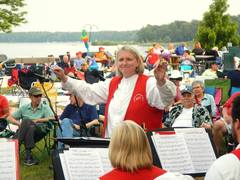
I played my flute in a patriotic-themed outdoor concert last night with the Northport Community Band–as cooling breezes blew across Grand Traverse Bay and firecrackers popped in the distance. There were at least 400 people seated in lawn chairs, clapping along to You’re a Grand Old Flag, The National Emblem and The Stars and Stripes Forever. We played a service medley, as we always do, asking veterans to stand when the tune representing their branch of the service was played. This is standard for our summer concerts–and I usually think of this as hokey, the musical equivalent of a ‘Support Our Troops!’ bumper sticker.

But last night, instead of zoning out during the rests, I watched the crowd–the old men struggling to get to their feet or simply waving from their wheelchairs as the crowd clapped and cheered for them. And I thought of all the major sacrifices–not just lives of young, innocent men and women, determined to serve their country, but the endless struggles for civil rights and equity and justice. I reflected on the striving, loss and pain incurred in the ongoing process of trying to make this nation a true democracy (or republic–take your choice).

The people who tartly point out that we have never been a just and fair nation are correct. But I don’t remember a Fourth of July where I’ve felt more discouraged about the home of the brave, land of the not-really free.

I also still feel a deep commitment, an obligation, to the relevant principles, even as they’re chipped away and made meaningless: Liberty. Opportunity. Equity. Justice. Peace. Persistence.

I found myself, unexpectedly, in tears last night. So much has been lost, damaged, soiled or destroyed. Evil is rising. You can’t deny it. Just watch the news.

Were all the sacrifices in vain–going all the way back to the ragtag Colonial armies, losing their lives over taxation and the conviction that somehow this was their land, that they were entitled, by their Creator, to defend their homesteads and the fruits of their labor? What about the terrible price paid to end the scourge of slavery? To build and invest in becoming a world-class power? All the people who steadfastly developed the American dream–is it just the way of the world that their sacrifices were meaningless in the face of greed and corruption?

The etymological root of the word sacrifice is to ‘make sacred.’ I think I was experiencing the sacred last night, watching the 90-something Navy man sing ‘Anchors Aweigh’ in the front row–and the grandfathers who served in Vietnam shyly nod to each other across the crowd.

I also thought about where and how those men and women were educated. Where did they absorb the idea that citizenship is both blessing and duty? Who taught them to read and calculate, who nurtured their talents and their dreams?

The county where I live–one of the most beautiful spots in the nation, according to Good Morning, America-was originally settled by Native Americans, who still have a large and active presence here, and whose children attend public schools. The abundant fresh waters that drew them here centuries ago are now threatened by a crumbling oil pipeline that lies under a major shipping lane.  Should a public education include factual information about protecting our greatest environmental asset? Is that not also a sacred American principle?

In this holiday week, I am choosing to still believe in the things that genuinely have made America great, those blessings of liberty that include a free, high-quality, fully public education for every child.

Rule Followers, Unite! And Stay Alive…

Meme wisdom: Those who have stayed inside, worn masks in public, and socially distanced during this entire pandemic are the same people who are used to doing the whole group project by themselves.

Of all the hundreds of things I’ve read about distancing, risk assessment, statistical analyses and their failings, back to school/stay home, and whether masking is really an IQ test—I like this one the best.

Every teacher with a couple years’ experience recognizes those kids: the ones who do what they’re supposed to do, even if it means picking up considerable slack generated by other kids. Community-minded kids are not always academic superstars, by the way—some of those really resent having to share their superior intellectual skills in the service of a good grade for a group. They will let the teacher know that, too.

In my classroom, rule-followers were kids who retrieved the percussion mallets or folders, after class. Students who showed the person next to them the correct fingering—and said ‘good job’ to their stand mate, when they mastered the Ab scale.

After all, we were playing together. Music is not an interpersonal competition—it’s a group project. We need each other. That was the party line in the band room, anyway—and most kids actually believed it and lived it. It didn’t come naturally, however.

The question is: how do cooperative kids get to be that way? What is the secret sauce that feeds a sense of community responsibility over personal gratification? How can we have pride and true excellence, while staying within the guardrails of kindness and collaboration?

The quick and easy answer is that children learn (or don’t learn) this concept at home: Our family is a team. Don’t be greedy. Don’t be selfish. Use your manners. Think of others. Share.

I would suggest that students also learn (or don’t learn) these behaviors and beliefs in school—and from absorbing an endless stream of media. And by living in the United States. As Bob Wachter says:

America is good at many things. But handling a pandemic—at least in our current political atmosphere—isn’t one of them. In fact, we suck. We’re too individualistic, too spoiled, too vain, too partisan, and too willing to believe misinformation, conspiracies or craziness.

Yikes.

Still, I’ve been having conversations with teachers—both retired, and still in the classroom—who express surprise and horror at things their former students are saying online: No way am I wearing a mask. This whole thing is so overblown. Even if we get a vaccine, I won’t trust it. I need a haircut! This violates our constitutional rights. I heard they’re just saying everyone who dies had COVID. I think Bill Gates is behind this.

So much for the value of science, the actual documents and principles of our government, statistical analysis and media critique skills. Nice job, Teach! Sigh.

In a class on International Education, a Japanese teacher told us that the first goal in every elementary classroom in Japan was a focus on building community—acceptance of every child, no matter what their academic skills or personality, as a valuable and functional member of the group. We work together, we clean together, we play together, she said. It’s our social foundation.

Indeed, many teachers in the United States do several of the same things—build their classroom communities and procedures for working together early in the year, knowing that it’s a worthwhile investment of time that pays off in better discussions, a better atmosphere, better individual and group work. Whatever success teachers had in their lightning-quick shift to distance learning was built on relationships that were nurtured early in the 2019-20 school year.

The problem is that these practices—establishing caring communities, cooperative learning—aren’t always valued in the American system. Following agreed-upon rules becomes a fool’s game, something that only suckers and goody two-shoes types buy into. Japan is a homogeneous society, we’re told—but we, here in the home of the so-called free, are more diverse. We must rely on our individual strengths and ruthless determination to get ahead.

And so we end up with this—and this, both of which illustrate the point where  refusal to comply with simple rules becomes psychopathy. Plus—staggering COVID infection and death rates that could have been prevented or mitigated if everyone—parents, educators, and political leaders—did their part and followed the guidelines.

How do we get people to obey the rules? Ask a teacher. A few quick thoughts:

  • Mandates and punishments seldom work to change behavior in schools. Likewise, we can’t arrest every person who tries to enter a business without a mask, or crowds behind us in line. The more time we spend enforcing rules and punishing students, the more we get this escalation and anger. Schools now defunding in-house police officers are moving in the right direction. Force is the blunt instrument of compliance, as some segments of American society know only too well. Force leads to more force, and all of this is based on fear, a terrible motivator.
  • Incentives have temporary value. Teachers who gave obedient students Jolly Ranchers know this–it’s basic Skinnerian conditioning, and eventually masks the real goal in favor of the reward. You can give customers wearing masks five percent off their purchase, but the habit is short-lived.
  • Community disapproval sometimes works, if gentle, but it can horribly backfire, as any teacher with one recalcitrant troublemaker prone to public fit-pitching will tell you. Being shut out of a community is a painful experience for all humans, children and adults. It seldom leads to permanent changes in attitude and can, over time, damage children and adults. Use cautiously.
  • Persuasion seems to be a wonderful way to change anti-community behaviors. If only it were quick and easy, to just ‘listen to the scientists’ and do the right thing. It doesn’t matter what experts and authorities have to say or how many times you post that clever graphic about the percentages of virus suppression with/without masks—persuasion and its ugly cousin, shaming, seldom work without a long, gradual period of shifting values. We’re a nation of skeptics, encouraged by myth and law to ‘stand our ground’–and our selfish habits die hard.
  • Modeling can be effective in schools, especially adults who model kindness and cooperation. When children see adults behaving responsibly and with a generous spirit, they get the idea that we’re better off working together (at least at school). Modeling works less well with adults, but it’s always worth trying.
  • Leadership is a powerful tool in sustaining a school community and creating a climate of safety and caring. I know lots of teachers and school leaders who had students and staff eating out of their hands, due to strong character and clearly expressed values. We have seen some genuine political leadership during this crisis, as well as abject failure. In fact, it’s never been clearer how much leadership matters—it’s emphatically not true that all politicians are crooked and only interested in benefitting themselves.

The literature on leadership is vast and often contradictory, but every nation that has been successful in quickly changing the habits of its citizens to mitigate the effects of the coronavirus has powerful and well-regarded leaders. In the battle to get citizens to follow the rules we need both leadership and courage. We also need to remember that all these tools can be used for the wrong ends.

It takes courage to call out citizens who are endangering others, people who value their own temporary pleasure over the well-being of others. Heedless people. Selfish people.

People who are tired of being the ones who do all the work in that whole group project, UNITE!

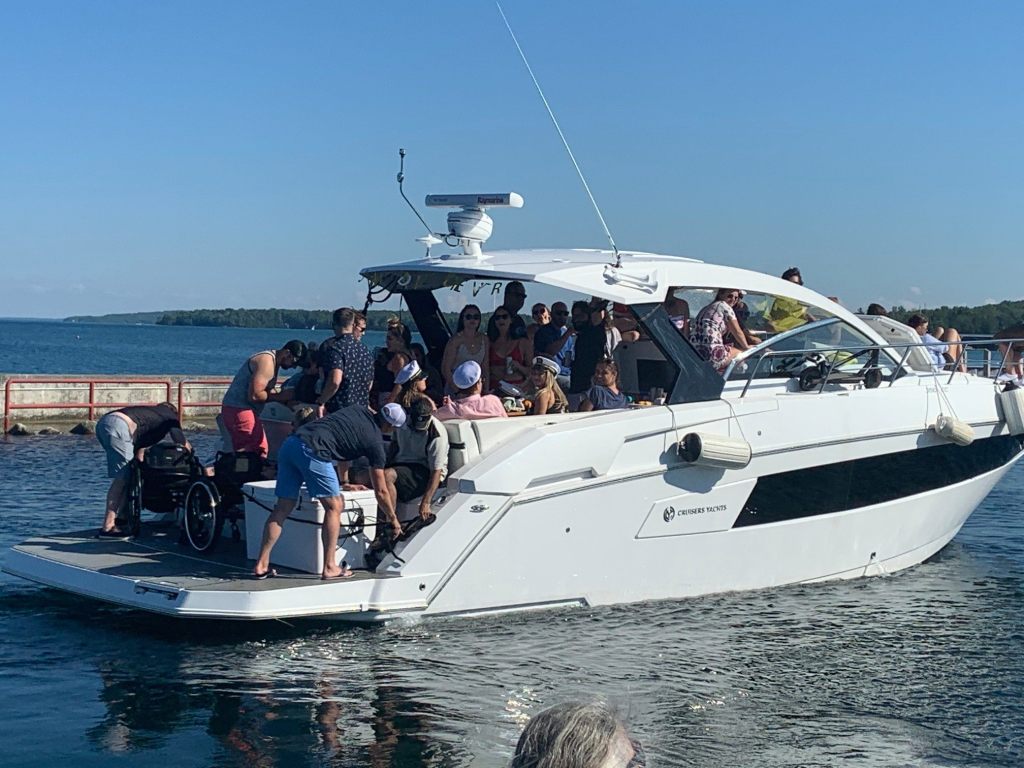
Photo by Will Harper. The local sheriff, when contacted by marina staff, declined to come.

About Joe Biden…

If you only read this blog for thoughts and opinions about education, here’s one you can skip.

I’ve been thinking about Joe Biden.

If you think this is going to be one of those ‘Joe Biden was not even close to my favorite candidate but we all have to vote for him because we’re at the edge of the abyss’ blogs—it’s not.  (Although that’s true.) 

It’s also not a blog about how we have to fix Joe Biden, by pushing him leftward and micro-managing all the choices he makes, beginning with the woman who ultimately becomes his Vice-Presidential pick. It’s already obvious that whomever he chooses, there will be a segment of likely Democratic voters who think she’s the wrong choice and will post long strings of articles critical of her former career, lack of proper experience, age, and personality.

Nor is it a blog about policy, although policy is totally, totally my thing. We can fly-speck every piece of legislation Joe Biden has ever had his hands on, going back more than 45 years, the reasonable and the terrible. But as the guy currently occupying the White House illustrates—a policy platform is just a piece of paper, not (as you may have assumed) an important statement of the party’s core principles and goals.

I mean this literally—the Republicans just announced they will, in fact, be recycling their old platform from 2016; Jared wants to shrink it down to a bulleted 3 x 5 card. He probably wants to drown it in a bathtub, too.

This year, for them, it’s all about Trump: Love him or leave him. The rest? Meaningless detail.

The Republicans obviously understand how little most Americans care about policy specifics. It makes me wonder why the people I’m in conversation with have started so many social media fights over such marginal issues as which candidate had the most extravagant education funding multipliers, the most generous  health care plan, or the most ideologically pure campaign staffers.

A few weeks ago, friends I respect were posting pieces and supportive thoughts about Tara Reade, the woman who accused Joe Biden of sexually assaulting her, decades ago. These were people who—like me—were disappointed that we ended up with Joe Biden. They saw him as a deeply, irreparably flawed candidate and Reade as a woman who, like Christine Blausey Ford, had just been afraid to come forward.

There was heat on some of these threads, anger over what appeared to be a double standard in defending some women who had been harassed, but castigating others. Most people were willing to admit that we will never know the truth, but some kept the sharp criticisms of Biden rolling, saying inflammatory things like ‘We shouldn’t have to choose between two rapists’– way over the line.

What did they hope to gain? Well, maybe a brokered convention. Or a Joe Biden who realized he wasn’t up to the fight–and withdrew his name. Someone else to run against Trump. I’m not just spit-balling here. These were things people put in writing. They couldn’t vote for him.

Since then, Reade’s story has fallen apart, pretty convincingly, through a lot of good reporting—like this. And this, and this, and this—and, most comprehensively, this. It’s even possible to imagine that we have learned some things about accusations of sexual misconduct, and how to sort out those that have merit from those that emerge from some other place.

But that still leaves us with Joe Biden, a man about whom many people on the left express marginal enthusiasm or outright contempt. How did we get here?

Go back—way back, a year ago. From June 17, 2019:

 Former Vice President Joe Biden is still leading the Democratic primary, but is potentially seeing some soft spots in his foundation, according to a group of polls released in recent days. Meanwhile, Sen. Bernie Sanders has plateaued, and Sen. Elizabeth Warren is surging, with Sen. Kamala Harris and South Bend, Indiana, Mayor Pete Buttigieg holding steady right behind the top three.

It’s hard to remember, but Biden led the pack for many months in 2019. Pundits said it was just name recognition, and Biden’s association with a popular former president. The current POTUS was cooking up crooked ways to destroy the Biden family, a quid pro quo that would play out on TV for half the year and reveal the depth of rot and feckless power-mongering in one party. Plus, there were other, better choices for President—both on the progressive side and more centrist candidates.

It seems remarkable now that we ended up with Uncle Joe, the uninspiring veteran pol with the long history of mistakes, gaffes and foibles.

Then we had a grossly mismanaged pandemic. And millions of outraged citizens calling for change, marching in the streets in face masks. And the military reminding the current president its job was to protect our nation, not Neiman Marcus or Tiffany’s.

I have started to think of Joe Biden as the boy next door, or the bowl of chicken noodle soup we long for when we’re sick. Bland, but soothing, something that everyone likes when they can’t breathe—literally or metaphorically.

He may, in fact, be just the ticket—someone disillusioned white men who thought Trump could give them back their jobs would vote for, seeing him as a blue-collar everyman. Someone white suburban women, fed up with the white male phalanxes in every WH photo op, could vote for. And we already know that it was black voters who put Biden back into the primary.

At this moment, I doubt if there’s another Democrat (including the ones I was enthusiastic about) who would be a more universally acceptable candidate to America. Joe isn’t breaking down any barriers, true, but what we need right now is someone a strong majority can vote for.

There’s been some nastiness among progressives around Biden’s carefully doled-out public appearances, and refusal to embrace defunding police, among other issues. Many veteran pols (LBJ springs to mind) used their moderate public profiles to institute great changes in policy, however. And if all Joe Biden does is serve as calming, unifying presence to a bleeding nation, that’s OK. We have to be healthy before we can take advantage of the window of change now opening.

I’m with Joe. And not just because I have no other choice.

Passing Counterfeit Money and Other Thoughts on Policing

Here’s a story about passing counterfeit money:

I was traveling, in Amsterdam, about five years ago. I was nearly out of cash, so I went to an ATM in a modern mall, part of the Centraal Station area, where trains and trams transport passengers from all over the world. I got 100 euros, using my debit card. I did a little tourist-shopping. Then I stopped for a coffee and a croissant, at a Starbucks. The ultimate American thing to do.

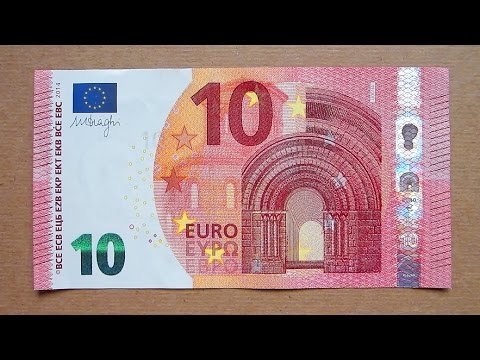
When I got to the cashier, I gave him a ten-euro note from the cash I got from the ATM. He passed it through a machine and, in pleasant, Dutch-inflected English, informed me that the bill was counterfeit.

I was stunned—it can’t be, I said. I just got it from an ATM. He smiled, turned the machine toward me. Watch, he said. Then passed the bill under the machine several times, each time registering a bluish light and a red text: COUNTERFEIT. He pulled a pen-like device out from the cash register and ran it over the bill, as well. It was bad money, all right.

Do you have another way to pay? he asked. Preferably not a credit card?

I did. I gave him a handful of coins, change from other purchases, and it was good. He handed the counterfeit bill back to me. I don’t want it, I said. It’s policy, he said. 

I put it back into my zippered travel purse, and he said—ever so politely—you may want to keep that separate from your other money. I pulled it out and stuffed it into my pocket.

I was humiliated, although the cashier could not have been nicer. I left the Starbucks and drank the coffee standing up, out of sight, thinking dark thoughts about how a bank could have given me a bad bill. There was also no recourse. I could hardly go to the bank (if I could even find a bricks-and-mortar bank with the right name) and tell them that they gave me a bogus ten-euro note, demanding my money (approximately 12 dollars) back.

I went back to where we were staying and compared the bill with other ten-euro notes. I could not see the difference.  I thought about why a Starbucks in an international crossroads would scan every single bill, and how a usually reliable source of currency like a major bank could make a (face it, relatively minor) mistake. Stuff happens, as the bumper sticker says.

Eventually, I realized how incredibly lucky I was. I was a middle-aged white woman tourist, obviously (to the guy in Starbucks) American—probably to everyone else I passed. I was treated as if—of course—I had inadvertently been given a bad bill.

No harm, no foul. Just pay for your coffee. Stop being a Karen.

As the conversation in America moves to defunding or reshaping police forces across the country, it’s worth thinking about all the minor infractions happening every day in the realm of criminal justice, and how we interpret those as seriously criminal or merely needing correction. Potentially harmful things we all do—not using your turn signal on occasion, for example—but only some of us pay for.

It’s also worth thinking about infractions we deal with in the classroom, where teachers police the behaviors of children.  

Any teacher who is honest with herself will, if pressed, acknowledge that some kids get away with more. That we—at least mentally—label kids: Sneaky. Helpful. Lazy. Compliant. Honest—or dishonest.

The first (and only) time a genuine crime was committed in my classroom happened over 25 years ago, when a saxophone was stolen. The child who owned the saxophone suddenly ‘couldn’t find’ it. I thought it would turn up—my personal assumption was that the saxophone’s owner was ‘careless.’

After a month or so, I got a call from the local music store. A woman had tried to sell the saxophone in question to the store, which also dealt in used instruments, saying it was no longer needed by her daughter. Fortunately, the store kept serial numbers of instruments it had sold over time, and it was, indeed, the missing saxophone.

The child who lifted the sax from the band room was a compliant and helpful student. Her mother, who tried to cash in on a stolen instrument, was on the school board. When I brought the mess to my principal, he directed me not to tell anyone. Because it would make US look bad.

The missing sax was returned to its owner—whose parents were not informed that someone tried to sell their kid’s possession. Even though we knew. No harm, no foul. Don’t rock the boat.

All of these people are white, of course.

Things have got to change.

Changing What We Teach

Over the past couple of days, there has been a steady stream of resources, generously shared, for anti-racist teaching.  Here, for example.  Here, here and here and here. And this, just this afternoon.

There are plenty of articles out there speculating on when and how we go back to school, and the consequences of going back too soon. But all the handwringing over alternate schedules, classroom lunches and sanitizing the playground are a great example of focusing on the urgent rather than the important.

Going back to School as Usual only works for a segment of privileged kids in well-resourced schools. All schools, including those where parent satisfaction is high and student achievement is admirable, can benefit from re-thinking what we teach—more than how we teach.

There have been endless conversations on Twitter and Facebook about the value of suggested resources and materials, just how age-appropriate they are, and how they intersect—or don’t—with traditional, standards-based curricula. These conversations, even when argumentative and heated, are good.

This is (or should be) teachers’ professional work. These should be the things we’re reading about, dissecting with our colleagues, discussing with our friends. We can’t go on merely doing what we always did. That’s not teaching. That’s mindless reproduction. It’s clear that it’s not working.

This will involve changing who we are and what we think, sometimes. Take this school superintendent in Michigan, for example, who commented, on his Facebook page:   

“Burning, breaking windows, and looting is also an injustice — what happened to Floyd was wrong! A criminal response is also wrong. Any statement otherwise, condones and perpetuates both criminal acts!!  …it all starts with being a law abiding citizen – had he not paid with counterfeit money, had he not resisted, had he not been under the influence — then there would be no contact with officers; that does not excuse the officer; it just eliminates the conflict to begin with!! It starts with being a good citizen!”

Yeah.  Superintendent of a district with more than 5000 students.

But—I have seen and heard other remarks like his in the past week, and in many years past, in times of unrest. From all kinds of people who see themselves as well-meaning, even progressive. From teachers, too, who see themselves as ‘good citizens.’

Which is why we must do more than space desks six feet apart and set up hand-washing stations. What good is school if it’s just transmitting sterile, pre-approved information, teaching basic skills and collecting data? Why take the risk, unless students we’re giving students something of value, something that challenges them to create a better world?

Skimming through the resources shared by teachers who want to know more about anti-racist teaching, I had a familiar ache: I miss having my own classroom. There is nothing like the juice of having a few hundred students (music teachers often have a few hundred students) and plenty of occasions to talk with them about social justice and equity—and cultural appropriation.

If there were any one thing I hoped my students would learn, it would be an awareness that they’re consuming black musical culture without crediting it to the correct source–or respecting it. That’s the reason I did any anti-racist work (and I’m not suggesting I was good at it): my students were soaking in the outcomes of how to creatively make music out of oppression, and they were totally unaware of it.

We need anti-racist curriculum, all right. Including–maybe even especially–in the arts.

I remember a conversation I had with one of my colleagues, about doing a unit–this was back before the curriculum was steered strictly by CCSS–on ‘tolerance.’ She was teaching 8th grade English and wanted to do some readings and discussions. I got excited about the kinds of music that could support and weave through that kind of unit–artists and composers and reasons why music has value in the culture, helps bridge differences.

We talked about what the community might push back against–we doubted that parents would openly confront teachers over readings about racism, but agreed a handful were likely to complain about readings about tolerance around sexual orientation.

Tolerance (a weak word, but hang with me) might be defined in such a unit as:

In a particular time or place…who is it OK to beat up on a Saturday night? A hundred years ago, for example, it was OK to beat up your wife or girlfriend. The police and neighbors would overlook that as ‘family business.’ That was tolerated. That’s not OK any more—at least on paper. It’s also no longer OK to beat up an immigrant, someone of a different ethnicity or color, or someone with a different sexual orientation.

Except—we can all think of plenty of current examples where tolerance of difference has been shattered. For plenty of spurious reasons. Including righteous declarations about ‘citizenship.’

We’re in trouble. We need to teach our children to do better. We need to look hard at coded language. We need to emphasize the most basic civic acts: Voting. Speaking out. Media literacy. Being broadly informed, about a range of issues. Talking to our neighbors and families.

All of that takes courage. Not as much courage as taking to the streets, but courage. If we just go back to school and do the same old things, then all the ‘learning community’ and ‘21st century’ and ‘high and rigorous’ blah-blah we’ve been tossing around doesn’t reflect what our students observe with their own eyes. If we don’t take this opportunity to teach what matters, we don’t deserve the honor and responsibility of being educators.

All about the Mask

Historically, pandemics have forced humans to break with the past and imagine their world anew. This one is no different. It is a portal, a gateway between one world and the next. We can choose to walk through it, dragging the carcasses of our prejudice and hatred, our avarice, our data banks and dead ideas, our dead rivers and smoky skies behind us. Or we can walk through lightly, with little luggage, ready to imagine another world. And ready to fight for it.

Arundhati Roy

When I read this quote by Arundhati Roy, it felt like she was speaking directly to educators, as they contemplate the return to school: our data banks and dead ideas vs. a completely new conception of how to equitably and even joyfully–a word that is nearly verboten in these discussions—educate our young.

What’s worth fighting for? What do we keep, and what are we willing to leave behind, passing through this portal?

Because it is a gateway to a new world. Consider this headline: Coronavirus may never go away, even with a vaccine:

Embracing that reality is crucial to the next phase of America’s pandemic response, experts say. A future with an enduring coronavirus means that normal no longer exists.

The struggle to get people to think long-term, of course, is not new to public health. We know that smoking can kill us. Yet, it is still responsible for 1 of every 5 deaths in the United States.

“The problem is people putting the present ahead of the future,” said Tom Frieden, who led the CDC from 2009 to 2017.

Ah yes. Every teacher in America is intimately familiar with those who put an entertaining, carefree present WAY ahead of a sober, worthwhile future. They’re called students.

But students are hardly the only folks who value today’s pleasures over tomorrow’s safety and security. My timeline is filled with exclamations over first forays out into the community, and how few people are willing to follow the rules.

Following the rules is another thing that teachers are all too familiar with—and masks and social distancing are now the dividing point between those who are willing to put up with a little inconvenience and discomfort to keep the rest of the community as safe as possible, and those who (often adamantly) aren’t.

I realize that this is one of those ‘two kinds of people in the world’ gross oversimplifications. But it helps us to understand why a Pennsylvania legislator would deliberately put his opposite-party colleagues at risk while keeping those in his party informed and safe.  My team vs. your team—even when the stakes are life and death.

I was amused to see Angela Duckworth (she of grit celebrity) write in the NY Times:

How do we create a social norm of mask-wearing when, in fact, so many Americans are doing exactly the opposite? One common mistake is drawing attention to the lack of compliance. For instance, highlighting littering as a commonplace problem can inadvertently lead to more littering because it strengthens the perception that littering is the norm. Instead, in press releases and public service announcements, officials should emphasize that the clear trend in this country is toward universal mask-wearing. Norms are also established by high-status role models. 

I don’t agree with much of what Duckworth writes, but on this topic, at this moment, she’s right. 

These are lessons I learned—often painfully—as a young teacher:  Some kids are looking for attention, and will get it any way they can, so it’s much better to focus on their community-minded behaviors than their transgressions. For some kids, outwitting authority is a game—so you have to figure out, first, how, and why, they lost respect for authority. A classroom filled with happy children who understand the rules benefit them is vastly better than a classroom filled with kids who obey out of fear of being punished.

I was pleased to see, in Heather Cox Richardson’s daily newsletter this morning an acknowledgement that masks have become symbolic—and that:

…anti-maskers are losing ground to those advocating mask-wearing. While Trump still refuses to wear one, McConnell, and FNC personality Sean Hannity, among others, have called for wearing masks to help contain the coronavirus.

I want Heather Cox Richardson to be right. But on Monday, I saw plenty of people—in my own little, reasonably safe town—without masks. People not being respectful to the trumpeter on the corner, playing Taps. People gathering in close-in groups to catch up on two months’ worth of gossip. Adults being terrible role models for children.

My inner teacher—hey! (fingersnap)– was seriously activated. I had to remind myself that the best thing I could do was wear my own mask and keep my own distance. Stay on the right side of the divide.

I’m trying to take Arundhati Roy’s advice and walk through this world with little luggage—beyond my mask—looking for a better way to live, and to educate our precious children. There’s much that can be discarded. But not the building of caring communities—that’s what we must fight for first. It’s central to our ultimate health, virus or no virus.