The Lost Year Fallacy

The first time I learned about the 1918 flu pandemic—in school, probably junior high history or civics class—I came home and asked my grandmother (who lived with us) what she remembered about the great flu pandemic. She would have been 28 in 1918, still single and working in a grocery and dry goods store.

Not much, it turned out. None of her nine brothers and sisters or their spouses and children had succumbed, nor any friends. She couldn’t remember being ill herself, although she was notorious for living with pain and discomfort. When she was in her 90s, she fell off a stepladder while washing windows. She broke her hip, something that wasn’t verified for a couple of weeks while she hobbled around saying it wasn’t bad enough to go to the hospital, where they might hold her overnight or give her unwanted drugs.

Grandma was no Donald Trump.

World War II broke out when my mother was a freshman in high school. Many of her classmates left school before graduating, to enlist. When they came back, they were offered GEDs and the GI bill to further their education. There were good-paying, middle class jobs for those who just wanted to work, buy a home or start a family.

Their education was disrupted—but hey, duty calls. What’s put off can be reclaimed.

So—why are we claiming that 2020-21 is a lost year? In October, no less? We’re all struggling with this pandemic. Can’t we take a deep breath and try to problem-solve?

Since K-12 public education has been widely operational—for a century, more or less—we have experienced wars, depressions and recessions, 9/11, civil unrest, discriminatory school closings in the South and health scares. School has continued, to the extent possible, during all of these national crises. In fact, in the most degraded and troubled places in this nation, public education is one of the few constants: Kids show up. Kids get taught.

So why are reformers insisting that nothing must change—or we’ll ‘lose’ a year?  With advice like this?

Grades, tracking attendance, grade-level content, and opportunities for acceleration are a must. Pass-fail or pass-incomplete, optional attendance, and a focus on remediation will lead to a lost year whose damage could extend into the future.

Damage to whom? Stand for Children and their grant revenue stream?

The ‘Lost Year’ narrative has come to a scare-tactics peak with Mc Kinsey and  NWEA projecting that students could lose somewhere between three months and a year of learning in 2020-21, even as they attend school remotely. McKinsey claims lifetime learnings will be impacted. CREDO asserted that the average student lost 136 to 232 days of learning in math.

As Chalkbeat points out
: The projections rely on the assumption that students learned nothing (or worse) once schools shut their doors. How could students have lost hundreds of days of learning from missing 60 or so actual days of in-person school?

It has to do with how CREDO converts learning loss, measured in standard deviations, into “days of learning.” The approach is controversial among researchers.

No duh. It also vastly overestimates the real-life utility of testable knowledge students are being fed, the stuff necessary to generate all the predictive data. Test scores—as we all know—do not equate to life, liberty or pursuit of happiness. They don’t even equate to the social connections necessary to get a good job. Even worse, they’re a distraction from the challenges that teachers (the real front-line heroes) now face in trying to figure out how to teach under limited and often dangerous circumstances.

Let me say it again. Test-data estimates, alarmist language and shady research do nothing to help us with the most critical problem we have right now: keeping kids connected to their schoolwork and their teachers. However that’s offered and as imperfect as it may be.

Paraphrased Tweet I read recently:  Can you name one school or district that has actually reimagined education?

Well-heeled education nonprofits now depend on things NOT being reimagined—deeply ironic for those who call themselves reformers. Without tests and data and uniformity and seat time and standard deviations, we’re just back to good old public school, doing our best under the circumstances.

Kind of like schools were in 1918-19, when 675,000 Americans died of the Spanish flu.

No More Debates. For the Good of the Country.

It’s been another tough week in Teacher Land. My music teacher buddies in Michigan are writing about coming inside from the cold, after a few weeks of humming softly in a circle on the grass, playing ukuleles or meeting under a canvas canopy with tubas and flutes.

How to make music safely, indoors: a challenge I never had to meet, but creative teachers are figuring out, on the fly, every day. Kudos, and more kudos, to every teacher struggling to make whatever form their instruction is taking effective. Y’all rock.

But imagine you are the 8th grade Social Studies teacher who assigned watching the Presidential debate, asking for a one-paragraph response or trying to discuss it via Zoom. You anticipated lots of fireworks, and actually hope that your students get hung up on the bad behavior. Because otherwise you’ll have to explain who the Proud Boys are–and the fact that a serving president has already falsely deemed the election a fraud, five weeks in advance. Try being ‘neutral’ and pro-civic engagement after that.

There have been lots of jokes today about needing a middle school teacher at the next debate. Ha ha and all that, but as a veteran, 30-year middle school teacher, let me lay down the law: No more debates.

Media outlets and sponsoring organizations don’t need mutable microphones or better rules. (Better rules and guidelines are a feeble solution to a much bigger problem—something every classroom teacher comes to understand, eventually.)

 It’s not about Chris Wallace’s failure—and it was a botched job– to control Donald, either. It was clear to anyone who watched Wallace’s credible interview with him, a few weeks back, that the president was getting his revenge on Wallace and Fox, in a deliberately crafted (and rehearsed) strategy: Dominate. Flood the zone.  Humiliate your opponent.

Trump openly abused everything: His opponent. Family loyalty. Voters’ intelligence. Norms of civility.

Turning off the president’s microphone is the political equivalent of making him write ‘I will not interrupt’ one hundred times on the chalkboard. It also opens up the possibility that he would walk offstage, as is his habit during ‘briefings’ at the White House. None of this is something children of any age should witness, if we want to preserve a democracy and civic dialogue.

What we need is a consequence with teeth that also protects the whole country from the harm: No. More. Debates.

There’s enough time for media outlets and sponsoring organizations to make other plans. Maybe they’re just done. Maybe they offer Town Halls around policies, with candidates appearing separately. Whatever. But what our children and our country saw last night on television should not happen again. It wasn’t rough-and-tumble, bare-knuckle politics. It was, instead, obscene.

Six in ten observers believed Biden ‘won’ the debate (a word that doesn’t really apply—we all lost, last night). Only 28% thought Trump prevailed. If the voting ends up roughly the same way—two to one—we have reason to hope that we will survive this horrible experience.

Biden, in what I thought was one of his best moments last night, turned to the camera and assured us that we could use the institution of free and fair elections to save the republic. Just vote, he said. Trump followed up by declaring the election a fraud and a joke. That’s another thing we don’t want our children to see or believe.

One more teacher story: An award-winning teacher I know in Mississippi started a post today by saying ‘I really need you to read this.’

She said that as a first grade teacher, she had a student whose mother had a blog. After ‘Meet the Teacher’ night, blogging mama wrote about my friend’s ‘weird’ (and ethnically Asian) last name and what she thought about her child having a teacher with that last name.

It was incredibly hurtful, my friend said. Mama ended up pushing to remove her kid from the class. When administration wouldn’t remove him, she withdrew him from school.

I think this is the first time I’ve talked about this, my friend said. It is hard to do. A lot of people never experience racism and xenophobia themselves, so they just aren’t aware of it. I get it. That was me when I was younger too.

She said: I unequivocally denounce white supremacy. I ask that my friends and family join me. I want to see all of my friends and family come out strongly against white supremacy to show love and support of me and my children, as well as love and support of our brothers and sisters who occupy this wonderful planet with us.

She posted two hours ago, and her post has dozens of ‘I denounce white supremacy’ comments, and commiserations from other teachers about dealing with racism in the classroom.

What if every public school teacher said to their class today, in developmentally appropriate language, I unequivocally denounce white supremacy. I denounce it in this classroom. I denounce it in this town. I denounce it in this great nation. White supremacy is—and always has been—wrong.

Parents, teachers and citizens of all stripes should not have to witness abusive, abhorrent behavior and listen to bald-faced lying. We wouldn’t allow our students to do this. We shouldn’t allow our elected leaders to do this, either. For many, many reasons, including that thing you study in school: the lessons of history.

No more debates. Let’s not let Trump destroy discourse, in favor of domination. We all lose.

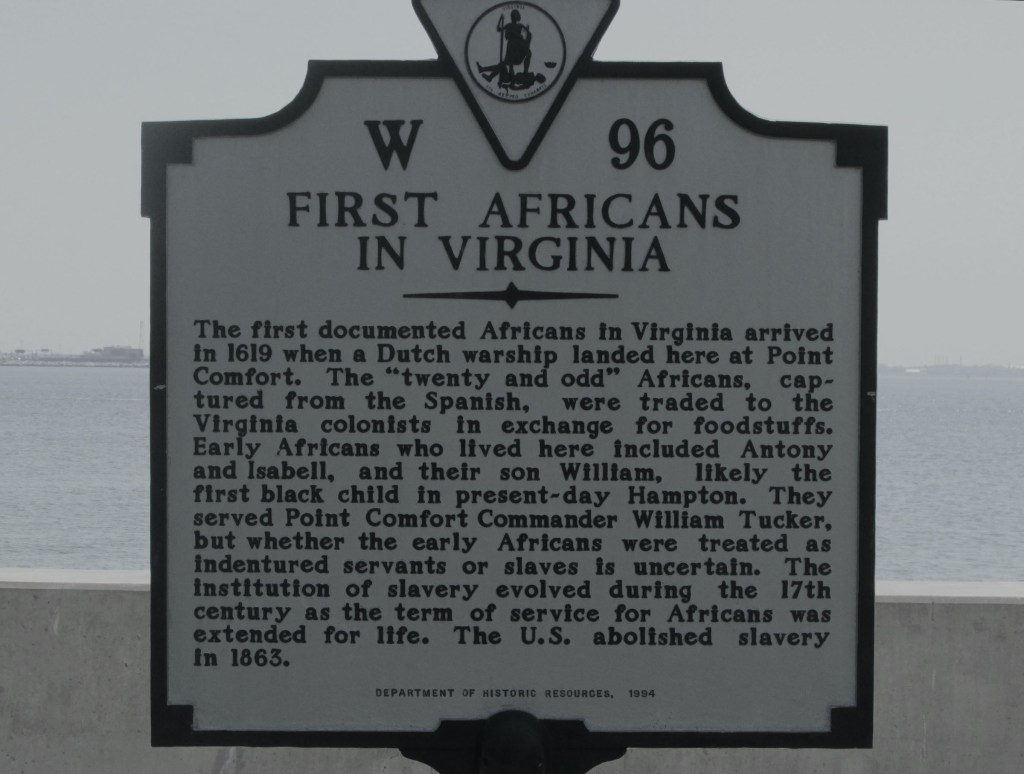
1619

When I was a junior in HS, my American History teacher was in a serious car accident in the fall, and did not return to teaching. This was 1967, and Social Studies teachers weren’t thick on the ground. The situation was personally worrisome: I had somehow persuaded this history teacher to let me take his required class as an ‘Independent Study’ so I could take both band and choir (which were infinitely more important to me than American History).

As rounds of fill-in teachers appeared, I was basically living in fear that my arrangement with Mr. Gilbert would be uncovered. He apparently left no record that I was even part of his class load. I might have to drop out of the choir—and I loved the choir—being coerced to return to conventional, one-chapter-a-week-test-on-Friday American History. It could go on my permanent record, or something.

Then fate smiled. My school district hired a young, spanking-new graduate of Western Michigan University, in December. She was cool with my studying American History on my own, added my name to the official grade book, and offered me her college history texts. Assignments would be short papers—and conversations with her. She recommended paperbacks I might enjoy.

In one of those conversations, I mentioned that her college Am-Hist textbooks presented things differently from our HS text. Things like the smallpox-infested blankets and how Andrew Jackson might not be a totally upright guy.

She smiled her praise. Good work, she said. You now understand that the people who write about history are usually the ones who benefited from the outcome. There are many ways to interpret the events of history—the ones you’re getting here in high school are pretty sanitized and one-sided.

This was a revelation to me, and made me vastly more interested in (and suspicious about) reading history. Most of my teachers seemed to regard their anthologies and textbooks as gospel truth, and thought we should, too. A fact is a fact.

Learning that there are lots of reasons to argue with the bland, evasive rhetoric found in textbooks was a great gift. I am still friends with that teacher—Marjorie Foster Trapp—and we still poke at each other’s thinking on social media. I got lucky.

As I said, this was 1967, the first year I ever saw those black and white diagrams of how enslaved African people were shackled, head to foot, in ships’ holds. When the Detroit race rebellions were still in the headlines, and in the thick of the Civil Rights Revolution, American students (at least in my school) were reading columns of sterile information about Whigs and Custer’s Last Stand. Has there been significant change in the teaching of our nation’s history?

Let’s hope so.

We’ve got vastly more resources at our fingertips now—the Library of Congress, in fact. A well-read teacher can serve as expert guide to artifacts and stories about important historical events and issues, across the developmental spectrum. History could be engaging, even fascinating; more importantly, students could understand what can be learned from mistakes made in the past. We might even teach them to be suspicious of believing much of what they hear or see on Instagram. To be informed citizens.

I believe this is happening in many, if not most, American classrooms. And I also believe that the teachers in front of those classrooms should be able to select the right materials to challenge their students.

The 1619 Project is not, as some have suggested, a curriculum. It’s a set of digital materials—essays, photo stories, editorial pieces and features—on the impact of slavery on all people and institutions in the United States. Nikole Hannah-Jones’ essay, America Wasn’t a Democracy until Black Americans Made It One, would be a great assignment to tackle at almost any point in the traditional HS Social Studies chronology. A little close reading, even; there are easily a dozen provocative ideas about American history in this one piece.

Naturally, Mike (Fordham) Petrilli had to weigh in. The Fordham folks think Trump’s proposed anti-1619 response, the 1776 Commission curriculum (as yet mostly unwritten, but absolutely going to be chock-full of real patriotism and heroes), is our window of opportunity to craft an all-American curriculum that does the impossible: pisses off nobody but instills reverence for our exceptionalism, with all the usual Important Dates and lots of winning. Petrilli has several nit-picking critiques for a contemporary media series on the legacy of having been a slave-owning country for 250 years, and other sources:

‘Take the famous Howard Zinn textbook, A People’s History of the United States. Central to its narrative is the premise that the world is, always and forever, divided into oppressors and the oppressed. This is a deeply cynical idea, though resurgent today in discussions of “anti-racism” and “critical race theory.” Do its adherents expect conservative-leaning parents—scratch that, most parents—to welcome this ideology into their children’s schools with open arms?’

First–anti-racism is real, not a word you put in quotes.

And what is Petrilli’s big idea? He is going with Trump’s 1776 Commission. No, seriously. He wrote that Trump was right to question the too-liberal teaching of social studies in our public schools. We need a commission.

You have to wonder what Fordham thinks high school history teachers do all day.  

What pedagogical and philosophical errors could they be making, that would somehow be fixed by a Commission? A Commission inspired by Donald Trump’s petty rage over a successful media launch involving the NYT and a topic critical to the health and progress of the nation—dealing with our racism problem? A topic of high interest and importance to teenagers, as well.

To all American History teachers: hang in. Teach your students to embrace America, ugly warts and all, and to vote as if their lives depended on it. Our highly imperfect democratic republic is worth saving, and they’re going to be in charge some day.

Take it Easy on Teachers, OK?

So are we tired of the back to school merry-go-round?

My social media feeds are filled with hundreds—maybe thousands—of stories, most of them first-hand, about what’s happening as schools play poker with a deadly virus and human beings.

There are the Never-ending Shitshow posts: School’s in session for three days before COVID makes an appearance. So school’s out, but kids are still playing soccer for some reason. The first day of all-online school, the internet burps at 8:00 a.m., then dies for five hours. Next, the grapevine (not the school) delivers the news that two more kids and a teacher tested positive. Then—football returns after a two-week hiatus, courtesy of a bunch of powerful white dads.  And maybe there will now be a different hybrid plan, to please working parents. Stay tuned. And on and on.

There are also the Brave, Let’s Do This posts: Teacher (perhaps one with asthma or a history of breast cancer) publicly declares this isn’t what she wants to be doing, but damn it, she’s going in, to serve the kids she loves. There are the usual ‘here’s my room’ photos, with the furniture against the walls, plastic shields around the teacher’s desk and taped squares on the floor. The word ‘exhausted’ appears frequently, and the word ‘terrified’ leaks out, but a principal hears about it and makes her take it down.

There are the Tech Helper posts, where teachers swap tips, tricks, emergency fixes and horror stories about technological platforms, and the idiotic policies schools and administrators have imposed: Kids stay home, teachers must report to school. Kids must wear shoes. Kids must turn on cameras. The ‘gold standard’ is making on-screen school just like in-person school, meeting for six hours a day. Videotaped lessons that are supposed to look like Reading Rainbow or Bill Nye, Science Guy. Bitmoji.

The Oh No It’s Going to Be Like This All Year parent stories, where they realize that March-May was just a tiny sampling of what life is going to be like for this entire school year. If your kid is exerting zero effort at home, is that what he’s like at school? What if my family doesn’t have four computers? Will Grandma monitor the kids when they’re supposed to be working?

But the kind of post that really fries my oysters is the one where the finger points at teachers.

There’s plenty of blame to go around:

  • Decision-makers who spent the summer hoping for the best, fearing the worst, and not doing squat to set up multiple advance planning scenarios based on available data.
  • Entire states where masks, social distancing and hand-washing are actively resisted.
  • The withdrawal of rich, white parents from neighborhood schools because they can form pods, hire tutors, afford high-speed internet and cool programs, leaving schools with students who need school to be cared for and fed.
  • Utter lack of political leadership, reliable data, easily available testing and contact tracing—all the coronavirus blah-blah that’s been plaguing us since (per Bob Woodward) January.

But let’s go easy on the teachers. Virtually none of this is their fault—and what appear to be teachers’ failings and idiosyncrasies are often WAY out of their control.

It’s not teachers who decided whether to return to school. In fact, when the current OK State Teacher of the Year spoke powerfully about the risks of returning to in-person school, parents in the audience booed her. Imagine how that felt.

It’s not teachers, independent of their colleagues and school leaders, who set rules and guidelines for the use of electronic platforms. Most of them, even experienced master teachers, are being observed for compliance and accountability. Many are criticized for things that are completely out of their direction: choice of programs and platforms, amount of time expected for student log-ins, even ridiculous things like dress codes and hand-raising are often subject to scrutiny.

It’s not teachers who decided to load up class sizes because there isn’t enough room to socially distance, or make mask-wearing optional for students.

If your child is struggling with new procedures and missing the old way of doing school, so is their teacher. Most teachers, even old pros, begin the school year nervous and unsure of what to expect—in a good year. They rely on quickly establishing personal relationships to build a community.

Some of them start with strict rules and little humor, others start out warm and inviting, but the ultimate goal is always the same: a well-ordered, friendly classroom where all students are seen and heard. Where nobody is isolated, and nobody sucks up all the attention.  

I have seen kindergarten teachers absolutely enchant 30 five year-olds with songs, stories and fingerplays, sitting in a circle on the floor, creating a little village in a week. But these little villages require constant maintenance and vigilance: A hand on a shoulder. A cheek-to-cheek conversation about what you just did, in the hallway. An encouraging smile. The Look. A belly laugh together, as a class.

NONE of this is available to online teachers, right now. Face to face teachers find their bag of tricks is diminished, too, as they try to avoid a dangerous illness. Some of their best pals have taken early retirement. Some of them are doing double duty, teaching two classes in two modes.

This is not sustainable, their posts say. I’m pedaling as hard as I can. And students will reflect what their parents are saying and doing. A parent who starts the school year nitpicking or condemning their children’s teachers will find their children doing exactly the same. Recipe for discontent.

Please. Give teachers a lot of grace, and a lot of kindness. You owe them as much.

Image: LauraGilchristEdu

Pod Save Us: How Learning Pods are Going to Destroy Public Education. Or Not.

The first thing I thought of when people started murmuring about getting groups of kids whose families were connected together for a little home-based mini-school, was the much-heralded advent of charter schools in my state, back in 1995.

Just about everybody who was around and in the thick of education reform back then thought charters held promise. Throwing off the regulatory shackles! Schools with a unique vision and purpose! No more factory-model instruction!

A group of parents, led by one of those perennial PTA-president moms, approached a group of maybe a dozen teachers in the district where I taught, hoping to start a K-8 charter. Several of the teachers had already been discussing a new, arts-infused ‘dream school.’ The parents had a centrally located vacant building in mind, and had run some numbers that showed, somehow, teachers would be paid commensurately with the district’s salary scale, including benefits—and would be freed to run their classes the way they saw fit.

It’s worth noting that this was before NCLB, the Common Core and mandated testing in grades 3-8. I’m finding it hard to remember, in fact, just what we found so onerous and constraining about practices in the buildings we were working in, but that group of teachers (male and female, including several movers and shakers) agreed to meet with the parent organizers.

The parents were super-enthusiastic. They, too, had ideas to roll out, and were thrilled at the prospect of having a greater say in their children’s education, without having to pay private school tuition. The new charter law let them pick and choose teachers and set the tone for who would be welcome there. The leader of the group declared ‘We’re going to have the cream of the crop in our school!’

And that was it. All of the teachers immediately realized why the parents had done so much research and organizing: it was all for their kids. Kids whose parents did not have similar resources and savvy would be left behind, a phrase that hadn’t even entered the education lexicon yet.

I have long been a defender of the idea that parents should do whatever makes them comfortable, when it comes to their children’s education. If you want right-wing religious training, or single-gender education, or a place where your child will not stick out–thinking here of the Obamas not placing their girls, symbolically, into a public school—hey, go for it. One size does not fit all, although a lot of public schools try to accommodate pretty much everyone.

I think trying to tell parents, during a pandemic–especially when there’s a dearth of authentic leadership around making healthy choices for kids–that they have to play by a particular school’s rules is utter folly. Nothing will, or should, stop parents from trying to figure out how to get the best deal for their children during a crisis. That’s what parents are for.

There will be lots of chaos, changes and new understandings about the nature and importance of public school as we muddle through the beginning of the school year. What I’m hoping is that it won’t be another New Orleans after Katrina—where powerful (mostly white) people dismantled a struggling system for their own purposes. Because they had more money and more power, and they could.

Is that what pod-parents are intending? A way to use a virulent virus to duck out of feeling responsible for all children, or at least those in the immediate vicinity? Or is pod-learning a temporary solution that might lead to a new appreciation of the utterly democratic and cost-effective nature of public education?

Conflicting ideas:

~ Pod-learning has no concrete definition. A tutor (please don’t call them zutors) who works with a half-dozen children, twice a week, to accomplish their assigned schoolwork, is a far cry from dropping your child off at someone’s home every day so you can go to work and they can go to school. Do pod-teachers create their own curriculum or merely adapt what’s available, free, from the local public school? Who hires pod-teachers and what recourse do they have when conflicts occur? And on and on.

~ None of this is new. There have been private tutors, one-room schoolhouses and home-schools since colonial times. More recently, we’ve had distance learning and a revolving carousel of online, customer-friendly, charter schools. There are plenty of ways to get your child at least nominally educated—and also into college. Best to keep the focus on genuine learning, which might involve some deeper involvement and hard questions about what your schooling plan does for your child, besides keep them occupied for six hours a day.

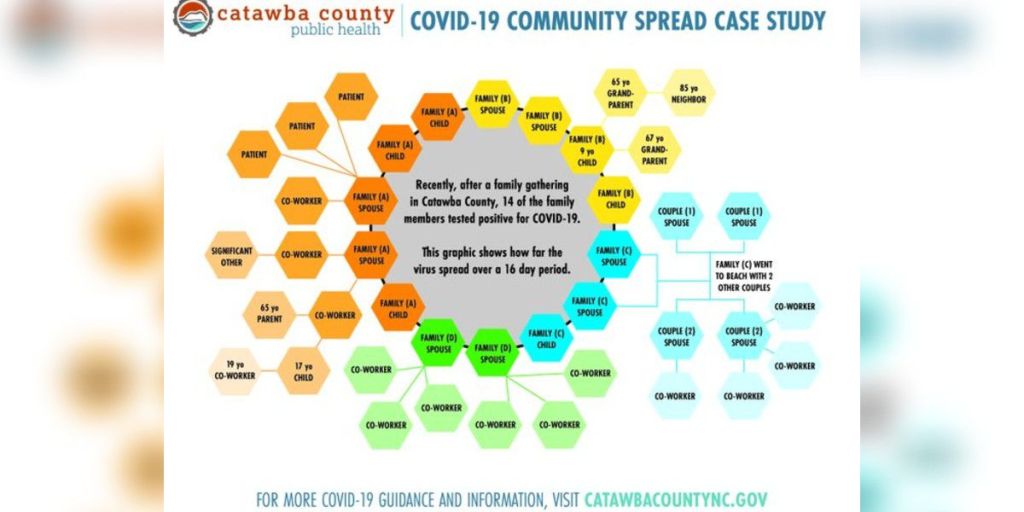
~ If you’re counting on your schooling bubble to keep your kids—and hence, all the people in your household—free from infection while enjoying the freedom of not wearing masks or social distancing, there’s a great graphic for you to study at the end of this blog.

~ Surprise! One of the two great benefits of public education is free/inexpensive childcare. (The other is an educated citizenry but almost nobody talks about that.) What that means is those who can afford to chip in on a pod program can also afford childcare. By hiring a bona fide teacher who is fearful of returning to a public school, you’re deepening the division between haves and have-nots. If, as some talking heads are suggesting, you hire a college student at loose ends—you’re doubling down on the false idea that anyone can teach. Didn’t you already figure that out, back in April?

~ Here’s a certainty: if people form pods to educate their kids, bypassing public schools, it will weaken the commitment to annual high-stakes testing, the Common Core (and its identical cousins with different names), and tightly controlled teacher licensure. That’s not all bad, but deregulation has its downside. Think of it as public education being re-created as a gig economy. Teaching as Uber. Caveat emptor.

~ Teacher professionalism and expertise will be devalued. What will suffer then are the (admittedly idealistic) concepts of deep learning, custom-tailored curriculum, relationship-driven instruction–things that can only be supported by an established system run by professional educators.

~ Pods will have all the problems that public schools have: unsuitable teachers that some parents and children dislike, personality and values conflicts, lack of necessary resources, unforeseen changes in numbers and support for the pod model. Doesn’t matter how large or small your pod is. Doesn’t matter if you’re teaching in a geodesic dome in your backyard—there will be problems.

~ And, of course—the questions around equity. You can argue, correctly, that schools are already inequitable. But what makes a school equitable is not its location or demographics. Equity is built by a reliable stream of resources, committed and talented teachers and genuine leadership. You can’t have an equitable school or provide an equitable education without good people. Temporary, just-in-time pod education disrupts what is good in public education: community-building.

Toward a More Just (and Creative) Curriculum, Part I

Virtually all of the discussion between educators is now centered on whether it’s feasible, with any kind of plan, to return to in-person schooling in the fall. I believe this national conversation will follow the Major League Baseball template: schools will begin closing as viral clusters pop up, perhaps re-opening, then closing again for the balance of the year, as it finally dawns on the most resistant anti-mask parent and school board member: This just ain’t gonna work. It’s too dangerous.

Wouldn’t it be great to just skip that step and focus instead on two things: getting adequate broadband to the half of students and teachers who don’t have it, and figuring out how to use available connections to teach kids things that actually matter?

Teachers settle into a teaching practice– gathering, testing and adopting habits and materials that are effective (and discarding those that aren’t). Many teachers had difficulty abandoning those standardized resources and pedagogies when forced to teach online. They tried to do what they always did—at first, anyway. When that didn’t work so well, they began experimenting, with personal calls and meetings, extending or modifying assignments—and plenty of other strategies.

Teachers quickly discovered that the usual deliver/practice/test model was a bust, with students randomly not showing up or completing things that would have been finished, had the teacher been strolling around the classroom looking over their shoulders. How would this impact grading and testing and comparing? District and state leaders eventually said—we can’t grade (or test or compare). It’s not fair.

The news media, of course,  interpreted this as ‘Students Do Work but It Doesn’t Count!’

Why does the general public assume that learning only matters when it’s quantified? Because we’ve taught them that is the case. Let’s cut to the chase instead: Now that we’re here online (or mailing packets, using phone-in conferences or emailing)—what would be the most useful things to learn? What might be jettisoned in favor of things that address important and current issues?

For children in primary grades, this amounts to lots of basic-skills building around interesting things in their world. When we talk about very young children, most people assume that they’re the ones who need the traditional high-touch curriculum: learning to read, do simple arithmetic, and socializing. In person.

That may not be possible. And I’m not entirely convinced that older kids do better with remote learning. I can think of a number of things that are central to early-childhood learning that might be adapted to learning at home. Vocabulary, speaking and listening, stories that teach us something, counting games, virtual museum visits, nature walks with items being shared and discussed, puppet shows—the list is endless.

The catch, of course, is having someone older around to supervise that nature walk, find the link to the virtual museum, and watch the puppet show after the teacher shares creative ideas and content.

I can also identify the teachers in secondary schools who will struggle the most to develop online models of teaching: music teachers with performing groups, art teachers, physical education and drama teachers, career and technical educators and those with hands-on pedagogies.

We need to be very clear that what elementary-grades schooling provides is free enriched childcare, and that the dangers in online learning generally come from those who would cannibalize both public education and the legitimate, even exciting, uses of technology toward the goal of making a profit.  These are separate issues, and it’s easy to conflate them.

What if, instead, we turned this new way of teaching and learning toward breaking free from lockstep curriculum, and focused on the great issues now facing our country? Things like inequity, antiracism, community-building to help ease the pandemic and other critical problems that need solving? What if we tried to establish a virtual culture of justice, one tailored to our school and our students?


Even when we focus on academics, we too often target low-hanging fruit like graduation rates rather than teaching and learning. Shallow successes allow us to pat ourselves on the back. But a high graduation rate is meaningless when our graduates enter the world without a fundamental grasp of the tools and knowledge necessary for full participation in life and citizenship. We can hope for a reimagining of schooling during this time, but nothing will change in our schools until we prioritize the education of our students.

We could call it the 2020 Interim Curriculum, to keep those heavily invested in CCSS and annual testing from freaking out. It could be a place-based, context-sensitive approach. Learning during a pandemic. Making it up as we go along. If the things we always do can’t be done, because they require conditions and materials that can’t be had, what worthwhile topics—things currently in the news, things that our students might want to know—can fill in?

I’ve had some practice in the art of making it up as I went along. Here is a brief example:

I taught 7th grade math for two years, when the music program was cut. Both times (more than 20 years apart), all math teachers taught from textbooks. In 2004, it was a new curriculum that used different soft-cover books for individual topics. I was the last teacher in the rotation, and while waiting for the previous teacher to finish the topic and pass books on to my class, I had a few days to fill. No challenge for a veteran math teacher, with dozens of field-tested tricks, but I was new.

The Detroit Free Press had a special section on housing. It discussed housing prices across the metro area, square footage, interest rates on mortgage loans, down payments and the fact that for many families, their homes functioned as their savings investments. Lots of charts and graphs and tables, as well as dozens of photos.

I (illegally) copied a couple of the tables and graphs to interpret, and brought the whole section into class. I read the copy on the front page, and then spent the rest of the week showing them how to figure out why a large down payment might be better than a minimum amount, how housing increased (or decreased) in value, the differences between buying in a popular area and a run-down part of town, and how much of a house payment was principal and how much interest.

Seventh graders, it turns out, know nothing about the price of a home. The idea that the homes they were living in might cost a quarter of a million dollars was stunning. Equally surprising was the idea that a genuine mansion in Detroit, with four times the square footage and six bathrooms, might cost less. We briefly touched on redlining, and its impact on Black families in Detroit. We calculated down payments, monthly costs and equity. There were no homework assignments, but each day was full of math and learning. At the end of the year, in the survey I gave them, lots of them mentioned that learning about housing was the thing they remembered, and enjoyed, the most.

And that was before that kind of information was readily available online. I imagine teachers gathering links to stories about housing, the job market, education loans and careers—practical advice plus practice in calculation and understanding how to use math (or literature, or science) in making a better world.

How do things work? How could they work better, for all of us?

The possibilities are endless.  In Part II, a blog about teaching music composition, something face to face music teachers in performance-focused classes seldom do.

Worst Year Ever

I was amused to see that Jay Mathews, longtime Washington Post education columnist, thinks this will be the ‘worst year ever.’ So bad that he thinks maybe we ought to ask public school principals and teachers if they have any bright ideas about how to do school—what do we have to lose? They might have some creative solutions! #sarcasm

The best charter schools have made good use of their freedom from old school district rules and biases. Why shouldn’t teachers and principals at regular public schools have a chance to do that, at least during this crisis?

At least during this crisis—and then, of course, we’ll go back to ignoring their wisdom and treating them like cheap, interchangeable cogs in a dysfunctional machine.

I have been reading Mr. Mathews for two decades. I understand that he represents the old guard in educational journalism—the folks who are actually employed by mainstream news outlets, rather than the motley and generally unpaid crew of folks writing from the trenches. The people who work in schools every day.

The point of this blog is not to evaluate how accurately journalists report on truths about teaching and learning vs. those who rely on call-Randi-then-phone-it-in columns. There are plenty of classroom-based bloggers, after all, who cannot see beyond their school, their students, and their particular needs.

Still–there are lots of people writing about the crisis around returning to schools now, and that’s good, no matter who they are  We need to hear all the voices, including those whose crazy idea just might work for someone, somewhere, even if it is a non-starter for you.

So here is my idea: What if this were the best year ever?

More specifically, what if this were the year that we–students, teachers, parents—got to try everything we ever considered doing? What if you could design your own teaching-learning path and your own outcomes? Freed from the constraints of rigid curricular standards, conventional M-F schedules and tests designed to sort, rank, reward and punish—what if you got to choose what David Berliner calls ‘good learning’?

Nearly every argument against this stems from our cast-in-concrete ideas of what school is supposed to be: You are supposed to be reading in first grade. You are supposed to learn to ‘socialize’ in school. You are supposed to learn a tiny bit about multiple, discrete subjects every day, instead of spending a whole day (or week—or month) using only one or two disciplines. You are supposed to be ready for college or a career at the end of the thirteen-year race.

You are supposed to be able to focus, seated, indoors for hours at a time, without frequent breaks to stretch, use the restroom or talk to other people. Or daydream. Or read something interesting. Or doodle, look out the window or immerse yourself in a topic, skill or project that is of great interest to you.

In fact, in some schools, it doesn’t matter what you’re interested in—we have your content and your benchmarks all laid out for you. It’s aligned with the test that will tell us what classes you’ll take next year, and the year after that. Will the pandemic be over then?

Perhaps this feels as if I have gone all Summerhill, (the ‘radical’ book all education majors dissected in the 1970s). As if I’m a fan of unschooling–or one of those people who babble about the factory model and how school stifles their child’s imagination. How classes are boring in person and even worse online.

Not so. In fact, I’m a great fan of public education, of kids adapting to a schedule and learning to get along in groups. I think most schools do a credible job of teaching kids what they need to know—and some teachers and schools do a spectacular job of preparing kids for the world to come. I also think (and have gotten into trouble for saying out loud) that the brightest children amuse themselves and are seldom bored in school, at home or sitting in front of a computer. It’s the kids who rely on structure, attention and directions from an adult who are bored, who use their intelligence to be compliant or competitive, rather than creative.

So let’s use the resources that public education controls—and get creative, for once.

The plans for fall have been repeatedly divided—by media and policy-making spokespersons—into three buckets: Regular, face to face school. Hybrid models. Online instruction. None of these models is universally viable.*

More to the point, all of them are based on the idea that we need to tread water and make school as close as possible to what it was in 2019, while waiting for the virus to go away. The US Department of Education’s vow to not grant testing waivers for 2020-21 is not based on their deep desire to see whether kids have ‘fallen behind’ so they can get ‘caught up.’ The entire K-12 system now requires test scores as our product, the gears and levers used to control and shame public education and, where possible, replace it with privatized, for-profit models (including charters).

If tests were to go away, permanently, then schools could start designing their own curricula, tailored to the children they serve.  If benchmarks were to go away, we could return to meeting children where they are and moving them forward. If standards were to become optional guideposts, rather than rigid requirements—the kind that mandate flunking children who struggle to read when they’re eight years old –we might even find them useful, especially novice teachers, beginning to build a practice toolkit.

If this sounds like happy talk, it’s pretty much what we had 30 years ago. It’s hard to remember, but solving educational problems used to take place at the district and state level, and testing was something states did to make sure tax dollars were being wisely spent. In many states, schools that posted low scores were given compensatory funding and technical assistance, and deficits were assumed to be related to poverty.

That was then. And now, we’re headed into the ‘worst year ever’—but only if you accept that what we’ve been doing for the past two decades has been a good use of our resources.

It could also be the best year ever. This won’t happen without a political overhaul and a cataclysmic upheaval in practice. But it may be the best opportunity we have.

* This is a personal gripe, but positioning the return-to-school choices for fall as bifurcated—in-person vs. online—is short-sighted. I live in a place where on-line schooling is close to impossible—a huge rural district (168 square miles) where high-speed internet connectivity is iffy at best. My DSL line (our only real choice) operates at less than one mbps, upload and download—not enough to run a Zoom classroom, upload photos and videos, or send an emailed assignment with a large attachment and expect it to arrive in a few minutes. Buses with wifi hot-spots and free devices aren’t going to suffice.

Please don’t tell me that this is a local government problem. I understand that. But my local government, despite 10 years’ worth of being urged to deal with the problem, is reluctant to act, saying that they haven’t heard complaints, and don’t want to spoil the ‘rural character’ of the county. By the time the local government acts, the school year may well be over.

We were one of the cooperative districts formed by the Rural Electrification Administration in 1935, when many of our farmers were not connected to electricity. The reason then is the same as now: too expensive, not enough profit in connecting farms and wide-apart homes. So yes. It’s political. This is what will happen to our postal service, too, if Trump gets his way.

Kids who can’t go to school online need creativity, too.

Are Teachers Babysitters? Maybe.

People are uber-touchy, even panicky, about the questions around returning to school—it’s a life and death issue, all right, including potentially gambling with our most precious asset: our children.

Like any venture that is launched before all the facts and outcomes are available—marriage and childbirth spring to mind here—both in-person schooling in some fashion and staying home for distance learning have their vocal supporters and detractors.

There’s free-floating hostility, too—accusations of parents ‘dripping privilege’ who are urging public schools to reopen, knowing they have the resources to keep their children safe. There are politicians who just want ‘normal’ again, blaming the media, the left, and public institutions for pumping up panic.

And there are teachers—without whom, students will not go back to school—self-righteously proclaiming that they’re not babysitters.

This is not a new statement. A few years back, there was a meme that made the rounds—the teacher rounds, anyway—comparing the work of teaching to babysitting for 30 children for seven hours a day. Guess what? The babysitter made more money. Way more money. So there!

I was never sure what the moral of the story was. Proof that teachers are grossly underpaid for the important work they do by saying that even babysitters make more money? How is that helpful?

Here’s the thing: All work that is critical and essential in building a functional society has its moments of mundane, even undignified monotony. A nurse friend who works in endoscopy once remarked that she’d spent four years studying chemistry, anatomy and biology, but her chief responsibility in her daily job was holding senior citizens’ butt cheeks apart so they could get a colonoscopy.

Not a pretty picture. And not really representative of her skills and expertise, which are substantial. Still, many of what society considers high-level occupations—hedge fund manager, say– are nothing more than a narrow band of knowledge, social connections and high-speed internet. A lot of important work is commonplace and undervalued. Like taking care of children.

Let’s acknowledge, upfront, that the nation, as we know it, will not function without a robust system of childcare. Let’s also acknowledge that PK-12 public education is the biggest piece of that.

Let’s admit how fortunate we are, to have public schools that keep our children safe, Monday through Friday, but also enriched intellectually—and, in many cases, fed, inspired and given glimpses of a better life. Every parent knows what a relief it is when your children are finally in school full-time, and your own work or interests can take precedence for part of the day, knowing that the kids are, indeed, all right.

Teachers are, in fact, childcare experts. Occasionally, someone suggests that teachers’ jobs consist of dispensing knowledge and instilling standard competencies, no more. This is 100% baloney.

Ask any first-grade teacher how many lost teeth she has processed (using protocols for blood-borne pathogens she must review annually). Ask any seventh-grade teacher how many times he’s had to deal with a sobbing child who’s just been called ‘fat’ by mean girls. Ask any high school teacher who’s attended the funeral of a student lost to cancer, or to suicide.

Go ahead—ask them: Did you care for this child? And was that caring an important part of your job? A lot of what teachers have been doing during the shutdown is a kind of childcare, by the way.

During the Great Depression—the one that started because of wealth inequality and the stock market crash—more and more students finished high school. There were no jobs for them, and school was a safer, more productive place than the streets. Public works offered alternative programming, building infrastructure and skills. Funding, during the Depression, was iffy, and politically contentious, but teachers found their extra work in accepting large classes and coping with students who would have otherwise dropped out, paid off in a better-educated citizenry:

The most dismal years for schools were between 1932 and 1936. By 1939 educators observed that Americans’ desire to maintain and improve public education was very deep rooted.

Of course, attending or teaching school in 1934 didn’t involve a pandemic-level health risk.

There’s been lots of digital ink praising grocery store workers, take-out restaurants and USPS drivers for keeping us fed and informed. But what these folks want is not praise for doing their jobs. They want better wages, personal protection against the virus and good health care, which during a pandemic would include regular, free diagnostic testing.

Teachers want the same things—PPE, a viable workplace, testing/tracing, and acknowledgement that they, too, are indispensable, and valued, front-line workers. Corporations don’t expect workers to do their jobs from home, using personal computers and paying for their own internet—why should schools?  

Teachers also want the option of making their own decisions, without condemnation—nobody knows better than teachers that policies and guidelines are one thing, but reality, in schools, is something else entirely.

We simply don’t know enough yet to make sweeping pronouncements about schooling in the fall. This is highly distressing to proactive educators, not to mention parents, who want to get their ducks in a row. But the pandemic is a raging, out-of-control forest fire at the moment, in many places. When teachers mutter about a national strike, to protect their own health and well-being, I think it may well come to that—and it might be justified. But.

Do we all have to follow the same guidelines? Especially since it’s likely that risk levels and mitigation compliance will change, frequently, over the next few months? More to the point: if schools don’t provide childcare, who will?

I keep thinking about a school where I volunteer. About two-thirds of the students there do not have enough broadband access to attend a Zoom meeting or upload an assignment that includes an image or attachment. Theoretically, half of them have access to a device—which may be a single Smartphone for a whole family.

Every child in this district eats a free hot breakfast and lunch at school. It’s a large rural district with families spread out across the county, so it would take a fleet of buses with wi-fi hotspots and free devices for each child to go full-tilt distance learning—and still, most families could not connect in real time.

We’re talking about in-person school here, at least some of the time–or packets. We’ve lived here for 10 years and can testify that adequate broadband isn’t coming anytime soon—it’s simply not a money-maker in remote rural areas where most students live in poverty.

On the other hand, there is only one class of children per grade, in this school, and the largest class is 16. Some classes are as small as five or six. Unlike the vast majority of schools, there is actually room in the school to social distance. It’s a tight-knit community, and there are just 27 cases of COVID in the county.

Is going back to school riskier—to the whole community— than a patchwork of babysitting neighbors or, more likely, kids staying home alone?

I also keep thinking about this statement: Americans’ desire to maintain and improve public education is very deep rooted. Let’s keep it that way.

Michigan Republicans Attempt to Get Out Ahead in Back-to-School Policy

The first thing I did when I retired from teaching was embark on a PhD program in education policy. When I enrolled, my advisor wondered immediately why a newly retired teacher would want to study education policy. She thought I should be in the teacher education program—or maybe the ed leadership division, with all the wannabe superintendents.

But I wanted to study education policy—to see just how the sausage was made, by whom and for what reasons. As a long-suffering object of education policy, I wanted to untangle the process that had so often made me ask: What were they thinking, when they came up with this?

I learned a number of things, most of which weren’t part of any syllabus, none more important than the fact that education policy creation is seldom measured and thoughtful, informed by research, goodwill and common goals.

John Kingdon, one of the most influential thinkers on policy creation, believes that there are ‘windows’ where changes in policy become possible as three streams—a problem, a policy proposal, and politics converge to yield something new.

That’s where we are right now. Big problem: returning to school (or not) during a pandemic. Tons of policy options to address this problem. Politics swirling around the issue, from state control over health mandates, a bitter election season and the devastated economy. What does this mean to our youngest citizens? How will they be educated? This is an oversized picture window for policy creation.

Michigan’s governor, Gretchen Whitmer, announced a ‘Return to Learn Advisory Council’ in mid-May. It was composed of educators, school leaders, public health coordinators and mental health specialists. The panel would use a data-informed and science-based approach with input from epidemiologists to determine if, when and how students can return to school this fall and what that will look like.‘  Last week, Whitmer said that students will be going back to school in some form, as long as our numbers remain low and the virus is reasonably controlled. All good, right? The rest is TBD.

Yesterday, Republicans in the state legislature released a one-page plan that they labeled ‘Return to Learn’ (sound familiar?)–and it is not really based on science or even data, unless you count the ROI numbers that the ed-tech-corp folks must be running about now (Ding! Ding! Ding!).

Perhaps the Republican legislators read Kingdon, and fear that the window to impose their will might close unless they wrest control of the policy proposals and (especially, given the governor’s 70% approval rating) politics.

The document is a mess (D- to the communications outfit they hired to write it). It’s filled with familiar, yet awkwardly worded, edu-mush like ‘Learning doesn’t stop when a student leaves the classroom. Schools should be measured for how they engage students, not how long a student sits in a seat.’

And there’s this gem: ‘Understanding a student’s knowledge of critical concepts is important to ensuring instruction is focused on the most-needed areas.’ I wonder who thought that one up.

My personal favorite: ‘Our plan empowers school districts to develop flexible learning plans for the 2020-21 school year to maximize student learning.’ What does that even mean?

Most of the items seem to be code for a few things the Republicans have long wanted—‘efficiency’ in education policy– and haven’t been able to get. In veiled and gauzy language, and extremely short on specifics, they cover all the various policy models I learned about in grad school:

Mandates:

  • Students absolutely will be tested whenever they return to school (no worries, testing companies). Because otherwise we’ll have no idea ‘where they are at academically.’
  •  Forgiven snow days (a really big deal in Michigan) would be limited to two (currently, six snow days don’t have to count toward annual required seat time, and school districts can apply for three more in an exceptionally snowy winter). For a document that proclaims ‘how long a student sits in a seat’ doesn’t matter, this is a bit inconsistent, but the legislature seems to be trying to appear tough, the law-making equivalent of ‘I had to walk through drifts to get to school, damn it, and these kids can, too.’ This and other items appear to be things the legislature is still smarting over, and wants to re-litigate, even though they have little to do with the pandemic.
  • In-person instruction will be required for grades K-5. This appears to be a gift to parents who must work, as the cutoff age for needing a babysitter is probably 11 or 12 years of age.
  • Benchmark assessments must be used. (You’re not getting out of that, you lazy teachers!)
  • Online learners will get the same scope and sequence of curriculum, and the same day and hour requirements as those learning in person. No more one-hour Zoom meetings followed by independent work or reading, even though ‘learning doesn’t stop when the student leaves the classroom.’ This appears to be assurance that the online education they’re gunning for is just as good for older kids as face to face classrooms.
  • Schools will be directed to focus only on math, reading, science and social studies, called ‘the basics.’ You know what means, and what will be missing, come fall.

Persuasive Policies:

  • There’s a whole section on health and safety, but all it says is that schools will ‘partner’ with their local health departments to ‘ensure’ health and safety practices that ‘make sense,’ and that intermediate school districts will get $80 million to ‘coordinate safe learning measures,’ whatever that means. No money directly to school districts for these health and safety needs. For example, cleaning and sanitizing, ventilation systems, more classroom space, masks. Stuff like that.

Inducements:

  • There’s a section on ‘Restarting Extracurricular Activities Safely’—with a lot of murky language about empowering parents and local guidance. If you don’t understand what that means, there’s a little basketball icon to subtly explain: Yes, there will be sports.
  • A one-time $500 reward for ‘front-line’ teachers. This—essentially a signing bonus for coming back to teach during a teacher shortage as well as a dangerous pandemic—fools not one single teacher. It’s not gratitude. It’s desperation.

System-changing Policies:

  • The lack of specificity, beyond the 5th grade, and the drumbeat of ‘innovation’ and, especially a promise of $800 per student to implement ‘robust distance learning’ is the biggest deal here. In fact, the concept of ‘attendance’ will be ‘redefined’ to mean ‘engaged in instruction rather than physically present.’ That’s huge. Who needs bricks and mortar schools—except for sports?
  • Schools have already been told to expect cuts—as much as $2000 per student, in a state where baseline funding per student hovers just over $8000/per. Now, in a financial sleight of hand, the legislature is promising $800 per student to spend on distance learning plans.

There’s more, hidden in the policy weeds and glittering generalities, but we all know that a budget, not fancy talk, is how priorities are revealed. A lot of this language comes directly from the Great Lakes Education Project, a DeVos-funded policy house

You don’t need a degree in education policy to see this sloppy one-pager for what it is—exactly the kind of ‘innovation’ that will make educators ask: What were they thinking, when they came up with this?

The Best Woman for the Job

Now that I’m not in the classroom every day, I occasionally have breakfast with a group of retired band directors who live in Northern Michigan and meet monthly to reminisce about the good old days in public school music education. Here we are, in September. Notice anything?

cadillac breakfast.jpg

I’m guessing the gender ratio would be similar in any state, if you got retired school band teachers together.  Kind of looks like Congress did, in the 1970s, when I started teaching. Or graduation day at any law, engineering or medical school, back then. A man’s, man’s, etc. world.

I have a large collection of stories around being the only alto in a room full of tenors and basses, year after year. Some of them are funny (like my very first regional band directors’ association meeting, where I was offered the position of Secretary five minutes after introducing myself—and I took it). Some are terrible, heart-rending memories of being belittled, underestimated and ignored. Or worse.

The funny thing is, I didn’t set out to be a pioneer.

I wanted to teach instrumental music, for two simple reasons. One, playing music was my greatest joy in life. Nothing moved me and fulfilled me more than the challenge and the glory that came from making beautiful music.  That may sound like rhetorical overkill, but it’s true. I got hooked on gorgeous music early in life and wanted to turn it into my life’s work. I wanted to share that joy with kids—make their lives richer and more rewarding.

The second reason I became a band director is because I thought I’d be good at it.  I’d observed many instrumental conductors at all levels, played in lots of groups other than my school band—and knew something about what motivated me as a student musician. I had already worked hard to successfully master an instrument and was confident that I could learn the skills and knowledge necessary to become a school band teacher.

Of course, I knew that most band teachers were men. In fact, I’d never worked with or even met a woman director. My high school band instructor told me that he ‘didn’t believe in lady band directors’ and suggested I pursue elementary music education as a college major. The university I chose (like other universities at the time) did not permit women in the marching bandit took lawsuits to make that happen, around the country. Nobody was encouraging me or mentoring me.

Nevertheless, I persisted. It really wasn’t a dramatic personal quest to break a glass ceiling with my piccolo.  I just wanted to teach band.  It seemed like a fun and rewarding job. For anyone.

I went on job interviews where my fitness and stamina in directing a band were questioned. One principal I interviewed with told me he had no intention of hiring me—he just wanted to meet the girl who thought she could handle his HS band.  When I finally got a job, teaching middle school band, the principal who hired me had been on the job one day.  Maybe he didn’t know the rules about band directors? In any event, once I got a job, I was a band director for 30 years.

I’ve been thinking about this a great deal, as mid-term election outcomes have become clear. You’ve probably seen the photographic comparison of Republican vs. Democratic freshmen in the House of Representatives.  ‘Diversity on Stark Display’ says the headline—and it would be difficult to argue, in a representative democracy, that diversity isn’t the crucial ingredient in a fair and equitable decision-making body—or teaching staff, for that matter.

Senator Debbie Stabenow wrote a piece about how the top four offices on the ballot in Michigan were won by women. Not because they were women. But because they were the best person running for the job. The entire mid-term election was a festival of firsts, on the diversity front—and the outcomes were good.

Numbers, in all jobs and experiences once thought to be (usually white) men’s work, are leveling out. The visible trends are positive. And that—in politics, education and the world of work—is good. I’m grateful to every woman who carved or smoothed the pathway for those who came after her.

That doesn’t mean that subtle, deeply embedded sexism has gone away, though. It hasn’t.

It’s often understated and frequently not recognized by its perpetrators. Men relate differently to other men than they do women, in the workplace (and on line). Sometimes, our buried assumptions drive actions in ways we can’t predict. It’s complicated. I learned to work around bias toward women as band directors, but it never went away.

I’m not just making this up, by the way. There’s research.

Whenever I’ve written a blog about the lopsided gender relationships in education, I get a lot of negative feedback. There is lots of room for growth in the way we value who’s teaching second grade, and who’s writing the laws that govern education, however.

You have to be careful before leveling a charge of sexism. But the fact remains, sometimes the best woman for the job is passed over for someone whose qualifications are being louder and ‘bolder.