
If someone suggests a Women’s March, so help me… (Twitter comment)
I remember sitting in the teachers’ lunchroom at my middle school, January 2001, and having a woman I like and consider a good teacher exclaim–after Dubya was finally declared president-by-hanging-chad– “Doesn’t it feel good to have a nice, respectable family in the White House?”
It didn’t feel all that great to me–and that feeling grew worse and worse, as we rolled through 9/11, Abu Ghraib, the Iraq war and the financial meltdown.
Still–she was sort of right. It is undeniable that character matters in public leadership. Or should. Turns out, however, that good character—the kind of person whom we can trust to lead– is very much in the eye of the beholder. Welcome to 2024.
Nobody needs to hear what I think about what went wrong with this election. I would describe myself as bewildered. Sorting through the post-mortem will take time.
But I have to say that my one niggling worry, watching Kamala Harris run an energizing, upbeat, intersectional campaign through these last 100 days, was this: She’s a woman.
Backwards, in high heels, and all that. Please don’t let this be another case of a fully qualified woman passed over for a blowhard jerk.
The campaign downplayed the “firsts”—first woman, first Black woman—but mixed in with the horror of who got elected and what they promised to do, is the bone-deep conviction that this loss had a lot to do with sexism, coupled with racism. What America is “not ready for.”
And lies. So many lies. If there’s anything the nation “isn’t ready for,” it’s the truth about our residual prejudices and historic power-hoarding.
It’s not just women and people of color who were betrayed by the election, of course. The Republican party dropped $215 million on anti-trans ads ($134 per trans person in America). And Capitol police officers, who put their lives on the line on January 6, 2021: “Why the f— did I risk my life on Jan. 6 to defend our elected officials, our government, from the mob that this person sent to the Capitol, only for him to be returned to power?” The list of people who were betrayed—and have good reason to believe they will further lose ground—is endless.
So—I am only speaking for myself here. But as the meme says: We ask women why they don’t come forward when they are sexually assaulted. It’s because we live in a world where an abuser can become President.
In a must-read article in Atlantic, Xochitl Gonzalez says this:
Sexism, it turned out, was not a bug but a feature of the Trump years. Misogyny certainly appears to come naturally to Trump, but it was strategically amplified—through surrogates and messaging—to attract supporters, particularly younger men of all races.
Many of these young men apparently see Trump—with his microphone-fellating pantomime and his crowds chanting the word bitch—as presidential. Misogyny helps disempowered men feel empowered. After Trump’s victory, the right-wing activist Nick Fuentes tweeted: “Your body, my choice. Forever.” It really is a man’s world now.
And here’s what’s making me saddest, right now:
Trump’s return to power—his imminent control over the Supreme Court and the federal judiciary, the coming dissolution of the very idea of the government providing any sort of guardrail against corporate power, carceral violence, and environmental destruction—is the beginning of a political era that will likely last decades.
I’m not sure I have decades.
What seemed—last week—like a more equitable way of addressing (and I hate this phrase) the war of the sexes has melted away. And for me, it’s personal. Here’s my story—one I’ve shared before—about a very powerful man using that power to abuse women:
I did my student teaching in the mid-1970s. I was assigned to a male band director (they were 98% male, back then), who told me at our first meeting that he was accepting me as student teacher because he needed a free assistant. He had a top leadership position in the state organization for instrumental music teachers which took him to many conferences and meetings. He said that he never would have consented to taking a woman as a student teacher—the university had merely asked him if he was interested, and he assumed that, naturally, I would be a young man, ready and willing to do the things he didn’t have time to do for a semester.
He repeated those remarks to the audience at my first concert. By then, it had become a polished story–“I said yes–and then they told me it was a woman!” (Audience hilarity.) I, of course, was making the morning coffee, re-ordering his messy music files and writing his monthly columns–the man couldn’t construct a coherent sentence–for the state organization newsletter.
I was also being sexually harassed and bribed by the promise of a good evaluation and letters of recommendation, something that I very much needed to get a job in a male-dominated field.
I put up with it for about a month, making up excuses to leave early so we wouldn’t be alone together. He grew more aggressive. Finally, I went to the student teaching supervisor from my university. I have repressed a lot of memories about that time–but I can remember that meeting as if it were last week. The supervisor, behind his large polished-wood desk, was wearing a red ski sweater. Behind him, multiple holiday photos of his family, in front of a fireplace, the lovely wife and four children.
I told him my story, in detail. He leaned back, hands folded over his chest. “Are you sure you’re not leading him on?” he asked. Then he ticked off the reasons why he would not recommend another placement: It was too late and would cost me another semester in time and fees. Nobody would take me, once the story of my accusation became public–and it surely would, possibly all over the state given the man’s public profile.
I would be seen as a too-sensitive whiner in a male-dominated field. I thought you wanted to be a lady band director, he said. This is what it’s like. Either handle it yourself or drop out now.
So I handled it, as best I could. I can’t say I learned anything about being an excellent music educator during the remaining three months–the man never turned his classes over to me, not even for a single rehearsal. His pedagogy was best described as intimidation and humiliation. Plus openly flirting with high school girls.
I worked individually with students in the practice rooms (where I learned, from a sweet flute player, that Mr. Exemplary Band Director was also having sex with his students). The one time I was allowed to stand on his podium and conduct a number, he stalked around behind me, making faces and mocking my conducting.
I got through, by “ignoring” lots and lots of grabbing. I had proof that telling anyone what was going on would reflect badly on me–that I would be labeled the spiteful “nasty woman” who was seeking to take down someone who had earned his considerable fame.
After graduation, I got a job far away from the man, in spite of his mediocre evaluation (which specified that I would be best placed as an elementary music teacher, as secondary band directors needed more “stamina” than I had). I built a successful 30+-year career as a band director, including being named Michigan Teacher of the Year. When I saw him at music conferences, I avoided him.
Famous Band Director lost his job–very publicly–about a decade later, when a student finally came forward, supported by her parents, to report that he had lured her into a sexual relationship. He denied it, in the newspaper pieces, then pointed out that the school had one of the state’s top band programs–all because of him.
Mostly, I stopped thinking about him, after that. Then, a few years ago, after community band rehearsal, one of my colleagues, a man I deeply respect, caught up with me after rehearsal, asking “Did you hear that [Famous Band Director] died?”
The first words out of my mouth were: I hope he rots in hell.
Taking a deep breath, I mentioned I’d done my student teaching with the man. My friend already knew–the man had been having breakfast regularly with a group of retired band directors, and had talked about me. Explaining why this monster had been invited to the breakfast club, after being fired for sexually abusing students, my friend said: We took pity on him.
I realized that the Band Director’s breakfast companions, a kind of Old Boys Club, had probably been fed a fabricated storyline about me, too. I felt like I was going to vomit. And nearly 40 years had passed.
— – – – – – – – – – –
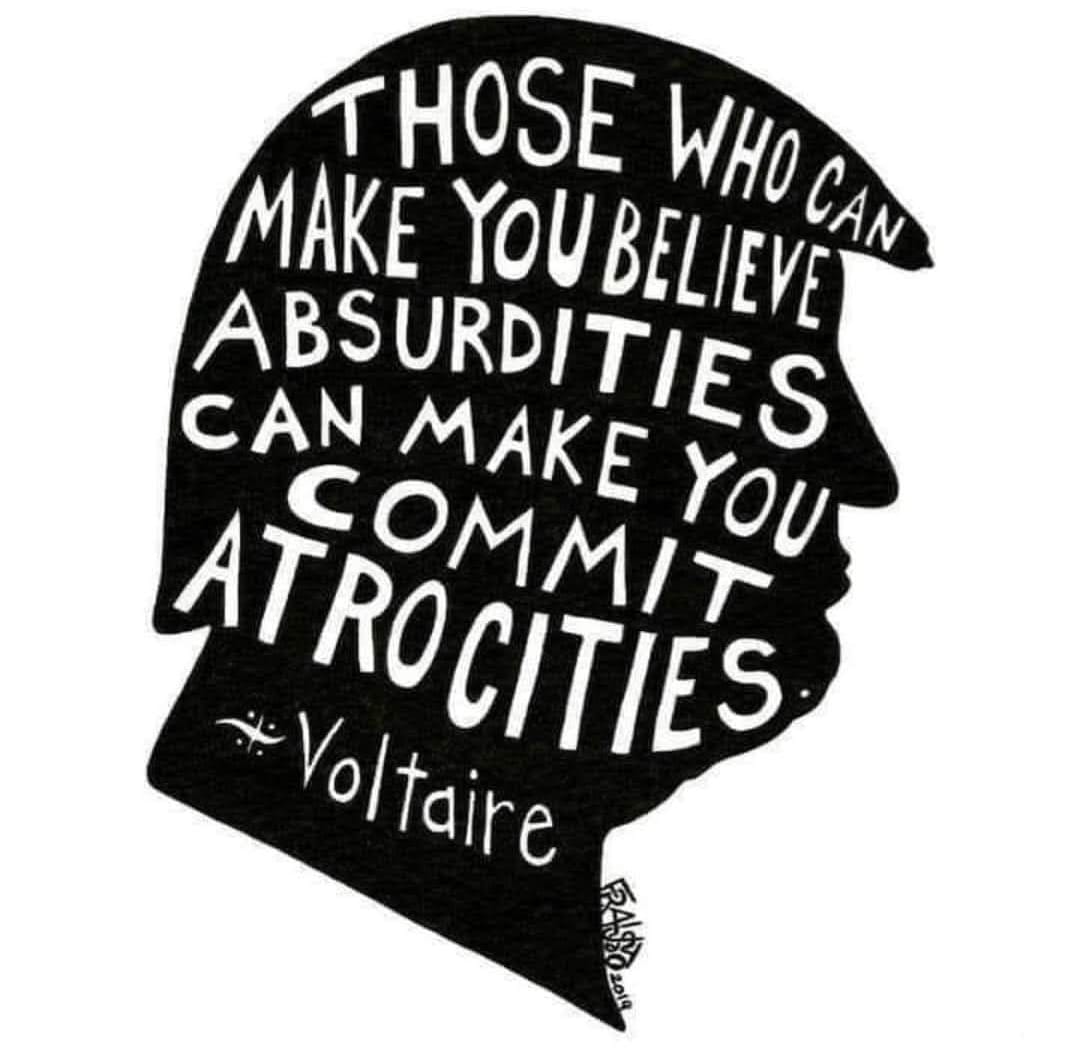
We just elected a convicted sexual abuser BACK into the White House. Anita Hill, who has also had plenty of time to muse on why people don’t believe women, is right–we should be focused on the victims of sexual assault, and not the perpetrators. They’re not strongmen, or role models.
Because paying attention to bullies and sexual abusers feeds their megalomania. And lets them train a new generation of persecutors, the white men who feel they’re entitled to power and the women who hope to bask in their reflected glory.
 Teacher in a strange land