O Christmas Tree

A Fox host said this weekend that more Americans need to buy artificial Christmas trees because tree farms are needed for AI data centers: “There will be transmission lines that have to go through developments and farms. That’s the nature of a growing economy. Everybody needs to get on board. Buy a fake tree.”  (Meidas)

I live in northern Michigan. Michigan is the third highest producer of Christmas trees in the U.S., harvesting around 2 million trees each year. We have over 500 tree farms, most concentrated in the upper half of the Mitten.

Friends of mine, growing up, had low-paying summer jobs trimming the little firs and pines into their eventual iconic triangle shapes. It’s a crappy job in early summer—dangerous and scratchy—but hey. Lots of teenagers have crappy jobs. It’s America.

I have never had an artificial tree. Some of my best friends, as the saying goes, have beautiful artificial trees, for all kinds of reasons—convenience, cleanliness, allergies—and I am seriously Not Judging.

But learning from Fox News that I should buy an artificial tree—presumably to make tree farming, a local industry, fail so that the devalued land could be looted for an AI data center—made my holiday blood boil.

Tree farms—like this one—do not despoil the rolling, wooded terrain of northern Michigan, unlike AI data centers. Most are family businesses, employing local people, investing for decades in trimming and watering, for an annual end-of-year payoff. Unlike AI data centers.

As it happens, a proposed AI Data Center in nearby Kalkaska was withdrawn after resistance to the project was quickly organized. I was surprised—Kalkaska is the quintessential up-north town, with pine-paneled bars and pot shops as the main business thrust, plus a giant trout fountain in the middle of town.

You’d think they’d jump at the chance to build a huge data factory—construction jobs in an uncertain economy when unemployment is rising?  But no. They knew that “the nature of a growing economy” was going to come back to bite them with ugly power lines, jacked-up utility prices and the loss of 1500 acres of state-owned land.

When Fox News decides that fake trees are patriotic, urging us to buy plastic trees mostly made in China, to support the modern economy, something is very wrong.

But you already knew that.

We have purchased beautiful live trees from three different local sources—two of which have gone out of business in the past decade. We are scaling back this year, with a 9-foot Fraser Fir (the photo, a 12-foot Fraser, is from two years ago). Neither of us wants to get on anything higher than a stepstool anymore.

The tree cost $60, a $10 increase over last year, with the elderly, babushka-ed lady at the cash register apologizing to each and every customer. They have to charge more, she says, to stay in business. There are lots of post-teens working—hard—in the miserable cold, probably the same ones who had summer jobs trimming trees with machetes.

Our tree was cut less than 24 hours before we took it home, bundled and tied into the back of our pickup by those same local guys. It can eventually be chipped into mulch. It smells nice.

Best of all, it’s a subtle strike-back at the wave of Artificial “Intelligence” rolling toward us.

O Tannenbaum. Wie Treu sind deine Blatter.

Happy Holidays to all Teacher in a Strange Land readers.

Christmas Music: The Good, the Bad and the Downright Ugly

Music is my life. I play several instruments and sing. I majored (and double minored) in music in college and am active in civic groups and church music as participant and conductor. I even went to flute camp (for adults) last summer. And I spent 30-odd years as a public school music teacher.

So– I have a love-hate relationship with Christmas music. Mostly love. But.

December can be brutal for musicians—and for school music teachers, brutal on multiple levels including community expectations and endless rounds of kids-on-risers. Music teachers become de facto activity directors, lurching from frigid parade to caroling at the nursing home. 

But still—there’s the rich opportunity to teach excited kids something about their cultural inheritance and surround. Which includes a clear definition of the divide between music as spiritual practice and music as auditory clutter.

Because you really can’t get away from Christmas music in America in December (or November), hard as you might try. People of other faith traditions, people who don’t believe in any of the Christmas iconography (like Santa or Jesus), people who loathe the downtown decorations and the Hallmark channel—we’re all stuck when Santa Claus comes to town.

For many people, Christmas music becomes irritating aural wallpaper, especially if they’re tuned into one of the omnipresent satellite radio Holly-day stations, or actually paying attention to what’s on the PA system as they’re perusing cheese in the dairy aisle. Because most of the commercial Christmas music readily available in businesses and on Sirius is, frankly, somewhere between uninspired and dreadful. I don’t want to hear—to choose just one example—Burl Ives at any time of year, let alone at holly, jolly Christmas.

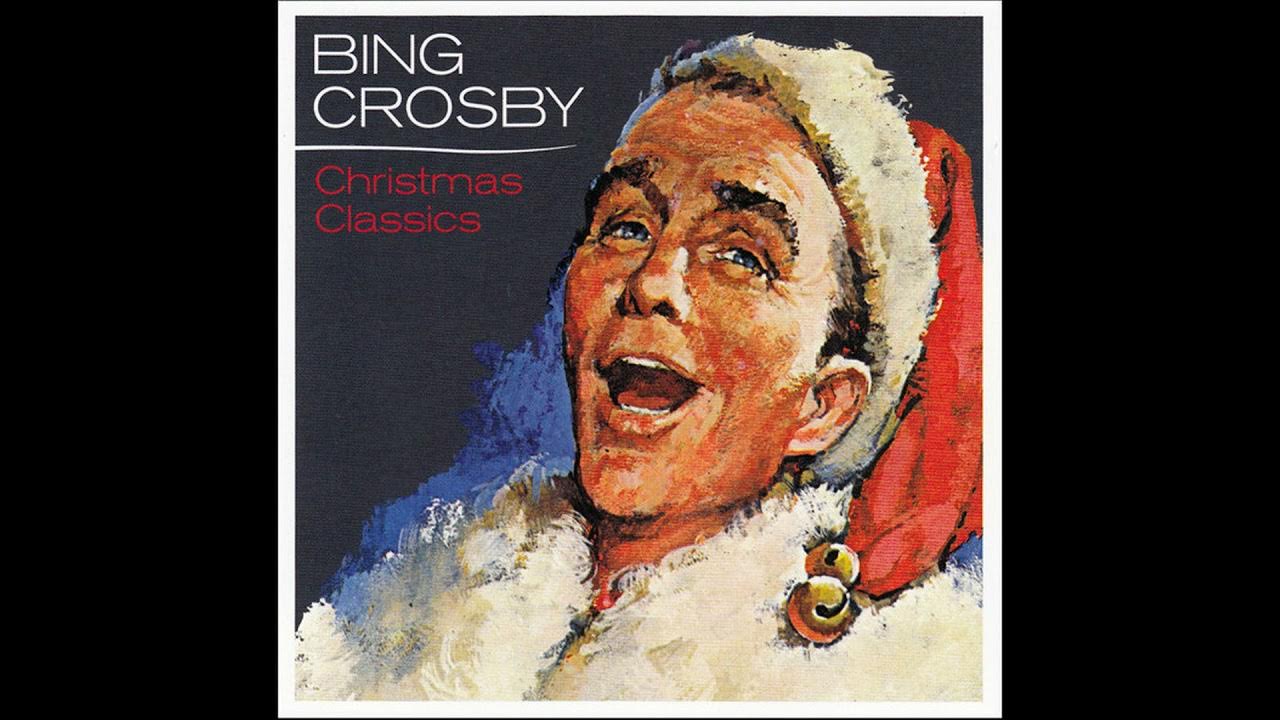
I started listening to Christmas music on my little portable record player (Christmas gift from my parents), beginning with the LP records from the gas station ($1 will Fill-up!), where Percy Faith and Ella Fitzgerald were interspersed with the Chipmunks and the NY Philharmonic. When I got my flute, in fifth grade, I was invited to play Angels We Have Heard on High for the church Christmas pageant, a gig I kept through junior high because I liked the wings and halo, as well as the tune. I was hooked.

So I started collecting (and studying) seasonal music as a teenager, eventually making yearly cassette tapes of my favorite cuts. Cassettes morphed into CDs in the 1990s. I made annual gift CDs for family and friends—then eventually, due to the magic of iTunes, custom-selected CD playlists and discs for my regular customers. I requested multiple catalogs from folk and jazz artists and ordered new CDs, unheard, in the fall. At one time, I owned 500 holiday CDs, and had a catalog of over 3000 digital cuts on iTunes.

 Yeah, I know—when does a hobby become a sickness?

The last year I made CDs was 2018, when I realized most people no longer had the equipment to play a CD. I still make my own annual December playlists on Spotify—there are still arrangers and artists creating beautiful new seasonal music. I love listening, but I am really picky about what I am listening to.

Here’s the thing, though, about so-called Christmas music: it’s familiar, or will become familiar in time. A tune you recognize, when you hear it again, come December. We don’t have a lot of those commonly remembered classic songs anymore, holding our culture together. Nostalgia is a part of cultural norms.

For centuries, there was mostly sacred music—all of which has cultural value, whether the listener is a believer in the divine, or not. O Come, O Come, Emmanuel dates back to the 9th century, for example. How often do young listeners authentically interface with such a different time, except through music?

Commercial music has been shaped by the march of new technologies and low-bar popular opinion (lookin’ at you, Frosty). Children no longer know folk songs sung around campfires in the 19th century—unless they learn in school to cross the wide prairie with Betsy from Pike. We are losing bits of our cultural heritage, including traditional carols.

Whatever you want to listen to today is immediately available on your phone. But if you haven’t explored the truly glorious—magnificent or austere or funky–songs and carols of the season, how will you know what to ask for, to know what musicians have created from a simple tune?

In collecting mountains of Christmas music, I have favorite versions of all the songs, of course. But when I want to relax on Christmas Eve, with a glass of wine, this is what I put on: https://open.spotify.com/track/5c0sQY87Iw7qUu46N31f3v

Gifts of Christmas Past

In a holiday-themed archetype of legislative overreach, Alabama passed an ethics law back in 2011, forbidding K-12 school teachers from accepting expensive presents.  Previous legislation set a $100 limit on individual gifts to public workers, but the 2011 law specified that gifts to teachers be limited to those of nominal value. The stated purpose: to reinforce ethical practices by state employees.

This was such a big deal that the AL Ethics Commission was receiving about 25 calls a day from parents who didn’t want to get their children’s teachers in trouble. The Ethics Commission released a detailed report, letting parents know that cookies, hand lotion and mugs are OK. What I found interesting was what was forbidden. Four examples: hams, turkeys, cash and “anything a teacher could re-sell.”

I was a classroom teacher for more than 30 years. I received hundreds of Christmas and end-of-year gifts over that time. And I never got a turkey or a ham. Maybe that’s an Alabama thing?

Nor did I ever get cash– and if I had been slipped a card with cash, I would have returned it immediately. In fact, I don’t know any teacher who would accept cash or an extravagant gift, especially if they thought the gift came with strings attached. The teachers I know have a whole shelf full of holiday mugs with “from Brittany, 1998″ written in Sharpie on the bottom.

Besides the obvious issues of unenforceability and heavy-handed mistrust of those charged with educating Alabama’s most precious resource, the whole brouhaha in Alabama had a kind of cheesy self-righteousness about it.

Does a $25 Starbucks gift card come with expectations built in? What if it’s given by a shy first grader who noticed his teacher often brings a Starbucks cup to school? When does the impulse to give a hard-working teacher a nice token of appreciation morph into a calculation of what special favors might be granted through a generous present?

Jim Sumner, director of the Alabama Ethics Commissionwas in favor of clamping down on all public workers. No gifts, period:

It takes away the sense of entitlement that people have built up over the years that people serving the public need gifts.

Sense of entitlement?

Several states have laws limiting the gifts that public employees can receive. About ten states have even tougher rules, not even allowing public employees to get a free cup of coffee. Research tells us public officials and employees are rarely influenced by a meal paid for by a lobbyist or by a gift. But states send a message with firm ethics laws and build confidence among the public that leaders can’t be bought.

Theoretically.

Here’s what I wish I could tell Jim Sumner: Teaching offers many very rewarding experiences, but it’s not and never has been about the great swag.

I’m not sure I ever had a “sense of entitlement” as a public worker– but then, I never came in contact with lobbyists and don’t think most people consider non-elected teachers “public officials.” I’m not sure I ever had anything–like a legislative vote–that could be bought.

Alabama Ethics Director Sumner: “if [a parent] said, ‘I don’t care what the new law is, I’m going to give them a cruise,” that’s a different case …”

A cruise? I can’t speak for legislators–who, after all, can change much more than a mere grade–but I’d be hard pressed to find a teacher who regularly went on international junkets, courtesy of Pearson, the way state education officials have. Don’t we have much bigger fish to fry, educationally speaking, than fretting about setting strict guidelines for what parents can spend on a present?

The whole dustup felt sad to me– part of the impulse to punish and control something that happens rather naturally everywhere: kids giving presents to their teachers. All presents from students are good presents.  They’re appreciated, but the sentiments around giving are what’s treasured.

Thinking back over all the gifts I got –there must be 50 music-themed Christmas tree ornaments– one stands out. I had a kid in my 6th hour jazz band, who came to class the day before winter vacation with what looked very much like a tightly wrapped bottle of wine. “My mom says don’t open it until you get home, and keep it in your drawer today,” he said, all innocence.

When I got home, I unwrapped it. It was a bottle of wine–a very nice bottle, in fact. I saw the boy’s mother in the grocery store over holiday break. “About the gift…” I said and she held up her hand. “You absolutely deserved it,” she said. “We won’t speak of it again.”

The Problem with Jingle Bells

If you follow various chat groups and Facebook pages of music educators, this time of year is rife with the Great Christmas Literature Discussion, centered around whether to schedule a concert in December and, if so, what songs to play, while avoiding stepping on anyone’s cultural traditions.

I have written, often, about this conundrum—honoring the festive spirit of seasonal holidays (which is evident absolutely everywhere, in December, from the grocery store to TV ads) vs. avoiding any mention of Christmas at school, because it’s inappropriate to preference one religious celebration over others, in a public institution filled with diverse children.

From a professional education perspective, it’s thorny. You can play a Christmas-heavy concert, sending parents home in a rosy glow—some parents, anyway. You can try to recognize every winter/light holiday with a tune—or rely on “classical” pieces like Messiah transcriptions. You can try to take Jesus out of the equation, and end up with a lot of junk literature. Or you can avoid the whole thing and schedule your concert in January.

Increasingly, I’ve seen elementary music teachers bowing out of anything directly related to Christmas. They can articulate good reasons for this, distinguishing between music students are fortunate enough to experience at home and with their families, and what belongs in a solid music education curriculum. For teachers who are under pressure from administrators or parents to put on a holiday show, there are winter weather songs. Enter Jingle Bells.

A couple of weeks ago, Peter Greene reprinted his blog entitled The Jingle Bells Effect and the Canon. It’s a bit of brilliance comparing 30 different versions of Jingle Bells, 30 ways of taking a small collection of notes and rhythms and turning them into something unique and different.

It’s like literature, Greene says—there are multiple ways to teach a concept, theme or historical era through the same medium: the printed word. He makes the point that teachers should always be able to offer a cogent answer to the question: Why are we learning this? I agree.

And for many years, I found Jingle Bells a handy instructional tool. The chorus uses only five notes, so the tune appears in virtually every beginning band method book, just about the time kids are eager to play real songs. The lyrics are thoroughly secular—no mention of Christmas—so when kids are singing about a one-horse open sleigh, it’s kind of like the Little Deuce Coupe of its day.

It’s also one of those three-chord songs, simple to harmonize. Add some sleighbells and voila! First concert magic. For years, my middle school band (some 200 7th and 8th graders) played Jingle Bells in a local Fantasy of Lights parade. Because when you’re trying to get 200 young musicians to march and play at the same time, you need something easy.

As awareness of the racist roots and language in some of our most beloved folk and composed songs began to grow, in recent decades, elementary and secondary music teachers rightfully started pulling certain songs out of their teaching repertoire. Scarcely a week goes by without an argument about this trend, on music-ed social media sites. Do songs that sprang from minstrelsy, performed in a different era, for example, have a racially negative impact today? Or are they just tunes? A valid and important question.

I find these skirmishes encouraging, an example of teachers discussing–with some conviction–the beliefs that shape their own professional work. And sometimes, seeing things in a new light. As Maya Angelou said:Do the best you can until you know better. Then when you know better, do better.’

I’ve read dozens of these “is this racist?” discussions on-line. And music teachers, given the chance to re-think the cultural value–or lack therof—in certain pieces of music, often are willing to choose something else, or share the origins of the work, the outmoded and biased thinking reflected in the lyrics, as an opportunity to teach cultural history associated with music. People will adapt.

Except when it comes to Jingle Bells.

Back in 2017, a professor at Boston University , Kyna Hamill, published a research paper, suggesting that Jingle Bells was first sung in minstrel shows. Research papers are not generally the subject of teachers’ lounge chat, but this one caught fire, and pretty soon, there were teachers arguing that the composer of the piece, James Lord Pierpont, was a fervent Confederate, and therefore a supporter of slavery. Out with Jingle Bells!

Pierpont was not a household name, in his own time. He was a struggling composer, organist and teacher. His father was an ardent abolitionist and Unitarian minister, as were his two brothers, all in Massachusetts. But Pierpont took a position as organist in a Unitarian church in Georgia and was there when the Civil War broke out. He wrote music and sold it to support his family—including songs that supported the Southern war effort.

He also enlisted in the Confederate Army and served as a clerk. His father, the Reverend John Pierpont, was a Chaplain in the Union Army—one of those families split by a tragic war. There are plenty of families in the same situation right now, in this country—split by politics, influenced by cultural context. Something to think about, as we evaluate and banish Pierpont, 150 years after he wrote his most famous sleighing ditty.

Even Kyna Hamill, arguably the genesis of the anti-Jingle Bells movement now says this:
My article tried to tell the story of the first performance of the song. I do not connect this to the popular Christmas tradition of singing the song now. “The very fact of (“Jingle Bells’”) popularity has to do with the very catchy melody of the song, and not to be only understood in terms of its origins in the minstrel tradition. … I would say it should very much be sung and enjoyed, and perhaps discussed.”

There are teachers and schools that have taken Jingle Bells out of the curricular mix—and good on them for having that thoughtful discussion in the first place. And there are teachers who have decided they have bigger curricular fish to fry than banishing the bells on bobtails—they’ll save their firepower for songs with overtly racist lyrics and intentions.

Again– these are valid and important questions. The trick is to keep the conversation going, and refrain from condemnation of well-meaning peers.

Are those sleighbells I hear?