School Boards and Other Political Targets

In general, I believe elected school boards are a foundational aspect of public education and democratic citizenship. And yes, I worked in a district where an unbalanced school board made my work life unpleasant at times. I have experienced the power-mongering Board president who brings aboard a whole crew of yes-men and yes-women—neighbors and sisters-in-law– in an effort to crush both Superintendent and the teachers union. And even worse.

I also understand the essential aspect of having a reasonable Superintendent who, in turn, is able to communicate effectively with a board made up of people whose primary goals sometimes center around their personal children’s needs and wants. I am familiar with the anti-Whole Language Board, the Back to Basics Will Save Money Board, and the Sports are More Important than Calculus Board.

But still. Those Boards were duly elected (even the elderly farmers who thought spoiled kids today don’t need a school play or orchestra). There’s always another election in a couple of years, when the community gets hot and huffy about whatever the current Big Issue is. It means someone has to step up and run for public office, developing a vision of what locals schools should look like, but civic engagement is a fine thing.

Let me re-state that. Thoughtful, responsible civic engagement is a fine thing. An essential thing.

All the way back to the Scopes Trial, public debate over hot-button issues has incrementally, over time, shifted opinion about the right way (often labelled the democratic way) to do things. Public institutions, like education, are always subject to political environments and trends. And these days, everybody is simultaneously constitutional scholar, curriculum expert, epidemiologist and Clarence Darrow wannabe.

I’ve been working in and watching public schools for 50+ years and can attest that controversy is both unavoidable and cyclical. Every school has issues that light people up. But in 2021, the stakes are higher than ever—we’re subjecting kids to a scary, unpredictable disease. We made a collective decision—school must go on—and now every local educational jurisdiction must wrestle with student safety vs.  political expediency.

I would be wrong if I said elected Boards most often act on behalf of their students’ well-being.

But I am stunned by the vicious nature of the anti-mask, anti-vax protests—like this one in Oregon, which left the veteran superintendent, who simply followed state law, weeping as he was fired. Or this one—where parents literally pushed their unmasked teenagers past school administrators blocking the way.

How do parents expect their children to respect the rules and authority necessary for safe and productive schooling when those same parents are physically pushing the students to disobey?

The answer is: They don’t, anymore.

And it’s gone way beyond hot tempers at a school board meeting. There are firings and shouting and pushing and shoving. There are also death threats and other aggressions. There’s been a national paradigm shift around who to trust, and who’s in charge.

Reformy types who have pushed for data and more data to ‘fix’ schools in various ways might be interested in knowing this, from a survey of MI parents:

About 78% of Republican parents opposed a mask mandate and about 18% supported it. Most Democratic parents who were surveyed, 87%, support a mask mandate and 10% oppose it. 

For white parents, 41% support a mask mandate and 53% oppose one.  Whereas a strong majority of Black parents — 94% — support a mask mandate.

Like every other issue—how to teach history and social studies honestly, for example—student safety (which really is a life and death matter) has become not merely ‘politicized’ but reason for disrespectful, even violent behavior. As Peter Greene notes, ‘”don’t do anything that will get me a phone call” is a terrible administration policy, especially in times when some folks are intent on whipping up controversy for their own political gains.’

The locus of this behavior? Well, Republican state legislatures—and not just Texas and Florida—now seem to feel as if every issue is black and white, us vs. them, win-lose, without nuance or room for dialogue. It’s the worst of bare-knuckle power struggles.

It’s ugly, and a terrible example to set for children: scream and scheme until you get your way.

The funny thing is: The PDK Poll, the trusted annual assessment of parents’ views on public schooling recently reported that 84% of public school parents felt their schools were ready to open during a pandemic, and 82% felt it could be safe to do so. Three-quarters of parents felt schools would be able to help their children catch up on missed learning, and more than two-thirds thought schools could also mitigate the social-emotional stressors the pandemic created for students.

Those are big numbers, representing a strong vote of confidence for public schools.

I ask again: Where is all the angst at school board and county commission meetings coming from?

What political events have inspired uncivil, hostile behaviors across the country? Are we letting a small minority of previously entitled people run roughshod over the democratic structures of our public institutions?

I Can’t Believe I’m Looking at Test Scores

Here’s the (incendiary) headline: Test Scores Show Dramatic Declines!

Here’s the truth: this set of test scores tells us nothing for certain. The data are apples-to-oranges-to bowling balls muddled. If anything, if you still believe test scores give us valuable information, the data might be mildly encouraging, considering what students have encountered over the past 18 months.

More about the numbers later. First, let me share with you the moment I stopped believing that standardized test data had any valid role in determining whether students or schools were successful.

I was attending a State Board of Education meeting in Lansing. These are monthly day-long affairs where education policy and affairs are discussed and instituted. (Sometimes, the legislature passes different laws, in an attempt to undermine the State Board, but that’s not relevant in this example.) The Board, on this occasion, was setting cut scores from a round of new testing data.

I can’t tell you what year this occurred, exactly, but it was after NCLB was passed, and the Board was doing what they were supposed to do: managing the data generated by federally imposed standardized testing, grades 3-8. 

Until that meeting, I assumed that there was a hard, established science to setting cut scores. I thought scores were reasonably reliable, valid measures of learning and there were pre-determined, universal clusters of students who would be labeled proficient, advanced, below basic or whatever descriptors were used. I assumed there were standard, proven psychometric protocols—percentage of correct answers, verified difficulty of questions, and so on. I was familiar with bell curves and skewed distributions and standard deviations.

What surprised me was how fluid—and even biased– the whole process seemed. There was, indeed, a highly qualified psychometrician leading the discussion, but a lot of the conversation centered on issues like: If we set the Advanced bar too low, we’ll have a quarter of the students in Michigan labeled Advanced and we can’t have that! If we move the cutoff for Basic to XX, about 40% of our students will be Below Basic—does that give us enough room for growth and enough reason to put schools under state control?

The phrase “set the bar high” was used repeatedly. The word “proficient” became meaningless. The Board spent hours moving cut bars up and down, labeling groups of students to support their own well-meant theories about whether certain schools were “good” and others needed to be shut down. So much for science.

The problem is this: You can’t talk about good schools or good teachers or even “lost learning” any more, without a mountain of numbers. Which can be inscrutable to nearly everyone, including those making policies impacting millions of children. When it comes to standardized test score analysis, we are collectively illiterate. And this year’s data? It’s meaningless.

Bridge Magazine (headline: Test Scores Slump) provides up/down testing data for every school district in Michigan. The accompanying article includes plenty of expert opinion on how suspect and incomplete the numbers are, but starts out with sky-is-falling paragraphs:  In English, the share of third-graders considered “proficient” or higher dropped from 45.1 percent to 42.8 percent; in sixth-grade math, from 35.1 percent to 28.6 percent; in eighth-grade social studies, from 28 percent to 25.9 percent.

These are, of course, aggregated statewide numbers. Down a few percent, pretty much across the board. Unsurprising, given the conditions under which most elementary and middle school students were learning. Down the most for students of color and those in poverty—again, unsurprising. Still, there’s also immense score variance, school to school, even grade to grade. The aggregate numbers don’t tell the whole story–or even the right story.

The media seemed to prefer a bad-news advertising campaign for the alarming idea that our kids are falling further behind. Behind whom, is what I want to know? Aren’t we all in this together? Is a two-point-something score drop while a virus rages reason to clutch your academic pearls?

Furthermore: what does ‘proficient’ even mean? It’s a word which appears repeatedly, with absolutely no precise definition. Everybody (including media) seems to think they understand it, however.

The really interesting thing was looking at district-by-district data. There were places where pretty much everybody took the tests, and schools where almost nobody did. Districts where the third grade scores dropped twenty percent while the fourth grade, in the same school, went up eight percent. What happened there—was it teachers? curriculum? It was also clear that charters, including virtual charters, were not the shining solution to pandemic learning.

What I took away from the data is that public education held up pretty well in Michigan, under some dire and ever-shifting conditions. In some places, kids and teachers did very well, indeed, amidst disruption. Kids without resources—broadband, devices, privacy, constant adult supervision, or even breakfast and lunch—had the hardest time. They’re the ones who need the most attention now. And good luck hiring qualified, experienced teachers to do that.

There’s probably a lot that can be learned from a close look at the 2020-21 data, but most of it isn’t about quantified student learning gains. And please—stop with the “acceleration” crapola. The pace of learning will improve when our students feel safe and part of a community, the exact conditions we’ve been striving for in perpetuity, and aren’t present anywhere, in September 2021.

Stu Bloom said, last week: I’m seriously tired of the politicians, pundits (looking at you, NYT Editorial Board), and policy-makers telling teachers and public schools to single-handedly solve the problems of racism and poverty by increasing test scores. Public schools and public school teachers are not the only ones who have anything to contribute to growing our society!

He then goes on to point out the value of actually investing in public education, in evidence-based policies and practices, designed to improve life and learning for all school-aged children. We know what to do, he says. And he’s right.

It’s time to end our national love affair with testing, to make all Americans understand that educational testing is a sham that’s harmed many children. Testing hasn’t ever worked to improve public education outcomes, and it’s especially wasteful and subject to misinterpretation right now.

What Would It Take to Genuinely Do What Is Best for Kids?

It’s quite the headline. Defiant Superintendent: How Can I Follow a Law I Believe Endangers My Students?

There are many possible responses:

These wonderings are at the heart of my long-time, central theory about school reform: When formal, titled school leaders join forces with teachers, kids win.

This is a wide-focus theory, that applies to almost everything about running a public school: Curriculum. Instruction. Assessments. Budgets and resources. Staffing. Public relations. The master schedule. Everything down to whether the supply closet is locked–or teachers are trusted to use the construction paper judiciously, with sharing in mind.

In my 32 years of teaching in public schools—in a strong-union state most of that time—there was almost always a divide between administrators and teachers. Of course, there were ‘good’ principals and superintendents, who kept communication channels open and were open to new ideas.

But every two or three years, when the union was negotiating our salaries and working conditions, there was a bright line between ‘us’ and ‘them’—we were the good guys who wanted autonomy and adequate resources. And they were the bean-counters and policy followers, whose ultimate job was managing us, and our productivity. We were for the kids; they were for the district, the taxpayers and the rule of law.

Over several decades, I had easily three dozen administrators, and most of them were somewhere between pretty good and outstanding. A handful were unimaginative or timid. One or two were vindictive bullies. Someone like that can throw off an entire building or district, setting teachers against each other, changing the learning climate, making school a miserable place to be for lots of kids and staff. People matter.

And now—these same people are players in a game with life-and-death consequences.  A game wherein dark money political organizations want to disrupt placid school board meetings, in an attempt to control curriculum, and parents feel free to physically attack teachers and administrators over mask mandates.  

This is the worst possible time to have a tentative, apprehensive administrator. The school leader who is unable to articulate and defend her own core beliefs about what students need to learn in 2021, and how to teach them safely, is worse than useless. 

If you were tempted to pin the admin-teacher power gap on unions, I think teachers in right-to-work states have even less power over their own work.

The President has directed Secretary of Education Cardona to combat governors who “block and intimidate local school officials.” It will be interesting to see which Superintendents choose community safety over a bullying gubernatorial or legislative directive.

It will also be instructive to watch which districts roll over—and which extend their newfound power to retaining control over their own curricula when the anti-CRT ‘concerned moms’ pay a visit to the school board.

This year is going to be a long, bumpy ride. Districts will be forced to make many deeply contested choices, and the best way to navigate that journey is listening to your workforce, and having a morally framed reason for pretty much everything you do. Doing what’s easiest, to shut people up, is not a morally framed reason.

Have you heard masking children called ‘child abuse’ or worse? That’s their message; what is yours? And how far will you go to defend it? Summon your courage.

Best case short-term scenario: Districts are transparent about their health and safety choices. Somebody has to be the adult in the room. We don’t pay attention to crazies. The feds back us up.

Best case long-term? Leaders find their voices. Schools begin to reclaim the professional work designed for their particular students. What to teach. How to do it safely and effectively. How to build school communities. (And yes, I know that local control can go awry and become ineffective or inequitable.)

What would it take to genuinely do what is best for kids?

A few days ago, a Hechinger report on what science tells us about improving the middle grades made the rounds among middle school teacher communities online. It’s a great piece, but the reaction from veteran middle school teachers was a resounding duh.

We’ve always known that middle schoolers want most to be taken seriously, and that the way we have middle schools set up—cells and bells—is not and never has been conducive to deep learning in 12 year-olds. So why do middle schools mostly look the same as they did 20 years ago? Why aren’t we making choices that evidence tells us are good for kids?

Because, middle school teachers said, our administrators kept a tight lid on innovation in the post-NCLB era. Because test scores. Sad, no?

This is a crucible moment in public school leadership.

Time for a Four-Day School Week?

Long before the pandemic, there were occasional media stories about school districts going to a four-day week. These were generally cash-strapped rural districts where busing ate up a big chunk of the available funding, and kids rode an hour or more, often through dicey weather, to get to class. Not paying bus drivers and turning down the heat were pretty much all that was left to cut for these schools.

Four-day weeks were not a sign of instructional innovation, either—most of these districts simply made the four days longer, to meet seat time requirements set in place by state regulations. Going to an alternative schedule might have been painted as a rosy alternative—our teachers think it’s phenomenal!—but it was clearly a last resort. If parents and teachers found they liked the new schedule, for any reason, it was an unexpected benefit.

I’ve been thinking about this, because I think there’s going to be lots more talk about alternative school schedules, fairly soon. The federal dollars going out to public schools now will likely, thank God, keep ‘problem-solving’ in the wake of a pandemic from forcing public schools to scissor and degrade programming in the immediate future, but I foresee more faux panic over learning loss and insistent conservative belt-tightening.

Schools can’t operate without public money and legislators control that money—so, snip-snip.

I think it’s important to remember that the 180(ish)-day calendar is relatively recent, and that, at various times and places in our history, students went to school as much eleven months a year and little as six months a year—and not always the months you might think would be set aside for schooling.  Local conditions and needs drove school attendance and demographics.

The amount of useful learning accomplished was also driven by context, and available resources. I am always amazed at how the economic engine of the United States was incrementally, but robustly, built using one-room schoolhouses, teenaged teachers and nonstandard calendars and time requirements.

My grandmother remembered two weeks off every fall for apple-picking (her school, Local No. 5, was eventually renamed ‘Orchard View’), and another two weeks for hunting. School was out before planting began. None of her eight brothers and sisters went to high school. No need, if there was food in the larder.

For the past few decades, we’ve been determined to standardize everything—curricula, instruction, assessments, time requirements, teacher qualifications, even materials.  It’s absolutely clear that as neat and tidy and uniform as schooling can be made, more learning is not guaranteed.

A cornerstone of post-Nation at Risk reform was that more time in school equals more learning.  It turns out that’s not true, either.All this rule-making did was make us turn to more and more questionable measurements—testing—and comparisons designed to push kids in poverty toward cheaper, stripped-down educations. In Michigan, for a time, Republican policy-makers were promoting ‘value schools’  which would provide a ‘basic’ education for $5000/per pupil.

Lately, there’s been a spate of articles and talk about getting rid of the five-day workweek. Other nations and individual companies have experimented with the idea and have gotten good or promising results, including increased productivity and employee satisfaction. The pandemic has upended our thinking about going to the office—maybe it’s time to do the same for 7/5/180 schooling? You can hear the wheels turning.

Whenever you start tinkering with the standardized concept of schooling—year-round school, for example, popular for a time as a way of reducing costs through maximizing facility usage—Americans tend to get all nostalgic for those hazy, crazy, etc. summers of their youth and businesses panic about the loss of cheap teen labor. Change is hard, and school is a big component of life in these United States.

Maybe what we need is rethinking our commitment to sameness (since kids are also nonstandard and unequal) and focusing on context-based education. What’s good for a first grader in Mississippi may not be optimum for a high school senior in California. Also: reducing the days or hours our children spend in school runs counter to what other first-world nations are doing. Still, let’s let our imaginations wander.

For younger children—K-5, say—school also fills a need for childcare.This is a deal public education made with the citizenry, long ago, allowing parents to seek gainful employment. School as safe, productive place to stash your kids while you work—that’s not a bad thing.

If there were one place where a five-day week/extended day model is most needed and useful, it would be elementary schools. That doesn’t mean that teachers have to be actively instructing students every moment they’re in the building. In fact, more frequent breaks and supervised playtime are exactly what many children need. I learned this, BTW, from watching the way kindergarten teachers in my district adapted their half-day practice into full-day kindergarten, years ago: more ‘free’ time to use classroom materials, more stories, two more recesses—and way less pressure to get it all done in three hours.

It’s in secondary schools where we might experiment with the idea that less seat time might produce better results. There’s already been a move to have secondary students ‘test out’ of classes, but that represents a shallow concept of what it means to have genuinely learned something.

If we’re going to be satisfied with students’ capacity to merely reproduce facts and information, we devalue the experience of learning and working together–which should be the core reason students go to school. It’s the deconstructing, discussing and applying knowledge that matters—sharing a crazy-good book, calculating the cost of gas and insurance for that car, playing in the pep band on Friday night.

Can that be adequately done in four days/week? Sure. Especially if the fifth day includes access to teachers for questions/chats/encouragement/clarifications, plus some personal goal-setting on the part of students.

Then why send older kids to school for five days?  I think it has to do with our concept of Teacher as Enforcer. Unless there is a teacher prowling the room, we think, kids will slack off.

We’ve just experienced an 18-month experiment in teachers being unable to control students’ attention and compliance—for some educators, it was an unmitigated disaster. For others, the year ended with students expressing more concern over not seeing their friends than reduced learning. Some teachers actually learned to appreciate teaching and learning from home.

I was stunned, in reading about four-day weeks, to see that some districts reduced teacher pay, believing they were working less.  This is further confirmation of the Teacher as Enforcer idea—you have to be in the room with a student for teaching/learning to occur. It’s also confirmation that this ‘value school’ idea—a discount education, good enough for those who don’t pay tuition—has not gone away. Where can we cut corners? Well—if teachers only teach four days a week…

I would suggest that teachers and their organizations begin by re-thinking teacher professionalism: what a teacher demonstrably provides, rather than the hours they’re on duty. That’s just a start.

‘Reimagining’ education has become an overused (and inaccurate) cliché. But if the education community can’t imagine new calendars, schedules and missions, someone else is going to put them in place.

Photo courtesy of Robert Valiant

Tucker Carlson Goes to School. Your School.

A colleague was just told she cannot have her high school freshmen read The Autobiography of Malcom X this year, a book her students’ parents were likely to have been assigned when they were in school. This is in a blue state with no “divisive concepts” legislation passed. (Anne Lutz Fernandez, via Twitter)

And… there you go. It’s everywhere now, red states and blue. The fear, the anxiety, the confusion. The misinformation/disinformation/lack of information. A backlash to the utter tumult that was 2020—21.

Fear. Is there anything you can do, brave educator, to stop it?

In her daily column, Heather Cox Richardson drew parallels between McCarthyism in the 1950s, and the current pushback against an actively progressive government:   

WI Senator Joe McCarthy__insisted that the country was made up of “Liberals,” who were guiding the nation toward socialism, and “Conservatives,” who were standing alone against the Democrats and Republicans who made up a majority of the country and liked the new business regulations, safety net, and infrastructure.

Sound familiar? Needless fear. It’s a good reminder, however, that we’ve been to this rodeo before, as citizens. And as public school educators:

Banned books. Sex education. Insertion/deletion of religion into school practices. Girls’ sports. Hairstyle battles. Student protests against [you name it]. New math. Drugs in schools.  Teacher salaries. Remote, hybrid or face to face. Whole language vs. phonics.

It’s always something. Public schools are where a community’s fears and aspirations for their children and the future play out. It’s one of the few places where citizens can confront the elected peers who are making decisions about taxpayer-funded community goods.

And for attention-seekers, public schools are low-hanging fruit. Here’s how Tucker Carlson recalls his first-grade teacher:

The Fox host had written that his distaste for liberals began at seven years old, with his teacher Marianna Raymond — a “parody of mother-earth liberalism” who “wore long Indian-print skirts.” He claimed Raymond eschewed “conventional academic topics, like reading and penmanship,” and would sob “theatrically” at her desk. “Mrs. Raymond never did teach us [to read]; my father had to hire a tutor to get me through phonics,” Carlson wrote in Ship of Fools. His “sojourn as a conservative thinker” began shortly thereafter, adds the Post.

Raymond, however, has a completely different account of Carlson’s time in her class at the affluent La Jolla Country Day School. She remembers Carlson as “very precious and very, very polite and sweet,” and denies sobbing at her desk, wearing an Indian skirt, or venturing into political territory at all. What’s more, not only did she teach Carlson reading in the classroom — she was later hired to tutor him at home, the Post reports.

If you’ve been a public school teacher for a few years, you’ll recognize the nastiness in Tucker Carlson’s tone. It’s the old trope: Everyone went to school; therefore, everyone thinks they’re an expert.

What is Tucker Carlson, really? A distraction.

A distraction with millions of viewers, certainly—but if we were to draw up a list of what needs doing right now, for kids, and what teachers are saying about the upcoming year, it would never include combat over Critical Race Theory, since nine out of ten teachers say they’ve never taught it.

What should we be working on? Vaccination rates—all vaccinations, not just COVID. Safety protocols. Finding enough qualified staff. More recess and free play. Mental health for kids. Civil rights, as academic content and high-interest current event. Using the arts to help children understand and cope with a pandemic. Getting books into kids’ hands.

We can’t count on our organizations to solve our problems, although they have stepped up to help on the CRT front. Ultimately, however, issues have to be addressed school by school, classroom by classroom. Because that’s where the real juice is—in the interactions between teachers and students.

Teacher Tom says:

If a teacher rightly has any power at all, it is the power of Now. It isn’t the power of hierarchy, of being right, of being in charge. Now is the ultimate power of seizing an opportunity. The children with whom I work already understand this power much more fully than do I. Now is the natural habitat of the very young and it is where teachers must go if we are to be any good at all. That is where the power is.

So forget about Tucker Carlson. Really.

Take This Job and Shove It. Or Change It.

I don’t know a single teacher—not one—who has never left school on a Friday afternoon wondering if, just maybe, they should have gone into real estate instead. Under the best of circumstances, teaching is ridiculously hard work, dependent on never-guaranteed intrinsic rewards, rather than perks, benefits and salary, to maintain employee motivation. 

The autonomy and supports necessary for a well-resourced, custom-tailored occupational package for professional educators have been in short and diminishing supply for a couple of decades now. Worse, the profession drains our energies, taxes our personal and communal resources, and has become increasingly driven by top-down data collection. Teaching, as Lee Shulman famously said, is impossible.

And then we had a pandemic.

The papers are full of stories about people quitting or not returning to their crappy (and even lucrative) jobs—for a variety of reasons. If you talk to the ‘back to normal/virus is overblown’ crowd, this is a function of their getting enough government money to live on, and general indolence.

But there is another story:  Americans are ditching their jobs by the millions, and retail is leading the way with the largest increase in resignations of any sector. Some 649,000 retail workers put in their notice in April, the industry’s largest one-month exodus since the Labor Department began tracking such data more than 20 years ago.

People are leaving because they discovered they liked working from home, or because they’re taking care of children or elders now, as the world is still too dangerous for Previous Normal behavior. Or the pandemic has forced them into paths (not commuting, cutting back spending) they’re planning to maintain.

They have re-balanced their personal values, decided that life is, indeed, too short to waste doing junk work.

You can see this as bad for business, particularly the service industry. Or you can see this as economic optimism—the chance for a fresh re-start: One general theory is that we’re living through a fundamental shift in the relationship between employees and bosses that could have profound implications for the future of work.

This applies to education, too—a field generally marked by stable but low-wage, high-skill work done primarily by women. We’ve been experiencing a long-term decline in teacher preparation, nationally, a drop of 67% in Michigan. Those classrooms we’re hoping to fill this fall? Not enough teachers.

Or school leaders.

Veteran educators are used to charter operators and superintendents–like LA’s Austin Beutner–discovering that running a school, a classroom, or a large urban district is not all apples and playgrounds. Beutner’s observation–“We are humans. We have families. We have partners, spouses, kids, our own life responsibilities. For better or worse, schools become a magnet for all of the challenges which face society. . .”—is the story of their working lives, for decades, not a trial period as CEO.

What is interesting to me is the anecdotal evidence coming out of the news about schools, their leaders focusing on what’s good for students—the core of their work—rather than what the legislature or governor thinks students need.

There’s the whole Critical Race Theory divide, for starters. Go ahead—tell us what we can and can’t teach, including the truth about our own history.

There’s the re-born #OptOut movement.  

But there’s more: virtually every Michigan school has decided to go around legislation that requires them to flunk third graders who are not testing at grade level in reading. Bridge Magazine calls this a ‘revolt’– but superintendents and teachers just laughed at legislators trying to move the mandated flunking up to 4th grade. This is akin to soldiers returning from blood-soaked battlefields, informing the generals that their orders are crazy-pants, not gonna work.

And when Michigan’s Chief Doc of Health and Human Services recommended that students be masked when they return to school in the fall, and got pushback from Great Lakes Education Project, a school choice group founded by Betsy DeVos? The recommendation was met with a shrug by school officials, who plan to make their own decisions about whether students will wear masks this fall.

As they should.

If the pandemic has revealed anything about public education, it’s that K-12 schooling is an integral part of the economic engine, and the good parts of Previous Normal will not return until the kids are back in school, 180 days a year.

Who will solve the problems created by the Great Reallocation of talent in K-12 education?

Hate to sound like the eternal broken record here, but shouldn’t we turn to educators—school leaders and teachers, working in their own unique context, to advocate for what their kids need? Better connectivity and technology. Wraparound services for students. A rebuilt teacher pipeline. A little TLC after surviving a pandemic. Better salaries and benefits.

Autonomy.   

Some Things Are Always Wrong

When we adopted our son, from South Korea, more than 30 years ago, our wonderful adoption counselor warned us that we would experience racism, having a child who did not look like us.

She shared incidents from her own parenting of children from three different parts of the world, ranging from the clueless—When she begins to talk, will she speak English?—to the downright repellent. She suggested that we think first to educate, before getting angry.  

This was advice that resonated with me—teaching acceptance. Enlightening strangers in the grocery store to the beauty of diversity. Celebrating all the ways families are made. And so on. When a neighborhood kid, whose father had served in Vietnam, called my son a ‘flat-faced gook’ on the school bus, however, I had to re-think.

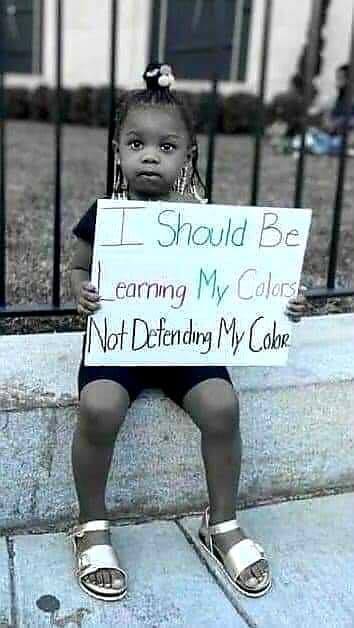
Some things—racism among them—are always wrong. And you can either face that fact and deal with it, straight on, wherever you encounter it, including schools, or you can employ any number of empty, defensive sophistries.

You can do what Rick Hess does here—spend half a column patting yourself on the back for pushing back against racism while simultaneously building a theoretical parent-defense straw guy the size of Burning Man, using lots and lots of (you guessed it) data, Impressive Academic Vocabulary and political shading:

More than two-thirds of adults say they oppose having schools tell students that America was founded as a racist nation, 70 percent say schools should not teach students that their race is the “most important thing about them,” and more than 4 in 5 oppose using classrooms to promote political activism.

I don’t believe these adults would be enthusiastic about the Biden Department of Education holding up as models of civic education a scholar who teaches “there is no such thing as a nonracist or race-neutral policy” and that “only racists say they’re not racist,” and a history program that teaches America was founded as a “slavocracy.” Now, I’ve found that anti-racist diehards tend to respond to such numbers like undergraduates in a Gramsci seminar, by muttering about false consciousness and hegemonic schema.

Hess closes out with a few more self-assured slams against Ibram X. Kendi, whose books have introduced multitudes of Americans to the idea that racism is deeply embedded in centuries of policy-making, resulting in entrenched neighborhoods, discrimination on dozens of fronts and endemic personal prejudice.

If two-thirds of adults actually do oppose telling kids that America has racist roots, where did that false idea come from? And what about the other third—the ones who think that maybe introducing children to the fact that we’ve always been a deeply inequitable society is a good first step? Don’t they count?

As for children, we don’t need to teach our students that their race matters to society. By the time they get to school, they already know. Or they find out on the bus.

Or in the cafeteria. Or on social media.

Recently, students in the (large and well-regarded) school system next to mine opened a ‘slave auction’ on Snapchat, asking for ‘bids’ on students of color. It’s a terrible story in many ways, with lots of bigoted actions and themes emerging. The Superintendent and Board are doing what they’re supposed to do—investigating, thinking about next steps, as the media spotlight is trained on them.

The students are unlikely to be punished legally or via suspension—what they did happened off-campus, so the school is not, technically, responsible. There’s ongoing discussion about whether these social media ‘games’ and ‘jokes’ actually endangered students of color.  But school officials have stepped up and started public conversations on how to include anti-racist content in K-12 curricula.

And you know what happened:

During nearly an hour of public comment on the resolution Monday – which was only on the agenda for discussion, not adoption – several parents criticized the document and the overall work of the Social Equity Task Force, saying it amounted to indoctrination and was pushing an agenda that would divide and not unite students. “I find this resolution also to be offensive, degrading, inappropriate, condescending, and detrimental to all TCAPS students, parents, and community members”…  the “negative rhetoric” of the resolution “imposes toxic assumptions on our children.” Multiple parents worried the curriculum review would force “critical race theory” onto the classroom.

There they are, the two-thirds of parents Hess identifies, and uses as substantiation and support for keeping “toxic” discussions of race out of the classroom.

You don’t need quantification or fancy theories to explain this. Teaching our racist history is pretty much unavoidable, and trying to ignore it makes things worse, not better. Here’s a great (short) piece that it explains it better than I could:

Teaching young people about racism is not indoctrination, but rather teaching viewpoints and providing factual data related to racism that they otherwise are not likely exposed to. Young people need to make up their own minds about how to think about race, but the better informed they are, the more thoughtfully they will do so.

 In short, some things are always wrong.

Is Critical Race Theory Dividing the Country?

When people start referring to a cultural phenomenon with initials—CRT for ‘critical race theory,’ say—you know that whatever that thing once was, it’s now morphed into something completely unrecognizable. Made less complex. Reduced to stereotype. And in the case of CRT, politicized.  

In my long years of classroom practice, pedagogical strategies and hot topics went in and out of fashion. Back in the 70s, values clarification was all the rage. Parents were a little iffy on having students discuss their values, however—probably because they assumed those values were not securely embedded in their sixth graders. And God forbid a teacher should attempt to inculcate values. Or even discuss them.

After values clarification, there was lots of talk about character education. My school had a multi-year project on Reason, Respect and Responsibility. Our project was home-grown, but you could buy pre-packaged character, it seemed—complete with manuals, posters, workshops and student day planners. Every package seemed to come with a testimonial—57% reduction in suspensions!

Today, I see lots of teacher-chat about mindfulness and trauma-informed education. If you think I’m skeptical about the efficacy of these programs—I’m not. I am strongly in favor of whatever it is schools are doing to encourage students to consider their thoughts and behaviors, to elevate the community over impulsive personal actions, to dig deeper into things that are, well, wrong in our society.

I am especially impressed by school leaders who decide to offer their students a chance to consider multiple perspectives and the meaning of justice in a representative democracy. It takes genuine courage to step up, especially when the country seems to be cracking apart and quasi-intellectuals are using big vocabularies and academic terrorism to spook parents over discussing race in America.  

I write all this to point out that teachers incorporate lessons about fairness, caring, harm, self-control, diversity and authority in their classrooms all the time, whether it’s part of an organized program or just daily practice in teaching disciplinary content.

There is no subject or developmental level where values and character aren’t a part of the curriculum, whether intentional or accidental. You couldn’t strip values and character out of teaching and learning if you tried. But try they will.

As Clarence Page noted, those afraid of critical race theory don’t know what it is:        

[CRT] is an evolving practice that questions how race, as a social construct, perpetuates a caste system that relegates people of color to the bottom tiers. I agree with critics who say that CRT often elevates storytelling over evidence and reason and devalues the racial progress that Americans have made, despite the challenges that remain. Real critical race theory is better suited to graduate students than kids. But we don’t do ourselves any favors by hiding good information about this nation’s diversity that can help all of us to better appreciate the “united” in the United States.

So how is that scary? And how is it not relevant to every American citizen? An evolving practice indeed, tangled up in all the things schools are supposed to do: Build American citizenship. Establish workforce skills. Encourage curiosity. Learn how to get along.

If the argument, in all the states now writing anti-CRT laws, was that some troubling but essential questions around CRT—reparations, long-term economic damage, health care disparities, how our racist history in America informs the present day—were best tackled by scholars and adults, well OK.

That still leaves a boatload of foundational work to be done, by people of all ages, and lots of that work falls into the character and values bucket. Simple concepts like: Don’t pre-judge people by external characteristics. Race is a social construct. We have a history of injustice. We all do better when we all do better.   

Also: Go ahead and pass anti-CRT laws. You might scare a few teachers. You might reassure white parents that their children won’t have to hear anything ‘unpleasant’ about our history, laws and subtle forms of discrimination. You might score a few seedy political points.

You might also have to set up a whole new and thoroughly unpleasant teacher policing system to make sure liberal Ms. Flanagan isn’t talking to her students about the roots of the music they listen to, 24/7, and cultural misappropriation. Is that CRT? Who gets to say?

You cannot keep the issues of race and racism out of schools. Schools are a stage where social values play out every day. It isn’t critical race theory that’s dividing the country. It’s fear.

Student Appreciation Week

So here we are, once again ‘celebrating’ Teacher Appreciation Week, with all the teachers saying—no, no, don’t get me a $10 Starbucks card or (better yet) a $50 bottle of champagne. Instead, write me a sincere note of gratitude. Here, write it on my Facebook page. Feel free to embellish.

We all have that box of thank-you notes. And yes, we re-read them periodically. And hats off to all the folks who bluntly say If you really appreciated teachers, you would…. pay them and let them sit in on decision-making, for starters.

But sometimes, I feel like the Grinch Who Stole Teacher Appreciation Week– seriously, what we actually need is a Teacher Appreciation Decade, during which we encourage promising young people to pursue professional education training, craft a new conception of teacher compensation, and look to other nations for guidance on how to build a select teacher workforce,  valuing diversity and creativity above all.

We just returned home from a couple of weeks away, and at the bottom of our mail tote was a TIME magazine with this cover:  ‘The Lost Year: How the pandemic changed a generation of students.’ The article is much less inflammatory than that title—it’s about high school seniors, and the difficulty they’re having taking the required tests, filling out FAFSAs and setting their sights on the most desirable (and selective, of course–it’s TIME magazine) colleges.

I am intimately familiar with puffed-up headlines on general-readership magazines. But geez. The Lost Year? A Generation of Students?

We’ve lost some things, all right. One of them may our blind faith in the value of testing data—another might be the elitist belief that a student must go directly to a four-year college, or forever be consigned to slogging along with a Joe job and a sub-par life.

I know that colleges and universities—especially those that serve the middle class—are in for tough times and lower enrollments. Institutions with huge endowments will be fine, on all fronts. If Biden’s plan to pay for community college comes to fruition–spoiler: I’m a fan–we may have a whole new layer of society with upgraded skills and no debt.

The Way Things Were has been upended. But like any year where there are transformative events, the outcomes are hard to predict. Is going to community college for a year, while you get your academic ducks in a row the worst thing that could happen? This generation of students—K-12—has faced new challenges. But what they’ve learned has not been lost.

After I read that TIME headline, I was so incensed that I posted a Tweet:

Hey, media.

How do you think teachers feel, after gutting out the most difficult year in their already-difficult career, when you refer to ’20-21 as a ‘lost year’??

A few hundred people liked and Retweeted it and many added thoughtful commentaries.

Like this from Julie Wright:  Students, too. I have so many who’ve been working hard and learning… in some ways way beyond what 8th graders generally know. No, it wasn’t the best or easiest way to learn for most kids, but they’ve done so much. Don’t treat them like passive victims.

From Ashley Stanley: How do we think students feel about these narratives after they left it all on the field? These kids SHOWED UP for their LEARNING this year. These last few weeks, I’m all about helping Ss know that the work they did was real, important, and meaningful.

Jennifer Robbins of Montana: I have worked so hard to support students’ writing, reading, and thinking. As I read poems, essays, & narratives at the end of THIS year, it is not a lost year. They’ve grown by leaps and bounds, and it’s especially clear during 2020. No lost learning in Columbia Falls, MT!

@NShrubs said: Yes! My 2nd graders made lists of all the kinds of things they’ve learned, from fixing their own lunches to subtraction with regrouping to coaching each other on tech stuff via Zoom. My 3rd graders wrote about what they learned about themselves – learning online, reading, etc.

And—sadly–@VictoriaCherry said: How do the kids feel about hearing their own parents complain about having to care for them?

There was lots more. Teachers most definitely do NOT feel that this was a lost year—and, in teacher-like fashion, spoke up in defense of their own students’ hard work under tough conditions. So there you have it.

Who appreciates all the out-of-the-box things kids have had to do this year, in unfamiliar formats and time frames? Their teachers. In my music ed wheelhouse, I have now seen at least three dozen unusual spring concerts, accomplished by students and their ultra-creative teachers, using technology, germ-bags on horns, edited literature to match those able to play. Each one, in its own way, a triumph. And each submitted as evidence: See? We’re getting stuff done.

So—not a lost year. Thanks to the kids. Let’s appreciate them, too.

No Justice, No Excellence

Like most of America, I’ve been glued to the Derek Chauvin trial, watching the evening highlights, nail-biting Tweets–Why is this taking so long? —and cable news analyses. Have we moved forward as a society? Are we, if not woke, at least emerging with new awareness, from centuries of abusive and racist behavior?

Yesterday, before the verdict was announced, I caught the end of an on-the-street reporter’s comments, and she said school leaders–she called them ‘assistant principals’–were on the street with their HS students, awaiting the news, and chanting ‘You can’t stop the revolution.’

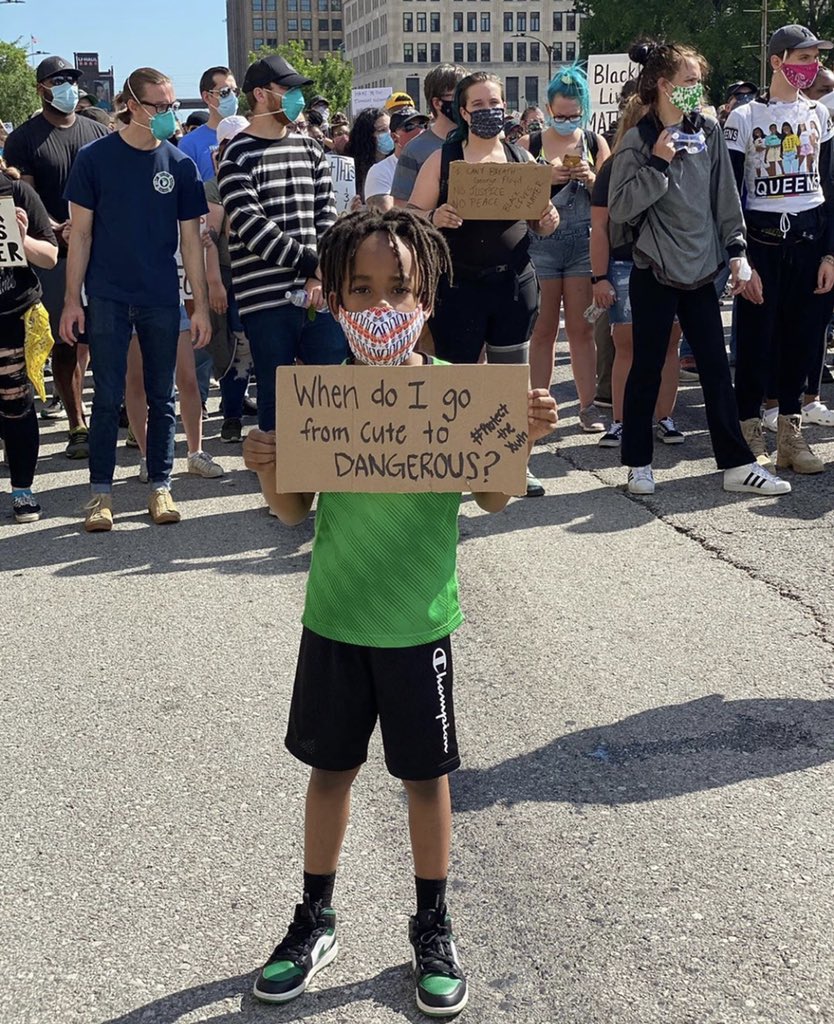
The reporter seemed surprised that school administrators would be positive about a student walkout, rather than threatening to put these uprisings on students’ permanent records. Students, it seems, in MN at least, have become more specific and articulate in their demands.

At Minnetonka High School, in Minnesota:

The district has followed through…adding hate symbols to the list of items banned in school dress codes, expanding its reach in hiring to target more diverse job candidates and creating an online reporting system for incidents of harassment and discrimination.

Students see the district’s unwillingness to acknowledge the specific pain or concerns of Black students, or students in other groups, as evidence that leaders haven’t or don’t want to make real changes. Students said their personal experiences with racism at and around school were far more extensive than the messages, and calls for the districts to do more to combat harassment, re-evaluate curriculum and diversify their staffs.

It’s that last bit I find so interesting. Making schools safe and orderly (which includes harassment) has always been the job of districts and their leaders. Hiring, curriculum and instruction have not been considered the students’ bailiwick. But, as a sign carried by MN students said: No Justice, No Excellence.

They’re correct. A genuinely excellent education would center real problems that need solutions. It would welcome diverse viewpoints. It would provide students with the tools and knowledge to go to work on creating a better society. 

There are probably tens of thousands of school mission statements in the United States which use that kind of language—the whole ‘21st Century Learning’ schtick. So how did we get to the Common Core and mandated punitive testing for all public school kids? How did standardization, competition and data worship—a totally UNjust model– become our go-to idea about what good schools look like, rather than embracing diverse identities, talents and histories?

I was pleased to hear that the Biden administration has proposed a grant program to highlight our history of discrimination and bias in civics and history education. It was not enough to dump Trump’s ‘1776 Commission’ education propaganda. The Biden proposal also calls for information literacy. 

It would be easy to dismiss this as just another feel-good education program. The U.S. Department of Education is not permitted to prescribe curriculum, after all (which is why they had to pretend that states and governors instituted the Common Core). But—like both VP Harris’s and President Biden’s speeches yesterday—what the administration says represents the direction of policy-making.  

No justice, no excellence.

Of course, eight Republican state legislatures (ID, IA, LA, MO, NH, OK, RI, WV) are now considering bills to bar teachers from discussing ‘divisive’ topics in their classrooms. Racism and sexism are the chief illicit topics, but I’m sure that partisan politics would also be high on the list of things that legislators would like to see forbidden.

I’ve got news for these legislators: train’s a-comin’ and you can’t stop it.

I was in the classroom on 9/11. I was in the classroom when election results hung in the balance, 2000. I was there when Reagan was shot, when Jim Jones persuaded his followers to drink the Kool-aid, and when we elected a Black man to the White House.  Kids—kids of all ages—always want to talk about what’s happening in the world. Because they’re curious, and observant.

When they’re young, they mostly need reassurance that adults will keep them safe. But as they grow older, they recognize injustice—or they repeat unjust things that the adults around them said. Should teachers be legally compelled to ignore outright racism?

Telling students that the topics are forbidden is an invitation for them to look to the wrong resources for answers. Banning controversial issues embeds systemic racism, sexism, discrimination. Besides, it’s virtually impossible to keep students from talking about high-visibility issues, and legislators can’t police classrooms and fire the diminishing cadre of quality teachers and school leaders.

Better to look issues squarely in the eye, and honor what students have to say, provide facts and counterarguments. Better to encourage students to demand more, settle for less.

Students in Minnesota chanted ‘We are the students, the mighty, mighty students.’

 No justice. No excellence. The two really are inseparable.