Pod Save Us: How Learning Pods are Going to Destroy Public Education. Or Not.

The first thing I thought of when people started murmuring about getting groups of kids whose families were connected together for a little home-based mini-school, was the much-heralded advent of charter schools in my state, back in 1995.

Just about everybody who was around and in the thick of education reform back then thought charters held promise. Throwing off the regulatory shackles! Schools with a unique vision and purpose! No more factory-model instruction!

A group of parents, led by one of those perennial PTA-president moms, approached a group of maybe a dozen teachers in the district where I taught, hoping to start a K-8 charter. Several of the teachers had already been discussing a new, arts-infused ‘dream school.’ The parents had a centrally located vacant building in mind, and had run some numbers that showed, somehow, teachers would be paid commensurately with the district’s salary scale, including benefits—and would be freed to run their classes the way they saw fit.

It’s worth noting that this was before NCLB, the Common Core and mandated testing in grades 3-8. I’m finding it hard to remember, in fact, just what we found so onerous and constraining about practices in the buildings we were working in, but that group of teachers (male and female, including several movers and shakers) agreed to meet with the parent organizers.

The parents were super-enthusiastic. They, too, had ideas to roll out, and were thrilled at the prospect of having a greater say in their children’s education, without having to pay private school tuition. The new charter law let them pick and choose teachers and set the tone for who would be welcome there. The leader of the group declared ‘We’re going to have the cream of the crop in our school!’

And that was it. All of the teachers immediately realized why the parents had done so much research and organizing: it was all for their kids. Kids whose parents did not have similar resources and savvy would be left behind, a phrase that hadn’t even entered the education lexicon yet.

I have long been a defender of the idea that parents should do whatever makes them comfortable, when it comes to their children’s education. If you want right-wing religious training, or single-gender education, or a place where your child will not stick out–thinking here of the Obamas not placing their girls, symbolically, into a public school—hey, go for it. One size does not fit all, although a lot of public schools try to accommodate pretty much everyone.

I think trying to tell parents, during a pandemic–especially when there’s a dearth of authentic leadership around making healthy choices for kids–that they have to play by a particular school’s rules is utter folly. Nothing will, or should, stop parents from trying to figure out how to get the best deal for their children during a crisis. That’s what parents are for.

There will be lots of chaos, changes and new understandings about the nature and importance of public school as we muddle through the beginning of the school year. What I’m hoping is that it won’t be another New Orleans after Katrina—where powerful (mostly white) people dismantled a struggling system for their own purposes. Because they had more money and more power, and they could.

Is that what pod-parents are intending? A way to use a virulent virus to duck out of feeling responsible for all children, or at least those in the immediate vicinity? Or is pod-learning a temporary solution that might lead to a new appreciation of the utterly democratic and cost-effective nature of public education?

Conflicting ideas:

~ Pod-learning has no concrete definition. A tutor (please don’t call them zutors) who works with a half-dozen children, twice a week, to accomplish their assigned schoolwork, is a far cry from dropping your child off at someone’s home every day so you can go to work and they can go to school. Do pod-teachers create their own curriculum or merely adapt what’s available, free, from the local public school? Who hires pod-teachers and what recourse do they have when conflicts occur? And on and on.

~ None of this is new. There have been private tutors, one-room schoolhouses and home-schools since colonial times. More recently, we’ve had distance learning and a revolving carousel of online, customer-friendly, charter schools. There are plenty of ways to get your child at least nominally educated—and also into college. Best to keep the focus on genuine learning, which might involve some deeper involvement and hard questions about what your schooling plan does for your child, besides keep them occupied for six hours a day.

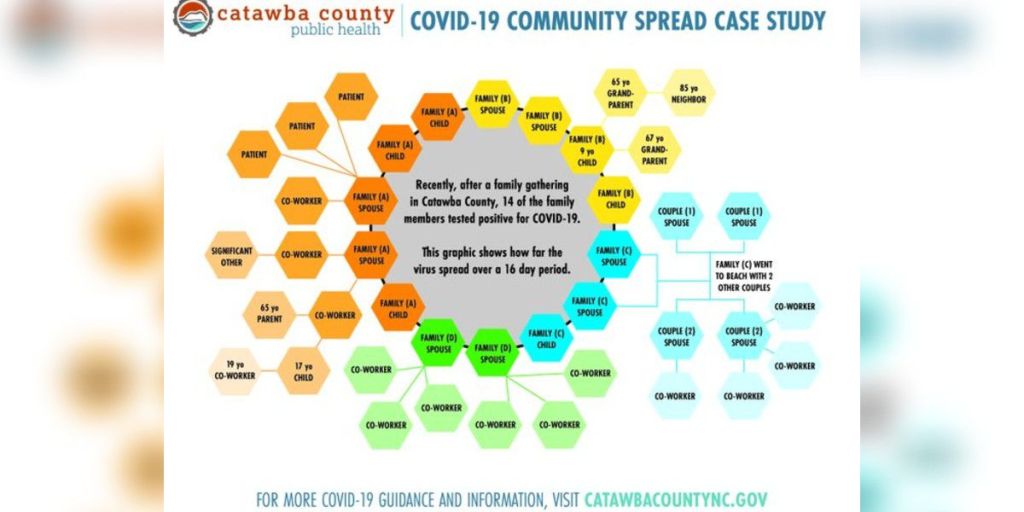
~ If you’re counting on your schooling bubble to keep your kids—and hence, all the people in your household—free from infection while enjoying the freedom of not wearing masks or social distancing, there’s a great graphic for you to study at the end of this blog.

~ Surprise! One of the two great benefits of public education is free/inexpensive childcare. (The other is an educated citizenry but almost nobody talks about that.) What that means is those who can afford to chip in on a pod program can also afford childcare. By hiring a bona fide teacher who is fearful of returning to a public school, you’re deepening the division between haves and have-nots. If, as some talking heads are suggesting, you hire a college student at loose ends—you’re doubling down on the false idea that anyone can teach. Didn’t you already figure that out, back in April?

~ Here’s a certainty: if people form pods to educate their kids, bypassing public schools, it will weaken the commitment to annual high-stakes testing, the Common Core (and its identical cousins with different names), and tightly controlled teacher licensure. That’s not all bad, but deregulation has its downside. Think of it as public education being re-created as a gig economy. Teaching as Uber. Caveat emptor.

~ Teacher professionalism and expertise will be devalued. What will suffer then are the (admittedly idealistic) concepts of deep learning, custom-tailored curriculum, relationship-driven instruction–things that can only be supported by an established system run by professional educators.

~ Pods will have all the problems that public schools have: unsuitable teachers that some parents and children dislike, personality and values conflicts, lack of necessary resources, unforeseen changes in numbers and support for the pod model. Doesn’t matter how large or small your pod is. Doesn’t matter if you’re teaching in a geodesic dome in your backyard—there will be problems.

~ And, of course—the questions around equity. You can argue, correctly, that schools are already inequitable. But what makes a school equitable is not its location or demographics. Equity is built by a reliable stream of resources, committed and talented teachers and genuine leadership. You can’t have an equitable school or provide an equitable education without good people. Temporary, just-in-time pod education disrupts what is good in public education: community-building.
Creative and Just Curriculum, Pt II: Six Ideas about Teaching Music During a Pandemic

Facebook post, shared by a colleague: Started band camp last Sunday, two rehearsals per day. No more than 25 students in a group. They wore masks while moving between stations, and after the second rehearsal, two students went home because of low grade fevers. One tested positive. We were forced to shut down for a minimum of two weeks. There was no precaution we didn’t take.

Welcome to 2020, music educators.

About six weeks ago, Texas band directors (a fierce and highly competitive bunch) started posting summer band-camp photos, on a band directors’ site I follow. Flute players with facial shields. Trumpets and mellophones with their bells bagged. Masked percussionists, labeling their mallets, so they’re touched by only one person. They were fired up. Creativity and safety would win the day!

The page today is really tough reading: Shut-down camps. Lost jobs. Will there be a marching band next year if there’s none this year? Pictures of band rooms where precisely 13 students can play while social-distancing. Deep, philosophical chats about the value of music in kids’ lives. And this—how the hell am I supposed to have a band online?

Well, the bad news is: you’re not. And when this pandemic abates, the best-case scenario for all powerhouse performance-based music programs is the option to rebuild. Any teacher (raises hand) who’s ever had to build, then re-build, a music program of any kind knows how difficult that job is, what losses are suffered when your dynamic program loses the thing that makes it magnetic: Pride in performance, fun in preparation.

So don’t think I’m Pollyanna, telling music teachers to keep your chin up and try something new. I know you’re righteously sad about your good work being threatened. What I am offering is this: a few suggestions for doing some authentic music teaching during a terrible time.

For starters—stop calling yourself a band/choir/orchestra director, and begin calling yourself a ‘music teacher.’

Second—understand that your college education and years of experience have given you all the musical expertise you need to create some new ideas about music that can be delivered to students in multiple modes. You know enough about the structure and history of music to create some great lessons. And what you don’t know offhand, you can easily find, without leaving your living room.

Third—don’t think the only curricular options students have are limited to music theory, music history and practicing. Much of our college-level theory and history instruction was deadly dull—no need to repeat it. Also– please don’t assign practicing. You need to give kids a good reason to practice, and logging time for a grade is not a good reason to practice. Learning to play another instrument would be—Bari sax? Ukulele?  

Fourth—you know what tools, student interests and previous skills are available to you. If you’re meeting students in groups, and they all have Zoom, you might be able to do some bucket drumming. Or maybe your orchestra would be more interested in a History of Popular Music survey unit—to find out where the music they listened to originated.

Perhaps you’re stuck with phone calls and emails, and have to do something written or shared via email groups. I used to play what I called Sound Samples for my students, around a theme. They listened to a series of 10 or 12 clips, each a couple of minutes long, with a list of what they were listening to (each with a brief description). The list was out of order. The trick was to listen closely enough to identify key features of the music and thus, identify the pieces. Ungraded—but I know from experience students love guessing right, or figuring out what they’re listening to, using the clues.

For those incredibly lucky teachers who have the right technological tools and skills, teaching students to do ensemble playing via technology, with themselves or others, is a possibility (not Zoom, by the way—it’s the wrong tool for ensemble singing/playing). Only a narrow slice of music educators have the equipment and expertise to do this—but perhaps it’s your personal challenge, right now.

Fifth—Keep in mind that students take a music class to play. Teachers are fearful of play. Not only because their professional evaluations and livelihood are often linked to a mandate to produce satisfactory evidence–data– but open-ended play is not generally The Way We Do Things.

In schools, and in the grim, we’re-behind education policy discourse, a teacher who encourages students of any age to poke at ideas, learn from mistakes, and approach established disciplinary content as a treasure chest to explore is seen as disorganized. You tell ‘em what to do. And then you evaluate how well they’re doing what you told ‘em to do.

I am a music teacher–theoretically a creative art–but can state categorically that music, as traditionally taught in secondary schools, is not very imaginative or playful at all. School music programs tend to become performance-oriented only–and often rigorously competitive—as students get older.

There is an important body of information and skills in music. The more of that disciplinary knowledge students have mastered, and the more proficiency they develop, the greater their ability to capably perform interesting and satisfying music, and become a more appreciative and knowledgeable music consumer. These are all worthwhile educational goals, by the way. Far more worthy, in the long run, than bringing home another trophy.

The National Association for Music Education standards include composition, often overlooked in school music programs focused on replicating already-created music with a high degree of perfection.

After I’d embraced the rehearse-rehearse-perform model for 20 years, I realized I wasn’t teaching my students much about music other than How to Play Band Music. I started experimenting with composition. I had adopted the practice of thematic teaching—focusing on one broad aspect of music each year. The first year I tried to include composition, our theme was World Music—identifying the musical features that make something sound Italian or Scottish, rustic or refined. We listened to gamelan bands and balalaika choirs and West African djembe drummers.

And then I asked them to compose something in an ethnic style.

It’s nerve-wracking to turn kids loose to create. How do you structure that lesson? What’s the subject matter takeaway? What if your students create inferior products (as they certainly will, at first)? Must you grade them?

I had to deal with “Just tell me what to do” and “Can’t I do a report instead?” We persisted. And eventually, it was fun, playing with our acquired skills, creating new music–recording it on audio, video, electronic keyboard discs and paper. Their choice.

Some students performed their compositions live, including several groups and soloists playing the blues (that’s how you teach theory, by the way—using it).  There were R. Carlos Nakai-ish recorder solos and improvised polkas. And lots and lots of drumming.

Most of the work was fairly unoriginal, but some of it was stunning. Here’s the best part. I assigned it on a Friday, giving them almost a month to get things in. On Monday, there were maybe two dozen completed assignments in my inbox, and groups wanted to know: Can we do another one?

Sixth—like most things about school and learning, music programs that are well-funded and adequately staffed get better results. It costs money to support a music program at any level, and a great deal of money to outfit a HS performing group, beginning with a facility. In some ways, losing daily rehearsals and summer camps and access to a world-class auditorium levels the playing field and lets musicians focus on the heart of music—human expression—rather than being best. This could be the year where imagination and creativity (and, in the process, justice) is the focus.

From a marvelous blog, What If We Radically Reimagined the New School Year:

What if this urban district courageously liberated itself from narrow and rigid quantitative measures of intelligence that have colonized the education space for generations, and instead blazed a trail for reimagining what qualifies as valuable knowledge? What if we put our money, time and energy into what we say matters most? What if this school year celebrated imagination? What if healthy, holistic, interconnected citizenship was a learning objective? What if we designed a school year that sought to radically shift how communities imagine, problem solve, heal, and connect?

Toward a More Just (and Creative) Curriculum, Part I

Virtually all of the discussion between educators is now centered on whether it’s feasible, with any kind of plan, to return to in-person schooling in the fall. I believe this national conversation will follow the Major League Baseball template: schools will begin closing as viral clusters pop up, perhaps re-opening, then closing again for the balance of the year, as it finally dawns on the most resistant anti-mask parent and school board member: This just ain’t gonna work. It’s too dangerous.

Wouldn’t it be great to just skip that step and focus instead on two things: getting adequate broadband to the half of students and teachers who don’t have it, and figuring out how to use available connections to teach kids things that actually matter?

Teachers settle into a teaching practice– gathering, testing and adopting habits and materials that are effective (and discarding those that aren’t). Many teachers had difficulty abandoning those standardized resources and pedagogies when forced to teach online. They tried to do what they always did—at first, anyway. When that didn’t work so well, they began experimenting, with personal calls and meetings, extending or modifying assignments—and plenty of other strategies.

Teachers quickly discovered that the usual deliver/practice/test model was a bust, with students randomly not showing up or completing things that would have been finished, had the teacher been strolling around the classroom looking over their shoulders. How would this impact grading and testing and comparing? District and state leaders eventually said—we can’t grade (or test or compare). It’s not fair.

The news media, of course,  interpreted this as ‘Students Do Work but It Doesn’t Count!’

Why does the general public assume that learning only matters when it’s quantified? Because we’ve taught them that is the case. Let’s cut to the chase instead: Now that we’re here online (or mailing packets, using phone-in conferences or emailing)—what would be the most useful things to learn? What might be jettisoned in favor of things that address important and current issues?

For children in primary grades, this amounts to lots of basic-skills building around interesting things in their world. When we talk about very young children, most people assume that they’re the ones who need the traditional high-touch curriculum: learning to read, do simple arithmetic, and socializing. In person.

That may not be possible. And I’m not entirely convinced that older kids do better with remote learning. I can think of a number of things that are central to early-childhood learning that might be adapted to learning at home. Vocabulary, speaking and listening, stories that teach us something, counting games, virtual museum visits, nature walks with items being shared and discussed, puppet shows—the list is endless.

The catch, of course, is having someone older around to supervise that nature walk, find the link to the virtual museum, and watch the puppet show after the teacher shares creative ideas and content.

I can also identify the teachers in secondary schools who will struggle the most to develop online models of teaching: music teachers with performing groups, art teachers, physical education and drama teachers, career and technical educators and those with hands-on pedagogies.

We need to be very clear that what elementary-grades schooling provides is free enriched childcare, and that the dangers in online learning generally come from those who would cannibalize both public education and the legitimate, even exciting, uses of technology toward the goal of making a profit.  These are separate issues, and it’s easy to conflate them.

What if, instead, we turned this new way of teaching and learning toward breaking free from lockstep curriculum, and focused on the great issues now facing our country? Things like inequity, antiracism, community-building to help ease the pandemic and other critical problems that need solving? What if we tried to establish a virtual culture of justice, one tailored to our school and our students?


Even when we focus on academics, we too often target low-hanging fruit like graduation rates rather than teaching and learning. Shallow successes allow us to pat ourselves on the back. But a high graduation rate is meaningless when our graduates enter the world without a fundamental grasp of the tools and knowledge necessary for full participation in life and citizenship. We can hope for a reimagining of schooling during this time, but nothing will change in our schools until we prioritize the education of our students.

We could call it the 2020 Interim Curriculum, to keep those heavily invested in CCSS and annual testing from freaking out. It could be a place-based, context-sensitive approach. Learning during a pandemic. Making it up as we go along. If the things we always do can’t be done, because they require conditions and materials that can’t be had, what worthwhile topics—things currently in the news, things that our students might want to know—can fill in?

I’ve had some practice in the art of making it up as I went along. Here is a brief example:

I taught 7th grade math for two years, when the music program was cut. Both times (more than 20 years apart), all math teachers taught from textbooks. In 2004, it was a new curriculum that used different soft-cover books for individual topics. I was the last teacher in the rotation, and while waiting for the previous teacher to finish the topic and pass books on to my class, I had a few days to fill. No challenge for a veteran math teacher, with dozens of field-tested tricks, but I was new.

The Detroit Free Press had a special section on housing. It discussed housing prices across the metro area, square footage, interest rates on mortgage loans, down payments and the fact that for many families, their homes functioned as their savings investments. Lots of charts and graphs and tables, as well as dozens of photos.

I (illegally) copied a couple of the tables and graphs to interpret, and brought the whole section into class. I read the copy on the front page, and then spent the rest of the week showing them how to figure out why a large down payment might be better than a minimum amount, how housing increased (or decreased) in value, the differences between buying in a popular area and a run-down part of town, and how much of a house payment was principal and how much interest.

Seventh graders, it turns out, know nothing about the price of a home. The idea that the homes they were living in might cost a quarter of a million dollars was stunning. Equally surprising was the idea that a genuine mansion in Detroit, with four times the square footage and six bathrooms, might cost less. We briefly touched on redlining, and its impact on Black families in Detroit. We calculated down payments, monthly costs and equity. There were no homework assignments, but each day was full of math and learning. At the end of the year, in the survey I gave them, lots of them mentioned that learning about housing was the thing they remembered, and enjoyed, the most.

And that was before that kind of information was readily available online. I imagine teachers gathering links to stories about housing, the job market, education loans and careers—practical advice plus practice in calculation and understanding how to use math (or literature, or science) in making a better world.

How do things work? How could they work better, for all of us?

The possibilities are endless.  In Part II, a blog about teaching music composition, something face to face music teachers in performance-focused classes seldom do.