Cleaning out some files, I came across these questions (in a file creatively labeled Ten Questions). I have no clue where/when they originated. It was either answer them or plunk myself in front of, you know, the Trial, on TV.
Grande Soy Green Tea Frappuccino with Extra Whip or House Blend Black?
(Sing to the tune of “Holy, Holy, Holy”):
Coffee, coffee, coffee. Praise the strength of coffee.Early in the morn we rise, with thoughts of only thee.
If you were going to write a book, what would its title be?
“The Genuinely Professional Teacher: Way Overdue”
Rate graphic novels on a scale of 1-10, with 1 representing “useless” and 10 representing “simply amazing.”
Two or three. Just not worth the effort to scale down the words in favor of stylized art. I realize this is not a popular opinion and the fault may lie with me, as geriatric reader.
What member of your digital network has had the greatest impact on your professional growth?
There are an awful lot of people I see only online who have made me a better thinker, writer and activist, and their impact has waxed and waned (and sometimes waxed again) over time. Blogging for Ed Week where I had a good editor helped tighten and tone down my writing, and helped me understand the difference between well-supported opinion and simply venting. When it comes to education blogs, Jan Ressenger’s writing is what I aspire to, if I had to name someone.
How do you feel about the holidays?
Which holidays? Oh—those holidays. It’s the most wonderful time of the year? What is the best gift that you’ve ever gotten?
A piccolo. Completely unexpected. And an item I would prefer to pick out myself. But–in one of those rare, grace-filled moments–I got the perfectly chosen present that I didn’t even know I wanted.
If you had an extra $100 to give away to charity, who would you give it to?
Choosing to follow my principles rather than a paycheck, on a couple of memorable occasions.
What was the worst trouble that you ever got into as a child?
My parents bought me a two-wheeler for my 6th birthday, and I was afraid to ride it without training wheels. My mother told me if I didn’t work up the courage to ride it, they’d take it away. So I got up on the bike, went forward about 25 feet, then had to turn, to stay on the sidewalk. The bike wobbled, tipped, and I fell, hitting my head on a large rock placed at the corner of the sidewalk and driveway, giving myself a concussion. In my first grade school photo, you can see the bruising—and the shiner.
What was the last blog entry that you left a comment on? What motivated you to leave a comment on that entry?
Peter Greene’s Curmudgucation–he’s written 5000 blogs, a ridiculous number, especially considering he wrote most of them while teaching full time (and parenting twins). And his blogs have only gotten sharper (and funnier). He’s an excellent role model for teachers who want to write about what happens every day in their classroom—and why public education is worth saving. Peter also serves as Curator in Chief for Ed-Blog World, at the Network for Public Education. If you want to read a selection of great education writers, check out NPE’s Blog Post of the Day.
Feel free to share your own answers—all ten or selected queries.
Been reading about the tradwife lately? Although explicit definitions vary, the general gist is returning to a post-war conception of a stay-at-home wife, most likely with children (or planning for children), in relationships where men make all the family decisions, and control the finances. Reinforcing patriarchal norms and glorifying the satisfying and ‘natural’ role of housewife.
If you’re hearing a touch of cynicism there, well—I lived through a time when the tradwife, even if she was working, could not get a credit card or substantial business loan. While I certainly defend any woman’s right to stay home and support her children and spouse in places other than an outside workplace, the whole “tradwife” schtick (especially combined with the rollback of Roe) makes me itchy.
It also strikes me that tradwives are just another glitzy, social media-driven facet of a larger wave of backlash against a whole lot of un-trad trends in American society: Full-blown reproductive freedom. The continued shrinkage of mainline religions. Honoring personal sex/gender choices. Women running for office and corner offices–and winning. And so on.
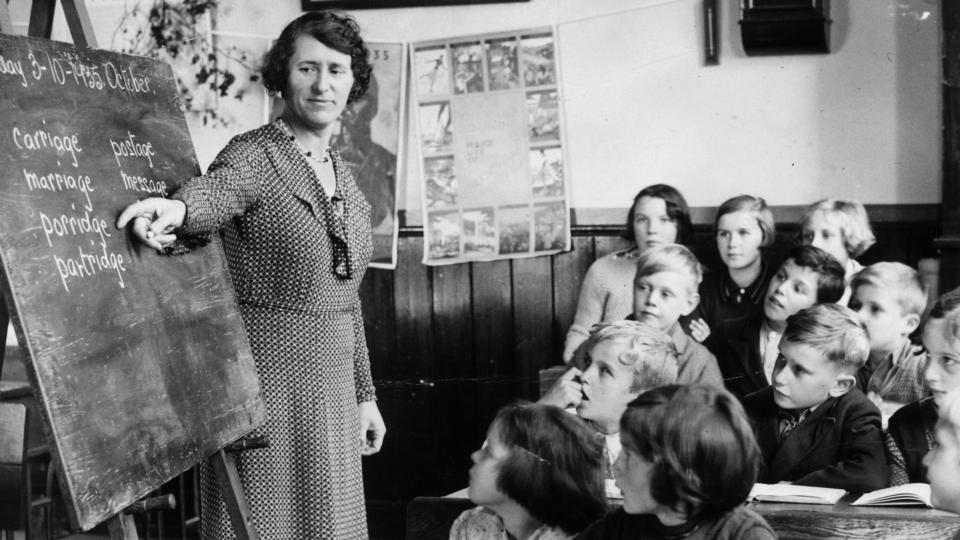
Nearly all of the folks who taught me were tradteachers, using trad methods, and when I entered the classroom, many of my teaching colleagues were 100% traditional-minded as well: Straight rows, direct instruction, textbook-based, daily homework, and off to the principal should you disobey orders. And some of those folks were effective teachers.
But lots of the opinion writing I see from Moms4Liberty, NYT columnists, conservative politicians and ed-bloggers focuses on how different education looks and feels from the classrooms they remember, decades ago—classrooms that may have been racially and economically monolithic, and headed by a series of teachers who did things in the same way.
Once she had her degree, she chose to teach at Duval Elementary, where for about twenty-five years she was a middle-of-the-road, competent-but-not-exceptional teacher.
Then came No Child Left Behind, and with it, high stakes testing. In Florida, that meant the FCAT, used to give each school a grade, with rewards for A schools and punitive “interventions” for F schools. In 2002, Duval was rated F.
Merriex was troubled. She concluded that if the school was going to be transformed, she would have to transform herself. She dumped the state pacing guides and teaching materials. When she got caught, she begged Duval principal Lee McNealy for a chance to give her methods a try, and McNealy had the guts and trust to give it to her. Merriex developed materials and approaches of herown, and for the early 2000s, her choices were unconventional. She wrote raps and dances to do with her students for learning math vocabulary and basic processes. She used call and response, movement and arts in the math and reading classroom. If some of her techniques seem less radical twenty years later, that is in part because of her influence.
For many, perhaps most, teachers, their first years in the classroom might look very much like the way those newbies themselves were taught. It was certainly that way for me, wanting to be the World’s Greatest Band Director and following the exact procedures and ideas I had experienced in bands and at music camp in high school. For many years, I too was a competent-but-not-exceptional teacher, like Ms. Merriex.
I also broke out of the traditional mold, and while not all of the things I tried were big successes, I was able to redefine what I wanted students to take away, for the rest of their lives, from being in my classroom. I accomplished many of those goals. I read social media for music teachers now, and I see great changes in thinking about the Big Ideas—from competition to creativity—in music ed.
Traditional teaching—and like tradwives,the definitions are murky—is not always or even often the best bet. Especially if that teacher’s goal is to move every student under her watch forward.
Stanford Professor Jo Boaler is something of an iconoclast in non-traditional math education, and recently–no surprise–there’s been yet another dustup over Boaler’s ideas.
She advocates for ending tracking by ability in math classes, getting rid of timed tests and starting with conceptual understanding before introducing procedures. Most importantly, she wants to elevate the work that students tackle in math classes with more interesting questions that spark genuine curiosity and encourage students to think and wonder. Her goal is to expose students to the beauty of mathematical thinking.
Right there in the first sentence, there are three uber-traditional practices—tracking, timed tests, and doing a series of problems to iron in an algorithm, to get the right answers rather than seeking to understand the concepts underlying the calculation. And who’s out to get Boaler? Well, men who have been the beneficiaries of understanding and excelling at traditional mathematics.
It’s an enormously complex endeavor, teaching. Sticking to the habitual, and ignoring students who check out, only works for awhile. BUT—listen to legislators and parents talk about schooling, and a lot of what you’re hearing is somewhere between nostalgia and flat-out misinformation. The book-banning, faux CRT, Tik-tok blaming, skeptical-of-teachers crowd hasn’t got a clue about what it’s like to teach kids in 2024, beginning with some clarity about the purpose of public education.
None of us is safe so long as there are folks living in states that are unsafe. They will roll over us first, and you next. The billionaires are using my state AG and other regressive state AGs to file suit to dismantle public schools. They sue to ban abortion and the medicine for self-managed abortions. They sue to stop college loan forgiveness. They sue to overturn civil rights and anti-discrimination policies.
As Piper says—hey, we can’t all move, or teach in a private school where we can craft our own processes, research and convictions. But returning to traditional methods isn’t the policy answer. You have to move forward. It’s the way of the world.
Years ago, in a graduate seminar in education leadership (full of would-be superintendents working on PhDs at my well-respected university), our professor entered the room, struck a dramatic pose and said…
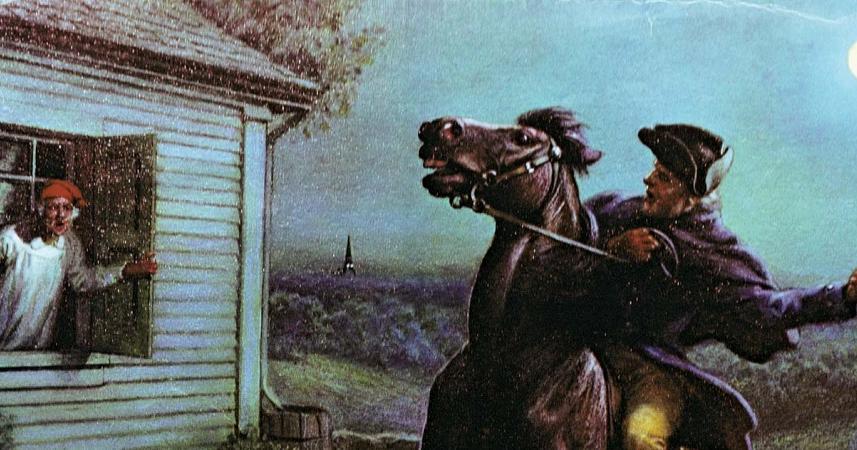
“On the 18th of April” (long pause, class attentive)
“In seventy-five” (long pause, dead silence)
“What?” (gray-haired Prof scans the room)
In a small voice, I say,
“Hardly a man is now alive who remembers that famous day and year.”
(another pause, Professor smiling, nodding) I clear my throat and say…
“It’s the one that begins ‘Listen my children…’”
(blank faces)
“and you shall hear…”
(still nada)
“of the midnight ride…”
(a couple of people are getting it now)
“of…?”
(muttered) “umm, Paul Revere?”
Prof points to me and says “Don’t answer!” Then he asks: “Who’s the poet?”
When nobody–not one of the 20-odd people in the room– could answer, or would even try, he lets me tell the class. Longfellow.
“When did you learn that?” he asks. Fifth grade. And I only know an abridged version. But still.
And the prologue to “Romeo and Juliet” in high school. Still with me, along with memorized King James scripture, lots of Cummings, Dickinson and Frost and an embarrassingly large cache of song lyrics.
Why aren’t we using poetry to teach history?
Well, two roads diverged in a yellow wood…
And we chose easily measured standardized test questions.
You’re going to say it as many times as it takes to sink in, and even then, compliance and understanding are iffy.
Here’s my essential truth: It’s been close to 1500 days since the arrival of the COVID-19 pandemic in the United States. And we still haven’t perceived just how transformative it was, dealing with a global threat while trying to keep the things we value most safe. Those things being our health and well-being, our children and families, our communities and livelihoods.
That simple fact, alone—the United States, the place where we brag about having the “best” health care on the planet, was unable to suppress transmission. Once a vaccine was available—lightning fast!—getting folks to embrace medical science and stay on top of protection that might save their lives has been thoroughly politicized and divisive. Those things, on their own, were enough to make one realize that maybe our all-American political thinking was out of whack.
So I repeat: The pandemic has really done a number on us. On our economy. On our family gatherings. On what we expect from our employees, as well as our employers. On health care. On the way we feel about government. The things we value most–including our schools.
Call it The Great Re-ordering of Priorities.
It’s become a habit of mine, when reading stories about education: running the topic or issue through the filter of how they may have been impacted by the pandemic. Here’s one: absenteeism.
What’s interesting is that schools with dismal, not-getting-better attendance rates aren’t always the ones you’d expect—absenteeism seems to be impacted by local conditions and initiatives, kids and parents re-ordering their priorities. Not up for school today? Go ahead—take a mental health day. Or five.
Schools struggling with attendance after a world-shaking event? Go figure. It’s going to take some time to fix that, and misinformation about how “unions” “closed” schools, abandoning kids to Zoom, doesn’t help. From an article on school absences, in the NY Times:
School leaders, counselors, researchers and parents…offered many reasons for the absences: illness, mental health, transportation problems. But underlying it all is a fundamental shift in the value that families place on school, and in the culture of education during the pandemic.
Re-ordering the priorities. And not in a good way.
In her excellent blog, Jess Pipertalks about the decline in civility at local school board meetings, among other things, triggered by a pandemic:
Recently, I saw this bad behavior up close and personal when I attended a BOE meeting at a school district outside of St Louis. Though I had an awful interaction with a parent or two in my tenure, I hadn’t witnessed the decline in civility and the outright disrespect shown in public. The lack of couth wasn’t just reserved for teachers, but was also aimed at administrators, board members, audience members, and community members.
One of the first to speak was a woman who brought her daughter to stand next to her while mom called the Superintendent names and defamed teachers. I was upset that the young girl had to stand there while her mother went over her time, refused to stop speaking when told her time was up, and still spoke, even raising her voice, when her microphone was eventually muted. She just kept going.
How did this young girl learn to treat her teachers? She learned disrespect and inappropriate behavior will be rewarded with a slew of applause.
It was a nice moment for him, thinking about the word trust—how long it takes to re-build simple neighborly trust, especially when it’s been shattered by transformative events. Expecting our public institutions to remain unchanged or “bounce back” is happy talk. We’re in the midst of some pretty significant shifts.
The Spanish Flu greatly affected the world economy, wiping out large numbers of healthy 18- to 40-year-olds. In Britain, during the Summer of 1918, in a single day 80 out of the 400 workers of a spinning factory perished. In many countries which had seen their male population decimated by the war, the pandemic left even fewer young men to run the farms and factories.
The resulting labor shortage enabled workers to demand better living and working conditions, public health care, as well as better wages. These became major demands of workers not only in Europe and the United States but in many other countries around the world.
Once again: We are underestimating the impact on the nation, and especially our children. of living through a global catastrophe Let’s put our focus on the right priorities. In spite of all the challenges to public education, it’s still the best bang for your tax buck, in perpetuity. Good schools make for good communities.

 Teacher in a strange land