
I got my master’s degree in gifted education—actually, a master’s in curriculum and instruction with an emphasis on identifying and serving gifted students, but whatever. At the time—the 1980s—I was focused on the ‘talented’ part, as a music teacher.
What could I do, I wondered, to better understand and challenge the exceptionally proficient students who showed up in my band room? There had only been a handful, at that time, students who leapt over my pedestrian instruction, right into credible Mozart concertos in the 6th grade, relying on recordings and (this sounds so quaint) library books about the great composers and their style characteristics.
I had many thoughtful conversations with people in my master’s classes, in my building, and fellow band directors (whose advice was generally directed toward private lessons and summer camps–the ‘better teacher/better cohort’ theory). But overall, takeaways on who was gifted and what to do about it were murky.
One person’s budding genius was another teacher’s ho-hum. A lot of it had to do with perceived student effort, and very little was about digging gifts and talents or even preferences and goals out of kids who were content to skate by.
Also, lots of kids who had exceptional natural talent in playing instruments were not so gifted in other areas, and therefore not interesting to the guy teaching Algebra II to 7th graders. Just because you can flawlessly pick up salsa rhythms with all four of your limbs or produce a crystalline high C on the trumpet doesn’t mean you’re… gifted. Or so it seemed.
I’ve written many pieces—here, here, here, here and here, for example—about giftedness. Invariably, they draw nasty comments. It’s very much a tender spot for parents of bright children who worry that their children are not being adequately challenged. Or are ignored by their teachers because so many other kids are struggling or misbehaving. I get it.
But I also know that talents and gifts are randomly distributed across school populations and have to be developed over time, with the cooperation of the identified GT student. I was struck by this quote from a spokesperson for Mayor Zohran Mamdani, reflecting on the mayoral decision not to test kindergarteners to determine who’s gifted:
This administration does not believe in G. & T. evaluation for kindergartners. But that’s not the same as eliminating advanced opportunities across all grades.
My thoughts, precisely.
I recognize that NY City is unique—such a diverse population, so many school options, such hot politicking and parent-pleasing—but I fully agree with the mayor (or his advisor, more likely): Testing five-year olds for giftedness is ridiculous and bound to siphon off disadvantaged kids before they’ve really had a chance to, you know, go to school and learn stuff.
It’s the ultimate, rigged-end game: the outcomes of inequality, right out of the chute. Dividing the herd, yet again. Why? How does that help us?
If I had faith in any test to identify extraordinary, socially useful intelligence, skills, or creativity, I might feel differently. But I don’t. What I do believe is that all children deserve a rich and challenging education, whether a test identifies them as potentially brainy or sub-par. You just never know what role they might play, eventually, in making the world better.
Since more than half of American teens now admit to using chatbots to do “research” that they may not be able to evaluate for veracity, to write and calculate for them, it’s going to get harder and harder to distinguish students who produce genuinely brilliant work from those who are merely good at disguising where that work product originated.
We still need brilliant original work—not to feed the AI maw, but to enlighten ourselves, cure diseases, prevent wars, create peace, to explore, entertain and inspire. We need the indisputably brilliant kid who plays salsa rhythms but forgets to turn in his social studies worksheets for some reason. Because he has gifts to share.
We need a new definition of ‘gifted’—and maybe one for ‘talented’ as well. We need to stop accepting the assertion that machines are helping students learn better than human interaction and judgment. And most of all—we need to stop cutting kids off at the pass, sorting and labeling them when they’re in kindergarten.
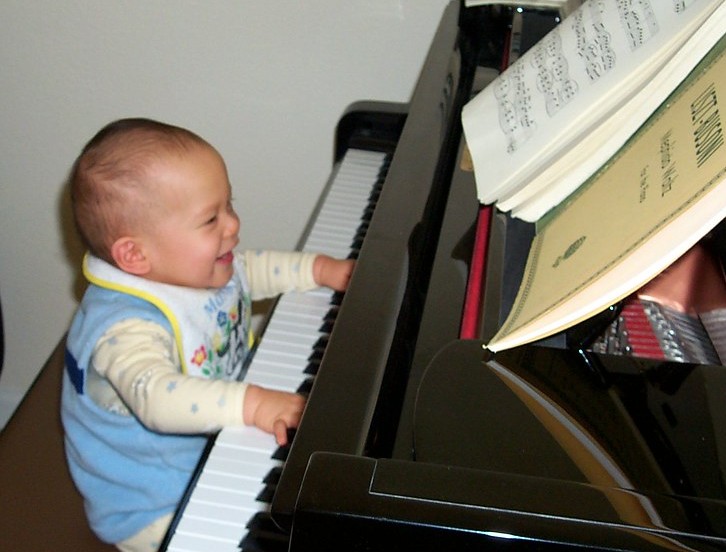
Photo:sanbeiji (Creative Commons)


So beautifully written! Thanks Nancy! Suzanne
LikeLiked by 1 person
The anecdotes from the band room ring true—the way a kid could devour a Mozart concerto off recordings and leap past the curriculum feels like raw talent refusing containment. Those crystalline high Cs and four-limbed salsa rhythms stand out as moments where technique meets something almost instinctive, the sort of gift that doesn’t wait for permission. It’s frustrating how often that proficiency gets siloed as “just talented” rather than the serious sonic intelligence it is, especially when broader gifted programs overlook it. The pushback against early sorting makes sense here; development needs time and space, not premature labels. Appreciate the reflection on how unevenly those sparks appear and demand nurturing.
LikeLiked by 1 person
Great comment–thanks for dropping by. Nice to meet another person whose life work is around those who are “merely talented.”
LikeLiked by 1 person
Totally agree with what you are saying here. We need to stop labelling students and start focusing on developing their skills. Would you be interested in getting featured on my blog?
I have started a blog dedicated to only teachers and the skills they bring to the classroom. If you have time, do check out my blog and leave a comment. https://teachersoffthescript.blog/
LikeLike
I agree that beginning to test for giftedness in lower elementary grades like Kindergarten or 1st is too early. As you said, and has been stated by other policy makers, kids this young have just gotten into the school system, and some may not have had the adequate resources to learn at home or attend a pre-school. This inequality in the amount of educational experience the students have been exposed to at age 5 and 6 leads to an environment where we wouldn’t be able to tell which kids are gifted and talented, and which kids just got a lot of education at home before entering the public schools. Your point stands strong that if states begin testing for giftedness at kindergarten, low-income students will be left behind in a similar fashion to other educational policies that explicitly help the upper class maintain their status. Thank you so much for the amazing post, it was a great read!
LikeLiked by 1 person
Thanks!
LikeLike