A Passionate Education Conference

Thirty-five(ish) years in public education—you’d think I would have attended dozens of professional conferences, coming home with a branded tote bag and a ream of stapled, shovel-ready ideas for my classroom. That’s the way principals in my experience used to frame attendance at a conference: If we choose to give you a $300 stipend to attend a conference, you’d better bring back materials and lessons for your colleagues. Because that’s why we have conferences: to give teachers new tips and tricks.

Teachers know this, but education-related conferences are almost always done on the cheap. Teachers–even teachers who are conference presenters–often pay part or all of their own expenses, get a rollaway bed so three of them can share a hotel room, split up and attend different sessions to absorb the maximum number of ideas, then maybe pop for a margarita before calling home at bedtime. The high life.

In my 30+ years as a school music teacher, my request to get a day off to attend a conference was turned down repeatedly. The reason was usually because I was the only music teacher in the building, so anything I learned would not be shared beyond the band room. There was very limited money in the budget for conferences (or, for that matter, professional memberships or subscriptions) so STEM or Reading Recovery events were prioritized, as being more likely to impact kids scores.

Administrators also go to conferences, leaving their favorite teacher in charge; presumably they’re expected to bring back “results,” as well. Still—going to a conference, even if you are paying your own mileage, lodging, meals and registration fee, is a perk for teachers.

And not for the new materials or lesson plans.

The value of conferences for educators—as with any gathering of professionals—is in structured opportunities to mingle, to learn, to have long, uninterrupted conversations, to build networks of colleagues with similar values. The purpose of any conference is (or should be) inspiration. The big picture. Hanging with a bunch of people who care as much as you do.

In the age of the internet—where most of us can examine materials and swap lesson plans fluidly—the absolute advantage of a face-to-face conference is the talking and listening, in person. Three decades of communicating on-line (and one godawful pandemic), plus all the tech-bro videos and social platforms—and what have we learned? That you miss something when the person you’re talking with isn’t in the room.

I thought about all of these things while attending the Network for Public Education’s 10th anniversary conference in Washington D.C. last weekend. It was a gorgeous fall weekend—the kind of walking weather where a stroll down to the White House might feel preferable to sitting in sessions centered on countering rabid school board races or hostile state takeovers of ‘failing’ schools.

But no. Every one of the six sessions and five keynotes I attended was both stimulating and encouraging. I heard the inimitable Gloria Ladson-Billings speak, and was stunned by what is happening in Florida and Arizona. I got some tips on running for school board in my local district (#2024Goals) and heard stories of redemption, as well as hideous state-based power plays. What reformers used to call ‘disruption’ now feels like intentional destruction, driven by a single, grasping political party. All over the country.

In the 10 years NPE has been meeting, the tenor of this annual conversation has shifted from the corrosive impact of excessive testing and charter school scandals—So. Many. Scandals.— to outright, in-plain-sight privatization of our best national idea: a free, high-quality public education for every child.

The absolute folly of vouchers—check out Josh Cowen’s work—and the political willingness to blur the lines between church and state are terrifying, all right. So why was I feeling encouraged?

For starters, the fact that the NPE is still meeting, 10 years after its founding, funded largely by individual donations and relatively modest foundational contributions, is reassuring. Many of the conference attendees were still paying their own way—or were attending on the dime of another organization created to defend public education. Money is still how things get done, laws get passed, and ideas take root. Knowing that there are articulate and passionate spokespersonsorganizing to protect public education is heartening.

The second thing I noticed was the number of sessions led by women and people of color. The foot soldiers in the war on public education are teachers, nearly 80% of whom are women. I have been to too many education conferences and symposia where the talking heads were white men with terminal degrees (who were not paying for their own registration fees and babysitters).

Don’t misunderstand—some of my most impressive edu-friends are smart and outspoken white men. But education has long been seen as women’s work, and when I look at the dangers looming—vouchers, religious charter schools, well-funded campaigns against “CRT” and sexual and reproductive autonomy—I see white men, clinging to money and power.  If we’re going to stabilize and enhance public education, women need to be at the forefront. One of the most impressive keynotes at the conference: Diane Ravitch moderating a discussion with the two of the most influential labor leaders in the nation—Randi Weingarten of the AFT and Becky Pringle of the NEA (who preached a blistering sermon on those who would deny the value of a public education for all our children).

We built some sight-seeing (and crab-cake eating) into the D.C. journey, including a visit to the Holocaust Museum before heading to the airport. I last visited the Museum shortly after it opened, but its power has not faded. What I found interesting, in 2023, was the three-deep crowds at the display around the Nazi rise to power in the 1930s in Germany.

Twenty-five years ago, that display addressed the eternal question of how so many good German citizens were drawn into a horrendous scheme to conquer their national neighbors and eliminate “undesirables.” It seemed like a temporary madness, driven by economic instability and inherent German nationalism, not to mention a charismatic leader who appealed to a third of the population.

Now, the photos, speeches and commentary feel like a warning.

Public education is not the only thing endangered. It will take hard work and passion to keep the idea of public goods alive and thriving.
{“cameraType”:”Dual”,”macroEnabled”:false,”qualityMode”:2,”deviceTilt”:0.0073067386958260983,”customExposureMode”:0,”extendedExposure”:false,”whiteBalanceProgram”:0,”cameraPosition”:1,”focusMode”:0}

Talking About Public Education: The Good, the Deceptive, and the Destructive

Tired of the articles on how to handle your impermeably asinine relatives as we approach the holidays? Should you try—really, earnestly try—to actively listen to grievances, striving to ferret out some common ground? Or should you prepare an ironclad arsenal of damning facts about the inequitable economy, tax plans, health care and international diplomacy in an effort to demonstrate your well-researched convictions? Or avoid the whole thing by sticking to football and the weather (my personal preference)?

The thing about acrimonious family gatherings is that you have to come back, year after year, for more turkey and more disputes. Most of my family knows where I stand, politically at least, and could not care less. I am an excellent euchre partner, and always bring good desserts, and that’s enough.

The only contentious thing I ever talk about, at holiday hang-outs or on Facebook (our new town square), is education policy. I will talk to just about anybody—persistently and passionately—about schools, and what it would take to make our public education system not merely workable, but beneficial for all kids in the United States.

This is, by the way, a goal that could largely be accomplished. We have the human capital, the resources and the technical knowledge to transform public education over a generation. What we lack is the public will to do so—for children other than our own, at least.

This represents a sea change in our 20th century national approach to public education, that post-war America where the GI Bill and the Baby Boom made tan, rectangular brick elementary schools spring up like mushrooms in the 1950s. Teachers were in high demand, and state universities were adding a new dormitory every year. Education was going to lift us up, make us (here it comes) the greatest nation on earth.

We don’t think that way anymore.

Somewhere in between our rush to put a man on the moon and the advent of computers in all our classrooms, we lost our “public good” mojo, the generous and very American impulse to stir the melting pot and offer all children, our future citizens, a level playing field, educationally. Lots of edu-thinkers trace this to 1983 and the Nation at Risk report, but I think that the origins of losing that spirit of unity are deeper and broader than that.

Recently, I posted an article from American Prospect on my Facebook page—The Proselytizers and the Privatizers: How religious sectarian school voucher extremists made useful idiots of the charter movement (Katherine Stewart). You can read divergent articles on charter schools (the most obvious and deceptive signal of the loss of our sense of “public good” in education) everywhere, but this was a particularly good piece, honest without being accusatory, damning but cautious:

A wing of the charter movement that is ideologically or religiously opposed to “government schools” was present at the charter movement’s creation, and has grown to comprise a sizable segment of the charter universe. With the election of Donald Trump and the appointment of Betsy DeVos as education secretary, it is presently empowered as never before. Public confusion about vouchers and charters continues to create opportunities. A lightly regulated charter school industry could achieve many of the same goals as voucher programs. They could drain funding from traditional public schools, deregulate the education sector, and promote ideological or religious curricula—all without provoking the kind of resistance that vouchers received.

I posted the article because it was true and thoughtful.

I live in Michigan, where charters took root over two decades ago. Like a handful of other states, we now know what happens to public education, including healthy districts, when charter schools damage the perceived desirability of one—thriving, publicly supported—school for all children. It’s happened all over our state, first in the urban and rural districts, struggling to maintain programming and viability, and now in Alpha districts, as their budgets are diminished and their student populations lured to schools that are “safer” (read: whiter).

After I posted the article, the online conversation was revealing. Teachers (and a lot of my Facebook friends are educators) contributed positive commentary. But there was also a fair amount what Stewart calls public confusion.

  • A sense that charter schools are, somehow, de facto, better than public schools—simply by the virtue of the fact that they’re not public, but selective and special.
  • Assertions that public schools (schools I know well, and have worked in) are attended by children who haven’t learned how to behave properly.
  • Blaming teacher unions for doing what unions do: advocating for fairness, serving as backstop for policy that prioritizes the community over individual needs or wants.

None of these things is demonstrably true. The conversation illustrated that many parents and citizens are no longer invested in public education, emotionally or intellectually. School “choice” is seen as parental right, not something that must be personally paid for. There is now agreement with an idea once unthinkable in America: corporations also have a “right” to advertise and sell a for-profit education, using our tax dollars.

Education is a major major public good where we tax the rich in order to provide a public benefit that you get just by right of being a citizen. When they talk about needing to do away with the entitlement mentality, the most problematic entitlement for them is not Medicare or Social Security. It’s education. Education is even more of a problem for them because teachers are trying to encourage kids to think they can do more. And that’s dangerous.

The core of the public confusion around schooling has been carefully cultivated for decades.

It’s worth talking about—the uniquely American principle of a free, high-quality education for every single child—even if the dialogue is heated. We’re in danger of losing the very thing that made us great.

Band Director Quits and Other Evidence of Pandemic Aftermath

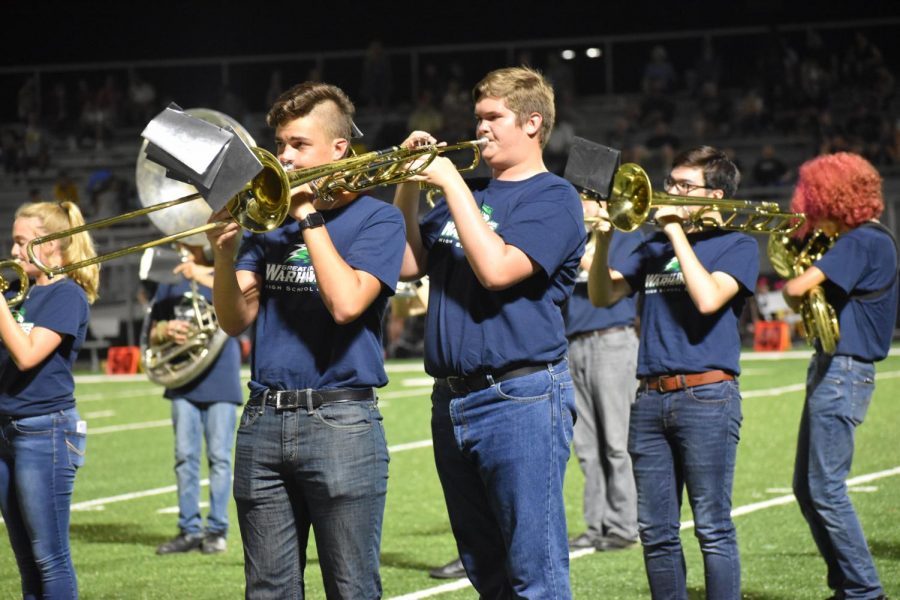
It’s a sad but kind of sweet story: a little rural school (282 students, total, K-12) in West Virginia has a small but mighty high school band, enthusiastically supporting the home team on Friday nights. Over the summer the band director leaves the district. First day of school, the principal shows up in the band room, offering the 38 band members the option of dropping out and taking another class. Ten of the students, however, decide to stay and teach themselves (with the principal’s permission, noting that he had already set money aside in the budget for a band program).

The rest of the story, in the Washington Post, praises the students for making their own rules, playing the fight song and chants at games, and generally keeping the ball rolling, with two bona fide teachers serving as advisors.

The story dedicates half a sentence– West Virginia is experiencing a certified teacher shortage like many states nationwideto the real, underlying problem. The headline is particularly annoying: A high school band teacher quit. Now, the students teach, direct themselves.

Imagine a first-grade classroom, with a dozen adorable, willing children. Their teacher quits, in August. So the principal decides that a couple of adult wranglers can manage them, because she’s set aside money for new reading books and computers, and because they all learned their letters in kindergarten. Maybe a new teacher will turn up. In the meantime, they can be kept busy doing what they did last year.

Perhaps you’re thinking that the national shortage of teachers is limited to certain sub-specialties, or geographic regions, that no responsible school leader would leave a group of six-year-olds to “teach themselves.” If so, you ought to take a look at the percentages of students, especially in charter schools, with unqualified substitutes. There are uncertified subs everywhere, in all subjects, k-12, and unfilled jobs in prestigious private and suburban schools, two months after the start of the school year.

The loyal-to-band kids in West Virginia do not surprise me. Band students, in my thoroughly biased opinion, are THE BEST, and these kids appear to be like band kids everywhere—self-starters, and leaders. Good kids. There are, of course, good kids in all grades and disciplines, in every school, those who can be trusted to carry on when the chips are down.

But here’s the thing that doesn’t get mentioned in this feel-good story: the band kids in WV learned how to do the things they have done—writing rules, running rehearsals, playing tunes—from a teacher. By all indications, a pretty good teacher, someone who instilled a spirit of cooperation that led students to try to balance out the band sound by switching instruments.

Once football season is over, who will be moving their music education forward, teaching them the new skills and music they deserve? Who is preparing younger students there, who will become the high school musicians when these amazing kids graduate? There is no building process, no pipeline of activities that lead to cycles of growth. Without a teacher, this program is headed toward a dead end.

It would be like teaching kindergarteners the skill of letter-sound correspondence, then not providing them with books, discussions, stories, rhyming games, tools to make them better readers, developing an appreciation and desire for full adult literacy. All along the way, students need teachers. A good teacher is the launching pad for students’ “teaching themselves.”

Further—the headline suggests that the band teacher who “quit” caused this situation. I have no idea why the previous band teacher left—could be anything from lousy pay and working conditions to a much better school music job with a bigger band and budget. Or a different job, with regular hours and Friday nights at home, instead of the frozen bleachers. You might call this self-care for burned-out teachers.

The principal holds out hope that a band teacher can be found. But the changing labor force, kick-started by a global health emergency, has made many skilled workers, including teachers, re-consider their worth. The pay scale is only one bit of evidence that schools need to treat their teachers like the essential driver of quality public education.

In West Virginia, their flagship university has suffered a 10% drop in enrollment since 2015, revenue lost during the pandemic and an increasing debt load for new building projects. It’s a new world, and early indicators about the availability and use of resources to provide a world-class education for every child— which include actual music teachers—are alarming.

This Guy Used to be my Congressman. Now He Wants to be my Senator.

I spent most of my life and nearly all of my teaching career in Livingston County, Michigan—a ruby-red, rural-turning-suburban area in the ring outside Detroit. My first principal used to refer to our school district as the far edge of white flight—folks with enough resources to move to a bucolic county with lots of land for their ten-acre dream homes, an hour-long commute into the city, and a population that is 94% white and less than 1% Black.

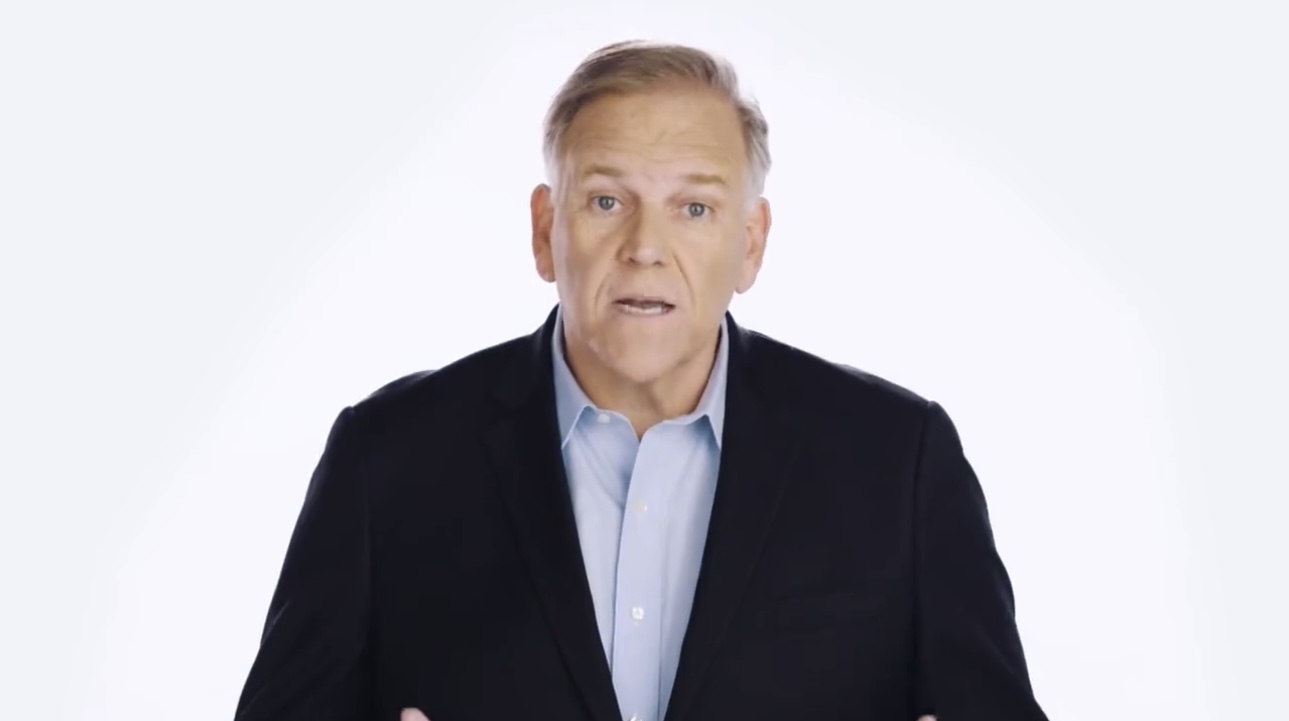
Although I have always identified as a Democrat, I used to vote in the Republican primary, because it was the only way I had some say in who was representing me in local offices and the state legislature. Beginning in 1995, Mike Rogers was my state senator, and later, my representative in Congress. He was, at the time, very much a country club Republican—bland, moderate, uncontroversial and generally well-liked. I didn’t vote for him, but I knew lots of people who did. I also didn’t fear him.

Rogers’ family was well-known in Livingston County. His dad was a public school administrator and football coach, and his mother ran the Chamber of Commerce. One of his brothers was in the state legislature. He won local elections by wide margins, but when he decided to run for Congress, in 2000, squeaked into office by 111 votes. Gerrymandering made his subsequent elections ironclad, however.

Rogers and I lived in the same small town for most of his political career. I used to see him in Meijers and at local events, shaking hands. Once, we were both on a panel at a Chamber of Commerce breakfast where the topic was education policy. Mr. Rogers’ take on education, as a Congressman, was that the feds had no business making or even influencing education policy. He suggested that it was time to shut down the Department of Education. He spoke admiringly about local control—and asked me, his designated foil, what purpose the federal Education Department served.

My answer was two-fold: First, an Ed Department serves as clearinghouse for research on best practices and ideas in public education, economies of scale. But far more important was the federal role in promoting and ensuring equity in sharing available resources. I reminded him that the original ESEA, passed in 1965, was designed to provide resources for our neediest students, to help level the playing field for millions of students whose states weren’t particularly interested in equity.

Not Michigan! he said, ignoring the obvious example of Detroit Public Schools, 50 miles down the road, a place that many of his constituents escaped, after the auto industry built enormous wealth on the backs of immigrant laborers.

After the panel dispersed, Rogers was surrounded by local businessmen—and I hurried back to my 3rd hour class, which a colleague was generously covering until my return.

In 2015, Mike Rogers decided not to run for Congress. He launched a career in radio—a kind of mild-mannered Rush Limbaugh—and moved to Florida, a place where he has been happily ensconced for eight years, starting new businesses, and serving as a defense lobbyist and National Security expert for CNN. He occasionally put out feelers to see if there was a possibility of becoming President.

But. Rogers has recently rediscovered his Michigan roots, and is now running for an open Senate seat in the mitten state. He has always been a pro-NRA, anti-abortion guy, but lately, he’s moved hard to the right, castigating his former employer, the FBI, claiming they’re on a witch hunt to take down The Former Guy for political purposes. He’s called the DOJ “corrupt.” The Michigan Advance says:

His former service as an FBI agent and CNN commentator may not be popular with MAGA voters, many of whom view the federal law enforcement agency as complicit in targeting Trump as well as the cable news outlet that is often a target of his ire.

He’s also made clear that he doesn’t need votes from the UAW, or—evidently—non-union workers and auto industry leaders rapidly building EV and battery plants in Michigan.

As for public education, he’s also changed his tune, now endorsing federal influence, saying that  “schools care more now about social engineering than, as my father used to say, readin’, writin’ and ‘rithmetic.”

Expect to hear that little witticism often on the Rogers campaign trail.

This Mike Rogers is a far cry from the dude who praised Barack Obama for taking swift action on allegations that the IRS intentionally scrutinized applications for tax-exempt groups with references to “tea party” or “patriot” in their names. As I said, Mike Rogers used to present as a country club Republican, hometown boy made good, moderate conservative and deficit-cutter.

What has happened to sort-of moderate Republicans? They get primaried after one term. They get criticized by Tucker Carlson. They can’t maintain leadership in the House. They get the message: move rightward, or get out of the way.

How did this happen? Theda Skocpol, on Politico, says this:

It was never about cutting the deficit. The popular side of the tea party was about anger and fear of a changing country in which a guy with ‘Hussein’ as his middle name and black skin could be elected president. The tea party had taken the shape of a just-say-no, blow-it-all-up, don’t-cooperate, do-politics-on-Twitter faction — and this is the perfect expression of it. This is where it leads.

Donald Trump didn’t create all this. He’s just been very good, ever since 2015, at giving it permission and focus.

Any political leader or candidate who changes their expressed core beliefs because they now have ‘permission’ doesn’t deserve to be elected.

About that Band Director Who Got Tased

I first got wind of this story on the BDG (Band Directors Group) Facebook page, early yesterday morning. You’ve probably seen it:

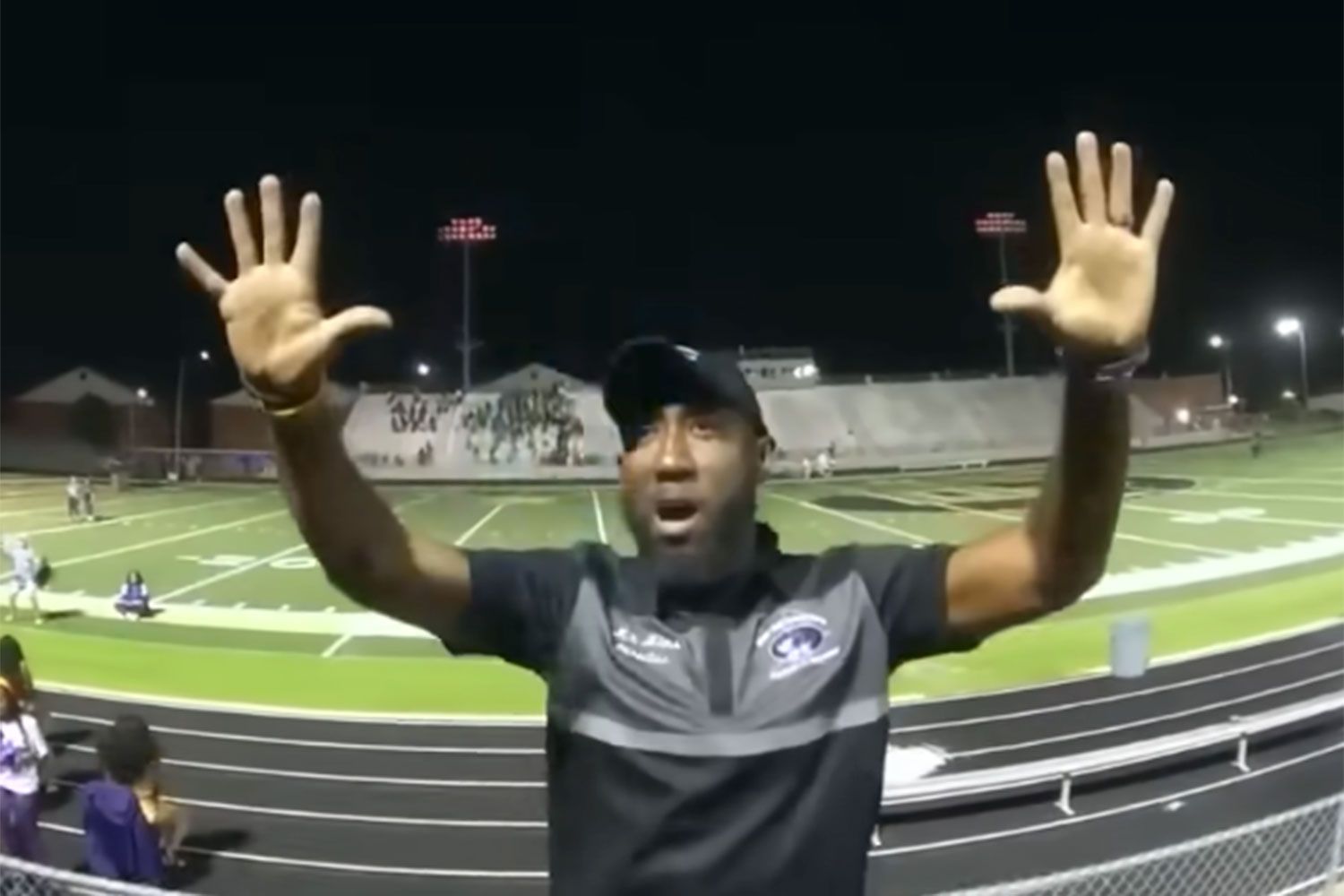
After a football game last week, at Jackson Olin HS in Birmingham, Alabama, Johnny Mims, band director for the visiting team, from Minor HS, let his band finish their post-game music after police directed them to stop playing. After the band finished playing (during which, the stadium lights were turned off), police physically grabbed and attempted to arrest Mims. There was some pushing and shoving on both sides. Then the police tased Mims, three times, as his students witnessed (and screamed). It was all captured on videotape.

Here’s a full description. After the incident, Mims was taken to the University of Alabama at Birmingham Hospital and then to the Birmingham City Jail, where he was booked and later bonded out. Officers obtained arrest warrants for disorderly conduct, harassment and resisting arrest, police said.

I’ve watched the police body-cam footage a couple of times, and it’s pretty gnarly, although after the lights go off, it’s hard to see specifically what’s going on. There are band kids behind the director, on the track, and others in front of him—about 145 kids in the band, total—and they all had a ringside seat to witness their teacher twitching on the ground, shocked into submission for letting them finish about a minute’s worth of music.

There’s a lot of backfilling the story on both sides. There’s been violence after football games so police are needed to empty the stadium! But— the two band directors agreed to do a short post-game show in the stands so Mims thought he was OK to finish!  But—the other director stopped first! But police have ultimate authority!

The people I was interested in hearing from were the band directors. Unless you’ve (raising hand) been out there in front of the marching band on Friday night after Friday night, you might think that the rules for when to play and when not to play are crystal clear. They are absolutely not—and change from one venue to another. Also–everybody in the stands has an opinion on what the marching band should be doing and when. (I feel like I should repeat that last statement three times.)

The band directors on BDG first wondered if Mims actually heard the cops, over the noise—a large marching band makes a lot of decibels. (He seems to be telling them to give him a minute, at one point.) They wondered, as well, if playing after the game was planned. (Yes—both directors agreed to play, but the police had other ideas.)

Who turned off the stadium lights? (Unclear—but if the worry was public safety, turning off the lights is a far more dangerous move than letting the band play to the end of a song. If the lights were on a timer, that’s even worse, because who knows how long a game will last, and what might be happening in the parking lot afterward.)

Given the information presented by both sides, most band directors said— Hey. If the cops came over and gave me a throat-slitting motion, I’d stop the band. Just because they’re the cops and I’m a band director. I might be furious. But. They’re the cops, the ones with guns.

And—once again— who gets to play music, and when, at sporting events, is a matter of opinion.  I have seen bands chased off the field by their own teams as they’re marching to the sidelines. I have seen referees assess penalties for bands or individual tuba players being in an ‘illegal’ spot. I have heard bands reprimanded for not stopping the music when play resumes (sometimes, just a few seconds’ worth of Let’s Go Bluevery popular in my neck of the woods). And I have heard endless, countless discussions of what the “official” rules are.

One thing I can tell you: this incident will do nothing to encourage non-hostile behaviors and good sportsmanship at either of these schools. Nor will it increase respect for the police and the important work they do.

While I probably would have stopped—out of fear — when the policeman yelled at me to cease directing, it’s because I’m a nice, albeit cowardly lady and they have tasers.

But then— I have not been pushed around by the police. I have not been routinely stopped or experienced anxiety when a cop car appears in my rear view mirror. I once talked a cop wearing a knit beanie out of giving me a ticket for doing 34 mph in a 25 zone by telling him I was on my way to choir practice at church (the truth).

I have no idea what was going through Mims’ mind when the cops started trying to handcuff him, but nobody deserves to be humiliated, ganged up on, pushed around or tased, for the non-crime of directing a HS band.

But the students who watched this will remember it all their lives. It will change the way they see the world.

Rebounding from the Pandemic

I just secured appointments for the new COVID vaccine, plus my annual flu shot. In science, we trust— no hesitation or overthinking. Several of our friends and colleagues have recently tested positive, been treated and recovered, eventually. Accessing the new vaccination is a no-brainer. And as the former saliva queen of my middle school band room, I have been a flu shot devotee since the 1970s.

It’s pretty clear that we’re seeing COVID aftershocks; the pandemic isn’t over. That’s not an arguable question. What to do about the unpredictable tail of this pandemic—how to protect, how to exercise caution, what lessons have come from the crisis, and what is forever altered—that’s what we should be pondering right now. 

Last week, we saw Ed Yong at the National Writers Series (one of the best things about living in Traverse City). He and his interviewer came out on the stage wearing KN95 masks. I have been following and admiring Ed Yong, ever since I read his pieces about COVID in Atlantic Magazine, and saw him on MSNBC. Once he started speaking, with his British accent, impeccable logic and vocabulary, the mask (and his twinkling eyes) only served to accent his keen intelligence.

He was there to talk about his latest book, An Immense World,  which is wonderful, by the way, highly recommended. But about an hour in, there was a shift to questions about the pandemic. Yong said he would not sign books, face to face, after the talk, one of the perks attendees clutching their own copies usually enjoy. He was protecting his health, he said—too many early flights, airports and being shorted on sleep.

Then, he talked about how difficult it was to be a science writer, researching the causes and outcomes of a global health crisis, interviewing people on or after the worst days of their lives. He stressed how essential it was to consider something like a worldwide pandemic with an open and curious mind, as well as deep empathy. No preconceptions, and a focus on human beings.

For the first time, his words did not come rushing out, as he talked about political mistakes that cost human lives and societal forces resisting justice and equity, not to mention unethical practices in science. He’d seen too much suffering, he said. He needed a break.

Then, taking a deep breath, he said he’d gone for a short walk that afternoon, to a bridge over the river that runs through downtown Traverse City. Standing on the bridge, he’d seen a hawk. In the middle of the bridge, looking east, you can see the hawk’s nest on the left bank, he said, third or fourth tree down. Every person in the audience could picture that bridge—only a half-block from the Opera House, where we were sitting.

A hawk’s nest!? Downtown? Cool.

Yong talked about how many more things he noticed, during the pandemic, when traffic died down and people stayed home. Things that were always there, but became obvious when we had time to look. To breathe, and appreciate how good breathing feels. Small joys.

It was an inspiring moment.

It struck me that most of us have no clue how much has changed, in the larger world. How many times have you heard someone wistfully expressing their desire to return to the past—a past that we label “normal”? If only things could go back to the way they were.

But normal is dead.

Normal is dead in politics, in labor and manufacturing, in medicine, in travel and hospitality.  And of course, there’s no more normal in education. Chasing normal in education is a fool’s game—what we had before the pandemic should not function as aspirational goal for the future.

If business as usual has been altered in public education, that could be a good thing. At the very least, temporarily gutting the system—closing schools, shifting instruction to online platforms—should have served as a seat-of-pants instruction manual in the limitations of on-line relationships.

Here are a handful of things we might have learned about public education by experiencing a global pandemic (but probably didn’t):

  • The gross inequities in access to wireless capacity and devices.
  • The social necessity of being with other children and teenagers in maintaining mental health.
  • How faulty-to-useless testing data is in structuring relevant instruction that meets children where they are (which is supposed to be the point of standardized assessments).
  • How political leadership matters in rebounding from a crisis that involves an entire slice of citizens: our children.  
  • How utterly dependent society in general is on school functioning as M-F childcare.
  • How much privilege matters in reshaping public education practices—Who has grabbed the microphone and the media as the disease recedes? Who is left out, once again?

I could go on. In fact, I’m planning a series of “what did we learn from the pandemic” blogs over the next few weeks. As Ed Yong noted, a global cataclysm needs to be approached with an open and curious mind, and deep empathy for our fellow humans and creatures. I’m not seeing that deep caring, or willingness to explore change, in education.

In the NY Times today, there was an interesting article on the upcoming population peak—the point at which the number of humans on the planet begins shrinking. Scientists think this will happen in 50 years or so—and that now is the time to think about the impact of fewer people on the health of the planet, as family size shrinks.

The planet is down about seven million people, courtesy of COVID. That’s a fact. Here’s an assignment for your students: What impact might those seven million people have had on making the world a better place? What can YOU do to make the world a better place? What would make your schooling more useful in pursuing that goal?

What could we learn from asking those questions?

Moms for Liberty Takes on Head Lice and Other Critical Issues

It was one of the more convoluted of Moms for Liberty’s social media rants.

Posted on X (Twitter) on July 26 by Moms for Liberty:

What happens when your child gets sick at public school? Like if they have lice for example, does your child’s public school treat the lice? Or if they have a fever, does the school examine, diagnose and treat your child?

There were, as of today, 628 responses. And the first couple dozen were best described as “confused.”

First, there were the hostile parents who felt that schools were remiss in tending sick kids:

No in fact they don’t even want to give the kid an ibuprofen.

Our school district doesn’t check for lice, doesn’t send children with lice home, and doesn’t notify the parents if a child in their kid’s class has lice even if they’ve been notified of a case.

I have to “sneak” my kids cough drops, I am not allowed to send them to school with medicine and they confiscate them.

Then, there were the hostile parents who didn’t want the school to do anything when their own children were sick or injured:

How long til they wanna take that over too? It seems to me these “progressives” seem to view parents as simply payers & caretakers whereas they are the real parents who instill morals/values. It’s almost like the roles are backwards.

That’s when they trust the parents—when lice and vomit make their appearance. (Follow-up tweet from Tiffany Justice): That’s right.

These were followed by tweets by reasonable people (many of them teachers or school nurses) pointing out that the school does, in fact, have to do something to stop the spread of head lice and deal with other maladies:

For lice: They triage and isolate, stopping the spread. For other medical issues, they triage and make recommendations for next best steps for students health – including contacting parents.

Rural, small town (my hometown): We don’t treat lice (or bedbugs) but often help with treatment resources if needed. Kids cannot come back until they are nit-free. We do not “diagnose” or treat illness, but with consent can give OTC meds. Fevers sent home.

Most school districts no longer have nurses in school every day which is a problem. My son had a classmate with diabetes, the teacher had to be trained to help.

It took some time for the back-and-forth to identify what the original tweet was supposed to produce: anger over Joe Biden’s remarks about funding mental health care for kids, via their schools.

Aha. No mental health resources for kids. That’s the goal! Because… why again? Who could be against dedicating tax dollars toward something that pretty much everyone agrees is a burning issue, post-pandemic?

Do those on here miss the point- is that purposeful? Or are you really not getting it? Schools are not trained in healthcare or psychology & should have a very minor role in it.

Oh, honey.

Have you not been in a classroom— ever? Do you still think that teachers dispense agreed-upon, vetted knowledge to passive recipients? Do you think a desperately hurting teenager can suck it up and learn, damn it, without impacting other students?  And do you think mamas will come to school to pick up feverish, upchucking, scratching kids? Will they pick them up in time?

Our school nurse administered life-saving epinephrine to our son last year. I will forever be in her debt for her actions.

Fed up with all this pro-school, thanks-for-trying talk, a Mom for Faux Liberty finally got down to business:

The type of people who go into the public school system to teach and into the administration are very controlling. They are also anti-god and family and very unstable. That is why they think it’s perfectly acceptable to change your child’s gender without your permission.

I am a public school teacher. I am pro-God (not that it’s anybody’s business). I love my family and think families are the foundation of American society. I see gender health care as an issue between a child, their parents and their health care providers—far out of the purview of any school, beyond honoring a child’s wish to choose their own name. My emotional stability has been assessed by the thousands of students, thousands of parents and hundreds of professional colleagues over decades of practice.

And here’s the important part: Most teachers— upwards of 90%, I’d estimate—are like me. They have to be moderate and stable, in order to stay in the classroom. They keep any contentious values under cover. They want to help kids.

As the (noxious) bumper sticker says—they’re certainly not in it for the income. All of them have dealt with lice, vomit and broken bones, not to mention whatever the most recent incarnation of Moms seeking Control Liberty wants.

One more tweet that I found interesting: My mother worked in an elementary school in the office during the 80s & 90s. They were only allowed to take temperatures and provide necessary medication, which was approved and supplied by parents. If the child had a temp, the parents were called. The parents had rights then.

Well, exactly—except for the last sentence. This is what all school employees—secretaries, aides, teachers, nurses, bus drivers, administrators and even the lunch ladies—do, right now. They assess the kid in distress, administer allowed first aid, and call the parents. It’s not new. It’s common sense.

From Alfie Kohn:

So if pundits were throwing up their hands even during the Eisenhower era about schools on the decline and students who could barely read and write, the obvious question is this: When exactly was that golden period? The answer, of course, is that it never existed. “The story of declining school quality across the twentieth century is, for the most part, a fable,” says social scientist Richard Rothstein, who cites a series of similar attacks on American education, moving backward one decade at a time. Each generation invokes the good old days, during which, we discover, people had been doing exactly the same thing.

But now—we have social media to spread the vitriol.

Teachers—or Teacher Unions? Or maybe—Neither.

You see it all the time, in the media.

How Teacher Unions became a Political Powerhouse

Republicans grill teachers’ union head on COVID classroom closures

How Teacher Unions Failed Students during the Pandemic

And this nasty little bit of hyperbole:
How the Teachers Union Broke Public Education

Those unreasonable, greedy, demanding teachers—umm, unions– insisting on masks and ventilation during a lethal global pandemic. Boldly asking for wage increases, that bring them closer to other employees with college degrees and a desirable skillset.

But what about that delightful third grade teacher who let your shy daughter know that her drawings and poems were amazing, building her confidence? Or the HS Math teacher who wrote four letters for your son, getting him into Michigan Tech, his life’s dream?

Well—those are individual teachers. The good ones. Not the union. Which is evil. (Since sarcasm often doesn’t translate well in blogs, I am compelled to point out flaws in the “teachers aren’t unions” dichotomy.)

A few points:

  • “The union” is made up of teachers, not “bosses” or—insult alert! —“thugs.” Teachers. Local unions are led by local teachers, a large majority of whom are also full-time in the classroom.
  • Only 31 of the 51 states (and D.C.) have collective bargaining privileges.While other states have chapters of professional associations, including but not limited to affiliates of the NEA and AFT, bargaining is limited or prohibited. Associations exist to protect teachers and provide things that teachers need, from insurance to professional development—things they would get under a collective bargaining agreement.
  • In states with stronger unions and collective bargaining privileges, the bargaining happens at the district level, often between employees of the district—colleagues. Which is as it should be—making joint decisions about best use of available resources, in the best interests of both the students and the adults who organize and deliver education. Of course, this process is messy and fraught, but tax-supported public goods and services are often messy. It’s called democracy.
  • Things that are good for teachers (a health-conscious environment, adequate materials and resources, an orderly school climate, a threat-free atmosphere, respect for teacher judgment) are also good for all kids.
  • Who to fire first in an economic downturn?  The temptation to fire the most expensive employees is always present, in any business. Experienced employees often cost more; there are reasons experienced folks are kept on—their ability to manage difficult customers or tolerate uncertainty. Sometimes, it’s a matter of honoring loyalty and accrued skills.

So the Mackinac Center is dead wrong when it writes:  Merit pay systems allow a school district to pay teachers according to their performance. The teacher who performs well and teaches students effectively is likely to be rewarded with higher pay. The teacher who consistently underperforms is dismissed.

Measuring teacher performance via test data is impossible. Tests and scores are deeply flawed. And one family’s genius teacher who saved Jason is another family’s weirdo with a ponytail.  There are teachers who underperform, even teachers who should be fired. And that decision should be made by the district that hired the teacher, not a grid comparing student testing data. Pitting teachers against one another for salary bonuses is a recipe for disgruntlement. And invites cheating.  Not to mention shutting down the already-shaky qualified teacher pipeline.

So why are politicians—OK, Republican politicians—claiming we need to break the back of the teachers’ unions?How can they praise individual teachers as essential workers but excoriate the associations that represent them? Isn’t that incoherent thinking?

I was struck by Representative Brian Mast (R—FL)’s post this week, claiming: Unions worked hard to keep parents out of their children’s classrooms and have gone so far as to treat concerned parents as domestic terrorists for speaking up at school board meetings.

 Mast pumps up the House Republicans’ Parents Rights bill:

Here are the five basic rights the House Republicans outlined:

  • Parents have the right to know what’s being taught in schools and to see reading material.
  • Parents have the right to be heard.
  • Parents have the right to see the school budget and spending.
  • Parents have the right to protect their child’s privacy.
  • Parents have the right to be updated on any violent activity at school.

So here’s the thing. Parents have always had the right to know what’s going on in their public schools, and have always been invited to attend school board meetings (unless the people THEY ELECTED are meeting in secret—in which case, it’s not a Congressional problem). They have always been able to share concerns about curriculum—from constructivist Math to Sex Education—and vote on school taxation initiatives. I only WISH that more parents were worried about protecting their child’s academic testing data—the scariest privacy issue in 2023.

School administrators and board members loathe being publicly called out or yelled at; they are forced to be responsive to parent commentary—it’s their job.

And very little of this—the rights of parents–has anything at all to do with local teacher unions, who function as a convenient scapegoat, a collective noun that allows those who would like to see public education destroyed point fingers at someone, anyone, and call them a terrorist.

For shame.  

Middle Schoolers: The Myth and the Reality

Among the worst ideas I’ve ever heard, regarding young people and how to develop their knowledge and skills, is this one: Let’s let 14 year-olds serve alcohol in bars and restaurants!

Really? We’re going to let eighth graders wait on adults, bringing them booze, asking if they’d like another, assessing their levels of inebriation? Young, barely teenaged girls “handling” older men, massaging their inebriated egos in hopes of a bigger tip?

Would these be the same young teenagers we don’t trust to select their own pleasure reading, share their own observations about racism and sexism in the classroom, or choose how they want to be identified?

I taught full-time for 32 years, only one of which did not include teaching middle school. I love teaching middle school. Sometimes, I think—in terms of my cynical, low-brow sense of humor anyway—I never really left the seventh grade.

I repeat: I love teaching middle school, and I really love kids in those middle grades.

Tell people that you taught middle school band for more than 30 years, and the first comment you get back will be some variant on “OMG, God bless you” or commentary re: how dreadful it is to parent a person who’s 13 years old—The hormones! The backtalk! — and therefore, how epically horrible it must be to try to teach these kids something, in batches of 30.  

Or, in my case, in batches of 60+, where each student is holding a noisemaker.

Actually, while there were certainly days when I wondered whether I might not be better off selling real estate, teaching middle school music was mostly deeply rewarding and often fun. And in case you think this was because I was teaching an elective, I also taught seventh grade math for two years (once in the 1980s, the second time in 2005), as well as an ESL class and an academic support class where there were fewer than 10 students and classroom management was way more difficult than my 65-piece eighth grade band.

Here’s my honed theory of teaching middle school, in a nutshell: We don’t give middle schoolers enough real responsibilities or credit for their ongoing moral development. They are smart and curious enough to wrestle with big questions and read challenging texts (with some scaffolding). They are trying to figure out what kind of world they will inherit, and are often anxious about the job current adult leaders are doing. This anxiety has exponentially grown by watching adults navigate a global pandemic, stand by as states go up in flames, and try to get themselves elected through the use of lies, cheating and bullying.

Still, middle-grades kids will rise to do a credible job of almost any task we set before them, if they see a point in doing the work.  And when they complain of being treated like children, they’re usually right—every time I hear teachers recommend shutting down privileges we afford adults (using the bathroom when needed, for example, or being given some grace around a missing pencil), I cringe.

Treating young adolescents as if they can’t reasonably manage their own behavior almost always results in their doing precisely that: acting irresponsibly. A well-run classroom is not achieved by imposing a long list of rules, or threats of escalating punishments. It happens, over time, when students understand that you a) like them, b) respect them, and c) think they are capable of doing the work you have to do together, whether that’s single-variable equations or discussing core democratic values.

Over those three decades of teaching middle school, did I sometimes fail to achieve those goals? Absolutely. And did I have students who exhibited appalling behaviors, ranging from mean-girls cruelty to risking bodily harm? Sure.

But the longer I taught, the higher I raised the achievement hoops, and time after time, my pre-adolescent students came through. We have always underestimated the ability of middle-grades students to discuss, write, solve problems, explore issues and help their communities. We are always too quick to pigeonhole them, based on their immaturity. We have let middle school become a kind of punch line.

Which is why I find it interesting that some states, trying to solve ongoing post-pandemic labor shortages caused by adults who are unwilling to work for subsistence wages and are now demanding better job opportunities, are turning to young teenagers. Whether this is child labor or “developing workplace skills” depends on your point of view.

But there are better ways to incorporate the nascent adult skills that middle schoolers want to display than having them deliver alcoholic drinks to adults, or do other jobs that adults refuse to do for piddling money. I think about all the times I took the middle school jazz band, for example, to the nursing home or the school for developmentally disabled students—and how willing they were, with a little coaching, to make those lives better, to interact with people who were profoundly different.

Perhaps the best way to develop middle-grades students is to offer them opportunities to develop adult trust in their capacity.

Several years ago, my school had a pilot program in community service. Students earned points for shoveling neighbors’ walks, being “counselors” at elementary after-school gymnastics or basketball programs, or “student leadership” activities like planning and decorating for school dances. All students, over the course of a year, had to earn a set number of points, reported and signed off on by their parents.

One mother sent in a form awarding her daughter points for family babysitting. The 14 year-old daughter had four younger siblings, two who were not yet in school, and her mother depended on her to come home right after school, and watch the kids, so she could work outside the home.

This seemed like a no-brainer to me. Tending four children (and, by the way, completing your homework, something this girl always did) was a major responsibility for a girl in middle school. But the counselor argued that it wasn’t “community service,” just a family expectation.

The point of having a community service program was to build students’ skills and awareness of their place in—duh—the community, to emphasize that healthy communities depend on volunteering and interdependency. To show middle schoolers that their work and skills were already valued, even though they were, say, 12 years old.

The program was eventually scrapped over issues like defining “community service.” Which I would call an adult failure to understand the considerable capacities of middle school students.

Middle schoolers can be trusted to do lots of things; my 30 years in their company gave me ample proof of that. It’s the adults who can’t be trusted in the proposal that they serve drinks.

I Had a Dream about the First Day of School…

The “Teachers Report” day, that is. We all have dreams about the day the kids come back, and some of them are doozies, the kind where we’re not wearing pants or the kids run amuck.

But this was a lovely dream about the day that’s usually sucked up by re-learning about Blood-borne Pathogens, the latest silver-bullet curriculum initiative designed to raise those scores, and pointless, endless announcements.

It went like this:

7:15 am Over the P.A., we hear strains of Morning Mood. The Principal begins speaking.

Good morning, Ore Creek Middle School! (in his best Robin Williams voice) Welcome home!
Here’s the plan for today: You’ll all be working in your rooms all day.

The office will be open all day for you to request and immediately pick up supplies. We have parent volunteers to help with this, because the office staff is super-busy, of course.

 We’ve also set up a coffee station which will be replenished with hot beverages all morning, and there’s a box of donuts and muffins for you. Sign up for a slot to use the copy machines—we’ve rented an extra one for the week. I’ll be visiting each of your rooms at some point today, to say hello and answer any questions you may have about 2023-24.

From 11:30 to noon, there is a smorgasbord lunch, prepared by parent volunteers, in the cafeteria. Take a break, have a great lunch to fuel the rest of your day, and meet our new staff members then.

The library will be open all day, but remember—our media specialist is also setting up her room. I have hired extra IT support to staff a help desk all afternoon. Email IThelp@OreCreek if you want a visit from them this afternoon.

I will be sending you an email at the end of the day full of important announcements and a link to the required Blood-borne pathogens training. Sorry, gang—I know this is old news for most of you but the state requires it. You have two weeks to complete it. I’ll send reminders to those who still need to take care of this. Our first staff meeting will be in two weeks, once things get rolling.

I know that many of you have already been in, some for several days. On behalf of the district, I thank you for your dedication. I will be in over the weekend, if you have more to do, so the building will be open.

One last thing—several of us will be heading to Spike’s after school. In addition to their usual (cough) libations, Spike has set up lemonade and iced tea, on the house, for Ore Creek staff. Now—open your doors and give our custodians a hearty round of applause for making the building look so spiffy.

Hey. A teacher can dream…