“My Research is Better than Your Research” Wars

When I retired from teaching (after 32+ years), I enrolled in a doctoral program in Education Policy. (Spoiler: I didn’t finish, although I completed the coursework.) In the first year, I took a required, doctoral-level course in Educational Research.

In every class, we read one to three pieces of research, then discussed the work’s validity and utility, usually in small, mixed groups. It was a big class, with two professors and candidates from all the doctoral programs in education—ed leadership, teacher education, administration, quantitative measurement and ed policy. Once people got over being intimidated, there was a lot of lively disagreement.

There were two HS math teachers in the class; both were enrolled in the graduate program in Administration—wannabe principals or superintendents. They brought in a paper they wrote for an earlier, masters-level class summarizing some action research they’d done in their school, using their own students, comparing two methods of teaching a particular concept.

The design was simple. They planned a unit, using two very different sets of learning activities and strategies (A and B) to be taught over the same amount of time. Each of them taught the A method to one class and the B method to another—four classes in all, two taught the A way and two the B way. All four classes were the same course (Geometry I) and the same general grade level. They gave the students identical pre- and post-tests, and recorded a lot of observed data.

There was a great deal of “teacher talk” in the summary of their results (i.e., factors that couldn’t be controlled—an often-disrupted last hour class, or a particularly talkative group—but also important variables like the kinds of questions students asked and misconceptions revealed in homework). Both teachers admitted that the research results surprised them—one method got significantly better post-test results and would be utilized in re-organizing the class for next year. They encouraged other teachers to do similar experiments.

These were experienced teachers, presenting what they found useful in a low-key research design. And the comments from their fellow students were brutal. For starters, the  teachers used the term ‘action research’ which set off the quantitative measurement folks, who called such work unsupportable, unreliable and worse.

There were questions about their sample pool, their “fidelity” in teaching methods, the fact that their numbers were small, and the results were not generalizable. Several people said that their findings were useless, and the work they did was not research. I was embarrassed for the teachers—many of the students in the course had never been teachers, and their criticisms were harsh and even arrogant.

At that point, I had read dozens of research reports, hundreds of pages filled with incomprehensible (to me) equations and complex theoretical frameworks. I had served as a research assistant doing data analysis on a multi-year grant designed to figure out which pre-packaged curriculum model yielded the best test results. I sat in endless policy seminars where researchers explicated wide-scale “gold standard” studies, wherein the only thing people found convincing were standardized test scores. Bringing up Daniel Koretz or Alfie Kohn or any of the other credible voices who found standardized testing data at least questionable would draw a sneer.

In our small groups, the prevailing opinion was that action research wasn’t really research, and the two teachers’ work was biased garbage. It was the first time I ever argued in my small group that a research study had validity and utility, at least to the researchers, and ought to be given consideration.

In the end, it came down to the fact that small, highly targeted research studies seldom got grants. And grants were the lifeblood of research (and notoriety of the good kind for universities and organizations that depend on grant funding). And we were there to learn how to do the kind of research that generated grants and recognition.

(For an excellent, easy-reading synopsis of “evidence-based” research, see this new piece from Peter Greene.)

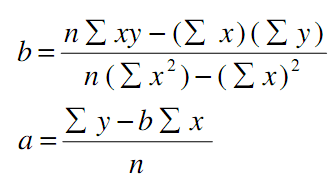
I’ve never been a fan of Rick Hess’s RHSU Edu-Scholar Public Influence Rankings, speaking of long, convoluted equations. It’s because of these mashed-up “influence” rankings that people who aren’t educators get spotlights (and money).

So I was surprised to see Hess proclaim that scholars aren’t studying the right research questions:

There are heated debates around gender, race, and politicized curricula. These tend to turn on a crucial empirical claim: Right-wingers insist that classrooms are rife with progressive politicking and left-wingers that such claims are nonsense. Who’s correct? We don’t know, and there’s no research to help sort fact from fiction. Again, I get the challenges. Obtaining access to schools for this kind of research is really difficult, and actually conducting it is even more daunting. Absent such information, though, the debate roars dumbly on, with all parties sure they’re right.

I could tell similar tales about reading instruction, school discipline, chronic absenteeism, and much more. In each case, policymakers or district leaders have repeatedly told me that researchers just aren’t providing them with much that’s helpful. Many in the research community are prone to lament that policymakers and practitioners don’t heed their expertise. But I’ve found that those in and around K–12 schools are hungry for practical insight into what’s actually happening and what to do about it. In other words, there’s a hearty appetite for wisdom, descriptive data, and applied knowledge.

The problem? That’s not the path to success in education research today. The academy tends to reward esoteric econometrics and critical-theory jeremiads. 

Bingo. Esoteric econometrics get grants.

Simple theoretical questions—like “which method produces greater student understanding of decomposing geometric shapes?”—have limited utility. They’re not sexy, and don’t get funding. Maybe what we need to do is stop ranking the most influential researchers in the country, and teach educators how to run small, valid and reliable studies to address important questions in their own practice, and to think more about the theoretical frameworks underlying their work in the classroom.

As Jose Vilson recently wrote:

Teachers ought to name what theories mobilize their work into practice, because more of the world needs to hear what goes into teaching. Treating teachers as automatons easily replaced by artificial intelligence belies the heart of the work. The best teachers I know may not have the words right now to explain why they do what they do, but they most certainly have more clarity about their actions and how they move about the classroom.

In case you were wondering why I became a PhD dropout, it had to do with my dissertation proposal. I had theories and questions around teachers who wanted to lead but didn’t want to leave the classroom. I was in possession of a large survey database from over 2000 self-identified teacher leaders (and permission to use the data).

None of the professors in Ed Policy thought this dissertation was a useful idea, however. The data was qualitative, and as one well-respected professor said– “Ya gotta have numbers!” There were no esoteric econometrics involved—only what teachers said about their efforts to lead–say, doing some action research to inform their own instruction–being shut down.

And so it goes.

My Twelve Best Blogs of 2023

Every December, sites and services that spend the year hoovering up personal information spit out a summary of users’ activity. Call it the year-end quantification-industrial complex. The trend isn’t new. But especially since Spotify hit word-of-mouth marketing gold with its shareable Spotify Wrapped feature, companies of all kinds have been delivering year-end nuggets of data to their users, whether personalized or in aggregate.                                                             Atlantic, December 23, 2023

The year-end quantification-industrial complex. I like that phrase. I really do like Ten Best columns and Biggest Stories and even the Time Person of the Year. There’s something gratifying about a year’s worth of anything, be it books, movies or (my personal favorite), Most Important Trends in Education.

It’s nice to think: Well, that was then, but now we have a clean slate, a fresh start. Even when we know, deep in our brains, that next year will be largely composed of the same old sh*t, plus some disconcerting new sh*t and perhaps the occasional good news. Which means that columns about education policy and practice are, if not evergreen, enduring.

Here are what I think are the best dozen education-related blogs I wrote in 2023. Not necessarily the most popular or most-read—but the ones deserving another look:

I Had a Dream about the First Day of School    actually was one of my most-read blogs. I was wading around in teachers’ August complaints about bad professional development, endless and pointless staff meetings and all the unpaid work involved in classroom re-organization and wrote the blog in about 20 minutes. It struck a nerve.

Sometimes, you know, going in, that a blog will sink like a stone. But you write it anyway. In the case of Girls. Period., the trigger was being asked by a friend, a school social worker, to donate pads and tampons for the middle school girls she served. Bad policy in Florida makes an appearance in this blog, as well. I’m sure some readers found it distasteful. But it applies to girls, half our population. Just saying.

Almost every edu-blogger wrote about book-banning this year, some with photos of empty shelves. My personal take explores the use of the word ‘pornography’ to describe books that have changed students’ lives, and my own first encounter with actual porn.  I Know It when I See It.

The Absolute Folly of Standardization:  ‘The trouble arises when we use the tools of school—instruction, curriculum, assessment—to compare the students in our care, to label them, to sort them into standardized categories when they are very young. To essentially assign their potential. To show contempt for the wide range of human talents.’

Here’s one about the school where I used to teach, after a student filed a lawsuit against school leaders for not protecting her from overtly racist speech and acts. Are Schools Responsible for the Racist Behaviors of Students? What do you think?

Speaking of racism, and charges of “CRT”—Who is Indoctrinating Whom? A reflection on the impact of teachers on our lives and beliefs, for better and worse.

How many times have we heard teachers grumble about education policy that should have been run by teachers—who could have disabused legislators of the notion that they knew something about the way schools work? This ‘teacher at the table’ idea isn’t new: Thinking about Teachers at the Table.

Where the Boys Aren’t: Why is Teaching Still a Female-Dominated Profession? A question that is endlessly fascinating to me, as a woman who embarked on a largely male sub-profession: band director. Blogs about women in education don’t usually draw lots of readers, but this one has statistics and receipts.

Most of the blogging I’ve seen on the (faux) Science of Reading feels like it was created by SOR bots, claiming that they never learned anything about phonics in their teacher training. (Seriously?) Some thoughts about media baloney re: reading instruction. Learning to Read in Middle School.  

I spent most of my career teaching middle school. And I have some thoughts about the rather amazing capabilities of middle school students: Middle Schoolers—the Myth and the Reality.

In a year when unions appear to be making a comeback, teacher unions are still straw-men bad-guys in the war on public ed: Teachers or Teacher Unions? Or Maybe Neither?  Some clear-eyed observations on why we still need teacher unions.

Here’s another heartfelt reflection that went nowhere, but that I think summarizes the heart of successful teaching: being committed to your students, and even fond of them. Almost All You Need is Love.

It’s my sincere hope that you’ll take a look at one or two of these. And if you really want to make my day, subscribe—it’s totally free and easy—to Teacher in a Strange Land.

Happy New Year!

The Problem with Jingle Bells

If you follow various chat groups and Facebook pages of music educators, this time of year is rife with the Great Christmas Literature Discussion, centered around whether to schedule a concert in December and, if so, what songs to play, while avoiding stepping on anyone’s cultural traditions.

I have written, often, about this conundrum—honoring the festive spirit of seasonal holidays (which is evident absolutely everywhere, in December, from the grocery store to TV ads) vs. avoiding any mention of Christmas at school, because it’s inappropriate to preference one religious celebration over others, in a public institution filled with diverse children.

From a professional education perspective, it’s thorny. You can play a Christmas-heavy concert, sending parents home in a rosy glow—some parents, anyway. You can try to recognize every winter/light holiday with a tune—or rely on “classical” pieces like Messiah transcriptions. You can try to take Jesus out of the equation, and end up with a lot of junk literature. Or you can avoid the whole thing and schedule your concert in January.

Increasingly, I’ve seen elementary music teachers bowing out of anything directly related to Christmas. They can articulate good reasons for this, distinguishing between music students are fortunate enough to experience at home and with their families, and what belongs in a solid music education curriculum. For teachers who are under pressure from administrators or parents to put on a holiday show, there are winter weather songs. Enter Jingle Bells.

A couple of weeks ago, Peter Greene reprinted his blog entitled The Jingle Bells Effect and the Canon. It’s a bit of brilliance comparing 30 different versions of Jingle Bells, 30 ways of taking a small collection of notes and rhythms and turning them into something unique and different.

It’s like literature, Greene says—there are multiple ways to teach a concept, theme or historical era through the same medium: the printed word. He makes the point that teachers should always be able to offer a cogent answer to the question: Why are we learning this? I agree.

And for many years, I found Jingle Bells a handy instructional tool. The chorus uses only five notes, so the tune appears in virtually every beginning band method book, just about the time kids are eager to play real songs. The lyrics are thoroughly secular—no mention of Christmas—so when kids are singing about a one-horse open sleigh, it’s kind of like the Little Deuce Coupe of its day.

It’s also one of those three-chord songs, simple to harmonize. Add some sleighbells and voila! First concert magic. For years, my middle school band (some 200 7th and 8th graders) played Jingle Bells in a local Fantasy of Lights parade. Because when you’re trying to get 200 young musicians to march and play at the same time, you need something easy.

As awareness of the racist roots and language in some of our most beloved folk and composed songs began to grow, in recent decades, elementary and secondary music teachers rightfully started pulling certain songs out of their teaching repertoire. Scarcely a week goes by without an argument about this trend, on music-ed social media sites. Do songs that sprang from minstrelsy, performed in a different era, for example, have a racially negative impact today? Or are they just tunes? A valid and important question.

I find these skirmishes encouraging, an example of teachers discussing–with some conviction–the beliefs that shape their own professional work. And sometimes, seeing things in a new light. As Maya Angelou said:Do the best you can until you know better. Then when you know better, do better.’

I’ve read dozens of these “is this racist?” discussions on-line. And music teachers, given the chance to re-think the cultural value–or lack therof—in certain pieces of music, often are willing to choose something else, or share the origins of the work, the outmoded and biased thinking reflected in the lyrics, as an opportunity to teach cultural history associated with music. People will adapt.

Except when it comes to Jingle Bells.

Back in 2017, a professor at Boston University , Kyna Hamill, published a research paper, suggesting that Jingle Bells was first sung in minstrel shows. Research papers are not generally the subject of teachers’ lounge chat, but this one caught fire, and pretty soon, there were teachers arguing that the composer of the piece, James Lord Pierpont, was a fervent Confederate, and therefore a supporter of slavery. Out with Jingle Bells!

Pierpont was not a household name, in his own time. He was a struggling composer, organist and teacher. His father was an ardent abolitionist and Unitarian minister, as were his two brothers, all in Massachusetts. But Pierpont took a position as organist in a Unitarian church in Georgia and was there when the Civil War broke out. He wrote music and sold it to support his family—including songs that supported the Southern war effort.

He also enlisted in the Confederate Army and served as a clerk. His father, the Reverend John Pierpont, was a Chaplain in the Union Army—one of those families split by a tragic war. There are plenty of families in the same situation right now, in this country—split by politics, influenced by cultural context. Something to think about, as we evaluate and banish Pierpont, 150 years after he wrote his most famous sleighing ditty.

Even Kyna Hamill, arguably the genesis of the anti-Jingle Bells movement now says this:
My article tried to tell the story of the first performance of the song. I do not connect this to the popular Christmas tradition of singing the song now. “The very fact of (“Jingle Bells’”) popularity has to do with the very catchy melody of the song, and not to be only understood in terms of its origins in the minstrel tradition. … I would say it should very much be sung and enjoyed, and perhaps discussed.”

There are teachers and schools that have taken Jingle Bells out of the curricular mix—and good on them for having that thoughtful discussion in the first place. And there are teachers who have decided they have bigger curricular fish to fry than banishing the bells on bobtails—they’ll save their firepower for songs with overtly racist lyrics and intentions.

Again– these are valid and important questions. The trick is to keep the conversation going, and refrain from condemnation of well-meaning peers.

Are those sleighbells I hear?

A Few Thoughts about Teacher Evaluations without Testing Data

There’s a bill on MI Governor Gretchen Whitmer’s desk that would—among other good, constructive things—end the mandated practice of evaluating teachers using their students’ test data. Most recently, 40% of a MI public school educator’s annual evaluation was tied to standardized test scores. Getting rid of that (and the myriad ways that it was subverted, in practice) is definitely a policy upgrade. Hallelujah.

The next question is always: What will replace test data-based teacher evaluations? And that’s a vastly more interesting topic—how and why should teachers be evaluated? You need both the how and the why to think out of the checklist-of-skills box here.

Yes, teachers’ work must be monitored and assessed, to meet a minimal level of competence, as a critical, publicly funded service. But—are there ways to enhance teachers’ effectiveness embedded in an evaluation process? Is it possible to improve teachers’ practice in the process of checking on them? That’s the gold standard. But is it reality?

From a pretty good piece on the proposed changes in teacher evaluation in Michigan:

Districts would be able to use their own criteria for evaluating teachers, such as classroom observations, samples of student work, rubrics, and lesson plans.  Critics in the legislature (and let’s identify them by name: Republicans) say this plan is merely a return to what used to be—the good ol’ days when teachers got away with substandard practice because there were no teeth in district evaluation processes. But there is something to be said about evaluation criteria tailored to a teachers’ context and teaching assignment. After a couple of years, most teachers could, for example, write their own goals—and a first grade teacher’s goals around student literacy might be very different from the HS art teacher’s portfolio of student work samples.

The bills would de-emphasize evaluations as a factor in districts’ decisions to fire or demote teachers or deny them tenure. Districts seem to have little difficulty firing or shaming teachers these days, for all kinds of stupid, politicized reasons. For teachers lucky enough to have tenure, it’s not the guarantee of a job for life, as the right wing might have you believe. If a district wants and needs to fire a teacher, it’s possible to do that without testing data—in fact, taking away the test score excuse puts the onus on a district to do the work of gathering evidence of a teacher’s unsuitability.

The bills would require districts to take action against teachers who don’t improve after repeated interventions.  As districts should, even in a time when qualified teachers are not thick on the ground.

Michigan’s law on test scores and evaluations grew out of a push for greater accountability in education that began in the 2000s. Some advocacy groups theorized that more rigorous reviews would generate detailed feedback that could be used to improve teachers’ performance. The language here is interesting—“some advocacy groups” and “detailed feedback.” Not much happens when an education advocacy group has a good idea (like using a non-threatening evaluation and mentoring process to build teacher capacity). The groups that get traction for their ideas do so through legislation. And only legislators bent on proving that lack of accountability is the problem would believe that standardized testing data represents detailed feedback on how well a teacher is doing in the actual classroom.

Critics are concerned that de-emphasizing student test scores could lower standards for teachers while students are still struggling to recover from pandemic learning loss and need high-quality instruction. This concept—“lowering standards for teachers”—is comical in a time when districts are thrilled to be re-hiring retirees, rather than relying on uncertified long-term subs. And shame on any media outlet for buying into the idea that students are suffering from learning loss (as measured by the same testing data that doesn’t identify outstanding teaching). Of course, students need high-quality instruction. They have always needed high-quality instruction. Let’s figure out a way to give them more of it.  

Proponents of returning to the old evaluation method say there is no evidence to suggest the current system benefits students, and that tying ratings to test scores contributes to burnout amid persistent teacher shortages. Bingo. Although it’s optimistic, one can hope that districts will take the opportunity to modify their ‘old’ evaluation systems, since tying ratings to test scores didn’t get our hard-working teachers to miraculously raise either. Ten years of data analysis, no uptick in scores.

Let’s go back to the gold standard: an evaluation process that would improve teacher practice. It’s a huge—and evergreen—issue in building teacher capacity, and there is no shortage of, umm, advocacy groups that would like to take on that challenge (and then sell their thinking, materials and workshops to districts).

I’ve always been a fan of the National Board for Professional Teaching Standards’ assessment, but it’s complex, time-consuming and expensive, and needs to be renewed every five years. Moreover, it was created for experienced teachers—an opportunity to stretch and grow and be recognized for your exemplary practice. It’s not designed for novice teachers, and it’s especially not useful for teachers who are struggling.

It’s worth noting that tracking student test data to teacher performance is not only useless, but expensive. Freeing up districts to create their own, multi-phase, divergent forms of evaluation could be a cost savings (but a lot of different work). While buying an off-the-shelf evaluation system is the easiest option, a high-functioning district, with adequate staffing, might be able to do some good work, building a system that runs from an intentional induction phase, to using skilled veterans to partner with newer teachers.

When I think about teacher evaluation, I remember Deming’s first principle: First, drive out all fear. If changing the law does nothing more than that, it will be a success.

The bill dumping test scores as a mandated factor in teacher evaluation is part of a wave of edu-changes including making charter school teacher salaries public, eliminating third grade retention for students testing below grade level in reading, ending the practice of giving schools letter grades and giving underwater districts debt relief.

All of these will matter in the fight to improve and strengthen public education. Just as much as teacher evaluation.

A Passionate Education Conference

Thirty-five(ish) years in public education—you’d think I would have attended dozens of professional conferences, coming home with a branded tote bag and a ream of stapled, shovel-ready ideas for my classroom. That’s the way principals in my experience used to frame attendance at a conference: If we choose to give you a $300 stipend to attend a conference, you’d better bring back materials and lessons for your colleagues. Because that’s why we have conferences: to give teachers new tips and tricks.

Teachers know this, but education-related conferences are almost always done on the cheap. Teachers–even teachers who are conference presenters–often pay part or all of their own expenses, get a rollaway bed so three of them can share a hotel room, split up and attend different sessions to absorb the maximum number of ideas, then maybe pop for a margarita before calling home at bedtime. The high life.

In my 30+ years as a school music teacher, my request to get a day off to attend a conference was turned down repeatedly. The reason was usually because I was the only music teacher in the building, so anything I learned would not be shared beyond the band room. There was very limited money in the budget for conferences (or, for that matter, professional memberships or subscriptions) so STEM or Reading Recovery events were prioritized, as being more likely to impact kids scores.

Administrators also go to conferences, leaving their favorite teacher in charge; presumably they’re expected to bring back “results,” as well. Still—going to a conference, even if you are paying your own mileage, lodging, meals and registration fee, is a perk for teachers.

And not for the new materials or lesson plans.

The value of conferences for educators—as with any gathering of professionals—is in structured opportunities to mingle, to learn, to have long, uninterrupted conversations, to build networks of colleagues with similar values. The purpose of any conference is (or should be) inspiration. The big picture. Hanging with a bunch of people who care as much as you do.

In the age of the internet—where most of us can examine materials and swap lesson plans fluidly—the absolute advantage of a face-to-face conference is the talking and listening, in person. Three decades of communicating on-line (and one godawful pandemic), plus all the tech-bro videos and social platforms—and what have we learned? That you miss something when the person you’re talking with isn’t in the room.

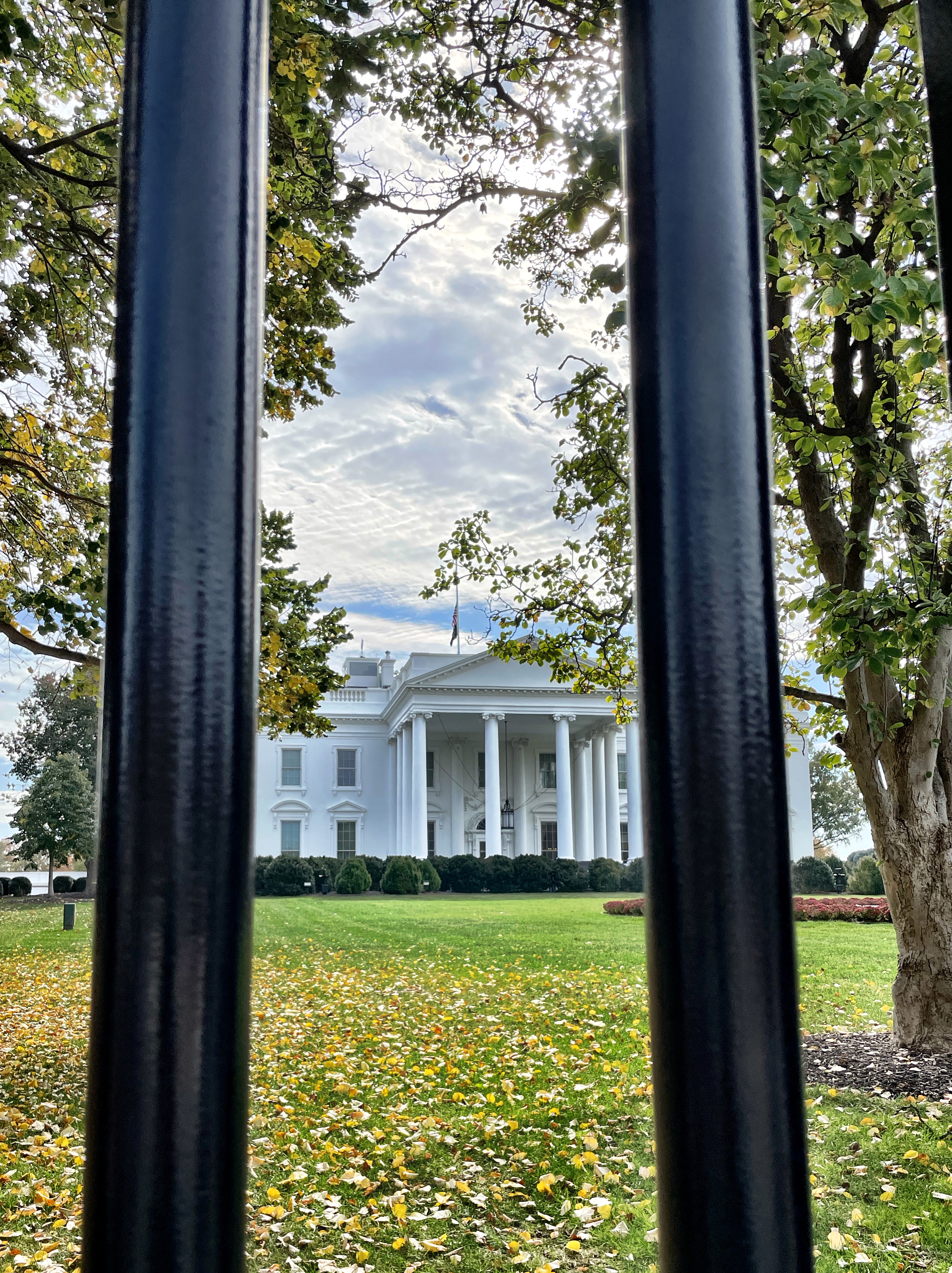
I thought about all of these things while attending the Network for Public Education’s 10th anniversary conference in Washington D.C. last weekend. It was a gorgeous fall weekend—the kind of walking weather where a stroll down to the White House might feel preferable to sitting in sessions centered on countering rabid school board races or hostile state takeovers of ‘failing’ schools.

But no. Every one of the six sessions and five keynotes I attended was both stimulating and encouraging. I heard the inimitable Gloria Ladson-Billings speak, and was stunned by what is happening in Florida and Arizona. I got some tips on running for school board in my local district (#2024Goals) and heard stories of redemption, as well as hideous state-based power plays. What reformers used to call ‘disruption’ now feels like intentional destruction, driven by a single, grasping political party. All over the country.

In the 10 years NPE has been meeting, the tenor of this annual conversation has shifted from the corrosive impact of excessive testing and charter school scandals—So. Many. Scandals.— to outright, in-plain-sight privatization of our best national idea: a free, high-quality public education for every child.

The absolute folly of vouchers—check out Josh Cowen’s work—and the political willingness to blur the lines between church and state are terrifying, all right. So why was I feeling encouraged?

For starters, the fact that the NPE is still meeting, 10 years after its founding, funded largely by individual donations and relatively modest foundational contributions, is reassuring. Many of the conference attendees were still paying their own way—or were attending on the dime of another organization created to defend public education. Money is still how things get done, laws get passed, and ideas take root. Knowing that there are articulate and passionate spokespersonsorganizing to protect public education is heartening.

The second thing I noticed was the number of sessions led by women and people of color. The foot soldiers in the war on public education are teachers, nearly 80% of whom are women. I have been to too many education conferences and symposia where the talking heads were white men with terminal degrees (who were not paying for their own registration fees and babysitters).

Don’t misunderstand—some of my most impressive edu-friends are smart and outspoken white men. But education has long been seen as women’s work, and when I look at the dangers looming—vouchers, religious charter schools, well-funded campaigns against “CRT” and sexual and reproductive autonomy—I see white men, clinging to money and power.  If we’re going to stabilize and enhance public education, women need to be at the forefront. One of the most impressive keynotes at the conference: Diane Ravitch moderating a discussion with the two of the most influential labor leaders in the nation—Randi Weingarten of the AFT and Becky Pringle of the NEA (who preached a blistering sermon on those who would deny the value of a public education for all our children).

We built some sight-seeing (and crab-cake eating) into the D.C. journey, including a visit to the Holocaust Museum before heading to the airport. I last visited the Museum shortly after it opened, but its power has not faded. What I found interesting, in 2023, was the three-deep crowds at the display around the Nazi rise to power in the 1930s in Germany.

Twenty-five years ago, that display addressed the eternal question of how so many good German citizens were drawn into a horrendous scheme to conquer their national neighbors and eliminate “undesirables.” It seemed like a temporary madness, driven by economic instability and inherent German nationalism, not to mention a charismatic leader who appealed to a third of the population.

Now, the photos, speeches and commentary feel like a warning.

Public education is not the only thing endangered. It will take hard work and passion to keep the idea of public goods alive and thriving.

{“cameraType”:”Dual”,”macroEnabled”:false,”qualityMode”:2,”deviceTilt”:0.0073067386958260983,”customExposureMode”:0,”extendedExposure”:false,”whiteBalanceProgram”:0,”cameraPosition”:1,”focusMode”:0}

Talking About Public Education: The Good, the Deceptive, and the Destructive

Tired of the articles on how to handle your impermeably asinine relatives as we approach the holidays? Should you try—really, earnestly try—to actively listen to grievances, striving to ferret out some common ground? Or should you prepare an ironclad arsenal of damning facts about the inequitable economy, tax plans, health care and international diplomacy in an effort to demonstrate your well-researched convictions? Or avoid the whole thing by sticking to football and the weather (my personal preference)?

The thing about acrimonious family gatherings is that you have to come back, year after year, for more turkey and more disputes. Most of my family knows where I stand, politically at least, and could not care less. I am an excellent euchre partner, and always bring good desserts, and that’s enough.

The only contentious thing I ever talk about, at holiday hang-outs or on Facebook (our new town square), is education policy. I will talk to just about anybody—persistently and passionately—about schools, and what it would take to make our public education system not merely workable, but beneficial for all kids in the United States.

This is, by the way, a goal that could largely be accomplished. We have the human capital, the resources and the technical knowledge to transform public education over a generation. What we lack is the public will to do so—for children other than our own, at least.

This represents a sea change in our 20th century national approach to public education, that post-war America where the GI Bill and the Baby Boom made tan, rectangular brick elementary schools spring up like mushrooms in the 1950s. Teachers were in high demand, and state universities were adding a new dormitory every year. Education was going to lift us up, make us (here it comes) the greatest nation on earth.

We don’t think that way anymore.

Somewhere in between our rush to put a man on the moon and the advent of computers in all our classrooms, we lost our “public good” mojo, the generous and very American impulse to stir the melting pot and offer all children, our future citizens, a level playing field, educationally. Lots of edu-thinkers trace this to 1983 and the Nation at Risk report, but I think that the origins of losing that spirit of unity are deeper and broader than that.

Recently, I posted an article from American Prospect on my Facebook page—The Proselytizers and the Privatizers: How religious sectarian school voucher extremists made useful idiots of the charter movement (Katherine Stewart). You can read divergent articles on charter schools (the most obvious and deceptive signal of the loss of our sense of “public good” in education) everywhere, but this was a particularly good piece, honest without being accusatory, damning but cautious:

A wing of the charter movement that is ideologically or religiously opposed to “government schools” was present at the charter movement’s creation, and has grown to comprise a sizable segment of the charter universe. With the election of Donald Trump and the appointment of Betsy DeVos as education secretary, it is presently empowered as never before. Public confusion about vouchers and charters continues to create opportunities. A lightly regulated charter school industry could achieve many of the same goals as voucher programs. They could drain funding from traditional public schools, deregulate the education sector, and promote ideological or religious curricula—all without provoking the kind of resistance that vouchers received.

I posted the article because it was true and thoughtful.

I live in Michigan, where charters took root over two decades ago. Like a handful of other states, we now know what happens to public education, including healthy districts, when charter schools damage the perceived desirability of one—thriving, publicly supported—school for all children. It’s happened all over our state, first in the urban and rural districts, struggling to maintain programming and viability, and now in Alpha districts, as their budgets are diminished and their student populations lured to schools that are “safer” (read: whiter).

After I posted the article, the online conversation was revealing. Teachers (and a lot of my Facebook friends are educators) contributed positive commentary. But there was also a fair amount what Stewart calls public confusion.

  • A sense that charter schools are, somehow, de facto, better than public schools—simply by the virtue of the fact that they’re not public, but selective and special.
  • Assertions that public schools (schools I know well, and have worked in) are attended by children who haven’t learned how to behave properly.
  • Blaming teacher unions for doing what unions do: advocating for fairness, serving as backstop for policy that prioritizes the community over individual needs or wants.

None of these things is demonstrably true. The conversation illustrated that many parents and citizens are no longer invested in public education, emotionally or intellectually. School “choice” is seen as parental right, not something that must be personally paid for. There is now agreement with an idea once unthinkable in America: corporations also have a “right” to advertise and sell a for-profit education, using our tax dollars.

Education is a major major public good where we tax the rich in order to provide a public benefit that you get just by right of being a citizen. When they talk about needing to do away with the entitlement mentality, the most problematic entitlement for them is not Medicare or Social Security. It’s education. Education is even more of a problem for them because teachers are trying to encourage kids to think they can do more. And that’s dangerous.

The core of the public confusion around schooling has been carefully cultivated for decades.

It’s worth talking about—the uniquely American principle of a free, high-quality education for every single child—even if the dialogue is heated. We’re in danger of losing the very thing that made us great.

Rebounding from the Pandemic

I just secured appointments for the new COVID vaccine, plus my annual flu shot. In science, we trust— no hesitation or overthinking. Several of our friends and colleagues have recently tested positive, been treated and recovered, eventually. Accessing the new vaccination is a no-brainer. And as the former saliva queen of my middle school band room, I have been a flu shot devotee since the 1970s.

It’s pretty clear that we’re seeing COVID aftershocks; the pandemic isn’t over. That’s not an arguable question. What to do about the unpredictable tail of this pandemic—how to protect, how to exercise caution, what lessons have come from the crisis, and what is forever altered—that’s what we should be pondering right now. 

Last week, we saw Ed Yong at the National Writers Series (one of the best things about living in Traverse City). He and his interviewer came out on the stage wearing KN95 masks. I have been following and admiring Ed Yong, ever since I read his pieces about COVID in Atlantic Magazine, and saw him on MSNBC. Once he started speaking, with his British accent, impeccable logic and vocabulary, the mask (and his twinkling eyes) only served to accent his keen intelligence.

He was there to talk about his latest book, An Immense World,  which is wonderful, by the way, highly recommended. But about an hour in, there was a shift to questions about the pandemic. Yong said he would not sign books, face to face, after the talk, one of the perks attendees clutching their own copies usually enjoy. He was protecting his health, he said—too many early flights, airports and being shorted on sleep.

Then, he talked about how difficult it was to be a science writer, researching the causes and outcomes of a global health crisis, interviewing people on or after the worst days of their lives. He stressed how essential it was to consider something like a worldwide pandemic with an open and curious mind, as well as deep empathy. No preconceptions, and a focus on human beings.

For the first time, his words did not come rushing out, as he talked about political mistakes that cost human lives and societal forces resisting justice and equity, not to mention unethical practices in science. He’d seen too much suffering, he said. He needed a break.

Then, taking a deep breath, he said he’d gone for a short walk that afternoon, to a bridge over the river that runs through downtown Traverse City. Standing on the bridge, he’d seen a hawk. In the middle of the bridge, looking east, you can see the hawk’s nest on the left bank, he said, third or fourth tree down. Every person in the audience could picture that bridge—only a half-block from the Opera House, where we were sitting.

A hawk’s nest!? Downtown? Cool.

Yong talked about how many more things he noticed, during the pandemic, when traffic died down and people stayed home. Things that were always there, but became obvious when we had time to look. To breathe, and appreciate how good breathing feels. Small joys.

It was an inspiring moment.

It struck me that most of us have no clue how much has changed, in the larger world. How many times have you heard someone wistfully expressing their desire to return to the past—a past that we label “normal”? If only things could go back to the way they were.

But normal is dead.

Normal is dead in politics, in labor and manufacturing, in medicine, in travel and hospitality.  And of course, there’s no more normal in education. Chasing normal in education is a fool’s game—what we had before the pandemic should not function as aspirational goal for the future.

If business as usual has been altered in public education, that could be a good thing. At the very least, temporarily gutting the system—closing schools, shifting instruction to online platforms—should have served as a seat-of-pants instruction manual in the limitations of on-line relationships.

Here are a handful of things we might have learned about public education by experiencing a global pandemic (but probably didn’t):

  • The gross inequities in access to wireless capacity and devices.
  • The social necessity of being with other children and teenagers in maintaining mental health.
  • How faulty-to-useless testing data is in structuring relevant instruction that meets children where they are (which is supposed to be the point of standardized assessments).
  • How political leadership matters in rebounding from a crisis that involves an entire slice of citizens: our children.  
  • How utterly dependent society in general is on school functioning as M-F childcare.
  • How much privilege matters in reshaping public education practices—Who has grabbed the microphone and the media as the disease recedes? Who is left out, once again?

I could go on. In fact, I’m planning a series of “what did we learn from the pandemic” blogs over the next few weeks. As Ed Yong noted, a global cataclysm needs to be approached with an open and curious mind, and deep empathy for our fellow humans and creatures. I’m not seeing that deep caring, or willingness to explore change, in education.

In the NY Times today, there was an interesting article on the upcoming population peak—the point at which the number of humans on the planet begins shrinking. Scientists think this will happen in 50 years or so—and that now is the time to think about the impact of fewer people on the health of the planet, as family size shrinks.

The planet is down about seven million people, courtesy of COVID. That’s a fact. Here’s an assignment for your students: What impact might those seven million people have had on making the world a better place? What can YOU do to make the world a better place? What would make your schooling more useful in pursuing that goal?

What could we learn from asking those questions?

(Almost) All You Need is Love

Scene: Interview with right-leaning MI media personality, c. 2003, re: National Board Certification

Interviewer: So you say that National Board Certified Teachers—NBCTs– are the cream of the crop. What, specifically, do these teachers do that other teachers don’t?

Me: Well, lots of teachers have the qualities and skills that NBCTs have—but NBCTs have undergone a rigorous assessment of what they know and are able to do. They have studied standards for professional teaching and provided evidence that they are demonstrating those standards.

Interviewer: So what are those rigorous standards that all teachers should be aiming for?

Me: The first one—a foundation for good teaching—is knowing your students well, and being committed to their learning.

Interviewer: Seriously? You’re saying you just have to… (adopts snarky tone) love the kids? Even the bad kids? That’s all it takes?

 —————————————–

In case you’re wondering, the interview did not improve much after this moment. Many folks are laboring under the notion that some teachers have magical, almost indefinable skills that whip classrooms into shape and make learning come alive. Other teachers, presumably, have to rely on a boring combination of content knowledge, discipline and fear.

Nobody expects teachers to love every one of their students—not even the National Board. But teachers who do not develop positive and open working relationships with their students, teachers who believe that their job is dispensing knowledge, then measuring students’ retention of that knowledge, will always be behind the instructional curve and may never become what we think of as a “good teacher.” 

Peter Green, whose work is always worth reading, just wrote a moving and beautiful piece about teaching, in which he says this, about loving our students:  Here’s a big thing I believe about love–it’s not so much a feeling as an action and a choice, a commitment. You can choose to love people, and you can do it based on who you are instead of waiting to be inspired by who they are.

There’s that word, commitment, again. Greene also says this:

Twenty years of modern reform and especially two years of pandemess and CRT panic have worked to drive love and trust out of schools. Since (at least) A Nation at Risk, critics have deliberately ignored and abused the notion that teachers might choose to teach out of love and care, but must instead be threatened with Consequences.

Bingo.

All of this love talk goes a long way toward explaining why—again, and again, and in spite of what sometimes seems like an organized media conspiracy to crush public education—parents (somewhere between 80% and 85%) report being satisfied with their public schools.

If the only information you get about the public schools in your community comes from Moms 4 Liberty, or articles about School Board uproars over book banning and faux accusations of grooming, or the relentless drumbeat of “learning loss” that substitutes quantification for compassion— well, you’re likely to be in the majority of non-parents who think public education is failing.

And let’s be brutally honest—some public schools are so stressed that trust and commitment aren’t in the cards. They are, in fact, failing to be committed to their students, and their students’ learning. These failures show up in inability to hire qualified staff, incoherent curriculum, lack of strong leadership or trust, and general chaos—not test scores.

I like the way Matt Barnum (or whoever wrote his headline) phrased it: Are Parents Mad at Schools?

The data-supported answer is no. No, they’re not.

Because— in spite of the pounding that public schools have taken during and post-pandemic, there is still commitment and caring, teachers who drove around rural districts with stapled-together packets and backpacks full of food. Teachers who persisted in trying to adapt to teaching on-line or outdoors. Teachers who went to school unvaccinated, because their students needed them.

Parents also see, up close and personal, what the impact of a global pandemic has been on their own children— not just the disruption to their normal lives, but the free-floating anxiety around masking, illness in the family, squabbling over vaccines and fear of catching a potentially lethal disease. Children who were sad or bored, whose days lacked the social and intellectual structure of M-F schooling, recess and friends.

What kids need now is not, God help us, “acceleration” techniques to get them to an arbitrary (testable) level of learning. They need the aforementioned structure, knowing what to expect from their world. They need the concern and commitment of their teachers.

What about content— knowledge and skills, the measurable outcomes of school? Here’s a secret: Most of what is learned in school has to be continuously refreshed and applied in order for it to stick and be useful in adult life. Scoring well on a test is not a mark of being well-educated, prepared for adulthood. Human relationships prepare us for life. Content comes and goes.

And bad kids? How do we love them?

I was fortunate. For most of my career as a music teacher, I had students for two to three years, sometimes more. I did come to genuinely love—or at least get along swimmingly with—nearly all of them. I was fond of them, and am curious now about what they’ve done with their lives.

But there was this one kid…

It was a year after I’d been out on leave, and had been assigned to teach a semester-long music class that students did NOT choose. Lots of those students were surly at first, being forced into an elective they didn’t want. It was an uphill climb, but eventually, I started winning them over. I saw them relax and even enjoy the things we were doing. There was laughter. Except for one boy.

He was defiant. He refused to participate. He muttered things about me and his fellow students under his breath. I tried ignoring him. I tried gently looping him into groups. I tried calling him out, but with humor. I kept thinking he just needed to know that I was committed to him, and wouldn’t give up. He remained bitter and overtly hostile. Once, after students had formed groups to create compositions, he picked up his belongings and left the room, for no apparent reason, letting the door slam (of course). He was hard to love.

So I mentioned him in the teachers’ lounge (sometimes, good things happen in the teachers’ lounge). You know about his brother, right? one of my colleagues asked. It turned out that this boy’s older brother had committed suicide in the school parking lot the previous summer. Because I had been gone, I didn’t have a clue. Nobody bothered to tell me.

The semester was almost over. I never did develop any trust with this boy. I would have given him a great deal more emotional space, had I known, and interpreted his anger very differently. I would have tried much harder to love him. Because— and this is often true— students often just need the security that comes with knowing their teachers are committed to them, no matter what.

The War Against Icebreakers

Best Twitter–is it still Twitter, considering its ugly new Maga-X logo?—thread of the day: A war on icebreakers in upcoming professional development for teachers. The things people report being asked to do range from silly to downright demeaning.

Icebreakers from my own pantheon: Building structures with toothpicks and marshmallows. Holding hands and forming human knots. Lining staff up by length of service to the district. Trust falls. Any number of exercises using chart paper, balls of colored yarn and/or stick-on dots. Also—looking into each others’ eyes for 30 seconds, not breaking eye contact, which was weirdly moving and also kind of creepy.

Once, at the beginning of two days of pre-school year PD, we watched a cool and interesting short video about school climates, and how to determine what individual schools or districts genuinely value, vs. what they say is their mission.

Video asks: How often does the entire school get together—and for what purposes?

Me, in post-video discussion: Our first three scheduled assemblies are the one where we read and discuss the school rules, the fund-raiser assembly where kids are offered prizes for sales to provide basic instructional supplies, and the fall sports assembly. What does that say about our values?

Administrator:

(Later, he sent me an email expressing his anger that I would suggest our collective values are skewed. Which wasn’t precisely true. As a group, I think the staff did have positive values around the students and teaching, and a collaborative spirit, which are all you can ask for, really. Even if we weren’t demonstrating those in routine assemblies.)

In his oldie-but-goodie post “Thirteen Deadly Sins of PD,” Peter Green runs down, more ruthlessly and amusingly than I, the Big Errors PD presenters make. Lame icebreakers for people who already know each other barely gets a mention.  

I actually think there is value in getting the staff together to explore and improve the work they’re doing. And I say this as a music teacher who underwent countless reading-across-the-curriculum and how-our-new-math-series-applies-to-you workshops. There’s value in talk between people who teach the same kids, even if their disciplinary content or instructional practices are different. There’s even value in one of the simplest icebreakers I remember: Taking short walks around the building or outdoors, with a staff member you didn’t know well.

Here’s an exercise I used to use in workshops around Teacher Leadership: draw a teacher leader.

This draw-a-leader technique was one I used, many times, in workshops around teacher leadership, for diverse audiences. I can testify that if you want to clear a room of school administrators, who suddenly have to step out in the hallway for an ‘emergency’ call, start passing out chart paper, crayons and markers, and ask them to draw something.

The Twitter thread notes, repeatedly and vehemently, that exercises in a professional learning session should always be tied to the PD topic presented.  Every veteran presenter knows that turn/talk time, including the ubiquitous practice of sharing notes around new content or a provocative question, runs past the time allotted. People like to talk to each other—or, at least, are willing to listen to what their colleagues say, a break from being lectured.

When staff members talk to each other, it’s a kind of baseline for reflective practice, a low-risk chance to express opinion, share experiences and ask questions. But there’s an underlying fear that teachers are somehow cheating when they teach or enlighten each other, or take the time to argue about the essential nature of their work.  I can’t fully explain this, but I think it’s rooted in hierarchies and the growing, media-fed dismissal of teaching as a true profession.

As Peter Greene notes, at the very least, professional development sessions can hammer home what NOT to do in your own classroom. Anne Lutz Fernandez, in an excellent piece on the teaching crisis, says:

It’s worth noting that teachers have long found the professional development they are offered to be wanting. The report admits that some school leaders “struggled to find and hire high-quality professional learning providers” and “were quite disappointed in the quality of support they received from vendors.” This isn’t new. Back in 2014, the Gates Foundation found only 3 out of 10 teachers were satisfied with their PD.

There’s work to be done, clearly. Here’s one of my own PD failures:

For several terms, I taught an online graduate course on teachers and policy. The teachers who participated frequently did not know each other; sometimes, they came from across a state or across the country. And—just as in a K-12 classroom—not much happens until folks feel comfortable sharing their thoughts. Although the course eventually had Zoom-type meetings, the on-line structure meant self-introductions, shared writing, and conversation threads. Virtual icebreakers.

The first of these asked course participants to share a book about education that was meaningful to them. This turned out to be Not a Great Icebreaker. Many people finally confessed they’d never read a book on education, except for assigned readings in college or grad school. Or—one person would share a book, and the next half-dozen would say “Oh, yeah, I read that, too,” which is a better answer than “I can’t remember any books about education that ever changed my thinking.”

When revising the course, we changed that icebreaker to: Share a link (book, article, cartoon, meme) that illustrates how you understand the education landscape right now. We thought perhaps full-blown books were a heavy lift for practicing educators.

Also not a great icebreaker.

 A couple of people posted things, couched in disclaimers—”I’m probably the only one who thinks this, but…” or excuses “This is all I could find. Is this OK?” And lots of people were unwilling to stick a toe into the conversation. They would tell you their name, what and where they teach—but digging deep into education policy and practice issues with people you don’t know well turns out to be intimidating.

Maybe it’s the Twitter (X) effect: Short and sassy wins the day. Keep your real values close.  Or maybe teachers don’t have enough time to really think about the incredible responsibilities of the work they do. Or maybe it’s the fear that professional learning doesn’t require a workshop or novel content—but happens most effectively when you have B lunch with a couple of sharp colleagues whose ideas you trust.