Do Public Schools Suck?

Some years ago, John Dubie, then a high school senior in Vermont, posted a very personal, autobiographical blog entitled “Big Picture Saved My Life.” John meant that statement literally—the Big Picture curriculum and program at South Burlington HS was the thing that kept him going when he was thinking about checking himself out.

I was stunned by the aftermath of the piece, which was picked up, reprinted and dissected in a number of other blogs. I was especially surprised by those commentaries that suggested John’s life was saved by leaving traditional public school.

The irony? Dubie spent much of the blog describing the first eight years of his education in a Catholic school, where he was generally seen as a disruptive loser by the faculty. And– the Big Picture Learning program he credits with making all the difference was housed in a traditional public school, in Burlington, Vermont,

Because I was the person who suggested John tell his story in public, this re-interpretation of his autobiography made me see red. I said as much, in the comments, noting that his generosity shouldn’t become a cheap excuse to slam public education again. I said: What I’m worried about here is protecting a young man who graciously shared a deeply personal reflection having his story–and his face– used to promote the idea that public education sucks.

The response I got: Seriously? Of course public education sucks.

Do public schools suck? Is that the conventional wisdom, the reflexive, global response these days? Do we have to start with the conviction that public education has failed, before we can transform or improve, regenerate or revitalize a fully public system?

I say no. In fact, the best time to change public education is now, while its strengths, resources and merits still exist.

What questions should we be asking about public education, before reflexively tearing it down? What facts shape the argument that public education, as a concept, is well worth saving?

  • All governance models–public, chartered, independent, parochial—have produced exciting schools and disastrous schools. There are plenty of students who thrive under direct-instruction, highly structured, traditional content-delivery models. And others who learn best through self-directed exploration of ideas and subjects that interest them. There is no one best way to learn.
  • Public education remains the Big Kahuna of governance models in the U.S. Why would you tear down the considerable and historic infrastructure of a system that has educated–however imperfectly–generations of (successful) Americans, instead of updating it, repairing its cracks and flaws and outright malfunctions? Other nations have retrofitted their public systems, using both research and imagination. Why wouldn’t we?
  • When and where public education is not meeting the needs of students, why is that so? Public education has been radically re-shaped in the last two decades, driven by “reform” policies and experiments that clearly aren’t yielding the expected results (and that’s a very sanguine assessment). If public schools suck, we certainly haven’t found the magic formula to fix them. Probably because the answers involve hard work, multiple strategies and serious investment.
  • Public education is the only “choice” when other options are exhausted, so public schools are filled with our poorest children, those whose parents cannot provide transportation or uniforms or help with algebra homework. Some of those schools are creatively addressing problems, building communities and family relationships, persisting even if testing data remains low. Do they suck?
  • Who’s saying that public education sucks–and why are they saying it? For some parents, the fact that their child doesn’t get a custom-tailored learning experience or enough attention is reason enough to believe that all public education is substandard. For others, there is a knee-jerk assumption that the only good education is a series of competitive-admission, high-ticket private schools. Much of the anti-public education drumbeat springs from a politicized, media-fed conviction that public schools have failed, based on testing data alone. You have to ask: What’s in it for the most vocal and persistent public school critics?
  • You don’t really know what a particular school or classroom is like until you’re there. We’ve all read the polling data that shows parents generally think the schools in their community are pretty good; it’s the schools in other places–scary urban places, or maybe just the next district over, or public schools across the nation–that are terrible. I’ve been in plenty of classrooms in Detroit Community Schools where there was order, curiosity, learning–and joy (and usually, about twice as many kids as there should be). In the middle of poverty, there are pockets of triumphant accomplishment.

Shouldn’t we be shoring up public education, as America’s best idea? Shouldn’t we be investing in repair, enhancement, innovation? Let’s stop with the facile pronouncements on the failure of public education–they reveal failure of imagination and democracy.

Ever Had a Student Like Taylor Swift?

Ever had a student like Taylor Swift?

The question I’m asking is not “Did you ever have a student who turned out like Taylor Swift after they were a full-grown adult—unbelievably well-known and well-off?”

It’s this: Did you ever have a student you felt was full of promise? A kid for whom you could foresee a big future—in any number of arenas, from business to politics to entertainment?

A kid who looked and acted like Taylor Swift in this video, when she was 16 and a sophomore at Hendersonville High School? You can see the talent, drive and ambition from a mile off, and you think the student will end up doing something remarkable with their one wild and precious life.

In the video, however, we see Taylor pledging allegiance, solving a math problem and sort-of mouthing off to her mom. Her comments on camera reveal an atypical mountain of 16-year-old self-confidence, something that can be annoying in a classroom. As it happens, the video was shot near the end of her time actually attending high school, as her career took off, and she finished high school via homeschooling. A practical solution. And, I have to say (quoting Paul Simon), her lack of education hasn’t hurt her none.

My follow-up question: What happened to your student like Taylor Swift—the ultimate prize-winning science geek, the creative senior whose novel you expected to buy in the future, the talented trumpeter headed off to Julliard? Did they rise to greatness? Fizzle? Run into a roadblock and blow all that talent and potential?

Speaking only for myself, I would say that of course some students show enormous promise, but nobody’s future is guaranteed—or even predictable. I have had many former students end up in positions of leadership and acclaim, even fame, in varying fields—just as their teachers expected. And others who made a wrong turn someplace, sometimes disastrously.

What’s more interesting to me is those students of whom little was predicted, who leapfrogged over a lackluster secondary school presence into a successful adulthood. I had a student in my 7th grade math class whose homework was perennially missing, and whose test scores were abysmal. We had tons of meetings around this kid with his beleaguered parents—how to get him to focus on schoolwork, benefit from extra tutoring, knuckle down and pass the seventh grade, etc. etc.

You know what’s next, right? By the time he was 21, Mr. Anti-math was a million-dollar real estate salesman, back when selling a million dollars’ worth of real estate meant something. His little headshot, with its cool haircut, appeared in every edition of the local news. Presumably, he had someone else doing his taxes, and drawing up contracts.

I also know that many of my middle school students’ future goals were centered on riches and fame. You don’t often meet a pre-teen who hopes to live their life humbly, in service to others. Self-effacement and altruism are difficult when you’re not really sure of who you are, to begin with. Besides, aiming high will please your parents and your teachers.

Celebrity, however, is not all that it’s cracked up to be:

When a celebrity is that prominent, they are always in danger of becoming the figurehead of cultural and societal frustrations. Which is one of the many reasons celebrities periodically recede from the public eye: no matter how many people love you, there comes a point when the structure of a star image cannot shoulder the weight of the star’s meaning and import. The history of celebrity is filled with examples of people who did not or could not protect themselves from this scenario — because of their youth, because of addiction, because of others’ greed, including our own as consumers and fans — and careers and lives that imploded because of it.

Taylor Swift’s ‘meaning and import,’ in 2024, have made her the target of a whole segment of American society:

She’s doing too much, except when she’s not doing enough, and she’s always doing it wrong… a pretty blonde dating a handsome football player should, at least for white people of a certain age, evoke all the simpler bygone vibes (Friday-night lights, milkshakes with two straws, letterman jackets) that conservatives could want. Except — oops! — the pretty blonde endorses Democrats. And Travis Kelce, the football hero, appears in commercials for vaccines (bad) and Bud Light (somehow worse).

And why does she hog the spotlight at his games? She’s Yoko Ono-ing him and jinxing his team, the Kansas City Chiefs, except when she misses a game — and is still, somehow, jinxing the team, which made it to the Super Bowl anyway, proof right there, somehow, of a vast left-wing conspiracy.

Taylor even gets people like the execrable Jesse Waters claiming she is a left-wing asset.  And worse.

Here’s the thing about Taylor Swift: she is a genuine talent, who writes her own material. As a life-long musician and music teacher, that fact alone elevates her above many, if not most, popular music superstars, to me. Of all the amazing things she’s accomplished, I most admire her reclaiming her own music by re-recording albums released when she was younger, and under the thumbs of record producers whose goals centered on promotion more than artistry and message.

That makes her a role model for all girls who want to speak with their own, authentic voice.

And that’s a goal that teachers can get behind, with all their students. Wealth and glory are often fleeting, but knowing who you are and what you stand for can be accomplished by all students.

The picture below was shot at the Musical Instrument Museum in Scottsdale, AZ, one of my favorite places on the planet, eight years ago this month. If you go on a weekday, you are likely to run into a field trip in progress. And even though there were Chinese drums to pound, and John Lennon’s Steinway (on which he composed “Imagine”) to reverently view, where were the students clustered? In front of Taylor Swift’s sparkly dress and banjo, mouthing the words to her songs.

Those kids are probably 20-something now. Let’s hope they’re claiming their own voices.

The Mental Energy of Teaching

Interesting tweet from @EdFuller_PSU:

The one thing non-teachers simply do not and cannot grasp is how MENTALLY EXHAUSTING IT IS TO TEACH ALL DAY. There are very, very few jobs that require the constant mental attention that teaching does. I’d love to see all the people criticizing teachers to teach for a week. (Caps are Fuller’s.)

There are over 750 responses, running about 30 to one some form of confirmation, most of which are from teachers or parents. The odd pushback (i.e., @Angrydocsx: Surgery, nursing, working on an oil rig, construction, being a lineman, etc… Teachers are great but get over yourself.) are either from people who feel their jobs are equally taxing, or your garden-variety anti-teacher/anti-union/you-suck-so-shut-up tweets.

Side note: I think surgery and nursing are also incredibly demanding and find @Angrydoc’s immediate shift to oil rigs and linemen in cherry pickers—dangerous, outdoor male-dominated jobs—telling.

Fuller (who, not coincidentally, was a HS teacher before moving into higher education) puts his finger on the thing that makes teaching exhausting—you’re on all the time, making decisions on the fly and—if you’re doing the job right—taking sincere responsibility for teaching…something, to students who may not particularly want to be taught.

He did not say teaching was the most mentally exhausting job in the world—there are others where you can’t take a break or turn your back—only that the need to constantly pay attention and adapt were factors that many folks did not perceive, when they thought about teaching. A number of the tweeted responses, in fact, were from people who thought they’d give teaching a try, but concluded that it wasn’t the job they thought it would be.

Larry Cuban recently compared teachers’ decision-making to playing jazz and rebounding in basketball—two complex skills that depend on prior learning and practice for automaticity. He includes two footnotes about the number of decisions teachers typically make:

*Researchers Hilda Borko and Richard Shavelson summarized studies that reported .7 decisions per minute during interactive teaching.

*Researcher Philip Jackson said that elementary teachers have 200 to 300 exchanges with students every hour (between 1200-1500 a day), most of which are unplanned and unpredictable calling for teacher decisions, if not judgments.

Cuban notes that those studies are older, and invites readers to share any newer research—but those figures ring absolutely true to me. Interactions, decisions, re-direction, pop-up questions, wait time, modeling, judgments. On and on and on. Teaching is all about an on-your-feet response to whatever crops up. It’s the essence of unpredictability, and every day is exhausting.

What Fuller’s tweet and the plethora of responses clearly illustrates: There is no such thing as successful scripted teaching or “effective” fidelity to pre-constructed lessons. Also: the more you teach, if you’re paying attention, the more fluid the decision-making becomes, and the more tools in your mental (and emotional) tool bag. Experience matters. Perception matters. Judgment matters.

When I had been teaching for more than 25 years, I took a two-year sabbatical to work at a national education non-profit. There was an opportunity to pursue an alternate career in our contract language, but even though I knew I could return to teaching, I was certain that this new job was my off-ramp.

At first, it was great. I had my own cubicle, with a computer and a phone and–get this–a secretary. We took an hour for lunch, occasionally going out to a restaurant (and, also occasionally, having a glass of wine). We could use the bathroom as often as we liked. I could pop into someone else’s office and have a long chat about some issue that had arisen. I could leave early to go to the dentist. We were doing a lot of conferences and workshops—on weekends, because our clients were educators—and if we were in another city for the weekend, we didn’t return to work until Wednesday or Thursday: comp time!

I found the workload easy and the pace relaxed. I liked the people I worked with. But after the first year, I started thinking about going back to teaching. It took a long time to work through the reasons. Teaching offered less money, less prestige and way more what might be called mandatory time on task.

What I finally concluded was this: When I left the school building at night, and walked across the parking lot, I could describe the good I had done that day, things students had learned, progress made. I didn’t get that daily confirmation at the non-profit (which was much-admired). Lots of days were focused on strengthening the business end of the non-profit’s work. I didn’t get to hang out with kids, either.

I taught a lot of subjects and varied grade levels during my career, speaking of mental exhaustion. I taught large middle school and high school band classes (65+ students), and 7th grade math in the first year of a new, “connected” curriculum that the old math teachers loathed. I taught vocal and instrumental music in every grade from pre-K to 12. By far the most mentally challenging class I ever taught was general music to a group of 12 Pre-K children, mostly four years old, in my last year in the classroom.

These kiddos were all over the place, maturity-wise. My biggest challenge at first was getting them all to sit, not sprawl or run around, on the circular rug in my classroom. I had them for 50 minutes, twice a week (yup—too long, I know, but that’s the way the schedule was set up), so the first time they came to my room, I prepared a lesson plan with seven different activities, from listening to marching. Seven!

They ran through that plan in about 20 minutes. I remember thinking: I’m supposed to be good at this! I hope nobody makes an unscheduled visit to my room.

Although I got much better at teaching very young children, thanks to the generous suggestions of my colleagues, it was a mental attention marathon, day in and day out. Did they understand that word? Why aren’t his hands coming together when he claps? How much time is left? Wait— is she actually spitting?

When we speak of teacher professionalism, we think of content knowledge, instructional expertise, being a respected contributor to a school learning community. But a big part of professionalism is accepting responsibility for what happens in your worksite, for expending the continuous mental energy to create a successful and skilled practice.

The last word about the way the public sees teacher professionalism, from Jose Vilson:

Over the last few decades, pundits and policymakers have derided the professionalism of teachers because “accountability” or whatever. No matter how many degrees and certificates they get, how many years of experience they accumulate, or student commendations they collect, American society looks at teachers and says “Oh, that’s nice!” but also, “How do you do it? Couldn’t be me!” “You and your union make the job easy, right?” and my personal favorite, “I couldn’t stand me when I was a child. How does that work out with 30 of them?!” In other words, even though many people think only a special set of people can do the job, they also think anyone can do it.

“My Research is Better than Your Research” Wars

When I retired from teaching (after 32+ years), I enrolled in a doctoral program in Education Policy. (Spoiler: I didn’t finish, although I completed the coursework.) In the first year, I took a required, doctoral-level course in Educational Research.

In every class, we read one to three pieces of research, then discussed the work’s validity and utility, usually in small, mixed groups. It was a big class, with two professors and candidates from all the doctoral programs in education—ed leadership, teacher education, administration, quantitative measurement and ed policy. Once people got over being intimidated, there was a lot of lively disagreement.

There were two HS math teachers in the class; both were enrolled in the graduate program in Administration—wannabe principals or superintendents. They brought in a paper they wrote for an earlier, masters-level class summarizing some action research they’d done in their school, using their own students, comparing two methods of teaching a particular concept.

The design was simple. They planned a unit, using two very different sets of learning activities and strategies (A and B) to be taught over the same amount of time. Each of them taught the A method to one class and the B method to another—four classes in all, two taught the A way and two the B way. All four classes were the same course (Geometry I) and the same general grade level. They gave the students identical pre- and post-tests, and recorded a lot of observed data.

There was a great deal of “teacher talk” in the summary of their results (i.e., factors that couldn’t be controlled—an often-disrupted last hour class, or a particularly talkative group—but also important variables like the kinds of questions students asked and misconceptions revealed in homework). Both teachers admitted that the research results surprised them—one method got significantly better post-test results and would be utilized in re-organizing the class for next year. They encouraged other teachers to do similar experiments.

These were experienced teachers, presenting what they found useful in a low-key research design. And the comments from their fellow students were brutal. For starters, the  teachers used the term ‘action research’ which set off the quantitative measurement folks, who called such work unsupportable, unreliable and worse.

There were questions about their sample pool, their “fidelity” in teaching methods, the fact that their numbers were small, and the results were not generalizable. Several people said that their findings were useless, and the work they did was not research. I was embarrassed for the teachers—many of the students in the course had never been teachers, and their criticisms were harsh and even arrogant.

At that point, I had read dozens of research reports, hundreds of pages filled with incomprehensible (to me) equations and complex theoretical frameworks. I had served as a research assistant doing data analysis on a multi-year grant designed to figure out which pre-packaged curriculum model yielded the best test results. I sat in endless policy seminars where researchers explicated wide-scale “gold standard” studies, wherein the only thing people found convincing were standardized test scores. Bringing up Daniel Koretz or Alfie Kohn or any of the other credible voices who found standardized testing data at least questionable would draw a sneer.

In our small groups, the prevailing opinion was that action research wasn’t really research, and the two teachers’ work was biased garbage. It was the first time I ever argued in my small group that a research study had validity and utility, at least to the researchers, and ought to be given consideration.

In the end, it came down to the fact that small, highly targeted research studies seldom got grants. And grants were the lifeblood of research (and notoriety of the good kind for universities and organizations that depend on grant funding). And we were there to learn how to do the kind of research that generated grants and recognition.

(For an excellent, easy-reading synopsis of “evidence-based” research, see this new piece from Peter Greene.)

I’ve never been a fan of Rick Hess’s RHSU Edu-Scholar Public Influence Rankings, speaking of long, convoluted equations. It’s because of these mashed-up “influence” rankings that people who aren’t educators get spotlights (and money).

So I was surprised to see Hess proclaim that scholars aren’t studying the right research questions:

There are heated debates around gender, race, and politicized curricula. These tend to turn on a crucial empirical claim: Right-wingers insist that classrooms are rife with progressive politicking and left-wingers that such claims are nonsense. Who’s correct? We don’t know, and there’s no research to help sort fact from fiction. Again, I get the challenges. Obtaining access to schools for this kind of research is really difficult, and actually conducting it is even more daunting. Absent such information, though, the debate roars dumbly on, with all parties sure they’re right.

I could tell similar tales about reading instruction, school discipline, chronic absenteeism, and much more. In each case, policymakers or district leaders have repeatedly told me that researchers just aren’t providing them with much that’s helpful. Many in the research community are prone to lament that policymakers and practitioners don’t heed their expertise. But I’ve found that those in and around K–12 schools are hungry for practical insight into what’s actually happening and what to do about it. In other words, there’s a hearty appetite for wisdom, descriptive data, and applied knowledge.

The problem? That’s not the path to success in education research today. The academy tends to reward esoteric econometrics and critical-theory jeremiads. 

Bingo. Esoteric econometrics get grants.

Simple theoretical questions—like “which method produces greater student understanding of decomposing geometric shapes?”—have limited utility. They’re not sexy, and don’t get funding. Maybe what we need to do is stop ranking the most influential researchers in the country, and teach educators how to run small, valid and reliable studies to address important questions in their own practice, and to think more about the theoretical frameworks underlying their work in the classroom.

As Jose Vilson recently wrote:

Teachers ought to name what theories mobilize their work into practice, because more of the world needs to hear what goes into teaching. Treating teachers as automatons easily replaced by artificial intelligence belies the heart of the work. The best teachers I know may not have the words right now to explain why they do what they do, but they most certainly have more clarity about their actions and how they move about the classroom.

In case you were wondering why I became a PhD dropout, it had to do with my dissertation proposal. I had theories and questions around teachers who wanted to lead but didn’t want to leave the classroom. I was in possession of a large survey database from over 2000 self-identified teacher leaders (and permission to use the data).

None of the professors in Ed Policy thought this dissertation was a useful idea, however. The data was qualitative, and as one well-respected professor said– “Ya gotta have numbers!” There were no esoteric econometrics involved—only what teachers said about their efforts to lead–say, doing some action research to inform their own instruction–being shut down.

And so it goes.

Star Tech: The Next Generation of Record-Keeping

In her last year of a degree program in Justice Studies, my daughter took a course called “Surveillance in Society.” The readings and discussion were around intrusions into personal privacy and data made possible by technology. Dear Daughter and I had many amusing conversations about some of her assignments—“Are Bar Codes the Mark of the Beast? Discuss.”—which struck me as paranoid in the extreme. Her professor was obsessed with our imminent loss of civil liberty, always urging his undergrads to be suspicious of anyone asking for personal information, and, presumably, scanning the sky for black helicopters.

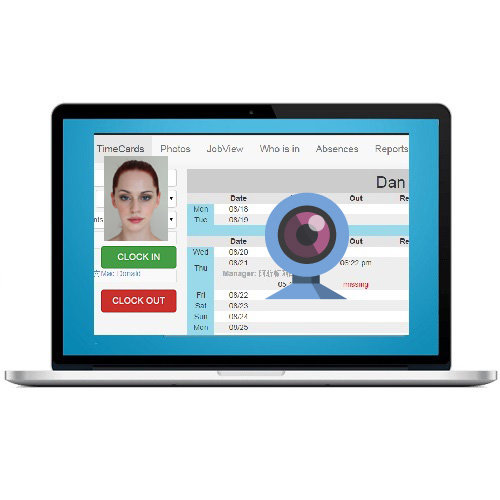
However—I have been thinking a lot about the use of technology to gather data and “streamline” normal school processes, like testing, attendance and grading, to present an image of a “21st century school.”  Here is a simple story about data collection and our belief that All Technology is Good.

In 1998, my district opened a new middle school, full of state-of-the-art technological systems. We were the envy of the other buildings, with fully networked software to handle all our data needs. We got some training and the big pitch—our new procedures would save time, paper and man-hours, give us more accurate data, impress parents with e-communications, yada yada,

Under Old Attendance procedures, every teacher took attendance once, at the same time every morning, recorded it in their grade/attendance book, and sent a student to the office, with an attendance form, printed on scrap paper from recycle bins. Secretaries recorded these on a master list, and handled absence data for students who came/left during the day. Teachers got a copy of the master list, to help confirm absences when students needed to make up work.

Under New, Improved Attendance procedures, every teacher had a computer, with separate attendance book and gradebook functions. Teachers were now required to take attendance every hour and enter absences and tardies on the computer within a five-minute window. We were not allowed to keep the attendance program open on our computer desktops (because our gradebooks, protected by the same password, might be accessed by devious students)—so we had to log in every hour.

Because this was 1998, the server’s horsepower was severely strained by 40 teachers logging in simultaneously, and it would take 30-60 seconds for the program to load. Teachers who forgot to take attendance within 5 minutes would be called by the office (where a secretary now sat, monitoring the data coming in every hour), disrupting teachers’ lessons. If someone had a missing assignment, you had to toggle between attendance and grade programs to discover whether the child had actually been absent.

A process that had taken two minutes of teacher-time daily suddenly began to take two minutes every hour. Best-case scenario, teachers would lose ten extra minutes of instructional time each day: 50 minutes/week, four class periods per month, 36 class periods per school year, or six full days of instructional time. Taking attendance.

Lest you think I’m being overdramatic (or are dying to tell me that faster computing and better software have eliminated problems and made attendance-taking an absolute joy)—I tell this story not to whine about record-keeping, but to question our automatic goal of “efficiency” and the uses and purposes of all K-12 tech-enhanced data collection.

The state requires daily absent/present data, and that to ferret out kids who aren’t actually attending school but were counted for funding purposes. A student who went AWOL would not necessarily be picked up any quicker under the new system, and most of our mid-day leavers were signed out to go to the orthodontist with their mom, anyway.

The new system made data-entry mistakes six times more likely and kept a secretary busy checking on students who were marked present one hour, but absent the other five due to teacher error. I had great sympathy for “careless” teachers who rushed through the attendance procedure to get started on, you know, teaching—only to be monitored and chastised later. I was one of them.

Nobody in the office could explain why or how, precisely, the new system was helping us do a better job of serving kids. The on-line gradebooks also came with unanticipated problems—teachers who didn’t post enough grades (remember when formative data included things that weren’t numbers?), the amount of time now required to deal with anxious parents, and so on.

The most obvious reason to question always-available online gradebooks is that responsibility for turning in work and monitoring a running performance record should belong to students, especially in secondary settings. We have always had periodic reporting to parents—four or six times a year, or in some cases, weekly progress reports. Any more than that elevates grades over actual learning and encourages students to let mom be in charge of their education.

Tech-based surveillance of students is now on steroids. In a thoughtful post entitled How Much Should I Track My Kid? Ann Helen Peterson says this:

My parents trusted me because I had earned their trust. Sometimes I stretched that trust, but I was constantly figuring out what felt too risky, what felt right or wrong, who I didn’t want to get in a car with. Maybe that sounds like a lot of discernment for a teen. But how else do we figure out who we are? My parents could’ve lectured me about “making good decisions” all they wanted; I only knew how to make them by finding myself in situations far from them where I had to.

The same principle applied to my grades, to my online use, to how I talked to boys and figured out friendships. In high school, I would see my exact grade around twice during the quarter, when a teacher would distribute printouts that included all graded assignments and your current percentage.

Schools pay attention to what they value. We collect data first, and decide how to manage it later, a pattern repeatedly endlessly in thousands of schools. We assume that everything can be done faster, cheaper and better through technology. Sometimes, the rationale runs backwards—we adopt the technology, and then invent reasons for why we need it.

My Twelve Best Blogs of 2023

Every December, sites and services that spend the year hoovering up personal information spit out a summary of users’ activity. Call it the year-end quantification-industrial complex. The trend isn’t new. But especially since Spotify hit word-of-mouth marketing gold with its shareable Spotify Wrapped feature, companies of all kinds have been delivering year-end nuggets of data to their users, whether personalized or in aggregate.                                                             Atlantic, December 23, 2023

The year-end quantification-industrial complex. I like that phrase. I really do like Ten Best columns and Biggest Stories and even the Time Person of the Year. There’s something gratifying about a year’s worth of anything, be it books, movies or (my personal favorite), Most Important Trends in Education.

It’s nice to think: Well, that was then, but now we have a clean slate, a fresh start. Even when we know, deep in our brains, that next year will be largely composed of the same old sh*t, plus some disconcerting new sh*t and perhaps the occasional good news. Which means that columns about education policy and practice are, if not evergreen, enduring.

Here are what I think are the best dozen education-related blogs I wrote in 2023. Not necessarily the most popular or most-read—but the ones deserving another look:

I Had a Dream about the First Day of School    actually was one of my most-read blogs. I was wading around in teachers’ August complaints about bad professional development, endless and pointless staff meetings and all the unpaid work involved in classroom re-organization and wrote the blog in about 20 minutes. It struck a nerve.

Sometimes, you know, going in, that a blog will sink like a stone. But you write it anyway. In the case of Girls. Period., the trigger was being asked by a friend, a school social worker, to donate pads and tampons for the middle school girls she served. Bad policy in Florida makes an appearance in this blog, as well. I’m sure some readers found it distasteful. But it applies to girls, half our population. Just saying.

Almost every edu-blogger wrote about book-banning this year, some with photos of empty shelves. My personal take explores the use of the word ‘pornography’ to describe books that have changed students’ lives, and my own first encounter with actual porn.  I Know It when I See It.

The Absolute Folly of Standardization:  ‘The trouble arises when we use the tools of school—instruction, curriculum, assessment—to compare the students in our care, to label them, to sort them into standardized categories when they are very young. To essentially assign their potential. To show contempt for the wide range of human talents.’

Here’s one about the school where I used to teach, after a student filed a lawsuit against school leaders for not protecting her from overtly racist speech and acts. Are Schools Responsible for the Racist Behaviors of Students? What do you think?

Speaking of racism, and charges of “CRT”—Who is Indoctrinating Whom? A reflection on the impact of teachers on our lives and beliefs, for better and worse.

How many times have we heard teachers grumble about education policy that should have been run by teachers—who could have disabused legislators of the notion that they knew something about the way schools work? This ‘teacher at the table’ idea isn’t new: Thinking about Teachers at the Table.

Where the Boys Aren’t: Why is Teaching Still a Female-Dominated Profession? A question that is endlessly fascinating to me, as a woman who embarked on a largely male sub-profession: band director. Blogs about women in education don’t usually draw lots of readers, but this one has statistics and receipts.

Most of the blogging I’ve seen on the (faux) Science of Reading feels like it was created by SOR bots, claiming that they never learned anything about phonics in their teacher training. (Seriously?) Some thoughts about media baloney re: reading instruction. Learning to Read in Middle School.  

I spent most of my career teaching middle school. And I have some thoughts about the rather amazing capabilities of middle school students: Middle Schoolers—the Myth and the Reality.

In a year when unions appear to be making a comeback, teacher unions are still straw-men bad-guys in the war on public ed: Teachers or Teacher Unions? Or Maybe Neither?  Some clear-eyed observations on why we still need teacher unions.

Here’s another heartfelt reflection that went nowhere, but that I think summarizes the heart of successful teaching: being committed to your students, and even fond of them. Almost All You Need is Love.

It’s my sincere hope that you’ll take a look at one or two of these. And if you really want to make my day, subscribe—it’s totally free and easy—to Teacher in a Strange Land.

Happy New Year!

What Happens When “Choice” Schemes Mature

Story from 1993:

I am finishing my year as Michigan Teacher of the Year, a whirlwind of heart-warming honors, random opportunities to speak, and learning just how ed-related organizations will try to co-opt The Teacher Voice. I am attending a 3-day music education conference in the summer, a gift from the Michigan School Vocal Music Assn, staying in a college dorm and actually having a blast, learning useful things and singing great literature, when I get a call from my husband. Yikes.

No cell phones or email at the time, so this is one of those scary moments—the central office crew at Alma College sends an emissary to the rehearsal hall, with the message: call your husband immediately. I take a handful of change and find a pay phone, heart pounding.

Nothing’s wrong at home—but my husband took an urgent call from the MI Chamber of Commerce. They need to speak to me. Today.

Turns out the MI Business Roundtable wants to shoot a TV commercial promoting a campaign to fix public education.They want me, the Teacher of the Year, to star in this commercial. The language, of course, is aspirational—our kids are our most precious resource, yada yada—but one of the aspects of the multi-prong campaign is offering families more choice.

They have set up a classroom, in an elementary school about 30 minutes away, where the filming is to take place. Someone will pick me up— this afternoon—and return me to Alma by dinnertime. They have already cleared this with the Department of Ed; one of my (unpaid) jobs as Teacher of the Year is serving as spokesperson for the Department and the Governor.

So I don the most teacher-like outfit I have on hand—your classic denim jumper—and get into the car with the Chamber of Commerce guy. He has to move his Bible and some Christian study materials to the backseat; he’s been listening to their inspirational cassettes on his long drive up. He’s unfailingly polite and appropriately grateful that I interrupted a summer workshop to film a commercial. He’s also really geeked about this campaign.

It’s not about funding, he says. It’s about freedom. Freedom for families to choose the schools that best fit their kids. But, I say–we turned down a ballot initiative to establish vouchers in Michigan back in 1978, two to one. The people have spoken on this issue. Haven’t they?

No, wait, he says. This is about sending your child to the PUBLIC school you want him to attend. Public schools will be open to all Michigan residents. Doesn’t matter which district you live in—your child can attend the public school of your choice.

Whoa. A half-dozen reasons why this is messy pop into my head. What about Detroit families who want their kids to go to Grosse Pointe—how will that work? What about transportation—if you don’t have a car and driver available every morning, how will your kids get to school? What about families only interested in scouting for the best sports teams? How will administrators plan for enough classrooms and teachers? And what about the value of neighborhood schools, serving as a community center?

Destabilizing those communities and significantly impacting their revenue streams doesn’t even occur to me at that point.

Chamber of Commerce Guy has already figured out that I’m probably a Democrat and union member and believer in public education for all, for better and worse. He’s grinning.

Wouldn’t you like to send YOUR kids to the school of your choice, he says. I note that we already have, by moving to the community where I teach. But what if you couldn’t afford to live there, he replies—if this campaign is successful, every child could attend the school where the Teacher of the Year works her magic. He raises his fist, chuckling—“Free the people!”

I was gobsmacked. I don’t remember much about shooting the commercial, except that it was in a first-grade classroom like those in the ‘50s, with a Palmer method letter border and a framed portrait of George Washington. We adjusted the camera angle to get the American flag in the background. I was holding an apple (which I got to keep, since I missed dinner). The script didn’t mention letting kids in poor schools choose wealthy schools, if they can get there, of course. It was more happy talk, children are our future, blahdy blah.

Mercifully, I have searched repeatedly and have been unable to find a copy of the commercial online, although I have a copy on videocassette buried in a box in my garage.

That was thirty years ago, when school choice was a sexy market-driven idea, whose ultimate ramifications were not well understood by parents or, frankly, by advocacy organizations like the Chamber, or by legislators or bureaucrats. People wanted the “freedom” to choose schools—who doesn’t value freedom?

Today, one in four Michigan children attends a school outside his/her district boundaries.

 The spread of choice statewide has accelerated as Michigan’s public-school enrollment has declined 11 percent to 1.38 million in the past decade, prompting competition among some districts.

Michigan law allows districts to open their doors to students from surrounding districts. Most of the state’s 540 public districts participate in some form, though several do not, including Birmingham, Grosse Pointe and Dearborn schools in metro Detroit. Districts can participate with all schools in their intermediate school district, typically their county, or more broadly with any district.

This article illustrates the consequences, especially for small and struggling districts, threatened by the law. It includes a district-by-district comparison of students lost, gained, and attending school outside their district zone. The winners and losers, in other words. Many of the examples are heartbreaking. Schools must compete—or die, literally. And a lot of the factors that draw in parents are unrelated to academic excellence, outstanding programs or a strong staff.

In fact, when asked, lots of adults defend choice for the sake of… choice. The individual trumps the commons. Caveat emptor. And we’re not even talking about vouchers or religious schools siphoning off money intended for public education.

Has any of this resulted in improvement, to any metric of school success—from parent satisfaction to unreliable-to-meaningless standardized test scores? No.

So why are we so stuck on the freedom to choose?

Do Parents Really Want Control over What Students Learn?

Essentially, nothing has changed since this was first printed, June 2022:

What’s driving the screaming matches at local school board meetings—the ones where organized parent groups show up to have their say about everything from critical race theory to bulletproof doors?

There are a lot of overlapping factors: A nation that’s bitterly divided. The pandemic we’re still dealing with, and its impact on children. Racism, sexism and the fear of losing “rights.” Gun violence. The political upheaval resulting in an insurrection, which played out live, on national TV.

And, of course, money and support from outside sources and organizations, which perceive these ongoing crises as an opportunity to chip away at public education.

I’m no stranger to parent-led fireworks at Board meetings. I’ve witnessed verbal storms over sex education and teacher strikes and girls who wanted to lift weights with the wrestling team.

During my second year of teaching, in October, the School Board decided to lay off 20 teachers (including me) who signed annual contracts in the spring, because an August millage election had failed. They made cuts to programs across the board, and established a pay-to-play model for all HS sports. There was a huge board meeting that went on until the wee hours. And what were the parents upset about? Eliminating foreign languages—or elementary art and music?

No. It was about the football team.

One mom was outraged at being asked to fund her son’s final year on the team. “This is his time to shine! Teachers can always find another job—but my son has only one chance to play football in his senior year!” There were perhaps a hundred teachers at this meeting. You can imagine how that remark went down with them.

My point is this: when parents are angry enough to publicly spout off at a school board meeting, it’s seldom centered around informed disapproval of established curriculum, instruction or even assessments (unless someone has lied to them about what’s going on in their children’s classrooms). Even book banning—a chronic hotspot for school leaders—seldom flares up because a parent carefully read their child’s assigned book and was shocked into action.

What we’re seeing now is something else: an orchestrated and funded effort to demean public education and the people who work in public schools. It’s about power and control. It’s about ginning up fear, using dishonesty as a tool. As John Merrow notes:

Many of the adults who have been disrupting local school board meetings not only do not have children enrolled in those schools; they are classic outside agitators, perhaps even from neighboring states. 

The foundation of recent wrangling over control—parents’ rights, if you will—is thoroughly political and got a big boost when now-Governor Glenn Youngkin promised to strip culturally responsive instruction from schools in VA.

Parents have always had rights—including the right to see what their children are learning, access to instructional materials, the option of observing their child in his classroom, and the opportunity to talk to his teachers about any of these.

Teachers have the responsibility to know the curriculum well, to be able to tell parents why certain materials and teaching strategies were selected.  And—should parents be genuinely concerned about any of these things—the responsibility to justify the value of a particular technique or content, to adapt or offer alternatives.

That, in a nutshell, is good teaching–based on trusting relationships and understanding. Every veteran teacher and school leader reading this has had difficult conversations with parents about what and how their children are learning. It’s part of the job. Always has been.

It’s also one of the reasons many teachers pushed back against the Common Core: the standards didn’t fit the students they were teaching. Driving responsibility for determining standards, curriculum and assessment upwards means that teachers are left with explanation that they’re teaching something because it’s on the state test, even though it may be inappropriate or irrelevant for a particular child.

It’s not just parents who want to strip control from schools. From Education Week:

States have a limited amount of power over what materials teachers use in the classroom. A new report shows how some of them are trying—and succeeding—to wield influence anyway. In the majority of the country, districts operate under local control, meaning that school systems, or sometimes individual schools or teachers, have the ultimate authority in deciding what curriculum is taught.

That means that if states want to influence what teachers are using, they have to get creative about what levers to pull. A new report from the RAND Corporation suggests that some states have managed to do just that.

Look for the phrase ‘High-Quality Instructional Materials’ accompanied by some disdainful blah-blah about how clueless teachers design lessons based on what they see on Pinterest, so professional curriculum deciders need to step in and choose better materials. Well-paid deciders, naturally.

Earlier this year, Jennifer Berkshire found reason for hope:

I’ve spent the last few days talking to voters and candidates in New Hampshire who powered record turnout, resounding wins for public school advocates. One theme keeps coming up. Voters were REPELLED by the extremism of “parents’ rights” groups. This was a backlash to the backlash.

In the meantime, all the shoutin’ has left educators limp and discouraged. From Connecticut teacher Barth Keck:

Nationwide accusations of schools teaching “critical race theory” found their way into Connecticut despite any evidence of its existence or even any accurate explanation of what CRT really means from the critics. Superintendent Freeman “cited letters to the editor and social media posts regarding the school’s teaching and equity policies which imply that ‘parents shouldn’t be trusting the teachers and school administrators who are shaping the experience for their children in Guilford.’” 

I have not felt such pressure personally, aside from comments on social media from those calling me a “groomer” and “brainwasher” of children. Granted, I don’t know these people personally, and the only thing they know about me is that I’m a teacher. But that’s the point: Strategic political posturing has convinced scores of people that, rather than a noble and essential profession, teaching is an insidious endeavor whose primary purpose is to push a far-left agenda.

It’s not about the things parents already have a say in—their children’s learning.

It’s about raising a public ruckus.

Teaching Music in the Digital Age

Story from my band room, a couple of decades ago:

I am discussing auto-tune, a relatively new invention, with one of my students, an uber-smart trombone player. I have serious doubts about whether auto-tune is a good thing for recorded music, as a concept. It means, I tell him, that the focus on all kinds of music will shift from genuine musical talent to production values. Singers who have limited range and vocal appeal, but look hot, can be made to sound hot, too, even when a raw recording of their voice reveals pitch problems and dubious vocal quality.

But, he says—aren’t you always pushing us toward perfection, in band rehearsal? We use machines to improve our tuning. We use machines to regulate tempos. And our entire goal is to sound flawless—the pursuit of excellence and so on. (That’s actually a thing I say, pretty often, in rehearsal.) Why wouldn’t it be OK for record producers to use technology to achieve the same ends?

I told you he was smart.

There are other reasons to make music, I reply. What about the joy of playing with others, like our community of kids here, who find great satisfaction in playing Russian Christmas Music, even spending lots of time tuning the unison brass opening, because nobody can fail to be moved by the solemnity and glory of the music? Even the beginners who can only play six notes experience immense pleasure in playing that first concert, despite being out of tune and rhythmically inaccurate. And their parents love it, too.

He wrinkles his nose. Maybe they’re just pretending to like it, he says.

My career as a music teacher was varied. I taught secondary band and choir, and elementary music. I taught some other stuff, too—seventh grade math, and a dumping ground class that gave me kids who didn’t speak English well enough to know how to do their homework—but I taught music across the K-12 spectrum, vocal and instrumental, in five different decades.

Although the world of recorded music, available to everyone on the planet, pretty much, changed radically in that span from the 1970s to the 2020s, music education looked much the same: elementary schoolchildren singing and moving to the beat, and selected secondary students peeling off into performance ensembles—bands, orchestras and choral groups. Competition remains popular with secondary teachers. The tyrannical band director is still a thing—and often admired.

Now, and perennially since the rise of musical performing groups in schools early in the last century, music programs are often considered expendable, subject to funding vagaries. There are lots of school band programs that depend on fund-raising and Boosters organizations. I myself was a poster child for funding your own program. Which means that parents and teachers believe so strongly in the power of school music programs they’re not willing to let them go.

There’s even talk about the ability of music and other arts to bring divergent perspectives together. There’s research about how music develops executive function, the “CEO” of the brain.  Music builds communities—in schools, and after formal education is over.

So why would any school think that music is an add-on, nice but not central to their mission of (here it comes) creating 21st century citizens? The New York Times takes a stab at this with an article entitled We’re Teaching Music to Kids All Wrong.

Not a promising headline but the author, Sammy Miller, a Grammy-nominated drummer who started a music education company, actually gets this mostly right:

We need to start by rethinking how we teach music from the ground up, both at home and in the classroom. The onus is on parents and educators to raise the next generation of lifelong musicians — not just for music’s sake but to build richer, more vibrant inner personal lives for our children and a more beautiful and expressive world.

Miller notes that about 80% of all kids quit singing and playing in formal ensembles before they graduate. He points to the way we currently teach music—as a fully definable skill with pre-organized, grade-able steps to learning—as the reason for that:

A class that by definition is meant to be a creative endeavor winds up emphasizing rigid reading and rote memorization, in service of a single performance. We need to abandon that approach and bring play back into the classroom by instructing students how to hear a melody on the radio and learn to play it back by ear. Start with just one chord, a funky beat and let it rip — and, voilà, you’re making music.

I fully agree with Miller here—many music programs give up on creativity somewhere around the 5th grade–but I can see large ensemble teachers across the country wincing. Those of us who are teaching music are dependent on uniformity because when there are 50 students holding noisemakers in front of you, the last thing you want is experimentation, especially with a funky beat.

Besides, we’re always under the gun to develop programs that the “community can be proud of” and showcase continuous skill-building in our students. In doing so, we stick to the tried-and-true instruments, techniques and literature. The world of popular and commercial music, in which our students are marinating every day, is ignored, unless the band plays a Top Ten tune in a football show. And the pursuit of excellence in all aspects of performance is the core value. 

But Miller says:

We need to let kids be terrible. In fact, we should encourage it. They’ll be plenty terrible on their own — at first. But too often kids associate music in school with a difficult undertaking they can’t hope to master, which leads them to give up. Music does not have to be, and in fact, shouldn’t be, about the pursuit of perfection. Great musicians have plenty of lessons to teach students about the usefulness of failure.

Like every curricular/instructional issue in K-12 education in 2023, talk of failure, learning from our mistakes, is somewhere between frightening and verboten. All of us are judged, stacked up against auto-tuned perfection, when perfection can be achieved digitally if you have the money and the tools.

Motivating children and teenagers is something else entirely.

Eight Ways We are Underestimating the Impact of the Pandemic on Public Education

Over the summer, I started tossing links about the impact of the COVID pandemic on public education into a file folder on my desktop, entitled Rebounding from the Pandemic. As of this morning, the file is five pages long, with over 50 links. My working theory is that a global health emergency has had a major impact on kids, their ability to see value in K-12 schooling, their trust in the society where they live to keep them safe, and their hopes and dreams for the future.

About a month ago, I wrote a piece with the same name—Rebounding from the Pandemic–listing some of the things we might have learned and acted on in K-12 education, from experiencing a pandemic:

  • The gross inequities in access to wireless capacity and devices.
  • The social necessity of being with other children and teenagers in maintaining mental health.
  • How faulty-to-useless testing data is in structuring relevant instruction that meets children where they are (which is supposed to be the point of standardized assessments).
  • How utterly dependent society in general is on school functioning as M-F childcare.
  • How much political leadership and privilege shape our approach to rebounding from a crisis.

All of these obvious issues strike me as an excellent theoretical framework for reconceptualizing public schools and school funding–creating healthy environments for children impacted by various academic and emotional stressors. Our goals right now should not be raising test scores to where they were in 2019 or bringing in thousands of trained counselors (who don’t exist) to deal with mental health problems. The goal is definitely not “getting back to normal.” “Normal” was (and remains) inadequate, inequitable and unprepared for change.

We now should know how frustrating it is, for example, for parents who must work not to have affordable day care available for their elementary schoolchildren. Calculating how much risk to take during a pandemic will vary from person to person—but misdirected anger toward teachers and their unions for not “opening” schools and risking adults’ health, has made entire school districts hotbeds of anger and toxic thinking.

This is what happens when people don’t get the services they feel entitled to, as American citizens. Change is hard.

In fact, the pandemic has changed the entire landscape of public services and social supports—and each of those factors has had an impact on K-12 schools, directly or indirectly. If you think schools have “returned to normal,” ask a teacher whether their current students are achieving at pre-pandemic levels. More importantly, ask whether students have developed the curiosity, communication skills and stamina to work together every day in class. Ask several teachers– have things changed? how?

Here are eight pandemic-driven outcomes impacting the functioning of public schools, as the health crisis fades.

1. Vaccination rates, already worrisomely dropping, now have hit their lowest point since 2011, in spite of laws requiring vaccinations for schoolchildren. You have to ask yourself why parents are not eagerly seeking a vaccination that undoubtedly saved countless lives and reduced hospitalizations: Health officials attributed a variety of factors to this drop in vaccinations, including families being less likely to interact with their family doctor during the pandemic and a “spill-over” effect from misinformation around the COVID-19 vaccine. 

2. Book banning, an issue that schools have perennially wrestled with, especially in conservative communities, has now spread to public libraries.  ALA President Emily Drabinski explained that while “attacks on libraries right now are shaped and framed as attacks on books” these efforts are really “attacks on people and attacks on children.” In retaliation for advocating against book bans, some conservative states — including MontanaMissouri and Texas — have announced they are “severing ties with the ALA.”

3. The four-day workweek and remote work elbowed their way into traditional M-F/face to face classrooms at the same time they were conceived as the solution to keeping a workplace open during a pandemic. For schools in rural areas where transportation eats up budgets, fewer schooldays and more Zoom classes can keep public schools alive: Hybrid work arrangements have killed the return-to-office hype. Employees equate a mix of working in the office and working from home to an 8 percent raise. They don’t have to deal with the daily hassle and costs of a commute. Remote work saves companies money. It cuts overhead, boosts productivity and is profitable. And what is profitable in a capitalist economy sticks. Remote work also has major benefits for society, including improving the climate by cutting billions of miles of weekly commuting and supporting families by liberating parents’ time.

4. Higher education also seems to be undergoing a metamorphosis, as high school graduates and returning-to-school adults have reassessed the value of a college degree: In a study conducted by the U.S. Census Bureau, the majority of adults who had household members enrolled in college for the fall 2021 term said that their school plans changed.

32% said their classes would occur in different formats.

16% canceled all plans to attend.

12% took fewer classes.

It goes without saying that what impacts our colleges and universities will trickle down to K-12 public schools.

5. Shifts in the need for labor and workforce development have impacted the need for teachers, and what teachers are willing to work for, especially in long-term careers in education. Perhaps Sean Fain, leader of the UAW best expressed this: “Our fight is not just for ourselves but for every worker who is being undervalued, for every retiree who’s given their all and feels forgotten, and for every future worker who deserves a fair chance at a prosperous life. We are all fed up of living in a world that values profits over people. We’re all fed up with seeing the rich get richer while the rest of us continue to just scrape by. We’re all fed up with corporate greed. And together, we’re going to fight to change it.”

6. The incessant media drumbeat of “learning loss” has persuaded people that test scores are more reliable than our own observations about what students are learning, how they’re progressing. From a brilliant article in Rethinking Schools: Shifting blame away from the for-profit healthcare system and the government’s response to the coronavirus is part of what makes the learning loss narrative so valuable to politicians who have no interest in challenging existing patterns of wealth and power. It is a narrative meant to distract the public and discipline teachers. Here’s the recipe: 1. Establish that closing schools hurt students using a narrow measure like test scores; 2. Blame closure of schools on teacher unions rather than a deadly pandemic; 3. Demand schools and teachers help students “regain academic ground lost during the pandemic” — and fast; 4. Use post-return-to-normal test scores to argue that teachers and schools are “failing”; 5. Implement “teacher-proof” (top-down, standardized, even scripted) curriculum or, more insidiously, argue for policies that will mean an end to public schools altogether. 

7.  School leaders and the education community, used to hard-trimming back budgets year after year, have now witnessed unprecedented levels of greed and corruption in corporate and political circles, taking tax dollars away from struggling schools.  From Heather Cox Richardson’s August 24th newsletter:  The Department of Justice is bringing federal criminal charges against 371 defendants for offenses related to more than $836 million in alleged COVID-19 fraud, most of it related to the two largest Small Business Administration pandemic programs: the Paycheck Protection Program and Economic Injury Disaster Loans. It’s hard not to wonder how many library books, STEM kits and teachers that $836 million could have bought, as we all rebound from disaster.

8. A mishandled pandemic will likely be followed by political unrest—or, at least, uncertainty. In Ottawa County, Michigan, always a solidly red, conservative county, the 2022 election overturned a more moderate governing board and put in place a collection of people who were angry—furious, in fact– about what happened during the pandemic. Here’s a well-written, balanced story on the impact this political shift is having on people in Ottawa County—a young woman who delivers food to families who need it, a local health department administrator, and other essential programs:

The new budget rejected about $2.2 million in federal covid grants that helped pay for immunizations and could be used tohelp track the spread of hundreds of communicable diseases. It also cut about $400,000 from the department’s health education division, which housed programs that aimed to curb youth suicide, substance abuse and the spread of sexually transmitted disease. The Ottawa Food program was part of that division. County health officials pressed the board to explain the rationale behind the cuts. The answer came in a news release which described how the pandemic had awakened the county’s residents to the “tyranny of public health.” The health department’s misdeeds extended beyond its covid response. Liberal forces throughout government, academia and the nonprofit world were using the department to foist their agendas on his conservative county. “Climate change, gender affirming care, abortion, racial equity and social justice are increasingly identified as public health concerns.”

Pausing here to reflect on the “tyranny of public health,” a phrase that I find chilling, as a veteran teacher.

In the 1970s, Alvin Toffler introduced us to the idea of future shock—too much change in too short a period of time. He made a convincing case that the human psyche was being overloaded, that we weren’t designed to handle so much renovation to our values and habits.  And that was before the internet, cell phones and social media transformed the way we communicate and do business, and changed what we expect public education to do for our children. 

Something’s happening here, and—as usual—schools are a staging area for political and social change. Some of these changes may ultimately have benefits, strengthening public education. But others are glaring red flags, further chipping away at the commons.