Sometimes, Facebook bubbles up a worthy glimpse of the past. This awesome quote– from 12 years ago– appeared on my page this morning, causing me to reflect on how much we’ve lost in the past decade. Wood is reflecting here on a remarkably different era– where Michelle Rhee was on the cover of TIME magazine, brooming out “ineffective” teachers, and Teach for America was growing, not shrinking and re-branding. His school was building on the reforms of the 1990s, with student-focused programming and the valuing of teacher expertise. If nothing else, it rebuts the tired cliche’ that “factory model” schools have not changed in the past century– schools have changed radically in just a dozen years. George Wood’s school was in Ohio, where “reformers” see their #1 goal as expanding private school vouchers.
“For the past 18 years, I have worked as a HS/MS school principal alongside a dedicated staff and a committed community to improve a school. In that time, we have increased graduation and college-going rates, engaged our students in more internships and college courses, created an advisory system that keeps tabs on all of our students, and developed the highest graduation standards in the state (including a Senior Project and Graduation Portfolio).
But reading the popular press and listening to the chatter from Washington, I have just found out that we are not part of the movement to ‘reform’ schools. You see, we did not do all the stuff that the new ‘reformers’ think is vital to improve our schools. We did not fire the staff, eliminate tenure, or go to pay based on test scores. We did not become a charter school. We did not take away control from a locally elected school board and give it to a mayor. We did not bring in a bunch of two-year short-term teachers.
Nope, we did not do any of these things. Because we knew they would not work.”
The one thing non-teachers simply do not and cannot grasp is how MENTALLY EXHAUSTING IT IS TO TEACH ALL DAY. There are very, very few jobs that require the constant mental attention that teaching does. I’d love to see all the people criticizing teachers to teach for a week. (Caps are Fuller’s.)
There are over 750 responses, running about 30 to one some form of confirmation, most of which are from teachers or parents. The odd pushback (i.e., @Angrydocsx: Surgery, nursing, working on an oil rig, construction, being a lineman, etc… Teachers are great but get over yourself.) are either from people who feel their jobs are equally taxing, or your garden-variety anti-teacher/anti-union/you-suck-so-shut-up tweets.
Side note: I think surgery and nursing are also incredibly demanding and find @Angrydoc’s immediate shift to oil rigs and linemen in cherry pickers—dangerous, outdoor male-dominated jobs—telling.
Fuller (who, not coincidentally, was a HS teacher before moving into higher education) puts his finger on the thing that makes teaching exhausting—you’re on all the time, making decisions on the fly and—if you’re doing the job right—taking sincere responsibility for teaching…something, to students who may not particularly want to be taught.
He did not say teaching was the most mentally exhausting job in the world—there are others where you can’t take a break or turn your back—only that the need to constantly pay attention and adapt were factors that many folks did not perceive, when they thought about teaching. A number of the tweeted responses, in fact, were from people who thought they’d give teaching a try, but concluded that it wasn’t the job they thought it would be.
*Researchers Hilda Borko and Richard Shavelson summarized studies that reported .7 decisions per minute during interactive teaching.
*Researcher Philip Jackson said that elementary teachers have 200 to 300 exchanges with students every hour (between 1200-1500 a day), most of which are unplanned and unpredictable calling for teacher decisions, if not judgments.
Cuban notes that those studies are older, and invites readers to share any newer research—but those figures ring absolutely true to me. Interactions, decisions, re-direction, pop-up questions, wait time, modeling, judgments. On and on and on. Teaching is all about an on-your-feet response to whatever crops up. It’s the essence of unpredictability, and every day is exhausting.
What Fuller’s tweet and the plethora of responses clearly illustrates: There is no such thing as successful scripted teaching or “effective” fidelity to pre-constructed lessons. Also: the more you teach, if you’re paying attention, the more fluid the decision-making becomes, and the more tools in your mental (and emotional) tool bag. Experience matters. Perception matters. Judgment matters.
When I had been teaching for more than 25 years, I took a two-year sabbatical to work at a national education non-profit. There was an opportunity to pursue an alternate career in our contract language, but even though I knew I could return to teaching, I was certain that this new job was my off-ramp.
At first, it was great. I had my own cubicle, with a computer and a phone and–get this–a secretary. We took an hour for lunch, occasionally going out to a restaurant (and, also occasionally, having a glass of wine). We could use the bathroom as often as we liked. I could pop into someone else’s office and have a long chat about some issue that had arisen. I could leave early to go to the dentist. We were doing a lot of conferences and workshops—on weekends, because our clients were educators—and if we were in another city for the weekend, we didn’t return to work until Wednesday or Thursday: comp time!
I found the workload easy and the pace relaxed. I liked the people I worked with. But after the first year, I started thinking about going back to teaching. It took a long time to work through the reasons. Teaching offered less money, less prestige and way more what might be called mandatory time on task.
What I finally concluded was this: When I left the school building at night, and walked across the parking lot, I could describe the good I had done that day, things students had learned, progress made. I didn’t get that daily confirmation at the non-profit (which was much-admired). Lots of days were focused on strengthening the business end of the non-profit’s work. I didn’t get to hang out with kids, either.
I taught a lot of subjects and varied grade levels during my career, speaking of mental exhaustion. I taught large middle school and high school band classes (65+ students), and 7th grade math in the first year of a new, “connected” curriculum that the old math teachers loathed. I taught vocal and instrumental music in every grade from pre-K to 12. By far the most mentally challenging class I ever taught was general music to a group of 12 Pre-K children, mostly four years old, in my last year in the classroom.
These kiddos were all over the place, maturity-wise. My biggest challenge at first was getting them all to sit, not sprawl or run around, on the circular rug in my classroom. I had them for 50 minutes, twice a week (yup—too long, I know, but that’s the way the schedule was set up), so the first time they came to my room, I prepared a lesson plan with seven different activities, from listening to marching. Seven!
They ran through that plan in about 20 minutes. I remember thinking: I’m supposed to be good at this! I hope nobody makes an unscheduled visit to my room.
Although I got much better at teaching very young children, thanks to the generous suggestions of my colleagues, it was a mental attention marathon, day in and day out. Did they understand that word? Why aren’t his hands coming together when he claps? How much time is left? Wait— is she actually spitting?
When we speak of teacher professionalism, we think of content knowledge, instructional expertise, being a respected contributor to a school learning community. But a big part of professionalism is accepting responsibility for what happens in your worksite, for expending the continuous mental energy to create a successful and skilled practice.
Over the last few decades, pundits and policymakers have derided the professionalism of teachers because “accountability” or whatever. No matter how many degrees and certificates they get, how many years of experience they accumulate, or student commendations they collect, American society looks at teachers and says “Oh, that’s nice!” but also, “How do you do it? Couldn’t be me!” “You and your union make the job easy, right?” and my personal favorite, “I couldn’t stand me when I was a child. How does that work out with 30 of them?!” In other words, even though many people think only a special set of people can do the job, they also think anyone can do it.
If you follow various chat groups and Facebook pages of music educators, this time of year is rife with the Great Christmas Literature Discussion, centered around whether to schedule a concert in December and, if so, what songs to play, while avoiding stepping on anyone’s cultural traditions.
I have written, often, about this conundrum—honoring the festive spirit of seasonal holidays (which is evident absolutely everywhere, in December, from the grocery store to TV ads) vs. avoiding any mention of Christmas at school, because it’s inappropriate to preference one religious celebration over others, in a public institution filled with diverse children.
From a professional education perspective, it’s thorny. You can play a Christmas-heavy concert, sending parents home in a rosy glow—some parents, anyway. You can try to recognize every winter/light holiday with a tune—or rely on “classical” pieces like Messiah transcriptions. You can try to take Jesus out of the equation, and end up with a lot of junk literature. Or you can avoid the whole thing and schedule your concert in January.
Increasingly, I’ve seen elementary music teachers bowing out of anything directly related to Christmas. They can articulate good reasons for this, distinguishing between music students are fortunate enough to experience at home and with their families, and what belongs in a solid music education curriculum. For teachers who are under pressure from administrators or parents to put on a holiday show, there are winter weather songs. Enter Jingle Bells.
A couple of weeks ago, Peter Greene reprinted his blog entitled The Jingle Bells Effect and the Canon. It’s a bit of brilliance comparing 30 different versions of Jingle Bells, 30 ways of taking a small collection of notes and rhythms and turning them into something unique and different.
It’s like literature, Greene says—there are multiple ways to teach a concept, theme or historical era through the same medium: the printed word. He makes the point that teachers should always be able to offer a cogent answer to the question: Why are we learning this? I agree.
And for many years, I found Jingle Bells a handy instructional tool. The chorus uses only five notes, so the tune appears in virtually every beginning band method book, just about the time kids are eager to play real songs. The lyrics are thoroughly secular—no mention of Christmas—so when kids are singing about a one-horse open sleigh, it’s kind of like the Little Deuce Coupe of its day.
It’s also one of those three-chord songs, simple to harmonize. Add some sleighbells and voila! First concert magic. For years, my middle school band (some 200 7th and 8th graders) played Jingle Bells in a local Fantasy of Lights parade. Because when you’re trying to get 200 young musicians to march and play at the same time, you need something easy.
As awareness of the racist roots and language in some of our most beloved folk and composed songs began to grow, in recent decades, elementary and secondary music teachers rightfully started pulling certain songs out of their teaching repertoire. Scarcely a week goes by without an argument about this trend, on music-ed social media sites. Do songs that sprang from minstrelsy, performed in a different era, for example, have a racially negative impact today? Or are they just tunes? A valid and important question.
I find these skirmishes encouraging, an example of teachers discussing–with some conviction–the beliefs that shape their own professional work. And sometimes, seeing things in a new light. As Maya Angelou said: ‘Do the best you can until you know better. Then when you know better, do better.’
I’ve read dozens of these “is this racist?” discussions on-line. And music teachers, given the chance to re-think the cultural value–or lack therof—in certain pieces of music, often are willing to choose something else, or share the origins of the work, the outmoded and biased thinking reflected in the lyrics, as an opportunity to teach cultural history associated with music. People will adapt.
Pierpontwas not a household name, in his own time. He was a struggling composer, organist and teacher. His father was an ardent abolitionist and Unitarian minister, as were his two brothers, all in Massachusetts. But Pierpont took a position as organist in a Unitarian church in Georgia and was there when the Civil War broke out. He wrote music and sold it to support his family—including songs that supported the Southern war effort.
He also enlisted in the Confederate Army and served as a clerk. His father, the Reverend John Pierpont, was a Chaplain in the Union Army—one of those families split by a tragic war. There are plenty of families in the same situation right now, in this country—split by politics, influenced by cultural context. Something to think about, as we evaluate and banish Pierpont, 150 years after he wrote his most famous sleighing ditty.
Even Kyna Hamill, arguably the genesis of the anti-Jingle Bells movement now says this: My article tried to tell the story of the first performance of the song. I do not connect this to the popular Christmas tradition of singing the song now. “The very fact of (“Jingle Bells’”) popularity has to do with the very catchy melody of the song, and not to be only understood in terms of its origins in the minstrel tradition. … I would say it should very much be sung and enjoyed, and perhaps discussed.”
There are teachers and schools that have taken Jingle Bells out of the curricular mix—and good on them for having that thoughtful discussion in the first place. And there are teachers who have decided they have bigger curricular fish to fry than banishing the bells on bobtails—they’ll save their firepower for songs with overtly racist lyrics and intentions.
I am discussing auto-tune, a relatively new invention, with one of my students, an uber-smart trombone player. I have serious doubts about whether auto-tune is a good thing for recorded music, as a concept. It means, I tell him, that the focus on all kinds of music will shift from genuine musical talent to production values. Singers who have limited range and vocal appeal, but look hot, can be made to sound hot, too, even when a raw recording of their voice reveals pitch problems and dubious vocal quality.
But, he says—aren’t you always pushing us toward perfection, in band rehearsal? We use machines to improve our tuning. We use machines to regulate tempos. And our entire goal is to sound flawless—the pursuit of excellence and so on. (That’s actually a thing I say, pretty often, in rehearsal.) Why wouldn’t it be OK for record producers to use technology to achieve the same ends?
I told you he was smart.
There are other reasons to make music, I reply. What about the joy of playing with others, like our community of kids here, who find great satisfaction in playing Russian Christmas Music, even spending lots of time tuning the unison brass opening, because nobody can fail to be moved by the solemnity and glory of the music? Even the beginners who can only play six notes experience immense pleasure in playing that first concert, despite being out of tune and rhythmically inaccurate. And their parents love it, too.
He wrinkles his nose. Maybe they’re just pretending to like it, he says.
My career as a music teacher was varied. I taught secondary band and choir, and elementary music. I taught some other stuff, too—seventh grade math, and a dumping ground class that gave me kids who didn’t speak English well enough to know how to do their homework—but I taught music across the K-12 spectrum, vocal and instrumental, in five different decades.
Although the world of recorded music, available to everyone on the planet, pretty much, changed radically in that span from the 1970s to the 2020s, music education looked much the same: elementary schoolchildren singing and moving to the beat, and selected secondary students peeling off into performance ensembles—bands, orchestras and choral groups. Competition remains popular with secondary teachers. The tyrannical band director is still a thing—and often admired.
So why would any school think that music is an add-on, nice but not central to their mission of (here it comes) creating 21st century citizens? The New York Times takes a stab at this with an article entitled We’re Teaching Music to Kids All Wrong.
Not a promising headline but the author, Sammy Miller, a Grammy-nominated drummer who started a music education company, actually gets this mostly right:
We need to start by rethinking how we teach music from the ground up, both at home and in the classroom. The onus is on parents and educators to raise the next generation of lifelong musicians — not just for music’s sake but to build richer, more vibrant inner personal lives for our children and a more beautiful and expressive world.
Miller notes that about 80% of all kids quit singing and playing in formal ensembles before they graduate. He points to the way we currently teach music—as a fully definable skill with pre-organized, grade-able steps to learning—as the reason for that:
A class that by definition is meant to be a creative endeavor winds up emphasizing rigid reading and rote memorization, in service of a single performance. We need to abandon that approach and bring play back into the classroom by instructing students how to hear a melody on the radio and learn to play it back by ear. Start with just one chord, a funky beat and let it rip — and, voilà, you’re making music.
I fully agree with Miller here—many music programs give up on creativity somewhere around the 5th grade–but I can see large ensemble teachers across the country wincing. Those of us who are teaching music are dependent on uniformity because when there are 50 students holding noisemakers in front of you, the last thing you want is experimentation, especially with a funky beat.
Besides, we’re always under the gun to develop programs that the “community can be proud of” and showcase continuous skill-building in our students. In doing so, we stick to the tried-and-true instruments, techniques and literature. The world of popular and commercial music, in which our students are marinating every day, is ignored, unless the band plays a Top Ten tune in a football show. And the pursuit of excellence in all aspects of performance is the core value.
But Miller says:
We need to let kids be terrible. In fact, we should encourage it. They’ll be plenty terrible on their own — at first. But too often kids associate music in school with a difficult undertaking they can’t hope to master, which leads them to give up. Music does not have to be, and in fact, shouldn’t be, about the pursuit of perfection. Great musicians have plenty of lessons to teach students about the usefulness of failure.
Like every curricular/instructional issue in K-12 education in 2023, talk of failure, learning from our mistakes, is somewhere between frightening and verboten. All of us are judged, stacked up against auto-tuned perfection, when perfection can be achieved digitally if you have the money and the tools.
Motivating children and teenagers is something else entirely.
There’s a bill on MI Governor Gretchen Whitmer’s desk that would—among other good, constructive things—end the mandated practice of evaluating teachers using their students’ test data. Most recently, 40% of a MI public school educator’s annual evaluation was tied to standardized test scores. Getting rid of that (and the myriad ways that it was subverted, in practice) is definitely a policy upgrade. Hallelujah.
The next question is always: What will replace test data-based teacher evaluations? And that’s a vastly more interesting topic—how and why should teachers be evaluated? You need both the how and the why to think out of the checklist-of-skills box here.
Yes, teachers’ work must be monitored and assessed, to meet a minimal level of competence, as a critical, publicly funded service. But—are there ways to enhance teachers’ effectiveness embedded in an evaluation process? Is it possible to improve teachers’ practice in the process of checking on them? That’s the gold standard. But is it reality?
Districts would be able to use their own criteria for evaluating teachers, such as classroom observations, samples of student work, rubrics, and lesson plans. Critics in the legislature (and let’s identify them by name: Republicans) say this plan is merely a return to what used to be—the good ol’ days when teachers got away with substandard practice because there were no teeth in district evaluation processes. But there is something to be said about evaluation criteria tailored to a teachers’ context and teaching assignment. After a couple of years, most teachers could, for example, write their own goals—and a first grade teacher’s goals around student literacy might be very different from the HS art teacher’s portfolio of student work samples.
The bills would de-emphasize evaluations as a factor in districts’ decisions to fire or demote teachers or deny them tenure. Districts seem to have little difficulty firing or shaming teachers these days, for all kinds of stupid, politicized reasons.For teachers lucky enough to have tenure, it’s not the guarantee of a job for life, as the right wing might have you believe. If a district wants and needs to fire a teacher, it’s possible to do that without testing data—in fact, taking away the test score excuse puts the onus on a district to do the work of gathering evidence of a teacher’s unsuitability.
The bills would require districts to take action against teachers who don’t improve after repeated interventions. As districts should, even in a time when qualified teachers are not thick on the ground.
Michigan’s law on test scores and evaluations grew out of a push for greater accountability in education that began in the 2000s. Some advocacy groups theorized that more rigorous reviews would generate detailed feedback that could be used to improve teachers’ performance. The language here is interesting—“some advocacy groups” and “detailed feedback.” Not much happens when an education advocacy group has a good idea (like using a non-threatening evaluation and mentoring process to build teacher capacity). The groups that get traction for their ideas do so through legislation. And only legislators bent on proving that lack of accountability is the problem would believe that standardized testing data represents detailed feedback on how well a teacher is doing in the actual classroom.
Critics are concerned that de-emphasizing student test scores could lower standards for teachers while students are still struggling to recover from pandemic learning loss and need high-quality instruction. This concept—“lowering standards for teachers”—is comical in a time when districts are thrilled to be re-hiring retirees,rather than relying on uncertified long-term subs.And shame on any media outlet for buying into the idea that students are suffering from learning loss (as measured by the same testing data that doesn’t identify outstanding teaching). Of course, students need high-quality instruction. They have always needed high-quality instruction. Let’s figure out a way to give them more of it.
Proponents of returning to the old evaluation method say there is no evidence to suggest the current system benefits students, and that tying ratings to test scores contributes to burnout amid persistent teacher shortages. Bingo. Although it’s optimistic, one can hope that districts will take the opportunity to modify their ‘old’ evaluation systems, since tying ratings to test scores didn’t get our hard-working teachers to miraculously raise either. Ten years of data analysis, no uptick in scores.
Let’s go back to the gold standard: an evaluation process that would improve teacher practice. It’s a huge—and evergreen—issue in building teacher capacity, and there is no shortage of, umm, advocacy groups that would like to take on that challenge (and then sell their thinking, materials and workshops to districts).
I’ve always been a fan of the National Board for Professional Teaching Standards’ assessment, but it’s complex, time-consuming and expensive, and needs to be renewed every five years. Moreover, it was created for experienced teachers—an opportunity to stretch and grow and be recognized for your exemplary practice. It’s not designed for novice teachers, and it’s especially not useful for teachers who are struggling.
It’s worth noting that tracking student test data to teacher performance is not only useless, but expensive. Freeing up districts to create their own, multi-phase, divergent forms of evaluation could be a cost savings (but a lot of different work). While buying an off-the-shelf evaluation system is the easiest option, a high-functioning district, with adequate staffing, might be able to do some good work, building a system that runs from an intentional induction phase, to using skilled veterans to partner with newer teachers.
When I think about teacher evaluation, I remember Deming’s first principle: First, drive out all fear. If changing the law does nothing more than that, it will be a success.
Thirty-five(ish) years in public education—you’d think I would have attended dozens of professional conferences, coming home with a branded tote bag and a ream of stapled, shovel-ready ideas for my classroom. That’s the way principals in my experience used to frame attendance at a conference: If we choose to give you a $300 stipend to attend a conference, you’d better bring back materials and lessons for your colleagues. Because that’s why we have conferences: to give teachers new tips and tricks.
Teachers know this, but education-related conferences are almost always done on the cheap. Teachers–even teachers who are conference presenters–often pay part or all of their own expenses, get a rollaway bed so three of them can share a hotel room, split up and attend different sessions to absorb the maximum number of ideas, then maybe pop for a margarita before calling home at bedtime. The high life.
In my 30+ years as a school music teacher, my request to get a day off to attend a conference was turned down repeatedly. The reason was usually because I was the only music teacher in the building, so anything I learned would not be shared beyond the band room. There was very limited money in the budget for conferences (or, for that matter, professional memberships or subscriptions) so STEM or Reading Recovery events were prioritized, as being more likely to impact kids scores.
Administrators also go to conferences, leaving their favorite teacher in charge; presumably they’re expected to bring back “results,” as well. Still—going to a conference, even if you are paying your own mileage, lodging, meals and registration fee, is a perk for teachers.
And not for the new materials or lesson plans.
The value of conferences for educators—as with any gathering of professionals—is in structured opportunities to mingle, to learn, to have long, uninterrupted conversations, to build networks of colleagues with similar values. The purpose of any conference is (or should be) inspiration. The big picture. Hanging with a bunch of people who care as much as you do.
In the age of the internet—where most of us can examine materials and swap lesson plans fluidly—the absolute advantage of a face-to-face conference is the talking and listening, in person. Three decades of communicating on-line (and one godawful pandemic), plus all the tech-bro videos and social platforms—and what have we learned? That you miss something when the person you’re talking with isn’t in the room.
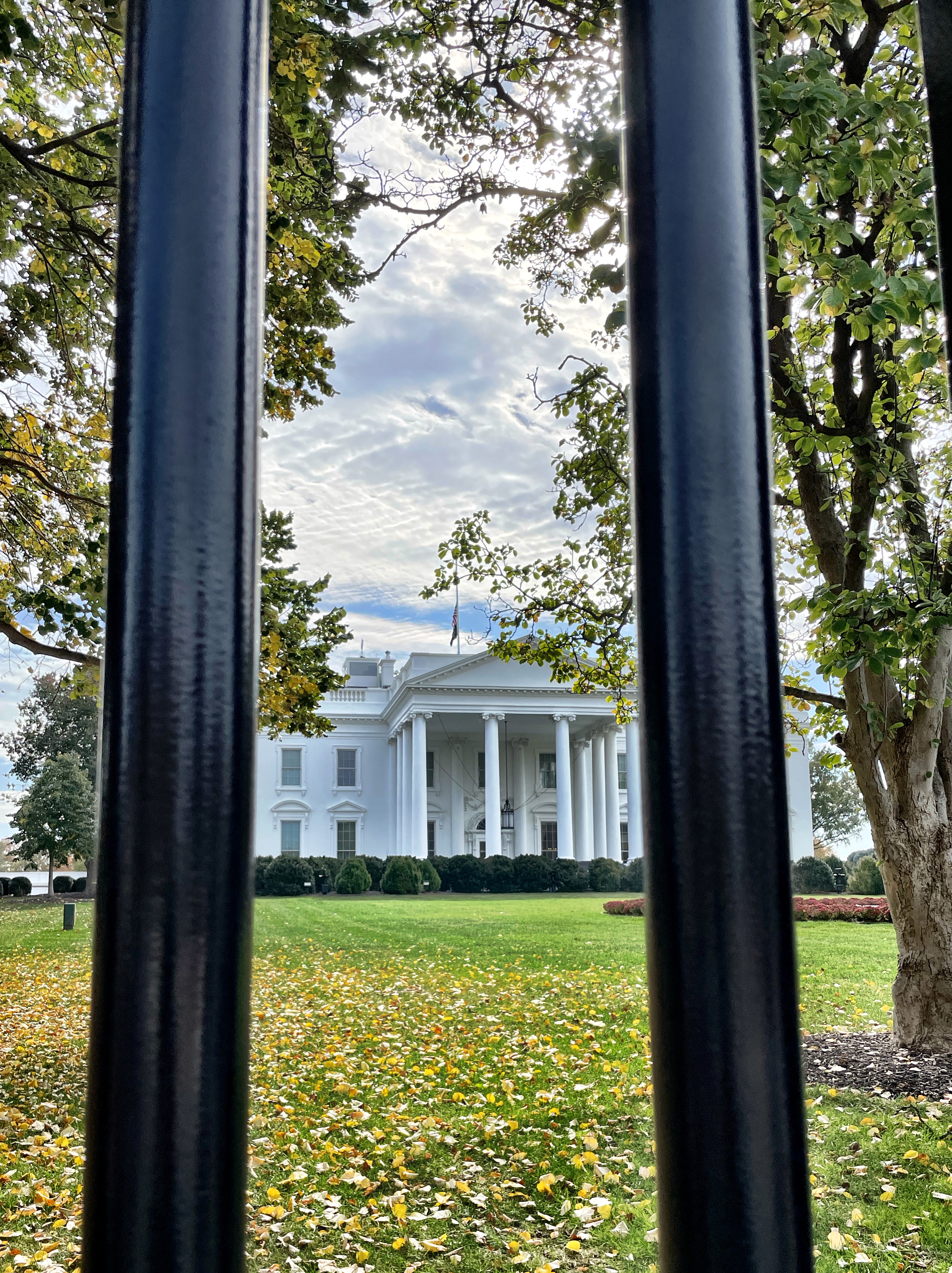
I thought about all of these things while attending the Network for Public Education’s 10th anniversary conference in Washington D.C. last weekend. It was a gorgeous fall weekend—the kind of walking weather where a stroll down to the White House might feel preferable to sitting in sessions centered on countering rabid school board races or hostile state takeovers of ‘failing’ schools.
But no. Every one of the six sessions and five keynotes I attended was both stimulating and encouraging. I heard the inimitable Gloria Ladson-Billings speak, and was stunned by what is happening in Florida and Arizona. I got some tips on running for school board in my local district (#2024Goals) and heard stories of redemption, as well as hideous state-based power plays. What reformers used to call ‘disruption’ now feels like intentional destruction, driven by a single, grasping political party. All over the country.
In the 10 years NPE has been meeting, the tenor of this annual conversation has shifted from the corrosive impact of excessive testing and charter school scandals—So. Many. Scandals.— to outright, in-plain-sight privatization of our best national idea: a free, high-quality public education for every child.
For starters, the fact that the NPE is still meeting, 10 years after its founding, funded largely by individual donations and relatively modest foundational contributions, is reassuring. Many of the conference attendees were still paying their own way—or were attending on the dime of another organization created to defend public education. Money is still how things get done, laws get passed, and ideas take root. Knowing that there are articulate and passionate spokespersonsorganizing to protect public education is heartening.
The second thing I noticed was the number of sessions led by women and people of color. The foot soldiers in the war on public education are teachers, nearly 80% of whom are women. I have been to too many education conferences and symposia where the talking heads were white men with terminal degrees (who were not paying for their own registration fees and babysitters).
Don’t misunderstand—some of my most impressive edu-friends are smart and outspoken white men. But education has long been seen as women’s work, and when I look at the dangers looming—vouchers, religious charter schools, well-funded campaigns against “CRT” and sexual and reproductive autonomy—I see white men, clinging to money and power.If we’re going to stabilize and enhance public education, women need to be at the forefront. One of the most impressive keynotes at the conference: Diane Ravitch moderating a discussion with the two of the most influential labor leaders in the nation—Randi Weingarten of the AFT and Becky Pringle of the NEA (who preached a blistering sermon on those who would deny the value of a public education for all our children).
We built some sight-seeing (and crab-cake eating) into the D.C. journey, including a visit to the Holocaust Museumbefore heading to the airport. I last visited the Museum shortly after it opened, but its power has not faded. What I found interesting, in 2023, was the three-deep crowds at the display around the Nazi rise to power in the 1930s in Germany.
Twenty-five years ago, that display addressed the eternal question of how so many good German citizens were drawn into a horrendous scheme to conquer their national neighbors and eliminate “undesirables.” It seemed like a temporary madness, driven by economic instability and inherent German nationalism, not to mention a charismatic leader who appealed to a third of the population.
Now, the photos, speeches and commentary feel like a warning.
Public education is not the only thing endangered. It will take hard work and passion to keep the idea of public goods alive and thriving.
Over the summer, I started tossing links about the impact of the COVID pandemic on public education into a file folder on my desktop, entitled Rebounding from the Pandemic. As of this morning, the file is five pages long, with over 50 links. My working theory is that a global health emergency has had a major impact on kids, their ability to see value in K-12 schooling, their trust in the society where they live to keep them safe, and their hopes and dreams for the future.
About a month ago, I wrote a piece with the same name—Rebounding from the Pandemic–listing some of the things we might have learned and acted on in K-12 education, from experiencing a pandemic:
The gross inequities in access to wireless capacity and devices.
The social necessity of being with other children and teenagers in maintaining mental health.
How faulty-to-useless testing data is in structuring relevant instruction that meets children where they are (which is supposed to be the point of standardized assessments).
How utterly dependent society in general is on school functioning as M-F childcare.
How much political leadership and privilege shape our approach to rebounding from a crisis.
All of these obvious issues strike me as an excellent theoretical framework for reconceptualizing public schools and school funding–creating healthy environments for children impacted by various academic and emotional stressors. Our goals right now should not be raising test scores to where they were in 2019 or bringing in thousands of trained counselors (who don’t exist) to deal with mental health problems. The goal is definitely not “getting back to normal.” “Normal” was (and remains) inadequate, inequitable and unprepared for change.
We now should know how frustrating it is, for example, for parents who must work not to have affordable day care available for their elementary schoolchildren. Calculating how much risk to take during a pandemic will vary from person to person—but misdirected anger toward teachers and their unions for not “opening” schools and risking adults’ health, has made entire school districts hotbeds of anger and toxic thinking.
This is what happens when people don’t get the services they feel entitled to, as American citizens. Change is hard.
In fact, the pandemic has changed the entire landscape of public services and social supports—and each of those factors has had an impact on K-12 schools, directly or indirectly. If you think schools have “returned to normal,” ask a teacher whether their current students are achieving at pre-pandemic levels. More importantly, ask whether students have developed the curiosity, communication skills and stamina to work together every day in class. Ask several teachers– have things changed? how?
Here are eight pandemic-driven outcomes impacting the functioning of public schools, as the health crisis fades.
1. Vaccination rates, already worrisomely dropping, now have hit their lowest point since 2011, in spite of laws requiring vaccinations for schoolchildren. You have to ask yourself why parents are not eagerly seeking a vaccination that undoubtedly saved countless lives and reduced hospitalizations: Health officials attributed a variety of factors to this drop in vaccinations, including families being less likely to interact with their family doctor during the pandemic and a “spill-over” effect from misinformation around the COVID-19 vaccine.
4. Higher education also seems to be undergoing a metamorphosis, as high school graduates and returning-to-school adults have reassessed the value of a college degree: In a study conducted by the U.S. Census Bureau, the majority of adults who had household members enrolled in college for the fall 2021 term said that their school plans changed.
32% said their classes would occur in different formats.
16% canceled all plans to attend.
12% took fewer classes.
It goes without saying that what impacts our colleges and universities will trickle down to K-12 public schools.
5. Shifts in the need for labor and workforce development have impacted the need for teachers, and what teachers are willing to work for, especially in long-term careers in education. Perhaps Sean Fain, leader of the UAW best expressed this:“Our fight is not just for ourselves but for every worker who is being undervalued, for every retiree who’s given their all and feels forgotten, and for every future worker who deserves a fair chance at a prosperous life. We are all fed up of living in a world that values profits over people. We’re all fed up with seeing the rich get richer while the rest of us continue to just scrape by. We’re all fed up with corporate greed. And together, we’re going to fight to change it.”
6. The incessant media drumbeat of “learning loss” has persuaded people that test scores are more reliable than our own observations about what students are learning, how they’re progressing. From a brilliant article in Rethinking Schools:Shifting blame away from the for-profit healthcare system and the government’s response to the coronavirus is part of what makes the learning loss narrative so valuable to politicians who have no interest in challenging existing patterns of wealth and power. It is a narrative meant to distract the public and discipline teachers. Here’s the recipe: 1. Establish that closing schools hurt students using a narrow measure like test scores; 2. Blame closure of schools on teacher unions rather than a deadly pandemic; 3. Demand schools and teachers help students “regain academic ground lost during the pandemic” — and fast; 4. Use post-return-to-normal test scores to argue that teachers and schools are “failing”; 5. Implement “teacher-proof” (top-down, standardized, even scripted) curriculum or, more insidiously, argue for policies that will mean an end to public schools altogether.
7. School leaders and the education community, used to hard-trimming back budgets year after year, have now witnessed unprecedented levels of greed and corruption in corporate and political circles, taking tax dollars away from struggling schools. From Heather Cox Richardson’s August 24th newsletter: The Department of Justice is bringing federal criminal charges against 371 defendants for offenses related to more than $836 million in alleged COVID-19 fraud, most of it related to the two largest Small Business Administration pandemic programs: the Paycheck Protection Program and Economic Injury Disaster Loans. It’s hard not to wonder how many library books, STEM kits and teachers that $836 million could have bought, as we all rebound from disaster.
8. A mishandled pandemic will likely be followed by political unrest—or, at least, uncertainty. In Ottawa County, Michigan, always a solidly red, conservative county, the 2022 election overturned a more moderate governing board and put in place a collection of people who were angry—furious, in fact– about what happened during the pandemic. Here’s a well-written, balanced story on the impact this political shift is having on people in Ottawa County—a young woman who delivers food to families who need it, a local health department administrator, and other essential programs:
The new budget rejected about $2.2 million in federal covid grants that helped pay for immunizations and could be used tohelp track the spread of hundreds of communicable diseases. It also cut about $400,000 from the department’s health education division, which housed programs that aimed to curb youth suicide, substance abuse and the spread of sexually transmitted disease. The Ottawa Food program was part of that division. County health officials pressed the board to explain the rationale behind the cuts. The answer came in a news release which described how the pandemic had awakened the county’s residents to the “tyranny of public health.” The health department’s misdeeds extended beyond its covid response. Liberal forces throughout government, academia and the nonprofit world were using the department to foist their agendas on his conservative county. “Climate change, gender affirming care, abortion, racial equity and social justice are increasingly identified as public health concerns.”
Pausing here to reflect on the “tyranny of public health,” a phrase that I find chilling, as a veteran teacher.
In the 1970s, Alvin Toffler introduced us to the idea of future shock—too much change in too short a period of time. He made a convincing case that the human psyche was being overloaded, that we weren’t designed to handle so much renovation to our values and habits. And that was before the internet, cell phones and social media transformed the way we communicate and do business, and changed what we expect public education to do for our children.
Something’s happening here, and—as usual—schools are a staging area for political and social change. Some of these changes may ultimately have benefits, strengthening public education. But others are glaring red flags, further chipping away at the commons.
I first got wind of this story on the BDG (Band Directors Group) Facebook page, early yesterday morning. You’ve probably seen it:
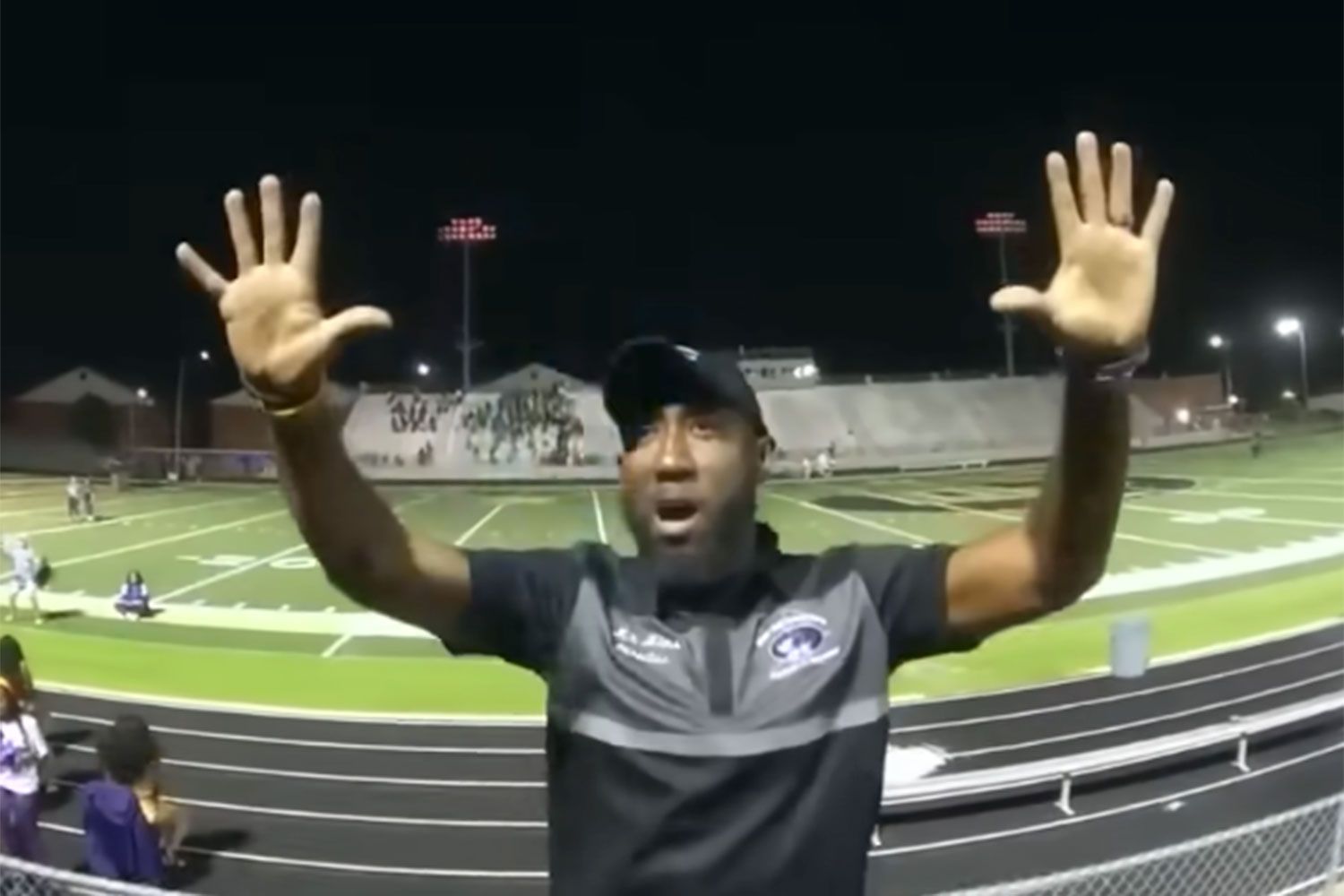
After a football game last week, at Jackson Olin HS in Birmingham, Alabama, Johnny Mims, band director for the visiting team, from Minor HS, let his band finish their post-game music after police directed them to stop playing. After the band finished playing (during which, the stadium lights were turned off), police physically grabbed and attempted to arrest Mims. There was some pushing and shoving on both sides. Then the police tased Mims, three times, as his students witnessed (and screamed). It was all captured on videotape.
Here’s a full description.After the incident, Mims was taken to the University of Alabama at Birmingham Hospital and then to the Birmingham City Jail, where he was booked and later bonded out. Officers obtained arrest warrants for disorderly conduct, harassment and resisting arrest, police said.
I’ve watched the police body-cam footage a couple of times, and it’s pretty gnarly, although after the lights go off, it’s hard to see specifically what’s going on. There are band kids behind the director, on the track, and others in front of him—about 145 kids in the band, total—and they all had a ringside seat to witness their teacher twitching on the ground, shocked into submission for letting them finish about a minute’s worth of music.
There’s a lot of backfilling the story on both sides. There’s been violence after football games so police are needed to empty the stadium! But— the two band directors agreed to do a short post-game show in the stands so Mims thought he was OK to finish! But—the other director stopped first! But police have ultimate authority!
The people I was interested in hearing from were the band directors. Unless you’ve (raising hand) been out there in front of the marching band on Friday night after Friday night, you might think that the rules for when to play and when not to play are crystal clear. They are absolutely not—and change from one venue to another. Also–everybody in the stands has an opinion on what the marching band should be doing and when. (I feel like I should repeat that last statement three times.)
The band directors on BDG first wondered if Mims actually heard the cops, over the noise—a large marching band makes a lot of decibels. (He seems to be telling them to give him a minute, at one point.) They wondered, as well, if playing after the game was planned. (Yes—both directors agreed to play, but the police had other ideas.)
Who turned off the stadium lights? (Unclear—but if the worry was public safety, turning off the lights is a far more dangerous move than letting the band play to the end of a song. If the lights were on a timer, that’s even worse, because who knows how long a game will last, and what might be happening in the parking lot afterward.)
Given the information presented by both sides, most band directors said— Hey. If the cops came over and gave me a throat-slitting motion, I’d stop the band. Just because they’re the cops and I’m a band director. I might be furious. But. They’re the cops, the ones with guns.
And—once again— who gets to play music, and when, at sporting events, is a matter of opinion. I have seen bands chased off the field by their own teams as they’re marching to the sidelines. I have seen referees assess penalties for bands or individual tuba players being in an ‘illegal’ spot. I have heard bands reprimanded for not stopping the music when play resumes (sometimes, just a few seconds’ worth of Let’s Go Blue—very popular in my neck of the woods). And I have heard endless, countless discussions of what the “official” rules are.
One thing I can tell you: this incident will do nothing to encourage non-hostile behaviors and good sportsmanship at either of these schools. Nor will it increase respect for the police and the important work they do.
While I probably would have stopped—out of fear — when the policeman yelled at me to cease directing, it’s because I’m a nice, albeit cowardly lady and they have tasers.
But then— I have not been pushed around by the police. I have not been routinely stopped or experienced anxiety when a cop car appears in my rear view mirror. I once talked a cop wearing a knit beanie out of giving me a ticket for doing 34 mph in a 25 zone by telling him I was on my way to choir practice at church (the truth).
I have no idea what was going through Mims’ mind when the cops started trying to handcuff him, but nobody deserves to be humiliated, ganged up on, pushed around or tased, for the non-crime of directing a HS band.
But the students who watched this will remember it all their lives. It will change the way they see the world.
I just secured appointments for the new COVID vaccine, plus my annual flu shot. In science, we trust— no hesitation or overthinking. Several of our friends and colleagues have recently tested positive, been treated and recovered, eventually. Accessing the new vaccination is a no-brainer. And as the former saliva queen of my middle school band room, I have been a flu shot devotee since the 1970s.
It’s pretty clear that we’re seeing COVID aftershocks; the pandemic isn’t over. That’s not an arguable question. What to do about the unpredictable tail of this pandemic—how to protect, how to exercise caution, what lessons have come from the crisis, and what is forever altered—that’s what we should be pondering right now.
Last week, we saw Ed Yong at the National Writers Series (one of the best things about living in Traverse City). He and his interviewer came out on the stage wearing KN95 masks. I have been following and admiring Ed Yong, ever since I read his pieces about COVID in Atlantic Magazine, and saw him on MSNBC. Once he started speaking, with his British accent, impeccable logic and vocabulary, the mask (and his twinkling eyes) only served to accent his keen intelligence.
He was there to talk about his latest book, An Immense World, which is wonderful, by the way, highly recommended. But about an hour in, there was a shift to questions about the pandemic. Yong said he would not sign books, face to face, after the talk, one of the perks attendees clutching their own copies usually enjoy. He was protecting his health, he said—too many early flights, airports and being shorted on sleep.
Then, he talked about how difficult it was to be a science writer, researching the causes and outcomes of a global health crisis, interviewing people on or after the worst days of their lives. He stressed how essential it was to consider something like a worldwide pandemic with an open and curious mind, as well as deep empathy. No preconceptions, and a focus on human beings.
For the first time, his words did not come rushing out, as he talked about political mistakes that cost human lives and societal forces resisting justice and equity, not to mention unethical practices in science. He’d seen too much suffering, he said. He needed a break.
Then, taking a deep breath, he said he’d gone for a short walk that afternoon, to a bridge over the river that runs through downtown Traverse City. Standing on the bridge, he’d seen a hawk. In the middle of the bridge, looking east, you can see the hawk’s nest on the left bank, he said, third or fourth tree down. Every person in the audience could picture that bridge—only a half-block from the Opera House, where we were sitting.
A hawk’s nest!? Downtown? Cool.
Yong talked about how many more things he noticed, during the pandemic, when traffic died down and people stayed home. Things that were always there, but became obvious when we had time to look. To breathe, and appreciate how good breathing feels. Small joys.
It was an inspiring moment.
It struck me that most of us have no clue how much has changed, in the larger world. How many times have you heard someone wistfully expressing their desire to return to the past—a past that we label “normal”? If only things could go back to the way they were.
If business as usual has been altered in public education, that could be a good thing. At the very least, temporarily gutting the system—closing schools, shifting instruction to online platforms—should have served as a seat-of-pants instruction manual in the limitations of on-line relationships.
Here are a handful of things we might have learned about public education by experiencing a global pandemic (but probably didn’t):
The gross inequities in access to wireless capacity and devices.
The social necessity of being with other children and teenagers in maintaining mental health.
How faulty-to-useless testing data is in structuring relevant instruction that meets children where they are (which is supposed to be the point of standardized assessments).
How political leadership matters in rebounding from a crisis that involves an entire slice of citizens: our children.
How utterly dependent society in general is on school functioning as M-F childcare.
How much privilege matters in reshaping public education practices—Who has grabbed the microphone and the media as the disease recedes? Who is left out, once again?
I could go on. In fact, I’m planning a series of “what did we learn from the pandemic” blogs over the next few weeks. As Ed Yong noted, a global cataclysm needs to be approached with an open and curious mind, and deep empathy for our fellow humans and creatures. I’m not seeing that deep caring, or willingness to explore change, in education.
In the NY Times today, there was an interesting article on the upcoming population peak—the point at which the number of humans on the planet begins shrinking. Scientists think this will happen in 50 years or so—and that now is the time to think about the impact of fewer people on the health of the planet, as family size shrinks.
The planet is down about seven million people, courtesy of COVID. That’s a fact. Here’s an assignment for your students: What impact might those seven million people have had on making the world a better place? What can YOU do to make the world a better place? What would make your schooling more useful in pursuing that goal?
So—Michigan just adopted a policy of offering free breakfast and lunch to all K-12 public school kids. Charter school kids, too– and intermediate school districts (which often educate students with significant disabilities). More than half of Michigan students were already eligible for free-reduced lunch, which says a lot about why free at-school meals are critical to supporting students and their families. Why not streamline the system?
Schools have to sign up for the federal funding that undergirds the program, and still need income data from parents to determine how much they get from the feds. Nine states now have universal breakfast-lunch programs, and another 24 are debating the idea, which—in Michigan anyway—is estimated will save parents who participate about $850 year. That’s a lot of square pizza, applesauce and cartons of milk. Not to mention reducing stress, on mornings when everyone’s running late for the bus and work.
It’s hard to figure out precisely what they’re so honked off about: Poor kids getting something—say, essential nutrition– for nothing? Kids whose parents can well afford lunch mingling with their lower-income classmates over free morning granola bars and fruit? No way to clearly identify a free lunch kid in the 6th grade social hierarchy? The kiosks at the HS, where kids can grab something to give them a little fuel for their morning academics?
How will this all work out? It will take a couple of years, but school lunch services think they can figure out how to adapt. It will be a relief not to have three lunch lines. The kids who ran up lunch debt and were given a peanut butter sandwich will go incognito, and they can stop sending threatening emails to errant parents. All good.
The child poverty rate plummeted in 2021, thanks largely to a major, but temporary, boost to the child tax credit in the $1.9 trillion American Rescue Plan Act. It beefed up payments to $3,600 for each child up to age 6 and $3,000 for each one ages 6 through 17, for lower- and middle-income families for 2021. That boost lifted 2.1 million children above the poverty line in 2021, according to the Census Bureau.
Now that the money is no longer coming in to struggling families, free breakfast and lunch, M-F, for the kids, would be a nice cushion, indeed. And schools, once again, are stepping up, to be the delivery system for an essential public good: feeding kids.
It’s what a rich nation—or state, at least— should be doing. Or so I think.
And yeah, I know about catsup is a vegetable and the fact that some school lunches are pretty unbalanced. I also know that some kids will never eat a school lunch, both kids whose mothers pack them delicious lunches, and kids who skip lunch because the cafeteria is a social nightmare.
None of that matters.
Do what we can to help feed kids. It’s the right thing to do.





 Teacher in a strange land