
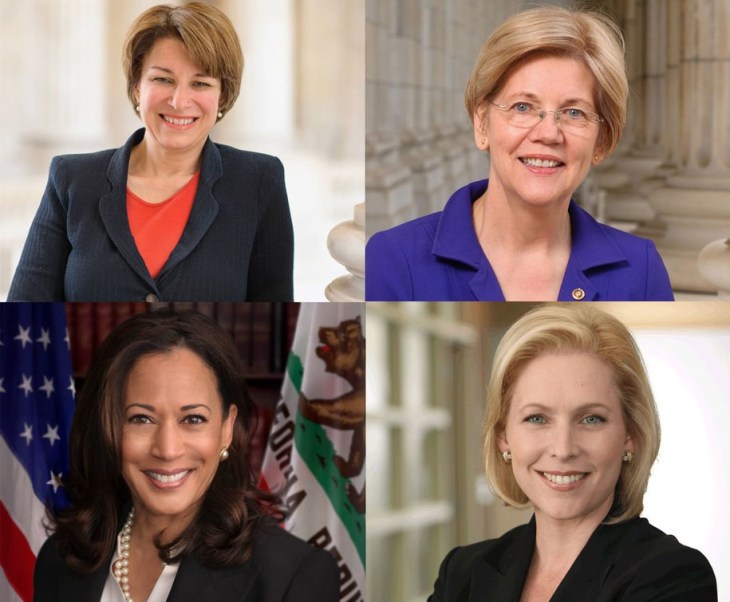
At the very beginning of the 2020 Presidential primary, I sent $5, a one-time donation, to each of four candidates: Elizabeth Warren, Kamala Harris, Amy Klobuchar and Kirsten Gillibrand. I did this because I wanted to see all four of them on the debate stage, and the DNC was counting individual contributors.
What this yielded was a veritable flood of emails asking for donations. I was already getting them from the Sanders campaign (because I donated to him in 2016, also a small-potatoes amount), so this was a lot of email, but it was worth it to see four qualified women debating. We haven’t had that before, and I saw it as one step on the path to equity in electoral politics.
And, although I think it’s unlikely, unless I live to be 100, that I will someday see equity in electoral politics (among dozens of other institutions in the Home of the Free), there are few things I think are more worth pursuing.
When I say ‘equity’ I don’t mean just gender equity—I mean representative equity, being governed by a mix of men, women and people who characterize the entire LGBTQ spectrum, people of color and people of diverse ethnic origin, people who are rich and people who worked as bartenders after gaining a university degree. Young people. Old people. Rural and urban citizens.
Until Congress and State Houses and County Commissions—and, for that matter, school boards and education departments—are representative, we have not achieved real democracy. And considering just how hard some powerholders are fighting to maintain their power, by hook or by crook, this is not a universally admired or pursued principle.
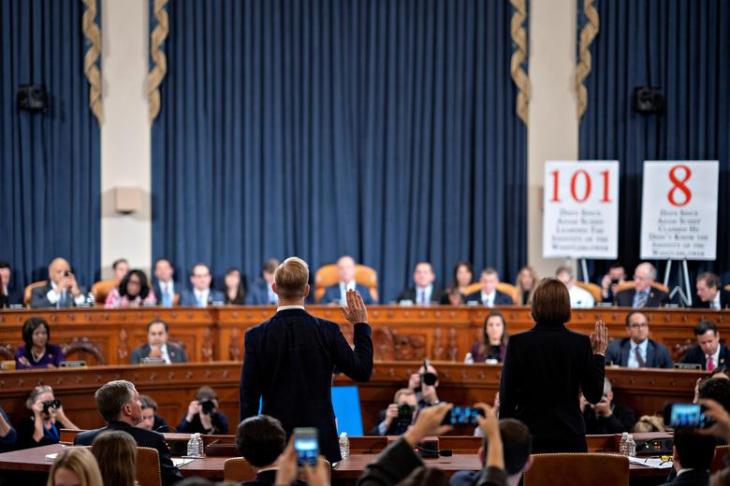
We’re still operating under the subterranean belief that some citizens are more entitled to power than others—generally, the folks who have always held power: rich white men. Here’s a good example of that, featuring a powerful white man who was the Republicans’ expert witness in the impeachment hearings.
When Kamala Harris dropped out of the race, two days ago, New York Magazine’s The Cut ran this perfect headline: How Are All These Random Men Still Running? Good question.
Zerlina Maxwell, on Twitter: Somewhere a man is typing up his “Why Kamala failed” story and he is not considering race or gender bias and so if you are that man please reconsider your position or read a book.
Keith Boykin, on Twitter: Pete Buttigieg is a 37-year-old mayor of the fourth largest city in Indiana with no federal or state government experience. He was elected with 8,515 votes. Kamala Harris is a 55-year-old US senator from California. She was elected with 7.5 million votes.
Mikel Jollett, on Twitter: I just saw the news about Kamala Harris withdrawing and all I can think is I would love to live in a country where extremely qualified, brilliant black women could go further in presidential politics than otherwise mediocre white men with a pile of money.
Yup.
I for one am heartily sick of watching folks in my party—the party I am counting on to defeat the hideous disaster now residing in the White House, and set us back on the path toward a more perfect union—squander whatever good will we have built up by being better than the other choice.
I am tired of in-fighting, nasty cracks about Harris being a ‘cop,’ and Warren being a waverer as she tries to thread the public opinion needle on Medicare for All, or Klobuchar eating a salad with a comb.
Most of all, I have had it with men with money calling the shots, in a thousand different ways: Using their media empires, their personal fortunes, their hand-picked surrogates—or running themselves. I’m with Jamie Lee Curtis: Voting for women is more than gender politics. It’s opting to create real change.
Yes, I know—not all women are better choices. Yes, some women have been disastrous leaders (often pushed into policy corners and bad decisions by white men with money), in spite of their promise. And yes, it would be lovely to live in a world where ‘the best’ candidate could be anyone—demographics would not matter, and genuine merit would reign.
We don’t live in that world. We live in a world where, despite 100 years of female suffrage, we haven’t had a woman serve as president. It’s time.
If there’s anything the 2018 mid-terms have taught us, it’s that women elected to power do upset conventional apple carts and rattle cages.
Charles Blow gets the last word:
It seems to me that the questions here are bigger than [Harris’s] missteps, real or perceived. Every campaign has missteps. It is hard to look at this field of candidates and not remember a cascading list of missteps. And many of them have things in their past for which they have apologized. But one question is why missteps are fatal to some campaigns and not others. It is fair to ask what role racism and sexism played in her campaign’s demise. These are two “isms” that are permanent, obvious and unavoidable in American society. It is fair to ask how those features impacted media coverage, or the lack of coverage.
It’s time for some representative equity.
Some power-sharing.
Some change.


 Teacher in a strange land
