
Cue (the 1970s): Nervous young candidate for a job teaching music steps out of her dad’s car—she doesn’t own a car, yet–in a small Michigan town on the rural outer ring surrounding Detroit, where little villages are interspersed with working farmland. The town is charming, full of old houses and 19th century buildings. The principal she’s meeting proposes they take a walk around the town while interviewing.
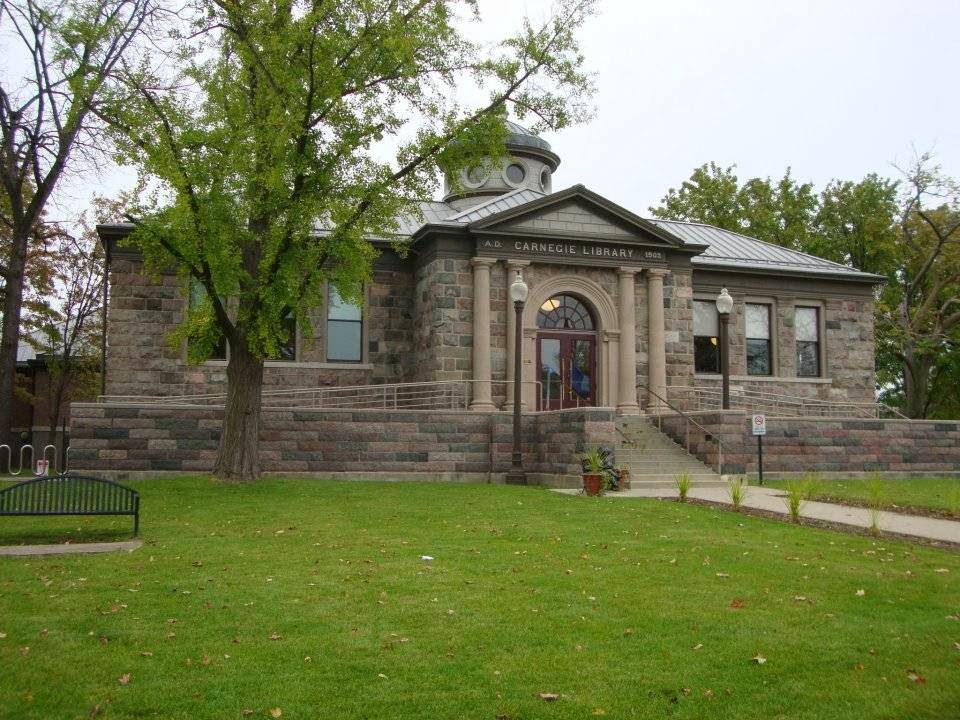
He gives her a thumbnail history of the Hartland Music Hall, the cemetery and the “1921 Building”—the first high school in the county. They end their walk at the Cromaine Library, the crown jewel of this little village. It’s exquisite—built in 1927, before the Wall Street Crash that sent the country spiraling into Depression—with beautiful Georgian windows, and a working fireplace. Every child in the Hartland Schools comes to the Cromaine Library and gets a library card, the principal tells her—it’s part of the school district.
Of course, I got that job (and bought a car)—and raised my family in that little town, taking my personal children to that library hundreds of times. My husband served on the library board, for a time. It was (beautifully) expanded in 1980 and has remained, for nearly 100 years, the heart of the community, a hub for both kids and adults—and for learning.
I was sickened to read that the Cromaine Library Board (like, unfortunately, the Hartland School Board) has now been co-opted by right-wing morality scolds. Serving on library boards—like school boards and other civic oversight jobs for volunteers—is a thankless job, but also a power-grabbing opportunity for those who’d really prefer to live in an anti-DEI town. In an anti-DEI world, in fact.
“For the Hartland Cromaine District Library in Livingston County, the conversation on labeling books started in 2022. Over time and with the election of new library Board of Trustees members, the conversation became much more pointed.
Much of that had to do with the election of Bill Bolin, the pastor of the FloodGate Church in Brighton, and his elevation to the president of the Cromaine District Library board in January. Bolin and his church have been written about by various publications, including Tim Alberta detailing Bolin’s mixture of right-wing conspiratorial politics and Christianity. Bolin also features throughout Alberta’s 2023 book, “The Kingdom, the Power, and the Glory: American Evangelicals in an Age of Extremism.”
Bolin:
“I desire to protect children from the harm that can befall them over coercive behavior. The approach I am suggesting, along with certain colleagues, is a commonsense approach to changing the sexual tone and nature of some library policies and practices.”
Bolin said the Board [under his leadership] would discuss controversial items on the agenda, including the removal of June LGBTQ+ Pride displays, labeling certain books that may be deemed controversial, moving books to an age restricted area, providing supervision in the teen area to monitor “behavior” and returning the Pledge of Allegiance to monthly meetings.
Bolin then recited a potential warning label he had created warning adults of the dangers of providing such material to children. But Bolin wasn’t talking about dirty magazines in a seedy retail store: he was talking about books within the community’s public library. Bolin added that a list of books that could be recommended for labeling was being compiled with at least 80 titles, minimum.
The article goes on to say that the Board was advised by the ACLU and their own law firm that they’re setting themselves up for legal pushback. A meeting gets heated and the Sheriff is called to escort those endorsing leaving the books on the shelves out of the room. It’s shocking—and nauseating. I loved this library.
Several attendees note that Bolin hopes this case will be the showcase legal action in front of the Supreme Court. Bolin muses on his belief that: “legal discourse was changing in America, indicating that courts in the era of Trump might be turning the tide to support measures much like the one being discussed by the Cromaine District Library board.”
And maybe that’s the saving grace—this is not just happening here, in small towns in the Midwest. When Georgia high schools can no longer present classic theatre like “The Crucible”—which is how I learned about the McCarthy hearings, as a HS student—then we all need to rise up. Show up at board meetings. And speak.
Free choice of reading. It’s right there in the Bill of Rights. Remember?
In a previous column, I wrote about the moving experience of standing in the Square where—on May 10, 1933—students (students!) supporting the emergent Nazi party burned books. Thousands and thousands of books that the party said were too Jewish (including classic works of literature and philosophy) or not German enough: In 1933, Nazi German authorities aimed to synchronize professional and cultural organizations with Nazi ideology and policy (Gleichschaltung).
That’s precisely what’s happening in what I used to think of as my little town: synchronizing professional and cultural organizations with Trumpian ideology and policy.
Only engaged citizens can stop this.

 Teacher in a strange land