Labor Day. Happy Birthday to Me.

So—I just had a birthday. A big, round-number birthday.

All my life, my birthday has taken place in and around Labor Day weekend, and—fairly often—happened on the first day of school. For my entire elementary school career, my new school shoes, binder and pencil box were ‘birthday presents.’ (Sad trombone.) Kindergarten:

But I didn’t mind. The whole Labor Day weekend–in my experience–represents the new year, academically and seasonally, a fresh start. One year older, one year wiser, roll up your sleeves. A day to honor my personal antecedents, who were Dutch farmers and hands-on laborers. Country builders. People who truly appreciated the respite of a long weekend and family barbecue.

When you turn 75, your past divides neatly into thirds (and lets you plan, as Gloria Steinem did, to live to 100). Although neither of my parents (58, 73) celebrated their 75th birthday, my grandmother (also named Nancy) made it to 103, so a century does not seem out of reach.

I do not remember most of my birthdays. Who does? But I do—clearly—remember #25 and #50. Thinking about them is a good way to reflect on what I’ve accomplished and what I have left to do.

I turned 25 in Aspen, Colorado with my then-boyfriend, now husband. I had already been married at 19 and divorced, returned to school to finish the degree and started my first big-girl job as a middle school band director, although it took at least two dozen humiliating interviews followed by rejections. Mostly because who ever heard of a woman band director?

It was a fun birthday, camping at Maroon Bells in the Snowmass Wilderness area. On my birthday eve, we went bar-hopping in hippie-town Aspen. Things are a little blurry, but we had five days to drive across the country and get back in time for teacher report day, the Tuesday after Labor Day. It felt as if my life were finally falling into place. Adulthood. In Colorado:

The chunk from 25 to 50 was all about family and professional goals. We were married, had two children, and I learned what it meant to be fully engaged in both motherhood and putting equal energy into becoming an accomplished teacher. We bought a house and lived there for 10 years. Then we bought another house and lived there for 20 years.

I both earned (National Board Certification) and won (Michigan Teacher of the Year) some awards for teaching. Early on, I completed a master’s degree in education at Michigan State. We took some amazing vacations, seeing at least 20 National Parks. A month before I turned 50, we went to South Korea for two weeks and Maui for another week.

I turned 50 on September 2, 2001, just nine days before 9/11. My sister and brother, spouses and kids came for a Labor Day weekend picnic. My sister wrote a snarky poem about how old I was, and there was a paper crown.

But 9/11 was a turning point. I had been teaching for more than 27 years, same job, no formal advancement (teachers everywhere, I see you nodding your heads). I felt restless. I took a Teacher in Residence job with the National Board for Professional Teaching Standards for two years—then, because the grass isn’t always greener, went back to the same school district.

I was welcomed back with open arms by parents and my colleagues. But not administrators, who suddenly saw me as Too Big for my Band Director britches. I got politically involved. I helped plan the Save Our Schools rally. I got bounced from job to job in the school district; I was a person who could no longer be trusted to put her head down and cooperate.

This third quadrant of my life has been—creaky knees excepted—by far the best and most rewarding. I retired, and launched into a PhD program in education policy. I did the coursework, but stalled, ABD, when my advisor (a famous educator) blocked my proposed dissertation topic. Instead of diligently working through this conundrum, I thought about how much more I knew, having been a target of education policy for 30+ years, than my doctoral cohort of 20-something Teach for America dropouts.

So I quit, something I hadn’t allowed myself to do for 60-odd years.

Since then, we have moved to paradise, aka the Little Finger of the Michigan mitten. I’ve had a half-dozen part-time jobs teaching, writing and directing church musicians. We have traveled every year, and spend February in Arizona. We attend lectures and go to concerts.

Best of all, I have been able to pursue the thing that got me into college, the first in my family to do so: music. I play in multiple community groups. I have time to practice. My new friends are mostly musicians.

And I muse about the maiden/mother/crone sequential archetypes in the lives of women—I am now the third, the wise woman who cares little about what others think, pursues important goals, advocates for long-term change. Also: hangs around the house, drinking wine and binge-reading.

In the past month, three of my role models have died—Dolly Parton, Wendell Berry and Gloria Steinem. It was Steinem who got me out of that first, disastrous marriage, by starting MS. Magazine, a revelation to me, and my first magazine subscription, because it was not available at the drugstore.

The NYT called Steinem “the personification of the Women’s Movement”—and I think that’s right. I read all her books, checking them out of the library. Revolution from Within was my favorite, but each of them reminded me that my voice mattered. And also that I deserved to have a credit card and my own checkbook.

I was born on the same day as Mark (still delicious) Harmon. Chrissie Hynde turns 75 today. There are plenty of us still kickin’ and taking names. And—it has to be said—trying to get us out of the ugly morass we find ourselves in. I hope to be part of the movement that sees him and his sycophants gone, although I know it will take more than 25 years to cleanse and re-direct the nation.

Here’s Steinem, again:

Four days after Donald Trump’s second inauguration, she wrote an entry called “Staying Hopeful: One of the uses of a long life is remembering when things were worse, and also remembering that when bad times do come, so does an outpouring of community and energy amongst those dedicated to justice.”

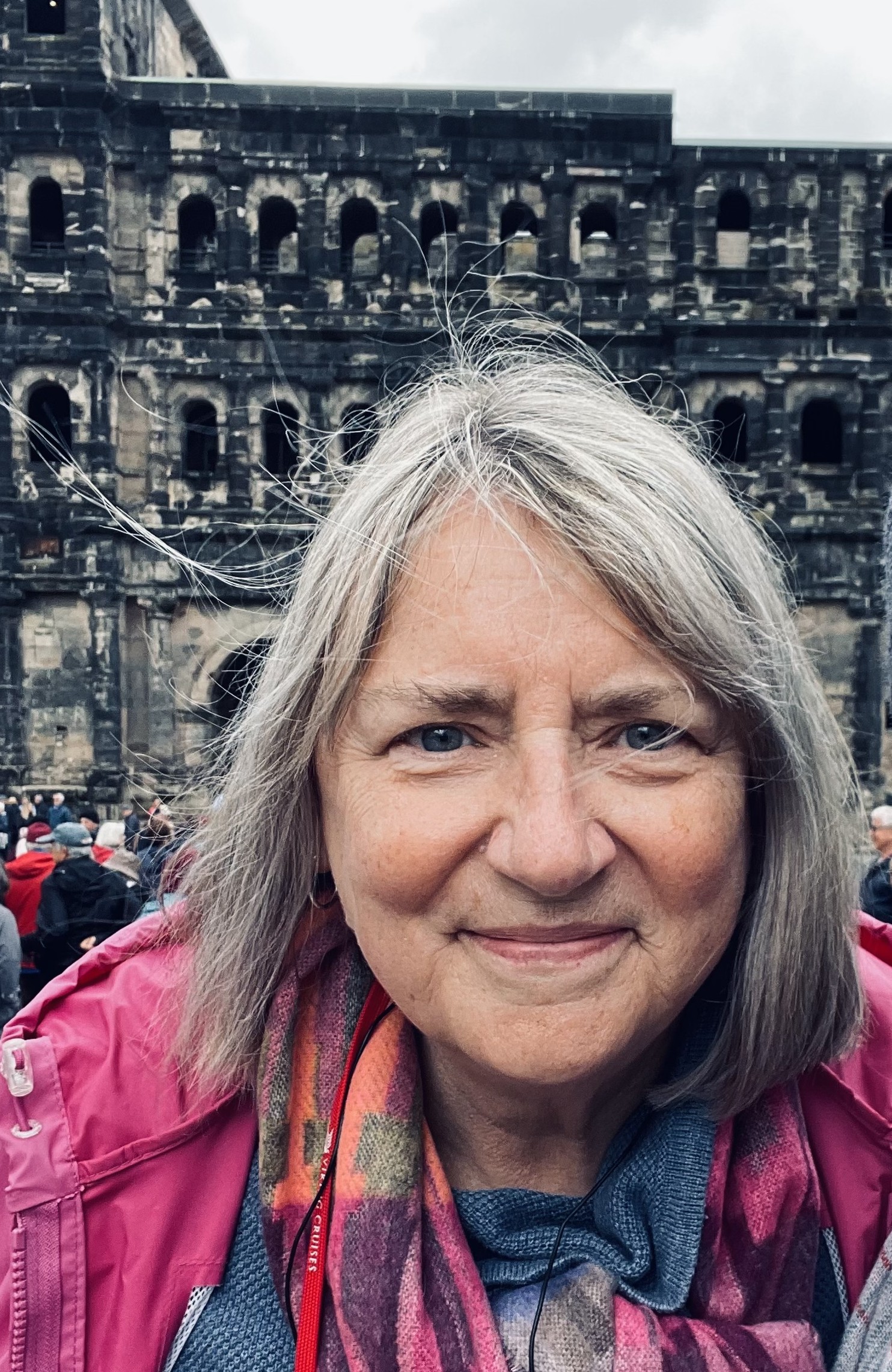
Amen. (Below, Porta Nigra in Trier, Germany.)

Unsubstantiated Things People Say about Public Education

There are plenty of unsubstantiated clichés people have traditionally expressed—and probably believe– about education: Private schools are better than public schools. Sports keep kids in school who would otherwise drop out.  We should flunk 3rd graders who struggle with reading. Public education is broken, and choice is the only solution.

I could go on. And on. One of the problems with improving schools—and every school could serve students better—is the time-worn observation that because everyone’s been to school, they think they accurately recognize the problems in public education and know what would fix those problems.

Nine years ago, in the summer of 2017, I was part of a project that canvassed Democrats, Lean-Dems and Independents in the county where I live. We knocked doors and asked folks about the 2016 election—what their issues were, and what they’d like to see Democrats focus on in the 2018 midterms. We didn’t ask who they voted for, but plenty of them told us.

One very elderly gentleman we visited invited us into his spotless home and offered us coffee. When asked about issues, he mentioned that his grandson was a senior at the local public HS and had never taken shop class. He was genuinely outraged, and that was his primary education issue—the local HS didn’t even offer shop class anymore!

I explained that the regional CTE Center now offered two dozen courses in machining, auto repair, welding and building construction. All public school students in the county could access a half-day of up-to-date instruction in the hands-on trades, for free.

He was not impressed. When he went to school, they had shop class, in the building, and it was the best part of his day. He pointed to his kitchen cabinets, which he’d built by hand in the 1960s. He also told us he’d voted for Trump. Maybe Trump could get shop class back in schools, because the woman he ran against certainly would not care what boys learned in public high schools.

Imagine my surprise at seeing the candidate for Senate in Michigan, Mike Rogers, advance pretty much the same argument as a centerpiece of his education plan.

Rogers titles the piece “Education Crisis is the Civil Rights Issue of our Time,” a direct rip-off of Obama Ed Secretary Arne Duncan’s catch phrase. He also references Martin Luther King a few times, as if that could erase his tight connection to the most racist president in modern history.

The rest of the piece reads like it was written in the1990s. There are a few menacing statistics from a literacy organization in Australia, re: how many kids will end up in prison because they can’t read, and the phony assertion that nobody teaches phonics anymore—’Getting kids reading again also means going back to the basics: teaching phonics to help students understand how letters and combinations of letters sound.’

Well. We’ve been trying to get kids “reading again” for decades, via a range of strategies including phonics, dude. (See: Dolly Parton.) Rogers also misinterprets the NAEP “proficiency” caption (which, to be fair, lots of education journalists don’t fully understand—it doesn’t mean grade level). And he’s completely onboard with flunking third graders until they learn to read, damn it.

And then Rogers comes down hard on the need for shop class:

 “Putting shop classes in every high school can make a real difference. Shop not only exposes students to skilled trades and high-paying jobs, but it also gives them a reason to apply math outside of the classroom. Measuring materials, calculating angles, and working with fractions help students apply math skills.

Rogers mentions fractions (and the inability to read a measuring tape) multiple times in the column, which makes me wonder if he’s been in a public school math classroom since he graduated from Howell High School. My 7th grade math students—back in 2005—were using graphing calculators and doing single-variable equations. All of them, not just the advanced track.

And shop class, like a lot of other coursework, has been streamlined. Exit the birdhouse, and enter home construction, from rough carpentry to wiring and plumbing. Not to mention courses in cyber security and aviation, and so much more. I checked, and both the MI county where Rogers has just moved, in time to campaign, and the county where he’s lived for the past decade, in Cape Coral, Florida, have extensive career and technical education offerings in their public schools.

My friend and super education writer Jennifer Berkshire has been on a useful quest lately, in her writings— Education is a winning issue for Democrats: ‘Democrats once preached college-for-all, and were too soft on school privatization. They need to reverse course on both these positions—and make an unapologetic case for education as a public good that benefits all kids.’

Bingo. Especially if the folks running against Democrats can’t offer anything more exciting than retaining third graders, emphasizing fractions and retrofitting schools so they can offer woodworking again.

A recent survey from the Michigan Future, Inc. concluded that what communities and parents now want as takeaways from our public schools are critical thinking skills, facility in communication, and the habit of life-long learning.

We’re not going to get those with Mr. Rogers’ outdated and unsubstantiated ideas.

This Guy Used to Be My Congressman

And now he wants to be my senator. Again. Meet Mike Rogers.

I spent most of my life and nearly all of my teaching career in Livingston County, Michigan—a ruby-red, rural-turning-suburban area in the ring outside Detroit. My first principal used to refer to our school district as the far edge of white flight—folks with enough resources to move to a bucolic county with lots of land for their ten-acre dream homes, an hour-long commute into the city, and a population that is 94% white and less than 1% Black.

Although I have always identified as a Democrat, I used to vote in the Republican primary, because it was the only way I had some say in who was representing me in local offices and the state legislature. Beginning in 1995, Mike Rogers was my state senator, and later, my representative in Congress. He was, at the time, very much a country club Republican—bland, moderate, uncontroversial and generally well-liked. I never voted for him, but I knew lots of people who did. I also didn’t fear him.

Rogers’ family was well-known in Livingston County. His dad was a public school administrator and football coach, and his mother ran the Chamber of Commerce. One of his brothers was in the state legislature. He won local elections by wide margins, but when he decided to run for Congress, in 2000, squeaked into office by 111 votes. It was redmap gerrymandering that made his subsequent elections ironclad.

Rogers and I lived in the same small town for most of his political career. I used to see him in Meijers and at local events, shaking hands. Once, we were both on a panel at a Chamber of Commerce breakfast where the topic was education policy. Mr. Rogers’ take on education, as a congressman, was that the feds had no business making or even influencing education policy—he was Mr. Local Control. He asked me, his designated foil, what purpose a federal Education Department served.

My answer was two-fold: First, a national Ed Department can serve as center for policy research on best practices and ideas in public education, economies of scale. Why re-invent the wheel in 50 states?

But far more important was the federal role in promoting and ensuring equity and protecting civil rights. I reminded him that the original ESEA, passed in 1965, was designed to provide resources for our neediest students, to help level the playing field for millions of baby-boomer students whose states or districts weren’t particularly interested in equity.

Not Michigan! he scoffed, ignoring the obvious example of Detroit Public Schools, 50 miles down the road, a city that many of his constituents escaped, after the auto industry built enormous wealth on the backs of immigrant laborers. But who cares about children in a city whose resources have been extracted? Not his problem.

After the panel dispersed, Rogers was surrounded by obsequious local businessmen—and I hurried back to my 3rd hour class, which a colleague was generously covering until my return.

In 2015, Mike Rogers decided not to run for Congress anymore. He launched a career in radio—a kind of mild-mannered Rush Limbaugh—and moved to Florida, where he was happily ensconced in Cape Coral for nearly a decade, starting new businesses, and serving as a defense lobbyist and National Security expert for CNN. He occasionally put out feelers to see if there was a possibility of becoming President.

But. Rogers has miraculously rediscovered his Michigan roots,and is now running—for the second time– for an open Senate seat in the mitten state. He has always been a pro-NRA, anti-abortion guy, but he’s moved hard to the ugly Trumpian right; in his last senate race in 2024, he castigated his former employer, the FBI, claiming they were on a witch hunt to take down Trump for political purposes. He called the DOJ “corrupt.” 

That, of course, was two years ago. Now, he’s All Trump, All the Time.  He’s an election denier. He’s trying to raise doubts about the MI senate election he lost, in 2024. What he said two years ago about the DOJ—well, that no longer applies. They’re good guys now.

As for public education, he’s also changed his tune, now endorsing federal influence over creeping wokeness, saying that  “schools care more now about social engineering than, as my father used to say, readin’, writin’ and ‘rithmetic.”

Expect to hear that little bon mot often on the Rogers campaign trail this fall, along with finger-pointing about DEI and the weaponization of empathy. Plus a whole lot of anti-Muslim, free-floating racism.

Remember– Mike Rogers used to present as a country club Republican, hometown boy made good, moderate conservative, ex-FBI, and deficit-cutter.

But what happens to sort-of moderate Republicans, these days? They get primaried after one term. They get criticized by Tucker Carlson.They can’t maintain leadership in the House. Or Senate. They get the message: move rightward, appease Trump, sometimes by groveling–or get out of the way.

Mr. Rogers is perfectly willing to do whatever it takes to please The King. In 2024, he bought a tear-down lakeside cottage in Michigan, moved in with his sister-in-law in his old hometown to run his campaign, and started building a new home on the lake. Which could be his Michigan address should he win, but an easy, lucrative place to sell should he lose. No risk, reward either way.

He still owns the Cape Coral mansion.

There are lots of reasons to distrust Mike Rogers, beginning with his “go as the wind blows” beliefs and policies (and place of residence). There are lots of Republicans who fall into that camp—Tommy Tuberville springs to mind.

But I keep thinking about that Chamber of Commerce breakfast, where MY sitting congressman didn’t see why children in Michigan deserved equity.


 Lay off the Democrats

Full disclosure first: I am a Democrat. I sit on my county party’s executive board. I ran for county office as a Democrat in a ruby-red district (and lost but learned a lot). I have been a Democrat since my first presidential election (George McGovern, 1972), so I have seen the ups and downs of a two-party system for ages.

Here are some things I believe about partisan politics in 2026:

  • One of the two major parties better represents most Americans, a diverse bunch if there ever was one—economically, ethnically, politically, religiously, gender-wise.
  • Having multiple candidates to choose from in a primary makes parties stronger, although it can be harrowing when primary candidates go after each other.
  • Democrats are actually the party of the Big Tent, although Republicans occasionally suggest that their tent crosses boundaries.
  • We are in big trouble in 2026 on a number of fronts; counting on well-run—free and fair—elections is no longer a guarantee, for starters.
  • We need a new generation of leadership, but the way to get those new leaders elected is not to turn on the only party likely to provide support for progressivism.

Theoretically…in the midterms, we can appreciate all flavors of Democratic candidates, from avowed Democratic Socialists to outspoken Christians—because they’re being elected statewide or locally. If primaries work the way they’re supposed to, the most popular candidate perspective *in that context* will emerge as the favorite.

Here’s the thing: it may not be your preferred perspective. Which lets you choose—stick with the party you usually vote for, or decide to cross the gulf and vote for another party’s candidate who seems better, or decide not to vote. What flies in New York City may sink like a stone in, say, Iowa.

Win some, lose some. The goal is to get strong, attractive Democratic candidates and equally attractive Democratic policy ideas—then get them in office. And, as they said in The Music Man, you gotta know the territory.

Now, I am fully aware of a new generation of Democrats rising up, reaching out for things that have been pushed aside for decades: Universal health care. Affordable housing. Fair wages and worker protections. Family leave and childcare. Policies that other first-world nations have enjoyed for decades, stabilizing their workforce and making them happier.

I want those things, too. In fact, about two-thirds of Americans want universal health care, which includes plenty of Independent voters and even some Republicans. And three-quarters of Republicans—who skew older, anyway—like Medicare. I don’t think what we’re seeing in this super-heated primary season is about policy specifics, however. It’s about a desperate hope that we can stop the right-wing mutilation of the land of the free.

It makes me—as a local Democratic leader—happy to read about young, energetic candidates, willing to take on the sacred cows (both policy and human) in Congress or their statehouse. Here in Michigan, we have lots of exciting primary races. I hope we have a record-setting turnout in August, and Democrats tell us clearly what and whom they want.

Because we’re their support system—financially and in a dozen other ways. Democrats are looking for someone to take on the guy who’s fecklessly destroying the country, with his spineless minions. People want someone to fight for them, traditions be damned. But first—that someone must run. And running demands partisan support and funding.

If you only support one Democratic candidate, and your candidate loses, so you look around for someone to blame or refuse to vote for the alternate—well, may I remind you that Texas Republicans have already lined up and opened their checkbooks for a loathsome, despicable guy they impeached a few years ago?

I spend a lot of time perusing local conversations on social media—which, I realize, represent only a subset of voters.  I have been shocked by the number of posters who support a particular Democrat but are more than willing to trash the party, and in the process, trash every other candidate for that office. My guy, or bust.

I have even seen candidates—viable candidates with large followings—trash the Democratic party that they’re counting on to support them, should they make it through the primary. That boggles my mind. It’s like turning your back on family.

Robert Reich had a great column yesterday on the Common Goods we have enjoyed as Americans:

  • How we deal with disagreement
  • Truth
  • Trust
  • World leadership
  • Understanding what we owe each other as Americans
  • Political equality

Going after your preferred party damages these things. If you’re on the side of those who believe the ship can still be righted, please stop.

Dirty Pool and other Metaphors

I was going to title this blog American Cesspool but then Public Notice beat me to it. And when all the good titles are taken, you know you’re talking about a national obsession.

Like all other left-leaning Americans, it seems, I feel a sense of outrage over the Reflecting Pool. Which, upon some deep reflection (get it?), isn’t perfectly rational. The Reflecting Pool is only one of dozens of strikingly memorable landmarks in Washington D.C., and it’s over a hundred years old. It’s been rebuilt and repaired numerous times, including other occasions when algae marred its surface. Maintenance of aging monuments is normal and expected, part of why we pay taxes.

What is there about the current Reflecting Pool debacle that has captured national attention? There’s the no-bid contract corruption, of course.  And the current President’s lies about vandals, somehow, causing chunks of its epoxy liner to break off—rather than acknowledging the job wasn’t done right, and needed to be done over:

‘The Reflecting Pool fiasco is of a piece with other major Trump corruption cases of the moment: the Kennedy Center renaming, the $1.8 billion slush fund, and the Epstein files. Each of these four breakthrough scandals follows the same autocratic playbook: abuse power, make a mess, then dodge accountability.’

The Lincoln Memorial Reflecting Pool’s current state is a metaphor for something done wrong, under fishy circumstances, ordered by someone who should be a trusted leader. The reason so many people find this particular example worth commenting on—and I confess to posting a few swamp monster “photos” myself—may be because of its limited, concrete (literally) parameters.

It doesn’t impact our national security. It’s not a war. It doesn’t address our dangerous economic inequality or inflation. It’s not the result of congressional malfeasance, or the damage to free, fair and trusted elections. It’s not the obliteration of democracy. All of which are currently Big Issues, but far more complicated, both to understand and address.

The Pool is something that everyone understands can eventually be fixed. Because it’s been fixed before. Democracy, on the other hand…

Jonathan V. Last just posted a remarkable piece about what the Trump base thinks about democracy. Based on a national ethnographic study, it goes some distance in explaining why campaigns (like Kamala Harris’s) promoting constitutional values make no impact on a significant chunk of Americans:

‘14 out of 21 participants in this study had an immediate negative reaction when asked about democracy. The people in the study describe a remarkable consistency about why they dislike democracy. It’s not that they’re misled, or mistaken. They have a coherent worldview.

It’s just not very nice.

They believe that there is a cultural schism in America, with good, God-fearing people like themselves on one side and the wicked majority on the other. They detest this imaginary majority and fear that “democracy” would allow that majority to gain political power.

They very explicitly do not want majority rule.

They want minority rule.’

It’s a great piece. Recommended. Worth repeating: They fear that democracy would allow the majority to gain political power. And democracy, done right, is a complex, multi-layered concept, difficult to define or comprehend. So the President’s fearful fan club go back to mysterious underwater vandals slicing a 350 foot gash into a pool liner, requiring the National Guard and 4000 feet of wire fencing to protect our national honor.

Or something like that.

 I now know more about pool liners, adhesion, and how to nurture single-cell organisms than I did last month. Because—like half the people in this country– I’m caught up in the simple, low-hanging fruit of yet another administrative failure, laughing at social media memes. But also knowing that the pool will eventually recover, unlike the East Wing or trust in the media.

As a veteran educator, I’ve seen this many times: Take a many-faceted problem with school organization or student learning, and reduce it to a single cause or solution, one that’s easy to understand and talk about. Then cling to that limited explanation for test scores going down or up 2-point-something percent. Or whatever.

Kids in 3rd grade not fluent readers? Well, it must be the reading curriculum, plus the outdated teachers teaching that curriculum; fix it with Science! Or—better yet—threaten kids with failing the third grade, a public humiliation that some of them never recover from. Just two of those silver bullet solutions to a far more complicated and actually important issue: creating literate citizens.

We are all drawn to the small and the specific—the problem that can be solved, or at least made fun of. Right now, however, we’re facing a host of massive, thorny problems, many of which have emerged in the past year and half. It’s not about the pool—the pool is just a metaphor for the real trauma.

Keep your eyes on the prize, not the pool.

Hate Definitely Has a Home Here

If there’s one question on the minds of my friend group these days—old friends, fellow teachers, new acquaintances, anyone paying attention—it’s this: How can anyone, let alone a third of the population, look at current events in the United States in the past year, and believe that we are on the right track, doing OK, making our people and nation stronger?

I don’t really have to spell it out, although I am mindful of Rachel Bitecofer’s principle: repeated negative messaging works in electionsbecause voters will  only be mad about what we tell them to be mad about.

So here’s the bottom line: we are in real trouble, as a nation, on dozens of fronts, beginning with the fact that we are being lied tovicious lies, filthy lies, heedless lies—on the regular. Even teaching the truth about history and science in ordinary classrooms, museums and national parks has been explicitly forbidden, plaques removed, educators silenced.

Teaching has never been easy, but it’s really a miracle that so many fine teachers are still in the classroom and finding some satisfaction in their work there. According to an EdWeek Research Center survey on teacher morale, teachers described their feelings about teaching as a very lukewarm positive—a +13 on a 200-point scale, ranging from -100 to +100.

Last year, teachers were slightly more positive, at +18, but that’s hardly a ringing endorsement of the world’s most important and rewarding profession. Interesting nugget: teachers in Arkansas reported the highest morale (+24); Pennsylvania, the lowest (+1). Make of that what you will.

Which is why I loved reading Paper Girl: A Memoir of Home and Family in a Fractured America by Beth Macy.  Macy, who also wrote Dopesick, a book that helped me understand opioid addiction, travels to her hometown of Urbana, Ohio, once a thriving town with good schools and a solid middle class. She was looking for reasons that people there voted—three-quarters of them—for Trump.

Among her heroes, the people who are still seeking to preserve what’s good and healthy in a failing Midwestern town, are teachers. The teachers she interviews, and whose work with and dedication to Urbana’s public school students is fierce and clear-eyed, are one of the last walls between kids making headway in life, and disaster. 

Macy also remembers the teachers who helped her get away from a working-class background with the help of Pell grants, talent and a lot of luck. Her siblings were not so lucky—one of the most painful parts of her narrative are conversations with her brother and sisters, and her niece who suffered from a stepparent’s abuse.

It is through these conversations and seeing how despair and the empty promises of preachers and politicians impact the down and out, that I began to understand who votes for powerful liars, and why.

It also helps explain why Americans hate each other:
The Pew Research Center finds that 53% of American adults describe the morality and ethics of our fellow citizens as “bad” (ranging from “somewhat bad” to “very bad”). In the 24 other countries polled by Pew, most people called their fellow citizens somewhat good or very good. At the opposite end of the spectrum from the United States is Canada, where 92% say their fellow Canadians are good, while just 7% say they’re bad.

Macy does a superb job of weaving anecdotes and memoir about growing up in a town that feels very familiar to me, also a Midwestern girl. She analyzes just what went wrong, much of it having to do with international trade, the dangerous equity gap, decades of negative political messaging about welfare queens. The demise of empathy, and the rise of right-wing pole-barn churches with fundamentalist men at the pulpit. Greed. Racism. Sexism.

Although the book won a number of awards (and was one of Barack Obama’s favorite books in 2025), I found the comments from readers enlightening. Either people loved it, finding that it deepened their understanding of just what is happening in the forgotten little towns across the country—or they hated it, believing Macy is encouraging people to talk to the enemy.

Which is a strategy that has not worked, commenters say. Unless we fight back—the “pound the negative message” model—we keep losing ground. Forget people in your past, your family. They’re the ones who voted him in. The enemy.

Who’s right?

I looked for a photo of Beth Macy and discovered she’s running for Congress in a ruby-red district in Virginia. It’s apparent to me (if not to her readers) that she’s willing to fight hard against the damage to our democracy.

She’s also right about teachers—especially those with the courage to stand up for truth, for the kids they serve, no matter their prospects. Donation sent.

Here in northern Michigan, an elderly gentleman who’s spent his life working for progressive causes was so upset about seeing Barack and Michelle Obama portrayed as apes that he called his neighbor, offering to fund signs to place around our small county, saying HATE HAS NO HOME HERE. She honored his request, designing and ordering signs.

During this process, the gentleman died. The signs will be ready next week, and planting one at the end of my driveway will be both advocacy and memorial. What I’d really like to see is a couple of those signs posted around our local school. Because that’s one of the few places where hate speech and hate actions are actively discouraged and prohibited.

Read Paper Girl.  If you’re like me, you’ll love it.

Oh, Canada!*

We went to see Come From Away this week, at the Stephenson Theatre, part of the Phoenix Art Museum complex. It’s a show I’ve wanted to see for some time, recommended by friends and—well, it’s a musical. It was stunningly good, a show about the 38 planes stranded in Gander, Newfoundland, diverted there after 9/11—and the resonant after-effects of the good care Gander gave to nearly 7000 bedraggled and frightened strangers for five days.

We arrived early enough to have a glass of wine in the crowded lobby. There were no empty tables, but a table for eight had a couple of empty stools—and a “May we join you?” drew a nod. There were two couples, the women dressed in Scottsdale Expensive and the men in those slippery golf shirts. Like pretty much everyone there, to see the matinee, they were clearly retirees—and they were talking about the State of the Union address.

“Best State of the Union speech ever! Absolutely inspiring!” said striped golf shirt. His wife chimed in with “I loved it when he really gave it to the Democrats. They deserve it.” White golf shirt added—“And then, when he recognized the Olympic Hockey Team…well, USA! USA! And when he gave the goalie the Presidential medal that just made my day…”

It was noisy in the lobby and the foursome turned to other topics, but I was bemused. I am used to thinking that Trump enthusiasts fit certain stereotypes—the kinds of people you see Jordan Klepper interviewing. The MAGAverse. Not people who paid good money to see a joyful musical about… the kindness of Canadians, on what was arguably the worst day in American history.

The show was great—you could actually hear people in the audience (OK, me too) sobbing near the end. See it somewhere, if you can. It’s a celebration of how human beings across the globe can rise to nearly any occasion, with humor and grace.

You’d think, if bus drivers and schoolteachers and shopkeepers in Newfoundland can open their hearts and homes to the world, our president could occasionally show some class, rather than sending out an AI video putting ugly, nationalistic words into the mouth of Arizonan and Olympian Brady Tkachuk– who plays for the Ottawa Senators.

But no. In fact, the American government has used the Olympics, theoretically another opportunity to rise to human greatness, to embarrass us with sexist comments, wasted resources, and 40 sport utility vehicles clogging ancient streets in Milan.

Doesn’t matter how many medals we win, when our government—NOTE: not our Olympians—humiliates us on the world stage. Again.

I have lived in Michigan all my life, and know that, until recently, most Michiganders didn’t even think of Canada as a foreign country. You can see Canada, right over the Detroit River—and trips to Windsor (drinking age: 19) were a kind of rite of passage for kids who grew up in the area, for better or worse.

When I was in college, moving to Canada to escape the draft was a real thing. I have friends who live in Windsor, and teach in Detroit—and last year, there were joint Detroit-Windsor cross-river rallies protesting the Trump presidency

Now, that same president is trying to keep us apart by shutting down a new, $4 billion bridge, because—well, because of vindictiveness and grift. Why else?

I guess winning a gold medal in hockey—men’s hockey, anyway—was a juicy, easy-to-understand soundbite-level platform for a corrupt government to use as incentive to praise manly American victors by giving them some hamburgers and inviting them to be on TV. As Steven Beschloss says:

“That same evening, most of the members of the gold-medal-winning men’s U.S. hockey team tarnished their achievement and its power to unify the nation by attending the [SOTU] speech as Trump’s guests after meeting him earlier in the day at the White House. Their participation signals support for his lawless authoritarian regime, be it consciously or foolishly. (It should be noted that five players chose not to attend, including four who were born or grew up in Minnesota. Likewise, the gold medal-winning women’s hockey team declined an invitation.)

We are not living in normal times.”

Understatement of the year. And now, we’ve alienated all our allies—the ones who invoked Article 5 after 9/11 on our behalf– and sent our military to blow up schools in Iran.

Thanks, Canada. Hope we can be friends again. Soon. Very soon.

*BTW, I do know the national anthem is O—not Oh– Canada.

There are English lyrics, French lyrics, Bilingual and Indigenous citizens’ versions.

O Canada!
Our home and native land!
True patriot love in all of us command.
With glowing hearts we see thee rise,
The True North strong and free!
From far and wide,
O Canada, we stand on guard for thee.
God keep our land glorious and free!

O Canada, we stand on guard for thee.

Dispatch from New Mexico

We are in Carlsbad, New Mexico at 5:30 on a Saturday night, hoping to grab a quick dinner at a Chili’s that seems to be THE happening place for families. There are kids running around outdoors—it’s a balmy 70 degrees—while their parents wait for a table. We grab the only two seats at the bar.

It’s clear that this is also the place where the working men of Carlsbad relax. All of the stools and tables in the bar area are filled with big, tattooed dudes. If we were in Michigan, they’d be in Carhartt, but here, it’s baseball caps and faded black T-shirts. The friendly, attractive bartender—who’s also wearing a black T-shirt with “Just Dump Him” surrounded by a heart–is taking drink orders in English and Spanish. She seems to know everyone in the place.

The guy sitting next to me is on his phone—speaking Spanish—in intense conversation, for maybe 10 minutes, punctuated by laughter.  A teenager carrying a bucket of ice appears to refill the bar supply and the guy hails him. Cruz! the kid says—and they hug over the bar and chatter some more. It feels like we’re guests in this place, with the regulars just carrying on around us.

Then the guy next to me says—Do you mind if I ask something? Sure, I say (wiping my mouth—Chili’s does have great ribs). How long have you been married? he asks. Forty-seven years, we tell him. I knew it, he says. I’m jealous. I’ve been watching you interact. You have what I wanted, but I am divorced.

We chat for about 15 minutes, occasionally looping in another guy, sitting next to my husband, who has an artificial leg. They’re mine workers. We tell them we’re going to Carlsbad Caverns, a bucket list thing, and they offer (good) advice. We hear about their kids and see adorable photos. I show them photos of the dog we adopted, Atticus, a stray who was reclaimed and trained by inmates in a Michigan prison.

My husband asks for the check and the bartender says it’s already been paid—by Cruz. I turn to protest and he says he does this all the time (the bartender nods, yup, he does). I’m not rich, he says—but I have plenty. More than enough. My pastor showed me how giving comes back to you. I thank you for showing me that love can last for 47 years.

The next morning, we go to Carlsbad Caverns and they’re spectacular indeed. That evening, in another New Mexico hotel, we watch a fabulous half-time show, full of color and love. It’s also in Spanish.

And the next day, we read all the wonderful (and alas, despicable) comments on Bad Bunny’s loving tribute to Puerto Rico, its history of oppression, his celebration of a unique culture, the importance of joy and love.

Fact: There are over 50 million Spanish speakers in the United States, and half a billion world-wide. We’re one of the few countries where speaking a second language is not considered essential, and where many states and school districts do not emphasize the value of learning to address the world through more than one language lens.

My own pastor, Reverend Lynne Fry, wrote this, which summarizes the point beautifully:

I’m hearing many people saying, “I just wish there were translated subtitles or some English lyrics”….

This is the point.

Where else in the everyday white American experience are we asked to be in a situation where we don’t know the cultural code, don’t speak the language, we feel like we are missing something?

This is frequently what it feels like to be an immigrant, a foreigner, an outsider, a minority. This is what many of our grandparents or great grandparents dealt with. This is what millions of Americans still experience every day.

Those who are white, English-only speakers were invited to experience it for 15 minutes. For many, the discomfort was intolerable. Many didn’t even try.

When invited to walk a mile in someone else’s shoes, even if the fit is uncomfortable, will we?

What can—should—educators do to teach our children the beauty of other cultures, other languages, other faces? How can we reach over and share with the stranger?

Carlsbad Caverns, the Big Room. My photo.

The Fault Line in American politics?

I’ve spent a lot of time considering this graphic.

IS education the fault line in American politics?

First shock: There are 33 states with more-educated people than (purple) Michigan, where there are world-class colleges and universities. What makes us an under-achiever?

2nd: Consider Trump’s mouth-blabber remark: “I love the poorly educated.” As well he should. They’re his base.

Digging deeper– what makes someone with a college degree more likely to vote Democratic? Does a college education make someone more broad-minded, more aware of the social and political factors influencing their well-being? Or is this all just about economics– being able to afford a college degree?

And personally–something I have been wrestling with since 2016–is there something I could have done, as a teacher, to model that broad-mindedness to my students?

ICE: Not your friendly neighborhood cops

I was talking with an acquaintance, and made a comment about ICE being reported in Leelanau County. Don’t you want to see illegal immigrants gone? she asked. Besides, they’re only picking up the ones with a criminal record.

I was dumbfounded. I knew she was likely a Republican; our points of contact have nothing to do with politics. But still– it came as a shock to know that she felt ICE was doing good, justifiable work– keeping her safe, here in nearly all-white Leelanau County.

This didn’t feel political. It felt personal. How could anyone who’s paying attention to the news support an out-of-control federal agency, ripping families apart and harming American citizens, with our tax dollars? Could you be a good person while accepting government-sponsored violence against innocent people?

There were lots of questions I could have asked, researched and validated arguments to be made, beginning with data about the non-criminals and citizens who have been detained. But–shamefully, I admit–I said nothing, just changed the subject to the reason we were meeting.

Thinking it over, I resolved not to just ‘let it go’ anymore. It’s true that many of these folks have made up their mind and are impervious to facts. And, at this moment, nobody is out in the streets when the wind chill is 25 below.

But–thinking people, actual good citizens, care about the people who live in and serve their communities. We are not seeing public safety being played out. We are seeing the base of a presidential posse–men with vicious grudges and biases empowered to destroy public services and schools. We all need to speak up.

Even when it’s socially awkward or unlikely to change minds.

Why? Well– read the article below. It’s a gift article, so you can read the whole thing.