
Gratitude and Canned Goods—Teaching Children to Care

From one of my must-reads, Culture Study, on November 12:

If you’re not on TikTok, you might not have heard about the woman who’s been calling religious organizations to see how they respond to a mom’s request to source formula for her two-month-old daughter, whose cries you can hear in the background. (Nikalie does not have a two-month-old daughter; she plays a recording of a baby’s cries in the background).

Nikalie records the conversations (Kentucky, where she lives, is a one-party consent state, so this is legal) and then posts them to TikTok, along with a tally of how many organizations have offered to help and how many have declined. You can see all the videos here, but viewers have been compelled by the overall stats: only a quarter of the religious organizations she’s called have offered direct assistance. The larger the organization, the less likely it is to help.

Even if you’ve seen the Tiktok, I recommend reading the Culture Study piece, wherein Anne Helen Petersen deftly dissects this kind-of experiment, pointing out that some of the organizations that did not offer formula or money sent the caller to another resource, where they did.

She also raises the right questions: How do we help the needy efficiently, elevating proven logistics above feel-good impulses? Should religious institutions have serving the poor as an ongoing mission? (Yes.) And—why are there so many needy folks right now?

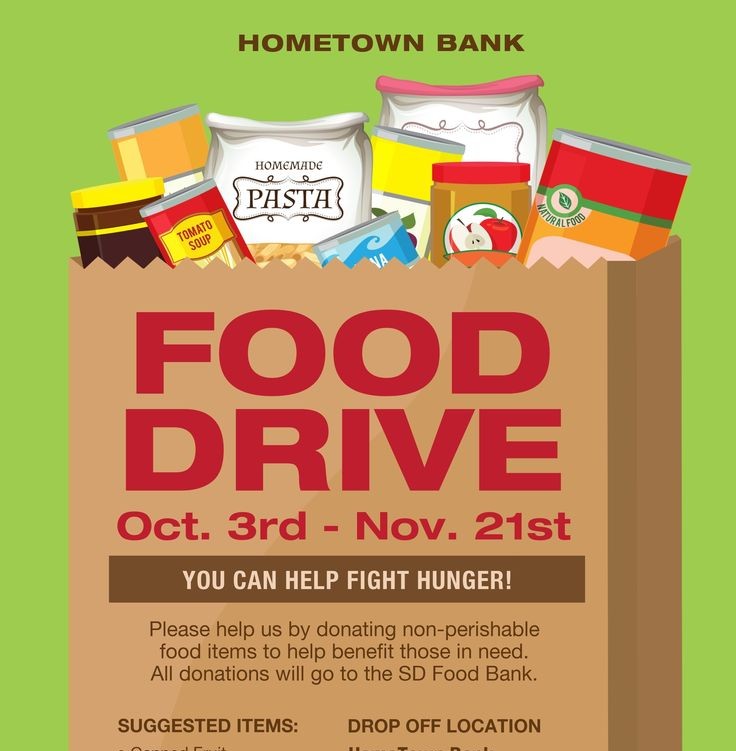
As a veteran teacher, in a relatively well-off suburban school system, I’ve been part of any number of school-based community service projects. My middle school used to have a canned goods drive around Thanksgiving.

Homerooms competed to see who could bring in the most cans, with the winning class getting donuts and cocoa. Piling the cans into an edifice—you can make a fairly impressive structure with hundreds of them—then plunking a few students in front of the Great Can Pyramid—well, there’s a shot for the monthly newsletter.

But it always bothered me. There were the rabid competitors—Come on! Just go where your mom stores cans and put a few in your gym bag!—who were definitely in it to win it. I mean, free donuts! From the bakery! There were also plenty of well brought-up girls who wanted to feed the poor (and maybe get their photo in the newsletter), counting and re-counting the cans.

The people who didn’t get mentioned: The Student Council advisor who had to transport a thousand-plus cans to the food bank. And food bank volunteers who had to organize the donations, throwing out outcoded or bulging cans of beets and butterbeans.

Not to mention the folks who depend on food banks, getting there early to get what they actually needed (formula, perhaps) and not be left with stuff that had been sitting in suburban cupboards for years, unused.

For several years, I was advisor to the National Junior Honor Society, the stated mission of which was acknowledging scholastic excellence in middle schoolers. Hey, I was always down to honor academic effort, and lots of my band kids were in the NJHS. It was one of those “make of it what you will” volunteer jobs, and I thought it was a place where some smart kids could wrestle with the idea that they were more fortunate than—well, the rest of the world. A middle school kind of noblesse oblige.

One year, we raised money by hosting a dance, then sent those proceeds to a homeless coalition in Detroit. It was a pretty bloodless project—the only outcome for us was a nice thank-you note from the nonprofit—but it was a good opportunity to talk about just who the homeless were, and how you get to be without shelter in the richest country in the world.

Another year, we “adopted” a family through the local Salvation Army (this was before their stance on LGBTQ folks was questioned), to provide a nicer Christmas. The first order of business, after raising a few hundred dollars, was discussing the word “adoption,” relative to extending charity to folks who are less well-off, but live in the same community. We were not adopting anyone; we were providing temporary, anonymous assistance.

Then, we went shopping. There were two cars full of 8th graders, with lists provided by the Salvation Army, pushing carts around Meijers, picking up a holiday dinner and gifts for everyone in our assigned family. What was interesting to me was the assumption that “the poor” weren’t like the kids in the NJHS; they should have to live with less expensive, less attractive products and even be grateful for them.

In our assigned family was a girl (14), who needed a warm winter jacket. The kids debated: the cheaper, ugly one or the acceptable style that was $20 more? This took a lot of time, standing in the aisle. I asked: Would YOU wear cheaper/ugly? No. Never in a million years. So—why should she? The answer (a good answer): because then we could get frozen macaroni and cheese for their Christmas dinner.

In the end, the chaperone mom and I kicked in extra cash, and we got them both. But life isn’t always like that.

I don’t think you can teach kids to care for their neighbors via school projects—but you can teach them to think about inequity and compassion. Just because SNAP benefits returned this month does not mean the less fortunate will be well fed in the long term. And the misfortunes of rising unemployment, rising food prices and rising social uncertainty will not be ending soon.

The foundations for eliminating food insecurity are cracking. The best gifts: Money and time. Happy Thanksgiving.
Absence Makes the Smart Go Wander

Recently, Bridge Magazine—a Michigan-focused news venue—ran a series of articles on the appalling numbers of absences that Michigan schoolchildren have been racking up since (and, let’s be honest, before) the pandemic.

Last year, more than a quarter of Michigan students, nearly 388,000, were considered “chronically absent,” which includes excused and unexcused absences — everything from sickness and appointments to skipping school without parents’ knowledge. Before the pandemic, there were 290,000 chronically absent students, or 19.7% of public school students. 

The definition of chronically absent? Ten percent of the school year, or 18 days. There’s a handy little infographic where you can see how your district ranks, and how their absence rate has fared in the past six years. I was happy to see that the suburban school where I taught for more than 30 years, and the district where I now live and volunteer have low absence rates, generally a mark of an economically secure community. Kind of like test scores.

Also—like test scores—high rates of absenteeism are something that outside observers (read: Bridge Magazine) seem to want to pin on school districts. Here’s a headline: Unlike Michigan, Indiana got tough on missing school. It’s already working. Bridge features a story about the low absence rate in Fremont, Indiana, just across the border, with a photo of a motherly kindergarten teacher and her (white) students.

‘New [Indiana] laws standardize school response to absences, threaten criminal action against students and families and create a reporting system that streams data daily from individual classrooms to state officials.

Fremont has fewer economically disadvantaged students (about 40%), which researchers tie to increased absenteeism, but district leaders say they also have stepped up effort to help get kids in school. Small buses pick up homeless students, schools offer telehealth and dentistry care and a countywide “teen court” serves as a first accountability step for some truant teens.’

Well, bully for Indiana—especially for picking up homeless kids and offering wraparound services for those who might be inclined to skip school because they can’t get there, or their clothes are dirty, or their tooth hurts. I’m guessing that if Michigan schools could lower their rate of disadvantaged students our absence rates would also drop. As for threatening criminal action—truancy has been a recurring issue since forever, and carrots work better than sticks in encouraging positive habits and behaviors.

In one of Bridge’s articles about the Shocking Absence Crisis, this interesting tidbit appeared:

‘Last year, 162 school districts — 59 traditional and 103 charters — faced potential financial penalties for school days when fewer than 75% of students showed up. In five districts, all charter schools, the 75% threshold wasn’t met at least 22 days, according to data provided to Bridge Michigan by the Michigan Department of Education.’ 

There are about 540 fully public (not charter) school districts in Michigan, and around 300 charter schools. Data is murky—but thumbnail math says that just over 10% of fully public school districts (which includes many large urban districts and small, remote rural schools) have serious attendance problems. Meanwhile, over a third of charter schools (which are smaller and more select) are struggling with absences—and the most egregious rates (the ones dragging down the statewide numbers) come from charter schools.

Bridge did not provide that analysis. Interesting.

When thinking about the results of so many kids missing school, Bridge naturally turns to test scores. I’m not even going to summarize, because it’s exactly what you’d expect: kids who don’t go to school very often get lower test scores and struggle to learn to read. But that doesn’t mean they’re dumb, or unworthy. It means we’re not digging into the real roots of the problem.

The more essential questions are why kids aren’t attending, and how to bring them back into the gotta-go-to-school fold. What people and programs might fill their needs, invite them into a safe community?

With elementary students, absences are tied to parent behaviors—so Fremont, Indiana has the right idea: buses, free health and dental care, after-school programs, etc. With older students, building communities—sports, clubs, co-ops, supervised hangouts—are lures, but in the end, teenagers come to school to learn, to let their minds wander. When that doesn’t happen, if there’s nobody dragging you out of bed in the morning, why bother?

Here’s a footnote to the discussion: Should Kids Miss School for Vacation? Parents Say Yes, Teachers Aren’t So Sure. Synopsis: Parents are defensive about getting better prices on a Disney or skiing vacation and pulling their kids from school for family fun. Teachers are resentful about being required to rustle up packets and other busy work while Kid misses classroom discussions and contributions to group projects. Grades become an issue.

Speaking personally, I’ve never flipped out over kids missing a few days, especially if you get advance warning and a request for work that comes back completed. Learning is never uniform and predictable, and learning (not filling boxes in the gradebook) is the ultimate goal. Right?

I’ve been asked to excuse a two-month absence for a boy traveling to Egypt with his energy engineer father, and dealt with a championship snowboarder who missed most of a marking period but came back with Olympic and career goals, and a fistful of medals.

The first boy was an A student. He couldn’t make up what he missed—but the life experience more than made up for that. The second boy read at a 2nd grade level, a fact reinforced by several teachers when his parents told us about the tour of events he’d entered. Finally, his mother said: So we shouldn’t let him do what he’s so great at—we should make him stay here and fail all his assignments? How does that help him?

I have thought about her many times. Partly about the privilege well-heeled white parents have in managing their children’s absences—but also in considering why students stop coming to school.

If kids aren’t showing up to school, maybe it’s not about better data streams or legal threats, or texting their parents at the right time.

Maybe they don’t want to stay in school and fail their assignments, convinced that nobody cares much. What should we be doing about that?

Teachers are Patriots! Who Knew?

The world of education research is replete with studies that feel… unnecessary to folks who have spent their careers in front of K-12 classrooms. Primarily because so much good research is ignored in practice, and so much bad research becomes conventional wisdom.

For example—scientific inquiries  affirm that the best age to begin formal reading instruction would be about seven years old. Ask any early childhood teacher what our literacy success rate would be were we to initiate two-hour formal reading blocks in second grade, leaving room in kindergarten and first grade for lots of read-alouds, rhyming, picture books, letter-sound correspondence activities and development of oral language.

It’s more than that. Teachers with a few years under their belt have well-developed opinions about the best special education placements, the benefits of free play, and why taking your students outdoors yields physical and intellectual growth. Teachers can speak articulately about the post-pandemic changes in student behaviors.

How do they know about these things? Experience. Paying attention to what happens in their daily practice.

You might say that teachers’ observations and informal experiments—Teach it this way? Or that?—are the most valuable action research data to build a successful practice. But don’t say it too loud, because research is tied tightly to the source of the money that funds it—and the commercial products and politics that drive educational change.

There are lots of reasons why education research is suspect—or products are published to great fanfare, then sink like an oversized silver bullet:  An analysis of 30 years of educational research by scholars at Johns Hopkins University found that when a maker of an educational intervention conducted its own research or paid someone to do the research, the results commonly showed greater benefits for students than when the research was independent. On average, the developer research showed benefits — usually improvements in test scores —  that were 70 percent greater than what independent studies found.

Hmmm. I’d put my money on teacher perspectives about instructional strategies and materials, especially if teachers were in charge of their own professional work and offered ongoing opportunities to assess worthy curricula and teaching techniques.

Keeping the problems with ed research in mind (a book-length topic), I was amused to see this headline in Education Week this morning: Teachers Value ‘Patriotic’ Education More than Most Americans.

(Dangerous but brave) subheading: The findings stand in contrast to conservative rhetoric about ‘indoctrination’ in the social studies. And surprise! The polls themselves were conducted by EdChoice, a nonprofit advocacy organization supporting school choice, and the Morning Consult Public Opinion Tracker.

‘More than 80% of K-12 teachers thought it was “very” or “extremely” important to teach students about the Constitution’s core values, and 62% found it similarly crucial to teach that America is a fundamentally good country. In both cases, teachers were more likely than parents or the public at large to favor teaching these concepts.’

Least surprising education research result, ever. Kind of shoots holes in the ‘teachers practice leftist brainwashing’ theory that the privatizers and public school vandals keep advancing. The study showed that 57 percent of parents thought schools should overtly teach patriotism and loyalty to the United State—the exact same percentage as teachers.

There’s more: ‘Both Democratic and Republican teachers were less likely than similarly affiliated members of the public to think it important to teach students to question government actions and policies.’

Again—totally predictable. Schools are inherently moderate and cautious, politically. Your teenager is far more likely to become radicalized—in either direction—via their online presence. Online—where there isn’t a caring and educated adult moderating the decontextualized content they are reading.

I am a retired teacher, but I spent more than three decades explicitly teaching my students about being an engaged citizen, and appreciating the cultural mix that is America. I am a patriot.

Like most teachers, I am grateful to be an American. I didn’t need research to tell me so.