DIS-Information in Schools

You may have heard the story, a couple days back, about a Republican legislator in Michigan posting a photo of buses at the Detroit Metropolitan Airport, claiming the buses were transporting “illegal invaders.”  News stories politely suggested that he was erroneously referring to undocumented immigrants—after all, Representative Matt Maddock is still in the Michigan House—before confirming that the buses were, in reality, transporting four men’s basketball teams competing in this weekend’s Sweet 16 and Elite Eight games in Detroit.

Was Maddock (whose wife, Meshawn, was recently Co-Chair of the beleaguered Michigan Republican party) simply misinformed? Doubtful that he was hanging around a major metropolitan airport (which is not, by the way, in his district), watching planes and buses come and go, and simply, you know, got the wrong impression about a few dozen young men—tall ones– getting on buses.

Nor has he apologized for what might have been a dangerous trigger, inviting local yahoos to saddle up and head for the airport. In fact, he’s continued to post:

“We know this is happening. 100,000’s of illegals are pouring into our country. We know it’s happening in Michigan. Our own governor is offering money to take them in! Since we can’t trust the #FakeNews to investigate, citizens will. The process of investigating these issues takes time. The whole nation knows about the Democrat illegal invasion human trafficking criminal enterprise. Why does the media only work to cover it up?”

Welcome to Detroit, college athletes.

Back in the day, as part of what used to be called a ‘unit,’ my 7th grade English teacher, Alison Olding, taught us the difference between misinformation (when you think you know something, but it’s wrong) and disinformation (when you deliberately plant known falsehoods). There were plenty of examples to share with a group of 7th graders, back then, and now. Spreading misinformation in middle school (a daily occurrence) is always wrong, but making stuff up to harm someone else is a special kind of reprehensible.

And yet, here we are, hip-deep in AI deepfakes and college professors hosting far-right websites protecting “the American way of life”  and government interventions to suppress social media and—God help us—Russian disinformation about their insatiable, immoral war in Ukraine:

 “The strategy that matters most for the Kremlin is not the military strategy, but rather the spread of disinformation that causes the West to back away and allow Russia to win. That disinformation operation echoes the Russian practice of getting a population to believe in a false reality so that voters will cast their ballots for the party of oligarchs. In this case, in addition to seeding the idea that Ukraine cannot win and that the Russian invasion was justified, the Kremlin is exploiting divisions already roiling U.S. politics.” 

Kinda makes you wonder: Didn’t any of the Republican congressmen on the pro-Putin side learn about misinformation and disinformation in school? How to sort out fact from fiction? How to research questions around information that may or may not be true—and how to accurately evaluate sources that may be biased, or flat-out lying?

It’s a serious and critical education question. There are, indeed, public schools where media literacy is a formal part of the curriculum. There are outstanding digital literacy resources for students, supported by high-quality research. What’s missing is the will and the urgency of the need to educate kids about distinguishing between truth and whatever it is they’re getting on TikTok.

Or, unfortunately, at their kitchen tables or their church or on the bus. Misinformation—can you remember Things You Used to Believe?—has always been a factor in growing up and becoming educated. Disinformation is a darker thing altogether. Especially when it comes from people who should, theoretically, represent integrity. Legislators, for example.

Discussing this with one of my favorite cyber-colleagues, Barth Keck, he said: I teach these very strategies in my Media Literacy class. Sadly, I fear most adults nowadays – including the people on this platform – lack the patience or interest in employing them. I just discussed this point with a colleague who teaches Speech & Debate. He’s seeing kids parrot talking points rather than thinking deeply about issues. Whom are they parroting? Many adults are a lost cause; it’s the kids who need to learn to think critically.

A short piece in the Michigan Advance made this point simply: Disinformation makes our communities less safe. We are not powerless in this plight. Disinformation pulls apart our communities, and community itself is key to fighting back.

Even when it’s uncomfortable or not neighborly or involves a guy you may have enthusiastically voted for, once. When someone is spreading disinformation—even if it’s disinformation that faintly echoes your beliefs about the southern border, federal lawmakers or who deserves a handout—it’s wrong, and they need to be called out. For the sake of your school and community.

Disinformation IN schools is often disinformation ABOUT schools. All of those laws nominally designed to “protect” students from things that make folks uncomfortable—like classroom discussions about lynchings or honest talk in health class about sexual preferences—only open the door for students to absorb misinformation and disinformation when they don’t get the truth in school.

Here’s a heartbreaking and lethal example. My school used to offer, as part of community education, a hunter safety class. You had to be a certain age, produce appropriate licensing, learn about (and be tested on) the safe use of firearms, including keeping them secured when not in use.

Michigan is a hunting state. Opening Day in deer season is often a school holiday. We weren’t thinking about guns as evidence of masculinity or patriotism—or revenge. Our parents weren’t giving us handguns as an early Christmas present.  Our legislators weren’t posing with the whole family carrying assault weapons.  That’s the disinformation part.

From a piece on the 2022 school shooting in Oxford, MI:

What’s particularly hypocritical here is that the most strident defenders of this [gun] culture skew conservative and talk a lot about what isn’t appropriate for children and teenagers. What they think is inappropriate often includes educating kids about sex, about the fact that some people are gay or transsexual and about racism. It’s a perverse state of affairs: Exposing children to simple facts is dangerous but exposing them to machines designed to kill is not. You can’t get your driver’s license until you’re a teenager, or buy cigarettes and alcohol until you’re 21, but much earlier than that, kids can, with adult supervision, legally learn how to end someone’s life.

In Michigan, the shooter’s parents are going to prison for providing their son with disinformation; families and a school district are forever torn.

Once more: communities are the key to fighting disinformation. Start now.

Political Messaging, Schools and Republicans

I just finished Rachel Bitecofer’s feisty, punchy book on political messaging, Hit ‘Em Where it Hurts: How to Save Democracy by Beating Republicans at Their Own Game.”

Recommended—although not, as the subtitle suggests, to beat Republicans at their own despicable, even shocking, game. Recommended because we’re in crisis, and being smarter and nicer is no longer cutting it.

In December of 2020, I wrote a blog entitled Republicans. Up until that point, in my political perspective, there were country-club Republicans who were conservative, in the traditional sense of keeping things that preserved beneficial aspects of their lives in place. And there were the rabid right-wing crazies who emerged like locusts after Barack Obama was elected. But the two were merging, and the outlook for keeping two distinct parties that counterbalanced each other’s policy goals, for the good of the nation, was dim. The Republicans were ruining democracy. On purpose.

I took some grief for that blog, from die-hard moderate Republicans (who are thick on the ground where I live and work), and also from some Democrat friends who thought it took me way too long to outright reject and stomp on anyone who voted Republican in the past two decades.

From the standpoint of March 2024, and Rachel Bitecofer’s crisp and direct prescriptions for saving democracy, however, my hardcore Dems friends were right: You don’t get anywhere with a mushy message, a bunch of facts, and reaching across the aisle. And you can’t share those great policy ideas unless you can get elected.

I blame my 32-year career as a public-school teacher for this habit of equivocating and looking for points of agreement. I spent most of my time trying to reduce conflict, banish name-calling, find common ground, and build functioning communities in my middle school classroom.

So many communities. I was partially successful at this, more so toward the end of my career. If kids don’t get along, after all, they can’t make music together. This is the single most important reason I stopped having chairs and challenges, and tried to avoid unnecessary competition. Teachers everywhere want their students to be able to work together despite differences. It’s what we do.

Bitecofer’s take on political messaging is that Republicans have zero interest in working together to solve problems. They just want to retain power. It’s time for Democrats to boldly claim the high moral ground, she says, rather than using data and reason to present their detailed policy plans, no matter how forward-thinking and appealing they may be to Democrats.

We’re getting beat up, she says, by sophistry. Time to call a lie a lie. To fight back. To take back the word freedom, for starters. We are clearly the party that supports freedom, around the globe, and here at home. Why aren’t we claiming that? The losses that we are suffering now—reproductive freedom, the freedom to vote, the freedom to breathe clean air—have not come from Democratic actions.

She points out that education has generally been seen as a Democratic issue, back to the Elementary and Secondary Education Act in the 1960s (along with minority rights, infrastructure and health care), but the 2021 Gubernatorial election in Virginia turned that around—with a big fat passel of lies about what was happening in public schools.

You remember— charges that teachers were making white kids feel guilty via CRT, encouraging transgenderism and putting out kitty litter for the furries. The kinds of things Dems responded to by politely explaining that critical race theory was an advanced concept, first introduced by Kimberle’ Crenshaw, interrogating the socially constructed role of race and institutionalized racism in society, yada yada.

All true. But completely overridden by the Republicans’ simple, dishonest message: Schools are taking away parents’ rights! (Even though parents have always had rights.) Bitecofer, lurking in the background, would say: Don’t bring reality and truth to a Republican messaging war, because Republicans trust feelings, not facts.

Democrats have, for decades, rallied around more resources and equity for public education. They have gone to schools and registered newly minted 18-year-old voters. They have defended the wall between church and state, pushed back hard against vouchers for the wealthy. Time to claim credit.

America is a uniquely apolitical country, Bitecofer says, with little civic culture. This benefits Republicans, who count on people to vote out of old partisan habits, not new information.

Occasionally, someone will claim that more or better Civics classes would improve engagement in electoral politics in the United States. I seriously doubt that, especially since the things that make the study of Civics engaging and sticky are precisely the things that Ron DeSantis is passing laws against. Kids learn to be good citizens by watching adults—a statement worth pondering, in this election year.

Pick up Bitecofer’s book—it’s a short, easy to digest read. Then pull on your metaphorical boxing gloves.

Do Core Democratic Values Belong in Schools? Some Say No.

I try, when thinking about the path this nation is currently on, not to immediately jump to worst case scenarios or inept comparisons. The uptick in the language of fascism shouldn’t be ignored, however—comparing certain people to Hitler or bemoaning the loss of democracy might not be overkill in the political soup of 2024.

It’s been sneaking up on us, like the proverbial frog in hot water. When looking at curricular change over the past five years—immediately preceding the onset of the COVID pandemic—it’s easy to see that there were plenty of precursors to the anti-woke, book-banning, teacher-punishing mess we find ourselves in as we slowly recover from that major shock to the public education system.

The scariest thing to me about the abuse teachers are taking, across the country, is its impact on curriculum. Here’s the thing: you really can’t outsource teacher judgment. You can prescribe and script and attempt to control everything that happens in the classroom, but it doesn’t work that way.

Several years ago, my school district brought in a Big Famous Ed-Presenter to do an August workshop on lesson design. Because she was expensive, surrounding districts were invited to send interested teachers, those who wanted to learn how to craft engaging lessons and units with aligned performance assessments and instructional strategies. All the teachers would be creating their own curriculum using the MI Grade Level Content Expectations—the standards documents issued by the MI Department of Education.

Once we had been seated in rounds by subject area, the presenter asked us to come up with a common, overarching topic to turn into age-appropriate instructional sequences. We at the humanities table quickly settled on ‘Core Democratic Values’ which were part of the MI Social Studies standards. We then went around the room sharing our chosen topics.

The presenter held up a hand when she heard from our table. No—you’ve misunderstood, she said. I meant something like “Westward Expansion” or “Industrial Revolution”—a topic that’s a key concept in your state Social Studies standards. We all believe in core values, of course, but this is about disciplinary content.

All the K-12 teachers in the room hastened to assure her that Core Democratic Values were indeed a key topic in the state standards, pulling up documents and published units to prove it. The presenter conceded, saying that she did this work all over the country and had not yet encountered such a broad concept—open to a range of interpretation and uses in instructional practice—anywhere in the country.

It felt like a point of pride, really, having these core democratic values as an anchor in the Mitten State standards. I’m not even a Social Studies teacher, and I could think of a dozen ways to insert the core values into lessons in the band room.

Here’s the official definition: Core democratic values are the fundamental beliefs and Constitutional principles of American society, which unite all Americans. These values are expressed in the Declaration of Independence, the United States Constitution and other significant documents, speeches and writings of the nation.

And here’s a list of those identified values: Life, liberty, pursuit of happiness, justice, the common good, equality, truth, diversity, popular sovereignty, and patriotism.

Things we all agree on, right?

Not so much, anymore.

Speaking of precursors, when Michigan was updating its Social Studies framework, back in 2018, there was a major kerfuffle over Core Democratic Values (and a bunch of other hot-topic stuff):

References to gay rights, Roe v. Wade, climate change and “core democratic values” have been stripped from Michigan’s new proposed social studies standards, and the historic role of the NAACP downplayed, through the influence of Republican state Sen. Patrick Colbeck and a cadre of conservatives who helped rewrite the standards for public school students in kindergarten through 12th grade. “They had this term in there called ‘core democratic values,'” Colbeck said. “I said, ‘Whatever we come up with has to be politically neutral, and it has to be accurate.’ I said, ‘First of all, core democratic values (is) not politically neutral.’ I’m not proposing core republican values, either.”

This wasn’t only about rhetorical confusion between ‘Democratic’—the party—vs. ‘democratic’ (the time-honored. foundational principle of our government), although that’s the first thing that comes to mind with the protestors. In fact, reading the article would be a great classroom exercise for older students. The assignment might be: Read and discuss the diversity of opinions shared here, in a representative democracy with a free press.  Who should determine what students learn in a public school?

The proposed conservative edits went deep. They were about redefining concepts like equality, diversity, justice, the common good—and truth. ‘Civil rights,’ for example:

A high school standard about the expansion of civil rights and liberties for minority groups cut references to individual groups, including immigrants, people with disabilities and gays and lesbians. The new proposal includes teaching “how the expansion of rights for some groups can be viewed as an infringement of the rights and freedoms of others.” Colbeck told Bridge he added that phrase.

Surely, most public-school social studies teachers aren’t down with suggesting that not everyone deserves equity and civil rights, because granting those rights might infringe on someone else’s beliefs or “freedoms.”

After months of wrestling over these—yes—core values, the State Board adopted new Social Studies Standards in 2019. The changes they made were reasonable—you can compare the old and new. And core democratic principles and values are woven throughout the curriculum. Surprised that this story turned out OK? The battle is far from over.

The original definition and explication of core democratic values Michigan schools adopted were spot-on, nested in that most traditional American ideal: a free, high-quality fully public education for every child. One that would prepare them for active, informed citizenship. To become good neighbors, stewards of our collective environment, smart consumers and engaged voters. Community builders.

Aren’t core democratic values just about the only thing worth fighting for, in 2024?

Woke/Not Woke

A few years back, in 2016, I read a blog post from a national teachers’ union leader, a white woman, proclaiming that she was now woke. I’ve met this woman a few times and have no doubt that she is sincere and well-meaning and totally on the right side of social justice issues, but the blog, about her aha moment, struck me as tone-deaf.

Most of the time, white educators who care about justice are working on opening their minds, at being better humans. Maybe the best white people can do is increase their understanding and awareness of all the injustices that are built into living in the home of the brave. Closer to woke, maybe, but always gazing at justice and equity from a layer of privilege. Doing their best until they can do better, etc. It’s not for us to decide, yup, we’re woke now.

When I read that blog, however, I never anticipated a US Governor would proclaim that his state is where “Woke goes to die.”  As a campaign strategy, no less—a campaign based on freeing people of privilege from any guilt about exercising their biases, discriminatory actions, and outright bigotry against everything from Gay Days at Disney World to telling high school students ugly truths about Black history.

And now, Florida lawmakers are moving full-speed ahead to push minors off social media. They’ve empowered schools to ban cell phones, remove books and limit history lessons, with more restrictions on the way.  Students interviewed in the linked article are incensed—they understand that it’s their learning that’s being limited, not their social lives. They don’t feel protected—they feel cheated.

How did we go from striving for more equity and inclusion as a nation–to proudly announcing that the last thing we want our children to feel is responsibility for the well-being of others? What was the turning point?

Spoiler alert: It’s no coincidence that the Governor who wanted to excise woke-ism thought that strategy would resonate with a particular group of American voters. Having stirred that Group4Liberty up, Desantis is now reaping the consequences, politically, in Florida. Bad ed policy will always catch up to you, with increasing teacher shortages and hollowed-out libraries. And so many headaches and complaints.

When you’re stirring the pot, to get political mileage out of parent anger, you’re doing a grave disservice to the foot soldiers who are teaching in your state, the ones who are trying to put together functioning classrooms full of diverse kids–and then teach them something worth learning.

And, as Peter Greene points out, succinctly: It’s a great thing to have an administrator who will have your back, who will stand between you and the latest flap (and for administrators, it’s a great thing to have a teacher who will take the steps needed to make defending them easier). But it’s a luxury that many teachers don’t have.

Stripping critical topics and materials out of the curriculum because they may be interpreted as ‘woke,’ makes that curriculum sterile and empty. Trying to keep students from accessing their own answers on the internet is futile. And attempting to control teacher behaviors via professional development is downright creepy.

Teachers who are experiencing all of these anti-woke procedures can feel isolated and angry, understanding that the very reason they chose to become teachers—building the next generation—has been abandoned by school leaders with feet of clay.

There are a lot of ways to interpret ‘woke’—but it’s a factor in every school building in America: Who accepts whom? Who is comfortable and able to learn? Who is expected to do well—and who is given short shrift? How do we get along, and respect each other’s differences?There are systems of oppression, however subtle, in every school, public and private.

Woke is defined by the DeSantis administration as “the belief there are systemic injustices in American society and the need to address them,” according to DeSantis’ general counsel, as reported by The Washington Post.

Denying that there is systemic injustice, instead substituting the systemic practice of avoiding unpleasant truths, ducking issues that cause conflict and barring critical thinking by students, is the worst possible basis for making education policy.  Instead, ed policy is now based on chasing test scores, cutting economic corners, and presenting a mendacious view of the world to our future leaders.

If anybody needs to pursue wokeness, it’s school leaders and education policymakers. Because—guess what—there ARE systemic injustices in American society. And one of the purposes of American public schools has traditionally been forming a more perfect union through education. Carol Burris:

In the beginning, the purpose was to create a literate American citizenry to be able to participate in democracy. Our founders realized that if they were going to give citizens the ability to actually shape government through elections, they had to have some knowledge base on which to make decisions.

Returning to the critical question here—how and why did wokeness become something to sneer at, to stamp out of school discussions and materials?

I keep thinking about the video shot at a middle school in Royal Oak, MI right after the 2016 election, with students chanting “Build that wall!” Or the lawsuit filed in 2022 against another Michigan middle school for suppressing the first amendment rights of students, by forcing them to take off their “Let’s Go Brandon” hoodies.

Add in a pandemic, which tilted many perspectives—equity, safety, privilege—and it’s easy to see how the past eight years have caused a political abyss to form. Teachers who forthrightly proclaim they are woke, in 2024, risk being fired.

It’s time for action. Step one: voting.

The Problem with Jingle Bells

If you follow various chat groups and Facebook pages of music educators, this time of year is rife with the Great Christmas Literature Discussion, centered around whether to schedule a concert in December and, if so, what songs to play, while avoiding stepping on anyone’s cultural traditions.

I have written, often, about this conundrum—honoring the festive spirit of seasonal holidays (which is evident absolutely everywhere, in December, from the grocery store to TV ads) vs. avoiding any mention of Christmas at school, because it’s inappropriate to preference one religious celebration over others, in a public institution filled with diverse children.

From a professional education perspective, it’s thorny. You can play a Christmas-heavy concert, sending parents home in a rosy glow—some parents, anyway. You can try to recognize every winter/light holiday with a tune—or rely on “classical” pieces like Messiah transcriptions. You can try to take Jesus out of the equation, and end up with a lot of junk literature. Or you can avoid the whole thing and schedule your concert in January.

Increasingly, I’ve seen elementary music teachers bowing out of anything directly related to Christmas. They can articulate good reasons for this, distinguishing between music students are fortunate enough to experience at home and with their families, and what belongs in a solid music education curriculum. For teachers who are under pressure from administrators or parents to put on a holiday show, there are winter weather songs. Enter Jingle Bells.

A couple of weeks ago, Peter Greene reprinted his blog entitled The Jingle Bells Effect and the Canon. It’s a bit of brilliance comparing 30 different versions of Jingle Bells, 30 ways of taking a small collection of notes and rhythms and turning them into something unique and different.

It’s like literature, Greene says—there are multiple ways to teach a concept, theme or historical era through the same medium: the printed word. He makes the point that teachers should always be able to offer a cogent answer to the question: Why are we learning this? I agree.

And for many years, I found Jingle Bells a handy instructional tool. The chorus uses only five notes, so the tune appears in virtually every beginning band method book, just about the time kids are eager to play real songs. The lyrics are thoroughly secular—no mention of Christmas—so when kids are singing about a one-horse open sleigh, it’s kind of like the Little Deuce Coupe of its day.

It’s also one of those three-chord songs, simple to harmonize. Add some sleighbells and voila! First concert magic. For years, my middle school band (some 200 7th and 8th graders) played Jingle Bells in a local Fantasy of Lights parade. Because when you’re trying to get 200 young musicians to march and play at the same time, you need something easy.

As awareness of the racist roots and language in some of our most beloved folk and composed songs began to grow, in recent decades, elementary and secondary music teachers rightfully started pulling certain songs out of their teaching repertoire. Scarcely a week goes by without an argument about this trend, on music-ed social media sites. Do songs that sprang from minstrelsy, performed in a different era, for example, have a racially negative impact today? Or are they just tunes? A valid and important question.

I find these skirmishes encouraging, an example of teachers discussing–with some conviction–the beliefs that shape their own professional work. And sometimes, seeing things in a new light. As Maya Angelou said:Do the best you can until you know better. Then when you know better, do better.’

I’ve read dozens of these “is this racist?” discussions on-line. And music teachers, given the chance to re-think the cultural value–or lack therof—in certain pieces of music, often are willing to choose something else, or share the origins of the work, the outmoded and biased thinking reflected in the lyrics, as an opportunity to teach cultural history associated with music. People will adapt.

Except when it comes to Jingle Bells.

Back in 2017, a professor at Boston University , Kyna Hamill, published a research paper, suggesting that Jingle Bells was first sung in minstrel shows. Research papers are not generally the subject of teachers’ lounge chat, but this one caught fire, and pretty soon, there were teachers arguing that the composer of the piece, James Lord Pierpont, was a fervent Confederate, and therefore a supporter of slavery. Out with Jingle Bells!

Pierpont was not a household name, in his own time. He was a struggling composer, organist and teacher. His father was an ardent abolitionist and Unitarian minister, as were his two brothers, all in Massachusetts. But Pierpont took a position as organist in a Unitarian church in Georgia and was there when the Civil War broke out. He wrote music and sold it to support his family—including songs that supported the Southern war effort.

He also enlisted in the Confederate Army and served as a clerk. His father, the Reverend John Pierpont, was a Chaplain in the Union Army—one of those families split by a tragic war. There are plenty of families in the same situation right now, in this country—split by politics, influenced by cultural context. Something to think about, as we evaluate and banish Pierpont, 150 years after he wrote his most famous sleighing ditty.

Even Kyna Hamill, arguably the genesis of the anti-Jingle Bells movement now says this:
My article tried to tell the story of the first performance of the song. I do not connect this to the popular Christmas tradition of singing the song now. “The very fact of (“Jingle Bells’”) popularity has to do with the very catchy melody of the song, and not to be only understood in terms of its origins in the minstrel tradition. … I would say it should very much be sung and enjoyed, and perhaps discussed.”

There are teachers and schools that have taken Jingle Bells out of the curricular mix—and good on them for having that thoughtful discussion in the first place. And there are teachers who have decided they have bigger curricular fish to fry than banishing the bells on bobtails—they’ll save their firepower for songs with overtly racist lyrics and intentions.

Again– these are valid and important questions. The trick is to keep the conversation going, and refrain from condemnation of well-meaning peers.

Are those sleighbells I hear?

Do Parents Really Want Control over What Students Learn?

Essentially, nothing has changed since this was first printed, June 2022:

What’s driving the screaming matches at local school board meetings—the ones where organized parent groups show up to have their say about everything from critical race theory to bulletproof doors?

There are a lot of overlapping factors: A nation that’s bitterly divided. The pandemic we’re still dealing with, and its impact on children. Racism, sexism and the fear of losing “rights.” Gun violence. The political upheaval resulting in an insurrection, which played out live, on national TV.

And, of course, money and support from outside sources and organizations, which perceive these ongoing crises as an opportunity to chip away at public education.

I’m no stranger to parent-led fireworks at Board meetings. I’ve witnessed verbal storms over sex education and teacher strikes and girls who wanted to lift weights with the wrestling team.

During my second year of teaching, in October, the School Board decided to lay off 20 teachers (including me) who signed annual contracts in the spring, because an August millage election had failed. They made cuts to programs across the board, and established a pay-to-play model for all HS sports. There was a huge board meeting that went on until the wee hours. And what were the parents upset about? Eliminating foreign languages—or elementary art and music?

No. It was about the football team.

One mom was outraged at being asked to fund her son’s final year on the team. “This is his time to shine! Teachers can always find another job—but my son has only one chance to play football in his senior year!” There were perhaps a hundred teachers at this meeting. You can imagine how that remark went down with them.

My point is this: when parents are angry enough to publicly spout off at a school board meeting, it’s seldom centered around informed disapproval of established curriculum, instruction or even assessments (unless someone has lied to them about what’s going on in their children’s classrooms). Even book banning—a chronic hotspot for school leaders—seldom flares up because a parent carefully read their child’s assigned book and was shocked into action.

What we’re seeing now is something else: an orchestrated and funded effort to demean public education and the people who work in public schools. It’s about power and control. It’s about ginning up fear, using dishonesty as a tool. As John Merrow notes:

Many of the adults who have been disrupting local school board meetings not only do not have children enrolled in those schools; they are classic outside agitators, perhaps even from neighboring states. 

The foundation of recent wrangling over control—parents’ rights, if you will—is thoroughly political and got a big boost when now-Governor Glenn Youngkin promised to strip culturally responsive instruction from schools in VA.

Parents have always had rights—including the right to see what their children are learning, access to instructional materials, the option of observing their child in his classroom, and the opportunity to talk to his teachers about any of these.

Teachers have the responsibility to know the curriculum well, to be able to tell parents why certain materials and teaching strategies were selected.  And—should parents be genuinely concerned about any of these things—the responsibility to justify the value of a particular technique or content, to adapt or offer alternatives.

That, in a nutshell, is good teaching–based on trusting relationships and understanding. Every veteran teacher and school leader reading this has had difficult conversations with parents about what and how their children are learning. It’s part of the job. Always has been.

It’s also one of the reasons many teachers pushed back against the Common Core: the standards didn’t fit the students they were teaching. Driving responsibility for determining standards, curriculum and assessment upwards means that teachers are left with explanation that they’re teaching something because it’s on the state test, even though it may be inappropriate or irrelevant for a particular child.

It’s not just parents who want to strip control from schools. From Education Week:

States have a limited amount of power over what materials teachers use in the classroom. A new report shows how some of them are trying—and succeeding—to wield influence anyway. In the majority of the country, districts operate under local control, meaning that school systems, or sometimes individual schools or teachers, have the ultimate authority in deciding what curriculum is taught.

That means that if states want to influence what teachers are using, they have to get creative about what levers to pull. A new report from the RAND Corporation suggests that some states have managed to do just that.

Look for the phrase ‘High-Quality Instructional Materials’ accompanied by some disdainful blah-blah about how clueless teachers design lessons based on what they see on Pinterest, so professional curriculum deciders need to step in and choose better materials. Well-paid deciders, naturally.

Earlier this year, Jennifer Berkshire found reason for hope:

I’ve spent the last few days talking to voters and candidates in New Hampshire who powered record turnout, resounding wins for public school advocates. One theme keeps coming up. Voters were REPELLED by the extremism of “parents’ rights” groups. This was a backlash to the backlash.

In the meantime, all the shoutin’ has left educators limp and discouraged. From Connecticut teacher Barth Keck:

Nationwide accusations of schools teaching “critical race theory” found their way into Connecticut despite any evidence of its existence or even any accurate explanation of what CRT really means from the critics. Superintendent Freeman “cited letters to the editor and social media posts regarding the school’s teaching and equity policies which imply that ‘parents shouldn’t be trusting the teachers and school administrators who are shaping the experience for their children in Guilford.’” 

I have not felt such pressure personally, aside from comments on social media from those calling me a “groomer” and “brainwasher” of children. Granted, I don’t know these people personally, and the only thing they know about me is that I’m a teacher. But that’s the point: Strategic political posturing has convinced scores of people that, rather than a noble and essential profession, teaching is an insidious endeavor whose primary purpose is to push a far-left agenda.

It’s not about the things parents already have a say in—their children’s learning.

It’s about raising a public ruckus.

A Passionate Education Conference

Thirty-five(ish) years in public education—you’d think I would have attended dozens of professional conferences, coming home with a branded tote bag and a ream of stapled, shovel-ready ideas for my classroom. That’s the way principals in my experience used to frame attendance at a conference: If we choose to give you a $300 stipend to attend a conference, you’d better bring back materials and lessons for your colleagues. Because that’s why we have conferences: to give teachers new tips and tricks.

Teachers know this, but education-related conferences are almost always done on the cheap. Teachers–even teachers who are conference presenters–often pay part or all of their own expenses, get a rollaway bed so three of them can share a hotel room, split up and attend different sessions to absorb the maximum number of ideas, then maybe pop for a margarita before calling home at bedtime. The high life.

In my 30+ years as a school music teacher, my request to get a day off to attend a conference was turned down repeatedly. The reason was usually because I was the only music teacher in the building, so anything I learned would not be shared beyond the band room. There was very limited money in the budget for conferences (or, for that matter, professional memberships or subscriptions) so STEM or Reading Recovery events were prioritized, as being more likely to impact kids scores.

Administrators also go to conferences, leaving their favorite teacher in charge; presumably they’re expected to bring back “results,” as well. Still—going to a conference, even if you are paying your own mileage, lodging, meals and registration fee, is a perk for teachers.

And not for the new materials or lesson plans.

The value of conferences for educators—as with any gathering of professionals—is in structured opportunities to mingle, to learn, to have long, uninterrupted conversations, to build networks of colleagues with similar values. The purpose of any conference is (or should be) inspiration. The big picture. Hanging with a bunch of people who care as much as you do.

In the age of the internet—where most of us can examine materials and swap lesson plans fluidly—the absolute advantage of a face-to-face conference is the talking and listening, in person. Three decades of communicating on-line (and one godawful pandemic), plus all the tech-bro videos and social platforms—and what have we learned? That you miss something when the person you’re talking with isn’t in the room.

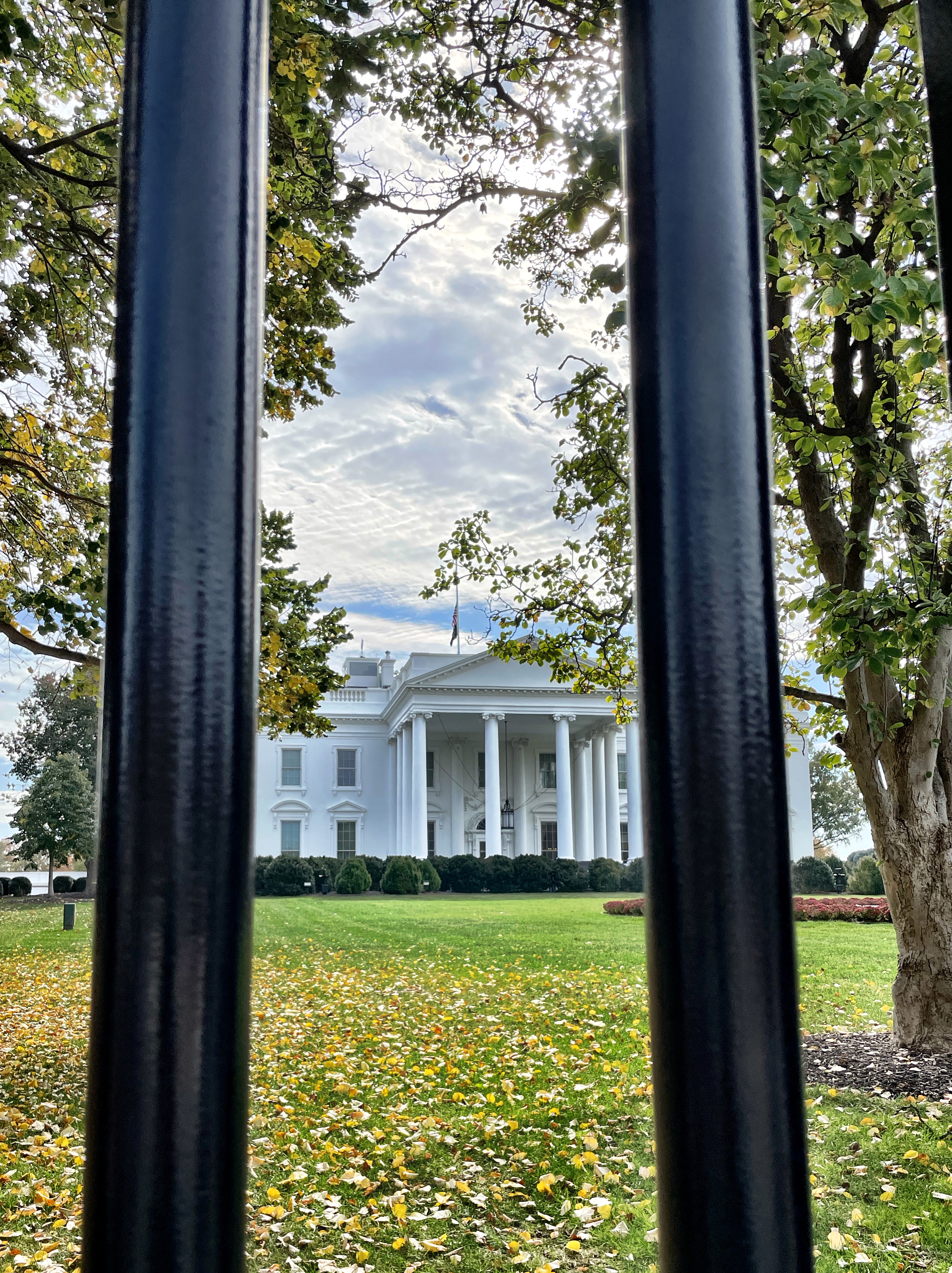
I thought about all of these things while attending the Network for Public Education’s 10th anniversary conference in Washington D.C. last weekend. It was a gorgeous fall weekend—the kind of walking weather where a stroll down to the White House might feel preferable to sitting in sessions centered on countering rabid school board races or hostile state takeovers of ‘failing’ schools.

But no. Every one of the six sessions and five keynotes I attended was both stimulating and encouraging. I heard the inimitable Gloria Ladson-Billings speak, and was stunned by what is happening in Florida and Arizona. I got some tips on running for school board in my local district (#2024Goals) and heard stories of redemption, as well as hideous state-based power plays. What reformers used to call ‘disruption’ now feels like intentional destruction, driven by a single, grasping political party. All over the country.

In the 10 years NPE has been meeting, the tenor of this annual conversation has shifted from the corrosive impact of excessive testing and charter school scandals—So. Many. Scandals.— to outright, in-plain-sight privatization of our best national idea: a free, high-quality public education for every child.

The absolute folly of vouchers—check out Josh Cowen’s work—and the political willingness to blur the lines between church and state are terrifying, all right. So why was I feeling encouraged?

For starters, the fact that the NPE is still meeting, 10 years after its founding, funded largely by individual donations and relatively modest foundational contributions, is reassuring. Many of the conference attendees were still paying their own way—or were attending on the dime of another organization created to defend public education. Money is still how things get done, laws get passed, and ideas take root. Knowing that there are articulate and passionate spokespersonsorganizing to protect public education is heartening.

The second thing I noticed was the number of sessions led by women and people of color. The foot soldiers in the war on public education are teachers, nearly 80% of whom are women. I have been to too many education conferences and symposia where the talking heads were white men with terminal degrees (who were not paying for their own registration fees and babysitters).

Don’t misunderstand—some of my most impressive edu-friends are smart and outspoken white men. But education has long been seen as women’s work, and when I look at the dangers looming—vouchers, religious charter schools, well-funded campaigns against “CRT” and sexual and reproductive autonomy—I see white men, clinging to money and power.  If we’re going to stabilize and enhance public education, women need to be at the forefront. One of the most impressive keynotes at the conference: Diane Ravitch moderating a discussion with the two of the most influential labor leaders in the nation—Randi Weingarten of the AFT and Becky Pringle of the NEA (who preached a blistering sermon on those who would deny the value of a public education for all our children).

We built some sight-seeing (and crab-cake eating) into the D.C. journey, including a visit to the Holocaust Museum before heading to the airport. I last visited the Museum shortly after it opened, but its power has not faded. What I found interesting, in 2023, was the three-deep crowds at the display around the Nazi rise to power in the 1930s in Germany.

Twenty-five years ago, that display addressed the eternal question of how so many good German citizens were drawn into a horrendous scheme to conquer their national neighbors and eliminate “undesirables.” It seemed like a temporary madness, driven by economic instability and inherent German nationalism, not to mention a charismatic leader who appealed to a third of the population.

Now, the photos, speeches and commentary feel like a warning.

Public education is not the only thing endangered. It will take hard work and passion to keep the idea of public goods alive and thriving.

{“cameraType”:”Dual”,”macroEnabled”:false,”qualityMode”:2,”deviceTilt”:0.0073067386958260983,”customExposureMode”:0,”extendedExposure”:false,”whiteBalanceProgram”:0,”cameraPosition”:1,”focusMode”:0}

About that Band Director Who Got Tased

I first got wind of this story on the BDG (Band Directors Group) Facebook page, early yesterday morning. You’ve probably seen it:

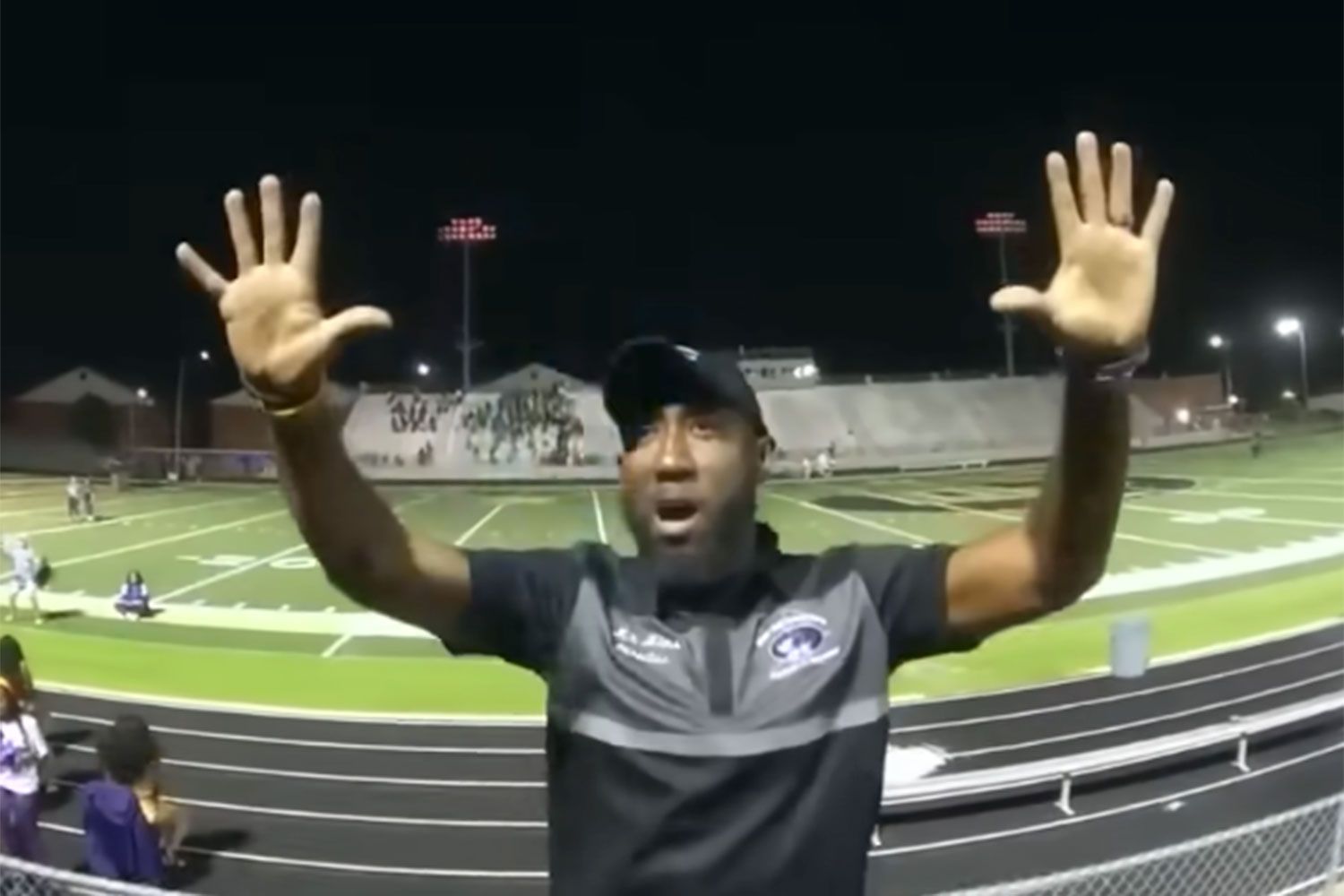
After a football game last week, at Jackson Olin HS in Birmingham, Alabama, Johnny Mims, band director for the visiting team, from Minor HS, let his band finish their post-game music after police directed them to stop playing. After the band finished playing (during which, the stadium lights were turned off), police physically grabbed and attempted to arrest Mims. There was some pushing and shoving on both sides. Then the police tased Mims, three times, as his students witnessed (and screamed). It was all captured on videotape.

Here’s a full description. After the incident, Mims was taken to the University of Alabama at Birmingham Hospital and then to the Birmingham City Jail, where he was booked and later bonded out. Officers obtained arrest warrants for disorderly conduct, harassment and resisting arrest, police said.

I’ve watched the police body-cam footage a couple of times, and it’s pretty gnarly, although after the lights go off, it’s hard to see specifically what’s going on. There are band kids behind the director, on the track, and others in front of him—about 145 kids in the band, total—and they all had a ringside seat to witness their teacher twitching on the ground, shocked into submission for letting them finish about a minute’s worth of music.

There’s a lot of backfilling the story on both sides. There’s been violence after football games so police are needed to empty the stadium! But— the two band directors agreed to do a short post-game show in the stands so Mims thought he was OK to finish!  But—the other director stopped first! But police have ultimate authority!

The people I was interested in hearing from were the band directors. Unless you’ve (raising hand) been out there in front of the marching band on Friday night after Friday night, you might think that the rules for when to play and when not to play are crystal clear. They are absolutely not—and change from one venue to another. Also–everybody in the stands has an opinion on what the marching band should be doing and when. (I feel like I should repeat that last statement three times.)

The band directors on BDG first wondered if Mims actually heard the cops, over the noise—a large marching band makes a lot of decibels. (He seems to be telling them to give him a minute, at one point.) They wondered, as well, if playing after the game was planned. (Yes—both directors agreed to play, but the police had other ideas.)

Who turned off the stadium lights? (Unclear—but if the worry was public safety, turning off the lights is a far more dangerous move than letting the band play to the end of a song. If the lights were on a timer, that’s even worse, because who knows how long a game will last, and what might be happening in the parking lot afterward.)

Given the information presented by both sides, most band directors said— Hey. If the cops came over and gave me a throat-slitting motion, I’d stop the band. Just because they’re the cops and I’m a band director. I might be furious. But. They’re the cops, the ones with guns.

And—once again— who gets to play music, and when, at sporting events, is a matter of opinion.  I have seen bands chased off the field by their own teams as they’re marching to the sidelines. I have seen referees assess penalties for bands or individual tuba players being in an ‘illegal’ spot. I have heard bands reprimanded for not stopping the music when play resumes (sometimes, just a few seconds’ worth of Let’s Go Bluevery popular in my neck of the woods). And I have heard endless, countless discussions of what the “official” rules are.

One thing I can tell you: this incident will do nothing to encourage non-hostile behaviors and good sportsmanship at either of these schools. Nor will it increase respect for the police and the important work they do.

While I probably would have stopped—out of fear — when the policeman yelled at me to cease directing, it’s because I’m a nice, albeit cowardly lady and they have tasers.

But then— I have not been pushed around by the police. I have not been routinely stopped or experienced anxiety when a cop car appears in my rear view mirror. I once talked a cop wearing a knit beanie out of giving me a ticket for doing 34 mph in a 25 zone by telling him I was on my way to choir practice at church (the truth).

I have no idea what was going through Mims’ mind when the cops started trying to handcuff him, but nobody deserves to be humiliated, ganged up on, pushed around or tased, for the non-crime of directing a HS band.

But the students who watched this will remember it all their lives. It will change the way they see the world.

The Blessings of Liberty Still Exist– But for How Long?

I played my flute in a patriotic-themed outdoor concert last Fourth of July, with the Northport Community Band–as cooling breezes blew across Grand Traverse Bay and firecrackers popped in the distance. There were at least 400 people seated in lawn chairs, clapping along to You’re a Grand Old Flag, The National Emblem and The Stars and Stripes Forever. We played a service medley, as we always do, asking veterans to stand when the tune representing their branch of the service was played. This is standard for our summer concerts–and I usually think of this as hokey, the musical equivalent of a ‘Support Our Troops!’ bumper sticker.

But last year, in our first post(ish)-pandemic outdoor concert, instead of zoning out during the rests, I watched the crowd– the old men struggling to get to their feet or simply waving from their wheelchairs as the crowd clapped and cheered for them. And I thought of all the major sacrifices–not just lives of young, innocent men and women, determined to serve their country, but the endless struggles for civil rights and equity and justice. I reflected on the striving, loss and pain incurred in the ongoing process of trying to make this nation a true democracy (or republic–take your choice).

The people who tartly point out that we have never been a just and fair nation are correct. But I don’t remember a Fourth of July where I’ve felt more discouraged about the home of the brave, land of the not-really free. I’ve been thinking this for years, but the recent Supreme Court decisions have steamrollered any optimism about having a competent president, or political leadership.

I also still feel a deep commitment, an obligation, to the relevant principles, even as they’re chipped away and made meaningless: Liberty. Opportunity. Equity. Justice. Peace. Persistence.

I found myself, unexpectedly, in tears while reading about the SCOTUS decisions. So much has been lost, damaged, soiled or destroyed. Evil is rising. You can’t deny it. Just watch the news.

Were all the sacrifices in vain–going all the way back to the ragtag Colonial armies, losing their lives over taxation and the conviction that somehow this was their land, that they were entitled, by their Creator, to defend their homesteads and the fruits of their labor? What about the terrible price paid to end the scourge of slavery? To build and invest in becoming a world-class power? All the people who steadfastly developed the American dream– is it just the way of the world that their sacrifices were meaningless in the face of greed and corruption?

The etymological root of the word sacrifice is to ‘make sacred.’ I think I was experiencing the sacred last year, watching the 90-something Navy man sing ‘Anchors Aweigh’ in the front row–and the grandfathers who served in Vietnam shyly nod to each other across the crowd.

I also thought about where and how those men and women were educated. Where did they absorb the idea that citizenship is both blessing and duty? Who taught them to read and calculate, who nurtured their talents and their dreams?

The county where I live–one of the most beautiful spots in the nation, according to Good Morning, America– was originally settled by Native Americans, who still have a large and active presence here, and whose children attend public schools. The abundant fresh waters that drew them here centuries ago are now threatened by a crumbling oil pipeline that lies under a major shipping lane.  Should a public education include factual information about protecting our greatest environmental asset? Is that not also a sacred American principle?

In this holiday week, I am choosing to still believe in the things that genuinely have made America great, those blessings of liberty that include a free, high-quality, fully public education for every child.

What Feeds Bias in Education World?

One of the most genuinely enlightening experiences of my professional career was the multi-day bias training offered (at that time) by the National Board for Professional Teaching Standards, required of teachers who were training to score portfolio entries of candidates seeking National Board Certification. The first thing we learned was that bias was inevitable in human judgment—and could be positive as well as negative.

That’s important to remember. Bias is often reflexively construed as harmfulPrejudice, a synonym for bias, is not a word we associate with healthy human interaction. All people, however, bring a basket of predispositions into every aspect of work and life, and it’s hard to extinguish those, even when we’re paying attention. Still, some of those characteristics can be constructive.

The trick is recognizing your own biases, as they emerge, and figuring out where those inherent preferences, dislikes and false beliefs are leading your responses. Not easy to do. But important. As Patricia Devine, a psychology professor and director of the Prejudice Lab at the University of Wisconsin in Madison says:

“There are a lot of people who are very sincere in their renunciation of prejudice. Yet they are vulnerable to habits of mind. Intentions aren’t good enough.”

Worth repeating: Intentions aren’t good enough.

It strikes me that much of what we see in mainstream media about schools, teaching and student achievement is fed by widely held biases. Things like:

Public schools aren’t as good as private schools (because you get what you pay for).

Teachers in high-poverty schools aren’t as skilled as teachers in the well-heeled suburbs.

Getting into a selective college should be every HS graduate’s goal.

Most teachers come from the bottom of the academic barrel, and would have chosen another occupation, if they could.

The “learning loss” children have experienced due to a global pandemic is a crisis and must be fixed immediately; test scores will tell us when all is well again.

I could go on, pretty much ad nauseum. If an education journalist attended a pricey private high school and university, growing up with financial security and a well-fed ego, nurtured in school, it would be natural to carry those biases into reporting on education, making assumptions about the people and institutions who are most responsible for educating the nation’s children. Assumptions, that is, based on nothing more than ground-in thinking, and lack of personal time spent in schools where everyone’s on free and reduced lunch and the textbooks are 25 years old.

And yes—I realize that my own biases about why mainstream reporting on schools and teachers is so often inaccurate are glaringly obvious here.

The situation is worse in state legislatures, where “information” about “policies that work” is sponsored by deep-pockets funders with even deeper biases about the children who most need high-quality instruction, curriculum and resources in the classroom.

And we haven’t even started to talk about racial bias.

Is school the place to start chipping away at biases? Could we—and by “we,” I mean our racist American society—make a dent, a difference, a change in embedded biases by deliberating structuring anti-bias activities and mandating them in public education? Not if a host of Republican hopefuls have their way.

I’m not naïve enough to think that schools could turn hearts and minds in a K-12 generation. But could they do significant good, given the right tools and incentives?

Research doesn’t give us a lot of hope around this question. A study found that pre-school teachers expect bad behavior from black children, especially black boys—and the data indicate that black children are 3.6 times more likely than white children to be suspended. The bias begins in pre-school and plays itself out, endlessly and increasingly as children get older, a self-fulfilling prophecy. It’s hard to see just how bias training could turn this around. But maybe it’s worth a shot.

The most surprising part of the study:

Teachers [were given] a one-paragraph vignette to read, describing a child disrupting a class; there’s hitting, scratching, even toy-throwing. The child in the vignette was randomly assigned what researchers considered a stereotypical name (DeShawn, Latoya, Jake, Emily), and subjects were asked to rate the severity of the behavior on a scale of one to five. White teachers consistently held black students to a lower standard, rating their behavior as less severe than the same behavior of white students. Black teachers, on the other hand, did the opposite, holding black students to a higher standard and rating their behavior as consistently more severe than that of white students.

In the bias training for National Board Certified Teachers, there was a vignette describing a first grade classroom with straight rows and silent, head-down children receiving explicit direct instruction from the teacher: Put your finger on the X. Circle the X. Put your pencil down. All the children receiving direction are black—and the teacher is white.


Invariably, when asked about the quality of the pedagogical strategies, white teachers in the training (all of whom were experienced and interested in improving their practice) responded negatively to the rigid, low-level instruction:

Those poor kids! There’s no warmth or creativity! It’s clear that the teacher has low expectations for these kids.

When the training was held in Prince George’s County, Maryland, however, most of the teachers in the room were black–perhaps 80%. When they read the vignette, they thought the teacher must be doing something right, because all the children were quietly focused. When probed–Isn’t the teaching insultingly simple? —they agreed that yes, this lesson left little room for individual thinking or joy.

They were clear, however, that all children need to be taught to behave respectfully in a classroom, to follow conventions—for their own benefit and safety. They’re black children in a public school where their next teacher may give up on making demands on them all too quickly, teachers said. Plenty of time for creativity and laughing, down the line, but these children don’t seem threatened, simply willing to follow the teacher’s guidance. If you genuinely care about children, you’ll insist that they behave properly.

It was probably the most important thing I learned in bias training—good teachers don’t all see things the same way. What seems obvious to one teacher isn’t clear at all to another, equally committed and skilled, but working with a different set of biases—positive, this time.

Applying that principle of positive bias—let’s let this teacher decide what works best for these kids—is the fundamental building block of teacher professionalism. I may be biased, but I’m always going to cheerlead for teacher judgment and autonomy.