Learning to Read in Middle School

I am fascinated by the increasing politicization—no other word for it—of reading instruction. How to best teach reading has always been contentious in the United States, from the 1950s look-say method featuring Dick and Jane, accused of letting Ivan slip ahead of us in the space race, right up until last week, when Moms for Liberty jumped into the Faux Science of Reading (FSoR) fray.

It’s unclear why Moms for Liberty has aligned itself with the phonics-forward FSoR movement. I get that white parents, accustomed to being first in line for educational goodies, feel threatened when they’re told that other children may be having their needs met first. I know racism is a thread that has run through the entire history of public education in America. I also know that many ordinary citizens feel bewildered and angered by rapidly changing social beliefs and customs around acceptance of the LGBTQ+ community.

A friend of my says you can measure social progress by observing who can be beat up on Saturday night without consequences—Wives and girlfriends? Ethnic minorities? Gentle souls like Matthew Shepherd and Elijah McLain?  I hate living in a country where threats align with archaic ideas about who’s in charge of our customs and institutions, including public schools. I hate it, but I understand why it happens.

What I do NOT understand is why a far-right, power-grabbing, deep-pocket-funded group of purported “concerned moms” are choosing to endorse One Right Way to learn the skill of reading.

Surely some of their children learned to read using cuing systems or word walls or balanced literacy. Surely some of their children picked up reading quickly and easily reading stories on grandma’s lap. Surely some of their children had caring and creative teachers who employed multiple strategies to nurture genuine literacy.

Which makes me think that a lot of the enmity around learning to read stems from free-floating hostility toward public education and schoolteachers in general, greatly exacerbated by recent events: a pandemic, a child-care crisis, growing and dangerous inequities, and terrible political leadership that plays to the worst in human nature.

John Spencer, an especially smart edu-buddy, recently posted a long, thoughtful tweet about what he called the phonics-centric Science of Reading approach for older students— middle school kids, for example, who theoretically should already be ‘reading to learn.’ He muses about encouraging reading for pleasure, and to build endurance, more than discrete skills. He notes that a one-size approach to decoding words is inappropriate for young teenagers. His last two points were key: most of the people advocating for the so-called “Science” of reading hadn’t read or didn’t understand the research, and that there are multiple assistive tools (audio readers, for ex) that can help kids learn to love reading.

What followed was a long discussion thread, mostly probing and expanding John’s well-considered ideas. But a couple of hours later, he posted this:

I wrote a long tweet about my concerns in using Science of Reading approaches with middle school students. Not a critique. Just a set of concerns. Getting some angry responses in my DMs. Each one fails to address my 5 points. All of them resort to personal attacks. Most of them somehow frame this as a partisan political issue. Wild.

And… there it is. Again. Politicizing the very heart of teachers’—TEACHERS’– professional work. Why is that happening?

I have written several published pieces about learning to read. Like John, I have received angry responses, mostly centered on the fact that I am not a reading teacher, and therefore, have no expertise.

The fact is: I have taught approximately 4000 children, over 32 years, to read music, in order to play a band instrument. Most of them were 5th and 6th grade beginners, aged 10-12. They may have had earlier experiences—piano lessons, say, or the church choir—in reading music (similar to first graders who come to school with dozens of sight-words already mastered), but most were not musically literate at all when they came to me.

They learned in large, mixed-instrument groups, using method books in which everyone necessarily goes at a glacial pace. In addition to understanding a completely new set of symbols designating pitch, duration, silence, articulations and tempo, they have to struggle with making pleasant and consistent sounds on a complex device.

It’s incredibly difficult. The interesting thing is that some kids who excel at traditional school tasks—including reading and math, the skills we value most—find learning to play an instrument very frustrating, especially when other students, academic lesser lights, quickly pick up tunes via watching, listening and repetition.

Good instrumental music teachers quickly learn that slogging through the method book, day in and day out, one new note at a time, will kill off the rabid enthusiasm for playing in the band that your average fifth grader displays on the night he gets his new trumpet.

These teachers turn to ideas similar to what John Spencer references: Playing by ear for pleasure or long tone contests to build endurance. Multiple modalities of playing (watching, repeating, chord-building) besides straight-up note-reading. Playing with CDs. Bringing in older students who demonstrate what fun it is to play music in groups. Encouraging students to make up songs, or pick out a popular tune.

The key is the first performance where everyone (including the kids who don’t yet know correct note names or how to interpret a key signature) plays that six-note version of Jingle Bells, and families go home happy. A huge part of being a beginning band teacher is herding all the kids forward, even though they’re learning different things at wildly different rates, and making the whole process joyful.

There are, of course, instrumental music teachers who insist that there is only one way to teach kids to read music and play an instrument. How can you play music if you don’t know that the third space treble clef is a C, and a dotted note gets one and a half times the value of the original note? Start at the beginning, and don’t move ahead until everyone gets it. The method book as ‘settled science.’

The truth is that breaking down music-reading skills into discrete bits—like phonics, in reading– is only one of a palate of options; the motivated student can always cycle back to pick up new knowledge or techniques once curiosity and love are established.

Good teachers at all levels and subjects set kids free, tapping their natural abilities and making things joyful. The Faux Science of Reading wants every child to learn in the same way, just like the Moms for Liberty want children to read the same books and believe the same things about who has power in this country.

The Blessings of Liberty Still Exist– But for How Long?

I played my flute in a patriotic-themed outdoor concert last Fourth of July, with the Northport Community Band–as cooling breezes blew across Grand Traverse Bay and firecrackers popped in the distance. There were at least 400 people seated in lawn chairs, clapping along to You’re a Grand Old Flag, The National Emblem and The Stars and Stripes Forever. We played a service medley, as we always do, asking veterans to stand when the tune representing their branch of the service was played. This is standard for our summer concerts–and I usually think of this as hokey, the musical equivalent of a ‘Support Our Troops!’ bumper sticker.

But last year, in our first post(ish)-pandemic outdoor concert, instead of zoning out during the rests, I watched the crowd– the old men struggling to get to their feet or simply waving from their wheelchairs as the crowd clapped and cheered for them. And I thought of all the major sacrifices–not just lives of young, innocent men and women, determined to serve their country, but the endless struggles for civil rights and equity and justice. I reflected on the striving, loss and pain incurred in the ongoing process of trying to make this nation a true democracy (or republic–take your choice).

The people who tartly point out that we have never been a just and fair nation are correct. But I don’t remember a Fourth of July where I’ve felt more discouraged about the home of the brave, land of the not-really free. I’ve been thinking this for years, but the recent Supreme Court decisions have steamrollered any optimism about having a competent president, or political leadership.

I also still feel a deep commitment, an obligation, to the relevant principles, even as they’re chipped away and made meaningless: Liberty. Opportunity. Equity. Justice. Peace. Persistence.

I found myself, unexpectedly, in tears while reading about the SCOTUS decisions. So much has been lost, damaged, soiled or destroyed. Evil is rising. You can’t deny it. Just watch the news.

Were all the sacrifices in vain–going all the way back to the ragtag Colonial armies, losing their lives over taxation and the conviction that somehow this was their land, that they were entitled, by their Creator, to defend their homesteads and the fruits of their labor? What about the terrible price paid to end the scourge of slavery? To build and invest in becoming a world-class power? All the people who steadfastly developed the American dream– is it just the way of the world that their sacrifices were meaningless in the face of greed and corruption?

The etymological root of the word sacrifice is to ‘make sacred.’ I think I was experiencing the sacred last year, watching the 90-something Navy man sing ‘Anchors Aweigh’ in the front row–and the grandfathers who served in Vietnam shyly nod to each other across the crowd.

I also thought about where and how those men and women were educated. Where did they absorb the idea that citizenship is both blessing and duty? Who taught them to read and calculate, who nurtured their talents and their dreams?

The county where I live–one of the most beautiful spots in the nation, according to Good Morning, America– was originally settled by Native Americans, who still have a large and active presence here, and whose children attend public schools. The abundant fresh waters that drew them here centuries ago are now threatened by a crumbling oil pipeline that lies under a major shipping lane.  Should a public education include factual information about protecting our greatest environmental asset? Is that not also a sacred American principle?

In this holiday week, I am choosing to still believe in the things that genuinely have made America great, those blessings of liberty that include a free, high-quality, fully public education for every child.

Memorial Day 2023– Thanks, Band Directors

I’m not much of a flag waver, really. I always thought that author James Baldwin captured my feelings precisely in Notes of a Native Son when he wrote:

I love America more than any other country in the world, and, exactly for this reason, I insist on the right to criticize her perpetually.

These days, perpetual criticism is essential. We are headed into dark times, I think, redefining the meaning of patriotism and sacrifice. It’s easy to lose faith in our government and the grand experiment—all men created equal—that founded this nation. It’s easy to let hope die when our rights have been systematically eroded by power-hungry politicians. When our children are not able to read certain books or study our actual national history, we’re in trouble.

I still believe, however, heart and soul, in the shining but imperfect ideals of a democratic education –equality under the law, the American common school, a free, high-quality education for all children, simply because they deserve it. Thirty years of teaching school have given me a hard crust of cynicism about many things related to education and America. But I never lost my enthusiasm for the Memorial Day parade.

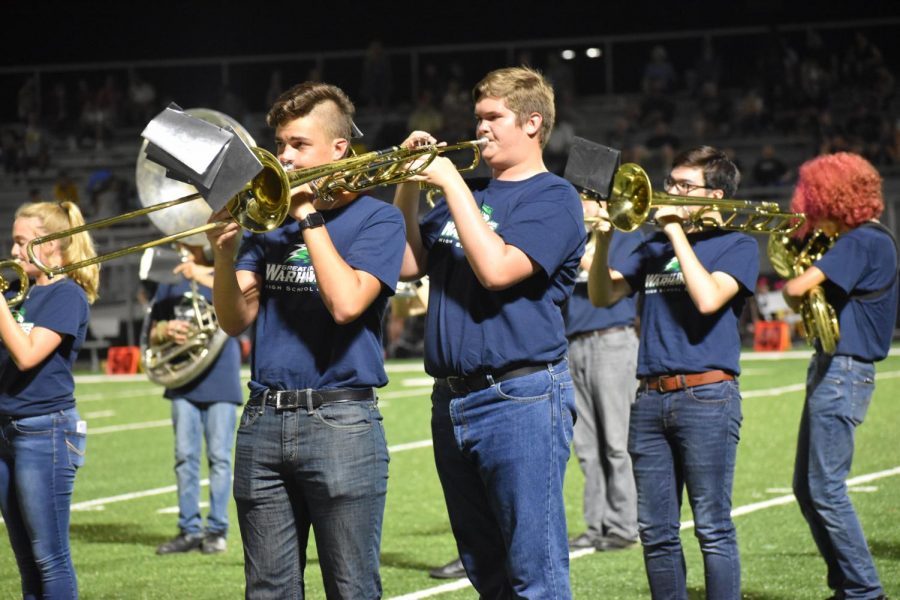
For 25 years, my middle school band students marched through the small town where I taught and lived, in the Memorial Day Parade. There was a whole set of traditions around this event, which grew larger and more complicated every year: the aural passing down of our special drum cadences from the self-appointed 8th grade drumline leaders, mending the color guard flags originally purchased through a pizza sale back in ’88, and patching up hand-me-down snares and sousaphones scrounged from the high school.

There was never a budget for this–middle schools don’t typically have marching bands–but somehow there were always T-shirts, and cold drinks at the end of the parade route. We had a stunning handmade banner that two moms whipped up with lots of lamé and sequins. In my last year, we marched nearly 300 students, on a morning when the sky was a sapphire blue and Air Force jets flew overhead as we rounded the corner by the cemetery.

This took up a fair amount of teaching time. I would get on my knees and beg colleagues for 20 minutes on the Friday before the parade, to assemble five bands into a single marching unit and take a few spins around the parking lot. One year, as I was trying to get the back of the band to master pinwheel corners, the front rank (rambunctious 8th grade trombones) marched right up the sidewalk, opened the front doors, and led the band, playing America the Beautiful at top volume, through the school hallways. By the time I sprinted up to the head of the band (and the principal popped, red-faced, out of his office), marching through the school was a done deal–and became yet another annual tradition.

I was always clear with my students about the meaning and purpose of Memorial Day. They would occasionally whine about how boring America the Beautiful was–Mr. Holland’s band played Louie, Louie, right? I explained that they were old enough to dedicate a morning to thanking local patriots and acknowledging the sacrifices made by Americans over centuries. Older people, watching them march by, would be pleased to hear traditional music. It was about respect.

We do this, I told them, to remember and honor those who made it possible for you to live in this beautiful little town, in this safe world. People like my Uncle Don, who died in February 1945, part of the Fourth Marine Division which stormed Iwo Jima. Or Ray Shineldecker and Joey Hoeker, two high school classmates who lost their lives in Viet Nam. I had lots of funny stories to tell about Joey, who lived around the corner in my old neighborhood–a big, goofy kid who was what guidance counselors in the 1960s called “not college material.”

On our last band trip to Washington D.C., after performing on the steps of the Lincoln Memorial, I was loading tympani onto the buses as my students toured the Mall. A few girls came running up, calling “Mrs. Flanagan! We found him!” Found who, I asked.

Joey Hoeker, of course–on the Wall. And I lost it, right in front of all those kids.

I thank those who served and sacrificed so I can love my country, and criticize it, too. A hat tip to all the band teachers and student musicians who help make Memorial Day meaningful this weekend. And to hero teachers and band directors everywhere– donating yet another weekend to the community –please keep teaching, in spite of everything.

And another hat tip to community bands, providing the same service. I’ll be in Northport, Michigan on Memorial Day–playing Taps from the porch of another flutist, then settling in the cemetery, to play the National Anthem, Sousa marches–and a tribute to the Armed Services. Join us at 10:30 a.m. You won’t be sorry.

The Wreck of the Edmund Fitzgerald and my Middle School Band

With the passing of Gordon Lightfoot, I have been surprised and touched by the number of folks posting Lightfoot lyrics and links. They’re not all aging folkies, either—lots of them are in their 30s and 40s, and some are my former students.

That’s gratifying. One of my best memories about teaching comes from a Gordon Lightfoot song—“The Wreck of the Edmund Fitzgerald.”

It’s worth mentioning that the saga of the Edmund Fitzgerald is very much a Michigan story. When you grow up surrounded by the Great Lakes, you’ve probably spent a vacation or two watching freighters go through locks, or traverse the sightlines in front of your rented cottage. The sinking of the freighter—when the witch of November comes stealin’—has just the right combination of tragedy and seaborne terror to capture the imagination of schoolchildren.

But it is Lightfoot’s ballad, which was released in 1976, exactly one year after the vessel sank, that has kept the tale in memory. Lightfoot considered the song his masterpiece, and I agree. He captures the terrifying scene and the details of the voyage pretty accurately, while giving us lines like:

Does anyone know where the love of God goes
When the waves turn the minutes to hours?
The searchers all say they’d have made Whitefish Bay
If they’d put fifteen more miles behind her
They might have split up or they might have capsized
They may have broke deep and took water
And all that remains is the faces and the names
Of the wives and the sons and the daughters

Listening to the song gives me chills, even today.

 When the song was released, I was teaching in Hartland (I was pretty much always teaching in Hartland…), and the students wanted to play it. I knew what was likely to happen, but when a band arrangement was eventually released—which often occurs years after the song was popular– I bought it.

The beauty of the song (and it IS beautiful) lies in the words. There are only four measures of thematic melodic material (in 12/8 time). There are some slight melodic variations in the intro and interlude, but it’s the same four measures, the same five-chord sequence, through the whole song. Musically speaking, it’s static (that’s a polite word). Lightfoot (and pop/rock artists everywhere) take these music fragments and make them come expressively alive with lyrics and production tricks—wailing guitar improvisations, synthesized backgrounds, strings. But mostly—people are listening to the words.

When the musical palette is “middle school band,” however, there’s not much you can do to vary what becomes the same short tune over and over and over. The kids, after learning the song (which didn’t take long), recognized that: The Wreck of the Edmund Fitzgerald was repetitive and (here comes that word) boring. A whole lot of long notes.  

But–here’s the Lightfoot magic–we turned that band arrangement into a different lesson, around the two questions:

  • Why is the Gordon Lightfoot song so cool and moving, and the band arrangement so…static?
  • What could we add to or change in the band arrangement to make it more interesting, more like the GL song?

It was a great, inspired, discussion– resulting in percussion mallets on brake drums to add noises that sounded like ship’s gear. Someone brought in a ship’s bell, which we added to the intro and final measures. We improvised vocal noises like roaring wind. We fussed with the dynamics–to try to tell a powerful story without words, just moody chords and phrase shaping. We even put bits of the lyrics in the program, and two students read a verse to introduce the song to the audience. (It’s a long song.)

It was also a chance to learn about ballads, and music as storytelling. It turned into the most memorable piece on the concert, judging by parent and student feedback.

Rest well, Gordon Lightfoot. Michigan thanks you.

Eight Observations about Boredom in the Classroom

My child is bored!

Several years ago, I got into a classroom tangle with one of my 8th grade percussionists. I won’t share the details, but take my word that what he did and said was egregiously defiant, disrespectful to other students–and very public. I called him out for his unacceptable behavior–also in public–and sent him to the office to cool down, something I did fewer than a dozen times in 30 years of classroom practice. Later, I met with him in the office, privately, and we settled on what would happen next. He went on to his next class.

Then I called his mother, who was a high-profile person in our small community, just to let her hear what happened and what the outcomes were. She was appreciative of the call and expressed agreement with my actions. And then she said: Maybe this is my fault for not pulling him out of the band. Lately, he’s been so bored in your class.

I was floored. While this boy may have been a star in some of his classes, he was a middle-of-the-pack performer in the drum section. He was also smart enough to know the music I was dishing off to him was at his challenge level. We were preparing for several fun performances, and he had some key parts to play.

So–why complain to your mom about being bored? What’s that about? How should parents and teachers interpret and deal with charges of being bored in the classroom? Here are eight of my experience-honed, overlapping ideas about student “boredom:”

  • Boredom is never an excuse for bad behavior. Being bored doesn’t get you off the hook for rudeness or worse. If you’re bored, see it as an opportunity to figure out why. In addition, bear in mind that many excellent life habits are established through repetition and plodding along.
  • Boredom should not be immediately equated with “dumbed down” curriculum and instruction. Applied learning happens in peaks and valleys. Practicing almost anything can feel boring, at times. It’s not “too easy” if it’s not yet automatic. Practice at a lower level–solving single-variable equations, reading a young adult novel, singing with a less-experienced choir, playing soccer with younger players–can also be very pleasurable. As a music teacher, I tried to have music in the folder that was over my students’ heads as well as rip-through-it simple.
  • Buying into kids’ boredom as valid reason for disconnecting or misbehaving corresponds to another fallacy: the idea that “good” teachers should make every lesson novel and entertaining to kids. True, there is a strong acting/entertainment factor in dynamic teaching. Great teaching should inspire learning through more than attention-grabbing, however. Reminder: the person who does the–hard, and occasionally monotonous–work of learning is the student. It doesn’t matter how many white-lab-coat chemical explosions they witness, or if their fifth grade teacher dresses up like Amelia Earhart–there is no learning without diligent effort on the part of the child.
  • Boredom is not a sign of giftedness. I once honked off a few hundred parents (and teachers) in the Gifted/Talented community by suggesting that if their children were truly gifted they’d be finding ways to amuse themselves in so-called boring classes. (I also suggested some of these might be less than desirable, given personal experience with very bright kids who love to keep things lively.) Boredom and giftedness are two separate things. I do support challenging curriculum and instruction for very capable students–but not because they’re bored.
  • “Boredom” should not be used as reason to assert that kids should never have to wait for other children to catch up. Children consistently learning at the wrong level (both too low and too high) will be vulnerable to disengagement, of course. But having to wait until the class has solidified a concept before moving ahead is not a crisis. Cliched but true–education is a journey, not a race. Sometimes, you’re leading the pack. Other times, you aren’t. There are benefits to learning in a cooperative group, the primary one being developing the skill of acceptance and appreciation for the viewpoints and capabilities of other human beings.
  • Boredom is merely lack of engagement, a two-way street in terms of responsibility. Are there boring classrooms? Yes. There are boring drills, boring lectures, boring warm-ups–and any number of boring instructional strategies (i.e., worked examples in mathematics) that yield some learning benefits. Daily practice of musical scales isn’t much fun, but it’s an enormously effective technique-builder. Brushing your teeth is boring, too, but that doesn’t mean you should stop.
  • Boredom can be cured–by students. I think the most useful thing parents, teachers (and students) can do to prevent genuine boredom is devise individual strategies to extend learning– read a different book, tackle a more challenging solo, ask for harder problems or other enrichments. Anyone who’s ever leafed through a well-used textbook knows that some kids know how to doodle their way to amusement. Tell your kids to own their boredom and fix it.

My cocky 8th grade student calmed down and finished the year–as do most kids who make a big deal about how bored they are. We should teach students that boredom, like any problem, can be your friend. Right?

Field Trips Gone Wild

Truth meme, about teaching middle school: Sometimes, Stuff Happens. Or, more accurately, stuff happens all the time and pretty much everyone rolls with it. Because middle school.

I almost hate posting this blog. I know the district and the union would prefer that this incident be quickly forgotten, as it should have been. And as it would have been, had a newbie board member not turned it into an opportunistic fanning the flames of Our Schools are Corrupting Innocent Youth.

Short synopsis: Middle school band and orchestra students, accompanied by their teachers, take a field trip to see the Detroit Symphony. They stop for a pizza lunch on the way home. Because there are so many of them, the owner of the pizza joint offers extra space upstairs to eat. This space—empty when the students are eating there—is set up as a nightclub on weekends. Kids take photos of themselves swinging on poles—and Board member foments outrage by talking about how teachers are taking their kids to strip clubs in a sketchy area, inviting parents to complain.

Yeah. Because that’s what music teachers do—take their students to naughty places. Grooming them, via Beethoven and bassoons.  

What bothers me most is that nobody—not in any of the articles or social media outbursts—comments on the teachers’ professional generosity and ambitious goal for their students– to see and hear a world-class orchestra, and include lunch in the deal.

As any teacher who’s ever initiated a field trip—even a walk to the local fire station—knows, these things take a lot of time and planning. There are the parent permission slips (which these students had), the content students must absorb before going (how to behave, when to clap, which instruments form an orchestra, information about the music they’re going to hear and the musicians playing it). There is the problem of recruiting enough parent chaperones. Don’t forget the financial arrangements—whether the cost was picked up by the school, the boosters organization or the students themselves—which represent hours of management, collecting money and fund-raising.

Why isn’t anybody saying Wow! Plaudits to those music teachers for their hard work in putting together a worthy field trip for music students?

Because I’m fairly certain that this will be the last time those particular teachers take their kids to see the Detroit Symphony. Or any other special, academically valuable foray outside the school walls.

I say this as a 30-year veteran of taking music students places, to see/hear/experience music beyond our own band room. I took 8th graders out of state and occasionally out of the country every year, to see and hear things that weren’t available to them in our semi-rural community. There were always two concerts on these multi-day trips—one to listen to, the other that we played—and a focus on music and culture. There were also formal, sit-down dinners, buffet breakfasts, museums and science centers, musicals and movies on the bus and rules! So many rules!—all of which took preparation and parent buy-in.

And I have stories.

Lots of stories, most of which are like this pizza lunch—amusing, spur of the moment, Stuff that Happened, certainly not pre-planned. I’ve had students get lost in the Toronto Science Center (with a parent, no less). I’ve had tornadoes come through the city where we were staying, requiring us to kneel in the hallway of the hotel, hands laced over our necks. I once took a student who was eight months pregnant on a four-day field trip in another state (she was a dedicated musician, who now sings professionally).

Then there was the time that more than half of the 130 students came down with a stomach bug, while on the trip. Not fun at all.

The story I’d like to share, however, is about taking my students to a night club in Chicago, on Rush Street, near Division. It had been a great trip—the Chicago Symphony, seeing West Side Story at Drury Lane, eating at Ed Debevic’s—and on the last day, we scheduled a pizza lunch at this particular club, so we could hear the house band play some blues before heading home.

As we entered the place, it smelled strongly of smoke. In the daylight, it was not a glamorous place—there was a little stage, sans pole– but it was clean, and the staff was bringing out pizzas and pitchers of soda and water. The four-piece band started playing and the students started pulling their chairs up to listen.

The tour guide—a retired band director—unpacked his trombone and played a few choruses, and the kids applauded wildly. The band made comments between tunes, explaining how they played from memory and lead sheet, and what made certain songs ‘the blues.’ They took questions from the students.

Then they asked if any of the students wanted to sit in. One of my percussionists (let’s call him Scott Ego) volunteered, and had the experience of playing drums with four grizzled, legit jazz musicians on Rush Street in Chicago, at age 13.

After the trip was over, we always surveyed students about what they learned. Hands-down, the pizza lunch with jazz was their favorite thing; the comments were filled with respect and information. 

What are the kids on the Detroit Symphony field trip learning?

Maybe that adults are using them and their teachers to politicize a harmless incident.

Keep Your Hands Off My Curriculum

There is a certain irony, I realize, in a music teacher writing a piece called ‘Keep Your Hands Off My Curriculum.’ Music education is generally one of those areas that Moms for Faux Liberty types ignore (unless—and this comes from personal experience—it’s critiquing the tunes chosen by the marching band whose entire existence, to some people, hinges on supporting football players).

Who cares what they’re learning? It’s just music! There’s a lot wrong with that assumption, beginning with the universality of music—as human beings, we’re swimming in it—but first, I want to talk about all everyday curriculum, across the K-12 spectrum–and who controls it.

My pitch here is about the individual teacher voice in selecting materials and designing lessons for students, and it’s based on two fundamental teacher competencies: *
1. Knowing your students well, and being committed to their learning.

2. Having deep and always-growing knowledge and pedagogical expertise in the subjects and developmental levels you teach.

The second of these is something that can and should be continuously improved, across a teaching career. It’s the point (if not the actual outcome) of what we call professional development.

The first, however, depends on the individual teacher’s character and temperament, their belief that all students have a right to learn.

Now—I’m not opposed to standards or other common agreements, whatever each state or district calls them, the big buckets of what students should learn and when. Broad standards can organize and sequence curriculum; outlining disciplinary essentials and giving all educators a framework for what students should know and be able to do, at the end of their schooling, is undeniably important.

What I’m saying is that site-specific agreements– what all 9th graders in the district should read, for example, or how to teach the life cycle of a butterfly–ought to be made by those on the front lines. The ones who know the kids, and are committed to their learning.

This idea ought to be glaringly self-evident—to educators, to parents, even to Joe Lunchbucket who watches Fox News. Kids who live in Flint, Michigan may need to know and be able to do different things than kids who live in Dallas—or Anchorage. Who is best positioned to choose engaging materials, develop concepts, deliver instruction, lead discussions and check for learning?

Certainly not Chris Rufo, who seems to be everywhere these days, merrily inserting his personal beliefs into college syllabi and waging gleeful war on beleaguered K-12 public schoolteachers trying dutifully to teach things, it must be noted, prescribed by others.

It was the linked article on Rufo—and this piece–that inspired this blog. The story is about an Ohio administrator who interrupts a teacher reading Dr. Seuss’s The Sneetches during a recording session intended for an NPR podcast.  A third grader makes a very astute comment; the teacher (Mandy Robek) continues reading, but the admin (Amanda Beeman) shuts that whole thing down:    

“It’s almost like what happened back then, how people were treated … Like, disrespected … Like, white people disrespected Black people…,” a third grade student is heard saying on the podcast.

Robek keeps on reading, but it’s shortly after this student’s comment is made on the podcast that Beeman interrupts the reading.  

“I just don’t think that this is going to be the discussion that we wanted around economics,” Beeman said on the podcast. “So I’m sorry. We’re going to cut this one off.”

(NPR reporter) Beras tried to tell Beeman that “The Sneetches” is about preferences, open markets and economic loss, but Beeman replied, “I just don’t think it might be appropriate for the third-grade class and for them to have a discussion around it.”

I actually have some empathy for the administrator. She’s totally wrong—kudos to the teacher and the reporter for choosing the book and understanding the relevance of the child’s comment—but I’m sure Beeman envisioned her job security disappearing in a wave of rabid, sign-waving Moms for Control Over Everything at the next school board meeting, and panicked.

But that’s the point here: Educators need to be prepared to defend their curricular choices, with passion, conviction, and carefully considered rationales. Rolling over for the likes of Chris Rufo, the Hillsdale crowd, and dark-money funded and fully politicized organizations who wish to take down public education is not professional behavior.

Once they control what gets said and read in the classroom, the next target will be public libraries. All publicly funded services, the things that build healthy civilization and make diverse communities strong, will be on the chopping block. Ironically, this is about what the Sneetches were trying to teach the kids in Ohio: preferences, open markets and economic loss. What students learn, even in 3rd grade, matters, it seems.

This is a huge issue, wrestling over curriculum and parents’ desires, and it’s been part of public education since the very beginning. No matter how many standards are imposed, or school board meetings disrupted, however, the most critical aspect of instruction remains the individual teacher’s understanding of what is useful and important for the students in their care, and their personal knowledge and skill in delivering those things. 

Here’s a story:

In 2008, I was e-mentoring some first-year teachers in an alternative-entry program (in other words, not traditionally trained). They were white teachers, assigned to an all-Black district in eastern North Carolina, country that was once endless tobacco fields. Most of them came from elite universities, and all were laboring under the misconception that they were ‘giving back’ to society. A lot of their conversations were about raising the bar, making a difference, blah blah blah.

It was also the Fall of 2008, when Obama was closing in on the presidency. Students in the school were wild with excitement. One of my mentees, teaching Civics and Government, kept sending me long emails pouring out his concern over the ‘unprofessional’ teachers–the ones who had been there for years. They allowed students to disregard the official curriculum! They spent classroom time talking about this miracle that was about to happen, even letting students campaign. Unethical!

He, of course, maintained that he was sticking to standards and remaining neutral about the race. After all, the students would be taking statewide exams next spring, and he wanted them to score well.  He went so far as talking to the principal about his concerns.

I tried to suggest that he was teaching during events that could make history—and incorporating real life into lessons made them more meaningful. I asked if he had conversations with his veteran colleagues, about why they thought abandoning the prescribed curriculum was sometimes okay. Our dialogue got more and more strained, until he basically stopped communicating with me.

This young man had always considered himself an outstanding scholar in the social sciences. His lesson designs (debates, short-writes, small-group discussions, film clips) weren’t bad at all, especially for a newbie. He had some ideas about how to be a good teacher, and passion for the subject matter. What he was missing was knowledge of students and commitment to their learning. When the principal had a pep assembly to celebrate Obama’s victory, he was disgusted. For a public school, this is totally wrong! he wrote.

I have thought of him often—I’m fairly sure he’s not teaching any more. Which is too bad. Because being a master at custom-tailoring worthy curriculum to the students in front of you is a skill that takes time and confidence. It really cannot be outsourced.

* If you sat for National Board Certification, these principles will look familiar. If they resonate with you, check out the National Board for Professional Teaching Standards’ Five Core Propositions. Good stuff.

Back to Basics

Here in the Mitten State, our very good governor, Gretchen Whitmer, is running against a political novice whose qualifications seem to be that she resembles the current governor and that she used to host a right-wing TV show: GOP gubernatorial nominee Tudor Dixon defended blackface, called hijabs oppressive garments, and amplified racist remarks and conspiracy theories during her two years hosting a daily TV show on the far-right media network Real America’s Voice.

Not a nice person, but she is attractive. Stephen Colbert called her ‘Kirkland Gretchen Whitmer’ and followed up with several substantively awful but amusing things she’s said and done. I have been intrigued by her rehearsed talking points (which you can practically see her mentally retrieving), especially the blah-blah she’s been spouting about public schools.

She’s gone full-tilt Youngkin, of course, with the ‘grooming’ and ‘pornography’ accusations, kindergartners being shown how to have sex and pumping up scary nonsense about transgender athletes (the MI HS Athletic Association says there have been 10 documented cases of transgender athletes in the past five years, hardly a trend, let alone a crisis of ‘unfairness’).

But she’s also been talking—repeatedly—about taking public school curriculum ‘back to basics.’  She is clear about what this involves: reading, writing and arithmetic. All the rest is, in her opinion, unimportant, and the reason that our test scores have gone down in Michigan.

Dixon’s four daughters attend private schools. Now, I am a great believer in parents’ rights—the kind that let well-heeled parents send their kids to any school they choose, because of their religious beliefs, the kind of programming they want, or because they think public schools are where the unwashed send their unfortunate children.

If you can afford private school, fine. You go. Just don’t use that as an excuse to cheese out on public education, using deceptive language and–let’s tell it like it is–big fat lies.

As it happens, I know exactly where Tudor Dixon lives—I grew up in that town, and remember factory after factory, places where our dads worked, shutting down in the 1970s and 80s. I know the schools there—I graduated from one of them. People I know and love teach there, and put their trust in public education. My social media stream is awash in photos of their children in those very schools: fall carnivals, Friday night games, and student-of-the-month certificates.

Those are the schools that Tudor Dixon wants to ‘go back to basics’—a term that seems to be evergreen.

“Frankly, our schools have lost their way,” Dixon said, announcing the first of her policies. “Somewhere along the way, radical political activists decided that our schools are laboratories for their social experiments, and our children are their lab rats. And we’re saying enough is enough.”

Well. Veteran political activists teachers may remember other back-to-basics agendas, through the years. Here’s one definition:

Back-to-Basics Movement– During the late 1970s and early 1980s, a perceived decline in the quality of education, as evidenced by declining scores on standardized tests and attributed to students’ choice of so many electives considered to be “soft” academically, led to a back-to-basics movement. Proponents urged more emphasis on basic subjects, particularly reading, writing, and arithmetic, but also science, history, geography, and grammar. They wanted schools not only to teach content but also to help children learn to work hard. They wanted the schools to demand more orderly and disciplined student behavior. They wanted the authority of the teacher to be reasserted, and they desired a more structured teaching style. Finally, back-to-basics advocates often wanted the schools to return to the teaching of basic morality and, in particular, the virtue of patriotism. In many ways, the back-to-basics movement was a reaction against the personal freedom movement of the 1970s, which emphasized drug use and sexual freedom, symbolized by the culture of the “hippies.”

I was there, in the classroom, when a recession in the early 80s triggered a slice-n-dice on the enriched curriculum we were building, in the name of going back to ‘essentials’ which didn’t include music or art. I remember waves of ‘back to basics’ under certain other—Republican—governors, including a proposal to create ‘value schools’ where public school kids would get a ‘basic’ education for less than $5000/per pupil.

Back to Basics has always been code language for ‘spend less money on public education and those kids.’ (Preferably, a lot less.) It’s always been Betsy DeVos’s core mission, and of course Dixon’s campaign is being largely financed by DeVos.

Back to Basics is also a vague and empty idea. Aside from literacy and numeracy, it’s hard to define just what is meant by a ‘basic’ education. The least children need? Foundational principles—and then you’re on your own?

We’ve already stripped comprehensive social studies education and—God help us—recess from the elementary curriculum. Now, apparently, we’re taking interesting books out of the library and relegating active classes to sit-and-get. What else can we yank, because it’s not basic?

Did you notice the definition of the movement in the late 70s was driven by ‘declining scores on standardized tests’? Michigan was the first state to introduce mandated, statewide assessments in the 1970s—the MEAP—so it’s worth asking how those new, baseline scores were declining.

There was a dip in SAT and ACT scores in the 1960s as the first baby-boomers went off to college, and established a new and much larger testing pool. But it’s taken decades and lots of laws to put every student under the testing microscope—is this all so we can take away things that make school fun and joyful?

Back to basics. See it for the propaganda it is.

Church and State

I have been a churchgoer much of my life.

Initially, my parents went to church, so I went with them. Aside from ditching Sunday School with my friend Sue in high school, I never really rebelled against their conservative religious training.

Then I went to college.

I experimented with other faiths—occasionally—on campus, but spent most Sunday mornings sleeping in, procrastinating and regretting my life choices. There followed a long stretch of life where church was not on my to-do list. Then I had kids.

It seemed important to give them some experience with religion. We fumbled around, rejecting churches that embraced the death penalty or excoriated abortion. One church— a campus-based Catholic congregation—refused to baptize our first-born because both of us had been divorced. We settled on a liberal congregation where our kids were part of services and programs. Eventually, I became the music director there.

Since then, I have worked for seven different congregations, my side-hustle of choice. For me, church is not about being saved, whatever that means, or being told what behaviors and beliefs are good or bad.

It’s about finding an inclusive community whose core mission is doing good. And it’s about the music.

There aren’t many places, anymore, where group singing is a regular occurrence. I’m a dedicated, lifelong musician, and much of the world’s musical literature has sacred roots. The central purpose of music is to illustrate powerful ideas, to release emotion, to spark joy. If you’re not getting live, participatory music in church, where can you get it?

I share these personal details, because I am worried about the separation of church and state—and I want to establish myself as a person who is not anti-church or anti-Christian theology (another thing I’ve seen a lot on social media).

I strongly endorse every person’s right to choose and practice any faith tradition or reject the idea of a higher power entirely. Up to you. But please—keep your religion out of government, be that the public school, the statehouse or the county commission. Or the midterm elections.

I’m well aware that mainline Protestant denominations in America are fading. Evangelicals are in decline, too, although not as fast. Roman Catholics aren’t doing much better. Modern first world nations –the places where people have universal health care, free post-secondary education and report the highest levels of happiness—are largely secular. Islam is by far the fastest-growing religion in the world, but the right doesn’t seem to acknowledge that.

So why did the Supreme Court’s decision in Kennedy—the Bremerton, Washington HS football coach who prayed with his team at midfield—spur another round of educators feeling as if Christian prayer in schools is somehow the answer to our national problems?

I’m also a veteran teacher, one who has wrestled with church v. state issues in my overwhelmingly Christian school district, mostly around Christmas music. I understand the difference between cultural expressions (OK) and proselytizing (not OK).

I used to share my classroom and office with a Catholic congregation that was building a church and paying to use our cafetorium, attached to the band room, for services. Father Dave kept his cassocks and vestments in my office closet, because he often went for a run before mass.

We all got along. But our functions, while in the same physical space, were distinctly different.

What music is OK in schools is a perennial, often heated, topic in social media groups for music teachers. The Kennedy decision isn’t going to help, or clarify. It seems to suggest that Coach Kennedy’s personal beliefs and freedom of religion—expressed by praying ostentatiously on the 50-yard line—did not impact his influence (this is where the proselytizing comes in) on his football players.

Baloney.

I was not a coach, but if I had ever talked to my students in December about a baby born in a manger, sent by God to save the world, I would have to believe that some of them, especially the youngest, would have thought I was telling them something important and real—something that might be On The Test. Unethical, to say the least.

Similarly, I am troubled by Republicans on our County Commission who, in May of 2021, passed a policy on partisan lines, to open Commission meetings with prayer. A flurry of rules, sub-rules and adjustments followed: Only official clergy could pray. From recognized religions. That had real churches. In Leelanau County (meaning that the closest synagogue, across the county line, could not send a representative).  

Eventually, after lots of letters and right-wing media attention, the Commission revisited their vote, and settled on a moment of silence. But it took nine months and diverted attention from their real work.

Which raises the question: Whose idea was inserting formal, clergy-led prayer into prosaic local government meetings?

The biggest church in my district makes subtle suggestions about how folks should vote—I read a column on the church’s website this summer, re: which party reflects this particular church’s values, urging congregants to choose that party in the upcoming primaries. I went back to find the piece and insert a link into this blog, but it was no longer there.

Probably because it’s illegal for churches, as tax-exempt organizations, to tell their members how to vote.

Separation of church and state. It’s a good thing.

What Do Students Need to Know? World Languages or the Arts or Personal Finance?

In 2017, I was part of a ‘listening tour’ of voters in my rural, northern Michigan county. We asked our neighbors what their most pressing issues were—what things happening right now in the nation, or locally, worried them most. Our opening query: What keeps you up at night?

Surprisingly, this was a hard question for many people. Typically, after a half-minute of thinking out loud, they’d say that life was pretty good.

So we had follow-up questions to suggest potential avenues for concern. Are you worried about the economy? Political dysfunction? Immigration? Human rights? Education?

One evening, my partner and I were invited into the neat-as-a-pin home of an elderly gentleman, who clearly wanted to chat. He told us—first time we’d heard this–that education was his number one issue.

I asked if he’d been a teacher. No— he’d worked as a farmer, but was a father, grandfather and great-grandfather (he was in his 90s, according to our voter information file). And what was going on in the schools right now was an absolute travesty.

I was prepared to hear about the lack of discipline or new-fangled computer learnin’—but what was keeping this nice old gent up at night was curriculum. Did you know they’re not teaching woodshop or metal shop at the high school anymore?

He shook his head. They’re not showing kids how to work with their hands—to do household repairs, use tools, or put up a simple garage. He said he’d always handled his own home repairs, from wiring a ceiling fan to repairing a leaky toilet. He’d just installed a new dishwasher. And what about students who wanted to go into the trades? What good did Algebra do for boys like that?

(Hey. He was ninety-something. Cut him some slack.)

I thought of him when I learned that Michigan has just signed into law a bill requiring every HS student to take a half-credit class in Personal Finance, in order to graduate. The requirement begins with this year’s eighth grade class, giving schools time to figure out how to incorporate yet another new requirement into an already overstuffed schedule.

I’m all for inculcating a better understanding of how to manage money. Stories about predatory lending alone should make us all more knowledgeable about credit, budgeting, and setting healthy spending and earning goals, especially in young adults.

But I’m not exactly sure that a half-credit course in high school is the ideal setting for that learning. You could read and regurgitate lots of personal-finance content, at age 16, then promptly forget what you memorized, when the knowledge would actually be useful—say, when you got your first big-boy job. Like so much of what we ‘learned’ in secondary school, until you apply the knowledge, it’s more or less inert.

Here’s what bothers me most about adding curricular requirements: Folks are fond of talking about what should be taught in school, but haven’t a clue about the absolute fact that there are only so many slots in a typical secondary school schedule. At the moment, the (also-required) Michigan Merit Curriculum has control over nearly all those slots. What will this new course replace? Because something’s got to go.

Every teacher and school leader has been over this territory endlessly. And every Joe Citizen has a personal opinion about what students should be required to master before leaving school, from economics to penmanship.

Education thinkers tend to talk, at this point, about big-picture skills and perceptions—the development of judgment and discretion and analysis, via subject matter content. It’s the heart of teachers’ professional work.

The curricular canon has shifted since the early 20th century, when Logic, Rhetoric and Latin were considered essential competencies for the well-educated—proof that context matters, and values change over time.

It would be great to use this (and dozens of similar suggestions—like axing social studies and arts courses in favor of STEM) as a kickoff to a deep, statewide conversation on re-thinking credits, standardization and student choice.

It would be an ideal opportunity for discussing the purpose of public schooling. Should students study the natural world and the humanities? Or is moving toward a narrow, commercially-focused curriculum—a secularized prosperity gospel– our goal for students?

For legislators, the go-to in policy-making is concrete mandates: At the discretion of local school boards, the course could fulfill a half-credit in math, world language, or the arts. Currently, the Michigan Merit Curriculum requires four credits in math, two in a language other than English, and one in visual, performing, or applied arts. The Legislature also is considering a separate bill allowing computer programming to count for world language credit. Both measures have strong backing from business groups that say they’re interested in a more skilled workforce. 

Well, there you have it. Job training.

One wonders why fluency in another language, or artistic expression, is so devalued. Aren’t those also desirable skills in the 21st century world of work? As the old man we interviewed said, we no longer respect working with our hands.

Or our hearts, or our voices. The things that make us most human.