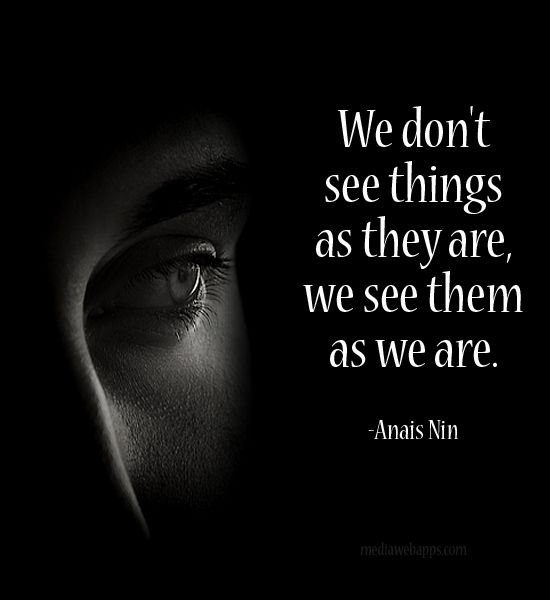
Woke/Not Woke

A few years back, in 2016, I read a blog post from a national teachers’ union leader, a white woman, proclaiming that she was now woke. I’ve met this woman a few times and have no doubt that she is sincere and well-meaning and totally on the right side of social justice issues, but the blog, about her aha moment, struck me as tone-deaf.

Most of the time, white educators who care about justice are working on opening their minds, at being better humans. Maybe the best white people can do is increase their understanding and awareness of all the injustices that are built into living in the home of the brave. Closer to woke, maybe, but always gazing at justice and equity from a layer of privilege. Doing their best until they can do better, etc. It’s not for us to decide, yup, we’re woke now.

When I read that blog, however, I never anticipated a US Governor would proclaim that his state is where “Woke goes to die.”  As a campaign strategy, no less—a campaign based on freeing people of privilege from any guilt about exercising their biases, discriminatory actions, and outright bigotry against everything from Gay Days at Disney World to telling high school students ugly truths about Black history.

And now, Florida lawmakers are moving full-speed ahead to push minors off social media. They’ve empowered schools to ban cell phones, remove books and limit history lessons, with more restrictions on the way.  Students interviewed in the linked article are incensed—they understand that it’s their learning that’s being limited, not their social lives. They don’t feel protected—they feel cheated.

How did we go from striving for more equity and inclusion as a nation–to proudly announcing that the last thing we want our children to feel is responsibility for the well-being of others? What was the turning point?

Spoiler alert: It’s no coincidence that the Governor who wanted to excise woke-ism thought that strategy would resonate with a particular group of American voters. Having stirred that Group4Liberty up, Desantis is now reaping the consequences, politically, in Florida. Bad ed policy will always catch up to you, with increasing teacher shortages and hollowed-out libraries. And so many headaches and complaints.

When you’re stirring the pot, to get political mileage out of parent anger, you’re doing a grave disservice to the foot soldiers who are teaching in your state, the ones who are trying to put together functioning classrooms full of diverse kids–and then teach them something worth learning.

And, as Peter Greene points out, succinctly: It’s a great thing to have an administrator who will have your back, who will stand between you and the latest flap (and for administrators, it’s a great thing to have a teacher who will take the steps needed to make defending them easier). But it’s a luxury that many teachers don’t have.

Stripping critical topics and materials out of the curriculum because they may be interpreted as ‘woke,’ makes that curriculum sterile and empty. Trying to keep students from accessing their own answers on the internet is futile. And attempting to control teacher behaviors via professional development is downright creepy.

Teachers who are experiencing all of these anti-woke procedures can feel isolated and angry, understanding that the very reason they chose to become teachers—building the next generation—has been abandoned by school leaders with feet of clay.

There are a lot of ways to interpret ‘woke’—but it’s a factor in every school building in America: Who accepts whom? Who is comfortable and able to learn? Who is expected to do well—and who is given short shrift? How do we get along, and respect each other’s differences?There are systems of oppression, however subtle, in every school, public and private.

Woke is defined by the DeSantis administration as “the belief there are systemic injustices in American society and the need to address them,” according to DeSantis’ general counsel, as reported by The Washington Post.

Denying that there is systemic injustice, instead substituting the systemic practice of avoiding unpleasant truths, ducking issues that cause conflict and barring critical thinking by students, is the worst possible basis for making education policy.  Instead, ed policy is now based on chasing test scores, cutting economic corners, and presenting a mendacious view of the world to our future leaders.

If anybody needs to pursue wokeness, it’s school leaders and education policymakers. Because—guess what—there ARE systemic injustices in American society. And one of the purposes of American public schools has traditionally been forming a more perfect union through education. Carol Burris:

In the beginning, the purpose was to create a literate American citizenry to be able to participate in democracy. Our founders realized that if they were going to give citizens the ability to actually shape government through elections, they had to have some knowledge base on which to make decisions.

Returning to the critical question here—how and why did wokeness become something to sneer at, to stamp out of school discussions and materials?

I keep thinking about the video shot at a middle school in Royal Oak, MI right after the 2016 election, with students chanting “Build that wall!” Or the lawsuit filed in 2022 against another Michigan middle school for suppressing the first amendment rights of students, by forcing them to take off their “Let’s Go Brandon” hoodies.

Add in a pandemic, which tilted many perspectives—equity, safety, privilege—and it’s easy to see how the past eight years have caused a political abyss to form. Teachers who forthrightly proclaim they are woke, in 2024, risk being fired.

It’s time for action. Step one: voting.

Do Public Schools Suck?

Some years ago, John Dubie, then a high school senior in Vermont, posted a very personal, autobiographical blog entitled “Big Picture Saved My Life.” John meant that statement literally—the Big Picture curriculum and program at South Burlington HS was the thing that kept him going when he was thinking about checking himself out.

I was stunned by the aftermath of the piece, which was picked up, reprinted and dissected in a number of other blogs. I was especially surprised by those commentaries that suggested John’s life was saved by leaving traditional public school.

The irony? Dubie spent much of the blog describing the first eight years of his education in a Catholic school, where he was generally seen as a disruptive loser by the faculty. And– the Big Picture Learning program he credits with making all the difference was housed in a traditional public school, in Burlington, Vermont,

Because I was the person who suggested John tell his story in public, this re-interpretation of his autobiography made me see red. I said as much, in the comments, noting that his generosity shouldn’t become a cheap excuse to slam public education again. I said: What I’m worried about here is protecting a young man who graciously shared a deeply personal reflection having his story–and his face– used to promote the idea that public education sucks.

The response I got: Seriously? Of course public education sucks.

Do public schools suck? Is that the conventional wisdom, the reflexive, global response these days? Do we have to start with the conviction that public education has failed, before we can transform or improve, regenerate or revitalize a fully public system?

I say no. In fact, the best time to change public education is now, while its strengths, resources and merits still exist.

What questions should we be asking about public education, before reflexively tearing it down? What facts shape the argument that public education, as a concept, is well worth saving?

  • All governance models–public, chartered, independent, parochial—have produced exciting schools and disastrous schools. There are plenty of students who thrive under direct-instruction, highly structured, traditional content-delivery models. And others who learn best through self-directed exploration of ideas and subjects that interest them. There is no one best way to learn.
  • Public education remains the Big Kahuna of governance models in the U.S. Why would you tear down the considerable and historic infrastructure of a system that has educated–however imperfectly–generations of (successful) Americans, instead of updating it, repairing its cracks and flaws and outright malfunctions? Other nations have retrofitted their public systems, using both research and imagination. Why wouldn’t we?
  • When and where public education is not meeting the needs of students, why is that so? Public education has been radically re-shaped in the last two decades, driven by “reform” policies and experiments that clearly aren’t yielding the expected results (and that’s a very sanguine assessment). If public schools suck, we certainly haven’t found the magic formula to fix them. Probably because the answers involve hard work, multiple strategies and serious investment.
  • Public education is the only “choice” when other options are exhausted, so public schools are filled with our poorest children, those whose parents cannot provide transportation or uniforms or help with algebra homework. Some of those schools are creatively addressing problems, building communities and family relationships, persisting even if testing data remains low. Do they suck?
  • Who’s saying that public education sucks–and why are they saying it? For some parents, the fact that their child doesn’t get a custom-tailored learning experience or enough attention is reason enough to believe that all public education is substandard. For others, there is a knee-jerk assumption that the only good education is a series of competitive-admission, high-ticket private schools. Much of the anti-public education drumbeat springs from a politicized, media-fed conviction that public schools have failed, based on testing data alone. You have to ask: What’s in it for the most vocal and persistent public school critics?
  • You don’t really know what a particular school or classroom is like until you’re there. We’ve all read the polling data that shows parents generally think the schools in their community are pretty good; it’s the schools in other places–scary urban places, or maybe just the next district over, or public schools across the nation–that are terrible. I’ve been in plenty of classrooms in Detroit Community Schools where there was order, curiosity, learning–and joy (and usually, about twice as many kids as there should be). In the middle of poverty, there are pockets of triumphant accomplishment.

Shouldn’t we be shoring up public education, as America’s best idea? Shouldn’t we be investing in repair, enhancement, innovation? Let’s stop with the facile pronouncements on the failure of public education–they reveal failure of imagination and democracy.