It’s one of those Facebook things—asking ten people to post ten photos with the hashtag #MyLifeIsGood. No need to explain who’s in the photos, says the meme, but one assumes the pictures will be of family, friends, beautiful vacation spots and how one spends their me time.
If you run the exponential mathematics on that, assuming you have ten cooperative friends—and those friends likewise have ten cooperative–obedient? –friends, and everybody posts ten photos, there will, quickly, be tens of thousands of harvestable images on Facebook, all neatly tagged #MyLifeIsGood.
Now—this isn’t a scold-y post about all the innocent, family-oriented, grateful folks inviting us into their (good) lives: meeting the grandkids, marveling at a Lake Michigan sunset, riding their bikes—and being scammed by Mark Zuckerberg into telling Facebook’s algorithms which ads and promoted articles to send them.
Speaking as a person who once (perhaps naively) called Facebook and other social media sites “our new town square,”I post personal information, as well as shared articles, snarky cartoons and my own blog on Facebook, Twitter and (now) Post.
I ran a political campaign on a Facebook page (now taken down). I have also experienced obvious bots –why do people think older women want a retired Marine General in their life?–and eerily specific products that I swear I just thought about, but never looked for online.
The thing about #MyLifeIsGood, though, is that it feels weird, somehow, to craft a colorful little photo collage about what matters most to you. My own life, frankly, is great right now in a dozen different ways—but searching through my hundreds of photos to display how lucky I am is unsettling somehow. Maybe my life won’t be so great in 2023—who knows? Or maybe there are tender or tragic factors that #GoodLife participants feel they must hide, putting up a false front. None of that is healthy.
The first thing I thought of, getting tagged to take part in the #MyLifeIsGood juggernaut was Randy Newman’s song My Life is Good. Newman’slyrics are biting—with the chorus, ‘MY Life is Good,’ being the worst sort of heedless braggadocio: Don’t get in my way, lesser personage. Because MY life—is good. Too bad about yours.
There’s a verse about teachers:
The other afternoon my wife and I took a little ride into Beverly Hills. Went to the private school our oldest child attends.
Many famous people send their children there.
His teacher says to us: “We have a problem here–this child just will not do a thing I tell him to. He’s such a big old thing. He hurts the other children. All the games they play, he plays so rough.”
Hold it teacher. Wait a minute.
Maybe I’m not understanding the English language. You don’t seem to realize—
MY Life Is Good. My life is good, you old bat.
Unfortunately, veteran teachers recognize this dude (and his wife)—and their entitled child. There’s something distasteful about the idea of simple gratitude for what one has, and pride over what one’s accomplished, morphing into boasts or competition, the antithesis of building genuine community in a classroom.
Or maybe I am way overthinking this.
I am going to post one photo. It’s a photo of my dog, Atticus, who is aging, in his first (and last) Christmas sweater. He is one of the reasons my life is deeply satisfying—and good.
I am always bemused by the phrase “parents’ rights,” when utilized by right-wing culture warriors in our current education climate. Because—seriously—parents have always had the right to control pretty much anything around what their child was learning or doing in a public school. As long as it was in general alignment with the school’s mission, of course, anddidn’t impact the education of other students.
I have been a public school teacher in five separate decades, beginning with the 1970s—and have seen parent demands and outrage issues come and go, from Sex Education (a perennial sore spot in the curriculum) to The Math Program (aka, Why don’t I understand my kids’ homework?) to Pay to Play Athletics. My friends who taught literature were always willing to substitute one book for another, if parents preferred not to have Jason read Huckleberry Finn or The Bluest Eye.
I could name dozens more instances of parents being upset about something “the school” did—or a teacher said—or how a particular policy was enforced. In fact, one of the reasons to put your children in public schools is the knowledge that you can complain, even organize a group of complainers, and there is a duly elected school board you can address, if school administrators don’t give you what you want.
What if what the parent wants is not in the best interests of their child, let alone all the other students in her class?
For example, I once had an Albanian student who had only been in the country for a few months. The class was a pull-out, called Homework Hall, where kids who had lots of missing assignments were sent with the hope that taking away their gym or computer privileges would cause them to buckle down and make up all the work. I was supposed to stand over them, keeping their noses to the academic grindstone.
Homework Hall was based on a flawed theory to begin with—but this girl was struggling with speaking/reading/writing English, and not completing most of her written work because it was written in a language she barely understood. I tried negotiating with her teachers to significantly reduce her assignments—answering the three most important questions instead of ten, or giving her a buddy who could read things to her, discuss the content to help her form answers with the vocabulary she’d mastered—but not all of her teachers were willing to do that.
In the meantime, her father kept coming to school. After getting a quarterly grade report, showing that she had not turned in some of her work, he wanted daily reports. He didn’t speak English, either—but his teenaged translator said if the girl was “lazy” then she would be punished. Swell.
This girl was the polar opposite of lazy. She worked hard. She was persistent. She just needed school-based adults in her corner. Her father had the right to ask for information about her progress, undoubtedly. And probably it was his prerogative to continue slapping her and verbally abusing her in a language she did understand, which seemed to be his cultural norm for how to deal with bad grades.
It was one of those judgment calls. Stand up for the kid–or decide it’s none of your business and confirm that she actually had failed to turn in assignments, because they were just too difficult?
In fact, every one of the kids in that class was a judgment call—the brilliant boy who simply refused to copy definitions from a glossary or do other pointless work, the child whose parents had just split up and couldn’t concentrate on equilateral triangles, the girl who was hinting at suicide in her English class free writes (which she never turned in, leading her to Homework Hall). Judgment calls, all of them.
Parents do have rights—and they should. Public schools are obligated to acknowledge and address parents’ input. The best thing we can do to ensure parental rights are honored is to invite them to speak their minds and express their beliefs and wishes, calmly, with the relevant adults in the room.
“The biggest issue I see is just the lack of respect…the Republicans feel that anybody can be a teacher these days, which is the craziest damn thing that you can think of. We recently elected a lot of new school board members who are anti-school. I don’t know any other way to put it. The slates that ran out here are just not going to be supportive of public education. So I think that’s the biggest problem that we see. There are school board members who actually believe, and it just astounds me, that there are litter boxes in the bathrooms. That’s what we’re dealing with.”
Whitmer agreed and made a point to debunk a right-wing conspiracy theory circulated by podcaster Joe Rogan and Michigan GOP Co-Chair Meshawn Maddock that kids are identifying as “furries” and are using litter boxes in classrooms. This has been used to push anti-trans policies in schools.
Thank you, Governor—and all of the other education officials who are carrying on as if culture warriors had legitimate things to talk about, letting the system work as it is supposed to. But in all these school board meetings—especially those that become hostile encounters, it’s good to keep in mind that not everyone is set on building good community schools.
The Network for Public Education has a new (free) publication– Merchants of Deception: Parent Props and their Funders. Find out who’s really got a legitimate beef and who’s out to take down America’s best idea, a fully public education for every child, no matter what they bring to the table.
Here’s a story about Crosby, Stills & Nash, and “Teach Your Children Well,” set in my middle school:
The Respect Team (an ad hoc committee) has agreed to do the display case in the front hallway for the whole school year. We want to build honest, respectful relationships in our building–we’re concerned about the building climate. It’s the 1990s, and our students’ behavior has, in our humble opinion, grown coarser and ruder–toward other students, and toward their teachers.
But we know that respect must be earned–and the foundation of respect is not fear, or anger. We can’t punish or publicly condemn our way into the two-way street that is respect. We meet often, suggesting ways to weave discussions and writing about respect into the curriculum. We post students’ writing–poems and short essays–about heroes, people we admire, in the display case. We have a school-wide assembly with a Holocaust survivor. Students create art around the theme of respect.
And then, it’s May. Only one more display case to be responsible for. We’re tapped out of ideas. Plus–well, it’s May. If you’ve been a teacher in May, you know how stressful it is to wind up a school year.
A last-minute, throwaway plan emerges: We’ll get teachers to give us pictures of themselves as teenagers–graduation pics, a school photo, a prom picture. And we’ll type the words of “Teach Your Children Well” using the single computer in the library, blow them up, and–the only place in the school we can do this–print them off!
Teachers grumble. They’re too busy to go through old photos! And what’s the point? So kids will laugh at their haircut? We go to each teacher individually, however, to explain–and eventually all but one or two give us a photo. We do not label the photos by name–just staple them up with the words…
You–who are on the road–must have a code
that you can live by.
And so–become yourself.
Because the past is just a goodbye.
We substitute the word ‘pain’ for the actual C, S, & N word ‘hell’
because we don’t want some hard-ass parent complaining.
And–BOOM. The display case becomes a kid magnet.
And a parent magnet. And a teacher magnet. The principal stands out there, checking the photos–hers is there, too.
Who ARE these people with the bad haircuts–or in their too-short basketball uniform–or the long white gloves and fluffy prom dress? One now-sturdy teacher with three sons gives us her wedding photo, where from her 22-inch waist spills a ballroom gown skirt and train.
Truth meme, about teaching middle school: Sometimes, Stuff Happens. Or, more accurately, stuff happens all the time and pretty much everyone rolls with it. Because middle school.
I almost hate posting this blog. I know the district and the union would prefer that this incident be quickly forgotten, as it should have been. And as it would have been, had a newbie board member not turned it into an opportunistic fanning the flames of Our Schools are Corrupting Innocent Youth.
Short synopsis: Middle school band and orchestra students, accompanied by their teachers, take a field trip to see the Detroit Symphony. They stop for a pizza lunch on the way home. Because there are so many of them, the owner of the pizza joint offers extra space upstairs to eat. This space—empty when the students are eating there—is set up as a nightclub on weekends. Kids take photos of themselves swinging on poles—and Board member foments outrage by talking about how teachers are taking their kids to strip clubs in a sketchy area, inviting parents to complain.
Yeah. Because that’s what music teachers do—take their students to naughty places. Grooming them, via Beethoven and bassoons.
What bothers me most is that nobody—not in any of the articles or social media outbursts—comments on the teachers’ professional generosity and ambitious goal for their students– to see and hear a world-class orchestra, and include lunch in the deal.
As any teacher who’s ever initiated a field trip—even a walk to the local fire station—knows, these things take a lot of time and planning. There are the parent permission slips (which these students had), the content students must absorb before going (how to behave, when to clap, which instruments form an orchestra, information about the music they’re going to hear and the musicians playing it). There is the problem of recruiting enough parent chaperones. Don’t forget the financial arrangements—whether the cost was picked up by the school, the boosters organization or the students themselves—which represent hours of management, collecting money and fund-raising.
Why isn’t anybody saying Wow! Plaudits to those music teachers for their hard work in putting together a worthy field trip for music students?
Because I’m fairly certain that this will be the last time those particular teachers take their kids to see the Detroit Symphony. Or any other special, academically valuable foray outside the school walls.
I say this as a 30-year veteran of taking music students places, to see/hear/experience music beyond our own band room. I took 8th graders out of state and occasionally out of the country every year, to see and hear things that weren’t available to them in our semi-rural community. There were always two concerts on these multi-day trips—one to listen to, the other that we played—and a focus on music and culture. There were also formal, sit-down dinners, buffet breakfasts, museums and science centers, musicals and movies on the bus and rules! So many rules!—all of which took preparation and parent buy-in.
And I have stories.
Lots of stories, most of which are like this pizza lunch—amusing, spur of the moment, Stuff that Happened, certainly not pre-planned. I’ve had students get lost in the Toronto Science Center (with a parent, no less). I’ve had tornadoes come through the city where we were staying, requiring us to kneel in the hallway of the hotel, hands laced over our necks. I once took a student who was eight months pregnant on a four-day field trip in another state (she was a dedicated musician, who now sings professionally).
Then there was the time that more than half of the 130 students came down with a stomach bug, while on the trip. Not fun at all.
The story I’d like to share, however, is about taking my students to a night club in Chicago, on Rush Street, near Division. It had been a great trip—the Chicago Symphony, seeing West Side Story at Drury Lane, eating at Ed Debevic’s—and on the last day, we scheduled a pizza lunch at this particular club, so we could hear the house band play some blues before heading home.
As we entered the place, it smelled strongly of smoke. In the daylight, it was not a glamorous place—there was a little stage, sans pole– but it was clean, and the staff was bringing out pizzas and pitchers of soda and water. The four-piece band started playing and the students started pulling their chairs up to listen.
The tour guide—a retired band director—unpacked his trombone and played a few choruses, and the kids applauded wildly. The band made comments between tunes, explaining how they played from memory and lead sheet, and what made certain songs ‘the blues.’ They took questions from the students.
Then they asked if any of the students wanted to sit in. One of my percussionists (let’s call him Scott Ego) volunteered, and had the experience of playing drums with four grizzled, legit jazz musicians on Rush Street in Chicago, at age 13.
After the trip was over, we always surveyed students about what they learned. Hands-down, the pizza lunch with jazz was their favorite thing; the comments were filled with respect and information.
What are the kids on the Detroit Symphony field trip learning?
Maybe that adults are using them and their teachers to politicize a harmless incident.
There is a certain irony, I realize, in a music teacher writing a piece called ‘Keep Your Hands Off My Curriculum.’ Music education is generally one of those areas that Moms for Faux Liberty types ignore (unless—and this comes from personal experience—it’s critiquing the tunes chosen by the marching band whose entire existence, to some people, hinges on supporting football players).
Who cares what they’re learning? It’s just music! There’s a lot wrong with that assumption, beginning with the universality of music—as human beings, we’re swimming in it—but first, I want to talk about all everyday curriculum, across the K-12 spectrum–and who controls it.
My pitch here is about the individual teacher voice in selecting materials and designing lessons for students, and it’s based on two fundamental teacher competencies: * 1. Knowing your students well, and being committed to their learning.
2. Having deep and always-growing knowledge and pedagogical expertise in the subjects and developmental levels you teach.
The second of these is something that can and should be continuously improved, across a teaching career. It’s the point (if not the actual outcome) of what we call professional development.
The first, however, depends on the individual teacher’s character and temperament, their belief that all students have a right to learn.
Now—I’m not opposed to standards or other common agreements, whatever each state or district calls them, the big buckets of what students should learn and when. Broad standards can organize and sequence curriculum; outlining disciplinary essentials and giving all educators a framework for what students should know and be able to do, at the end of their schooling, is undeniably important.
What I’m saying is that site-specific agreements– what all 9th graders in the district should read, for example, or how to teach the life cycle of a butterfly–ought to be made by those on the front lines. The ones who know the kids, and are committed to their learning.
This idea ought to be glaringly self-evident—to educators, to parents, even to Joe Lunchbucket who watches Fox News. Kids who live in Flint, Michigan may need to know and be able to do different things than kids who live in Dallas—or Anchorage. Who is best positioned to choose engaging materials, develop concepts, deliver instruction, lead discussions and check for learning?
Certainly not Chris Rufo, who seems to be everywhere these days, merrily inserting his personal beliefs into college syllabi and waging gleeful war on beleaguered K-12 public schoolteachers trying dutifully to teach things, it must be noted, prescribed by others.
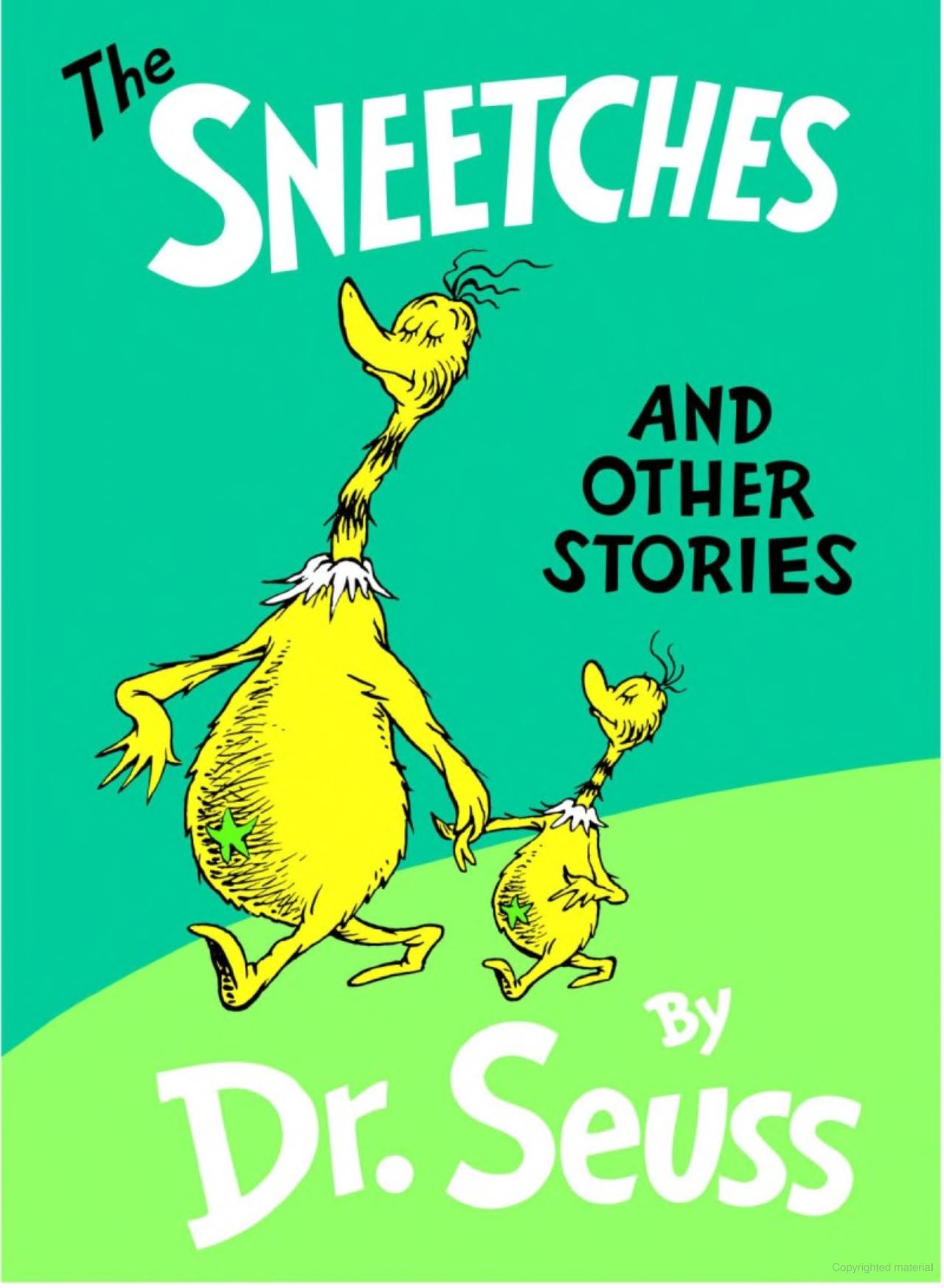
It was the linked article on Rufo—and this piece–that inspired this blog. The story is about an Ohio administrator who interrupts a teacher reading Dr. Seuss’s The Sneetches during a recording session intended for an NPR podcast. A third grader makes a very astute comment; the teacher (Mandy Robek) continues reading, but the admin (Amanda Beeman) shuts that whole thing down:
“It’s almost like what happened back then, how people were treated … Like, disrespected … Like, white people disrespected Black people…,” a third grade student is heard saying on the podcast.
Robek keeps on reading, but it’s shortly after this student’s comment is made on the podcast that Beeman interrupts the reading.
“I just don’t think that this is going to be the discussion that we wanted around economics,” Beeman said on the podcast. “So I’m sorry. We’re going to cut this one off.”
(NPR reporter) Beras tried to tell Beeman that “The Sneetches” is about preferences, open markets and economic loss, but Beeman replied, “I just don’t think it might be appropriate for the third-grade class and for them to have a discussion around it.”
I actually have some empathy for the administrator. She’s totally wrong—kudos to the teacher and the reporter for choosing the book and understanding the relevance of the child’s comment—but I’m sure Beeman envisioned her job security disappearing in a wave of rabid, sign-waving Moms for Control Over Everything at the next school board meeting, and panicked.
But that’s the point here: Educators need to be prepared to defend their curricular choices, with passion, conviction, and carefully considered rationales. Rolling over for the likes of Chris Rufo, the Hillsdale crowd, and dark-money funded and fully politicized organizations who wish to take down public education is not professional behavior.
Once they control what gets said and read in the classroom, the next target will be public libraries. All publicly funded services, the things that build healthy civilization and make diverse communities strong, will be on the chopping block. Ironically, this is about what the Sneetches were trying to teach the kids in Ohio: preferences, open markets and economic loss. What students learn, even in 3rd grade, matters, it seems.
This is a huge issue, wrestling over curriculum and parents’ desires, and it’s been part of public education since the very beginning. No matter how many standards are imposed, or school board meetings disrupted, however, the most critical aspect of instruction remains the individual teacher’s understanding of what is useful and important for the students in their care, and their personal knowledge and skill in delivering those things.
Here’s a story:
In 2008, I was e-mentoring some first-year teachers in an alternative-entry program (in other words, not traditionally trained). They were white teachers, assigned to an all-Black district in eastern North Carolina, country that was once endless tobacco fields. Most of them came from elite universities, and all were laboring under the misconception that they were ‘giving back’ to society. A lot of their conversations were about raising the bar, making a difference, blah blah blah.
It was also the Fall of 2008, when Obama was closing in on the presidency. Students in the school were wild with excitement. One of my mentees, teaching Civics and Government, kept sending me long emails pouring out his concern over the ‘unprofessional’ teachers–the ones who had been there for years. They allowed students to disregard the official curriculum! They spent classroom time talking about this miracle that was about to happen, even letting students campaign. Unethical!
He, of course, maintained that he was sticking to standards and remaining neutral about the race. After all, the students would be taking statewide exams next spring, and he wanted them to score well. He went so far as talking to the principal about his concerns.
I tried to suggest that he was teaching during events that could make history—and incorporating real life into lessons made them more meaningful. I asked if he had conversations with his veteran colleagues, about why they thought abandoning the prescribed curriculum was sometimes okay. Our dialogue got more and more strained, until he basically stopped communicating with me.
This young man had always considered himself an outstanding scholar in the social sciences. His lesson designs (debates, short-writes, small-group discussions, film clips) weren’t bad at all, especially for a newbie. He had some ideas about how to be a good teacher, and passion for the subject matter. What he was missing was knowledge of students and commitment to their learning. When the principal had a pep assembly to celebrate Obama’s victory, he was disgusted. For a public school, this is totally wrong! he wrote.
I have thought of him often—I’m fairly sure he’s not teaching any more. Which is too bad. Because being a master at custom-tailoring worthy curriculum to the students in front of you is a skill that takes time and confidence. It really cannot be outsourced.
There’s yet another thread on Twitter today re: ‘rewarding’ teachers by allowing them to wear jeans on specified Fridays vs. giving them permission to go to lunch (with their students, of course) five minutes early. I have an entire bookcase filled with volumes dedicated to the topic of leadership in schools, but somehow, these casual conversations on social media better reflect what’s really happening than all the blah-blah about Reframing, Maximum Impact, Inspiration, Grit or–God help us–What Works.
The thing is—the success (however you measure success) of a school is almost entirely dependent on the people who work there, and their interactions. There are other factors, of course—resources, the surrounding community, thinking about values—but the best framework for doing right by kids comes from good people who like working together.
I’ve worked under dysfunctional principals, as part of a collegial staff, where teachers rose to mentor and support each other, deftly bypassing administrative snits and roadblocks. I’ve worked with great superintendents, gifted managers—and the occasional evil, ego-bound admin—but I am here to say that the real juice in school-based leadership comes from adults who care about kids and get along well.
Leadership emerges from respect, friendship and trust.
My friend John Spencer thinks the ability to manage is an essential piece of being a real leader:
If a leader focuses solely on new ideas and new initiatives, they run the risk of confusing novelty for innovation. There’s no consistency or sustainability. People miss critical details. Often, the leader is so busy leading, they are unable to step back and maintain what’s already working.
Managing requires the unflattering role of maintenance. Maintenance can feel like drudgery. It can seem inconvenient. It’s a humble part of leadership that often goes unnoticed.
But maintenance is vital. A new bridge can connect people across a city. An unmaintained bridge can be deadly. The best principals I know will say, “I’m not much of a manager,” but they empower teachers to self-manage. They proactively step aside and provide the tools and resources that empower teachers. And in the end, empowered teachers empower students.
One thing John mentions really resonates with me: the inability of a formal leader to step back and maintain what’s already working. I’ve never been in a school—as a teacher, professional development presenter or classroom volunteer—that didn’t have some good aspects, things that needed to be maintained.
I’ve been in schools in deep poverty, the schools that public education vultures can’t wait to shut down, where the building is crumbling, and the playground is literally dangerous. I visited a school where there was one LCD projector in the building, bolted to the library ceiling, and a teacher stood on a table with a broomstick to operate it.
Those teachers—were genuine leaders. They knew the serious limitations they were working with, and kept going despite the environment there. I was merely a person who shared some Powerpoint slides. There were already good things happening in that building, courtesy of the people there. Professional development was superfluous, and they knew it.
Now—there are books about servant leadership and distributed leadership that aim for utilizing expertise rather than following a template for success. I’ve spent the last two decades trying to find a formula for teacher leadership that isn’t about giving someone more work and a small stipend, then labeling them a leader, whether their colleagues consider them leadership material or not. There is an endless parade of articles and commentary from teachers bemoaning the fact that they’re not at the table—they’re on the menu, happy to get a five-minute head start to lunch.
We’re still a long way from normalizing the respect, friendship and trust that are the basis of functional school communities, tailored to the kids they serve.
The issues media believes will dominate public education in 2023 are policy-related: Absenteeism. Mandated retention. Accountability (read: test score fluctuations). Educator shortages. Transparency for charters and vouchers. Funding, funding, funding. And of course, COVID and other viral menaces.
It strikes me that—once again—listening to those who have formed their own communities and informally recognize the leaders among them will have the most success in curbing absenteeism, bringing new, fully qualified teachers into the profession, putting the focus on real learning rather than meaningless data chases, and pushing back—from their own experience—against bad policy.
The conundrum for a public high school social studies teacher teaching about the January 6 insurrection is not to sacrifice one’s credibility while also not pushing one’s own political beliefs on students.
I had an advantage that other teachers trying to thread this needle may not have. I enjoyed the support of colleagues, administrators, students, and parents. You may be a high school teacher working in a less generous environment — one in which local and state politicians have trained their sights on teaching history. You have my thanks and deserve the thanks of all our fellow citizens for your dogged, noble work on behalf of American democracy.
That dogged, noble work? Let’s call it what it is: leadership.
For several years, I have listed my favorite books—or top ten education prognostications—on Teacher in a Strange Land. I love end-of-year roundups like this. ‘List’ titles draw traffic. I learned that 20 years ago, when I first set out to blog ‘from the classroom’ (although I was really blogging from my living room, on the family’s single computer). Everybody likes to analyze, compare and name favorites. Everybody likes to look back, and pretend there’s a clean slate ahead.
But 2022 was the ultimate strange-land year, here in Michigan. I think it was the first year where more or less permanent changes, wrought by the one-two punch of a corrupt presidency and a global pandemic, have altered the way we live and work. And, possibly, think.
All the local angst—school board hostilities, county commission craziness, health department firings, attempts to kidnap the Governor—sprang from that discontent. People want better-paying jobs. They want affordable housing. They want good—free—public schools for their kids. But they also want someone to listen to their woes, real and imagined, and confirm their biases, even if those biases are life-threatening.
Kids went back to school (triggering other viral waves, but still…)
Biden did most things right(including supporting Ukraine). I can honestly say that although I was not a Biden fan prior to 2020—he came in 12th on my list of candidates—I am very happy that Uncle Joe has been at the helm and accepts good advice.
The January 6th Committee Hearings. I seriously doubt that Donald Trump will experience significant consequences from the ugly mess he made of the US Presidency. But I am grateful to know that the nation was able to see the truth, in digestible bites.
I ran for office–and lost. Running for County Commission was a great experience, however. The district where I live has been ruby red for some 30 years–see that little pink square in Leelanau County? Dems came closer than we have in forever to turning the entire county blue. Running for office has been a bucket-list goal, and the conversations I had with people I’d never met were eye-opening.
I got to travel, again, another bucket-list kind of thing. My husband and I have spent February in Arizona since 2016, interrupted by the pandemic. This year, fully vaxxed and boosted, we drove to Arizona—and immediately tested positive. We got free, drive-through PCR tests to confirm. And about a half-hour after being notified that we were indeed positive, we got a call from our local health department, 2000 miles away: Were we OK? (OK-ish) Did we think we needed Paxlovid? A doctor visit? (not really) Faith in my local health care system? Restored.
I also went to Europe for two weeks this fall—and that was splendid.
Favorite Fictional Book: Demon Copperhead (Barbara Kingsolver). Kingsolver is an author whose works I never miss, and always love. Demon Copperhead is simultaneously hilarious and tragic, and Kingsolver finds a way to meld the ongoing opioid crisis, 19th century Dickensian literature and the American passion for football—and reveal what’s really going on in all three.
Favorite Non-fiction Book: Jesus and John Wayne(Kristin DuMez). DuMez teaches at Calvin University, near my hometown and alma mater of lots of super-conservative family members, most of whom would vehemently disagree with DuMez’s conclusions here: that evangelical support was not a shocking aberration from their views but a culmination of evangelicals’ long-standing embrace of militant masculinity, presenting the man as protector and warrior. Meticulously researched, and highly recommended.
Best school-y media: Abbott Elementary (TV show) and Tracy Flick Can’t Win (novel, Tom Perotta). Everybody knows about Abbott Elementary—warm-hearted and shockingly close to truth, right down to the egotistical, incompetent principal—but Tracy Flick is also that rarity: a book set in a school that feels very real.
I generally shoot to read 100 books in a year—it’s been my (achieved) goal for a decade. This year, I will clock in (if I’m lucky) at 85 books. The traveling and campaigning bit into reading time. But that general angst—the sense that things will never be ‘back to normal’—is also a factor. It’s hard to relax, to concentrate, to give up a long afternoon living in another world.
I see the culture, in general, in flux right now. The economy, national politics, health care, media—all of them, from Twitter to The Former Guy, will continue to evolve. But I am incredibly depressed about public education, always the scrappy underdog in the question about how we build citizenship and strengthen the workforce.
I became a teacher in 1974, and have observed public schools, up close and personal, ever since. I’ve seen good times and bad (although I wasn’t able to accurately evaluate, in the moment). But reading my fellow educators’ social media feeds is…heartbreaking, no other word. Should I stay or should I go? Have your students lost all motivation, like mine? Here’s a picture of me taking my 300 personal books out of my classroom. Etc.
Maybe public education is a lagging indicator—maybe the good news about competent government and public awareness, will eventually track back to the cornerstone institution of American progress, public schools. But I think folks like Ron DeSantis and Glenn Youngkin, and countless others, have targeted public institutions for children as low-hanging fruit, perennially underfunded and unstable, and gone after them.
Another piece in the NY Times, yesterday morning, all about the learning loss ‘crisis’ created by the pandemic. The article starts with the usual—essentially true—statement about test scores dropping as a result of the disruption of dealing with a global pandemic. But paragraph two goes full-on hype:
Nine-year-olds lost the equivalent of two decades of progress in math and reading, according to an authoritative national test. Fourth and eighth graders also recorded sweeping declines, particularly in math, with eighth-grade scores falling in 49 of 50 states.
I am always curious about why these easily debunked, alarmist claims appear in all the NAEP (‘authoritative national test’) reporting. Because we wouldn’t want to have a calm, rational, evidence-based discussion about how we can help all the kids whose lives were turned upside down by a pandemic, would we?
What the analyses of NAEP data do reveal: Nationally, we have accepted the idea that test scores are reality, our only reliable indicator of whether a school is doing its job and individual children are learning. There is no test that measures resilience or student well-being—that information would actually be useful.
There is zero doubt that schoolchildren were negatively impacted during the pandemic. Most of them had to stay home, to protect their own health and the health of their families, at some points in the pandemic—and those viral spikes in the population are not over. Remote learning was patchy and less than ideal, for many children. The world, for all kids, from preschoolers to high school seniors, became an unpredictable and often disappointing place.
The question now is notHow Bad Was It? followed by handwringing and blame.
The question is: What Should We Do Now? (Notice that I did not say ‘now that the pandemic is over’?) How can we help kids who have been through a rough patch find stability and comfort, even joy, in a school setting?
What do we owe to those children and youth, some of whom are experiencing their first ‘normal’-ish year at school and some who have cut their K-12 losses and moved into the world of college or work?
I have some ideas about that. But first, some essential questions.
The foundational question: What are our real end goals in educating children?
Improving their test scores is a demonstrably terrible goal, as we have learned with the latest round of NAEP data. If all we offer kids, in school, is instruction designed to bump up scores, and then spend all our media capital bemoaning a three-point drop after a massive health disaster, it’s no wonder they feel disconnected from schooling.
Another question: Is remote learning ever beneficial? Under what circumstances and conditions?
We need our community schools. And we desperately need to reassure the next generation that we believe they can learn whatever they need to learn to become functional adults—and that we will help them toward that goal, as best we can.
What do we owe the children of the pandemic?
A universal health care plan, available to every American.
A high-quality, fully funded public education for every child, no matter what they bring to the table, and baseline funding to bring schools in poverty into alignment.
Additional free or low-cost education and services for those who need or desire them: Free community college. Free auxiliary tutoring for kids with special needs—ESL, disabilities, long-term health issues, etc. Free apprenticeships. Free preschool. Free career counseling for all ages.
High-quality, affordable childcare, and adequate parental leave.
Plenty of well-trained and well-paid teachers, pre-K through university level.
Rich curriculum that acknowledges all children have different gifts and interests.
We had a crisis-opportunity to examine the stressors and weaknesses in our education system. Let’s not fumble that away by pointlessly crying wolf over an incremental but understandable drop in standardized test scores.
The idea that history is written by the victors is—like most cliches’—an inadequate framework for learning about the powerful forces that have shaped our world. I say this as an American baby boomer, born when the future of the United States seemed limitless, and its citizens were justifiably proud of having saved the world from evil. The history I was taught, in the 1950s-60s, was full of stories about our scrappy upstart nation that freed itself from British colonialism, survived a civil war—then made the world safe for democracy.
When I was in my 20s, I spent a summer backpacking in Europe. I stayed in cheap hostels and went where the Eurail pass would take me. At the very end of the trip, the day before flying home out of Munich, I went to the concentration camp in Dachau.
It was a gray and rainy day, and I had the place nearly to myself. Dachau had been open to tourists for 10 years, but—some 30 years after the camp was liberated—there weren’t many exhibits and no docents, then. That’s not to say that the place felt empty. Far from it.
I’ve been in some historic places in my lifetime, but nothing like Dachau.
The camp—in 1977—was mostly just cleared space, its buildings torn down. There was a bunkhouse or two, and a horrific crematorium to see, some photos on display. But the power of being there was in the voices.
I sat on a bench, under my umbrella, for a long time, listening to and sensing what had happened, around me and under my feet. I can’t explain it any better than that. Whatever evil happened there was not erased, not by a long chalk.
Smith’s piece mentions stumbling stones or solpersteine—small brass plates in the sidewalks of places where Jews once lived or were assembled and sent to their deaths. There are more than 90,000 of these now, in 30 European countries. Schoolchildren raise money to plant more of them.
I was in Germany last month, and our walking tour docents frequently pointed these out. Americans whipped out their phones and took photos. I did not hear voices, but seeing them was sobering. In fact, Smith says that not everyone thinks putting brass plates in places where people can walk on them is the right thing to memorialize the loss of six million people. But, at least, the Germany citizenry is wrestling with the questions around its own guilt. Smith:
In recent years, Americans have seen a shift in our understanding of the country’s history; many now acknowledge the shameful episodes of our past alongside all that there is to be proud of. But reactionary forces today are working with ever-greater fervor to prevent such an honest accounting from taking place. State legislatures across the country are attempting to prevent schools from teaching the very history that explains why our country looks the way it does. School boards are banning books that provide historical perspectives students might not otherwise encounter.
There was, IMHO, way too much celebrating last week over anti-teacher, anti-‘CRT’ school board candidate slates NOT sweeping into power. Data on this, however, is a little murky:
Ballotpedia, a nonpartisan website that tracks U.S. politics, has so far counted 237 school board winners who took a stance on hot-button topics, including race and gender. Of those, 55 percent took the conservative side on at least one issue, compared with 43 percent who took liberal stands (the remainder had mixed positions).
Hardly a resounding victory, and the thing about school boards is that they’re the first access point for anyone with a political beef (real or imagined). You don’t even have to have children in that school, or live in the district.
There is no more important study than our own history. Nancy Pelosi illustrated that beautifully in her graceful step-down speech, as first female Speaker of the House this week. If we can’t learn from our own accomplishments and failures, we’re doomed.
I’ve been voting for 50 years, and there’s never been an election like this one. I know we keep saying that this is the most important election of our lifetime–we say it every two years—but holy tamales. The thought of a Republican-led House launching four impeachments simultaneously, with Jim Jordan preening on the news every night? Nauseating.
And yet, here we are.
In those 50 years, I have voted for Republicans. In fact, I used to vote in the Republican primary in the district where I lived for 20 years, because it was the only way I got to endorse mainstream candidates over crazypants candidates. I knew that Democrats would never win there, so it was a prophylactic exercise.
That was back in the days when the truly whacko candidates were pruned in the primaries. Unlike 2022.
Those of you who were voters in 2000 might remember compassionate conservatism, George W’s election slogan. I was in the .52% margin of voters who chose Gore over Bush, but I can’t remember anything about Gore’s campaign message. Something about a lockbox? Compassion, on the other hand—compassion and action—I can get behind.
God knows we need it. A more compassionate electorate, one concerned with actual facts about our rapidly changing climate and its outsized impact on populations in poverty, about human rights, about all the policy tweaks we could make to lift up our families and neighbors… what’s not to like?
We’re moving in the wrong direction, away from voting with our hearts toward voting with anger, hate and naked self-interest. Voters have been not only given permission to stomp all over their community’s needs, but are now being encouraged to wrest control of election results from township and village clerks.
Two stories about compassion:
A little more than a year ago, one of the communities I hope to represent on the County Commission, Maple City, raised a civic outcry against having a Dollar General in the center of town. Maple City is a modest little town, with a Post Office, a cute restaurant and a gas station, and lots of similarly modest homes. But its residents did not want to be a Dollar General town, or labeled—as Dollar General Corporate did—a ‘food desert.’ After rejecting Dollar General, that parcel of land was designated as space for six small homes—ground was broken, with lots of enthusiasm, a year ago, and the community seemed poised to welcome six new families. Compassion had beat out Dollar General, it seemed.
Right now, however, there are only foundations in place for four of the homes. A request for a tax rebate was soundly rejected, as the price of building new homes and availability of builders rose. Speaking with the people of Maple City, while door-knocking, there’s a lot of confusion and angst over promises made and promises stalled—or broken. The gap between the haves and have-nots—the thing they were trying to prevent by not plunking a Dollar General down in town—has not decreased.
This number, statewide, used to be vanishingly small, with waivers granted only on evidence-based need, and herd immunity not threatened. For children whose medical conditions contraindicate vaccination, herd immunity is the thing that lets them go to school safely. I taught school for over 30 years, and we never had to deal with anti-vaccine parents.
It’s not a thing we can ‘disagree’ about. It’s not a parents’ rights issue–I strongly believe in parents’ rights. It’s a rejection of science, for starters, overlaid with ginned-up political rage. It’s a rejection of the genuine needs of other people—vulnerable children who need protection!–in order to win some unnamed contest.
So. Vote with heart, not with hate. Compassion and community hang in the balance.