This was such a big deal that the AL Ethics Commission was receiving about 25 calls a day from parents who didn’t want to get their children’s teachers in trouble. The Ethics Commission released a detailed report, letting parents know that cookies, hand lotion and mugs are OK. What I found interesting was what was forbidden. Four examples: hams, turkeys, cash and “anything a teacher could re-sell.”
I was a classroom teacher for more than 30 years. I received hundreds of Christmas and end-of-year gifts over that time. And I never got a turkey or a ham. Maybe that’s an Alabama thing?
Nor did I ever get cash– and if I had been slipped a card with cash, I would have returned it immediately. In fact, I don’t know any teacher who would accept cash or an extravagant gift, especially if they thought the gift came with strings attached. The teachers I know have a whole shelf full of holiday mugs with “from Brittany, 1998″ written in Sharpie on the bottom.
Besides the obvious issues of unenforceability and heavy-handed mistrust of those charged with educating Alabama’s most precious resource, the whole brouhaha in Alabama had a kind of cheesy self-righteousness about it.
Does a $25 Starbucks gift card come with expectations built in? What if it’s given by a shy first grader who noticed his teacher often brings a Starbucks cup to school? When does the impulse to give a hard-working teacher a nice token of appreciation morph into a calculation of what special favors might be granted through a generous present?
It takes away the sense of entitlement that people have built up over the years that people serving the public need gifts.
Sense of entitlement?
Several states have laws limiting the gifts that public employees can receive. About ten states have even tougher rules, not even allowing public employees to get a free cup of coffee. Research tells us public officials and employees are rarely influenced by a meal paid for by a lobbyist or by a gift. But states send a message with firm ethics laws and build confidence among the public that leaders can’t be bought.
Theoretically.
Here’s what I wish I could tell Jim Sumner: Teaching offers many very rewarding experiences, but it’s not and never has been about the great swag.
I’m not sure I ever had a “sense of entitlement” as a public worker– but then, I never came in contact with lobbyists and don’t think most people consider non-elected teachers “public officials.” I’m not sure I ever had anything–like a legislative vote–that could be bought.
Alabama Ethics Director Sumner: “if [a parent] said, ‘I don’t care what the new law is, I’m going to give them a cruise,” that’s a different case …”
A cruise? I can’t speak for legislators–who, after all, can change much more than a mere grade–but I’d be hard pressed to find a teacher who regularly went on international junkets, courtesy of Pearson, the way state education officials have. Don’t we have much bigger fish to fry, educationally speaking, than fretting about setting strict guidelines for what parents can spend on a present?
The whole dustup felt sad to me– part of the impulse to punish and control something that happens rather naturally everywhere: kids giving presents to their teachers. All presents from students are good presents. They’re appreciated, but the sentiments around giving are what’s treasured.
Thinking back over all the gifts I got –there must be 50 music-themed Christmas tree ornaments– one stands out. I had a kid in my 6th hour jazz band, who came to class the day before winter vacation with what looked very much like a tightly wrapped bottle of wine. “My mom says don’t open it until you get home, and keep it in your drawer today,” he said, all innocence.
When I got home, I unwrapped it. It was a bottle of wine–a very nice bottle, in fact. I saw the boy’s mother in the grocery store over holiday break. “About the gift…” I said and she held up her hand. “You absolutely deserved it,” she said. “We won’t speak of it again.”
“You never change things by fighting the existing reality. To change something, build a new model that makes the existing model obsolete” (R. Buckminster Fuller)
Buckminster Fuller’s well-known quote was a touchstone for me, in my 30-odd years—and some of them were really odd—of classroom teaching. Whenever things at school started feeling oppressive or dumb—there’s got to be a better way to do X—coming up with a new plan was always a better bet than complaining about the old way. Launch first, ask permission later.
Why fight back against typical practices, if you can devise a better way? School used to be the perfect place to institute new ideas. Let a thousand pilot projects bloom.
Our goal is not to switch places with the bully, but to end bullying. We focus on tactics—how do we beat the bully?—but don’t remember to prepare for the day when the bully is no more. If we don’t have a vision for our desired future, how can we plan to achieve it? When we confront the bully, we reclaim our imagination.
If we confront the bully, we reclaim our imagination. We can create a vision for our desired future. Makes sense to me. Feels a lot like Buckminster Fuller: Come up with something better, then make it happen. Stop fighting.
Now– McKesson, a decade ago, was a Teach for America alum, a charter school supporter, and later, a school administrator. He seems to have left public education (and all its flaws) behind, focusing on activism, BLM, social media and podcasts. He wrote a book. He fought with people on Twitter.
But– I think he’s right. If all we’re doing right now (guiltily raising hand) is re-posting that video clip of Linda McMahon getting body-slammed, we’re not helping preserve, let alone improve, public education. When our focus is on fighting bad policy, especially policy that hasn’t yet been enacted, we need to have better ideas—dreams, if you will—about what public education should look like in our back pocket.
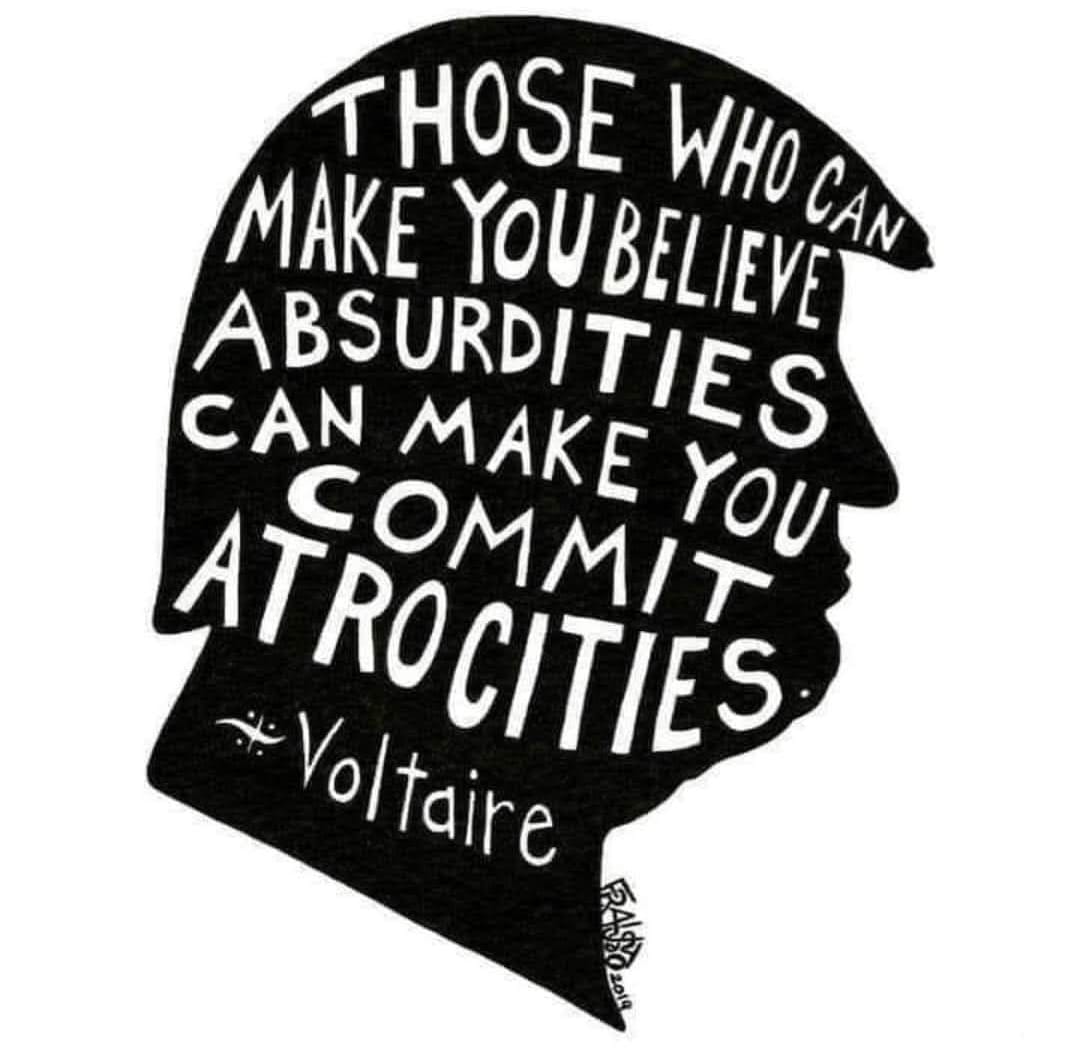
Donald Trump’s vision for education revolves around a single goal: to rid America’s schools of perceived “ wokeness ” and “left-wing indoctrination.” The president-elect wants to forbid classroom lessons on gender identity and structural racism. He wants to abolish diversity and inclusion offices. He wants to keep transgender athletes out of girls’ sports.
Trump’s first term was full of rhetoric and short on action, all Betsy DeVos and grizzly bears, when it came to education policy. Lots more anti-public education non-profits sprang up (and some died), and lots of charter schools also sprang up, using public funds, then failed.But the Department of Education chugged on, as usual, and 85% of kids were enrolled in a public school, a slow slide down from 90% a decade ago.
All human learning is interconnected. Depriving children of rich, complex experiences in the service of dull training for standardized math and reading exams actually stunts their math and reading development. Ironic and dumb.
Maybe it’s time to create that vision of what schooling could look like—for the same money, with the same workforce, in the same buildings. Imagining that future.
I have a few ideas about that. What does your vision for public education look like?
When I first retired (from the classroom, not from working in education), I moved away from the school district where I had lived and taught. I’d been there for well over 30 years and had seen—up close and personal– the power of school boards to impact educational climate in a school district. I’d been watching through four decades of local policy-making— the good, the bad and the out-and-out malicious.
I’ve got stories.
And I’ve written about the town where I lived and taught. In spite of its flaws, it was usually a good place to teach, if the definition of “good” is engaged parents, talented colleagues and kids who were encouraged at home to achieve.
The quality of school board leadership occasionally faltered over that time—with most of the squabbling over how to get by while spending a lot less—but there were long stretches where the school board served as a benign and supportive presence.
Board member says: This gets into the weaponization of empathy, where empathy is taught as the highest goal, the highest order. Do we teach empathy to the effect where students disregard parental authority—and accept anything and everything? Do we teach kids that any kind of judgment is bad?
Wait. What? Who is he accusing? And what is the weaponization of empathy?
Too much empathy leads to kids defying their parents, evidently. The moral ambiguity of school confuses students. That’s their big fear?
As a long-time classroom veteran who spent the beginning of every year working diligently to get kids to respect their peers, and care for other people’s feelings and property, this struck me as downright stupid.
A social media convo developed around the clip, with commenters suggesting the end result of too much empathy was Doctors Without Borders or the Peace Corps.
Eventually somebody remarked:
It should come as no surprise that the Heritage Foundation has taken this term and used it as its own way of fighting against Social-Emotional Learning, and any other academic tools to help students.
If one of your school board members uses this term, they are in some way being educated by, or they are using talking points from the Heritage Foundation.
Then, the other shoe dropped. Aha. Weaponizing empathy is a Heritage Foundation thing, the concept of their plan, so to speak.
But hey—if right-wingers get control of a school board, they can micro-manage a district, with thousands of students, turning it into a place where empathy—caring for and about their fellow students– is forbidden or scorned.
So– we live in the northern Michigan woods. And beginning last Friday, we have been hearing shooting. Lots and lots of shooting. It’s deer season (firearms) up north.
Our little grocery store-cum-gas station has a deer pole, and offers butchery, so a drive into the P.O. involves passing a large pile of dead deer, awaiting their turn to be gutted and sliced. Not a pretty picture.
And yet. None of this bothers me.
I’m not a gun owner (or gun-owning defender). Deer browse my compost pile, and I try to remain quiet on the porch, so they can get a big mouthful of rotten pumpkins or potato peelings, while I watch. Venison? Meh, except in chili.
I’ve been run into by deer four times– most recently, an $8K hit on the truck–and I know that controlling the deer population is a benefit to us and to them. Balance of nature and all that.
Plus– the annual ritual of deer hunting just doesn’t faze me. The whole rigamarole of blaze orange and hanging out at pine-paneled bars and doe permits vs. how many points– it’s all OK by me. You (and a half-dozen of your unwashed, unshaven friends) do you.
Probably, this is because I grew up in Michigan. My dad was a hunter, going out with my uncles and great-uncles. Everybody I knew had a ramshackle place up north where the guys went to hunt, in November. Women stayed home, watched the kids, got together with the other “deer widows” to play poker.
The school district where I first taught took the first week of deer season off, mostly because it was too dangerous for kids to wait for the bus when the woods were full of hunters. The next place I taught only took Opening Day off, which I saw as a civilized upgrade.
I know there are people who feed their families with game, but that’s not the reason I’m down with hunting. I guess I see it as a throwback to earlier times, a connection to an era when people secured their own food in the wild. Men hanging with men, suffering from cold and tedium, relieved by gunshots and whiskey and flinging the carcass over the hood of the car and using the meat (instead driving past unused and grisly remains beside the road, a daily occurrence this time of year).
I was amused by Garrison Keillor’s description of deer hunting and fishing (we have ice fishing here, too, in northern MI):
“Men hunt for the same reason they fish, in order to escape the company of women. Minnesota is a state of thousands of lakes and each one gives men an opportunity for refuge, sitting in a rowboat or a fishing shack out on the ice where nobody will say, “When are you going to clean out the garage?” Or “You keep talking about going to teacher conferences at the kids’ school but when is this going to happen if ever?” or “Why do you insist on dribbling coffee down the front of the kitchen cabinet and not wiping it up?”
Not many women fish because they know they can buy excellent salmon, tuna, or halibut for a tiny fraction of the cost of a boat and motor and trailer and a pickup to tow it. Ever compare salmon and northern pike? God created pike for cat food.”
I remember sitting in the teachers’ lunchroom at my middle school, January 2001, and having a woman I like and consider a good teacher exclaim–after Dubya was finally declared president-by-hanging-chad– “Doesn’t it feel good to have a nice, respectable family in the White House?”
It didn’t feel all that great to me–and that feeling grew worse and worse, as we rolled through 9/11, Abu Ghraib, the Iraq war and the financial meltdown.
Still–she was sort of right. It is undeniable that character matters in public leadership. Or should. Turns out, however, that good character—the kind of person whom we can trust to lead– is very much in the eye of the beholder. Welcome to 2024.
Nobody needs to hear what I think about what went wrong with this election. I would describe myself as bewildered. Sorting through the post-mortem will take time.
But I have to say that my one niggling worry, watching Kamala Harris run an energizing, upbeat, intersectional campaign through these last 100 days, was this: She’s a woman.
Backwards, in high heels, and all that. Please don’t let this be another case of a fully qualified woman passed over for a blowhard jerk.
The campaign downplayed the “firsts”—first woman, first Black woman—but mixed in with the horror of who got elected and what they promised to do, is the bone-deep conviction that this loss had a lot to do with sexism, coupled with racism. What America is “not ready for.”
So—I am only speaking for myself here. But as the meme says: We ask women why they don’t come forward when they are sexually assaulted. It’s because we live in a world where an abuser can become President.
In a must-read article in Atlantic,Xochitl Gonzalez says this: Sexism, it turned out, was not a bug but a feature of the Trump years. Misogyny certainly appears to come naturally to Trump, but it was strategically amplified—through surrogates and messaging—to attract supporters, particularly younger men of all races.
Many of these young men apparently see Trump—with his microphone-fellating pantomime and his crowds chanting the word bitch—as presidential. Misogyny helps disempowered men feel empowered. After Trump’s victory, the right-wing activist Nick Fuentes tweeted: “Your body, my choice. Forever.” It really is a man’s world now.
Trump’s return to power—his imminent control over the Supreme Court and the federal judiciary, the coming dissolution of the very idea of the government providing any sort of guardrail against corporate power, carceral violence, and environmental destruction—is the beginning of a political era that will likely last decades.
I’m not sure I have decades.
What seemed—last week—like a more equitable way of addressing (and I hate this phrase) the war of the sexes has melted away. And for me, it’s personal. Here’s my story—one I’ve shared before—about a very powerful man using that power to abuse women:
I did my student teaching in the mid-1970s. I was assigned to a male band director (they were 98% male, back then), who told me at our first meeting that he was accepting me as student teacher because he needed a free assistant. He had a top leadership position in the state organization for instrumental music teachers which took him to many conferences and meetings. He said that he never would have consented to taking a woman as a student teacher—the university had merely asked him if he was interested, and he assumed that, naturally, I would be a young man, ready and willing to do the things he didn’t have time to do for a semester.
He repeated those remarks to the audience at my first concert. By then, it had become a polished story–“I said yes–and then they told me it was a woman!” (Audience hilarity.) I, of course, was making the morning coffee, re-ordering his messy music files and writing his monthly columns–the man couldn’t construct a coherent sentence–for the state organization newsletter.
I was also being sexually harassed and bribed by the promise of a good evaluation and letters of recommendation, something that I very much needed to get a job in a male-dominated field.
I put up with it for about a month, making up excuses to leave early so we wouldn’t be alone together. He grew more aggressive. Finally, I went to the student teaching supervisor from my university. I have repressed a lot of memories about that time–but I can remember that meeting as if it were last week. The supervisor, behind his large polished-wood desk, was wearing a red ski sweater. Behind him, multiple holiday photos of his family, in front of a fireplace, the lovely wife and four children.
I told him my story, in detail. He leaned back, hands folded over his chest. “Are you sure you’re not leading him on?” he asked. Then he ticked off the reasons why he would not recommend another placement: It was too late and would cost me another semester in time and fees. Nobody would take me, once the story of my accusation became public–and it surely would, possibly all over the state given the man’s public profile.
I would be seen as a too-sensitive whiner in a male-dominated field. I thought you wanted to be a lady band director, he said. This is what it’s like. Either handle it yourself or drop out now.
So I handled it, as best I could. I can’t say I learned anything about being an excellent music educator during the remaining three months–the man never turned his classes over to me, not even for a single rehearsal. His pedagogy was best described as intimidation and humiliation. Plus openly flirting with high school girls.
I worked individually with students in the practice rooms (where I learned, from a sweet flute player, that Mr. Exemplary Band Director was also having sex with his students). The one time I was allowed to stand on his podium and conduct a number, he stalked around behind me, making faces and mocking my conducting.
I got through, by “ignoring” lots and lots of grabbing. I had proof that telling anyone what was going on would reflect badly on me–that I would be labeled the spiteful “nasty woman” who was seeking to take down someone who had earned his considerable fame.
After graduation, I got a job far away from the man, in spite of his mediocre evaluation (which specified that I would be best placed as an elementary music teacher, as secondary band directors needed more “stamina” than I had). I built a successful 30+-year career as a band director, including being named Michigan Teacher of the Year. When I saw him at music conferences, I avoided him.
Famous Band Director lost his job–very publicly–about a decade later, when a student finally came forward, supported by her parents, to report that he had lured her into a sexual relationship. He denied it, in the newspaper pieces, then pointed out that the school had one of the state’s top band programs–all because of him.
Mostly, I stopped thinking about him, after that. Then, a few years ago, after community band rehearsal, one of my colleagues, a man I deeply respect, caught up with me after rehearsal, asking “Did you hear that [Famous Band Director] died?”
The first words out of my mouth were: I hope he rots in hell.
Taking a deep breath, I mentioned I’d done my student teaching with the man. My friend already knew–the man had been having breakfast regularly with a group of retired band directors, and had talked about me. Explaining why this monster had been invited to the breakfast club, after being fired for sexually abusing students, my friend said: We took pity on him.
I realized that the Band Director’s breakfast companions, a kind of Old Boys Club, had probably been fed a fabricated storyline about me, too. I felt like I was going to vomit. And nearly 40 years had passed.
Because paying attention to bullies and sexual abusers feeds their megalomania. And lets them train a new generation of persecutors, the white men who feel they’re entitled to power and the women who hope to bask in their reflected glory.
In my long and checkered career as a classroom teacher, I taught instrumental and vocal music, mathematics, ESL and the occasional oddball middle school class necessitated by the fact that, as a (qualified) music teacher, my music classes could contractually be huge—so I could be assigned a class of kids left over in the scheduling process by putting 75 students in one beginning band class.
I think that poor, maligned Social Studies, the last outpost of mostly-untested subjects, is probably the most critical academic field for K-12 students to explore, if we want them to become good neighbors and engaged citizens. It’s where they learn (theoretically), what it means to be an American.
But ask any third grade teacher what gets short shrift in their daily lessons. Or ask which secondary curricula is the most scrutinized by people who haven’t been in a classroom in decades.
How do we deal with world-changing events when they’re happening in front of our students? Are schools embracing catastrophism, as Rick Hess suggests here:Catastrophism has exacerbated tribalism, distorted journalism, and squeezed out measured discussion of public policy. It’s also spilled over into schools and colleges, where tried-and-true virtues like civility get dismissed as inadequate in the face of imminent catastrophe.
My fear is that Social Studies, an incredibly rich and applicable field of interrelated content, will be further squeezed out of the curriculum, or become a dry, testable, bunch-of-facts sequence, none of which bears relevance to the diverse, often catastrophic world our students live in. What Hess calls catastrophism might just describe how passion has always shaped our politics.
And politics, civil or not, is just the means to get the world we want.
The purpose of public education in a public school is not to teach students what parents want them to be taught. It is to teach them what society needs them to know. The client of the public school is not the parent, but the entire community, the public.”
The statement was quickly criticized—Parents’ Rights!—and walked back, but I think there’s some truth there. Parents want their children to be literate, and numerate, for sure. But when it comes to understanding what science tells us about climate change, or encouraging 18-year olds to become informed voters, should a subset of parents be able to shut that whole thing down?
Here’s a toast to social studies teachers everywhere, as we approach November 5. You go.
Let me give you the gist: Grades are unreliable, whereas standardized test scores scientifically measure real content knowledge. Grades are given by teachers. Therefore, teachers’ grades are not to be trusted, and teachers should receive additional training on how to accurately measure what students know. There’s also a jab at grade inflation, post- pandemic. Who is quoted in the article? That’s right, the College Board and the ACT folks.
From my point of view: a) Sure, additional training for preservice teachers on the art and purpose of assessment would be very useful. b) Also useful: a common understanding of what a grade means. Is it a representation of a student’s progress—or an evaluation of how well they’re meeting pre-set standards—or an educated guess about how the student will do in college?
I don’t think teachers’ grades and standardized tests should, necessarily, measure the same things. Furthermore, standardized tests don’t have relationships with students, or know what the student brought to the table, when starting the course.
I have written lots about grades as assessment, including the piece I’m including, below, about the Soft Bigotry of Low Grades. It begins with an essay on “low expectations” then morphs into nine points about grading that teachers understand (and argue about).
Whoever wrote the phrase ‘soft bigotry of low expectations’back in the early days of the Bush administration, was a genius. In one nifty sound bite, the blame for the so-called achievement gap was placed squarely on the shoulders of educators, those barrel-bottom, unimaginative civil servants slogging along in low-paying careers.
Not only were veteran teachers unable to conceive of their students’ success (presumably, getting into a competitive-admissions college)—they were also bigots, kind of. Perhaps they hadn’t read 25 books on racism, been hooked on The Wire, or stayed for two grueling years in a no-excuses charter before heading off to Goldman Sachs. They were just stuck in those dead-end teaching jobs.
Early in the ‘reform’ days—a couple decades ago—Disruptor types were prone to proclaiming that high expectations for all students were, in fact, a positive disruption to what they assumed was the low and unimaginative level of teaching practice endemic in public education. Especially in schools filled with kids who took home backpacks full of peanut butter and whole wheat crackers every Friday.
If only teachers had faith in their students, cracking the academic whip and believing they could someday rise above their circumstances and excel—well, then things would be different. What we needed was new—high and rigorous—standards, better aligned curricula, more sorting-out data. We needed‘choice’ to remove kids from low-expectations government schools.
The ‘low expectations’ trope became a thing. The 74 was still printing pieces about it, 18 years later, using phrases like ‘complacency is also still alive and well’ and ‘having teachers who were confident that their students would complete college made a real difference in their college attainment.’
The 74’s suggestions for improvement? You won’t be surprised: higher standards, more testing and raising the cutoff scores, rigorous curriculum—and better teachers, the kind who expected more. Nary a mention of better health care, better jobs with higher wages, better childcare options, better support networks for people in poverty. Or less racism.
When I read that Fordham was releasing a new report entitled Great Expectations: The Impact of Rigorous Grading Practices on Student Achievement, I assumed it would be more of the same: a screed against ‘grade inflation’ that urged teachers to use the threat of bad grades as ‘motivator’ in getting kids to Learn More (and score better on high-stakes tests, quantitative ‘proof’ of learning).
Turns out I was right. Here’s the first paragraph of the summary: We know from previous survey research that teachers who hold high expectations for all of their students significantly increase the odds that those young people will go on to complete high school and college. One indicator of teachers’ expectations is their approach to grading—specifically, whether they subject students to more or less rigorous grading practices. Unfortunately, “grade inflation” is pervasive in U.S. high schools, as evidenced by rising GPAs even as SAT scores and other measures of academic performance have held stable or fallen. The result is that a “good” grade is no longer a clear marker of knowledge and skills.
Here’s how my 30-odd years’ worth of grading some 5000 students (at least 35K individual grades) squares with the statement above:
High expectations are a good thing, all right—but they are not commensurate with giving more unsatisfactory marks. In fact, being a ‘tough grader’ often means that the teacher is not meeting a substantial chunk of kids where they are, then moving them forward. The easiest thing in the world is giving a low or failing grade and blaming it on the student. The hard thing is figuring out how to help that child achieve at the level he’s capable of.
The longer I taught, the higher my expectations were, as I learned what students at different developmental levels were able to do—but that was not reflected in the grades I gave. I assumed it was because I had become a better teacher and was getting better results as my teacher tool bag filled. I could see with my own eyes that I had underestimated what my students could learn and apply, if they chose to work at it.
I seriously doubt that teachers’ expectations—as defined here by more rigorous grading– have much, if any, impact on kids’ completing college, or even high school. A teacher who encourages a student to think big, to push herself, to reach for the stars and so on, may indeed have a long-term positive effect on a student, especially one with self-doubts. Setting students on a path to higher education and life success is a long-term, K-12 project, one that can’t be accomplished by teachers alone and certainly not by dropping the grading scale a few points to teach them a lesson.
Grades aren’t real, although the argument can be made that they’re more real than a standardized test score (which the report also uses to make the claim that ‘raising the bar’ has a salutary effect on student outcomes). No matter how schools try to standardize grading, the human judgment factor creeps in. As it should. Students see their grades as something ‘given’ by the teacher, no matter how many times teachers insist that grades are ‘earned’ and can be accurately, precisely, mathematically granted.*
Grade inflation isn’t real either. I am always amused by disgruntled edu-grouches who insist that Harvard, say, is awash in grade inflation. When an institution turns away 94.6% of the students who have the temerity to apply, why are we shocked when the crème de la crème who are admitted get all A’s?
If we were doing our jobs better, by Fordham’s metrics—following rigorous standards, choosing engaging and challenging curricula, assessing frequently—wouldn’t the desired outcome be better grades?
The worst kind of grading practice is the bell curve. Curving grades has gone out of fashion, but you still see its aftereffects in reports like this that bemoan the overly high percentage of students whose work is deemed good or superior. If you’ve ever had a class filled with go-getters (and I’ve had many), you’ll know it’s possible to teach to the highest standards and have every child in the class performing at a high level. Someone does NOT have to fail. What the researchers here seem to be endorsing is a curve where students in high-poverty schools are not compared with their peers, but with kids in advantaged schools—then taking the top-scoring kids down a peg or two, for their own good.
Bad grades don’t motivate most kids to try harder, although this seems to be the sweeping conclusion of the report, which studied 8th and 9th Algebra students in North Carolina. The researchers noted that students in advantaged schools were more likely to make gains when receiving a lower grade. There are lots of charts and graphs showing how teachers who give lower grades initially cause an uptick in standardized assessment scores eventually. This is more likely to happen if that teacher went to a ‘selective’ college or is an experienced veteran teacher, by the way. As for the poor students who go to rural or urban schools—well, they get good grades that don’t reflect what they’ve really learned. Therefore, maybe we should give them lower grades, too, as an early reality check.
I repeat: bad grades don’t usually motivate kids, unless there’s someone at home checking up on them, they plan on going to college and care about their GPA. In that case, a lower grade may serve as a heads-up that more effort may be necessary. Do 8th grade Algebra students and students in advantaged schools where most kids are college bound fit into that category? Yes.
Students who do well in school also know how to study effectively– or seek extra help when something is difficult for them. They’re not as likely to think that the tough-grading Algebra teacher doesn’t like them, or that they’ve finally found a subject they can’t successfully master. Lots of previous successes have given them the confidence to pursue a challenging subject.
What struck me about the report was the facile conclusion that a subset of (higher-achieving) students was motivated by a lower-than-expected grade into learning more.
Extrapolating that into a declaration that tougher grading would lead to higher achievement is giving way to much credence to a cranky-pants theory, the one where a kick in the pants is what kids these days really need.
*In my 30+ year career, I taught math for two years. Prior to that, I collected various data to develop and tweak a defensible grading process for teaching instrumental and vocal music. Music is a challenging discipline in which to assess using hard numbers, trust me; I envied my math teacher friends whose grades were always clean, clear percentages. Then I taught math and discovered—eh, you can juke the stats in math, too, through assignment weighting, partner quizzes (recommended by our math series), late assignment policies, re-takes, homework evaluation policies—and so much more. Grading—in any subject or level– is not science. Never has been.
Raise your hand if you’ve ever experienced a bomb threat in your school.
I have, perhaps a half-dozen times over the span of a few years, teaching at both a middle school and a high school. The first time was mostly confusing. There was a P.A. announcement, and—following fire drill procedures—we led our classes to the far edge of the parking lot, where they stood in ragged lines. Most of the students were nervous and joking about who might have called in a bomb threat. The police came, with dogs, and went through the building. Nada.
The next time it happened, that year, it was cold and snowing. Kids went outdoors without coats. Buses were dispersed as soon as the drivers could get there, and 600 shivering kids were sent to the HS, two miles away, and sat in the auditorium for a couple of hours. They were bored and restless and had to go to the bathroom NOW because it was AN EMERGENCY.
Teachers clustered in the aisles, quietly sharing the names of kids who were absent and speculating. Someone found a VCR in the projection booth and put on a G-rated movie, which acted as an ineffective numbing drug. We ended up losing close to three hours before the building was cleared and we could go back.
Then it happened again. Kids were bused again. But this time, the Superintendent came in and tried to scare them straight. We WILL find the culprit, he said. He WILL be expelled, and maybe spend time in Juvie. If you’ve heard anybody say they know who did this, tell us. We’ll protect you and it’s the right thing to do. Just tell the principal or one of your teachers.
Now—I taught in a nearly all-white, suburban school, where most parents had college degrees and came to parent-teacher conferences. They didn’t want their kids to lose learning time because a couple of delinquents thought it was funny to call in what amounted to terrorist threats.
I mention that it was an all-white school not because Black or Hispanic parents would expect or tolerate bomb threats – they wouldn’t, then or now—but because there was no small, minority group of students to automatically blame (as, let’s be honest, would have happened, evidence-free). Whoever called in the threats was most likely one of our own white kids, living in a nice subdivision with their mom and dad.
The fourth time it happened, teachers were privately notified by notes sent from the office. See anything unusual in your classroom? Restrooms will be closed during passing time. There will be cops in the hall. There had been a bomb threat at the high school, too (where I was supposed to be headed, later in the afternoon). Rumors swirled.
In Michigan we take bomb threats very seriously. The worst school disaster in Michigan—the Bath School Massacre, nearly a century ago—killed 38 children and 6 adults, injuring 58 others. It was a homemade bomb, planted and set off by a school board member, angry about taxes. (Really.) Sometimes, tragedy set off by idiots actually happens.
The bomb threat caller at my school was eventually identified and known only to officials. Teachers were not informed, nor was the public, leading one to believe that the bomb caller was probably in the 7th grade or thereabouts. They disrupted learning, cost the district significant money and made a lot of people apprehensive. They made school leaders’ lives miserable, and spurred parent demands.
They metaphorically yelled FIRE! in a crowded theater. But nobody was injured or dead. These days, when real-life school shootershave terrified, injured or killed more than 338,000 kids in the past quarter-century, that’s a success story.
Those calling in bomb threats to elementary and middle schools in Springfield, OH—not to mention a hospital and City Hall–are terrorists, all right. And the targets of their wrath are innocent children. They fall into the most dangerous category of would-be school bombers: Hate bombers.Those who would kill the vulnerable for ideological, racial, religious or ethnic reasons.
Whose words? Why, their own Senator from Ohio, who admitted he may have “created” the story of abducted dogs, cats and geese. And his blabbermouth running mate, who wants to run American Carnage Nation again.
Fomenting violence! Against children! What a disgrace.
If you’re still hanging around Twitter (and good on you if you’re not)—look up New York Times Pitchbot, authored by @DougJBalloon.Who may have made the most bitterly satirical post about the whole bomb threat situation in Ohio:
I have never been a supporter of Donald Trump. But if Democrats cannot keep his diehard fans from making bomb threats to schools, I’ll have no choice but to vote for him for a third time.
As the inimitable Dahlia Lithwick noted: The court granted itself the imperial authority to confer upon the president powers of a king, but although Justices Sonia Sotomayor and Ketanji Brown Jackson said as much in their respective dissents, it fell to Big Daddy Chief Justice Roberts to intone to his readers that their aggregated dissents strike “a tone of chilling doom that is wholly disproportionate to what the Court actually does today.” Implying that the dissenters were overreacting, and without ever attempting to address the substance of their claims, Roberts accused them of “fear mongering on the basis of extreme hypotheticals about a future where the President ‘feels empowered to violate federal criminal law.’”
In other words, sit down ladies. You’re hysterical. We don’t appreciate your chilling doom or your extreme hypotheticals. A President who feels empowered to violate federal law? Hahaha! That could never happen!
This type of response could come in handy for pacifying those whose policy/practice wheelhouse is education. It’s a familiar tone policing strategy for those of us whose professional lives revolve around the classroom, especially in public schools. You’re overreacting! It’s only bus duty! What’s one more kid in your class? Why can’t you maintain control over 24 second graders on Zoom?
Many of you are now in the same position I am in: all in for Harris as the person who can beat Trump and head off the incalculable threat facing our country. We are terrified as/for girls, women, and any person who can get pregnant. We are terrified as/for the racially marginalized people who Trump has firmly in his sightlines. We are terrified for trans and queer folks who would face existential threats to their well-being and very existence under the next Trump administration. We are terrified for whatever semblance of democracy that remains and might perhaps be rebuilt. The list goes on. There is no question that Harris’s candidacy will open up a torrent of misogynoir, the intersection of misogyny and racism (particularly anti-Black racism, although Harris is also of course South Asian). It’s our job to fight it in our circles and even ourselves.
Trump tells voters on his campaign site a few ways he would manage education:
Cut federal funding for schools that are “pushing critical race theory or gender ideology on our children” and open civil rights investigations into them for race-based discrimination.
End access for trans youth to sports.
Create a body that will certify teachers who “embrace patriotic values”.
Reward districts that get rid of teacher tenure.
Adopt a parents’ bill of rights.
Implement direct elections of school principals by parents.
That last suggestion is sheer folly, by the way —any teacher OR school administrator will tell you that it’s a recipe for never-ending chaos and enmity in schools. Besides, parents can run for the local School Board or elect people to that Board who will select appropriate school leaders for the community. I personally have seen, on multiple occasions, a group of parents make things hot for a principal, via a democratic process involving their elected board. I have also seen good administrators protected—by the same Board—from a single outraged, vindictive parent.
Kate Manne is right when she says we need to fight bad policy and reprehensible candidates “in our circles” and even in our selves. And nobody is going to fight against misogyny and racism more effectively than the people who are impacted. Therefore, protecting your public school may be most effectively accomplished by women, gathering for a cause.
Don’t want public education to be taken down by the slings and arrows of Moms4Liberty and Project 2025? Talk to your friends. Put up a sign. Donate. Volunteer. Organize in Zoom circles. Repeat vigorously for the next 82 days.
Derek Thompson of The Atlantic points out, in a revealing column that …parties aren’t remotely united by gender. After all, millions of women will vote for Trump this year. But the parties are sharply divided by their cultural attitudes toward gender roles and the experience of being a man or woman in America. When the VOTER Survey asked participants how society treats, or ought to treat, men and women, the gender gap exploded. Sixty-one percent of Democrats said women face “a lot” or “a great deal” of discrimination while only 19 percent of Republicans said so. In this case, the gender-attitude gap was more than six times larger than the more commonly discussed gender gap.
With a majority-female workforce, change will come only when women demand policy that invests in public education. Women teachers, often working mothers, value tenure. Women teachers do not want mandated certification of their “patriotic values.” And they don’t want a President or Congress that embraces the horror show of Project 2025, especially when it comes to education.
Reminder: The Chief Justice of the Supreme Court called his female colleagues “fear-mongers, on the basis of extreme hypotheticals.” In writing.
I have been fascinated, in the past 48 hours, by online conversations about the tumultuous political week we have just lived through—especially the comments and questions generated by teachers.
Non-teachers are heartbroken or thrilled or both, by the Biden step-down. They’re nosing out the negative PR and potential VP picks of the presumptive new nominee. There are running threads and analyses around the assassination attempt, a mass shooting where everyone knew the intended (again, presumptive) target, a change from the faceless victims—many children, damn it—of other mass shootings.
So much is in flux. So many building blocks of democracy, teetering on the edge. Including public education.
But we’re approaching (in many parts of the country) the beginning of the school year. Much of the ongoing cyber-conversation around public education centers on clearing back-to-school lists (i.e., teachers begging for essential supplies the school can’t afford), the futility of professional development for yet another silver-bullet reading program, why teachers aren’t paid for setting up their classrooms and other garden-variety School Stuff. The kinds of issues and beefs we see annually.
Washington Post advice columnist Carolyn Hax posted a letter about a “rude” teacher who created individual certificates for each of her students at the end of the year. The mother who wrote the letter was upset that individual kids were nicknamed Class Clown and Social Butterfly and–gasp!–her daughter was designated “Miss Manners.” So upset that she reported her ire to the superintendent, after the principal gently suggested these certificates were warm-hearted, not criticisms of children’s character.
Aside from the fact that many parents would be delighted or relieved were their child awarded recognition for having excellent manners—the letter bothered me way more than it should have. Because I have been that teacher, striving at the end of the year to recognize and acknowledge students’ achievements, but also their individual quirks, their signature traits, their contribution to the musical community we built.
Hax rightfully chides the mom for attacking a well-meaning second grade teacher, on the last day of school, no less. But what most folks—non-teachers—will miss is that the success of any teacher, broadly defined, lies in building honest relationships with kids who bring varying intellectual and emotional strengths to school.
Not everyone is an academic superstar or natural helper. Many students will need to be coaxed or cajoled into effort, participation and belonging. Those skills are just as important as content expertise, a full toolbag of instructional techniques and endlessly logged data.
My own end-of-year awards included every band kid. Now—decades later—I still hear from students who remember the last full day of school (after the instruments were all oiled and stored for the summer, the music sorted and filed, and the sink—yuck—cleaned and shiny): The thank-yous. The in-jokes for band members. The Jolly Ranchers. The camaraderie. I recently heard from a woman who remembered winning the “Most Improved Section” award—and she was the only oboe. She included a smiley face.
The Hax column drew hundreds of responses from teachers.
Today, I have been watching teachers on social media saying: Be kind to the social studies teachers in your building. We’ll be working on overdrive!
Well, yes. You go, teachers. The world is on fire, and your job is to pretend that the only thing that matters is following the prescribed curriculum and keeping your head down in the classroom. We get it—and we love and support you.





 administration, was a genius. In one nifty sound bite, the blame for the so-called achievement gap was placed squarely on the shoulders of educators, those barrel-bottom, unimaginative civil servants slogging along in low-paying careers.


 Teacher in a strange land