Bomb Threats in Schools

Raise your hand if you’ve ever experienced a bomb threat in your school.

I have, perhaps a half-dozen times over the span of a few years, teaching at both a middle school and a high school. The first time was mostly confusing. There was a P.A. announcement, and—following fire drill procedures—we led our classes to the far edge of the parking lot, where they stood in ragged lines. Most of the students were nervous and joking about who might have called in a bomb threat. The police came, with dogs, and went through the building. Nada.

The next time it happened, that year, it was cold and snowing. Kids went outdoors without coats. Buses were dispersed as soon as the drivers could get there, and 600 shivering kids were sent to the HS, two miles away, and sat in the auditorium for a couple of hours. They were bored and restless and had to go to the bathroom NOW because it was AN EMERGENCY.

Teachers clustered in the aisles, quietly sharing the names of kids who were absent and speculating. Someone found a VCR in the projection booth and put on a G-rated movie, which acted as an ineffective numbing drug.  We ended up losing close to three hours before the building was cleared and we could go back.

Then it happened again. Kids were bused again. But this time, the Superintendent came in and tried to scare them straight. We WILL find the culprit, he said. He WILL be expelled, and maybe spend time in Juvie. If you’ve heard anybody say they know who did this, tell us. We’ll protect you and it’s the right thing to do. Just tell the principal or one of your teachers.

Now—I taught in a nearly all-white, suburban school, where most parents had college degrees and came to parent-teacher conferences. They didn’t want their kids to lose learning time because a couple of delinquents thought it was funny to call in what amounted to terrorist threats.

I mention that it was an all-white school not because Black or Hispanic parents would expect or tolerate bomb threats – they wouldn’t, then or now—but because there was no small, minority group of students to automatically blame (as, let’s be honest, would have happened, evidence-free). Whoever called in the threats was most likely one of our own white kids, living in a nice subdivision with their mom and dad.

The fourth time it happened, teachers were privately notified by notes sent from the office. See anything unusual in your classroom? Restrooms will be closed during passing time. There will be cops in the hall. There had been a bomb threat at the high school, too (where I was supposed to be headed, later in the afternoon). Rumors swirled.

In Michigan we take bomb threats very seriously. The worst school disaster in Michigan—the Bath School Massacre, nearly a century ago—killed 38 children and 6 adults, injuring 58 others. It was a homemade bomb, planted and set off by a school board member, angry about taxes. (Really.) Sometimes, tragedy set off by idiots actually happens.

The bomb threat caller at my school was eventually identified and known only to officials. Teachers were not informed, nor was the public, leading one to believe that the bomb caller was probably in the 7th grade or thereabouts. They disrupted learning, cost the district significant money and made a lot of people apprehensive. They made school leaders’ lives miserable, and spurred parent demands.

They metaphorically yelled FIRE! in a crowded theater. But nobody was injured or dead.  These days, when real-life school shooters have terrified, injured or killed more than 338,000 kids in the past quarter-century, that’s a success story.

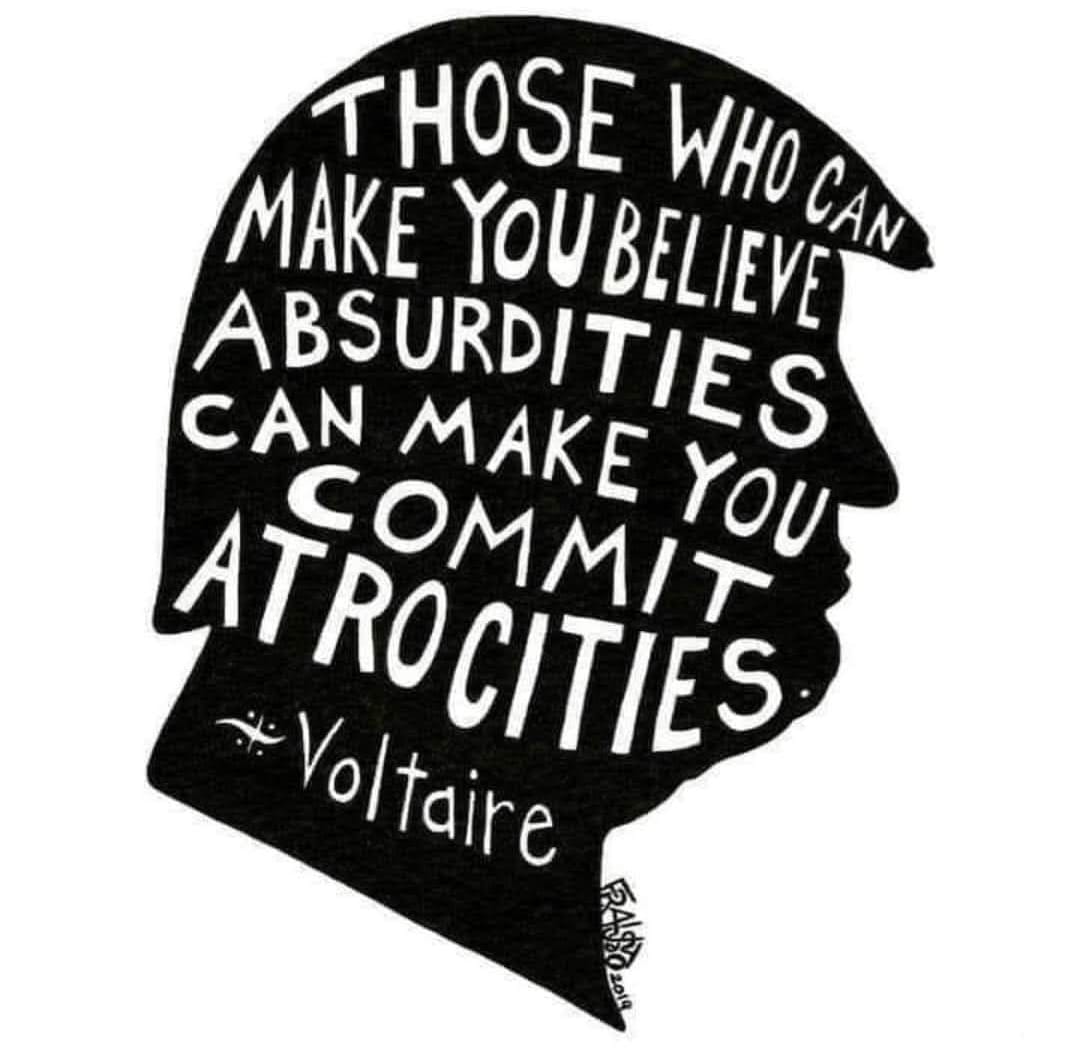
Those calling in bomb threats to elementary and middle schools in Springfield, OH—not to mention a hospital and City Hall–are terrorists, all right. And the targets of their wrath are innocent children. They fall into the most dangerous category of would-be school bombers: Hate bombers. Those who would kill the vulnerable for ideological, racial, religious or ethnic reasons.

And, as the harried Mayor of Springfield correctly noted: It was their words that did it.

Whose words? Why, their own Senator from Ohio, who admitted he may have “created” the story of abducted dogs, cats and geese. And his blabbermouth running mate, who wants to run American Carnage Nation again.

Karine Jean-Pierre, Biden’s Press Secretary on the migrant pet hoax: What is happening here is an attempt to tear apart communities … maybe we should not have leaders who fall for fake internet conspiracy theories. We should think about that.

But, of course, Trump saw the pets-for-dinner story on TV. So it must be true.

I wonder if he saw the smashed windows and shutdowns. Or the Proud Boys.

Fomenting violence! Against children! What a disgrace.

If you’re still hanging around Twitter (and good on you if you’re not)—look up New York Times Pitchbot, authored by @DougJBalloon. Who may have made the most bitterly satirical post about the whole bomb threat situation in Ohio:

I have never been a supporter of Donald Trump. But if Democrats cannot keep his diehard fans from making bomb threats to schools, I’ll have no choice but to vote for him for a third time.

Forget the “Undecided.” Focus on the Timid.

I read the NY Times daily (I know, I know…) and am an avid follower of their political focus groups. Little sketched heads with thumbnail descriptors (“Bill, white, Florida, 73 years old, voted Trump in 2020”) and their responses to some pretty good policy- and character-focused questions.

To which, they give answers which make me wonder just who their 9th grade Civics teachers were. Lately, the spotlight has been on “undecided” voters, nearly all of whom, IMHO, decided long ago whether to vote and which holes they’ll be punching, behind the curtain, but are anxious to be recognized and asked about their views.

I guess there’s some social cachet in being an “undecided” voter—so discriminating!– but for anyone who can name the people running for President and Congress in their state and district, this election feels like there’s been plenty of information and exposure to what the candidates represent:    The New York Times says undecided voters want more “fine print” details. Really? They’re so lightly engaged that they haven’t made up their minds yet, but they want to dive into the intricacies of tax policy? Unlikely.

In addition, the 67 million people who tuned into the debate on Tuesday got an incredibly clear picture of the candidates’ character and policy goals (or lack thereof).

Here are the people who interest me: The timid. The folks who claim to not be interested in politics. The ones who blanch at the critiquing of men too old and confused to lead the most powerful nation on the planet. Who just want to, you know, get along.

Some of these are people whose votes represent old habits, the influence of their social circles. Some of them are fearful.

Whether that’s fear of change (Will the country finally get a woman in the White House? Will a new president mean that I lose privileges I currently enjoy?)–or fear of breaking away from baked-in but no longer relevant beliefs (Republicans are pro-business and therefore better understand economics, right?), it’s hard to say.

I have written about these voters before—the ones who seem to operate from the gut, whether their gut was telling them to be angry, suspicious… or joyful.

Fact-checking engages only the most involved and informed voters. It doesn’t matter how many times you point out who wrote Project 2025, and how deeply they are enmeshed in the Trump campaign, if you got an oversized postcard from Trump (got four this week) saying he’s disavowed it, well—who are you going to trust?

This is how voters get suckered into believing literally ridiculous claims (Pets for dinner! Executing newborns!) and conspiracies.

Since President Biden’s withdrawal in July, I have joined three Facebook groups and re-activated my interest in another, all groups of women who are planning to vote for Kamala Harris. One group goes all the way back to the Womens March in 2017. Collectively, there are over half a million women reading and posting to these particular groups. And there are hundreds more of these pages, around the country.

And what gets posted and discussed—long, long discussion threads—is fascinating.

It started out with middle-aged women in pearls, blue nail polish and Chuck Taylors. The things they’ve made—hand-painted signs, KAMALA quilts, jewelry and So. Much. Blue.  It was fun to skim, and thousands of new women were joining every day, calling out their towns and looking for friends’ names.

People would post stuff like: My husband says no yard signs, so I just made this blue wreath (beautiful photo) for our front door, and a few hundred women would compliment the wreath and a handful might wonder out loud why the wreath-maker doesn’t get a vote, re: yard signs.

The tone is generally upbeat—finding each other, sharing values—but there have been many, many thoughtful threads discussing how to deal with Trump voters among your friends and family. Some of those conversations are heartbreaking; you realize how divided we have become, and why.

There’s chat about issues, including but not limited to abortion. In every thread, there is someone who says Thank God for this group. I have nobody to talk to.

This is a real thing, this political loneliness. (See,for example: The Lonely Anger of Democratic Women in North Carolina.)

It all comes down to circles of influence. Who do we talk to? Who do we believe?

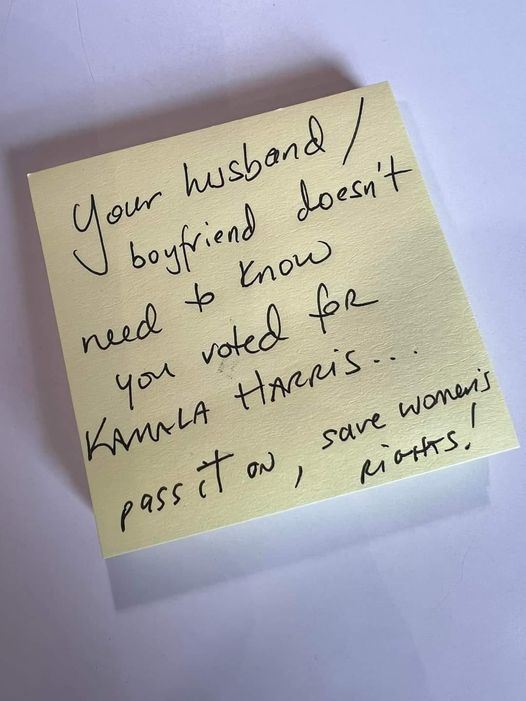
That’s why the post-it note campaign, reminding women that their vote is private, via a little fluorescent square in a public or business restroom, moved me to near-tears.

It’s easy, now, to think that my vote has always been my own, but I’ve lived through eras when women voted as their husbands told them to. My grandmother got to vote, for the first time, in 1924, at the age of 34. I asked her if she remembered who she voted for. She couldn’t, but she did remember asking her younger brother who to vote for.  And she voted for that party for the rest of her life—another 70 years!

This may be the year that women decide to take back our rights.

In the absolute privacy of the voting booth.

What Do Parents Know About Public Education?

Not much.

But don’t take my word for it. Kappan recently took a look at American adults’ knowledge of public schools:

Our findings shed light on a key question: What do adults know about U.S. education? Specifically, what do they know about what is taught, who makes decisions, the role of parents, and the belief systems driving education policy? Our results have important implications for how we might support children and improve the education system.

No kidding, Sherlock.

The survey results would come as no surprise to veteran public school educators: Half of adults don’t know what is/is not taught in their local school. Most are unsure about who’s making curricular decisions. Most are unclear on the impact of privatization on their public schools. Some of the surveyed issues (Critical Race Theory and learning loss) revealed a complete lack of understanding.

Least surprising finding: Adults’ perceptions of what’s happening in public schools mainly come from their own personal experiences (and this includes people with no K-12 children in the home). The percentage of people who read books or articles, watch cable news or videos, or listen to podcasts about education is small. People who get their education news from newspapers? Fifteen percent. Second highest source of ed news? Social media.

That’s a lot of guesswork, memes and faulty memories.

Kappan makes the case that more information means that the general public will make better choices around education—correctly evaluating the corrosive impact of privatization, say, or understanding why a teacher can’t create 30 different assignments, or seeing the benefits of teaching real history. Better communication will lead to better schools, they say.

Well, maybe.

As Larry Cuban says, we’ve been fixing public schools again and again and again, frequently with little or no evidence that our bright ideas will be effective:

Ideologies and political power matter far more than research-derived evidence. Very little evidence, for example, accompanied the New Deal economic and social reforms to combat the Great Depression in the 1930s. Nor did much evidence accompany the launching of Medicare or the Elementary and Secondary Education Act in the 1960s. And very little evidence drove federal oversight of U.S. public schools in No Child Left Behind (2002). Reform-driven policies are (and have been) hardly research-based.

Again—anyone who’s worked in a school for years can testify that, yes, ideologies and political power matter more than research or concrete evidence. And much of that local political power (elected boards, school administrators, influential parents) yields decisions based on personal experience, decades earlier. No evidence or data in sight.

Here’s an example. Some years ago, the curriculum director in my district proposed a new student reporting system for all our elementary students. Instead of grades—a single grade for each subject, plus a checklist for appropriate behaviors—he created a complex system wherein teachers would evaluate multiple objectives for each subject. The number of objectives would increase, in each of the six reporting cycles, until the final report card, which would include the entire years’ curriculum, laid out in sequence.

It meant the teachers would be evaluating—from introduction to mastery—well over 100 skills and knowledge nuggets. Six times a year, for 30 students. Parents would be given several pages of personalized data, a detailed guide to the entire grade-leveled curriculum, as laid out in the district’s master plan (which the teachers called ‘the black notebooks’), and concrete evidence of their children’s progress.

He actually got this plan through the school board, buoyed by professional journal articles about standards-based assessment. Teachers were less than enthused.

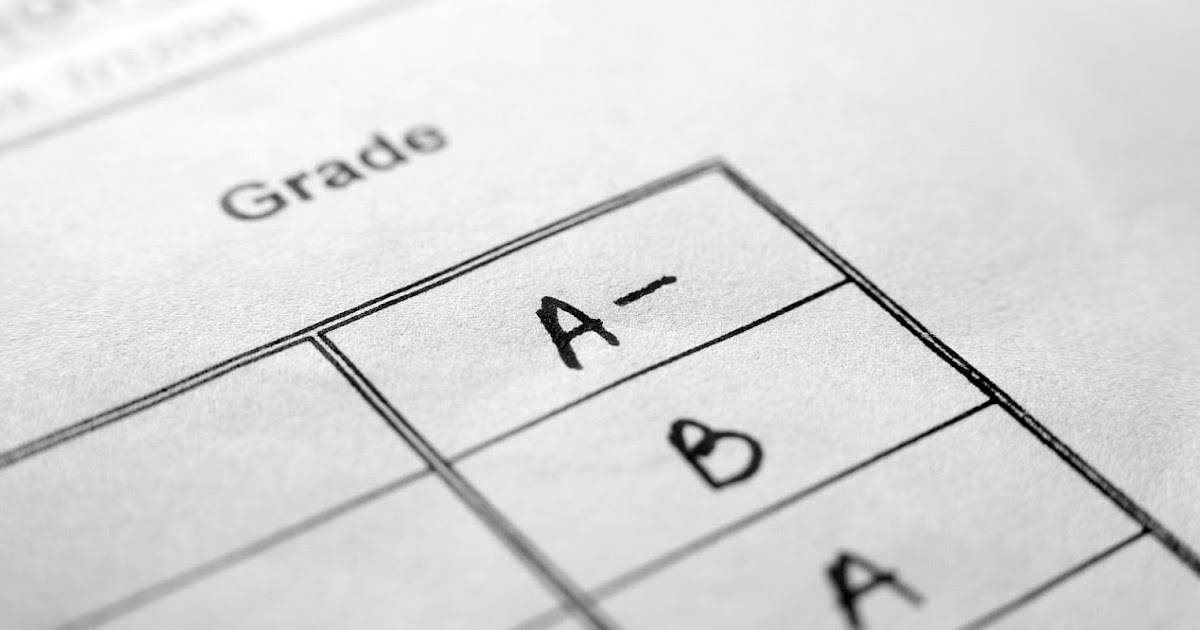
But the plan ultimately failed because parents emphatically did not want pages math and language skills. They wanted grades. They knew what a B+ meant. They did not want to know whether their child could calculate a percentage or identify the subject of a sentence. That was teachers’ work.

Another example: How do we cope with teacher shortages? States and districts all over the country are scrambling to fill positions. Any teacher could give you the right answer: Pay teachers more. Provide adequate resources. And give teachers control over their professional work.

Why are we even talking about reducing qualifications for teaching? Do parents want under-qualified pseudo-teachers heading their kid’s classroom? I doubt it. Recent surveys asked students which quality made teachers “good.”

If you’ve been a teacher, you know the top—73%–answer: They cared about me, as a person. If a would-be teacher cares about students and their learning, they’re willing to jump through the hoops of certification and preparation. They’re willing to invest in a professional teaching career.

And—what do parents know about college? That college is the path to a better job? That getting into the ‘right’ college means everything? Not so fast. College loans burden 43 million Americans who might otherwise be investing in housing. Or—attn, JD Vance!—starting a family.

Parents who support public education by putting their kids into neighborhood schools, then paying attention to what comes home—stories, student work—are doing exactly what makes schools community centers and produces good citizens.

My story about the Report Card from Hell is evidence of this. Parents felt free to critique a new plan (based on their personal experiences and preferences)—to the point that the plan was scrapped. Administrators got over their ‘research says’ biases. Teachers weren’t spending additional weekends cross-referencing student work and checklists, for information that could change tomorrow. The community was satisfied.

What communities need is not more information. It’s trust in their public schools.

How People Vote. How People Choose a “Good” School. Is it Common Sense?

When my son—a Korean adoptee—was in 5th grade, he had a student teacher who was Korean-American. Alex idolized Mr. Thacker, one of the very few Asian faces in our 96% white community. Mr. Thacker took him fishing. When the district hired Mr. Thacker to teach 6th grade, I requested that Alex be placed in Mr. Thacker’s class the following year.

Alex’s 5th grade teacher caught me in the hallway after school, at the end of the year. You know Mr. Thacker is a newbie teacher, she said—and there are some excellent choices among the 6th grade veterans. This will be his first year of teaching. Someday, he’s going to be a great teacher, but…

I’d already had that conversation in my head—and gone with my heart. What mattered most to me was having a great role model. Even if that role model was still filling his instructional toolkit and mastering the curriculum. Kids learn more when they’re seen, acknowledged for who they are.

I think that’s how people vote, as well. When the candidate—for County Commission, Township Supervisor or President—acknowledges YOU and your beliefs, rings your chimes, you’re going to vote for them. Even if they’re racist, traitorous and don’t make a lot of sense.

Some of this is partisan, some mere habit. But driving downstate, along the western Michigan coastline last week, through largely white, economically stressed communities, I was stunned by the number of Trump signs. These are the people who think they were better off when their loved ones were dying from COVID but gas, which OPEC couldn’t get rid of, was $2 a gallon.

A couple days after Trump was elected, in 2016, there was a dust-up in a middle school cafeteria in Royal Oak, Michigan, with kids shouting “Build That Wall.”  It was handled quickly by school personnel, but a video surfaced, and was widely shared by teachers.

Here it comes, we said to each other. Chaos and racism have been set loose.

For anyone who has spent lots of time in a classroom, it’s clear that the attitudes and speech and actions of the wider world (and especially parents) show up– quickly– in the things their children do and say in school.

The campaign to demean public schools and teachers, ongoing since 2016 (and put on steroids in the pages of Project 2025), is reflected in the despicable remarks of the right-wing commentariat. Despicable remarks about Gus Walz and Ella Emhoff—not going to link to those—and top-of-ticket candidates will draw some voters in.  And those remarks will harm kids. Kids in our schools.

It’s easy to label them low-information voters—they are, in fact. But they’re also responding to old beliefs and stereotypes. They’ve been explicitly taught to reject mainstream media and fact-checking. They go with their gut and “their own research,” such as it is.

From a great piece in New Yorker:

Scott, who works in private equity, stuck by his guns… “I think Monica goes directly to sources of information.” This, he suggested, was not the right approach. “Use common sense,” he went on. “Food is much higher now. There’s so many things against restaurants right now.” The Biden-Harris Administration was at fault, he concluded. “They created this.” 

Maybe “common sense” isn’t all that it’s cracked up to be. Or easy to define.

Maybe “common sense” lies in a PR firm’s ability to give people license to embrace their biases, as well as their fantasies: Morning in America.  Boots, not flip-flops.  Make America Great Again.

With the wave of education ‘reform’ that started when Boots-not-Flipflops took office, and tried to recreate the Faux Texas Miracle nationally, lots of people who should have known better got on board. Tests! That’s the ticket! Now we’ll know how to identify a good school—data!

School choice orgs and spokespersons revved up the charters/vouchers machine. Every child deserves a good school—who could disagree? Not me, certainly.

But as the whole NCLB juggernaut lurched along, many of those reformers were dismayed to notice what choices untrained, garden-variety parents valued: Winning sports teams. Transportation. After-school childcare.  Programming for their kids that didn’t necessarily result in higher test scores, like an orchestra, drama club or robotics.

Maybe people choose schools—or teachers—the same way they vote. With their gut.

I taught school with guys like Tim Walz for more than three decades—the coach who taught Social Studies. Walz, as Jan Ressenger notes in this fine piece, is an unabashed apologist for public education:

What does it mean that after two decades of attacks—first with No Child Left Behind’s branding schools by their test scores as “failing,” and now since 2019, with blaming schools and teachers for school closures during COVID—someone running for Vice President of the United States just casually drops a comment celebrating public schools as America’s great contribution?

My favorite Tim Walz meme, making the rounds right now: This is a real thing that happened: Tim Walz was inducted into the West Mankato HS Sports Hall of Fame. He stuck around after the ceremony to help put the chairs away.

As I said—I know this guy. And thousands like him. The kind of teacher and coach who draws families to the local school, so their kids can have a role model. Someone who sees their kids and acknowledges them for who they are.

For those who think this is low-information, sentimental baloney: Walz, a former public school teacher and football coach in Mankato, Minnesota, draws on his experience as an educator to inform his political persona and policy beliefs, saying in a 2007 interview with Education Week—after he was elected to Congress—that teachers are “more grounded in what people really care about.”

As governor of Minnesota, he acted on that philosophy of caring by pushing for and signing into law a $72 billion state budget in May 2023 that significantly increased funding for the state’s public schools, provided for a new $1,750-per-child tax creditfree college tuition for families earning less than $80,000 per year, funding for free school meals for K-12 students statewide, and paid sick leave for workers, as well as a paid family and medical leave.

So there’s your policy.

As for Mr. Thacker? Still teaching. Still taking kids fishing. Still the kind of guy who hangs around and helps put the chairs away.

Ten Non-Standard Ideas for the Beginning of the School Year

I had a colleague, a long-time third grade teacher, who spent most of August sorting books into leveled baskets, going steady with the laminating machine, and running up colorful curtains for the door to her classroom. Her husband, a secondary social studies teacher, would mark the beginning of the school year by wandering around the house, trying to find his thermos. This was immensely irritating to her, of course. But it’s hard to say who was the better teacher.

I had more than 30 first days of school as a teacher. Here’s my—very non-standard—advice for teachers, on gearing up for the new year.

1. Don’t work too hard at unimportant things, like fancy bulletin boards. The most important thing you can do before school starts is think about the curriculum and the kids you’re teaching. You’re not likely to achieve a high-functioning, intellectually cooking Day One, anyway. You’re aiming for Day Four or maybe Day Eleven, once you have a sense of who’s sitting in the desks (or on the floor), and how to get them to work together.

This is not a half-baked “make it up as you go along” theory of instruction, by the way. I know that curriculum has never been less open to creativity—and Important Metrics are looming. You’ve got a big job to do. But—as the salesman says, in The Music Man—you gotta know the territory.

2. Walk around the building and say hello to all of your colleagues. Even if the interaction lasts 30 seconds, and you’re not particularly fond of the teacher / aide / principal / secretary / custodian in question. There is nothing more effective than a school building where adults get along, respect each other and have the same goals. I am always amazed when teachers bitterly complain about the kids bickering in their classrooms, then proceed to ignore or castigate their fellow staff members. Build a few relationships. Welcome newbies. Thank the custodians for the shiny floors.

3. When it comes to advance planning, keep your options open. Don’t write detailed lesson plans for a semester. Plan for a week, maybe, just to ensure you have enough rabbits to pull out of your stovepipe and keep the kiddies busy. Set overarching goals, for sure. But it’s folly to think you have the flow of instruction and learning for the next six weeks under your control. The watchword: learn as you go.

4. Corollary: For now, plan grandly, not precisely. Think about the things students need to know for the next decade, not the next standardized test or unit quiz. Not even the end-of-course or college admissions exams. Focus on things they need to master and understand before adulthood.

Very soon, you will be dealing with the ordinary grind: daily lesson plans—plus assemblies, field trips, plays, the school newspaper, the spelling bee, the science fair, yada yada. Those are the trees. Think about the forest. What do you want your students to take away, forever, from your teaching? Which big ideas? What critical skills? It’s easy to forget the grand picture, once the year gets rolling. Take the time to do it now. Dream.

5. Make your classroom a pleasant place for you, too. In addition to being a place where students learn, it’s the place where you work, both with and without kids. (And, yes, I spent a year on a cart, so I know this recommendation may seem specious.) Most of us teach in a place that, stripped to its essentials, feels institutional, to some degree—if not downright unsightly. Find a way to have comfortable seating, task lighting, pictures or tchotchkes that make you smile. It doesn’t have to be pretty and color-coordinated—many wonderful classrooms have that “kids’ playroom/teenage basement” aura. Still, forget those admonitions about too much personalizing—a classroom should feel like home.

6. Don’t make Day One “rules” day. Your classroom procedures are very important, a hinge for functioning productively, establishing the relationships and trust necessary for individual engagement and group discussions. Introduce these strategies and systems on days when it’s likely your students will remember them and get a chance to practice them. This is especially important for secondary teachers, whose students will likely experience a mind-numbing, forgettable parade of Teacher Rules on Day One.

7. Instead, give students a taste of disciplinary knowledge on the first day of school. Teach something, using your most engaging instructional techniques. Perhaps a game, a round-robin, a quick-response exercise with no wrong answers. Bonus points for something involving physical movement. Beware of empty ice-breakers or team-building exercises—your goal is to have students going out the door saying “I think this class is going to be fun, and I already learned something.”

8. Keep your expectations about the first few days modest. You will probably be nervous (and have bad dreams), even if you’ve been teaching for 30 years—I always did. The students will be keyed up, too—it takes a couple days for them to settle in and behave as they usually do. Wait for your teacher buzz to kick in—that happy moment when you see engagement, maybe even laughter, and you know you’re on the right track. It takes a while, but when it happens, it’s like the first flower in the spring garden.

9. It’s the first day of school for parents and families, too. They’re at home, wanting to know that their kids are OK, that this year will be a good one for little Tyler. One idea for immediate parent engagement that I used for many years (thanks to Middleweb): asking parents to tell you about their child, in a million words or less. Very simple, and very powerful.

10. Tie your classroom to the world.  Even if you teach kindergarten—or chemistry—you can’t avoid election-based chatter in your classroom. Use the daily news as backdrop for modeling civil interactions and substantive debate on the content you teach. Read picture books on immigration. Take your AP Stats class to polling sites. Assign your physical education students to watch YouTube videos of the Olympics for amazing physical feats as well as examples of sportsmanship. What are YOU currently watching, reading or discussing? Share. Help your students analyze issues or find role models.

Hysterical Women

Truth nugget: Education policy is 100% shaped and impacted by the fact that three-quarters of the education workforce is female.

Another truth nugget: After Trump was elected in 2016, over a million women descended on Washington DC to march against what he stood for.

And now, after the events of Summer 2024? Well, do your own math, draw your own conclusions. Maybe start your own organization and host a national call.

As the inimitable Dahlia Lithwick noted: The court granted itself the imperial authority to confer upon the president powers of a king, but although Justices Sonia Sotomayor and Ketanji Brown Jackson said as much in their respective dissents, it fell to Big Daddy Chief Justice Roberts to intone to his readers that their aggregated dissents strike “a tone of chilling doom that is wholly disproportionate to what the Court actually does today.” Implying that the dissenters were overreacting, and without ever attempting to address the substance of their claims, Roberts accused them of “fear mongering on the basis of extreme hypotheticals about a future where the President ‘feels empowered to violate federal criminal law.’”

In other words, sit down ladies. You’re hysterical. We don’t appreciate your chilling doom or your extreme hypotheticals. A President who feels empowered to violate federal law? Hahaha! That could never happen!

This type of response could come in handy for pacifying those whose policy/practice wheelhouse is education. It’s a familiar tone policing strategy for those of us whose professional lives revolve around the classroom, especially in public schools. You’re overreacting! It’s only bus duty! What’s one more kid in your class? Why can’t you maintain control over 24 second graders on Zoom?

But. What if women were united to push the ed policy envelope?   Connie Schultz, wife of the SENIOR Senator from Ohio, Sherrod Brown, has some wise words about what happens when women organize: I know that something else—something glorious—often happens when women gather for a cause. I think of it as coming home.

More wise words, these from Kate Manne:

Many of you are now in the same position I am in: all in for Harris as the person who can beat Trump and head off the incalculable threat facing our country. We are terrified as/for girls, women, and any person who can get pregnant. We are terrified as/for the racially marginalized people who Trump has firmly in his sightlines. We are terrified for trans and queer folks who would face existential threats to their well-being and very existence under the next Trump administration. We are terrified for whatever semblance of democracy that remains and might perhaps be rebuilt. The list goes on. There is no question that Harris’s candidacy will open up a torrent of misogynoir, the intersection of misogyny and racism (particularly anti-Black racism, although Harris is also of course South Asian). It’s our job to fight it in our circles and even ourselves.

Do women have the power to transform thinking about the bedrock value of a strong public education system, in the face of Project 2025? Just a reminder:

Trump tells voters on his campaign site a few ways he would manage education:

  • Cut federal funding for schools that are “pushing critical race theory or gender ideology on our children” and open civil rights investigations into them for race-based discrimination.
  • End access for trans youth to sports.
  • Create a body that will certify teachers who “embrace patriotic values”.
  • Reward districts that get rid of teacher tenure.
  • Adopt a parents’ bill of rights.
  • Implement direct elections of school principals by parents.

That last suggestion is sheer folly, by the way —any teacher OR school administrator will tell you that it’s a recipe for never-ending chaos and enmity in schools. Besides, parents can run for the local School Board or elect people to that Board who will select appropriate school leaders for the community. I personally have seen, on multiple occasions, a group of parents make things hot for a principal, via a democratic process involving their elected board. I have also seen good administrators protected—by the same Board—from a single outraged, vindictive parent.

Kate Manne is right when she says we need to fight bad policy and reprehensible candidates “in our circles” and even in our selves. And nobody is going to fight against misogyny and racism more effectively than the people who are impacted. Therefore, protecting your public school may be most effectively accomplished by women, gathering for a cause.

Don’t want public education to be taken down by the slings and arrows of Moms4Liberty and Project 2025? Talk to your friends. Put up a sign. Donate. Volunteer. Organize in Zoom circles. Repeat vigorously for the next 82 days.

Derek Thompson of The Atlantic points out, in a revealing column that …parties aren’t remotely united by gender. After all, millions of women will vote for Trump this year. But the parties are sharply divided by their cultural attitudes toward gender roles and the experience of being a man or woman in America. When the VOTER Survey asked participants how society treats, or ought to treat, men and women, the gender gap exploded. Sixty-one percent of Democrats said women face “a lot” or “a great deal” of discrimination while only 19 percent of Republicans said so. In this case, the gender-attitude gap was more than six times larger than the more commonly discussed gender gap.

With a majority-female workforce, change will come only when women demand policy that invests in public education. Women teachers, often working mothers, value tenure. Women teachers do not want mandated certification of their “patriotic values.” And they don’t want a President or Congress that embraces the horror show of Project 2025, especially when it comes to education.

Reminder: The Chief Justice of the Supreme Court called his female colleagues “fear-mongers, on the basis of extreme hypotheticals.” In writing.

 Welcome to the Three-month Campaign! Seriously. Welcome.

More than four years ago, in April 2020, I wrote this ridiculously optimistic piece: A Dozen Good Things that Could (Just Maybe) Happen as a Result of this Pandemic.

Every now and then, I pull it up, shaking my head over the concept that an unprecedented global pandemic could shake loose great ideas and get folks to—tick-tock!—act on them, a kind of “if you only had six months to live…” scenario for the nation.

In my own defense, I had barely been out of the house for weeks and had been fixated on the horrifying numbers and clown-show daily ‘briefings’ from the White House. Doom-scrolling and baking aren’t conducive to embracing political realities.

I still think they were good, actionable options for change, however. Where I was totally wrong: the communal lessons that might be learned from surviving a pandemic, together. In fact, I was most wrong about the “together” part, which never really got a toehold, even as the virus took its terrible toll.

Some of us are uniters. And some are dividers. Lately, the dividers have been winning.

Response to the blog could be summarized as: I wish. People wished that the pandemic would lead to better health care, better air and water quality, renewed friendships. But they didn’t see even a global catastrophe moving the needle here in the land of the brave. The one good thing that came from the pandemic where I live? A third of my county finally got the internet.

In April of 2020, Joe Biden had just been named the presumptive nominee for President. In the previous ten months, we’d been exposed to 11 debates, with so many candidates (20) that they were sometimes split into two groups, debating on different nights. It seemed pretty clear that a full year and a half of campaigning did nobody (except perhaps the 2020 incumbent) any good.

Here’s what I wrote, in April of 2020:

How about a complete re-do of American elections?  For once, the hype is true: this election matters more than any in your lifetime. If the Democrats hang tough (and they should), we might get national mail-in voting with other policies that make registration and voting easier for the November election. Americans overwhelmingly want this.

There could be even more, given a Democratic Congress and Executive branch in the fall. We could jettison or alter the Electoral College.  We could also pass a law limiting the presidential primary, given the headaches, unnecessary spending and ultimate results we got. Canada, our closest and most similar neighbor, elected its last prime minister in eleven weeks.

Thought experiment: Imagine that Congress passed a law limiting primaries to six months, still way longer than other first-world nations, and set a national primary date with top-three, rank-order voting. That would mean campaigning for November 2020 would begin next month! Knowing what we know now about the world—would debates be about more than the horse race and which state votes first and gotcha questions? If we overturned Citizens United, and set spending limits (again, like other nations), we might ultimately get ourselves a reasonable set of qualified candidates and a fair election.

Am I glad Joe Biden eventually prevailed in 2020? Absolutely. And I agree with all the commentary about his successful presidency and heroic decision to stand down.

But I am flat-out amazed at what has happened in the past week, with so little primary-like fuss and fanfare, soundbites, rallies and pounced-on gaffes. And I can’t help wondering why we haven’t shut down the perpetual campaign machine in favor of limiting the time and money spent, given the results we get. Is this about the media and revenue streams?

I wish I had a dollar for every time someone complained about TV ads, mailings, yard signs and repellent messaging. And if I had a dollar for every voter who didn’t pay attention to politics, I’d be in the Forbes 500.

The three-month campaign ahead of us feels positively refreshing. It will be intense—it should be—but it will be over soon. Michigan voters can send in their ballots 40 days before November 5th. The end of September.

There’s been some talk about how risky the Harris candidacy is, floating the possibility of a mini-primary or reasons to re-think promoting the Vice President. But I think Rebecca Traister gets this exactly right in this column: The Case for Being Unburdened by What Has Been. The thrill of taking a huge risk on Kamala Harris.

 Our national political narrative [is] finally accurately mirroring our national reality: Everything is scary, we have never been here before, we don’t know if we can do this, and precisely because these stakes are so high, we are at last going to act like it, by taking unprecedented, untested, under-polled, creative measures to change, grow and fight at a pitch that meets the gravity of the urgent, existentially important task in front of us.

The word I like most here is “urgent.”  Things can go wrong with a long, leisurely primary season where a party eventually settles on just the right candidate. (See: 2016.) They’ve gone wrong in any number of elections, convention or primary, over two centuries plus. Sometimes, making a good-faith choice and jumping off the electoral cliff works out.

In the meantime, listen to Keb Mo. He’s got the right idea.

Critical Issues and Minutiae of Public Education

I have been fascinated, in the past 48 hours, by online conversations about the tumultuous political week we have just lived through—especially the comments and questions generated by teachers.

Non-teachers are heartbroken or thrilled or both, by the Biden step-down. They’re nosing out the negative PR and potential VP picks of the presumptive new nominee. There are running threads and analyses around the assassination attempt, a mass shooting where everyone knew the intended (again, presumptive) target, a change from the faceless victims—many children, damn it—of other mass shootings.

So much is in flux. So many building blocks of democracy, teetering on the edge. Including public education.

But we’re approaching (in many parts of the country) the beginning of the school year. Much of the ongoing cyber-conversation around public education centers on clearing back-to-school lists (i.e., teachers begging for essential supplies the school can’t afford), the futility of professional development for yet another silver-bullet reading program, why teachers aren’t paid for setting up their classrooms and other garden-variety School Stuff. The kinds of issues and beefs we see annually.

There are a hundred things that weigh heavily on teachers’ minds as they prepare for another year. What I’m wondering is if teachers are focused on the trees, rather than the destruction of the public education forest. Because focusing on bulletin boards and class lists instead of the section of Project 2025 that deals with education feels do-able, not overwhelming. Or terrifying.

Washington Post advice columnist Carolyn Hax posted a letter about a “rude” teacher who created individual certificates for each of her students at the end of the year. The mother who wrote the letter was upset that individual kids were nicknamed Class Clown and Social Butterfly and–gasp!–her daughter was designated “Miss Manners.” So upset that she reported her ire to the superintendent, after the principal gently suggested these certificates were warm-hearted, not criticisms of children’s character.

Aside from the fact that many parents would be delighted or relieved were their child awarded recognition for having excellent manners—the letter bothered me way more than it should have. Because I have been that teacher, striving at the end of the year to recognize and acknowledge students’ achievements, but also their individual quirks, their signature traits, their contribution to the musical community we built.

Hax rightfully chides the mom for attacking a well-meaning second grade teacher, on the last day of school, no less. But what most folks—non-teachers—will miss is that the success of any teacher, broadly defined, lies in building honest relationships with kids who bring varying intellectual and emotional strengths to school.

Not everyone is an academic superstar or natural helper. Many students will need to be coaxed or cajoled into effort, participation and belonging. Those skills are just as important as content expertise, a full toolbag of instructional techniques and endlessly logged data.

My own end-of-year awards included every band kid. Now—decades later—I still hear from students who remember the last full day of school (after the instruments were all oiled and stored for the summer, the music sorted and filed, and the sink—yuck—cleaned and shiny): The thank-yous. The in-jokes for band members. The Jolly Ranchers. The camaraderie. I recently heard from a woman who remembered winning the “Most Improved Section” award—and she was the only oboe. She included a smiley face.

The Hax column drew hundreds of responses from teachers.

Today, I have been watching teachers on social media saying:  Be kind to the social studies teachers in your building. We’ll be working on overdrive!

Well, yes. You go, teachers. The world is on fire, and your job is to pretend that the only thing that matters is following the prescribed curriculum and keeping your head down in the classroom. We get it—and we love and support you.

But as we launch 2024-25, it is incumbent upon all of us whose livelihoods are not threatened by free speech to keep education policy and the very real threat to public education bubbling up every day on social media and in our friend groups.

 It’s been a wild couple of weeks. But keep your eyes on both the threat and the prize.

I am a Patriot

I am a patriot and I love my country. Because my country is all I know.

Jackson Browne

Of all the things manifested by the upheaval dividing this nation politically, the appropriation of the concept of patriotism by the right wing troubles me the most. Why? Because my country is all I know–and I am loyal to its virtues and principles, while fully recognizing its many tribulations.

I’m sure that every citizen registered to vote in November feels the same way: they’re voting to save the country from sliding into despotism, to secure freedom, the blessings of liberty, yada yada. The fact that the two distinct roads to said patriotism diverge in a black forest of confusion, even violence, is terrifying, however.

Who’s the patriot? And who deserves to have their lives and values suppressed?

Watching the news, and reading—one laborious, revolting chapter at a time—Project 2025, it’s pretty clear that the authors of that document feel that their activist zeal to change the nation is driven by patriotism, their love of country, And if that drifts over the line to white nationalism, well… many of our leading Senators are down with that, too.

It’s funny. One of the things I was never uncomfortable teaching or promoting in the classroom was an explicitly pro-America, patriotic point of view. Musically, and culturally, I endorsed patriotic traditions and celebrated the musical innovations that sprang from so-called melting pot.

Kind of ironic, considering how I felt about the Vietnam war, and the arguments I used to have with my father, a WWII veteran. My country, right or wrong, was his modus operandi. But I thought then, back in the 1970s, and even now, that loving the place where you live, where your ancestors settled, where you’ve put down roots and built community, means you can also be clear-eyed about mending  its every flaw.

I am a patriot. And I love my country.

I love the idea that it took decades of discourse for the early, 18th century Rebels (by no means a majority) to organize in resisting colonial rule, fighting the imposition of taxation without representation (which still resonates today). I think all children in America should know the truth about our Founding Fathers, and their multi-racial legacies.  I think elementary schools should hold mock elections and HS Social Studies teachers should organize voter registration drives. I think flying the national flag—right side up—is everyone’s prerogative.

I also think the Superintendent of Schools in Norman, Oklahoma, who declared “We’re not going to have Bibles in our classrooms”—after a memo from Ryan Walters, their moronic State Superintendent specifying that all OK classrooms will offer Bible-based instruction—is a patriot.

A patriot who understands our foundational principles–the separation of church and state, for example. Perhaps even a patriot who sees citizenship-building, not just job training, as a core purpose of public schools.

Can patriotism be taught?

E.D. Hirsch just published a book in which he states that we can:

 “…transform future citizens into loyal Americans.” Hirsch feels that “patriotism is the universal civil religion that our schools need to support on moral and pragmatic grounds as the glue that holds us together.” He believes the foundation of patriotism is in a shared knowledge base, which all citizens must have to participate together in a community or engage in communication. Hirsch states, “we can create specific standards, so each classroom becomes a speech community whose members all understand what is being said, because they all possess the needed relevant background knowledge.”

This is classic, evidence-free Hirschian blah-blah. If only everyone analyzed the Articles of Confederacy together, or memorized the Gettysburg address, or studied Julius Caesar in the 8th grade (using Hirsch’s handy-dandy curriculum guides, of course), we’d all get a boost of love-yer-country loyalty? Because we’d all be on the same academic wavelength?

Having spent decades hanging out with actual middle schoolers, who were taught a fairly universal set of ideas and skills, I can tell you that more standardization will not make anyone more aware of the virtues or drawbacks of real life in a diverse democracy. Furthermore, the whole idea is vaguely reminiscent of other, failed social movements.

You can model genuine patriotism. You can teach patriotic–and protest–arts and literature, to enlarge students’ perspectives on what it means to endure hardship and sacrifice in the service of one’s country. You can toss out provocative ideas—Should everyone be compelled to recite the Pledge of Allegiance?—and your average fourteen year old will undoubtedly have an opinion, which you can then dissect and examine.

But you can’t make kids love the United States of America.

No T-shirt or baseball cap, let alone a traditional school curriculum, can do that. It comes from maturity, and the heart.

My Country ‘Tis of Thee (Land of Inequity)  Song by Reina del Cid

ICE: Not your friendly neighborhood cops

I was talking with an acquaintance, and made a comment about ICE being reported in Leelanau County. Don’t you want to see illegal immigrants gone? she asked. Besides, they’re only picking up the ones with a criminal record. I was dumbfounded. I knew she was likely a Republican; our points of contact have nothing to…

Put Teachers in Charge of Their Own PD?

It feels weird to be opining about professional development when teachers in Minnesota are dealing with the effects of mayhem in the street, poisoning the normal ebb and flow of public schooling. Is it exam week in the Minneapolis Public Schools, I find myself wondering—how will they handle that on-line, with a significant chunk of…

Where Do Kids Get Their Information?

Their music and media tell them individualism will pull them out of squalor. The people behind those messages shove the economic ladders from underneath them.   (Jose Vilson) One of the most stunning bits of clarifying data I’ve seen in the past few weeks is this chart from Media Matters, with data from February 2025: It’s…

Just How Bad are Things?

I have to say this: the left side of the aisle has WAY better memes than the right side. From the bold, white-on-black “I Dissent” to the Martha Gelhorn quote“If we mean to keep any control over our world, we must be interested in politics”—Dem-flavored bon mots have more wisdom and wit (“Come celebrate our last Fourth of July!”) than bible-verses-with-guns Tweets from the right.

But damn. This has been a rough few days for those of us who believe Martha Gelhorn was right.

Anne Lamott is right, too: It’s so horrible to have to deal with last night etc without Molly Ivins, but I know exactly what she would say: “Sweetpea, let’s have this conversation in a week or two.”

And for most of us, that’s about the best we can do. Right now.

Wait and see.

Choices will be made. We can decide to live with them, and act accordingly. Or not.

I was in the classroom for a long time. And many times—many, many times—we rode rough political waves, and I would think (after a third millage loss, or the Governor establishing our state-based employees as Right to Work, etc.) that All Was Lost.

I remember thinking, more than once, that we had reached rock bottom as a school district. Maybe it was when the Superintendent hired armed guards to hang around and threaten picketing teachers? And some of those freshly trained armed guards were our recent graduates?

I also remember being pregnant in the 1980s, and having a conversation with a similarly pregnant mother about our reservations at bringing children into the kind of world that would elect Ronald Reagan.

I’d call what I thought was disastrous then, compared to what’s happening right now, a failure of imagination.

That pregnant friend? We had healthy political discussions, once our girls were born, about how to resist the greed and trickle-down economy by teaching our children and students about diversity and equity, the things that made our country great. OUR schools were going to make a difference in kids’ lives. Give them skills—and hope.

That was then, of course.

I never, ever would have predicted what has happened to public education—the organized and well-funded attacks, the false accusations—back then.

Nor, of course, would I have foreseen the outcomes of the Trump presidency:  the criminal indictments, the election denial, the January 6th insurrection, the collapse of the Supreme Court. The Covid deaths. The loss of reproductive rights, and danger to women’s health.

Yeah, it’s really bad.

But the trick is not losing hope. Thinking creatively, rather than defensively. 

Otto von Bismarck said—Politics is the art of the possible, the attainable… We have certainly been shown what is attainable, this week—overturning centuries of precedent to save one man. But there are possibilities for the left, as well. We need leadership.

What can Joe Citizen do, right now?

Stay informed. Read selectively. Express yourself to friends, with receipts. Stay calm—take your vacation and unplug, and come back ready to pitch in, whatever you can spare, to ensure a safe election. Because this one really matters.

My best friend and I drove down to Washington D.C. in January of 2017, for the Women’s March, to be part of history and to fan the flames of hope. To think: We are not alone. Four years later, the Proud Boys and Oath Keepers and a few thousand friends broke into the Capitol. I am guessing they were there to feel connected as well.

What happened in those four years?