
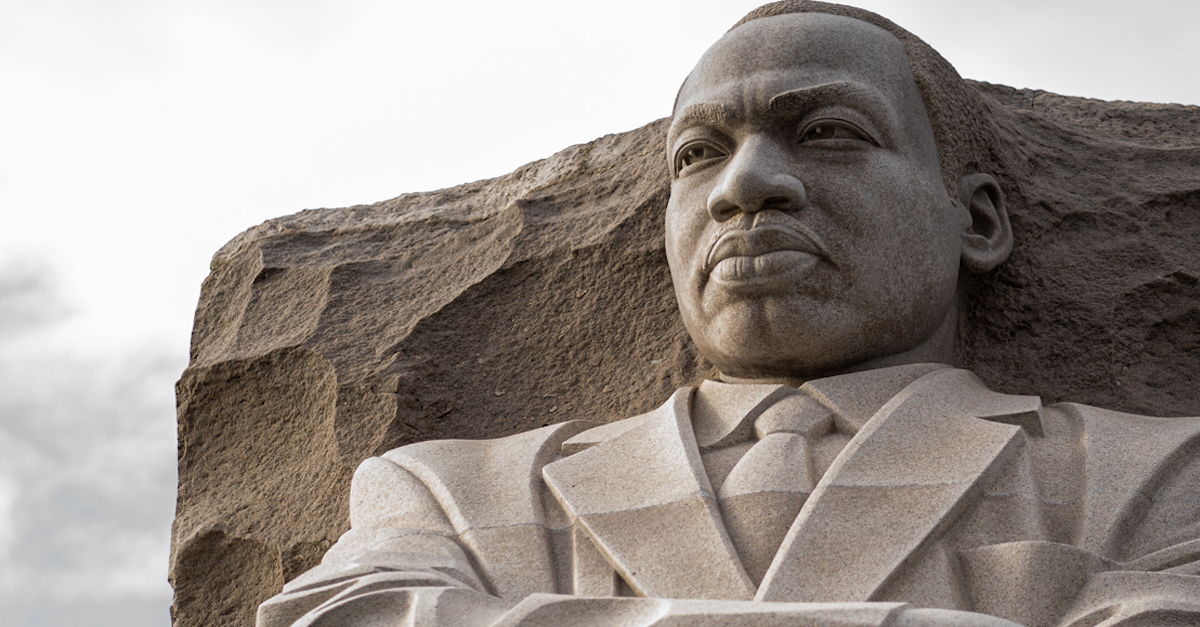
“The function of education is to teach one to think intensively and to think critically. Intelligence plus character — that is the goal of true education.” Martin Luther King, Jr.
There it was, again—a call for civics education, accompanied by the conviction that nobody teaches or takes Civics anymore– this time in Joyce Vance’s (excellent) newsletter. Vance says:
I keep returning to one core thought: civics education really matters. Its absence, at least in part, is what makes a Donald Trump and a MAGA movement possible. It’s the casual view among so many people that the form our government takes doesn’t matter. Living in a democracy isn’t something they view as important; politics is a spectator sport and not serious business.
So what’s not to agree with there? Beyond the fact that merely taking a Civics class in 8th or 9th grade won’t fix the problem of our malfunctioning civic understanding and engagement in young people (or their parents, for that matter).
Type ‘Civics’ into a search engine, and this is what AI will tell you:
Roughly 50% of American public school eighth graders took a civics class in 2018 and 2022. However, only 29% of those students had a teacher who primarily taught civics.
AI, apparently, does not understand the issues about disciplinary concentration vs. putting a certified body in front of a social studies class, but no matter. If half of all 8th graders took Civics in 2018, they were eligible to vote in 2024. Still more students likely took Civics in 9th grade or later—the Michigan Merit Curriculum, for example, prescribes Civics as a required HS course. If a significant majority of our students are taking civics, it’s not helping.
The tendency for states to focus on math and ELA, with less attention paid to social studies, fine arts and even science education is definitely a factor in a fading sense of what it means to be a representative democracy.
However—there are eight states that do not require a civics class: AL, DE, KS, ME, NJ, RI, WY and VT. For 50 years, the only secondary course required in the Michigan constitution—was civics. I’m not seeing a pattern, in these states, of a civics requirement (or lack thereof) leading to repression of a MAGA-type movement.
I think we’re ascribing a kind of magic to civics classes that doesn’t exist. Just as being required to take a Shakespeare class doesn’t necessarily lead to an appreciation of The Bard’s incredible depth of influence on English idioms and dramatic tropes, understanding the scaffolding and responsibilities of the three branches of government doesn’t always increase appreciation for them, or their ability to impact your life.
The National Civics Bee produced these questions for 8th grade contestants in 2024. Go ahead—take the quiz. Then ask yourself: Would knowing the correct answers to these inspire a sense of pride in our core democratic principles? (I got nine right—missed the one on standing committees.)
It’s pretty obvious that a significant proportion of the population doesn’t understand the limits of presidential power (including the president himself). Americans’ lack of civic knowledge, across the board, is a subject for hundreds of TikTok videos. Maybe it’s not about knowing the rules and norms—but having the savvy and venality to skew them to one’s benefit that is giving us a dictator on day one. Not really an example you really want to see in your Civics textbook.
What things do we imagine students might learn—and retain—in a traditional civics class? The three branches, the Constitution and Bill of Rights, how a bill becomes a law, all the building blocks of government? None of those dry informational tidbits are going to inspire kids who can now pretend to be part of a realistic video-game school shooting. Or watch the Capitol being overrun, or the richest man in the world pop out a Nazi salute.
Nor will a new focus on informing Joe Sixpack about Standing Congressional Committees being permanent help with what may be our most critical failings, as a democracy. Until we can reduce the dangerous inequity gap, control corporate power and develop a population that can identify and reject disinformation, we’re toast.
I’m sure there are civics teachers who are able to engage young teenagers in the concrete ways that our government will impact the rest of their lives (starting with their drivers licenses), and the value of honest and efficient leadership. I’m also sure that there are plenty of civics teachers who are terrified of honking off somebody’s mom by suggesting that we just elected a criminal.
But there would be real value in pushing civic literacy, if we could agree on what that looks like. Audrey Watters had a great piece today on what we mean when we talk about literacies. She points out that literacy isn’t simply the acquisition of a new skill; it is an acquiescence to a particular way of thinking – and new ways of thinking are suspect in 2025.
But new ways of thinking about “content”—relevant facts in a disciplinary course—are what we need, if we want to build civic engagement and genuine community. In truth, all content—all intelligence—is useless without character. Including what we might call civics.
Martin Luther King made that clear.
 Teacher in a strange land