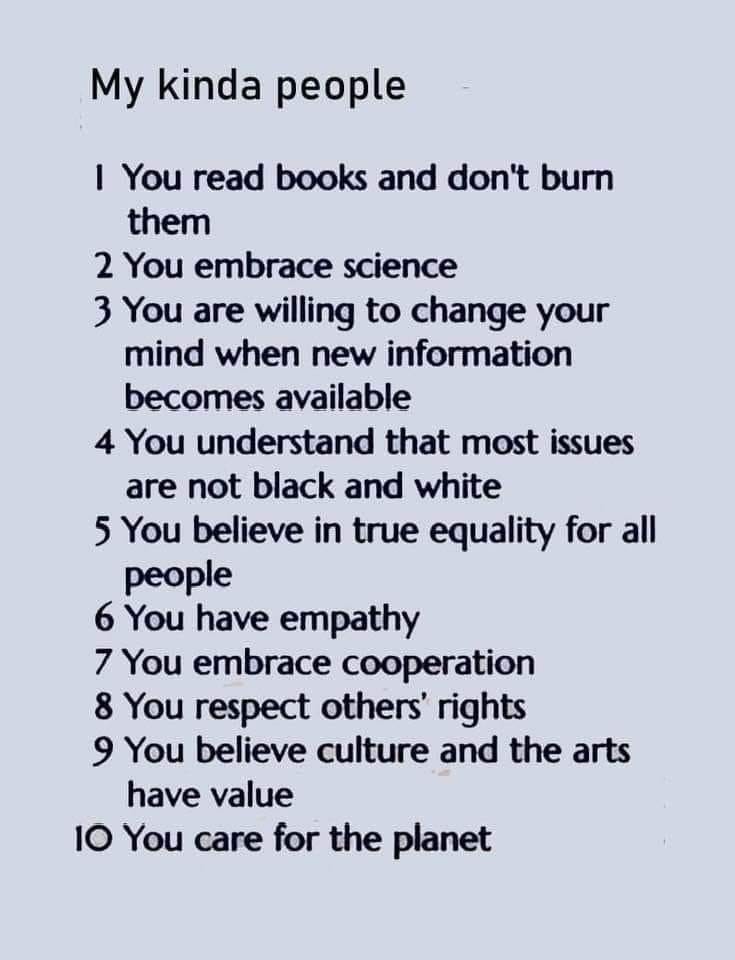
Who ARE these people? Part II

Earlier this year, I wrote a piece about people whose core political beliefs represented the sincere hope that the country would radically improve under the second Trump term. It was titled Who ARE These People?

It represented a sentiment I hear all the time: I can’t believe there are people who think Trump is the second coming. Who in their right mind could see him as a transformative leader? Who does not perceive the grifting, the rank incompetence, the prejudice, the lies—and the danger to a functioning democracy?

Companion questions: What percentage of the population understands and genuinely embraces Trump and the cadre of people surrounding him, currently disassembling our government? Who ARE the people who think it is Trump’s right to tear down the East Wing of the White House? Who ARE the people who believe that dangerous crime is surging, that food prices are dropping, that cutting SNAP benefits and Medicaid will teach those lazy slackers a lesson? Oh—and don’t use Tylenol!

And—key point—where are those folks getting their information? How do we counter obvious lies? Including lies published on official government websites and broadcast in airports?

Yeah—I know. You read this stuff, too—eye-popping, outrageous stories—and ask the same questions.

Maybe you’re wondering if teachers—underpaid and overworked—could have done more to establish the habit of questioning authority, discerning which evidence and rhetoric are reliable. Examining biases, looking at turning points in history, and so on.

Where were the people that Lucian Truscott calls yabbos educated? Who suggested to them that racism, sexism, and deceit were OK, if they were means to an end?

It’s exhausting.

This week Jonathon Last wrote this on The Bulwark:

Some large portion of voters do not appear to understand elementary, objective aspects of reality. We have jobs and lives, too. If we can understand reality, then they should be able to as well.

It does seem as though the last Democratic administration focused like a laser on economic issues. It managed the economy well, avoiding a recession and achieving a soft landing. It passed major, bipartisan legislation around Kitchen Table Issues like infrastructure spending. It kept the economy strong, with historically low unemployment and real-wage growth. It did not try to ban assault weapons but instead passed a gun-reform bill so sensible that it received bipartisan support. It successfully negotiated the most hawkish immigration reform bill in American history, only to have it sabotaged at the last minute by Donald Trump. These are actual things that happened in the real world over the course of 48 months.

Yet somehow all of this activity was invisible to voters? While these same people were highly attuned to the number of times LGBTQ appeared in the Democratic platform?

Which is it? Are the voters oblivious? Or are they discerning? Or does it depend on the situation: Willfully blind to some facts, but hyper-attuned to others?

Another theory is that voters are largely incapable of discerning reality, so expressed policy preferences matter much less than atmospherics and vibes. This theory holds that voters will respond more to entertainment or projections of strength than to a policy-based focus on the Real Issues.’

Whew. But probably—yes. Incapable of distinguishing reality from wish fulfillment. Rumor from news. Fool me once, twice, keep on fooling me, but it’s easy to vote (if you vote at all) by habit, not by analysis:

In fact, research into voting patterns in America suggests that it honestly doesn’t matter that much who or what a candidate looks like. When people go into the voting booth, they vote Republican or Democrat. When push comes to the ballot box, that little R and D matter more than all the Bud Light in the world.’

So. Here’s the real nub. If a third of American voters can’t tell fact from ugly fiction, or actually prefer to be governed by racists, quacks and the mentally diminished, if they are Republicans, what are we to do? Is this a permanent shift in American politics? Or are there ways to rebuild trust in our neighbors, our institutions, our national pride?

We can’t turn away if we want a just society. We can’t rely on the hope that seven million citizens singin’ songs and carryin’ signs will be enough. Because the destruction is too speeded up and too dangerous.  Rachel Bitecofer reminds us of a single line from a Warsaw Ghetto diary:

‘The writer had already lost his home, his livelihood, and most of his family. Rumors were spreading that deportations east meant death, and he wrote “We hear that being deported East means they are going to kill us, but there’s just no way the Germans would do that.”’

Lately, I have tried to focus on ways to reconnect with those who might regret their vote, or whose habitual partisan roots might finally seem like a bad habit. People who are becoming increasingly alarmed at seeing Bad Things happen, even though they remain safe and unharmed. Two thoughts:

(from Colorado organizer Pete Kolbenschlag):

‘This is the Ditch Principle: Your ditch neighbor may disagree with you about everything except keeping the water running —  so you start there. The neighbor who might pull you out of a snowbank doesn’t stop being your neighbor when you disagree about politics. Rural communities practice interdependence because isolation kills.’

(from Philosophy Professor Kate Manne):

‘How has Mamdani, an unapologetic socialist—and progressive Muslim and advocate for Palestinian rights—pulled off the feat of likely winning against the odds, against the tide, and against all early predictions? In part, I think, by calling forth the best from voters, rather than kowtowing to existing polling data.’

As a veteran educator, I hate saying this—but I don’t think this is something learned in required coursework, no matter how great your Civics curriculum is. Schools are a kind of stage, where society plays out its biases and beliefs, bad and good. Incorporating content standards into becoming a more responsible and caring human is something that can be modeled—but not tested and ranked.

There is no class syllabus that prescribes pulling your neighbor out of a snowbank—but if your dad pulls over on a snowy day to get a speeding classmate out of the ditch, you’ve learned an important lesson in interdependence. Likewise, there are teachers who call forth the best from students, by integrating facts and skills with compassion and curiosity.

I wish I had answers for these questions. What do YOU think?
Come On People Now, Smile on your Brother

So—I am a Democrat. Not a surprise to anyone who regularly reads this blog.

I think Democratic thoughts—Health care is a right! Fully support public education!—and support Democratic causes. And lately, I have been most discouraged by my fellow Democrats’ unwillingness to find common cause with other Democrats. To become brothers in arms against the terrifying actions of the Trump administration.

By “Democrats,” I mean people across a wide spectrum, from Bernie-loving Democratic Socialists who repost stuff from the IWW, to middle of the road Democrats with any combination of views on critical issues, to former Republicans who just can’t stomach the Mad King and his court anymore. The really, really big tent.

I live in one of the few counties, nationally, that went MORE blue in 2024. It’s a county full  of old white people who can afford expensive lakeside housing, as well as younger and more diverse people who work in middle-class and service industry jobs and are barely able to scrape by—nearly half of them are ALICE: Asset Limited, Income Constrained, Employed. One deer crash (and they’re endemic here) away from a financial crisis.

A whole lot of those folks should be blue voters—those who will be seriously threatened by cuts to Medicaid, those who should be in favor of radically raising the minimum wage, those who will be harmed by changes in tax law to favor the rich. Those whose generational fruit farm operations or elegant resorts or personal landscaping need immigrants to work in Michigan’s muggy summers.

If there were ever a time when we all, lifelong Dems and Dems Lite and Dem-ish, ought to be joining hands—everybody get together, try to love one another, or at least see beyond minor differences—it’s now, when masked maybe-ICE/maybe-J6er thugs are roaming the streets, beating people up before sticking them in unmarked vans. The entire Trump Cabinet is both deeply unqualified and out to reverse decades of scientific, military and diplomatic progress.

And yet.

We—my local Democratic party—are generally doing well on reminding folks to re-up their membership. But we are also getting not-renewing messages from people who are angry with Chuck Schumer or David Hogg(who has since resigned). Who want to spout off against Democrats in general, and find their local party a convenient target. As if we had influence over the national party’s decisions, rather than being focused on local candidates, local elections and local media. For our own benefit—and even survival.

We have Indivisible—and I LOVE Indivisible, national and local—members worried about Democrats getting credit for small local protests (which I also love). We have further-left Democrats hacking on our Senator, Elissa Slotkin, who used to work for the CIA, and is pretty purple. It does no good to remind them that Slotkin beat, 3-to-1, an attractive lefty candidate in her primary—or that Michigan itself is a purple state.

While I was thrilled to see a young, outspoken Muslim man run an energetic, youth-focused campaign for NYC Mayor, and send Andrew Cuomo spinning away, I am disheartened to see Democrats—Democrats!—express pointed reservations about his ultra-progressive policy goals, funding the devil they know, instead.

I absolutely do not want to hear “but I vote for Democrats, after I trash the party” excuses, either.

The old saw goes “Democrats fall in love, Republicans fall in line.” Time for Democrats to scrap their ideological purity and see the forest, not the trees. There’s a wide range of beliefs; we won’t agree on every issue—or every candidate or office-holder.

But smile on your brother. Join hands. The nation depends on you.

Goodbye to the Department of Education

Lots of my fellow ed-bloggers are musing fretfully about what appears to be the imminent demise of the Department of Education (ED, in DC insider parlance). There’s a lot to say about laying off half the employees at a vital federal institution and crushing its ongoing critical functions. Some are hanging on to the idea that only Congress can disappear the ED, but I have my doubts.

Chasten Buttigieg, spouse of the former Transportation Secretary (and person who lives near me) suggested on Bluesky today: If Linda McMahon and the Department of Education believe in “efficiency and accountability” (after laying off half of the department), then I’m sure they’ll gladly publish a list of every position that has been eliminated and why that position is no longer needed.

As if.

Speaking as a person who was already four years into her teaching career when Jimmy Carter got the ED through Congress and running, I clearly remember the parade of Famous Political Operatives (including Reagan, the Republican party and various right-wing caucuses) who pooh-poohed the idea that education was important enough to have its own Department and Secretary.

They were all operating from the same standpoint: Too much tax money for public education, too much federal say-so on what should be state and local decisions. Classic conservative positions. The Detroit News has been referring to public education as a massive entitlement program for years.

Those reasons were not enough to take down the ED, however. And the Department went merrily on, as bureaucratic institutions do, making things better for kids with disabilities and establishing programs to continuously improve public education. Theoretically.

Some of those programs and laws administered by ED—NCLB, grandchild of the ESEA, springs to mind—were not popular with those staffing the 13,000+ public school districts in the U.S. But the ED had a core function that we all could get behind, beautifully illustrated yesterday by this AP headline: The Education Department was created to ensure equal access. Who would do that in its absence?

Without the department, advocates worry the federal government would not look out in the same way for poor students, those still learning English, disabled students and racial and ethnic minorities.

There was a time when I would entertain arguments about whether the Department of Education was entirely a force for good. I was disabused of this notion by Renee Moore, a brilliant and dedicated educator who taught in the Mississippi Delta. Without a federal force to protect public education, she pointed out, Mississippi could easily slide backward into the segregated, utterly neglected public schools that made up its past. We can’t trust states to equitably take care of the children who live there, especially those in poverty, she said. The federal government gives us a backstop.

I thought about Renee this morning, when I read this statistic: The share of K12 funding provided by the federal government ranges from 23% in Mississippi to 7% in New York. Overall, in 2021-22, average federal education spending was 17% in states that voted for Trump in 2024 versus 11% in states that voted for Harris.

Education Week also had an interesting piece up today, Can Trump Do That? Which Actions on Education Are Legal, and Which Ones Aren’t? It’s paywalled, but the gist is that in 11 federal education programs that Trump has indicated he will destroy, in some way, he’s on legal (but distasteful) footing in only one. The rest, he technically can’t do, via a wave of his magic Elon-wand.

But we all know where Trump and Musk are going. We see it with our own disbelieving eyes. Rules, schmules. And the states that are going to get hurt the most are his most loyal base.

Lots of Trump’s executive orders are easily reversible. Don’t take your Sharpie to the Gulf of Mexico. But destroying the Department of Education is a Category Five injury to the concept of a free, high-quality education for every American child, regardless of what they bring to the table.

Who ARE These People?

For most of my adult life (other than a brief but wonderful stint in the People’s Republic of Ann Arbor), I’ve been the proverbial blue dot on a red background. Although I am out there as a Democrat (on the executive board of the county party, and Democratic candidate for office), I always felt fine about living near, and occasionally hanging out with, Republicans.

They were my neighbors and my work colleagues, the white-collar parents of my students, singers in the church choir I directed. When we moved to northern Michigan, it was easy to understand (if not align with) the uber-conservative, agricultural, take-care-of-your-own legacy of the small rural county where I now live. For long stretches of time, I had a Republican state legislator in mid-Michigan who exemplified cross-the-aisle politics for the greater benefit. I thought I understood good people with different political beliefs and habits.

That was then, of course.

I think the distinction today is not Democrats=good / Republicans=bad. It’s not about liberal vs. conservative, either. What we are seeing is an elevation of fear and disinformation, the breaking of the contract of democracy, where majority beliefs, rule of law and consideration of the common good are suppressed–in favor of anger, chaos and feeding the greed of apolitical billionaires and those bent on amassing power.

Anger and resentment. Fear. Disinformation. Crushing respect and generosity of spirit.

There’s a wonderful, brief passage in Elizabeth Strout’s newest novel, “Tell Me Everything.”  One of the minor characters volunteers at a food pantry, because she’s lonely and likes feeding people. She meets a nice man on an online dating site, and they begin a relationship. He tells her he knows that many undeserving people go to food banks and take food they don’t need—so she stops volunteering. And that, Strout remarks, is how the divisions in our towns and families begin.

Resentment. Disinformation. Crushing the human urge to share and socialize. Simple stuff—the kind of things kindergarten was designed to ameliorate. The kinds of things that a good education should serve as prophylactic against.

Years ago, when school of choice language became law, and charter schools began popping up in Michigan, it seemed to me that the people who were driving the movement to destabilize public education had two goals: 1) It’s my money and you can’t have it and 2) I don’t want my children to go to school with them (whomever their own personal “them” was).

Well-funded, non-diverse public schools chose not to participate in school of choice, claiming that there were no seats available for students who lived two blocks over the district border lines. Poorer schools welcomed kids from ‘over the border,’ each one of whom came from a public school district that couldn’t afford to lose them and the public money they brought with them.

I never anticipated that those two principles–let’s call them greed and discrimination–would become the driving force in larger social issues, like immigration, affordable housing, elitism and ‘political correctness,’ trade and the national economy. Illiberal, lawless crapola for schools to deal with, as well, like faux book bans and suppression of the truth in ordinary school curricula. If you think those aren’t really happening, or can be prevented in a blue-state school, here’s a heads-up from the “new” federal Department of Education.

So who ARE these people, the ones actively working to disrupt public institutions (including public schools) and reasonable laws? It’s important that we know, because they’re everywhere now—including Europe. If they’re not conservatives, and not precisely Republicans (aside from the craven, rabidly partisan, power-hungry idiots in Congress), who are they? And why did they think Trump would make their lives better?

Every now and then, the New York Times (and please don’t tell me not to read the NYT) interviews citizens about their political views, another opportunity to wonder: Who ARE these people? Where did they get them?

Last week, the NY Times Magazine published a glossy piece, What Trump’s Supporters Want for the Future of America. Here are some excerpts:  

I don’t like the way this country’s turned — all this woke stuff. Stuff that the kids shouldn’t be exposed to. I think I was 18 before I knew that there was gay people, you know? 

I believe with Jesus at Trump’s side, America will be safe again.

The left has been so gung ho about just taking away rights and trying to demolish what it means to be an American.

You’re going to see so much economic prosperity, the cost of energy going down.

He has excellent people in place in the cabinet as well as throughout the White House staff. 

He has become wiser because of what happened to him. He almost died.

What we want is that they give us more hope that immigrants won’t get deported if they haven’t committed a crime. 

I was at the Capitol that day [January 6]. It was a setup.

I transferred out of the high school that I was going to graduate from because there were guys that were going into the girls’ bathroom.

We are home-schooling him [son] right now, because of what the schools have become. This one has always been like, obsessed with Donald Trump. I mean, every paper he writes, every project he does in school, everything is about Trump.

All of these people gave their names, occupations and hometowns, and were photographed for the article. They were, apparently, eager to talk about their hopes and dreams for the next four years. None of them were politicians or architects of Project 2025—they were ordinary folks, across the economic spectrum.

It’s easy (and I see this all the time on social media) to call these people dumb—or even evil. But I keep going back to the goals of the 2024 campaigns: Disinformation. Fear. Resentment.

As a lifelong educator, I ask myself if I am partially responsible for young adults who fall for the politicized crapola they hear, who are unable to distinguish just who’s taking away their rights, who believe that the January 6th insurrection was a setup. Why would any student be obsessed with Donald Trump—see him as a hero?

Who are these people? It’s a question that needs answering.

Terrified, Outraged, Exhausted

A few weeks back, I wrote a blog about my fascination with a Michigan Women for Harris Facebook page—a community now numbering upwards of 85,000—and how the (mostly) women there morphed from showing off their blue fingernails and Chuck Taylors to sharing heartbreaking stories of neighbors and family members who are die-hard Trumpers. From stolen signs to the ruin of holiday dinners, it was a kind of running anthropological study of what it’s like to live in Michigan right now.

I’m still following the page which has become a kind of lifeline for many women, if you can believe the poignant and distressing posts appearing now. The blue fingernails are bitten to the quick and we’re all sick of 24/7 political ads in Michigan—holy tamales, they’re disgusting—but we seem to have reached a nadir. Shaky marriages, the destruction of truth, firing squads and Nazis.

Not to mention fake hillbillies and a Supreme Court bent on violating federal law.

But I live in a purple state. And I think Lyz gets this right:

The myth tells us that America is cut up into places that are insulated and isolated from one another. Red states where they can pretend their kids aren’t gay. Blue states where they can pretend that abortion access is easy. 

The reality is and always has been that if you are insulated from the realities of American politics, you are rich or a white guy (or both!). And there is nothing more political than that. 

The only real bubble is wealth — enough cash money to paper over a series of political injustices and enough access to move around the barriers to health care, childcare and education. 

There’s only one America, and we all live here.

Which is why I’m more than a little terrified of November 6.

That’s not a typo. I’m not afraid of the election results. I think they’ll be OK. I’m afraid of post-election anger and post-election fear. Plus post-election violence. When the bubble of wealth and privilege is punctured, and folks who have held power are threatened.

In The Washington Post, Ruth Marcus articulated her emotional state: “I am guessing many of you are in the same condition in which I find myself: uneasy, drenched in anxiety and layered with dread — a flaky napoleon of neurosis. If you aren’t feeling this way, congratulations; I’ll have what you’re having.” 

So–I am not looking for ways to decompress. And while I admire the efforts to bring “both sides” together, I’m not ready to make nice with people who are sheltered and protected but unwilling to look at injustice. I understand that a better world is both possible, and very hard to achieve.

We’re not going to get there without some fear, some anger and a lot of hard work. 

Only one America.