Drop Boxes and Other Election Observations

We have entered the Three-Ring Circus phase of the midterm elections.

There’s that Sheriff in California who confiscated 650,000 ballots in an (illegal) snit, after a special election gave Californians permission to change their maps to counteract Trump’s Big Ugly Gerrymandering Scheme. (As of this morning, the Sheriff has to give them back.)

There are the states who have blatantly gerrymandered districts, without citizens’ approval, and the plethora of unsigned/signed court decisions at all levels that have rendered the new districts OK/Not OK/Unconstitutional/Racist.

There is the whole mail-in ballot ball of confusion— plus the Supreme Court’s decision, yesterday, to let election officials use the crummy, error-ridden SAVE data base to decide who gets to vote:

‘The potential impact of the Supreme Court’s decision for the upcoming midterm elections is likely to be limited, as federal law bars states from systematically removing ineligible voters from their voter registration lists within 90 days of an election. The Nov. 3 general election is less than 40 days away.’

And there is whatever the hell is going on in Missouri, where voting has actually started.

Chaos. But that’s the point, no? And guess who is not paying attention to what federal law says, as you might expect the leader of the free world to do?

When I moved to northern Michigan in 2010, I took a photo of myself voting—in another midterm—on Election Day. (I went looking for that photo, but that was four phones ago, alas.) I was absolutely charmed by the idea of voting in our little whitewashed Township Hall, meeting my fellow citizens, thanking the workers who were diligently following all the rules that governed free and fair elections.

Or so I—naively—thought.

Maybe it’s because Baby Boomers were taught that America was the greatest nation, and our elections were the envy of the world—but my faith in elections, no matter which party is running them locally, has seriously eroded since that day in 2010.

Part of this is because more than half of Americans now get their political news and information from social media, and a lot of that is crapola. The only site I trust, for election information, is the Secretary of State’s. And that’s only in my state.

If you’re going to say that you’re suspicious about the validity of election results, you have to have real, concrete reasons (speaking of crapola on social media), not just passed-along accusations or rage-bait. So—here are mine:

In 2024, after election results were announced and printed in the paper, my Republican County Clerk discovered that more than 3100 votes had, somehow, not been tabulated. That may not sound like much, but this is a county with just under 22,000 registered voters.

In 2024, there were 17,840 voters, an 89% turnout (another rather amazing figure), so 3156 missing votes is about six percent of the results—a not-inconsequential segment. And the newly discovered votes flipped a half-dozen local seats from Democrats to Republicans, although we’ve been an increasingly Blue county for the past decade.

You know how whatever media you consume has been urging you to mail early (before October 20), or—better yet—drop your absentee ballot into a drop box, or personally bring it to the Township Clerk’s office?

You can’t do that here, in my jurisdiction.

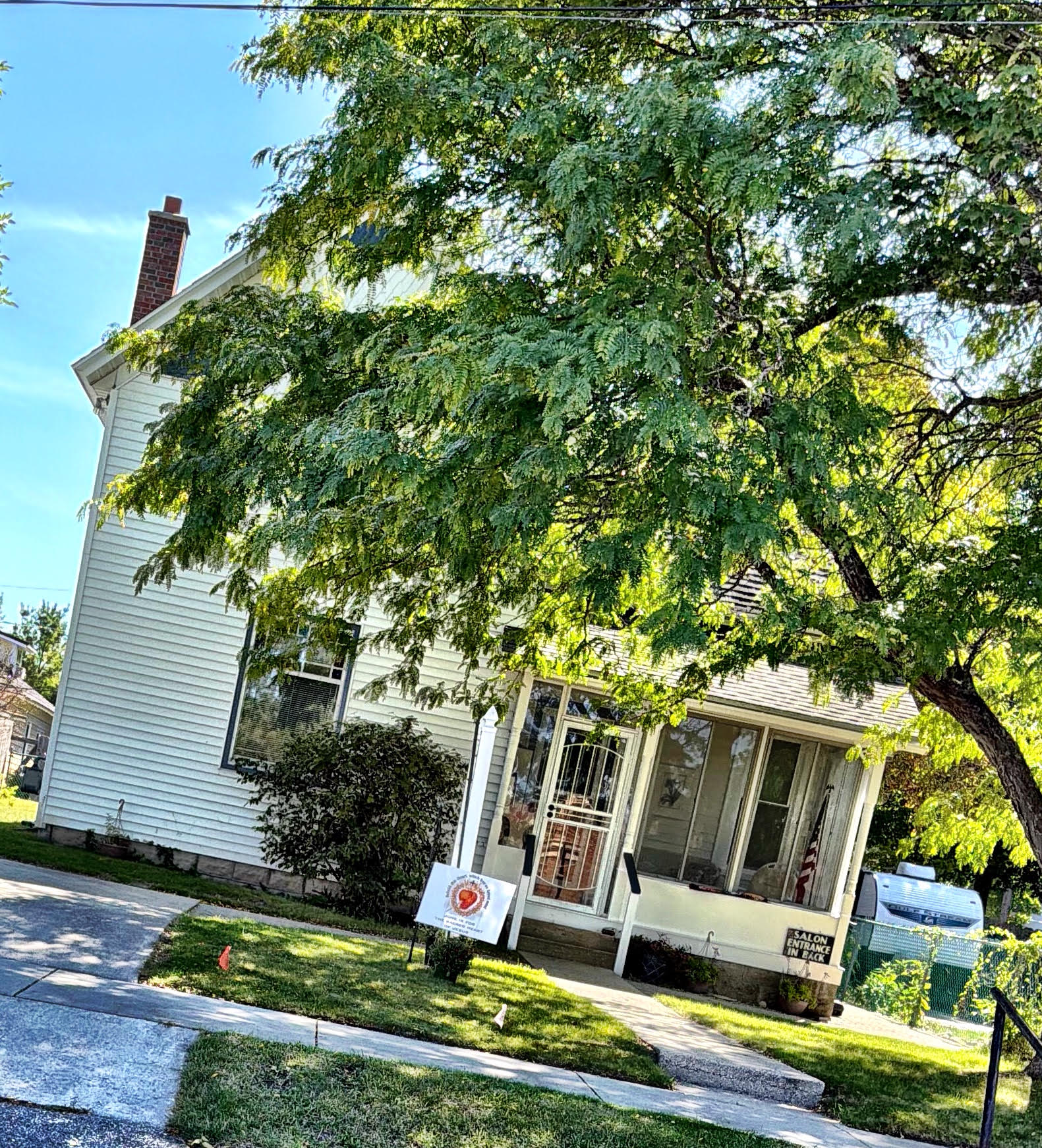
My Township Clerk works out of her home and does not keep hours. If you want to drop a ballot off at her house, you have to call for an appointment. There’s a photo of her home, below, with its Sacred Heart of Jesus sign (which people in my largely Polish-Catholic community use to indicate their opposition to abortion, which is legally protected—again, by voters—in Michigan). There is an American flag on the porch, but this does not feel like a public space, one that welcomes all citizens.

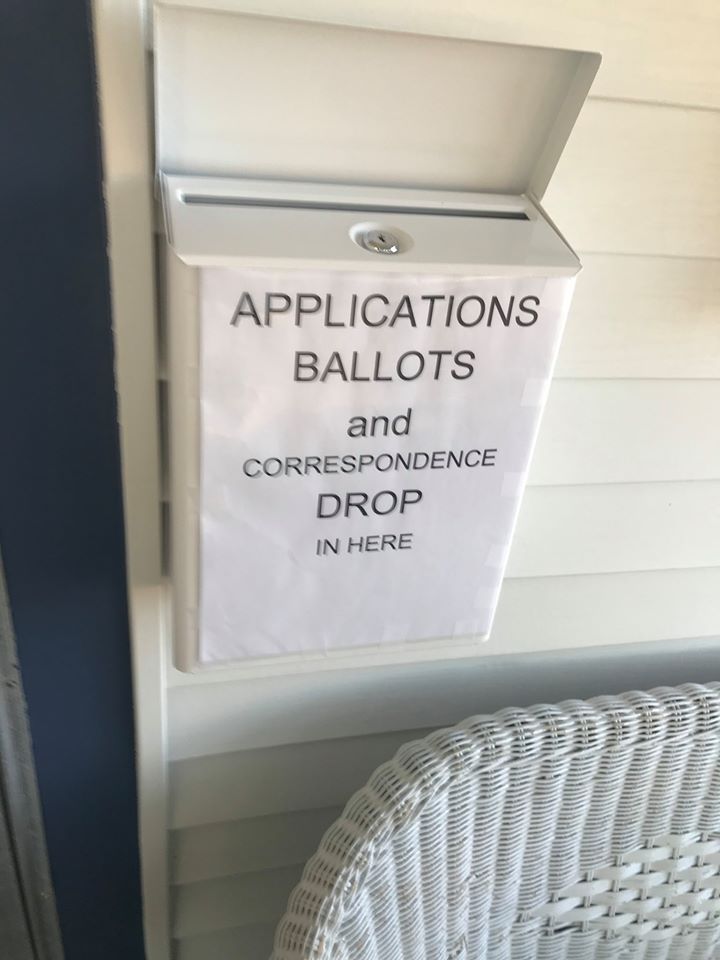
In 2018, Michigan passed a major voting reorganization initiative, including mail-in ballots for everyone, days for early, in-person voting, and providing each voting jurisdiction with a free drop box. Although we have that whitewashed Township Hall, with a large, lighted parking lot, the Township Clerk opted not to install it. Instead, she put a mailbox on her enclosed front porch. That’s the drop box. There’s a photo of that, too.

Would you feel comfortable entering an enclosed front porch to drop your ballot (and, apparently, any other important documents) in the box below? By the way, dropping your ballot in another jurisdiction’s drop box invalidates it.

In case you’re wondering, I have been trained and worked as poll challenger and absentee voter tabulation observer, putting time and money where my mouth is. I vote in every election. I’m still grateful for people who work at the polls.

But I have been disabused of the notion that our elections procedures are better, that our people are fairly represented, and that everyone in America gets a say.  
 Lay off the Democrats

Full disclosure first: I am a Democrat. I sit on my county party’s executive board. I ran for county office as a Democrat in a ruby-red district (and lost but learned a lot). I have been a Democrat since my first presidential election (George McGovern, 1972), so I have seen the ups and downs of a two-party system for ages.

Here are some things I believe about partisan politics in 2026:

  • One of the two major parties better represents most Americans, a diverse bunch if there ever was one—economically, ethnically, politically, religiously, gender-wise.
  • Having multiple candidates to choose from in a primary makes parties stronger, although it can be harrowing when primary candidates go after each other.
  • Democrats are actually the party of the Big Tent, although Republicans occasionally suggest that their tent crosses boundaries.
  • We are in big trouble in 2026 on a number of fronts; counting on well-run—free and fair—elections is no longer a guarantee, for starters.
  • We need a new generation of leadership, but the way to get those new leaders elected is not to turn on the only party likely to provide support for progressivism.

Theoretically…in the midterms, we can appreciate all flavors of Democratic candidates, from avowed Democratic Socialists to outspoken Christians—because they’re being elected statewide or locally. If primaries work the way they’re supposed to, the most popular candidate perspective *in that context* will emerge as the favorite.

Here’s the thing: it may not be your preferred perspective. Which lets you choose—stick with the party you usually vote for, or decide to cross the gulf and vote for another party’s candidate who seems better, or decide not to vote. What flies in New York City may sink like a stone in, say, Iowa.

Win some, lose some. The goal is to get strong, attractive Democratic candidates and equally attractive Democratic policy ideas—then get them in office. And, as they said in The Music Man, you gotta know the territory.

Now, I am fully aware of a new generation of Democrats rising up, reaching out for things that have been pushed aside for decades: Universal health care. Affordable housing. Fair wages and worker protections. Family leave and childcare. Policies that other first-world nations have enjoyed for decades, stabilizing their workforce and making them happier.

I want those things, too. In fact, about two-thirds of Americans want universal health care, which includes plenty of Independent voters and even some Republicans. And three-quarters of Republicans—who skew older, anyway—like Medicare. I don’t think what we’re seeing in this super-heated primary season is about policy specifics, however. It’s about a desperate hope that we can stop the right-wing mutilation of the land of the free.

It makes me—as a local Democratic leader—happy to read about young, energetic candidates, willing to take on the sacred cows (both policy and human) in Congress or their statehouse. Here in Michigan, we have lots of exciting primary races. I hope we have a record-setting turnout in August, and Democrats tell us clearly what and whom they want.

Because we’re their support system—financially and in a dozen other ways. Democrats are looking for someone to take on the guy who’s fecklessly destroying the country, with his spineless minions. People want someone to fight for them, traditions be damned. But first—that someone must run. And running demands partisan support and funding.

If you only support one Democratic candidate, and your candidate loses, so you look around for someone to blame or refuse to vote for the alternate—well, may I remind you that Texas Republicans have already lined up and opened their checkbooks for a loathsome, despicable guy they impeached a few years ago?

I spend a lot of time perusing local conversations on social media—which, I realize, represent only a subset of voters.  I have been shocked by the number of posters who support a particular Democrat but are more than willing to trash the party, and in the process, trash every other candidate for that office. My guy, or bust.

I have even seen candidates—viable candidates with large followings—trash the Democratic party that they’re counting on to support them, should they make it through the primary. That boggles my mind. It’s like turning your back on family.

Robert Reich had a great column yesterday on the Common Goods we have enjoyed as Americans:

  • How we deal with disagreement
  • Truth
  • Trust
  • World leadership
  • Understanding what we owe each other as Americans
  • Political equality

Going after your preferred party damages these things. If you’re on the side of those who believe the ship can still be righted, please stop.

Who ARE these people? Part II

Earlier this year, I wrote a piece about people whose core political beliefs represented the sincere hope that the country would radically improve under the second Trump term. It was titled Who ARE These People?

It represented a sentiment I hear all the time: I can’t believe there are people who think Trump is the second coming. Who in their right mind could see him as a transformative leader? Who does not perceive the grifting, the rank incompetence, the prejudice, the lies—and the danger to a functioning democracy?

Companion questions: What percentage of the population understands and genuinely embraces Trump and the cadre of people surrounding him, currently disassembling our government? Who ARE the people who think it is Trump’s right to tear down the East Wing of the White House? Who ARE the people who believe that dangerous crime is surging, that food prices are dropping, that cutting SNAP benefits and Medicaid will teach those lazy slackers a lesson? Oh—and don’t use Tylenol!

And—key point—where are those folks getting their information? How do we counter obvious lies? Including lies published on official government websites and broadcast in airports?

Yeah—I know. You read this stuff, too—eye-popping, outrageous stories—and ask the same questions.

Maybe you’re wondering if teachers—underpaid and overworked—could have done more to establish the habit of questioning authority, discerning which evidence and rhetoric are reliable. Examining biases, looking at turning points in history, and so on.

Where were the people that Lucian Truscott calls yabbos educated? Who suggested to them that racism, sexism, and deceit were OK, if they were means to an end?

It’s exhausting.

This week Jonathon Last wrote this on The Bulwark:

‘Some large portion of voters do not appear to understand elementary, objective aspects of reality. We have jobs and lives, too. If we can understand reality, then they should be able to as well.

It does seem as though the last Democratic administration focused like a laser on economic issues. It managed the economy well, avoiding a recession and achieving a soft landing. It passed major, bipartisan legislation around Kitchen Table Issues like infrastructure spending. It kept the economy strong, with historically low unemployment and real-wage growth. It did not try to ban assault weapons but instead passed a gun-reform bill so sensible that it received bipartisan support. It successfully negotiated the most hawkish immigration reform bill in American history, only to have it sabotaged at the last minute by Donald Trump. These are actual things that happened in the real world over the course of 48 months.

Yet somehow all of this activity was invisible to voters? While these same people were highly attuned to the number of times LGBTQ appeared in the Democratic platform?

Which is it? Are the voters oblivious? Or are they discerning? Or does it depend on the situation: Willfully blind to some facts, but hyper-attuned to others?

Another theory is that voters are largely incapable of discerning reality, so expressed policy preferences matter much less than atmospherics and vibes. This theory holds that voters will respond more to entertainment or projections of strength than to a policy-based focus on the Real Issues.’

Whew. But probably—yes. Incapable of distinguishing reality from wish fulfillment. Rumor from news. Fool me once, twice, keep on fooling me, but it’s easy to vote (if you vote at all) by habit, not by analysis:

‘In fact, research into voting patterns in America suggests that it honestly doesn’t matter that much who or what a candidate looks like. When people go into the voting booth, they vote Republican or Democrat. When push comes to the ballot box, that little R and D matter more than all the Bud Light in the world.’

So. Here’s the real nub. If a third of American voters can’t tell fact from ugly fiction, or actually prefer to be governed by racists, quacks and the mentally diminished, if they are Republicans, what are we to do? Is this a permanent shift in American politics? Or are there ways to rebuild trust in our neighbors, our institutions, our national pride?

We can’t turn away if we want a just society. We can’t rely on the hope that seven million citizens singin’ songs and carryin’ signs will be enough. Because the destruction is too speeded up and too dangerous.  Rachel Bitecofer reminds us of a single line from a Warsaw Ghetto diary:

‘The writer had already lost his home, his livelihood, and most of his family. Rumors were spreading that deportations east meant death, and he wrote “We hear that being deported East means they are going to kill us, but there’s just no way the Germans would do that.”’

Lately, I have tried to focus on ways to reconnect with those who might regret their vote, or whose habitual partisan roots might finally seem like a bad habit. People who are becoming increasingly alarmed at seeing Bad Things happen, even though they remain safe and unharmed. Two thoughts:

(from Colorado organizer Pete Kolbenschlag):

‘This is the Ditch Principle: Your ditch neighbor may disagree with you about everything except keeping the water running —  so you start there. The neighbor who might pull you out of a snowbank doesn’t stop being your neighbor when you disagree about politics. Rural communities practice interdependence because isolation kills.’

(from Philosophy Professor Kate Manne):

‘How has Mamdani, an unapologetic socialist—and progressive Muslim and advocate for Palestinian rights—pulled off the feat of likely winning against the odds, against the tide, and against all early predictions? In part, I think, by calling forth the best from voters, rather than kowtowing to existing polling data.’

As a veteran educator, I hate saying this—but I don’t think this is something learned in required coursework, no matter how great your Civics curriculum is. Schools are a kind of stage, where society plays out its biases and beliefs, bad and good. Incorporating content standards into becoming a more responsible and caring human is something that can be modeled—but not tested and ranked.

There is no class syllabus that prescribes pulling your neighbor out of a snowbank—but if your dad pulls over on a snowy day to get a speeding classmate out of the ditch, you’ve learned an important lesson in interdependence. Likewise, there are teachers who call forth the best from students, by integrating facts and skills with compassion and curiosity.

I wish I had answers for these questions. What do YOU think?

 Welcome to the Three-month Campaign! Seriously. Welcome.

More than four years ago, in April 2020, I wrote this ridiculously optimistic piece: A Dozen Good Things that Could (Just Maybe) Happen as a Result of this Pandemic.

Every now and then, I pull it up, shaking my head over the concept that an unprecedented global pandemic could shake loose great ideas and get folks to—tick-tock!—act on them, a kind of “if you only had six months to live…” scenario for the nation.

In my own defense, I had barely been out of the house for weeks and had been fixated on the horrifying numbers and clown-show daily ‘briefings’ from the White House. Doom-scrolling and baking aren’t conducive to embracing political realities.

I still think they were good, actionable options for change, however. Where I was totally wrong: the communal lessons that might be learned from surviving a pandemic, together. In fact, I was most wrong about the “together” part, which never really got a toehold, even as the virus took its terrible toll.

Some of us are uniters. And some are dividers. Lately, the dividers have been winning.

Response to the blog could be summarized as: I wish. People wished that the pandemic would lead to better health care, better air and water quality, renewed friendships. But they didn’t see even a global catastrophe moving the needle here in the land of the brave. The one good thing that came from the pandemic where I live? A third of my county finally got the internet.

In April of 2020, Joe Biden had just been named the presumptive nominee for President. In the previous ten months, we’d been exposed to 11 debates, with so many candidates (20) that they were sometimes split into two groups, debating on different nights. It seemed pretty clear that a full year and a half of campaigning did nobody (except perhaps the 2020 incumbent) any good.

Here’s what I wrote, in April of 2020:

How about a complete re-do of American elections?  For once, the hype is true: this election matters more than any in your lifetime. If the Democrats hang tough (and they should), we might get national mail-in voting with other policies that make registration and voting easier for the November election. Americans overwhelmingly want this.

There could be even more, given a Democratic Congress and Executive branch in the fall. We could jettison or alter the Electoral College.  We could also pass a law limiting the presidential primary, given the headaches, unnecessary spending and ultimate results we got. Canada, our closest and most similar neighbor, elected its last prime minister in eleven weeks.

Thought experiment: Imagine that Congress passed a law limiting primaries to six months, still way longer than other first-world nations, and set a national primary date with top-three, rank-order voting. That would mean campaigning for November 2020 would begin next month! Knowing what we know now about the world—would debates be about more than the horse race and which state votes first and gotcha questions? If we overturned Citizens United, and set spending limits (again, like other nations), we might ultimately get ourselves a reasonable set of qualified candidates and a fair election.

Am I glad Joe Biden eventually prevailed in 2020? Absolutely. And I agree with all the commentary about his successful presidency and heroic decision to stand down.

But I am flat-out amazed at what has happened in the past week, with so little primary-like fuss and fanfare, soundbites, rallies and pounced-on gaffes. And I can’t help wondering why we haven’t shut down the perpetual campaign machine in favor of limiting the time and money spent, given the results we get. Is this about the media and revenue streams?

I wish I had a dollar for every time someone complained about TV ads, mailings, yard signs and repellent messaging. And if I had a dollar for every voter who didn’t pay attention to politics, I’d be in the Forbes 500.

The three-month campaign ahead of us feels positively refreshing. It will be intense—it should be—but it will be over soon. Michigan voters can send in their ballots 40 days before November 5th. The end of September.

There’s been some talk about how risky the Harris candidacy is, floating the possibility of a mini-primary or reasons to re-think promoting the Vice President. But I think Rebecca Traister gets this exactly right in this column: The Case for Being Unburdened by What Has Been. The thrill of taking a huge risk on Kamala Harris.

 Our national political narrative [is] finally accurately mirroring our national reality: Everything is scary, we have never been here before, we don’t know if we can do this, and precisely because these stakes are so high, we are at last going to act like it, by taking unprecedented, untested, under-polled, creative measures to change, grow and fight at a pitch that meets the gravity of the urgent, existentially important task in front of us.

The word I like most here is “urgent.”  Things can go wrong with a long, leisurely primary season where a party eventually settles on just the right candidate. (See: 2016.) They’ve gone wrong in any number of elections, convention or primary, over two centuries plus. Sometimes, making a good-faith choice and jumping off the electoral cliff works out.

In the meantime, listen to Keb Mo. He’s got the right idea.