Gratitude and Canned Goods—Teaching Children to Care

From one of my must-reads, Culture Study, on November 12:

If you’re not on TikTok, you might not have heard about the woman who’s been calling religious organizations to see how they respond to a mom’s request to source formula for her two-month-old daughter, whose cries you can hear in the background. (Nikalie does not have a two-month-old daughter; she plays a recording of a baby’s cries in the background).

Nikalie records the conversations (Kentucky, where she lives, is a one-party consent state, so this is legal) and then posts them to TikTok, along with a tally of how many organizations have offered to help and how many have declined. You can see all the videos here, but viewers have been compelled by the overall stats: only a quarter of the religious organizations she’s called have offered direct assistance. The larger the organization, the less likely it is to help.

Even if you’ve seen the Tiktok, I recommend reading the Culture Study piece, wherein Anne Helen Petersen deftly dissects this kind-of experiment, pointing out that some of the organizations that did not offer formula or money sent the caller to another resource, where they did.

She also raises the right questions: How do we help the needy efficiently, elevating proven logistics above feel-good impulses? Should religious institutions have serving the poor as an ongoing mission? (Yes.) And—why are there so many needy folks right now?

As a veteran teacher, in a relatively well-off suburban school system, I’ve been part of any number of school-based community service projects. My middle school used to have a canned goods drive around Thanksgiving.

Homerooms competed to see who could bring in the most cans, with the winning class getting donuts and cocoa. Piling the cans into an edifice—you can make a fairly impressive structure with hundreds of them—then plunking a few students in front of the Great Can Pyramid—well, there’s a shot for the monthly newsletter.

But it always bothered me. There were the rabid competitors—Come on! Just go where your mom stores cans and put a few in your gym bag!—who were definitely in it to win it. I mean, free donuts! From the bakery! There were also plenty of well brought-up girls who wanted to feed the poor (and maybe get their photo in the newsletter), counting and re-counting the cans.

The people who didn’t get mentioned: The Student Council advisor who had to transport a thousand-plus cans to the food bank. And food bank volunteers who had to organize the donations, throwing out outcoded or bulging cans of beets and butterbeans.

Not to mention the folks who depend on food banks, getting there early to get what they actually needed (formula, perhaps) and not be left with stuff that had been sitting in suburban cupboards for years, unused.

For several years, I was advisor to the National Junior Honor Society, the stated mission of which was acknowledging scholastic excellence in middle schoolers. Hey, I was always down to honor academic effort, and lots of my band kids were in the NJHS. It was one of those “make of it what you will” volunteer jobs, and I thought it was a place where some smart kids could wrestle with the idea that they were more fortunate than—well, the rest of the world. A middle school kind of noblesse oblige.

One year, we raised money by hosting a dance, then sent those proceeds to a homeless coalition in Detroit. It was a pretty bloodless project—the only outcome for us was a nice thank-you note from the nonprofit—but it was a good opportunity to talk about just who the homeless were, and how you get to be without shelter in the richest country in the world.

Another year, we “adopted” a family through the local Salvation Army (this was before their stance on LGBTQ folks was questioned), to provide a nicer Christmas. The first order of business, after raising a few hundred dollars, was discussing the word “adoption,” relative to extending charity to folks who are less well-off, but live in the same community. We were not adopting anyone; we were providing temporary, anonymous assistance.

Then, we went shopping. There were two cars full of 8th graders, with lists provided by the Salvation Army, pushing carts around Meijers, picking up a holiday dinner and gifts for everyone in our assigned family. What was interesting to me was the assumption that “the poor” weren’t like the kids in the NJHS; they should have to live with less expensive, less attractive products and even be grateful for them.

In our assigned family was a girl (14), who needed a warm winter jacket. The kids debated: the cheaper, ugly one or the acceptable style that was $20 more? This took a lot of time, standing in the aisle. I asked: Would YOU wear cheaper/ugly? No. Never in a million years. So—why should she? The answer (a good answer): because then we could get frozen macaroni and cheese for their Christmas dinner.

In the end, the chaperone mom and I kicked in extra cash, and we got them both. But life isn’t always like that.

I don’t think you can teach kids to care for their neighbors via school projects—but you can teach them to think about inequity and compassion. Just because SNAP benefits returned this month does not mean the less fortunate will be well fed in the long term. And the misfortunes of rising unemployment, rising food prices and rising social uncertainty will not be ending soon.

The foundations for eliminating food insecurity are cracking. The best gifts: Money and time. Happy Thanksgiving.

What I Learned from my Dad about Politics and How it Applies to 2026

I am a big fan of Jess Piper, a veteran teacher from Missouri, who left the classroom to run for office, and has since reshaped the conversation around why red-staters vote against their own interests. Piper writes often about a childhood spent bouncing around the south, and the family values that influenced her.

When people (including myself here) shake their heads and wonder how so many citizens–despite glaring, flagrant evidence to the contrary–can still stubbornly believe that Trump is leading the country  on the right track, it’s helpful to read Piper’s blog. She gets it.

Mostly, I read Piper for her insights on working-class voters–because my own father, were he still alive, would (despite many years of voting for Democrats, post-War) probably be a Trump supporter, voting against his own interests.

Not a careless, “protect my wealth” country-club Republican. But a grievance-driven voter who resented those he believed were simply and unfairly handed benefits and perks, things he would never enjoy, no matter how hard he worked.

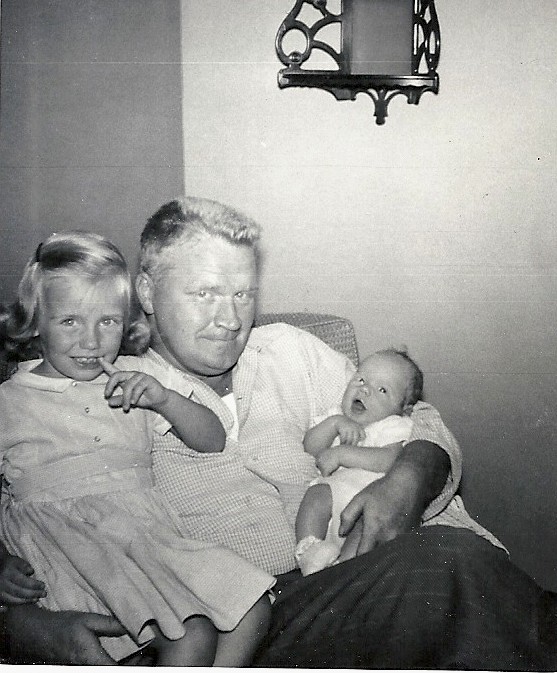
Fear and resentment—and the overwhelming conviction that the little guy never gets ahead—were deeply embedded in his character. That doesn’t mean he was not a good father; he absolutely was, caring for his family and living up to his responsibilities as a hard-working adult and citizen who never missed an election. He was a proud Teamster, a church-goer, and the man who drove me 90 miles one-way to take flute lessons at the university.

My dad served in World War II, in the Army Air Corps (later the US Air Force) in the Pacific theatre. His plane was shot down, in 1944, over the Sea of Japan, and the crew was rescued by an Australian sub. He lost his 19-year old brother Don in the first wave of Marines taking Iwo Jima in February of 1945. I wrote more about these things here, explaining why my dad really never got over the war. But it was more than his wartime experiences that molded his character.

He often expressed the sense that he’d been cheated—that other, less-deserving people were moving ahead, because they had money, or were currying favor, while he (a realist from the poor side of the tracks) was left behind. He voted for George Wallace in 1968, because Wallace claimed there wasn’t a dime’s worth of difference between the two parties: both were corrupt and run by elites. Sound familiar?

Thom Hartmann’s new piece– Culture Is Where Democracy Lives or Dies, Because Politics Always Follows the Story a Nation Tells Itself—goes some way to explaining what’s happening today, but also why my dad, surrounded by protests against the Vietnam war and girls burning their bras, turned to a man who supported segregation and repudiated progressivism: ’ Like no candidate before, Wallace harvested the anger of white Americans who resented the progressive changes of the 1960s. Wallace supporters feared the urban violence they saw exploding on television. With tough talk and a rough-hewn manner, Wallace inspired millions of conservative Democrats to break from their party.’

Like many of Trump’s supporters today, my dad saw Wallace as a truth-teller, an advocate for the working man, someone who would work to defend cultural norms around race, gender, authority and social policy. Even when those norms were outmoded, unjust or morally repugnant.

Today, I know better than trying to talk an irrational, ruby-red voter out of their convictions. I really do understand how pointless, even damaging, it is to accuse Trump voters of destroying democracy and erasing progress. Because I spent, literally, years of my life trying to (cough) enlighten my father, who treated me like other fathers of the era treated their know-it-all college-student kids: as spoiled brats who needed to let the real world take a whack at them.

My father died in 1980, of a brain tumor, at the untimely age of 58. I never changed him, but he never changed me. He thought a college education was a waste of time and money, although when I graduated, he came to commencement exercises and danced with me at the Holiday Inn afterward.

 Later, it dawned on me: the fact that he and my mother couldn’t contribute financially to my college education, and couldn’t help me navigate enrollment, might have been part of his insistence that college was for the privileged, not families like ours.

All of this happened in a time when news and opinion came from three mainstream TV channels and the Muskegon Chronicle. Who do Trump  voters turn to now for news? Is that source supporting their racism, sexism, xenophobia and bitterness? Is it filled with fact-free resentment?

Where do we start in changing minds and hearts? I wish I knew.

Diversity, Political Culture and Middle School Band

Like all educators, I’ve been following the repercussions of the “Dear Colleague” letter the federal government sent to public schools, threatening to cut off funding for schools that dabble in things like human rights and accurate history. The fact that the poor, strapped (snort) Department of Education used some of their evidently dwindling resources to set up a snitch line so parents could rat out teachers and school leaders is telling.

Dear Colleague, my ass.

More like Big Brother is watching. Or Here’s Our Grand Portal of baseless conspiracy theories and fear-mongering to support so-called “parents’ rights”—jump right in!

To make this all seem “normal,” the ED sent out a nine page read-what-our-lawyers-say explainer that further muddies the waters. The purpose of this second epistle seemed to be upping the threat while appearing to be efficient and legal-ish.

Many times, in my long career as a vocal and instrumental music teacher, I’ve had dear colleagues (ahem) express mild envy over that fact that the general public saw my subject discipline as what we used to call a “frill”—nice, but neither substantial nor essential.

Parents, these teachers suggested, didn’t really care about what kids were learning or singing in music class. It was an elective, not part of the more important career-preparation/serious-academics curriculum. In other words, my students were not being tested on the music curriculum, like theirs were. In band and choir class, we were just, you know, playing around. Fluff.

As you may imagine, I’ve written countless blogs and think pieces about what kids take away from a quality music program. If you think that the arts are a value-free zone—not tested, so not important—I’ve got news for you.

The classroom where I spent more than 30 years, teaching secondary vocal and instrumental music, was a platform for learning about lots more than the fingering for Eb and how long to hold a dotted quarter note. It was a place where we could explore how the music that students are marinating in, 24/7, came to be—a cultural voyage, through time and place, and the human response to make art reflecting the artist’s circumstances.

Proof of that–a couple of days ago, a young band director, on a Facebook page for instrumental music, asked his dear virtual colleagues for advice on this dilemma: His 8th grade band had been preparing Moscow 1941, a terrific composition, for an upcoming performance. Given the current fluctuating official opinion on Russia, Russia, Russia, he was stymied by his middle schoolers asking if they were playing a Russian march to show support for the Trump administration.

What do I do? he asked. Do I tell them Russians were the good guys in 1941, but not now? Do I say it’s just notes and rhythms, forget the title? Do I just pick something else? The kids like the piece and we have it ready for performance. Also—I’ve already talked to the kids about great Russian composers and the dark and moody music they have produced, over centuries.

First—I love that there’s an online forum for discussing these professional issues. Responses were mostly thoughtful, ranging from “tell kids the truth about Russia, then and now” (including a couple of good resources) to “get your principal involved.” There were also a few “avoid conflict, always—dump the piece” responses, which I took as evidence that teachers, in general, are rightfully anxious about threats from federal, state and local officials. Music programs are chronically in the crosshairs and choosing music that Trump-voting parents could misinterpret could be risky.

The discussion morphed into examples of band directors who chose music to represent Ukraine, and other masterworks inspired by political events, like Karel Husa’s Music for Prague, 1968. This is what the arts are supposed to do—help us make sense of the world.

Back in the 1990s, I bought a piece for my middle school bands called A Lantern in the Window, a musical depiction of the Underground Railroad. There was a quiet, spooky opening, followed by a pulse-pounding chase, and the piece ended with a richly harmonized quote from an old Negro spiritual, Steal Away to Jesus.

I programmed Lantern often, every two or three years, because it was a perfect teaching piece. There were multiple tempos and styles, and I could talk about the use of familiar songs, how a few measures could remind us of a powerful cultural idea.

Students always wondered why an enslaved person would believe in Jesus—and yes, these conversations had to be carefully handled. But they were worth it. They illustrated the power of music to tell an important story. And that, I thought, was the heart of my job.

Last week, “The President’s Own” Marine Band quietly canceled a concert program originally billed as the “Equity Arc Wind Symphony.” The performance was to be the culmination of a “multi-day music intensive with musicians from ‘The President’s Own’” and high school musician fellows selected through auditions organized by the Chicago-based Equity Arc, a nonprofit organization that provides “specialized mentoring support for young BIPOC musicians and helps institutions take meaningful steps toward equity and inclusion.”

When I see stories like this in the news, I wonder how music teachers, specifically, can stand against federal threats. Our job—our low-paying, high-importance, mega-stressful job—is to give children of all ages, colors and abilities the chance to love, understand and perform music. Politicizing that—for whatever stupid reason—is both wrong and damaging to children and to our American culture. That’s a good reason to push back.

I have empathy for teachers, like the band director worried about Moscow, 1941, but I also know that huge masses of the middle class workers will have to stand against the takeover of our government and our national culture in order to stop the carnage going on right now.

Deep breath. Buck up. There is lots of work to do.