Men Who Like Books Start Out as Boys Who Read

Maureen Dowd, in a NYT article entitled Attention, Men: Books are Sexy!:

Men are reading less. Women make up 80 percent of fiction sales. “Young men have regressed educationally, emotionally and culturally,” David J. Morris wrote in a Times essay titled “The Disappearance of Literary Men Should Worry Everyone.”

The fiction gap makes me sad. A man staring into a phone is not sexy. But a man with a book has become so rare, such an object of fantasy, that there’s a popular Instagram account called “Hot Dudes Reading.”

It’s enough to make me re-up my abandoned Instagram account.

I also sincerely hope that Maureen and I are not a dying breed, older women (we are the exact same age) who find Men Who Read attractive. I once experienced a tiny swoon when I read that Stephen King carries a paperback with him, wherever he goes. You know, in case he has to wait 10 minutes in line at the post office.

This is more than just my elderly romantic fantasy, however. I think Men Who Read are—or should be—a national education goal. Not men who can decode, nor men who can type fast with their thumbs or pass tests about content. Men who actually enjoy reading.

Reading to use their imagination, rather than seeing prepackaged ideas on video. Reading and—important–evaluating information. Using the language they absorb, via reading, in their daily interactions with others. Reading for pleasure.

Personal story: When I met my husband, he told me about working third shift at the Stroh’s factory in Detroit, while he was in law school. His job involved dealing with a machine that flattened cardboard beer cases and needed tending only at certain times. The rest of the time he filled with reading, hours every night. He would take two books to work, in case he finished the first one. He read hundreds of library books, mostly popular fiction.

He is still that person, 46 years later. Swoon-worthy.

When I read (endlessly) and think about how we’re teaching reading these days, it strikes me that the discussion is almost entirely technical: Do we really have a “reading crisis?”  Why? Is it the fault of a program that was once popular and taught millions of kids to read, but is now being replaced, sometimes via legislation crafted by people who haven’t met first graders or stepped foot into their classrooms?

I recently had a conversation with a middle school teacher in Massachusetts who is a fan of phonics-intensive science of reading curricula, largely because she gets a high percentage of non-readers into her Language Arts classes, kids who have big brains but no reading skills. She’s had some success in getting them to read, using sound-it-out instructional materials they should have experienced in early grades.

Good for her. And good for all teachers who are searching (sometimes in secret) for the right strategies to get their particular kids to read. But I’d like to point out that if the technical skills of reading aren’t matched by reasons for reading, it’s like any other thing we learn to do, then abandon. I’m guessing my friend’s students want to learn to read, because they like her, and they find what she’s teaching them interesting.

From an Atlantic piece: ‘The science of reading started as a neutral description of a set of principles, but it has now become a brand name, another off-the-shelf solution to America’s educational problems. The answer to those problems might not be to swap out one commercial curriculum package for another—but that’s what the system is set up to enable.

A teacher must command a class that includes students with dyslexia as well as those who find reading a breeze, and kids whose parents read to them every night alongside children who don’t speak English at home.

There you have it. We’re looking, once again, for a one-size-fits-all solution to a technical, easily measured “problem”—reading scores—when what we really need is honest reasons for people to pick up a book. Or a newspaper. To enjoy a story, or a deep dive into current issues.

My dad, who didn’t graduate from HS and had a physical job all his life, came home from work every afternoon and read the newspaper. He was more literate than many college grads I know.

He had reasons for reading. He was not carrying a smartphone and had only three TV channels, undistinguished by political points of view. He read TIME and LIFE magazines. I disagreed with my father on almost every issue, back in the day, but he could marshal a political argument. Because he was a reader.

So why are reading scores dropping? Curriculum and poor teaching are lazy, one-note answers. If we want a truly literate population, we need to make reading and writing essential, something that kids can’t wait to do. Because it’s a passageway to becoming an adult, to succeeding in life, no matter what their goals are, or how they evolve.

We currently have a president who doesn’t read his daily briefings, and bases his critical viewpoints on hunger in Gaza on what he sees on TV. But we used to have a president who published an annual list of his ten favorite books.

Which one of them is a (sexy) role model?

Are Women the Cause of Reluctance to Read?

I remember learning–perhaps in a grad class or professional development session, years ago–that boys didn’t like to read about girl things. You know—relationships, communication, emotions, the finer points of making a home or enriching family life. Boys wanted to read stories about adventures, we were told. Starring, naturally, other boys.

Ergo, if we wanted to turn boys into enthusiastic readers, we needed books where boys did boy stuff—creeks, animals, cars, fights, danger, you name it. Write it and they will come.

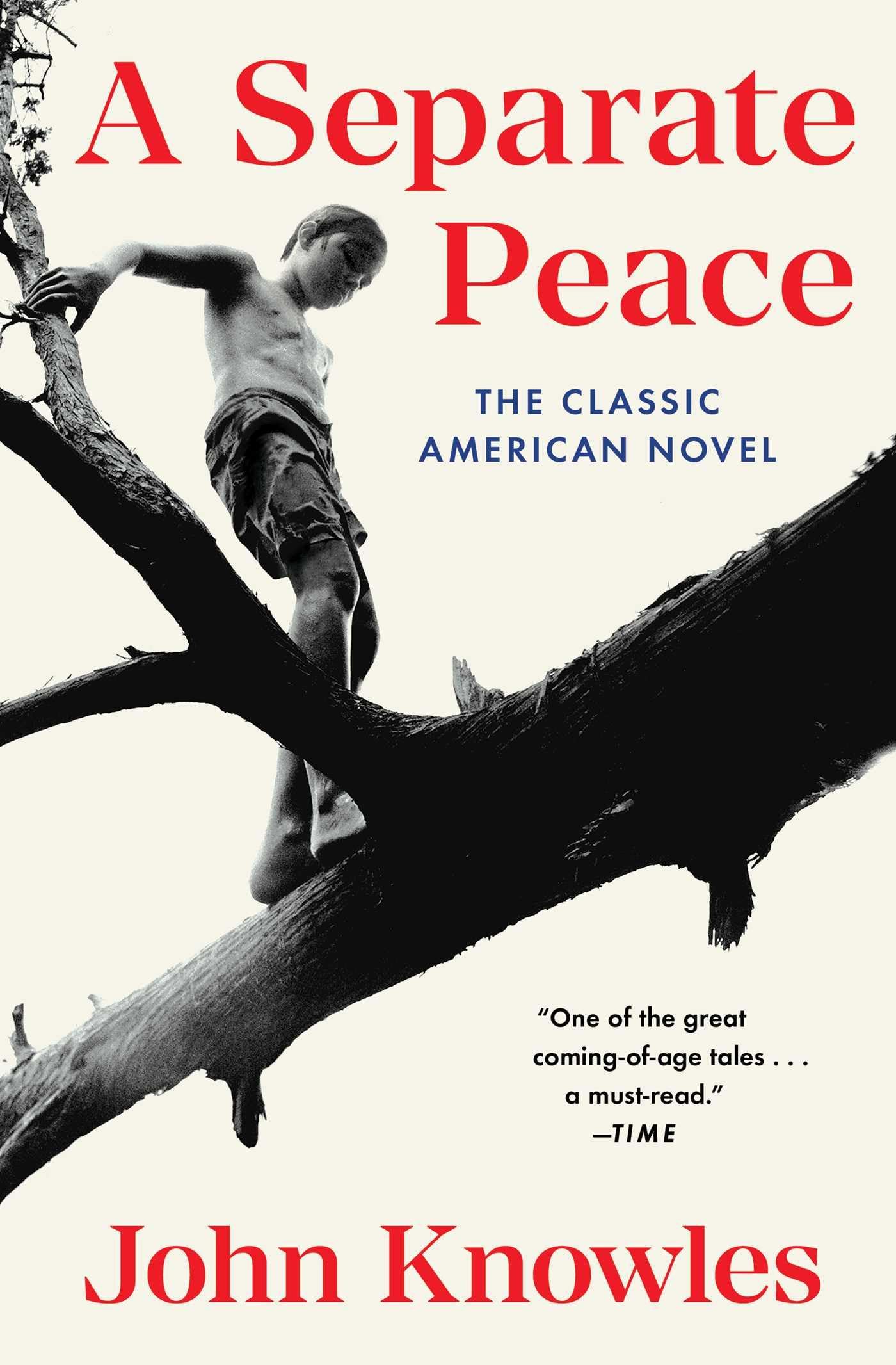
I thought about this when re-reading A Separate Peace this month. My book club is doing a “Books You’ve Already Read—or should have read” month, and I thought it was time to re-read a book that I put on my Top Ten list for decades.

(Seriously—I kept continuously updated top ten lists of books, movies and LPs until I had both children and a full-time job. There are still some gems on those lists—but also some really embarrassing stuff.)

I wouldn’t, however, call Separate Peace an embarrassing pick. I read it in high school, although not as a class novel. In the late 60s, my public high school adopted a choice-based language arts curriculum. Instead of English 9/10/etc, there was an array of semester-long courses. I took journalism, speed reading and Great Books, a totally wonderful class where students did nothing but read books, then journal their impressions.

There was a list of great books (SP was on it), but you could also deviate, with the teacher’s permission. It was that teacher—Mrs. Palmer—who introduced me to Daphne du Maurier, Virginia Woolf, and Madeleine L’Engel.

It’s hard for me to put my finger now on why I loved Separate Peace so much. Partly, it was the boarding school setting—what it would be like to live in dorms, with other students whose parents weren’t scraping to pay the mortgage, for whom college was a certainty, not a stretch.

Mostly, though, I think it was because—spoiler—there’s a death in the book, under unusual circumstances, leading the reader (this teenaged reader, anyway) to muse on Big Meaningful Issues. In case you’re wondering whether I noticed the homoerotic flavor of the relationship between the narrator and his best friend, the answer (1969) is no and (2025) yes.

But here’s what really jumped out at me, some 50+ years later: there are no women in this book. Aside from a couple of sentences mentioning a screechy school nurse, and a sentence describing a classmate’s mother as kindly, there is zero female presence in this book. There’s plenty of adventure, danger, scrapes and disobedience. Even a student-led tribunal, and a World War. But not a single woman, or girl.

From a recent article in The Guardian, about a newly formed publishing house that intends to publish only books by men: 

Cook said the publishing landscape has changed “dramatically” over the past 15 years as a reaction to the “prevailing toxic male-dominated literary scene of the 80s, 90s and noughties”. Now, “excitement and energy around new and adventurous fiction is around female authors – and this is only right as a timely corrective”.

“This new breed of young female authors, spearheaded by Sally Rooney et al, ushered in a renaissance for literary fiction by women, giving rise to a situation where stories by new male authors are often overlooked, with a perception that the male voice is problematic,” he said.

Hunh. I wasn’t really paying attention to any toxic literary scene in the 1980s and 90s, due to the aforementioned family and job. But I was still reading a lot—and was deeply involved in whether and what my students were reading. Or not reading.

It was a time when getting any kind of reading material—from comic books to Captain Underpants— into kids’ hands was the prescription for reluctant readers. There was a rolling bookshelf in my band room, filled with books about music and musicians. Some had some vaguely naughty photos. I purchased all of them, and they were well used.

My take on any reduction in male readers in the 21st century is that omnipresent screens, not problematic masculine voices, are responsible.

Still. What I notice about this (well-meant, I assume) announcement is that it only took a couple of decades for men to perceive that women were “ushering in a renaissance,” then set up their own literary clubhouse, no girls allowed.

There’s also this:
Less than half of parents find it fun to read aloud to their children, new research shows. Only 40% of parents with children aged 0 to 13 agreed that “reading books to my child is fun for me”, according to a survey conducted by Nielsen and publisher HarperCollins. The survey shows a steep decline in the number of parents reading aloud to young children, with 41% of 0- to four-year-olds now being read to frequently, down from 64% in 2012.

A significant gender disparity was identified, with 29% of 0- to two-year-old boys being read to every day or nearly every day compared with 44% of girls of the same age.

Plus this, ominously: Many parents focus on the literacy element of reading, seeing it as a skill, rather than encouraging a love for reading in their children.

So—who’s not reading, and why?

If you talk to the Science of Reading crowd, boys’ reading difficulties and reluctance to read can be laid at the feet of teachers who were never taught the only correct protocols for reading instruction, or—worse—fail to use them with fidelity, a word I have come to loathe when applied to pedagogy.

And since the overwhelming majority of early-grades teachers are women, this can be construed as another way in which women are not paying attention to the needs of boys. But it’s so much more complex than phonemic awareness, yada yada.

The Great Books class at my high school only lasted a few years, then fell when the “cafeteria curriculum” became outmoded, in favor of … what? I forget. Back to Basics? One of our cyclical returns to The Canon—in which white male-authored books have literally always been deemed more worthy of study?

All children deserve to be read to, daily, even when they’re able to read themselves. Stories about both boys and girls. Because that’s how they learn to be curious about the real world.

Version 1.0.0

The Twelve Best Books I Read in 2023

Last week, Emma Sarappo, in The Atlantic, cautioned against setting reading goals for 2024:
Quantifying my reading, whether by titles finished, pages read, or another metric, doesn’t capture the quality of my attention to each book. In 2024, that’s what I’m most concerned with, and logging, rating, and sharing on the social web might pull my focus away from the moment and back to my phone. 

Well. La-di-dah.

I’d be hard-pressed to describe the quality of my attention to the 112 (Oops! Quantifying!) books I read in 2023. I logged them all, wrote a paragraph or a sentence about each and rated them, one to five stars.  Is that enough quality attention?

I log the books I read mostly so that I don’t accidentally bring home previously read books with interchangeable names—thrillers and series, especially—and so I can remember the best stuff. Barack Obama names his favorite books, each year. Why shouldn’t I?

In my top dozen this year, five non-fiction and seven fiction titles.

I liked two of the non-fiction titles so much that I wrote separate blogs (click on book titles) outlining their excellence:

The Kingdom, the Power and the Glory: American Evangelicals in an Age of Extremism (Tim Alberta)

The Teachers: A Year inside America’s Most Vulnerable Profession (Alexandra Robbins)

The other three:
Lady Justice: Women, the Law, and the Battle to Save America (Dahlia Lithwick). This book was a gift from a man who plays in my local flute ensemble, a retired lawyer who bought me a copy as a gift. The book is a fascinating review of amazing women who took the law into their own hands, often facing subtle and not-so-subtle discrimination. What makes the book outstanding, however, is Dahlia Lithwick’s semi-snarky, to-the-point prose.

The 1619 Project (Nikole Hannah-Jones) Actually, the NY Times Magazine collection of essays and commentary that frame the eventual book give the reader the rich essence of the multi-author big book. It took me a month to get through the whole volume, reading a chapter or two at a time. But the book deserves such contemplation. History is complicated, and always debatable, but what happened to Hannah-Jones after publishing the book is reprehensible.

Gender Queer: A Memoir (Maia Kobabe)I decided to read it because it was the book most often on lists of books—so MANY lists!—targeted for banning in schools and public libraries in 2023. What surprised me was how gentle, even tender, the book was, how sweet the drawings. Yeah—there is one drawing of sexual contact (which occurs between two consenting grad students) but my overwhelming impression was how incredibly helpful such a book, which reflects kindness and caring in interpersonal relationships, might be to a confused teenager. Also: props to this Massachusetts teacher.

Seven Fictional titles:

Tom Lake (Ann Patchett) Best book I read this year. I have recommended it to many friends, and lots of them have had lukewarm reactions, but the novel hit my sweet spot. Not only is it set, mostly, in the Grand Traverse region of Michigan, where I live, much of the action takes place during the pandemic. Nobody writes with the humor and humanity Ann Patchett infuses into her novels. I loved this book.

All the Sinners Bleed (S.A. Cosby) I’m with Barack Obama on this one. It’s a great read, as a crime thriller, but the uneasy racism and ‘Merica values that infuse the writing make it special.

The River We Remember (William Kent Krueger) I’m a fan of Krueger’s Cork O’Connor series, but I especially love his standalones, beginning with Ordinary Grace.River” traces a crime through the eyes of a law enforcement officer still suffering from what we’d now call PTSD, after World War II, and the elderly female lawyer who helps him prosecute the guilty. Krueger is a master at creating memorable, complex characters and turning ordinary stories into reflections on human nature.

My best friend gave me a copy of The World Played Chess (Robert Dugoni), a beautifully layered book that looks at the long-term damage done to men who served in the Vietnam war. The novel’s structure, following a narrator from his teenage years, when comments on the war were vastly different from the way we perceive the conflict now is beautifully structured. This was the first Dugoni novel I’d read, and it sent me off to read more of his work.

Tomorrow, and Tomorrow ,and Tomorrow (Gabrielle Zevin) I am totally not the audience for this book about the development of video games. I’ve written a lot about how I think technology is oversold. I have zero interest in the gaming culture. But I loved it. I can’t really say why.

The Displacements (Bruce Holsinger) I read Holsinger’s The Gifted School and liked it, but this novel is the ultimate dystopian fiction around a Category Six hurricane hitting Florida’s wealthiest coastal residents. Utterly believable, occasionally funny and scary as hell, the book somehow ends up being heart-warming.

Small Mercies (Dennis Lehane) Lehane, whose work is always good and always dark, says this may be his last novel. If so, it’s a barn-burner, centered around tough-broad Mary Pat Fennessey, and set in 1974, during the Boston school busing protests. Lehane spares nobody in this book—the dialogue is brutally authentic, and it’s hard to find a character to root for, at first. In the end, the book will break your heart.