Whiplash: Worst Teacher Movie Ever

If you’ve been paying attention to the DOGE Brothers—Elon-n-Vivek—lately, as they explain their personal theories around the failures of American parents to instill tenacity and a work ethic in our young citizens, you may have seen Ramaswamy’s rant on our deficit culture: A culture that venerates Cory from “Boy Meets World” or Zach & Slater over Screech in “Saved by the Bell” … will not produce the best engineers. More movies like “Whiplash,” fewer reruns of “Friends.”

Ramaswamy goes on at some length, all Tiger Dad, about the virtues of immigrant parenting vs. native-born slacker parenting. As a veteran teacher, and thus long-time observer of American parenting, I think he’s flat-out wrong. True, there are parents who simply want to make things easy for their kids. But there are also plenty of non-immigrant parents who run a tight ship, academically, pushing their kids toward competitive excellence, breathing down their necks. The idea of hard work leading to a better life is not exclusive to immigrants.

It’s tempting to ignore the DOGE boys’ blah-blah on Twitter, although our incoming President has anointed them fixers of the entire political economy. It’s hard to see how your average Trump voter will suddenly decide that it’s time to claw their way to STEM careers via choosing the right TV characters to admire, or deciding not to (Vivek’s words) venerate mediocrity any more.

But we’re not going to nurture talent and work toward genuine accomplishment via movies like Whiplash, which is possibly the worst movie about education ever produced.

OK, maybe not the worst movie ever. But a stylish, seductive acting tour de force based on All the Wrong Stuff. An excellent showcase for two major talents–J.K. Simmons and Miles Teller–but with precisely the wrong message, for young people who want to excel in spite of setbacks, for educators, and for anyone who ever hoped making music was a rewarding, life-affirming pleasure instead of just another competition.

Several years ago, I had a very talented drummer–call him “Zach”– in one of my middle school bands. Zach was a natural–great innate rhythmic sense, great unforced stick technique and most important, a kind of fearlessness you don’t often see in an 8th grade percussionist. When something went wrong in the music-reading process he–perfectly illustrating the cliché– never missed a beat. Zach was what teachers call a “good kid,” to boot–polite, friendly, and willing to let other kids have the spotlight often, even though he knew he was a better drummer.

Zach’s mother was a physician, and at our first parent-teacher conference, she let me know that my ace drummer’s biological father (someone he now saw only sporadically, once or twice a year) was also a musician. She was clear: her son’s formal musical education would be ending with 8th grade; it was “too risky” to have Zach get involved in the high school band program, even though he was interested in doing so.

Zach was bound for better things than music, she said, adding a few bits of folk wisdom about how musicians aren’t trustworthy, goal-oriented or even rational, and make terrible husbands and fathers. It was her story, and she was sticking to it.

When I saw Whiplash I remembered that conversation with Zach’s mother. Because Whiplash is pretty much a dishonest conflation of myths (the only way to pursue excellence is through cut-throat competition) and truths (a lot of music teachers embrace that myth, the blood-and-thunder school of music teaching). The artist as anti-social and single-minded, driven stereotype.

When I watched J.K. Simmons, playing Fletcher, the tyrannical jazz band director, scream “MY tempo! MY tempo!” I flashed back to all the petty dictators I’ve seen on the conductor’s box, over 50 years of being a professional musician and school music teacher. I’ve witnessed at least a dozen school band directors say the exact same thing, transforming into little Napoleans, using their baton as weapon, “proving” that students must be prodded into worshipful obedience in order to play well.

Here’s the thing: you can be a superb, meticulous, demanding music teacher without being a hostile jerk. You can also be a driven, determined, even obsessed music student, bent on creative brilliance and perfection, without being inhuman or ruthless.

In a movie supposedly about “what it takes” to achieve true excellence in performance, we never saw Fletcher teach, or drummer Miles Teller’s ambitious character, Nieman, learn anything about music via guidance, example or instruction. Everything that was accomplished happened via psychological manipulation: Terror. Lies. Tricks. Bodily abuse. Even, God help us, suicide.

It was a movie designed to prove Zach’s mother right: music is a rough, vicious game, filled with people whose talent means more to them than family or human relationships. It’s about ego–and winning.

Except–it isn’t, really. Music is available to everyone, from the supremely talented to the amiable, out-of-tune amateur. It’s what we were meant to do as human beings–sing and play and express our own ideas.

Let’s not turn anyone away, Mr. Ramaswamy.

We Need Hygge Classrooms in America

The ubiquitous FB meme:

In Iceland, books are exchanged as Christmas Eve presents, then you spend the rest of the night in bed reading them and eating chocolate. The tradition is part of a season called Jolabokafload, the Christmas Book flood, because Iceland, which publishes more books per capita than any other country, sells most of its books between September and November, due to people preparing for the upcoming holiday.

Nobody ever responds: That sounds awful! My family prefers watching our individual TVs!

Generally, commenters reply wistfully, longing for a country where learning is valued and books are ideal gifts, where the dark and cold are counterbalanced by intellectual curiosity and conversation.

Thanks to the Jolabokaflod, books still matter in Iceland, they get read and talked about. Excitement fills the air. Every reading is crowded, every print-run is sold. Being a writer in Iceland you get rewarded all the time: People really do read our books, and they have opinions, they love them or they hate them. At the average Christmas party, people push politics and the Kardashians aside and discuss literature.

Perhaps because I live in a region that gets 135 inches of snow each winter, these cozy, fireside literary chats are enormously appealing to me. As is the Danish concept of hygge:

The Danish art of contentment, comfort, and connection…a practical way of creating sanctuary in the middle of very real life.”

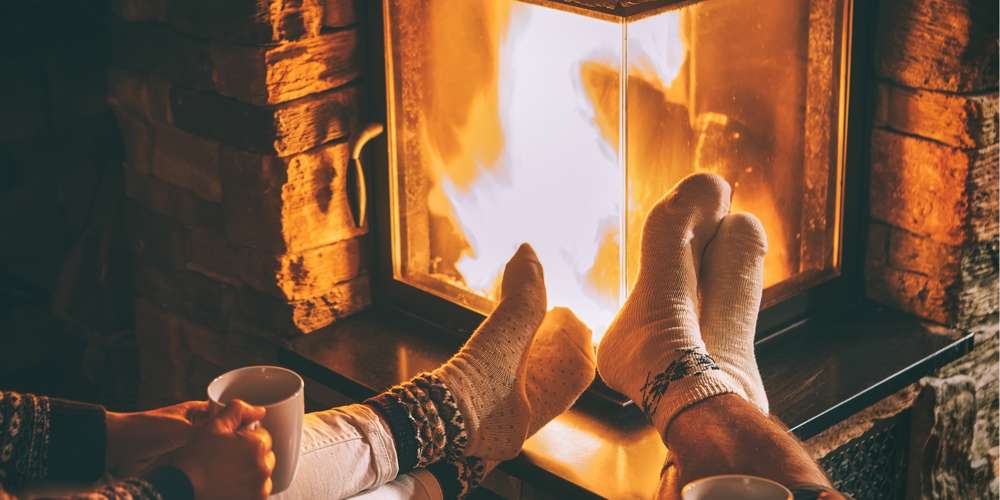
Hygge (hoo-ga), which has no direct translation into English—surprise!—is many things to many people: Woolen socks. Candles and other gentle light. Board games. Comfortable couches and cozy quilts. Warm drinks.

Although hygge seems to have Scandinavian roots, it’s not exclusively a cold-climate thing, evidently. A rustic cottage on a lake, with its beat-up furniture, mildewed paperbacks from the 1950s and second-hand bathing suits is very hygge, according to Meik Wiking, author of “The Little Book of Hygge” and, not coincidentally, CEO of the Happiness Research Institute in Copenhagen. The mere fact that there is a Happiness Research Institute, somewhere in the world, makes me—well, happy.

The interesting thing about hygge and Jolabokafload is their inherent intentionality. Citizens in Iceland and Denmark take contentment, comfort and connection seriously, and pursue them with deliberation. Choosing the right book for someone means you know that person, and what they might enjoy reading. Playing games with your family means connecting with them, laughing and teamwork.

So why don’t we pursue this, here in the land of the free, home of the brave? What keeps us, a nation that often proclaims itself the best country in the world, or at least on its way to becoming “great” again, from choosing to embrace contentment and connection?

Perhaps Scandinavians are better able to appreciate the small, hygge things in life because they already have all the big ones nailed down: free university education, social security, universal health care, efficient infrastructure, paid family leave, and at least a month of vacation a year. With those necessities secured, according to Wiking, Danes are free to become “aware of the decoupling between wealth and wellbeing.”

That decoupling between wealth and wellbeing is well-reflected in this headline: Children Need Homes, Not Charter Schools or Standardized Tests, and Definitely Not Tax Cuts for the Wealthy.

That’s where our intentionality lies in the U.S., where we’re spending our hard-earned tax dollars—canned curricula designed to raise test scores and alternative school governance models, endless expensive tests—when over 100,000 New York City schoolchildren were homeless last year. According to former Senator Orin Hatch, we don’t even have money for poor children’s basic health care. As a nation, we have linked simple human well-being to wealth, and sealed it with the tamper-proof cap of low opportunity.

Many teachers try to add hygge touches to the classrooms where their high-poverty students meet and work every day—from beanbag chairs to classroom sets of snowpants for outdoor play, from little free libraries to Cocoa Day. If school can become a place of connectivity, warmth and safety, they reason, students will keep coming back.

Happy Hygge-days, Teacher in a Strange Land readers. Thanks for all you do for your students.

Billionaire Ideas: Andrew, Bill and Elon

So—it was just one of those re-posted memes: a chalkboard suggesting that the “old days”—when the very rich built and named hospitals, schools and libraries—were preferable to whatever the very rich are doing with their money today.

There are a lot of ways to argue against that tossed-off sentiment: We shouldn’t have to rely on the beneficence of the wealthy in order to have good public services, for starters. Some of that wealth was ill-gotten, and some philanthropists were Not Good People, as well. Why can’t everybody be like McKenzie Scott (formerly Bezos)?

On the other hand, I was born in a hospital named for a local benefactor. I was a card-carrying patron of a Carnegie Library and attended college where every damned building seemed to be funded by someone with lots more money than I’d ever have.

Furthermore, Forbes magazine reinforced my belief that the 21st century uber-rich aren’t very forthcoming any more with dough for public buildings and programs: How generous are the super-rich, really? Not very, according to Forbes’ research. The members of the 2023 Forbes 400 list have collectively given more than $250 billion to charity, by our count—less than 6% of their combined net worth.

Which gets to the point of why I originally posted the meme: The mega-affluent today are busy going up in space in rocket ships, abusing low-paid, NON-unionized employees, and controlling national elections with underhanded tactics.

I’d rather have the theatres, hospitals, academic buildings and libraries. Or—here’s a thought—what about someone with fabulous wealth funding a climate change initiative? Or ending poverty?

Andrew Carnegie funded the building of 2,509 “Carnegie Libraries” worldwide between 1883 and 1929. Of those, 1,795 were in the United States: 1,687 public and 108 academic libraries. Others are scattered throughout Europe, South Africa, Barbados, Australia, and New Zealand. He also funded museums, established an endowment for international peace, supported scientific research, and other civic initiatives, including the Carnegie Foundation for the Advancement of Teaching. He bought or upgraded pipe organs in over 7600 churches.

And, yup, Andrew Carnegie was a robber baron in the most derogative sense of the word, using violence and ruthlessness in controlling the ill-paid and exploited workers who built his fortune. He was also an immigrant, who came to America penniless, and you know how Americans love a rags-to-riches tale. Biographers suggest he had an attack of conscience as he aged, and spent more and more of his wealth on civic projects.

In posting the chalkboard meme, I drew a lot of commentary because I mentioned Carnegie and all those libraries. Surprisingly, a lot of the negative feedback came from librarians, who popped up with passionate responses about Carnegie’s insider trading, sending goons to beat up strikers and trying to suppress the uprisings of the great unwashed by building them libraries.

It occurred to me that those librarians were universally well-read and not about to blindly worship old, filthy rich, controlling white men. Although, you know, thanks for the library.

Still. Although nobody can exactly defend the Titans of the Gilded Age, they left a lot of architecture and institutions for us to use, more than a century later. What have our still-living titans done with their immense wealth?

Bill Gates has funded the building of computer science centers at four universities (including, ironically, Carnegie Mellon), and purchased 40 square miles in the AZ desert west of Phoenix to build his own city of 200K residents, among other projects. From Salon:

There’s a deep-seated belief in libertarian-rampant Silicon Valley that the government and our political processes are slow and messy; to that end, many techies, mad with power, have attempted to start their own partially or fully-privatized cities. Gates’ entire philanthropic visionexemplified by the Bill and Melinda Gates Foundation, is predicated on the idea that rich people and technocrats know best how to manage the levers of society, and the rest of us peons should sit back and let the rich techies run our lives. 

If you’re an educator, you will have felt the Gates Foundation’s impact, from Common Core standards to teacher assessments to breaking up big schools into smaller ones. Have money, will implement. Then declare many of these “promising” concepts failures. Maybe the teachers weren’t following the curriculum with fidelity?

Honestly? I’d rather have buildings and state-of-the-art equipment than Billionaire Ideas changing our fundamental institutions.

Which brings us to Elon Musk, who has promised his and Donald Trump’s  proposed economic policies could lead to “initial severe overreaction” and “temporary hardship” in the economy if Trump wins the election. Trump’s mass deportations and Musk’s $2 trillion cut to federal spending could disrupt industries, lead to labor shortages, and increase prices.

Hmmm. Couldn’t he just build us a nice hospital or school or library?

Carnegie Library in Howell, Michigan.

Public Education: The Bully and the Dream

“You never change things by fighting the existing reality. To change something, build a new model that makes the existing model obsolete”   (R. Buckminster Fuller)

Buckminster Fuller’s well-known quote was a touchstone for me, in my 30-odd years—and some of them were really odd—of classroom teaching. Whenever things at school started feeling oppressive or dumb—there’s got to be a better way to do X—coming up with a new plan was always a better bet than complaining about the old way. Launch first, ask permission later.

I can pull dozens of examples out of memory here. One major shift I made, for example, as a result of disenchantment with competitive music-making, was dumping ‘chairs and challenges’ in seating my band students.  Nobody was doing it at the time. Here’s another: Starr Sackstein’s work on re-thinking grading in favor of different ways to assess student work.

Why fight back against typical practices, if you can devise a better way? School used to be the perfect place to institute new ideas. Let a thousand pilot projects bloom.

I was intrigued to see this, posted at Bluesky, from DeRay McKesson:

Our goal is not to switch places with the bully, but to end bullying. We focus on tactics—how do we beat the bully?—but don’t remember to prepare for the day when the bully is no more. If we don’t have a vision for our desired future, how can we plan to achieve it? When we confront the bully, we reclaim our imagination. 

If we confront the bully, we reclaim our imagination. We can create a vision for our desired future. Makes sense to me. Feels a lot like Buckminster Fuller: Come up with something better, then make it happen. Stop fighting.

Now– McKesson, a decade ago, was a Teach for America alum, a charter school supporter, and later, a school administrator. He seems to have left public education (and all its flaws) behind, focusing on activism, BLM, social media and podcasts. He wrote a book. He fought with people on Twitter. 

But– I think he’s right. If all we’re doing right now (guiltily raising hand) is re-posting that video clip of Linda McMahon getting body-slammed, we’re not helping preserve, let alone improve, public education. When our focus is on fighting bad policy, especially policy that hasn’t yet been enacted, we need to have better ideas—dreams, if you will—about what public education should look like in our back pocket.

I say this because the incoming administration has dreams:  

Donald Trump’s vision for education revolves around a single goal: to rid America’s schools of perceived “ wokeness ” and  “left-wing indoctrination.” The president-elect wants to forbid classroom lessons on gender identity and structural racism. He wants to abolish diversity and inclusion offices. He wants to keep transgender athletes out of girls’ sports.

A bible in every classroom. Not to mention vouchers—or whatever visionary scholarship name you want to give them–for all.

Trump’s first term was full of rhetoric and short on action, all Betsy DeVos and grizzly bears, when it came to education policy. Lots more anti-public education non-profits sprang up (and some died), and lots of charter schools also sprang up, using public funds, then failed. But the Department of Education chugged on, as usual, and 85% of kids were enrolled in a public school, a slow slide down from 90% a decade ago.

Educators I know are prone to being frustrated when national political discourse doesn’t include ideas about public education.  But that can actually be a bonus. States and local districts are where the policy-making rubber meets the road, when it comes to making public schools better. Policy that genuinely improves what’s happening in public schools looks like what Tim Walz was able to accomplish in Minnesota.

Trump, on the other hand, has a lot of ideas that are deeply unpopular: What Trump will certainly do is pick splashy fights that he can win through executive orders. 

So—returning to Buckminster Fuller or DeRay McKesson—what does OUR vision look like?

Here’s one take on that question, from Steve Nelson.

 All human learning is interconnected. Depriving children of rich, complex experiences in the service of dull training for standardized math and reading exams actually stunts their math and reading development. Ironic and dumb.

We’re still fighting the bullies who instituted mandatory standardized testing for 8-yr olds, and use the data gathered to harm children. We’re arguing with the idiots who destroyed public education in AZ,  in favor of paying for ski lessons and Lego kits for rich kids. We’re brawling with Christian nationalists over Bible-based curricula in Texas public schools.

Where has all this verbal combat gotten us?

Maybe it’s time to create that vision of what schooling could look like—for the same money, with the same workforce, in the same buildings. Imagining that future.

I have a few ideas about that. What does your vision for public education look like?  

Boom! Boom boom! It’s Deer Season

So– we live in the northern Michigan woods. And beginning last Friday, we have been hearing shooting. Lots and lots of shooting. It’s deer season (firearms) up north.

Our little grocery store-cum-gas station has a deer pole, and offers butchery, so a drive into the P.O. involves passing a large pile of dead deer, awaiting their turn to be gutted and sliced. Not a pretty picture.

And yet. None of this bothers me.

I’m not a gun owner (or gun-owning defender). Deer browse my compost pile, and I try to remain quiet on the porch, so they can get a big mouthful of rotten pumpkins or potato peelings, while I watch. Venison? Meh, except in chili.

I’ve been run into by deer four times– most recently, an $8K hit on the truck–and I know that controlling the deer population is a benefit to us and to them. Balance of nature and all that.

Plus– the annual ritual of deer hunting just doesn’t faze me. The whole rigamarole of blaze orange and hanging out at pine-paneled bars and doe permits vs. how many points– it’s all OK by me. You (and a half-dozen of your unwashed, unshaven friends) do you.

Probably, this is because I grew up in Michigan. My dad was a hunter, going out with my uncles and great-uncles. Everybody I knew had a ramshackle place up north where the guys went to hunt, in November. Women stayed home, watched the kids, got together with the other “deer widows” to play poker.

The school district where I first taught took the first week of deer season off, mostly because it was too dangerous for kids to wait for the bus when the woods were full of hunters. The next place I taught only took Opening Day off, which I saw as a civilized upgrade.

I know there are people who feed their families with game, but that’s not the reason I’m down with hunting. I guess I see it as a throwback to earlier times, a connection to an era when people secured their own food in the wild. Men hanging with men, suffering from cold and tedium, relieved by gunshots and whiskey and flinging the carcass over the hood of the car and using the meat (instead driving past unused and grisly remains beside the road, a daily occurrence this time of year).

I was amused by Garrison Keillor’s description of deer hunting and fishing (we have ice fishing here, too, in northern MI):

“Men hunt for the same reason they fish, in order to escape the company of women. Minnesota is a state of thousands of lakes and each one gives men an opportunity for refuge, sitting in a rowboat or a fishing shack out on the ice where nobody will say, “When are you going to clean out the garage?” Or “You keep talking about going to teacher conferences at the kids’ school but when is this going to happen if ever?” or “Why do you insist on dribbling coffee down the front of the kitchen cabinet and not wiping it up?”

Not many women fish because they know they can buy excellent salmon, tuna, or halibut for a tiny fraction of the cost of a boat and motor and trailer and a pickup to tow it. Ever compare salmon and northern pike? God created pike for cat food.”

Just heard another shot. Boom. Deer season.

Who’s Afraid of Anne Frank?


Last week, in Howell, Michigan, the town where I used to live, a local youth theatre group was putting on a production of the play version of The Diary of Anne Frankprobably the same version put on in my high school, back in the 1960s, when that kind of drama-club effort was considered a worthy stretch.

This performance was happening at—of all places—the local American Legion Post. And a few veterans were hanging around outside when some  junior Nazis, masked and waving swastika flags, showed up. They called the cops, who arrived promptly, then escorted the flag wavers across the street.

The “Constitutional” County Sheriff (the same one who hosted Trump in his parking garage on the first day of school in Howell) remarked that because the protestors were ‘peaceful’ there was no need to request their identification. They were just, you know, expressing themselves, which they had the right to do.

There have been other hate marches in the county this year. Not going to link to articles, but the same group of masked dudes with Nazi gear and Trump flags have been showing up on the regular around town, on overpasses and at outdoor events in the summer, mixing a little terror and intimidation into life in a small, generally placid, Midwestern town. Among my local teacher friends, there have been quiet on-line conversations—some colleagues have had these young men in class and recognize them.

We’re in for trouble.

It was predictable, no matter which way the election went. All the disreputable talk and threats and violence have been set loose; the election just gave them a bump. The particular young men who were being babysat by the Sherriff’s men told bystanders that they were protecting “Pureville.”  Doesn’t get more explicit than that.

And public schools, the stage on which society builds their hopes for the future, will suffer.

Nobody reading this, I’m confident, now believes that what’s been set in motion will die down quickly. To wit:

  • There is the ongoing flood of racist texts to Black students, including middle schoolers, across multiple states. These anonymous texts tell them to report to the plantation. Some of the texts address the students by name.  
  • There’s the whole “Your Body/My Choice” assault:
    Over a 24-hour period following Trump’s election, there was a 4,600% increase in the usage of the phrase “your body, my choice” on X. The phrase has made its way offline as well, with young girls and parents across the country using social media to share instances of harassment involving it.

And they are undeniably in the just-getting-started phase.

Most of what I’ve been reading in Ed World over the past two weeks have been pieces on education policy. Will Trump close the Department of Education?  What about Head Start, Title I and IDEA? Will RFK Jr. be crossing the country to destroy vaccine mandates?

In practice, both horrifying and devastating. But I’m more interested in the daily lives of schools, right now. As policies, guardrails and traditional practices fall, it will take time to vacate safety codes and equity-supporting statutes.

But right now, this week, tomorrow, I am thinking about a sea change in school cultures. What Jan Resseger describes as:
 
Fueling the racist, xenophobic, and homophobic attacks on public school curricula, teachers and school librarians, and on Black, Hispanic, gay and transgender children who are now portrayed by Trump and his MAGA crowd as dangerous or threatening.

On the first page of the introduction to Project 2025:  America under the ruling and cultural elite … children suffer the toxic normalization of transgenderism with drag queens and pornography invading their school libraries.

These are things that the chronic public school critics and disaffected students can address now: Redefining pornography. Tormenting kids who are trying to understand their own sexuality. Bringing a gun to school or taking one downtown. Terrorizing Black and brown classmates, for fun. Bringing that slut who refuses to go out with you to heel.

None of these involves changing policy or shutting down the Department of Education.

But they’re already happening.

How Do German Schools Teach Their Political History?

It was Ernest Boyer who declared that public education functions as a stage where Americans test and play out their deepest values and convictions.

Everything that happens around us shows up in public schools. Ask any teacher about keeping the outside world out of classroom dynamics. Ask any scolding pundit or self-righteous parent just how to stick to phonics and fractions when the very ground has shifted.

Can’t be done.

This might be a good place to quote Adolf HitlerHe alone, who owns the youth, gains the future.

A word about playing the Hitler card. I have been justifiably criticized for raising the specter of actual fascism in school politics. This is not a thing to take lightly, I know; hyperbole always weakens an argument.

But I want to write here about a nation that once had a lot of explaining to do on that front, and has—from available evidence—been able, over the long span of three generations, to reconcile their role in what happened in the 1930s and 1940s in Germany, triggering global catastrophe. Maybe we ought to pay attention.

Ten years ago, I had the revelatory experience of touring the Nazi Rally Grounds in Nuremberg, and visiting the Documentation Center there with an extraordinarily well-informed German guide, a doctoral student who was moonlighting as “World War II Tour” escort and educator.

It was a six-hour tour, and pricey, and you could sense the Americans we were traveling with growing weary of the information dump, wondering if the Christmas shop would still be open once the bus dropped us back off on the restored town square.

We wandered around the rally grounds and the man-made lake surrounding the building, once a Nazi headquarters and now the site of an extensive display of memorabilia and analysis. Our guide began by telling us that the impressive, forbidding structure we were looking at across the placid lake was not a museum.

Museums are for sharing cherished cultural artifacts, he said. There are plenty of those in Germany, and we encourage you to visit them. A documentation center, on the other hand, is a public record of a human failure—one for which Germany was responsible. It was Germans’ moral duty to keep the archived memory alive at the Documentation Center, in concentration camps, and courtrooms.

I wasn’t taking notes—I signed up for the tour with little foreknowledge of what I would see, how it would impact me. I remember a great deal of his running spiel. Our guide was an earnest, 30-something man in a plaid shirt, crooked tie and glasses, who carried two notebooks full of tabbed information and could give the veteran who asked precise information about range of Messerschmitt war planes.

A lot of the questions, in fact, came from men asking about military equipment and strategies, and not so many about the Holocaust or impact of the rise of fascism in Europe.

Asked whether Austria had a similar urge to document their own involvement with racial and religious discrimination, our guide made a face and declined to comment. Lesson Number One is that we always speak for ourselves, he said.

He spoke of regional political differences pre-War, how a country in acute financial distress could be utterly divided about causes and solutions. He talked about generational differences and how it took Germans three full generations to understand how a handful of men turned a fundamentally decent people into killers, persuading those for whom horrific prejudice was just not a deal-breaker, if Germany could be restored to greatness.

His grandparents, he said, were impressionable young people, just starting their family, during the rise of the Third Reich. They were gone now, but as a child he had been instructed by his parents not to listen to what Oma said about the terrible war years. She’s old, he’d been told. We’ll respect her for that. Don’t ask, and maybe she won’t tell.

His parents were the generation that bore their parents’ guilt. Then, as grandchildren of the Nazi legacy, his generation could finally claim to have actively worked to make sure it never happened again. In Germany, at least.

Questioned, he shared extensive data about the skinhead movement, a serious worry for the moderate government. But then he compared incidents of far-right violence in Germany to gun violence in America, a sobering contrast for anyone who was inclined to feel superior.

Someone asked the obvious question: How on earth could so many rational people buy into Hitler’s psychosis?

Ah, he said. This is where people from every nation must pay attention. Hitler was a genius at using available media and technology. Crystal radios were made cheap, and the same sticky message—an alternate, economically driven message of national pride—was pumped into all homes. “News” was what the party decided.

Public rallies were enormously effective. The Nuremberg site was chosen because it was cheap and easy to get to by train, and surrounding farms could house families and large groups of people from a single town, camping and sleeping in haylofts.

Everyone could participate—government was no longer centered in the industrial, better-educated north. A common enemy had been clearly identified, the future was brighter because there was a plan for everyone, not merely the political elites. The ultimate community-building success.

A man asked about the crumbling rally grounds, an “amazing historical facility.” Had there been any thought to restoring it? Our guide’s face darkened. “Let it rot,” he said. “Good riddance.”

I asked, as a teacher, what German schoolchildren were taught about Germany’s role in World War II. It was part of their national curriculum, he told us. They began with equity and community in early childhood, accepting differences and playing together. When students were 12, they read Anne Frank.Media literacy and logic and an intense focus on preparation for good, attainable, satisfying jobs were part of the program, in addition to history, economics and the predictable disciplines. We do not avoid our history, he said.

So what do you do in America, he asked?

Back in 2016, an honored fellow at the U.S. Holocaust Museum and recognized expert on World War II was suspended from his job after a parent complained when he pointed out parallels between Nazi Germany and the 2016 election to students. It took a national petition and a global spotlight to get him reinstated.

Also in 2016, in the nation’s leading McNewspaper, Rick Hesse and Checker Finn called the actions of teachers and school leaders attempting to calm their students’ real post-election fears “histrionics.”

That was eight years ago. And look where we are today.

Backward, in High Heels

If someone suggests a Women’s March, so help me… (Twitter comment)

I remember sitting in the teachers’ lunchroom at my middle school, January 2001, and having a woman I like and consider a good teacher exclaim–after Dubya was finally declared president-by-hanging-chad– “Doesn’t it feel good to have a nice, respectable family in the White House?”

It didn’t feel all that great to me–and that feeling grew worse and worse, as we rolled through 9/11, Abu Ghraib, the Iraq war and the financial meltdown.

Still–she was sort of right. It is undeniable that character matters in public leadership. Or should. Turns out, however, that good character—the kind of person whom we can trust to lead– is very much in the eye of the beholder. Welcome to 2024.

Nobody needs to hear what I think about what went wrong with this election. I would describe myself as bewildered. Sorting through the post-mortem will take time.

But I have to say that my one niggling worry, watching Kamala Harris run an energizing, upbeat, intersectional campaign through these last 100 days, was this: She’s a woman.

Backwards, in high heels, and all that. Please don’t let this be another case of a fully qualified woman passed over for a blowhard jerk.

The campaign downplayed the “firsts”—first woman, first Black woman—but mixed in with the horror of who got elected and what they promised to do, is the bone-deep conviction that this loss had a lot to do with sexism, coupled with racism. What America is “not ready for.”  

And lies. So many lies. If there’s anything the nation “isn’t ready for,” it’s the truth about our residual prejudices and historic power-hoarding.

It’s not just women and people of color who were betrayed by the election, of course. The Republican party dropped $215 million on anti-trans ads ($134 per trans person in America). And Capitol police officers, who put their lives on the line on January 6, 2021: “Why the f— did I risk my life on Jan. 6 to defend our elected officials, our government, from the mob that this person sent to the Capitol, only for him to be returned to power?”  The list of people who were betrayed—and have good reason to believe they will further lose ground—is endless.

So—I am only speaking for myself here. But as the meme says: We ask women why they don’t come forward when they are sexually assaulted. It’s because we live in a world where an abuser can become President.

In a must-read article in Atlantic, Xochitl Gonzalez says this:
Sexism, it turned out, was not a bug but a feature of the Trump years. Misogyny certainly appears to come naturally to Trump, but it was strategically amplified—through surrogates and messaging—to attract supporters, particularly younger men of all races. 

Many of these young men apparently see Trump—with his microphone-fellating pantomime and his crowds chanting the word bitch—as presidential. Misogyny helps disempowered men feel empowered. After Trump’s victory, the right-wing activist Nick Fuentes tweeted: “Your body, my choice. Forever.” It really is a man’s world now.

And here’s what’s making me saddest, right now:

Trump’s return to power—his imminent control over the Supreme Court and the federal judiciary, the coming dissolution of the very idea of the government providing any sort of guardrail against corporate power, carceral violence, and environmental destruction—is the beginning of a political era that will likely last decades.

I’m not sure I have decades.

What seemed—last week—like a more equitable way of addressing (and I hate this phrase) the war of the sexes has melted away. And for me, it’s personal. Here’s my story—one I’ve shared before—about a very powerful man using that power to abuse women:

I did my student teaching in the mid-1970s. I was assigned to a male band director (they were 98% male, back then), who told me at our first meeting that he was accepting me as student teacher because he needed a free assistant. He had a top leadership position in the state organization for instrumental music teachers which took him to many conferences and meetings. He said that he never would have consented to taking a woman as a student teacher—the university had merely asked him if he was interested, and he assumed that, naturally, I would be a young man, ready and willing to do the things he didn’t have time to do for a semester.

He repeated those remarks to the audience at my first concert. By then, it had become a polished story–“I said yes–and then they told me it was a woman!” (Audience hilarity.) I, of course, was making the morning coffee, re-ordering his messy music files and writing his monthly columns–the man couldn’t construct a coherent sentence–for the state organization newsletter.

I was also being sexually harassed and bribed by the promise of a good evaluation and letters of recommendation, something that I very much needed to get a job in a male-dominated field.

I put up with it for about a month, making up excuses to leave early so we wouldn’t be alone together. He grew more aggressive. Finally, I went to the student teaching supervisor from my university. I have repressed a lot of memories about that time–but I can remember that meeting as if it were last week. The supervisor, behind his large polished-wood desk, was wearing a red ski sweater. Behind him, multiple holiday photos of his family, in front of a fireplace, the lovely wife and four children.

I told him my story, in detail. He leaned back, hands folded over his chest. “Are you sure you’re not leading him on?” he asked. Then he ticked off the reasons why he would not recommend another placement: It was too late and would cost me another semester in time and fees. Nobody would take me, once the story of my accusation became public–and it surely would, possibly all over the state given the man’s public profile.

I would be seen as a too-sensitive whiner in a male-dominated field. I thought you wanted to be a lady band director, he said. This is what it’s like. Either handle it yourself or drop out now.

So I handled it, as best I could. I can’t say I learned anything about being an excellent music educator during the remaining three months–the man never turned his classes over to me, not even for a single rehearsal. His pedagogy was best described as intimidation and humiliation. Plus openly flirting with high school girls.

I worked individually with students in the practice rooms (where I learned, from a sweet flute player, that Mr. Exemplary Band Director was also having sex with his students). The one time I was allowed to stand on his podium and conduct a number, he stalked around behind me, making faces and mocking my conducting.

I got through, by “ignoring” lots and lots of grabbing. I had proof that telling anyone what was going on would reflect badly on me–that I would be labeled the spiteful “nasty woman” who was seeking to take down someone who had earned his considerable fame.

After graduation, I got a job far away from the man, in spite of his mediocre evaluation (which specified that I would be best placed as an elementary music teacher, as secondary band directors needed more “stamina” than I had). I built a successful 30+-year career as a band director, including being named Michigan Teacher of the Year. When I saw him at music conferences, I avoided him.

Famous Band Director lost his job–very publicly–about a decade later, when a student finally came forward, supported by her parents, to report that he had lured her into a sexual relationship. He denied it, in the newspaper pieces, then pointed out that the school had one of the state’s top band programs–all because of him.

Mostly, I stopped thinking about him, after that. Then, a few years ago, after community band rehearsal, one of my colleagues, a man I deeply respect, caught up with me after rehearsal, asking “Did you hear that [Famous Band Director] died?”

The first words out of my mouth were: I hope he rots in hell.

Taking a deep breath, I mentioned I’d done my student teaching with the man. My friend already knew–the man had been having breakfast regularly with a group of retired band directors, and had talked about me. Explaining why this monster had been invited to the breakfast club, after being fired for sexually abusing students, my friend said: We took pity on him.

I realized that the Band Director’s breakfast companions, a kind of Old Boys Club, had probably been fed a fabricated storyline about me, too. I felt like I was going to vomit. And nearly 40 years had passed.

 — – – – – – – – – – –

We just elected a convicted sexual abuser BACK into the White House.  Anita Hill, who has also had plenty of time to muse on why people don’t believe women, is right–we should be focused on the victims of sexual assault, and not the perpetrators.  They’re not strongmen, or role models.

Because paying attention to bullies and sexual abusers feeds their megalomania. And lets them train a new generation of persecutors, the white men who feel they’re entitled to power and the women who hope to bask in their reflected glory.

Terrified, Outraged, Exhausted

A few weeks back, I wrote a blog about my fascination with a Michigan Women for Harris Facebook page—a community now numbering upwards of 85,000—and how the (mostly) women there morphed from showing off their blue fingernails and Chuck Taylors to sharing heartbreaking stories of neighbors and family members who are die-hard Trumpers. From stolen signs to the ruin of holiday dinners, it was a kind of running anthropological study of what it’s like to live in Michigan right now.

I’m still following the page which has become a kind of lifeline for many women, if you can believe the poignant and distressing posts appearing now. The blue fingernails are bitten to the quick and we’re all sick of 24/7 political ads in Michigan—holy tamales, they’re disgusting—but we seem to have reached a nadir. Shaky marriages, the destruction of truth, firing squads and Nazis.

Not to mention fake hillbillies and a Supreme Court bent on violating federal law.

But I live in a purple state. And I think Lyz gets this right:

The myth tells us that America is cut up into places that are insulated and isolated from one another. Red states where they can pretend their kids aren’t gay. Blue states where they can pretend that abortion access is easy. 

The reality is and always has been that if you are insulated from the realities of American politics, you are rich or a white guy (or both!). And there is nothing more political than that. 

The only real bubble is wealth — enough cash money to paper over a series of political injustices and enough access to move around the barriers to health care, childcare and education. 

There’s only one America, and we all live here.

Which is why I’m more than a little terrified of November 6.

That’s not a typo. I’m not afraid of the election results. I think they’ll be OK. I’m afraid of post-election anger and post-election fear. Plus post-election violence. When the bubble of wealth and privilege is punctured, and folks who have held power are threatened.

In The Washington Post, Ruth Marcus articulated her emotional state: “I am guessing many of you are in the same condition in which I find myself: uneasy, drenched in anxiety and layered with dread — a flaky napoleon of neurosis. If you aren’t feeling this way, congratulations; I’ll have what you’re having.” 

So–I am not looking for ways to decompress. And while I admire the efforts to bring “both sides” together, I’m not ready to make nice with people who are sheltered and protected but unwilling to look at injustice. I understand that a better world is both possible, and very hard to achieve.

We’re not going to get there without some fear, some anger and a lot of hard work. 

Only one America.


Work Hard. Be Nice. Or Don’t.

I hate it when retired teachers comment on how glad they are not to be in the classroom in 2024. Their reasons range from academic and justifiable (“teachers have lost their professional autonomy”) to annoying (“kids today…”) to reflections on teaching in the era of Trump, when general nastiness is perceived as strength.

When teachers leave the classroom early in their careers, we lose something that was once commonly understood, across a diverse nation: teachers as respected members of the community, educated people whose opinions were valued. Teachers taught kids to wash their hands, tie their shoes and read books, and hauled them up for threatening weaker kids on the playground.  And parents appreciated those efforts.

In between critical content, from calculating sales tax to constructing a coherent paragraph, teachers must build little communities where kids can work productively together, pass safely through the halls, and experience the parameters of getting along with others.

Are all teachers successful in nurturing this? Of course not.

But all teachers do understand that there is not a lot of learning happening without order, structure and consideration for others. Every single teacher, from green newbie to grizzled veteran, struggles with this.  And there’s turnover every year, a new set of behavioral challenges that need to be addressed.

It’s the foundation of that recently vilified educational concept: Social-emotional learning.

I am currently running for school board in the community where I (happily) live—a school district that is well-run and offers solid programming, a place where students are known and cared for. I attended a Board retreat last week, and as part of the goal setting process, the facilitator invited attendees to name teachers or other school staff who are doing an outstanding job.

A dozen hands went up immediately, and the comments made by Board members, administrators and parents were all about things staff members did to enhance students’ personal growth and well-being. In other words, social-emotional learning, woven into curriculum, instruction and school climate.

Understand: all teachers either consciously include social-emotional elements in their daily practice, or benefit from good SEL, instituted by other educators in the pipeline, teaching kids how to behave in school along with their ABCs.

This—empathically—does not refer to pre-packaged “character” curriculums, as one size never fits all. You can’t buy genuine social-emotional learning. It has to be custom-tailored to the kids in front of you.

If you try to remove genuine social-emotional considerations from instruction and classroom management, you’ve created more problems for yourself. It’s the old saw about kids needing to know the teacher cares and will try to make their classroom a safe space for everyone.

So they can learn.

I’ve read lots of pieces about the corrosive effects of SEL, which generally boil down to the fact that SEL, as a set of pedagogical ideas, is not value-neutral.  And that’s true. Social-emotional learning reflects the values of the teacher and school, whether explicitly expressed or not.

That’s really not what anti-SEL commenters are worried about, however. As self-titled “Instruction Geek” Daniel Buck says: At its worst, SEL is a means to slip progressive politics into the classroom.

Gasp! There’s the rub, all right. Things like examining evidence for truth? Not in my school!

In fact, there’s always been social-emotional learning in schools, from the dunce cap to the hand-slap ruler wielded by Sister Victorine against misbehavers in your fifth grade. Labeling it and examining it—whether you call it character education, or classroom rules—is a good thing. What are we trying to teach kids, besides Algebra and World History?

I’ve always been intrigued by the KIPP Charter Schools’ founding motto, established in 1994: Work hard. Be nice. Those are certainly two explicit values, values embedded in what I think Americans want from their public schools—academic rigor and cooperative students.

When the KIPP organization decided to drop that motto in the summer of 2020, here’s what their CEO, Richard Barth said: It ignores the significant effort required to dismantle systemic racism, places value on being compliant and submissive, supports the illusion of meritocracy, and does not align with our vision of students being free to create the future they want.

Which the Wall Street Journal and a dozen right-wing bloggers called “woke nonsense”—and worse.

If KIPP schools can re-think their expressed values, for the benefit of students, so can public school teachers. It’s possible for schools to reflect the values of their community, as well as cultivating the characteristics of civic engagement, kindness and diligence.

It’s how you build a learning community.