We Got Racism. Right Here in River City.

If you live in Michigan, you’ve probably read this story, which passed quickly from the local weekly to the nearest daily and public radio station, downstate to the Detroit News and Dateline Detroit—then off to the Washington Post and NBC.

Short synopsis: Old white Road Commission member in Leelanau County (Tom Eckerle, 75) makes egregiously racist remark, using the N-word, at a public meeting. When exposed, and contacted by other news outlets, he compounds the ugliness by using the word repeatedly and making eye-rollingly racist comments about Black Lives Matter and Detroit. County erupts in disgust, mostly, with some people defending him. A recall petition is initiated. The other Road Commission members send him a signed letter asking for his resignation. Even the Republican legislator serving the county asks him to resign, after a lengthy conversation to hear what he really thinks. After 48 hours of repeated insistence he will not resign—Tom Eckerle finally does.

And now, of course, if we are smart and principled, the real work begins. And by ‘real work’ I don’t mean all of that under-the-rug sweeping.

I live in Leelanau County. And I can attest that people make racist remarks here all the time. What made this instance unique was not what Mr. Eckerle said (although his blatant use of the N-word was appalling). It was the fact that it was reported, on the front page of the Leelanau Enterprise, as news. If the reporter (who was tuning into the meeting via phone) had just let his crapola go by (and by all accounts, this guy is full of crapola), the only people who would have been offended would be the other Road Commissioners and the two or three people listening in, waiting to discuss road business.

It is worth mentioning that Eckerle’s anti-BLM outburst was triggered by someone asking him to wear a mask. Think that through.

Leelanau County is the ‘little finger’ of the Michigan mitten. It is a peninsula, surrounded by the beautiful waters of Lake Michigan and Grand Traverse Bay, and it is spectacularly beautiful country. We have both a National Park (Sleeping Bear Dunes National Lakeshore) and an Indian reservation, home of the Grand Traverse Band. While the county is outlined by many multi-million dollar waterfront homes, and thriving resort towns, there are also pockets of desperate poverty, an affordable housing crisis and a complete lack of available, reasonably priced broadband for rural consumers.

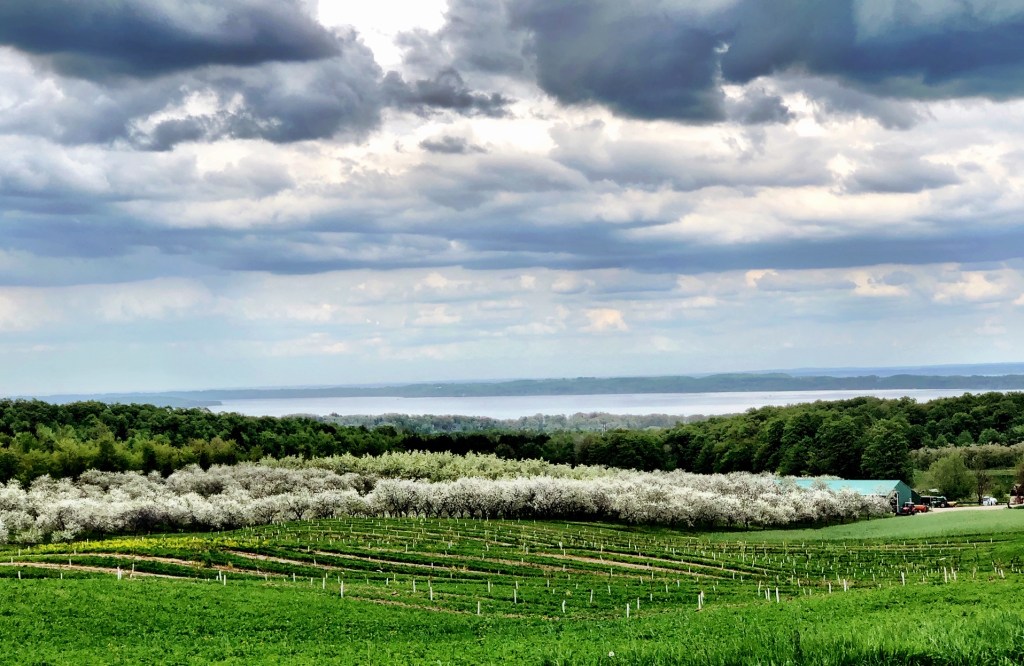
There are only about 22,000 people in Leelanau County, and 94% of them are white. Of the remaining 6%, nearly all are Native American–or Hispanic, most of whom landed here first as migrant fruit pickers (and yes, ICE has recently made arrests here). Historically, the land has been dominated by farmers—especially fruit farmers. When the cherry and apple trees blossom out—hilltop orchards, overlooking lakes– in May, there is no more beautiful place on earth. And now, there are 26 wineries and upscale dining.

Politically, the county has been deep red for more than a century, but the influx of retirees from downstate has been moving some of the resort towns in a bluish direction. The county voted for Obama in 2008 (not in 2012), but there remains a die-hard core group of generational residents who are deeply suspicious of things like unemployment insurance, early childhood education, recycling and fancy-pants internet. Not to mention a Black President.

Many of these folks hold public office. Sometimes, for decades, in family groups. Republican candidates, even if they are known cranks (as Tom Eckerle appears to be), get elected. I once attended a Township Board meeting, to promote a resolution to stop Enbridge Corporation from using a crumbling 65-year old oil pipeline that runs under the Straits of Mackinac. After we did our pitch, one of the Board members was clearly shocked at what would happen if the pipeline ruptured, and said so—she had not heard about Line 5. The Township Supervisor turned to her (and to her sister, who also sits on the Board) and said, out loud, ‘We’re voting NO, Shirley.’ And they all did.

Just politics in Leelanau County.

After the Eckerle affair, the local Facebook page, where people post beautiful photos of sunsets over lakes (we have lots of inland lakes) and sell their outgrown ski equipment, was alight with comments, running about three-to-one in favor of forcing a resignation.

There was a lot of pearl-clutching, worries about people thinking everyone in Leelanau County was like this–the local economy depends on tourism–and demands that the Governor yank Eckerle. Governor Whitmer said (correctly, in my opinion) that, dreadful as his comments were, it was the voters in Leelanau County who needed to recall him.  

There were also way too many comments about his remarks being ‘just a word—one that Black people use all the time’ and cryptic statements about ‘Detroiters’ looting and bringing COVID up here. To paradise. White person paradise.

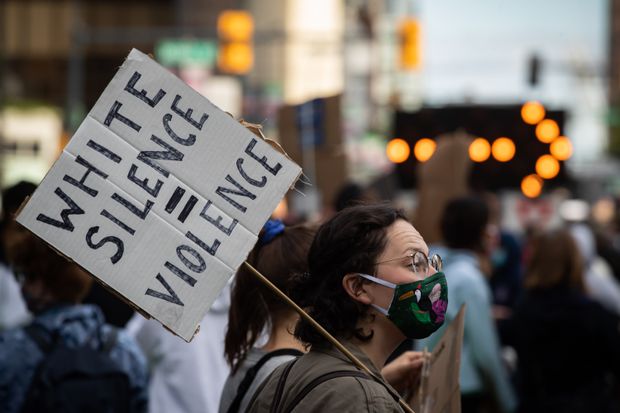
And that’s the thing—it doesn’t matter how many righteous editorial statements are made about silence being compliance.  It is now possible to make overtly racist remarks in public; the abhorrent beast of bigotry has been loosed, and it will take more than an election to reign it in. We are hardly the only place in the nation where white supremacists now feel free to speak their minds.

There’s a final irony, as well. While the European farmers came, in the mid-1800s to ‘settle’ the Leelanau peninsula and establish Christian ‘missions,’ there were already people here, who had lived here for centuries before that: Native American tribes, who used the peninsula for fishing and gathering. After decades where the white folks platted and sold the land, and crafted shaky treaties, the tribal folks were eventually moved out of the most desirable properties, and concentrated into one area.

Racism has always been a factor here.  White supremacy has always been a factor here.

The Glen Arbor Sun, another local paper, has been running a series of articles as their response to the Black Lives Matter movement, identifying multiple threads of prejudice against people of color: the Anishinaabe, Mexican-Americans who came initially as migrant farmworkers, and African-Americans.

We have so much work to do.

“Hatred, which has destroyed so much, never failed to destroy the one who hated, and this was an immutable law…..I imagine one of the reasons people cling to their hates so stubbornly is because they sense, once hate is gone, they will be forced to deal with the pain.”   (James Baldwin)
Creative and Just Curriculum, Pt II: Six Ideas about Teaching Music During a Pandemic

Facebook post, shared by a colleague: Started band camp last Sunday, two rehearsals per day. No more than 25 students in a group. They wore masks while moving between stations, and after the second rehearsal, two students went home because of low grade fevers. One tested positive. We were forced to shut down for a minimum of two weeks. There was no precaution we didn’t take.

Welcome to 2020, music educators.

About six weeks ago, Texas band directors (a fierce and highly competitive bunch) started posting summer band-camp photos, on a band directors’ site I follow. Flute players with facial shields. Trumpets and mellophones with their bells bagged. Masked percussionists, labeling their mallets, so they’re touched by only one person. They were fired up. Creativity and safety would win the day!

The page today is really tough reading: Shut-down camps. Lost jobs. Will there be a marching band next year if there’s none this year? Pictures of band rooms where precisely 13 students can play while social-distancing. Deep, philosophical chats about the value of music in kids’ lives. And this—how the hell am I supposed to have a band online?

Well, the bad news is: you’re not. And when this pandemic abates, the best-case scenario for all powerhouse performance-based music programs is the option to rebuild. Any teacher (raises hand) who’s ever had to build, then re-build, a music program of any kind knows how difficult that job is, what losses are suffered when your dynamic program loses the thing that makes it magnetic: Pride in performance, fun in preparation.

So don’t think I’m Pollyanna, telling music teachers to keep your chin up and try something new. I know you’re righteously sad about your good work being threatened. What I am offering is this: a few suggestions for doing some authentic music teaching during a terrible time.

For starters—stop calling yourself a band/choir/orchestra director, and begin calling yourself a ‘music teacher.’

Second—understand that your college education and years of experience have given you all the musical expertise you need to create some new ideas about music that can be delivered to students in multiple modes. You know enough about the structure and history of music to create some great lessons. And what you don’t know offhand, you can easily find, without leaving your living room.

Third—don’t think the only curricular options students have are limited to music theory, music history and practicing. Much of our college-level theory and history instruction was deadly dull—no need to repeat it. Also– please don’t assign practicing. You need to give kids a good reason to practice, and logging time for a grade is not a good reason to practice. Learning to play another instrument would be—Bari sax? Ukulele?  

Fourth—you know what tools, student interests and previous skills are available to you. If you’re meeting students in groups, and they all have Zoom, you might be able to do some bucket drumming. Or maybe your orchestra would be more interested in a History of Popular Music survey unit—to find out where the music they listened to originated.

Perhaps you’re stuck with phone calls and emails, and have to do something written or shared via email groups. I used to play what I called Sound Samples for my students, around a theme. They listened to a series of 10 or 12 clips, each a couple of minutes long, with a list of what they were listening to (each with a brief description). The list was out of order. The trick was to listen closely enough to identify key features of the music and thus, identify the pieces. Ungraded—but I know from experience students love guessing right, or figuring out what they’re listening to, using the clues.

For those incredibly lucky teachers who have the right technological tools and skills, teaching students to do ensemble playing via technology, with themselves or others, is a possibility (not Zoom, by the way—it’s the wrong tool for ensemble singing/playing). Only a narrow slice of music educators have the equipment and expertise to do this—but perhaps it’s your personal challenge, right now.

Fifth—Keep in mind that students take a music class to play. Teachers are fearful of play. Not only because their professional evaluations and livelihood are often linked to a mandate to produce satisfactory evidence–data– but open-ended play is not generally The Way We Do Things.

In schools, and in the grim, we’re-behind education policy discourse, a teacher who encourages students of any age to poke at ideas, learn from mistakes, and approach established disciplinary content as a treasure chest to explore is seen as disorganized. You tell ‘em what to do. And then you evaluate how well they’re doing what you told ‘em to do.

I am a music teacher–theoretically a creative art–but can state categorically that music, as traditionally taught in secondary schools, is not very imaginative or playful at all. School music programs tend to become performance-oriented only–and often rigorously competitive—as students get older.

There is an important body of information and skills in music. The more of that disciplinary knowledge students have mastered, and the more proficiency they develop, the greater their ability to capably perform interesting and satisfying music, and become a more appreciative and knowledgeable music consumer. These are all worthwhile educational goals, by the way. Far more worthy, in the long run, than bringing home another trophy.

The National Association for Music Education standards include composition, often overlooked in school music programs focused on replicating already-created music with a high degree of perfection.

After I’d embraced the rehearse-rehearse-perform model for 20 years, I realized I wasn’t teaching my students much about music other than How to Play Band Music. I started experimenting with composition. I had adopted the practice of thematic teaching—focusing on one broad aspect of music each year. The first year I tried to include composition, our theme was World Music—identifying the musical features that make something sound Italian or Scottish, rustic or refined. We listened to gamelan bands and balalaika choirs and West African djembe drummers.

And then I asked them to compose something in an ethnic style.

It’s nerve-wracking to turn kids loose to create. How do you structure that lesson? What’s the subject matter takeaway? What if your students create inferior products (as they certainly will, at first)? Must you grade them?

I had to deal with “Just tell me what to do” and “Can’t I do a report instead?” We persisted. And eventually, it was fun, playing with our acquired skills, creating new music–recording it on audio, video, electronic keyboard discs and paper. Their choice.

Some students performed their compositions live, including several groups and soloists playing the blues (that’s how you teach theory, by the way—using it).  There were R. Carlos Nakai-ish recorder solos and improvised polkas. And lots and lots of drumming.

Most of the work was fairly unoriginal, but some of it was stunning. Here’s the best part. I assigned it on a Friday, giving them almost a month to get things in. On Monday, there were maybe two dozen completed assignments in my inbox, and groups wanted to know: Can we do another one?

Sixth—like most things about school and learning, music programs that are well-funded and adequately staffed get better results. It costs money to support a music program at any level, and a great deal of money to outfit a HS performing group, beginning with a facility. In some ways, losing daily rehearsals and summer camps and access to a world-class auditorium levels the playing field and lets musicians focus on the heart of music—human expression—rather than being best. This could be the year where imagination and creativity (and, in the process, justice) is the focus.

From a marvelous blog, What If We Radically Reimagined the New School Year:

What if this urban district courageously liberated itself from narrow and rigid quantitative measures of intelligence that have colonized the education space for generations, and instead blazed a trail for reimagining what qualifies as valuable knowledge? What if we put our money, time and energy into what we say matters most? What if this school year celebrated imagination? What if healthy, holistic, interconnected citizenship was a learning objective? What if we designed a school year that sought to radically shift how communities imagine, problem solve, heal, and connect?

Toward a More Just (and Creative) Curriculum, Part I

Virtually all of the discussion between educators is now centered on whether it’s feasible, with any kind of plan, to return to in-person schooling in the fall. I believe this national conversation will follow the Major League Baseball template: schools will begin closing as viral clusters pop up, perhaps re-opening, then closing again for the balance of the year, as it finally dawns on the most resistant anti-mask parent and school board member: This just ain’t gonna work. It’s too dangerous.

Wouldn’t it be great to just skip that step and focus instead on two things: getting adequate broadband to the half of students and teachers who don’t have it, and figuring out how to use available connections to teach kids things that actually matter?

Teachers settle into a teaching practice– gathering, testing and adopting habits and materials that are effective (and discarding those that aren’t). Many teachers had difficulty abandoning those standardized resources and pedagogies when forced to teach online. They tried to do what they always did—at first, anyway. When that didn’t work so well, they began experimenting, with personal calls and meetings, extending or modifying assignments—and plenty of other strategies.

Teachers quickly discovered that the usual deliver/practice/test model was a bust, with students randomly not showing up or completing things that would have been finished, had the teacher been strolling around the classroom looking over their shoulders. How would this impact grading and testing and comparing? District and state leaders eventually said—we can’t grade (or test or compare). It’s not fair.

The news media, of course,  interpreted this as ‘Students Do Work but It Doesn’t Count!’

Why does the general public assume that learning only matters when it’s quantified? Because we’ve taught them that is the case. Let’s cut to the chase instead: Now that we’re here online (or mailing packets, using phone-in conferences or emailing)—what would be the most useful things to learn? What might be jettisoned in favor of things that address important and current issues?

For children in primary grades, this amounts to lots of basic-skills building around interesting things in their world. When we talk about very young children, most people assume that they’re the ones who need the traditional high-touch curriculum: learning to read, do simple arithmetic, and socializing. In person.

That may not be possible. And I’m not entirely convinced that older kids do better with remote learning. I can think of a number of things that are central to early-childhood learning that might be adapted to learning at home. Vocabulary, speaking and listening, stories that teach us something, counting games, virtual museum visits, nature walks with items being shared and discussed, puppet shows—the list is endless.

The catch, of course, is having someone older around to supervise that nature walk, find the link to the virtual museum, and watch the puppet show after the teacher shares creative ideas and content.

I can also identify the teachers in secondary schools who will struggle the most to develop online models of teaching: music teachers with performing groups, art teachers, physical education and drama teachers, career and technical educators and those with hands-on pedagogies.

We need to be very clear that what elementary-grades schooling provides is free enriched childcare, and that the dangers in online learning generally come from those who would cannibalize both public education and the legitimate, even exciting, uses of technology toward the goal of making a profit.  These are separate issues, and it’s easy to conflate them.

What if, instead, we turned this new way of teaching and learning toward breaking free from lockstep curriculum, and focused on the great issues now facing our country? Things like inequity, antiracism, community-building to help ease the pandemic and other critical problems that need solving? What if we tried to establish a virtual culture of justice, one tailored to our school and our students?


“Even when we focus on academics, we too often target low-hanging fruit like graduation rates rather than teaching and learning. Shallow successes allow us to pat ourselves on the back. But a high graduation rate is meaningless when our graduates enter the world without a fundamental grasp of the tools and knowledge necessary for full participation in life and citizenship. We can hope for a reimagining of schooling during this time, but nothing will change in our schools until we prioritize the education of our students.“

We could call it the 2020 Interim Curriculum, to keep those heavily invested in CCSS and annual testing from freaking out. It could be a place-based, context-sensitive approach. Learning during a pandemic. Making it up as we go along. If the things we always do can’t be done, because they require conditions and materials that can’t be had, what worthwhile topics—things currently in the news, things that our students might want to know—can fill in?

I’ve had some practice in the art of making it up as I went along. Here is a brief example:

I taught 7th grade math for two years, when the music program was cut. Both times (more than 20 years apart), all math teachers taught from textbooks. In 2004, it was a new curriculum that used different soft-cover books for individual topics. I was the last teacher in the rotation, and while waiting for the previous teacher to finish the topic and pass books on to my class, I had a few days to fill. No challenge for a veteran math teacher, with dozens of field-tested tricks, but I was new.

The Detroit Free Press had a special section on housing. It discussed housing prices across the metro area, square footage, interest rates on mortgage loans, down payments and the fact that for many families, their homes functioned as their savings investments. Lots of charts and graphs and tables, as well as dozens of photos.

I (illegally) copied a couple of the tables and graphs to interpret, and brought the whole section into class. I read the copy on the front page, and then spent the rest of the week showing them how to figure out why a large down payment might be better than a minimum amount, how housing increased (or decreased) in value, the differences between buying in a popular area and a run-down part of town, and how much of a house payment was principal and how much interest.

Seventh graders, it turns out, know nothing about the price of a home. The idea that the homes they were living in might cost a quarter of a million dollars was stunning. Equally surprising was the idea that a genuine mansion in Detroit, with four times the square footage and six bathrooms, might cost less. We briefly touched on redlining, and its impact on Black families in Detroit. We calculated down payments, monthly costs and equity. There were no homework assignments, but each day was full of math and learning. At the end of the year, in the survey I gave them, lots of them mentioned that learning about housing was the thing they remembered, and enjoyed, the most.

And that was before that kind of information was readily available online. I imagine teachers gathering links to stories about housing, the job market, education loans and careers—practical advice plus practice in calculation and understanding how to use math (or literature, or science) in making a better world.

How do things work? How could they work better, for all of us?

The possibilities are endless.  In Part II, a blog about teaching music composition, something face to face music teachers in performance-focused classes seldom do.

Strummin’ on the Old Banjo

About twenty years ago, I served on the team of teachers who crafted the National Board for Professional Teaching Standards Certification assessment for music teachers. The 16-member team was carefully drawn from an array of music education specialists, with an eye toward balance. Balance between K-12 and higher ed, vocal and instrumental music, male and female, geographic—and ethnic balance.

Everyone on the team took the work seriously. All of us were experienced master music teachers. We were trying to lay down valid and reliable assessments that could measure a music teacher’s pedagogical skills and content knowledge. It was good work, based on a set of standards drawn up by another diverse national team of teachers.

The National Board Certification process has changed since then—we were the first teachers to tackle these tasks—but the assessment consists of portfolios of the candidates’ classroom practice, including videotaped lessons, and a set of on-demand content assessments. It was our job to design the assessment model, then provide alternate items so the assessment could be used for many years.

The content assessments were designed to be rigorous—for example, composing, in 30 minutes, a short piece of music for specified instruments, voices, key and time signatures and in a prescribed style. If you’re not a music teacher, that might sound impossible, but music specialists compose and arrange music to fit their musicians all the time. A music teacher who couldn’t sketch out a quick composition meeting certain parameters could not be considered accomplished.

In addition to assessments around music teachers’ curricular knowledge, rehearsal skills, theory and composition, there was an exercise to assess teachers’ knowledge of music history. Four members of our team were Black; three had attended an HBCU. And they thought that ‘drop the needle’ exercises, where teachers listened to discrete samples of traditional Western composers and identified the composer, historical period and other compositional or historical features were—not to put too fine a point on it—baloney.

Two team members (both white and male) were music education professors at well-regarded universities. And they believed this knowledge was music history. They refused to entertain the thought that music majors anywhere were not well-grounded in the Western canon. They kept saying things like ‘you’re telling me you can’t identify all nine Beethoven symphonies? That you didn’t study them in college?’

The Black teachers said things like ‘Can you tell me what a field holler is? Can you sing one, right now? Can you trace hip-hop through its various incarnations, back to New York City and the Caribbean? That’s what I studied in college!’

The conversation grew heated at times, and eventually boiled down to this nugget, the thing we’d said we were considering, all along: What knowledge is essential for any music teacher to be effective and accomplished?

There were two distinct schools of thought:

  • One, there is an established canon of Western-generated art and folk music in the United States that represents music of worth. These are the materials we should be teaching our students. The rest is somewhere between inconsequential and trash.
  • Two, our students are immersed in popular music, nearly all of which can be traced back to African roots, in some aspect. Jazz, in fact, is the first truly American art music. To avoid what came before and after jazz in the realm of popular music—or to set it aside as ‘less than’ dead, white, Eurocentric composed music—does our students, black and white, a terrible disservice.

At that point, I had been a music teacher for nearly 25 years and considered myself an exemplary practitioner. Many of the points raised by the Black teachers were new to me. I spent the weeks between the team’s meetings studying ‘multi-cultural’ music. What was the same? What was different?

More importantly, what did my students need? Was I just following in the footsteps of white music educators, using the same music, teaching the same sterile skills, pursuing the same goal of ‘excellence,’ without really considering more important questions about music and human creativity in a culture? The first aha moment for me? Noticing that the method book my beginners used featured ‘Jump Jim Crow’ in a lesson about dotted rhythms.

The ultimate outcome for the National Board music certificate was designing two different assessments—one called Western Music History, testing teachers’ knowledge about the traditional, Eurocentric canon and another called World Music which drew on samples from around the globe, and occasionally tossed in a ragtime or swing tune. It was a decidedly imperfect compromise. By the time our work was done, three of the four Black team members had quit.

When the certificate was rolled out, I was a scorer for the World Music assessment, where it was obvious that many American music teachers didn’t know a lot about non-Western music. In working with candidates—white candidates, especially secondary band and orchestra teachers—I was likely to hear that they found the World Music assessment irrelevant or unfair. Make-work, even—not knowledge they needed to have or use. Those conversations between team members rang in my ears.

Thankfully, these issues have not gone away. Dialogue between music teachers has become richer and digging into folk music and popular standards has revealed a lot of low-level, unrecognized or underestimated racism, in addition to the blatant, out-there stuff. There is significant scholarship around the value of non-Western music—and pushback as well; this piece and the comments are a good example.

I frequently read threads now on music educators’ groups, as well as journals, articles and casual conversations about musical literature and how to re-think habitual literature choices. Nine out of ten preservice music teachers are white. This is a big deal.

For white teachers, reading through compilations of music with racist roots that they’ve sung as children and used in their classrooms is similar to teachers who love Dr. Seuss learning that his books carry some racist baggage.  I’ve been working on the railroad? How can that be racist?

The trick is to ask, and to listen, and not behave as if your favorite pancake syrup has filed for a name change. White people have been in charge of music classrooms, instructional materials and evaluating what ‘good’ music is for centuries. So what if you ‘always’ used Oh Susannah! to teach sixteenth note pickups? Do better.

Dr. Ibram X. Kendi, in ‘How to be an Antiracist’ says that racism doesn’t spring from hate and ignorance. Racism is a result of racist policies, policies that form racist systems, and encourage and maintain racist behaviors. That’s a hard concept to understand, at first.

But when I think about all the white music teachers defending the songs that make light of slavery, and enslaved people, it is clear: choosing music that I prefer is making policy. Teachers make this kind of policy in their classrooms all the time. Being an antiracist music teacher begins with our most fundamental responsibility: making the best possible musical choices.

Passing Counterfeit Money and Other Thoughts on Policing

Here’s a story about passing counterfeit money:

I was traveling, in Amsterdam, about five years ago. I was nearly out of cash, so I went to an ATM in a modern mall, part of the Centraal Station area, where trains and trams transport passengers from all over the world. I got 100 euros, using my debit card. I did a little tourist-shopping. Then I stopped for a coffee and a croissant, at a Starbucks. The ultimate American thing to do.

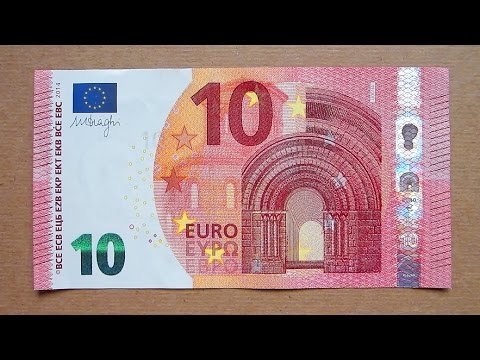
When I got to the cashier, I gave him a ten-euro note from the cash I got from the ATM. He passed it through a machine and, in pleasant, Dutch-inflected English, informed me that the bill was counterfeit.

I was stunned—it can’t be, I said. I just got it from an ATM. He smiled, turned the machine toward me. Watch, he said. Then passed the bill under the machine several times, each time registering a bluish light and a red text: COUNTERFEIT. He pulled a pen-like device out from the cash register and ran it over the bill, as well. It was bad money, all right.

Do you have another way to pay? he asked. Preferably not a credit card?

I did. I gave him a handful of coins, change from other purchases, and it was good. He handed the counterfeit bill back to me. I don’t want it, I said. It’s policy, he said. 

I put it back into my zippered travel purse, and he said—ever so politely—you may want to keep that separate from your other money. I pulled it out and stuffed it into my pocket.

I was humiliated, although the cashier could not have been nicer. I left the Starbucks and drank the coffee standing up, out of sight, thinking dark thoughts about how a bank could have given me a bad bill. There was also no recourse. I could hardly go to the bank (if I could even find a bricks-and-mortar bank with the right name) and tell them that they gave me a bogus ten-euro note, demanding my money (approximately 12 dollars) back.

I went back to where we were staying and compared the bill with other ten-euro notes. I could not see the difference.  I thought about why a Starbucks in an international crossroads would scan every single bill, and how a usually reliable source of currency like a major bank could make a (face it, relatively minor) mistake. Stuff happens, as the bumper sticker says.

Eventually, I realized how incredibly lucky I was. I was a middle-aged white woman tourist, obviously (to the guy in Starbucks) American—probably to everyone else I passed. I was treated as if—of course—I had inadvertently been given a bad bill.

No harm, no foul. Just pay for your coffee. Stop being a Karen.

As the conversation in America moves to defunding or reshaping police forces across the country, it’s worth thinking about all the minor infractions happening every day in the realm of criminal justice, and how we interpret those as seriously criminal or merely needing correction. Potentially harmful things we all do—not using your turn signal on occasion, for example—but only some of us pay for.

It’s also worth thinking about infractions we deal with in the classroom, where teachers police the behaviors of children.  

Any teacher who is honest with herself will, if pressed, acknowledge that some kids get away with more. That we—at least mentally—label kids: Sneaky. Helpful. Lazy. Compliant. Honest—or dishonest.

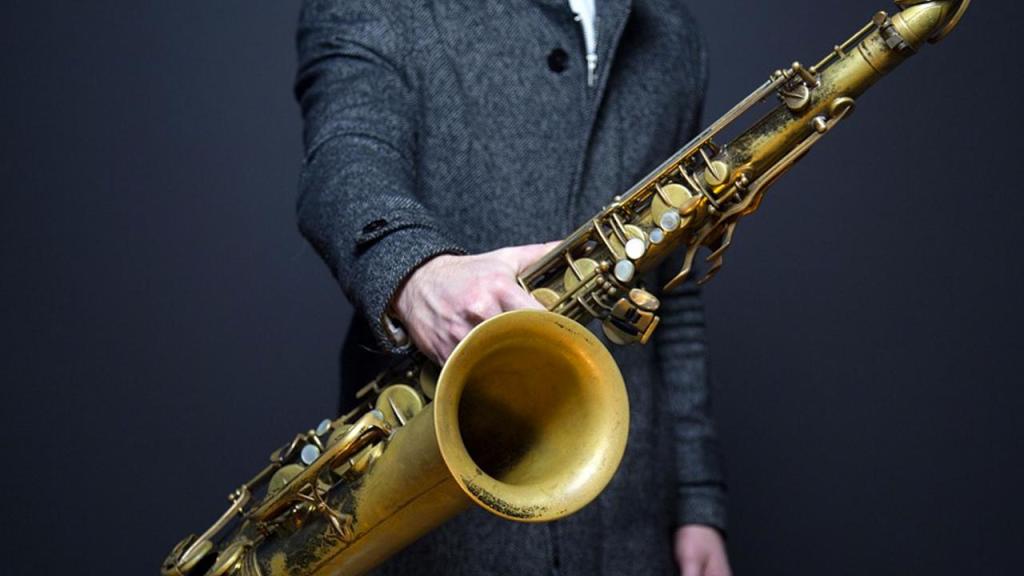
The first (and only) time a genuine crime was committed in my classroom happened over 25 years ago, when a saxophone was stolen. The child who owned the saxophone suddenly ‘couldn’t find’ it. I thought it would turn up—my personal assumption was that the saxophone’s owner was ‘careless.’

After a month or so, I got a call from the local music store. A woman had tried to sell the saxophone in question to the store, which also dealt in used instruments, saying it was no longer needed by her daughter. Fortunately, the store kept serial numbers of instruments it had sold over time, and it was, indeed, the missing saxophone.

The child who lifted the sax from the band room was a compliant and helpful student. Her mother, who tried to cash in on a stolen instrument, was on the school board. When I brought the mess to my principal, he directed me not to tell anyone. Because it would make US look bad.

The missing sax was returned to its owner—whose parents were not informed that someone tried to sell their kid’s possession. Even though we knew. No harm, no foul. Don’t rock the boat.

All of these people are white, of course.

Things have got to change.

Changing What We Teach

Over the past couple of days, there has been a steady stream of resources, generously shared, for anti-racist teaching.  Here, for example.  Here, here and here and here. And this, just this afternoon.

There are plenty of articles out there speculating on when and how we go back to school, and the consequences of going back too soon. But all the handwringing over alternate schedules, classroom lunches and sanitizing the playground are a great example of focusing on the urgent rather than the important.

Going back to School as Usual only works for a segment of privileged kids in well-resourced schools. All schools, including those where parent satisfaction is high and student achievement is admirable, can benefit from re-thinking what we teach—more than how we teach.

There have been endless conversations on Twitter and Facebook about the value of suggested resources and materials, just how age-appropriate they are, and how they intersect—or don’t—with traditional, standards-based curricula. These conversations, even when argumentative and heated, are good.

This is (or should be) teachers’ professional work. These should be the things we’re reading about, dissecting with our colleagues, discussing with our friends. We can’t go on merely doing what we always did. That’s not teaching. That’s mindless reproduction. It’s clear that it’s not working.

This will involve changing who we are and what we think, sometimes. Take this school superintendent in Michigan, for example, who commented, on his Facebook page:   

“Burning, breaking windows, and looting is also an injustice — what happened to Floyd was wrong! A criminal response is also wrong. Any statement otherwise, condones and perpetuates both criminal acts!!  …it all starts with being a law abiding citizen – had he not paid with counterfeit money, had he not resisted, had he not been under the influence — then there would be no contact with officers; that does not excuse the officer; it just eliminates the conflict to begin with!! It starts with being a good citizen!”

Yeah.  Superintendent of a district with more than 5000 students.

But—I have seen and heard other remarks like his in the past week, and in many years past, in times of unrest. From all kinds of people who see themselves as well-meaning, even progressive. From teachers, too, who see themselves as ‘good citizens.’

Which is why we must do more than space desks six feet apart and set up hand-washing stations. What good is school if it’s just transmitting sterile, pre-approved information, teaching basic skills and collecting data? Why take the risk, unless students we’re giving students something of value, something that challenges them to create a better world?

Skimming through the resources shared by teachers who want to know more about anti-racist teaching, I had a familiar ache: I miss having my own classroom. There is nothing like the juice of having a few hundred students (music teachers often have a few hundred students) and plenty of occasions to talk with them about social justice and equity—and cultural appropriation.

If there were any one thing I hoped my students would learn, it would be an awareness that they’re consuming black musical culture without crediting it to the correct source–or respecting it. That’s the reason I did any anti-racist work (and I’m not suggesting I was good at it): my students were soaking in the outcomes of how to creatively make music out of oppression, and they were totally unaware of it.

We need anti-racist curriculum, all right. Including–maybe even especially–in the arts.

I remember a conversation I had with one of my colleagues, about doing a unit–this was back before the curriculum was steered strictly by CCSS–on ‘tolerance.’ She was teaching 8th grade English and wanted to do some readings and discussions. I got excited about the kinds of music that could support and weave through that kind of unit–artists and composers and reasons why music has value in the culture, helps bridge differences.

We talked about what the community might push back against–we doubted that parents would openly confront teachers over readings about racism, but agreed a handful were likely to complain about readings about tolerance around sexual orientation.

Tolerance (a weak word, but hang with me) might be defined in such a unit as:

In a particular time or place…who is it OK to beat up on a Saturday night? A hundred years ago, for example, it was OK to beat up your wife or girlfriend. The police and neighbors would overlook that as ‘family business.’ That was tolerated. That’s not OK any more—at least on paper. It’s also no longer OK to beat up an immigrant, someone of a different ethnicity or color, or someone with a different sexual orientation.

Except—we can all think of plenty of current examples where tolerance of difference has been shattered. For plenty of spurious reasons. Including righteous declarations about ‘citizenship.’

We’re in trouble. We need to teach our children to do better. We need to look hard at coded language. We need to emphasize the most basic civic acts: Voting. Speaking out. Media literacy. Being broadly informed, about a range of issues. Talking to our neighbors and families.

All of that takes courage. Not as much courage as taking to the streets, but courage. If we just go back to school and do the same old things, then all the ‘learning community’ and ‘21st century’ and ‘high and rigorous’ blah-blah we’ve been tossing around doesn’t reflect what our students observe with their own eyes. If we don’t take this opportunity to teach what matters, we don’t deserve the honor and responsibility of being educators.