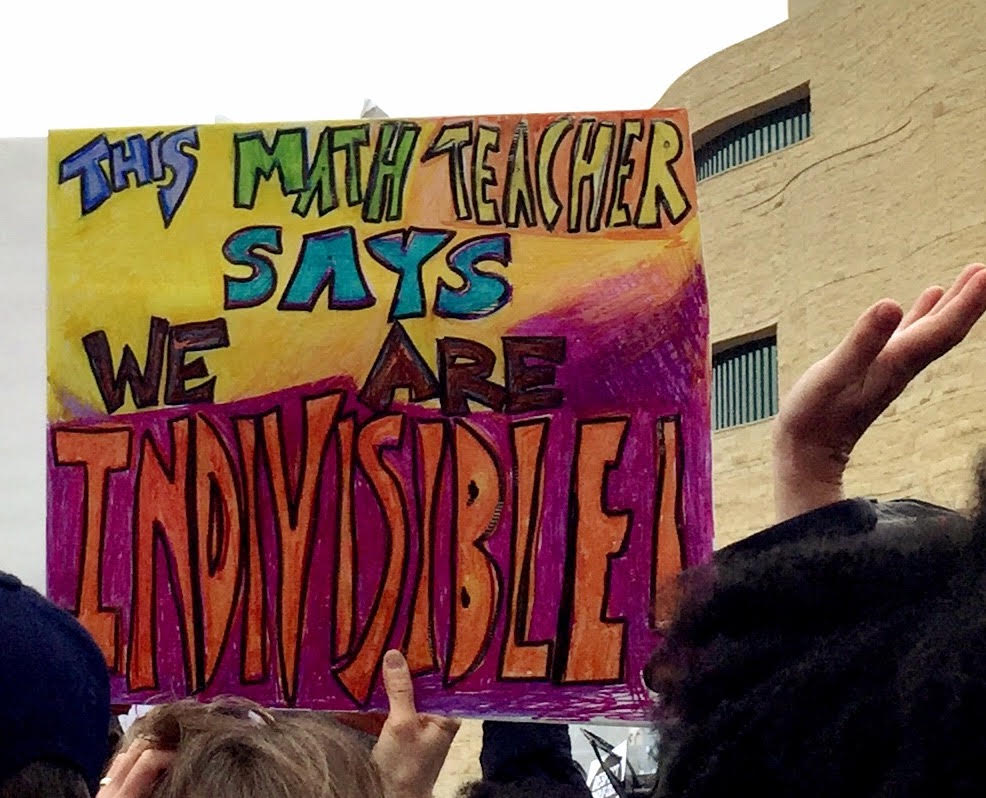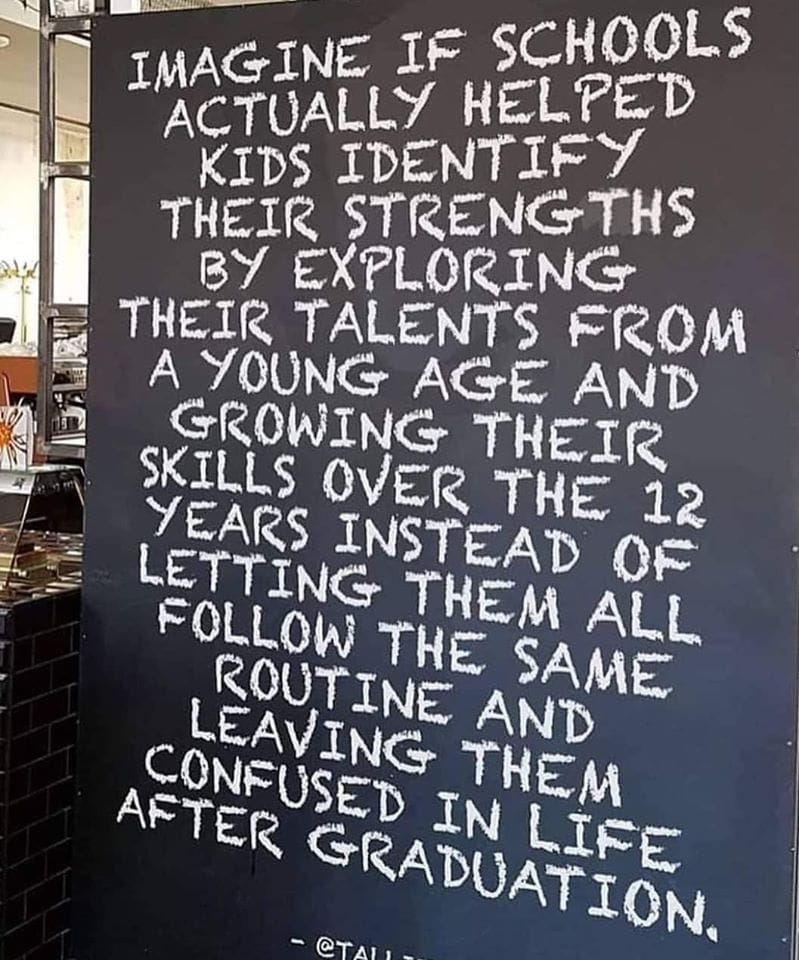
Sometimes, Facebook bubbles up a worthy glimpse of the past. This awesome quote– from 12 years ago– appeared on my page this morning, causing me to reflect on how much we’ve lost in the past decade. Wood is reflecting here on a remarkably different era– where Michelle Rhee was on the cover of TIME magazine, brooming out “ineffective” teachers, and Teach for America was growing, not shrinking and re-branding. His school was building on the reforms of the 1990s, with student-focused programming and the valuing of teacher expertise. If nothing else, it rebuts the tired cliche’ that “factory model” schools have not changed in the past century– schools have changed radically in just a dozen years. George Wood’s school was in Ohio, where “reformers” see their #1 goal as expanding private school vouchers.
“For the past 18 years, I have worked as a HS/MS school principal alongside a dedicated staff and a committed community to improve a school. In that time, we have increased graduation and college-going rates, engaged our students in more internships and college courses, created an advisory system that keeps tabs on all of our students, and developed the highest graduation standards in the state (including a Senior Project and Graduation Portfolio).
But reading the popular press and listening to the chatter from Washington, I have just found out that we are not part of the movement to ‘reform’ schools. You see, we did not do all the stuff that the new ‘reformers’ think is vital to improve our schools. We did not fire the staff, eliminate tenure, or go to pay based on test scores. We did not become a charter school. We did not take away control from a locally elected school board and give it to a mayor. We did not bring in a bunch of two-year short-term teachers.
Nope, we did not do any of these things. Because we knew they would not work.”
A few years back, in 2016, I read a blog post from a national teachers’ union leader, a white woman, proclaiming that she was now woke. I’ve met this woman a few times and have no doubt that she is sincere and well-meaning and totally on the right side of social justice issues, but the blog, about her aha moment, struck me as tone-deaf.
Most of the time, white educators who care about justice are working on opening their minds, at being better humans. Maybe the best white people can do is increase their understanding and awareness of all the injustices that are built into living in the home of the brave. Closer to woke, maybe, but always gazing at justice and equity from a layer of privilege. Doing their best until they can do better, etc. It’s not for us to decide, yup, we’re woke now.
How did we go from striving for more equity and inclusion as a nation–to proudly announcing that the last thing we want our children to feel is responsibility for the well-being of others? What was the turning point?
Spoiler alert: It’s no coincidence that the Governor who wanted to excise woke-ism thought that strategy would resonate with a particular group of American voters. Having stirred that Group4Liberty up, Desantis is now reaping the consequences, politically, in Florida. Bad ed policy will always catch up to you, with increasing teacher shortages and hollowed-out libraries. And so many headaches and complaints.
When you’re stirring the pot, to get political mileage out of parent anger, you’re doing a grave disservice to the foot soldiers who are teaching in your state, the ones who are trying to put together functioning classrooms full of diverse kids–and then teach them something worth learning.
And, as Peter Greene points out, succinctly:It’s a great thing to have an administrator who will have your back, who will stand between you and the latest flap (and for administrators, it’s a great thing to have a teacher who will take the steps needed to make defending them easier). But it’s a luxury that many teachers don’t have.
Stripping critical topics and materials out of the curriculum because they may be interpreted as ‘woke,’ makes that curriculum sterile and empty. Trying to keep students from accessing their own answers on the internet is futile. And attempting to control teacher behaviors via professional development is downright creepy.
Teachers who are experiencing all of these anti-woke procedures can feel isolated and angry, understanding that the very reason they chose to become teachers—building the next generation—has been abandoned by school leaders with feet of clay.
Denying that there is systemic injustice, instead substituting the systemic practice of avoiding unpleasant truths, ducking issues that cause conflict and barring critical thinking by students, is the worst possible basis for making education policy. Instead, ed policy is now based on chasing test scores, cutting economic corners, and presenting a mendacious view of the world to our future leaders.
If anybody needs to pursue wokeness, it’s school leaders and education policymakers. Because—guess what—there ARE systemic injustices in American society. And one of the purposes of American public schools has traditionally been forming a more perfect union through education. Carol Burris:
In the beginning, the purpose was to create a literate American citizenry to be able to participate in democracy. Our founders realized that if they were going to give citizens the ability to actually shape government through elections, they had to have some knowledge base on which to make decisions.
Returning to the critical question here—how and why did wokeness become something to sneer at, to stamp out of school discussions and materials?
Add in a pandemic, which tilted many perspectives—equity, safety, privilege—and it’s easy to see how the past eight years have caused a political abyss to form. Teachers who forthrightly proclaim they are woke, in 2024, risk being fired.
Some years ago, John Dubie, then a high school senior in Vermont, posted a very personal, autobiographical blog entitled “Big Picture Saved My Life.” John meant that statement literally—the Big Picture curriculum and program at South Burlington HS was the thing that kept him going when he was thinking about checking himself out.
I was stunned by the aftermath of the piece, which was picked up, reprinted and dissected in a number of other blogs. I was especially surprised by those commentaries that suggested John’s life was saved by leaving traditional public school.
The irony? Dubie spent much of the blog describing the first eight years of his education in a Catholic school, where he was generally seen as a disruptive loser by the faculty. And– the Big Picture Learning program he credits with making all the difference was housed in a traditional public school, in Burlington, Vermont,
Because I was the person who suggested John tell his story in public, this re-interpretation of his autobiography made me see red. I said as much, in the comments, noting that his generosity shouldn’t become a cheap excuse to slam public education again. I said: What I’m worried about here is protecting a young man who graciously shared a deeply personal reflection having his story–and his face– used to promote the idea that public education sucks.
The response I got: Seriously? Of course public education sucks.
Do public schools suck? Is that the conventional wisdom, the reflexive, global response these days? Do we have to start with the conviction that public education has failed, before we can transform or improve, regenerate or revitalize a fully public system?
All governance models–public, chartered, independent, parochial—have produced exciting schools and disastrous schools. There are plenty of students who thrive under direct-instruction, highly structured, traditional content-delivery models. And others who learn best through self-directed exploration of ideas and subjects that interest them. There is no one best way to learn.
Public education remains the Big Kahuna of governance models in the U.S. Why would you tear down the considerable and historic infrastructure of a system that has educated–however imperfectly–generations of (successful) Americans, instead of updating it, repairing its cracks and flaws and outright malfunctions? Other nations have retrofitted their public systems, using both research and imagination. Why wouldn’t we?
When and where public education is not meeting the needs of students, why is that so? Public education has been radically re-shaped in the last two decades, driven by “reform” policies and experiments that clearly aren’t yielding the expected results (and that’s a very sanguine assessment). If public schools suck, we certainly haven’t found the magic formula to fix them. Probably because the answers involve hard work, multiple strategies and serious investment.
Public education is the only “choice” when other options are exhausted, so public schools are filled with our poorest children, those whose parents cannot provide transportation or uniforms or help with algebra homework. Some of those schools are creatively addressing problems, building communities and family relationships, persisting even if testing data remains low. Do they suck?
Who’s saying that public education sucks–and why are they saying it? For some parents, the fact that their child doesn’t get a custom-tailored learning experience or enough attention is reason enough to believe that all public education is substandard. For others, there is a knee-jerk assumption that the only good education is a series of competitive-admission, high-ticket private schools. Much of the anti-public education drumbeat springs from a politicized, media-fed conviction that public schools have failed, based on testing data alone. You have to ask: What’s in it for the most vocal and persistent public school critics?
You don’t really know what a particular school or classroom is like until you’re there. We’ve all read the polling data that shows parents generally think the schools in their community are pretty good; it’s the schools in other places–scary urban places, or maybe just the next district over, or public schools across the nation–that are terrible. I’ve been in plenty of classrooms in Detroit Community Schools where there was order, curiosity, learning–and joy (and usually, about twice as many kids as there should be). In the middle of poverty, there are pockets of triumphant accomplishment.
Shouldn’t we be shoring up public education, as America’s best idea? Shouldn’t we be investing in repair, enhancement, innovation? Let’s stop with the facile pronouncements on the failure of public education–they reveal failure of imagination and democracy.
The one thing non-teachers simply do not and cannot grasp is how MENTALLY EXHAUSTING IT IS TO TEACH ALL DAY. There are very, very few jobs that require the constant mental attention that teaching does. I’d love to see all the people criticizing teachers to teach for a week. (Caps are Fuller’s.)
There are over 750 responses, running about 30 to one some form of confirmation, most of which are from teachers or parents. The odd pushback (i.e., @Angrydocsx: Surgery, nursing, working on an oil rig, construction, being a lineman, etc… Teachers are great but get over yourself.) are either from people who feel their jobs are equally taxing, or your garden-variety anti-teacher/anti-union/you-suck-so-shut-up tweets.
Side note: I think surgery and nursing are also incredibly demanding and find @Angrydoc’s immediate shift to oil rigs and linemen in cherry pickers—dangerous, outdoor male-dominated jobs—telling.
Fuller (who, not coincidentally, was a HS teacher before moving into higher education) puts his finger on the thing that makes teaching exhausting—you’re on all the time, making decisions on the fly and—if you’re doing the job right—taking sincere responsibility for teaching…something, to students who may not particularly want to be taught.
He did not say teaching was the most mentally exhausting job in the world—there are others where you can’t take a break or turn your back—only that the need to constantly pay attention and adapt were factors that many folks did not perceive, when they thought about teaching. A number of the tweeted responses, in fact, were from people who thought they’d give teaching a try, but concluded that it wasn’t the job they thought it would be.
*Researchers Hilda Borko and Richard Shavelson summarized studies that reported .7 decisions per minute during interactive teaching.
*Researcher Philip Jackson said that elementary teachers have 200 to 300 exchanges with students every hour (between 1200-1500 a day), most of which are unplanned and unpredictable calling for teacher decisions, if not judgments.
Cuban notes that those studies are older, and invites readers to share any newer research—but those figures ring absolutely true to me. Interactions, decisions, re-direction, pop-up questions, wait time, modeling, judgments. On and on and on. Teaching is all about an on-your-feet response to whatever crops up. It’s the essence of unpredictability, and every day is exhausting.
What Fuller’s tweet and the plethora of responses clearly illustrates: There is no such thing as successful scripted teaching or “effective” fidelity to pre-constructed lessons. Also: the more you teach, if you’re paying attention, the more fluid the decision-making becomes, and the more tools in your mental (and emotional) tool bag. Experience matters. Perception matters. Judgment matters.
When I had been teaching for more than 25 years, I took a two-year sabbatical to work at a national education non-profit. There was an opportunity to pursue an alternate career in our contract language, but even though I knew I could return to teaching, I was certain that this new job was my off-ramp.
At first, it was great. I had my own cubicle, with a computer and a phone and–get this–a secretary. We took an hour for lunch, occasionally going out to a restaurant (and, also occasionally, having a glass of wine). We could use the bathroom as often as we liked. I could pop into someone else’s office and have a long chat about some issue that had arisen. I could leave early to go to the dentist. We were doing a lot of conferences and workshops—on weekends, because our clients were educators—and if we were in another city for the weekend, we didn’t return to work until Wednesday or Thursday: comp time!
I found the workload easy and the pace relaxed. I liked the people I worked with. But after the first year, I started thinking about going back to teaching. It took a long time to work through the reasons. Teaching offered less money, less prestige and way more what might be called mandatory time on task.
What I finally concluded was this: When I left the school building at night, and walked across the parking lot, I could describe the good I had done that day, things students had learned, progress made. I didn’t get that daily confirmation at the non-profit (which was much-admired). Lots of days were focused on strengthening the business end of the non-profit’s work. I didn’t get to hang out with kids, either.
I taught a lot of subjects and varied grade levels during my career, speaking of mental exhaustion. I taught large middle school and high school band classes (65+ students), and 7th grade math in the first year of a new, “connected” curriculum that the old math teachers loathed. I taught vocal and instrumental music in every grade from pre-K to 12. By far the most mentally challenging class I ever taught was general music to a group of 12 Pre-K children, mostly four years old, in my last year in the classroom.
These kiddos were all over the place, maturity-wise. My biggest challenge at first was getting them all to sit, not sprawl or run around, on the circular rug in my classroom. I had them for 50 minutes, twice a week (yup—too long, I know, but that’s the way the schedule was set up), so the first time they came to my room, I prepared a lesson plan with seven different activities, from listening to marching. Seven!
They ran through that plan in about 20 minutes. I remember thinking: I’m supposed to be good at this! I hope nobody makes an unscheduled visit to my room.
Although I got much better at teaching very young children, thanks to the generous suggestions of my colleagues, it was a mental attention marathon, day in and day out. Did they understand that word? Why aren’t his hands coming together when he claps? How much time is left? Wait— is she actually spitting?
When we speak of teacher professionalism, we think of content knowledge, instructional expertise, being a respected contributor to a school learning community. But a big part of professionalism is accepting responsibility for what happens in your worksite, for expending the continuous mental energy to create a successful and skilled practice.
Over the last few decades, pundits and policymakers have derided the professionalism of teachers because “accountability” or whatever. No matter how many degrees and certificates they get, how many years of experience they accumulate, or student commendations they collect, American society looks at teachers and says “Oh, that’s nice!” but also, “How do you do it? Couldn’t be me!” “You and your union make the job easy, right?” and my personal favorite, “I couldn’t stand me when I was a child. How does that work out with 30 of them?!” In other words, even though many people think only a special set of people can do the job, they also think anyone can do it.
Last week, Emma Sarappo, in The Atlantic, cautioned against setting reading goals for 2024: Quantifying my reading, whether by titles finished, pages read, or another metric, doesn’t capture the quality of my attention to each book. In 2024, that’s what I’m most concerned with, and logging, rating, and sharing on the social web might pull my focus away from the moment and back to my phone.
Well. La-di-dah.
I’d be hard-pressed to describe the quality of my attention to the 112 (Oops! Quantifying!) books I read in 2023. I logged them all, wrote a paragraph or a sentence about each and rated them, one to five stars. Is that enough quality attention?
I log the books I read mostly so that I don’t accidentally bring home previously read books with interchangeable names—thrillers and series, especially—and so I can remember the best stuff. Barack Obama names his favorite books, each year. Why shouldn’t I?
In my top dozen this year, five non-fiction and seven fiction titles.
I liked two of the non-fiction titles so much that I wrote separate blogs (click on book titles) outlining their excellence:
The other three: Lady Justice: Women, the Law, and the Battle to Save America (Dahlia Lithwick). This book was a gift from a man who plays in my local flute ensemble, a retired lawyer who bought me a copy as a gift. The book is a fascinating review of amazing women who took the law into their own hands, often facing subtle and not-so-subtle discrimination. What makes the book outstanding, however, is Dahlia Lithwick’s semi-snarky, to-the-point prose.
Gender Queer: A Memoir(Maia Kobabe)I decided to read it because it was the book most often on lists of books—so MANY lists!—targeted for banning in schools and public libraries in 2023. What surprised me was how gentle, even tender, the book was, how sweet the drawings. Yeah—there is one drawing of sexual contact (which occurs between two consenting grad students) but my overwhelming impression was how incredibly helpful such a book, which reflects kindness and caring in interpersonal relationships, might be to a confused teenager. Also: props to this Massachusetts teacher.
Seven Fictional titles:
Tom Lake(Ann Patchett) Best book I read this year. I have recommended it to many friends, and lots of them have had lukewarm reactions, but the novel hit my sweet spot. Not only is it set, mostly, in the Grand Traverse region of Michigan, where I live, much of the action takes place during the pandemic. Nobody writes with the humor and humanity Ann Patchett infuses into her novels. I loved this book.
All the Sinners Bleed (S.A. Cosby) I’m with Barack Obama on this one. It’s a great read, as a crime thriller, but the uneasy racism and ‘Merica values that infuse the writing make it special.
The River We Remember (William Kent Krueger) I’m a fan of Krueger’s Cork O’Connor series, but I especially love his standalones, beginning with Ordinary Grace. “River” traces a crime through the eyes of a law enforcement officer still suffering from what we’d now call PTSD, after World War II, and the elderly female lawyer who helps him prosecute the guilty. Krueger is a master at creating memorable, complex characters and turning ordinary stories into reflections on human nature.
My best friend gave me a copy of The World Played Chess (Robert Dugoni), a beautifully layered book that looks at the long-term damage done to men who served in the Vietnam war. The novel’s structure, following a narrator from his teenage years, when comments on the war were vastly different from the way we perceive the conflict now is beautifully structured. This was the first Dugoni novel I’d read, and it sent me off to read more of his work.
The Displacements (Bruce Holsinger) I read Holsinger’s The Gifted School and liked it, but this novel is the ultimate dystopian fiction around a Category Six hurricane hitting Florida’s wealthiest coastal residents. Utterly believable, occasionally funny and scary as hell, the book somehow ends up being heart-warming.
Small Mercies(Dennis Lehane) Lehane, whose work is always good and always dark, says this may be his last novel. If so, it’s a barn-burner, centered around tough-broad Mary Pat Fennessey, and set in 1974, during the Boston school busing protests. Lehane spares nobody in this book—the dialogue is brutally authentic, and it’s hard to find a character to root for, at first. In the end, the book will break your heart.
From The Gander Newsroom:The story of the Great Blizzard begins in late January 1978, during a winter that had already been fiercely frigid. The closing days of January saw snow falling in the Great Lakes Region on Tuesday, Jan. 24. Just as soon as that snow system was wrapping up Tuesday evening, the National Weather Service issued a Special Weather Statement: “Another Winter Storm Threatens Lower Michigan.”
As the Detroit Free Press reports, what would turn out to become the massive winter storm the Great Lakes Region would see in the coming days resulted from two different weather fronts in the US: single-digit temperatures coming from the north and moisture climbing from the south.
On Thursday morning of Jan. 26, the NWS’ Ann Arbor office issued the following special weather statement: “A Great Storm is Upon Michigan.” As the heavy snow fell, strong winds created whiteout conditions across the state. Michigan became paralyzed as air and land travel came to a standstill. NWS Ann Arbor Meteorologist in Charge C.R. Snider wrote the following in a summary of the event:
“The most extensive and very nearly the most severe blizzard in Michigan history raged throughout Thursday January 26, 1978 and into part of Friday January 27.
About 20 people died as a direct or indirect result of the storm, most due to heart attacks or traffic accidents. At least one person died of exposure in a stranded automobile. Many were hospitalized for exposure, mostly from homes that lost power and heat. About 100,000 cars were abandoned on Michigan highways, most of them in the southeast part of the state.”
Over the course of the storm, snowfalls across the state included 30 inches in Muskegon, 19.3 in Lansing, and 19.2 in Holland.
I was a young teacher, living in Ann Arbor, in January of 1978. The weather had been crummy all week, making my 30-mile commute to work (in a lightweight Toyota Corolla) dicey. On Wednesday afternoon, I white-knuckled my little car to my boyfriend’s farmhouse–a guy named Flanagan– on the north side of Ann Arbor, sliding into a snowbank in his driveway and killing the engine. The weather was bad and supposed to get worse. And boy, did it.
It was the only time in my life where I was truly snowbound, unable to get out or go anywhere, and unclear about when the dirt road might be plowed or whether my car would start again. On TV, it was The Blizzard of 78, all the time, with terrible pictures of wrecks on the freeway and stories of people freezing in their homes.
I remember it, however, as a gloriously fun, responsibility-free five or six days. We never lost power, so we were warm enough and safe and able to talk to people on the phone and pull random stuff out of cupboards and the freezer to eat. We watched movies on TV and listened to lots of great music and shlumped around wrapped in quilts and two pairs of socks. At night, however, as the winds howled around the old drafty house, it was possible to imagine living on the prairie a century ago, wondering if daybreak would bring an end to the storm. Or our lives.
It’s stormy here tonight, events cancelled, social media full of “grow up people, this is Michigan” scolding and warnings about charging your devices and keeping a flashlight handy. We’re going to get a foot of snow or more, all told. I have a sturdier house, a better car (with better tires), more food and the miracle of technology, should things go south.
Still– I’m nostalgic for those two in the farmhouse, under that quilt.
In her last year of a degree program in Justice Studies, my daughter took a course called “Surveillance in Society.” The readings and discussion were around intrusions into personal privacy and data made possible by technology. Dear Daughter and I had many amusing conversations about some of her assignments—“Are Bar Codes the Mark of the Beast? Discuss.”—which struck me as paranoid in the extreme. Her professor was obsessed with our imminent loss of civil liberty, always urging his undergrads to be suspicious of anyone asking for personal information, and, presumably, scanning the sky for black helicopters.
In 1998, my district opened a new middle school, full of state-of-the-art technological systems. We were the envy of the other buildings, with fully networked software to handle all our data needs. We got some training and the big pitch—our new procedures would save time, paper and man-hours, give us more accurate data, impress parents with e-communications, yada yada,
Under Old Attendance procedures, every teacher took attendance once, at the same time every morning, recorded it in their grade/attendance book, and sent a student to the office, with an attendance form, printed on scrap paper from recycle bins. Secretaries recorded these on a master list, and handled absence data for students who came/left during the day. Teachers got a copy of the master list, to help confirm absences when students needed to make up work.
Under New, Improved Attendance procedures, every teacher had a computer, with separate attendance book and gradebook functions. Teachers were now required to take attendance every hour and enter absences and tardies on the computer within a five-minute window. We were not allowed to keep the attendance program open on our computer desktops (because our gradebooks, protected by the same password, might be accessed by devious students)—so we had to log in every hour.
Because this was 1998, the server’s horsepower was severely strained by 40 teachers logging in simultaneously, and it would take 30-60 seconds for the program to load. Teachers who forgot to take attendance within 5 minutes would be called by the office (where a secretary now sat, monitoring the data coming in every hour), disrupting teachers’ lessons. If someone had a missing assignment, you had to toggle between attendance and grade programs to discover whether the child had actually been absent.
A process that had taken two minutes of teacher-time daily suddenly began to take two minutes every hour. Best-case scenario, teachers would lose ten extra minutes of instructional time each day: 50 minutes/week, four class periods per month, 36 class periods per school year, or six full days of instructional time. Taking attendance.
Lest you think I’m being overdramatic (or are dying to tell me that faster computing and better software have eliminated problems and made attendance-taking an absolute joy)—I tell this story not to whine about record-keeping, but to question our automatic goal of “efficiency” and the uses and purposes of all K-12 tech-enhanced data collection.
The state requires daily absent/present data, and that to ferret out kids who aren’t actually attending school but were counted for funding purposes. A student who went AWOL would not necessarily be picked up any quicker under the new system, and most of our mid-day leavers were signed out to go to the orthodontist with their mom, anyway.
The new system made data-entry mistakes six times more likely and kept a secretary busy checking on students who were marked present one hour, but absent the other five due to teacher error. I had great sympathy for “careless” teachers who rushed through the attendance procedure to get started on, you know, teaching—only to be monitored and chastised later. I was one of them.
Nobody in the office could explain why or how, precisely, the new system was helping us do a better job of serving kids. The on-line gradebooks also came with unanticipated problems—teachers who didn’t post enough grades (remember when formative data included things that weren’t numbers?), the amount of time now required to deal with anxious parents, and so on.
The most obvious reason to question always-available online gradebooks is that responsibility for turning in work and monitoring a running performance record should belong to students, especially in secondary settings. We have always had periodic reporting to parents—four or six times a year, or in some cases, weekly progress reports. Any more than that elevates grades over actual learning and encourages students to let mom be in charge of their education.
My parents trusted me because I had earned their trust. Sometimes I stretched that trust, but I was constantly figuring out what felt too risky, what felt right or wrong, who I didn’t want to get in a car with. Maybe that sounds like a lot of discernment for a teen. But how else do we figure out who we are? My parents could’ve lectured me about “making good decisions” all they wanted; I only knew how to make them by finding myself in situations far from them where I had to.
The same principle applied to my grades, to my online use, to how I talked to boys and figured out friendships. In high school, I would see my exact grade around twice during the quarter, when a teacher would distribute printouts that included all graded assignments and your current percentage.
Schools pay attention to what they value. We collect data first, and decide how to manage it later, a pattern repeatedly endlessly in thousands of schools. We assume that everything can be done faster, cheaper and better through technology. Sometimes, the rationale runs backwards—we adopt the technology, and then invent reasons for why we need it.
But—cutting to the chase—The Kingdom, the Power and the Glory is a fantastic book. Highly recommended, even though the burgeoning Christians-are-what’s-wrong-with-this-country crowd may be irritated by Alberta’s persistent, conservative choir-boy insistence that the church is a force for good.
I should mention here that I had a front row seat for the rise of the Cornerstone Evangelical Presbyterian juggernautin Brighton, Michigan (nothing like your mainstream Presbyterian, btw). We moved to Livingston County around the same time as Richard Alberta, long-time pastor at Cornerstone and Tim Alberta’s father. When we were looking for a church, we heard repeatedly about the great things going on at Cornerstone, which was just a few miles down the road—the rapid growth of the congregation, the inspiring sermons, the youth group with 100 members. Pretty soon there would be a school, too—ultimately, there would be six major building expansions in 30 years.
One Christmas Eve, we decided to give Cornerstone a try. My son was three or four at the time and had zero capacity for quiet behavior in a strange place. When heads began turning, my husband took him out into the narthex. After the service, he was holding our coats and standing by the door. We’re not coming back here, he said.
Out in the car, he pulled a fistful of brochures and monographs out of his pocket, collected as he chased our son around the lobby area. Take a look, he said. There were predictable anti-abortion pieces—but also literature supporting capital punishment, and the usual Old Testament scourges against divorce, dark (Harry Potter) magic and homosexuality. We’re not exposing our kids to this, we agreed. We found another church.
But Cornerstone, which eventually grew to 2000 families, held a lot of power and influence in Brighton. Richard Alberta enjoyed stirring up local controversy—when a downtown coffee shop put a tiny rainbow sticker on its door, he wrote a letter to the newspaper, suggesting customers who were willing to order coffee in such a sinful place consider going to “Sodom and Gomorrah” (his too-clever name for Ann Arbor, 25 miles south), instead. The shop closed a few months later.
At Christmas time, when many churches collected gifts for needy families, he declared that there really was no excuse for being needy in well-off Livingston County. Instead, his church filled up a semi-truck with evangelical goods and household items and shipped them to Russia, to support struggling Christians there.
Alberta broke up the Brighton Ministerial Association because he refused to meet with a local gay minister. He brought in “security” specialists when my church, St. Paul’s Episcopal, called a Black rector, claiming that criminals “from Detroit” (code language) would now be getting off I-96 and endangering congregants in Brighton churches’ parking lots.
He went after my church, probably the most liberal mainstream congregation in town, repeatedly and viciously —in the newspaper and any other media outlets he could find, pre-social media. When a reporter at the local newspaper asked for an in-depth interview, he had a putting green set up in his office, and spent the interview nonchalantly practicing his short game, as she sat and took notes.
Many of my students attended Cornerstone and went on mission trips to save the unchurched of West Virginia or wherever. One of my band students’ father was an associate pastor at Cornerstone; at Parent-Teacher conferences, this pastor asked me to call the fees for his son’s upcoming band field trip a “donation” for tax purposes. He came with a typed-up statement for me to sign (I didn’t).
There’s much more, but you get the picture.
Tim Alberta’s book begins with the death of his father, in 2019, and his surprise at learning formerly dedicated congregants were leaving Cornerstone for more MAGA churches. Funeral attendees criticized Tim for his openly non-MAGA thinking (a well-deserved potshot at Rush Limbaugh). Followed up, of course, with the righteous assurance that they were praying for him to see the real truth.
My thought: The Buddhists were right about karma. You reap what you sow.
Which is, bottom line, where Tim Alberta is going in this book. He takes the reader through right-wing congregations, colleges and organizations around the country, a wide-ranging array of appalling examples of religious malfeasance. Mercedes Schneider posted some hot quotes from the book in her blog, if you want to get a sense of the flavor of his writing, and the practices he explores and condemns.
Alberta is careful to note that Trump was merely an accelerant, a permission-giver for bad behavior in the name of the Lord, not the root cause of what has happened to the Evangelicals. But he pulls back the curtain on some distinctly repellant, un-Christian conduct and people, both the globally famous and the local yahoos in Brighton.
He resists passing judgement on more inclusive, mainstream churches, although his conservative perspective is never hidden. He also has the scholarly and personal background to dissect theological and biblical questions raised by the commercialization and politicization of the spiritual. He writes with great confidence and clarity, relishing the opportunity to counter every lazy iteration of “Well, the Bible says…” He spends a half-dozen pages on abortion that are well worth reading.
I learned a great deal from the book. For starters, I began to understand where MAGA and its tribal beliefs and actions come from, how conservative Christians moved rightward—the triggers, the entitlements, the power-hoarding. This was personal for me, too, a look at how all the nice white kids from nice white families in my school district shifted their world-framing and let casual racism, sexism and xenophobia emerge.
Alberta ends the book with some signs of hope—the most convincing of which, ironically, come from women who have been sexually abused and actually fought back—Jennifer Lyell and Rachel Denhollander. Aside from Paula White, Trump’s hottie “spiritual advisor,” the main characters in this book’s framework are men. White men. When Alberta travels, as research, he visits men—genuine pastors, scoundrels posing as clergy, insufferable jerks, the egomaniacal, the greedy and the scheming. Women take a subordinate role in all of the churches and organizations. This is so obvious, in all 500 pages, that it feels like a blind spot. He thanks his wife for essentially raising their three boys in his absence, in the acknowledgements, but it feels like an afterthought, the cookies and coffee after the meat of an intelligent sermon.
Nonetheless, Alberta seems to have had a religious epiphany, taken a well-researched and critical look at what evangelical Christians have become, and bravely wrote about what he’s observed. When I read about mega-churches, pastors living in mansions and castigating their fellow citizens who believe differently, as the donations roll in, I always think “Not all Christians are like that.”
I am certain that Tim Alberta holds out hope that we’re on the crest of a religious revival. In the meantime, he was harrowingly honest about what he saw. Everyone—believers and non-believers should read the book. Five stars.
There’s a strange moment in time, after something horrible happens, when you know it’s true but you haven’t told anyone yet. Of all things, that is what I remember most. It was so quiet.
Barbara Kingsolver, from the Poisonwood Bible.
So—we are a dog family. Always have been. Before we had kids, my husband and I had a dog. A secondhand dog, like most of our subsequent dogs. In 44 years of marriage, we’ve had six great dogs, with divergent personalities and backstories. Two of our dogs were named Blue (neither was named by us). One dog thought she was a cat—you know, aloof and entirely self-interested. Another flunked out of leader dog school, and one was a beautiful golden retriever named after a Supreme Court Justice. One died, of a snakebite, about 15 minutes before my son’s 6th birthday party.
And the last dog we had was named Atticus. Putting that in the past tense is still hard, although we had to put Atticus down—over the Rainbow Bridge, as they say—in July.
Atticus was cleaned up and civilized by a wonderful woman named Jean, then entered the RP training program. As it happens, my husband, a criminal defense lawyer, had a client at Lakeland. At a visit, his client, a leader in the dog training program, asked if we might be interested in a great dog. We were in that sweet spot of not owning a dog, where you can travel and go out for the day without worrying about your pet, having lost Annie (the cat-dog) a few months earlier. We hadn’t yet discussed getting another dog.
What’s the dog’s name? my husband asked. Atticus.
And that was that.
We picked Atticus up from Jean’s house. She showed us how good he was at chasing balls, and gave us a thundershirtbecause Atticus was terrified of storms. She told us he had some “trust issues” but was, at heart, a very good boy. The vet that donated time to Refurbished Pets thought he was about three years old. Thinking about Atticus on his own, riding out storms and scrounging for food, broke our hearts. He was instantly, and irretrievably, our boy.
For the next eleven years, Atticus slept on a cozy bed in the corner of our bedroom and traveled with us—seven times—from Michigan to Arizona, an excellent backseat traveler. Whatever trust issues he had melted away, although he still whined from his bed when there was thunder and lightning.
Of all the dogs we ever had, Atticus was the most food-driven. We got in the habit of storing things in cupboards and the microwave, because anything left on the counter, or the kitchen island was bait. Once, my son and some of his friends bought some gourmet, $$$ cookies while touring northern Michigan, and left them in bags and boxes within striking range. When they returned home, Atticus had eaten most of them and hidden the rest. For the next year, we found cookies under couch cushions, in a bookshelf, and in a laundry basket.
About a year ago, Atticus (probably 14 by now) was showing signs of age: He panted constantly. He paced, all night long. It obviously hurt to lower his back end to the ground, and steps were problematic. The vet said his heart was enlarged, and gave him a medication that caused indoor accidents, something he’d never had before, and made him feel terrible. Plus—he had a collection of symptoms that might be called “acting weird.”
It was time. We were both there, petting him, feeding him treats, holding his paw, as his tail slowly thumped, then stopped. Afterward, I didn’t feel like sharing the news, or posting a photo. It was, as Barbara Kingsolver says, so very quiet.
He was our dog from the wrong side of the tracks, 100% dog, prone to drifting off during walks in the woods (but always returning) and always—until the last year or so—down to pursue a ball or chew up a stuffed toy, especially one that belonged to another dog.
After we made the appointment with the vet, I took a dozen photos of Atticus panting and pacing around the living room, his last afternoon on earth. Here’s one.
I have been celebrating the coming of the light in eight different decades now—in ways considered sacred, secular, and even pagan—and don’t remember any end-of-year condition worse than the place where we find ourselves on this Winter Solstice, 2023.
Recently, Atlantic writer Tim Alberta shared his—very painful, very personal—story about being the son of a conservative, Trump-supporting minister, senior pastor in a church of over 2000 families, in southeastern Michigan. It’s a thoughtful but disturbing story, one very familiar to me, as my own family lived just down the road from this church, before we moved north. Many of my students were in the youth group there, absorbing conservative ideas about abortion, capital punishment and how the lazy don’t deserve handouts.
For the religiously skeptical, it’s churches like Cornerstone that illustrate how Christianity has crossed a line between serving our neighbors with compassion, because Jesus asked us to–and accruing power and riches because being a “Christian” means we’re entitled to them. For all my friends who are non-believers, or adherents to different traditions, or fed up with Christians whose lives are on centered on dominion rather than devotion —yup, I see you.
But I want to share one tiny spark of warmth—of hope, joy, peace and love—that still flickers here in the Little Finger of Michigan’s mitten. For five years, beginning in 2017 (and pausing for COVID in ’20 and’21), my church, Trinity UCC of Northport celebrates an Advent Afternoon, on a Sunday in December.
We invite the whole community to share their music, a kind of local holiday talent show. There’s a pick-up choir, comprised of singers from local churches and community choral groups. There are vocal solos and instrumental ensembles. Ministers from local churches do invocations and benedictions. All followed by cookies and wassail punch and talking over the local news, at crowded tables.
I want a house with a crowded table And a place by the fire for everyone Let us take on the world while we’re young and able And bring us back together when the day is done.
If we want a garden We’re gonna have to sow the seed. Plant a little happiness, let the roots run deep If it’s love that we give, then it’s love that we reap.
There were handbells, a clarinet playing Faure’, an old-time gospel quartet, a recorder ensemble and heartfelt solos. A trombonist accompanied himself in a pre-recorded trombone quartet, and a fiddle, bass, drum and superb accompanist played along with the singing, in this creaky, 150-year old sanctuary, as the day faded into twilight. There was jazz (Chick Corea) and 92-year-old Hugh Willey played a rip-snorting version of Jingle Bells.