What I Learned from my Dad about Politics and How it Applies to 2026

I am a big fan of Jess Piper, a veteran teacher from Missouri, who left the classroom to run for office, and has since reshaped the conversation around why red-staters vote against their own interests. Piper writes often about a childhood spent bouncing around the south, and the family values that influenced her.

When people (including myself here) shake their heads and wonder how so many citizens–despite glaring, flagrant evidence to the contrary–can still stubbornly believe that Trump is leading the country  on the right track, it’s helpful to read Piper’s blog. She gets it.

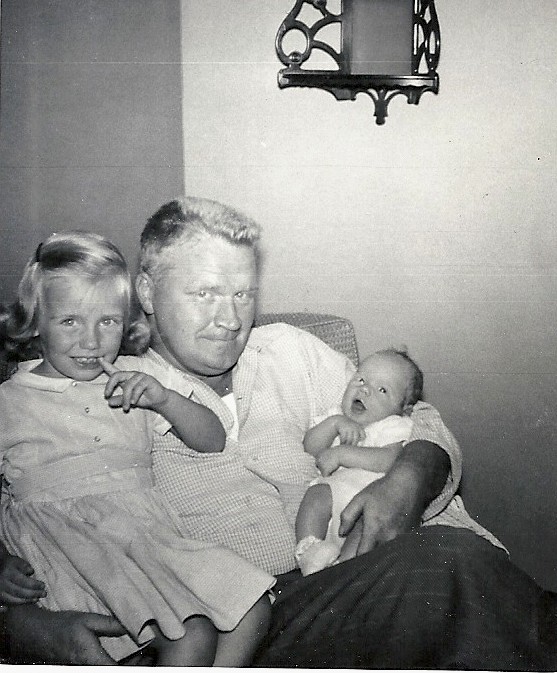
Mostly, I read Piper for her insights on working-class voters–because my own father, were he still alive, would (despite many years of voting for Democrats, post-War) probably be a Trump supporter, voting against his own interests.

Not a careless, “protect my wealth” country-club Republican. But a grievance-driven voter who resented those he believed were simply and unfairly handed benefits and perks, things he would never enjoy, no matter how hard he worked.

Fear and resentment—and the overwhelming conviction that the little guy never gets ahead—were deeply embedded in his character. That doesn’t mean he was not a good father; he absolutely was, caring for his family and living up to his responsibilities as a hard-working adult and citizen who never missed an election. He was a proud Teamster, a church-goer, and the man who drove me 90 miles one-way to take flute lessons at the university.

My dad served in World War II, in the Army Air Corps (later the US Air Force) in the Pacific theatre. His plane was shot down, in 1944, over the Sea of Japan, and the crew was rescued by an Australian sub. He lost his 19-year old brother Don in the first wave of Marines taking Iwo Jima in February of 1945. I wrote more about these things here, explaining why my dad really never got over the war. But it was more than his wartime experiences that molded his character.

He often expressed the sense that he’d been cheated—that other, less-deserving people were moving ahead, because they had money, or were currying favor, while he (a realist from the poor side of the tracks) was left behind. He voted for George Wallace in 1968, because Wallace claimed there wasn’t a dime’s worth of difference between the two parties: both were corrupt and run by elites. Sound familiar?

Thom Hartmann’s new piece– Culture Is Where Democracy Lives or Dies, Because Politics Always Follows the Story a Nation Tells Itself—goes some way to explaining what’s happening today, but also why my dad, surrounded by protests against the Vietnam war and girls burning their bras, turned to a man who supported segregation and repudiated progressivism: ’ Like no candidate before, Wallace harvested the anger of white Americans who resented the progressive changes of the 1960s. Wallace supporters feared the urban violence they saw exploding on television. With tough talk and a rough-hewn manner, Wallace inspired millions of conservative Democrats to break from their party.’

Like many of Trump’s supporters today, my dad saw Wallace as a truth-teller, an advocate for the working man, someone who would work to defend cultural norms around race, gender, authority and social policy. Even when those norms were outmoded, unjust or morally repugnant.

Today, I know better than trying to talk an irrational, ruby-red voter out of their convictions. I really do understand how pointless, even damaging, it is to accuse Trump voters of destroying democracy and erasing progress. Because I spent, literally, years of my life trying to (cough) enlighten my father, who treated me like other fathers of the era treated their know-it-all college-student kids: as spoiled brats who needed to let the real world take a whack at them.

My father died in 1980, of a brain tumor, at the untimely age of 58. I never changed him, but he never changed me. He thought a college education was a waste of time and money, although when I graduated, he came to commencement exercises and danced with me at the Holiday Inn afterward.

 Later, it dawned on me: the fact that he and my mother couldn’t contribute financially to my college education, and couldn’t help me navigate enrollment, might have been part of his insistence that college was for the privileged, not families like ours.

All of this happened in a time when news and opinion came from three mainstream TV channels and the Muskegon Chronicle. Who do Trump  voters turn to now for news? Is that source supporting their racism, sexism, xenophobia and bitterness? Is it filled with fact-free resentment?

Where do we start in changing minds and hearts? I wish I knew.

The Good News in August and Why It’s Baloney

It’s August. I admit that I am a sucker for the cute back-to-school photos—students holding little chalkboards, shiny floors and carefully stapled bulletin boards. Special props to veteran teachers, posing for their 26th year of sixth grade or new job as Dean of Students. Online, there are cheery little edu-pieces about team-building exercises and how to set work-life boundaries.

To which I say: Hahhahhahahhaa  (deep breath) hahhahahhahahah.

Because this is not just another start of school. This is (among other things) the first school year since 1979 when there hasn’t been a functional Department of Education. It’s a year when there’s now concrete evidence that addressing equity and appreciating diversity can get you fired. It’s a year when federal funding —especially for the neediest schools—can disappear overnight. Maybe never to return.

I can see you veteran teachers in the back of the room–surreptitiously writing lesson plans during the mandated PD–muttering about plenty of other terrible First Days, like the year they were on strike or the year the building had black mold–or the August when the district was short nine certified teachers and just who was going to teach those kids?

And that, actually, is my point. No matter what’s going on in the world, and how it impacts children (who actually are, as the songwriter said, our future), public schools open their doors every fall and teach children. All the children. Including those that the private school refused to enroll, and the charter school declared ‘not a good fit’ last year.

And teachers? Robert Reich: 94% of teachers have had to dip into their own pockets to buy school supplies. An estimated 1 in 6 have second jobs during the school year to make ends meet. The average Wall Street employee got a record $244,700 bonus last year. Something has gone terribly wrong.

With all due respect to Robert Reich, one of my personal top five political-thinker heroes, something went terribly wrong over a quarter-century ago. But—again, this is my point—nobody believes that the bus won’t come, the teacher won’t be meeting kids at the door, and school won’t start when they say it will. There may be too many kids, and too few resources, but our public schools will step up, one more time, and do their best. 

In short, the news about public education is both terrible—and steadily getting worse—while simultaneously heartening. No matter how punitive the policy, how insulting the rhetoric, public education is still reliably America’s best idea.

Jose Vilson made me think, this morning: ‘Not enough has been said about how our classrooms can be conduits for the societies we wish to live in.’ 

It’s a great piece, all about how kids learn to obey (or not) in our classrooms, and what that means in a city–or society–facing police and military suppression. Are public schools doing students a favor by insisting on authoritarian classrooms? There’s a great topic for educators: How we manage our classrooms has an impact on the world that we want to live in. Discuss.

Sherrilyn Ifill (also on my top five political thinkers list) called this our summer of discontent, saying:

We could use a little bit of magic – a dash of deus ex machina – to lift our chances of surviving this. But we can make what looks like magic happen by applying steady pressure. Magic is when your opponents defeat themselves. Pressure creates the conditions for self-defeat.

Fighting on multiple fronts exhausts our opponents (don’t believe we’re the only ones who are exhausted). Showing resolve makes your opposition doubt their invincibility. A sense of humor infuriates them. Creating beautiful things and showing love and compassion utterly confuses them. Remaining focused and strategic exposes their weak spots. Showing you’ll go to the wall increases their fear. Showing up with successive waves of troops confounds them.

And that’s my wish for teachers everywhere, headed back to school:

Make your classroom a conduit for the country you wish to live in. Create beautiful things for and with your students. Show them love and compassion and dedication. Ignore threats. Break rules. Show resolve and especially, a sense of humor. Generate steady pressure against the forces that would destroy your important world-building work.

Because the kids are worth it.

Men Who Like Books Start Out as Boys Who Read

Maureen Dowd, in a NYT article entitled Attention, Men: Books are Sexy!:

Men are reading less. Women make up 80 percent of fiction sales. “Young men have regressed educationally, emotionally and culturally,” David J. Morris wrote in a Times essay titled “The Disappearance of Literary Men Should Worry Everyone.”

The fiction gap makes me sad. A man staring into a phone is not sexy. But a man with a book has become so rare, such an object of fantasy, that there’s a popular Instagram account called “Hot Dudes Reading.”

It’s enough to make me re-up my abandoned Instagram account.

I also sincerely hope that Maureen and I are not a dying breed, older women (we are the exact same age) who find Men Who Read attractive. I once experienced a tiny swoon when I read that Stephen King carries a paperback with him, wherever he goes. You know, in case he has to wait 10 minutes in line at the post office.

This is more than just my elderly romantic fantasy, however. I think Men Who Read are—or should be—a national education goal. Not men who can decode, nor men who can type fast with their thumbs or pass tests about content. Men who actually enjoy reading.

Reading to use their imagination, rather than seeing prepackaged ideas on video. Reading and—important–evaluating information. Using the language they absorb, via reading, in their daily interactions with others. Reading for pleasure.

Personal story: When I met my husband, he told me about working third shift at the Stroh’s factory in Detroit, while he was in law school. His job involved dealing with a machine that flattened cardboard beer cases and needed tending only at certain times. The rest of the time he filled with reading, hours every night. He would take two books to work, in case he finished the first one. He read hundreds of library books, mostly popular fiction.

He is still that person, 46 years later. Swoon-worthy.

When I read (endlessly) and think about how we’re teaching reading these days, it strikes me that the discussion is almost entirely technical: Do we really have a “reading crisis?”  Why? Is it the fault of a program that was once popular and taught millions of kids to read, but is now being replaced, sometimes via legislation crafted by people who haven’t met first graders or stepped foot into their classrooms?

I recently had a conversation with a middle school teacher in Massachusetts who is a fan of phonics-intensive science of reading curricula, largely because she gets a high percentage of non-readers into her Language Arts classes, kids who have big brains but no reading skills. She’s had some success in getting them to read, using sound-it-out instructional materials they should have experienced in early grades.

Good for her. And good for all teachers who are searching (sometimes in secret) for the right strategies to get their particular kids to read. But I’d like to point out that if the technical skills of reading aren’t matched by reasons for reading, it’s like any other thing we learn to do, then abandon. I’m guessing my friend’s students want to learn to read, because they like her, and they find what she’s teaching them interesting.

From an Atlantic piece: ‘The science of reading started as a neutral description of a set of principles, but it has now become a brand name, another off-the-shelf solution to America’s educational problems. The answer to those problems might not be to swap out one commercial curriculum package for another—but that’s what the system is set up to enable.

A teacher must command a class that includes students with dyslexia as well as those who find reading a breeze, and kids whose parents read to them every night alongside children who don’t speak English at home.

There you have it. We’re looking, once again, for a one-size-fits-all solution to a technical, easily measured “problem”—reading scores—when what we really need is honest reasons for people to pick up a book. Or a newspaper. To enjoy a story, or a deep dive into current issues.

My dad, who didn’t graduate from HS and had a physical job all his life, came home from work every afternoon and read the newspaper. He was more literate than many college grads I know.

He had reasons for reading. He was not carrying a smartphone and had only three TV channels, undistinguished by political points of view. He read TIME and LIFE magazines. I disagreed with my father on almost every issue, back in the day, but he could marshal a political argument. Because he was a reader.

So why are reading scores dropping? Curriculum and poor teaching are lazy, one-note answers. If we want a truly literate population, we need to make reading and writing essential, something that kids can’t wait to do. Because it’s a passageway to becoming an adult, to succeeding in life, no matter what their goals are, or how they evolve.

We currently have a president who doesn’t read his daily briefings, and bases his critical viewpoints on hunger in Gaza on what he sees on TV. But we used to have a president who published an annual list of his ten favorite books.

Which one of them is a (sexy) role model?

A “Moment of Reckoning” or Just More Empty Hysteria?

I’ve been more or less off the grid for the past two weeks, vacationing in Alaska and determined not to let the repellent Epstein Saga or other assorted travesties spoil the snow-capped mountain vistas. Which means that a whole lot of education-related stories have been waiting in my mailbox.

Lurking bad news, for the most part (even Trump “returning” five-point-something billion to schools is tainted by the knowledge that we’ll see those cuts againand more). Most of the bad news is cuts, in fact—or scams, like this voucher doozy in Arizona.

Can I just say that education journalists could do the citizenry a solid by continuously reporting all the resources—human and material—that have already been lost? Or by informing parents and communities about residual effects of a global pandemic or unwarranted attacks on public education?

Instead, we get idiotic headlines like this one: A Moment of Reckoning for Michigan Schools. (Cue disaster music.)

The headline is followed up with a series of articles with titles like Michigan spent big to fix schools. The result: Worse scores and plenty of blame. And Mississippi turned around its schools. Its secret? Tools Michigan abandoned.

The “effective tool” that Michigan abandoned? Our late-but-not-lamented Third Grade Flunk law, valid critiques of which centered on the damage done to kids by being forced to repeat a grade, the financial burden on schools as they are compelled to provide an additional year of instruction to large segments of their elementary population, and the complete lack of proof that these laws work.

Makes you wonder where this unsubstantiated condemnation comes from—that’s the disappointing part. These articles (and more just like them, hacking away at our public schools) are from Bridge Magazine, a fairly centrist, nonpartisan publication that focuses on issues in the Mitten State.

I interviewed its founder, eminent journalist Phil Power, shortly after Bridge launched, in 2011, and invited him to speak to the Michigan Teacher Forum, where he proclaimed his undying support for public education and especially for the hard-working teachers in Michigan public schools. Bridge seems to have moved on from those ideas, however, adopting a common politicized perspective: Oh no! Our state is falling behind other states!

There’s a lot to debunk in the series of Bridge articles (wherein I found precisely one veteran teacher quoted, mildly suggesting that the silver-bullet “Science of Reading” prescription was only one of the ways that students learned to read), but I am too jet-lagged to tackle these, point-by-point, at the moment.

State Senator Dayna Polehanki, a former teacher, did some debunking, however. From her Facebook post:

“While I won’t denigrate Mississippi’s efforts to improve its academics, the picture being painted by at least one Michigan publication that Mississippi is outperforming Michigan on the NAEP reading test (“The Nation’s Report Card”) is MISLEADING.

While Mississippi has *scored higher than Michigan ONE TIME over the past decade on the Grade 4 NAEP reading test . . .

Michigan has *scored higher than Mississippi EVERY TIME over the past decade on the Grade 8 NAEP reading test.

The assertion in the Michigan publication that Michigan “abandoned” our 3rd grade read-or-flunk law to our detriment is not supported by test score data.

It’s not surprising that states that flunk their “worst” 3rd grade readers achieve elevated results ahead of the Grade 4 NAEP reading test, but these elevated test scores tend to flatten over time (by Grade 8 NAEP reading), like they do with Mississippi.

This is borne out in NAEP data from other states as well, like Florida, which also flunks its worst performing 3rd grade readers.”

In fact, there are plenty of pieces debunking the “Mississippi Miracle,” from its deceptive gaming of the system, to right-wing blah-blah claiming that raising 4th grade reading scores isn’t enough—that Mississippi needs vouchers, immediately, to solve its poverty-related education problems.

What all these pieces have in common might be called uninformed–or “lazy,” take your pick–journalism. Education data is not easy to interpret, nor is it truth. One example: A NAEP score of “Proficient” doesn’t mean “on grade level” as most people (including some education journalists) seem to think it does.

Worse, relying solely on test scores doesn’t tell us how successful schools actually are. For that, we need to look at a wide range of factors. It’s interesting that, two weeks before Bridge launched its so-called Moment of Reckoning, they published a piece noting that only 9% of the state’s public schools currently have a full-time librarian.

Think that has anything to do with our faltering reading scores?    

In the end, schools are comprised of people and programming. The more instruction is tailored to the students in that school, the more dedicated and skilled the personnel are, the better the results. Score competitions with other states are pointless.

There are hundreds of ways to improve student learning: Universal free preschool attached to high-quality childcare. Smaller classes, especially for our youngest learners. Recruiting, training and paying a long-term teaching force. Stable housing and health care for all children. A hot breakfast and lunch, plus plenty of recess time. Government supports for public education. I could go on.

None of these are free, or likely to come down the pike in Michigan or anywhere else in the near future.

Are we reckoning with that?

Teachers Work in Systems We Did Not Create

Back in the day, I used to go to ed-tech conferences, especially the Michigan Association for Computers Users in Learning (MACUL) gathering. Like everyone else, I was there to find that elusive app or device that would make my work easier.

For maybe a decade, MACUL was the hot ticket, worth burning a personal day, sitting in ballrooms looking at guys in logoed polo shirts and khakis, narrating fast-paced product-focused PowerPoints with amusing memes sprinkled throughout. The first question you got, wandering through the massive exhibits hall was “Are you in charge of tech purchases for your school?”

Nope, I wasn’t.

What I was looking for was new ways of thinking about education, specifically music education. It seemed to me that music, as a human endeavor, was way more than what I was teaching: how to play an instrument and replicate pre-written pieces, as accurately as possible. These were skills that were fairly easy to standardize and grade, but 180 degrees away from creativity and improvisation, the capacity to play with musical ideas, and evaluate your own results. Not to mention things like joy and fun.

I was working in a system that privileged the standard school band, including competitions evaluating fidelity to everything from instrumentation to tempo markings. The party line on music education is that it’s creative, but secondary music education often leaves little room for students’ imagination or original work. The teamwork and drive for excellence are valuable, but usually end when a student graduates.

Don’t get me wrong—learning to play a musical instrument and read music are useful, foundational skills in ways that many folks don’t see or appreciate. If I ran the world, all kids would learn to play an instrument, to understand and create their own music, and play daily with others.

But how could I encourage my students to try out their own musical ideas? To have fun, even jam, without a conductor and sheet music and—God forbid—weekly playing tests, speaking of pre-set system reqs… This seemed to be something that technology might do.

 Now, 20 years later, there are plenty of creative music apps to carry around on your phone or tablet. But what the techies were selling, back then, fell into three buckets:

The first was programs to make school administration easier— attendance, budgets, scheduling,etc. The second group were things to make teachers’ non-instructional duties easier—grading, standards, lesson planning, and so on. The third cluster was programs for students, most of which were usable by classes, in computer labs and directed by teachers.

There was lots of new! exciting! software, but nobody seemed to be interested in developing programs that let students experiment with the tools of music. At least, not for schools, where performing concerts and musical events for parents and the community were the ultimate curricular goals.

It was a system I didn’t create, and innovative technologies were no help in budging it. Even in ways that I knew would be good for kids, building their confidence and exploring their individual musicianship.

I thought about that today when I read this article in WIRED: Microsoft, OpenAI, and a US Teachers’ Union Are Hatching a Plan to ‘Bring AI Into the Classroom.’  The National Academy for AI Instruction will make artificial intelligence training accessible to educators across the country, a first-of-its-kind $23 million initiative funded by the tech companies to bring free training to teachers.

First thought: Do teachers WANT to bring AI into their classrooms? If so, for what purposes?

Second thought: Why is the AFT jumping on this bandwagon? To “get ahead” of some imaginary curve? To get “free” (and none of this is truly free) stuff?

Third thought: Since AI is essentially composed of stolen content, what does this do for teachers who still believe in nurturing students’ imagination? Somebody created all the literature, art and other media that goes into the giant maw of AI, so there are also ethical questions.

Final thought: Why are we ‘training’ educators to do what OpenAI thinks they should be doing? Did we ask teachers first—what would you like to know about AI? How do you think it could be useful in your classroom?

Once again, we’re forcing teachers into systems they did not create. And that’s never a good idea.

Come On People Now, Smile on your Brother

So—I am a Democrat. Not a surprise to anyone who regularly reads this blog.

I think Democratic thoughts—Health care is a right! Fully support public education!—and support Democratic causes. And lately, I have been most discouraged by my fellow Democrats’ unwillingness to find common cause with other Democrats. To become brothers in arms against the terrifying actions of the Trump administration.

By “Democrats,” I mean people across a wide spectrum, from Bernie-loving Democratic Socialists who repost stuff from the IWW, to middle of the road Democrats with any combination of views on critical issues, to former Republicans who just can’t stomach the Mad King and his court anymore. The really, really big tent.

I live in one of the few counties, nationally, that went MORE blue in 2024. It’s a county full  of old white people who can afford expensive lakeside housing, as well as younger and more diverse people who work in middle-class and service industry jobs and are barely able to scrape by—nearly half of them are ALICE: Asset Limited, Income Constrained, Employed. One deer crash (and they’re endemic here) away from a financial crisis.

A whole lot of those folks should be blue voters—those who will be seriously threatened by cuts to Medicaid, those who should be in favor of radically raising the minimum wage, those who will be harmed by changes in tax law to favor the rich. Those whose generational fruit farm operations or elegant resorts or personal landscaping need immigrants to work in Michigan’s muggy summers.

If there were ever a time when we all, lifelong Dems and Dems Lite and Dem-ish, ought to be joining hands—everybody get together, try to love one another, or at least see beyond minor differences—it’s now, when masked maybe-ICE/maybe-J6er thugs are roaming the streets, beating people up before sticking them in unmarked vans. The entire Trump Cabinet is both deeply unqualified and out to reverse decades of scientific, military and diplomatic progress.

And yet.

We—my local Democratic party—are generally doing well on reminding folks to re-up their membership. But we are also getting not-renewing messages from people who are angry with Chuck Schumer or David Hogg(who has since resigned). Who want to spout off against Democrats in general, and find their local party a convenient target. As if we had influence over the national party’s decisions, rather than being focused on local candidates, local elections and local media. For our own benefit—and even survival.

We have Indivisible—and I LOVE Indivisible, national and local—members worried about Democrats getting credit for small local protests (which I also love). We have further-left Democrats hacking on our Senator, Elissa Slotkin, who used to work for the CIA, and is pretty purple. It does no good to remind them that Slotkin beat, 3-to-1, an attractive lefty candidate in her primary—or that Michigan itself is a purple state.

While I was thrilled to see a young, outspoken Muslim man run an energetic, youth-focused campaign for NYC Mayor, and send Andrew Cuomo spinning away, I am disheartened to see Democrats—Democrats!—express pointed reservations about his ultra-progressive policy goals, funding the devil they know, instead.

I absolutely do not want to hear “but I vote for Democrats, after I trash the party” excuses, either.

The old saw goes “Democrats fall in love, Republicans fall in line.” Time for Democrats to scrap their ideological purity and see the forest, not the trees. There’s a wide range of beliefs; we won’t agree on every issue—or every candidate or office-holder.

But smile on your brother. Join hands. The nation depends on you.

What’s better than DEI?

It was the headline that made me read the piece: Let DEI Practices Die. Replace Them With Something Better. I didn’t recognize (and won’t name) the author, but his position as Chair of Ed Reform at the University of Arkansas was a tip-off to what I was about to be served.

I read it because I couldn’t really think of anything “better” than DEI, as a values template for effective teaching and learning. More on what the author thinks is better, in a minute.

I am of the opinion that DEI no longer can be defined as three important values: the desirability of diversity in making an organization and its goals stronger, the principle of providing equitable resources instead of a dangerous gap between haves and have-nots, and the human need to be included.

As a teacher in a (mostly white) school, long before DEI was something that could be positioned as wrong and against the law, let alone “replaced,” I would have to say that inclusion, equity and valuing student diversity were and remain cornerstones of good classroom practice.

But I realize—and this is what I hoped to understand in reading the article—that policies loosely grouped as “DEI” (affirmative action springs to mind) were maybe a topic that hadn’t been discussed enough to be clarified. Maybe there are other ways to create policies that acknowledged the worth of every student, no matter what they brought to the table, and the struggle to give them resources, including knowledge, tailored to help them live productive lives.

As if.

The author begins with a quote from John McWhorter taken out of context, then lays out his thesis:  Linda McMahon signaled she wants to replace DEI with individual student agency, enabled by strong families and schools. He then proceeds to explain how he rose above his working-class station, even though he was forced to attend mediocre public schools, because his family instilled character and a work ethic into their children.

Unlike, of course, other—let’s call them ‘diverse’—families and children, who got into trouble and didn’t achieve. He pushes the success sequence (college, job, marriage, children) as his “something better” alternative to his skewed conception of DEI. As for student agency—something I heartily endorse and practiced for 30 years–he seems to confuse actual agency with a concept right-leaning educators raved about a decade ago: student grit (which leads to hard work, obeying orders and school success).

The whole piece feels like a narrow-vision essay on who deserves to succeed, buttressed by quotes from political leaders and deliberate lies about what teachers are telling students, topped with a light frosting of racism.

So—what should replace DEI?

Actually, if you’re taking away (via federally approved punishments and reduced funding) inclusion, equity and diversity, what you’ve got left is exclusion of non-preferred students, discriminatory distribution of resources, and separation of student groups based on physical characteristics. In other words, Arkansas in 1957. What happens when a latter-day Orval Faubus emerges?

How did we get to this place? And what can people who understand and support the genuine purpose of public education do prevent erosion of genuine diversity, equity and inclusion—not “DEI”– in our schools?

The Southern Poverty Law Center has a great piece on the anti-student inclusion groups and initiatives forming around the country—this goes way beyond Moms for Exclusion—and (important) who’s funding them: Together, these groups represent a growing trend: weaponizing public outrage and social media virality to enforce a narrow vision of education. Their strategies of harassment and public shaming have injected fear into discussions around race, gender and equity in the classroom.

So—one thing that can happen is resisting that fear, teachers intentionally developing collegial trust, clarifying their mission to serve all children well. And yes, I spent more than three decades in the classroom, most of those in a single district, and fully understand just how difficult that prescription would be. But still—courage and persistence are essential when you’re resisting something malign. And the anti-DEI movement is definitely malign.

I was taken by this piece by James Greenberg, shared by one of his Facebook friends:

This dislocation isn’t imaginary. It’s rooted in real structural shifts. The collapse of industrial jobs, the erosion of social mobility, the fragmentation of public education, the disappearance of local media—all contribute to a pervasive sense of loss. Add to that climate disasters, housing precarity, and the stripping of rural and working-class communities by extractive economics, and you get fertile ground for stories that promise a return to order—even if that order is cruel.

The “stolen America” narrative—amplified by cable news, talk radio, and algorithmic social media—offers a simple explanation: you are losing because others are taking what’s yours. It’s a lie, but a compelling one, because it replaces confusion with clarity. It locates blame. It gives identity to those who feel erased.”

I would add to Greenberg’s analysis—the COVID-19 pandemic. But I like his characterization of public education as fragmented. Because that is precisely what has happened to our public schools, even those who rode the COVID wave, then dug into repairing the damage it did to trust in our teachers and school leaders. The voucher craze isn’t about giving parents choices—it’s about breaking up successful school districts attempting to serve all students as best they can.

What can replace DEI? Nothing. If we lose our framework of serving all kids equitably, we go backwards 75 years.

Teach Your Children Well

It used to be fairly common in Traverse City, Michigan—a Michael Moore sighting. I once stood in line behind him at a Coldstone Creamery on Front Street (no longer there, alas). During the summer TC Film Festival (also no longer in existence), he was everywhere, leading panel discussions and walks around TC’s beautiful, turn-of-last-century downtown neighborhoods.

Michael Moore’s star has faded here, for various reasons. He’s never been an easy person to watch on TV, full of himself and, sometimes, an explosive but unreliable narrator of what’s happening in this country. You certainly know where he stands—but he can be a grating spokesperson.

Nevertheless, I read his free newsletter and found his April 30 column on the Vietnam Warwhere he points out that we’ve never as a nation, admitted our guilt or apologized–moving and worth deep consideration:

“They kicked the ass of a military superpower — and sent 60,000 of our young men home to us in wooden boxes (nine of them from my high school, two on my street) and hundreds of thousands more who returned without arms, legs, eyes or the mental capacity to live life to its fullest, forever affected, their souls crushed, their nightmares never-ending. All of them destroyed by a lie their own government told them about North Vietnam “attacking” us and the millions of Americans who at first believed the lie. This past November 5th showed just how easy it still is for an American president, a man who lies on an hourly basis, to get millions of his fellow citizens to fall for it. 

I think we need to do this for our children’s sake, for our grandchildren, for the sake of our future if there still is one for us. We should take just one day every year and participate in a national day of reckoning, recollection, reflection, and truth-telling, where together we actively seek forgiveness, make reparations and further our understanding of just how it happened and how easy it is for the wealthy and the political elites and the media to back such horror, and then to get the majority of the country to go along with it… at least at first. And how quickly after it’s over we decide that we never have to talk about it again. That we can learn nothing from it and change nothing after it. 

Teach our children this truth about us. About our history. Give them this knowledge and with it comes the opportunity for us to change and make different choices for our future. To be a different people. A peaceful people. The Germans did it. The Japanese, too.”

And here we are, again, creating an unnecessary war—this time on our own city streets. And the question bubbles up: Are we teaching our children the truth about the place where they live? And, even more important, what will happen if/when they believe the lies their government is peddling?

I was interested in this observation from the new National Teacher of the Year, Ashlie Crosson, from Pennsylvania: “Teachers shouldn’t shy away from using challenging texts and conversations in their classrooms, even if they touch on divisive topics.

It’s a reasonable statement you might expect from any accomplished teacher—but one that could now get you fired in some states and districts. Chaos and fear and flooding the zone are part of media assessments of public education in June 2025, along with smiling photos of HS graduates and end-of-year academic honors.

Robert Reich said it well:
“Why is Trump trying to cancel “Sesame Street,” which has helped children learn to read and count for over half a century? Why is he seeking to destroy Harvard University? Why is he trying to deter the world’s most brilliant scientists from coming to the United States?

Because he is trying to destroy American education — and with it, the American mind.”

Is there anything teachers can do to stop the ongoing attack on becoming genuinely well-educated? To not be fearful of ideas or painful truths?

Individual teachers are seldom visible enough to draw widescale media-fed wrath (which is why I found the new National TOY’s remarks brave)—political opponents of public education generally target teacher unions, well-endowed universities, and programs that provide free breakfast and lunch or wraparound healthcare for kids who need it.

With the upcoming NO KINGS National Protests, I’ve seen lots of social media memes urging people to do what they can. To march and carry signs, of course—but also to speak to those in their circle of influence, to write, to model democratic principles. To behave as engaged citizens—and to teach their children the truth about our history, with the goal of becoming a peaceful people.

Let’s teach our children well. (click—it’s worth it)


Book-banning, Book-burning, Book reading—and Truth

Cue (the 1970s): Nervous young candidate for a job teaching music steps out of her dad’s car—she doesn’t own a car, yet–in a small Michigan town on the rural outer ring surrounding Detroit, where little villages are interspersed with working farmland. The town is charming, full of old houses and 19th century buildings. The principal she’s meeting proposes they take a walk around the town while interviewing.

He gives her a thumbnail history of the Hartland Music Hall, the cemetery and the “1921 Building”—the first high school in the county. They end their walk at the Cromaine Library, the crown jewel of this little village. It’s exquisite—built in 1927, before the Wall Street Crash that sent the country spiraling into Depression—with beautiful Georgian windows, and a working fireplace. Every child in the Hartland Schools comes to the Cromaine Library and gets a library card, the principal tells her—it’s part of the school district.

Of course, I got that job (and bought a car)—and raised my family in that little town, taking my personal children to that library hundreds of times. My husband served on the library board, for a time. It was (beautifully) expanded in 1980 and has remained, for nearly 100 years, the heart of the community, a hub for both kids and adults—and for learning.

I was sickened to read that the Cromaine Library Board (like, unfortunately, the Hartland School Board) has now been co-opted by right-wing morality scolds. Serving on library boards—like school boards and other civic oversight jobs for volunteers—is a thankless job, but also a power-grabbing opportunity for those who’d really prefer to live in an anti-DEI town. In an anti-DEI world, in fact.

“For the Hartland Cromaine District Library in Livingston County, the conversation on labeling books started in 2022. Over time and with the election of new library Board of Trustees members, the conversation became much more pointed.

Much of that had to do with the election of Bill Bolin, the pastor of the FloodGate Church in Brighton, and his elevation to the president of the Cromaine District Library board in January. Bolin and his church have been written about by various publications, including Tim Alberta detailing Bolin’s mixture of right-wing conspiratorial politics and Christianity. Bolin also features throughout Alberta’s 2023 book, “The Kingdom, the Power, and the Glory: American Evangelicals in an Age of Extremism.”

Bolin:
“I desire to protect children from the harm that can befall them over coercive behavior. The approach I am suggesting, along with certain colleagues, is a commonsense approach to changing the sexual tone and nature of some library policies and practices.”

Bolin said the Board [under his leadership] would discuss controversial items on the agenda, including the removal of June LGBTQ+ Pride displays, labeling certain books that may be deemed controversial, moving books to an age restricted area, providing supervision in the teen area to monitor “behavior” and returning the Pledge of Allegiance to monthly meetings.

Bolin then recited a potential warning label he had created warning adults of the dangers of providing such material to children. But Bolin wasn’t talking about dirty magazines in a seedy retail store: he was talking about books within the community’s public library. Bolin added that a list of books that could be recommended for labeling was being compiled with at least 80 titles, minimum.

The article goes on to say that the Board was advised by the ACLU and their own law firm that they’re setting themselves up for legal pushback. A meeting gets heated and the Sheriff is called to escort those endorsing leaving the books on the shelves out of the room. It’s shocking—and nauseating. I loved this library.

Several attendees note that Bolin hopes this case will be the showcase legal action in front of the Supreme Court. Bolin muses on his belief that: “legal discourse was changing in America, indicating that courts in the era of Trump might be turning the tide to support measures much like the one being discussed by the Cromaine District Library board.”

And maybe that’s the saving grace—this is not just happening here, in small towns in the Midwest. When Georgia high schools can no longer present classic theatre like “The Crucible”which is how I learned about the McCarthy hearings, as a HS student—then we all need to rise up. Show up at board meetings. And speak.  

Free choice of reading. It’s right there in the Bill of Rights. Remember?

In a previous column, I wrote about the moving experience of standing in the Square where—on May 10, 1933—students (students!) supporting the emergent Nazi party burned books. Thousands and thousands of books that the party said were too Jewish (including classic works of literature and philosophy) or not German enough: In 1933, Nazi German authorities aimed to synchronize professional and cultural organizations with Nazi ideology and policy (Gleichschaltung).

That’s precisely what’s happening in what I used to think of as my little town: synchronizing professional and cultural organizations with Trumpian ideology and policy.

Only engaged citizens can stop this.

What Europeans Think of Trump

Just got home from a two-week vacation in the Czech Republic and Germany, including a week in what used to be East Germany. All of us learn from travel, of course, but this trip—planned long before last year’s election—was an incisive tutorial on how the rest of the Western world sees where we’re headed.

As of today, there are warnings against travel to the United States for citizens of Canada, Germany, England, Denmark, Netherlands, and France—probably the easiest and most accessible nations for Americans to visit.

I grew up in Michigan, where Canada hardly felt like a foreign country. I have friends who live in Windsor, but work in Detroit. College students in Michigan have routinely made pilgrimages to Ontario, where the legal drinking age is 19. Losing that easy camaraderie is huge—and that’s without taking into account the auto industry’s dependence on Canadian-made parts and trade.

I was interested and a little anxious about what the vibe would be in Europe. I’m too old for rail passes/backpacks/hostels travel—we’d be staying in hotels and led by English-speaking guides—but if you pay attention, in between historic dates and landmarks, you can hear and see what daily life is like in places that used to be Russian-controlled territories, how they see themselves in the world, and their fears for the United States.

I was also curious about my fellow American travelers. Would they agree with Jim Acosta, who said: Think of the damage done to America’s standing in the world, in the minds of young people across the globe. They see a president who is often out of touch with the real world, thoroughly corrupt and vengeful, beginning his second term launching a crypto scheme and turning government against vulnerable migrants as well as his enemies, both real and imagined.

We began our journey in Prague, a gorgeous medieval city that has been overrun by competing rulers for centuries, part of the Holy Roman Empire as well as the Kingdom of Bohemia. The old core of the city was almost untouched by WWII, but our local walking tour guides–find ‘em on the internet–occasionally pointed out architectural anomalies, calling them Communist buildings, which (local joke) come in three colors: light gray, medium gray and dark gray.

Because the walking tour groups were nationally diverse, the focus was on the enchanting city and its rich history—including the Velvet Revolution of 1989, wherein the Czechs reclaimed their own heritage and autonomy.

Traveling into Germany—the former GDP, East Germany—was revelatory. Guides were excellent—they all knew the historical markers but would often tuck bits of human perspective in their remarks.

  • Our guide in Wittenberg was born in the 1950s and grew up there. In secondary school, she said, she studied Russian. It was the only “foreign” language available. She also studied Russian in college. When she was in her 30s, and the Wall came down, she decided she wanted to learn English—and did. I never wanted to speak another word of Russian, she said darkly.
  • In Potsdam, we visited the estate where the Potsdam conference was held and the iconic photo of Truman, Stalin and Churchill was taken, before Germany was carved up. Potsdam is a beautiful town, including the upscale neighborhood where Vladimir Putin and his KGB comrades lived, in the1980s, considering what other beautiful villages and terrain they might appropriate.
  • In Dresden, we got a quick tutorial on how much of Dresden was bombed into smithereens, in February of 1945. American woman (who should, IMHO, know better) asks the guide: Who bombed this city? The allies, he replies, tactfully. You mean us? She says. Why would we do that? Well, the guide says— revenge, maybe? Later, I hear the woman ask her husband if the Germans are communists, leaving me to wonder just what we are teaching in World History classes.
  • In Torgau, where the allied armies met the Russian army, effectively shoving the tattered German army out of their homeland, April 25, 1945, five days before Hitler took his own life in a bunker. We looked at the site where the armies met, on the Elbe river. Flags from the United States, Russian and Germany have flown there for 75 years, in a memorial. The flagpoles are now empty—and have been since earlier this year, when Germany decided the peace agreement no longer applied.

Our guide in Torgau pointed out that there were a few things—free child care, for one—that made living in East Germany easier (these kindergartens were shut down as “too socialist” after the reunification). On the other hand, the omnipresent occupying Russian soldiers were brutes. His great-grandmother was shot dead in the town square, for resisting the attentions of one of them. He reminded us that Hitler came to power peacefully, and stayed there, courtesy of the Nazi party.

  • Berlin, of course, is a kind of living museum. Most powerful moment in Berlin? The square where, in May of 1933, the Nazis held their first book-burning. There’s a memorial there. Our guide said, quietly: First they burn books. Then, they burn people. But there is a little free library in the square, with hammocks and beanbag chairs. It was a chilly day—but there were children there, reading. Hope.

Everywhere we went, people were kind and hospitable. And honest. Aware of how long it takes to overcome the destruction of a great nation.  As Jen Rubin wrote, this morning:

Other countries, much older than the United States, have gone through grim, even disastrous years, decades, or centuries. And yet in Europe, the spirit of liberal democracy (however imperfect) remains alive and well. A sense of the public good still thrives, and millions of people strive to keep the achievements of Western Civilization from the clutches of fascism, xenophobia, know-nothingism, and conspiracy-mongering. The world is carrying on, albeit with dismay, as Americans struggle through its Dark Age.

Amen.