
Facebook post, shared by a colleague: Started band camp last Sunday, two rehearsals per day. No more than 25 students in a group. They wore masks while moving between stations, and after the second rehearsal, two students went home because of low grade fevers. One tested positive. We were forced to shut down for a minimum of two weeks. There was no precaution we didn’t take.
Welcome to 2020, music educators.
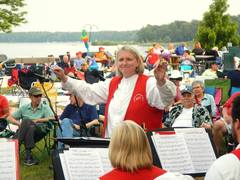
About six weeks ago, Texas band directors (a fierce and highly competitive bunch) started posting summer band-camp photos, on a band directors’ site I follow. Flute players with facial shields. Trumpets and mellophones with their bells bagged. Masked percussionists, labeling their mallets, so they’re touched by only one person. They were fired up. Creativity and safety would win the day!
The page today is really tough reading: Shut-down camps. Lost jobs. Will there be a marching band next year if there’s none this year? Pictures of band rooms where precisely 13 students can play while social-distancing. Deep, philosophical chats about the value of music in kids’ lives. And this—how the hell am I supposed to have a band online?
Well, the bad news is: you’re not. And when this pandemic abates, the best-case scenario for all powerhouse performance-based music programs is the option to rebuild. Any teacher (raises hand) who’s ever had to build, then re-build, a music program of any kind knows how difficult that job is, what losses are suffered when your dynamic program loses the thing that makes it magnetic: Pride in performance, fun in preparation.
So don’t think I’m Pollyanna, telling music teachers to keep your chin up and try something new. I know you’re righteously sad about your good work being threatened. What I am offering is this: a few suggestions for doing some authentic music teaching during a terrible time.
For starters—stop calling yourself a band/choir/orchestra director, and begin calling yourself a ‘music teacher.’
Second—understand that your college education and years of experience have given you all the musical expertise you need to create some new ideas about music that can be delivered to students in multiple modes. You know enough about the structure and history of music to create some great lessons. And what you don’t know offhand, you can easily find, without leaving your living room.
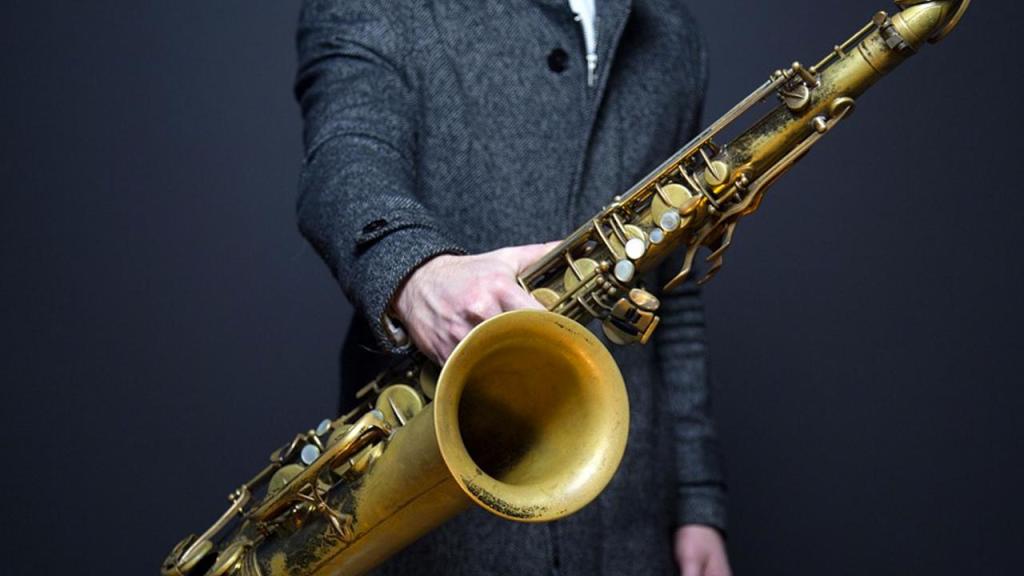
Third—don’t think the only curricular options students have are limited to music theory, music history and practicing. Much of our college-level theory and history instruction was deadly dull—no need to repeat it. Also– please don’t assign practicing. You need to give kids a good reason to practice, and logging time for a grade is not a good reason to practice. Learning to play another instrument would be—Bari sax? Ukulele?
Fourth—you know what tools, student interests and previous skills are available to you. If you’re meeting students in groups, and they all have Zoom, you might be able to do some bucket drumming. Or maybe your orchestra would be more interested in a History of Popular Music survey unit—to find out where the music they listened to originated.
Perhaps you’re stuck with phone calls and emails, and have to do something written or shared via email groups. I used to play what I called Sound Samples for my students, around a theme. They listened to a series of 10 or 12 clips, each a couple of minutes long, with a list of what they were listening to (each with a brief description). The list was out of order. The trick was to listen closely enough to identify key features of the music and thus, identify the pieces. Ungraded—but I know from experience students love guessing right, or figuring out what they’re listening to, using the clues.
For those incredibly lucky teachers who have the right technological tools and skills, teaching students to do ensemble playing via technology, with themselves or others, is a possibility (not Zoom, by the way—it’s the wrong tool for ensemble singing/playing). Only a narrow slice of music educators have the equipment and expertise to do this—but perhaps it’s your personal challenge, right now.
Fifth—Keep in mind that students take a music class to play. Teachers are fearful of play. Not only because their professional evaluations and livelihood are often linked to a mandate to produce satisfactory evidence–data– but open-ended play is not generally The Way We Do Things.
In schools, and in the grim, we’re-behind education policy discourse, a teacher who encourages students of any age to poke at ideas, learn from mistakes, and approach established disciplinary content as a treasure chest to explore is seen as disorganized. You tell ‘em what to do. And then you evaluate how well they’re doing what you told ‘em to do.
I am a music teacher–theoretically a creative art–but can state categorically that music, as traditionally taught in secondary schools, is not very imaginative or playful at all. School music programs tend to become performance-oriented only–and often rigorously competitive—as students get older.
There is an important body of information and skills in music. The more of that disciplinary knowledge students have mastered, and the more proficiency they develop, the greater their ability to capably perform interesting and satisfying music, and become a more appreciative and knowledgeable music consumer. These are all worthwhile educational goals, by the way. Far more worthy, in the long run, than bringing home another trophy.
The National Association for Music Education standards include composition, often overlooked in school music programs focused on replicating already-created music with a high degree of perfection.
After I’d embraced the rehearse-rehearse-perform model for 20 years, I realized I wasn’t teaching my students much about music other than How to Play Band Music. I started experimenting with composition. I had adopted the practice of thematic teaching—focusing on one broad aspect of music each year. The first year I tried to include composition, our theme was World Music—identifying the musical features that make something sound Italian or Scottish, rustic or refined. We listened to gamelan bands and balalaika choirs and West African djembe drummers.
And then I asked them to compose something in an ethnic style.
It’s nerve-wracking to turn kids loose to create. How do you structure that lesson? What’s the subject matter takeaway? What if your students create inferior products (as they certainly will, at first)? Must you grade them?
I had to deal with “Just tell me what to do” and “Can’t I do a report instead?” We persisted. And eventually, it was fun, playing with our acquired skills, creating new music–recording it on audio, video, electronic keyboard discs and paper. Their choice.
Some students performed their compositions live, including several groups and soloists playing the blues (that’s how you teach theory, by the way—using it). There were R. Carlos Nakai-ish recorder solos and improvised polkas. And lots and lots of drumming.
Most of the work was fairly unoriginal, but some of it was stunning. Here’s the best part. I assigned it on a Friday, giving them almost a month to get things in. On Monday, there were maybe two dozen completed assignments in my inbox, and groups wanted to know: Can we do another one?
Sixth—like most things about school and learning, music programs that are well-funded and adequately staffed get better results. It costs money to support a music program at any level, and a great deal of money to outfit a HS performing group, beginning with a facility. In some ways, losing daily rehearsals and summer camps and access to a world-class auditorium levels the playing field and lets musicians focus on the heart of music—human expression—rather than being best. This could be the year where imagination and creativity (and, in the process, justice) is the focus.
From a marvelous blog, What If We Radically Reimagined the New School Year:
What if this urban district courageously liberated itself from narrow and rigid quantitative measures of intelligence that have colonized the education space for generations, and instead blazed a trail for reimagining what qualifies as valuable knowledge? What if we put our money, time and energy into what we say matters most? What if this school year celebrated imagination? What if healthy, holistic, interconnected citizenship was a learning objective? What if we designed a school year that sought to radically shift how communities imagine, problem solve, heal, and connect?