
One of the more extraordinary end-of-2019 retrospective/resolution columns was Leonard Pitts’s announcement of his decision to read only female authors in 2020. Pitts, a self-proclaimed avid reader, realized, a couple years back, that he’d read 48 books that year—and only one of them was written by a woman.
What made the piece memorable was not Pitts’s determination to read more women writers; it was his utter surprise, having done the math, at his gendered reading habits. I am a huge fan of Leonard Pitts and his writing—and reading this passage made me admire him and his work even more:
Without realizing it, I had been filtering female authors out of my reading list. It was a jolting discovery for an avowed feminist, but it reminded me how insidious biases can be. And that, for as much as people love to proclaim their absolute lack of prejudice, what they usually mean is that they do not go around thinking mean thoughts about racial, religious or gender Others. Which is well and fine, except that our most powerful and consequential prejudices tend to be the ones we carry without even knowing we do. They lead us to assumptions we make without realizing we’ve made them, actions we take without quite knowing why.
I have written often about the fact that 75 to 80 percent of the PK-12 teacher workforce is female but most of the social media thought leaders, titled administrators and researchers, not to mention go-to education authors and speakers, are male.
I’ve been on school hiring committees, conference panels, and all kinds of planning teams where the Pitts principle—unconscious filtering of female names and work done by women—prevailed. It’s not as if the men I was working with were overtly sexist. Most of them, like Pitts, wanted to be seen as supportive and unbiased. They had absolute confidence in their ability to be evenhanded and equitable. Yet, they instinctively reached for the male writer, idea, speaker or candidate—without really thinking any more about it.
Their reasons are predictable. He’s my favorite author. The male candidate has more experience. I’d like to program music written by women, but choosing high-quality literature is more important. I really like the way Guy X speaks—he’s hilarious, and our audience needs to end the day on a light note. I think the parents would prefer that we hire a man (from a principal, on hiring a high school band teacher).
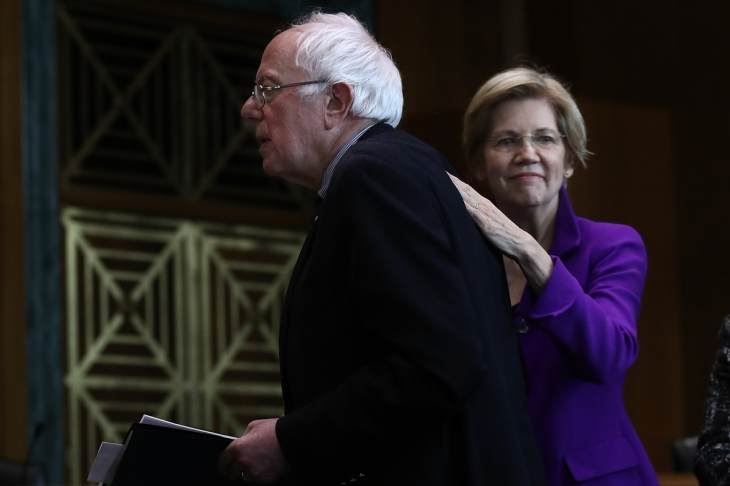
Want to wade ankle-deep in well-meant but ultimately misogynist commentary on the biggest contest in America right now? Check out the Twitter pushback on the burst of enthusiasm for Elizabeth Warren’s breakout performance at the Democratic debate on Wednesday night. Yes, Warren kicked butt, proved she could stand up to puffed-ego men, and had the best answers. But, but… guys—other guys, not me of course, maybe guys in Wisconsin?—won’t vote for her.
Okay, dude.
But I digress. This is a blog about who we read, who inspires us, whose unique voices and perspectives change our world view—or simply entertain us. Leonard Pitts promised to share his revelatory moments (and also was flooded with recommendations of women writers he absolutely needed to read). His commitment made me wonder:
What if an organized group of people made a similar, conscious commitment? I’m only watching movies directed by women this year. I will only choose female physicians for the rest of my life. I will only vote for women candidates.
Does the gender of an author—or speaker, leader or candidate—matter? Aren’t we past all that? Unfortunately, nope. As Brittany Cooper writes in a superb piece on identity politics: Wanting a woman to rise to the top of an almost all-male pack is not a position that needs defending.
Wanting women to be represented in the Oscars, or in major book awards, on conductors’ podiums or in corner offices everywhere is not a position that needs defending, either. We can all get behind free, non-restricted speech for women, and elevating women’s ideas and creativity. Even if it’s just one man’s personal reading list. Thanks, Leonard Pitts, for putting your money where your mouth and library card are.
We are escaping the cold Michigan winter for a few more days, hiding out in an historic neighborhood in Phoenix. I have read 18 books in 2020, so far. Nine by men, nine by women, mostly fiction. I’ve especially liked ‘The Nickel Boys’ by Colson Whitehead and ‘Olive, Again’ by Elizabeth Strout. I seldom think about an author’s gender, and because I enjoy multiple genres, I usually get a good mix without trying.
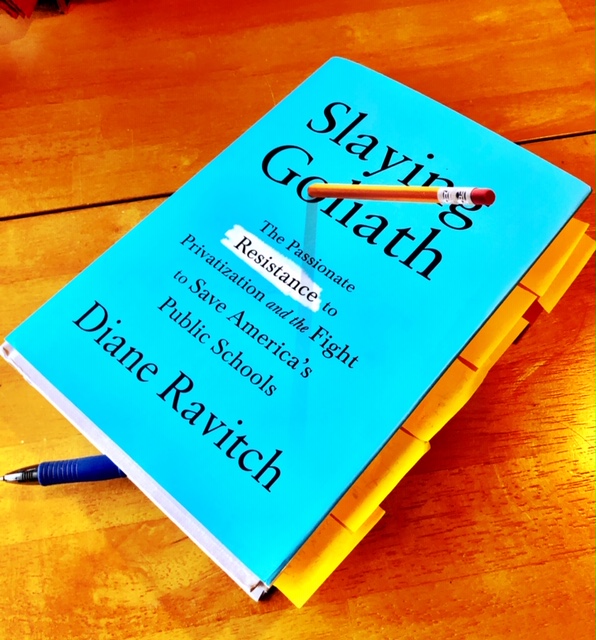
My professional library, on the other hand—some 200 books on education-related topics—is heavily male. I know because I counted one time. There are reasons, again—many of the books were not chosen by me (someone else’s pick for a course or book chat), many education classics are written by men because the history of education was dominated by male thinking and goals, and, well, you have to have Dewey on your shelf. Thank goodness for Diane Ravitch.
Pitts says reading unfamiliar authors will push him to examine his assumptions:
How many times have I argued that rooting out ingrained biases requires a willingness to venture beyond your comfort zones? In getting out of your comfort zones, you expand them, a process that is ultimately less about abandoning old friends than discovering new ones.
I guess the question is whether we really want to explore those biases and comfort zones. Isn’t that what education is ultimately supposed to do?


 administration, was a genius. In one nifty sound bite, the blame for the so-called achievement gap was placed squarely on the shoulders of educators, those barrel-bottom, unimaginative civil servants slogging along in low-paying careers.