When I was a junior in HS, my American History teacher was in a serious car accident in the fall, and did not return to teaching. This was 1967, and Social Studies teachers weren’t thick on the ground. The situation was personally worrisome: I had somehow persuaded this history teacher to let me take his required class as an ‘Independent Study’ so I could take both band and choir (which were infinitely more important to me than American History).
As rounds of fill-in teachers appeared, I was basically living in fear that my arrangement with Mr. Gilbert would be uncovered. He apparently left no record that I was even part of his class load. I might have to drop out of the choir—and I loved the choir—being coerced to return to conventional, one-chapter-a-week-test-on-Friday American History. It could go on my permanent record, or something.
Then fate smiled. My school district hired a young, spanking-new graduate of Western Michigan University, in December. She was cool with my studying American History on my own, added my name to the official grade book, and offered me her college history texts. Assignments would be short papers—and conversations with her. She recommended paperbacks I might enjoy.
In one of those conversations, I mentioned that her college Am-Hist textbooks presented things differently from our HS text. Things like the smallpox-infested blankets and how Andrew Jackson might not be a totally upright guy.
She smiled her praise. Good work, she said. You now understand that the people who write about history are usually the ones who benefited from the outcome. There are many ways to interpret the events of history—the ones you’re getting here in high school are pretty sanitized and one-sided.
This was a revelation to me, and made me vastly more interested in (and suspicious about) reading history. Most of my teachers seemed to regard their anthologies and textbooks as gospel truth, and thought we should, too. A fact is a fact.
Learning that there are lots of reasons to argue with the bland, evasive rhetoric found in textbooks was a great gift. I am still friends with that teacher—Marjorie Foster Trapp—and we still poke at each other’s thinking on social media. I got lucky.
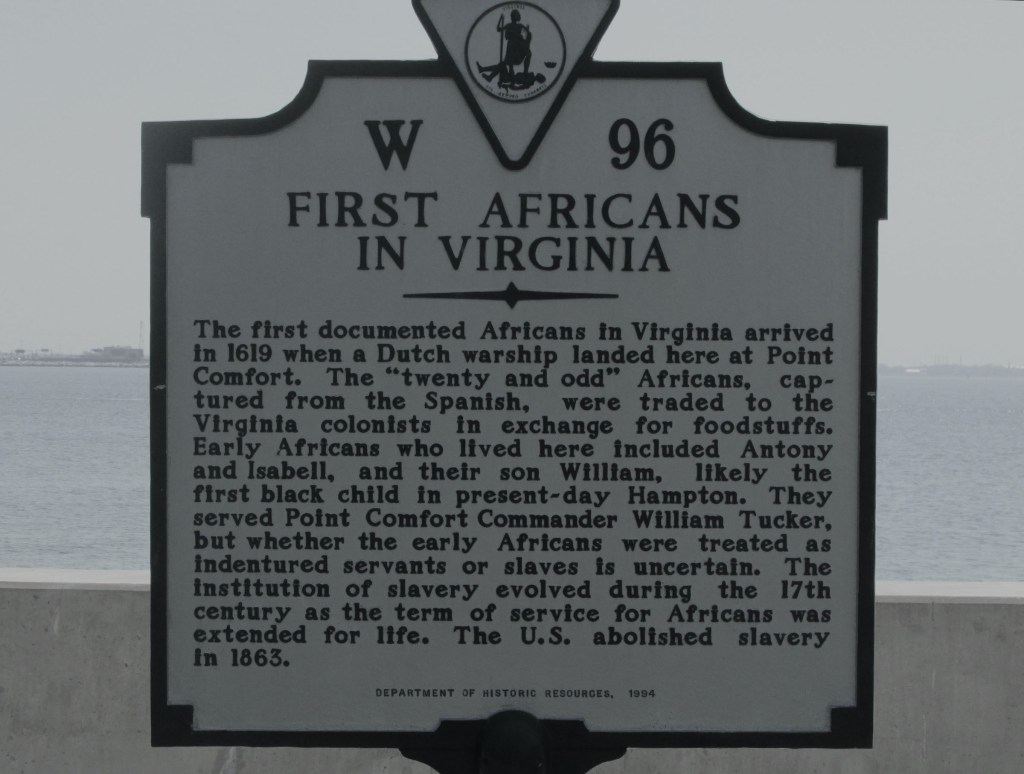
As I said, this was 1967, the first year I ever saw those black and white diagrams of how enslaved African people were shackled, head to foot, in ships’ holds. When the Detroit race rebellions were still in the headlines, and in the thick of the Civil Rights Revolution, American students (at least in my school) were reading columns of sterile information about Whigs and Custer’s Last Stand. Has there been significant change in the teaching of our nation’s history?
Let’s hope so.
We’ve got vastly more resources at our fingertips now—the Library of Congress, in fact. A well-read teacher can serve as expert guide to artifacts and stories about important historical events and issues, across the developmental spectrum. History could be engaging, even fascinating; more importantly, students could understand what can be learned from mistakes made in the past. We might even teach them to be suspicious of believing much of what they hear or see on Instagram. To be informed citizens.
I believe this is happening in many, if not most, American classrooms. And I also believe that the teachers in front of those classrooms should be able to select the right materials to challenge their students.
The 1619 Project is not, as some have suggested, a curriculum. It’s a set of digital materials—essays, photo stories, editorial pieces and features—on the impact of slavery on all people and institutions in the United States. Nikole Hannah-Jones’ essay, America Wasn’t a Democracy until Black Americans Made It One, would be a great assignment to tackle at almost any point in the traditional HS Social Studies chronology. A little close reading, even; there are easily a dozen provocative ideas about American history in this one piece.
Naturally, Mike (Fordham) Petrilli had to weigh in. The Fordham folks think Trump’s proposed anti-1619 response, the 1776 Commission curriculum (as yet mostly unwritten, but absolutely going to be chock-full of real patriotism and heroes), is our window of opportunity to craft an all-American curriculum that does the impossible: pisses off nobody but instills reverence for our exceptionalism, with all the usual Important Dates and lots of winning. Petrilli has several nit-picking critiques for a contemporary media series on the legacy of having been a slave-owning country for 250 years, and other sources:
‘Take the famous Howard Zinn textbook, A People’s History of the United States. Central to its narrative is the premise that the world is, always and forever, divided into oppressors and the oppressed. This is a deeply cynical idea, though resurgent today in discussions of “anti-racism” and “critical race theory.” Do its adherents expect conservative-leaning parents—scratch that, most parents—to welcome this ideology into their children’s schools with open arms?’
First–anti-racism is real, not a word you put in quotes.
And what is Petrilli’s big idea? He is going with Trump’s 1776 Commission. No, seriously. He wrote that Trump was right to question the too-liberal teaching of social studies in our public schools. We need a commission.
You have to wonder what Fordham thinks high school history teachers do all day.
What pedagogical and philosophical errors could they be making, that would somehow be fixed by a Commission? A Commission inspired by Donald Trump’s petty rage over a successful media launch involving the NYT and a topic critical to the health and progress of the nation—dealing with our racism problem? A topic of high interest and importance to teenagers, as well.
To all American History teachers: hang in. Teach your students to embrace America, ugly warts and all, and to vote as if their lives depended on it. Our highly imperfect democratic republic is worth saving, and they’re going to be in charge some day.